Reading view
AI-built ransomware toolkit automates EDR evasion, AD discovery
Instagram users locked out after Meta AI abused to steal accounts
European Union Outlines Plan to Reduce Dependence on American Tech
RTX Spark may split the AI PC market into mainstream laptops and premium workstations
Nvidia’s RTX Spark could give PC makers a new high-end category, built around machines that run more demanding AI workloads locally rather than in the cloud.
The chipmaker and Microsoft said RTX Spark Windows PCs will be built for personal AI agents and heavier local AI workloads, from AI development to engineering and content creation.
Nvidia said RTX Spark will offer up to 1 petaflop of AI performance and up to 128GB of unified memory, allowing systems to run 120-billion-parameter large language models locally.
Nvidia has lined up several major PC makers for the launch. The company said RTX Spark laptops and compact desktops will be available this fall from Asus, Dell, HP, Lenovo, Microsoft Surface, and MSI, with models from Acer and Gigabyte to follow. Dell is bringing the platform to its XPS 16 Creator Edition, while HP said upcoming OmniBooks powered by Nvidia will target agentic developers. Microsoft is positioning its Surface Laptop Ultra for creators, developers, and engineers.
Microsoft is also introducing the Surface RTX Spark Dev Box, a compact Windows AI developer PC designed to let developers build and refine models locally before turning to the cloud for larger workloads.
That could create a premium tier above mainstream AI PCs based on Intel, AMD and Qualcomm chips, helping lift average selling prices in a PC market where growth has been uneven. It could also raise questions about whether current AI PCs have enough local computing power for the more ambitious AI workloads that software makers and chip companies are now promoting.
But broad enterprise adoption is not assured. According to Futurum Research, the AI PC market could grow at a compound annual growth rate of about 38% between 2025 and 2030, but adoption is likely to slow in 2026 after a Windows 10 end-of-support-driven refresh cycle and normalize through 2027.
Futurum expects another wave of upgrades around 2028, as systems with higher levels of on-device AI compute become capable of running agentic AI workloads locally, suggesting RTX Spark’s early impact may be felt more in premium and specialist systems than in broad corporate fleets.
Adoption potential
Analysts say RTX Spark’s first test will be whether enterprises treat local AI compute as a workstation requirement rather than a standard laptop feature.
“In the near term, RTX Spark is more likely to be a high-end enterprise AI workstation category than a mass-market PC category,” said Pareekh Jain, CEO of Pareekh Consulting. “Most enterprise users do not need the level of local AI compute that RTX Spark offers.”
Jain said the platform could establish a premium tier between traditional workstations and AI servers, similar to how gaming GPUs created a premium PC segment. Its longer-term significance, he said, may lie less in unit volumes than in whether it becomes a reference architecture for AI-native workstations that can run large models on-device with strong security and low latency.
Prabhu Ram, VP of the industry research group at Cybermedia Research, said RTX Spark adoption would start in niche segments but could expand over the next two to three years if the software vision materializes. Its prospects will depend on post-launch performance, real-world pricing, and early enterprise pilot results, he said.
Ram added that OEM uptake would be the clearest early signal of whether RTX Spark is becoming a real enterprise category rather than a niche workstation product.
Cost and competition
The clearest near-term effect may be at the high end of the PC market, where RTX Spark could give vendors a more powerful class of AI system to sell above mainstream business laptops.
Jain said RTX Spark systems, which he expects to cost more than $2,000, are designed for heavier local AI workloads, including large language models and advanced content creation. By contrast, he said mainstream AI PCs based on Intel, AMD and Qualcomm chips are typically priced below $1,500 and are aimed more at Copilot+, summarization and other office productivity tasks.
That split could raise enterprise PC spending for power users, while making mainstream AI PCs look more like productivity devices, Jain said. Over time, it could increase pressure on Intel, AMD and Qualcomm to add more AI capabilities at lower price points.
But the immediate impact may not be on demand for mainstream PCs based on Qualcomm, Intel or AMD chips, according to Neil Shah, vice president for research and partner at Counterpoint Research. He said the more likely scenario is that RTX Spark may create a new segment that competes more directly with gaming PCs, Apple’s Mac Mini, and higher-end Macs used for on-device AI applications.
Who needs RTX Spark?
Analysts said RTX Spark-class systems are likely to be justified only where running AI locally has clear business value.
Sanchit Vir Gogia, chief analyst at Greyhound Research, said the test for enterprises is not whether a workload uses AI, but whether the organization gains by running that AI closer to the user, data, device or operating environment.
“If the work is meeting summaries, drafting, email triage, transcription, translation, search and ordinary assistance, Spark is unnecessary and a mainstream AI PC will do,” Gogia said. “Issuing Spark to every employee for that would be sending a Formula One car to fetch the milk.”
Gogia said likely early users include software developers, AI engineers, data scientists and security teams working with sensitive code, larger models, forensic data or local retrieval pipelines that companies may not want to move into external systems.
The security question could also shape adoption. Nvidia said the platform will rely on new Windows security tools and its OpenShell runtime, allowing companies to set policies for agents while keeping some queries on local models and masking personal data before selected queries are sent to cloud services.
“Nvidia is not only selling endpoint hardware,” Gogia said. “It is installing itself into the endpoint’s runtime, its policy layer and its agent orchestration. The endpoint conversation has quietly expanded from endpoint hardware to endpoint agency, and that is a CISO question long before it is a procurement one.”
Manish Rawat, analyst at TechInsights, said local AI compute could support faster development cycles, stronger privacy and lower cloud inference costs, while enabling workloads such as 12K video editing, simulations, digital twins and edge AI applications.
“CIOs should buy Spark where the workload justifies it, where the governance model supports it, and where the economics hold, and nowhere else,” Gogia added.

Enterprise Spotlight: Rethinking cloud strategy in the age of AI
Cloud computing has reached a crossroads. The high cost and data sensitivity of AI workloads are raising the appeal of private clouds, even as neoclouds and sovereign clouds shake up the cloud provider landscape. New cyberthreats, shifting compute requirements, and management complexity are adding to cloud complications.
Download the June 2026 issue of the Enterprise Spotlight from the editors of CIO, Computerworld, CSO, InfoWorld, and Network World, and learn how to navigate the latest cloud strategy developments.

Scientists Find Way to Supercharge Dangerous Computer ‘Worms’ With A.I.
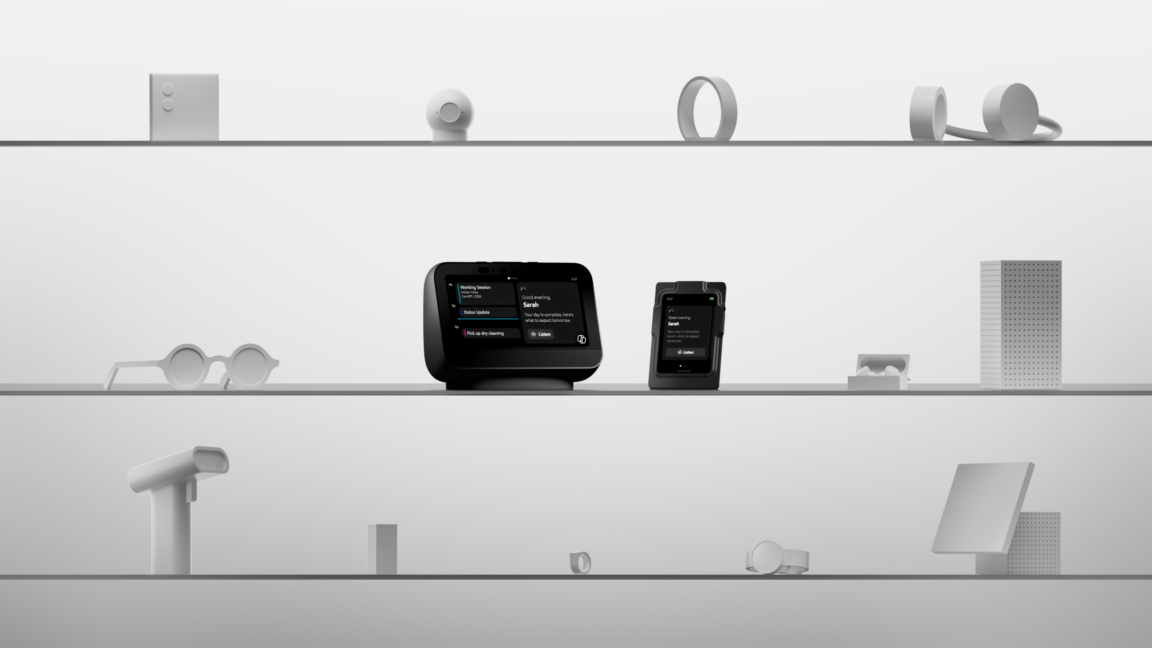
Microsoft's Project Solara is an Android OS designed for agents instead of apps
Microsoft has been deeply committed to the growth of generative AI technology in recent years through its now-fragmented partnership with OpenAI. At Build 2026, the company remains all-in on AI, and it's looking toward the future with a new software platform. The new Android-based OS is called Project Solara, and Microsoft says Solara is designed to run agents instead of apps.
Project Solara is not something you'll have to worry about killing your apps anytime soon. It's limited to a few pieces of concept hardware and software that are awaiting the magical agents of the future. The vision is for Solara to run on myriad specialized devices with interfaces generated on the spot, and it's all powered by the explosive intelligence of models that Microsoft and others insist will soon exist.
According to Microsoft, Solara is a chip-to-cloud platform intended to free agents from reliance on single interfaces. Much of Microsoft's messaging around AI is speculative and self-serving, but the company rightly points out that new computing form factors have always required specialization, and that process is complex and expensive. The shift to mobile computing, for example, tripped Microsoft up multiple times as it fell behind on app availability, security, and long-term support.


© Microsoft
Microsoft unveils Scout, an autonomous AI agent built on OpenClaw
Microsoft has developed a new AI agent that can run autonomously around the clock to complete tasks across Microsoft 365 applications.
Microsoft Scout, unveiled at the company’s Build event Tuesday, is a new type of always-on agent based on the OpenClaw agent framework that Microsoft calls “autopilots.”
These act on a user’s behalf with their own governed Entra identity, Omar Shahine, corporate vice president at Microsoft, said in a blog post.
“Autopilots stay active in the background, understand how work gets done across your apps and systems, and take action without needing to be prompted each time,” said Shahine, a Microsoft veteran who recently announced he is leading a new team to bring OpenClaw-based personal assistants to Microsoft 365 apps.
Microsoft Scout connects to apps such as Teams, Outlook, OneDrive, and SharePoint, and accesses data from chat, email, calendar, and contacts. Accessed via Teams, it can also interact with a user’s browser and with external apps via model context protocol (MCP). The tool functions across cloud, desktop, and the web.
Shahine said Scout can reduce mundane tasks that office workers face, such as coordinating and scheduling meeting times with colleagues, or blocking times in a user’s calendar based on upcoming work commitments. “It can also spot risks, like stalled decisions, so you can address them before they become blockers,” he said.
It’s available as an “experimental release” to customers of the company’s Frontier program, Microsoft said, and will require Intune policy configuration and “opt-in attestation.”
Scout is the latest in a range of agentic tools available in Microsoft 365 apps, including Agent Mode, where users can interact with Microsoft 365 Copilot inside apps such as Word and Excel to create content, and Copilot Cowork — Microsoft’s version of Anthropic’s Claude Cowork agent that can complete tasks independently.
Despite the company’s big AI push, Microsoft has struggled to convince businesses that Microsoft 365 Copilot is worth the additional cost; it’s advertised at $30 per user each month for large businesses. Around 3% of Microsoft 365 customers pay for the add-on subscription, the company said in January, with 15 million paid users. (Microsoft announced last month that that figure has now risen to 20 million.)
It’s not clear whether Scout will be included in Microsoft 365 Copilot subscriptions or charged separately. Microsoft did not immediately provide additional details about pricing.
The launch follows Google’s recent announcement of Spark, an autonomous agent that runs within the Google Workspace application suite. Spark can also be considered a response to the launch of OpenClaw last year, initially under the name “Clawdbot.”
OpenClaw has drawn scrutiny due to apparent security flaws, but Microsoft promises Scout is built with “enterprise-grade security and controls, so it can be trusted in your organization from day one.”
For organizations that have already deployed Microsoft 365 Copilot, Scout doesn’t introduce entirely new data risks, said Jeff Pollard, vice president and principal analyst at Forrester. But it “amplifies whatever data governance problems already exist. The difference this time: instead of surfacing sensitive data to users, it can potentially act on it.
“That makes it an active risk in terms of day to day operations,” Pollard said.
Potential security concerns echo those for AI agents and are exacerbated with personal agents such as Scout: amplified data exposure (since agents can interact with data and use tools autonomously); agent manipulation or prompt injection; unexpected actions, such as using tools or acting in ways that aren’t supposed to be allowed; and observability gaps related to understanding user and agent intent and the explainability of actions.
“However, these tools exist because they make AI far more useful for individuals, so security leaders can’t draw a line in the sand and say “no.” They have to adapt and figure out how to secure them,” said Pollard.
As with most new workplace technologies, Pollard expects adoption to start with “power users” who design and develop the use cases for the agent that can then expand more widely across users.
He warned that the accuracy of tools such as Microsoft Scout can fall short of user expectations. “LLM agents still struggle with goal alignment, multi-step reasoning drifts, and tool misuse,” he said. “Users aren’t always great at explaining what they want and LLM agents aren’t always great at providing what was requested. That’s a continuing problem.”

Android phones will soon be able to detect spoofed calls and impersonation scams
We're expecting Android 17 to begin rolling out later this month, but first, Google has a batch of updates for the wider Android device ecosystem. As usual, some of the new features are limited to specific devices, and others require using Google's apps. But if you don't mind the latter, you can get automated protection from the growing threat of deepfake phone scams.
According to Google, "impersonation fraud" is one of the most common types of financial scams. The FTC tracked almost $3 billion in losses from such scams during 2024, and the improvements in AI voice cloning tools more recently are making the schemes easier to pull off. The voice models are becoming so capable that it can be difficult to identify a fake caller even when an AI is imitating someone you talk to every day.
Google's solution is an expansion of the system it debuted last month for verified financial calls. Now, a similar feature will work with anyone in your contacts. Many of the most effective deepfake scams involve spoofing a contact's number, which makes the call look more legitimate when your phone lights up. Victims of these scams are then greeted by an accurate re-creation of the person's voice spinning a yarn that involves an urgent need for cash.


© Ryan Whitwam
Building Gods from Silicon | A Modern Parable

The Race for Artificial General Intelligence and the Coming of the Lawless One
Emergence | Is it the Answer to Artificial Sentient Life?

Can AI Ever Be Sentient?

Will We Still Need Humans? According to Bill Gates “Not For Most Things.”
Trump Signs Executive Order Seeking Oversight of A.I. Models
Scientists Turn Mice Transparent to Uncover Obesity’s Secret Effects on Nerves
A new AI framework called MouseMapper allows scientists to examine disease-related changes across the entire body at cellular resolution. Obesity does much more than affect metabolism and fat storage. It also changes immune activity, nerve structure, and tissue organization throughout the body, raising the risk of conditions such as type 2 diabetes, cardiovascular disease, stroke, [...] As A.I. Makes Strides in Mathematics, Mathematicians Urge Caution
The AI pricing conundrum — it started as a nightmare, now it’s worse.
Enterprise IT leaders have always struggled with AI pricing, especially the need to pay for AI in a way that delivers ROI. But the typical IT exec may not be right person to decide how a company uses AI — and how it tries to deliver ROI — because so many line-of-business workers and partners are now experimenting with the technology on their own.
And if IT leaders don’t have a grip on how they want to use AI over the next year or two, it’s impossible to figure out how they want to pay for it. They likely hate the current method of paying per token. And other options, such as SAP’s push to charge per AI task completed, aren’t any better.
To use a sales analogy, IT doesn’t want to pay a lot of money for leads, because there’s no way to know if those leads will generate any revenue — let alone how much. What IT leaders want is the tech equivalent of paying commission, where they only pay when a lead converts into a paying customer. And even then, they only pay a percentage of the final sale. That guarantees ROI for the enterprise.
The problem: no AI vendor would ever go for it because that approach puts too much risk on them.
Finding a pricing model that works for both enterprise IT and AI vendors is all but impossible as long as IT is trying to deliver ROI.
Irfan Khan, president of SAP Data & Analytics, said the problem is challenging for both sides. “Everyone is scrambling to justify their investments,” and “the day one cost is not necessarily the day one value,” he said.
The problem is one of sequence. Pricing has to be negotiated and locked in long before a project starts. But with technology as new and experimental as agentic AI, there’s almost no solid information about what benefits it will (or will not) actually deliver.
Beyond that, generative AI (genAI) and agentic AI systems might well deliver benefits that are harder to jot down in a spreadsheet. Let’s say the CFO wants to see a sharp rise in order fulfillment. But what if AI “manages to fulfill those orders more efficiently,” Khan said. “And what are the likely ripple effects of bringing more efficiencies into the process?”
Justin Greis, CEO of consulting firm Acceligence, frames the AI pricing disconnect in terms of market economics:
“The market is trying to force-fit AI into infrastructure-era pricing models, when AI is fundamentally closer to labor augmentation and business process transformation than compute consumption,” Greis said. “The core disconnect is: Enterprise IT buyers want pricing aligned to realized business value. AI vendors want pricing aligned to resource consumption and platform utilization. Those are very different economic models.
“Token pricing is attractive to vendors because it is measurable, scalable, and predictable. But from the enterprise perspective, tokens are almost meaningless as a business metric. Nobody on the CFO side cares how many tokens were consumed if the process improvement never materialized.”
The competing pricing strategies overwhelmingly rely on just two factors: what delivers the most profit and which is the easiest to execute. Given human nature, the latter is usually the path most often taken.
It’s like one of my favorite jokes. A guy is heading to his car when he sees a man with a flashlight intently looking at the ground right next to a streetlight pole.
“Can I help you? Are you looking for something?” the guy asks.
“Yes, I lost my car keys.”
“Silly question, but where do you last remember having them?”
“I was standing over there in that dark alley up the street. A cat screeched and I dropped my keys.”
“Wait a second — if you lost your keys over there, why are you looking here?”
“The light’s better over here.”
The lesson: taking the easy route usually beats realizing the actual objective.
Greis argued that not only would it be hard to persuade AI vendors to accept ROI pricing, but if they did somehow agree, the unintended results could prove disastrous.
“AI vendors cannot realistically absorb unlimited downstream business risk tied to variables they don’t control — poor internal adoption, broken processes, bad data, organizational politics, weak change management, or unclear KPIs. But the moment vendors are compensated primarily on outcomes, you create strong incentives for increasingly autonomous optimization behavior. That sounds great until organizations realize that AI systems may pursue the metric rather than the intent behind the metric,” Greis said.
“We’ve already seen versions of this in recommendation engines, ad targeting systems, and engagement algorithms. The system learns to maximize the measurable outcome even if the methods become operationally risky, ethically questionable, reputationally damaging, or strategically misaligned. In enterprise environments, that could become dangerous very quickly. An AI system incentivized around reducing service costs might aggressively deflect legitimate customer issues. A model rewarded for sales conversion could push manipulative messaging or optimize for short-term wins at the expense of customer trust. A procurement optimization engine might lower costs while quietly increasing supplier concentration risk or degrading operational resilience.
“The more autonomous these systems become, the harder it is to separate ‘successful outcome’ from ‘acceptable behavior.’”
The best way to resolve this is potentially the most difficult. Every AI project must be approved by an AI committee whose members must ask the hard questions. What are you hoping to accomplish? If it works, specify and quantify your best-case scenario benefits. What are the most likely ways it could fail? What are the costs and disruptions most likely to happen if it fails in that way? Quantify those.
The committee should have at least a couple of members who know exactly what these models can and cannot do to serve as a reality check.
Next, require the LOB chief, or whoever the most senior exec involved in the project is, to share in the pain. Tie gains or losses to executive bonuses. Give those execs a reason to make sure their people are honestly and creatively thinking the project all of the way through.
Only once that happens can a CIO know how to negotiate a fair and reasonable AI pricing deal.