I premiere my 2013 video lecture "8 Reasons Why Evolution is Foolish" on YouTube. I present 8 reasons why evolution is impossible. I cover questions on cosmogony, the origin of the universe, the stars and galaxies, the Earth, and the origin of life.
The Epstein files expose a multi-millennia long conspiracy, really a Satanic religion that has been around since Adam's rebellion against God. The elites worship Satan and he gives them all their desires, wealth and power in exchange for the ritual sexual abuse, rape, torture, sacrifice, and cannibalism of very young children.
The UK has initiated a digital ID system required for employment, paralleling increased online censorship through the Online "Safety" Act. Protests against these authoritarian measures are suppressed, warning of potential totalitarianism in Europe. The U.S. must resist similar oppression to safeguard free speech. Australia faces similar controls starting December 10, 2025.
Human hands exhibit unparalleled complexity and dexterity, revealing the mastery of their Creator. Despite advancements in robotics, replicating the nuanced movements and strength of human hands remains a significant challenge. Companies like Proception are striving to develop robotic hands, yet authentic human hand functionality remains unmatched, highlighting the intricacies of divine design.
Tucker Carlson correctly stated that modern so-called aliens are just demons, which are described in the Old Testament of the Bible. These same demons are still around. They haven't gone anywhere. And there are many who worship them seeking after power and wealth, believing their deceptive promises.
The WSJ reports that the Pentagon fabricated UFO evidence. They faked it to cover up secret weapons development! However the belief in aliens and UFOs stems from a rejection of the Creator, leading to deception fueled by spiritual forces.
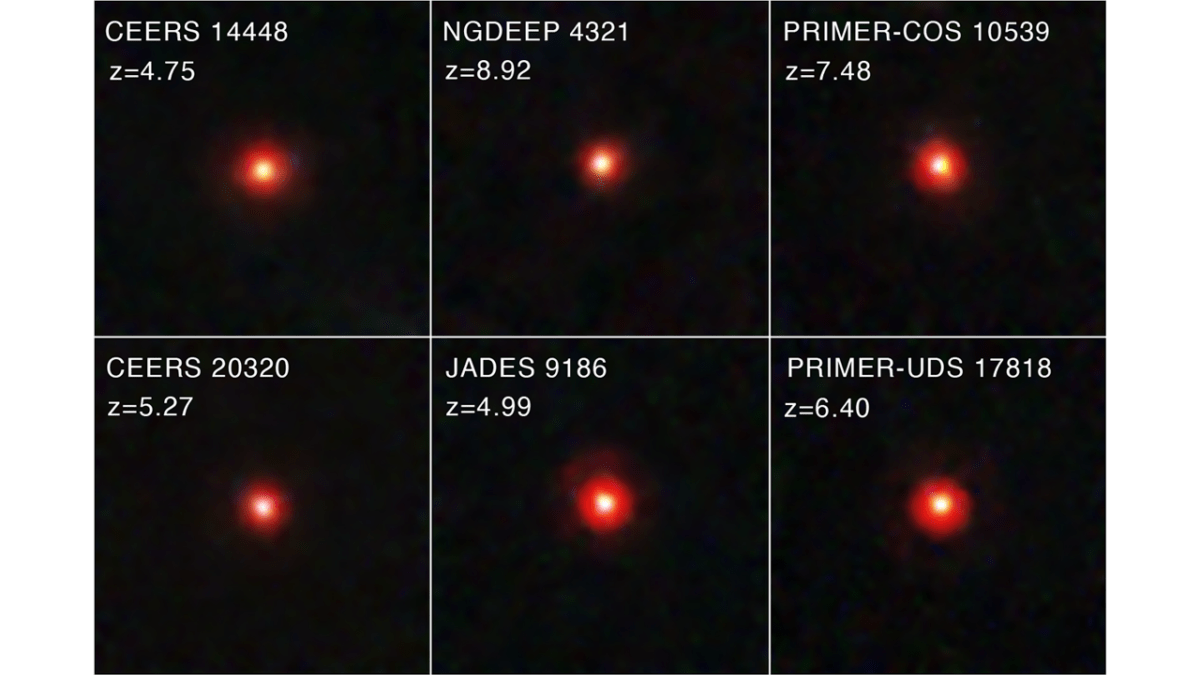
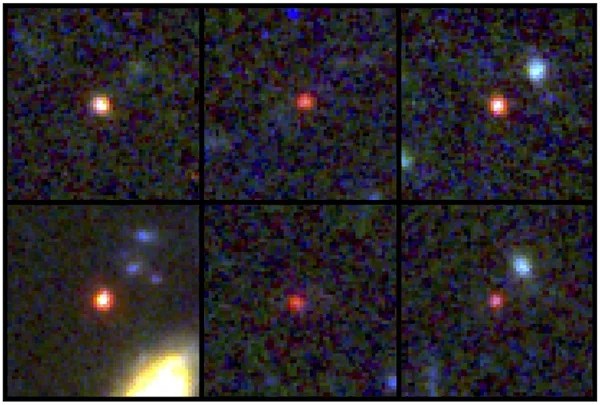
In 2022, the James Webb Space Telescope discovered six massive Little Red Dot galaxies dated 500–800 million years post-Big Bang. Their presence challenges the ΛCDM cosmological model, as they contain unexpectedly high stellar masses. Recent findings have increased their count to 341, raising questions about galaxy formation and the validity of current theories.
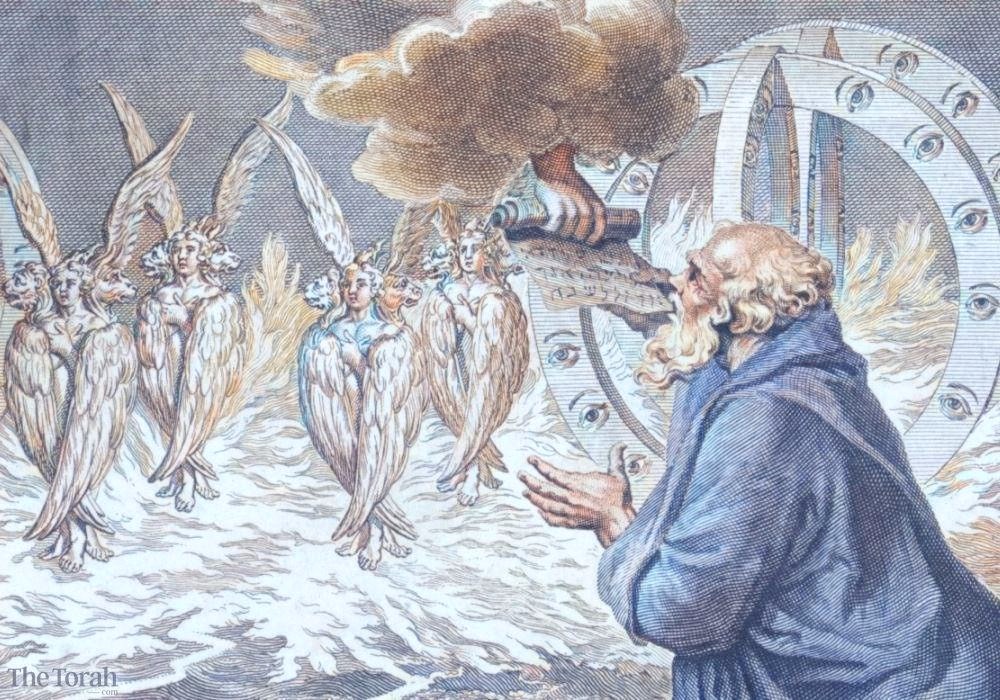
Ezekiel's vision is discussed, questioning whether it depicts a divine encounter or ancient astronauts. I critique Erich von Däniken's theories on UFOs, emphasize that advanced propulsion technologies have military origins, and confirm that true anti-gravity remains unattainable within known physics, dismissing claims of reverse-engineered alien technology.
UArizona Team Creates Instrument to Study Invisible Clouds that Warm Earth The doctoral student leading the project ushered the instrument from concept to launch into near space. The instrument will eventually be deployed onboard a NASA CubeSat to monitor invisible clouds. Mikayla Mace Kelley Today University Communications IMG_1250.jpeg Kira Hart Shanks’ instrument takes it first […]
Researchers say the isolated white dwarfs Gandalf and Moon-Sized define a new class of stellar remnant because they share five traits, including X-ray emission. Across the immense scale of the Universe, a single unusual object can prompt astronomers to look for others like it, sometimes leading to the recognition of an entirely new class of [...]
Scientists have achieved a first in studying lanthanum superhydrides, a class of materials that could help unlock superconductivity at much higher temperatures. The dream of transmitting electricity without energy loss has driven decades of superconductivity research. Some of the most promising candidates yet are superhydrides, hydrogen-rich materials that, under immense pressures, have exhibited superconducting behavior [...]
A newly described fossil goose shows that New Zealand’s bird history involved repeated arrivals, extinctions, and rapid island evolution. A rare fossil goose found in the remains of an ancient lake in Central Otago is changing how scientists understand the bird history of Aotearoa New Zealand, according to a researcher at the University of Otago [...]
António Ambrósio, an independent researcher who describes himself as trained in Egyptology through Barcelona’s Institut d’Estudis del Pròxim Orient Antic at the Universitat Autònoma de Barcelona, is promoting a claim that the pyramids of Giza were not built for the pharaohs traditionally linked to them. In a short, non–peer-reviewed essay posted online as The Pyramids […]
The mystery is real. Egypt’s pyramids are more than 4,500 years old, the Great Pyramid still feels impossible to many modern viewers, and yet the archive has yielded nothing that looks like a master plan in the modern sense. No papyrus roll has emerged with a neat elevation, no construction dossier for Khufu, no surviving […]
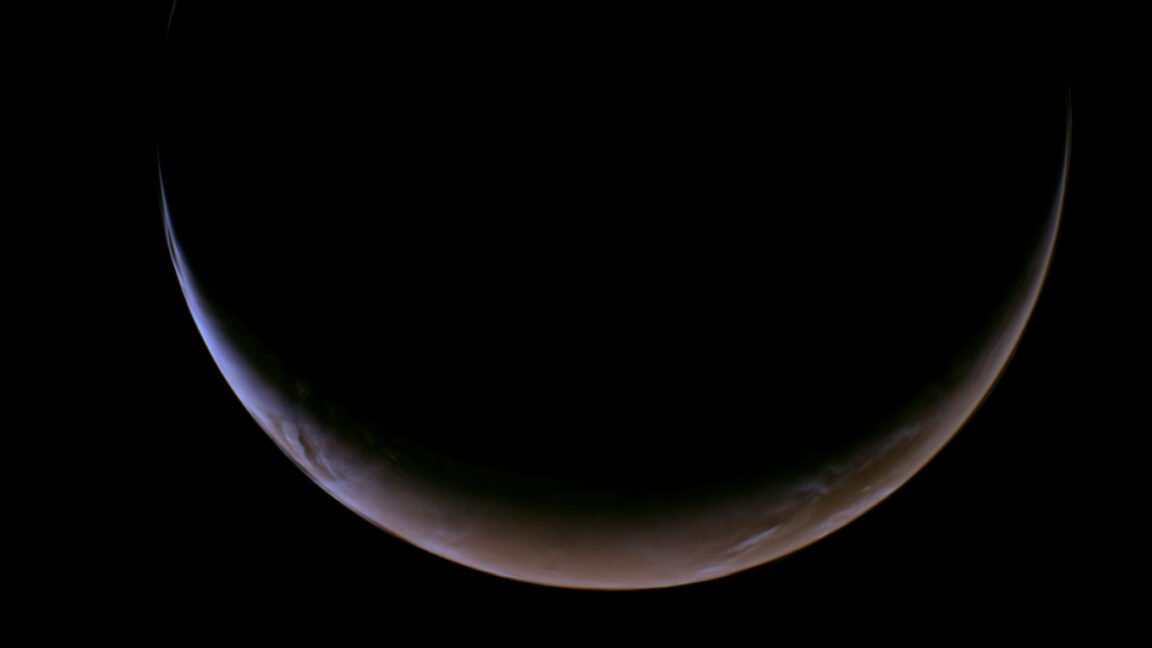
Not quite halfway through a six-year sojourn through the Solar System, a NASA spacecraft used a close encounter with Mars last week as a dress rehearsal for its arrival at the Solar System's largest metal asteroid in 2029.
The Psyche mission launched more than two-and-a-half years ago, in October 2023, from Kennedy Space Center, Florida, to kick off a journey of some 2.2 billion miles (3.6 billion km) to reach its unexplored namesake, the asteroid Psyche. The robotic research mission got an initial lift from a powerful SpaceX Falcon Heavy rocket. It uses plasma engines to gradually build up the impulse needed to reach its destination in the asteroid belt, between the orbits of Mars and Jupiter.
A flyby of Mars last Friday gave the spacecraft its most significant boost since launch. Navigators at NASA's Jet Propulsion Laboratory in California set up the spacecraft for a course taking it 2,864 miles (4,609 km) from the Martian surface, well above the planet's tenuous atmosphere. Psyche used Martian gravity like a slingshot to gain enough speed to reshape its orbit around the Sun, putting the probe on a path to intercept its asteroid target.
This month, a North Dakota court barred Greenpeace from saying what it wanted in a European court, an unusual move. The environmental group says it is forging ahead.

 Login