❌

Reading view

Pigeons May Sense Earth’s Magnetic Field Using Superparamagnetic Immune Cells in Their Livers

Lisowski et al. used physical, morphological, functional, and genomic assays to identify the presence of superparamagnetic macrophages in the liver of homing pigeons (Columba livia domestica). Image credit: Spanishguitar101 / CC BY-SA 4.0.

Scientists have identified supermagnetic macrophages in the livers of homing pigeons (Columba livia domestica) that appear essential for navigation when the Sun is not visible, pointing to an entirely new mechanism for animal magnetoreception.

The post Pigeons May Sense Earth’s Magnetic Field Using Superparamagnetic Immune Cells in Their Livers appeared first on Sci.News: Breaking Science News.

  •  

Scientists May Have Found a Completely New Way To Treat Depression

Happy Smile Face Depression Breakthrough SuccessScientists may have found a completely new way to treat depression by targeting inflammation instead of brain chemistry. A small clinical trial led by researchers at the University of Bristol suggests that targeting the immune system could help people with depression who do not improve with standard antidepressant medications. The findings, published May 20 in [...]
  •  

Florida Sues OpenAI Over Chatbot Safety Concerns

The state became the first to sue the ChatGPT maker over claims that its technology posed a risk to children and that the company had failed to warn the public of dangers.
  •  

Daily Glass of Fruit Juice May Lift Your Mood: Study

People who drink a glass of 100% fruit juice or a smoothie each day as part of the UK’s 5-a-day healthy eating guidance see improvements in their mental wellbeing. Image credit: Joseph Mucira.

In a small randomized trial in the United Kingdom, adults who added a serving of 100% fruit juice or a smoothie to a healthier diet reported lower depression scores after four weeks.

The post Daily Glass of Fruit Juice May Lift Your Mood: Study appeared first on Sci.News: Breaking Science News.

  •  

The Missing Notebooks That Solved a 25-Year-Old Paleontology Mystery

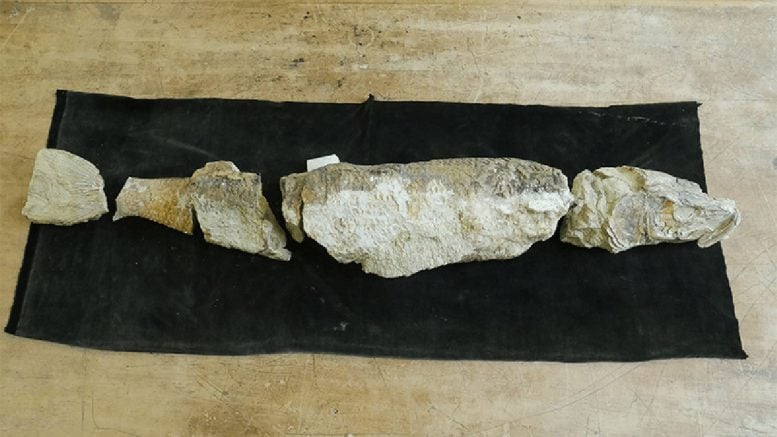
55 Million Year Old Tarpon Fossil FishField notebooks from the late Richard Köhler allowed researchers to finally catalog a remarkable fossil tarpon from Aotearoa New Zealand. Recently disclosed notebooks from a late paleontologist supplied the missing details researchers needed to complete their study of a “remarkable” fossil found nearly 30 years ago. Dr. Richard Köhler discovered the fossil fish in 1999 [...]
  •  

How Box Created 13 New Types of Jobs Because of A.I.

Box, a Silicon Valley software maker, expects to have more employees, not fewer, as it hires A.I. architects, A.I. solutions managers and other new A.I.-related positions.
  •  
  •  

Scientists Discover a Simple Writing Test That May Detect Cognitive Impairment

Elderly Senior Writing Letter PaperA simple writing task may offer clues about aging brains. Researchers found that dictation, in particular, exposed subtle differences linked to cognitive impairment. Handwriting depends on both fine motor skills and complex mental processes, including selecting, organizing, and interpreting sensory information. Because writing places heavy demands on the brain, changes in handwriting may help reveal [...]
  •  

Is Earth’s water why intelligent life evolved here?

Earth has many unique features for a planet, such as a magnetic field, a large moon, and plate tectonics. It’s also the only planet we know of that harbors life. These facts form the basis of the Rare Earth hypothesis, which posits that we haven’t found aliens because other planets in the Galaxy probably don’t have all the right conditions for life. 

Another characteristic of Earth is that about 30% of its surface is land and about 70% is ocean. Recently, Columbia University Assistant Professor David Kipping investigated whether the proportion of Earth’s surface covered by dry land versus ocean, or its land fraction, is another reason Earth is habitable not only for simple single-celled organisms, but also for intelligent species like humans. 

To test this hypothesis, Kipping created 4 statistical models of planets with different land fractions that intelligent aliens could potentially evolve on. First, he created an equation to describe the likelihood that a planet in its star’s habitable zone has a particular land fraction, known as a probability distribution. Kipping weighted this probability distribution toward the extreme ends, making it more likely that a planet would be covered by a single huge landmass or a single vast ocean than by a mix of both, as on Earth. 

Kipping then incorporated this land fraction probability distribution into his statistical models to calculate the probability that a random planet will have that land fraction and host intelligent life. The 4 scenarios Kipping tested were: 1) that intelligent life is more likely to emerge on land-dominated planets, 2) that it’s more likely to emerge on ocean-dominated planets, 3) that it’s more likely to emerge on planets with roughly equal amounts of land and ocean, and 4) that its emergence is independent of a planet’s land fraction. 

As a first step in determining the kinds of planets intelligent aliens would tend to emerge on, Kipping used each model to predict the probability that intelligent life would emerge on a planet with the same land fraction as Earth. He then compared these probabilities by calculating the ratios between each value. Because Earth is the only known planet with intelligent life, a model that predicted a greater probability for humanity’s existence on Earth would be more likely to reflect reality.

Kipping considered it strong evidence that a given model was more realistic than another if the ratio between 2 of them was greater than 10, meaning one model was 10 times more likely to predict the existence of Earth and humanity. Kipping found that no comparison of any 2 models passed this threshold. However, the models assuming that intelligent life prefers ocean-dominated planets or planets with a land-ocean balance were 2.5 and 3 times more likely to predict the existence of humanity than the model assuming that intelligent life prefers land-dominated planets. Additionally, the model assuming that intelligent life prefers a land-ocean balance was always more likely to predict humanity than any other model, though marginally. 

Kipping also addressed whether finding more planets with intelligent life would affect which model was deemed most realistic, for example, if scientists discovered conclusive evidence of life on Mars in its distant past. Here, Kipping identified 2 complications. First, it’s uncertain how much of Mars’s surface was once covered by water – some estimate it had a land fraction as high as 81%, while others estimate it was as low as 25%. Second, proving that Mars once had life would not prove it once had intelligent life.

Regardless, Kipping reran the models assuming that ancient Mars had a land fraction comparable to Earth’s. Adding this second data point produced ratios similar to those in the earlier Earth-only calculations, meaning it still didn’t make any single model 10 times more likely to predict the existence of humans and Martians, respectively. 

Kipping then took the 10-times threshold and reversed the calculations to find what conditions would exceed it. In doing so, he calculated that astronomers would need to find 14 other planets with intelligent life and known land fractions to robustly determine whether intelligent life is more likely to occur on desert planets, ocean planets, balanced planets, or without bias.

Kipping concluded that he can’t yet definitively state whether there is something special about Earth’s land fraction when it comes to producing intelligent species. However, Earth’s existence would suggest that intelligent life is unlikely to favor extreme desert planets, so the Milky Way probably isn’t filled with Tatooines and Jakkus. And while his analysis doesn’t debunk the Rare Earth hypothesis, it does undermine the argument that Earth’s ocean size explains why Earth is rare. 

The post Is Earth’s water why intelligent life evolved here? appeared first on Sciworthy.

  •  

Exclusive: Leaked documents show BHP’s climate backtrack - podcast

Nour Haydar speaks with Christopher Knaus about the BHP files – the cache of internal documents leaked to the Guardian and the ABC’s Four Corners – which show that the world’s biggest miner has war-gamed ways to massively delay decarbonisation

Additional audio in this episode was sourced by Financial Times Live

Read more:

Continue reading...

© Composite: Victoria Hart/Guardian

© Composite: Victoria Hart/Guardian

© Composite: Victoria Hart/Guardian

  •  

Your Blood May Carry a 700-Million-Year-Old Secret

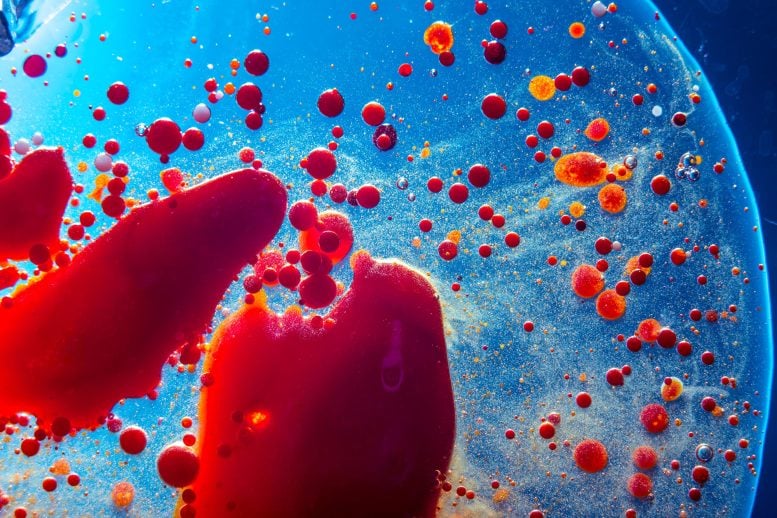
Red Bubble Blood CellsA new evolutionary analysis suggests that modern blood and immune cells may preserve a 700-million-year legacy inherited from ancient single-celled ancestors. Long before humans, dinosaurs, or even fish existed, ancient single-celled organisms may have already carried the genetic blueprint for one of the body’s most important systems: blood. A new study from Kyoto University suggests [...]
  •  

Scientists Discover Two Strange Dead Stars That Defy Astronomical Expectations

White Dwarf Dead Star Superdense CoreResearchers say the isolated white dwarfs Gandalf and Moon-Sized define a new class of stellar remnant because they share five traits, including X-ray emission. Across the immense scale of the Universe, a single unusual object can prompt astronomers to look for others like it, sometimes leading to the recognition of an entirely new class of [...]
  •  

Simple Family Routines May Be the Secret to a Smoother Start at School

Smiling SchoolgirlParents in rural, low-income households who maintained strong family routines reported fewer behavior problems and ADHD symptoms in their children. Starting elementary school is an important step for children, but the shift can be challenging. Some children experience separation anxiety, while others have difficulty adjusting to classroom rules and daily school structure. A Penn State-led [...]
  •  

If GPS Went Dark, What Would Fail First?

GPS is commonly treated as a way to find a route or track a delivery. In critical infrastructure, its quieter function is often more consequential: it distributes precise time that helps far-flung systems agree on when something happened. That shared time base supports cellular and broadband networks, parts of the electric grid, and regulated timekeeping […]

The post If GPS Went Dark, What Would Fail First? appeared first on Curiosmos.

  •  

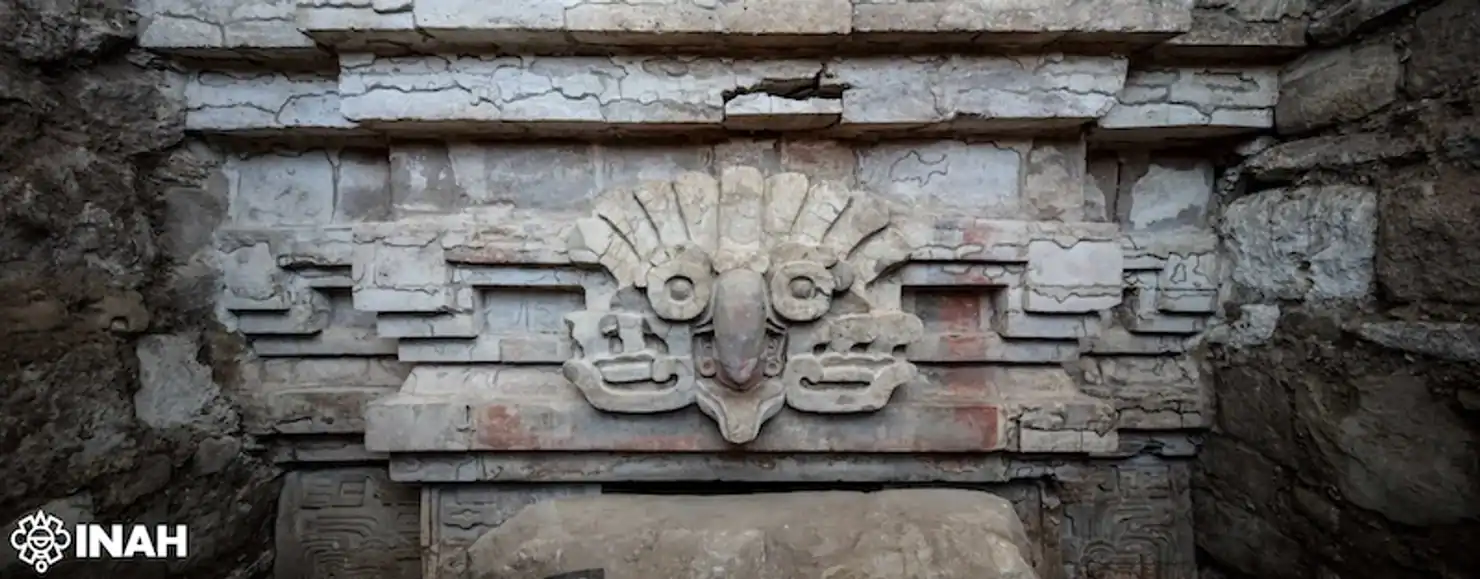
‘Discovery of the Decade’: 1,400-Year-Old Zapotec Tomb Found in Mexico

Mexican officials have announced what experts are calling the most significant archaeological find of the last ten years: a pristine, 1,400-year-old Zapotec tomb discovered in the state of Oaxaca. Located in San Pablo Huitzo, the ancient mausoleum has stunned researchers with its exceptional state of preservation and, most notably, a monumental sculpture of an owl, […]

The post ‘Discovery of the Decade’: 1,400-Year-Old Zapotec Tomb Found in Mexico appeared first on Curiosmos.

  •  
❌