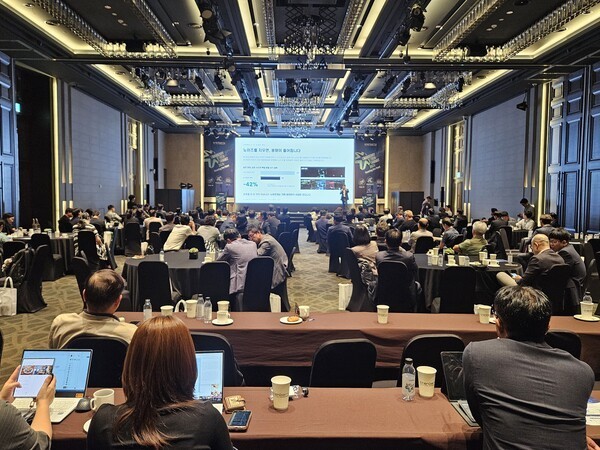
Sound-analysis security company Cranberry held the “CRANBERRY TECH SUMMIT 2026” on Sept. 10.
Cranberry has developed an artificial intelligence system designed to detect danger signals such as the sound of someone entering the water or screams around Han River bridges and waterfront areas, analyze the location of an incident and dispatch autonomous flying drones equipped with lifesaving equipment.
Cranberry said Sept. 14 that the approach marks a shift from relying on existing closed-circuit television cameras or emergency reports to having AI detect accidents first and mobilize rescue equipment.
Cranberry is also developing a predictive-maintenance system with the Korea Environment Corporation to analyze abnormal sounds generated by intake pumps at water-treatment plants. The company is working with Korea East-West Power to develop a system for diagnosing abnormal conditions in valves used in power-generation equipment.
Cranberry's main market is currently public safety. The company has supplied intelligent acoustic-analysis devices to Eunpyeong-gu in Seoul, Gunsan City, Suyeong-gu in Busan, Jangseong County in South Jeolla Province and Uiseong County in North Gyeongsang Province. In the private sector, it has deployed systems at some Lotte Mart stores, Brighton Hannam and Hyundai Motor. Municipal-government projects account for about 60% of the company's total revenue, according to Cranberry.
Cranberry posted 5.3 billion won in revenue last year and has set a revenue target of 7.5 billion won for this year. The company plans to seek Series A funding to enhance its products and commercialize technologies demonstrated in the field.
Cranberry also plans to pursue an initial public offering over the medium to long term, aiming to validate its market this year, expand sales channels in 2027, turn its technology into a platform in 2028 and scale up its business in 2029, before targeting a KOSDAQ listing in 2030.
An image from Nexon’s “Mabinogi Eternity.” (Image: Nexon)
An image from Nexon’s “Mabinogi Eternity.” (Image: Nexon)
Nexon said on Sept. 7 that it successfully completed the first alpha test of “Mabinogi Eternity,” an engine replacement project for its massively multiplayer online role-playing game (MMORPG) “Mabinogi.”
The four-day test, held from Sept. 3-6, evaluated key gameplay flows based on user play, including early-game progression, combat and life-skill content.
On the first day, Executive Director Min Kyung-hoon communicated with users in real time through a livestream, explaining the purpose of the test and the project’s future development direction. He also detailed changes including improved gameplay convenience and life-skill tool items.
Nexon plans to further improve Mabinogi Eternity based on user gameplay patterns and survey results collected during the test.
Smilegate said on Sept. 7 that it will begin PC pre-downloads for its new massively multiplayer online role-playing game (MMORPG), “ECLIPSE: The Awakening,” or ECLIPSE, at noon on Sept. 8.
Players can pre-download the game by downloading the STOVE client and then the game client from the official ECLIPSE website. Mobile pre-downloads will begin on Sept. 9.
ECLIPSE has surpassed 1 million pre-registrations ahead of its official launch. Smilegate will provide all pre-registered players with growth-support items, including a rare-grade weapon appearance summon ticket and transcendence summon ticket. To mark the 1 million milestone, the company will also provide 1 million gold and five transcendence summon tickets and five weapon appearance summon tickets.
ECLIPSE describes itself as an MMOLite that retains the core MMORPG elements of character progression and combat while reducing the burden of staying logged in and competing. Its artificial intelligence (AI) mode allows characters to continue progressing even when players are offline.
ECLIPSE will officially launch at noon on Sept. 10.
Devsisters said on Sept. 7 that it began pre-registration on Sept. 4 for “CookieRun: Card Collection,” a Roblox game based on the trading card game (TCG) “CookieRun: Braverse Card Game.”
CookieRun: Card Collection is a Roblox-based random card generator (RCG) simulation game focused on collecting and upgrading cards. It combines random number generation (RNG) elements with the strategic collecting aspects of a TCG, allowing players to build and complete their own decks.
The project is being jointly developed by Devsisters and VerseWork, a Roblox-based user-generated content (UGC) developer. Through CookieRun: Card Collection, the companies aim to reach new users beyond physical cards and explore opportunities to expand the intellectual property (IP) ecosystem.
CookieRun: Card Collection, which supports Korean and English, is scheduled for a global launch on Oct. 10. Pre-registration is available through the CookieRun: Card Collection page on the Roblox platform.
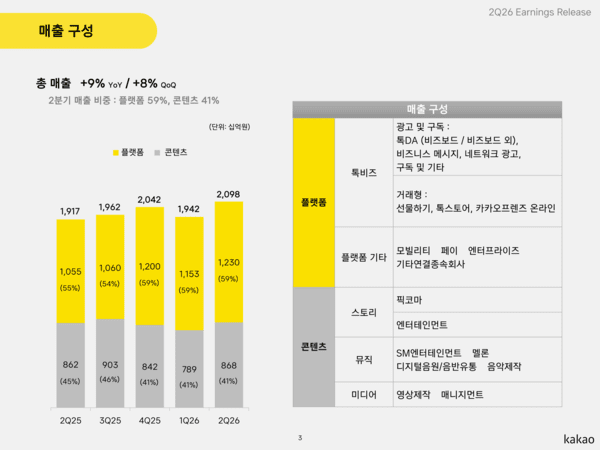
Summary of Kakao’s second-quarter 2026 financial results. (Image: Kakao)
Summary of Kakao’s second-quarter 2026 financial results. (Image: Kakao)
Kakao plans to introduce an agentic artificial intelligence (AI) service that can identify food-ordering intent within KakaoTalk conversations and connect users from menu recommendations to payment through a partnership with Coupang Eats.
The company disclosed during its second-quarter 2026 earnings conference call on Aug. 6 that it has signed an agent-to-agent (A2A) partnership agreement with Coupang Eats. Under the envisioned model, KakaoTalk’s on-device AI will analyze conversational context and user preferences to recommend menu items, while the Coupang Eats agent will handle ordering and payment functions.
The two companies are currently discussing implementation details. Beginning with food delivery, Kakao plans to expand its agentic AI ecosystem into other frequently used consumer services, including commerce, reservations, travel and payments.
KakaoTalk will incorporate the company’s on-device AI model, Kanana 2 1.3B, along with long-term memory technology. The system is designed to understand schedules and interests scattered across multiple conversations as a unified context and provide increasingly personalized services based on accumulated user behavior and preferences. Kakao plans to introduce related experiences gradually in the second half of the year and is targeting more than 10 million monthly active users (MAUs) for its AI services by year-end.
Kakao said it will focus its resources on AI services that directly interact with consumers rather than infrastructure businesses such as AI data centers, graphics processing units (GPUs) and cloud computing. The company believes large upfront investments and ongoing capital expenditures are required for AI infrastructure, while rapid technology refresh cycles for GPUs and AI servers make the long-term sustainability of current profitability uncertain.
As a result, Kakao intends to prioritize AI services at the user interface level rather than capital-intensive infrastructure investments. The company plans to strengthen its in-house capabilities across the AI value chain, from models to services, leveraging its strengths in business-to-consumer (B2C) platforms.
Kakao reported second-quarter revenue of 2.0985 trillion won and operating profit of 277.0 billion won, both record highs for a single quarter. The figures increased 9% and 36%, respectively, from a year earlier.
Revenue from the platform segment rose 17% year over year to 1.2303 trillion won. Talk Biz revenue reached 643.2 billion won, while advertising and subscription revenue hit a quarterly record of 399.9 billion won. Business messaging revenue and display advertising within KakaoTalk grew 20% and 28%, respectively.
Revenue from the content segment totaled 868.2 billion won, remaining broadly in line with the previous year. Music and media revenue increased, while story revenue declined 16%.
“Considering the direction of Kakao’s AI strategy and the speed of execution, we expect the foundation for AI mass adoption to be established by the end of this year and full-scale monetization to begin next year,” Chief Executive Officer Chung Shin-a said.
Kakao aims to increase the share of AI-related revenue within its Talk Biz segment to double-digit percentages by 2028 through transaction fees, subscriptions and AI-powered advertising, positioning AI as a key driver to reignite Talk Biz growth and serve as a major revenue source.
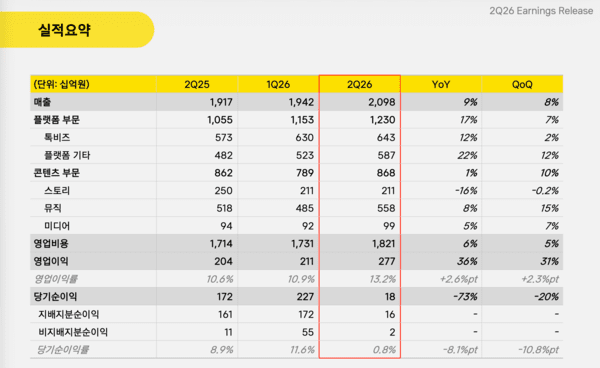
Summary of Kakao’s second-quarter 2026 financial results. (Image: Kakao)
Summary of Kakao’s second-quarter 2026 financial results. (Image: Kakao)
Kakao reported record quarterly revenue and operating profit for the second quarter, driven by continued growth across its platform businesses. Strong performance from Talk Biz, mobility and payments operations also strengthened the company’s financial capacity to invest in artificial intelligence (AI) initiatives.
The company said on Aug. 6 that second-quarter revenue reached 2.10 trillion won, while operating profit rose to 277.0 billion won on a consolidated basis under Korean International Financial Reporting Standards (K-IFRS). The figures were up 9% and 36%, respectively, from a year earlier.
Revenue from the platform segment totaled 1.23 trillion won, an increase of 17% year over year. Within the segment, Talk Biz generated 643.2 billion won, accounting for 52% of platform revenue. Advertising and subscription revenue rose 14% from a year earlier to 399.9 billion won.
Business messaging revenue increased 20% as demand from advertisers in the financial sector expanded. Display advertising on KakaoTalk also grew 28%, supported by higher user engagement and the performance of new advertising products.
Talk Biz commerce revenue reached 243.2 billion won, up 10% from the same period last year. Combined gross merchandise value from services including Gift and Talk Deal increased 9% to 2.7 trillion won during the quarter. Self-purchase transactions through the Gift platform rose 39%.
Revenue from other platform businesses, including mobility and payments, climbed 22% year over year to 587.0 billion won. The mobility business benefited from growth in its core operations and last-mile logistics services. Kakao Pay posted record quarterly revenue and operating profit, supported by higher financial-service revenue and growth in payment and platform services.
Revenue from the content segment increased 1% from a year earlier to 868.2 billion won. Music revenue rose 8% to 558.4 billion won, while media revenue increased 5% to 99.1 billion won. Story revenue totaled 210.7 billion won.
Operating expenses rose 6% year over year to 1.82 trillion won.
Kakao said it plans to gradually introduce agentic AI services within KakaoTalk that connect everyday activities such as ordering, reservations and payments. The company will work with partners in commerce, reservations, travel and payments while expanding its ecosystem through its open platform, PlayMCP.
As an initial example, Kakao plans to establish an environment in which users can complete food ordering and payment directly within a KakaoTalk chat room through an agent-to-agent (A2A) partnership with Coupang Eats. The company said an on-device AI model will understand conversational context and seamlessly connect users to ordering and payment functions.
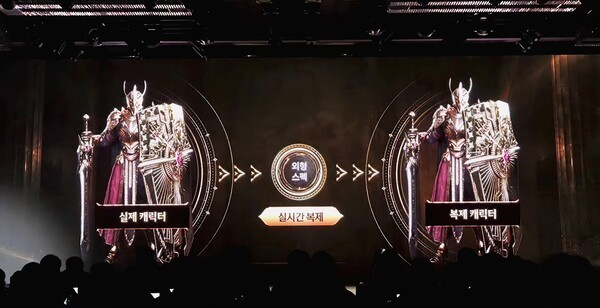
The "Persona" system in Com2uS' upcoming game Zeus: The God of Arrogance. (Photo: THE ELEC)
The "Persona" system in Com2uS' upcoming game Zeus: The God of Arrogance. (Photo: THE ELEC)
Com2uS' upcoming MMORPG Zeus: The God of Arrogance (Zeus) and Smilegate's Eclipse: The Awakening (Eclipse) are set to face off in the market with launches just two weeks apart. While both games aim to reduce the fatigue associated with long play sessions in traditional MMORPGs, they differ significantly in their settings, competitive structures and character progression systems.
Published by Com2uS and developed by AButton, Zeus is scheduled for release on Aug. 26. Eclipse, published by Smilegate and developed by NPIXEL, is slated to launch on Sept. 10.
Zeus is built around a world inspired by Greek mythology. Rather than directly adapting familiar myths, the game reimagines the stories of Pandora, the Titans and the Olympian gods in a world fractured by the arrogance of Zeus, the king of the gods. Unreal Engine 5-powered graphics and a multilayered competitive structure are among its key features.
"Greek mythology is a story that virtually everyone knows, yet it has surprisingly rarely been explored properly in games," said Jung Sung-hoon, director at AButton. "We used that familiarity as a starting point while adding our own fresh elements. Many well-known gods will guide players into the world of the God of Arrogance, each with their own role."
In contrast, Eclipse adopts an original setting centered on the prosperous world of Ederion, blessed by the gods, and its hidden counterpart, Orthea. The game builds its own narrative around uncovering the truth concealed behind a seemingly perfect world.
"Stories based on well-known mythological elements often have predefined events, narratives and character frameworks," said Kim Dong-hyuk, chief art director at NPIXEL. "Rather than incorporating existing mythology, we felt it was important to create our own mythological details, which is why we chose an original story."
At the core of both games is the effort to reduce the burden of extended MMORPG play. However, Zeus focuses on improving convenience so that more players can participate in competition and progression, rather than reducing competitive elements themselves. Even while using AI-driven auto-play mode, players can access shops, trade items and manage equipment. A scheduling function also allows players to assign different hunting areas based on time periods.
The game also introduces an AI-powered "Persona" system designed to lower playtime requirements while preserving the appeal of competitive MMORPG gameplay. Personas are AI-controlled replicas generated in real time using a player's character specifications and appearance. Players can compete against these personas in one-on-one content such as the Colosseum and in large-scale guild-versus-guild RvR content known as the Arcadia Festival.
"Eclipse Time" in Eclipse: The Awakening. (Photo: THE ELEC)
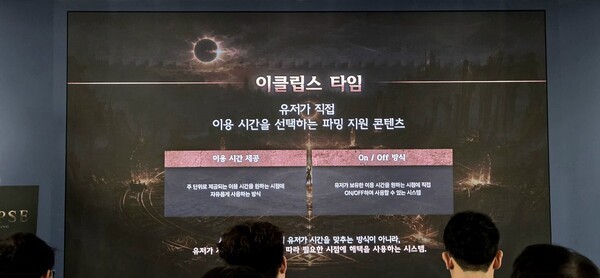
Eclipse, meanwhile, defines its approach as "MMO Lite." The concept aims to preserve the enjoyment of progression, cooperation and combat while reducing both time and spending requirements. Its flagship "Sanctuary" feature allows players to accumulate experience points and growth resources even while offline. The game also includes an AI mode that enables automated hunting during offline periods and a support feature called "Eclipse Time," which lets players choose their preferred play schedule.
The two titles also differ in their player-versus-player (PvP) philosophies. While Zeus emphasizes a multilayered competitive structure, Eclipse adopts optional PvP, giving players greater control over whether they participate in competitive content. Most areas are designated as safe zones, and large-scale battles are designed to be completed in shorter sessions. Combat strategies based on weapon selection and skill combinations further distinguish the game.
Both titles are strategically important to their publishers' MMORPG businesses. Zeus is Com2uS' flagship MMORPG release for the second half of the year and the first title from AButton. With The Starlight, released in 2025, falling short of expectations, industry observers are watching to see whether Zeus can become a new growth driver for the company's RPG business.
Eclipse is a new MMORPG jointly introduced by Smilegate and NPIXEL. As revenue from Lost Ark continues to stabilize at lower levels, the title is expected to play a key role in securing new revenue streams. Industry attention is also focused on how players will respond to the game's "MMO Lite" strategy, which seeks to maintain traditional MMORPG progression and competitive systems while reducing player burden.
By taking different approaches to easing MMORPG fatigue—Zeus through Greek mythology and competitive gameplay, and Eclipse through an original world and optional PvP—the two titles are poised to compete for different segments of the market. Their launches, separated by roughly two weeks, will be closely watched in the second half of the year.
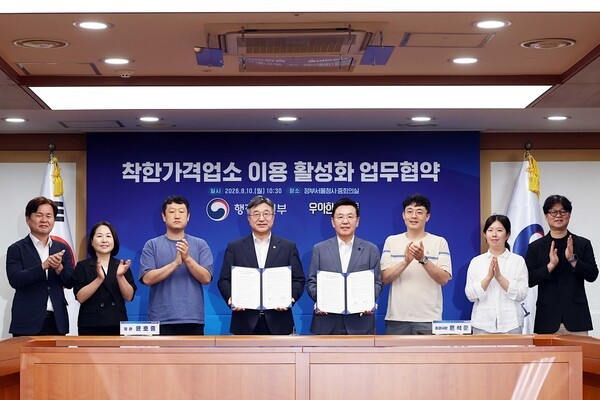
Officials from Woowa Brothers and the Ministry of the Interior and Safety pose for a commemorative photograph after signing an agreement to promote the use of Good Price Stores. (Photo: Woowa Brothers)
Officials from Woowa Brothers and the Ministry of the Interior and Safety pose for a commemorative photograph after signing an agreement to promote the use of Good Price Stores. (Photo: Woowa Brothers)
Woowa Brothers, the operator of food delivery platform Baemin, said on Aug. 10 that it signed a memorandum of understanding with South Korea's Ministry of the Interior and Safety to promote the use of certified low-price businesses, known as Good Price Stores.
Good Price Stores are businesses recognized by the ministry and local governments for offering affordable prices, hygienic environments and friendly service, making them establishments that consumers are likely to revisit.
The agreement is intended to help ease the burden of inflation on consumers. Under the program, restaurant owners who have maintained affordable prices will gain additional opportunities to increase sales, while consumers will receive benefits through the Baemin platform.
From Aug. 17 through Sept. 13, customers will be able to receive delivery-only discount coupons worth 3,000 won for orders placed at participating Good Price Stores on a first-come, first-served basis.
Baemin will also support participating businesses by featuring them through banner promotions on the "Together Store" page within its mutual-growth program section on the platform.
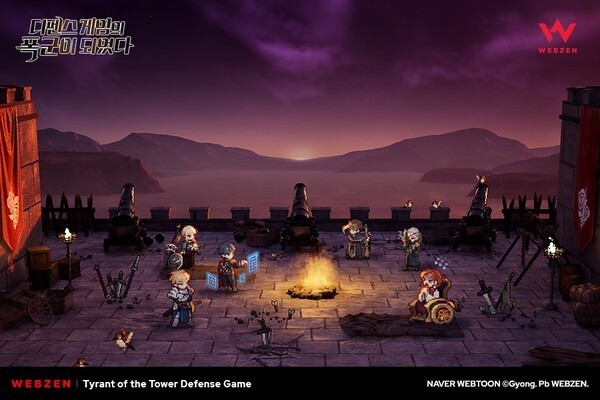
Webzen on Aug. 10 revealed the first gameplay visuals and details for its self-developed upcoming title, Project D1.
Project D1 is a command strategy role-playing game (RPG) being developed by Webzen Crevix, a subsidiary of Webzen, based on the intellectual property (IP) of the popular webtoon I Became the Tyrant of a Defense Game. The title is currently in development with a target launch in 2027.
The game recreates the world into which the protagonist of the original webtoon is summoned, using a dot-graphics-based "diorama pixel art" style. The technique combines 2D pixel art with three-dimensional spatial presentation.
The original webtoon's narrative has been adapted into a party-based combat system. The episodes and storylines involving the protagonist have been reinterpreted through party composition, tactical operations, character progression and command-based battles.
Webzen said it plans to disclose more detailed information about the game in the second half of this year.
Naver said it will introduce a membership-exclusive dawn delivery service in October and begin generating revenue from its AI Factory project next year.
During its second-quarter 2026 earnings conference call on Aug. 7, the company said it plans to launch a dedicated dawn delivery service alongside a membership-only returns center that will provide faster returns processing. Since expanding free shipping and return benefits under its N Delivery membership program, customer purchase frequency has increased by about 29%, while the program's share of transactions has exceeded 70%.
Naver is also accelerating its AI infrastructure business. The company plans to begin operating its AI Factory project with Nvidia at 55 megawatts of capacity in the first half of 2027, when it expects the facility to start generating revenue. Capacity is targeted to expand to 100 megawatts by the end of 2027 and 200 megawatts in 2028. Naver is currently discussing the development of approximately $9 billion in computing infrastructure for the project with Brookfield.
The company noted that investment spending will remain elevated in the second half of the year due to continued deployment of Npay Connect and investments in computing assets such as graphics processing units (GPUs) and central processing units (CPUs). Naver said 2026 represents the peak period for growth-related investment and expects the pace of cost increases to moderate beginning next year.
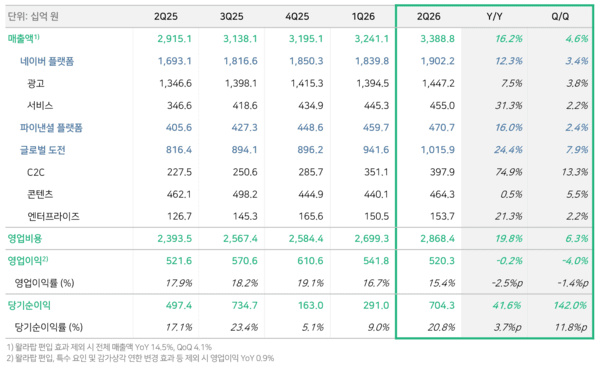
The company reported second-quarter consolidated revenue of 3.39 trillion won and operating profit of 520.3 billion won. Revenue increased 16.2% from a year earlier, while operating profit declined 0.2%.
Revenue from the Naver Platform segment rose 12.3% year over year to 1.90 trillion won. Advertising revenue increased 7.5% to 1.45 trillion won, supported by expanded AI-driven advertising optimization. The company said AI accounted for more than 60% of incremental advertising revenue growth during the quarter.
Naver has also begun monetizing generative AI services. AI Briefing Ads, which were tested during the second quarter and officially launched at the end of July, delivered cost-per-click and click-through rates more than 30% higher than traditional search advertisements. Purchase conversion rates were more than three times higher. The company said it plans to expand the service as a new advertising inventory rather than a replacement for existing search advertising.
Service revenue, including commerce operations, increased 31.3% year over year to 455.0 billion won. Gross merchandise volume on Smart Store rose 15.5% during the quarter, while transaction volume on the Naver Plus Store app increased by more than 35%.
The company is also strengthening its logistics capabilities. Transaction volume through Smart Store's N Delivery service rose 76% year over year in June, and N Delivery accounted for more than 20% of total platform transactions. Naver plans to increase that share to 25% by the end of this year.
Naver posted double-digit revenue growth in the second quarter, but operating profit edged lower as spending on AI infrastructure and World Cup broadcasting rights weighed on earnings.
The company said on Aug. 7 that consolidated revenue reached 3.39 trillion won in the second quarter of 2026, up 16.2% from a year earlier. Operating profit declined 0.2% to 520.3 billion won.
According to Naver, the decline in operating profit reflected one-time costs related to the rollout of its offline integrated payment terminal, Npay Connect, broadcasting rights for the 2026 FIFA World Cup held from June 12 to July 20, intellectual property (IP) recognition expenses and investment in graphics processing unit (GPU)-based AI infrastructure.
Revenue growth was led by the Naver Platform segment, which includes advertising and commerce services. Segment revenue rose 12.3% year over year to 1.90 trillion won.
Advertising revenue increased 7.5% from a year earlier, supported by AI-driven content optimization and enhanced targeting capabilities. The company said AI contributed more than 60% of advertising revenue growth. Naver is also developing AI Briefing Ads, launched at the end of July, as a new revenue source powered by generative AI. The company said the product has delivered click-through conversion rates more than 30% higher than conventional search advertising and purchase conversion rates more than three times greater.
Service revenue, including commerce operations, rose 31.3% year over year, driven by growth in Naver Plus Store, membership services and N Delivery.
The financial platform business generated revenue of 470.7 billion won, up 16.0% from a year earlier, as the company continued expanding its payment ecosystem. Npay payment volume increased 21.0% to 25.2 trillion won, supported by growth in Smart Store transactions and expansion of external merchant networks.
Naver is also expanding Npay Connect as part of its push into AI-powered business platforms. The company plans to integrate online and offline data to strengthen its ecosystem and create new monetization opportunities.
Global business revenue rose 24.4% year over year to 1.02 trillion won. Consumer-to-consumer (C2C) operations were the main growth driver, with revenue increasing 74.9% from a year earlier, supported by higher transaction volume and revenue at Wallapop, Poshmark and Soda.
Content revenue increased 0.5% from a year earlier, while enterprise revenue rose 21.3%, supported by growth in business-to-business (B2B) sales related to AI and digital twin projects.
Naver said it is expanding AI infrastructure initiatives alongside the integration of AI across its existing services. The company expects revenue from its AI Factory project with Nvidia to begin in the first half of 2027.
Image of ADT Caps Store Solution. (Image: ADT Caps)
Image of ADT Caps Store Solution. (Image: ADT Caps)
ADT Caps, the physical security brand of SK shieldus, said on Aug. 6 that it has launched Caps Store Solution, a new integrated service designed to manage both store operations and security through a single application.
Caps Store Solution enables real-time management of security, access control, attendance, sales and connected devices through Caps ON, the company's unified management platform.
The service can be customized for a wide range of retail environments, including hybrid stores, unmanned stores, small single-operator shops and franchise locations. Users can select only the functions they need, such as access authentication terminals, kiosks and doorbells, and configure the system accordingly.
Selected functions can be managed through the Caps ON mobile application. Based on sales data collected from payment devices such as kiosks, operators can monitor sales performance by time period and product category. The platform also analyzes operational data to support more efficient store management and data-driven decision-making.
When integrated with ADT Caps' security response service, the solution allows businesses to handle routine store operations and emergency response through a single management framework.
RaonSecure commemorates its selection as a participating company in the 2026 Blockchain Specialized University (Graduate School) Support Program. (Photo: RaonSecure)
RaonSecure commemorates its selection as a participating company in the 2026 Blockchain Specialized University (Graduate School) Support Program. (Photo: RaonSecure)
RaonSecure said on Aug. 6 that it has been selected as a participating company for the 2026 Blockchain Specialized University (Graduate School) Support Program, an initiative led by South Korea’s Ministry of Science and ICT and the Korea Internet & Security Agency (KISA).
The program was established to cultivate industry-ready blockchain professionals through cooperation between universities and the private sector. It aims to narrow the gap between education and industry demand by integrating blockchain coursework, hands-on training and problem-solving projects.
RaonSecure will operate the “University Hub,” providing a common blockchain technology infrastructure to participating institutions including Seoul Women’s University, Konyang University and Hansei University. The company will build a shared training environment where students can learn blockchain technologies in conditions that closely resemble real-world industry settings.
RaonMeta, a subsidiary of RaonSecure, will provide extended reality (XR)-based learning environments through dedicated university sections of Metademy, its artificial intelligence (AI) and virtual convergence training platform. The system will allow students to experience step-by-step development processes in immersive educational settings.
In addition, RaonSecure will issue digital credentials through its OmniOne Badge platform, enabling learning achievements to be recorded on blockchain infrastructure. Students who meet specified requirements will be eligible to receive a professional digital identity based on decentralized identity (DID) technology through OmniOne Digital ID, the company’s blockchain-based integrated identity and credential verification platform.
Nexon and the Daegu Digital Innovation Promotion Agency commemorate the signing of an MOU to foster the regional game industry. (Photo: Nexon)
Nexon and the Daegu Digital Innovation Promotion Agency commemorate the signing of an MOU to foster the regional game industry. (Photo: Nexon)
Nexon said on Aug. 6 that its open-license intellectual property (IP) project, NEXON Replay, has signed a memorandum of understanding (MOU) with the Daegu Digital Innovation Promotion Agency (DIP) to foster the regional game industry.
Under the agreement, Nexon and DIP will jointly promote the "NEXON Replay IP-Linked Game Development Support Program" as part of the "2026 Daegu Global Game Center Game Content Production Support Project."
NEXON Replay is an open-license initiative designed to explore new possibilities for Nexon's IP portfolio by providing opportunities for secondary creations based on the company's game franchises. The project aims to expand collaboration with external creators and developers.
Eligible applicants are game developers headquartered in Daegu or those capable of relocating their headquarters to the city within one month. Companies selected for the program will enter into the same revenue-sharing and non-disclosure agreements applied to NEXON Replay partners. They will also receive mandatory development resources from either The Legend of Darkness or Asgard to support game development.
Nexon said it plans to use NEXON Replay to broaden opportunities for regional game developers to collaborate with its IP portfolio.
Summary of Webzen's first-half 2026 financial results. (Image: Webzen IR materials)
Summary of Webzen's first-half 2026 financial results. (Image: Webzen IR materials)
Webzen reported lower revenue and operating profit for the first half of 2026 as a slowdown in new game releases weighed on performance.
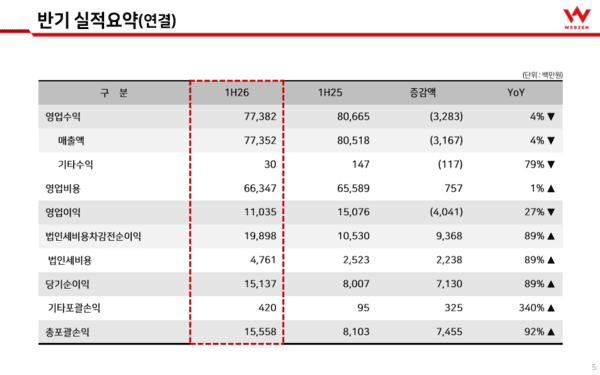
The company said on Aug. 6 that it posted consolidated first-half revenue of 77.3 billion won, operating profit of 11.0 billion won and net profit of 15.1 billion won. Revenue and operating profit declined 4% and 26.8%, respectively, from a year earlier. Net profit increased 89% due to a low comparison base resulting from a temporary decline in the first half of last year.
For the second quarter, Webzen recorded revenue of 38.0 billion won, operating profit of 5.6 billion won and net profit of 6.3 billion won. Compared with the same period a year earlier, the figures fell 2.8%, 8.4% and 6.4%, respectively. The company said weaker performance resulting from the absence of new game launches affected first-half results.
Webzen plans to focus on unveiling and preparing new titles in the second half of the year. Project D1, a strategy game being developed by subsidiary Webzen Crevix, is currently targeting a 2027 release. The company plans to disclose additional information about the game later this year.
Project D1 is based on the Naver Webtoon series Tyrant of the Defense Game. The title is being developed as a hybrid genre game combining tower defense and dungeon offense gameplay within a 2.5D pixel-art environment.
Webzen also plans to release additional information as early as the second half regarding Gate of Gates, a strategy defense game that combines traditional defense mechanics with a roguelike progression system.
Project G, a large-scale title based on the MU intellectual property franchise and aimed at Western markets, is currently being developed by subsidiary Webzen Redstar.
Kakao Games has partnered with The Grimm Entertainment to develop games based on popular webtoon intellectual property (IP).
Kakao Games said on Aug. 4 that it signed a memorandum of understanding (MOU) with The Grimm Entertainment covering the development and publishing of games based on webtoon IP.
The Grimm Entertainment is a webtoon production company founded by webtoon creator Park Tae-jun. The company owns a number of webtoon IPs that have gained popularity in both domestic and global markets, including Lookism and Manager Kim.
Under the agreement, Kakao Games will be able to utilize comic and webtoon IPs owned by The Grimm Entertainment for game development and publishing. The two companies also plan to expand competitive content IP into games and pursue cooperation in global publishing initiatives.
NEXUS said it returned to profitability in the first half of the year, supported by gains related to its acquisition of One Store, while accelerating efforts to expand its platform business and build an artificial intelligence (AI) and blockchain gaming ecosystem.
The company said on Aug. 4 that, under consolidated K-IFRS standards, it recorded second-quarter revenue of 5.8 billion won, an operating loss of 5.3 billion won and net income of 8.08 billion won. Compared with the same period a year earlier, revenue declined 37.8%, operating profit swung to a loss and net income returned to positive territory.
NEXUS said the quarter reflected a 15.7 billion won gain arising from the acquisition of One Store, as well as higher platform revenue generated through participation in network operations as a validator. Cumulative first-half revenue reached 17.42 billion won, up 9.4% from a year earlier. Net income totaled 5 billion won, compared with a loss in the same period last year.
On June 29, NEXUS acquired an 89.03% stake in One Store for 62.6 billion won. Following the acquisition, the company reorganized its ecosystem under the "ONE" brand, renaming its mainnet from CROSS to ONEchain and changing its native token from $CROSS to $ONE. It also unified its payment infrastructure around $ONEUSD.
The company plans to expand its AI and blockchain gaming platform centered on One Store. This month, it will launch an AI Games section featuring AI-powered gaming services. In mid-August, it plans to integrate its embedded wallet, ONEpocket, into the One Store application. Later this month, the company will launch a global version of One Store in 124 countries using a single-build deployment model, expanding its international gaming platform business.
NEXUS is also strengthening its content portfolio. Through cooperation with Chinese technology company Tencent, One Store plans to introduce a series of mini-games on its ONEPlay platform, including Run for Survival, Legend of Divine Artifact and Oh! The Cat Is Here. The company also plans to add AI and blockchain games as it seeks to differentiate its content offerings.
Slides from Netmarble's second-quarter 2026 earnings presentation (Source: Netmarble)
Slides from Netmarble's second-quarter 2026 earnings presentation (Source: Netmarble)
Slides from Netmarble's second-quarter 2026 earnings presentation (Source: Netmarble)
Slides from Netmarble's second-quarter 2026 earnings presentation (Source: Netmarble)
Netmarble is revising its long-standing strategy of releasing multiple new titles each year, opting instead for a more focused approach centered on operational efficiency and selective investment in high-potential games.
Speaking during the company's earnings conference call on Aug. 5, Chief Executive Officer Kim Byung-kyu acknowledged that several new titles released during the first half of the year failed to meet market expectations.
"We pursued a strategy of driving growth through the launch of multiple games," Kim said. "However, the performance of our new titles in the first half fell short of expectations."
He added that the company understands investor concerns regarding the visibility of its growth outlook for the second half of this year and beyond 2027.
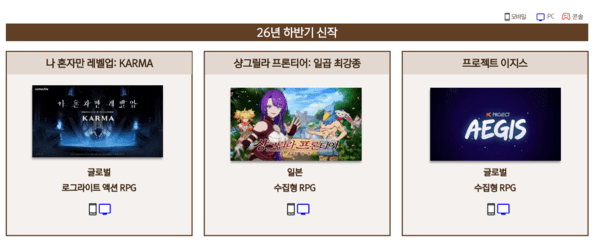
As a result, Netmarble has reduced its planned 2026 new game lineup from five titles to three. The company now intends to release Solo Leveling: Karma, Shangri-La Frontier: The Seven Colossi and Project Aegis during the second half of the year.
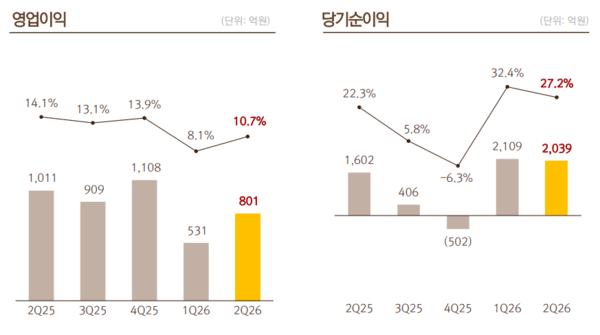
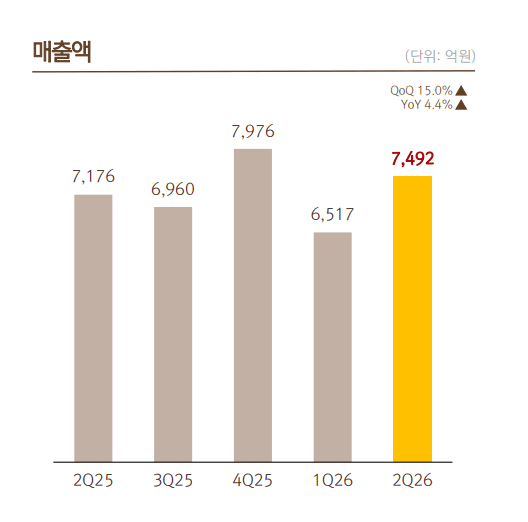
Netmarble reported second-quarter consolidated revenue of 749.2 billion won, operating profit of 80.1 billion won and net profit of 203.9 billion won.
Compared with the same period last year, revenue increased 4.4% and net profit rose 27.3%, while operating profit declined 20.8%.
The company attributed revenue growth to ongoing updates for The Seven Deadly Sins: Origin and the initial contribution from newly launched massively multiplayer online role-playing game (MMORPG) SOL: enchant.
Overseas revenue reached 580.8 billion won during the quarter, accounting for 78% of total sales. International revenue increased 22.6% year over year and 13.4% from the previous quarter.
By region, North America represented 39% of revenue, followed by South Korea at 22%, Europe at 13%, Southeast Asia at 10%, Japan at 9% and other markets at 7%.
By genre, role-playing games accounted for 42% of revenue, casual games for 35%, MMORPGs for 17% and other genres for 6%.
For the first half of 2026, Netmarble generated cumulative revenue of 1.4009 trillion won, operating profit of 133.2 billion won and net profit of 414.8 billion won.
Compared with the same period last year, revenue increased 4.4% and net profit rose 72.5%, while operating profit declined 11.7%.
Going forward, the company said it will focus on strengthening the performance of existing live-service games while pursuing a more selective new-title strategy aimed at improving earnings stability and sustaining long-term growth.
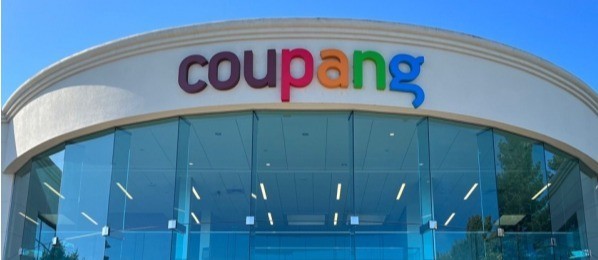
Internal investigations and external forensic analysis related to the Coupang customer data leak incident found that information from approximately 3,000 accounts had been stored, with no evidence of external transmission or additional data leakage. (Photo: Coupang)
Internal investigations and external forensic analysis related to the Coupang customer data leak incident found that information from approximately 3,000 accounts had been stored, with no evidence of external transmission or additional data leakage. (Photo: Coupang)
Coupang Inc., the US-listed parent company of South Korean e-commerce giant Coupang, reported its largest-ever quarterly operating and net losses since its New York Stock Exchange listing, as a massive privacy-related regulatory fine outweighed continued revenue growth.
According to a consolidated earnings report filed with the US Securities and Exchange Commission (SEC) on Aug. 4, Coupang generated revenue of $8.856 billion in the second quarter of 2026, while recording an operating loss of $556 million and a net loss of $570 million.
Revenue increased 4% from $8.524 billion in the same period last year. On a constant-currency basis, revenue grew 10%.
Despite higher sales, profitability deteriorated sharply after the company recognized a regulatory fine imposed by South Korea's Personal Information Protection Commission.
Coupang said that excluding the approximately $410 million administrative penalty imposed in South Korea, second-quarter operating loss would have been $146 million, while net loss would have been $160 million.
The company swung from an operating profit of $149 million in the year-earlier period to an operating loss. Net income also reversed from a profit of $31 million a year earlier to a loss.
The second-quarter operating loss and net loss were the largest on a quarterly basis since Coupang's NYSE listing in 2021. The previous records were set in the second quarter of 2021, when the company posted an operating loss of $514.9 million and a net loss of $518.6 million.
The latest quarterly operating loss exceeded Coupang's full-year 2025 operating profit of $473 million. Its net loss was approximately 2.7 times larger than the company's full-year 2025 net income of $214 million.
Coupang had already reported an operating loss of $242 million in the first quarter of 2026. With losses continuing for a second consecutive quarter, first-half operating loss widened to $798 million, while cumulative net loss reached $836 million.
This marks the first time that both first-half operating loss and net loss have exceeded 1 trillion won. The first-half operating loss was nearly equal to the combined operating profit of $909 million generated during 2024 and 2025.
Global user-generated content contest image. (Image: Krafton)
Global user-generated content contest image. (Image: Krafton)
Krafton announced on Aug. 5 that PUBG: Battlegrounds and modding platform CurseForge will jointly host a global user-generated content (UGC) contest.
The competition will be divided into three categories: Combat, Survival and Creative. Participants may submit one or more entries and are allowed to enter multiple works across different categories.
A total of 30 winning entries, including the top 10 creations from each category, will be officially featured in PUBG: Playgrounds. The new creative-mode hub will become available through the PUBG: Battlegrounds play menu starting Aug. 12.
The contest offers a total prize pool of $95,000. First-place winners in each category will receive $10,000. Additional cash prizes will be awarded to six community-selected entries and 10 mid-competition standout creations.
Submissions will be accepted from Aug. 12 through Sept. 2. Following community voting, the final winners will be announced on Sept. 14.

 Login