❌

Reading view

The secret world of tribology

I have been involved in tribology for most of my working life, but even today it can feel like a well-kept secret. A highly interdisciplinary field with close ties to materials science, tribology is essentially the science and technology of friction, lubrication and wear between any moving surfaces. But tribology encompasses in part one age-old challenge.

I’m talking about the use of bearings, which dates back to at least 4600 BCE, when ancient Egyptians used wood log rollers to move large stone blocks during the construction of their pyramids. In 1500 Leonardo da Vinci used ball bearings in his conceptual helicopter design, while in 1740 the clock maker John Harrison invented caged roller bearings for his marine chronometer.

It was not until the mid-1960s that the word tribology was coined by the British engineer and entrepreneur Peter Jost after discussions with the then editor of the Oxford English Dictionary

The first patent on a ball bearing was granted to Philip Vaughan, an ironmaker from Carmarthen, Wales, bringing tribology firmly into the industrial world. But despite all the history, it was not until the mid-1960s that the word was coined by the British engineer and entrepreneur Peter Jost. After discussions with the then editor of the Oxford English Dictionary, the Greek word “tribos” – meaning rubbing – was suggested as a basis for describing the discipline.

This resonated with Jost, because the terms “tribo-chemistry” and “tribo-physics” were already in use. In an interview with the magazine Machinery Lubrication in 2005, Jost explained how “tribo science and tribo technology” then simply became shortened to tribology. “I felt that because it had a Greek basis, it could easily be adopted into a number of languages by most Western countries,” Jost recalled.

Wear’s the rub?

For the most part, the aim of tribology is to minimize friction and wear between components, which involves a knowledge of both materials and lubrication. Initially, the focus of the field was on moving parts in industrial or mechanical machines, such as bearings, gears, brakes and clutches. Indeed, one reason that the term came about was a conference in Cardiff in 1964 organized by the Iron and Steel Institute and the Institution of Mechanical Engineers (IMechE).

At the conference it became apparent that significant failures in plant machinery, which were being attributed to poor lubrication, were in fact due to a lack of fundamental design knowledge. These findings led to Jost chairing a UK government committee into lubrication education and research and the needs of industry. The resulting study – generally known as the “Jost report” – came out in 1964.

Now all this may seem like ancient history, which I suppose it is, but I was intrigued to discover that delegates to that 1964 conference visited the Llanwern steelworks at nearby Newport. As some of you may recall me describing, I also visited this site during my own student days, where I saw the steel rolling line in action. It was a truly impressive sight.

The total failure was remarkable, underlining just what can happen when moving parts fail without warning

From the viewing platform, I could see a massive volume of red-hot steel thunder along the rollers when, suddenly, there was a bang. Something failed and the steel landed in a crumpled mess all over the plant floor. We were safe but the total failure was remarkable to witness, underlining just what can happen when moving parts fail without warning.

The knock-on effect of this failure would have been costly and sustained. As well as a steel rolling line being out of action, new parts would have had to be sourced and old ones repaired. There’d have been quality concerns to address, safety reviews to be undertaken and the root cause of the problems to be worked out. Quite possibly all those jobs would have needed to be completed before production could restart.

What’s more, the failure of the machine’s moving parts, which depends on tribology, would have damaged the company’s reputation and led to customers annoyed with delays and late deliveries. It is this kind of event that those involved in tribology are trying to prevent, or at least minimize. By understanding tribology, in other words, engineers can design better machines and components.

What it says on the tin

This was made clear in the 1964 Jost report, which said that adopting good tribological practices could save the UK between 1% and 1.4% of its gross domestic product (GDP). In today’s money, that would amount to some £30bn, given that country’s GDP is a shade over £3 trillion. Put simply, designing and maintaining industrial equipment, based on a solid understanding of tribology, yields significant economic benefit.

More recently, a 2017 study by Kenneth Holmberg from the VTT Technical Research Centre of Finland and Ali Erdemir of the Argonne National Laboratory in the US (Friction (5 263) suggests that 20% of the world’s energy consumption originates in tribological contacts. And by the application of best practice, as much as 40% of this could be saved.

Rubbing along nicely

It’s generally accepted that there are three key ingredients for tribology:

  • Friction: the resistance encountered when one surface moves over another.
  • Wear: the loss or material from or damage to the surface due to continuous movement or contact.
  • Lubrication: the use of fluids or other substances to reduce friction and wear.

As a truly cross-functional discipline, tribology has strong overlaps with several fields, including:

  • Materials science: developing wear-resistant and self-lubricating materials.
  • Lubrication: design, additives, management.
  • Surface engineering: contact mechanics, adhesion, coatings, treatments.
  • Wear mechanisms: erosion, corrosion, tribo-corrosion.
  • Physics, chemistry and biosciences: medical, food and cosmetics applications.

More than 60 years after the publication of the Jost report, the influence of tribology continues to grow. Alongside its impact on transportation and manufacturing, tribology is also relevant to extreme environments from aerospace, nuclear power, marine and subsea to space technology, high-voltage electrical systems and even the human body. There are also applications in nano-tribology, cosmetics, food, computational, digital, tribotronics, geotribology, hydrogen and green tribology.

Tribology will help to reduce our carbon footprint and counter climate change

As chair of the IMechE’s tribology group committee and a member of the tribology group committee of the Institute of Physics, naturally I am biased. Still, I feel privileged to be part of the tribology community and the amazing things it achieves. Whether it’s making products more energy efficient, creating green lubricants, or making plant-based protein more palatable to meat eaters, tribology will help to reduce our carbon footprint and counter climate change.

So next time you brush your teeth, comb your hair, switch on a light or ride on a bus, spare a thought for tribologists and their dedication to making the world run smoothly. It’s hard to think of anything that doesn’t involve tribology at all.

  • The Institute of Physics is hosting the 5th Tribology and Net Zero seminar on 6 November in London co-organized with the Institution of Mechanical Engineers, the Royal Society of Chemistry, and the UK student chapter of the Society of Tribologists and Lubrication Engineers.

The post The secret world of tribology appeared first on Physics World.
  •  

Honor Powrie: 10 things I wish I’d known (or done better) when I started my career

When I went to university, I didn’t know what kind of career I wanted to pursue. I’d originally applied to study geophysics, but after a few weeks realized mineral exploitation wasn’t my thing and quickly switched to maths. Then, at the end of my first year, I had a range of degree options open to me and, whilst I preferred (and was better at) maths, I just didn’t feel it was my best choice for a career.

So I decided to switch again, this time to physics. During my degree, a few friends and I joined the Student Industrial Society (now known as the Bright Future Society). It gave us the chance to visit a range of companies – from micro-breweries and wine importers to TV studios, nuclear-power stations and semiconductor manufacturers. We also went to Llanwern steelworks in South Wales, where a closing session with a British Steel careers advisor really shook me up.

A feisty Yorkshireman, he started off by directly asking each of us what we planned to do after university. We were all put on the spot and our answers, which were embarrassingly unsure, failed to impress him. The advisor firmly suggested that if we didn’t know what our plans were by now, we had better find out before it was too late. For me, it was a wake-up call and when I got back to campus, I went straight to the careers office and started applying for summer student placements.

To my amazement, and despite my lack of experience, I was offered several positions and decided to take a summer job in Malvern at the Royal Signals and Radar Establishment, which is now part of the private defence-technology firm QinetiQ. Somehow, I managed to find something useful to work on and after 12 weeks had done enough to be as included as co-author on a peer-reviewed publication.

Summerlove sensation

After the placement, I continued with my physics degree, but began to feel something about physics wasn’t quite right for me. Whilst I loved the classical side of the subject and the real-world applications, I struggled with the less visible aspects, such as quantum and nuclear. So after a final-year project investigating the aerodynamics of cars – and finding myself more interested in my housemate’s mechanical engineering course – I wondered if I might be better suited to a career in engineering.

On the back of this growing interest, I applied to do a PhD in high-speed aerodynamics at the University of Southampton. My final-year project – coupled with my grounding in physics and the fact that I had a journal publication to my name – must have impressed my future supervisor, who picked me for the project. I had a great time on my PhD, which proved I loved engineering – particularly aerospace.

After four years in research, I realized an academic career wasn’t for me. But my PhD proved handy as it led to me getting a job with a small business called Stewart Hughes Ltd, which built vibration-monitoring equipment for use on mechanical machines. The company was looking for people with an academic background whose presence could help secure US government research funding. It turned out to be a sound strategy, as the firm built up a significant track record in winning high-value government grants.

My advice to you

These days I work a lot with interns and science or engineering students, who often ask me about my career path. As you can see, it wasn’t straightforward – and I believe a lot of people struggle making choices early in their careers. It’s easy to think you need to have everything mapped out in advance, which is rarely how things pan out. With that in mind, here are a few tips if you are starting out on your own career journey.

Top 10 tips

1 Even if you’re not sure what’s right for you – just try things out. Visiting industrial sites or attending topical lectures is great, even if it doesn’t lead to any work experience.

2 Be honest about what you like and don’t like – and don’t be afraid to change direction if things don’t feel right.

3 Be prepared to stretch yourself to find out more. Go outside your comfort zone.

4 Remember your degree subject may not be the most important thing unless you’re aiming for a career needing specific vocational training to get in. It’s far more important to study a subject you enjoy.

5 Get yourself a mentor who can be a constant in your career. They don’t have to be more senior to you; they could be a peer or someone more junior (i.e. a “reverse mentor”).

6 It’s fine if you enjoy doing lots of different things – but it doesn’t mean you have to do them all at once.

7 Being happy in what you do is more important than ultimate career goals.

8 Career opportunities don’t arise exactly when you’d like them to so be prepared to jump in or try different options if they pop up. A lateral move can be just as effective.

9 Don’t be afraid to nominate yourself for awards and prizes. An award will look good on your CV and there are a surprising number of opportunities.

10 Network and use your friends’ and peers’ experience.

Doing the rounds

One interesting bit of advice was once given to me on a career session led by a senior human-resources executive who works for a global corporation. The exec told us how he’d been having a golf lesson and was about to hit the ball down the fairway when the coach stopped him and asked where he was aiming. After explaining he was hoping to land the ball on the green, the coach shot back: “Yes…but where exactly on the green?”

Set your goal, do your best to reach it, and don’t worry too much about potential pitfalls.

Obviously the exec said he wanted to get a hole in one, but he was also trying to avoid the bunker and the long grass. The coach went on to explain that golfers should aim at the target and not be distracted by obstacles. Stay focused and the ball will land at or near the target. The exec saw this as the perfect analogy for one’s career: set your goal, do your best to reach it, and don’t worry too much about potential pitfalls.

Now that’s easier said than done – in fact, my career journey has not been the epitome of this advice. There have been bumps and detours along the way, which haven’t necessarily been through lack of focus, but because it took me time to discover what I really wanted to do. To stretch the golf analogy to breaking point, my first green might have not been great, but I’ve certainly had fun making it round the course.

The post Honor Powrie: 10 things I wish I’d known (or done better) when I started my career appeared first on Physics World.

  •  

The Bayeux Tapestry: how optical techniques have let this artwork come home

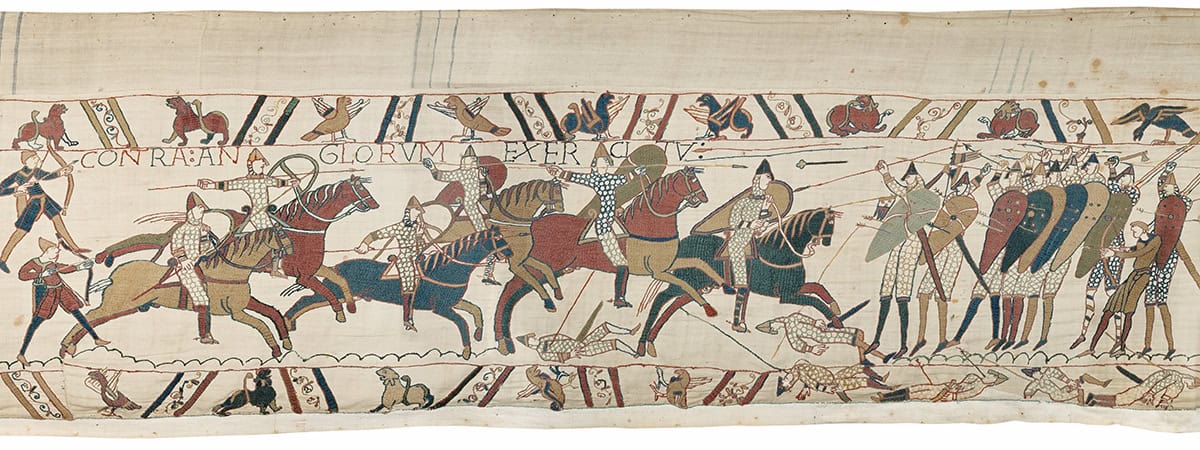
The Bayeux Tapestry
History in the making The Bayeux Tapestry is on display at the British Museum in London until July 2027 but you can view it for free online thanks to advanced optical imaging techniques. (Courtesy: © La Fabrique de patrimoines en Normandie, Antoine Cazin)

A few years ago, I was lucky enough to see the Bayeux Tapestry – the famous embroidered cloth depicting the Norman invasion of England in 1066. More than 900 years old, this historic piece of art is only 50 cm wide but more than 68 m long. It’s also extremely fragile, which why I was astonished when I heard that the Bayeux Tapestry was going to leave its home in Normandy and be transported across the English Channel to the UK.

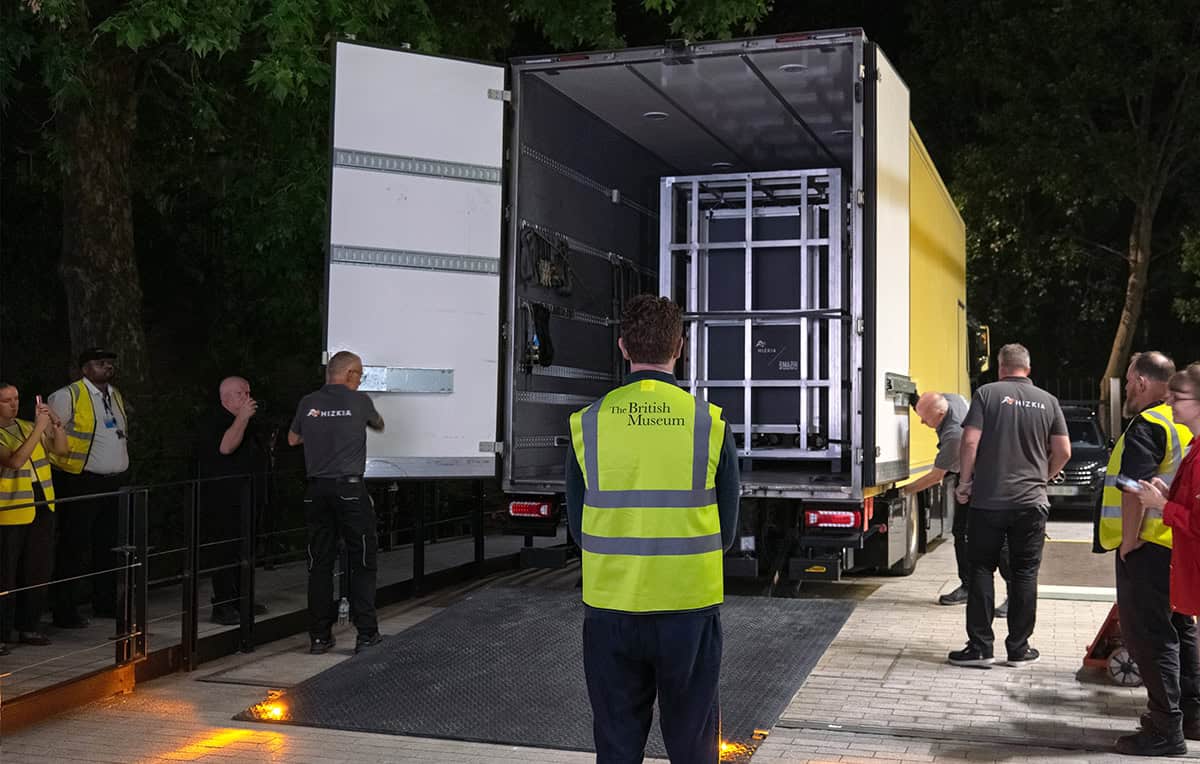
The loan of the artwork, which was agreed between former British prime minister Keir Starmer and French president Emmanuel Macron last year, has now taken place. The tapestry arrived under police escort on 10 July and will be on display at the British Museum in London from September 2026 until July 2027. It is the first time the tapestry has been back in England, the country where this linen cloth was originally made.

I’m fascinated by how non-invasive optical techniques have been crucial in advancing our understanding of the tapestry

So what’s all this got to with physics? Well, I’m fascinated by how physics – and specifically, non-invasive optical techniques – have been crucial in advancing our understanding of the tapestry and its historical significance. Thanks to physics-based equipment developed by hi-tech manufacturers, we’ve learned about how the Bayeux Tapestry was initially made, what damage it subsequently suffered, how it was repaired, and the nature of its current condition.

Such information is vital not only for increasing our historical awareness, but also for current conservators who want to understand the tapestry’s underlying condition and find out how to preserve it for future generations. And before the pedants write in, yes I know that while it’s known as the Bayeux Tapestry, technically it’s an embroidery. That means it was created by stitching woollen threads onto a linen backing, which is helpful to know when reviewing the physics involved.

Optical sleuthing

The beauty of using optical methods to study the Bayeux Tapestry is that they are non-destructive and non-intrusive – and so can typically be applied in situ. In 2017 a three-year project was started, in which conservationists used high-resolution 2D imaging, photogrammetry, multimodal scanning and advanced image reconstruction techniques to determine the tapestry’s condition and conservation needs. The project revealed considerable information about how this artwork was created and modified over time.

Thanks to these high-resolution images, we now have a single digital map of the entire tapestry, making it possible to zoom in and look at individual threads. It’s yielded information such as the width of stitches and the positions where the wool threads cross the original linen background. As a result, historians now believe the tapestry was made by a single group of embroiderers, who – knowing the skills that existed at the time – were probably based in Canterbury, UK.

Techniques such as infrared spectroscopy and fluorescent and reflection ultraviolet imaging have revealed information about what’s underneath the surface of the tapestry

From the size and direction of the stitches, we also think the outlines of the figures were stitched first, with the shapes filled in afterwards using coloured wools in a strict, specific order. Meanwhile, techniques such as infrared spectroscopy and fluorescent and reflection ultraviolet imaging have revealed information about what’s underneath the surface of the tapestry. In particular, they’ve located the presence of stains such as glue, wax (dripped from candles that lit the tapestry) and even oil from the hands of people who touched it.

Infrared light passing through the dark-coloured wools have also revealed original sketch lines that were drawn on the linen base before the wool stitching started. It reveals the original artist’s draft, likely to be someone familiar with manuscript drawing – perhaps an illuminator of religious books.

The Bayeux Tapestry arriving in London via lorry
Successful trip The Bayeux Tapestry was transported from Normandy to London in a climate-controlled crate – the journey having been sanctioned only because conservationists had pain-stakingly imaged, protected and studied the embroidered cloth. (Courtesy: © Trustees of the British Museum)

3D imaging with photogrammetry

Researchers in France, led by Stéphane Le Mouélic from Nantes University, who originally did a PhD in astrophysics, have also used computer software to combine more than 440 overlapping 2D photos taken from multiple angles to create a detailed 3D model of the Bayeux Tapestry (J. Cult. Heritage 71 211).

It digitally “irons out” all the sags and wrinkles in the line fabric, recreating the original, “flat” tapestry and allowing the original physical shape of the artwork to be revealed for the first time. The 3D model can be viewed for free at the Bayeux Museum website, allowing historians, researchers and members of the public to study it without having to handle the delicate material.

Physics-based techniques have also allowed us to deal with the fact that parts of the fabric have been repaired over the last 900 plus years. Some of those repairs used non-authentic dyes and colours, while others covered up the original stitching. But using computer vision and image processing, threads that were added later can be subtracted digitally, providing a clearer, corrected view of what the original tapestry looked like.

Finally, optical tools can help keep the tapestry safe for future generations. Museum curators need to know if the cloth is sagging, tearing, or changing shape over time. Instead of putting heavy tools on the cloth, lasers can scan the cloth to accurately map of the contours of its surface. By repeating this exercise every few years, conservationists can spot if any part of the cloth has stretched or sagged, enabling minor problems to be rectified before they end up causing significant damage.

Without the huge amount of investigative and restorative work carried out, the Bayeux Tapestry would never have been allowed to make the journey to London

In 2025 Le Monde newspaper reported that experts had, over the previous five years, meticulously documented 24,204 stains, 9646 holes and 30 tears in the artwork. Without the huge amount of investigative and restorative work carried out, the Bayeux Tapestry would never have been allowed to make this year’s journey to London. Advanced and detailed optical measurement has “de-risked” the tapestry’s trip.

Tickets to the British Museum exhibition are reportedly being snapped up faster than those for Glastonbury. So if you don’t get to see the tapestry in person, feel free to marvel at this wonderful historical artwork by checking out the interactive online digital copy. It really is physics and history in the making.

The post The Bayeux Tapestry: how optical techniques have let this artwork come home appeared first on Physics World.

  •  

How AI is transforming human robots

It was fantastic to see the men’s marathon world record being broken in London at the end of April when Kenya’s Sabastian Sawe became the first person to officially complete the run in under two hours. It’s an achievement that a whole generation of world-class runners had had their eyes on, with Sawe completing the race in a headline-grabbing 1:59:30.

Perhaps less attention was given to another achievement a week earlier, which saw a humanoid robot run the Beijing E-Town half-marathon in 50:26, breaking the human record by almost seven minutes. What’s particularly impressive is that at the inaugural event in 2025, the robot winner took 2:40:42 to complete the race, with many robot entrants failing even to reach the finishing line.

In just one year, in other words, the robot half-marathon record has been slashed by more than two-thirds, an unthinkable feat in human terms. What’s more, the rules between the first and second robotic competitions were tightened. They now favour robots that can run on their own (rather than via remote control) and penalize those that need to be taken off course to have their batteries changed.

Giant steps

My mind began spinning, trying to work out what must have happened over the past year to realize such advancements. How did we go from remote-controlled, slow and clunky robots to autonomous, agile and sleek devices? It turns out that these increases in speed and endurance have been driven by a combination of better hardware, specialized designs and advanced algorithms.

Robots now benefit from powerful actuators enabling higher torque and faster movement of its hips and knees. Anatomical designs have also been optimizied to mirror biological efficiencies by, for example, using lightweight limbs and lower torso components to minimize the energy lost when a robot’s foot strikes the ground.

Other changes include the use of liquid cooling technologies to stop a robot from getting too hot during prolonged activity and finding ways to mimic highly efficient natural bipeds, such as an emu or ostrich. Improved AI and control software have also allowed robots to navigate varied terrain and stay stable autonomously, rather than relying on remote operation.

AI answers

Of all these developments, I believe the most significant is the expanding use of AI. To me, it seems that AI will be the enabler for robots to become more “human”. In China, humanoid robots are already being developed to automate what is dubbed the hardest task in the car industry – the final assembly stage.

This work typically consists of real people carrying out highly labour-intensive tasks such as installing wiring harnesses, fitting a vehicle’s interior trim and instruments, or bringing its engine and chassis together. Being super-precise tasks that require manual dexterity, this work has previously been thought too complex for robots.

However, through a combination of imitation learning, simulation and real-time human guidance, it’s now becoming conceivable for robotic devices to do this kind of work. Underpinning this aspiration are what are known as  Vision-Language-Action (VLA) models, which process camera images together with natural language or text descriptions and translate these into physical actions.

Having emerged relatively recently from work at AI firm Google DeepMind, VLA models differ from traditional, task-specific programming robotics by offering generalization and the ability to handle novelty. They are seen as the next big thing in AI because they bridge the gap between understanding the world (vision and language) and interacting with it (action) – potentially letting robots do tasks they have not been explicitly trained on.

VLAs typically rely on existing Vision-Language-Models (VLMs), which provide a combined knowledge of text (large language models) and images (computer vision models). The VLA model is then fine-tuned on task-specific data to learn a mapping of visual observations and text instructions to create the desired robot action.

One challenge in training VLAs is getting enough data with appropriate visual and contextual information. It may be gleaned from real robots (imitation) but it can also be generated by human guidance or teleoperation – a manual process involving humans “showing” robots how to do a specific task. The task is time-consuming, having to be performed deliberately and repeatedly using equipment that captures appropriate levels of data quantity and quality.

A third option is to build virtual simulation environments to train the models and optimize robotic movements. As VLAs inherently learn to associate higher-level cognition with lower-level physical actions, the trend will be to move from fixed, pre-programmed scripts towards AI and large-scale simulation training. The result: robots that become more autonomous and versatile in real-world situations.

We are all getting used to AI becoming an increasing part of our everyday life – think how much GenerativeAI models have improved since they first appeared a few years ago. But I wonder what will be next for robots as they become capable of moving independently and spontaneously, having the ability to operate with full autonomy within dynamic human environments, such as homes and factories.

When we – eventually – experience the full physical embodiment of Artificial General Intelligence, will it be like living on the filmset of I, Robot or Blade Runner, with humans and humanoids coexisting and, in some cases indiscernible? Several years ago, this was something I did not expect to see in my lifetime. But in April it just got one giant leap – or at least one half-marathon – closer.

The post How AI is transforming human robots appeared first on Physics World.

  •  
❌