COLOMBO — As dusk settled over the paddy fields at Puwakpitiya, a village on the northern edge of Knuckles Mountain Range locally known as Dumbara mountains in Central Sri Lanka, researchers began laying traps along the uneasy boundary between farmland and forest. They were targeting small terrestrial mammals moving through the landscape. On the ground, drift fences were created to lead animals to pitfall traps, while box style Sherman live traps were baited with feed. But the usual rodent lure — peanut butter — failed to attract the mice in Sri Lanka, so the researchers instead turned to something more familiar to the local mice — pieces of burnt coconut. On March 11, 2004, one of the pitfall traps caught a small mouse that looked different. Six days later, a second specimen was caught in a baited trap. Both were females, not larger than a child’s palm, with fulvous-gray pelage broken by spiny guard hairs and a slender, naked tail longer than the head and body. Externally, the animal resembled Mayor’s mouse (Mus mayori), a species endemic to Sri Lanka’s highlands, but differed in tail length and head shape, offering initial clues about a new species. The species is so far known only from Sri Lanka’s Knuckles Mountain Range, and the image shows Puwakpitiya, the village from where researchers found the first specimens of Dumbara spiny mouse (Mus dumbara) after they set traps along the forest edge beside a sprawling paddy field. Image courtesy of Suyama Boyagoda. The two mice…This article was originally published on Mongabay
COLOMBO — As part of his morning routine, Nalin Kaluwitharana from “Ranjan Wijerathnapura,” a low-income settlement in the heart of Colombo, waters his home garden before setting off to work. Like many others in his neighborhood, he works as a three-wheeler driver. “We obtain pipe-borne water provided by the National Water Supply and Drainage Board (NWSDB). In the wake of drought conditions, NWSDB has requested people to use water sparingly. But we need water for our daily needs and have no alternatives but to rely on tap water,” he told Mongabay. Despite increasing utility tariffs, he continues to water the plants to keep them green and his surroundings alive. Kaluwitharana and a majority of houses in this settlement do not have water storage facilities and are dependent on the state utility to obtain water directly from the water line. The routine water cuts and maintenance work disrupt the regular water supply, inconveniencing them. Linda Arulanantham is from the same neighborhood. “Immediately after a water cut, the water turns muddy. We use a water filter to make sure that the water we drink is clean,” she said. But every household doesn’t have a water filter system, and water safety in urban low-income settlements is often neglected. Community water supply schemes In Sri Lanka, community water supply schemes were established around the 1990s to provide safe drinking water to rural communities. Ananda Vijitha Kumara Mapa, director general at the Department of National Community Water Supply (DNCWS) told Mongabay that community water supply…This article was originally published on Mongabay
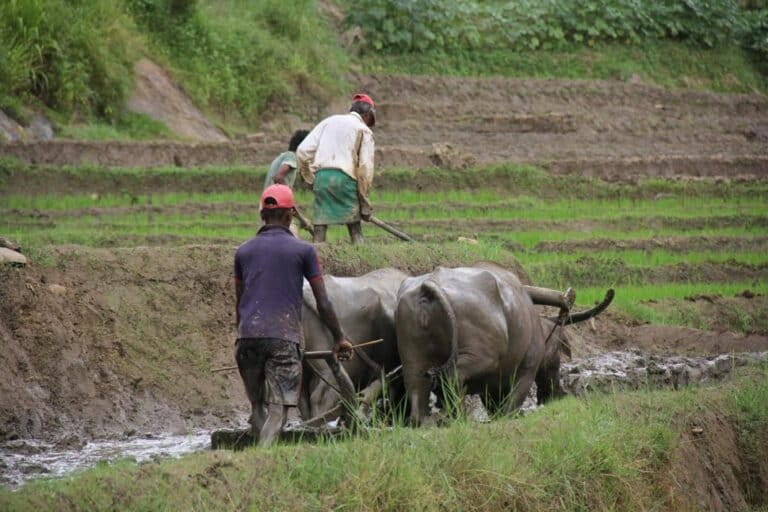
WASGAMUWA, Sri Lanka – Prior to the 1940s and the Green Revolution, Sri Lankan paddy farmers cultivated traditional rice, locally known as purana haal. These rice cultivars were resilient and known to possess various nutritional and medicinal properties yet were soon replaced by new improved rice varieties to obtain better quality and bigger yields. Karu Herath, an heirloom paddy farmer in the village of Dunuwila, bordering the Wasgamuwa National Park located within the Matale and Polonnaruwa districts, has cultivated heirloom paddy varieties for the past 27 years. He told Mongabay that fewer than 30 varieties remain out of the estimated 2,500 varieties of heirloom rice that once existed, a claim supported by rice researchers. According to researchers, many of these rice varieties are long-aged, tall and low-yielding. Therefore, traditional farmers would only cultivate them during one harvesting cycle, known as the Maha season, which runs from September through March. With the introduction of new, improved rice varieties and fertilizers after the 1940s, Sri Lanka lost much of its Indigenous rice varieties and traditional knowledge of Indigenous farming practices. Image courtesy of Pethum Bandara. Herath follows this practice and cultivates only during the monsoon season. “During the Yala season [May to August], when it’s dry, we let the soil recover and grow heirloom cereals and vegetables such as kurakkan [finger millet] and mung [mung bean],” he said. “This draws different nutrients and requires less water than rice. This was the traditional land use system, which was changed by British colonialists who…This article was originally published on Mongabay
COLOMBO — Even though Sri Lankan authorities are preparing to face an impending El Niño phenomenon, Rathnayaka Mudiyanselage Suwandarathne feels that the country may not be impacted as forecasted. A second generation farmer from Thalangama in the Colombo District, Suwandarathne knows about weather and has been leading an agricultural revolution by promoting the cultivation of heirloom varieties of rice. According to him, it is normal to experience a dry spell between July and September as forecasted. This period coincides with the Yala season, one of two paddy harvesting seasons in Sri Lanka. “By August, the dry period begins, and we need a dry season to obtain the harvest,” he told Mongabay. “We then conduct culturally significant events praying for rains. This is the cycle during the Yala season. Then again from December to March, there’s a drought season, which coincides with the Maha season. Long dry spells occur every four to seven years. But now, we have changed these harvesting cycles,” he said. The World Meteorological Organization’s (WMO) monthly global seasonal climate update indicates an 80% probability of a rapid development into a strong El Niño event between July and September 2026. WMO Secretary General Celeste Saulo said that it would “intensify chances of drought and heavy rainfall and the risk of heatwaves on land and marine heatwaves in many regions of the world.” “When going by initial predictions, the time period for developing a very strong El Niño was between November 2026 and January 2027,” Ajith Wijemannage, head of the Meteorology…This article was originally published on Mongabay
COLOMBO — The mist-covered tea estates, forest patches and mountain valleys of Sri Lanka’s hill country support some of the country’s most important leopard populations outside protected areas. Yet the same landscapes have emerged as the deadliest places for the threatened big cats of Sri Lanka. A new study analyzing 17 years of leopard mortality records has found that nearly 40% of recorded leopard deaths occurred within a single district of Sri Lanka’s Central Highlands, the tea-growing Nuwara Eliya, which accounts for only 4.4% of the species’ estimated range. The study, published in Wildlife Letters, documented 164 human-caused leopard deaths between 2008 and 2024. Most of the victims were adult males, with adults accounting for 87.3% of deaths, out of which 68.4% males made up 68.4% of that adult population. With fewer than 1,000 mature leopards believed to remain in Sri Lanka, deaths of adult leopards are raising concerns for the species’ long-term survival, as deaths of breeding-age individuals, even modest increases in adult mortality, can have significant impacts, said Sanjaya Weerakkody, lead author of the study and a postdoctoral fellow at Xishuangbanna Tropical Botanical Garden. The majority of recorded deaths were of males, also problematic as the males maintain large territories overlapping with multiple females, which could lead to destabilize local populations, Weerakkody told Mongabay. A rare image of a mating leopard pair captured by a camera trap in the tea fields of Sri Lanka’s Central Highlands highlights that the human-dominated hill country tea landscape is habitat for Sri…This article was originally published on Mongabay
DEDURU OYA, Sri Lanka – On April 16, eight members of Priyantha Kumara’s family including his wife, son, brother, father-in-law, and four other relatives were swept away by strong currents in the Deduru Oya, a river in Sri Lanka’s North Western province. Sri Lanka Police reported more than 30 drowning deaths between April 12 and 21 this year, underscoring the risks posed by flooding rivers. Sri Lanka Police media spokesperson Udaya Kumara Wootler told Mongabay that 376 individuals have died due to drowning in rivers last year while 595 fatalities were reported in 2024. Buddhika Sampath, spokesperson for the Sri Lanka Navy told Mongabay that the Navy Diving Unit recovered 148 bodies of people between May 2022 and May 2023. While the police are yet to disclose official statistics of deaths due to drowning from January to May 2026, the number of reported incidents show over 50 fatalities. Kumara is a resident of Gopallawa in the northwestern district of Kurunegala. His son had requested that they all go for a bath in the river. The group had been bathing at a popular spot named Kuriyagas Mankada when they met the tragedy. “My son was only 13 years old, and he was a bright student,” Kumara told Mongabay. “My brother was about to hold a housewarming ceremony at his newly built house. But all these dreams were shattered within seconds. My father used to take us to this same spot to bathe when we were young. But the river has changed…This article was originally published on Mongabay
COLOMBO — Sri Lanka banned the purchase and use of single-use plastic water bottles in all government institutions effective May 31, under a new government circular that targets reduction of wasteful plastic consumption within the state sector. The move is the latest in a long line of attempts by the island nation to reduce plastic pollution — a crisis that clogs waterways, pollutes beaches, harms marine life, and overwhelms the country’s fragile waste management systems. But environmentalists say the real question is not whether Sri Lanka can announce another ban, but whether it can be enforced. The new directive applies to public institutions and is expected to reduce the routine use of disposable plastic water bottles during government meetings, events, offices and official functions. Authorities are encouraging reusable alternatives and better drinking water infrastructure within public institutions, says Kapila Rajapaksha, the director-general of the Central Environmental Authority (CEA), the state agency mandated to address plastic pollution. Sri Lanka’s plastic problem is growing exponentially. The National Plastic Waste Inventory (NPWI) published in 2024 has estimated the island’s municipal plastic waste generation to be approximately 250,000 metric tons per year. Sri Lanka recycles only about 27,000 metric tons of plastic waste annually, roughly 11% of total plastic waste generated. An estimated 68,000 metric tons, or 27% of plastic waste, remain uncollected and are often burned, buried or illegally dumped. Approximately 101,000 metric tons or 41% of the plastics go unaccounted from the waste management system during collection, transport, sorting and disposal. According…This article was originally published on Mongabay

 Login