❌

Reading view

Forget long HDMI cable headaches in your home theater setup β€” there's a new wireless HDMI connector for 4K 60Hz video at up to 75 feet through walls, making it way easier to beam images around the home

  • The Nyrius Phoenix Home is a new wireless HDMI adapter with 500ft line-of-sight range, 75ft through walls or floors
  • Delivers 4K resolution with Dolby Atmos, DTS and 7.1-channel surround support
  • Launches for $199.99 for the basic transmitter and receiver

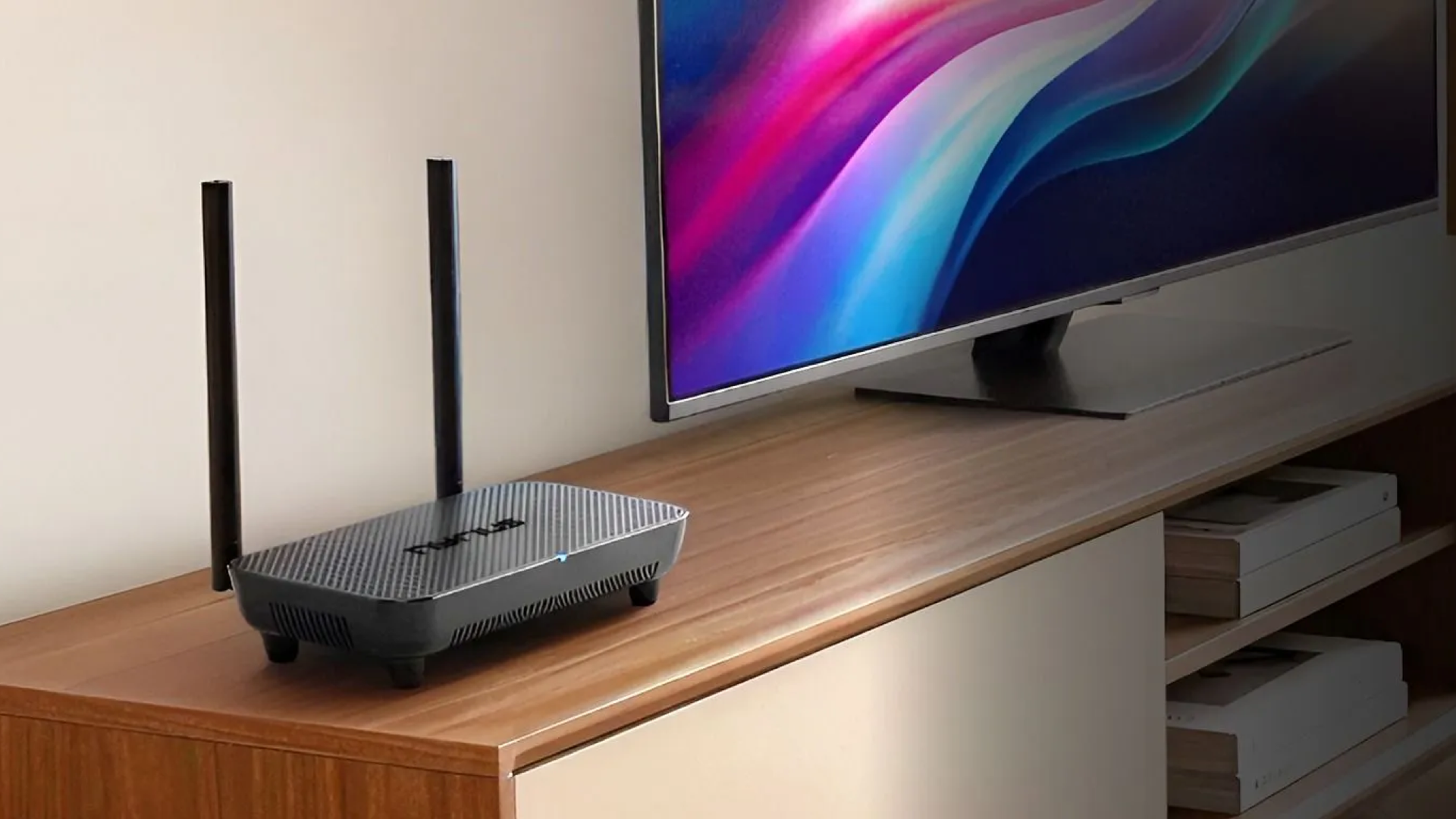
The Nyrius Phoenix Home is a true 4K wireless streamer that takes an HDMI source such as your games console, Apple TV 4K or Blu-ray player (or any combination through an AV receiver) and sends it to your TV, projector or desktop monitor.

It's designed to be simple, so there's one HDMI input on the transmitter and one HDMI output on the receiver β€” and it promises a 500-foot range in plain air, or 75 feet through walls and floors.

This means it could be used as part of a home theater setup, beaming video from your source to your projector or TV across the room without cables, or it could be used as an alternative to running and HDMI cable through your walls so you can send video to other parts of the house.

This isn't the first such streamer by any means, but it's very aggressively priced for a 4K wireless HDMI adapter and delivers an impressive specification for its relatively low price.
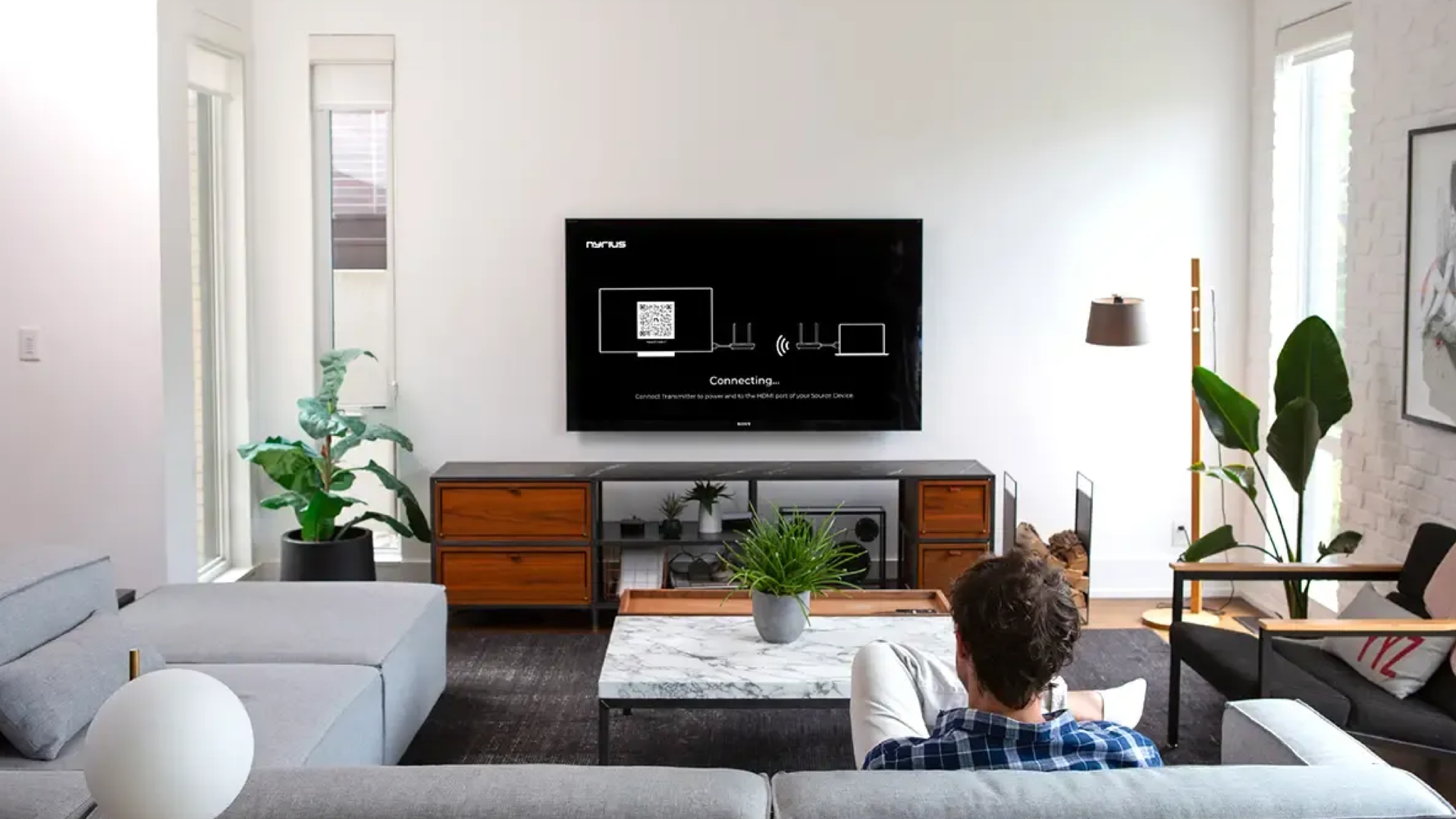
Image of the Nyrius Phoenix Home wireless HDMI being set up in a neutrally decorated room

(Image credit: Nyrius)

Nyrius Phoenix Home: key features and specifications

With the Phoenix Home's 500-foot line-of-sight range, I'm thinking it could be good for movies or sporting events with friends outdoors with a projector or outdoor TV.

Transmitting up to 75 feet through walls and floors means you can use it to stream from a computer in one room to a TV in another, provided the computer has an HDMI output or an HDMI adapter: the Phoenix Home only supports HDMI input.

The Phoenix Home also features USB-C that you can use to remotely control a computer by connecting it to the transmitter and using a keyboard and mouse with the receiver. There's also an IR extender for remote controllers.

The Phoenix Home transmits up to 4K resolution at up to 60fps, and it supports DTS, Dolby Atmos and 7.1-channel surround.

I think there are multiple applications for this kind of device at home as well as in business or educational spaces: it's a good solution for renters who can't start drilling cable runs everywhere, and for rooms that weren't made with AV systems in mind.

A few TV companies have been thinking about rooms where you want to mount the TV above the fireplace or another feature and have your AV receiver, consoles or other home theater gear somewhere else. If you saw Samsung's Wireless One Connect Box or LG's Zero Connect and wished you too could have a wire-free TV, you don't need to splash your cash on one of this year's best TVs to cut the cables: this will provide a similar option for $199.

Our one worry would be what the latency is like for gaming, which we'd have to test to be sure about. But if you're looking to cut the cables for making it easy to move movies around the home, this looks like a very affordable and effective way to do it, and is available now.

Thinking of buying a new TV?

Try our TV size and model finder! You tell it how far you sit from your TV, we'll tell you what size to buy based on viewing angle advice from image quality experts, and we'll recommend our three top TVs at that size for different prices.
  •  

Panasonic is launching a new 4K Blu-ray player! Okay, it's very niche and is coming to Japan only so far β€” but it's the second new player this year, and I'm just happy we're getting new hardware

  • Panasonic launches new DMR-4X10¹⁰ 4K Blu-ray player in Japan
  • Also includes 4K tuners, 10TB of local storage for recordings, Blu-ray recording, and support for cloud storage
  • About $2,800 / Β£2,080 / AU$3,930

Blu-ray fans should be feeling blessed this month: with new players decidedly thin on the ground, September has brought us news of not one but two 4K Blu-ray players β€” though neither is really aimed at the average movie enthusiast.

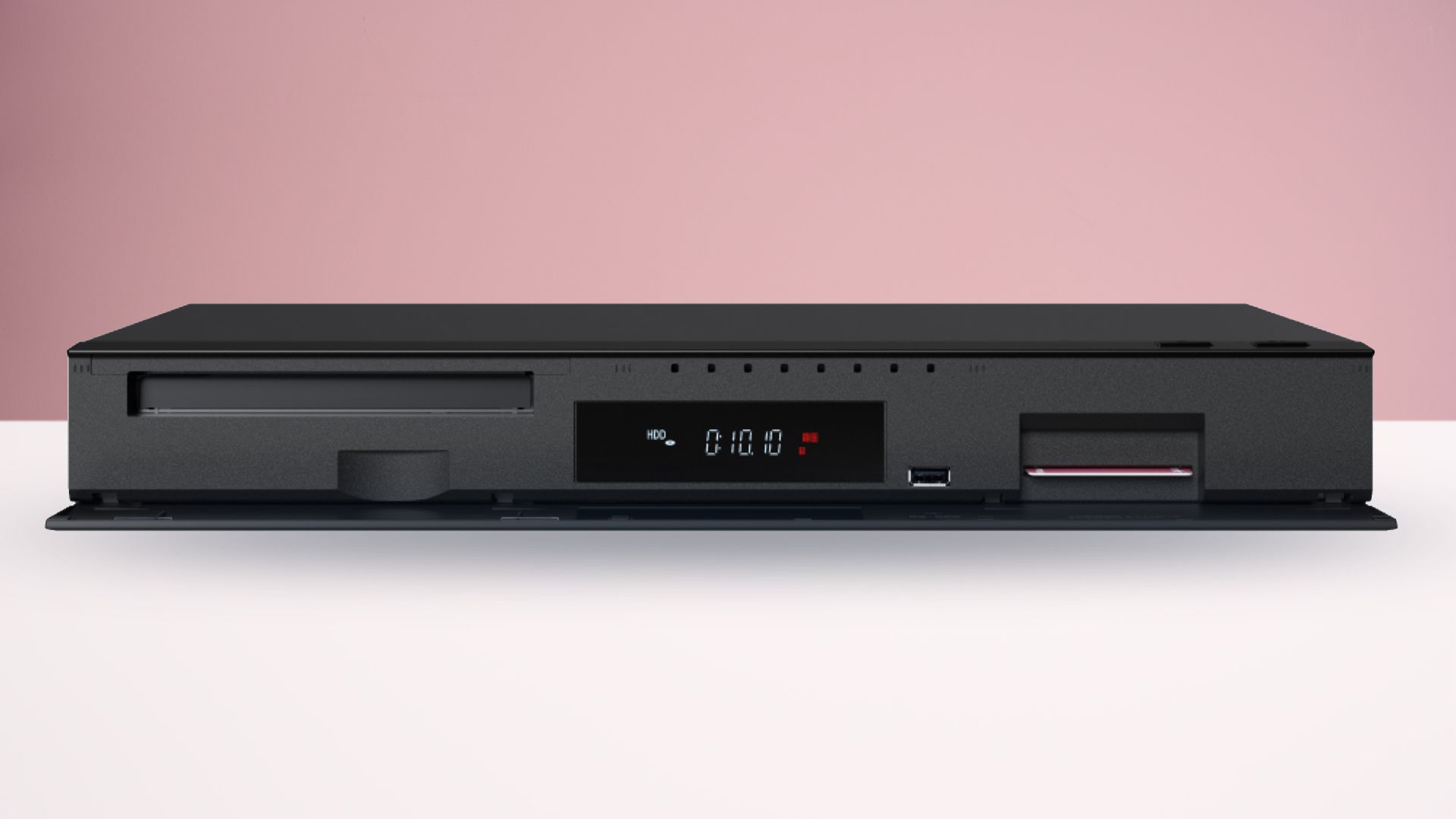
The new Panasonic DMR-4X10¹⁰ is a flagship 4K player with a bunch of other neat tricks up its sleeve, and while it's likely to stay as a Japan-only release, we're still happy to see new players being made.

A 434,500 yen, which works out at about $2,800 / Β£2,080 / AU$3,930, it's a fair bit cheaper than this month's other new Blu-ray player, the Magnetar Ultima: that costs a cool $12,000 (about Β£8,895 / AU$16,687).

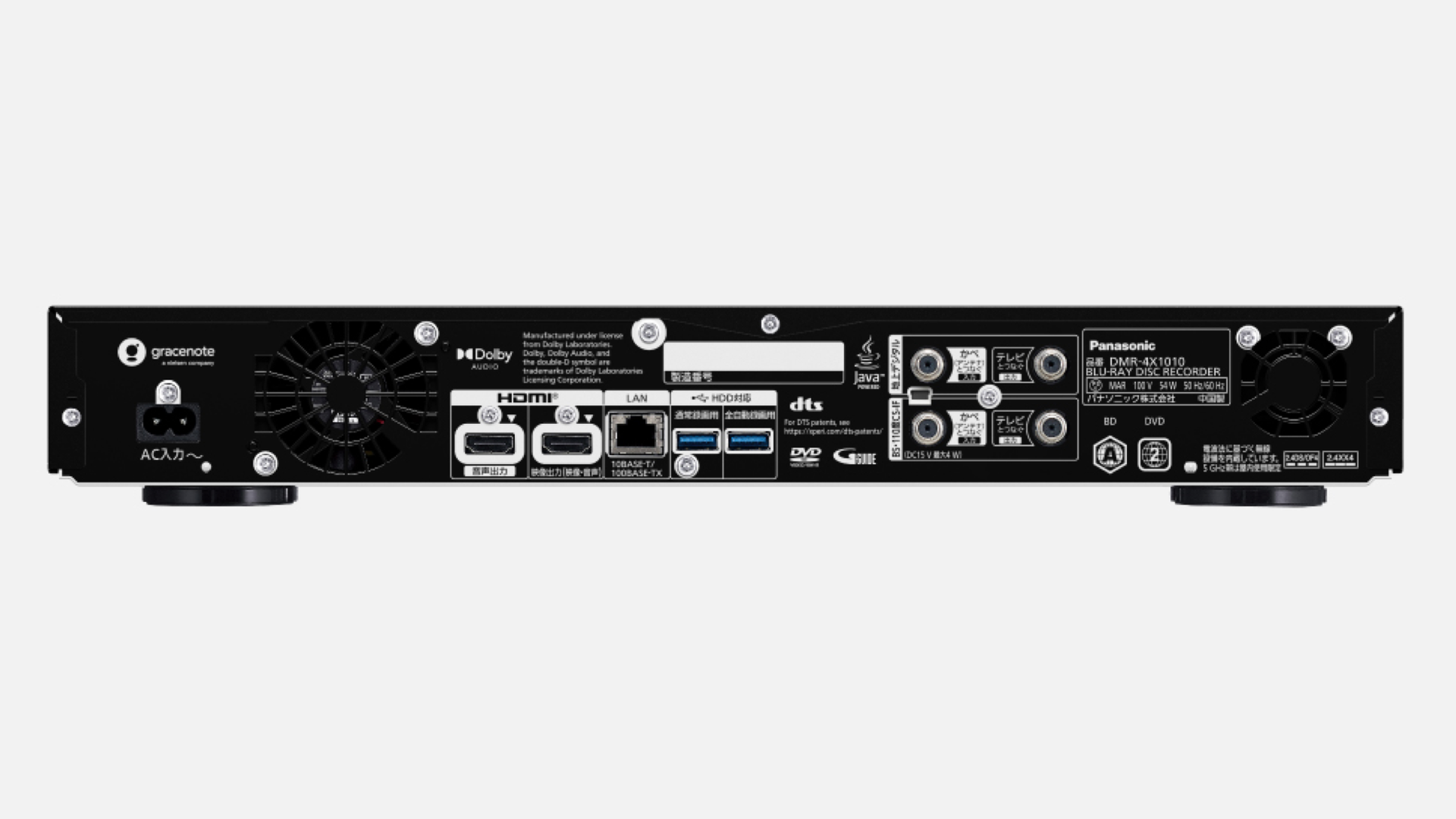
Panasonic DMR-4X10¹⁰ Blu-ray recorder rear view on white background

(Image credit: Panasonic)

Panasonic DMR-4X10¹⁰: key features

The Panasonic DMR-4X10¹⁰ not plays 4K Blu-rays, regular Blu-rays and DVDs, it also features 4K broadcast tuners and includes a giant 10TB hard drive for recording shows and movies. There's also the option of cloud recording of up to 10TB via Google Drive or Microsoft OneDrive, so you can access recordings on your phone or store Blu-ray disc images in the cloud.

It even records to BD-R/RE discs of up to 100GB, if you prefer. Recording from live broadcast isn't that popular worldwide, but evidently it's popular enough in Japan to make this the ultimate 'own your copies' machine.

The player uses an AVC encoder for high-definition recording, and Panasonic says the encoder can compress 24Mbps signals to around 1.6Mbps to maximize recording space… though, again, it does come with 10 terabytes.

The DMR-4X10¹⁰ also works with Panasonic's AI Viera system, which can automatically adjust the picture quality to fit the scene β€” so bright and vivid if you're watching sports, and richer contrast if you're watching a noir movie. AI can also adjust the audio to make it more immersive.

The new player launches through authorized dealers on October 22, 2026, and exclusively to the Japanese market.

There have been worries about the future of 4K Blu-ray, and whether the companies are still interested in producing them β€” the current models have been around for a long time, and Panasonic just increased the price of its options.

But the release of this model and the Magnetar show that companies aren't blind to the desire for new options β€” I just hope we might get something more affordable and mainstream than these at some point.

  •  

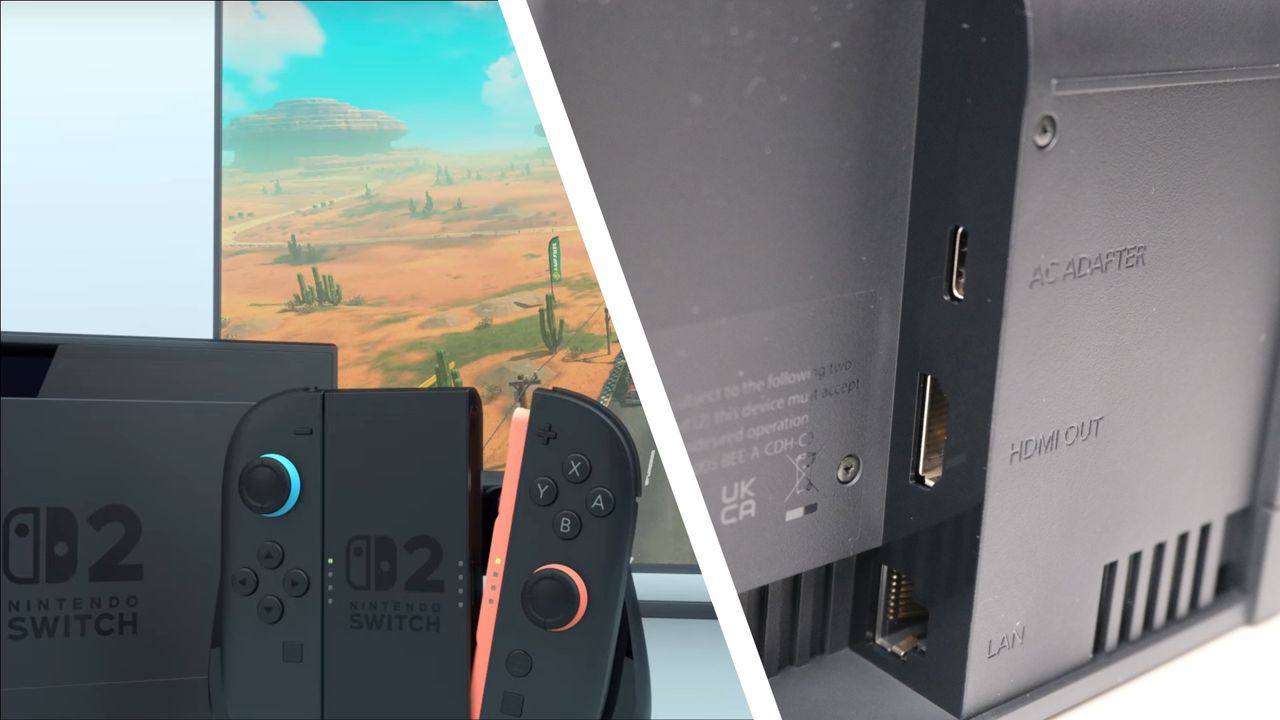
The Switch 2 is finally getting VRR in docked mode for smoother performance with compatible TVs and monitors β€” but there's a classic Nintendo wrinkle

  • Docked VRR finally arrives more than a year after Nintendo announced and then unannounced it
  • Requires a system update to both console and Dock
  • It seems to work on a title-by-title basis and will require games to update to use it

Nintendo's latest system update for the Switch 2 is here and delivers a much-wanted new feature: VRR support in Docked mode. But there's a catch: a the moment, it only works on one game, and we're not sure how many more will follow, because it's reported to work on a "whitelist" system.

When the Switch 2 launched, VRR (variable refresh rate) was only supported when using the console in handheld mode. Having the same feature available in Docked mode means your display's refresh rate and the game's frame rate can be synchronized to get rid of any screen tearing or judder when you're playing on one of the best gaming TVs or the best gaming monitors that supports VRR.

Unfortunately, the new VRR support in System Update 23.0.0 only appears to be available on a title-by-title basis, unlike the way that the PS5 can force VRR support at the system level on games that don't natively have it.

The big concern here is that Digital Foundry reports that "the feature appears to operate on a whitelist, so only games that developers have flagged as supporting docked VRR will activate it" β€” and what's unclear is whether the whitelist will require a slow certification process by Nintendo, or whether developers can just quickly roll out an update with support.

It means that, at the time of writing, the list of titles with docked VRR support only includes Nintendo's Switch 2 Welcome Tour, which has just been updated to add the feature. That's it. We at least assumed Nintendo would be ready with updates for all its own games.

What's new in the Switch 2 update

In the release notes Nintendo says: "VRR output is now supported in TV mode. When both the software and the TV support it, the video will be output at a refresh rate that matches the game's processing speed."

We've known for a while that the Switch 2 Dock supports docked VRR, because Nintendo told us on its US website before removing the text last year. So it's nice to see the feature finally being implemented, even if it'll take a while for the appropriate game patches to arrive.

In addition to VRR the Switch 2 software update gives you the ability to make a complete data transfer from one Switch 2 to another. There's a new toggle for Switch 2 Boost saving you a trip into System Settings, improved accessibility support, background music in the Mii editor (which you can turn off if you don't want it) and the usual interface tweaks, unspecified bug fixes and optimizations.

Nintendo's support page for the new system update is here.

  •  

Sorry, 4K Blu-ray fans β€” Panasonic's players just got a price hike, and the best 4K player on the market got a rough deal

  • Panasonic 4K Blu-ray players are now more expensive in the US
  • Some retailers have stock at the previous price
  • Tariffs and the ongoing component crisis strike again

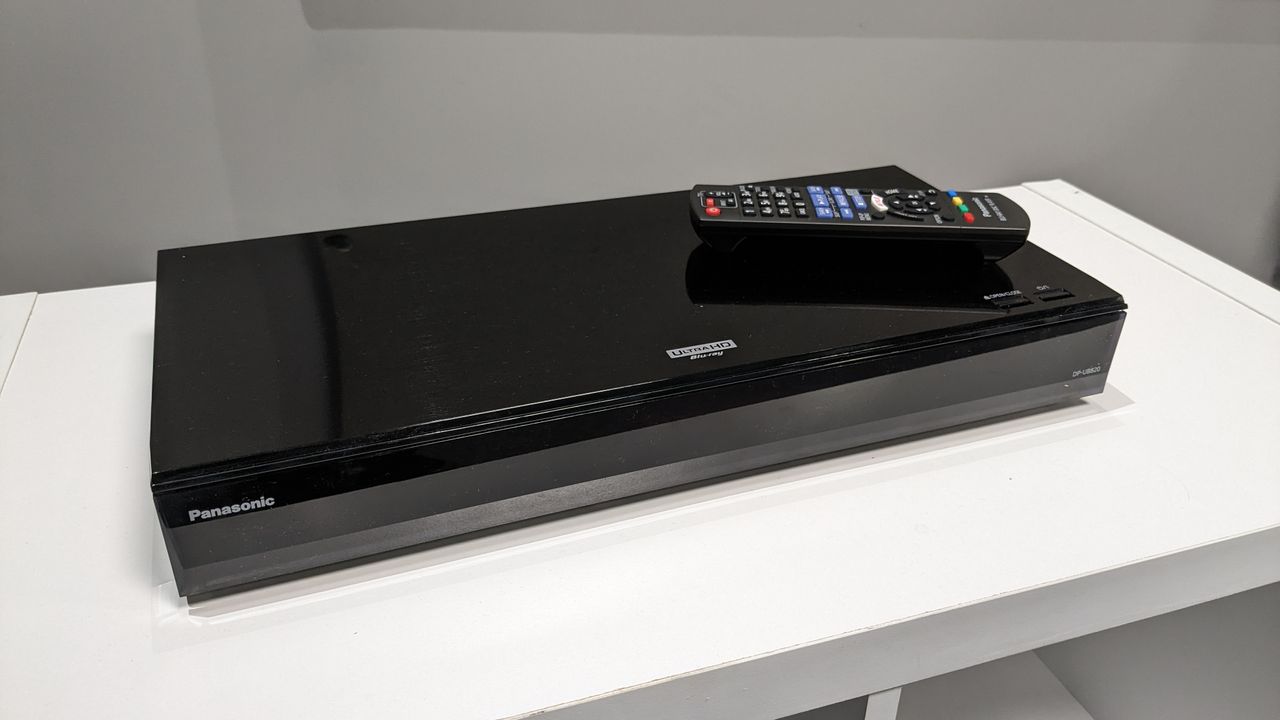
I hate to be the bearer of bad news, but if you've been putting off buying the Panasonic DP-UB820 Blu-ray player β€” our pick of the best 4K Blu-ray players on the market β€” its price, along with other Panasonic players, has rocketed.

The eagle-eyed Harrybalzac71 on the r/4kbluray subreddit spotted the new prices in Panasonic's updated US shop listings. And in those listings, our favorite Blu-Ray player has gone up by $100, reaching a new list price of $649.

The player has also had an increase in recent months in the UK to Β£429, having been listed at Β£349 for some time, so while the price isn't as high as the US still, it's still notably higher.

When the DP-UB820 launched, it was priced at $499 / Β£349 / AU$769, though the price people have expected to mainly find it at has fluctuated over time, and it's had price rises before β€” it was $549 most recently.

Panasonic: new prices for US Blu-ray players

The new prices have caused bafflement on the subreddit: as WorryTurbulent3924 recalls, "I price matched my 820 for $349 at best buy slightly over a year ago. Wtf happened?" Other redditors shared similar stories.

There are six US models, and their new prices are:

  • DP-UB450: $299.99
  • DP-UB420: $369.99
  • DP-UB820: $649.99
  • DP-UB9000: $1,299.99
  • DP-UB154: $299.99
  • DP-UB150: $209.99

There is some good news: some Panasonic players are still in retail at the older price, so at the time of writing a third-party seller has the DP-UB820 is on Amazon for $539.99 and it's on Best Buy for $549.99. Both are showing as stock available, but when that stock runs out you're likely to see higher prices afterwards β€” the main official Amazon sales page is already showing $649.

It's a shame, but unfortunately it's something we've gotten used to – not just in Blu-ray players but in PCs, PlayStations, Steam Machines and other electronics too. The triple whammy of AI-related shortages, inflation and (in the US) tariffs is sending prices into orbit.

From now, it looks like buyers will have to hope we get deals that take it back to the previous price of $549.

The Panasonic UB820 has been the sweet spot of 4K Blu-ray players available today, which is why this one is such a focus for us and the 4K Blu-ray community. It's the only player available today that has total format support and isn't priced like a high-end reference machine.

Thinking of buying a new TV?

Try our TV size and model finder! You tell it how far you sit from your TV, we'll tell you what size to buy based on viewing angle advice from image quality experts, and we'll recommend our three top TVs at that size for different prices.
  •  
❌