 Login

Porsche’s electric Macan Turbo is an automotive existential crisis
The 2026 Porsche Macan Turbo EV is a two-row crossover with 630 horsepower and a 100-kilowatt-hour battery.





You may not know it, but minivans are making a comeback in the US. Look around, and you'll start to notice an uptick in these breadboxes on wheels. Sales were up 21 percent in 2025, suggesting that the humble minivan is shaking off its "uncool" stigma and finding new fans among an SUV-weary public. I'm here for it.
One of the companies currently carrying the torch for minivans is Kia, which has sold its popular Carnival minivan here since 2021. Kia is also one of the few automakers making all-electric vans. This week, the Korean automaker rolled out its new PV7 at IAA Transportation in Germany. This is the second electric van from Kia's Pla …

A Moriarty-based company’s stratospheric platform has re-entered the United States. High Altitude Platform Systems (HAPS) for stratospheric infrastructure completed its record-breaking trans-Pacific flight from New Mexico to Japan and back.
Callled Service Test 1 (ST1) mission, the stratospheric platform was developed by Sceye. ST1 launched on August 9, 2026, and arrived in Japan 13 days later. While operating in Japan, Sceye demonstrated mobile broadband connectivity to unmodified devices through SoftBank Corp.’s core network and HAPS-based edge computing and communication with drones to support the development of a 3D communications network.
“Groundbreaking and historic only begin to describe our ST1 flight,” says Mikkel Vestergaard Frandsen, Founder and CEO of Sceye.
“This mission proved not only that our technology, vehicle systems, payload, and operational infrastructure are ready for connectivity services, but also that the stratosphere is where the future non-terrestrial infrastructure lies. The stratosphere is what will enable the always-on future – including the promised land of 6G. Together ground, stratosphere, and space – each operating at their optimal strengths, will change the course of humanity.”
During its journey, Sceye’s ST1 traveled nearly 30,000 km and re-entered continental U.S. on September 4, 2026. ST1 reached airspace near Sceye’s headquarters in Moriarty, New Mexico on September 5, 2026, where Sceye completed additional vehicle testing and a planned termination and descent.
Conducted in partnership with SoftBank Corp, a leading operator of telecommunications and IT businesses in Japan and globally, ST1 marks Sceye’s first flight to Asia and a groundbreaking milestone toward the commercial deployment of HAPS as stratospheric infrastructure. ST1 carried SceyeCELL, a first-of-its-kind “cell tower in the sky” designed to deliver wide-area mobile broadband directly to standard devices from the stratosphere. When deployed at full scale, one Sceye HAPS is designed to cover the equivalent area of approximately 500 terrestrial towers, according to a press release.
The stratosphere offers the optimal vantage point: It is close enough to Earth for high-capacity connectivity and observation, yet the altitude is high enough for wide-area reach. Importantly, the stratosphere offers space-like conditions without the cost of being in space and the disadvantages of being in orbit. Sceye’s HAPS maintain altitude and their area of operation in the stratosphere through consecutive day and night cycles, operating like geostationary satellites, only 1,800 times closer to Earth and at a fraction of the cost, as per the release.
The platform traveled nearly 30,000 km from New Mexico to Japan and back to New Mexico over a month-long journey. The platform also tested emergency calls, using an emergency alert messaging system designed for large-scale disasters, as well as communications with drones.
Through a server installed on the HAPS, Sceye and SoftBank conducted data processing directly on the platform, demonstrating an average round-trip processing response time of 68 milliseconds, reducing communications latency by over 40% compared with internet-based cloud processing. This marks the world’s first successful test in which a mobile core network and a web server for processing were installed on a HAPS, enabling response processing to be performed entirely onboard the HAPS and the results to be relayed back to smartphones.

A new federal program to test the feasibility of electric, hybrid-electric, and autonomous aircraft kicks off today in Texas - before the rules governing this new technology have even been finalized.
Earlier this year, the Federal Aviation Administration's Advanced Air Mobility and Electric Vertical Takeoff and Landing (eVTOL) Integration Pilot Program (eIPP) selected eight state-led projects to serve as some of the first public tests of these new aircraft. The first one kicks off today in Texas, featuring three eVTOL companies: Joby, Beta, and Wisk.
For the next week, these companies will conduct test flights demonstrating future routes …

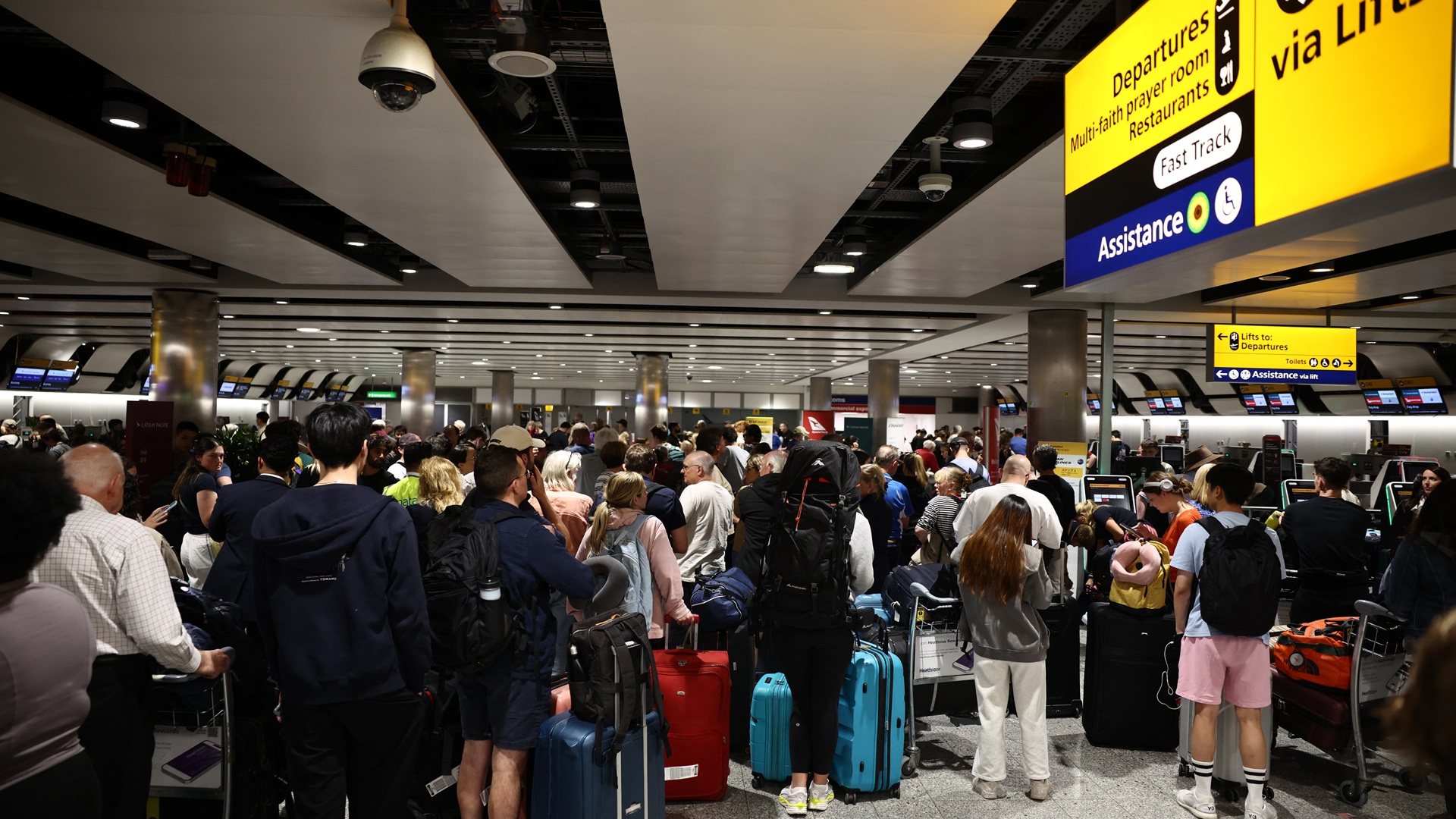
Airline operations across the UK have reportedly resumed following an air traffic control failure that cancelled over 2,000 flights and left hundreds of thousands of travelers stranded at airports throughout the country.
British airports restarted operations on Wednesday, September 9, after the hours-long shutdown a day earlier. London-based aviation data and analytics company, Cirium, reported that around 1,750 flights were cancelled Tuesday, September 8.
The National Air Traffic Services (NATS), UK’s air traffic control body, reported that the departure disruption was caused by a “technical issue” in its flight processing system. Heathrow, Gatwick, Manchester, and Birmingham experienced the most severe delays.
Reports said more than 290 further flights were cancelled on Wednesday. The first day saw 30 percent of departures grounded. Cirium revealed that the figure fell to five percent the following day.
Martin Rolfe, NATS CEO, apologized to the travelers affected by the reported “IT failure”. However, Yvonne Moynihan, Wizz Air UK managing director, and Neal McMahon, Ryanair COO, have both called on Rolfe to resign over the recurring technical issues.
The issue began Tuesday following a technical problem at NATS, the company in charge of Britain’s air traffic control system. The failure led to the cancellation of more than 2,000 flights and stranded hundreds of thousands of passengers.
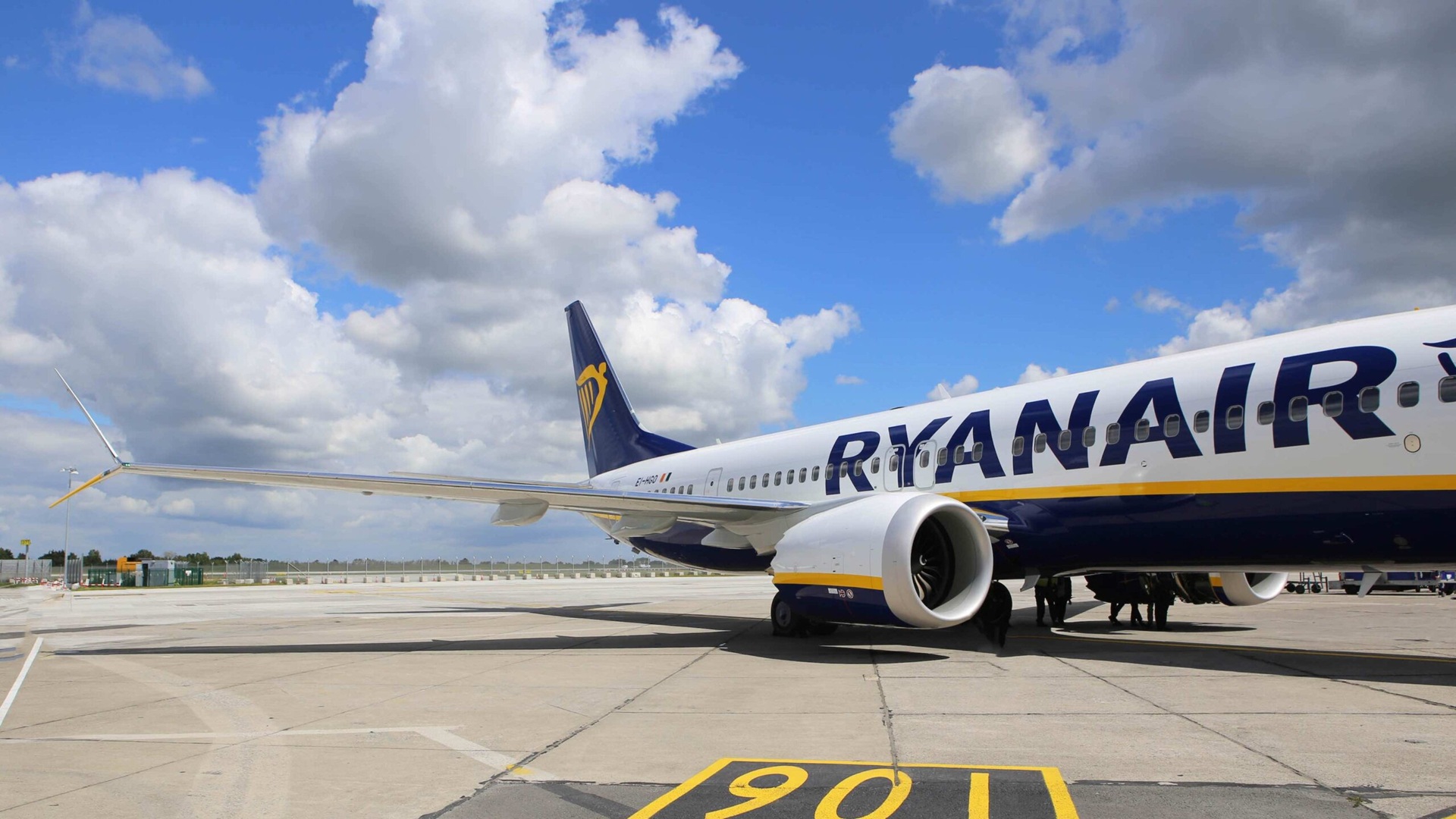
According to the media, Ryanair was among the hardest-hit carriers. The airline said approximately 150,000 of its passengers were affected and that it canceled more than 200 flights. British Airways, meanwhile, canceled or diverted around 100 flights, affecting tens of thousands of passengers.
Rolfe disclosed that the organization was investigating the incident and believed the problem was different from those behind previous failures. However, while he apologized for the disruption and said that a cyberattack had been ruled out, he was summoned to meet Transport Minister Heidi Alexander on Wednesday.
Alexander urged all passengers to “continue to check with airlines” to confirm if their flights were operating as scheduled. “I am seeking assurances that lessons will be learned and systems that support aviation are up to the job,” she said on the social media platform X.
The disruption has nevertheless raised fresh questions over the resilience of the UK’s air traffic infrastructure. Tuesday’s outage was not the first major technical problem to hit Britain’s air traffic network in recent years.
A system failure in August 2023 caused widespread cancellations during one of the busiest travel periods of the year. It apparently cost airlines around USD 135 million (GBP 100 million). Another technical problem emerged in July 2025 when a radar-related fault disrupted flights at major airports, including Heathrow.
In an interview with Reuters, Michael O’Leary, Ryanair CEO, said the outage was a repeat of the 2023 shutdown caused by a rogue flight plan. “Fire him. He’s been there since 2015. He is useless,” O’Leary said.
The firm also issued a statement saying that over 65,000 of its passengers were affected by the outage. “How many more failures do passengers have to suffer before overpaid failure NATS CEO, Martin Rolfe, accepts responsibility for his repeated mismanagement and resigns,” McMahon noted. “Families traveling on holiday, people traveling for work and thousands of visitors to the UK have once again paid the price for NATS’ abhorrent failure,” he added.
Moynihan also joined Ryanair in calling on Rolfe to resign. “I think in any industry, when you’ve had three failures, you need to consider that three strikes and you’re out. So I think it’s certainly something that he needs to look at,” she said. “A third time and a third excuse is not enough anymore.”
Rolfe took full responsibility for the incident. He has been given one week to investigate what happened and report his findings to Alexander.



Joby Aviation announced it was acquiring Dayton, Ohio-based defense firm Resonant Sciences in a $500 million deal, in a bid by the electric aircraft company to expand further into the military industrial complex.
Joby says it expects to finance the deal with $450 million in cash and $50 million in equity. After the deal closes, which is expected in early 2027, Resonant will continue its existing work as Joby's dedicated defense division, the company said. The commercial division will remain focused on air taxis, the first of which are expected to launch later this year.
The deal is the latest example of the fledgling electric aviation in …


Read more of this story at Slashdot.
