Login

Why Every Theory of Life’s Origin that Excludes Design Must Fail
The proposal ceases to be an inference from observations and known physics and becomes an appeal to the absurd.

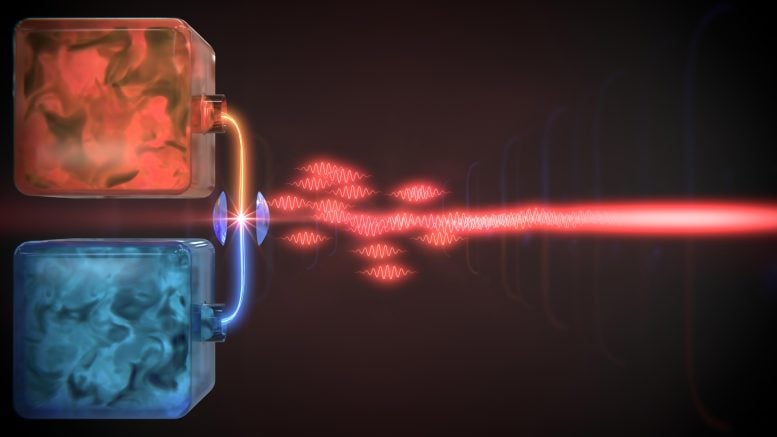 A new theoretical approach helps connect quantum physics with classical thermodynamics by clarifying what counts as heat and useful work in tiny quantum machines. When a machine is reduced to a single atom and particles of light, even basic concepts such as heat and useful work become difficult to define. This problem sits at the [...]
It’s a regrettable reality that there is never enough time to cover all the interesting scientific stories we come across. So every month, we highlight a handful of the best stories that nearly slipped through the cracks. August’s list includes the discovery of a new celestial object astronomers have dubbed a "black hole star"; breaking down plastics with microbes and turning them into edible cookies; how whale calls are connected to Einstein's special theory of relativity; and how avocado tree flowers switch sex during the day, among other highlights.
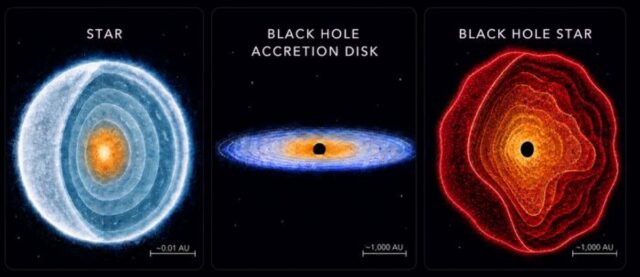 Credit:
Rohan Naidu (University of Hawai'i)
In 2024, astronomers combing through datasets taken by the James Webb Space Telescope noticed hundreds of mysterious little red dots lurking therein, believed to be baby quasars. They existed when the Universe was just a few hundred million years old. One such object in particular captured scientists' interest: a red dot that was extremely red and very bright, but whose properties didn't fit with any known astrophysical object. Astronomers have now concluded that the little red dot is a "black hole star," so named because it is the size of a large star but produces far more energy than would be possible via nuclear fusion—energy comparable to what an active black hole would produce.
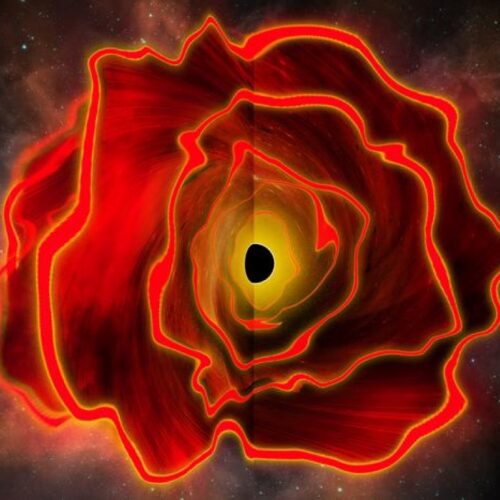
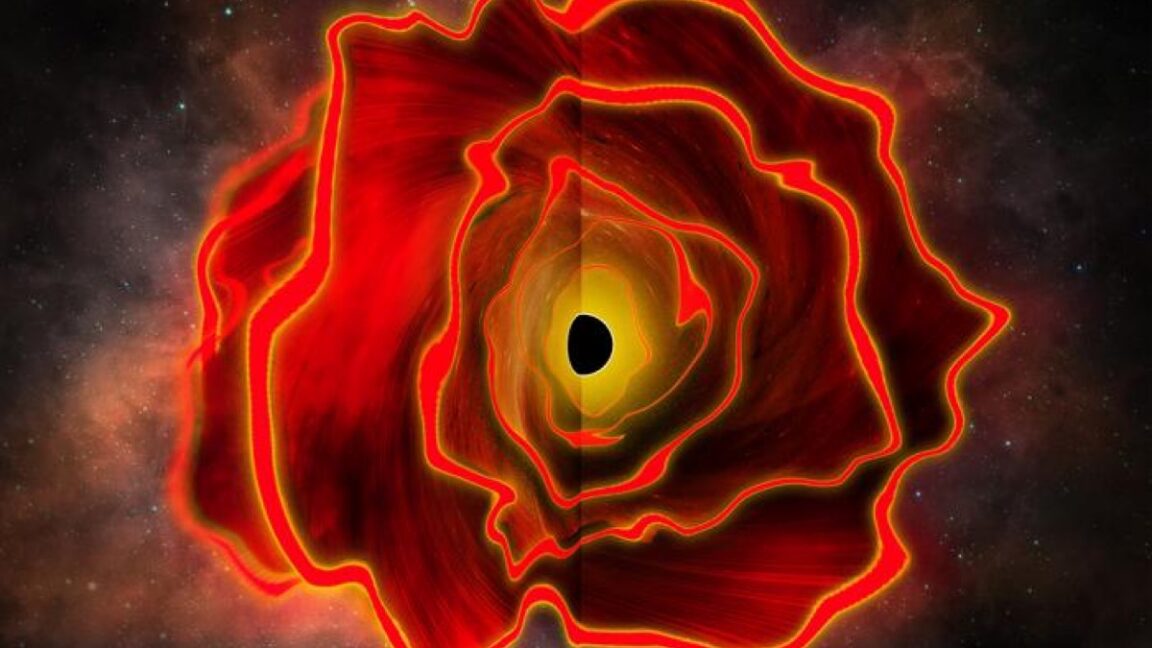
© ose-Luis Olivares, MIT



 New research examines how gravity can be reconciled with thermodynamics through the Gravity from Entropy theory. Galaxies, stars, planets, and life emerged as the Universe expanded and became more complex. Yet the second law of thermodynamics says that the total entropy of an isolated system should rise over time, creating a fundamental question: how can [...]
Galaxies, stars, and living cells are all examples of local order emerging in the universe. At first glance, that seems to contradict one of physics’ oldest principles.
However, a recent study in Physical Review D offers a mathematical explanation for how these structures form while still obeying the second law of thermodynamics.
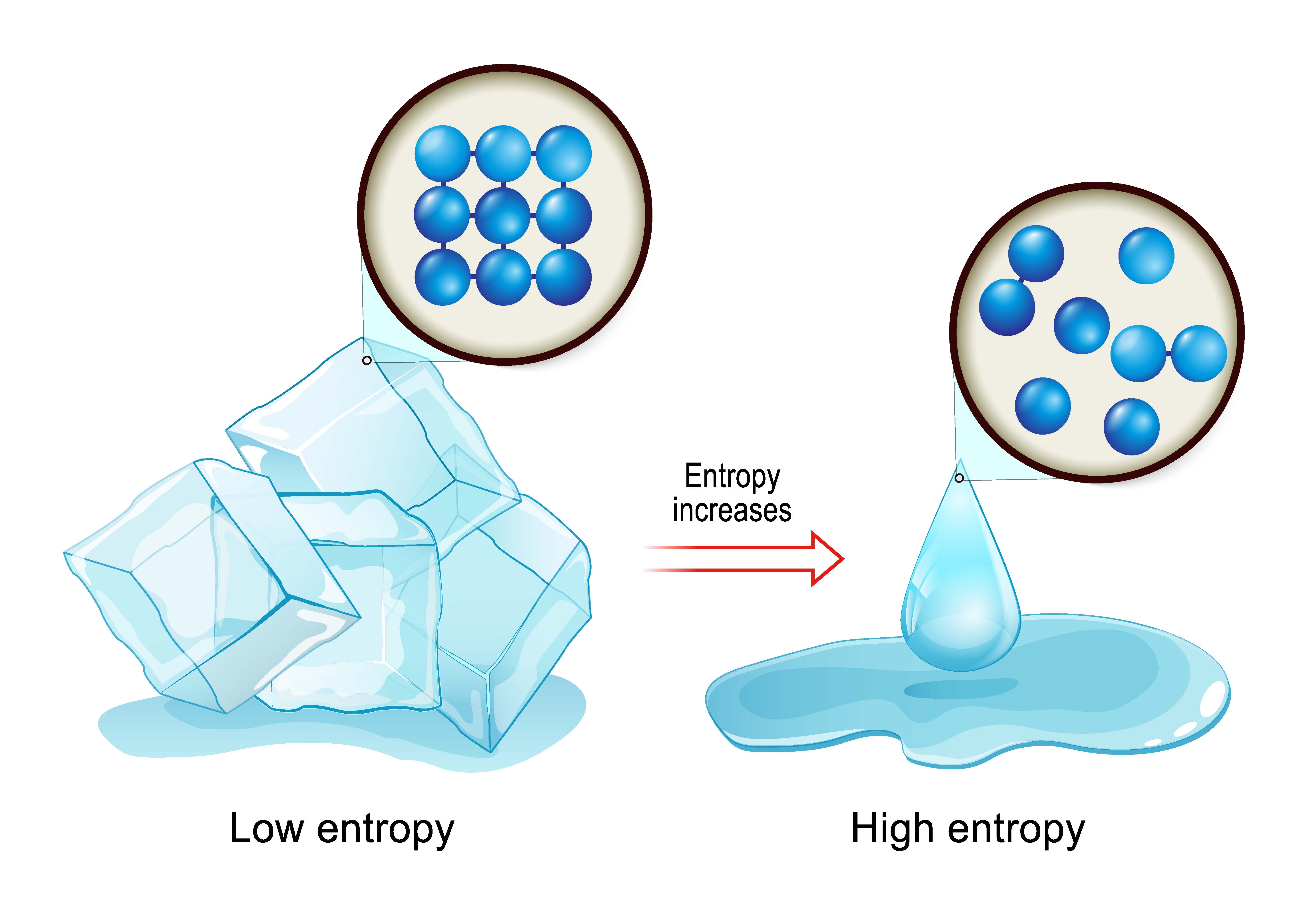
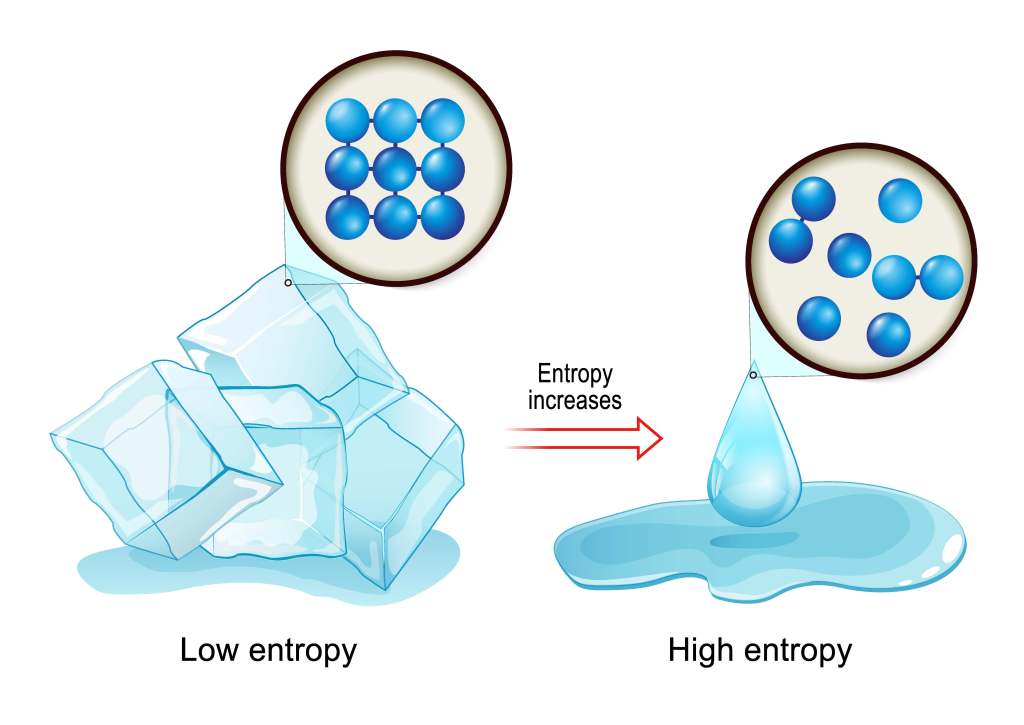
The second law of thermodynamics states that entropy, or disorder, in an isolated system always increases over time. Einstein famously said that “the second law of thermodynamics occupies a unique position among the laws of Nature,” reflecting how fundamental he believed the principle to be.
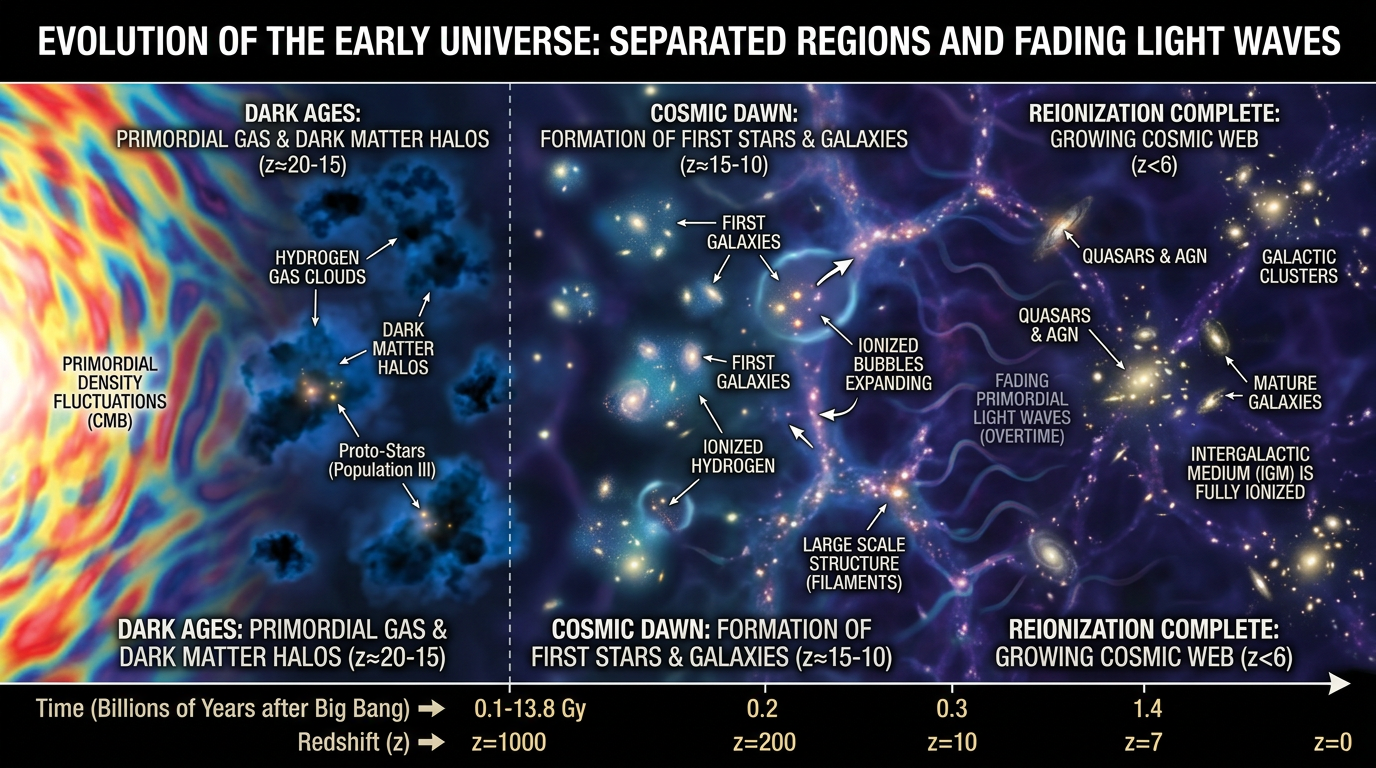
In its early days, the universe was smooth and uniform, with low entropy. As it expanded, gravity pulled gas into stars, stars into galaxies, and eventually made life possible. Each step seems to create order in one place, even though the universe as a whole became more disordered. Cosmologists have usually explained this by pointing to the universe’s growing volume.
Mathematician Ginestra Bianconi at Queen Mary University of London addressed this problem with a framework called Gravity from Entropy. Rather than treating gravity as a fundamental force, the Gravity from Entropy framework proposes that it emerges from an information-based difference between two descriptions of spacetime geometry. One metric describes the actual shape of spacetime, while the other describes the geometry that matter and curvature would create. When these two match, gravity disappears. When they differ, gravity arises from the difference.
In the low-energy, weak-curvature limit, the framework reduces to general relativity. In the new study, Bianconi adds a thermodynamic perspective. She applies Gravity from Entropy to the standard model of an expanding universe and shows that the local geometric degrees of freedom follow the first law of thermodynamics, with their own temperature and pressure emerging from the equations.
One of the study’s central findings is the distinction between total entropy and entropy per unit volume. As the universe grows, the total entropy increases, just as the second law demands. However, the study found that entropy per unit volume decreases over time even as the universe’s total entropy continues to increase. Within the Gravity from Entropy framework, Bianconi proposes that this declining local entropy density may help explain how galaxies and other cosmic structures emerge.
The study also shows that these geometric temperatures change depending on what dominates the universe. In a universe dominated by matter or radiation, the temperature decreases over time. In a universe dominated by dark energy, like our own, they remain nearly constant. The framework even assigns a temperature and pressure to empty spacetime.
“This work reveals how the Gravity from Entropy theory can tackle the challenging question of reconciling the second law of thermodynamics with the emergence of complexity in our universe,” stated Bianconi. “These results may open new avenues for investigating the long-standing problem of reconciling the foundations of cosmological irreversibility, the emergence of complex structures, and ultimately life with fundamental gravitational dynamics.”
So far, Gravity from Entropy has not been confirmed by observations. The theory makes predictions that future observations of large-scale cosmic structures and other gravitational phenomena could test. While it remains unproven, Bianconi believes it could offer a new way to link gravity, thermodynamics, quantum mechanics, and the rise of complexity in the universe.
Austin Burgess is a writer and researcher with a background in sales, marketing, and data analytics. He holds an MBA, a Bachelor of Science in Business Administration, and a data analytics certification. His work focuses on breaking scientific developments, with an emphasis on emerging biology, cognitive neuroscience, and archaeological discoveries.
 Scientists may have found a more realistic set of thermodynamic rules for black holes that never stop changing. Black holes are among the most extreme objects known in the universe. They compress enormous amounts of mass into remarkably small regions, creating gravitational fields so powerful that nothing, not even light, can escape once it crosses [...]
 Researchers investigate how quantum time flow can be stretched, blurred, or even reversed. What if the direction of time isn’t as fixed as it seems? While our everyday experience tells us that time moves relentlessly forward, the microscopic laws governing quantum systems are far less restrictive. In fact, many of the equations of quantum mechanics [...]