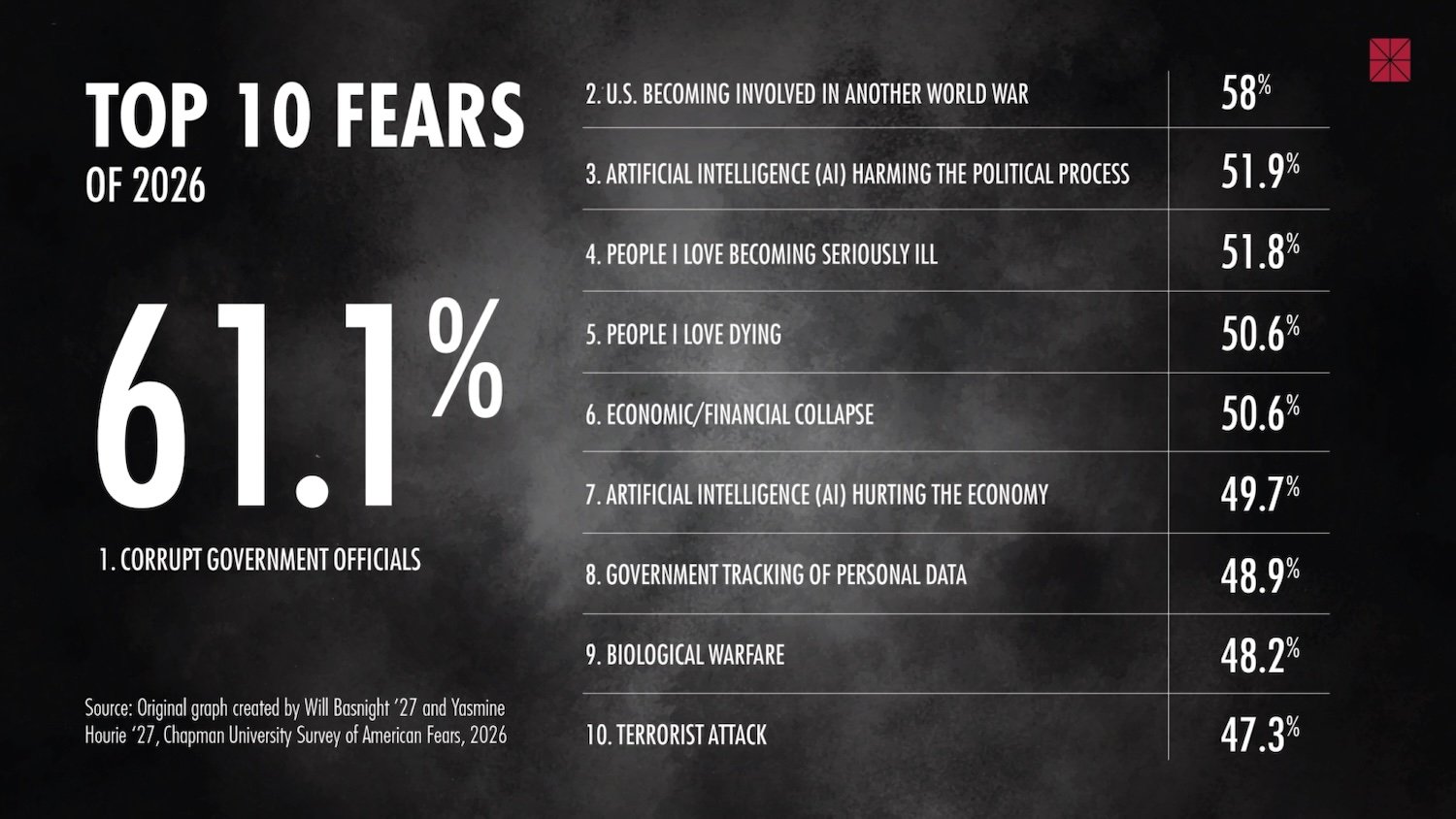
First conducted in 2014, the recurring questionnaire tracks yearly anxiety trends that often range from everyday concerns to existential terrors. This year, 61.1 percent of over 1,200 respondents once again cited “corrupt government officials” as their biggest fear—the same subject was last year’s number one entrant as well as its 11th year on the list. After that, it’s the fear of another world war (51.9 percent). However, “AI harming the political process” wasn’t too far behind for third place at 51.9 percent. The technocentric worry is now essentially tied with the fear of loved ones becoming gravely ill (51.8 percent).
Government corruption is once again at the top of the list. Credit: Chapman University
That said, the survey’s own plus or minus 3.79 percentage point margin of error complicates the results a bit. Taking the margin of error into consideration, it’s a tossup when trying to definitively rank the list’s third through tenth fears. Regardless, about 49.7 percent survey takers are also anxious about AI negatively impacting the economy—a double dose of AI-centric woes for the first time in the survey’s history. It’s also the first year researchers at Chapman University in California included questions about AI, but they made it clear it likely won’t be the last.
“As artificial intelligence becomes more integrated into everyday life, understanding these fears will be increasingly important,” said Chapman University sociologist and survey creator Christopher Bader. “We expect concerns about AI to remain a significant part of the national conversation in the years ahead.”
It’s understandable why AI currently vexes so many people. The blanket term now encompasses everything from photorealistic fake images, to dubious search engine chatbots, to nebulous doomsday warnings. Despite these worries, the AI industry’s biggest threats arguably remain the rampant spread of misinformation, coupled with a lack of meaningful regulations or oversight.
But no matter your top technological fear, survey organizers still believe the annual report highlights a very relatable human emotion.
“What I’m seeing more and more over time is that our fear about our loved ones is going to always be there, no matter what’s going on in the world,” said sociologist Ashley Kranjac, director of Chapman University’s Earl Babbie Research Center.
In a world where tech leaders are racing to build autonomous machines that can do almost anything, one hobbyist is going the complete opposite route: an over-engineered robot that does exactly one thing and one thing only.
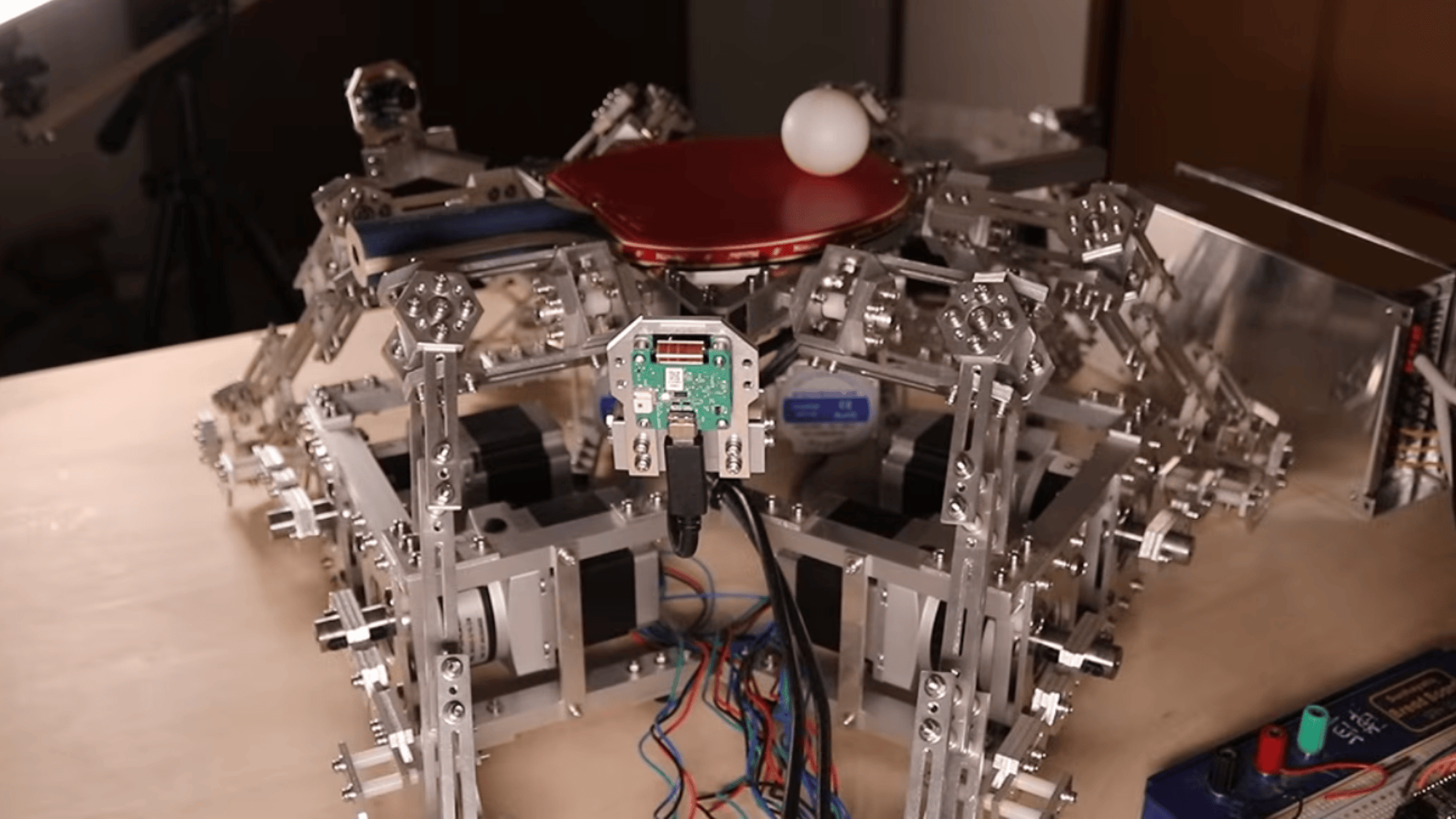
T-Kuhn’s Hexa-Bouncer only bounces a ping-pong ball, but looks like it’s capable of far more. The six-armed, metal machine was first designed in a simulated environment and then brought to life with a CNC milling machine. Custom-built joints let it rise, fall, and tilt, and even bob up and down while tracing a circle. A pair of cameras, set 120 degrees apart, track the ball’s position and send that data to a computer over USB. The computer then builds a 3D picture of the scene, then calculates when the paddle should strike the ball and at what angle. All of this happens in a fraction of a second.
Hexa-Bouncer keeps balls in the air remarkably well. In a video, Kuhn holds a ping-pong ball above his creation, and the machine moves up and down in sync with his hand. When he drops the ball, the robot immediately reacts, striking it back into the air and keeping it aloft bounce after bounce, all the while making small adjustments. After a few more bounces, the device eases off its swing and the ball starts bouncing lower and lower. It’s unclear exactly how long Hexa-Bouncer can keep the ball in the air, it never misses—at least in the video posted online..
Kuhn describes his ball juggler as the latest in a series of, “useless but mildly interesting ball bouncing machines.” Prior to this, he released his Octo-Bouncer, a similar design that keeps a ping-pong ball bouncing in the air using a four-sided flat plate. Some might say all this over-engineered ball bouncing is unnecessary, but Kuhn would disagree. For him, solving the design puzzle is a journey in itself.
“Building a thing like this is like bashing your way through a jungle,” he said. “It’s an adventure. You’re not completely sure if you can make it through or not, and that’s exactly why you do it.”
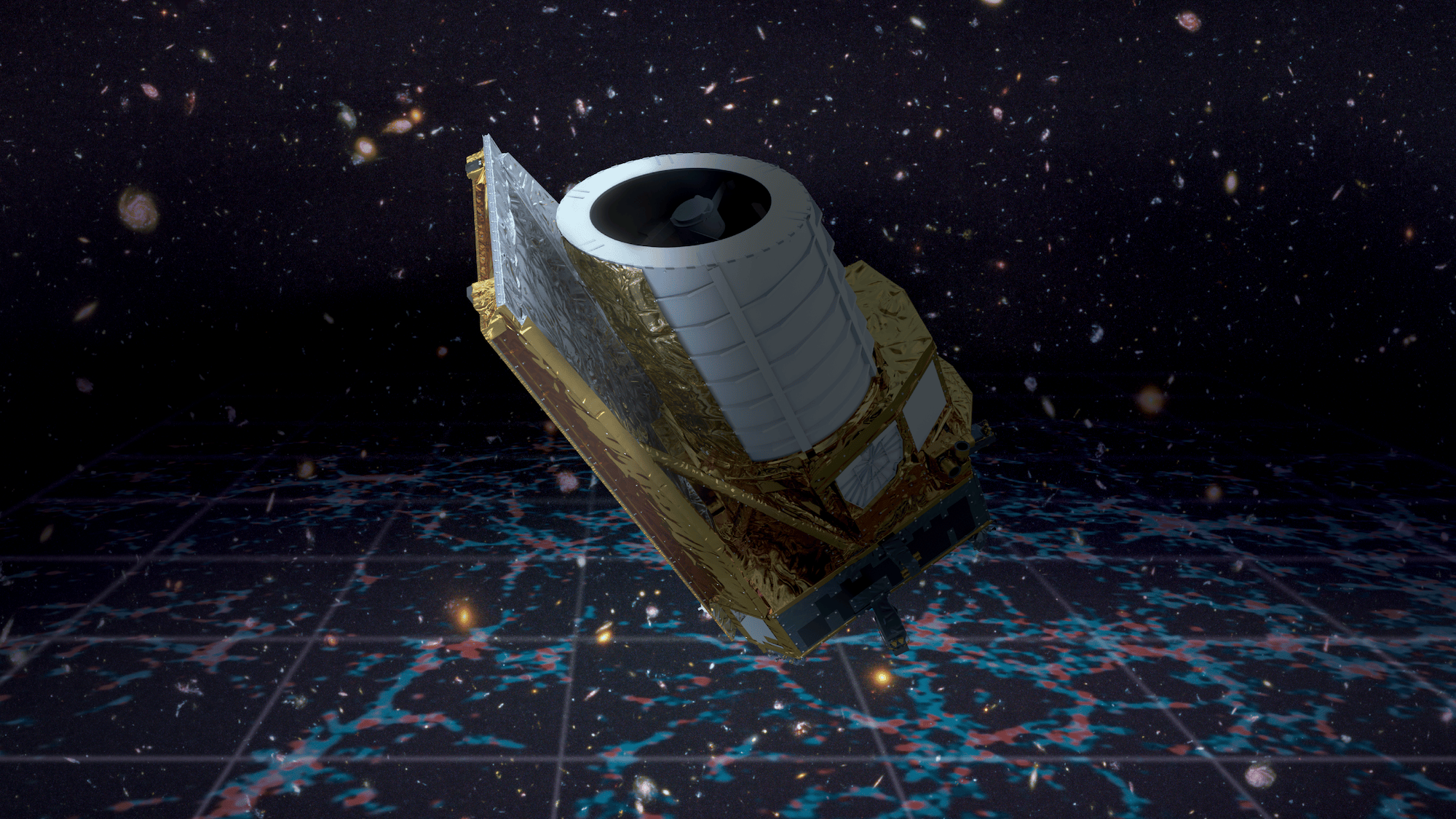
Launched in 2023, the European Space Agency’s (ESA) Euclid space telescope observes some of the most distant regions of the visible universe for signs of dark matter and dark energy. But even while focused on the “big picture,” Euclid’s onboard equipment is surprising astronomers by capturing tiny photobombers like errant comets.
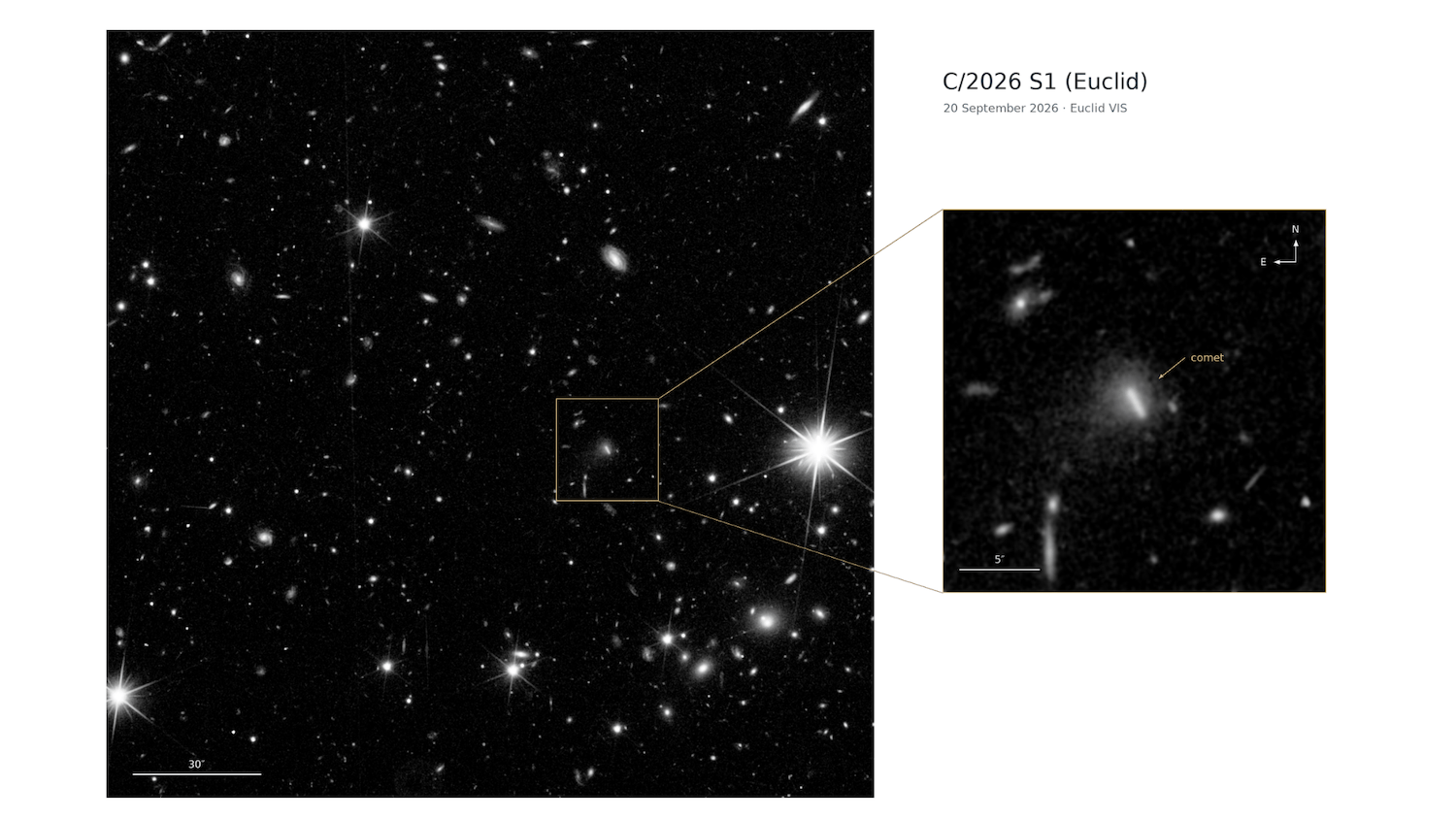
Its recent portraits of one specific dusty space rock are especially impressive, however. Euclid spotted a never-before-seen comet sailing through space more than 807.7 million miles from Earth. The telescope isn’t designed to automatically flag an image interloper. Instead, the bright blemish seen in multiple images was spotted by a moving object detection program designed by Mikko Pöntinen, an astronomer at the University of Helsinki in Finland.
“I was excited to see my software flag a ‘streak’ smeared across several images—the result of a fast-moving object,” said Pöntinen. “Further inspection revealed that it had a fuzzy cloud around it, indicative of an active object like a comet that is shedding dust and gas.”
Pöntinen quickly relayed his findings to the International Astronomical Union’s Minor Planet Center (MPC), which then passed the news along to researchers around the world. On October 8, the MPC confirmed the newly discovered comet, which is now classified C/2026 S1 (Euclid).
C/2026 S1 was seen from five different fields of view over multiple days in the Euclid Deep Field North region of the telescope’s scans. Astronomers now know the comet’s trajectory isn’t located on the same horizontal plane as the planets. Instead, its path is technically taking it over the solar system along a multi-thousand-year orbit.
Euclid’s discovery is particularly striking because the telescope’s six-year mission is specifically mapped to avoid areas of the sky that are laden with comets and asteroids.
“Very few comets are expected to be discovered by Euclid, so it was a happy coincidence,” added Euclid archive scientist Bruno Altieri.
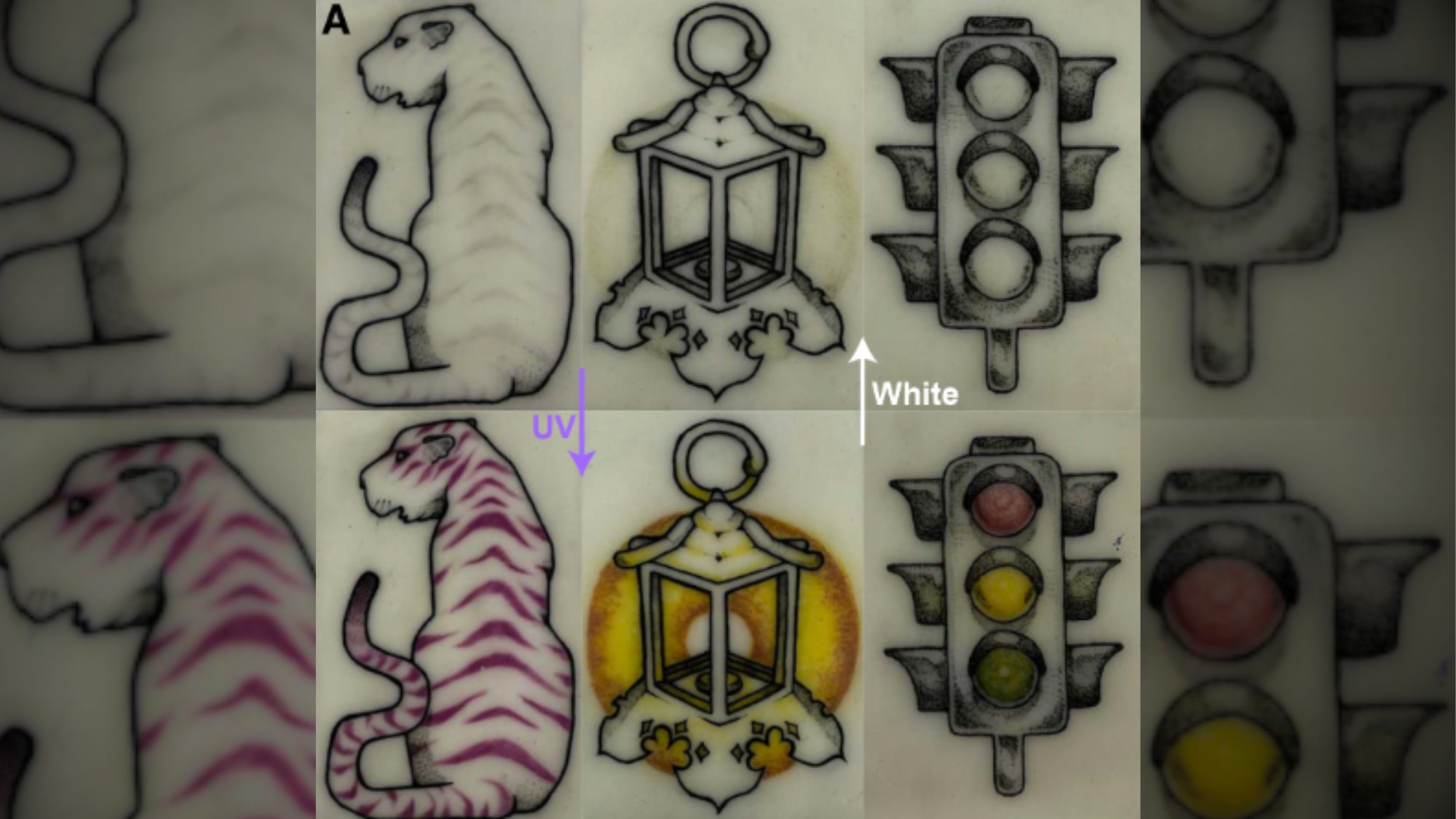
Tattoos are pretty permanent decisions, and laser removal is often described as more painful than actually getting them in the first place. But what about a design that can only be seen when you want to see it? Engineers at the University of Colorado Boulder are working on a new type of tattoo ink to answer that question. Their dye is specifically concocted to physically alter depending on exposure to visible or ultraviolet (UV) light.
The team described their invention in a study published earlier this month in the journal Matter & Light, and they didn’t only demonstrate the capabilities in the lab on silicone and pig skin. One of its creators, Carson Bruns, has already tattooed himself with the ink.
“[It’s] almost a tradition,” the study co-author recently told Nature.
Bruns, a nanoscientist at UC Boulder, previously developed a now-commercialized tattoo product called “Magic Ink” that turns magenta depending on its exposure to UV light. To highlight its efficacy, Bruns gave himself “solar freckles” as a method to track his exposure to sunlight. In similar fashion, he recently completed a similar session on his leg using the disappearing ink.
The formula currently comes in three colors—yellow, blue, and magenta—and essentially relies on the same principles behind transition lenses and some textiles. Each dye is composed of tiny spheres of acrylic glass. These beads contain photochromes, which are chemical compounds engineered to absorb specific light wavelength photons. In this case, the photochomic dye’s spheres begin in their original color, but then flatten into transparency after absorbing corresponding light photons exposed to UV rays. The dye remains this way until it absorbs visible light photons, which destroys the chemical bond and allows the spheres to return to their original shape.
Aside from the lab tests, Bruns tattooed his own leg over about 12 months using various dye combinations, all of which responded as intended to UV and visible light exposure. The ink also remained effective for over two years—but the team’s intention is go beyond a nifty parlor trick. Future ink iterations may be particularly useful in medical procedures, such as temporary markings to help maintain accuracy during direct radiotherapy sessions. For now, however, the photochromic tattoo dyes remain for laboratory (and Bruns’) use only until further safety assessments are completed.
When it comes to the mobile app heavyweights, few can beat WhatsApp. It’s estimated that around 3 billion people now use the cross-platform messaging tool at least once a month. And it’s important to remember there are only 8 billion or so people on the planet, so there are no signs of its popularity waning anytime soon.
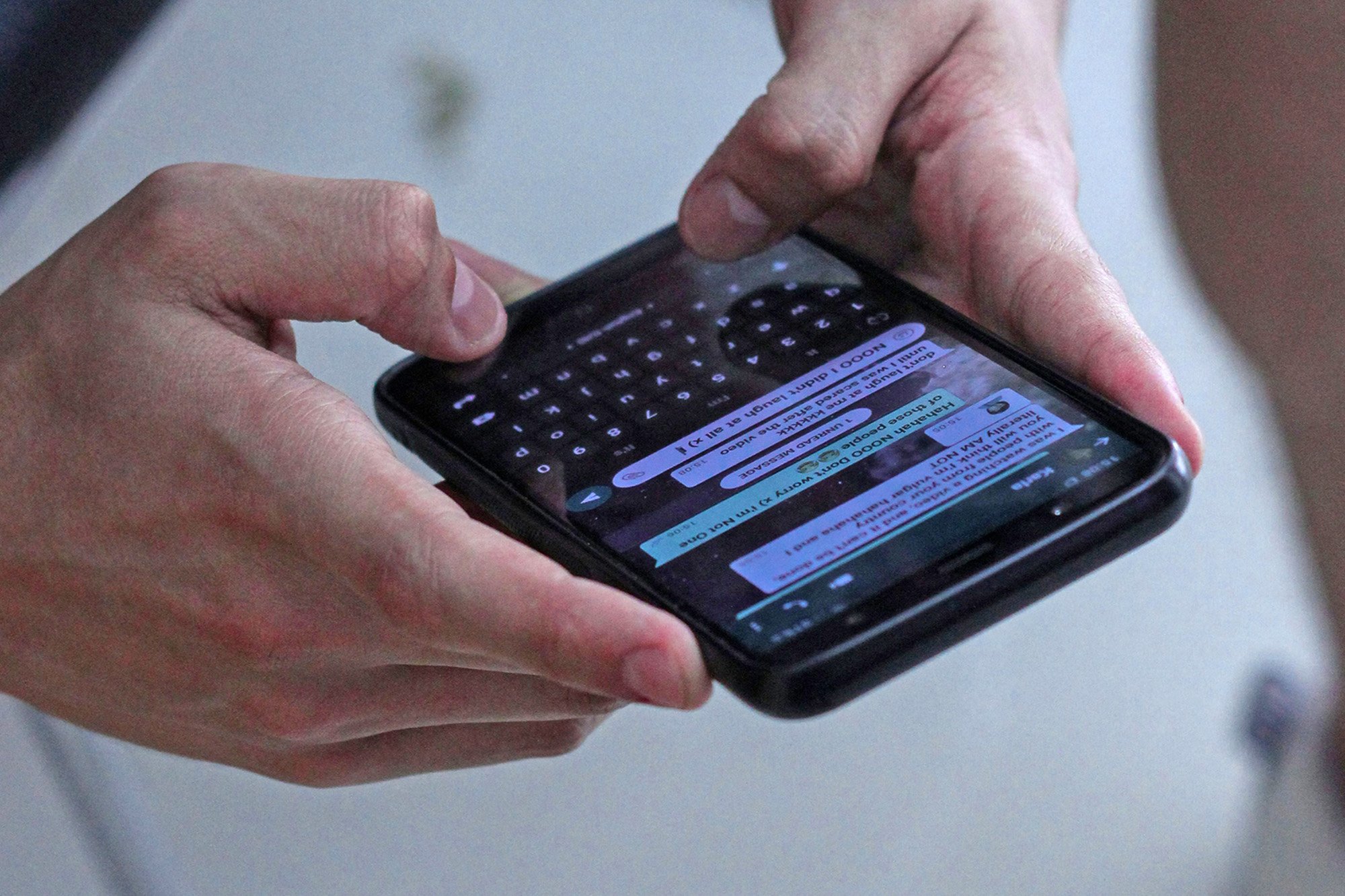
Beyond being a hugely successful app, it’s also packed with features. You can use it to chat, make voice and video calls, share files, broadcast your location, and more. Even if you’ve used WhatsApp for years, you might not have discovered everything it’s capable of—which is where these tips come in.
1. Set a timer for messages to disappear
You don’t necessarily want everything you say on WhatsApp to be remembered forever, and the app includes a timer feature that will automatically expunge messages in a chat 24 hours, 7 days, or 90 days after they’re read, unless you specifically keep them. This is set on a chat-by-chat basis, and affects everyone in a conversation.
To change the setting for one of your chats, tap the contact or group name at the top of the screen, then pick Disappearing messages to select your time limit. This is applied until you turn it off or select a different period, but doesn’t affect the conversation history.
2. Lock away your most sensitive chats
Put certain chats behind a lock. David Nield
Another way of protecting sensitive information in chats is to add an extra lock to specific conversations. Even if someone should gain access to your phone and your apps, they won’t be able to see your locked chats.
From inside a conversation, tap the contact or group name at the top, then pick Chat lock (Android) or Lock chat (iOS). You can then use a specific PIN code to block access to the conversation, or use the same biometric scan technology (such as Face ID) that already protects your phone at the lock screen.
3. Edit a message after sending it
Have you noticed you can edit messages after sending them? It’s handy for those typos you only spot after dispatching a message—long-press on whatever you just sent, then tap the three dots and Edit (Android), or just Edit on the pop-up menu (iOS). Modified messages have an ‘Edited’ label visible to everyone in the chat, but they won’t be able to see what the original message said.
4. Stop specific contacts from seeing when you’re active
Take control of who sees your activity on WhatsApp. David Niel
WhatsApp can tell your contacts whether you’re currently using the app and when you were “last seen,” but this might not be information you want to share with everyone. As well as disabling the feature entirely, you can also turn it off for specific contacts.
Open the You tab, then tap Privacy > Last seen and online, then select My contacts except … under the Who can see my last seen heading. You can then pick the contacts you don’t want to give this information to, and set the Who can see when I’m online option to match the same list.
5. Pin important messages you need to refer to or remember
Important details can quickly get lost in WhatsApp conversations, especially in busy group chats. But there is a way to pin specific messages to the top of the chat so they’re easy to get back to—someone’s address or the start time of an event, for example.
To pin a message on Android, long-press on it, then tap the three dots (top right) and Pin. On iOS, long-press a message and choose More > Pin. You can have up to three pinned messages per conversation, and select from three options for how long they’re pinned for: 24 hours, 7 days, or 30 days.
6. Give contacts their own notification sound
Your contacts can have their own alert sounds. David Nield
WhatsApp lets you assign specific notification sounds to specific contacts, which means you know who’s calling or messaging without picking up your phone. It gives you a better idea of whether something needs attention right away or can be safely ignored for a while.
Tap the group or contact name at the top of a chat, then pick Notifications and Notification tone or Ringtone to make changes. You can also select Vibrate to customize vibrations for each chat, though there are only four options here.
The option to mute the conversation is on the same screen—you can set mute separately for calls and messages.
7. Message yourself with notes and reminders
Not all messaging apps let you have a conversation with yourself, but WhatsApp does. This might seem like a rather pointless (and lonely) way of using the messaging app, but it can be really useful for jotting down things you need to remember on the go, leaving yourself voice notes of ideas and thoughts, and so on.
From the main conversation list, go to start a new chat, then search for “you” as the contact (or just enter your own username or phone number).
On October 16, the National Park Service (NPS)announced the latest additions to a growing list of designated World War II Heritage Cities. The park service began the program in 2020, as a way to honor local ties to history. Officials have since celebrated locations across 46 states and two territories, but there are many more places worthy of distinction.
The10 new cities and counties announced today span Alaska all the way to the U.S. Virgin Islands.
“These designations highlight the enduring legacy of service, sacrifice, innovation, and industrial achievement…and continue to shape our national story,” NPS Jessica Bowron said in a statement.
According to Bowron, this year’s selections include hubs for military manufacturing, training facilities, and logistical centers integral to Allied campaigns. In Aurora, Colorado, Fitzsimons General Hospital cared for wounded returning service members, while the city of Pendleton, Oregon, featured an airfield that trained B-25 crews that later participated in the Doolittle Raid. Meanwhile, South Charleston, West Virginia’s Naval Ordinance Plant supplied invaluable inventories and was largely staffed by local women and Black workers.
A full list of the latest entrants can be found below:
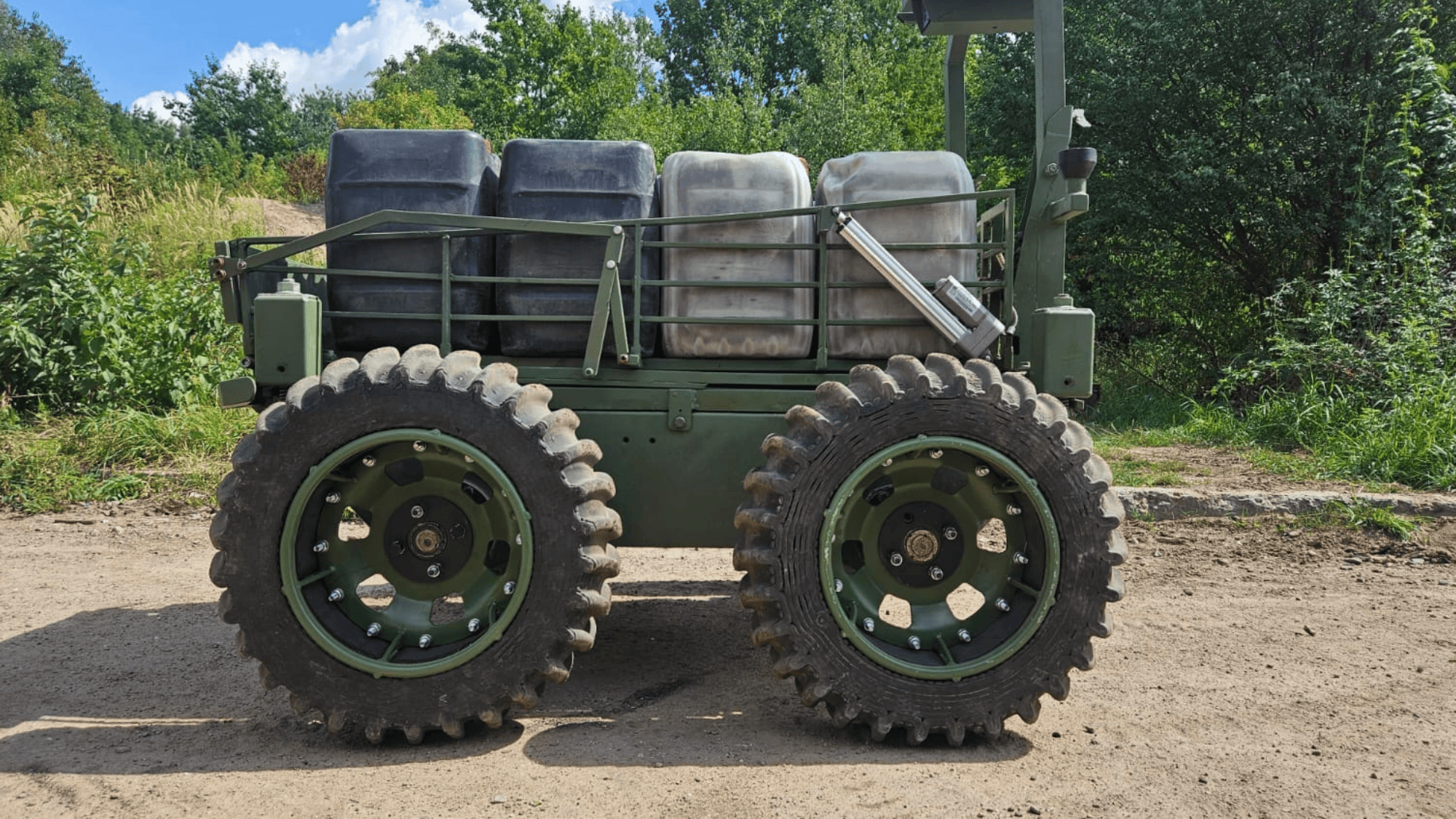
Tough times can fuel innovation, and battle-hardened Ukraine has demonstrated that fact of life more than most places in recent years. Since Russia’s invasion in February 2022, the country has utilized drones and robotics in ways not before seen in large-scale warfare. More recently, Ukraine has introduced a variety of remotely controlled ground vehicles tasked with entering contested territory and resupplying areas or even evacuating wounded troops. But while those wheeled robots help keep soldiers off the front lines, they are also vulnerable. Their air-filled tires are particularly vulnerable, since they can be shot at or break when rolling over barbed wire, shrapnel or even rugged debris. To solve that issue, engineers from a pair of Ukrainian companies developed a new type of 3D-printable tire that doesn’t require any air at all. And it’s already being deployed on front lines.
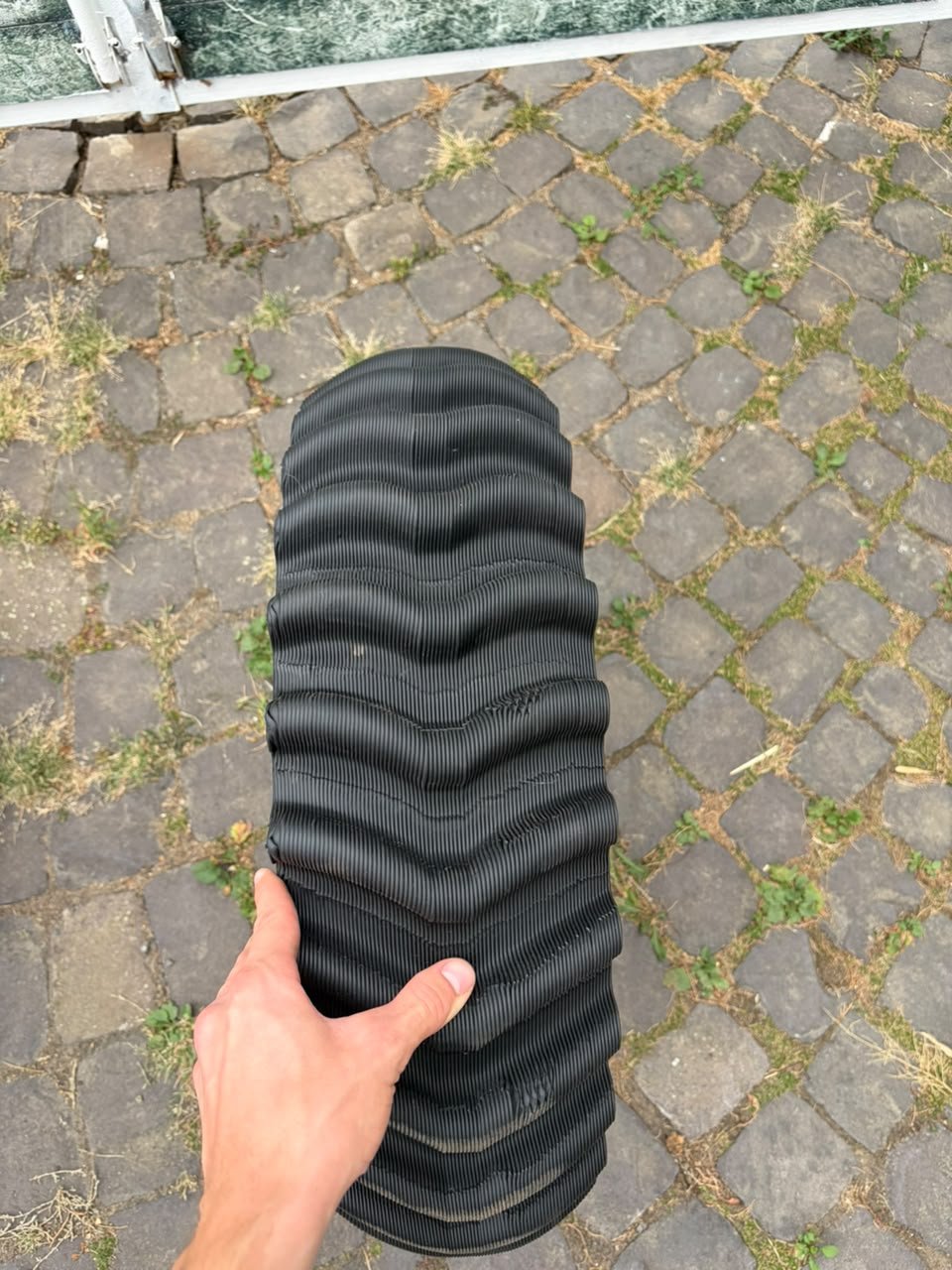
The airless wheel is the result of a collaboration between two Print&Live UA, and iSCALE 3D. Their design is proposed to be built for Uncrewed Ground Vehicles (UGV) that come in various shapes and sizes depending on their task. Instead of a rubber casing filled with pressurized air, these new wheels are 3D printed around a lightweight internal lattice made from durable elastomers and composite polymers. The lattice flexes and springs back over rough terrain, essentially doing the cushioning work that air pressure does in conventional tires, but without the risk of a sudden debilitating puncture.
The tires also feature a rounded tread and enclosed sidewalls which are meant to keep mud, stones and ice from packing in. According to Print&Live UA and iSCALE 3D, the result is a wheel set far lighter than Western airless alternatives and that keeps working even after taking some damage. Fewer blown out tires, they say, could mean more lives saved.
“The most important mission of a UGV is not spectacular—it is bringing a wounded person back, or water, medicine and supplies forward,” the companies write on their websites. “Every immobilized vehicle puts people at risk. That is the real purpose of this development.”
“One puncture and the mission ends where the machine stops,” they add.
The wheels are designed with enclosed sidewalls to keep mud, snow, or debris from sneaking in and causing damage. Image: Print&Live UA, and iSCALE 3D
No tire factory? No problem
In addition to the airless design, the 3D printing process makes the new wheels more adaptable. Each set can be tinkered with and adjusted to best suit the type of vehicle they will be equipped on, as well as for the specific mission type they might engage in. Stiffness, shock absorption, and overall geometry can all be tweaked on a computer. The process requires large, industrial-scale printers most hobbyists won’t have in their garage, but it’s still a much smaller, nimbler approach than an entire factory built to roll out one specific product.
“Because the geometry is digital, stiffness and damping are programmed for each UGV type and payload, and a design upgrade is nothing more than a new file,” the companies write.
The engineers also designed these wheels with the chaos of a battlefield in mind. Each two-piece rim set lets soldiers swap out a damaged tire without the tire-changing machines or presses a conventional repair would need. That flexibility means soldiers can repair or swap tires with simple hand tools in battlefield areas where full workshops aren’t available.
A new R&D hub for defense tech
Airless UGV wheels are just the latest in a growing list of creative fixes forced by the Russia-Ukraine war. The constant need for better drones and robots has turbocharged the country’s tech sector, which has grown from a handful of defense companies before the invasion to hundreds today. Most of the companies building out the new hardware are Ukrainian, but the war has also attracted a number of American defense startups that have set up shop there, drawn in by the change to their designs in the real world. The country’s capital city has attracted so much tech sector interest that some have even ascribed it the moniker: “Mil-Tech Valley.”
Artificial intelligence is undeniably good at playing games, regardless of its larger societal and environmental impact. In 1997, IBM’s supercomputer Deep Blue famously beat chess grandmaster Garry Kasparov, and nearly two decades later, Google’s AlphaGo managed to defeat a human champion at the much more complex game Go. Since then, another AI seems to beat humans at incredibly complex video games like StarCraft or Dota 2 every few months. Impressive as these feats are, AI has mostly outperformed humans by making us play on its home turf, as in, simulated and structured environments. But now, a team of engineers at the Micro Air Vehicle Lab at the Delft University of Technology in the Netherlands has built a lightweight smart drone that’s fundamentally altering that dynamic.
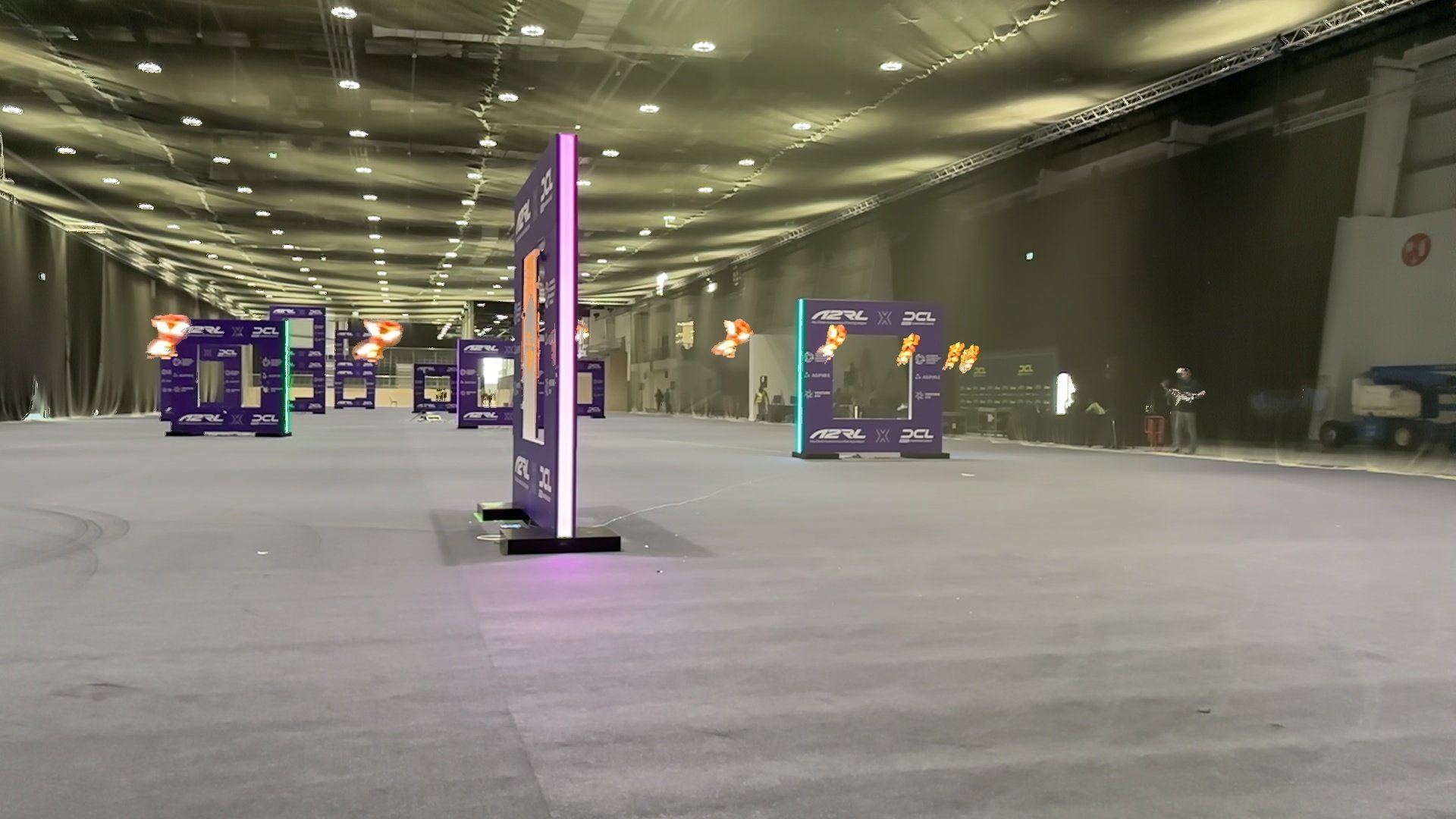
The team entered its AI-powered quadcopter in a high-profile drone race in Abu Dhabi that pitted AI-piloted drones against human-piloted ones. The niche sport, known as first-person-view (FPV) drone racing, has pilots steer remote-controlled drones through a series of small gates at blistering speeds of 60 to 100 miles per hour. They control the drone by using goggles that give a direct feed into a camera attached to the drone’s front. From a human’s perspective, it’s as if they’re flying through the sky.
The team didn’t just fish the race. They took first place, besting several human FPV champions along the way. It marked the first time an AI-controlled drone beat a human pilot in an international racing competition. Another team from the University of Zurich built an AI-controlled drone that won a race against humans three years earlier, but only in a controlled lab setting. This more recent example showed that a simply trained machine, with minimal onboard sensors and hardware, could be inserted onto a non-controlled test track meant for human operators and still come out on top.
The team won this race in November 2025 but new details about the science behind this achievement are published today in the journal Science Robotics.
“Instead of giving the robot increasingly powerful sensors and computers, we wanted to find out how much intelligence we could extract from very limited resources,” Delft University aerospace engineer and study co-author Christophe De Wagter said in a statement. “Drone racing provided an extreme environment in which to test these ideas outside the laboratory. It pushed us to develop AI that was not only fast but also robust, and able to adapt when external reference measurements were unavailable.”
Drone racing: a sport built on human-machine connectivity
FPV drone racing isn’t for the faint of heart—or, more accurately, for those with a weak stomach. Footage of drones flipping and somersaulting at extreme speeds can make even spectators feel sick. Pilots fly using a pair of joysticks that control the drone’s throttle, roll, pitch, and yaw. That human-and-machine team has to fly through several small race gates that make up a lap. The drone finishing with the fastest lap times wins. It’s an extreme sport where even a microsecond of a mistake can lead to a violent crash.
Though it’s not quite as popular as it was at its peak in the late 2010s, the sport still draws a considerable online audience. That’s pretty impressive, for a sport that only became possible thanks to simultaneous advances in several technologies. Namely lightweight batteries, miniaturized cameras, and the goggles and wireless video links that let pilots see what their drones see all had to come together for this extreme form of racing.
The fact that drone racing requires interacting with machines already equipped with sensors makes it a particularly interesting test bed for robotics and AI researchers. In 2022, the University of Zurich outfitted a drone with an AI model appropriately called Swift. That AI system collected real-time data pulled from the drone camera to “see” what it was seeing and to locate gates and avoid obstacles. An onboard neural network then parsed through all that in real time, making split-second decisions on the best routes to fly. Swift beat champion human pilots, a major feat at the time, but it did so on an indoor track measuring roughly 82-by-82-feet that the team had designed and trained the system for. When a condition even as subtle as the lighting changed, Swift’s performance suffered as a result.
Inspired by those results, the Delft team set out to build an AI racing drone that could better adapt to its environment. Like Swift, their machine called MonoRace uses a powerful AI model that interprets a video stream captured by the drone’s camera in real time. MonoRace also draws on an onboard inertial measurement unit (IMU), a sensor that tracks the drone’s acceleration and rotation. This IMU pulls data from onboard sensors as well as the camera, and helps the AI system better understand where the drone is position-wise on the track.
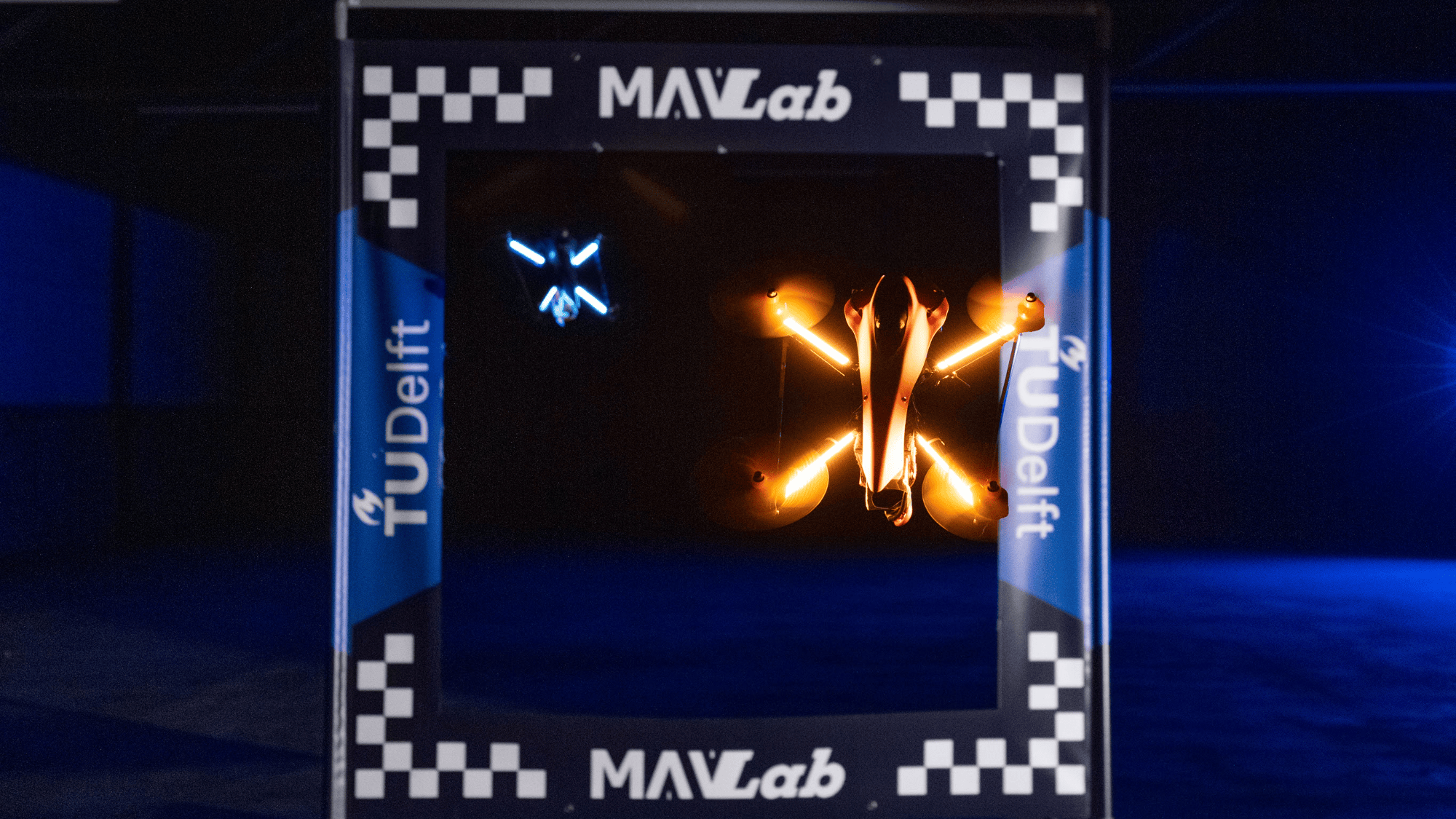
Timelapse image of the autonomous MonoRace racing drone flying through the final racing gate at Abu Dhabi in 2025. Image: Micro Air Vehicles Lab/Delft University of Technology.
That understanding of place makes it more equipped to fly without crashing even in less familiar environments. It also improves the drone’s perception over a solely camera-based approach, which can struggle when camera data is less than stellar. Remember, all of this is happening very, very fast.
“Flying at very high speed with only one camera is challenging because the images are blurry, deformed, and the AI system has very little time to precisely determine where the drone is,” Delft University robotics researcher and study co-author Stavrow Bahnam said in a statement. “We developed a robust way of combining what the camera sees with the drone’s own motion information, allowing it to navigate the track at high speed without GPS.”
What sets MonoRace apart from complex AI systems running on larger vehicles or humanoid robots is how stripped down it is. The entire system has to run on a tiny computer on the drone, light enough not to slow the drone down and efficient enough not to introduce lag. And yet, it’s still quite powerful, with the AI issuing an estimated 500 commands every second. Rather than train the model on one specific track, they trained it to learn how to adapt using a reinforcement learning approach. After many attempts of trial and error in a simulated environment, MonoRace figured out the best ways to quickly solve navigation problems and then apply that in the real world.
“Instead of first planning a desired flight path and conventional commands, our neural network learns to directly control the motors,” study co-author and Delft University Aerospace Engineering PhD candidate Robin Ferede added in a statement.
Putting MonoRace to the test
The team put MonoRace to the real test last November at the Abu Dhabi Autonomous Racing League, a major competition where some of the best human pilots battle to out. During its flights, MonoRace topped speeds of roughly 62 miles per hour as it looped, dove, and zipped through gates. It managed to beat out every other AI racing team in the competition, and also boasted a better time than three former human world champion pilots.
According to the team, these results make MonoRace the first AI-piloted drone to beat human pilots in an international racing competition, and could have an impact on drone racing and physical AI more broadly. With self-driving vehicles and even some humanoid robots entering larger-scale production, there’s an increasingly high demand to build AI systems that better grasp how to move about the physical world without barreling into everything around it. A drone that can do that while performing acrobatics at more than 60 miles per hour suggests that engineers are, at minimum, heading in the right direction.
So far, that hasn’t resulted in larger robots suddenly superseding humans at sports. The fastest robot sprinters, though admittedly quick in short bursts, also tend to crash into walls and burst into flames.
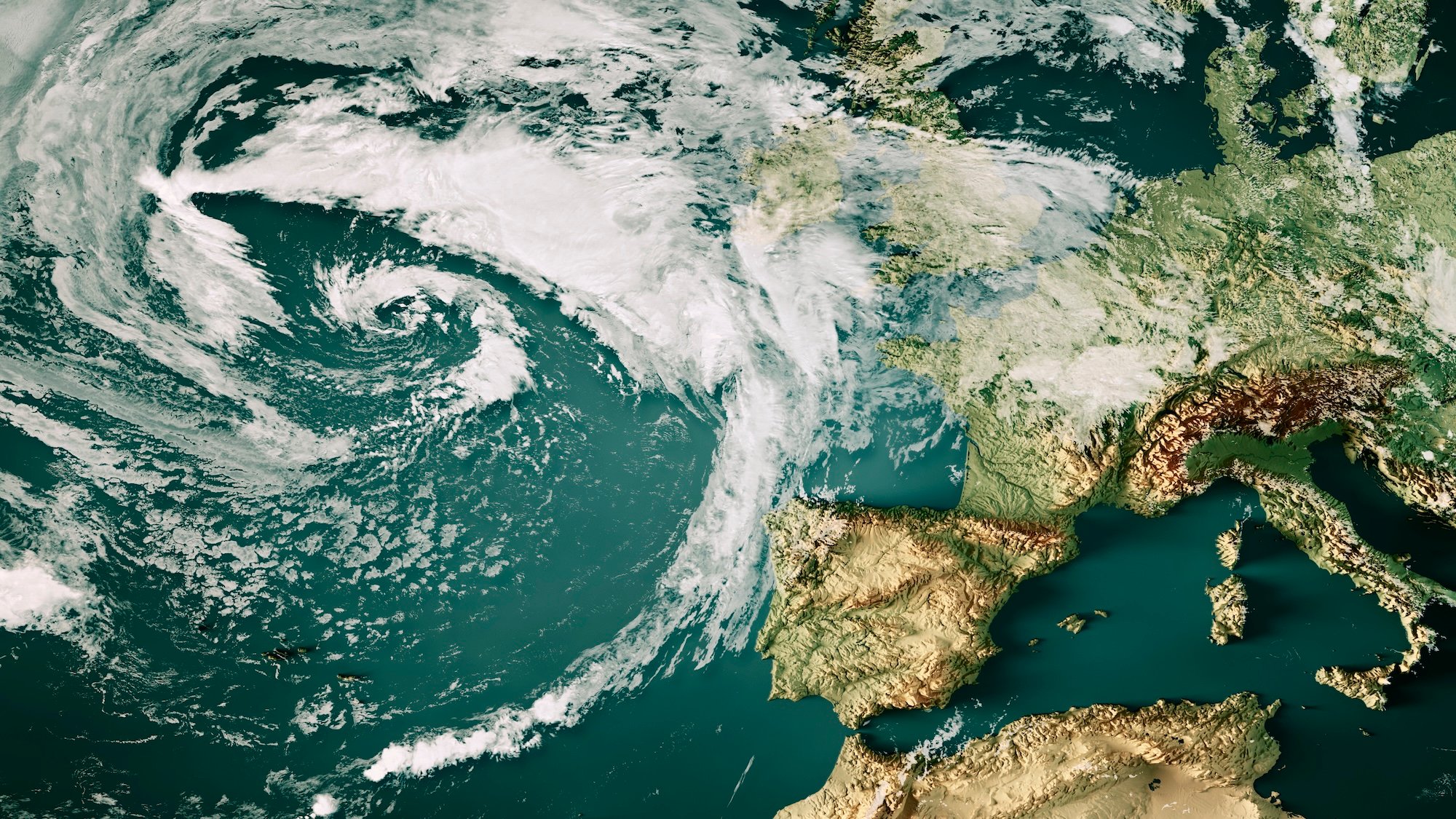
Even after decades of meteorological advances, weather forecasting remains infamously difficult. Today’s most trusted models are rarely accurate beyond a two-week window due to a constant cascade of atmospheric and climatic variables. These unpredictable meteorological interactions are the foundations of chaos theory. The interdisciplinary field studies how even the world’s most predictable systems can still produce completely unpredictable results, and was first developed by MIT mathematician Edward Lorenz during the 1970s.
“He came up with this theoretical two-week limit where beyond that, we just can’t predict weather because the noise in the system grows so much that it overwhelms any signal you start with,” Judah Cohen, a climatologist also at MIT, explained.
According to Cohen, many climate researchers continue to view Lorenz’s two-week hurdle as insurmountable. And that assumption has largely proven true for nearly 50 years. Even today’s dynamical simulations and artificial intelligence models begin to break down when attempting to predict conditions two-to-six weeks in the future—a window known as subseasonal forecasting. Nicknamed the “predictability desert,” this range runs into slow-moving, highly variable forces like this year’s super El Niño event. Once those factors enter the equation, forecasting becomes more of a roll of the dice l than anything concrete. However, Cohen has had his suspicions about chaos theory’s limitations.
“I never really believed that completely,” he said. “In theory, the atmosphere can create an infinite number of patterns, but it likes to fall into these favorite patterns over and over again.”
To try and break this forecasting barrier, Cohen and his colleague Lester Mackey have spent years developing an AI system that not only minimizes forecasting errors, but learns from its inevitable mistakes through a method called postprocessing. With postprocessing, the AI improves by comparing the inaccuracies with existing historical data, and then adjusts from there.
Cohen’s team recently submitted three versions of their model featuring the postprocessing system the European Center for Medium-Range Weather Forecasts (ECMWF). Widely known as the world’s best forecasting hub, the ECMWF also hosts seasonal competitions that pit the latest prediction models against one another. Most of these systems have relied on historic climate averages to reach their conclusions, but this was the first time a group submitted a program with postprocessing capabilities.
Cohen and his colleagues reported their results in a study published today in the journal Nature. Their AI postprocessing integration blew the existing forecasting models out of the water. For the two-to-six-week subseasonal window, researchers doubled overall prediction accuracy. Such massive improvements could soon help the farmers and energy providers who already rely on subseasonal forecasts, but the benefits may even save lives.
“It also improves predictions of extreme weather events, whether it’s flooding or cold spells or something else,” said Cohen. “It’s really important to predict both, but extreme events might be the most impactful part of this for society.”
Many researchers have long presumed subseasonal forecasting to be a dead end, but the latest leap may clear the way to even bigger advances in the field.
“People have questioned if it’s even worth investing in models at all for this time range,” said Cohen. “[But] we consistently beat climatology averages with our models.”
One of history’s most famous baseball cards is up for auction, and bidding has already surpassed $1 million with days left to go. Its official name of the 1909-11 T206 White Border Sweet Caporal 150/25 Honus Wagner PSA Authentic (Restored) is quite the mouthful, but Heritage Auction’s nickname for the memorabilia is much easier to remember. Simply put, the incredibly rare piece of history is the “Holy Grail” of baseball cards.
“The T206 Wagner is the foundational trophy of baseball card collecting,” Heritage’s director of sports auctions Chris Ivy said earlier this month.
Honus Wagner remains one of the sport’s most revered players even nearly 130 years after first stepping onto a professional field. The son of a German immigrant coal miner, the “Flying Dutchmen” is best known for his tenure as a shortstop for the Pittsburgh Pirates from 1900 through 1917. Wagner ultimately became an eight-time batting champion and was one of the original inductees into the Baseball Hall of Fame in Cooperstown, New York, in 1937.
However, Wagner reportedly didn’t accept every accolade.Legend has it that he demanded Kinney Brothers Tobacco Company stop printing collectible cards featuring his portrait after learning they were using them to promote Sweet Caporal cigarettes. The extremely limited run of cards translated to an unprecedented collectibility that lingers to this day.
The T206 Wagner is only the sixth of its kind ever sold by Heritage Auctions, and its current bid stands at $1,025,000. The bidding will run until October 25, and the sellers anticipate the card will auction for at least $3,000,000. And there is precedent to back up the high price tag. Earlier this year, a similar 1909-11 T206 Piedmont Honus Wagner SGC Authentic sold for over $5.8 million.
Crossword puzzles range from those easy elementary school-level varieties up to nightmarish labyrinths of text. But crafting even the most simple versions remains its own artform. Seamlessly combining dozens of answers into a coherent, functional grid often requires years of practice, but digital strategist and creator Tex Jernigan has designed an impressive tool to level the playing field, so to speak: Crossword Generator.
“Making my own puzzles is something I wanted to do for my neighborhood coffee shop, and [I] started working on it many years ago,” Jernigan, who also recently debuted a vintage Blockbuster VHS sleeve maker, tells Popular Science. “I thought I would be able to have a huge list of theme words, but it can be quite difficult to get more than a small handful of theme words to work.”
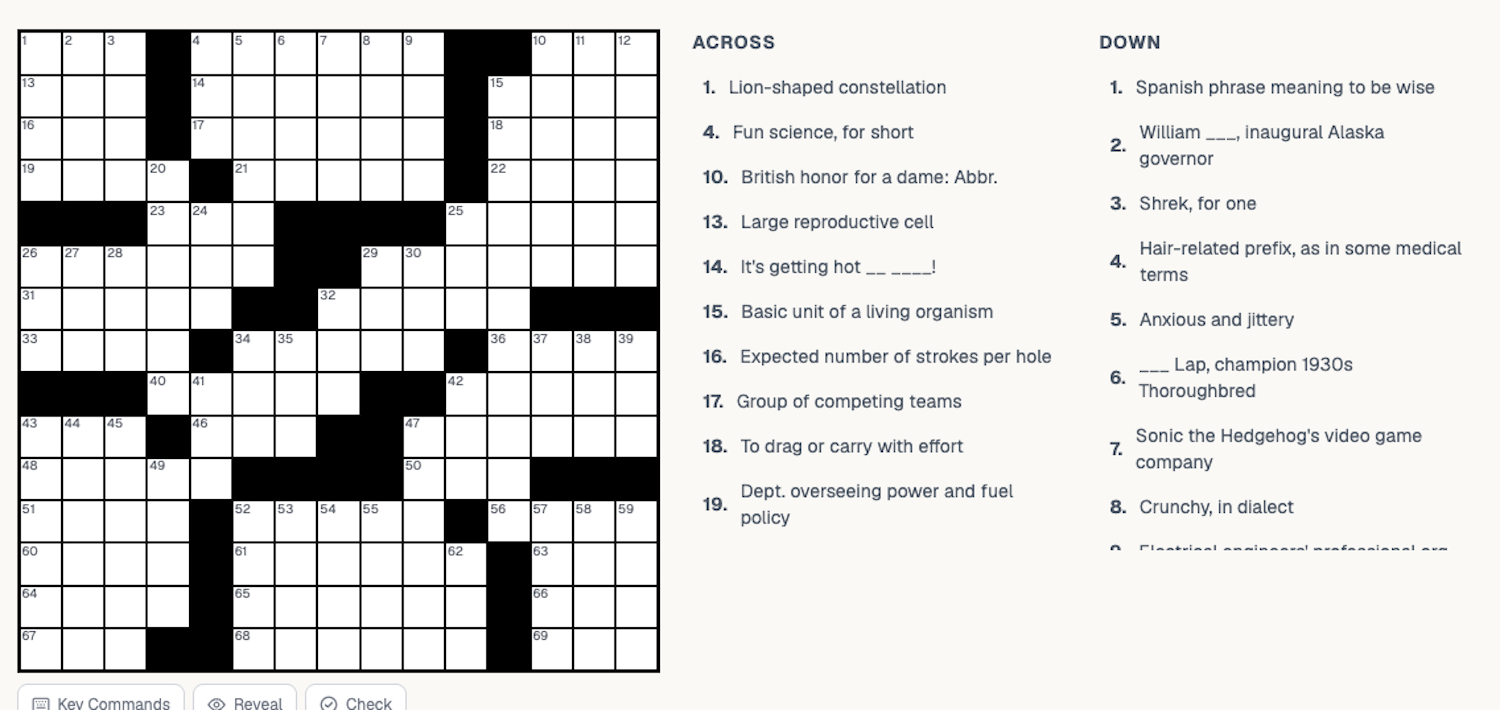
Crossword Generator’s creator designed a custom edition for ‘Popular Science’ available for free online. Credit: Tex Jurnigan
To use Crossword Generator, creators first pick a grid size, then choose either a pattern with pregenerated or manually entered black squares. Next, creators have the option to fill the grid with a few specific words, or simply let the program create an entire puzzle itself. Either way, Crossword Generator employs a constraint solver to scour a database of hundreds of thousands of words, then starts plugging in potential options on a trial-and-error basis. Preference is given to more common, everyday words instead of particularly obtuse selections. Any words entered by a user remain locked in during the generation process, and the prom works around those as it fills in the blanks. Crossword Generator starts in English, but supports 27 other languages including Spanish, Russian, and Japanese.
While Jernigan’s constraint solver doesn’t rely on artificial intelligence, another generative program does use Google Gemini to crossmatch every word with a dictionary-based clue. That said, anyone can simply erase those and create their own hints to ensure their customized crosswords are as human-centric as possible.
“In my experience, AI isn’t very good at building a crossword from scratch, because it can’t reliably make every word cross,” Jernigan explained on his website. “It works much better as a partner to the solver.”
Crossword Generator is free for creating and printing up to 13×13 puzzles, but a subscription service opens up New York Times-style grids ranging from the 15×15 through 23×23 Sunday editions. But if solving crosswords is more your thing than creating them, you can start working on Jernigan’s exclusive Popular Science-themed puzzle.
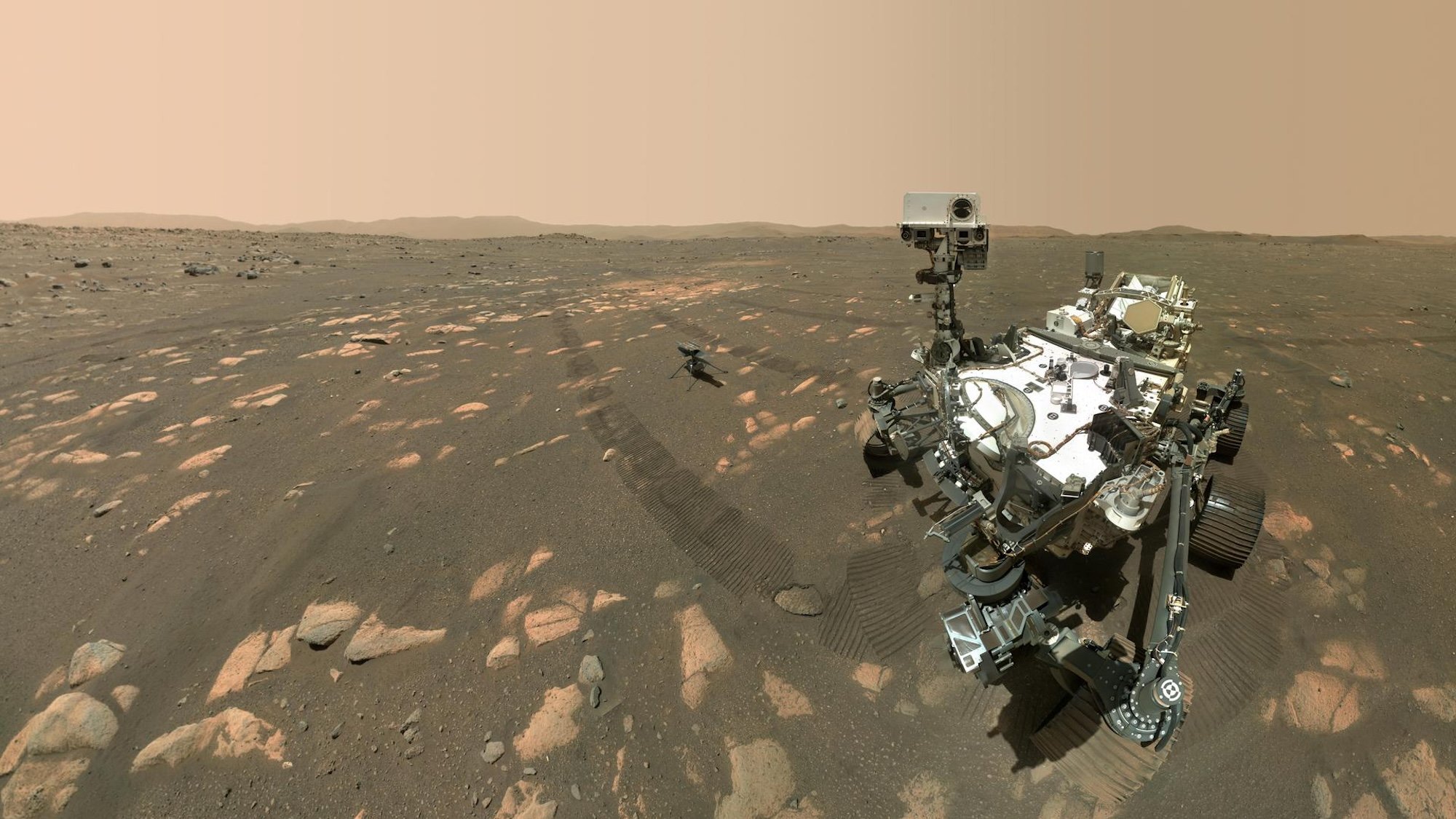
NASA’s Perseverance Mars rover has officially traveled 28.10 miles—farther across another planet’s surface than any other vehicle in history. Not only that, but the six-wheeled science lab accomplished this impressive feat almost entirely autonomously and in barely a third the time it took the previous recordholder.
“The original mission called for no more than 12.4 miles of driving. We’ve blown well past that,” Steven Lee, Perseverance and Curiosity project manager at NASA’s Jet Propulsion Laboratory, said in a statement.
Perseverance began operations on Mars on February 18, 2021, after landing in an ancient river delta selected for potential past microbial life called Jezero Crater. Since then, the rover has slowly but steadily made its way across the region, while conducting multiple sediment drilling surveys. These samples are then chemically analyzed using onboard laboratory equipment before the results are sent back to mission specialists at NASA.
Perseverance surpassed the previous travel record of 28.06 miles set by NASA’s Opportunity rover, before its communications with NASA ended on June 10, 2018. However, it took Opportunity nearly 15 years to accrue its distance while Perseverance exceeded the same mileage in less than six years, and on the 2,006th Martian day (sol) of its mission. Perseverance is currently traveling towards an area named Idubi through an expanse nicknamed “Lac de Charmes.” The region near Jezero Crater’s western rim hosts what may be the oldest landscape ever investigated in the solar system. Mars does not feature tectonic plates like Earth, which means its terrain is never eroded and subsumed into the planet’s substrates.
Mission engineers have not spent the last six years remotely steering Perseverance, either. The rover arrived on Mars equipped with a self-piloting system called AutoNav, which constructs 3D maps of the immediate surroundings to flag any potential hazards. AutoNav then charts a route between specific waypoints chosen by NASA specialists back home. Perseverance has completed 90 percent of its total excursion with AutoNav. Opportunity and its sibling rover, Spirit, only relied on a first version of the piloting system about five percent of the time.
Perseverance has a long road ahead of it, if all goes according to plan. In October, NASA approved the first mission extension that will continue the rover’s operations through about the end of 2028.
“With all mobility systems fully operational and favorable extended-ground-life test results, we expect Perseverance to keep adding to this record for many years to come,” added Lee.
A man in upstate New York discovered more than cobwebs and missing holiday decorations while recently cleaning out his garage. Behind a small wood plank, homeowner Jason Hurdle spotted a long-forgotten crawlspace stuffed with vintage milk pails, a safe, and a dusty box of files. Hurdle intended to simply toss the papers in the trash, until a perfectly timed gust of wind removed the crate’s lid. Only then did he realize the box’s true contents: dozens of reports labeled “Secret” relating to Stalag Luft 3, an infamous prison camp run by the Nazi Luftwaffe near Germany’s western border during World War II. Over 300 pages of handwritten accounts from U.S. soldiers recounting their brutal incarcerations at the facility under conditions “not fit for humans.”
“I feel the hurt, the pain, and a lot of things these guys have been through,” Hurdle recently told local news outlet WHEC.
A visit from specialists at the National Archives quickly confirmed the authenticity of the questionnaires, which were compiled in 1945 following Allied liberations of German POW camps. The box was clearly intended for use as evidence of war crimes, which the reports corroborate in tragic detail. Soldiers wrote about living in facilities with “no heat, no beds” while exposed to the elements and vermin. Other troops recalled grueling work on rail lines while witnessing beatings, executions, and even the “cold blooded murder” of surrendering armed forces. Stalag Luft 3 is famously the site of a breakout later recounted by former prisoner Paul Brickhill in the book and 1963 film adaptation, The Great Escape.
“When I first laid them on the table in front of them, the first thing the one agent said was, ‘These are original, we want these,’” added Hurdle.
It’s still unclear how the box ended up inside the garage crawlspace. Hurdle suspects they may have belonged to a retired U.S. Army officer who once lived next door, especially since the box also contained other personal items from the man’s family. In any case, the indispensable historical accounts are now under the care of the National Archives, who have since digitized and unclassified the reports. The entirety of the discovery is now available online to the public.
Nature. It’s beautiful. It’s awe-inspiring. And it’s really scary. The new book Nature is Metal: It’s A Life-Eats-Life World features full-color photographs and vivid descriptions of the physical features, survival adaptations, and hunting skills innate to 75 of nature’s most metal plants, animals, and natural phenomena.
Browse through some of these raw and real images in the gallery below. (Click to expand images to full screen.)
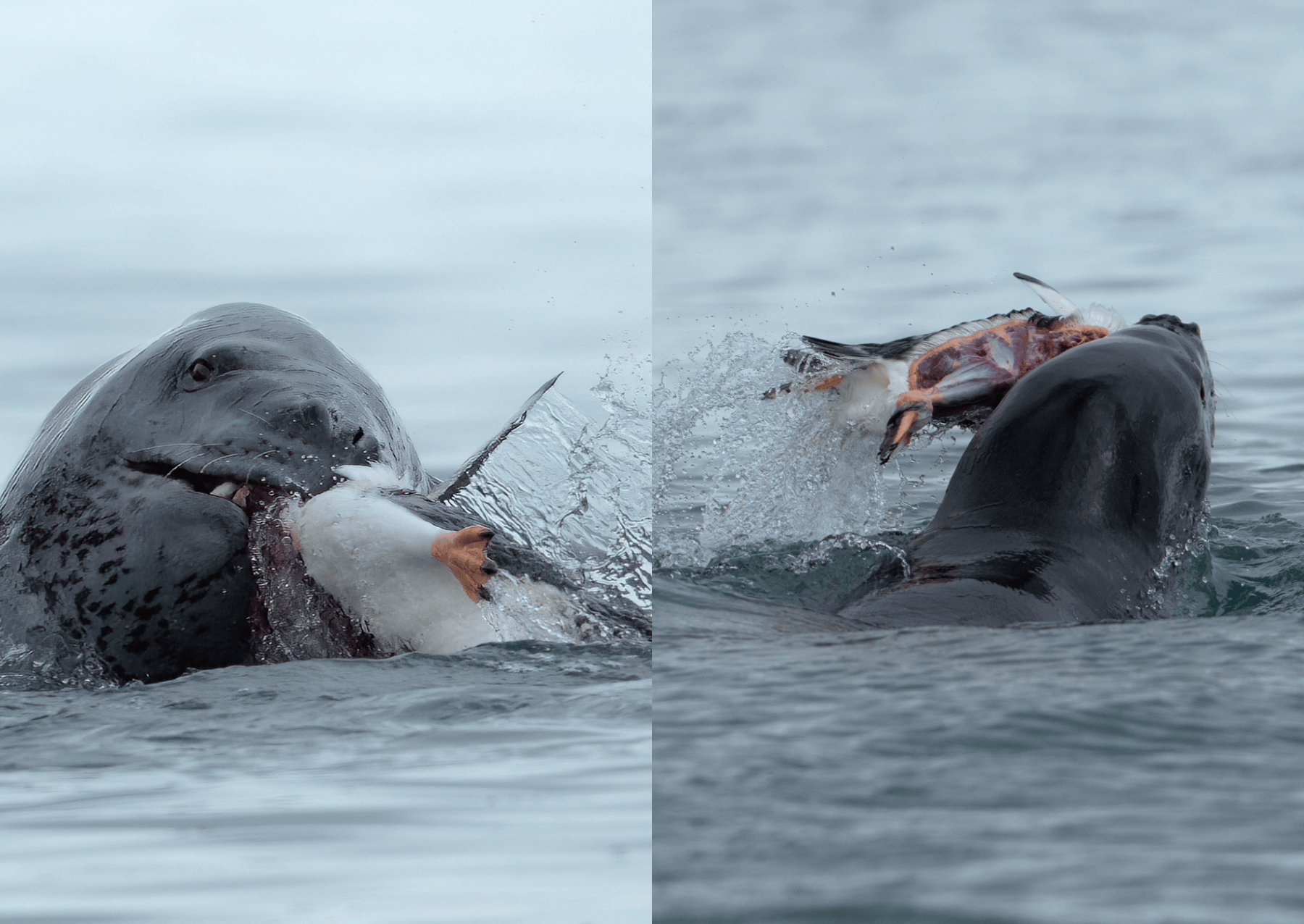
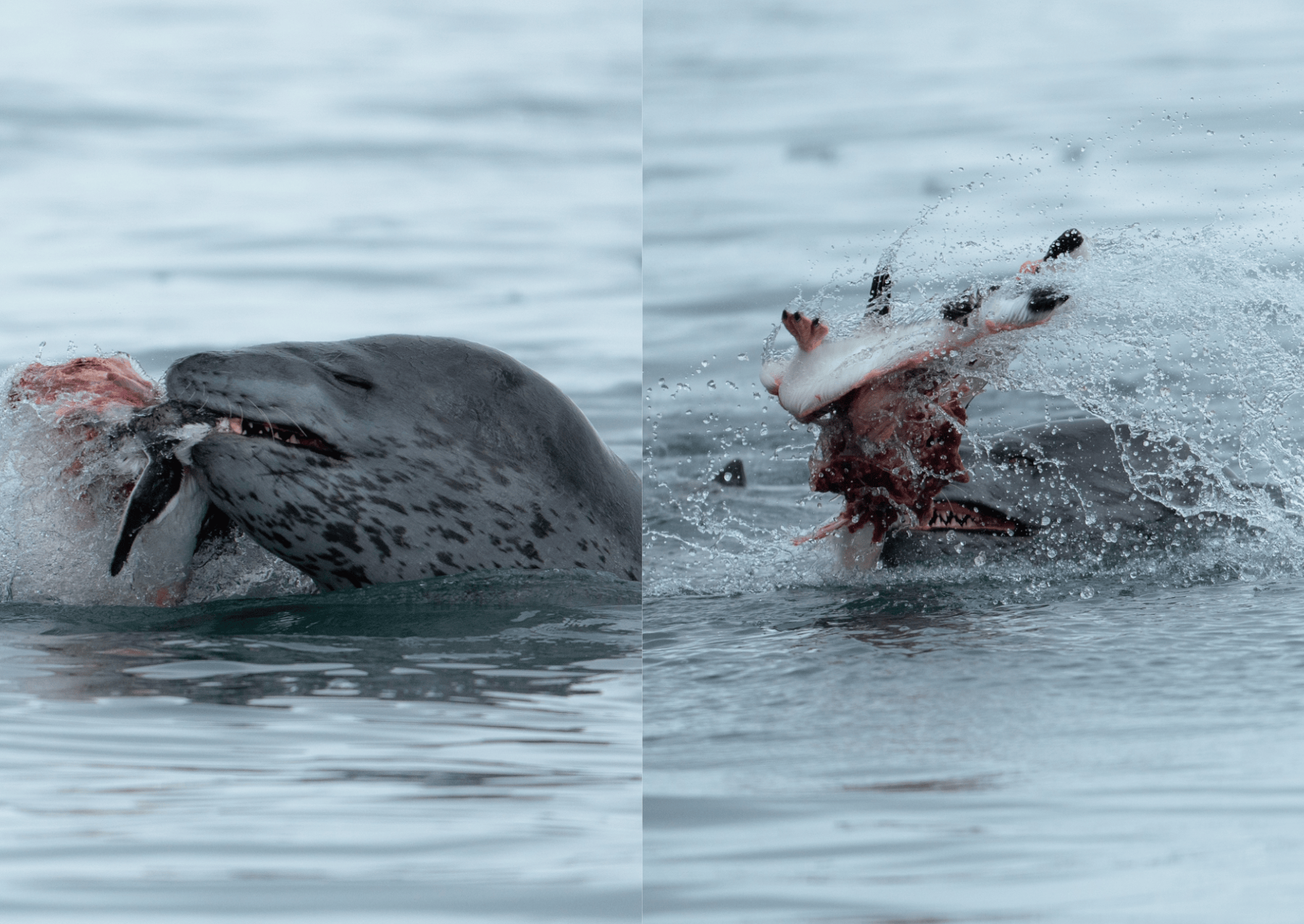
A golden eagle (Aquila chrysaetos) eating the remains of a bison. They are hypercarnivores whose diets are at least 70 percent meat. Image: Natasha Mace.Stoats (Mustela erminea) may look pretty cute, but these short-tailed weasels are known for opportunistic and frenzied killing. Image: Grayson Smith/UWSFWS. A giant otter (Pteronura brasiliensis) holds a swamp eel in its powerful grip. Image: Parks Marilla.Polar bears (Ursus maritimus) have been known to eat cubs when food is extremely scarce. Image: Jacob Zoller Jake ZollerLeopard seals (Hydrurga leptonyx) may look like cats, but they hunt their prey like sharks. They are at the top of the food chain in the seas around Antarctica. Images: Kristian Gillies.A great blue heron (Ardea herodias) eating a banded water snake. Image: Marcos Rodriguez. Stygian owls (Asio stygius) are found across Latin America and the Caribbean and called coruja-diabo or “devil’s owl” in Brazil. Image: Eigi Iwasaki. Red-tailed hawks (Buteo jamaicensis) help keep small rodent populations in check. Image: Alexander Collyer.
Ettore R. Paolucci(Rick) is the founder of Nature Is Metal, the viral phenomenon with 7.5M subscribers on Instagram (@natureismetal) and 1.23M on YouTube (@natureism3tal). A self-taught storyteller with a sharp eye for viral content, he’s created his own unique voice that’s defined a new way of seeing nature online.
Hans Aschim is a writer and creative director based in Vancouver, BC. When he’s not at his desk, he’s trail running in the Coast Mountains—always with bear spray.
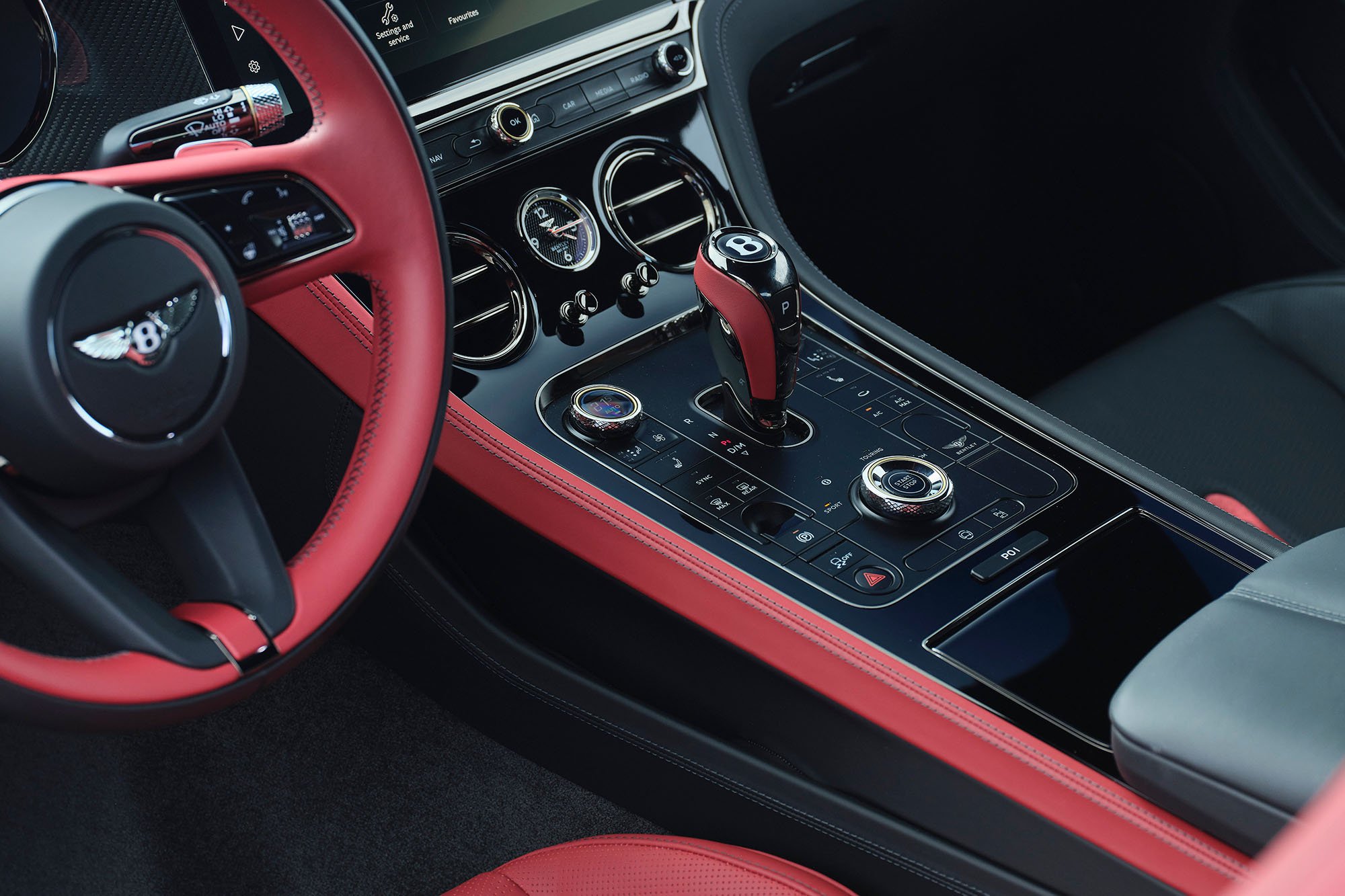
“Less is more” may seem a curious phrase when applied to a half-million-dollar, 199-mph, 657-horsepower twin-turbocharged V8 brute. But in the context of the posh luxury barges we expect from British automotive manufacturer Bentley, it’s applicable to the 2026 Bentley Supersports.
That is because this car is as notable for what it lacks as for what it has. The Supersports is a rear-drive, combustion-only version of the Bentley Continental GT. But where that car has always employed all-wheel drive, and the current generation uses a hybrid-electric powertrain, the Supersports is the result of a “what-if” project by Bentley engineers.
They wondered what was possible if they stripped the heavy all-wheel-drive and hybrid systems from the Continental GT and built a purely combustion-powered rear-drive car with track driving in mind. The answer is the Supersports.
“Half-million dollars” is an approximation. The official starting price in the US is $486,600, but Bentley has already sold the entire production run, and every car has been customized, ensuring none of the cars actually sold for the list price.
“Each client that has ordered a car has worked with our Mulliner division [which provides personalization] on co-creation,” said Rocco. Even while confirming that less is more, it doesn’t hurt to add a few extra goodies.
Bentley
The same hybrid-electric system that contributed to the tranquility of the Continental GT Speed we tested previously also adds mass that is detrimental to on-track performance. Similarly, that car’s all-wheel-drive system provides security during trips to the ski chalet, but induces understeer in spirited track driving.
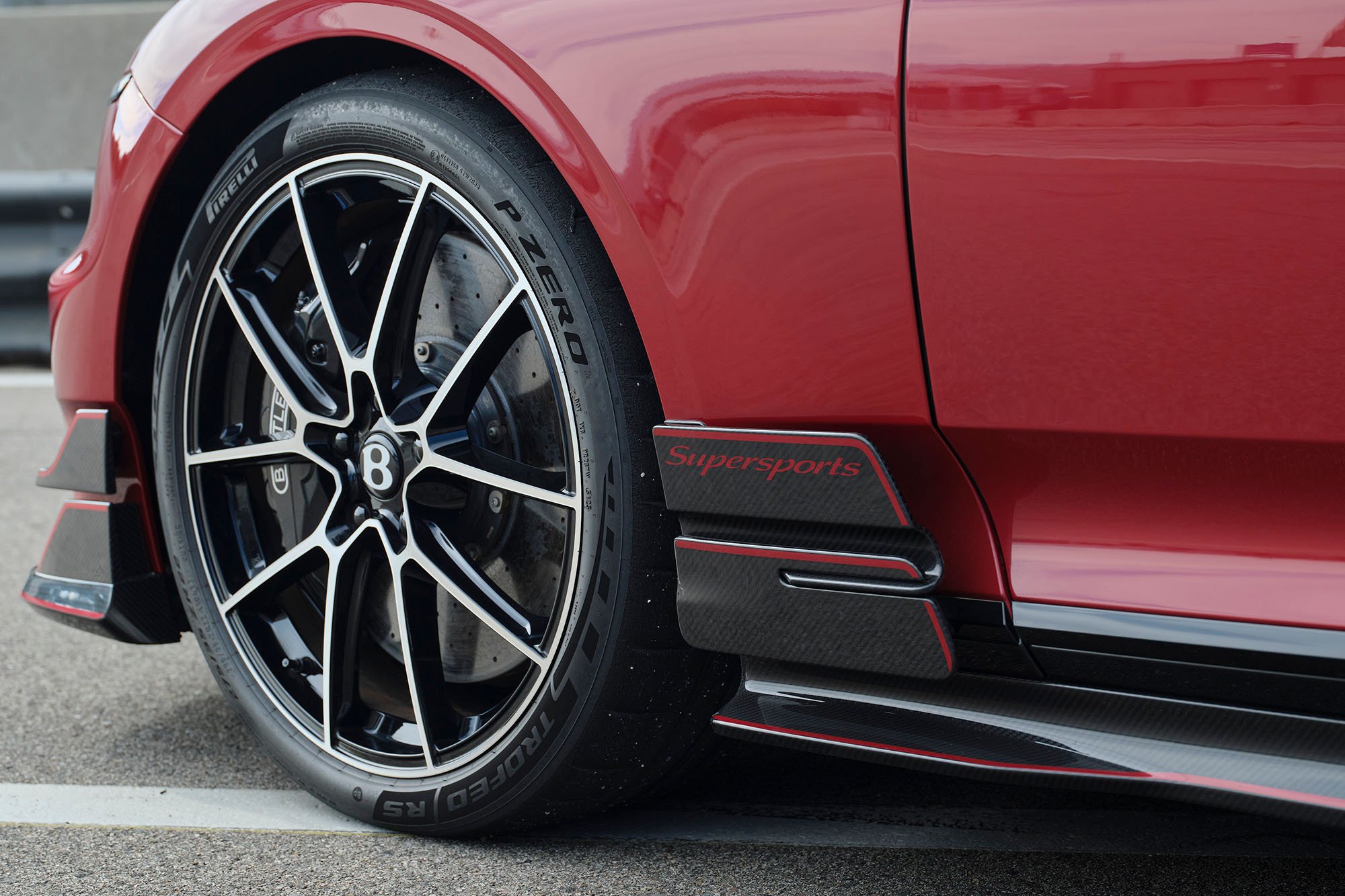
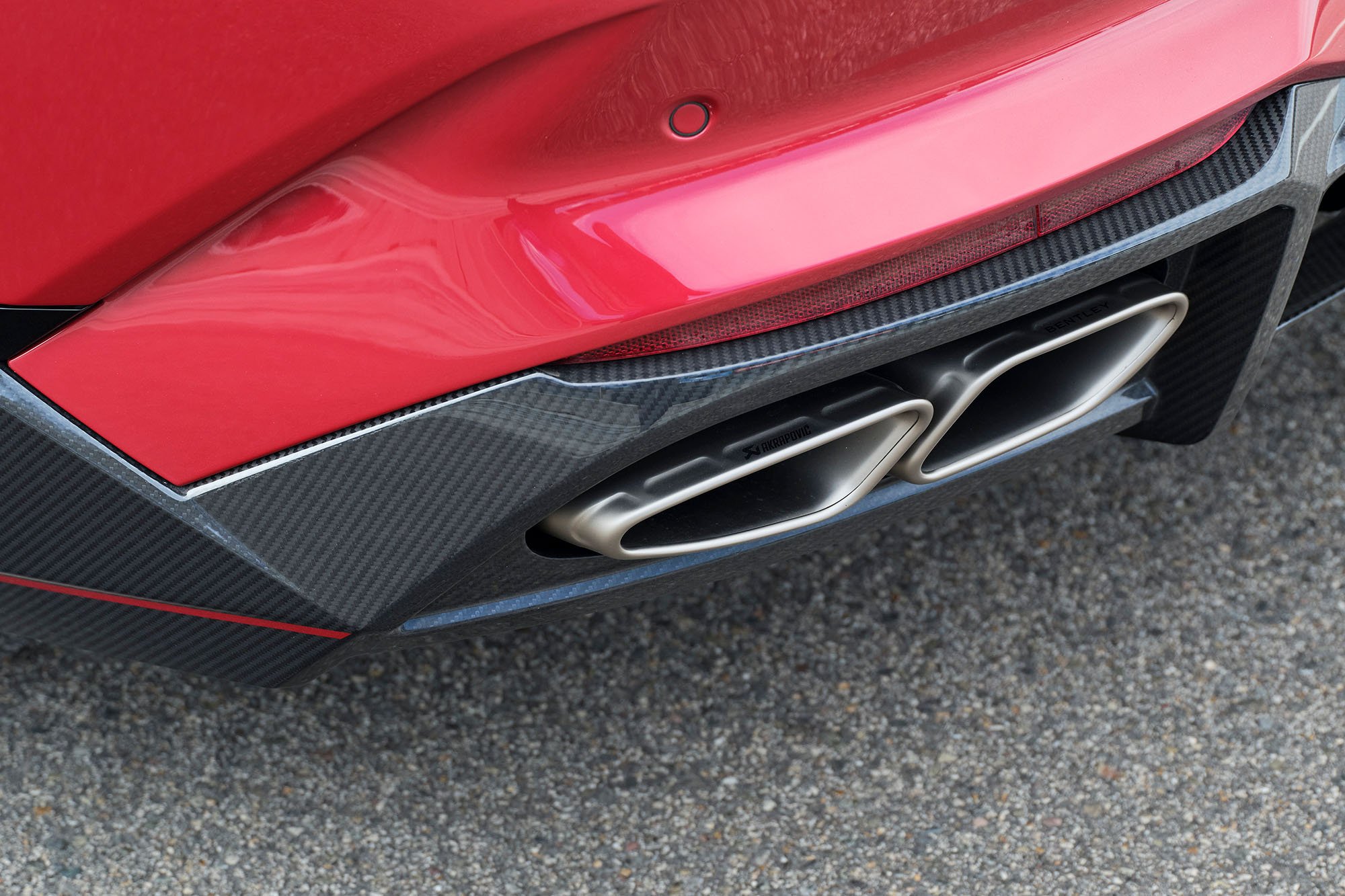
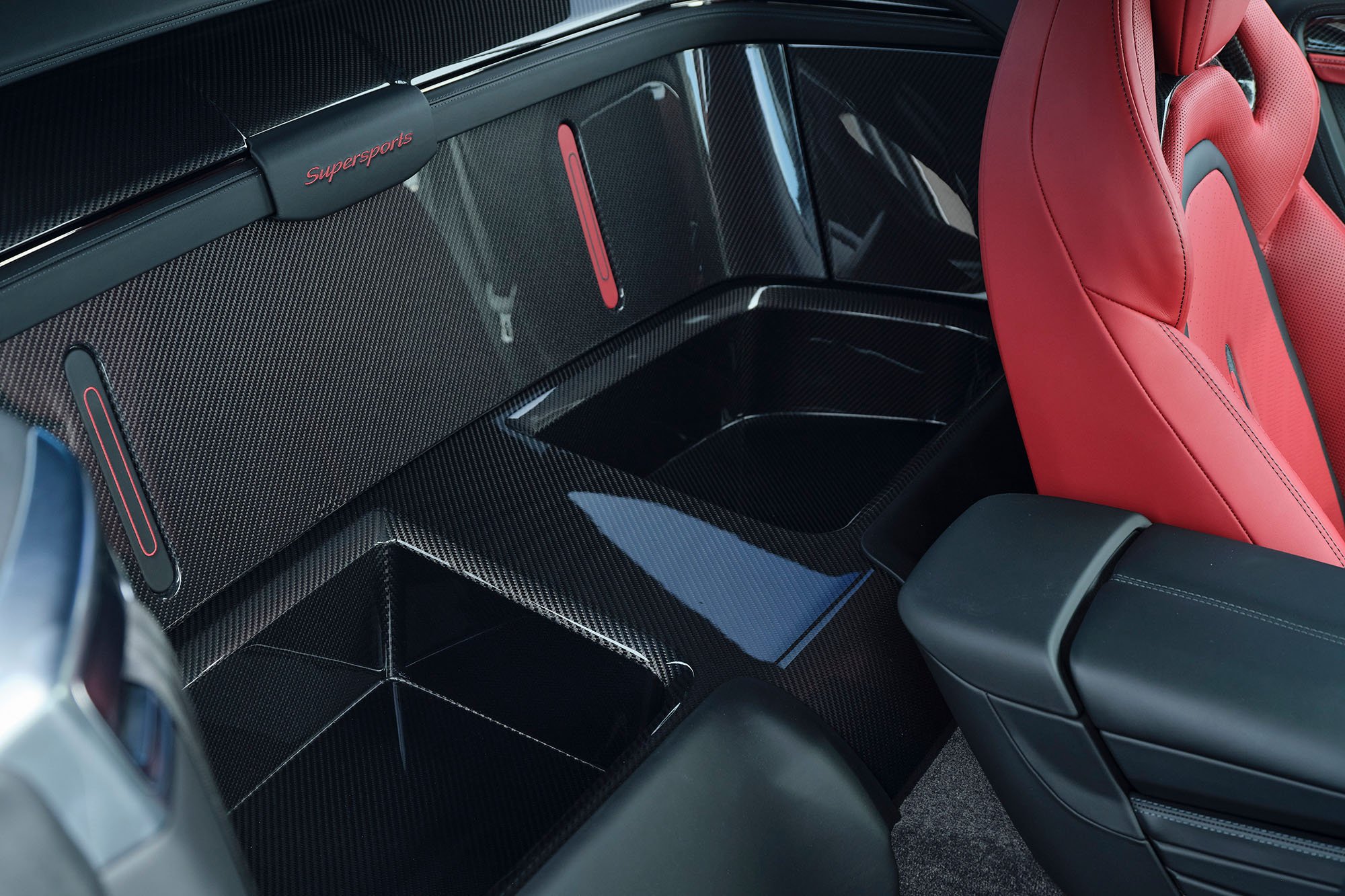
Eliminating those components not only creates a purer sports car, but it also eliminates an incredible 1,000 lbs. of mass. Carbon-fiber bodywork, lightweight forged aluminum wheels, and a titanium exhaust system also contributed to the Supersports’ diet. “If you look at the carbon fiber on the side of the car, it is all purposeful; it is for downforce and to help the wind clear and cool the car as it’s being driven,” explained Bentley Americas President and CEO Mike Rocco.
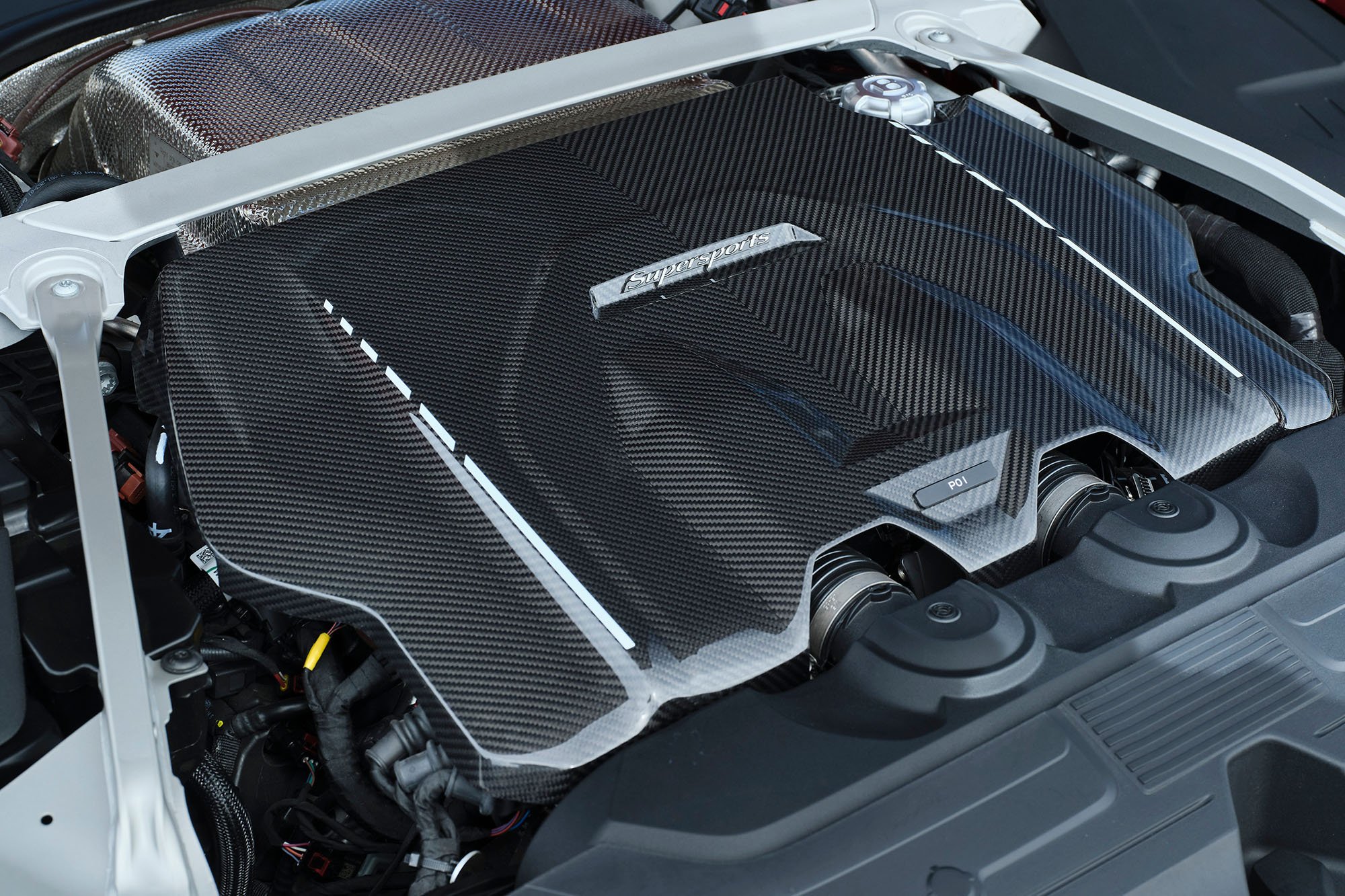
A souped-up version of the Continental GT’s twin-turbo 4.0-liter V8 delivers 657 hp and 590 lb.-ft. of torque without the aid of an electric motor and battery pack. The engine’s new parts include larger-diameter single-scroll turbochargers and a dual-mass flywheel.
The engine’s lovely, energetic exhaust note comes through an Akrapovič titanium active exhaust system, so when you’re at the race track and want to hear it, you can turn up the volume. And when you’re leaving home for the gym at 6 am on a Monday morning, you can dial down the volume and let your neighbors sleep.
The V8 powers the rear wheels through a ZF-supplied 8-speed dual-clutch transmission that delivers instantaneous, seamless gear changes, either automatically or through the steering wheel-mounted shift paddles. During laps around WeatherTech Raceway Laguna Seca in Monterey, Calif., the automatic programming for the transmission’s shifts was flawless, correctly clicking down through the gears under braking for the legendary Corkscrew turn and then back up again, working down the hill back toward the track’s front straight.
The torque-vectoring, electronically limited-slip differential minimizes the wheelspin and oversteer that the turbo V8, with its 590 lb.-ft. of torque, could produce accelerating out of the slower turns. But neither the differential nor the advanced electronic stability control system neuter the power, so pressing the accelerator with a little too much authority causes the Supersports’ back end to slither. It’s a good reminder to be a little gentler on the next lap! When pointed straight, the Supersports accelerates to 60 mph in 3.4 seconds.
The brakes provide the necessary deceleration with 17.3-inch carbon-silicon-carbide rotors and positively massive 10-piston calipers up front. Rear brakes are a comparatively paltry 16.1-inch rotors with commonplace 4-piston calipers.
These brakes provide huge stopping power without the annoying squeal common with high-performance carbon brakes during lighter braking. Pedal feel is good, and the friction is progressive, with none of the aggressive bite of Ferrari brakes in casual driving or the mushy vagueness of Lamborghini brakes at track speeds.
The various carbon fiber spoilers, diffusers, splitters, and dive planes do their job, creating effective downforce at speed, which makes braking more effective at high speeds. So rather than easing into the brakes as you might normally, the Supersports rewards heavy initial brake application that you taper as the vehicle slows and it loses downforce.
Tires are 275/35 ZR22 front and 315/30 ZR22 rear Pirelli P Zero Trofeo RSs on 22-inch forged aluminum wheels (it seems more appropriate to pronounce it al-yoo-MIN-ee-um for a Bentley, but then we’d also have to spell the rubber “tyres”).
Bentley
Despite the diet, the Supersports is still a heavy car, weighing more than 4,400 lbs. This makes its nimble handling all the more impressive. This agility comes courtesy of an active suspension system that uses twin-valve air springs and a 48-volt active anti-roll control system that replaces conventional passive steel anti-roll bars.
This lets the car’s suspension adapt in real time to driving conditions, keeping it stable and confidence-inspiring on the track without being punishing at lower speeds. It does an impressive job disguising the Sportsports’ weight, but the laws of physics take their inevitable toll on the tires and brakes, as they lose effectiveness with time on the track.
Alas, Bentley is building only 500 Continental GT Supersports, all spoken for. Perhaps the success of the Supersports program will convince Bentley management that additional minimalist rear-drive models would be good additions to the company’s product line. Could “less” mean more Bentley models?
As residents on the northern Gulf Coast brace for quickly strengthening Hurricane Isaias (a Category 3 storm as of Friday afternoon), many are likely eyeing their roofs and walls with nervous anticipation. The Congressional Budget Office estimates hurricane force winds and storm-related flooding collectively cost households in the United States some $34 billion every year. And while rounded corners, sloped walls and reinforced construction can help mitigate some wind damage, these additions are often expensive or impractical for developers looking to cut costs. Engineers at Florida A&M University and Florida State University think they’ve found a resourceful alternative, and it involves embracing the ocean’s own wavy aesthetic.
For a study recently published in the journal Engineering Structures, the team built 3D-printed models of several low-rise buildings with wave shaped walls and roofs and tested them in a wind tunnel. The designs with the deepest waves, (in this case 10 percent of the building’s overall height) cut peak wind pressure near roof and wall corner by up to 60 percent. Those corners and edges are where damaging forces typically concentrate. Surprisingly simple designs like these could become increasingly attractive to develop in the coming years, as more and more communities brace themselves to endure stronger and more frequently occurring storms.
“These nonconventional building shapes reduce the damage from worst-case severe weather scenarios,” Pedro Fernández-Cabán, a study co-author and Florida State University civil engineer, said in a statement. “It’s another tool for engineers and designers to protect against wind damage.”
Bigger waves means better protection
To test their idea, Fernández-Cabán and his colleagues started by 3D printing various models of low-rise buildings. Some of the buildings had wavy walls and roofs, while others were built with a more conventional baseline model with flat, straight surfaces. They made three wavy versions, with wave amplitudes of 5 percent, 7.5 percent, and 10 percent. The amplitude measures the wave’s size in proportion to the building’s overall height in feet. So, for a 20-foot-tall building, a 10 percent amplitude would mean waves that extend about 2 feet.
Once the models were printed, the team then put them into a wind tunnel at the university. They measured wind pressure data on their surfaces as wind pelted the modelers from various directions. All of the wave-roofed models experienced reduced wind load compared to the flat version. The deepest wave model performed the best, reducing peak wind pressure near roof and wall corners by between 40 and 60 percent compared to the flat version. At least in theory, that means a building with that design could see significantly less damage when exposed to hurricane-force winds.
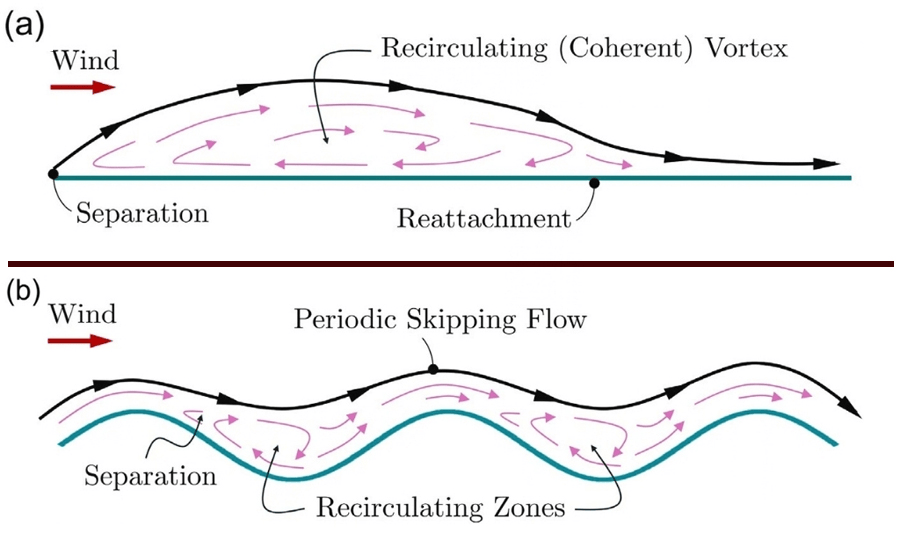
The diagram shows how curving structures can help prevent more destructing vortices from forming. Image: Pedro Fernández-Cabán.
The paper includes a useful diagram (above) that breaks down why this wavy design works. When wind flows over a flat surface like a roof, it separates at the leading edge and from a single large, swirling vortex. That creates a zone of low pressure, while higher pressure underneath the building pushes out against the surface. That leads to a suction like effect that, in extreme scenarios, can peel roofs off of a building. Over a wavy surface, the wind skips along like a stone across a lake, forming a series of smaller swirls instead of one big one. That disruption to the wind can prevent high-suction picks from forming. The result is a building that with less exposure to the strongest, points many damaging wind forces than a flat one.
“Changing a building’s shape can significantly reduce the intensity of wind forces it has to withstand,” Fernández-Cabán said.
The researchers caution that this study focused specifically on wind pressure on the model’s surfaces. They’re now running additional experiments to better understand how wind flows around the wavy structures and plan to use computer modeling to fine-tune the wave patterns and test other shapes. If that work bears out similar to the early results, it could make wavy walls and rooms all the more attractive to architects and engineers looking for simple solutions to protect buildings in storm prone areas.
Wandering around Milan, you come across two kinds of power: the kind you can observe and the kind you can only feel. That first one is obvious, all incense-soaked architecture and ascendant liturgies. The second, though, is more understated in pauses, glances, murmured blessings, and other hushed, huddled choreography.
Pinnacles and pulpits look down on the penitent holding their rosaries. Beyond the gargoyles’ gaze, an equally adorned set of transformation seekers do the same to the so-last-season. Because, wandering around Milan, you come across another kind of power both manifested and metaphysical: the power of fashion.
It’s July 2025, and I’m in Milan at the invitation of EssilorLuxottica. I’m here to learn how the world’s largest eyewear company designs frames and lenses that help everybody, from the fashionable to the far-sighted, see and be seen. And where else but the Italian capital of fashion? Here, at the intersection of spirit and spirituality, faith and fit, this vertically integrated multinational predicts and produces trends years before they hit retail. But more interesting even than shapes and shades are the developments in microelectronics and med-tech that turn frames into smart systems, into something powerful you can witness and wear.
[Disclosure: EssilorLuxottica provided travel accommodations during the creation of this story.]
Our tour begins at the Oakley Milano flagship, a two-story space styled like a brutalist bunker that cloisters current attire alongside retired accessories from the ’90s and early aughts, displayed like relics in a cathedral. Oakley is just one of EssilorLuxottica’s many, many proprietary brands, licensed luxury labels, and, with the Oakley HSTN and Vanguard Performance AI models, a part of the company’s push to take smart glasses from concept to category.
We see the Prizm Interactive Wall, where we compare simulations of different Oakley lenses. Placed on a platform, a screen shows how a lens’s selective wavelength tuning and “noisy” light filtering boost specific colors and contrast, whether you’re on a shady trail or out to sea. Then there’s the Performance Chamber. A stationary bike sits in a simulator where you pedal through adjustable wind and lighting conditions to experience how different eyewear (and helmets) ride.
The next stop on our photopic pilgrimage is the Luxottica Digital Factory and its Tortona Experience Center, a striking building full of workspaces and high-end industry showrooms. Here, in the Zona Tortona design district, we work our way back to the future, to where teams study economics, demographics, technology, fashion, and interior design to inform storylines that won’t hit retail for 18–24 months.
Nina Esteves, senior trend & foresight manager at EssilorLuxottica, walks us through the future of frames, where AI and 3D printing widen structural possibilities to far more far-out. At the extreme, they’re alien eyes, or maybe that’s alienized. And, temporarily, that’s how I feel. I feel like Andy Sachs just starting at Runway, out of my element but eager to dive into the deep end of fashion.
I see magma hues and intentionally ruined chrome finishes. I see the renewal of ovals and chunky curves, informed by international datasets of face-shape fittings (it pays to own thousands of LensCrafters and Sunglass Hut locations, etc.). I see what (under)tones of green, clear, and white will become neo-neutrals. I see how cat-eyes become more sci-fi. Slowly, I start to understand the curve as silhouettes and innovation cascade from runway to bargain bin.
We’re in a period when plain-lens and barely-there frames are expression, not just function. They may be interchangeable, worn like earrings. And tinted lenses are similar. For those looking to occupy both worlds, the company’s Transitions lenses use reactive molecules that adapt to light, forming complex shapes to block UV from the sun and filter blue light from our screens.
When I was growing up, these eyepieces were slowly shifting, tobacco-brown photochromics. But these ain’t your grandpa’s glasses. The clustered cones embedded in Transitions Gen S come in eight hues, snap to dark sunglasses in around 25 seconds, and reverse back to clear in under 2 minutes. You can blend or clash tones with your frames without sacrificing clarity. An XTRActive variant even has dynamic polarization.
[EssilorLuxottica’s push is for Transitions to go from “must-wear” to “love-wear.” I’m convinced enough by the demonstration that they’re not the nerdy, never-quite-clear, high-school science teacher vibe of my youth that I get a pair when I return home. And, as someone unwilling to use contacts and too cheap … OK, lazy … to buy prescription sunglasses for decades, I can say they’ve been a revelation. Better late than never.]
And Transitions aren’t the only lens technology that has improved exponentially. Progressive lenses have dumped the “bifocals” stigma. They’ve become a far more seamless way to address stress you may not even know is affecting you, according to Today show style editor and Varilux lenses brand partner Bobbie Thomas. She spent months with nausea, vertigo, and headaches. Doctors suspected hormonal causes, but it turned out to be presbyopia.
About 2.1 billion people have presbyopia, an age-related loss of near vision; this number is projected to reach 4 billion by 2050, according to Essilor market reports and United Nations internal analysis. Plus, digital life is accelerating that. With 60 percent of our cerebral cortex involved in vision, good vision is associated with feelings of connection and community and therefore with good mental health, according to Sebastien Fricker, manager of the vision and perception modeling team.
With this in mind, Essilor develops digital twins, which are virtual replicas of individual wearers based on their prescription, pupillary distance measurements, age, morphology, lifestyle, head and eye movements, and more. These are used to test various Varilux progressive lenses through simulation, model how a real brain perceives sharpness and distortion over time, and determine what works best and what needs refinement. And IRL, when getting fitted for the XR Series, an “Eye-Ruler” measures Near Vision Behavior (NVB) and considers posture, how you hold your device, and how your gaze shifts. Then behavioral AI predicts head and eye movement to align the lenses with how you actually view the world.
[I’m a presbyope who had a terrible, multi-day ordeal adapting to progressives in my mid-40s. So I was reluctant to give a new pair a go. But while I was getting Transitions, I took the leap to Varilux XR, and now I have no obvious lines or disorienting “swim effect.” According to Essilor, citing a 2005 study, you make more than 100,000 eye movements a day in every direction, and standard progressive lenses are designed primarily for linear eye movements. With Varilux XR, you get what you pay for, which is a natural per-eye positioning of near, intermediate, and far focal zones, plus sharpness in motion.]
Of course, lenses, for all the chemistry and careful cutting that goes into them, are relatively easy to drop into a traditional frame, whether it’s an A$AP Rocky Wayfarer Puffer or some kind of titanium wisp with a granny chain swinging off it like a thurible. Their transformative power is something you can see. What’s introduced next is felt more than seen.
We demo the Ray-Ban Meta, learning about the layers of delicate circuitry in its arms and the challenge of fitting components that must stay linear onto a face, which is anything but flat. A few steps away, however, is something even more interesting to me: Nuance Audio glasses, first introduced in April 2025 at around a grand without prescription lenses (thousands less than traditional hearing aids). They’re basically an over-the-counter hearing aid disguised as something I’d already have on my face, and the only prescription required is for lenses, if you need them.
A rep puts a neckband speaker on another journalist and hits play to emit restaurant chatter and clatter. Then a different voice talks over it, conversational, not loud, and the response is middling. “I don’t really understand everything,” the wearer admits. So the rep switches the glasses on, frontal mode kicks in, and the glasses amplify whoever you face within a 30-degree cone, aimed like a laser pointing from your nose. Alternately, a 360-degree mode can handle the street for more encompassing awareness. Other features include four pre-configured amplification settings that target different levels of hearing loss, plus background noise reduction.
“I’m hearing her a lot more clearly,” the participant declares. Meanwhile, I’ve found something I want to hear more about.
I admit it: I’m the guy who fails the “restaurant test.” I sometimes struggle to navigate low-light, high-noise spaces. Varilux XR lenses have somewhat helped cut down on menu-reading challenges and peering over my frames at things held mere inches from my face, but I still have a hard time hearing anyone at the table who’s not immediately next to or across from me. If my eyes are a window to my health, and at least some of the world around me, then my ears are a door to the room where my sanity comes and goes … and sometimes it feels like it’s swinging shut.
I mean, it’s my own fault. As a former professional music critic and would-be superstar DJ, I stood in front of line arrays for many, many years before I took earplugs seriously. Between that and turning 50, I’ve lost some top end, what my audiologist calls “the women and children range,” much to the chagrin of my wife. So I know exactly why I tilt my head “like a dog that just heard the word ‘treat,’” as the wife I find harder to hear so lovingly puts it. I’m trying to catch consonants along with visual cues to help cut through the static. And it’s mentally exhausting, to the point that sometimes I’ll just check out when out and about.
This makes me more interested in being part of the conversation on mild to moderate hearing loss and removing the stigma of hearing aids, or even hearables. So, eight months after Milan, I’m even more interested in attending SWITCH, EssilorLuxottica’s first-ever summit for about 1,000 vision-care professionals from more than 30 countries, held in Orlando in March 2026.
Among conversations on myopia management, neuroscience, and emerging oculomics, I gravitate to the gear. According to a presentation by Dr. Charlotte Yeh, about 73 million Americans have hearing loss, which is 1 in 5 (that number goes up to 1 in 3 if you count people, like me, who have “hidden hearing loss” … where you mostly struggle with speech in noisy places but don’t have serious measurable loss). Fewer than a third of those act on it, often waiting 7 to 10 years. Untreated loss can lead to loneliness and also contribute to dementia, according to a 2024 Lancet Commission.
One of those people with untreated hearing loss is Frank Lynch, and his daughter, actress Jane Lynch, explains what’s at stake and how hearables can help. In her keynote, she describes her father going from someone who would burst into impromptu songs to someone who laughed half a beat behind. Then his TV got louder and louder, and saying “What?” in response to conversations got more and more frequent. Finally, he seemed to be disappearing, there but not there. Yet Frank didn’t want traditional hearing aids because he didn’t want to appear weak or vulnerable. So, when Jane started noticing her own issues with background noise getting in the way, you guessed it, in restaurants, she embraced the opportunity to do something about her hidden hearing loss when introduced to the “adorable” Nuance Audio glasses. “Getting help for hearing loss is not a surrender,” Lynch says.
It wasn’t just Lynch who ended up with a pair. Another went to her friend Janice, who spent a dinner saying they were a “game changer,” while another went to Lynch’s spouse. That’s three people embracing a solution, and more people who might be tempted to upgrade. Announced at SWITCH and recently released at retail, Nuance Audio Plus is the next generation of the company’s hearing glasses, starting at $829 and now available in three styles and five colors, with improved audio and amplification, battery life, and switches/controls.
You see, adorable isn’t as simple to engineer when electronics are involved. All those PCBs and batteries and other components are flat and add weight, the enemy of all-day wear. That’s why the arms of Nuance Audio glasses and Meta models typically have a thickened profile, to house and hide the deliberate directional microphones that listen and the speakers that aim sound toward your ears. [Admittedly, the Meta Gen. 3 frames, with aviator and cat-eye styles, are a few millimeters smaller, but …]
Still, the team strives for connected devices to “be beautiful glasses first,” says Matteo Battiston, EssilorLuxottica’s chief design officer, talking to me between sessions.
It’s been a slow process to adapt the technology for the most wearers, though. For someone like me, with a -6.25 prescription, physics is fighting back. You design a frame like they design a car, without knowing which wheels will go on it, says Battiston. And not all wheels fit all wheel wells. Similarly, a prescription as thick as mine adds weight and must share space with microphones and motherboards that can’t be bent as the lenses get pushed in.
However, Alex Himel, Meta’s vice president of wearables, says that the most engaged users wear connected glasses with prescription or Transitions lenses. One of the company’s answers is another SWITCH debut: Ray-Ban Meta Optics. It’s a little easier with Nuance, which doesn’t have the cameras in the end piece, etc. For Ray-Ban, however, they made lighter frames that support what the company calls its widest prescription range. The hinges have an additional 10 degrees of rotation, the nose pads are swappable, and the temple tips adjust a bit. Not to the extent of traditional acetate, where opticians use heat to make things malleable, but with more flexibility than before.
Back at the Nuance Audio booth, I think about another feature they might want to put on the spec sheet: better table manners. Testing out a pair of Nuance at a dinner, I found I’m no longer half-nodding but rather making full eye contact. I’m reengaged.
When I first arrived in Milan, I felt like I was wearing a metaphorical lumpy blue sweater, sure that the trend table wouldn’t have much to do with me. But even if I’m not the most fashion-forward, I loved learning how the frames, lenses, and electronics-laden eyewear I ended up wearing were curated long before I chose them. And the shade of cerulean that mattered most as it trickled down to me was whatever was being said at the far end of the table. Miranda Priestly never has to raise her voice; the room leans in. Well, I got tired of leaning in. Now I can sit back and still catch the … nuance.
A teenage hiker in Canada recently became another cautionary tale about the perils of overtrusting artificial intelligence. After relying on an AI-generated route to ascend Crown Mountain in British Columbia, the 16-year-old found himself stranded on a steep cliffside near a climbing route known as the “Widowmaker.” The wayward traveler’s position was so precarious, that it took roughly three hours to coordinate a proper rescue plan.
“The boy was very scared. He definitely feared for his life,” search manager Paul Markey told North Shore News earlier this month.
The teen’s position near Widowmaker’s final headwall prevented helicopter pilots from safely steering close enough to retrieve him. Instead, an onsite crew reached the hiker using a rope belay system, equipped him with additional protective gear, and then moved him to a better extraction location. As luck would have it, responders had also just completed a rescue certification training session earlier that day not far from the lost teen’s predicament.
“It put him into a situation which was beyond his abilities, so things could have gone sideways pretty quickly,” Markey added.
Despite major advancements in the industry, many popular AI products are still liable to produce results with unreliable, misleading, or outright false information. Generative AI has suggested hungry users add glue to thicken pizza sauce, claimed that snakes are mammals, and advised fixing a broken turn signal with something called “blinker fluid.”
This isn’t the only AI-related hiking mishap, either. Barely a month before the Crown Mountain incident, a trio became stranded near Mount Shasta in California after using Google Gemini to help plan their trip. Among other issues, Gemini suggested they pack less food and water than they actually needed, turning a normally eight-hour excursion into a multiday emergency.
Instead of relying on AI options, rescue officials like Markey suggest using well-tested hiking route apps like AllTrails, CalTopo, and Gaia GPS.
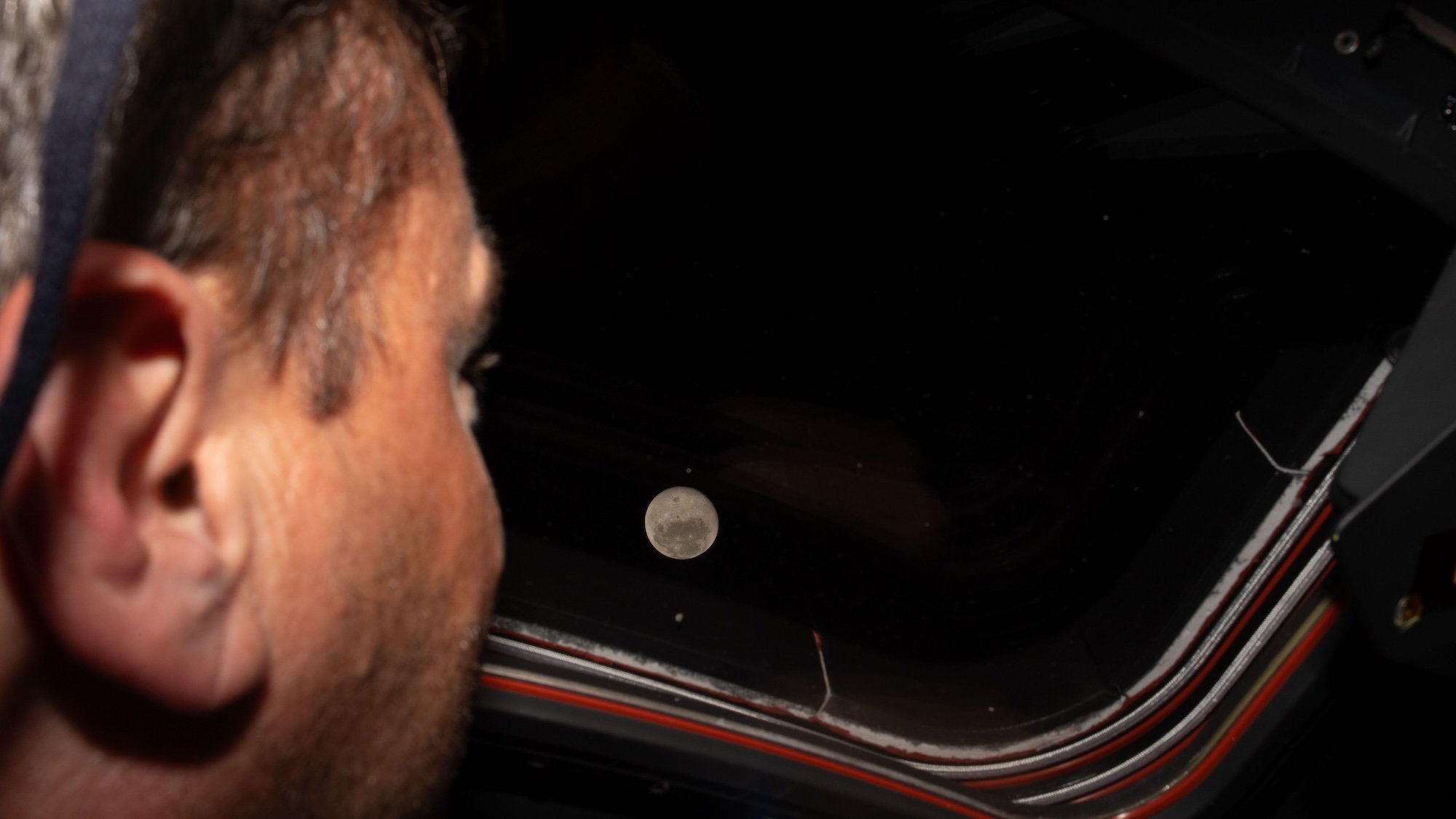
Successfully sending Artemis II astronauts on their historic lunar flyby earlier this year required some of the latest and most precise technologies, but not everything in this mission needed the same intense equipment. As crewmates gazed through Orion’s capsule window at the moon’s eclipse of the sun on April 6, 2026, three of the travelers needed a way to easily sketch some of their preliminary observations. They took turns writing their notes on a shared tablet PC—and NASA has recently highlighted their work with a screenshot of their efforts.
Astronauts Reid Wiseman, Victor Glover, Christina Koch, and Jeremy Hansen had a lengthy list of tasks during their 10-day, 700,000-mile roundtrip. One of the most visually dramatic jobs involved carefully assessing lunar activity while passing across the moon’s dark side from a distance of about 46,000 miles away. The roughly hour-long observation period provided astronauts with an unprecedented opportunity to record meteorite activity.
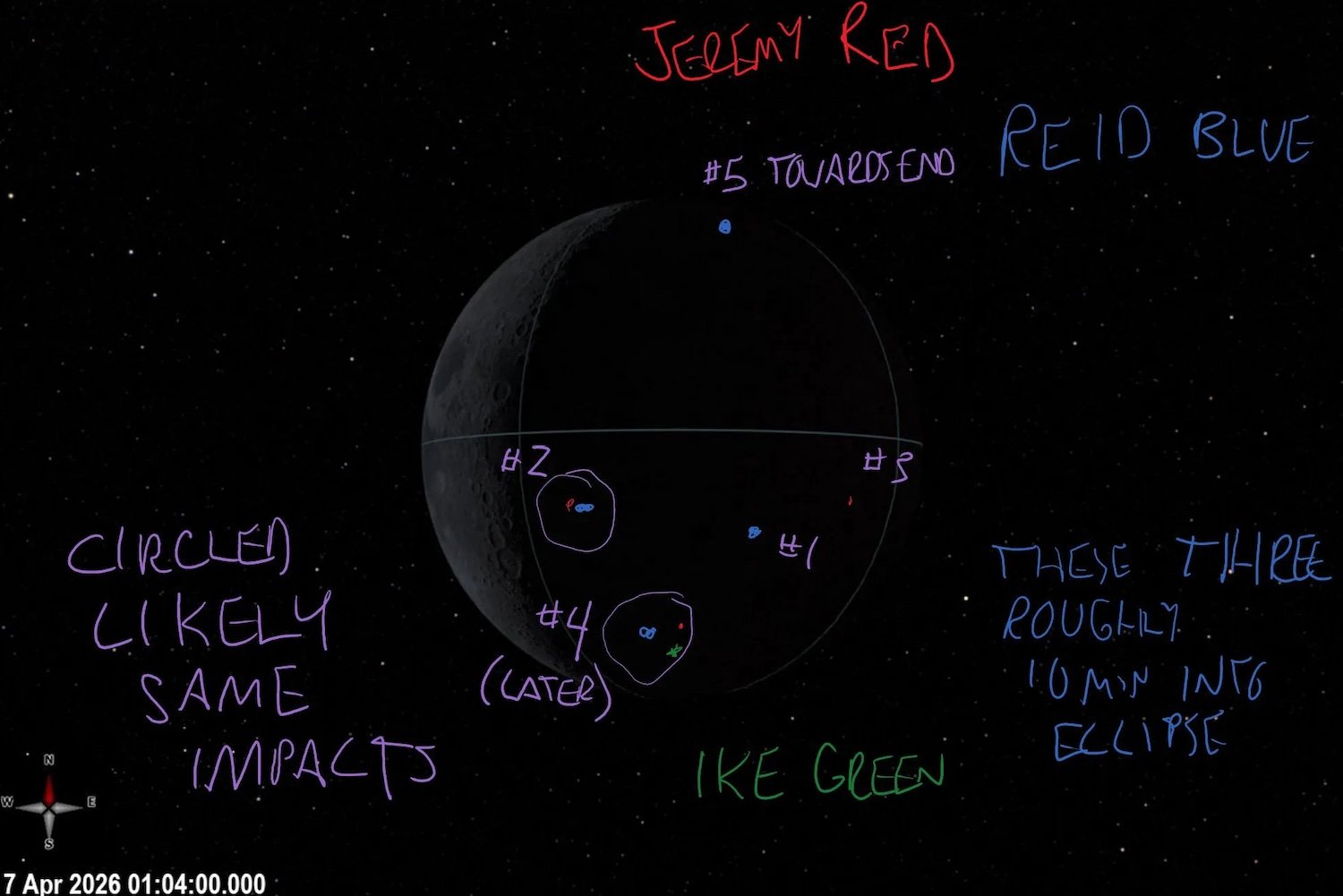
A visualization of a dark Moon eclipsing the Sun is marked with handwritten notes in this April 6, 2026, screenshot from an Artemis II crew member’s tablet. Credit: NASA
The tablet screenshot includes notes taken by Wisemen (in blue), Hansen (in red), and Glover (in green) during the moon’s eclipse of the sun. The crew collectively spotted at least five faint flashes of light caused by impacts. According to Wiseman, the first three impacts occurred within about 10 minutes into their observations, while another two happened later during the flyby. Impacts two and four were likely also corroborated by Hansen and Glover.
Since the moon does not have an atmosphere like Earth’s, the lunar surface is regularly bombarded by space rocks. Most of them are comparatively small, but they will still pose a problem for future crewed trips to the surface,especially those stationed in a planned permanent lunar base. The data gathered by Artemis II on April 6 will help NASA better understand these dynamics, and plan for the safest environments possible for their astronauts.
Artemis II’s astronauts safely returned to Earth during a splashdown off the coast of San Diego at 8:07 p.m. EDT on April 11. If all goes as planned, Artemis III’s crew will launch on their mission no earlier than June 2027.
Just over 40 years ago, what began as a routine safety test at the Chernobyl nuclear power plant (or Chornobyl in Ukrainian) in Soviet Ukraine spiraled into one of the most recognizable disasters of the 20th century. The reactor exploded and burned, spewing chunks of nuclear debris into the sky. Among that toxic litter were countless tiny “hot particles,” fragments of nuclear fuel smaller than the width of a human hair (somewhere between 8 and 50 micrometers across). Those particles are called hot because they’re highly radioactive, and still are four decades later. Today, scientists entering the areas of the Chernobyl Exclusion Zone where the hot particles are located are required to wear a full protective suit.
But after decades of study, scientists still know surprisingly little about what their particles are made of at the molecular level. A team of researchers from Germany recently set out to change that by analyzing six particles collected from two sites in the Exclusion Zone using synchrotron X-ray diffraction. Surprisingly, they discovered the particles remained far more chemically stable than they had expected. Their crystal structures were largely intact, suggesting they changed little since forming during the disaster and its aftermath.
The hot particles thrown out of the Chernobyl plant fall into three general categories. The first is fuel that remains chemically and physically similar to the reactor’s original uranium dioxide. The second type consists of fuel that melted during the explosion and fused to its zirconium-alloy protective casing. The third type is fire-damaged fuel.
As the reactor’s graphite burned for 10 days after the explosion, the intense heat oxidized some of the fuel into other uranium compounds.
Particles, crystals…and dogs
For this particular study, the team sourced their six samples from two areas in the exclusion zone, and all three hot particle categories were represented. Two came from asphalt in Pripyat, roughly 2 miles from the reactor, while the other four came from farm soil samples in Kopachi, about 3 miles away.
With the samples selected, the researchers isolated individual particles pulled from the soil, mounted each type to a tiny tungsten electrode, and then sent them to the European Synchrotron Radiation Facility in Grenoble, France. There, a team analyzed the particles using intense X-rays produced by a synchrotron, a circular particle accelerator. The researchers rotated each particle in an X-ray beam, measuring it from roughly 2,000 different angles. Watching how the x-rays bounced off all that material revealed how its atoms were arranged, showing which compounds each particle was made of and, most importantly for this study, how intact its crystal structure remained.
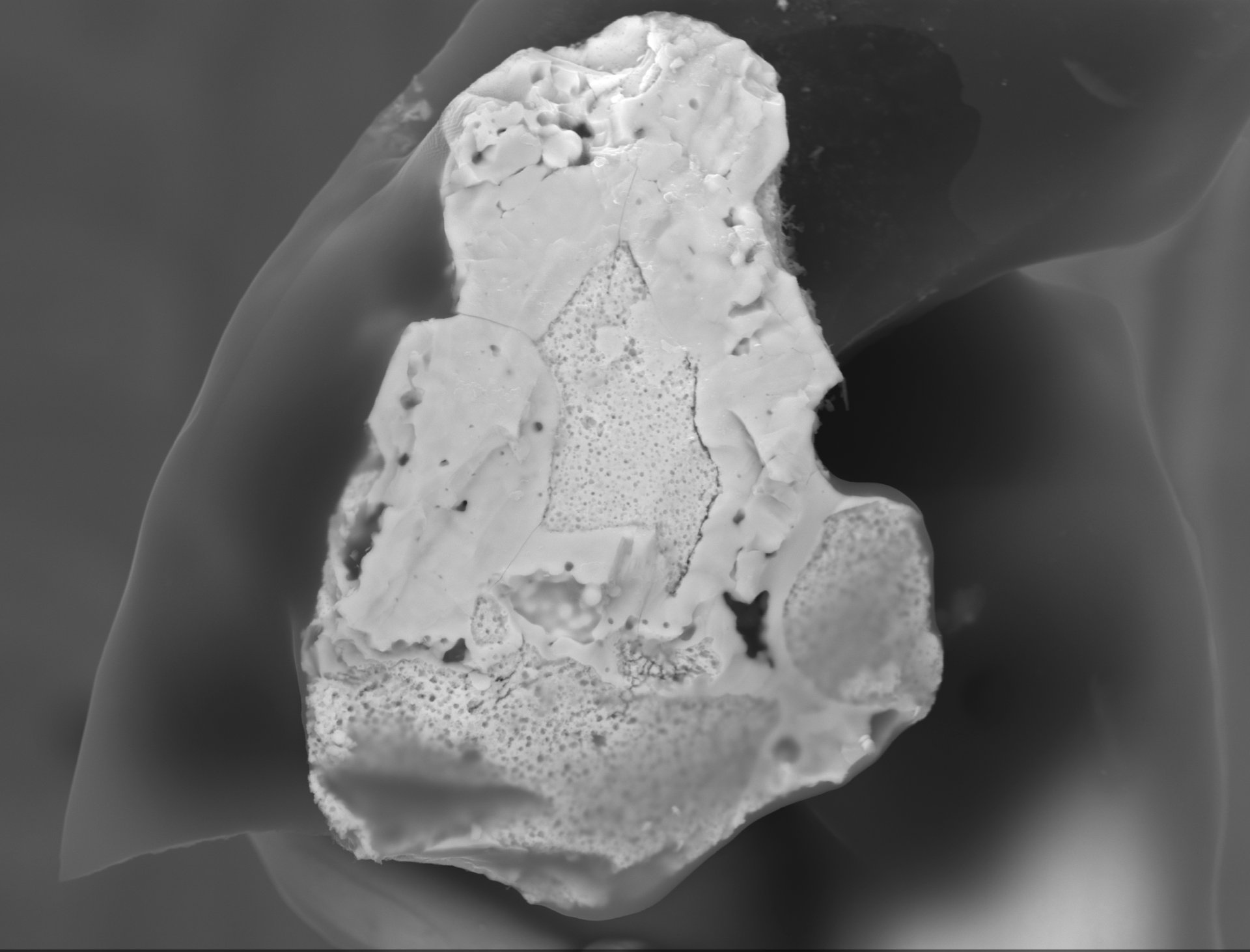
Hot particle from the 1986 reactor accident: The nuclear fuel particle is partially fused with zirconium oxide. Image: Laura Stalmann.
They expected to see particles that had been broken down by years of exposure to the elements. Instead, the crystal structures were still largely intact. That surprising finding suggests the particles are far more chemically stable than previously assumed, holding their radioactive contents locked inside their crystal structures.
Though some of the particles showed more oxidation (of a loss of electrons when they interact with other chemicals) than others, two showed virtually none at all. Importantly, two of the particles pulled from the same soil near Kopachi included both a sample heavily oxidized and one that was largely untouched. The authors suggest that if weathering from the environment were the cause of the oxidation, then both particles sitting side by side should look similar. Instead, they say the oxidation likely happened during the disaster itself, when the reactor fire baked some of the fuel for days.
That timeline is potentially good news for the areas around the power plant. If the particles are indeed holding onto that radioactive material and not oxidizing, that could mean less harmful material is making its way into the soil and, in turn, the surrounding ecosystem. Still, the researchers quickly caveat any broad claims. These were just six samples, after all. Making any wider claim about the soil in the region generally would require more research.
Though it’s still too early to say with any certainty, that lack of leaching dangerous material into the environment could partly help explain why the exclusion zone has become home to an ever-growing neighborhood of furry mammals in recent years. In fact, the area’s lack of humans has made it a thriving ecosystem for foxes, bears, and bison. It’s a modern, albeit a little unorthodox, example of rewilding. Of course, even in this new frontier, the consequences of a nuclear disaster aren’t totally absent. A recent study of roaming dogs living in the Chernobyl Exclusion Zone, many believed to be descendants of dogs left by their owners during the 1986 evacuation, show distinct genetic differences from dogs in an area just 10 miles away.

 Login