❌

Reading view

How do bacteria adapt to toxic metal waste?

Electric vehicles (EVs) use high-powered rechargeable batteries to store electrical energy that powers their motors. Most EV batteries use a specific mixture of metals to hold the battery’s charge, called nanoscale lithiated nickel manganese cobalt oxides, aka NMC materials. NMC materials can store a large amount of energy, making them ideal for batteries, but the metals themselves can be toxic in soil and water if the batteries are not properly recycled.  

NMC batteries leave behind a specific combination of toxic metals, so researchers can study how bacteria respond to this waste when it enters the environment. By understanding how bacteria adapt to toxic metals, scientists hope to predict how new technologies like EV batteries will affect the environment. 

In 2019, a team of researchers from the University of Minnesota reported that a common soil bacterium called Shewanella oneidensis can rapidly evolve resistance to NMC materials, but they didn’t know how. True beneficial gene evolution usually develops over thousands of generations, but Shewanella oneidensis adapted much more quickly. The team recently conducted a follow-up study to determine the genetic mechanisms behind this bacterium’s unique metal resistance.

They started by analyzing the complete DNA sequences of 33 Shewanella colonies that were resistant to either pure NMC waste or individual metals like nickel and cobalt, using a process called whole-genome sequencing. They expected to find DNA mutations in genes that control how bacteria take up and expel toxic metals that would give the resistant Shewanella an advantage in surviving NMC metal toxicity. However, they didn’t find any DNA mutations in metal-related genes. Instead, they found that a specific DNA region was duplicated 10 to 15 times in all 33 NMC-resistant or metal-resistant colonies. This result suggested to the researchers that a temporary adaptation, not true gene evolution, was responsible for the bacteria’s metal resistance. 

The researchers wanted to know more about the duplicated DNA region in metal-resistant Shewanella, so they focused on 2 gene duplication mechanisms that might serve as temporary adaptations in Shewanella. The first mechanism directly duplicates DNA regions to create extra copies of a gene, via a process called gene duplication amplification. The second mechanism moves DNA segments, called mobile genetic elements, into different DNA sections to create extra copies of a gene. 

To test whether either of these mechanisms was causing the gene duplication in Shewanella, the team grew the bacteria in different liquid media containing only cobalt, only nickel, or cobalt and nickel together. The researchers used a technique that measures the exact amount of DNA in a given sequence, called quantitative polymerase chain reaction (qPCR), to calculate how many duplicated DNA regions were in each genome sequence. They found that neither cobalt nor nickel alone triggered DNA duplication. But the bacteria grown in the media with cobalt and nickel together had 8 additional copies of the DNA region. This suggested that something about the combination of nickel and cobalt triggered gene duplication. 

To determine whether this gene duplication only occurred with nickel and cobalt, the team substituted copper and zinc for nickel in the growth media. They exposed Shewanella cells to different combinations of these metals using a grid pattern in a 96-well plate, a technique called a checkerboard assay. Then they repeated the qPCR process to measure the duplicated DNA region. They found that no other combinations of metals triggered gene duplication, suggesting that nickel and cobalt are especially toxic together, and that the gene duplication responds to this combined toxicity.

Finally, the researchers identified the function of the duplicated DNA region. They found that one of the genes within the region turned on a special protein that pushes metal ions and other toxins out of the cell, called an efflux pump protein. The team hypothesized that this efflux pump protein was responsible for removing cobalt and nickel from the bacteria’s cells. To test this theory, they grew modified Shewanella cells without the efflux pump gene in media containing cobalt, nickel, or cobalt and nickel together. They found that the modified bacteria grew well in the nickel-only treatment, but didn’t grow in the cobalt-only or combined treatments, which indicated that the efflux pump protein is necessary for Shewanella to resist cobalt toxicity. 

Based on their experiments, the team concluded that nickel and cobalt together trigger a gene duplication event in Shewanella oneidensis. This gene duplication event increases the number of efflux proteins in Shewanella that can expel cobalt and underlies its unique NMC resistance. They suggested that future researchers study temporary adaptations similar to gene duplication in bacteria to track how they respond to electronic waste and other new technologies.

The post How do bacteria adapt to toxic metal waste? appeared first on Sciworthy.

  •  

Using seismic stations to track groundwater resources

In March 2023, Southern California experienced heavy storms after almost 20 years of drought. Sixteen of these came from long, narrow regions of concentrated water vapor moving through the air, known as atmospheric rivers. During droughts, groundwater supplies up to 60% of the total water to the Greater Los Angeles area, so researchers think that stormwater from the 2023 events could have recharged groundwater reserves for future use. However, scientists lack adequate tools to assess how much groundwater is in the subsurface.

To overcome this challenge, researchers from California and Texas developed a new method to study deep groundwater. California gets a large number of earthquakes, so it has over 450 stations around the state to monitor the associated vibrations, referred to as seismic waves. To study how much the 2023 storm recharged the groundwater in the Greater Los Angeles area, the team used a tool called seismic-DI, which employs these seismic waves to estimate how much groundwater is stored at different depths. 

Seismic-DI works by measuring how fast seismic waves move through the Earth, known as their seismic velocity. The researchers explained that the Greater Los Angeles area is a very crowded city, so it produces an abundance of seismic waves. They measured changes in the seismic velocities of these underground waves to see where the groundwater is full of water, or saturated, versus partially full, or unsaturated. They used 20 years of these data to produce graphs that record changes in groundwater storage at different depths, known as hydrographs.

To validate the accuracy of seismic-DI, the researchers also compared their seismic hydrographs with groundwater thickness data from a NASA mission known as the Gravity Recovery and Climate Experiment, or GRACE. GRACE consists of 2 satellites that measure changes in Earth’s gravity, which reflect surface water and groundwater storage. Both their seismic hydrographs and the GRACE groundwater data demonstrated that the Greater Los Angeles region experienced an increase in groundwater storage from stormwater in the winter, and a reduction in groundwater storage during the dry summer. 

The team’s hydrographs showed that the 2023 storms saturated the Greater Los Angeles area groundwater down to 35 meters (114 feet), but it was abnormally dry at 200 meters (656 feet), and at a severe drought at 450 meters (1,476 feet). The GRACE data similarly demonstrated that the subsurface is in severe drought. Combined, these data indicated the 2023 storms helped the Greater Los Angeles area recover up to 90% of its groundwater at depths of 50 meters (164 feet) since the 2006-2022 drought. However, it recovered only about 40% at 75 meters (246 feet) and 20% to 30% at 100 meters (328 feet).

They concluded that the 2023 atmospheric river events recharged only shallow groundwater reserves in the Los Angeles area. As a result, they suggested future researchers consider deep groundwater reserves for a more complete assessment of total regional water deficits. While this study demonstrated that seismic-DI can successfully reveal spatial changes in groundwater and drought at depth, the team acknowledged that contributing factors like the amount, rate, and spatial variability of groundwater reserves remain targets of future work. 

The post Using seismic stations to track groundwater resources appeared first on Sciworthy.

  •  

Is nuclear waste safe underground?

More than 90,000 tons of radioactive waste are stored on-site at nuclear power plants awaiting permanent disposal. Nuclear waste releases unstable forms of uranium and other elements, called radionuclides. Long-term exposure to radionuclides can cause cancer, so environmental safety regulations require that nuclear waste be made inaccessible for at least 1 million years. Thus, researchers are evaluating possible ways to store this waste permanently. 

One proposal is to store nuclear waste thousands of feet below ground in rock formations called deep geological repositories, or DGRs, to seal in radionuclides. Scientists can’t see into the future, so instead they look to the past to determine how well DRGs could work. A team of researchers from Canada recently analyzed uranium deposits that have existed for billions of years as an analog for how nuclear waste behaves deep underground.

Past researchers found that uranium deposits in ideal DGR conditions, with their protective casings intact, will stay contained for more than a billion years. However, these conditions require a stable geological environment. This team instead focused on uranium deposits in non-ideal conditions. They studied the Canadian Kiggavik uranium deposits, which occur in cracked bedrock approximately 500 meters (1,600 feet) below the surface. The team claimed these conditions are similar to DRGs with broken protective casings.

The team knew from previous work that most of the uranium minerals in the Kiggavik deposits are more than 274 million years old, but about 10% are less than 1 million years old. They found that these younger uranium minerals occurred alongside clay minerals surrounding the older uranium minerals and within open fractures. The researchers interpreted the older uranium as the source material of the younger uranium because of their proximity. They concluded that water must have infiltrated the deposits and interacted with older minerals, transporting uranium and forming new, younger minerals.

To determine the source of water infiltration, the researchers compared the chemistry of clay minerals formed alongside the younger uranium with modern snow in the Kiggavik region. They looked at the number of neutrons, or isotopes, in hydrogen atoms within the clay minerals, and found heavy values matching those of fresh water. These values indicated that snow or glacial meltwater was the source, rather than underlying bedrock or seawater. 

To determine when the water infiltrated over the last million years, the researchers used uranium-thorium dating to find when the radionuclides were mobilized. This dating method shows when uranium was removed from the original minerals by measuring how much its concentration was reduced by water infiltration. They found that the dates of these radionuclide mobilizations clustered into 5 separate water-infiltration events that occurred from 36 to 470 thousand years ago. 

Comparing these dates with existing climate records, the researchers found that the water infiltration events overlapped with periods when glaciers covered the ground surface. Normally, water can’t travel thousands of feet underground. But, like a hydraulic press, a glacier pushes water at its base downward. If the water encountered cracks in the ground, the pressure could inject it to the depth of the uranium deposit.

Next, the researchers wanted to measure how quickly radionuclides left the deposit. They measured the maximum distance between younger and older uranium minerals and used the age of the most recent water-infiltration event to estimate the fastest speed at which the radionuclides could have moved. They determined this maximum speed to be 0.0014 millimeters (0.000055 inches) per year. At that rate, they calculated it would take 360 million years for uranium radionuclides to travel 500 meters from a DGR at the same depth as the Kiggavik uranium deposits to the surface. This timescale far exceeds the necessary 1 million years for nuclear waste containment.

The team concluded that if glaciers were to return to Kiggavik, the uranium deposits wouldn’t experience substantial radionuclide movement, even in contact with glacial meltwater. Similarly, if a DGR has broken protective casings, radionuclides would be moving too slowly to reach the surface even if water leaked into it. They suggested their findings reduce constraints on viable DGR sites and could help ensure the long-term secure storage of nuclear waste.

The post Is nuclear waste safe underground? appeared first on Sciworthy.

  •  

Finding alien life with light signals

Astronomers and astrobiologists use a wide range of tools in their search for extraterrestrial life. Probes, satellites, and rovers take photographs and collect data on the geology and chemistry of planets and moons in the solar system. Radio telescopes sweep the sky, looking for signals from intelligent civilizations. And telescopes like the JWST can observe the atmospheres of distant exoplanets, potentially finding ones similar to Earth’s. 

A limitation of these methods is that they assume life on other worlds is fundamentally similar to life on Earth, requiring the same balance of molecules in the atmosphere, producing the same chemicals for their metabolic processes, or developing technologies analogous to those humans make. While researchers use these assumptions as baseline markers to look for, assuming such similarities might lead them astray. Scientists looking for life using too narrow a set of parameters might miss life unlike Earthlings. Or they might mistake coincidentally similar geological, chemical, or astronomical processes for having been made by living things.

So, to complement techniques that assume alien life resembles life on Earth, scientists also consider approaches that detect signs of life while making as few assumptions as possible about what it could look like, known as agnostic biosignatures. One of these life signs with few assumptions is complexity. Though it can be difficult to quantify precisely, living things tend to create more complex systems than nonliving things. A team of researchers recently tested whether living and nonliving worlds could be distinguished solely by examining the complexity of the light-reflection patterns from their surfaces.

For this, the team treated Earth and Mars, similar planets but one with life and one without, as stand-ins for exoplanets around other stars. They collected data on the light reflected off both planets’ surfaces from a space station monitoring Earth, known as the Deep Space Climate Observatory or DSCOVR, and an orbiter around Mars observing its atmosphere, known as the Hope Probe. 

The team identified 3 nearly identical wavelengths of light that these machines observe from their respective planets. From the machine databases, they collected measurements of how much light each planet reflected, called its reflectance, at these 3 wavelengths over 486 local days. By using only individual wavelengths of light rather than full photographs, the team claimed that, if their test worked, researchers could apply it to distant exoplanets that cannot be photographed in detail.

Without looking for any particular chemical or signal, the team compared these measured reflectances using a series of statistical tests to determine the variation and randomness in their reflected light, which they considered representative of the complexity of the planets’ surfaces. The researchers found that of the 27 complexity metrics they tested, Earth scored higher than Mars on 25, Mars scored higher than Earth on 1, and the planets scored the same on 1. So, even though both planets have rocky surfaces with atmospheres, weather, and cyclical changes, the one with life is measurably more intricate and dynamic, and the researchers found this difference detectable even with a small stream of light at great distances.

The researchers claimed their test demonstrated that complexity could be a valid agnostic biosignature, with caveats. One is that Earth is quite distinct from Mars, in that it has oceans and a relatively thick atmosphere. This means that processes like making and dispersing clouds and the sharp contrast between land and water could add complexity to Earth’s measurements without direct ties to living things. 

They suggested 2 possible explanations for how these complicating factors relate to life on Earth. Either life allows Earth to have these factors, or Earth is inherently complex regardless of life, and therefore it can’t be used to assess how life leads to measurable complexity. To say which is the case, one would have to replicate this test with a lifeless copy of Earth. However, the team argued that Earth’s biosphere is unlikely to be wholly unrelated to its water cycle.

To bolster the validity of their methods, the team plans to expand their sample of planets to include Venus, Saturn’s moon Titan, and simulated exoplanets with modeled biochemistry and atmospheres. If the model holds up, their methodology could represent a new category of mission to find alien life, with long searches for variations in reflected light uncovering properties of distant worlds that would otherwise go unnoticed.

The post Finding alien life with light signals appeared first on Sciworthy.

  •  

Bedrock fractures shape waterfalls

Waterfalls play an essential role in river development and landscape evolution. Researchers are particularly interested in how abrupt changes in the steepness of a river channel, also called knickpoints, develop. Knickpoints vary in size and can be as small as your index finger or as large as Niagara Falls. Researchers from Virginia hypothesized that waterfalls, a type of knickpoint, can influence erosion when a river channel is cut into solid rock, called bedrock. 

The researchers wondered whether fractures and other pre-existing weaknesses can influence how water removes rock slabs from a river channel, via an erosional process called plucking. Fractures can form in many different orientations, but the researchers focused on 3. Imagine a flat tabletop that represents a riverbed. Fractures that are parallel to the flat tabletop are called horizontal fractures. If you tip the table so the low end points downstream, that’s the direction of downstream-dipping fractures. If you tip the table so the low end points upstream, that’s the direction of upstream-dipping fractures. 

First, the researchers tested how fracture orientation changed erosion before an established knickpoint. They used a man-made channel, called a flume, to simulate a natural river system. To set up the experiment, they glued layers of small tiles about the size of an adult’s thumbnail to a plastic frame and put it in the flume. Then, they placed a layer of unglued tiles upstream of the knickpoint. 

To begin the experiment, the researchers incrementally increased the amount of water flowing through the flume every 5 minutes until they reached a maximum flow or all the loose tiles were “eroded.” They considered a tile to be “eroded” once it was transported over the knickpoint and downstream. The researchers measured the water depth at a fixed point upstream of the knickpoint, the number of tiles eroded through plucking, and the volume of water. They repeated this 8 times for each fracture orientation.

The team found differences in the amount and timing of erosion between the 3 orientations. In particular, they saw that erosion began at lower water speeds for horizontal beds than for tilted beds. Based on the observed erosion rates, they concluded that horizontal beds are the most susceptible to erosion, while upstream-dipping beds are the most resistant, and downstream-dipping beds fall between the 2. 

The researchers then tested how a knickpoint would develop and influence water flow if all of the tiles were unglued and free to move. They individually stacked almost 5,000 unglued tiles across the channel. Before starting the experiment, they filled the flume slowly with water to submerge all of the tiles without moving them. Then, they increased the water’s speed to start erosion. Instead of collecting measurements as they did in the first experiment, the researchers filmed this experiment and observed how the knickpoint shape changed and how plucking occurred. 

The researchers observed that the plucked tiles in this experiment formed piles downstream of the knickpoint in a process known as armoring. This armor of tiles, which represents loose rocks near a waterfall in a natural setting, prevents erosion of the underlying river bed. Only when the water transports the armor downstream can it erode the bedrock and develop a knickpoint.

Unlike the first experiment, researchers found no differences in erosion between fracture orientations in this experiment, but did observe differences in armoring. They found that upstream-dipping beds had the least armoring because water quickly transported piles of tiles near the waterfall downstream. Downstream-dipping beds had the most armoring, and their eroded tiles took longer to move downstream. 

The team concluded that waterfalls will erode at different rates based on their fracture orientation and armoring processes. The orientation of bedrock fractures also impacts the shape of the waterfall and the river channel around it. So the next time you see a large waterfall, consider that it may have started as a small fracture the size of your thumbnail.

The post Bedrock fractures shape waterfalls appeared first on Sciworthy.

  •  

New Geometric Toolkit Reveals Hidden CP-Violating Patterns in Meson Decays

Neutral mesons, the fleeting particles that endlessly oscillate between matter and antimatter forms, have just acquired a strikingly new mathematical lens. In a theoretical study published in The European Physical Journal C, physicist Swarup Sangiri of the Indian Institute of Technology Kharagpur has constructed a fresh class of geometric objects, called connected sequential Bargmann invariants, that encode how two different decay channels of an entangled meson pair relate to one another inside the projective geometry of quantum states. The work extends an earlier framework and shows that when decay-projected states are wired directly into a cyclic chain of quantum overlaps, the resulting quantities behave in a fundamentally different way near the boundary where CP violation switches off.

To appreciate why this matters, it helps to recall what makes neutral meson systems so special. Particles such as the neutral kaon, the D meson, and the two neutral B mesons are produced as flavor eigenstates but propagate as mixtures of heavy and light eigenstates, conventionally written as combinations of the meson and its antiparticle with coefficients p and q. When the magnitudes of p and q differ, the two propagation eigenstates are no longer orthogonal, and this nonorthogonality is the hallmark of indirect CP violation, the subtle asymmetry between matter and antimatter that was famously discovered in kaons in 1964. Because any physical observable must be independent of arbitrary phase conventions attached to quantum states, the natural language for describing interference in these systems is one of rephasing-invariant quantities.

Bargmann invariants provide exactly that language. For a closed sequence of quantum states, the nth-order Bargmann invariant is the product of overlaps taken around the cycle, and it remains unchanged under independent phase redefinitions of each state. Its phase is a geometric phase, the kind of holonomy familiar from the Berry phase, accumulated along a closed loop in the space of rays. Earlier work had applied this machinery to correlated neutral meson decays, constructing third-order invariants that probe single-channel interference and fourth-order invariants that correlate two decay channels through the heavy and light propagation eigenstates. Those constructions linked the geometric picture to conventional flavor observables, including Jarlskog-type structures, without introducing any new phenomenological parameters.

The new study asks a deceptively simple question: what happens if the two decay-projected states themselves are connected directly inside the cyclic overlap chain? When one meson of an entangled pair, produced for example in the decay of a phi or Upsilon resonance, decays into a channel f, its partner is projected into a conditional state determined by the decay amplitudes. A second channel g prepares a different conditional state. The connected sequential fourth-order Bargmann invariant follows the loop from the heavy eigenstate to the f-conditioned state, then directly to the g-conditioned state through their mutual overlap, then to the light eigenstate, and finally back to the heavy one. The crucial new ingredient is the overlap between the two conditional states, a quantity built purely from the decay amplitudes that measures how similar the two post-selected meson states are in projective Hilbert space.

This change in connectivity has dramatic consequences for how the geometric quantities scale as CP violation becomes small. The previously studied disconnected fourth-order invariant, when normalized by the product of two third-order invariants, produced a ratio that blows up quadratically, scaling as the inverse square of the mixing asymmetry, the difference between the squared magnitudes of p and q. The connected sequential ratio, by contrast, carries only a single factor of that asymmetry in its denominator, so its enhancement near the CP-conserving limit is merely linear. Physically, replacing one propagation-mediated link with a direct overlap between the projected states removes one power of the heavy-light suppression, placing the two classes of geometric correlation in distinct scaling classes.

A second new ratio compares the sequential invariant directly with the disconnected one. This comparison ratio behaves in the opposite manner: it is proportional to the mixing asymmetry itself, vanishing in the exact CP-symmetric limit. Its behavior is governed by a competition between two effects, the shrinking of the heavy-light overlap on one side and the possible alignment of interference phases between the two decay channels on the other. When the conditional states prepared by the two channels become geometrically aligned, the suppression can be weakened, revealing that the connected structure is sensitive not only to mixing asymmetry but also to the relative coherence of the decay projections.

To make these statements precise, the analysis is carried out in terms of the standard rephasing-invariant interference parameters lambda, the products of the mixing ratio q over p and the ratios of decay amplitudes to their CP-conjugates. A systematic small-asymmetry expansion, with the squared magnitudes of p and q written as one half plus or minus a small parameter, shows that the sequential ratio depends explicitly on the phase difference between the two channels through the numerator structure. This dependence has no analogue in the disconnected construction, where the channels communicate only through the propagation eigenstates. It means the connected sequential geometry probes the relative orientation of the decay-conditioned rays themselves, a piece of interference information that conventional observables do not isolate on their own.

The geometric interpretation is perhaps the most elegant part of the story. Both the disconnected and the sequential fourth-order invariants involve the same four rays, the heavy and light propagation eigenstates and the two decay-projected states, yet they define different closed paths through projective Hilbert space. A Bargmann invariant depends not just on which states participate but on how they are stitched together, so rewiring the cycle produces a genuinely different geometric correlation. In the CP-conserving limit the heavy and light eigenstates become orthogonal, one link of every cycle collapses, and the entire cyclic structure degenerates, which is why the invariants vanish there. The formalism thus ties the very existence of these CP-sensitive geometric objects to the nonorthogonality of the propagation eigenstates.

Crucially for experiment, none of this requires new physics inputs. The sequential invariant and both ratios can be written entirely in terms of the mixing parameters and decay amplitudes already extracted from time-dependent flavor analyses at flavor factories such as the KLOE experiment with entangled kaons and the BABAR and Belle measurements with entangled B mesons. The framework simply reorganizes the same accessible information into cyclic geometric quantities. The neutral kaon system, with its small indirect CP violation and long-lived interference phenomena, is flagged as a particularly natural arena where the linear enhancement of the sequential ratio could be pronounced, with candidate channels including two-pion, semileptonic, and multi-pion final states. The B meson systems, including channels like B decays to J/psi kaons and to pion pairs, offer rich phase-dependent interference structures, while the D system, where both mixing and CP violation remain tiny in the Standard Model, could serve as a sensitive testing ground for small deviations from exact symmetry.

The study stops short of claiming a new dynamical observable. The author is careful to note that the sequential construction does not add an extra propagation stage in the manner of conventional cascade CP analyses; it is a reorganization of overlap geometry within a single meson system. Even so, the result establishes a hierarchy of Bargmann invariant structures, from single-channel triangles through disconnected quadrilaterals to directly connected sequential cycles, each capturing a different layer of CP-sensitive interference. As precision flavor physics continues to squeeze ever tighter constraints on the origins of matter-antimatter asymmetry, geometric tools of this kind may reveal correlation patterns hiding in plain sight within data that experiments already collect.

Subject of Research: Geometric Bargmann invariant structures and CP-sensitive interference in correlated neutral meson systems

Article Title: Connected sequential Bargmann invariants and (\mathcal CP~)-sensitive geometric correlation structures in neutral meson systems

Article References: Sangiri, S. (2026). Connected sequential Bargmann invariants and $$\mathcal CP~$$-sensitive geometric correlation structures in neutral meson systems. The European Physical Journal C, 86(9), Article 1056. https://doi.org/10.1140/epjc/s10052-026-16308-5

Image Credits: AI Generated

DOI: 10.1140/epjc/s10052-026-16308-5

Keywords: Bargmann invariants, neutral mesons, CP violation, geometric phase, quantum interference, meson mixing, projective Hilbert space, kaons, B mesons, rephasing invariance, entangled meson pairs, flavor physics

  •  

Manta rays inspire a smarter algorithm for cleaner, cheaper power grids

Every time a power grid operator decides how much electricity each generator should produce, a quiet balancing act takes place. Burning less fuel saves money, but it often means allowing more pollution, and cutting emissions usually drives costs up. Engineers have long searched for a way to satisfy both goals at once, a challenge known as combined economic emission dispatch, or CEED. Now, a team of researchers has turned to one of the ocean’s most graceful feeders, the manta ray, for inspiration, and the result is an optimization algorithm that outperforms a crowded field of competitors on both cost and cleanliness.

The study, published in the journal Results in Engineering by Yu-Feng Sun, Jie-Sheng Wang and colleagues, describes an enhanced version of the Manta Ray Foraging Optimization algorithm, or MRFO. The original algorithm, first introduced a few years ago, mimics the cooperative hunting strategies that manta rays use to harvest plankton. Because plankton drifts unpredictably with seasons and weather, manta rays have evolved three distinct foraging behaviors: chain foraging, in which animals line up in arcs so that each one catches food missed by the one ahead; spiral foraging, where the group coils around a dense patch of food; and somersaulting, in which individuals flip back and forth around a promising spot. Translated into mathematics, these behaviors become rules that move a population of candidate solutions around a search space, gradually converging on the best answer.

What makes the CEED problem so stubborn is its mathematical character. The relationship between a generator’s output and its fuel consumption follows a cubic curve, and the emissions of carbon dioxide, nitrogen oxides and sulfur dioxide each follow their own cubic functions. The combined objective is nonlinear, nonconvex and discontinuous, riddled with local minima that can trap classical techniques such as lambda iteration or gradient-based methods. To make matters harder, the problem is genuinely multi-objective, so the researchers converted it into a single objective by applying price penalty factors that fold the cost of each pollutant into one total figure in dollars per hour.

Constraint handling is where many algorithms stumble. Traditional approaches add a fixed penalty whenever a solution violates the power balance requirement, the equation demanding that total generation minus transmission losses equals demand. But a fixed penalty is a blunt instrument. Set it too low and the algorithm happily returns infeasible schedules; set it too high and the search becomes so restricted that it cannot explore properly. Finding the right value through trial and simulation is time-consuming and inefficient. The team’s answer was to make the penalty itself dynamic, drawing on five different mathematical functions: sinusoidal, hyperbolic tangent, arctangent, linear and hyperbolic secant. Each function is raised to an order that changes during the run, so the penalty strength adapts to both the size of the violation and the stage of the optimization. Early on, mild penalties preserve exploration; later, penalties tighten to push solutions toward feasibility.

The second major innovation targets the heart of the MRFO algorithm. In the original design, a parameter called C governs the switch between exploration, casting the net wide across the search space, and exploitation, homing in on the best solution found so far. This parameter rises monotonically from zero to one, a predictable march that can leave the algorithm poorly balanced at certain stages. The researchers replaced it with a chaotic switching factor, drawn from nine well-known chaotic maps including Chebyshev, logistic, tent, sine, Gauss and singer maps, combined with an exponential adjustment function. The result is a parameter that still trends upward but oscillates along the way, periodically reopening the search space and preventing the population from settling prematurely into a local optimum.

To find out which chaotic map worked best, the team ran all nine enhanced variants, named C1MRFO through C9MRFO, through the CEC-2022 benchmark suite of twelve test functions, using a population of thirty and five hundred iterations averaged over thirty independent runs. The Chebyshev-based variant, C1MRFO, emerged as the overall winner, ranking first among the nine and beating the original MRFO, which finished last. Wilcoxon rank-sum tests confirmed that most of the improvements were statistically significant, with p-values below the conventional 0.05 threshold. When C1MRFO was pitted against a roster of state-of-the-art metaheuristics, including the dhole optimization algorithm, evolutionary mating algorithm, dung beetle optimizer, snow geese algorithm, particle swarm optimization, grey wolf optimizer, sparrow search algorithm and marine predators algorithm, it achieved the best final rank, taking first place on many of the test functions while keeping computational times competitive.

The real test, however, came when the algorithm was applied to actual dispatch problems. The researchers simulated a six-unit power system under four load demands of 150, 175, 200 and 225 megawatts. Across all four scenarios, C1MRFO produced the lowest comprehensive total cost, which combines fuel cost with the weighted penalties for carbon dioxide, nitrogen oxide and sulfur dioxide emissions. At 150 megawatts, for example, it reached a total cost of about 10,137 dollars per hour, edging out the grey wolf optimizer and clearly beating algorithms such as the arithmetic optimization algorithm, Harris hawks optimization, whale optimization algorithm, sine cosine algorithm, particle swarm optimization and the lambda iteration method. The pattern held at every load level, with the margin over the weakest classical method growing to thousands of dollars per hour at 225 megawatts.

The dynamic penalty functions delivered a further, striking gain. When the sinusoidal penalty function was applied with the parameter order set to dy5, the total cost at 150 megawatts dropped from roughly 10,137 to 9,065.71 dollars per hour, and similar reductions appeared at the higher loads, reaching 14,621.45 dollars per hour at 225 megawatts. Comparing the five penalty shapes, the sinusoidal function consistently produced the lowest minimum costs, beating the hyperbolic tangent, arctangent, linear and hyperbolic secant alternatives by margins ranging from hundreds to nearly two thousand dollars per hour depending on the load. Notably, when the penalty order was fixed rather than dynamic, performance was worst across the board, confirming that the adaptivity of the penalty, not merely its presence, is what matters.

To verify that each improvement contributes on its own, the team conducted an ablation study on a much larger twenty-unit system with a total demand of 2,500 megawatts. The results formed a clear hierarchy: the original MRFO achieved 61,835.16 dollars per hour, the chaos-enhanced C1MRFO reached 61,826.11, and the fully improved version combining chaos with the optimal sinusoidal dynamic penalty, sin(dy5)MRFO, achieved the best figure of 61,807.36 dollars per hour. All three outperformed the phasor particle swarm optimization benchmark, which came in at 61,895.57 dollars per hour. The stepwise improvement demonstrates that the two enhancements are not redundant but superimpose their benefits, and that the framework scales to systems far larger than the six-unit case.

The authors are careful to note where the work goes next. The current approach converts the multi-objective problem into a single objective through price penalty factors, but future versions could adopt Pareto-based multi-objective optimization to generate full sets of non-dominated trade-off solutions. The test cases also assume deterministic demand, so extending the algorithm to stochastic dispatch with wind and solar integration is another goal, as is combining the dynamic penalty with feasibility-first constraint-handling strategies. For now, the study offers a compelling demonstration that borrowing the foraging logic of a filter-feeding fish, perturbing it with chaos, and teaching it to calibrate its own punishments can squeeze meaningful savings and emission reductions out of one of power engineering’s hardest scheduling problems.

Subject of Research: An improved manta ray foraging optimization algorithm with chaotic switching factors and dynamic penalty functions for solving the combined economic emission dispatch problem in power systems.

Article Title: Manta ray foraging optimization algorithm with dynamic penalty function and chaos switching factor to solve combined economic emission dispatch problem

Article References: Sun, Y.-F., Wang, J.-S., Zhang, X.-Y., Li, Y.-X., Guan, X.-Y., & Liu, X. (2026). Manta ray foraging optimization algorithm with dynamic penalty function and chaos switching factor to solve combined economic emission dispatch problem. Results in Engineering, 32, Article 113383. https://doi.org/10.1016/j.rineng.2026.113383

Image Credits: AI Generated

DOI: Not provided

Keywords: manta ray foraging optimization, combined economic emission dispatch, metaheuristic algorithms, chaotic maps, dynamic penalty function, power system optimization, emission reduction, fuel cost minimization, CEC-2022 benchmarks, swarm intelligence, constraint handling, Results in Engineering

  •  

Why Metal Ions Make Fluorescent Probes Glow or Go Dark: New Design Rules Emerge

Metal ions are everywhere in biology and the environment, and telling them apart quickly and cheaply has long been a challenge for chemists. A new open-access review published in Discover Chemistry by M. S. Ajay Kumar, Pradeep Bhaskar, and B. Anindita of Presidency University in Bengaluru takes a fresh look at one of the most versatile tools in the detection toolbox: organic fluorescent probes. Rather than simply cataloguing probes and their detection limits, the review argues that the real key to building better sensors lies in understanding why different metal ions produce fundamentally different fluorescence responses, from brilliant turn-on emission to complete quenching.

The stakes are high. Essential ions such as copper, zinc, and iron participate in enzymatic catalysis, cellular signaling, redox regulation, and gene expression, but when their balance is disrupted they can contribute to oxidative stress, metabolic disorders, and neurodegenerative diseases. Toxic heavy metals such as mercury and lead offer no biological benefit at all and are hazardous even at trace levels because of their persistence, bioaccumulation, and long biological half-lives. Conventional analytical techniques like atomic absorption spectroscopy and inductively coupled plasma mass spectrometry deliver excellent accuracy, but they demand expensive instruments, trained personnel, and complex sample preparation, making them poorly suited for real-time or on-site detection. Fluorescent probes, which convert metal-ligand interactions into measurable optical signals, promise something different: fast, simple, and biologically compatible sensing.

The central insight of the review is that probe performance depends not only on the fluorophore but on the compatibility between the target ion and the sensing mechanism. Paramagnetic ions such as Cu2+ and Fe3+ usually promote fluorescence quenching through non-radiative decay, intersystem crossing, and charge-transfer pathways. Diamagnetic Zn2+, by contrast, more readily supports turn-on emission through suppression of photoinduced electron transfer, known as PET, and chelation-induced rigidification of the molecular framework. Soft heavy metals such as Hg2+ and Pb2+ occupy a middle ground: they bind strongly to carefully selected donor atoms, yet their heavy-atom character can trigger spin-orbit coupling that quenches emission, so designers must balance strong binding against signal reliability.

The authors walk through the major photophysical mechanisms one by one. PET-based probes contain an electron-rich donor unit that quenches the excited fluorophore in the free state; when a metal ion coordinates to the donor, the electron-transfer pathway is blocked and fluorescence returns. This OFF-ON switching works beautifully for closed-shell d10 ions like Zn2+ but often fails for paramagnetic targets, where suppressing PET merely opens the door to stronger quenching routes such as ligand-to-metal charge transfer. Intramolecular charge transfer, or ICT, systems integrate the binding site directly into the conjugated framework, producing wavelength shifts that enable ratiometric sensing, a more reliable readout than simple intensity changes because it reduces dependence on probe concentration and excitation conditions. Twisted intramolecular charge transfer adds a conformational dimension: metal coordination can restrict torsional motion, suppressing non-emissive twisted states and boosting emission.

Chelation-enhanced fluorescence and its counterpart, chelation-enhanced quenching, are presented not as separate mechanisms but as opposite outcomes of the same coordination event. When metal binding locks a flexible ligand into a rigid, planar geometry, non-radiative decay is suppressed and brightness increases; when the bound ion instead introduces intersystem crossing or electron transfer, the same binding event extinguishes the signal. Excited-state intramolecular proton transfer, or ESIPT, offers another elegant route: photoexcitation drives a proton from a donor group to a nearby acceptor, generating a keto tautomer with a much larger Stokes shift. Metal ions can either disrupt the hydrogen bond required for this process or stabilize it, giving designers a tunable switch between enol and keto emission bands.

The review also highlights through-bond energy transfer, an emerging mechanism in which excitation energy moves along a covalently linked donor-acceptor backbone rather than through space as in FRET. Because TBET does not require strict spectral overlap or precise donor-acceptor distances, it can generate large pseudo-Stokes shifts and support ratiometric, multi-channel detection. A representative Hg2+-responsive cassette shows weak emission in the OFF state but strong acceptor fluorescence once metal binding enhances electronic communication between the chromophores. The authors caution, however, that TBET systems demand precise molecular architecture and often struggle with aggregation-induced quenching in water.

Computational chemistry receives a notably critical treatment. Density functional theory and time-dependent DFT are now standard in probe studies, but the authors argue their value is frequently squandered on decorative HOMO-LUMO diagrams. Used properly, ground-state DFT can confirm binding sites, coordination geometry, and structural rearrangements such as rigidification or ring opening, while TD-DFT can assign whether an observed transition is locally excited, charge-transfer, or ligand-to-metal in character. The review stresses that a smaller HOMO-LUMO gap alone proves nothing; orbital localization, charge-transfer direction, and experimental fluorescence output must all be correlated. Method choice matters too: hybrid functionals like B3LYP suit organic fluorophores, while effective core potential basis sets such as LANL2DZ are needed for heavy metals, and long-range corrected functionals like CAM-B3LYP or omega-B97XD better describe charge-transfer states.

Metal-by-metal, the review distills design lessons from dozens of representative probes. For Cu2+, quenching dominates because of its paramagnetic d9 configuration, with peptide-based probes reaching detection limits as low as 1.5 nanomolar, while rhodamine ring-opening and ratiometric platforms offer turn-on and quantitative alternatives. Iron sensing is even harder because Fe3+ is a hard, highly charged, paramagnetic d5 ion that promotes ligand-to-metal charge transfer, so most probes are turn-off or colorimetric. Zn2+ is the friendliest target: ratiometric and turn-on probes routinely achieve low-nanomolar detection in seconds, though discriminating Zn2+ from its fellow d10 ion Cd2+ remains the field’s stubborn challenge. For Hg2+ and Pb2+, the standout performers combine aggregation-induced emission, near-infrared output, and ratiometric readout, with some systems reporting detection limits down to the picomolar range in water, food, and living cells.

The application landscape is shifting rapidly from bench-top demonstrations to real-world deployment. Recent probes have been validated in tap water, groundwater, river water, milk, soil, fruit juice, and plant tissues, with recovery values typically between 90 and 102 percent. Smartphone-assisted detection, 3D-printed sensing devices, and paper test strips are turning molecular recognition into field-ready tools. In bioimaging, ratiometric probes have tracked intracellular Cu2+ in HeLa cells, an AIE probe with a 130-nanometer Stokes shift visualized Hg2+ in A549 cells and in the roots of rice plants, and a peptide-based self-assembling system detected Pb2+ in groundwater and living cells below 10 nanomolar. Nitrogen and sulfur co-doped carbon dots have even combined metal sensing with logic-gate behavior in a single platform.

Significant hurdles remain before fluorescent probes fulfill their promise. Absolute selectivity in complex matrices is still elusive, because borderline and soft ions such as Pb2+, Hg2+, and Cd2+ exhibit overlapping coordination behavior. Quantitative accuracy inside cells is compromised by probe distribution, intracellular heterogeneity, and interference from endogenous biomolecules like glutathione. Many probes lack reversibility, subcellular targeting, or the long-term stability needed for continuous monitoring. The review’s closing message is clear and likely to shape the next generation of research: successful probes must be mechanism-guided rather than structure-driven, matching the electronic personality of each metal ion with the right signal-transduction pathway, and validated not under ideal laboratory conditions but in the messy, competitive environments where metal ions actually matter.

Subject of Research: Organic fluorescent probes for detecting metal ions through mechanism-guided photophysical design and bioimaging

Article Title: Organic fluorescent metal ion probes for understanding design rules photophysical mechanisms and bioimaging applications

Article References: Ajay Kumar, M. S., Bhaskar, P., & Anindita, B. (2026). Organic fluorescent metal ion probes for understanding design rules photophysical mechanisms and bioimaging applications. Discover Chemistry, 3(1), Article 472. https://doi.org/10.1007/s44371-026-00857-5

Image Credits: AI Generated

DOI: 10.1007/s44371-026-00857-5

Keywords: fluorescent probes, metal ion sensing, photoinduced electron transfer, intramolecular charge transfer, ESIPT, chelation-enhanced fluorescence, aggregation-induced emission, DFT calculations, zinc detection, mercury detection, lead detection, bioimaging

  •  

AI Paints Building Schedules Out of Noise, Cutting Energy Use by Nearly 29 Percent

Buildings are responsible for an enormous share of global electricity demand, and the way their air conditioners, lights, and heating systems are scheduled can make the difference between a grid under strain and one running smoothly. For years, engineers have tried to optimize these schedules with evolutionary algorithms and reinforcement learning, but the problem becomes brutally hard when dozens of buildings share a single electrical network and must be coordinated simultaneously. A new study published in Discover Artificial Intelligence proposes a strikingly different approach: instead of searching step by step for the best schedule, a generative artificial intelligence model learns to paint one directly out of pure noise, guided by a map of how the buildings are physically wired together.

The framework, called DMCBO, short for Diffusion-driven Multi-objective Collaborative Optimization for Building Clusters, was developed by Yalan Zheng of Zhengzhou Technical College and Taixiang Yin of North China University of Water Resources and Electric Power. Their central insight is that the joint scheduling of equipment settings and load distribution across an entire cluster of buildings can be treated as a high-dimensional data sample, much like an image. Diffusion models, the same family of generative techniques behind modern text-to-image systems, work by progressively corrupting data with Gaussian noise and then learning to reverse that corruption. The researchers reformulated multi-objective building optimization as exactly this kind of conditional denoising process: starting from random noise, the model strips away noise step by step until a complete, Pareto-optimal collaborative schedule for every piece of equipment in every building emerges.

Technically, the forward diffusion process is a fixed Markov chain that adds tiny amounts of Gaussian noise to real scheduling data over one hundred steps, with the noise coefficient increasing linearly from 0.0001 to 0.02 until the original data becomes indistinguishable from standard Gaussian noise. A neural network is then trained to predict the noise that was added at each step, given the noisy schedule and a conditional encoding vector describing the current situation. Once trained, the model can generate fresh solutions at inference time by sampling pure noise and running the reverse process, refining it over one hundred denoising steps into a schedule tailored to the prevailing weather, occupancy, and grid conditions. Because this generation is a gradient-based learning process rather than an iterative search, it avoids the local optima traps that plague traditional multi-objective evolutionary algorithms and the reward oscillations that destabilize deep reinforcement learning.

What makes the system genuinely cluster-aware is its use of graph neural networks. The researchers model the building cluster as a graph mapped onto a radial distribution microgrid topology, where nodes represent buildings and edges encode physical constraints such as maximum line thermal capacities and transformer limits. A two-layer graph convolutional network passes messages between neighboring buildings, fusing spatial-topological dependencies and network constraints into a single graph embedding. This embedding is concatenated with an adjustable preference weight vector to form the condition that steers the denoising trajectory. In effect, when the model generates a control strategy for one building, it simultaneously perceives the state of its neighbors and the limits of the shared electrical infrastructure, suppressing systemic coordination errors from 0.18 down to 0.06 in the team’s experiments.

The multi-objective aspect is handled through an elegant scalarization trick. Each objective, such as energy consumption, operating cost, or thermal comfort, is normalized to a dimensionless value between zero and one using Min-Max normalization based on historical operational bounds. The normalized objectives are then blended into a single scalar condition via a weight vector whose components sum to one. During training, these weights are sampled from a uniform Dirichlet distribution, exposing the model to the entire space of possible preferences so it learns the distribution of the full Pareto front. At deployment, a decision maker can slide the weight vector like an adjustment knob, instantly generating schedules that emphasize energy saving, comfort, or a balanced compromise, all within the same trained model.

The denoising backbone itself is a U-Net adapted to process one- and two-dimensional building scheduling tensors. Diffusion time steps are embedded through sinusoidal positional encodings, while the graph-derived condition is injected into every residual block via Adaptive Layer Normalization. A bottleneck layer with multi-head self-attention captures long-range dependencies across the entire daily scheduling horizon, and symmetric skip connections preserve high-resolution information during reconstruction. The authors trained the model for 300 epochs on dual NVIDIA Tesla V100 GPUs, and the loss curves dropped from 0.75 to below 0.03 with training and validation curves closely coinciding, indicating no overfitting. As the reverse diffusion step count decreased from 90 to 10 during analysis, the noise-prediction error distribution became sharply concentrated at zero, demonstrating extremely high denoising precision at the end of generation.

Validation was carried out on the open-access Building Data Genome Project 2 dataset, which supplied real hourly weather records, operational schedules, and annual electricity, cooling, and heating load profiles across diverse climate zones. Because that dataset provides metered energy data rather than physical building models, the team used United States Department of Energy Commercial Reference Buildings as templates and calibrated them in EnergyPlus, a high-fidelity thermodynamic simulation platform, to create a digital twin consistent with the real data. All results were benchmarked against a rule-based control strategy with static thermostat setpoints of 25 degrees Celsius in summer and 22 degrees in winter, and every experiment was repeated ten independent times to confirm statistical significance.

The headline numbers are impressive. In high-demand summer conditions, DMCBO achieved an average energy-saving rate of 28.6 percent and cut peak load by 38.5 percent, shaving the afternoon peak from roughly 560 kilowatts down to about 440 kilowatts and saving approximately 142.80 US dollars per day. Cumulative daily power savings exceeded 1,000 kilowatt-hours, compared with 400 kilowatt-hours for a traditional collaborative strategy and just 120 kilowatt-hours without coordination. In winter, peak shaving and valley filling reached about 39 and 42 percent respectively, far above the 22 and 25 percent of conventional methods. When the solution sets were projected into objective space, DMCBO dominated the baselines: it reached a hypervolume indicator of 0.95 within 12,000 function evaluations, versus 0.85 for NSGA-II and 0.70 for MOPSO, while keeping operating costs between 140 and 160 dollars against more than 210 dollars for deep reinforcement learning and 260 to 300 dollars for a GAN-based generative approach.

Robustness and scalability proved equally compelling. Under injected stochastic disturbances mimicking sudden weather changes and occupancy swings, the framework confined power fluctuations to a narrow band of plus or minus 5 kilowatts, whereas the deep reinforcement learning baseline swung between minus 15 and plus 20 kilowatts. Scaling from 5 to 50 buildings, the global energy-saving rate actually rose from 28.5 to 31.2 percent, because larger clusters unlock more load-complementary opportunities that the graph encoder can safely exploit within encoded grid boundaries. Computation time grew to 9.8 seconds at the 50-building scale, but that remains comfortably within the 15-minute control horizon used by real building management systems, and the hypervolume index slipped only slightly to 0.88. Ablation experiments confirmed that both the graph neural network module and the choice of 100 diffusion steps, which yields a 50-millisecond inference latency, were essential to this balance of speed, accuracy, and stability.

The authors are candid about limitations. The framework has so far been validated only in simulation, and EnergyPlus simplifies sub-minute mechanical actuation latencies that real HVAC hardware would introduce; they propose cascading PID loops and predictive safety margins to absorb those delays in practice. Data quality, generalization to residential buildings and extreme climates, the computational cost of scaling to city-sized networks, and the black-box nature of the generative process all remain open challenges, with explainable AI and transfer learning flagged as future work. Still, the architecture is designed to slot into standard building management systems as a supervisory layer, transmitting setpoints over protocols such as BACnet or Modbus. If the simulation gains survive contact with physical buildings, the idea of generating optimal energy schedules from noise, guided by a graph of the grid itself, could become a powerful new tool in the push toward decarbonized cities.

Subject of Research: Conditional diffusion models with graph neural networks for multi-objective energy optimization in building clusters

Article Title: Diffusion model-driven multi-objective collaborative optimization for building energy management using graph neural networks

Article References: Zheng, Y., & Yin, T. (2026). Diffusion model-driven multi-objective collaborative optimization for building energy management using graph neural networks. Discover Artificial Intelligence, 6(1), Article 1383. https://doi.org/10.1007/s44163-026-02140-z

Image Credits: AI Generated

DOI: 10.1007/s44163-026-02140-z

Keywords: diffusion models, graph neural networks, building energy management, multi-objective optimization, EnergyPlus, smart buildings, Pareto optimization, deep learning, energy efficiency, HVAC control, microgrids, generative AI

  •  

Shut up and take our money: Amazon plows $1B+ into quashing datacenter dissent

Faced with growing opposition to datacenters from residents who don't want the bit barns in their backyards, Amazon plans to invest more than $1 billion over the next five years to indoctrinate the public. The company announced the investment in a whataboutism-packed blog post aimed at convincing readers datacenters are not as bad as they've been led to believe, and that if the common folk don't get in line and support their development, the nation could be left in the dust. The program aims to invest in education, job training, local infrastructure improvements, and sustainability initiatives in communities home to Amazon datacenters. "This build out is so important geopolitically that there are widespread reports of various countries intentionally seeding misinformation in the US about datacenters to trick us into slowing down," the e-tailer turned cloud titan wrote. "Right now there are over 100 datacenter moratoriums being considered across the country. If these measures are enacted, the US could be writing its own losing ticket to this race, and the consequences would last generations." If Jeff Bezos's cash cow is to be believed, datacenters will transform the US economy much like the buildout of the highway system did in the '50s. But that can't happen, Amazon argues, if Americans block the development of these bit barns over misguided fears. The blog post highlights four such datacenter fears, which Amazon claims are "myths," despite plenty of reporting to suggest otherwise. Who needs water? The first "myth" is the fact that datacenters consume an excessive share of water. Bit barns commonly employ evaporative coolers which use water to reject heat generated by the facility into the atmosphere. These cooling towers use less energy than dry coolers or refrigerant-based systems but remove water from local watersheds as a consequence. According to Amazon, citizens should really be more worried about the water consumed by golf courses, which it claims use 200x more water than all of Amazon's datacenters. That argument might be more convincing if people didn't like golf courses. But they do and the whole lesser of two evils argument works a lot better when one of those evils isn't extremely popular. Amazon also attempted to dispel claims that a typical datacenter consumes five million gallons a day, arguing that its facilities are much more efficient using just 13,000 gallons a day, the equivalent of 42 US households. But this leaves out an important detail. It is possible to build datacenters that don't consume large quantities of water, but these facilities often consume large sums of power as a consequence. Most gas, nuclear, coal, and anything else that uses steam to turn a turbine also consumes water. In other words, nearly every large-scale power-generation method uses water either directly or indirectly. And despite Amazon's attempts to downplay the impact of datacenters, there's good reason for those living nearby to be worried. Earlier this year, it was reported that a datacenter, which we'll note was not operated by Amazon, has quietly sucked up nearly 30 million gallons of water and the only reason anyone discovered the issue was that local residents started complaining of unusually low water pressure. We totally won't let datacenters drive up your power bill or poison your air Amazon also attempted to dispel fears that datacenters could leave neighboring residents picking up the tab for their massive power consumption. The company argues that rates are going up because the US grid is old, and that responsible bit barn builders are working with utilities to ensure they're paying their fair share for the additional capacity and infrastructure upgrades required to support them. What wasn't addressed is why folks might be worried about rising rates. One of the reasons that utilities and plant operators are so conservative is that they've been burned by speculative markets before. If new power plants are built to meet demand that never materializes, ratepayers could get stuck with the bill. Amazon and others agreeing to pay higher rates might help, but only if they're consuming an appreciable amount of the capacity they convinced utilities to build. An empty datacenter doesn't pull a lot of juice. Speaking of power, Amazon also attempted to downplay the impact of datacenters on air quality due to their reliance on diesel backup generators. "The truth is the datacenter generators almost never run," the company wrote. Amazon also argued that these generators are subject to stringent permitting requirements which dictate how long they can run for. That might be more reassuring if datacenters in power constrained regions weren't getting permission after the fact to exceed those limits. And, as we saw with Elon Musk's Colossus supercomputer, temporary gas turbines can be deployed when the local grid can't support the load. That hasn't sat well with residents of Boxtown, Tennessee, while the NAACP is suing xAI over allegedly unpermitted turbines in Mississippi. Amazon can argue it's got a better track record than most, but that doesn't mean the community's concerns are misplaced. But think of the taxes Finally, Amazon argues that folks don't realize how big of an economic impact datacenters have on their community. "Datacenter operators are often the single largest taxpayer in a community, with upfront payments routinely exceeding entire annual municipal budgets in the first year of construction," the company claimed. "For example, in St. Joseph County, Indiana, the taxes Amazon will pay to the county are estimated to exceed $3 billion." The subtext is that, by enacting datacenter moratoriums, communities are walking away from billions in tax dollars. Then again, if the tax revenue from these facilities is so great, it raises the question why Amazon needs to spend more than $1 billion over five years sweetening the deal for communities hosting its bit barns. ® Updated Oct 3 at 1447 GMT to reflect the fact that Amazon actually said it would spend more than $1 billion.

  •  

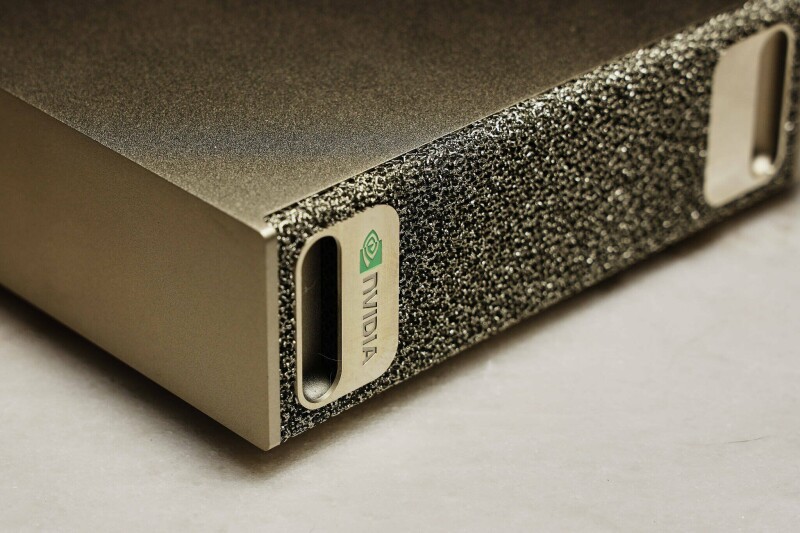
Nvidia debuts $4,999 DGX Spark with half the RAM and storage, amid memory crunch

In an effort to provide a more affordable AI system, Nvidia is introducing a cut down version of the DGX Spark with half the memory and storage. The GB10-based systems will be offered exclusively through hardware partners including Acer, Asus, Dell, Gigabyte, HP, and MSI, and are expected to retail for around $4,999. The less-powerful SKUs are necessary after Nvidia jacked the price of its 128 GB DGX Spark on Friday to $6,950 — an increase of nearly 75 percent from this time last year. As you might have already guessed, skyrocketing memory prices are to blame for the massive price adjustment. That makes the 64 GB model considerably less than Nvidia’s top-spec DGX Spark and GB10 systems given the ongoing memory shortage, but that’s still 25 percent more than the 128 GB version retailed for at launch. Nvidia’s GB10 platform has been plagued by pricing creep since the Projects Digits concept was unveiled at CES last year. Originally, the appliance was expected to retail for around $3,000, not the $4,000 it eventually ended up selling for. Even at that price, the DGX Spark offered something that just a few years ago would have set you back tens of thousands of dollars: large quantities of GPU memory. In fact, at the time it launched, the system was technically the highest capacity workstation GPU Nvidia sold. That’s not really the case with the 64 GB model, which due to its smaller capacity, isn’t as well suited to certain AI workloads like fine tuning. But if your main concern is local AI inference for powering private agents, Nvidia argues models in the 26-35 billion parameter range, Qwen 3.8 27B for example, are now good enough to get the job done. While the new systems may offer less memory, we’re told the memory bandwidth remains unchanged at 273 GB/s, which tells us they’re using lower capacity LPDDR5x memory modules rather than fewer of them. Nvidia also says that beyond the new memory config, the systems are otherwise unchanged and will feature the same 20-core Arm processor from MediaTek. The systems also retain their onboard ConnectX-7 networking, which enables clustering of up to 4x GB10-based devices at 200 Gbps a piece. To further facilitate this, Nvidia says later this month it’ll be rolling out new software tools to DGX OS to facilitate cluster configurations and inference deployments. Previously, this required some tinkering in the CLI to get set up along with some tweaks to the vLLM or TensorRT-LLM launch commands. While the 64 GB version’s lower MSRP should make the systems more accessible amid the ongoing memory crunch, it doesn’t bode well for Nvidia’s RTX Spark notebooks and mini PCs expected to make their debut this fall. These systems are based on the same GB10 silicon that powers the DGX Spark and other DGX OS-based systems, but are intended for more general purpose computing, like AAA gaming, web browsing, and content creation, not just AI inference and training workloads. Announced at Computex late this spring, RTX Spark-based systems were already expected to be quite expensive, particularly the 128 GB variants. With DGX Spark pricing nearing $7,000, similarly equipped RTX Spark notebook offerings based on the chip could end up selling for significantly more. But, as we understand it, Nvidia will be offering versions of the chip with much lower memory capacities for price conscious PC buyers. However, across the DGX and RTX Spark lines, Nvidia will face some competition from AMD’s newly launched Gorgon Halo SoCs, which offer memory capacities ranging from around 32 GB at the low end to 192 GB for the top-spec Ryzen AI Max+ 495 SKUs. What’s more, systems powered by that chip are currently retailing for less than Nvidia’s 128 GB DGX Spark. But while AMD wins on max capacity, it should be noted that our testing has repeatedly shown that the GB10’s GPU offers substantially higher performance for AI tasks. ®

  •  

Google launches first datacenter satellite and research that finds orbiting bit barns can work

Google’s first “Suncatcher” datacenter satellite has made it into space, but the company has cast doubt on whether its orbital ambitions can scale. As The Register reported last week, Project Suncatcher aims to test whether Google’s tensor processing units (TPUs) can survive a launch and the harsh environment of space. The Big G hopes to validate theories that the limitless supply of solar energy available in space makes the cost of putting servers into orbit sensible. In its announcement of a successful Suncatcher launch, Google linked to its own peer-reviewed research about the endeavor – which outlines many thorny challenges that must be met to make orbital datacenters fly. The paper, titled “Toward a future space-based, highly scalable AI infrastructure system design,” notes that SpaceX and others have suggested that orbital datacenters become viable when launch costs fall to $200/kg. Google’s researchers also note that SpaceX has managed to reduce the cost to launch a kilogram into orbit by 20 percent after every doubling of the cumulative mass it launched. If SpaceX can keep that up, which will mean launching 370,000 t additional cumulative mass, the equivalent of around 1,800 successful launches of its giant Starship rocket, and re-using components 100 times, Google thinks $200/kg is “plausible under reasonable assumptions.” Google doesn’t know the mass of its future datacenter satellites, but points to Starlink’s second-gen sats weighing 575kg and then compares the cost of sending a satellite into space with the price to power servers on Earth. “If launch costs reach ≲$200/kg, annualized cost per unit of power in space could be approximately comparable to terrestrial spend,” is Google’s conclusion. The paper’s calculations on future launch costs use data from SpaceX and other rocket operators. The other technologies needed to make datacenters in space remain largely theoretical. For example, the paper notes that existing network technologies probably aren’t suitable to link multiple satellites into functioning clusters. The need for rapid comms between satellites means Google’s plans require a design “significantly larger and entail much closer formation flight … than any previous or current satellite constellations.” Google also thinks that satellite design will need to evolve. “Our system design work to this point assumes a relatively conventional, discrete compute payload, satellite bus, thermal radiator, and solar panel design,” the paper states. “However, as has been seen in other industries (such as smartphones), massively scaled production motivates highly integrated designs (such as the system on chip, or SoC). Eventually, scaled space-based computing would similarly involve an integrated compute, radiator, and power design based on next-generation architectures, such as computational substrates based on neural cellular automata.” Google’s researchers also found “robust optical satellite-ground communications will also be critical for scaled operation but will necessitate overcoming challenges including atmospheric turbulence, high-speed relative motion errors, and precision beam tracking.” NASA’s TeraByte Infrared Delivery (TBIRD) mission, which has demonstrated 200 Gbps ground-low-earth-orbit comms, is cited as a promising approach. Google’s researchers therefore concluded that realizing its space datacenter ambitions “will require sustained research, iterative refinement of our design, and the achievement of several critical future milestones.” ®

  •  

RAM supply set to worsen, says Micron, as CEO celebrates ‘much higher’ prices

Memory-maker Micron has warned that RAM shortages will persist into 2028, and perhaps beyond. Speaking on the company’s FY 2026 earnings call, CEO and company chair Sanjay Mehrotra reminded investors that Micron has already sold most of the memory it will make next year and said customers will pay “much higher prices” than they shelled out this year. “In calendar 2027 as well as 2028, we see demand exceeding supply,” he added. “In fact, we see greater tightness in the industry in 2027 and in 2028 versus 2026. Overall, supply-demand environment is only getting tighter.” “We do not have line of sight to when supply and demand will return to balance.” Micron plans to bring new factories online in 2028 – helped by planned capex of $25 billion in the first half of its new financial year – but execs warned those facilities won’t immediately help to improve availability or ease prices. The CEO said demand for the high-bandwidth memory (HBM) needed in AI hardware is growing faster than it is for the DRAM used in servers. Micron is also finding ways to expand its margins for HBM, which is currently not as profitable as DRAM. Both types of memory are, however, enormously profitable. Micron’s earnings announcement reveals that the gross margin for its cloud memory business unit, which focuses on HBM, reported a Q4 gross margin of 83 percent – a big jump from the 59 percent in last year’s Q4. The core datacenter business unit, which sells more DRAM, recorded Q4 gross margin of 90 percent, up from 41 percent last year. Sales of solid-state disks for use in datacenters reached almost $10 billion for the quarter, up more than 1,000 percent year over year. Q4 revenue came in at $54.25 billion, up from $11.3 billion last year. Annual revenue landed at $133.2 billion, vastly higher than last year’s $37.4 billion. Net income rose 895 percent to $85 billion. Mehrotra told investors Micron has “a strong roadmap for future HBM products and are proud to be working with NVIDIA on the industry’s first custom HBM4E implementation, NV-HBM, to be adopted on next generation of GPUs and NVLink fusion platforms. In NAND, AI context memory storage used for KV cache offload and HDD displacement opportunities are expanding the addressable market for SSDs.” Micron forecast Q1 FY27 revenue of $61.5 billion plus or minus $1.5 billion, and gross margin of 86.25 percent. The company’s share price spiked, then returned to its close-of-day price in after-hours trading, suggesting investors expected its colossal growth and profit. ®

  •  

Fujitsu ready to sell its custom ‘Monaka’ Arm chip, maybe to rival server-makers

Fujitsu will start selling its Monaka processors, and servers packing them, in November. The Japanese giant started talking about Monaka way back in 2023, when it teased the processor as being derived from the silicon it designed for the Fugaku supercomputer, but adapted for datacenter use. Fugaku was the world’s most powerful supercomputer from 2020 to 2022, and remains in ninth place on the Top 500 list six years after its debut. Who wouldn’t want the tech that powered that behemoth in their datacenter? Yet as The Register reported earlier this year, Monaka diverged significantly from the silicon inside Fugaku. It’s built on Broadcom’s 3D-chip stacking tech and use the Armv9 ISA. The chip features a quartet of 2nm compute dies, each packing 36 cores. Also inside the chip are four SRAM 5nm chiplets, and it’s all connected by a central I/O and memory die with 12 channels of DDR5 and PCIe 6.0 connectivity. For years, Fujitsu told the Monaka-curious that the chip would see the light of day in 2027. Earlier this week Fujitsu announced it will start selling the chips, and servers that use it, from November. The company will sell the chip to cloud operators and server manufacturers. The latter will have to compete with Fujitsu itself, which has created three servers that use the CPU: A 1U server that can pack one or two processors, running at either 2.1GHz or 2.9GHz, room for eight E3.S SSDs and two M.2 SSDs, and the ability to run in both air-cooled environments where the temperature hits 40C and cope with 45C when using liquid cooling. A 2U server with a pair of CPUs running at 2.1GHz, four E3.S disks and two M.2s, and supporting only air cooling. A 2U, dual-CPU model designed to be used for multi-node deployments, four to a rack, running at 2.9GHz, packing just two E1.S SSDs and the two M.2s, and requiring liquid cooling. This is the model Fujitsu thinks will suit HPC and academic users. All the servers use a 144-core processor. Fujitsu hasn’t named a price, at least in public. It is of course touting it as a strong option for inferencing workloads, thanks to a claimed ability to handle double the inferencing output of rival CPUs. That quality alone will gather some attention from AI giants, hyperscalers, and neoclouds, if only because silicon supply chains remain fragile and any new source of inferencing power is worthy of investigation. The fact that these machines can run in quite hot air-cooled datacenters won’t hurt. Whether any server-makers beyond those who supply hyperscalers buy in is less certain. For nigh-on a decade now, vendors of Arm CPUs have touted their low power consumption as a must-have, but manufacturers have made only token efforts to deliver products that host Arm chips. Interestingly, Fujitsu is pitching its smaller servers as a sovereign solution, in part because it’s making the machines in Japan. Europe, the other market into which Fujitsu will initially sell the boxes, is also increasingly interested in sovereign tech. ®

  •  

Nvidia goes green to keep grid capacity from zapping its revenues

Nvidia’s ability to sell GPUs is ultimately limited by how much juice the power grid can provide. With ever-growing depreciation cycles, it’ll be years before datacenters decommission their aging Hopper or Blackwell systems. More GPUs mean pulling more power from the grid. Nvidia can’t exactly force grid operators to add capacity any faster, but it can make it easier for its customers to build smarter and more efficient bit barns. “At the datacenter scale and at the AI-factory scale, we're literally trying to think about how can we eke out every bit of efficiency to drive more performance per gigawatt,” Dion Harris, senior director of Nvidia HPC and AI Hyperscale Infrastructure Solutions, told El Reg in a recent interview. At the AI Infra Summit this week, we got our first look at the systems Nvidia has been building to maximize the amount of power available for compute while minimizing the impact of datacenters on the local grid. Datacenters, as a general rule, rarely operate anywhere close to the peak capacity. A 100 megawatt datacenter might use at most 80 percent for critical compute loads. The actual ratios vary from bit-barn to bit-barn, but this provides a buffer for hardware inefficiency, conversion losses, and other spikes in demand. The downside, of course, is that this leaves 20 megawatts or so of untapped capacity that the datacenter can’t use and the utility can’t reclaim. Every kilowatt of stranded power is a GPU that Nvidia could have sold, so Nvidia’s DSX platform aims to address both problems. Minimizing overheads The first of these, which Nvidia calls DSX MaxLPS, is an evolution of an old idea. If the compute and all the physical infrastructure — power cabinets, batteries, coolant distribution units (CDUs), and chillers — can talk to one another, operators can achieve significant power savings. For example, if the air handlers had a way of knowing how much power a rack was pulling, they could ramp up and down based on demand rather than running maxed out all the time. The challenge, as you might expect, is getting systems from dozens of different vendors to speak the same language. So while the idea sounds great in theory, getting everyone on the same page was easier said than done. That changed with the widespread deployment of AI systems, Harris explained. More efficient bit barns can churn out more tokens, which translate into higher revenues — so long as people are willing to pay for the tokens anyway. However, Nvidia still needed to address the communications layer, something that was no doubt made easier by the fact its GPUs are the hottest commodity in the world right now. “DSX Exchange is really kind of an API that allows us to capture information not just around the core systems,” Harris explained. “We can capture information from the other DSX ready providers that provide assets. That would be like Vertiv and Schneider Electric, and all the building management systems." At the AI Infra Summit this week, Nvidia and Lambda showed how this bridge, working as part of its broader DSX MaxLPS offering, could be used to pack more compute into the same power envelope. In testing, Lambda was able to cram 19 nodes into the same power budget normally occupied by 16, boosting cluster-wide throughput by 24 percent and performance per watt by a similar margin. The result, the company claims, is that datacenters don’t need to overprovision their bit barns to the same extent since they have greater visibility and control over the datacenter as a whole. Shedding the load Along with helping its customers get more out of their bit barns, Nvidia also showed how its datacenter management tech could be used to minimize the impact of large AI training and inference deployments on the local grid. Working with Emerald AI and Silicon Valley Power, Nvidia demonstrated how its DSX Flex platform could be used to free up datacenter power when grid demand spikes without disrupting critical workloads. But just like Nvidia’s DSX MaxLPS offering, the underlying tech isn’t exactly new. Demand response has been around for years now and allows utilities to ask power hungry industries to curb their energy use during periods of peak demand. Google and others have been toying with this tech for some time now. You may recall last year when it announced it would pause non-essential AI workloads in order to avoid overloading the grid. Nvidia’s DSX Flex aims to bring this capability to anyone deploying its hardware. But this tech may be less about keeping AI from causing brownouts and more about getting utilities to green light additional capacity on the proviso that they can reclaim some portion of it at a moment's notice. “It allows, in some cases, the grid providers, transmission line owners, to be a little a little bit less conservative in how they allocate or over provision because now, knowing that you have the ability to curtail within a certain window, they don't have to have as much headroom,” Harris explained. But just because a utility claws back capacity doesn’t necessarily mean that the workloads shut down, he notes. While critical workloads keep running, deep integration with Nvidia's software stack means that non-essential workloads can either be paused or migrated to neighboring datacenters with excess capacity — a concept sometimes described as chasing the sun. Another walled garden As you probably already guessed, while Nvidia’s DSX platform works great for AI factories built using validated hardware, things get a bit more complicated as third-party accelerators from the likes of d-Matrix, SambaNova, and others are added to the mix. For partners, like d-Matrix already living inside its NVLink Fusion ecosystem, Harris sees a path forward for extending support for DSX to these platforms, though he notes that some degree of software integration will be required and not every chip will expose the same level of granular control as its own chips do. When it comes to competing platforms, like AMD’s Instinct GPUs, bit barn builders will likely need to look to alternative datacenter management systems to replicate DSX’s capabilities. So, on top of making the most of the limited grid capacity available today, Nvidia’s DSX is another walled garden that ensures its customers continue buying its equipment. ®

  •  

Enterprises are sweating legacy IT assets as AI investment grows

Companies are getting more selective about replacing legacy kit such as mainframe systems, and rising AI investment is one of the factors causing them to hold onto these existing assets for longer. Managed services biz Ensono claims in its 2026 State of IT Modernization report that 78 percent of IT decision makers regard legacy systems as more important today than they did two years ago, and this is because such systems are viewed as key to making AI work for their organization. The report is based on a survey of 500 IT decision-makers and line-of-business leaders conducted by the firm across the US and UK. Its findings show that AI is reshaping modernization priorities, but that corporates are still grappling with many of the challenges that have traditionally complicated modernization efforts, such as budget overruns, delayed initiatives, and talent shortages. Ensono found that 45 percent of firms are actively scaling AI deployments across their organization, while 44 percent are investing in targeted, high-impact use cases. Supporting AI, automation, and advanced data initiatives is now the top pressure driving modernization, while more than half of companies say that AI is helping advance modernization by delivering through greater automation and improved efficiency. Among the barriers businesses face, the top challenges to achieving AI goals are said to be difficulty integrating AI into existing workflows and business processes (33 percent of respondents) and infrastructure limitations (28 percent). For this reason, Ensono says that those legacy systems are taking on new strategic value as organizations attempt to scale their AI rollout. Nearly half of organizations view legacy systems such as mainframes as a critical foundation for AI and an important source of data for this purpose, while 47 percent use them selectively for specific AI applications. More than half of organizations are optimizing and extending legacy systems while modernizing applications where they are, rather than replacing them outright. This is an approach that’s slightly more common in the UK (57 percent of respondents) than the US (48 percent). “Enterprises are discovering that legacy systems, like the mainframe, are intensely powerful, reliable and efficient sources of computing that can now be augmented and made more agile thanks to AI,” says Ensono’s Chief Strategy Officer Brian Klingbeil. “These systems contain decades of data and business logic that drive many companies. The advantage will go to organizations that understand their environments well enough to distinguish what should be replaced versus what should be augmented, and embrace new modernization methods that simply were not available even 18 months ago.” However, using the mainframe as a foundation for AI rollouts was noted by infrastructure services firm Kyndryl two years ago. It found that big iron was becoming a prime candidate to host and run AI workloads, while enterprises were increasingly integrating their mainframes with modern infrastructure. This meant moving some workloads off the mainframe while updating others in place to continue to benefit from the security and reliability of the platform. Analyst Gartner also said earlier this year that migrating workloads to a mainframe made more sense for VMware users than adopting Broadcom’s new licenses. Elsewhere, HPE managing director for UK, Middle East and Africa said that enterprise customers are opting to sweat IT assets for longer, moving refresh cycles from five years to seven years, for example. “I think we're seeing earlier planning for critical projects. I think a lot of customers are looking much further ahead on their roadmap of spend at the things they have to do, because maybe some technology is going end of support or the lease is expiring at the datacenter,” he said. “So I think you're seeing a decision tree of, do we pause here, and do we sweat the asset for a little bit longer, or is this essential to move ahead? I think it's fundamentally forcing a rethink for customers.” ®

  •  

U.S. Has Deployed Weapons in Space, Air Force Secretary Says

Troy E. Meink’s comments were the first public acknowledgment of American weapons in orbit. The Pentagon has been preparing for potential conflict in space with Russia or China.
  •  

AI networking startups race to replace Nvidia's NVLink

As Nvidia expands its influence through its NVLink Fusion tech, rival networking vendors are scrambling to bring alternative interconnects and switches to market. At the AI Infra Summit this week, Delos Data and Cornelis Networks officially entered the scale up networking race. Scale-up fabrics, like NVLink, are what have allowed Nvidia to make eight, 72, and now 576 GPUs behave as one enormous AI accelerator. To catch up, rivals like AMD have embraced emerging protocols like Ultra Accelerator Link. Today, these protocols are largely being tunneled over standard Ethernet switches. For instance, AMD is using Broadcom’s 102.4 Tbps Tomahawk 6-based switches connecting to custom I/O dies on the MI455X. Purpose-built UALink switches and physical interconnects remain elusive, but that won’t be the case for long if Cornelis and Delos have their way. The two companies are approaching this challenge from a few different angles, including standardization, software optimization, and physical hardware. Setting the standard for the Never-Nvidia network At AI Infra on Monday, HPC-centric networking vendor Cornelis introduced the Active Compute Fabric (ACF), which seeks to establish an open architecture for scale up and scale out networking that integrates programmable compute into the fabric. The standard signals Cornelis’ entry into the scale up networking arena. Spun out of Intel in 2020, Cornelis’ Omni-Path tech was originally designed as a scale-out interconnect for high-performance computing applications, including supercomputers like Trinity and Lynx. With the imminent launch of the company’s 800 Gbps-capable CN6000-series switches and NICs, the company has its sights set not only on bringing its tech to a broader audience through the open Ultra Ethernet protocol, but also on scale-up networking. ACF expands on the mission of technologies like UALink and the Ethernet for Scale-Up Networking, another scale up networking protocol, to set a baseline for in-network compute capabilities across a wide range of hardware, not just Cornelis’ own CN-series parts. One of the key technologies behind Nvidia’s NVSwitch ASICs is support for SHARP, which allows for things like in-network collectives to be offloaded to the switch ASICs, freeing up GPU compute and cutting down on communication overheads. Collective acceleration isn't new by any means, with major networking vendors from Broadcom to Cisco having implemented it in some capacity. As an open architecture, ACF appears to set a least common denominator so that customers deploying these systems know exactly what they’re getting. However, it doesn’t stop there. Cornelis sees opportunities to accelerate a variety of other functions. We’ve detailed a few below: KV cache offloading used to store and retrieve model state across multiple sessions. MoE expert dispatch to reduce duplicate transfers and communication overhead for mixture-of-experts models during inference and training. Message passing interface offload for HPC-centric applications. In fabric checkpointing for failure recovery during training and other large workloads. “Communications overhead and synchronization can leave expensive accelerators underutilized,” the company explained. These in-network accelerators “allow the network to operate on data as it moves through the system.” According to Cornelis, the savings potential from reclaiming that idle compute is significant. “In a 100,000 GPU system, Cornelis modeling of public data shows that roughly half of all GPU hours are spent waiting for data, worth about $1.68 billion a year in wasted capacity and 500 GWh of power.” As usual, take these claims with a grain of salt. However, reclaiming GPU idle time would equate to significant savings. Eliminating all the bottlenecks that contribute to them is easier said than done. A new kind of NIC for the AI age While Cornelis champions its ACF architecture, Delos Data, a startup founded by former Barefoot Networks and Intel execs, aims to tackle the physical layer with a series of new network reference designs. Marketed under its Nonstop AI portfolio, the network interfaces span the full gamut of connectivity from co-packaged interconnects to more traditional NICs. The idea, the company explains, is to provide customers with a system-level blueprint for speeding up data movement between endpoints and enabling larger compute domains scaling beyond a single rack. Delos’ data interface will be offered in three form factors. The first is an I/O die capable of more than 30 Tbps of aggregate bandwidth or about 8 TB/s in either direction. That’s more than double the interconnect bandwidth of either Nvidia's or AMD’s latest accelerators, which cap out at 3.6 TB/s. Just how competitive that ends up being will depend on when Delos’ I/O chiplets actually see deployment. That timeline is going to depend heavily on integration since those I/O dies need to be integrated directly into the accelerator package, which requires a high-degree of co-design. Critically, Delos isn't trying to trap its customers in a walled garden to the same extent that Nvidia does with its NVLink Fusion I/O dies or IP. At least as of writing, NVLink Fusion still requires customers to buy NVSwitches for scale up networking. Delos’ chiplets are protocol agnostic. They don’t care whether you’re using ESUN, UALink, or something else. Chip designers that'd rather focus their efforts and capital on the AI bits of their accelerators – which, it turns out, applies to most hyperscalers – could simply license Delos' chiplet design. This protocol agnosticism also extends to Delos’ near-packaged optics (NPO) tech, which will integrate a 10-plus Tbps data interface — that’s 2.5 TB/s bidirectional bandwidth in Nvidia speak — with optics engines from leading optics suppliers. Rack scale systems, like Nvidia’s NVL72, have largely relied on copper interconnects up to this point due to power constraints. As systems grow from 72 GPU rack systems to row-scale clusters with 576 and eventually 1,152 GPUs, optics become unavoidable. While integrating optics directly into the accelerators is possible using tech available today, the blast radius of a failed optical module is considerable. NPO offers an alternative. Copper interconnects are used within the rack, with optics provided via user-serviceable NPO modules between racks. Finally, Delos is working on a 400-plus Gbps NIC, which like the rest of its data interface offerings is protocol agnostic. This is arguably the least surprising entry in the entire lineup. Scale out networks are still going to be required for large training clusters as well as for front-end access and storage networks. These interfaces build on Delos’ existing compute reference design, which we looked at during Computex, as well as its Nonstop AI software platform, which is designed to facilitate the configuration and monitoring of these switched fabrics or meshes in order to enable dynamic rerouting of traffic in the event of a link failure. Telemetry gathered by its data interface offerings allows for even greater visibility into the network, allowing for faster rerouting and recovery. Fueling competition Investors appear more than eager for more competition in the scale up arena. Alongside its product announcements, Cornelis announced approximately $205 million in funding to bring its next generation of scale up and scale out networking products to market. Meanwhile, Delos Data announced Tuesday that it’s now raised more than $100 million in funding with support from venture capital firms Matrix, Playground, and Socratic Partners among others. ®

  •  
❌