❌

Reading view

‘Kinetic electronics’ make self-connecting circuits

Side-by-side photos showing a pair of circuits before and after they connect
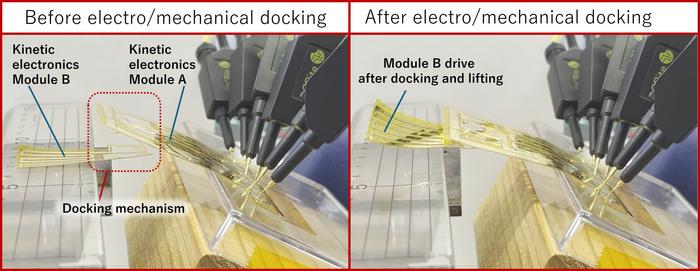
Come together: Kinetic electronics module A, which integrates an electrical circuit and an actuator, deforms in response to an electrical input and connects mechanically and electrically to thin-film circuit module B via the docking mechanism. Before connection (left image), the two modules are separate; after connection (right image), module A holds and lifts module B, and by supplying power through the connection point, it can independently drive module B to deform. (Courtesy: Fumihiro Sassa/Kyushu University)

Researchers at Kyushu University in Japan have developed a flexible electronic circuit that can connect itself to another electronic circuit and then disconnect from it. The prototype structure is an important step towards electronic devices that can reconfigure and even repair themselves, and it could have applications in wearable sensors, soft robotics and medical devices.

Most of today’s electronic devices are fixed, or “non-modular”, explains study leader Fumihiro Sassa of Kyushu University’s Department of Electrical and Electronic Engineering. Typically designed for specific tasks or environments, they are not readily adaptable to new ones, and they often cease to function if even a single component in their electronic circuitry fails. This leaves them dependent on human operators or external robotic systems if it becomes necessary to expand their functionality or repair damage.

“This can be a serious limitation inside very small machines, in space equipment, in devices requiring specialized handling, such as wearable chemical sensors, or in systems containing very large numbers of wires and electronic elements,” Sassa explains. “In such cases, in-situ repair can be difficult. The whole system may need to be replaced.”

Connection and disconnection

To overcome this problem, the Kyushu University researchers have been developing what they term “kinetic electronics” modules. These consist of electronic circuits and actuators that deform when an electrical current is applied to them so that they can mechanically and electrically connect to other modules. Before this connection takes place, different modules are separate, but after connection or “docking” takes place, one module can independently deform another when power is supplied through the point that connects them.

In this way, explains Sassa, the circuits can rearrange their own hardware structure. “Such functions have traditionally been used in mechanical systems, such as spacecraft, trains and modular robots, but we have now applied them to an electronic device.”

Sassa and colleagues fabricated their electrothermal bimorph actuators from polypropylene and polyimide films with heater electrodes and electrical circuits formed on them through a two-dimensional top-down process. Because the two polymers expand differently, Sassa explains that Joule heating causes selected actuator sections to bend. “Prescribed sequences of these motions produce docking and undocking and once docked, passive mechanical engagement maintains the connection without continuous power being supplied,” he says. “Undocking requires a separate actuation sequence.”

Towards miniaturization and more intelligent control

The researchers say they are working on miniaturizing their system and looking how to control it more intelligently. In the present study, which is detailed in npj Flexible Electronics, they demonstrated the docking mechanism using a small number of millimetre-scale independent sensors and actuators formed together on the circuit, with motion being controlled in sequence by an external microcontroller. They are now developing photolithographic processes to further decrease the size of these components and have already fabricated actuators smaller than 100 μm using these techniques.

“In a similar way to large-scale integration in conventional electronics, doing this will allow us to integrate very large numbers of these sensing and actuation elements, allowing the electronic circuit to form and change much more complex mechanical structures and functions,” says Sassa.

“We are also interested in so-called distributed control, in which the central controller does not need to specify every movement,” he adds. “Instead, many elements would follow relatively simple local control rules, from which advanced self-reconfiguration and self-organization could emerge.”

The post ‘Kinetic electronics’ make self-connecting circuits appeared first on Physics World.

  •  

How Low Gravity and Pressure Affect Space Manufacturing of Carbon-Fiber Structures

A new study is challenging one of the most persistent assumptions in space manufacturing: that building advanced composite structures beyond Earth is simply a matter of moving terrestrial production methods into orbit. Research published in npj Advanced Manufacturing examines how two defining features of the space environment—reduced gravity and reduced atmospheric pressure—can alter the manufacture of carbon-fiber-reinforced structures, materials widely regarded as essential for future spacecraft, habitats and large orbital infrastructure.

Carbon-fiber-reinforced polymers, commonly known as CFRPs, combine strong, lightweight carbon fibers with a polymer resin that binds the fibers into a rigid composite. Their exceptional strength-to-weight ratio makes them attractive for launch vehicles and spacecraft, where every kilogram matters. Yet manufacturing these materials is a delicate process. Fibers must be positioned accurately, resin must penetrate the reinforcement evenly, and gases or trapped voids must be removed before the material cures. On Earth, gravity and atmospheric pressure quietly assist—or complicate—each of these steps.

In space, those familiar forces change dramatically. Reduced gravity can alter how liquid resin flows through a carbon-fiber structure, while low pressure can encourage dissolved gases and volatile compounds to expand or escape. Together, these effects may influence impregnation, consolidation, curing and the final mechanical performance of a composite part. The new work by R. Strecker, T. Rieger, A. Tabelander and colleagues focuses on understanding these interactions before manufacturers attempt to produce increasingly complex structures in orbit.

The central issue is void formation. A composite that appears solid can contain microscopic pockets of air or vapor between its fibers. These voids interrupt the transfer of stress through the material and can reduce strength, stiffness and fatigue resistance. During conventional manufacturing on Earth, pressure is often applied to compress the layers and drive out unwanted gases while resin fills the spaces between fibers. In a reduced-gravity environment, however, buoyancy-driven movement is weakened, and the pathways through which bubbles travel may change. A bubble that would rise and escape during terrestrial processing could remain trapped inside the structure.

Pressure reduction introduces another layer of complexity. Lower ambient pressure can help remove volatile substances and trapped gases, but it can also cause dissolved gases in the resin to expand. If the resin is not sufficiently mobile, expanding bubbles may become locked in place as the material cures. The balance between degassing and bubble growth therefore becomes a critical manufacturing parameter. The study’s importance lies in treating pressure and gravity not as isolated variables, but as environmental conditions that can interact throughout the production cycle.

Resin flow is equally important. Carbon-fiber reinforcements are made from tightly packed filaments, creating narrow channels through which resin must travel. On Earth, gravity can influence resin distribution, especially in vertically oriented or large components. In reduced gravity, capillary forces and surface tension become relatively more significant. These forces can help draw resin into small spaces, but they may also create uneven wetting patterns depending on the fiber architecture, resin viscosity and processing orientation. Such changes could affect whether a component cures uniformly from its surface to its interior.

The findings carry implications far beyond laboratory samples. Future space manufacturers may seek to fabricate beams, pressure-vessel elements, antenna supports, solar-array components and repair patches directly in orbit. Producing these parts where they are needed could reduce the need to launch bulky finished structures from Earth. It could also enable designs too large to fit inside a rocket fairing, including trusses and habitation modules assembled gradually in space. But the economic and engineering promise of this approach depends on reliable quality control. A component that looks flawless may still fail if its internal fiber alignment, resin distribution or void content is inconsistent.

The research also highlights why manufacturing hardware designed for Earth cannot automatically be considered space-ready. Pumps, heaters, vacuum systems, molds and curing chambers must all operate under conditions in which heat transfer, fluid movement and gas removal behave differently. Temperature control is particularly important because resin viscosity changes strongly with temperature. A resin that flows readily during terrestrial processing might move more slowly or unevenly in orbit, while excessive heating could accelerate curing before impregnation is complete. Space-based production systems will therefore need carefully coordinated control of pressure, temperature, resin chemistry and processing time.

For engineers, the study provides a foundation for developing manufacturing protocols tailored to reduced-gravity environments. Instead of copying Earth-based workflows, future systems may need staged pressure changes, specialized fiber preforms, modified resin formulations or active bubble-management techniques. Sensors could monitor pressure, temperature and resin flow in real time, allowing automated systems to detect defects before a part is finished. Non-destructive inspection, including imaging and ultrasonic testing, will also be essential for verifying the integrity of components that cannot easily be returned to Earth for analysis.

The broader message is that space manufacturing is not merely an extension of industrial production—it is a new manufacturing regime governed by different physics. Understanding how gravity and pressure reshape the behavior of fluids, gases and composite materials could determine whether orbital fabrication remains a promising experiment or becomes a practical industrial capability. By examining the production of carbon-fiber-reinforced structures under space-relevant conditions, Strecker, Rieger, Tabelander and their colleagues are helping identify the hidden variables that will decide how safely and efficiently humanity can build beyond Earth.

Subject of Research: Effects of reduced gravity and reduced atmospheric pressure on the in-space manufacturing of carbon-fiber-reinforced structures

Article Title: Effects of reduced gravity and reduced atmospheric pressure on in-space manufacturing of carbon-fiber-reinforced structures

Article References: Strecker, R., Rieger, T., Tabelander, A. et al. Effects of reduced gravity and reduced atmospheric pressure on in-space manufacturing of carbon-fiber-reinforced structures. npj Adv. Manuf. 3, 26 (2026). https://doi.org/10.1038/s44334-026-00104-w

Image Credits: AI Generated

DOI: https://doi.org/10.1038/s44334-026-00104-w

Keywords: in-space manufacturing, carbon-fiber-reinforced polymers, reduced gravity, reduced atmospheric pressure, composite materials, resin flow, void formation, space technology

  •  

Personne ne s’attendait à une telle ampleur : l’Amazonie révèle les traces d’une immense civilisation cachée sous sa canopée

Pendant des siècles, la forêt amazonienne a été considérée comme une vaste étendue presque intacte. Mais une nouvelle étude révèle qu'elle dissimule les traces d'une civilisation bien plus vaste qu'on ne l'imaginait, remettant en cause notre vision de l'histoire de la plus grande forêt tropicale...

  •  

Machine vision begins to work like the human eye

Artificial vision is employed in applications ranging from self-driving cars to advanced robotics. However, most “artificial eyes” do not work well in complex real-world conditions, such as sudden strong glare, dimness or uneven light levels. Such devices also rely on complex and rigid electronic circuitry to adjust their sensitivity to light and on post-algorithmic processing for accurate image recognition. A research team headed up at the University of Electronic Science and Technology of China and Penn State in the US has now developed a new adaptive photomemristor structure that does not suffer from any of these problems, allowing for machine vision that truly adapts to natural and complex light fluctuations, just like human eyes.

Sight is one of our most important senses: we acquire over 80% of the information from our environment through our eyes. Indeed, the human eye is so sensitive that it can process visual information under varied lighting levels with a photodetection dynamic range of more than 160 dB. This allows us to watch a film in a dark room or drive in the glare of oncoming headlights. Until now, however, artificial eyes have lacked this so-called dynamic self-adaptation.

Memristors for improving light adaptation

In recent years, researchers have been looking into neuromorphic devices that mimic the way biological structures work. These devices can be engineered to behave very much like neurons in the human brain, which learn by reconfiguring the strengths of the connections (synapses) between neurons. Memristors (or memory resistors) are excellent in this respect because they can bring this learning functionality to the connections in electronic circuits.

Rather than being fixed, the resistance of memristors changes depending on the current or voltage previously applied to them. This means that specific resistances can be programmed into the devices and subsequently stored. Importantly, the “remembered” value of the resistive state persists even when the power is switched off, making it a non-volatile form of electronic memory.

Photomemristors are a type of memristor that can change their resistance in response to both voltage/current and light and could therefore be used in advanced optical systems.

Reversible water absorption and desorption

In the new work, reported in Nature Communications, a team led by materials scientist Jia Zhu made a highly adaptive optoelectronic synapse from the composite material TiO₂/PEDOT:PSS. The TiO2 absorbs light, converting it into a photocurrent that then passes through the conductive surface of the PEDOT:PSS polymer. This intrinsic photothermal effect, explains Zhu, triggers reversible water absorption and desorption on the polymer surface, which in turn impacts the device’s conductivity.

“This process allows the device to automatically suppress the photoresponse under intense bright light and amplify its sensitivity under dim weak light,” he says. “In extreme strong-light conditions, its photocurrent can even drop below the dark current level, allowing for an ultralow-sensitivity state similar to human eye pupil constriction.”

A high image recognition accuracy

Zhu tells Physics World that when integrated with artificial neural networks, the new adaptive vision system achieves a high image recognition accuracy of 91.3% in dynamically changing mixed-light scenarios, including glare, dim shadow and alternating brightness. It also eliminates the need for bulky auxiliary circuits and complex real-time computing algorithms,  reducing power consumption and hardware volume.

The new work is a first step towards making next-generation neuromorphic vision systems that could be used in practical applications. “Our adaptive photomemristor vision system can effectively resist strong glare from oncoming vehicle headlights, accurately identify pedestrians, lane lines and traffic signals in complex day–night alternating light environments, so greatly improving the safety of autonomous driving,” Zhu explains.

The technology could also be widely applied to humanoid robots, outdoor intelligent monitoring equipment, aerial reconnaissance and portable intelligent vision terminals, he adds.

Looking ahead, the researchers will now focus on optimizing the material formula of the compound studied in this work and improve its fabrication. They will also be working on complete system-level integration, including array device packaging, signal readout modules and adaptive control units, with the aim of constructing a fully functional bionic artificial eye prototype. “We will then verify whether this biomimetic dynamic regulation strategy can be extended to other oxide/polymer composite memristor systems to develop a universal design principle for high-performance light-adaptive neuromorphic devices,” says Zhu.

The post Machine vision begins to work like the human eye appeared first on Physics World.

  •  

New superconducting diode gives greater control over the flow of electrons

Like a two-lane highway with one lane empty and the other clogged with traffic, superconducting diodes allow electrons to flow without resistance in one direction while encountering normal, resistive conditions in the other. First demonstrated experimentally in 2020, these devices have considerable potential as platforms for fundamental studies of quantum materials and as building blocks for superconducting electronics.

For many applications, being able to control the flow of electricity through the diode – or even reverse its polarity – is essential. In principle, there are several ways of doing this because the efficiency of the superconducting diode effect (SDE) depends on many factors. Examples include magnetic field, temperature and diode design as well as intrinsic properties such as the momentum of the Cooper-paired superconducting electrons and their spin-orbit coupling.

In practice, though, some of these properties are more easily changed than others. To return to the highway analogy, it’s much more straightforward to alter the flow of traffic by posting new road signs, rather than by rebuilding the road or redesigning the cars.

In a recent paper in Chinese Physics Letters, Yanwu Xie, Yishuai Wang, Wenze Pan and Meng Zhang of Zhejiang University in Hangzhou, China describe a new superconducting diode platform that makes it far easier to change the device’s configuration, and thus to control the flow of superconducting electrons through it. Physics World spoke to them about their research and its possible applications.

How did you get the idea for this new type of superconducting diode?

This work started with an unexpected experimental observation. While we were making routine current-voltage measurements on a conventional strip-shaped superconducting device constructed at the interface between two materials, LaAlO3 and KTaO3 (LAO/KTO), we noticed a pronounced difference between the critical currents in opposite directions. Given the growing interest in the SDE, this surprising result immediately caught our attention and prompted us to investigate its origin.

What is special about these two materials?

The properties of conventional superconducting diodes are typically locked into their fixed physical structures, such as Josephson junctions or patterned vortex pinning sites. This inflexibility makes post-fabrication tuning or reconfiguration of the diode characteristics extremely challenging.

Two-dimensional oxide interface superconductors such as LAO/KTO and LaAlO3/SrTiO3 are good candidates for overcoming this problem. The strong spin-orbit coupling near the interface enables possible finite-momentum Cooper pairing, while the extremely low superfluid density and intrinsic two-dimensional nature of the materials create ideal conditions for studying vortex dynamics and magnetic flux behaviour.

In addition, these systems have exceptional tuneability. Their superconducting states can be well controlled through both global substrate gating and local conductive atomic force microscope (cAFM) lithography, which opens new possibilities for post-fabrication SDE engineering.

What was the most challenging aspect of this research?

The most challenging part was unravelling the frustrating sample-to-sample variability we encountered early on. We now know that the SDE in conventional LAO/KTO devices stems from asymmetric vortex entry conditions caused by random, fabrication-induced edge imperfections. At the time, however, even devices with nominally identical geometries exhibited wildly different SDE efficiencies and polarities, showing no discernible systematic trend.

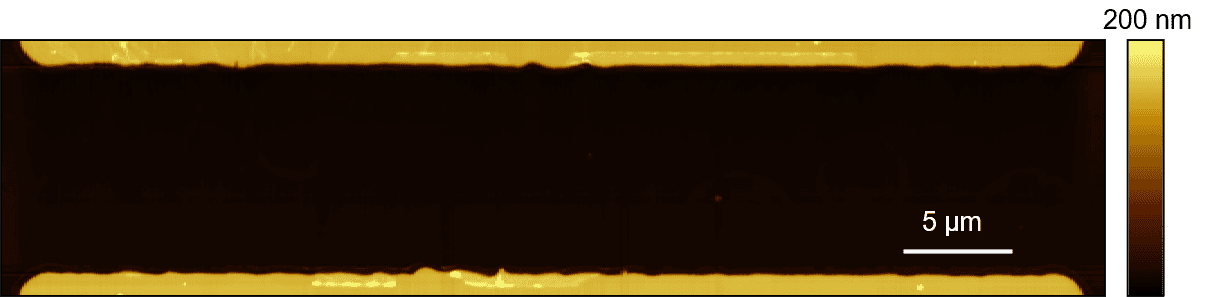
The breakthrough came when AFM imaging revealed random edge defects on the superconducting channels. To test whether these random imperfections were indeed the root cause, we used cAFM lithography to “straighten” the originally photolithography-produced rough channel boundaries. This atomic-scale trimming strongly suppressed the SDE, providing unambiguous evidence for the vortex edge asymmetry mechanism.

AFM image showing two horizontal yellow-orange surfaces separated by a larger black gap. The inner edges of the surfaces are visibly bumpy.
Channel edges: An atomic force microscopy (AFM) image of the LAO/KTO channel in the diode, showing the roughened edges. (Courtesy: Yanwu Xie)

We then turned this challenge into an opportunity. By using cAFM to re-shape the channel edges repeatedly and in a non-volatile way, we transformed a source of random sample variability into a tool for deterministic, on-demand quantum device control.

What are some possible applications for this editable superconducting diode?

The nonreciprocal transport of charge carriers – exemplified by p-n junctions in semiconductor diodes – is a cornerstone of modern electronics. Similarly, superconducting diodes are emerging as pivotal components for superconducting electronics. What distinguishes our approach is our ability to reversibly modify the diode polarity and efficiency within the same device through nanoscale control of the superconducting channel geometry. This editability may enable reconfigurable superconducting circuit elements and adaptive circuit architectures, while also providing a versatile platform for investigating the role of geometry-associated vortex dynamics in nonreciprocal superconducting transport.

What will you do next?

We plan to fully exploit the unique cAFM lithography capability of our oxide interface platform to systematically investigate how tailored vortex-boundary configurations shape the SDE. The diode performance can be further optimized by mapping out the precise relationship between channel geometry, vortex entry barriers and rectification efficiency.

In parallel, we plan to introduce artificial pinning centres (such as nanoscale insulating dot arrays) directly into the superconducting channel. This will allow us to engineer asymmetric vortex-pinning landscapes within the bulk of the channel. Combining this engineered flux pinning with the asymmetric vortex-boundary mechanism demonstrated in the current work offers a promising route toward achieving a robust, deterministic and highly controllable superconducting diode.

The post New superconducting diode gives greater control over the flow of electrons appeared first on Physics World.

  •  

“It Was a Mix of Excitement and Disbelief”: When Scientists Sent Deep-Sea Rovers to Confirm a 1960s Theory, They Made a Surprising Discovery

A team of scientists exploring a possible deep-sea coral reef off the coast of Benin that 1960s researchers had deemed likely dead found a living, thriving reef supporting a complex underwater ecosystem, including several coral and fish species.

Led by scientists from the Institut de Recherches Halieutiques et Océanologiques du Bénin, the discovery is the first known mesophotic coral reef in the region and offers scientists a tantalizing target for future deep-sea marine-life expeditions.

Deep-Sea Coral Reef Spotted in the 1960s was Considered Dead

According to a statement announcing the unexpected discovery, previous historical surveys of the area had indicated a possible reef more than 50 meters below the water’s surface. When a 1960s survey detected the unusual feature, they suspected it was a coral reef that was likely dead.

When team leader Gérard Zinzindohoué and colleagues studied the features, they suspected that the team from the 60s may have provided them with a golden scientific opportunity. Although the feature’s depth ruled out a typical shallow-water coral reef, the researchers note that it could be an entirely different kind of reef structure, known as a mesophotic coral ecosystem, that can inhabit such depths.

“A mesophotic coral ecosystem lives deeper than the usual shallow coral reefs, in zones where light is much more limited,” Zinzindohoué explained. “Unlike typical shallow reefs, it does not always form a single continuous reef structure. Instead, it can appear as patchy or scattered coral communities spread across the seafloor.”

Instead of using mid-twentieth-century technology to settle the debate, the team turned to the National Geographic Exploration Technology Lab, which provided access to its Deep-Sea Camera System.

“We Could Actually See the Sea Floor”

Following the path set out by the 1960s survey, the team used the underwater camera to map the seafloor with sonar. After several passes, the team covered a total of 11.5 kilometers. Zinzindohoué highlighted the difficulty of the effort, noting that it was “not an easy field campaign.”

“It was a mix of long days at sea, technical problems, and a lot of uncertainty,” the researcher explained. “But then we saw structures on the sonar that looked like they could be reef signatures, which gave us hope that we were close.”

The closer the team drove the Deep-Sea Explorer’s cameras, the more the shockingly unexpected scene began to unfold.

deep-sea life
Image Credit: Gérard Zinzindohoué

“That was a big moment for us, because suddenly we could actually see the seafloor,” Zinzindohoué said.

Instead of the dark, lifeless structure anticipated by the original survey team, the new team found a healthy reef containing eight distinct types of coral. The system was also actively supporting eight fish species, with the camera capturing them feeding and sheltering among the corals. The species identified by the team include golden African snappers, blackbar soldierfish, Guinean angelfish, West African goatfish, the Monrovia doctorfish, three-banded butterflyfish, and two distinct species of damselfish.

deep-sea life forms found on a coral reef assumed dead.
Image Credit: Gérard Zinzindohoué

“I still remember seeing those first images,” Zinzindohoué recalled of the vibrant ecosystem lying directly in front of the cameras. “It was a mix of excitement and disbelief, because after all this time thinking about this reef, suddenly there was something real in front of us.”

More Research Needed to Determine if the Coral Reef Was Ever Dead

When discussing the discovery’s significance, Zinzindohoué said that to the team’s knowledge, “this is the first confirmed record of a living mesophotic coral ecosystem on the Gulf of Guinea continental shelf.”

Although the cameras captured a complex ecosystem, the researchers said that the reef does not appear to be a continuous barrier. Instead, the deep-sea environment consists of several patches of coral that occupy rocky seabed areas most suitable for their survival. Still, they add that further surveys may identify more reefs in the same area.

“I think what we found is probably not an exception,” Zinzindohoué said. “It is more likely a reflection of how little we still know about coastal regions in West Africa and elsewhere. If we were able to find this reef again after 60 years, how many others are still undocumented or simply forgotten?”

Since the team was unable to sample the corals directly, they were unable to confirm the species identification with genetic analysis. The team was also hesitant to condemn the original 1960s survey, noting that it is impossible to tell, without more data, whether the corals were dead at the time and have since rebounded.

“This is still an initial exploration,” Zinzindohoué said. “The historical reports suggested that this could be a continuous coral reef barrier extending roughly 40 kilometers parallel to the coast. We only surveyed a small section of this area, and we had a limited number of visual transects.”

Although there are no immediate plans for a return expedition, the research leader said the only thing holding them back from learning more about these ecosystems, which are “still poorly known in this part of the world,” is adequate financial support.

“If I had all the grant money in the world, the first thing I would do is return to the site with a proper scientific diving and sampling program,” he said, before adding that “every additional piece of information matters.”

“I do believe there are more coral systems out there that we have not yet documented,” he said. “But we should not assume they are everywhere. Each discovery needs to be confirmed. Without going back into the field, we are really just guessing.”

On a personal note, the team leader said the most exciting part is understanding the reef’s history and the lessons that can be gleaned from this underexplored region.

“It feels like we have only just started to read an archive that has been there for a very long time.”

The study “First evidence of live mesophotic coral reefs on the Benin continental shelf” was published in Frontiers in Marine Science.

Christopher Plain is a Science Fiction and Fantasy novelist and has spent the last six years as Associate News Editor and Head Science Writer at The Debrief. Follow and connect with him on X, learn about his books at plainfiction.com, or email him at christopher@thedebrief.org

  •  

Astronomers May Have Been Looking for Alien Megastructures Around the Wrong Stars

Some of the most promising locations to search for possible alien megastructures, known as Dyson spheres, may not be stars like the Sun, but rather the galaxy’s smallest and dimmest stars.

Physicist Freeman Dyson introduced the idea of a Dyson sphere in 1960, describing it as a shell or, more realistically, a swarm of orbiting collectors that could capture most of a star’s energy. This concept has interested scientists searching for signs of advanced technology, but the question of how such a structure would appear in astronomical observations remained unknown.

Now, a new study, available on the arXiv preprint server, suggests that one of the coldest objects in a stellar system could, in principle, be an artificial megastructure rather than a natural astronomical object.

Amirnezam Amiri, a physicist at the University of Arkansas, explored the question of Dyson spheres by modeling these hypothetical megastructures around two often-overlooked types of stars: red M-dwarfs and white dwarfs. Amiri credits discussions with Harvard astronomer and founder of the Galileo Project, Avi Loeb, with helping shape the study.

Small, Dim, and Built to Last

Red dwarfs make up about 70% of the stars in the Milky Way. These stars burn slowly and can remain stable for trillions of years, much longer than the universe has even existed so far. White dwarfs offer a different benefit. As the dense remnants of stars like the Sun, they shrink to about 1% of their original size. This means a Dyson swarm could orbit much closer, requiring less material and a smaller structure than one built around a star like the Sun.

Amiri’s study explores how astronomers could detect such structures. Both red dwarfs and white dwarfs are dim enough that the infrared heat emitted by a Dyson swarm would stand out more clearly against the star’s own light.

Reading the Wreckage on a Star Chart

Astronomers use the Hertzsprung-Russell diagram to classify stars by temperature and brightness, and this tool is central to Amiri’s analysis. A Dyson swarm would not destroy a star’s energy, but would capture its light and re-emit it as heat at much longer wavelengths. 

In the new model, a star with a Dyson swarm would appear on the H-R diagram at the same luminosity but shifted dramatically toward the cool end. For instance, a red dwarf at about 3,000 K could appear surrounded by a shell as cold as 50 K, a difference of about two orders of magnitude. No known stars naturally occupy this region of the H-R diagram.

Identifying Factors

Dust and distant galaxies can also produce strong infrared emissions, so astronomers cannot identify a Dyson swarm using temperature alone. Amiri’s model points to a more complex set of clues. A true Dyson swarm would not show the silicate dust features seen in normal dusty disks, so its spectrum would be unusually smooth for an object with strong infrared emission.

Additionally, if the swarm consists of many separate collectors rather than a solid shell, there would be gaps that cause irregular, non-stellar flickering as the pieces move. Each of these signs can have natural causes, but finding them together is rare and hard to explain without considering artificial structures.

Future Observations

Astronomers can carry out this search using existing telescopes. The James Webb Space Telescope’s infrared instruments are already designed to detect faint, cold signals like these. The Vera C. Rubin Observatory’s new sky survey and the Nancy Grace Roman Space Telescope, which is expected to launch later this year, will add to these efforts. Together, they will generate the kinds of observations needed to search for the signatures described in the study.

Possible candidates for these future observations have already been identified. In 2024, Project Hephaistos identified seven potential Dyson sphere candidates among about 5 million cataloged stars, all linked to red dwarfs. One was ruled out after it was shown that a background black hole caused the observed signal. Several candidate Dyson sphere systems still remain under investigation. Amiri does not claim that any of these are actual Dyson spheres, and the paper makes this clear. Instead, the study offers a better way to tell true anomalies apart from dusty disks before using valuable telescope time. If a Dyson swarm surrounds a star and reradiates its energy at temperatures unlike those of natural stars, upcoming infrared surveys may finally be able to detect one.

Austin Burgess is a writer and researcher with a background in sales, marketing, and data analytics. He holds an MBA, a Bachelor of Science in Business Administration, and a data analytics certification. His work focuses on breaking scientific developments, with an emphasis on emerging biology, cognitive neuroscience, and archaeological discoveries.

  •  

Topological Jackiw-Rebbi States in Photonic Van der Waals Heterostructures

A new study is turning an elegant quantum idea into a practical platform for light. In research published in Light: Science & Applications, physicists report “topological Jackiw–Rebbi” states engineered inside photonic van der Waals heterostructures—systems built by stacking atomically thin materials with precisely tailored interfaces. The result is a photonic phenomenon that echoes how particles can be trapped at boundaries where the rules of their governing equations change.

The work builds on the classic Jackiw–Rebbi mechanism, originally proposed for relativistic particles. In those models, a localized mode appears when a mass term flips sign, effectively creating a domain wall. The authors translate this concept into optics by designing photonic structures where an effective “mass” characterizing light propagation changes across an interface.

What makes the platform especially compelling is the van der Waals architecture. Unlike conventional fabrication routes that can introduce disorder, the layered nature of these materials enables sharp, controllable boundaries and tunable photonic band structures. By adjusting the stacking and interlayer optical responses, the researchers create conditions in which topological modes become robust against typical imperfections.

The study emphasizes that these states are not merely conventional guided resonances. Instead, they are tied to topology: the light modes are associated with an invariant property of the band structure. As a consequence, the Jackiw–Rebbi-like photonic states are expected to persist even when the system’s details vary, so long as the relevant symmetry and band configuration remain intact.

Topological protection is more than a slogan. In photonics, it can translate into reduced sensitivity to fabrication tolerances and a pathway toward devices that rely on stable boundary transport. The paper therefore positions these localized states as building blocks for future optical components that route signals along designed interfaces.

The authors demonstrate the concept theoretically and connect it to experimental observables by focusing on how the interface should host modes localized near the domain wall region. Such localization is a hallmark of the Jackiw–Rebbi scenario, now realized in a controllable, designer photonic environment.

Beyond fundamental interest, the approach could influence the design of reconfigurable photonic circuits. Because van der Waals stacks can be combined and adjusted, the same topology-driven logic may be extended to new material systems, wavelengths, and device geometries.

Overall, the report signals a broader trend: using topological field-theory ideas to engineer light–matter behavior in atomically precise platforms, potentially enabling the next generation of robust, interface-based photonic technologies.

Subject of Research: Topological photonic states (Jackiw–Rebbi) in van der Waals heterostructures.

Article Title: Topological Jackiw-Rebbi states in photonic Van der Waals heterostructures.

Article References: Randerson, S.A., Bouteyre, P., Hu, X. et al. Light Sci Appl 15, 323 (2026). https://doi.org/10.1038/s41377-026-02392-5

Image Credits: AI Generated

DOI: 10.1038/s41377-026-02392-5

Keywords:

  •  

Industrial waste solidified a UK beach in just 35 years

Humans have been around for only about 0.01% of Earth’s history, yet we’ve altered natural landscapes and processes that have remained stable for millions of years. A team of researchers from the University of Glasgow recently studied a formerly sandy beach in the UK that highlights how fast these changes can occur.

Industrial steel and iron furnaces operated extensively in the UK from 1856 until the 1980s. During these decades, workers dumped roughly 335 million cubic meters (90 billion gallons) of molten furnace waste, called slag, across the country. Of that, roughly 27 million cubic meters (6 million gallons) now sits on the coast of Derwent Howe in a massive 30-meter (100-foot), solidified cliff. 

The researchers analyzed this region to understand how man-made, or anthropogenic, materials influence the way rocks form. Rocks naturally form and change into different types of rocks over million-year timescales, through a continuous process called the rock cycle. When the team uncovered a soda can tab manufactured in 1989 within the hardened grains, or clasts, of slag, they concluded that the beach had solidified within the last 35 years. Based on this discovery, they proposed a new term for rocks formed from anthropogenic sediments: the anthropoclastic rock cycle. 

The team collected 1,300 grains of sediment from 13 sites in the study area and found that 83% were slag. Natural beach sediments, like quartz sand, comprised only about 17% of the grains. As wind and waves broke down the cliff, slag clasts fell off and became rounded by friction as tides transported them from the cliff to the beach. 

At the boundary where the slag touched the beach, the researchers also saw evidence that the slag had seeped into the underlying wet sediment. The rocks there resembled a type of rock called peperite, which forms when lava flows over wet, loose sediments.  They concluded that this peperite-like rock formed as the molten slag flowed over the still sandy beach. Slag is much thicker than wet sand, so the resulting rock looked like blobs of slag encased in sandy rock. 

The researchers then visually observed how the slag grains were arranged in the solidified rock to reconstruct the tidewater speeds at different points in the coast’s history. The different ways sediments are arranged within a rock are called sedimentary features, and they reflect the processes that formed the rock. For example, as water flows over sand, it forms small, dune-like ripples. When the sand beds harden into rock, the ripples are preserved as features known as trough cross-bedding. 

Faster water erases any ripple formations and instead forms horizontal layers in the sediment, known as planar lamination. The researchers observed both trough cross-bedding and planar laminations preserved in the slag beach rocks. These sedimentary features indicate that the beach at Derwent Howe turned from loose sediment into rock in a generation. 

To investigate why this beach rapidly solidified, the researchers scanned the surfaces of the beach rock with electron beams and X-rays using a scanning electron microscope, or SEM, equipped with an energy dispersive X-ray, or EDX. Every chemical element emits a unique set of X-rays with different wavelengths when hit with EDX, so the researchers could compare the X-rays from their samples to databases of known mineral X-ray signatures. They identified the primary binding agents as calcium- and iron-rich minerals like calcite, goethite, and brucite. These minerals are called cements because they bind grains of sediment together. 

The researchers expected the slag to produce these cement compositions, since extracting metal ores from rock enriches the resultant slag in calcium, magnesium, manganese, and iron, which readily dissolve in water. When water flowing between closely packed slag grains can no longer hold additional dissolved elements, those elements precipitate as solid mineral cements. Since cements only form when the water has very high concentrations of dissolved elements, the introduction of massive amounts of slag caused the cement to form faster than it would in waters with lower concentrations of elements.

The researchers suspected that the anthropoclastic rock cycle they observed at Derwent Howe is not uncommon. Since slag contains all the elements necessary to form rocks when in contact with seawater and air, slag deposits all over the world could be rapidly influencing their local environments. With this in mind, the team suggested that future researchers update geological models to account for human contributions to the natural rock cycle. 

The post Industrial waste solidified a UK beach in just 35 years appeared first on Sciworthy.

  •  

These Unusual Step-Like Structures on Hillsides Baffled Darwin 150 Years Ago—Now Scientists Finally Know Their Origins

An unusual phenomenon that has been recognized around the world for more than a century has finally been resolved: what are the origins of the distinctive, stair-like ridges that form on steep hillsides?

These features, known as “terracettes,” have long puzzled scientists, and the question of how they form has attracted some of history’s greatest minds, including Charles Darwin.

The famous naturalist described these features as “Little horizontal ledges, one above another,” which he said had been “observed on steep grassy slopes in many parts of the world.”

According to Darwin, the formation of terracettes had “been attributed to animals traveling repeatedly along the slope in the same horizontal lines while grazing,” although he adds that “Professor Henslow (a most careful observer) told Sir J. Hooker that he was convinced that this was not the sole cause of their formation,” with the implication that these curious, structured features on steep hills might have geological origins, rather than those attributable solely to biology.

Now, researchers may finally have an answer to this pastoral riddle that baffled the likes of Darwin more than a century ago, settling the scientific debate over their origins.

Solving the Mystery of Terracettes

Benjamin Seleb, the lead author of a new study detailing the findings, said the mystery of terracettes first attracted his attention in 2024 after he observed them firsthand during a hike in the Alps.

“I suspected the numerous grazing cows—hard to miss with their clanking bells—had something to do with it, and was already sketching out how I would model their movement before the hike was over,” Seleb says.

“It wasn’t until I got back to my hotel and started digging into the topic that I learned about the contested origins of these terracettes,” Seleb adds. “With my curiosity piqued, I got to work building a simple model to ask whether grazing animals really could reshape mountains.”

According to Seleb and a team of collaborators from the Georgia Institute of Technology and the BioFrontiers Institute at the University of Colorado Boulder, computer modeling was employed to reshape hillsides into these distinctive “stepped” formations. The findings reveal that the most likely explanation is that repetitive pathways followed by grazing animals such as sheep and cattle produce remarkably ordered landscape patterns over time.

Simulating ‘Chaos’ to Solve a Mystery

To test their hypothesis, the research team simulated the movement of individual animals across steep slopes. For their analysis, they also introduced a few rules, which revealed that the “virtual grazers” preferred traversing hillsides in long, horizontal pathways that form gradual inclines. This makes sense, since it is a method of ascent that requires less energy, and humans have also traditionally employed similar approaches (think of mountain trails, which, rather than ascending straight uphill, follow longer sloping inclines and switchbacks where directional changes are necessary).

With each simulated footstep, soil and vegetation become compacted, producing subtle alterations to the terrain over time. As these pathways form, animals over successive future generations are thereby encouraged to follow similar routes, and with time, the familiar terraced patterns emerge.

“People have argued about terracettes for over a century,” says Professor Saad Bhamla, one of the study’s co-authors and leader of the Bhamla Lab of Extraordinary Organisms, which describes its efforts as work that “seeks to understand how organisms do amazing things.”

“Some say [terracettes] are purely geological, just slow soil creep and slumping,” Bhamla recently said. “Others say animals create them, and the standard criticism for the animal-origin camp is that the animals wander around randomly, so how could they ever carve something this regular?”

“What we show is that they can and that this regularity emerges out of that chaotic, random movement, not in spite of it, through the back-and-forth between the animals and the ground they’re chewing up with their mouths and packing down with their feet,” Bhamla adds.

Complexity from Simple Movement

Bhamla and his team say their research offers another example demonstrating how complex natural landscapes can emerge from simple, uncoordinated behavior, involving a process known as stigmergic feedback. This involves organisms that gradually reshape their shared environment over time.

The result of their work is an answer to a mystery that has persisted for many generations, and not only that, but also a pathway toward understanding the various ways animals influence landscapes more broadly.

The team’s findings were detailed in a new paper, “Moo-ving mountains: grazing agents drive terracette formation on steep hillslopes,” which appeared in Journal of the Royal Society Interface.

Micah Hanks is the Editor-in-Chief and Co-Founder of The Debrief. A longtime reporter on science, defense, and technology with a focus on space and astronomy, he can be reached at micah@thedebrief.org. Follow him on X @MicahHanks, and at micahhanks.com.

  •  

NASA’s Curiosity Rover is Investigating Unusual Polygon Structures That Look Like a “Giant Martian Honeycomb”

An unusual discovery on the Red Planet has revealed an odd-looking series of polygon-shaped structures, documented in new images obtained by NASA’s Curiosity Rover.

The curious features were discovered after Curiosity was dispatched to an area of interest on the Martian terrain initially identified from orbital imagery obtained by the Mars Reconnaissance Orbiter (MRO).

Upon its arrival at the area, which the satellite imagery had conveyed as appearing light in coloration and apparently smooth-surfaced, Curiosity discovered something vastly different.

Curiosity Uncovers a Martian Honeycomb

Writing at NASA’s Curiosity blog, Senior Research Scientist William Farrand of the Space Science Institute described the area in question as being “covered with polygonal structures like the top of a giant Martian honeycomb.”

polygon structures Curiosity rover
Above: Unusual polygon-shaped structures discovered in the unit currently under exploration by NASA’s Curiosity rover (Image Credit: NASA/JPL-Caltech/MSSS)

Polygonal structures are a frequent occurrence in nature, as evidenced by the Curiosity team’s likening them to a “honeycomb” in appearance. Similar polygon-shaped features are often seen in geology, such as the famous Giant’s Causeway on Northern Ireland’s Antrim Coast, which consists of close to 40,000 interlocking basalt columns that bear a similar appearance to the features recently discovered on Mars by Curiosity.

This is also not the first time such features have been observed by Curiosity. Last May, NASA revealed similar discoveries of structural features resembling honeycomb or “waffle” patterns.

As Curiosity proceeded into the unusual area, imagery provided by the rover revealed additional polygonal features, albeit in a more eroded condition than the features it initially spotted.

“Littered about this unit are pebble to cobble-sized dark-toned rocks,” Farrand wrote, adding that among the unresolved questions researchers with the Curiosity team have “is whether these are bits of Mars that ‘floated’ down from higher in the stratigraphy, were ejected from distant impacts outside of Gale crater, or are meteorites from beyond Mars altogether.”

Clues Pointing to Meteorites?

A potential clue arises from the presence of nickel Curiosity detected in some of the darker stones. This may be significant, since nickel is generally rare in Martian rocks.

The same can’t be said for meteorites, though, which often contain an abundance of nickel and other metals. On Earth, meteors that flash in vivid shades of green as they collide with Earth’s atmosphere do so when nickel and magnesium are present within these space rocks.

It remains unclear whether all the darker-colored stones discovered by Curiosity are possible fragments from a meteorite or if their appearance is due to other factors that remain undetermined.

“Further investigations should help in answering this question,” Farrand added.

Ongoing Research by Curiosity

On Monday, June 29, 2026, Curiosity continued its investigations of these unusual features with its APXS and MAHLI instruments, with further plans to conduct additional viewing of an area the Curiosity team has dubbed the Miraflores butte, which features a small knob-like prominence.

Miraflores knob
Recent imagery obtained by Curiosity of the knob at Miraflores butte (Image Credit: NASA/JPL-Caltech/MSSS)

Additional viewing was planned for the nearby Cordillera mesa as well, although much of the rover’s work has remained focused on the unique polygon-shaped structures.

“After driving further towards the upper boundary of the light-toned, polygon-covered unit, the three-sol Friday plan included APXS and MAHLI measurements of another polygon ridge and one of the dark-toned cobbles,” Farrand’s update at the Curiosity blog noted.

This particular cobble, which the Curiosity team has dubbed “Cortadera,” was studied using the rover’s ChemCam instrument, which was also used in observations of the aforementioned features, and others in the nearby Martian terrain.

In the days ahead, Curiosity is expected to traverse another area where dark-colored materials are present based on previous orbital reconnaissance, which may provide additional clues about their origins, and the intriguing features in the area where the rover’s current investigations are focused.

Additional details can be found at NASA’s Curiosity blog.

Micah Hanks is the Editor-in-Chief and Co-Founder of The Debrief. A longtime reporter on science, defense, and technology with a focus on space and astronomy, he can be reached at micah@thedebrief.org. Follow him on X @MicahHanks, and at micahhanks.com.

  •  

On-Chip Targeted Cell Elimination Achieved Through Breakthrough High-Efficiency Singlet Oxygen Production

In a groundbreaking advancement poised to revolutionize photodynamic therapy, researchers at Tsinghua University, China, have unveiled a novel approach to rapidly produce singlet oxygen with unprecedented efficiency and precision. This achievement stems from integrating the principles of bound states in the continuum (BIC) into meticulously engineered metasurfaces, marking a significant leap beyond the limitations that have hampered traditional molecular photosensitizers for decades.

Singlet oxygen, the excited state of molecular oxygen with formidable cytotoxic capabilities, has long been a cornerstone in targeting tumor cells via photodynamic therapy. Conventional production methods rely heavily on molecular photosensitizers, which suffer from inherent drawbacks such as photobleaching, limited wavelength selectivity, and biocompatibility issues. Metallic and semiconductor nanostructures emerged as alternatives due to their photostability; however, their quantum yields for singlet-oxygen generation remained too low to enable rapid, localized therapeutic outcomes under clinically viable low-dose illumination.

The breakthrough by Prof. Xing Fu and Prof. Qiang Liu’s team transcends these constraints by leveraging quasi-bound states in the continuum within an innovative Au–TiO₂ metasurface design. This architecture comprises elliptical TiO₂ nanopillars capped with an ultrathin 7 nm gold layer, engineered with subtle symmetry breaking that transforms a theoretically non-radiative BIC into a radiative quasi-BIC resonance. This purposeful symmetry perturbation dramatically enhances visible-light absorption at 532 nm, achieving an impressive 45% absorption within an optical path mere hundreds of nanometers thick. Such efficiency in light capture is vital to triggering the subsequent photochemical processes.

Under continuous-wave laser excitation, the metasurface’s enhanced near-field intensities lead to a marked elevation of the electronic temperature in the gold layer. This phenomenon facilitates the generation of energetic “hot carriers,” electrons that possess sufficient energy to inject into the conduction band of TiO₂. These injected electrons then catalyze interfacial redox reactions with the surrounding oxygen molecules, converting the triplet ground state into the highly reactive singlet oxygen species. The geometric design ensures that this reaction zone is tightly confined adjacent to the metasurface, enabling a concentrated and narrowly localized reactive oxygen environment.

Critically, the researchers have circumvented a prevailing issue in photocatalysis: the trade-off between metal loading and carrier lifetime. Typically, increasing metallic content amplifies light absorption but simultaneously accelerates carrier recombination, thus hindering catalytic efficiency. By maintaining an ultra-thin gold layer and leveraging the quasi-BIC resonance, the team achieved robust absorption with minimal metal volume, preserving extended carrier lifetimes and promoting efficient charge transfer.

One of the most remarkable outcomes of this advancement is the striking enhancement in singlet-oxygen quantum yield—surpassing conventional methods by an astonishing six orders of magnitude. This rapid, molar-level production occurs within mere seconds of illumination at continuous-wave operation, signifying a quantum leap in both speed and scale of reactive oxygen species generation suitable for therapeutic and chemical applications.

Beyond sheer efficiency, the metasurface’s resonant properties offer programmable selectivity. By geometrically scaling the nanopillar array, the resonance wavelength can be precisely tuned, enabling selective activation at desired illumination wavelengths. This spectral addressability facilitates spatially resolved cytotoxic effects, with demonstrated pixel-wise control over tumor-cell apoptosis guided by patterned illumination. Notably, this approach obviates the need for molecular photosensitizers, thereby sidestepping associated stability and compatibility issues.

The interplay of plasmonic and dielectric components within the metasurface underpins these photochemical innovations. While gold nanoparticles have historically served as hot-carrier generators in photocatalytic systems, coupling with TiO₂ elliptical nanopillars tuned near their BIC transitions magnifies the near-field enhancement and modulates charge dynamics. This synergy represents a paradigm shift in designing photocatalytic interfaces tailored for high-efficiency photon-to-chemical conversions.

Moreover, the localized generation of singlet oxygen holds significant promise for clinical applications beyond photodynamic cancer therapy. The capacity for rapid, spatially precise reactive species generation could impact selective oxidation reactions in chemical synthesis, environmental remediation, and microfluidic reactor technologies. The ability to deploy low doses of light while achieving targeted chemical effects is a profound advantage in reducing collateral damage and enhancing process efficiency.

The concept of engineering quasi-BIC states in metasurfaces to facilitate photocatalysis exemplifies the convergence of photonics and catalysis, leveraging wave-matter interactions for chemical control at the nanoscale. By translating this fundamental physics insight into a practical device architecture, the Tsinghua team has established a versatile platform that could be extended to diverse catalytic and sensing applications demanding high spatiotemporal precision.

In sum, the research showcases a compelling instance where advanced materials design, nanophotonics, and surface chemistry intersect to address longstanding challenges in reactive oxygen species generation. The quasi-BIC metasurface paradigm not only provides a robust solution for the rapid generation of singlet oxygen at therapeutic scales but also introduces a new dimension of control and efficiency that could redefine the capabilities of photodynamic therapy and beyond.

The publication in Light: Science & Applications stands as a testament to these interdisciplinary achievements. As the authors highlight, “BIC-engineered metasurfaces offer a generalizable route for efficient photon-to-chemical conversion at solid–liquid interfaces, unlocking immediate opportunities in photodynamic therapy, selective oxidation, and microreactor technologies where both low light dose and geometric precision are paramount.”

This pioneering work opens the door to further exploration of BIC and quasi-BIC states in nanophotonic structures tailored for catalytic applications, signaling a shift towards engineered nanoscale systems that harness light with exquisite control for biomedical and chemical innovations.


Subject of Research: Nanoscale photonics, photocatalysis, and photodynamic therapy.

Article Title: Quasi-BIC metasurfaces enable rapid, localized singlet-oxygen generation

News Publication Date: 2026 (exact date not specified)

Web References: DOI 10.1038/s41377-026-02267-9

Image Credits: Xing Fu et al.

  •  

Negative Heat Flux Under Low-Shear-Wave-Velocity Zones

Deep within our planet lies a critical interface known as the core–mantle boundary (CMB), a region where extreme temperatures and dynamic processes converge to shape Earth’s thermal and magnetic evolution. Recent research has illuminated the intricate behaviors of heat flow at this boundary, revealing how variations here influence the geodynamo—the mechanism responsible for Earth’s magnetic field. A groundbreaking study now explores how distinctive structures in the lowermost mantle can actually reverse the expected direction of heat transfer, fundamentally altering our understanding of how the deep Earth operates.

The core’s heat output and the mantle’s behavior are intimately linked, but spatial and temporal variations in heat flux at the CMB complicate this relationship. Heat flow from the core into the mantle typically fuels convective currents in the liquid outer core, driving the geodynamo process that sustains Earth’s magnetic shield. However, recent sophisticated simulations suggest that beneath certain geological features in the mantle, heat might instead flow back toward the core, a phenomenon previously unconfirmed and challenging conventional geophysical assumptions.

Central to this discovery are large low-shear-wave-velocity provinces (LLSVPs), massive structures located at the base of the mantle. These provinces are identifiable by their diminished seismic wave speeds, which geophysicists interpret as reservoirs of anomalously hot, chemically distinct materials. The new study models these LLSVPs with enhanced thermal conductivity adjustments and accounts for excess internal heating, simulating how these features interact dynamically with heat flow near the CMB.

The simulations reveal a striking phenomenon: heat flux directly beneath LLSVPs can be locally negative. This means, counterintuitively, that heat is being transferred from the mantle back into the core. This unexpected reversal challenges prior models which generally assumed a consistent outward flow of heat from core to mantle. Such negative fluxes have profound implications not only for the thermal balance of the Earth’s interior but also for the longevity and variability of its magnetic field.

Moreover, the research underscores that throughout the base of the mantle piles associated with LLSVPs, the heat flux remains lower than the adiabatic heat flux of the core. This thermal configuration suggests a degree of regional stratification at the top of the core, potentially explaining discrepancies observed in seismic and geomagnetic data. In other words, the topmost layer of the core may be thermally segregated in ways that we had not confirmed previously.

Interestingly, the study also explores the impact of subducted slabs—denser fragments of oceanic lithosphere—that eventually reach the CMB. The arrival of these slabs triggers pronounced spikes in heat flux, dramatically increasing the heterogeneity of lateral heat flow along the core–mantle boundary. This dynamic enhances the complexity of heat exchange patterns and further influences the geodynamo’s behavior, potentially affecting geomagnetic activity on geological timescales.

A significant implication of these findings relates to so-called “superchrons,” intervals lasting tens of millions of years during which Earth’s magnetic field remains stable without reversals. The occurrence of locally negative heat flux beneath the LLSVPs might explain these long periods of geomagnetic quiescence. When heat flows reversely into the core, it can alter convection patterns in ways that suppress the typical polarity flip mechanism, shedding new light on the origin and cessation of superchrons.

The study’s approach involved advanced mantle thermochemical convection modeling that incorporates temperature-dependent thermal conductivity and internal radiogenic heating within dense mantle piles. This methodological innovation provides a more realistic representation of the mantle’s behavior at extreme conditions than previous models, enabling researchers to capture subtle but critical feedbacks influencing heat fluxes at depth.

By reconciling seismic data, which reveals complex structures in the lowermost mantle, with geomagnetic observations that hint at temporal variability in the geodynamo, this research bridges a vital gap in Earth sciences. The correspondence between the spatial extents of LLSVPs and anomalies in the geomagnetic field suggests a coupling mechanism mediated through heat flux variations being directly tied to mantle dynamics.

The nuanced understanding of heat flow gleaned from this work also carries implications for the planet’s thermal evolution over geologic time. How heat migrates across the CMB influences the cooling rate of the core, the crystallization of the solid inner core, and consequently the lifecycle of the geodynamo. The discovery that heat transfer is not unidirectional, but can locally reverse in space and time, necessitates revisiting models of Earth’s deep thermal history and magnetic field generation.

This revelation also lays groundwork for interpreting seismic tomography results with a new lens, appreciating that chemical and thermal heterogeneity in LLSVPs exerts a tangible impact on core processes. The presence of chemically distinct reservoirs affects not only the mantle’s physical properties but also its thermal gradient with direct knock-on effects for core convection patterns and magnetic field intensity.

Such interconnectedness across Earth’s deep interior underscores the planetary-scale complexity of thermal and compositional interactions driving Earth’s long-term stability. The core-mantle boundary emerges not simply as a static physical barrier but as a dynamic interface where thermal regimes, chemical signatures, and fluid motion all coalesce to modulate our planet’s magnetic heartbeat.

Future research building on these findings may sharpen our forecasts for geomagnetic field behavior, including its reversals and excursions, by incorporating the interplay of mantle structures and heat flux heterogeneity shown in this study. Understanding these processes is not merely academic; Earth’s magnetic field shields life on the surface from charged solar particles, making geomagnetic stability crucial for habitability.

In conclusion, the discovery of negative heat flux beneath LLSVPs represents a paradigm shift in understanding Earth’s deep thermal dynamics. It opens fresh avenues into interpreting Earth’s magnetic field history and its deep interior’s energy budget, challenging geoscientists to refine their models of the planet’s evolving mantle and core mechanisms. The study invites a reconsideration of how internal heat governs the interplay between mantle convection and geomagnetic phenomena, securing a pivotal advance in the geophysical sciences.

As our planet continues its ceaseless churn beneath the crust, these findings remind us that Earth’s interior is a realm of profound complexity and subtle interactions. The dance of heat and composition at the core-mantle boundary not only choreographs magnetic field generation but ultimately shapes the environment that sustains life above ground. Unlocking its secrets brings us closer to comprehending the planet’s past, present, and future in extraordinary detail.


Subject of Research: Core–Mantle Boundary Heat Flux Variations and Their Impact on Mantle Dynamics and Geodynamo Behavior

Article Title: Negative core–mantle boundary heat flux beneath low-shear-wave-velocity provinces

Article References:
Deschamps, F., Guerrero, J.M., Amit, H. et al. Negative core–mantle boundary heat flux beneath low-shear-wave-velocity provinces. Nat. Geosci. (2026). https://doi.org/10.1038/s41561-026-02018-w

Image Credits: AI Generated

DOI: https://doi.org/10.1038/s41561-026-02018-w

  •  

Sodalite Crystals Show Zero Thermal Expansion Up to 893K

In a remarkable advancement that promises to redefine materials science, researchers have developed an extraordinary crystal exhibiting isotropic zero thermal expansion (ZTE) across an unprecedentedly wide temperature range. This pioneering work focuses on a sodalite-structured compound, Cd4Al6O12SO4, abbreviated as CASO, which maintains near-perfect dimensional stability from cryogenic temperatures as low as 11 K up to an exceptional 893 K. Such a feat addresses one of the most persistent challenges in materials engineering—achieving consistent, isotropic ZTE behavior over a broad thermal window, well beyond the typical operating limit of 400 K commonly found in existing materials.

Thermal expansion, the tendency of materials to expand or contract in response to temperature changes, significantly influences the reliability and precision of components in advanced technological systems. This is particularly critical in optics, aerospace, and microelectronics, where slight dimensional deviations can lead to catastrophic failures or degraded performance. Traditionally, materials exhibiting zero or near-zero thermal expansion either operate within narrow temperature bands or display anisotropic expansion, complicating their practical application. CASO emerges as a groundbreaking solution by combining flexibility and robustness within a closed-framework sodalite structure, a geometry celebrated for its remarkable stability.

What sets CASO apart is the ingenious incorporation of flexible interstitial groups realized via fractionally occupied atoms nestled within the sodalite framework. This strategic design introduces subtle positional disorder among ligand atoms, a feature that amplifies transverse atomic vibrations responsible for generating negative thermal expansion. These enhanced transverse vibrations effectively counterbalance the intrinsic positive thermal expansion that arises from atomic lattice expansion at elevated temperatures. As a result, CASO achieves a finely tuned, cancellatory interplay between positive and negative thermal expansion mechanisms, yielding an overall coefficient of thermal expansion measured at a negligible 0.21(23) × 10^−6 K^−1.

The research team’s exploration of CASO’s structural integrity under rigorous thermal cycling reveals impressive resilience, with the material maintaining its crystalline structure up to 1,100 K. This high thermal threshold expands the operational capacity of ZTE materials into regimes previously inaccessible, paving the way for applications in extreme thermal environments such as space exploration technologies and high-temperature sensor systems. Importantly, the integrity of CASO at such elevated temperatures also suggests potential advancements in engineering components that must endure thermal shocks without suffering deformation or failure.

Beyond mechanical stability, CASO exhibits a solar-blind ultraviolet (UV) transparency window extending down to 275 nm. This optical property signifies that the material can transmit UV light within this range without absorption, rendering it valuable for specialized UV optics and photonics applications. Devices requiring minimal optical noise and high stability, such as spaceborne UV detectors and precision laser optics, stand to benefit from CASO’s unique optical-transparency combined with its unparalleled thermal stability.

Optical materials are notoriously susceptible to thermal fluctuations, which induce refractive index changes and distort beam paths, complicating precision measurements and laser operations. CASO’s thermally induced optical fluctuations are at least twice as low as those found in conventional optical media, an achievement that underscores its potential to revolutionize precision optics. This property not only enhances the performance of existing systems but also reduces the need for complex compensatory mechanisms, simplifying designs and improving reliability in challenging thermal environments.

Substantially, CASO’s isotropic ZTE capacity challenges and expands the conventional understanding of thermomechanical behavior in framework materials. The sodalite structure itself provides a three-dimensional network that constrains thermal responses isotropically, a feature critical for applications demanding uniform response in all spatial directions. The partial occupation and flexibility of interstitial species suggest new dimensions of control over lattice dynamics and open pathways for tailored ZTE behavior through chemical modification and structural engineering.

The discovery underscores the significance of lattice dynamics modulation via controlled disorder—a concept that holds promise far beyond ZTE materials. Manipulating atomic vibrational modes through fractional occupancy and positional disorder reshapes how scientists can exploit negative thermal expansion while mitigating positive expansion, with implications for diverse fields from thermal barrier coatings to quantum materials.

Moreover, the work by Liu, Jiang, Molokeev, and colleagues establishes a universal strategy for engineering ZTE materials, thus serving as a blueprint for future crystal design. Rather than relying on complex composites or layered heterostructures, this approach leverages the intrinsic vibrational characteristics and flexibility within single-phase crystals. Such simplicity in design may accelerate industrial adoption and reduce costs associated with fabricating advanced thermal-stable materials.

The implications of this discovery are profound for the electronics and precision engineering industries. Components fabricated from CASO could maintain micron-scale tolerances across vast thermal gradients, thereby improving the longevity and performance of microelectromechanical systems (MEMS), precision optics, and high-frequency electronic devices. The broad temperature stability and isotropy also alleviate challenges associated with thermal mismatch and interface stresses in multilayered devices.

In addition to immediate technological applications, CASO’s unique properties may spur new scientific inquiries into the fundamental physics of thermal expansion. Investigating how flexible ligand atoms interact within complex frameworks provides insights into phonon dynamics, anharmonic lattice vibrations, and thermodynamic stability. This research advances theoretical models and computational simulations aiming to predict and control thermal properties at the atomic scale.

As society increasingly demands materials that withstand extreme environmental conditions without compromising structural or optical performance, CASO stands as a beacon of hope and innovation. Its extended temperature operational window combines mechanical robustness, optical transparency, and thermal stability into a single crystalline phase—attributes that are rarely coexistent. This convergence could lead to breakthroughs in harsh-environment sensors, satellite optics, and next-generation aerospace components.

Furthermore, the concept of embedding fractionally occupied flexible groups within stable frameworks could be extrapolated to customize other physical properties such as thermal conductivity, dielectric constants, and even magneto-thermal behavior. This multifunctionality potential situates CASO not just as a material of the present, but as a foundation for multifunctional crystals engineered at the atomic level for bespoke applications.

In conclusion, CASO embodies a paradigm shift in thermal expansion control, marrying structural ingenuity with atomic-scale dynamism. Its validation as an isotropic zero thermal expansion material from cryogenic to near-1100 K temperatures resolves a longstanding challenge and invites a new era of functional materials science. This elegant interplay of lattice architecture and vibrational physics heralds a future where materials no longer passively endure thermal fluctuations but actively neutralize them, ushering in unprecedented precision and resilience in advanced technologies.

Such groundbreaking discoveries, as reported by Liu and colleagues in Nature Chemistry, showcase the transformative power of crystal engineering and vibrational control. The research propels us beyond incremental advances to a realm where materials can be custom-tuned for the harshest and most demanding environments known to science and industry, reshaping what is possible across technological frontiers.


Subject of Research: Isotropic zero thermal expansion properties in a sodalite-structured crystal (Cd4Al6O12SO4, CASO) across an exceptional temperature range.

Article Title: Isotropic zero thermal expansion in sodalite crystals from 11 to 893 K.

Article References:
Liu, Y., Jiang, X., Molokeev, M.S. et al. Isotropic zero thermal expansion in sodalite crystals from 11 to 893 K. Nat. Chem. (2026). https://doi.org/10.1038/s41557-026-02174-x

Image Credits: AI Generated

DOI: https://doi.org/10.1038/s41557-026-02174-x

  •  

Test-Based Equivalent Method for Helical Structure Collapse

In a groundbreaking development poised to reshape the understanding and engineering of cylindrical structural components, researchers have unveiled an innovative test-based methodology for assessing collapse behavior in helically wound and layered cylindrical structures. This novel approach promises to significantly enhance the reliability and safety assessments of cylindrical constructs employed in various high-stakes engineering applications, including aerospace, civil infrastructure, and energy pipelines.

Historically, the analysis of cylindrical structures composed of helically wound and layered materials has presented profound challenges due to their complex mechanical interactions and anisotropic properties. Traditional analytical methods often fall short in capturing the nuanced interplay between layers and winding orientations under collapse-inducing loads. The research led by Zhang, Y., Saneian, M., Bai, Y., and their collaborators introduces what is termed the “test-based equivalent-material method,” which effectively bridges the gap between experimental data and predictive modeling.

At the heart of this methodology lies an innovative equivalence principle that translates the intricate multi-layered helically wound architecture into an experimentally validated simplified material representation. By conducting targeted mechanical tests, the researchers derive effective material properties that encapsulate the aggregate response of the layered system. This surrogate material model then facilitates robust numerical simulations, enabling precise collapse qualification without resorting to prohibitively detailed layer-by-layer analyses.

One of the major advantages of this approach is its scalability and adaptability. Engineers and designers can apply the equivalent material parameters obtained through relatively straightforward tests to a wide range of cylindrical structures, regardless of size or specific material compositions. This dramatically reduces the computational costs and time traditionally associated with finite element models of complex laminates, streamlining the design and certification process for structures susceptible to buckling and other collapse modes.

The structural integrity of helically wound cylinders is crucial in multiple industrial sectors. For instance, high-pressure pipelines transporting oil and gas frequently employ helically wound steel strips to enhance strength and durability. Similarly, aerospace components such as pressure vessels for fuel storage and fuselage sections rely on layered composites to achieve superior performance-to-weight ratios. Recognizing the critical nature of these applications, the test-based equivalent-material method offers a pragmatic pathway to ensure these structures can withstand extreme conditions without catastrophic failure.

Delving deeper, the researchers meticulously examined the influence of winding angle, layer thickness, and material anisotropy on the effective mechanical behavior. Their experimental protocols involved subjecting prototype samples to axial compression, torsion, and combined loadings while rigorously monitoring deformation and failure patterns. By correlating these results with equivalent material properties, they established a robust calibration framework that captures subtle nonlinearities and failure mechanisms intrinsic to layered helically wound cylinders.

A particularly innovative aspect of the work is the incorporation of nonlinear collapse phenomena into the equivalent-material representation. Classical linear elastic or even simple nonlinear models often inadequately predict collapse, especially for layered structures where progressive delamination, local buckling, and material yielding interact in complex ways. The team’s method incorporates advanced constitutive modeling informed by experimental evidence, thereby extending predictive capabilities into the ultimate collapse regime with remarkable accuracy.

Moreover, the proposed methodology aligns excellently with ongoing efforts in digital twin technology and real-time structural health monitoring. By building a validated equivalent material model from test data, engineers can integrate this model into digital twins for continuous prediction of structural performance under operational loads. This fusion of experimental validation and digital simulation heralds a new era in proactive maintenance and failure prevention for critical infrastructure.

Application-wise, the method has already demonstrated its potential in prototype development phases. The team tested cylindrical structures representative of submarine pressure hulls and composite overwrapped pressure vessels, both of which undergo stringent safety certification. The test-based equivalent-material method facilitated rapid iterative design modifications while maintaining high fidelity in predicting collapse loads, thus shortening development cycles and improving design confidence.

From a practical viewpoint, the reduction of experimental complexity stands out. Whereas traditional methods might require exhaustive testing of multiple individual layers, orientations, and bonding conditions, this approach consolidates testing into a manageable set of representative experiments. The derived equivalent material parameters effectively embody the net structural response, enabling engineers to bypass onerous microscale testing without sacrificing accuracy.

Fundamentally, this research contributes to the broader scientific discourse on multiscale modeling in composite materials. The challenge of reconciling microscale structural features with macroscale performance is a longstanding issue. By implementing a test-based equivalency strategy, the researchers provide a tangible methodology that harmonizes the scales through empirical calibration rather than purely theoretical assumptions or computational homogenization.

In terms of future directions, the team envisions extending their framework to incorporate environmental degradation factors such as moisture ingress, temperature fluctuations, and fatigue-induced damage accumulation. These variables critically influence collapse behavior in real-world settings, and integrating them into the equivalent-material paradigm will bolster the method’s practical utility.

Additionally, the adaptability of this method suggests promising integration with emerging additive manufacturing techniques. Layered and helically wound structures produced by 3D printing could be experimentally characterized using this approach to tailor equivalent materials for bespoke designs, unlocking unprecedented customization in lightweight, high-strength structural components.

Ultimately, this test-based equivalent-material method stands as a transformative advance in engineering science, merging experimental rigor with computational efficiency to unravel the complexities of helically wound layered cylindrical structures. The impact spans multiple disciplines, offering a robust, scalable tool for ensuring structural safety in an array of critical applications — from aerospace to energy infrastructure, shaping the future of advanced materials and design methodologies.

This innovation, published in the prestigious journal Communications Engineering in 2026, signifies a major leap forward in predicting collapse phenomena, providing engineers and researchers with a powerful new instrument to tackle complex structural challenges. Its implications for enhancing durability, reliability, and safety herald a significant milestone in structural engineering research.

In summary, by deftly combining empirical testing with advanced material modeling, Zhang and colleagues have unlocked an effective pathway to understand and predict the collapse of helically wound and layered cylinders. Their work paves the way for safer, more efficient designs, enabling engineers to push the boundaries of structural performance in demanding environments — a testament to the fusion of innovation and practical engineering excellence.


Subject of Research: Collapse qualification and mechanical behavior of helically wound and layered cylindrical structures using an experimental equivalent-material method.

Article Title: Test-based equivalent-material method for collapse qualification of helically wound and layered cylindrical structures.

Article References:
Zhang, Y., Saneian, M., Bai, Y. et al. Test-based equivalent-material method for collapse qualification of helically wound and layered cylindrical structures. Commun Eng (2026). https://doi.org/10.1038/s44172-026-00699-0

Image Credits: AI Generated

  •  

The best place to look for alien megastructures might be moon dust

Our search for technosignatures – clear signs of advanced civilizations beyond Earth – takes many forms. Many are driven by the famous Drake equation, which attempts to estimate how many technological civilizations there are in the Milky Way. However, there’s a big fat question mark at the end of that equation in the form of […]

The post The best place to look for alien megastructures might be moon dust appeared first on Knowridge Science Report.

  •  
❌