❌

Reading view

Scientists Buried 2,000 Pairs of Underwear. What Happened Next Revealed a Hidden World

Buried Cotton UnderwearBy burying thousands of pairs of cotton underwear across Switzerland, scientists uncovered striking differences in biological activity from one type of land to another. The results showed that gardens had especially active soils, while lawns were much quieter underground. Soil supports the global food system while also storing water, carbon, and essential nutrients. It is [...]
  •  

Scientists Discover Soil Bacteria Enzyme that Breaks Down Both Plastic and Antibiotics

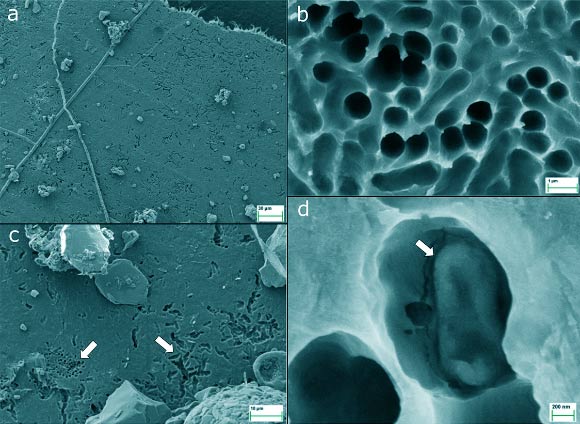
SEM images of LCAP films incubated undisturbed for more than a year in pristine forest soil. The arrow in panel (d) points at an object inside of such a cavity that might represent a (damaged) microbial cell; however, these were found very rarely; empty cavities were more representative (a-c). Image credit: Lerner et al., doi: 10.1093/ismejo/wrag203.

Biologists studying how bacteria break down a new generation of plant-based bioplastics -- long-chain aliphatic polyesters -- have discovered an enzyme that can dismantle both plastic and antibiotics.

The post Scientists Discover Soil Bacteria Enzyme that Breaks Down Both Plastic and Antibiotics appeared first on Sci.News: Breaking Science News.

  •  

A Discovery Hidden in Antarctica’s Soil is Unlike Anything Found Elsewhere on Earth, Challenging Past Assumptions

Scientists at the University of Colorado at Boulder’s Cooperative Institute for Research in Environmental Sciences (CIRES) have discovered that some microbes in Antarctica’s soil don’t exist anywhere else on Earth, upending the long-held belief that microbes move freely around the planet and inhabit many regions.

The researchers behind the discovery said understanding that some microbes are endemic to Antarctica’s soil challenges previous assumptions and offers valuable insights for future research and present-day conservation efforts.

Microbes in Antarctica’s Soil Live in an Extreme Environment

Announcing the findings, study leader and postdoctoral researcher Nick Dragone and co-author Noah Fierer, a CIRES Fellow and Director of the Center for Microbial Exploration, noted that scientists have always assumed that microbial species were widespread.

“There is a long-standing assumption in microbiology that ‘everything is everywhere,’” Dragone explained.

That’s because, unlike plants and animals, which are generally restricted to certain global zones or latitudes, microbes are highly mobile. For example, a simple updraft could propel microbes into an atmospheric jet stream, then deposit them hundreds or even thousands of miles away.

Still, Dragone and Fierer propose that, given Antarctica’s remote location, if there were a spot on Earth containing species unlike the rest of the globe, it would be on the planet’s southernmost continent.

“If we do find we’re looking for endemic microorganisms, a good place to start is Antarctica, because it’s an entire continent that is geographically isolated, ” Fierer said.

The study coauthor also noted that the unique conditions found in Antarctica’s soil aren’t usually found in other soil environments. “[Being] cold is the obvious one,” Fierer said, “but also super dry; Antarctica is a desert.”

Comparing 100 Antarctic Strains with 500 Worldwide Strains

Instead of starting with any microbial species, the CIRES team focused on bacterial strains within the Arthrobacter group. First, these strains grow well in lab conditions, which was critical to the team’s experiments. Second, Arthrobacter group bacterial strains are found in diverse environments ranging from the tropics to Colorado, and most critically, to Antarctica’s soil.

Byron Adams, professor of biology at Brigham Young University and a co-author of the study, said the species is widespread, but also diverse.

“Arthrobacter as a group may be found all over the planet, but when we look closely at individual strains, just like penguins, Antarctica clearly has its own distinctive biological history,” the professor explained.

To start, the team collected soil samples from Antarctica. They also collected comparison samples from similarly cold, arid regions like the Tibetan Plateau, Svalbard in the Arctic, and Chile’s Atacama Desert.

When examining the sampled soils, the team tested over 100 Antarctic bacterial strains and 500 worldwide strains.

Dragone and Fierer both noted that the research was made possible by “long-term collaborations among international research teams who have spent decades collecting samples across the continent for various projects.”

Genetic Sequencing Finds 90% of Antarctic Microbes are Endemic

After sequencing the genomes of the Arthrobacter strains found in samples from Antarctica’s soils, the team compared them with worldwide strains. For the worldwide species, the team obtained genomes from international research databases.

As hoped, the genetic comparison found species in Antarctica’s soil that were not found anywhere else in the world. Perhaps even more shocking, 90 percent of the Antarctic strains they’d sequenced were completely endemic, with no matches anywhere in the world.

Fierer said previous studies had identified “a few endemic microbes found in very specific environments.” However, the researcher also noted that finding such a large and unexpected number of endemic microbial species “does suggest there could be some in other locations.”

“[Determining] whether other microbial groups show these patterns is a good direction to go,” Fierer added.

Next, the team ran a follow-up experiment to see whether the endemic Antarctic strains showed signs of adaptation to the local, extreme environment. This included growing strains of the collected Antarctic Arthrobacter strains in the laboratory. Critically, the team mimicked the continent’s harsh environmental conditions.

First, the experiments showed that the strains collected from Antarctica’s soil were extremely resilient. They also grew more slowly than non-endemic strains. The team suspects these results show that Arthrobacter strains “are uniquely adapted to Antarctica.”

“We already knew that a broad diversity of microbes can survive the inhospitable conditions of Antarctica,” Fierer said. “Now we know that some of those microbes are also unique to Antarctica and are uniquely adapted to life on the southern continent.”

“Some of Antarctica’s Most Distinctive Species are Microscopic”

When discussing the implications of their findings, Adams pointed to a potential shift in public perception of what species diversity means.

“We tend to think of biodiversity in terms of penguins, seals, and whales, the researcher explained, “but this shows that some of Antarctica’s most distinctive species are microscopic.”

Along with the study’s scientific and public relations value, the team said it “sets the stage for future research on microbial life in Antarctica.” They also noted that the findings will aid efforts to preserve Antarctica’s biological diversity, including its microbial species.

“Protecting Antarctic biodiversity also means protecting the biological history contained in a handful of soil,” Adams concluded.

The study, “Evidence for endemism and local adaptation in Antarctic soil bacteria,” was published in the Proceedings of the National Academy of Sciences. 

Christopher Plain is a Science Fiction and Fantasy novelist and has spent the last six years as Associate News Editor and Head Science Writer at The Debrief. Follow and connect with him on X, learn about his books at plainfiction.com, or email him at christopher@thedebrief.org.

  •  

Hidden Clues in Spirit Rover Data Suggest Mars Once Had Far More Water than Scientists Realized

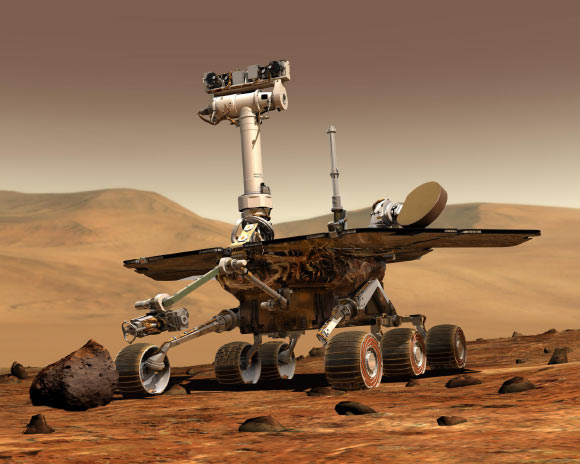
NASA’s Spirit rover on Mars. Image credit: NASA.

A new look at more than two decades’ worth of archival data from NASA’s Spirit mission suggests that the Martian soil may hold iron-bearing minerals -- hematite and altered magnetite -- that were too faint for scientists to detect in real time during the mission.

The post Hidden Clues in Spirit Rover Data Suggest Mars Once Had Far More Water than Scientists Realized appeared first on Sci.News: Breaking Science News.

  •  

These Microbes Could Allow Plants to Grow in Impossibly Salty Soil

Salty soil, one of the greatest threats to agriculture, may have a new remedy in the form of naturally occurring soil bacteria that allow plants to thrive under harsh conditions.

An international team led by Dr. Yanfen Zheng at the Chinese Academy of Agricultural Sciences presented their findings on increasing plant survivability in inhospitable environments in a recent paper published in Science Advances.

In their research, the international team demonstrated that maize, tomato, and rapeseed thrived in soil that would typically be unusable due to a previously unknown mechanism in these microbes, in a breakthrough for agriculture.

Salt and Agriculture

“The build-up of salt in farmland is a major and worsening problem – driven by climate change, irrigation and rising sea levels,” said co-author Prof Jonathan Todd, from the University of East Anglia’s School of Biological Sciences and the Quadram Institute on the Norwich Research Park. “Salt chokes plant growth, damages roots, and severely impacts entire harvests – putting global food supplies at risk.”

Agricultural scientists have long known that root microbiomes, the community of microbes living among a plant’s roots, are important for dealing with environmental stresses, yet they remained uncertain of the mechanics involved.

“We found that plants appear to recruit beneficial bacteria in salty soil conditions, which in turn trigger internal changes that strengthen their physical structure and resilience,” Todd continued. “If scientists can harness this natural process, it could mark the beginning of a new era in climate-resilient agriculture.”

Investigating Plant Root Microbiomes

The international team examined a variety of plant root microbiomes across different soil types and plant species, identifying pseudomonads, a type of naturally occurring soil bacterium, that are drawn to the roots of maize, tomato, and rapeseed in heavily salted environments. By noting the commonality of high salt content across a variety of crops, the researchers concluded that this was more than a mere coincidence and decided to analyze the genetic mechanisms behind the bacterium’s behavior.

“Compared to other microbes, pseudomonads carry specialised genes that help them tolerate high salt levels, including sodium transport systems and other stress resistance mechanisms,” Todd said.

Next, the researchers introduced various pseudomonad strains to soybean plants in laboratory and real-world soil experiments and observed that the bacteria colonized plant roots, resulting in increased growth in harsh, salty environments. Those soybean plants that received the bacteria demonstrated stronger root systems, more advanced development, and higher yields than those without.

“The most surprising thing was finding out how the bacteria helped plants cope,” Todd said. “For decades, it was thought that plants survive salinity by controlling sodium levels – essentially keeping harmful salt out. But we found no evidence that bacteria influenced sodium transport or ion balance.”

Lignin and Salt

“Instead of helping plants manage salt directly, the bacteria stimulated the plant to produce more of a substance called lignin,” Todd continued. “Roots of bacteria-treated plants showed a significant increase in lignin content, with some measurements rising by over 30 percent under salt stress.”

The tough, wood-like lignin acted as a shield against the salt, strengthening delicate tissues to endure a challenging environment. Unfortunately, in plants that couldn’t produce lignin, the pseudomonads produced no benefit. Building on the discovery, the researchers identified the genes in the plants involved in lignin synthesis and artificially overexpressed them to successfully confer salt resilience.

“We hope this discovery opens up new possibilities for agriculture,” Todd concluded. “With vast areas of farmland already affected by salinity and more under threat, microbial solutions could become an essential tool for maintaining crop yields and ensuring food security.”

The paper, “Pseudomonads Associated with Salt-Stressed Plants Facilitate Stress Adaptation of Soybean through Enhanced Lignin Biosynthesis,” appeared in Science Advances on June 24, 2026.

Ryan Whalen covers science and technology for The Debrief. He holds an MA in History and a Master of Library and Information Science with a certificate in Data Science. He can be contacted at ryan@thedebrief.org, and follow him on Twitter @mdntwvlf.

  •  

Wa’ed Ventures Supports KAUST Spinout Terraxy in Advancing Desert Greening Technology

Terraxy, an innovative startup emerging from cutting-edge research at the King Abdullah University of Science and Technology (KAUST), has successfully secured $3 million in its Seed-2 funding round. This round was spearheaded by Wa’ed Ventures, the venture capital wing of Saudi Aramco, with additional support from KAUST itself. The investment aims to accelerate the scaling and commercialization of Terraxy’s groundbreaking soil regeneration and carbon storage technology, designed specifically to tackle the challenges posed by desert environments.

The capital injection follows a critical growth phase, facilitating Terraxy’s shift from pilot-scale initiatives toward full-scale industrial production. A flagship component of this expansion is the establishment of a 30,000-square-meter commercial facility located in Al Zulfi, Saudi Arabia. This state-of-the-art production hub symbolizes a major leap for the company in bringing its proprietary technology to market readiness, underpinning Wa’ed Ventures’ mission to translate locally developed, research-driven innovations into sustainable, practical solutions.

At the heart of Terraxy’s technology lies Carbosoil, a proprietary soil enhancer engineered to address the unique and challenging characteristics of sandy soils found across the Arabian Peninsula. Globally, soil degradation affects nearly a third of arable land, hindering agricultural productivity and ecosystem health. In Saudi Arabia, where sandy and nutrient-poor soils dominate, agricultural efforts are hampered by poor water retention and low nutrient availability. Carbosoil demonstrates a remarkable ability to improve these conditions, delivering up to a 70% increase in plant growth and yield using the same quantities of water and nutrients. This efficacy directly translates into enhanced resource-use efficiency, especially critical in arid regions where water scarcity is a major concern.

Integral to Terraxy’s success is the supportive regulatory landscape fostered by Saudi Arabia’s Ministry of Environment, Water and Agriculture (MEWA). Terraxy has benefited from MEWA’s Regulatory Sandbox, a pioneering initiative allowing emerging environmental technologies to be tested rigorously under real-world conditions. This framework not only accelerates the validation of novel technologies but also ensures alignment with stringent environmental standards and drives the responsible introduction of innovations to the market, supporting national sustainability targets.

The importance of soil health in the Kingdom cannot be overstated. It underpins food security, water efficiency, and land rehabilitation frameworks that are critical to Saudi Arabia’s ambitious environmental and economic agendas. Through collaboration between innovators, regulators, and investors, Terraxy exemplifies how multi-stakeholder engagement can foster the development of homegrown technologies that address both ecological and commercial imperatives.

Amidst escalating global efforts to combat land degradation and climate change, Terraxy’s dual-purpose technology stands out. It not only rehabilitates degraded soils but also captures and stores atmospheric carbon dioxide in a stable form that can endure for centuries. This long-term carbon sequestration capability complements regional and international commitments to emission reduction and climate resilience, providing a scalable solution adaptable to various arid and semi-arid environments.

Wa’ed Ventures CEO Anas Algahtani emphasized the strategic value of backing deep technology initiatives with tangible sustainability benefits. Highlighting Terraxy’s unique strength, he noted that the startup’s ability to transition from foundational science to deployable industrial applications underscores the potent role of science-led innovation. Such initiatives are vital to Saudi Arabia’s Vision 2030, which prioritizes sustainability, technological advancement, and economic diversification.

Aramco’s commitment to supporting solutions that address emissions from difficult-to-decarbonize sectors was also underlined by Ahmad O. Al-Khowaiter, Executive Vice President of Technology & Innovation at Aramco, and Chairman of Wa’ed Investment Committee. Terraxy’s technology fits squarely within this vision, exemplifying the kind of scalable, scientifically robust innovation required to achieve meaningful climate impact while fostering economic growth.

As a spinout from KAUST, Terraxy benefits from a robust ecosystem that bridges academia and industry. The National Transformation Institute (NTI) at KAUST has played a pivotal role in nurturing the company’s journey, offering infrastructure and translational support critical for scaling emerging technologies. Professor Himanshu Mishra, one of Terraxy’s co-founders and an associate professor at KAUST, highlighted how the broader ecosystem—rather than any singular breakthrough—was instrumental in Terraxy’s development.

Dr. Ian Campbell OBE, Senior Vice President at KAUST’s NTI, formally acknowledged the importance of NTI’s efforts in enabling Terraxy’s scale-up journey. He described Carbosoil as a cornerstone for soil enrichment initiatives and a tool that aligns with Saudi Arabia’s Green Initiative and expanding carbon credit market. Such alignment demonstrates how academia, government, and private sector investment can converge to yield innovations with direct and measurable impacts on national and global environmental priorities.

Substantial funding and institutional validation signal growing confidence in Terraxy’s technology. The company is poised to make a significant contribution to Saudi Arabia’s greening efforts, resource efficiency strategies, and carbon management policies. Its scalable commercial model offers a replicable path for other arid regions facing similar environmental challenges, positioning Terraxy as a potential global leader in sustainable soil regeneration and carbon sequestration.

The company’s trajectory also illustrates the power of university-driven innovation ecosystems in advancing high-tech environmental solutions. By translating fundamental research into market-ready products, Terraxy exemplifies how science and technology can be harnessed to create sustainable economic opportunities while addressing pressing environmental imperatives.

As Terraxy moves forward, its integrated approach to enhancing soil health and capturing carbon dioxide offers a compelling model for deep-tech interventions in the sustainability domain. With substantial backing and a proven technology platform, Terraxy’s advances could become a pivotal component in shaping sustainable land management and carbon reduction strategies, both within Saudi Arabia and internationally.

Subject of Research: People
Article Title: Terraxy Secures $3 Million to Pioneer Soil Regeneration and Carbon Storage Technology for Desert Environments
News Publication Date: Not provided
Web References: https://mediasvc.eurekalert.org/Api/v1/Multimedia/1ee8d30f-c323-416c-95ce-a86efb4d3d71/Rendition/low-res/Content/Public
Image Credits: Images © Terraxy / KAUST
Keywords: Soil Regeneration, Carbon Storage, Desert Agriculture, Deep Tech, KAUST, Terraxy, Carbosoil, Wa’ed Ventures, Aramco, Carbon Sequestration, Saudi Arabia, Sustainability, Environmental Innovation

  •  
  •  

Ancient Maya knowledge helps Guatemalan farmers cut agrochemical use

In the mountain villages of Guatemala’s Western Highlands, farmers are combining ancient Maya knowledge with modern sustainable farming techniques to protect their crops from pests and disease. Smallholders are creating homemade biopesticides using plants with strong smells and flavors to deter pests on their family plots. This is helping to cut back on the use of increasingly expensive agrochemicals, many of which have been labeled as dangerous to human health and linked to soil degradation. About 60 Guatemalan communities in the Western Highland departments of Sololá and Huehuetenango, as well as Chiquimula in the east, are working to revive these traditional techniques with support from the international development organization World Neighbors. Their focus is to restore and strengthen traditional knowledge, combining it with agroecological practices that help families produce surplus food they can sell to boost household incomes. “Traditional farming techniques are becoming popular because they are simple practices to apply, use local resources, and have proven to be effective,” Dayani Roche, a program associate at World Neighbors, told Mongabay via email. Rather than a single ancient recipe, farmers are using “a living combination of ancestral knowledge, local experimentation and more recent agroecological practices,” he said, which are “safer for families, soil, water and biodiversity than many chemical alternatives.” The Maya civilization, which once stretched across modern-day Central America, had a rich history of farming dating back to 2000 B.C.E. Its most celebrated agriculture system is the milpa, a form of intercropping that involves a mix of maize, beans and…This article was originally published on Mongabay

  •  
❌