❌

Reading view

NIH to use part of its budget to pay for Department of Defense research

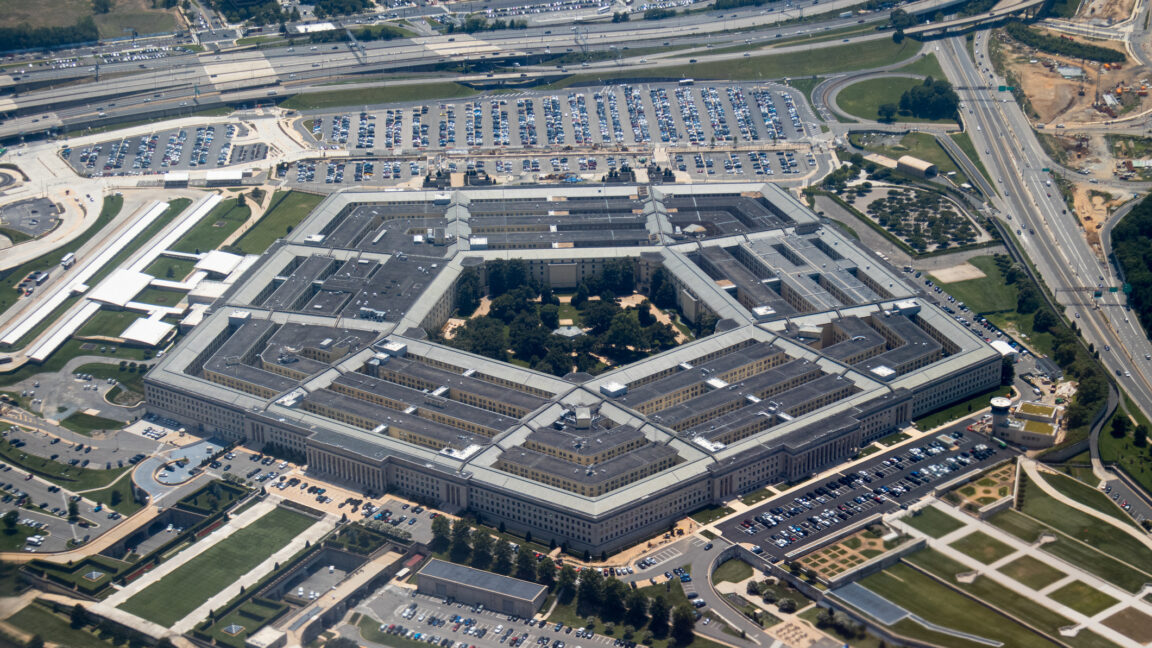
Late last week, word started leaking that the National Institutes of Health (NIH) had reached an agreement with the Department of Defense that would see part of the NIH's budget used to fund research at the Department of Defense. So, on the Friday just prior to a US holiday weekend, the Department of Defense released a copy of the agreementΒ and confirmed that it had been signed roughly a month earlier. The move is striking for a number of reasons, ranging from the existing budget disparities between the two parties involved to the fact that the money would be used for projects that the current NIH leadership has explicitly rejected.

The agreement itself sets up a system where the NIH would transfer money to the Department of Defense to fund staff and projects that would "support the advanced development of medical countermeasures against pandemic influenza, chemical, biological, radiological, and nuclear (CBRN) threats, and emerging infectious diseases." The money would come out of the budget for the NIH's National Institute of Allergy and Infectious Diseases, or NIAID, to which Congress has allocated $6.6 billion in 2026. The agreement is set to run for a decade.

Left unspecified is just how much of the NIAID budget will be spent on Defense projects. Reporting by Nature suggests that the Department of Defense was looking for up to a third of its total budget but was being told to settle for about 10 percent. There's obviously an enormous disparity between the budgets of these two agencies, given that the 2026 Defense budget is roughly $1 trillion. That budget is under considerable strain, however, due to the open-ended nature of the conflict with Iran. The deal has also been announced at a time when the NIH has been struggling to issue sufficient grants to use the money that Congress allocated to it.

Read full article

Comments

Β© Artem Onoprienko

  •  

NIH to use part of its budget to pay for Department of Defense research

Late last week, word started leaking that the National Institutes of Health (NIH) had reached an agreement with the Department of Defense that would see part of the NIH's budget used to fund research at the Department of Defense. So, on the Friday just prior to a US holiday weekend, the Department of Defense released a copy of the agreementΒ and confirmed that it had been signed roughly a month earlier. The move is striking for a number of reasons, ranging from the existing budget disparities between the two parties involved to the fact that the money would be used for projects that the current NIH leadership has explicitly rejected.

The agreement itself sets up a system where the NIH would transfer money to the Department of Defense to fund staff and projects that would "support the advanced development of medical countermeasures against pandemic influenza, chemical, biological, radiological, and nuclear (CBRN) threats, and emerging infectious diseases." The money would come out of the budget for the NIH's National Institute of Allergy and Infectious Diseases, or NIAID, to which Congress has allocated $6.6 billion in 2026. The agreement is set to run for a decade.

Left unspecified is just how much of the NIAID budget will be spent on Defense projects. Reporting by Nature suggests that the Department of Defense was looking for up to a third of its total budget but was being told to settle for about 10 percent. There's obviously an enormous disparity between the budgets of these two agencies, given that the 2026 Defense budget is roughly $1 trillion. That budget is under considerable strain, however, due to the open-ended nature of the conflict with Iran. The deal has also been announced at a time when the NIH has been struggling to issue sufficient grants to use the money that Congress allocated to it.

Read full article

Comments

Β© Artem Onoprienko

  •  

Spending deal comes with a bonus: Blocking political control of grants

On Tuesday, the House of Representatives passed a stopgap measure that would continue funding the US government through early December. While the measure still requires the signature of President Trump, it's widely expected that he will act to avoid a government shutdown immediately before the midterm elections.

This is a normal part of how the US government has operated in recent years, as it's often difficult to build the political support needed to pass a full year's budget in advance. In fact, dissent within the House's Republican caucus prevented them from agreeing on their own measure to keep the government open; instead, the House simply adopted a version of the spending bill that had previously passed the Senate.

From the perspective of scientists and their supporters, that adoption turned out to be a very good thing, because the Senate's budget bill, passed in early August, contains a provision that blocks the Office of Management and Budget (OMB) from implementing new rules that would give political appointees full control over what science is funded and allow them to cancel any grant at any time. The proposed rule has been widely decried as catastrophic for science, and it faced widespread opposition from scientific and health-focused organizations.

Read full article

Comments

Β© Getty Images | Bloomberg

  •  

Proposed new US funding rules: We can cancel any grant at any time

Last August, the Trump administration issued an executive order intended to fundamentally alter how grant funding is handled by the US government. Under the system that had made the US a scientific superpower, peer reviewers rated the scientific quality and feasibility of grant applications, and subject-matter experts within the funding agencies used these ratings to determine which grants got funded. Under the proposed rules, political appointees would have the final say, and they were specifically instructed not to "routinely defer" to peer reviewers.

In the interim, the administration has lost many court cases because it turns out that issuing executive orders doesn't circumvent legal requirements, and the orders can be vacated if they lack strong justification. To avoid that same fate, the Office of Management and Budget (OMB) has decided to merge the executive order with other administration priorities and send it through the formal federal rulemaking process.

The result is a horror show for US science research. Not only is peer review made a secondary consideration, but the new rules would allow any federal agency to cancel any grant at any time based on the vague assertion that it isn't in the "national interest." The document would also ban any grants on a number of culture war topics, limit international collaborations, and block spending on things like publishing papers and attending conferences.

Read full article

Comments

Β© Getty | Al Drago

  •  
❌