❌

Reading view

Hurricane Polo Explodes in Pacific, UK Aphid Swarm Wipes Out 30 Million Lettuces, Glasgow Braces for Rubbish Pileup — Today’s Environmental Briefing for Thu, Sep 24 2026

Satellite view of Hurricane Polo swirling over the Pacific Ocean with visible eye structure

Across the stories today, a common thread emerges: the planet is speaking in signals — some subtle, some deafening — and the question is whether our institutions can listen fast enough to act.

Start with the signals themselves. El Niño has surged to record strength weeks ahead of schedule, and its fingerprints are already visible — from Hurricane Polo’s explosive intensification in the Pacific to the climate volatility rippling through global weather systems. In the UK, an aphid outbreak wiped out 30 million lettuce heads almost overnight, a small but telling example of how shifting conditions can upend food systems in ways no one budgets for. In Malawi, an unexplained weed overgrowth has choked Chia Lagoon, stranding farmers and fishers in flooded fields nearly seven months after the rains should have drained. These aren’t isolated oddities. They’re the planet’s early warning system, written in crop yields and clogged waterways.

Then there’s the human response — uneven, but not absent. Germany’s landmark pledge to phase out fossil fuels by 2045 marks a rare moment of policy catching up to urgency, moving beyond vague “carbon neutrality” language toward something more concrete. The UK’s decision to declassify a once-suppressed intelligence report — warning that climate breakdown is a direct threat to global security — suggests governments are quietly acknowledging what scientists have said for years, even if political will lags behind. And at UN climate talks in New York, amid what The Guardian describes as a genuinely grim mood, solar power’s continued growth offered rare, tangible hope. As Al Gore noted twenty years after An Inconvenient Truth, he’s surprised by the ferocity of fossil fuel pushback — but still believes, cautiously, that the fight can be won.

Behind the numbers are real communities adapting in real time. In the Andes, villagers near Villa de Arma are turning to ancient wetland systems as glaciers they once walked across vanish into bare rock. In Guam, resident Leevin Camacho learned his family’s water contained a pesticide banned since 1987 — a stark reminder that militarization and environmental cost are often intertwined, especially in the Pacific. And in Sarawak, Indigenous communities are still reckoning with displacement from the Bakun megadam three decades later, a cautionary tale as the world races toward a “clean” energy future that doesn’t always ask who pays for it.

It’s a reminder that progress and pressure often arrive together. Endangered birds on South Australia’s Eyre Peninsula won last-minute protection from a rocket launch site — a genuine conservation victory — even as a Norfolk Broads housing levy was quietly slashed, raising fears that environmental safeguards elsewhere are eroding. Meanwhile, olive ridley sea turtles nesting for the first time ever on California beaches offer something rarer: wonder. A signal, too, but one that invites curiosity rather than alarm — proof that the natural world is still capable of surprising us.

As the week unfolds, all eyes will be on whether momentum from Climate Week — bolstered even by a monster from Sesame Street reminding children it’s okay to feel both fear and courage — translates into follow-through. The data, the disasters, and the small human stories all point the same direction: the era of asking “if” is over. What remains is the harder work of “how fast,” and “for whom.”

The post Hurricane Polo Explodes in Pacific, UK Aphid Swarm Wipes Out 30 Million Lettuces, Glasgow Braces for Rubbish Pileup — Today’s Environmental Briefing for Thu, Sep 24 2026 first appeared on EnviroLink Network.

  •  

US Confirms Orbital Weapon, Essex Wildlife Habitat Threatened by Data Centre — Today’s Environmental Briefing for Wed, Sep 16 2026

Illustration of a military satellite weapon orbiting Earth above rare UK wildlife habitat threatened by development

Across the stories today, a common thread emerges: the boundaries we once drew around “the environment” — between land and sea, sky and orbit, economy and ecology — keep dissolving, revealing how deeply intertwined these systems have become.

Start with the sky, in more ways than one. The US government’s confirmation that it has deployed a weapon in Earth’s orbit marks a genuine turning point, not just for defense policy but for how we think about the commons above our heads. Space has long been treated as neutral ground; now it’s becoming contested territory, raising quiet but urgent questions about debris, escalation, and what “environment” even means when it extends past the atmosphere. Meanwhile, back on solid ground, the UK’s climate advisers delivered a pointed message to Heathrow: a third runway cannot proceed unless airlines help pay for the emissions it would unleash, potentially through carbon removal costs. It’s a small but telling signal that growth and climate accounting are becoming inseparable in policy conversations — expansion is no longer a given, even for infrastructure long considered inevitable.

That tension between growth and limits runs through much of today’s coverage. A Guardian analysis found that the world’s twenty largest private equity firms back energy portfolios emitting more greenhouse gases than all but three countries on Earth — a stark reminder that climate accountability often hides behind layers of finance most people never see. In Venezuela, a US-backed push for “legitimate” mining and a new oil megadeal are drawing warnings from environmental and human rights groups who see familiar risks dressed in new language. And in Guinea-Bissau, industrial fishmeal factories are quietly hollowing out a food fish that coastal communities have relied on for generations. Behind the numbers are real communities adapting in real time — from Vietnamese fishers losing thousands of dollars per vessel to tangled plastic waste, to Dhaka residents like Yeasmin Begum, who has spent her life breathing the smoke of a landfill she never chose to live beside.

Yet alongside these pressures, the day’s coverage also points to growing momentum around resilience and repair. Ukrainians are turning to rooftop solar to keep homes running amid bombardment — a portrait of adaptation born from necessity. A Congolese NGO now co-manages a national reserve for the first time, a homegrown model of stewardship. Moon bears rescued from bile farms are stretching their limbs in Suffolk enclosures, and three wild dog brothers wandered 2,500 miles across Zambia in search of a mate, offering an unlikely note of hope for their species. Even Griffith Park’s mountain lion — photographed beneath the Hollywood sign — helped inspire the world’s largest wildlife crossing, proof that a single image can shift infrastructure decisions.

It’s a reminder that progress and pressure often arrive together. Some communities are innovating their way through crisis; others, like the land defenders now forming self-defense units amid rising violence, are simply trying to survive it. As Brazil’s upcoming election looms over the Amazon’s future, and Chief Raoni Metuktire — one of its most storied protectors — enters palliative care, the coming months may reveal whether today’s momentum toward stewardship can outpace the forces pulling the other way.

The post US Confirms Orbital Weapon, Essex Wildlife Habitat Threatened by Data Centre — Today’s Environmental Briefing for Wed, Sep 16 2026 first appeared on EnviroLink Network.

  •  

September Patch Tuesday: 963 CVEs, 2 exploited flaws, 1 message

Microsoft’s September 2026 Patch Tuesday is the year’s largest release, with 963 CVEs requiring customer action, 106 rated critical. Two are already exploited: CVE-2026-81963 in the Windows Update Stack and CVE-2026-85880 in Advanced Local Procedure Call. Nothing in this release was publicly disclosed ahead of the patch. Readiness recommends a Patch Now scheduling for Windows, Office, SQL Server and the developer tooling, and standard patch release for Exchange. The Readiness team has published an infographic summarising deployment risk by product family.

Known issues

Three client issues are carried in from August close with this update, covering:

  • Microsoft Teams and the new Outlook failing to launch on ARM devices, such as the Surface Pro 11 and Surface Laptop 7, is resolved by KB5124008. The issue originated in August’s KB5121003 and was most likely on freshly imaged machines that had not yet taken Microsoft Store updates.
  • The same update resolved both desktop backgrounds reverting to solid black and mouse cursor customisation resetting on non-English installations. Both originated in the 27 August preview, KB5120998.

And Microsoft has left open a Microsoft Defender Antivirus notification defect, confirmed on 28 August, in which devices report that Defender is turned off while it is running correctly.

Major revisions and mitigations

The quietest revision window of recent months arrived alongside the largest release. Between the August and September Patch Tuesdays, from 12 August to 7 September, the MSRC Security Update Guide touched 324 CVEs. Of those, 307 were routine Microsoft Edge and Chromium republications requiring no customer action.

That leaves 17 entries affecting Microsoft’s own products, and only one of those is a genuine revision. CVE-2026-59133, an elevation of privilege in the High-Performance Computing Pack, moved to version 1.1, and its own revision note records the change as informational. For comparison, August’s window carried 76 revisions to Microsoft’s own products, 60 of them flagged as requiring customer action.

The Readiness team has reviewed all 963 published updates. Microsoft has published no mitigations and no workarounds anywhere in this release.

Windows lifecycle and enforcement updates

Microsoft has published no new service or enforcement deadlines for September. The lifecycle picture is different, with multiple end-of-support notices for this coming October:

  • The retail Office 2021 family retires in full, including Access, Excel, Outlook, PowerPoint, Project, Publisher, Visio and Word.
  • Office LTSC 2021 reaches end of support, and that includes Skype for Business LTSC 2021.
  • Windows 10 2016 LTSB and Windows 10 IoT Enterprise LTSB 2016 reach the end of extended support.
  • Windows Server 2012 and 2012 R2 reach the end of Extended Security Update Year 3. This is the final ESU year for both, not a step to a fourth.
  • Windows 11 Home and Pro version 24H2 reaches the end of updates.
  • Windows Server 2022 moves from mainstream to extended support, where it stays until 14 October 2031.

A second wave follows on 10 November 2026, and it is the one most likely to catch development teams rather than infrastructure teams. .NET 8 reaches the end of its long-term support branch, PowerShell 7.4 does the same, and Windows 11 Enterprise and Education 23H2 ends servicing alongside Windows 11 IoT Enterprise 23H2.

Microsoft’s test guidance for this release runs to 466 Windows entries, 55 of them flagged as high risk, against 109 and four in August. Given the large number of updates this month (who would have thought that we would be here at 963 CVEs), the Readiness team recommends the following testing priorities:

  • Printing. Print from 32-bit and 64-bit applications to physical and virtual printers, exercise XPS and PDF output, share a printer from a print server and print from a separate client, cancel a job mid-queue, and confirm the queue reflects every state change. This is 20 of the 55 high risk flags, and it is the single most likely source of a visible regression.
  • Fonts, graphics and imaging. Render varied fonts, sizes and styles across browsers, Office, PDF viewers and Notepad, confirm Print Preview matches the printed page, and open JPEG, TIFF, HEIF and raw images across Explorer, Photos and Office. Watch for clipping, distortion and missing glyphs.
  • USB Devices. Exercise device attachment and removal. Attach and remove USB audio, video and mass storage devices repeatedly, including through a hub, pair and unpair a wireless device, and confirm each enumerates and releases cleanly. Device Association carries seven high risk flags, and these drivers load whenever hardware is attached.
  • Remote Desktop. Open several concurrent sessions, enable printer, clipboard, audio, drive and smart card redirection together, disconnect and reconnect, and confirm redirected devices reattach.
  • Storage (ntfs.sys, spaceport.sys). This is a real hotspot for updates this month, but no high-risk changes. Test on hardware you can recover, because the storage changes reach the boot path, potentially resulting in a dead (test) machine.

Each month, we break down the update cycle into product families, as defined by Microsoft, with the following groupings.

Browsers

Microsoft has not released any updates for their browser products for the second month in a row. September’s Security Update Guide carries no Edge-specific CVEs at all, and the 307 Chromium republications in the revision window required no customer action. The nine Edge CVEs that did appear arrived mid-cycle on 28 August and were serviced through the browser’s own update channel rather than this release.

Estates on a managed Edge channel have nothing to do here beyond confirming the channel is current. It is the one quiet corner of an otherwise heavy month.

Microsoft Windows

Windows carries 726 CVEs, 77 of them critical, which is three-quarters of the entire release. Elevation of privilege dominates by volume at 406 entries, with remote code execution second at 156, information disclosure at 94 and denial of service at 47. The pattern is the reverse of the severity picture: the bulk is local elevation, while the critical-rated entries cluster in the network-facing roles.

  • Biometrics is a real focus this month as the Windows Biometric Service takes 64 fixes, the largest single-component count of the year. Most of the security issues are heap overflows that give a local attacker SYSTEM. Windows Hello adds nine, all critical. Patch it promptly on any estate using fingerprint or facial sign-in.
  • Windows DHCP Server leads at 36 entries and is topped by remote code execution at CVSS 9.8. Windows DNS Server takes 10 more, also reaching 9.8. Critical remote code execution also lands on Message Queuing, RRAS, Services for NFS, the HTTP Print Provider, Windows Shell, Netlogon, Internet Connection Sharing, SSTP and Failover Cluster, all at 9.8. Patch the resolvers, the DHCP servers and the domain controllers first.
  • Storage is the heaviest it has been this year. NTFS takes 29 fixes, Spaceport.sys behind Storage Spaces takes 17, and the Overlay Filter takes seven, with the Volume Manager, VHD miniport, iSCSI and Storage Port drivers behind them. These reach the boot path, so stage them on recoverable hardware.
  • The rest of the most-patched tally runs Win32k at 19, Microsoft Standard XPS at 18, Windows Error Reporting at 12, and the Windows Kernel, Windows Search, the Print Spooler and the Device Association Service at 11 each.

Add this Windows update to your Patch Now schedule, with DHCP and DNS servers first and the biometric stack close behind.

Microsoft Office

Microsoft released 137 Office CVEs this month, 24 of them critical, with remote code execution the through-line at 69 entries and information disclosure close behind at 52. September breaks the recent pattern in a way that matters for deployment: this wave is not MSI-only.

  • Click-to-Run estates are squarely in scope. Roughly 105 of the Office CVEs reach Click-to-Run, so Microsoft 365 Apps, Office 2019, LTSC 2021 and LTSC 2024 all update, on Windows and on Mac. Word takes 35 fixes, Excel 32, PowerPoint 10 and Outlook seven. The heaviest client entries are CVE-2026-78510 in Word and CVE-2026-78509 in Outlook, both critical remote code execution at CVSS 9.8, in document-rendering paths that fire on preview or open.
  • SharePoint Server Subscription Edition takes 16 entries and is the only SharePoint baseline with a package this month. Server updates cannot be uninstalled and always require a reboot, so validate in a maintenance window.
  • Skype for Business Server takes 10 entries, led by CVE-2026-66302, a critical remote code execution at CVSS 9.8. Patch it and note that the LTSC 2021 edition leaves support on 13 October 2026.

Nothing in Office is exploited this month. With 24 critical-rated entries and the Click-to-Run channel carrying most of the exposure, the September Office updates belong on the Patch Now schedule regardless.

Microsoft Exchange and SQL Server

Exchange is quiet and SQL Server is not, which inverts the usual relationship between the two.

  • Exchange Server takes nine CVEs across 2016 CU23, 2019 CU14 and CU15, and Subscription Edition. None is critical and none is exploited, though the highest reaches CVSS 9.3. The mix runs to two remote code execution entries, two elevations of privilege, two spoofing, and one each of tampering, denial of service and information disclosure. Apply the update from an elevated command prompt, because an un-elevated run leaves Exchange services partially patched and broken, then confirm mail flow, Autodiscover and any hybrid connection before returning the server to service.
  • SQL Server takes 62 CVEs, four of them critical, across the 2017, 2019, 2022 and 2025 branches. There is no 2016 package this month. Remote code execution leads at 24 entries, with information disclosure at 22. The critical entries are CVE-2026-67631 and CVE-2026-67643 at CVSS 8.8, and CVE-2026-67378 and CVE-2026-67636 at 8.5.
  • Eight SQL packages ship, a CU+GDR and an RTM+GDR for each branch: 2025 (KB5122769, KB5122770), 2022 (KB5122768, KB5122771), 2019 (KB5122772, KB5122773) and 2017 (KB5122774, KB5122775). Microsoft’s guidance is explicit that the baseline or RTM version must be installed first and the GDR patch applied on top; test the install and the removal on every servicing branch you run, then restart the service and confirm Always On availability groups stay healthy.

Exchange goes on the Schedule list, and SQL Server goes on the Patch Now list. That is an unusual split, and it is driven by the four critical remote code execution entries on the database estate.

Microsoft Developer Tools

Microsoft released 24 CVEs across its developer tooling this month, 23 rated important and one critical. Security feature bypasses are the main focus with eight CVE entries, with remote code execution and information disclosure at four each.

  • The single critical entry is CVE-2026-34182 at CVSS 9.1, a flaw in CMS AuthEnvelopedData processing that allows forged messages to be accepted. It reaches Visual Studio 2017 through 2022.
  • The highest-scoring entry in this family is not the critical one. CVE-2026-81376, a Visual Studio Code security feature bypass, reaches CVSS 9.6 while carrying an important rating. It is a useful reminder that severity labels and CVSS scores answer different questions.
  • Visual Studio Code and its Copilot extensions take 10 entries, mostly security feature bypasses. Update the editor and confirm workspace trust prompts, extension installation and remote sessions behave as configured.
  • .NET ships SDK updates on all three supported lines, x64 and x86: 8.0.131 and 8.0.425, 9.0.121 and 9.0.318, and 10.0.112 and 10.0.401. Install them, then build and run a representative project to check for regressions. Keep the 10 November date for .NET 8 in view while you are in there.
  • The .NET Framework ships monthly rollups per operating system: Windows Server 2012 (KB5126147), Server 2012 R2 (KB5126148), Windows 10 1809 (KB5126144), 21H2 (KB5126145), 22H2 (KB5126146) and Server 2022 (KB5126149). One gap worth noting: the 4.7.2 package for Windows 10 1607 is listed as pending and will follow, so estates still on 1607 will not complete their Framework patching this cycle.

Add these to your standard release schedule, behind this month’s Windows, Office and SQL Server priorities. Keep the 10 November date for .NET 8 and PowerShell 7.4 in view while you are in the developer estate, because a patch this month does not extend either branch.

Adobe (and third-party updates)

September is the largest release of the year, and this (crazy, super high) volume is the least interesting thing about it. The 963 CVEs matter less than the 55 entries Microsoft flags as high risk, and those sit in printing and fonts. Adobe shipped two Acrobat builds one digit apart and only the second is a security update (nothing to worry about here). Of the CVEs Microsoft republished, 25 are not Microsoft’s. A version number tells you very little about the work in front of you. So, given my (super-secret knowledge) of how Microsoft operates over the summer, here is my prediction for next month (October). It won’t be as big as this month – but just you wait – November is going to be big. Let’s up those numbers (or not).

  •  

New Electrochemical Method Boosts Ocean Alkalinity to Capture Carbon

The ocean has quietly absorbed billions of tons of humanity’s carbon emissions over the past two centuries, but scientists and companies racing to supercharge that natural service have long been hampered by a stubborn and costly engineering problem. Now researchers at Stony Brook University, working with the Research Foundation for the State University of New York, have unveiled a method for electrochemical ocean alkalinity enhancement that they say can dramatically lower the cost of ocean-based carbon dioxide removal by eliminating one of the most expensive steps in the entire process: the pretreatment of seawater before it enters an electrochemical reactor. The innovation, now available for licensing through SUNY TechConnect, promises high-quality carbon offsets at a substantially reduced cost while simultaneously helping to counteract the acidification that threatens marine ecosystems worldwide.

At the heart of the challenge is a delicate chemical balancing act. As atmospheric carbon dioxide dissolves into seawater, it forms carbonic acid, which lowers the ocean’s pH and erodes the carbonate chemistry that corals, shellfish and other calcifying organisms depend upon. Ocean carbon dioxide capture exploits a simple principle: if the ocean becomes more alkaline, it can absorb more CO2 from the air and lock it away safely as bicarbonate, one of the most stable and abundant forms of inorganic carbon on Earth. This process, known as ocean alkalinity enhancement, effectively turns the surface ocean into a vast, distributed carbon sink. But adding alkalinity to seawater is not trivial, and doing it in a way that is energy-efficient, scalable and safe has become one of the central engineering puzzles of the emerging carbon removal industry.

One of the most promising approaches relies on electrochemistry, specifically a technique called bipolar membrane electrodialysis. In this system, ion-selective membranes are stacked between two end electrodes, and the arrangement allows operators to split ordinary saltwater into its constituent acid and base. When brine containing sodium chloride flows through the stack, the process generates hydrochloric acid on one side and sodium hydroxide, a strong base, on the other. The elegance of the scheme lies in its product handling: if the hydrochloric acid is kept on land, where it can be stored, neutralized or put to industrial use, and only the sodium hydroxide along with the treated seawater is returned to the ocean, the receiving waters gain a net infusion of alkalinity. That added alkalinity shifts the carbonate equilibrium, allowing the ocean to draw down carbon dioxide from the atmosphere and convert it into dissolved bicarbonate that remains stable for millennia.

This electrochemical pathway has attracted serious commercial interest precisely because it produces what carbon markets call negative emissions, meaning carbon dioxide is durably removed from the atmosphere rather than merely avoided. Companies pursuing net-zero targets increasingly rely on such carbon removal credits to offset their residual emissions, and ocean alkalinity enhancement is widely regarded as one of the largest-capacity avenues available, given the sheer scale of the world’s oceans. Yet the technology has been held back by a deceptively mundane problem: what flows into the reactor matters just as much as what flows out.

Seawater, and many other brine streams that might feed these systems, contains divalent cations, most notably calcium and magnesium ions, alongside the sodium and chloride that the process is designed to split. When these divalent ions encounter the high-pH conditions created at the base-producing side of a bipolar membrane stack, they precipitate as solid calcium and magnesium compounds that coat the membranes in a crust known as scale. The consequences are cascading. Scaled membranes lose their ion-selective efficiency, forcing the system to push harder and consume more electricity to achieve the same output. Over time, the deposits shorten membrane lifetime, increasing maintenance frequency and replacement costs. The conventional answer has been water softening pretreatment, in which the incoming seawater is stripped of calcium and magnesium before it ever reaches the electrodialysis unit. While effective, such pretreatment adds significant capital and operating expense, undermining the economic case for the entire carbon removal operation and eroding the value proposition of the resulting carbon credits.

The Stony Brook researchers behind the new method have essentially designed around this bottleneck. Their technology enables electrochemical enhancement of ocean alkalinity without any pretreatment of the incoming seawater at all. By rethinking how the electrochemical system handles brine streams laden with divalent cations, the researchers have created a process that tolerates raw seawater directly, sidestepping the water softening infrastructure that previous designs demanded. According to the announcement from the Research Foundation for SUNY, the result is a system that produces negative emission carbon offsets of very high quality at a substantially reduced cost, simply because the most expensive upstream step has been engineered out of existence. The advantages claimed for the approach are straightforward and commercially significant: it is cheaper, more energy efficient, and requires no expensive water softening pretreatment.

The implications ripple across both the carbon markets and the broader climate technology landscape. Carbon offset buyers, including corporations striving to meet net-zero commitments, place a premium on removal credits that are durable, verifiable and cost-competitive. Ocean alkalinity enhancement already offers exceptional permanence, since bicarbonate dissolved in seawater represents one of the most long-lived forms of carbon storage known. By cutting costs at the front end, the Stony Brook method could help push the price of these high-quality ocean-based offsets toward levels that make them viable at gigatonne scale, a threshold that analysts consider essential if carbon removal is to play a meaningful role in stabilizing the global climate. Cheaper alkalinity generation also strengthens the second major application of the technology: mitigating ocean acidification directly, without necessarily framing it as a carbon market product at all.

Ocean acidification itself is a mounting crisis. Since the industrial revolution, the average surface ocean pH has dropped measurably as the sea has absorbed roughly a quarter to a third of anthropogenic CO2 emissions. The consequences have been documented across coral reefs, oyster hatcheries, pteropods and other calcifying organisms whose shells and skeletons become harder to build in increasingly acidic waters. A technology that adds alkalinity to coastal waters and open ocean regions simultaneously addresses this chemical stress and harvests the carbon removal benefit, a dual function that distinguishes ocean alkalinity enhancement from many other carbon removal approaches. In regions where fisheries, aquaculture and reef ecosystems are economically vital, localized deployment of alkalinity-enhancing electrochemical systems could offer both environmental resilience and revenue through carbon credit sales.

The scientific pedigree of the work reflects the growing maturity of the carbon removal field. Stony Brook University, a flagship research institution within the SUNY system, has become an active hub for climate and energy innovation, and the new method is protected under intellectual property identified in the licensing announcement. The Research Foundation for the State University of New York, the nation’s largest research foundation supporting the nation’s largest public university system, is actively seeking development partners, commercial partners and licensees to translate the laboratory advance into deployed systems. The foundation describes a broad portfolio of SUNY-led research spanning artificial intelligence for the public good, quantum technologies, next-generation semiconductors, biotechnology and medicine, and energy and climate solutions, with system-wide research expenditures approaching 1.5 billion dollars in fiscal year 2025.

For the carbon removal industry, the timing of the announcement is notable. As voluntary and compliance carbon markets mature, buyers are demanding higher fidelity in the offsets they purchase, favoring durable removal over avoidance-based credits. Electrochemical ocean alkalinity enhancement, with its well-understood chemistry and measurable inputs and outputs, is well positioned to meet rigorous monitoring, reporting and verification standards. The obstacle has always been cost, and the pretreatment bottleneck has been a substantial contributor. If the Stony Brook design performs as described at industrial scale, it could remove one of the largest cost wedges standing between laboratory demonstration and commercial deployment, accelerating a technology class that many climate analysts view as indispensable to achieving deep decarbonization.

The broader lesson of the advance may be as important as the technology itself. In the race to scale carbon removal, progress often comes not from exotic new chemistry but from eliminating the hidden costs and fragilities that make promising concepts uneconomic in practice. Water softening pretreatment is exactly the kind of unglamorous engineering detail that determines whether a climate technology remains a paper exercise or becomes infrastructure. By designing a bipolar membrane electrodialysis system that thrives on untreated seawater, the Stony Brook researchers have addressed one of those decisive details. The ocean, meanwhile, stands ready. Every unit of alkalinity added is an invitation for the sea to take up more carbon dioxide and, in doing so, to heal a little of the acidification that a warming world has inflicted upon it. What remains now is the work of scaling, partnering and commercializing, and the SUNY licensing announcement signals that the researchers and their institution intend to see this chemistry leave the laboratory and reach the sea.

Subject of Research: Electrochemical ocean alkalinity enhancement for carbon dioxide removal and ocean acidification mitigation

Article Title: Method for electrochemical ocean alkalinity enhancement

Article References: Method for electrochemical ocean alkalinity enhancement. Research Foundation for the State University of New York, via EurekAlert! News by Subject: Tech & Engineering. Available at: SUNY TechConnect (https://suny.technologypublisher.com/) Original publication

Image Credits: AI Generated

DOI: Not provided

Keywords: ocean alkalinity enhancement, carbon dioxide removal, bipolar membrane electrodialysis, ocean acidification mitigation, carbon offsets, Stony Brook University, negative emissions, seawater pretreatment, net-zero goals, electrochemistry, Research Foundation for SUNY

  •  

Can a Whole Arctic Ecosystem Evolve Fast Enough to Survive Climate Change?

Can a Whole Arctic Ecosystem Evolve Fast Enough to Survive Climate Change?

On Alaska’s remote North Slope, researchers are picking their way across spongy tussock grasses toward Galbraith Creek, a rushing meltwater stream fed by the snowy peaks of the Brooks Range. There, they carefully string up mist nets to catch white-crowned sparrows that have just completed their long migration from warmer latitudes. The birds have only a brief window to stake out territory, find mates, and raise chicks—all fueled by the explosive burst of insects that emerges each summer across the tundra.

From every bird captured, scientists collect blood, feather, and fecal samples to track what the sparrows are eating and how their diets shift as the short Arctic summer progresses. This detailed data collection is part of a groundbreaking research effort seeking to understand something far bigger than individual birds: whether an entire ecosystem—spanning streams, tundra, insects, and wildlife—can adapt fast enough, together, to survive rapid climate change.

Unlike traditional studies that examine how single species adjust to warming conditions, this project treats the Arctic as an interconnected web where the timing of ice melt, insect emergence, plant growth, and animal migration must all stay in sync. As the region warms at a pace several times faster than the global average, that synchronization is increasingly at risk. If insects hatch earlier but sparrows arrive on their usual schedule, birds could miss their crucial food window—a mismatch that could ripple through the entire food chain.

Scientists hope their findings will reveal whether coordinated, ecosystem-wide adaptation is possible, offering a preview of how fragile Arctic systems—and the species that depend on them—might fare as the climate crisis accelerates.

The post Can a Whole Arctic Ecosystem Evolve Fast Enough to Survive Climate Change? first appeared on EnviroLink Network.

  •  

Victoria’s Koala Population Half Previous Estimates, Report Reveals Chronic Poor Health

Victoria’s Koala Population Half Previous Estimates, Report Reveals Chronic Poor Health

A landmark scientific review has revealed that Victoria’s koala population is in significantly worse condition than previously believed, with numbers roughly half of earlier estimates and the animals suffering from chronic poor health. The Victorian government sat on these findings for more than a year before making them public.

The comprehensive study, conducted by the state’s Arthur Rylah Institute in partnership with researchers from major universities, was completed in June 2025 but was withheld from public release for over 12 months. The delay has raised questions about transparency in how the government handles critical wildlife data, particularly for a species considered an icon of Australian biodiversity.

The findings paint a troubling picture of koala welfare across the state, pointing to systemic health issues affecting the marsupials rather than isolated incidents. Combined with the sharp downward revision in population numbers, the report suggests previous conservation strategies may have been built on overly optimistic assumptions about how many koalas remain and how well they’re faring.

Conservationists and wildlife advocates are likely to press the government for immediate action following the report’s release, including questions about habitat loss, disease prevalence, and the adequacy of current protection measures. The revelation adds to mounting concerns about the long-term survival of koala populations in parts of Australia, where habitat destruction, bushfires, and disease have already taken a significant toll on the species in recent years.

The post Victoria’s Koala Population Half Previous Estimates, Report Reveals Chronic Poor Health first appeared on EnviroLink Network.

  •  

A Small Furry Survivor Exposes the Hidden Ecological Cost of War in Lebanon

A Small Furry Survivor Exposes the Hidden Ecological Cost of War in Lebanon

When wars are tallied, the count usually stops at human lives lost, homes flattened and towns wiped from the map. Rarely does anyone ask what happens to the natural world buried beneath the rubble. Yet across southern Lebanon, the same explosive force leveling villages is also tearing apart ancient limestone habitats that have sheltered colonies of the Syrian rock hyrax for centuries.

This small, furry mammal—related distantly to elephants despite its rabbit-like appearance—relies on the region’s rocky outcrops and crevices to survive. These fragile limestone formations, shaped over thousands of years, offer shelter, breeding grounds and protection from predators. Repeated large-scale detonations are shattering this delicate architecture, destroying dens and fracturing the interconnected terrain the hyrax depends on to move safely between colonies.

Environmental monitors working in the border region have spent months documenting this destruction, cataloging damage not just to human settlements but to forests, wildlife corridors and entire ecosystems caught in the crossfire. Their findings paint a sobering picture: the war’s environmental toll extends far beyond visible wreckage, reaching into the foundations of biodiversity that took millennia to establish.

The rock hyrax’s plight serves as a stark symbol of a broader, often overlooked crisis. While attention understandably centers on human suffering, the long-term ecological scars—vanished habitats, disrupted species, degraded landscapes—may persist long after the guns fall silent, complicating recovery for both nature and the communities that depend on it.

The post A Small Furry Survivor Exposes the Hidden Ecological Cost of War in Lebanon first appeared on EnviroLink Network.

  •  

Hurricane Lowell Floods Western Hawaii, New Forest Wildfire Threatens Woodland — Today’s Environmental Briefing for Wed, Sep 9 2026

Flooded roadway with uprooted trees in western Hawaii after Hurricane Lowell

Across the stories today, a common thread emerges: the gap between what protects us on paper and what protects us in practice. Again and again, communities are discovering that designations, promises, and permits only matter when someone is willing to enforce them — and that when systems fail, it’s ordinary people, and often the most vulnerable, who absorb the shock.

Nowhere is that clearer than in Jackson, Mississippi, where a federal appeals court ruled this week that the Constitution guarantees no right to clean water. For residents who have lived through years of contaminated taps and boil-water notices, the decision lands as a gut-punch reminder that legal frameworks haven’t caught up to environmental reality. A similar tension runs through the Guardian’s reporting on datacenter wastewater in Wyoming, where testing turned up a rare, potentially hazardous bacterium, and on English golf clubs, where one in twelve have quietly broken water extraction rules amid growing drought stress. Behind the numbers are real communities adapting in real time — often without knowing what’s actually flowing through their pipes or being pulled from their aquifers.

That same gap between promise and delivery surfaces in the UK’s datacentre boom, which new analysis suggests will produce only a quarter of the jobs once advertised, even as it strains the national grid. It echoes in Georgia, where a once-booming EV manufacturing corridor is hitting turbulence under shifting federal policy — a reminder that industrial transitions built on incentives can be as fragile as the politics that fund them.

Yet the day’s coverage also points to growing momentum around care, restoration, and reckoning. Hurricane Lowell’s damage across Hawaii’s western islands — toppled trees, flooded roads, thousands without power — sits alongside quieter stories of renewal: Gloucestershire’s proposal to reintroduce beavers as a defense against drought and flooding, Douglas Head’s new conservation status on the Isle of Man, and Coventry’s investment in Longford Nature Park. These are small, deliberate acts of stewardship, the kind Wendell Berry spent his life advocating for. His death last week, at 92, feels newly resonant this week — a farmer-poet who insisted that loving a place well was itself a form of environmental action, long before it became policy language.

Farther afield, the human cost of extraction runs deep. In Peru and Brazil, mercury from illegal gold mining is showing up in children’s blood and in fish that families have eaten for generations, forcing painful dietary changes in communities that did little to cause the contamination. In Indonesia, El Niño-fueled fires are pushing orangutans out of burning forests, while in Uttarakhand, India, women — who gather firewood and fodder — are bearing the brunt of increasingly long fire seasons. In Colombia, the Wiwa community’s decision to relocate their village down the mountain is less retreat than adaptation, a recognition that sacred land is changing faster than tradition can hold still.

It’s a reminder that progress and pressure often arrive together — a new spaceport investment in Shetland, a badger vaccination program under scientific scrutiny, a push for a Natural History GCSE to reconnect children with the outdoors. Each represents a small bet on the future, even as larger systems strain under climate and economic pressure.

As the week unfolds, watch whether the Jackson ruling prompts congressional attention, whether Britain’s Green Party succeeds in forcing transparency around ecosystem collapse risks, and whether Gloucestershire’s beavers get their chance to prove that sometimes the oldest solutions are still the best ones.

The post Hurricane Lowell Floods Western Hawaii, New Forest Wildfire Threatens Woodland — Today’s Environmental Briefing for Wed, Sep 9 2026 first appeared on EnviroLink Network.

  •  

App Tracking Transparency: Apple Faces $2.7 Billion UK Lawsuit

App Tracking Transparency is at the center of a new UK lawsuit seeking approximately $2.7 billion (£2 billion), putting one of the most recognizable iPhone privacy features under fresh legal pressure. The claim follows earlier challenges to the tracking system in France, but this action seeks compensation for developers who say Apple imposed unfair restrictions on their businesses while favoring its own advertising services.

Filed on September 3 at London’s Competition Appeal Tribunal, the case represents another dispute over the rules behind the familiar permission prompt. Apple rejects the allegations and maintains that it follows the same App Tracking Transparency requirements as other developers.

The amount being sought is not a fine or an awarded payment. It is the claimants’ estimate of losses, which Apple disputes.

What the App Tracking Transparency Lawsuit Alleges

The action was brought by ATT Collective Action Limited, whose director, Ann Pope, previously led antitrust enforcement at the UK Competition and Markets Authority. Law firm Hausfeld is representing the proposed class.

According to Hausfeld’s announcement of the claim, developers argue that Apple introduced the framework unfairly, without adequate consultation, and applied more burdensome requirements to outside businesses than to its own services.

The complaint focuses partly on consent. It alleges that third-party developers must obtain permission under data-protection law and then secure an additional approval through the iOS tracking prompt. Apple’s advertising services, the claimants argue, operate under a less demanding process.

Developers also contend that the introduction left them insufficient time to adapt business models dependent on advertising.

These are allegations about how the system was designed and introduced—not established findings in this UK case. The claimants’ stated position is that privacy protections should remain compatible with fair treatment of businesses.

App Tracking Transparency | Two iPhones display Apple’s “Find My” app settings in dark mode, showing options like “Notify When Left Behind,” separation alerts, device locations, and contact sharing. The interface offers users easy access to Find My alerts and seamless integration with AirTag tracking.
Image Credit: AppleMagazine

What the Tracking Prompt Actually Protects

For someone using an iPhone, App Tracking Transparency offers a direct choice about a practice that previously could be difficult to see.

An app may want to connect information about your activity with information gathered through other companies’ apps or websites. That connection can help advertisers build a profile, target advertisements, or measure whether an advertising campaign led to a purchase.

Under Apple’s explanation of the tracking rules, apps must request permission before carrying out the tracking covered by the framework. Choosing “Ask App Not to Track” blocks access to the system advertising identifier and prohibits using other identifying information to perform that tracking instead.

The feature arrived with iOS 14.5 in 2021. It does not remove advertisements, make an app anonymous, or serve as a universal switch for every kind of data collection.

That boundary matters. A retailer remembering purchases made within its own service is not automatically doing the same thing as an advertising company linking activity across unrelated businesses.

The disagreement concerns whether those distinctions, and the consent processes built around them, give Apple an unfair commercial advantage.

App Tracking Transparency | iOS 16 | iPhone 14

Apple Says the Same Rules Apply to Everyone

Apple has responded directly to the lawsuit, defending the feature as a way to give people control over tracking across other companies’ services.

In a statement reported by AFP, a spokesperson said: “Apple is bound by the exact same requirements as all developers under ATT.”

The company also pointed to support for the feature from customers and privacy advocates.

That response challenges the foundation of the developers’ case. Apple presents App Tracking Transparency as a rule based on the type of data activity involved. The claimants argue that its practical operation places competing advertising businesses at a disadvantage.

Resolving that disagreement requires more than comparing the appearance of two permission screens. The underlying data uses, consent requirements, and commercial effects all matter.

Why Free Apps Are Part of the Dispute

Advertising can support both sides of an app business. A developer may sell advertising space inside a free app while also buying advertisements elsewhere to attract new users.

A change to tracking can therefore affect how much an app earns and how confidently its developer can measure spending on promotion.

Consider a small game studio. It needs to know whether an advertising campaign brings in players who keep using the game. If measurement becomes less precise, deciding where to spend the next marketing dollar becomes harder. Separately, advertisers may value the game’s available ad space differently when less information is available for targeting.

That explains the commercial concern without proving the legal claim. Losing revenue after a privacy change does not, by itself, establish that the change was unlawful.

There is also a consumer interest that cannot be reduced to advertising performance. Someone choosing not to be tracked is expressing a preference about personal information, not making a promise to preserve a developer’s previous income.

The difficult question is whether that preference can be protected through a system that treats competing businesses fairly.

France Has Already Examined the Consent Process

The UK action arrives after a separate French competition investigation found problems with the implementation of App Tracking Transparency.

In its March 2025 decision, France’s Autorité de la concurrence distinguished between the legitimate objective of protecting privacy and the way Apple pursued it.

The authority criticized multiple consent requests and differences in treatment between Apple and outside publishers. It also highlighted the position of smaller businesses that lack the extensive first-party data available to large platforms.

Importantly, the French authority did not argue that people should lose the ability to refuse tracking. It said adjustments to the framework could address competition concerns while retaining privacy protections.

That distinction leaves room for changes to wording, consent flows, or implementation without automatically requiring the removal of the feature. The French decision, however, does not determine liability or compensation in the separate UK proceedings.

The Claim Is for Developers, Not iPhone Owners

The official claim website describes a proposed action for UK-based app developers affected since April 2021. It estimates losses across the group rather than offering a fixed payment to everyone who owns an iPhone.

The proposed scope includes developers earning advertising revenue from third-party iOS apps and developers spending money to attract users to those apps. Whether compensation becomes available depends on the proceedings and their outcome.

For U.S. readers, the filing does not announce a change to domestic iPhone settings or create a consumer refund program. There is no reason to grant an app tracking permission simply because its developer objects to the framework.

Businesses following the case should also distinguish registering interest from receiving compensation. The claim website currently invites affected organizations to provide their details; it is not distributing a settlement.

A smartphone screen displays the "Privacy & Security" settings, highlighting iPhone App Permissions for Location Services and Tracking, with the Apple logo in the bottom right corner.

The post App Tracking Transparency: Apple Faces $2.7 Billion UK Lawsuit appeared first on AppleMagazine.

  •  

Apocalypse prep or pure pragmatism: what is behind Peter Thiel’s move to Argentina?

Relocation coincides with proposed laws that opponents say would entrench power of US tech billionaires in country

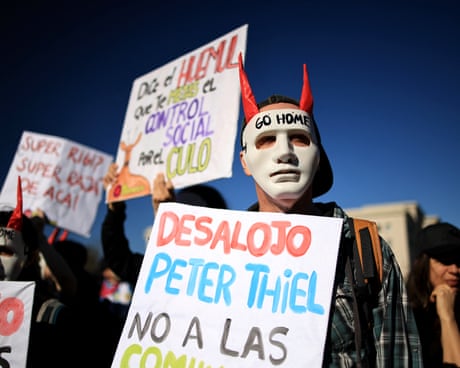
Dozens of protesters converged on Peter Thiel’s mansion in Buenos Aires this week after a congressional session raised questions about the billionaire’s presence in the country.

In white masks, they held signs saying “Peter Thief” and “No to the Peter Thiel law” in front of the wrought-iron gates of the $12m (£8.9m) residence, which Thiel bought in April as he moved his family to Argentina.

Continue reading...

© Photograph: AFP/Getty Images

© Photograph: AFP/Getty Images

© Photograph: AFP/Getty Images

  •  

US boosts drone surveillance as flesh-eating screwworms spread in Texas

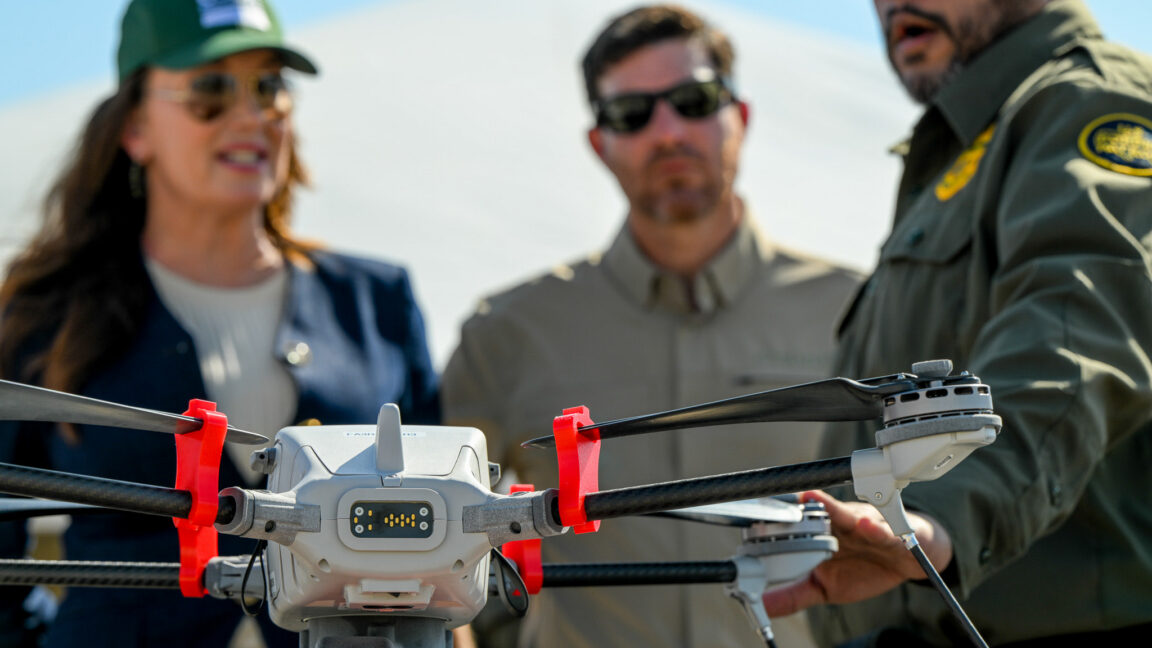
Hundreds of US government drones have switched from border surveillance to a different surveillance mission this summer—looking for signs of screwworm infestations in wild animals and livestock herds.

The flesh-eating New World Screwworm is the parasitic larva that emerges from eggs laid by flies in the open wounds or body openings of warm-blooded animals and humans, with untreated cases potentially leading to severe injury or death. Since the first screwworm cases were detected in South Texas in June, the US Department of Agriculture and US Customs and Border Protection have been conducting “one of the most extensive animal-health surveillance operations in the country,” the USDA said on August 10 in social media posts on platforms like X and Facebook.

The effort involves at least 200 drones owned by the Department of Homeland Security, which includes the Customs and Border Protection (CBP) agency. But the actual number in use "varies depending on availability and need," a USDA spokesperson told Ars.

Read full article

Comments

© US Department of Agriculture

  •  

Drone Captures Rare Aerial View of Stingray Migration Off Long Island

Drone Captures Rare Aerial View of Stingray Migration Off Long Island

A stunning drone video capturing dozens of stingrays swimming together off the coast of New York has drawn widespread attention from beachgoers and marine life enthusiasts alike. The footage offers an unusual bird’s-eye perspective on cownose rays, a species known for its seasonal visits to Long Island’s waters.

Captured last Friday off Southampton, the video was filmed by Joanna Steidle, a Hamptons-based drone pilot recognized for her striking aerial ocean photography. The clip shows a large group of cownose rays gliding gracefully just beneath the water’s surface, their distinctive wing-shaped bodies visible in remarkable detail.

Cownose rays, which can grow wing spans of up to three feet, are known for traveling in large schools and typically arrive in the region during the warmer summer months. Despite their somewhat intimidating appearance, marine scientists describe the species as shy and generally harmless to humans, posing little threat to swimmers or beachgoers who might encounter them.

While the sight of so many rays moving together may seem unusual to casual observers, experts note that this behavior is a normal part of their seasonal pattern and that these creatures have likely been visiting Long Island’s coastal waters for decades. The viral footage has offered a rare glimpse into a natural phenomenon that typically goes unnoticed by those on shore, highlighting the rich marine biodiversity present just off New York’s beaches during summer.

The post Drone Captures Rare Aerial View of Stingray Migration Off Long Island first appeared on EnviroLink Network.

  •  

Humpback Whales Return to Rio De Janeiro’s Waters, but Can Tourism and Conservation Coexist?

Humpback Whales Return to Rio De Janeiro’s Waters, but Can Tourism and Conservation Coexist?

At sunrise, the yacht Boaventura II departs Rio de Janeiro carrying a boatload of eager whale watchers. Just past the Cagarras Islands, a rocky archipelago three miles from Ipanema beach, passengers crowd the bow, eyes fixed on the horizon.

Their patience is quickly rewarded. A pod of bottlenose dolphins surfaces first, leaping and diving playfully near the boat. Moments later, two plumes of mist rise into the air—the telltale sign of humpback whales. The massive creatures breathe rhythmically at the surface before diving, their distinctive tail flukes briefly visible above the waves.

This scene, once unimaginable, has become increasingly common off Rio’s coast. Humpback whales, hunted to near extinction during the 20th century whaling era, have made a remarkable comeback in Brazilian waters. Their resurgence has sparked a booming whale-watching tourism industry, drawing visitors eager to witness these ocean giants up close.

Yet the very success story that brings tourists to the water is now raising concerns among marine biologists. As boat traffic increases to meet demand, researchers are questioning whether unchecked tourism growth could threaten the fragile recovery of the species. The challenge now facing Rio: how to celebrate and share this conservation triumph without loving the whales back toward danger.

The post Humpback Whales Return to Rio De Janeiro’s Waters, but Can Tourism and Conservation Coexist? first appeared on EnviroLink Network.

  •  

Healthy Vaccinee Effect Shapes Evaluation of Updated COVID-19 Vaccines in Older Adults

The apparent benefits of updated COVID-19 vaccines in older adults may be influenced by more than the vaccines themselves, according to a study examining the “healthy vaccinee effect,” a form of bias that can complicate observational research. Published in Nature Communications, the work by Lyth, Spreco, Hinkula and colleagues focuses on how differences between people who receive vaccination and those who do not can alter estimates of vaccine effectiveness, particularly in elderly populations whose health status can change rapidly.

Updated COVID-19 vaccines are designed to improve protection against circulating SARS-CoV-2 variants, especially protection against severe disease, hospitalization and death. Because randomized clinical trials are not usually repeated for every reformulated vaccine and every emerging variant, researchers frequently rely on real-world health data. These studies compare outcomes among vaccinated and unvaccinated people, but the two groups may differ in important ways before vaccination occurs. Such differences can produce an apparent vaccine benefit—or obscure a real one—even when the analysis carefully accounts for age and medical conditions.

The healthy vaccinee effect arises when people who are vaccinated are temporarily healthier, more active or better connected to healthcare services than those who remain unvaccinated. Individuals may postpone vaccination during an acute illness, after hospitalization or when they are approaching the end of life. At the same time, people who attend vaccination appointments may be more likely to receive preventive care, follow medical advice and seek treatment early. These characteristics are not necessarily caused by vaccination, but they can lower the vaccinated group’s risk of death or hospitalization during the period used for analysis.

This issue is particularly important in older populations. Elderly people often have multiple chronic conditions, fluctuating functional status and frequent contact with hospitals or long-term care facilities. A person may be eligible for a vaccine campaign but unable to receive the dose because of an acute health problem. If that person later dies or is hospitalized, conventional analyses may attribute the worse outcome to the absence of vaccination, even though the underlying illness was already present. Conversely, if researchers compare groups immediately after vaccination without accounting for this selection process, the vaccine may appear more protective than it truly is.

The study evaluates how this bias affects assessments of updated COVID-19 vaccines in elderly populations. Its central scientific contribution is to treat vaccination not simply as an exposure, but as an event embedded in a changing health trajectory. The health of older adults is not static: frailty, infection, recent hospitalization and access to care can all influence whether and when vaccination occurs. By examining these time-dependent factors, the researchers draw attention to the difference between a vaccine’s biological effect and the characteristics of the people who are able to receive it at a particular moment.

In epidemiological terms, the healthy vaccinee effect is a form of confounding and selection bias. Confounding occurs when another factor is associated with both vaccination and the outcome being measured. Selection bias occurs when inclusion in the vaccinated or comparison group depends on health-related circumstances. Timing can intensify both problems. If follow-up begins on the day of vaccination for one group but at an arbitrary date for another, the groups may not have equivalent baseline risks. Researchers therefore need to define an appropriate index date, align observation periods and account for recent illness, healthcare use and changes in eligibility.

The challenge is not merely statistical. A vaccine can provide strong protection against severe COVID-19 while producing a smaller or more variable effect against infection, depending on the variant, time since vaccination, prior immunity and the outcome being studied. If an observational analysis reports a lower mortality rate among vaccinated people, that result may reflect a combination of direct vaccine protection and the healthier profile of vaccine recipients. Separating these components requires careful design, including adjustment for measured risk factors and, where possible, comparison strategies that mimic a randomized trial.

The findings have practical implications for interpreting public-health evidence. Estimates of updated vaccine effectiveness should not be read in isolation from the population being studied, the timing of vaccination and the definition of the unvaccinated comparison group. Researchers may need to conduct sensitivity analyses, use negative-control outcomes, examine short intervals after vaccination and account for healthcare-seeking behavior. Analyses that compare people with similar recent health histories, or that use methods designed for time-varying confounding, can help determine whether an observed association is likely to represent a genuine vaccine effect.

The study does not undermine the value of COVID-19 vaccination for older adults; rather, it highlights the methodological care required to measure that value accurately. For clinicians, policymakers and the public, the message is that real-world vaccine evidence is strongest when biological protection is evaluated alongside the circumstances that determine who gets vaccinated and when. As SARS-CoV-2 continues to evolve and vaccine formulations are periodically updated, understanding the healthy vaccinee effect will remain essential for distinguishing the protection delivered by immunization from the protection that appears because healthier people are more likely to receive it.

Subject of Research: Healthy vaccinee effect and the evaluation of updated COVID-19 vaccines in elderly populations.

Article Title: Healthy vaccinee effect in the evaluation of updated COVID-19 vaccines in elderly populations.

Article References:

Lyth, J., Spreco, A., Hinkula, J. et al. Healthy vaccinee effect in the evaluation of updated COVID-19 vaccines in elderly populations. Nat Commun 17, 8014 (2026). https://doi.org/10.1038/s41467-026-76312-x

Image Credits: AI Generated

DOI: https://doi.org/10.1038/s41467-026-76312-x

Keywords: COVID-19 vaccines, updated vaccines, SARS-CoV-2, elderly populations, healthy vaccinee effect, vaccine effectiveness, epidemiology, observational studies, confounding, public health.

  •  

Nanoparticle pan-Ebolavirus vaccine protects rodents against lethal Zaire and Sudan virus infections

Ebola vaccine research has taken a step toward broader protection against one of the most persistent challenges in filovirus medicine: the existence of multiple Ebola virus species that can cause severe human disease. In a study published in Nature Communications, Weidle, Brunette, Wrenn and colleagues report that a pan-Ebolavirus nanoparticle vaccine protected rodents from lethal infection with both Zaire ebolavirus and Sudan ebolavirus. The finding is significant because vaccines designed around a single viral species may not provide reliable protection against genetically distinct Ebola viruses, particularly those responsible for separate outbreaks in different regions of Africa.

Ebola viruses belong to the filovirus family, a group of filament-shaped, enveloped viruses capable of causing hemorrhagic fever. Zaire ebolavirus is the species most closely associated with the large West African epidemic of 2014–2016 and remains the primary target of licensed Ebola vaccines. Sudan ebolavirus, however, is sufficiently different at the molecular level to present a separate immunological challenge. Outbreaks caused by Sudan virus have repeatedly demonstrated the need for countermeasures that are not limited to one viral lineage. A vaccine capable of recognizing shared features across several Ebola viruses could therefore simplify outbreak preparedness and improve the speed of emergency responses.

The strategy described in the study is based on nanoparticle vaccine technology. Nanoparticles can be engineered to present viral antigens in a highly organized, repetitive arrangement that resembles the dense surface of an actual virus. This geometry can improve the activation of B cells, the immune cells responsible for producing antibodies, by efficiently cross-linking B-cell receptors. Nanoparticles may also enhance the delivery of antigens to lymphoid tissues, where immune responses are initiated and refined. Rather than presenting a soluble protein in a relatively dispersed form, the platform is designed to display Ebola-related molecular targets in a configuration that can stimulate a stronger and more coordinated response.

A central challenge in creating a pan-Ebolavirus vaccine is selecting antigens that are both accessible to the immune system and sufficiently conserved among viral species. Ebola viruses share a broad structural organization, but their surface glycoproteins contain regions that vary in sequence and shape. The glycoprotein is especially important because it enables the virus to attach to host cells and enter them. Antibodies that bind to vulnerable regions of this protein can block infection, interfere with membrane fusion or mark viral particles for destruction by immune cells. A broadly protective vaccine must therefore encourage immunity against sites that remain functionally important even as the virus evolves.

In the rodent experiments, the vaccine was evaluated against lethal challenge with viruses representing the Zaire and Sudan species. Such challenge studies are designed to test whether vaccination-induced immunity can prevent severe disease after exposure to a high-risk pathogen. Protection in this setting reflects the combined activity of several immune mechanisms, including neutralizing antibodies, antibody-dependent cellular functions and virus-specific T-cell responses. Antibodies can prevent viral entry into cells, while T cells and other immune components help eliminate infected cells and limit the spread of infection. The reported protection across both virus species indicates that the nanoparticle formulation generated immune recognition broad enough to cross an important species barrier.

The result does not mean that the viruses are identical, nor does it establish that the vaccine will perform in humans in the same way. Rodent immune systems, dosing schedules and routes of exposure can differ substantially from human conditions. Animal challenge models are nevertheless a crucial stage in vaccine development because they reveal whether an immune response is capable of controlling infection under stringent circumstances. They also allow researchers to examine how quickly protection develops, how long it persists and whether vaccination reduces viral replication and tissue damage. Further studies will be needed to determine which immune markers best predict protection and whether the platform can be adapted for use against additional Ebola species.

The broad scope of the vaccine could have practical implications for epidemic preparedness. Existing Ebola vaccination strategies have demonstrated that immunization can protect against severe disease, but the need to match a vaccine to a particular viral species can complicate decisions during an outbreak. When the causative virus is initially unknown, health authorities may face uncertainty over which product to deploy. A pan-Ebolavirus formulation could potentially reduce that uncertainty by providing coverage against more than one major pathogen. It could also be useful for laboratory personnel, health-care workers and communities living in regions where different Ebola species may emerge over time.

Nanoparticle approaches may offer additional advantages beyond breadth. Their modular design can allow scientists to alter the antigen displayed on the particle without rebuilding the entire vaccine concept from the beginning. This flexibility is relevant to viral pathogens, which can change through mutation and may contain several related species with distinct antigenic profiles. At the same time, the platform must meet demanding standards for manufacturing consistency, stability, storage and safety. A formulation that performs well in laboratory animals must eventually demonstrate reproducible production, acceptable tolerability and durable protection in progressively more advanced models before clinical testing can be considered.

The study’s findings place nanoparticle engineering among the most promising strategies for developing next-generation filovirus vaccines. By combining multivalent antigen presentation with targets shared across Zaire and Sudan viruses, the researchers have demonstrated a route toward broader Ebola protection in rodents. The work does not eliminate the need for species-specific vaccines or replace surveillance, rapid diagnostics and infection-control measures. It does, however, provide experimental evidence that a single vaccine design can generate protective immunity against two medically important Ebola viruses. As outbreaks continue to expose gaps in preparedness, such cross-species technologies could become an important part of the scientific effort to prevent Ebola from turning a local emergence into a global health crisis.

Subject of Research: Pan-Ebolavirus nanoparticle vaccine protection against lethal Zaire and Sudan virus infection in rodents

Article Title: Pan-Ebolavirus nanoparticle vaccine provides protection in rodents from lethal infection by Zaire and Sudan viruses

Article References: Weidle, C., Brunette, N., Wrenn, S.P. et al. Pan-Ebolavirus nanoparticle vaccine provides protection in rodents from lethal infection by Zaire and Sudan viruses. Nature Communications (2026). https://doi.org/10.1038/s41467-026-76114-1

Image Credits: AI Generated

DOI: 10.1038/s41467-026-76114-1

Keywords: Ebola virus, Zaire ebolavirus, Sudan ebolavirus, pan-Ebolavirus vaccine, nanoparticle vaccine, filoviruses, viral immunology, infectious disease, vaccine research, rodent models

  •  

Rising number of UK children report seeing explicit deepfakes of themselves

Exclusive: anonymous flagging service says cases have surged, as watchdog says AI is making sexualised or ‘nudified’ content easier to produce

Children in the UK have reported a surge in explicit deepfake images featuring their likenesses, as a safety watchdog warned AI is making such content easier to produce.

The Report Remove service, which blocks intimate images from appearing online, said there had been a rapid increase in imagery that had been digitally manipulated or “faked” in some way, including with AI and nudification tools.

Continue reading...

© Photograph: Peter Dazeley/Getty Images

© Photograph: Peter Dazeley/Getty Images

© Photograph: Peter Dazeley/Getty Images

  •  

Meta Ordered to Pay $567 Million Fine by New Mexico Judge

The penalty, imposed by a state judge, is on top of a $375 million fine ordered by a jury that found Meta misled users about the safety of its platforms.
  •  

Apple launches legal challenge to UK demand for access to encrypted user data

Advanced Data Protection for iCloud uses end-to-end encryption to provide Apple’s highest level of cloud data security.
With Advanced Data Protection for iCloud, users have the choice to further protect important iCloud data even in the case of a data breach.

Apple has filed a legal complaint with the UK’s Investigatory Powers Tribunal seeking to overturn a secret government order requiring the company to enable access to encrypted customer data stored in its cloud services.The challenge, reported in early March 2025, targets a technical capability notice (TCN) issued by the Home Office in January under the Investigatory Powers Act 2016. The notice reportedly directed Apple to create the technical means for UK law enforcement and intelligence agencies to access data protected by the company’s Advanced Data Protection (ADP) feature: an optional end-to-end encryption layer for iCloud backups, photos, notes and other files that even Apple itself cannot normally decrypt, according to Financial Times.

Apple responded by withdrawing ADP for UK users rather than comply, stating that it would not build a “back door” or master key into its products or services. The company has long argued that creating such access points would undermine security for all users and could be exploited by malicious actors. Standard iCloud encryption remains available and is accessible to Apple when presented with a valid legal warrant, but ADP provides a higher level of protection that the firm says it cannot and will not weaken.

The case is understood to be the first major legal test of the Investigatory Powers Act’s provisions allowing authorities to compel technology companies to maintain capabilities to access encrypted material. The tribunal, an independent body that reviews complaints against the UK’s security and intelligence agencies, could quash the notice if it finds the order unlawful. Proceedings were expected to begin relatively quickly, though the government was anticipated to seek restrictions on public disclosure on national security grounds.

The dispute highlights the long-running tension between tech firms’ commitment to strong encryption and governments’ desire for lawful access in cases involving terrorism, serious crime or national security. Privacy advocates have warned that any mandated vulnerability in widely used systems could have global repercussions, while UK authorities maintain that such powers are essential for public safety and are subject to legal safeguards.Apple has consistently maintained that it has never built backdoors into its systems and will not do so. The outcome of the tribunal challenge could set an important precedent for how encryption and government surveillance powers interact under UK law.

MacDailyNews Take: We’ve been fairly clear on this subject for many years:

It’s not enough that every Brit alive has a government camera shoved up their ass 24/7/365? The UK has already slipped far down the slope that they ought to rename the place Airstrip One. – MacDailyNews, November 3, 2015

Those who would give up essential liberty to purchase a little temporary safety deserve neither liberty nor safety. – Benjamin Franklin

The current batshit insane “leadership” of Airstrip One is having yet another crisis of confidence. – MacDailyNews, February 7, 2025

Censorship reflects a society’s lack of confidence in itself. – Potter Stewart

MacDailyNews Note: Apple’s Advanced Data Protection for iCloud is an optional setting that offers Apple’s highest level of cloud data security. If you choose to enable Advanced Data Protection, the majority of your iCloud data — including iCloud Backup, Photos, Notes, and more — is protected using end-to-end encryption. No one else can access your end-to-end encrypted data, not even Apple, and this data remains secure even in the case of a data breach in the cloud.

How to turn on Advanced Data Protection for iCloud

On Mac

  1. Choose Apple menu  > System Settings.
  2. Click your name, then click iCloud.
  3. Click Advanced Data Protection, then click Turn On.
  4. Follow the onscreen instructions to review your recovery methods and enable Advanced Data Protection.

On iPhone and iPad

  1. Open the Settings app.
  2. Tap your name, then tap iCloud.
  3. Scroll down, tap Advanced Data Protection, then tap Turn on Advanced Data Protection.
  4. Follow the onscreen instructions to review your recovery methods and enable Advanced Data Protection.

More info about Apple’s Advanced Data Protection for iCloud here.


‎
Please help support MacDailyNews — and enjoy subscriber-only articles, comments, chat, and more — by subscribing to our Substack: macdailynews.substack.com. Thank you!

Support MacDailyNews at no extra cost to you by using this link to shop at Amazon.

The post Apple launches legal challenge to UK demand for access to encrypted user data appeared first on MacDailyNews.

  •  

Apple rejeita (de novo) exigência de backdoor do iCloud no Reino Unido

Em mais um capítulo da batalha travada entre a Apple e o governo do Reino Unido sobre a exigência de um ponto de acesso (ou backdoor) à criptografia do iCloud, a empresa apresentou uma contestação judicial contra a tentativa, por parte do governo britânico, de acessar os dados criptografados de usuários, segundo o Financial Times.

Na ação protocolada junto ao Investigatory Powers Tribunal (IPT), no mês passado, a Apple afirmou que não criou e não pretende criar uma backdoor para os dados dos seus usuários, argumentando que a ferramenta enfraqueceria a segurança do iPhone.

A exigência iniciada com base na Technical Capability Notice (ou Notificação de Capacidade Técnica, uma ordem governamental que prevê a interceptação, por parte do governo do Reino Unido, de dados de usuários mantidos pelas grandes empresas de tecnologia) ordenava que a Apple fornecesse informações dos usuários do iCloud protegidas pela Proteção Avançada de Dados (Advanced Data Protection), obrigando a empresa a redesenhar seu serviço caso optasse por acatar as demandas estatais britânicas.

O recurso, vale lembrar, acabou sendo removido do iOS no país para evitar fornecer aquilo que foi determinado pelo governo do Reino Unido.

A abrangência dos usuários impactados também foi motivo de disputa: como a determinação inicialmente impactava integralmente a base instalada do iCloud, o governo dos Estados Unidos optou por pressionar o Reino Unido a desistir de aplicá-la a todos os usuários americanos, o que de fato ocorreu posteriormente. O recuo, porém, não durou muito, e uma segunda ação — muito semelhante à primeira — foi protocolada em outubro de 2025.

  •  
❌