❌

Reading view

Novel particle beam could challenge Einstein’s Theory of Gravity

Researchers at ETH Zurich and the Paul Scherrer Institute in Villigen, Switzerland, have produced a high-intensity beam of muonium atoms in a cold state, an experimental advance that could enable a direct test of whether gravity acts differently on second-generation matter. The peer-reviewed study in Nature Physics describes a new method for generating muonium in superfluid helium. The resulting atoms travel at similar speeds and almost parallel to one another, properties required for a future interferometer that would measure the tiny influence of gravity on muonium.

The study did not conduct that gravitational measurement or find evidence that gravity departs from its expected behavior for ordinary matter; it instead developed the beam source needed for the proposed test. The experiment is designed to examine the universality of free fall and the equivalence of gravitational and inertial mass, a cornerstone of Albert Einstein’s theory of gravitation. In ordinary matter, bodies fall at the same rate at a given point within a gravitational field, while the equivalence principle links gravitational mass with inertial mass.

According to the research team, this principle has so far been demonstrated only with ordinary matter or first-generation antimatter. Muonium is a neutral atom formed from a positively charged antimuon and a negatively charged electron, making it a second-generation probe. A gravity experiment with this exotic atom would test whether the equivalence continues to hold for particles outside the first generation.

Muonium has two characteristics that make it useful for this test: it is neutral, and it belongs to a heavier and less familiar generation of particles. A neutral object allows gravitational behavior to be studied without the weak gravitational signal being masked by stray electromagnetic fields, which can dominate the behavior of charged particles. At the same time, muonium is exceptionally difficult to produce and control.

Its constituent muon decays after only about 2.2 microseconds. Earlier sources generated muonium atoms that flew off in many directions at different speeds and were therefore unsuitable for the precision required in a gravity experiment. The researchers addressed this problem by creating a cold, intense and well-directed beam.

The antimuons were directed into a thin layer of superfluid helium that had been cooled close to absolute zero, at minus 273 degrees Celsius. Superfluid helium is a quantum fluid in which individual helium atoms lose their identity and in which impurities are not tolerated. Lead author Jesse Zhang said the researchers used the superfluid as an “atomic cannon,” exploiting the conversion of chemical potential into kinetic energy to propel the newly formed muonium atoms out of the liquid.

When an antimuon encounters a free electron in the superfluid helium, it forms a neutral muonium atom with positive chemical potential. The atom is forced out of the liquid, and as it reaches the surface, that chemical potential is converted into kinetic energy. The resulting boost sends the muonium vertically out of the helium.

Importantly, the atoms must move through the quantum liquid at a suitable speed without collisions, because excessive scattering would prevent them from reaching the surface within their very short lifetime. The high-intensity antimuon beam from PSI allows many muonium atoms to be generated for the planned experiments. Anna Soter, a professor of physics at ETH Zurich and member of the research team, said the cold state is what makes the proposed gravity experiment possible.

In this context, “cold” does not mean that the atoms are motionless; it means that they propagate at similar speeds and nearly parallel to one another. This improved control over direction and velocity is important because the planned instrument will use the wave properties of the atoms to create an interference pattern. A very small shift in that pattern caused by Earth’s gravitational pull would provide a measure of gravity’s effect on muonium.

The study establishes the upstream beam capability rather than reporting the result of that comparison. The next stage of the program is the development of a muonium interferometer. According to the researchers, they hoped to test the method for the first time with the atomic beam in the year of the announcement and, if that worked as expected, to carry out the actual gravity experiment two or three years later.

Those are planned milestones rather than completed measurements. If the interference pattern of muonium shifts differently from the pattern expected for ordinary matter, Soter said the result would be surprising and could, among other theoretical possibilities, point toward the existence of a fifth force. No fifth force has been proven, and the present work provides no evidence for one.

The team’s primary aim is to measure whether the equivalence between gravitational and inertial mass applies to a second-generation particle. Physics recognizes four fundamental interactions: gravity, electromagnetism, the strong interaction and the weak interaction. A fifth force has been proposed repeatedly, but it has never been established.

Soter emphasized that the researchers are open-minded about what the measurement may show while keeping the immediate objective focused on the first such test. The new beam is therefore an enabling experimental result, not a demonstration that Einstein’s theory has been challenged or overturned. Beyond the planned gravity measurement, the high-intensity muonium beam is expected to enable more precise laser-spectroscopy experiments.

These could allow muonium to be measured more accurately than in previous work and provide information about the muon’s mass and fundamental physical constants, which are stated goals of the research group. The same experimental source can thus serve two purposes: supplying a cold, directed beam for a gravitational comparison and providing a larger, better-controlled population of muonium for detailed spectroscopic study. The reported advance addresses a major technical obstacle while leaving the central scientific question unresolved.

A successful gravitational test will still require an interferometer capable of resolving a minuscule shift in an interference pattern while dealing with muonium’s short lifetime, beam quality and other sources of uncertainty. The study’s demonstrated result is the generation of a high-intensity, superthermal muonium beam in superfluid helium, with atoms emerging in the cold state needed for future work. Whether muonium falls exactly as expected for ordinary matter remains to be measured.

The beam nevertheless supplies the experimental foundation for testing gravitational universality in a second-generation particle, a comparison that had not previously been carried out with muonium.

Subject of Research: A cold muonium beam developed for future tests of gravitational universality and laser spectroscopy

Article Title: Novel particle beam could challenge Einstein’s Theory of Gravity

Article References: Novel particle beam could challenge Einstein’s Theory of Gravity. Original publication (Bibliographic details unavailable.)

Image Credits: AI Generated

DOI: Not provided

Keywords: muonium, muon beam, gravity, gravitational universality, equivalence principle, interferometry, superfluid helium, laser spectroscopy, ETH Zurich, Paul Scherrer Institute, Novel, particle
  •  
  •  

Review of Spielberg’s Disclosure Day | What is the Real Message?

The movie Disclosure Day, directed by Spielberg, investigates a conspiracy about government suppression of alien evidence dating back to Roswell. This review questions current societal beliefs about extraterrestrials and Darwinian evolution. It exposes the deception, ultimately portraying alien visitation as a misunderstood age-old phenomenon rather than a new factual reality.

  •  

Quantum error correction goes well beyond breakeven

Running complicated algorithms on quantum computing hardware is going to require the use of logical qubits, where collections of hardware qubits are linked together in ways that allow errors to be detected and corrected. In general, the more hardware qubits you dedicate to each logical qubit, the better the chances are of identifying errors. But, given that the hardware qubits are prone to errors, adding more of them also increases the probability that errors will occur. If the hardware error rate is too high, then growing the logical qubit will only make matters worse.

Fortunately, several companies have demonstrated hardware where the error rate is not too high. Several demonstrations show logical qubits are beyond the breakeven point, where adding more qubits improves performance. The problem is that the improvement isn't very dramatic. To lower error rates to levels we'll need to run complex algorithms, we'd have to add a completely impractical number of qubits to each logical qubit.

On Monday, Quantinuum announced that its current generation of hardware is capable of scaling well beyond the breakeven point. Each step up in the size of logical qubits improved some measures of their performance by a factor of over 10.

Read full article

Comments

© Quantinuum

  •  

What did the Liberty Bell sound like? Science is on the case.

The Liberty Bell, with its famous crack, hasn't been rung in 180 years, but that hasn't stopped scientists from pondering what the bell might have sounded like when tolling. In honor of the nation's 250th anniversary, researchers at Penn State University have modeled its acoustic properties, drawing on data collected from one of the bell's replicas. The work was first presented at a meeting of the Acoustical Society of America in Philadelphia earlier this year, followed by an article in Physics Today.

Historians aren't sure exactly when the Liberty Bell acquired its distinctive crack, just that it occurred sometime between 1817 and 1846. An 1846 account in the Public Ledger described the ringing of the bell on February 23 that year and mentioned that the bell had developed a crack, which someone had attempted to fix by filing the sides down. But it didn't work: The February 23 ringing extended the crack even more, so much so that "the old Independence Bell ... now hangs in the great steeple irreparably cracked and forever dumb." Nobody has heard it ring since.

This wasn't the first time the bell had cracked; the rim cracked shortly after it arrived in Philadelphia in 1752, the first time the clapper struck while testing the sound. It was recast by two local foundry workers, John Pass and John Stow, not once but twice, because the first recast produced a sound that one bystander likened to coal scuttles banging together.

Read full article

Comments

© William Zhang/CC BY 2.0

  •  

Computation sorts thousands of 2D crystals for topology and twisting


In 2004, physicists isolated graphene, a sheet of carbon just one atom thick. It launched the study of two-dimensional (2D) materials: crystals a few atoms thick in which electrons are confined to a plane and can behave quite differently from those in ordinary solids. The family of known and predicted 2D crystals has since grown to thousands of members. Two recent studies show how computation can search that family for the most promising ones, the first for unusual electronic “topology”, the second for crystals well suited to twisting.

A hidden property of electrons

Electrons in a crystal can only have energies within allowed ranges called bands, separated by forbidden gaps. If a gap separates the filled electrons from the empty states, the material is an insulator. In a semimetal, filled and empty bands just touch, so a few electrons can move freely.

Two insulators can still differ at a deeper level, described by topology: a property of the whole set of electron states that cannot change smoothly, only by closing the gap or breaking a protecting symmetry. A doughnut and a coffee mug are topologically alike because each has one hole, and neither can become a sphere without tearing.

The idea took off with the quantum spin Hall effect. Proposed for graphene in 2005, it proved unobservable there because the effect is far too weak. A 2006 proposal for thin layers of mercury telluride was confirmed in 2007. In such a topological insulator the interior blocks current, yet the edges conduct, with electrons of opposite spin travelling in opposite directions, which protects them against many kinds of imperfection.

Symmetry-based methods known as topological quantum chemistry in 2017 made it possible to decide whether a computed electronic structure is topological. Applied to three-dimensional crystals, they pointed to thousands of candidates. Flat crystals lagged behind, with only about 400 known topological or related monolayers.

The first study, “Two-dimensional Topological Quantum Chemistry and Catalog of Topological Materials” 1, adapts these methods to 2D crystals and applies them to 8,872 entries in two computational databases. It finds 4,073 with nontrivial topology or a related property called obstruction, including 905 topological insulators, 2,129 topological semimetals and 1,003 obstructed atomic insulators, plus 36 close variants. In an obstructed insulator the electrons are centred on empty positions between the atoms rather than on the atoms themselves. The bulk looks ordinary, but cutting the crystal along certain lines produces edge states, and small flakes can carry fractions of an electron’s charge at their corners. The study also calculates edge states for selected materials. Its catalogue includes over 100 monolayers already made in laboratories, but most entries are computer predictions whose properties remain to be tested.

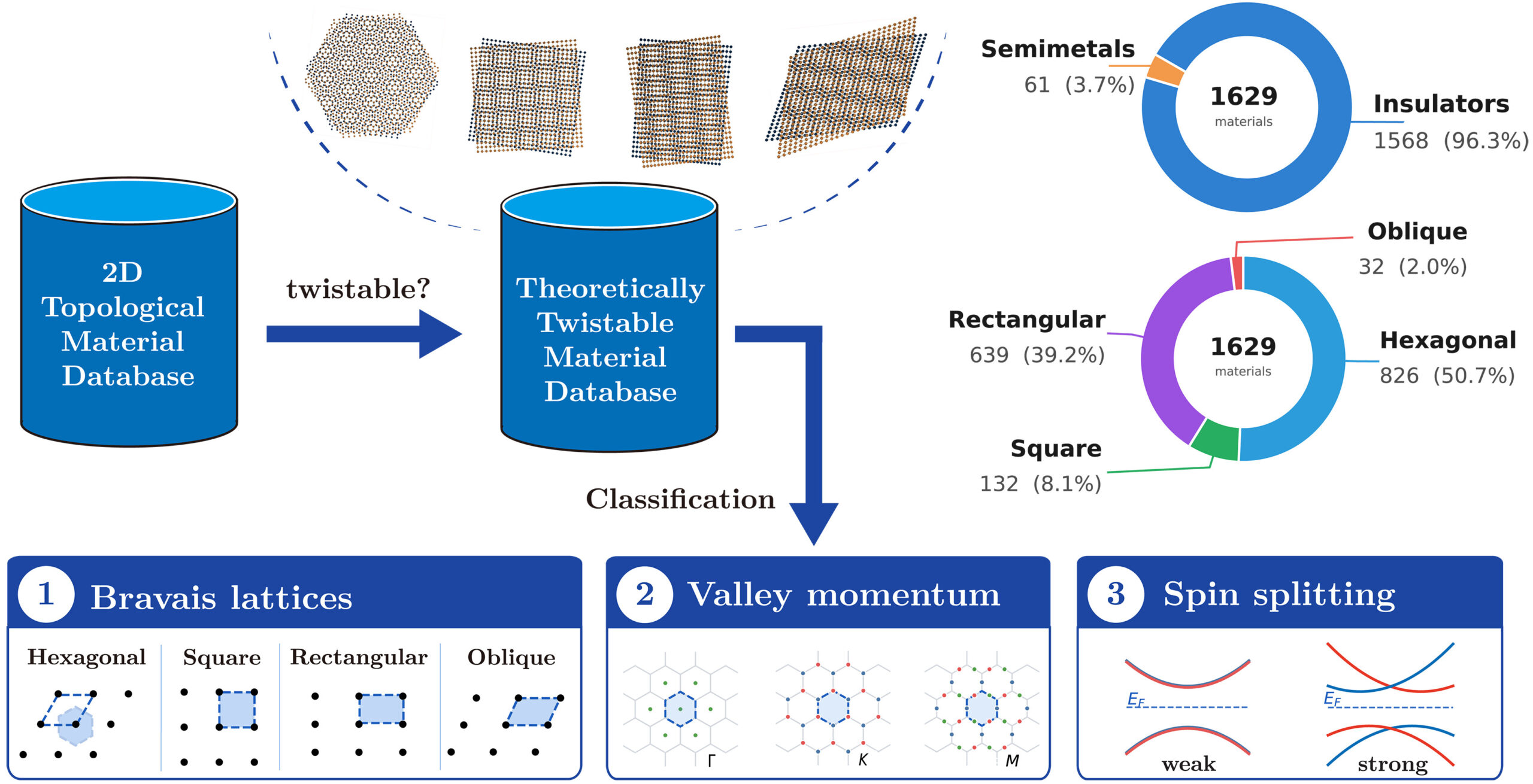
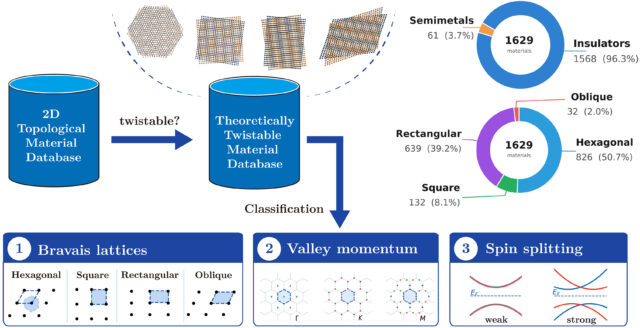
Workflow of the database construction. Starting from a 2D topological material database, a filtering score is applied to construct a database of theoretically twistable materials, which includes both semimetals and insulators. The candidate materials in this database are further classified according to their Bravais lattices, valley splitting, and spin splitting. Source: Y. Jiang et al. (2026) Science doi:10.1126/science.adu1550

Twisting layers

Stack two atomic sheets and rotate one slightly, and the mismatch creates a large interference pattern, called a moiré pattern, much like two overlapping window screens. Electrons feel this longer repeating pattern, and under the right conditions their bands become nearly flat. Electrons in a flat band have little energy of motion, so their mutual repulsion dominates and strongly correlated behaviour can emerge.

In 2011, calculations predicted that two graphene sheets twisted by about 1.1 degrees, a “magic angle”, would have such flat bands. In 2018, experiments at that angle revealed insulating states caused by electron repulsion, and superconductivity. Twisted layers of other materials, such as MoTe2 and WSe2, have since shown many correlated phases, though the mechanisms are still debated.

Most work has focused on these few materials, because most crystals have electronic structures too complicated to predict once twisted. The second study, “2D theoretically twistable material database” 2, therefore defines a material as theoretically twistable if its low-energy electrons admit a simple description. In a metal, the relevant electrons must sit at isolated points, as in graphene. In an insulator, the top of the filled band or the bottom of the empty band must stand clear of other bands. Insulators must also have gaps between 0.2 and 3 electronvolts, because larger gaps make electrical contacts difficult. The search was limited to crystals with at most 12 atoms in the repeating cell and four chemical elements.

Starting from the first study’s database, it identifies 61 semimetals and 1,568 insulators. It ranks them with a score and sorts them by lattice shape (about half are hexagonal), by where in momentum space the relevant electrons sit, and by the strength of spin-orbit coupling, the link between an electron’s spin and its motion. These choices shape the moiré pattern, which can resemble honeycomb, kagome or square lattices. Square-lattice moiré systems have been proposed but not yet realized, and could help simulate models relevant to cuprate superconductors.

Calculations on twisted bilayers of SnSe2, SnS2, ZrS2, HfS2 and Sc2CCl2 at a twist of about 7 degrees show isolated flat bands, as the database predicts. Experiments connect the theory to the laboratory. Bulk crystals of SnSe2, SnS2, HfS2, GaTe and ZrNCl were grown. Single layers of several candidates, including SnSe2, HfSe2, ZrS2 and WS2, were peeled off with a gold-assisted technique that yields larger, cleaner flakes. A dual-gated two-layer SnSe2 device was built for electrical measurements, and a twisted two-layer HfS2 device was used for scanning tunnelling measurements near absolute zero.

The direction is clear. Instead of discovering materials by trial and error, it is becoming possible to search systematically for crystals with chosen properties, then test them layer by layer.


Author: César Tomé López is a science writer and the editor of Mapping Ignorance

Disclaimer: Parts of this article may have been copied verbatim or almost verbatim from the referenced research paper/s.

References

  1. U. Petralanda, Y. Jiang, H. Pi, M. G. Vergniory, B. A. Bernevig, N. Regnault, and L. Elcoro (2026) Two-dimensional topological quantum chemistry and catalog of topological materials Science doi: 10.1126/science.adu2107 ↩
  2. Y. Jiang, U. Petralanda, H. Pi, G. Skorupskii, Q. Xu, D. Calugaru, H. Hu, J. Xie, R. A. Mustaf, P. Hohn, V. Haase, A. Ouahchi, S. Samal, J. Zhu, D. Yang, Z. Geng, G. Avedissian, Y. Wang, M. G. Vergniory, M. Claassen, et al. (2026) 2D theoretically twistable material database Science doi:10.1126/science.adu1550 ↩

The post Computation sorts thousands of 2D crystals for topology and twisting appeared first on Mapping Ignorance.

  •  

Triplet of ‘Ghostly’ Galaxies Hints at What Dark Matter Is — and Isn’t

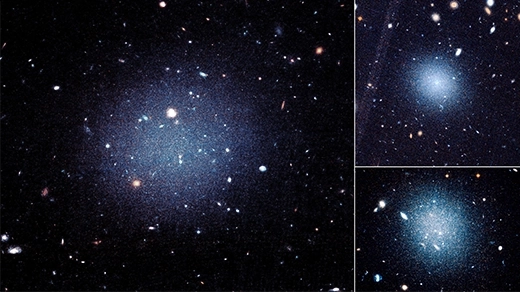
About 65 million light-years from Earth, three galaxies don’t look quite right. They aren’t whirlpools bursting with light, but pallid objects dimly illuminated by a smattering of stars. “They have this ghostly appearance,” said Michael Keim, an astrophysicist at Yale University. And this isn’t even the weirdest thing about them. Dark matter is the invisible glue that keeps the largest…

Source

  •  

When dark matter comes in more than one wave


Galaxies rotate faster than the matter we can see should allow. Evidence for an unseen, gravitating substance began to build in the 1930s with Fritz Zwicky’s studies of galaxy clusters, and strengthened in the 1970s as Vera Rubin measured how stars orbit within spiral galaxies. Nearly a century later, dark matter is still known almost entirely through its gravity. It holds galaxies together and shaped the web of cosmic structure, yet its nature remains unknown.

Axions, plural

One candidate has an unusual origin. In the late 1970s, physicists proposed a new particle to solve a puzzle in the theory of the strong nuclear force. Frank Wilczek named it the axion, after a laundry detergent, because it promised to clean up the problem. By 1983 theorists had shown that axions about a millionth of an electronvolt in mass could make up cold dark matter, the slow-moving kind. Later, string theory, an attempt to unify gravity with quantum physics, suggested that nature may contain not one axion but many, with masses spread across a vast range. Some of these particles could be extraordinarily light: around 10⁻²² electronvolts, more than 10²⁷ times lighter than an electron.

Such lightness has a striking consequence. The quantum wavelength of a particle grows as its mass shrinks, and for these axions it stretches to astronomical size, comparable to the roughly half-kiloparsec cores of small dwarf galaxies, about 1,600 light-years. Dark matter would then behave less like a swarm of tiny grains and more like a vast wave, often called wave or fuzzy dark matter. Simulations from 2014 showed that every galaxy halo would have a dense central core with a flat density profile, surrounded by a shimmering pattern of interfering waves. The flat core contrasts with the steep central spike predicted by the simplest cold dark matter models. The same wave nature also prevents very small clumps from forming, which may help explain why fewer small satellite galaxies are seen around our Galaxy than those models predict.

There is, however, a serious difficulty. Light from distant quasars passes through clouds of hydrogen that imprint absorption lines on it, the Lyman-alpha forest, which records how matter was clumped on small scales in the early Universe. If a single ultralight species made up all dark matter, these data demand a considerably larger mass. One influential analysis set a lower limit of about 2×10⁻²⁰ electronvolts, some two hundred times heavier than the favoured value. Separately, deep surveys show no clear drop in the number of faint galaxies, which argues against single axions lighter than about 2.5×10⁻²² electronvolts. Both conclusions assume one kind of axion.

axions
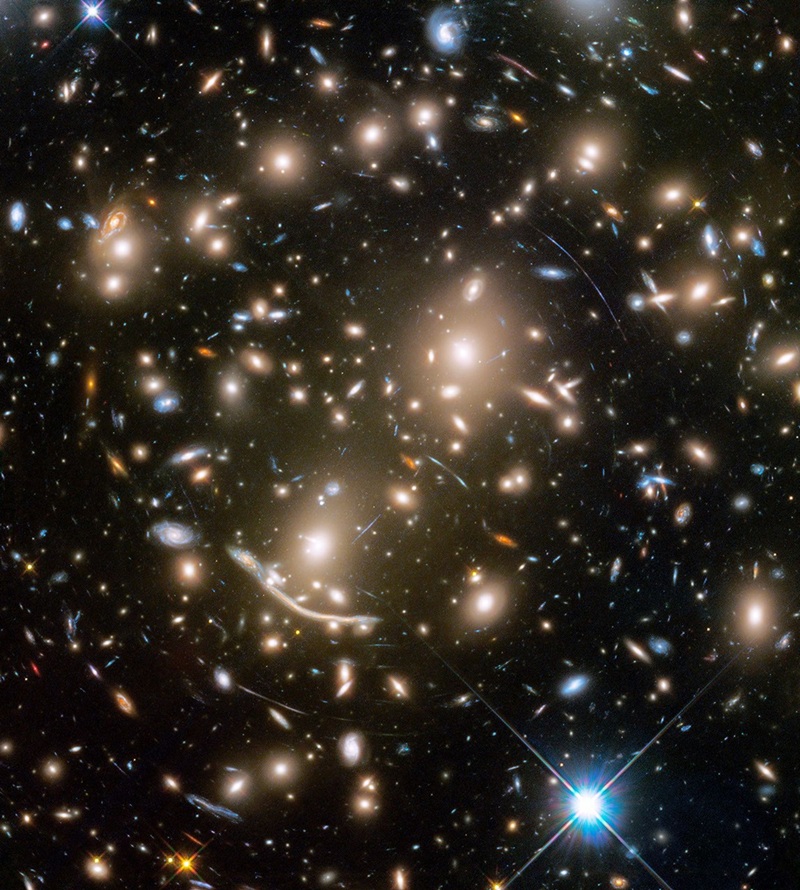
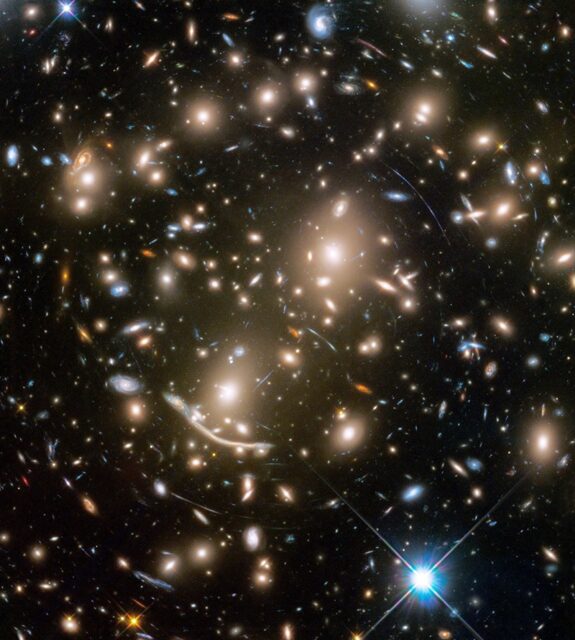
The galaxy cluster called Abell 370 contains an astounding assortment of several hundred galaxies tied together by the mutual pull of gravity. Entangled among the galaxies are mysterious-looking arcs of blue light, the most stunning example is “the Dragon” (to the lower left of centre). Source: NASA, ESA, and J. Lotz and the HFF Team (STScI)  

A new analysis 1 asks what changes if dark matter is a mixture. On large scales, it finds, all species feel the same gravitational field, so they respond together and behave much like one effective axion. The mass of that stand-in depends on each species’ mass and on its share of the total dark matter, with lighter species weighing more heavily. The recipe was tested against a detailed calculation for two species, 30% at 10⁻²² electronvolts and 70% at five times that mass. It reproduced the overall suppression of structure well, missing only some fine oscillations, and the resulting difference in predicted mass fluctuations was below 0.1%. If this holds, a multi-axion universe could build large-scale structure much like a single-axion one, with the cut-off in faint galaxies set by the effective mass. The method extends to any number of species and could seed future simulations.

Inside galaxies the picture changes. On these smaller scales the species act independently, and each weaves its own interference pattern with its own grain size. Projected along the line of sight, these produce density fluctuations of only a few percent, yet they bend light enough to blur the lines of greatest magnification in a gravitational lens, called critical curves, into corrugated bands.

The Dragon test

The Dragon Arc offers a test. This is a spiral galaxy, seen when the Universe was half its present age, stretched and magnified by the galaxy cluster Abell 370. In 2025, observations with the James Webb Space Telescope revealed more than forty individual stars in it, each appearing as a brief flicker when magnified by intervening stars in the cluster. Their positions scatter broadly around the critical curve, and an earlier analysis found this matches wave interference. Cold dark matter clumps would instead confine them to a narrower band skewed in the opposite direction. Reading the scatter as a wavelength of about ten parsecs gives a lensing effective mass of roughly 2.4×10⁻²² electronvolts, assuming about 2.4×10¹⁴ solar masses lie inside the critical curve. This differs from the large-scale effective mass, because lensing depends on each species’ share of the projected density. It is not a detection of axions but a model-dependent interpretation. If the two species suggested by dwarf galaxies, about 1.9×10⁻²² and 2.3×10⁻²¹ electronvolts, made up the halo, the lighter would supply roughly 89% of the projected density near the arc.

The most distinctive prediction concerns position. Heavier axions are expected to gather near the centre of a halo and lighter ones to dominate farther out, so the lensing effective mass should change from place to place. A single species cannot do this. The Cosmic Horseshoe, a lensed galaxy where the telescope may find around sixty flickering stars per pointing, could test it by comparing two positions about five arcseconds apart. A mismatch would hint at several species.

This work shows how a mixture of ultralight particles could look like a single one across the cosmos while revealing its true complexity inside galaxies, perhaps reconciling cosmic constraints with galactic evidence. Proving it will require better simulations, more realistic models of multi-species haloes, and further lensing observations.


Author: César Tomé López is a science writer and the editor of Mapping Ignorance

Disclaimer: Parts of this article may have been copied verbatim or almost verbatim from the referenced research paper/s.

References

  1. J. Zhang, T. Broadhurst, J. Lim, P. Morilla, and S. K. Li (2026) Multi-copy axion transfer function and observational implications of effective de Broglie scales Astron. Astrophys. doi: 10.1051/0004-6361/202558735 ↩

The post When dark matter comes in more than one wave appeared first on Mapping Ignorance.

  •  

The Universe Should Be Empty — A Particle Physicists Ignored for Decades May Explain Why It Isn’t

If matter and antimatter had come out of the Big Bang in equal amounts, there would be no stars today. Every particle has an antimatter twin with the opposite electric charge, and when the two meet, both vanish in a burst of energy. A perfect balance would have left a universe of pure light, with […]

  •  

Scientist tattoos himself with disappearing ink

Tattoos are pretty permanent decisions, and laser removal is often described as more painful than actually getting them in the first place. But what about a design that can only be seen when you want to see it? Engineers at the University of Colorado Boulder are working on a new type of tattoo ink to answer that question. Their dye is specifically concocted to physically alter depending on exposure to visible or ultraviolet (UV) light.

The team described their invention in a study published earlier this month in the journal Matter & Light, and they didn’t only demonstrate the capabilities in the lab on silicone and pig skin. One of its creators, Carson Bruns, has already tattooed himself with the ink.

“[It’s] almost a tradition,” the study co-author recently told Nature.

Bruns, a nanoscientist at UC Boulder, previously developed a now-commercialized tattoo product called “Magic Ink” that turns magenta depending on its exposure to UV light. To highlight its efficacy, Bruns gave himself “solar freckles” as a method to track his exposure to sunlight. In similar fashion, he recently completed a similar session on his leg using the disappearing ink.

The formula currently comes in three colors—yellow, blue, and magenta—and essentially relies on the same principles behind transition lenses and some textiles. Each dye is composed of tiny spheres of acrylic glass. These beads contain photochromes, which are chemical compounds engineered to absorb specific light wavelength photons. In this case, the photochomic dye’s spheres begin in their original color, but then flatten into transparency after absorbing corresponding light photons exposed to UV rays. The dye remains this way until it absorbs visible light photons, which destroys the chemical bond and allows the spheres to return to their original shape.

Aside from the lab tests, Bruns tattooed his own leg over about 12 months using various dye combinations, all of which responded as intended to UV and visible light exposure. The ink also remained effective for over two years—but the team’s intention is go beyond a nifty parlor trick. Future ink iterations may be particularly useful in medical procedures, such as temporary markings to help maintain accuracy during direct radiotherapy sessions. For now, however, the photochromic tattoo dyes remain for laboratory (and Bruns’) use only until further safety assessments are completed.

The post Scientist tattoos himself with disappearing ink appeared first on Popular Science.

  •  

Chernobyl particles look remarkably similar to explosion day in 1986

Just over 40 years ago, what began as a routine safety test at the Chernobyl nuclear power plant (or Chornobyl in Ukrainian) in Soviet Ukraine spiraled into one of the most recognizable disasters of the 20th century. The reactor exploded and burned, spewing chunks of nuclear debris into the sky. Among that toxic litter were countless tiny “hot particles,” fragments of nuclear fuel smaller than the width of a human hair (somewhere between 8 and 50 micrometers across). Those particles are called hot because they’re highly radioactive, and still are four decades later. Today, scientists entering the areas of the Chernobyl Exclusion Zone where the hot particles are located are required to wear a full protective suit.

But after decades of study, scientists still know surprisingly little about what their particles are made of at the molecular level. A team of researchers from Germany recently set out to change that by analyzing six particles collected from two sites in the Exclusion Zone using synchrotron X-ray diffraction. Surprisingly, they discovered the particles remained far more chemically stable than they had expected. Their crystal structures were largely intact, suggesting they changed little since forming during the disaster and its aftermath.​​​​​​​​​​​​​​​​

The findings were recently published in the Journal of Hazardous Materials. 

What are Chernobyl’s hot particles?

The hot particles thrown out of the Chernobyl plant fall into three general categories. The first is fuel that remains chemically and physically similar to the reactor’s original uranium dioxide. The second type consists of fuel that melted during the explosion and fused to its zirconium-alloy protective casing. The third type is fire-damaged fuel. 

As the reactor’s graphite burned for 10 days after the explosion, the intense heat oxidized some of the fuel into other uranium compounds. 

Particles, crystals…and dogs

For this particular study, the team sourced their six samples from two areas in the exclusion zone, and all three hot particle categories were represented. Two came from asphalt in Pripyat, roughly 2 miles from the reactor, while the other four came from farm soil samples in Kopachi, about 3 miles away. 

With the samples selected, the researchers isolated individual particles pulled from the soil, mounted each type to a tiny tungsten electrode, and then sent them to the European Synchrotron Radiation Facility in Grenoble, France. There, a team analyzed the particles using intense X-rays produced by a synchrotron, a circular particle accelerator. The researchers rotated each particle in an X-ray beam, measuring it from roughly 2,000 different angles. Watching how the x-rays bounced off all that material revealed how its atoms were arranged, showing which compounds each particle was made of and, most importantly for this study, how intact its crystal structure remained.

Hot particle from the 1986 reactor accident: The nuclear fuel particle is partially fused with zirconium oxide. Image: Laura Stalmann.

They expected to see particles that had been broken down by years of exposure to the elements. Instead, the crystal structures were still largely intact. That surprising finding suggests the particles are far more chemically stable than previously assumed, holding their radioactive contents locked inside their crystal structures. 

Though some of the particles showed more oxidation (of a loss of electrons when they interact with other chemicals) than others, two showed virtually none at all. Importantly, two of the particles pulled from the same soil near Kopachi included both a sample heavily oxidized and one that was largely untouched. The authors suggest that if weathering from the environment were the cause of the oxidation, then both particles sitting side by side should look similar. Instead, they say the oxidation likely happened during the disaster itself, when the reactor fire baked some of the fuel for days.

That timeline is potentially good news for the areas around the power plant. If the particles are indeed holding onto that radioactive material and not oxidizing, that could mean less harmful material is making its way into the soil and, in turn, the surrounding ecosystem. Still, the researchers quickly caveat any broad claims. These were just six samples, after all. Making any wider claim about the soil in the region generally would require more research.

Though it’s still too early to say with any certainty, that lack of leaching dangerous material into the environment could partly help explain why the exclusion zone has become home to an ever-growing neighborhood of furry mammals in recent years. In fact, the area’s lack of humans has made it a thriving ecosystem for foxes, bears, and bison. It’s a modern, albeit a little unorthodox, example of rewilding. Of course, even in this new frontier, the consequences of a nuclear disaster aren’t totally absent. A recent study of roaming dogs living in the Chernobyl Exclusion Zone, many believed to be descendants of dogs left by their owners during the 1986 evacuation, show distinct genetic differences from dogs in an area just 10 miles away.

Related Stories

The post Chernobyl particles look remarkably similar to explosion day in 1986 appeared first on Popular Science.

  •  

The world’s first nuclear clocks start ticking

Timekeeping has officially entered its nuclear age. Two independent teams, one in Vienna, Austria and another in Beijing, China have built working thorium-229 nuclear clock prototypes. Rather than track changes in an atom’s electrons the way that current atomic clocks do, these nuclear versions use a laser that’s tuned to the frequency where a thorium nucleus flips between two energy states for potentially even more accurate time keeping. Scientists believe this new approach could one day make the clocks far more reliable than any existing atomic timekeeper. 

To put that in perspective, current atomic clocks can  keep time with an uncertainty of 1 second every 300 million years. Scientists predict that more advanced nuclear clocks could move that metric into the billions of years. That could open the door to probing some of the universe’s hardest-to-measure phenomena, like notoriously elusive dark matter. The Chinese clock and Austrian clock were detailed in a pair of studies published this week in the journal Nature.

“The great advantage of the new nuclear clock in Vienna is that, if you use atomic nuclei rather than atoms, much higher precision is possible in principle,” Thorsten Schumm, a study co-author and professor at the Vienna University of Technology, said in a statement.

a laser beam and a crystal
The thorium crystal and the laser beam. Image: TU Wien.

How nuclear clocks work 

The world’s network of atomic clocks is already mind-bogglingly accurate. They also underpin a slew of modern necessities, from GPS to internet communication. Atomic clocks work by tuning a laser to the exact frequency of light that makes an atom’s electron jump between two levels. 

Nuclear clocks, as the name suggests, go even deeper. They target jumps inside of an atom’s nucleus.  Lasers focus on vibrations from a single nucleus rather than the whole atom. For those who weren’t paying all that much attention in chemistry class, a nucleus is tens of thousands of times smaller than the atom surrounding  it.

a team working on a clock in a lab
Luca Toscani de Col (top right) working on the nuclear clock in the Vienna lab. Image: Matthias Heisler, TU Wien.

Keeping time in a nuclear clock requires keeping the laser tuned to the nucleus as it switches between states. This process is sometimes colloquially referred to as “squishing” the nucleus. Squishing atomic nuclei usually requires an enormous amount of energy. However, the isotope Thorium-229, is a rare exception, which is why both teams at Vienna University of Technology and Tsinghua University in Beijing built their clocks around it.

“The basic idea is simple: you have a laser and you have thorium,”  Schumm added. “The laser changes the energy state of the thorium nuclei, and the thorium nuclei are used to stabilize the frequency of the laser.”

Nuclear is still catching up to atomic 

These two prototype clocks are many years in the making. The thorium crystal used for both was grown separately, but around the same time. So far, testing reportedly shows the version in China is about six times as stable than the clock  in Vienna. The Vienna prototype, meanwhile, is reportedly the first nuclear clock that stabilizes itself the way atomic clocks do. Schumm recently told the South China Morning Post this parallel development has led to a  “fierce but friendly global competition.” 

Nuclear clocks may eventually far surpass their atomic forebears, but they aren’t there yet. Researchers estimate the new prototype may drift by about one second every 30 million years. That’s roughly 10 times worse than the cesium clocks that currently define the official second.

Still, researchers expect that stronger, more efficient lasers and better thorium crystals will make each new generation of nuclear clocks ever more accurate, until they eventually surpass atomic clocks altogether. Who manages to get their first remains to be determined. 

The post The world’s first nuclear clocks start ticking appeared first on Popular Science.

  •  

When Doi met Peliti: physicists celebrate 50 years of the Doi-Peliti theory

In September 1976 physicist Masao Doi, then working at Tokyo Metropolitan University, published two groundbreaking papers. The work – published in Journal of Physics A – cast classical stochastic many-body problems in the mathematical language samiliar to that of quantum-field theory (9 1465 and 9 1479).

Although this happened at a time when theoretical field methods in statistical mechanics were getting into full swing, this gem of deep scientific insight remained hidden for many years.

Indeed, it was reinvented several times, most notably in 1980 by Peter Grassberger and Martin Scheunert from the University of Wuppertal, who also highlighted the many applications for the theory.

Following conversations with Grassberger at a meeting organised by the Centre Européen de Calcul Atomique et Moléculaire in September 1985, Luca Peliti from the University of Rome went about putting Doi’s theory into a path integral formalism, thus making it amenable to renormalisation.

That same year he published a letter on the renormalisation group treatment of a reaction-diffusion process, using the framework that was named Doi-Peliti field theory (J. Phys. France 46 1469).

The works by Doi and Peliti quickly became viewed as fundamental building blocks to calculate not only asymptotics but also systematic approximations of observables in reaction-diffusion processes.

Theoretical physicist John Cardy from the University of Oxford, used Doi-Peliti theory as a work-horse for reaction-diffusion processes.

In the 2000s, Cardy and colleagues produced not only a string of renormalisation group treatments of reaction-diffusion processes, but also reviews and tutorials at different levels of technicality, which made Doi-Peliti field theory accessible to many of us.

Key insights

Doi and Peliti in Cambridge
Eye to eye: Doi (left) and Peliti met for the first time at the event in Cambridge (courtesy: Gunnar Pruessner)

In 2018 Doi became chief scientist at the Wenzhou Institute of the University of Chinese Academy of Sciences and was well-known for his work in polymer and soft-matter physics.

Yet when my former PhD student Ziluo Zhang joined the Wenzhou Institute as a postdoc in 2023, he found that Doi was unaware that the field theory bears his name and the many developments since its inception.

Indeed, Doi and Peliti had never met until a meeting from 22 to 25 September at the University of Cambridge that celebrated Doi and Peliti’s work.

“[It was ]the first time that I attend a conference which has my name on it,” noted Doi.

Funded by the Wildcard programme of the German Carl Zeiss Foundation, the meeting featured talks on historic developments and the many achievements and challenges of the Doi-Peliti framework.

In a relaxed atmosphere, some of the key players explained how their insights came about.

Doi-Peliti field theory is a brilliant concept conceived by brilliant minds. One might be tempted to speculate how many more theories have been spun off and developed that are attributed – or even unattributed – to the pair without them ever knowing.

  • An upcoming special issue of Journal of Physics A will be dedicated to the Doi-Peliti field theory.

The post When Doi met Peliti: physicists celebrate 50 years of the Doi-Peliti theory appeared first on Physics World.

  •  

Schrödinger’s Cat, One Step Closer: Scientists Succeed in Moving a Small Diamond Using a Quantum Effect

In a lab at the Okinawa Institute of Science and Technology (OIST) in Japan, a slab of diamond smaller than a pencil eraser hangs from a carbon fiber rod about 5 centimeters (2 inches) long. The rod is attached to a graphite plate that floats in mid-air above four magnets. Nobody touches it. When a […]

  •  
❌