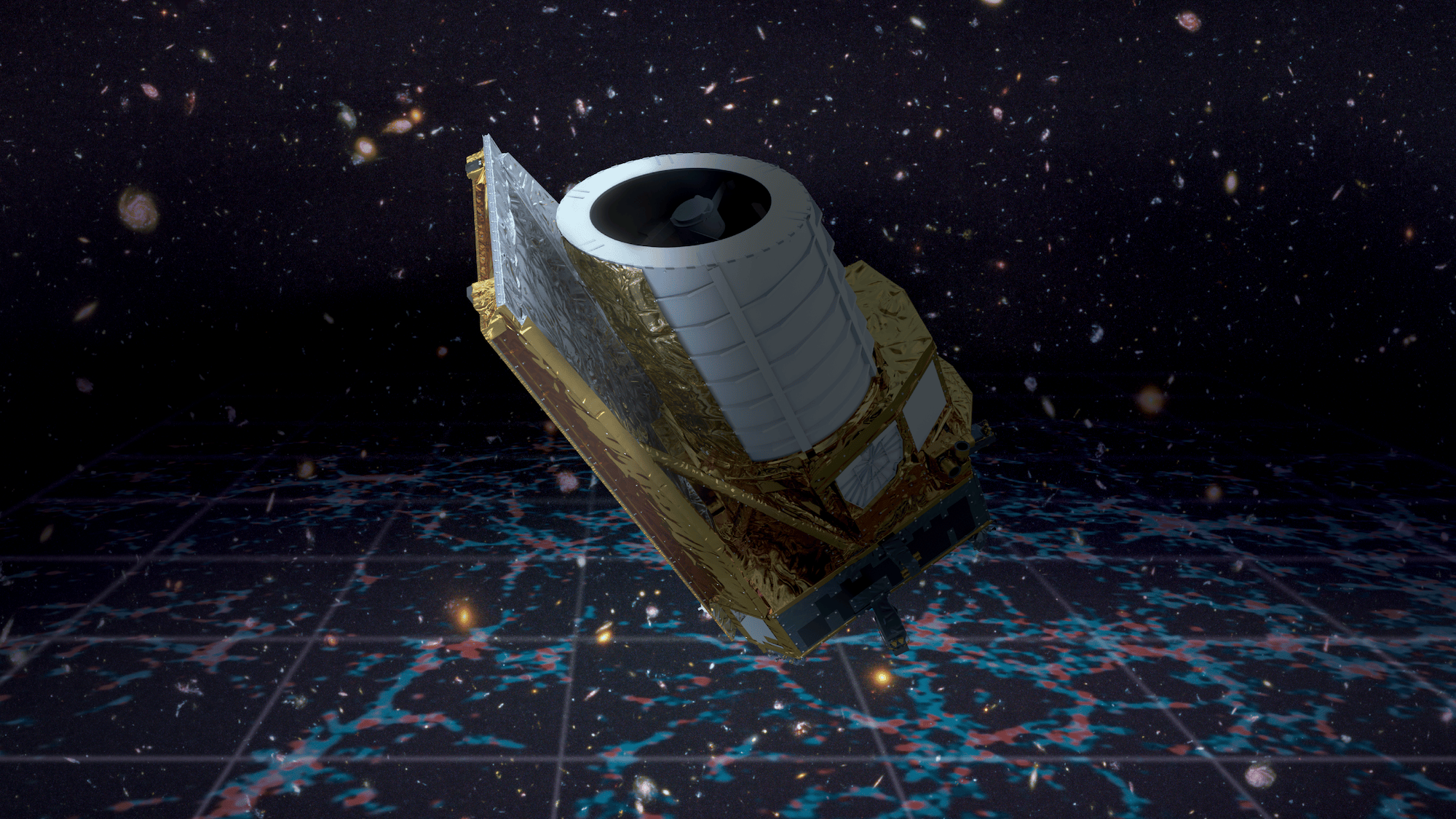
Launched in 2023, the European Space Agency’s (ESA) Euclid space telescope observes some of the most distant regions of the visible universe for signs of dark matter and dark energy. But even while focused on the “big picture,” Euclid’s onboard equipment is surprising astronomers by capturing tiny photobombers like errant comets.
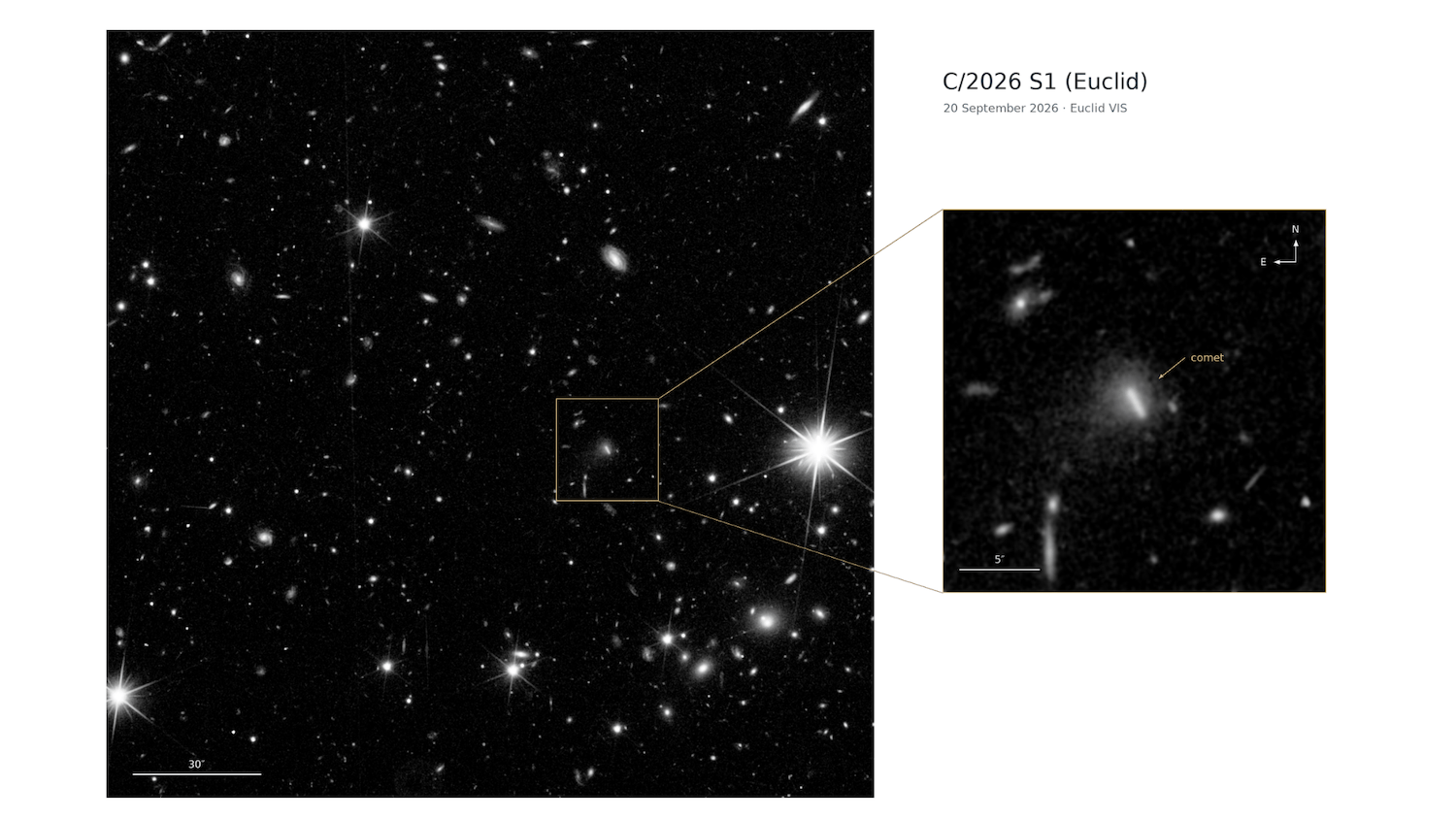
Its recent portraits of one specific dusty space rock are especially impressive, however. Euclid spotted a never-before-seen comet sailing through space more than 807.7 million miles from Earth. The telescope isn’t designed to automatically flag an image interloper. Instead, the bright blemish seen in multiple images was spotted by a moving object detection program designed by Mikko Pöntinen, an astronomer at the University of Helsinki in Finland.
“I was excited to see my software flag a ‘streak’ smeared across several images—the result of a fast-moving object,” said Pöntinen. “Further inspection revealed that it had a fuzzy cloud around it, indicative of an active object like a comet that is shedding dust and gas.”
Pöntinen quickly relayed his findings to the International Astronomical Union’s Minor Planet Center (MPC), which then passed the news along to researchers around the world. On October 8, the MPC confirmed the newly discovered comet, which is now classified C/2026 S1 (Euclid).
C/2026 S1 was seen from five different fields of view over multiple days in the Euclid Deep Field North region of the telescope’s scans. Astronomers now know the comet’s trajectory isn’t located on the same horizontal plane as the planets. Instead, its path is technically taking it over the solar system along a multi-thousand-year orbit.
Euclid’s discovery is particularly striking because the telescope’s six-year mission is specifically mapped to avoid areas of the sky that are laden with comets and asteroids.
“Very few comets are expected to be discovered by Euclid, so it was a happy coincidence,” added Euclid archive scientist Bruno Altieri.
SAN FRANCISCO –Spanish startup UARX Space is remedying anomalies identified during the maiden flight of OSSIE-D, an orbital transfer vehicle (OTV) launched Oct. 1 aboard SpaceX’s Transporter-18 mission. At least […]
Griffith Observatory is one of Los Angeles’s most iconic landmarks. Part of the city’s sprawling “urban wilderness,” Griffith Park, the free public science center boasts dozens of exhibits and displays, including one of the first planetariums in the United States and the most-viewed telescope in the world.
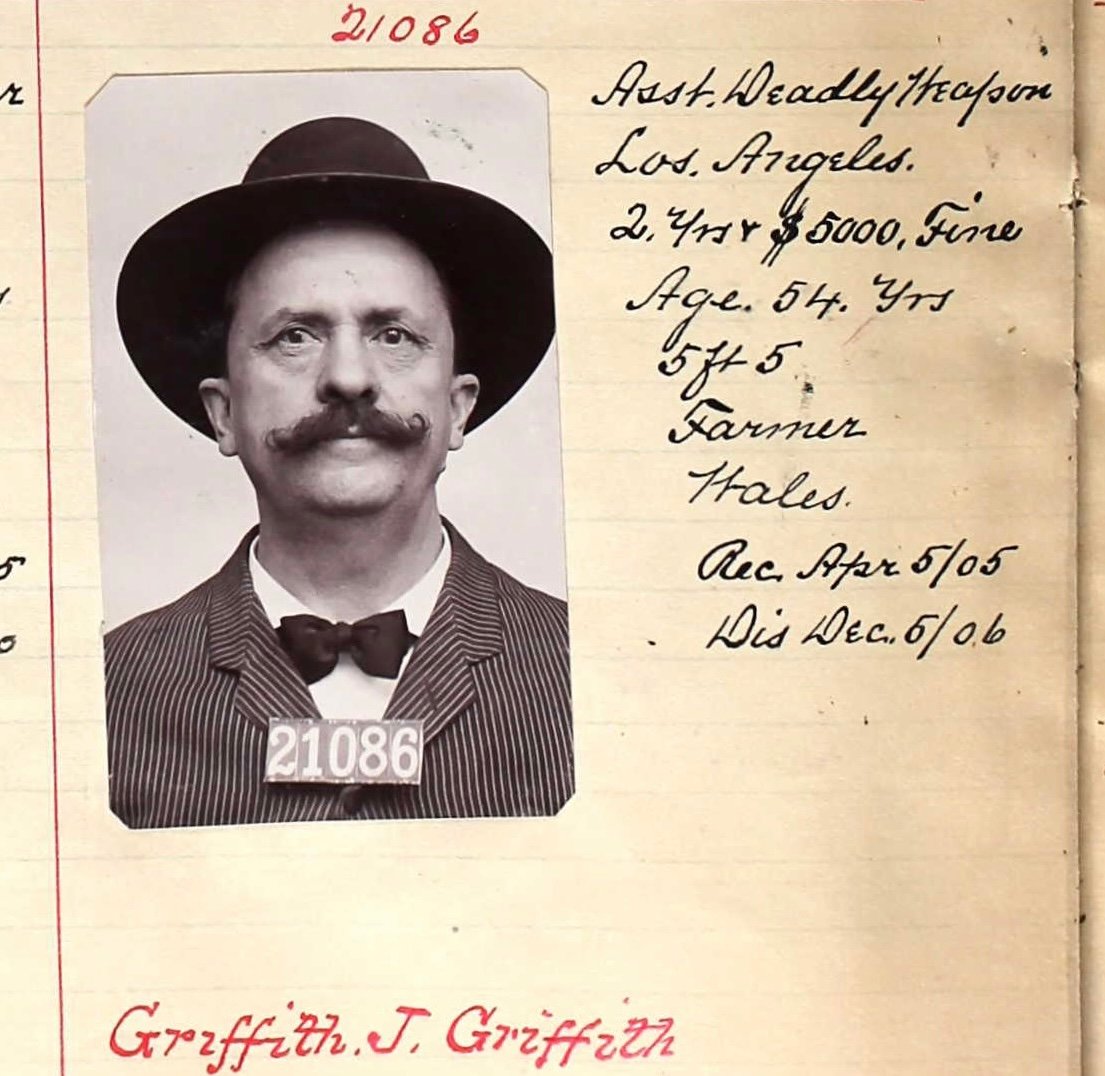
But there’s a dark secret behind Griffith Observatory’s founding. It might never have been built if it weren’t for the desperation of its namesake, Griffith J. Griffith, a wealthy real estate magnate who had once been a pillar of his community. In 1906, when Griffith first proposed the observatory as a gift to the city, he was hoping to salvage his reputation after the shocking crime he had committed three years earlier: the attempted murder of his wife.
Who was Griffith J. Griffith?
Born in Wales, Griffith immigrated to the United States as a teenager in 1865, initially settling in Pennsylvania. A few years later he moved to San Francisco, where he worked as a business journalist covering the West Coast mining industry. Griffith then used his expert knowledge of mining to work as a consultant for mining companies, earning himself a fortune.
In 1882, Griffith moved to the rapidly growing city of Los Angeles and purchased 4,000 acres of the Rancho Los Feliz land grant with an eye toward development. He rented out parcels of this land for various businesses, from homes and hotels to an ostrich farm. (Although the farm eventually failed, it proved a popular tourist attraction: Some of California’s first passenger railways were built to bring sightseers to the ostriches.)
Acquaintances described Griffith as “a roly-poly pompous little fellow” and “an egomaniac.” Known for his brash personality and humor, he dressed flamboyantly, favoring a gold-handled cane and a top hat. Griffith also called himself “Colonel,” despite having never served in the military. His grandiosity led to the mocking nickname, “the Prince of Wales.”
Acquaintances described Griffith as “a roly-poly pompous little fellow” and “an egomaniac.” Image: Public Domain
Griffith’s doomed marriage
By the mid-1880s, Griffith was a member of Los Angeles high society. He rubbed shoulders with fellow wealthy developers whose names are still visible on city maps, such as the Bixbys, the Sepúlvedas, and the Mesmers.
While some of these families traced their lineages back to the colonial aristocrats of Mexico or New England, the Mesmers, like Griffith, were recent European immigrants, having come to the United States from Alsace, France. Griffith soon began courting 22-year-old Christina Mesmer, nicknamed Tina, who was considered one of the city’s most eligible young ladies.
Not only did Tina have prominent parents, she had personally inherited a major property from a childless family friend in 1885. Known as “the Briswalter tract” after the previous owner, Andre Briswalter, it was 240 acres in a prime development area just south of downtown L.A. Worth at least 35 million dollars today, the land was used by Briswalter himself for fruit orchards, but now encompasses the neighborhood of Historic South-Central.
Griffith knew that the Briswalter land would be his if he married Tina Mesmer, and made no secret of his motives. Three weeks before they were to be married, Tina informed Griffith that she had transferred partial ownership of the property to her father. It is unknown if Tina performed this transfer willingly, but Griffith wrote to her of his fear that she had become her father’s “pawn.” In the same letter, Griffith threatened to call off the wedding unless he was made sole owner.
Wishing to avoid scandal, the Mesmers relented and the wedding proceeded in 1887. However, the rocky start to the marriage was an ill omen of things to come. In public, the two presented a harmonious image of a high society couple. In private, tensions plagued their marriage, including over religion (the Mesmers were Catholic, while Griffith was Protestant).
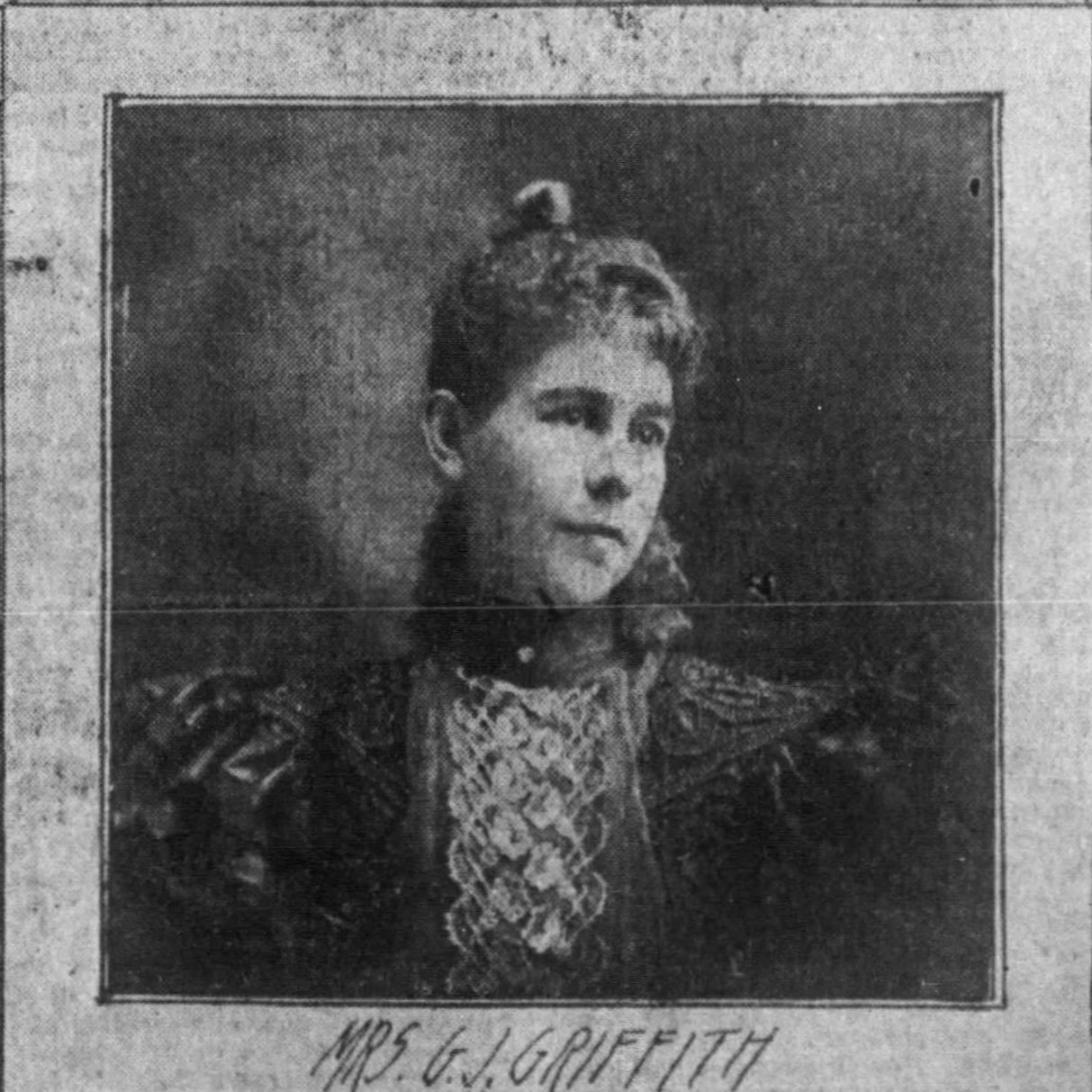
In 1887, Christina ‘Tina’ Mesmer, a young Los Angeles socialite, married Griffith. Image: Public Domain
At home, Griffith was paranoid and menacing. Despite publicly supporting the Temperance movement, he was secretly an alcoholic, and his drinking worsened his behavior. Griffith’s paranoia reached a fever pitch after a narrow brush with death in 1891.
While the Griffiths were in a carriage on their way to the grave of Tina’s recently-deceased mother, someone fired a gun at them from another carriage, grazing Griffith’s head. The attacker, who fatally shot himself before he could be apprehended, turned out to be an investor from the failed ostrich farm, who had been ruined and owed Griffith back rent.
How the idea of Griffith Park first emerged
In 1896, despite his private troubles, Griffith was at the height of his power. Ever-ambitious, he sought a way to immortalize himself. He was also flush with cash, having sold off most of the Briswalter tract acquired from Tina, but still owed a tax debt that he hoped the city would forgive. That Christmas, the Griffiths donated more than 3,000 acres of Rancho Los Feliz to the city of Los Angeles for the formation of a public park, to be called, of course, Griffith Park.
While Griffith spoke of wanting to give back to the community and create “a place of rest and relaxation for the masses,” generosity may not have been his only motive. Critics called the huge donation a tax scheme, and pointed out that Griffith could afford to part with the land. Not only did he have Tina’s fortune, he had already rented out the most profitable parts of the Rancho Los Feliz, and what remained was no good for purposes like farming.
Griffith shoots his wife Mrs. Tina Griffith
The more his influence grew, the more unstable Griffith became. According to Tina’s later testimony at Griffith’s trial, he pulled a gun on her for the first time in May 1903, when she threatened to leave him during an argument. “He is very proud and did not want the public to know” of their marital disputes, she said.
A few months later, the Griffiths stayed at the Hotel Arcadia in Santa Monica with their only child, 15 year-old Vandell. Tina hoped that a family vacation would calm Griffith’s nerves, but Griffith was on edge. He repeatedly asked servers in the hotel restaurant to change his food and drink, believing it had been poisoned.
On the last night of the trip, Vandell Griffith went to the beach with the hotel owner’s son, leaving his parents alone in the hotel room. While Tina was packing, Griffith approached her with a gun in his hand. He forced her to kneel and started asking her about the death of Andre Briswalter years earlier.
Apparently, Griffith now suspected that the Mesmers had poisoned Briswalter, and planned to poison him next. Griffith then asked Tina if she had ever been unfaithful. She assured him that she had not, and that Briswalter’s death had been natural, but he fired off a bullet at point-blank range.
Tina Mesmer Griffith survives
Tina leapt from the window and rolled to safety, breaking her shoulder in the fall. Hotel staff soon found her and took her to a doctor. A surgeon who attended her injuries later reported that “if the bullet had struck Mrs. Griffith one-sixteenth of an inch below where it did, it would have gone through the eye socket and into the brain.”
Tina lost her right eye, and due to the risks of infection and blood loss, doctors were not sure whether she would survive. Miraculously, she did.
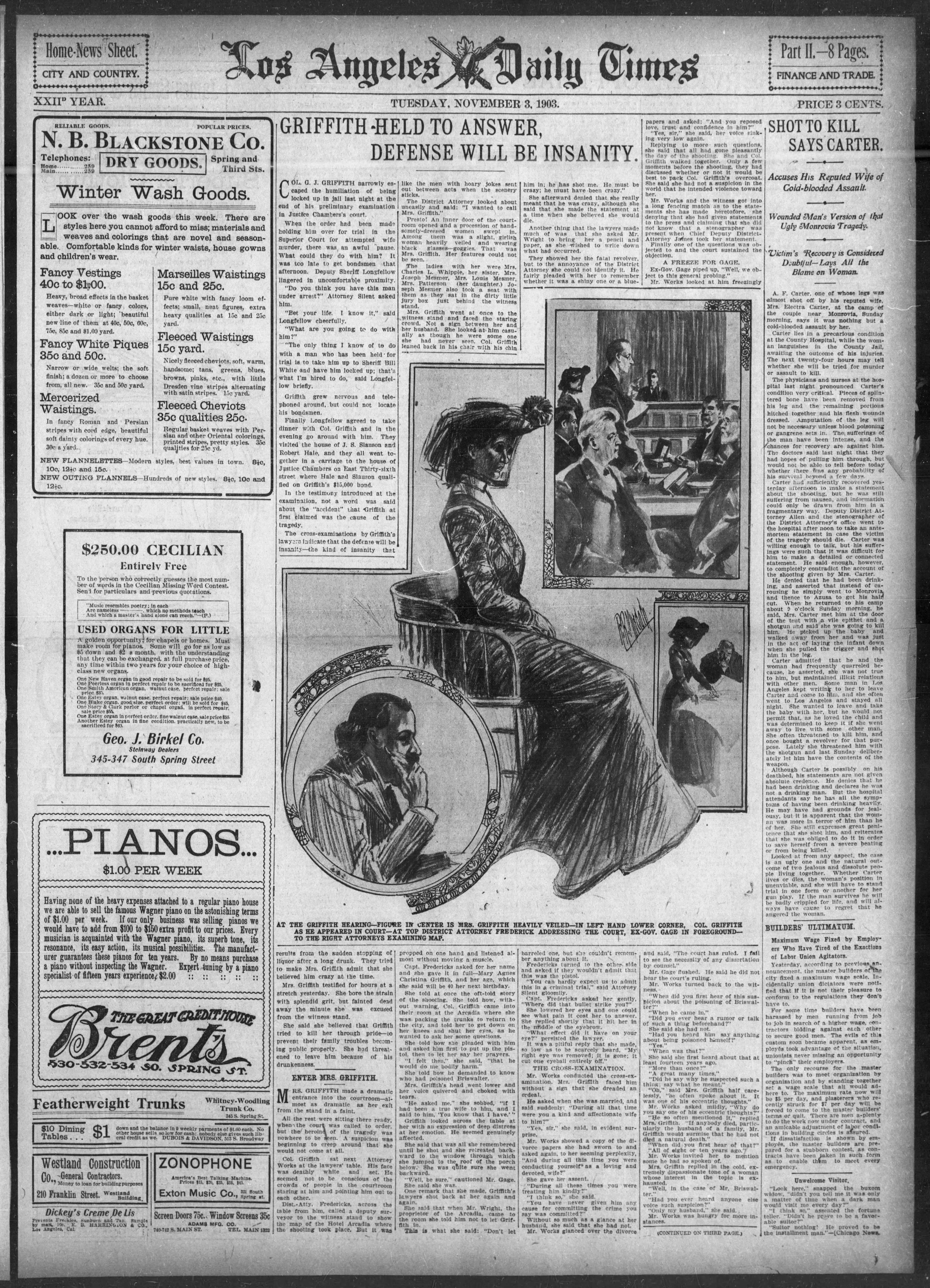
Police began searching for Griffith immediately, but it was three days before they found him at a nearby bar in the midst of an alcoholic bender. The subsequent trial became a massive media scandal. Tina took the witness stand wearing a veil and black glasses to hide her injuries.
A sketch published in The Los Angeles Times shows how Christina ‘Tina’ Mesmer wore a veil in the courtroom to conceal her injuries. Image: Public Domain
When she entered the courtroom, “she looked at [Griffith] casually as though he were someone she had never seen,” the Los Angeles Times reported, while Griffith remained motionless, listening intently. Tina testified for an hour before fainting from exhaustion, returning later that day for a second round of questioning. Only then did the extent of the Griffiths’ private problems become public knowledge.
The outcome of the trial
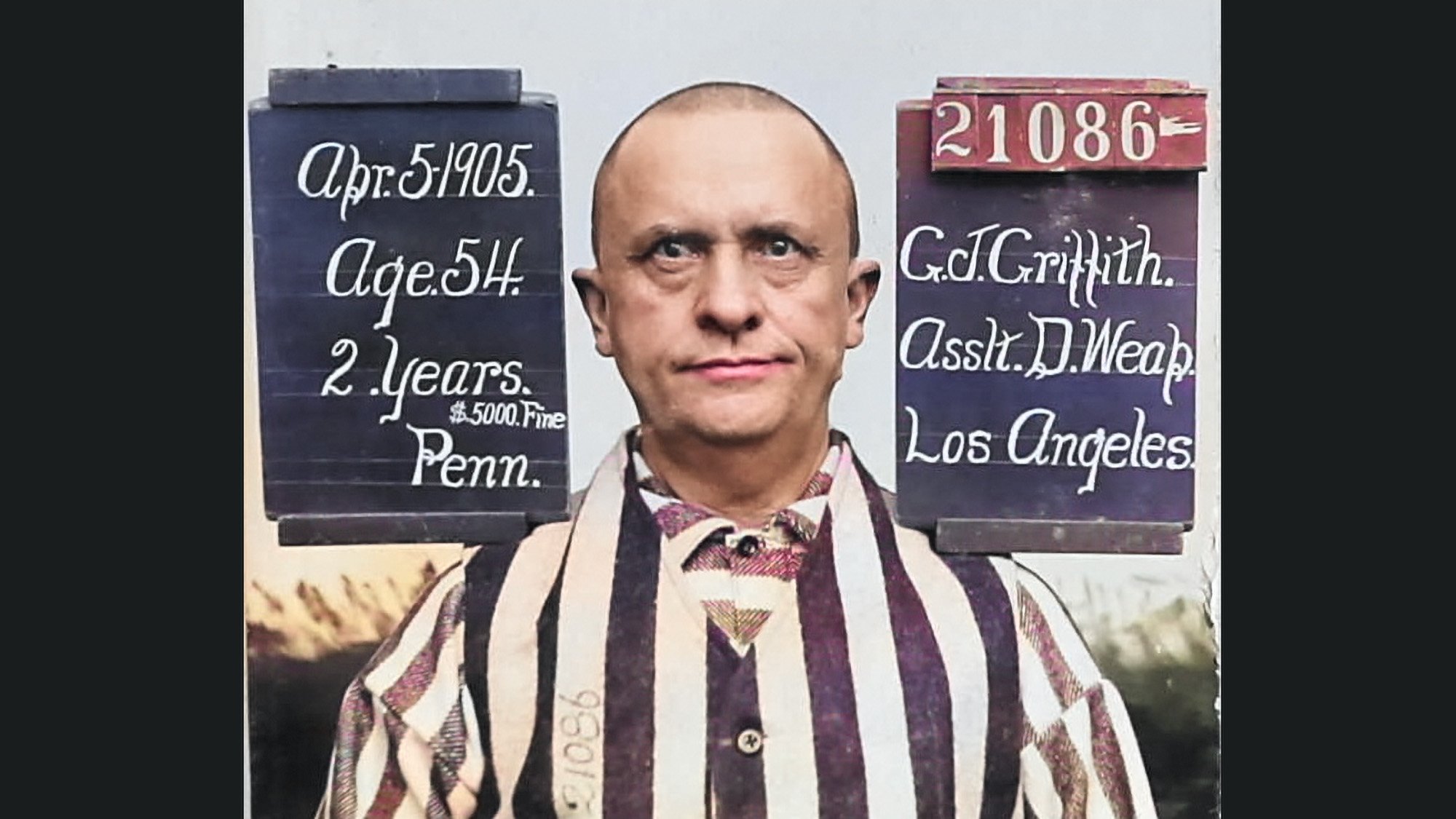
Griffith’s attorneys argued that he was not in his right mind; instead, his drinking had made him delusional, a case of “alcoholic insanity.” Griffith was fined and sentenced to just two years in prison.
Tina was granted a divorce on grounds of cruelty, one of the few legal justifications for divorce in 1903. She also received a cash settlement and full custody of Vandell, but she was unable to receive half of the estate, as she had asked for.
The couple’s properties had long been under Griffith’s name only, including what remained of Tina’s inheritance. As one of her lawyers told the Los Angeles Times, the law prevented her from obtaining “any approximation of what really should be hers.” However, Tina was left with enough to live on, and Griffith agreed to pay for Vandell’s future education as long as he didn’t attend a Catholic university.
The aftermath
After the trial, Tina moved in with her sister. Though she stepped away from city development, she devoted herself to Catholic charities and social events. She was apparently a big fan of whist, a four-player card game. She never remarried and continued to be known as “Mrs. Griffith” until her death in 1948 at the age of 86.
When Griffith emerged from San Quentin in December 1906, he appeared to be a changed man. He gave up drinking and devoted himself to the cause of prison reform, as well as improving facilities for visitors in the park that bore his name. He also came up with an idea for a second “Christmas gift” to rehabilitate himself in the eyes of the Los Angeles public: a free science center and an outdoor theater.
However, the city was now reluctant to associate with him. As one newspaper op-ed stated, Los Angeles was “neither so poor nor so lost to [a] sense of public decency that it can afford to accept this money.”
Griffith died of liver disease in 1919 without seeing this dream become reality, but he bequeathed the funds for the Observatory and the nearby Greek Theatre to the city in his will. The project would finally move forward more than ten years after his death.
It was Griffith and Tina’s son, Vandell Griffith, who oversaw the construction of the Observatory as president of the Los Angeles Park Board. (Vandell would later become a city police commissioner, and was described in a 1951 newspaper as “a dead honest man.”)
When the Griffith Observatory opened in 1935, it was an instant success, part of a new wave of interactive museums that made astronomy and other sciences accessible to the public. And it all goes back to a man who destroyed his own reputation. It’s a strange chapter in the history of Los Angeles, and a reminder that the legacies people leave can be complicated.
In That Time When, Popular Science tells the weirdest, most surprising, and little-known stories that shaped science, engineering, and innovation.
Most of us can rattle off Europe’s great royal houses: the Bourbons, the Habsburgs, the Plantagenets, the Stuarts, the Romanovs, the Windsors. Far fewer people have heard of the House of Oldenburg, yet few families have left a deeper or longer-lasting mark. Through a long chain of marriages, the Oldenburgs spread across the north of […]
L'essor de la radioastronomie après la Seconde Guerre mondiale a permis, au cours des années 1960, l'essor du programme Seti consistant à tenter de détecter des émissions radio clairement identifiables comme des technosignatures de civilisations extraterrestres technologiquement au moins aussi...
Une nouvelle étude révèle les effets néfastes d'une boisson populaire sur notre santé cognitive. Les chercheurs mettent en garde contre sa consommation excessive, qui pourrait accélérer le déclin cérébral. Découvrez les résultats alarmants de cette recherche et les recommandations des experts...
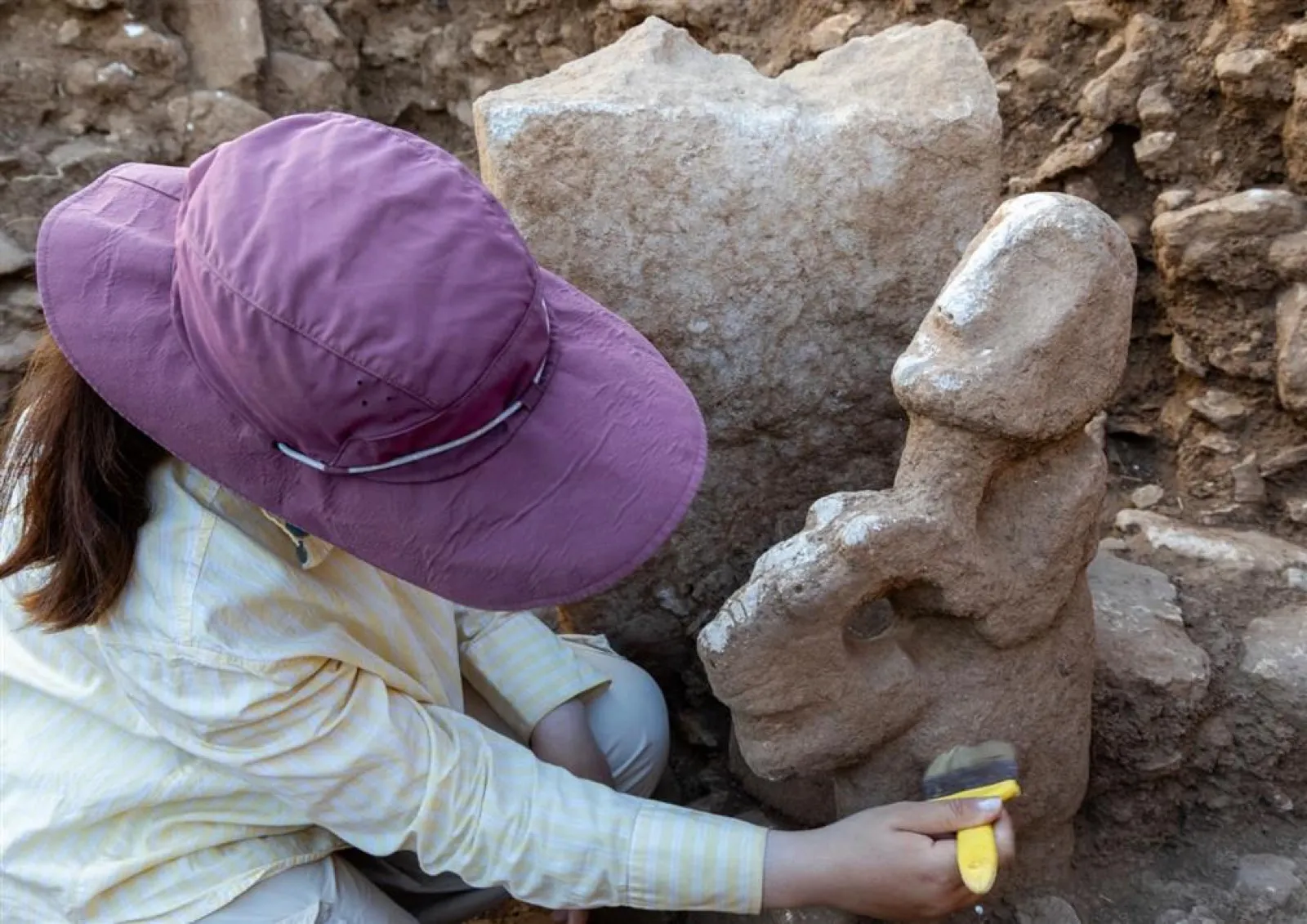
Archaeologists rarely identify a settlement from one object. They combine buildings, hearths, tools, food remains, activity areas, and patterns of rebuilding to understand a site.
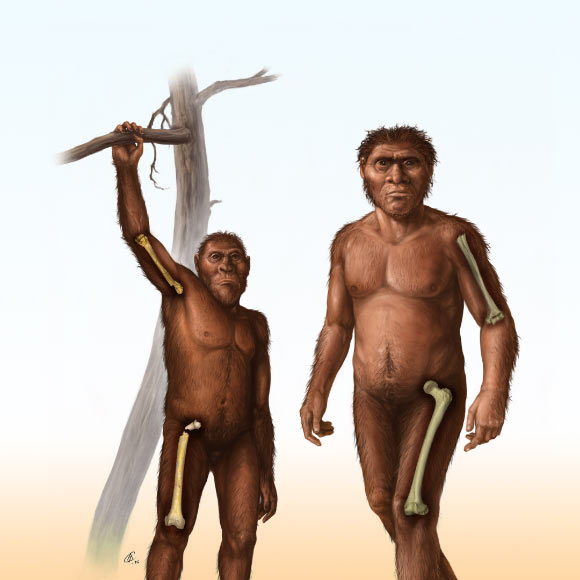
New research led by University of the Witwatersrand and University of Southern California paleoanthropologists sheds more light on one of the most debated transitions in human evolution: when our ancestors stopped regularly climbing trees and committed fully to walking on two legs.
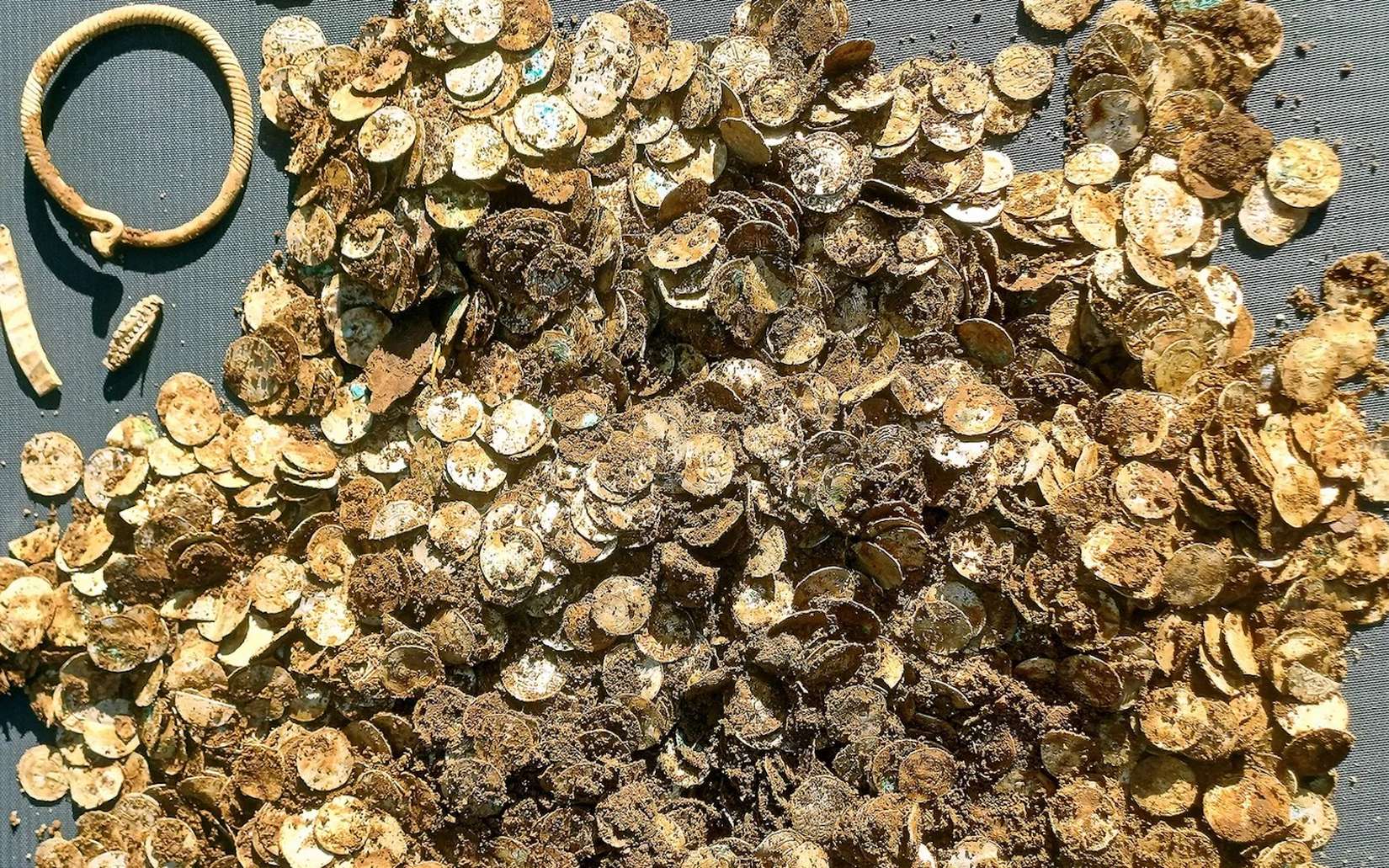
Une forêt située à une centaine de kilomètres d’Helsinki cachait depuis près d’un millénaire un ensemble archéologique hors norme. Repéré grâce à un détecteur de métaux, ce trésor pourrait désormais éclairer les échanges commerciaux qui traversaient le nord de l’Europe à la fin du premier...
Two new reports revealed shifting AI usage trends across the UK, with workers spending heavily on generative AI (genAI) tools and consumers increasingly turning to the technology to access news.
A study by Deloitte found UK workers spend an estimated £958 million of their own money annually on genAI to do their jobs. Of the 25,000 UK workers surveyed, 63% knowingly used genAI for their jobs and 17% paid for at least one tool themselves. Almost a quarter claimed to use genAI every day.
The findings suggested AI adoption is moving ahead of formal workplace policies, raising concerns over training and employer oversight. Nearly a third said they used the technology without their employer’s knowledge, while 65% said their organisation lacked convincing leadership on how AI should be used.
Around half of workplace genAI users said they had received no formal training on using the technology safely and effectively.
Workers said genAI saved them an average of 70 minutes a week, yet 23% reported a stigma around deploying it. In addition, 64% of weekly users were concerned managers would think the technology could do their jobs.
The survey found workplace usage remained relatively focused on routine daily tasks, with 43% claiming to deploy the technology to search for information or draft emails and 31% stating it helped them generate summaries.
“The challenge is no longer getting people to use genAI, it’s how businesses meet this growing demand in a way that is secure, responsible and creates lasting value,” noted Hayley McKelvey, chief AI officer at Deloitte UK.
AI news A survey by Ofcom revealed AI is also becoming a prominent route into news. The UK watchdog found one in five adults used AI services to keep up with the news, while 21% of UK adults had used an AI app or service to access news during the previous month. ChatGPT was the most popular AI service for news, reaching 13% of adults.
Online intermediaries, including social media, search engines, news aggregators and AI tools were used by 73% of adults to access news, compared with 57% who went directly to publishers’ websites and apps.
Despite the shift towards digital intermediaries, around 56% of adults said they were less trusting of an AI-written news story than one written by a human.
Ian Macrae, director of market intelligence at Ofcom, said the shift meant public service media “must continue to evolve their distribution strategies to continue to meet audiences where they are”.
The star-forming region IC 348, as imaged by the James Webb Space Telescope. (Image credit: ESA/Webb, NASA, CSA, K. Luhman, C. Alves De Oliveira, M. Zamani (ESA/Webb))
An ethereal and magnificent display of gas and dust stretches across the cosmos in a spectacular new image captured by NASA's James Webb Space Telescope.
What is it?
Glowing wisps of translucent gas and dust paint a striking image of the star-forming region IC 348 in this new JWST snapshot. In the image, you can see IC 348, a region found about 1,000 light-years away.
In this vast expanse of gas and dust, cold molecular hydrogen gas collapses to create new stars. And this image has no shortage of suns, with twinkling stars speckling the entire cosmic landscape, diffraction spikes and all.
But while this is a star-forming region, objects are found here as well. This image was captured as part of a scientific search for brown dwarfs, which are objects that form like stars but aren't massive enough to kickstart hydrogen fusion in their cores.
Why is it incredible?
Brown dwarfs are one of the great mysteries of our universe. Not as massive as the least massive stars, but more massive than the biggest planets, brown dwarfs are strange objects stuck in the middle.
Brown dwarfs do emit some light and heat, which helps scientists to find them, though doing so can be tricky, as they're much cooler than stars and not that bright (at least in visible light). However, despite being dim, they give off infrared radiation, allowing them to be spotted by infrared instruments aboard space telescopes like JWST.
This incredible new image is part of an observing program that aims to use JWST to find and study the smallest brown dwarfs. In 2022, researchers looking at IC 348 found brown dwarfs just a few times more massive than Jupiter, so they were on the very small end. Researchers hope to find even smaller brown dwarfs to help them better understand how these strange objects form and vary across space.
Roman’s antenna, sunshade and visor are deployed. Here is why the telescope’s three-month commissioning journey matters before its first images arrive.
Assinantes do Apple TV já podem conferir o primeiro episódio da aguardada sexta temporada de “Slow Horses”, série de espionagem estrelada por Gary Oldman, que retorna hoje.
Aos que nunca deram uma chance para a série, “Slow Horses” acompanha uma equipe de agentes da inteligência britânica, os quais servem em um departamento do MI5 conhecido como Slough House. Oldman assume o papel de Lamb, o brilhante (mas rabugento) líder dos espiões, que acabam indo para a Slough House devido a erros que acabaram com suas carreiras.
Reveja o trailer da sexta temporada a seguir:
A nova parte da produção acompanhará a fuga dessa equipe, enquanto Diana Taverner (interpretada por Kristin Scott Thomas) os envolve em um jogo de retaliação e vingança com riscos e consequências fatais.
Alguns desses nomes, vale notar, marcaram presença na première da sexta temporada, organizada pelo Apple TV na última sexta-feira (11/9) no TIFF Lightbox Theater, em Toronto (Canadá):
Como dito, apenas o primeiro dos seis episódios da sexta temporada foi liberado hoje. Os capítulos remanescentes serão disponibilizados semanalmente, às quartas-feiras, até 21 de outubro.
O Apple TV está disponível no aplicativo Apple TV em mais de 100 países e regiões, seja em iPhones, iPads, Apple TVs, Macs, dispositivos Android, smart TVs ou online — além de estar em aparelhos como Roku, Amazon Fire TV, Chromecast com Google TV, consoles PlayStation e Xbox. O serviço custa R$34,90 por mês, com um período de teste gratuito de 7 dias. Por tempo limitado, quem comprar e ativar um novo iPhone, iPad, Apple TV ou Mac ganha 3 meses do Apple TV. Ele também faz parte do pacote de assinaturas da empresa, o Apple One.
NOTA DE TRANSPARÊNCIA: O MacMagazine recebe uma pequena comissão sobre vendas concluídas por meio de links deste post, mas você, como consumidor, não paga nada mais pelos produtos/serviços usando os nossos links de afiliado.
European Commission (EC) President Ursula von der Leyen (pictured) outlined plans to restrict children’s access to social media under the watchdog’s proposed EU Kids Act, as concerns mount over the impact of addictive online services and increasingly capable AI systems.
In her annual State of the Union address, von der Leyen told the European Parliament: “What we are witnessing is a great capture of our children. A capture of their attention, their focus, their minds.” She explained the proposed EU Kids Act would ban children under 13 from social media and bar under 15 users from having personal accounts.
Meanwhile, 13 to 15-year-olds would only be able to use “mini accounts” set up and supervised by parents, with limited features and time restrictions. Platforms would also be required to implement additional safety features for users aged 15 to 18.
“We are reversing the burden of proof,” she said, adding, “platforms will have to prove that they are safe”.
Von der Leyen noted young Europeans now spend four to six hours a day on screens, pointing to concerns around addictive features, harmful content, online bullying and growing rates of sleep issues, anxiety and suicide.
“We do not have to accept addictive features. We do not have to accept children being drawn into ever more extreme content. We do not have to accept that girls have their photos used for AI-generated sexualised images,” she argued.
The measures form part of the EU Kids Act, which the EC is due to propose tomorrow (17 September). The proposal would introduce age checks across social media, video sharing platforms, app stores, online games and AI services.
The EC is also preparing a broader Digital Fairness Act aimed at addressing addictive design features beyond services used by children.
AI tipping point AI was also a focus of the address, with von der Leyen describing it as “the second tipping point of our times”.
She warned that increasingly capable models could create new security risks, including more powerful hacking capabilities and the potential for self-improving systems to cause mass harm.
She revealed the EC plans to work with partners including the UK and Canada on “model evaluation, verification, early warning, AI security and much more”, while also seeking greater European computing capacity and investment in local AI companies.
Von der Leyen called on the region to use AI to support sectors including healthcare, manufacturing, transport and agriculture, while retaining human oversight. “Our approach is clear. We want AI… But above all, we want AI with human agency.”
Global concerns have been mounting over the pace of AI development this week, as Anthropic and OpenAI chiefs called for a slowdown in frontier AI development after researchers warned of existential risks from increasingly capable systems.
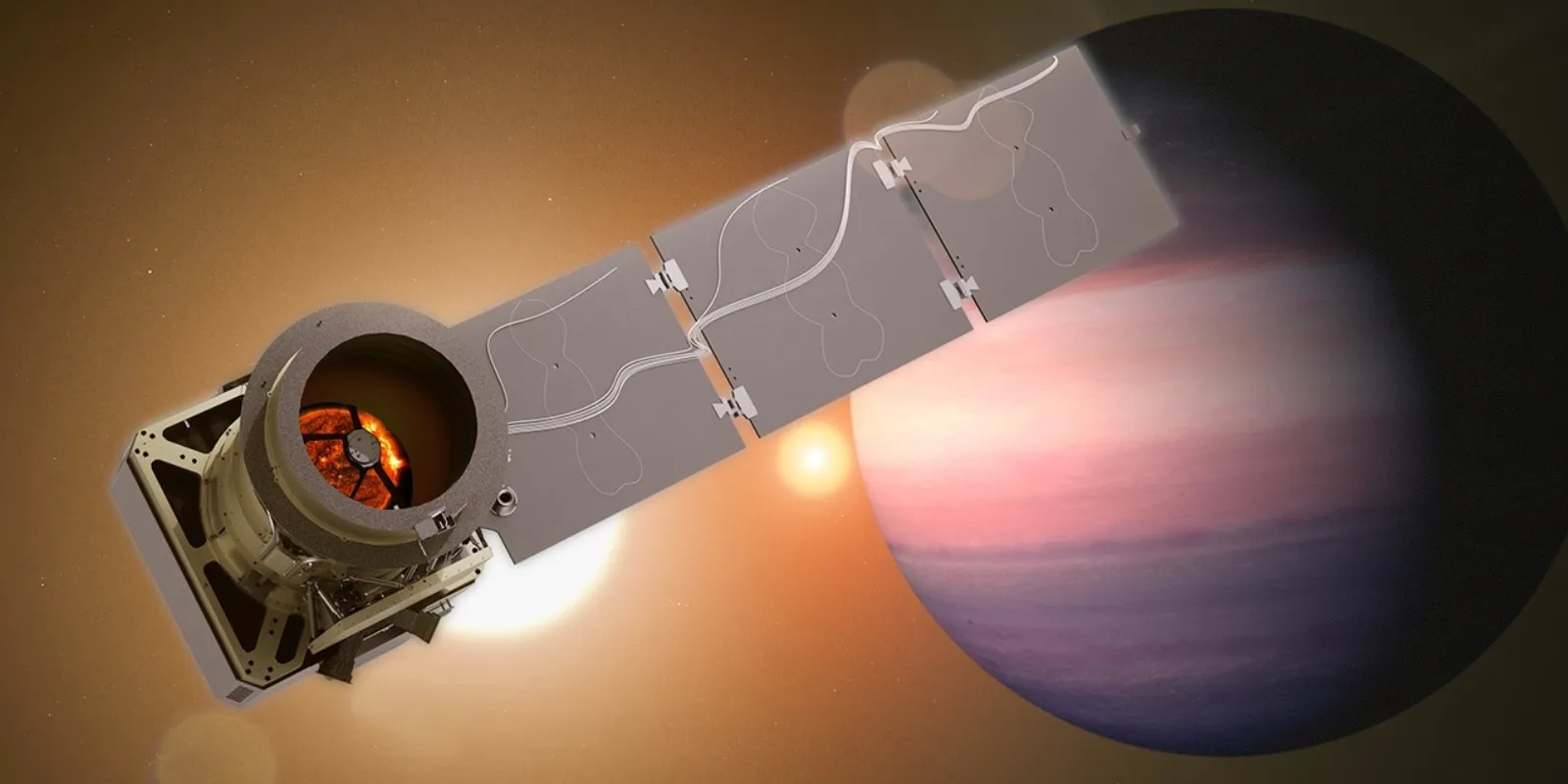
NASA’s Pandora satellite has started science observations of at least 20 exoplanets, measuring their host stars so Webb’s atmospheric results can be read more reliably.
Auf YouTube findest du die angesagtesten Videos und Tracks. Außerdem kannst du eigene Inhalte hochladen und mit Freunden oder gleich der ganzen Welt teilen.

 Login