❌

Reading view

XPeng starts IRON humanoid robot production as Tesla Optimus stalls

XPeng has switched on what it calls the world’s first automated production line for advanced humanoid robots, and its IRON robot walked off that line under its own power. The Chinese automaker says the line runs with more than 80% of its core processes automated.

It’s the clearest signal yet that IRON is headed for real manufacturing and not just stage demos. XPeng is targeting mass production by the end of 2026.

more…
  •  

Why is Earth’s crust layered?

Since the formation of the Earth 4.2 billion years ago, hot rock from the interior of the planet has cooled off and developed crystals that accumulated over millions of years, forming surface rocks with a layered composition, referred to as continental crust. Geologic evidence of how continental crust formed comes from large, ancient crustal blocks, called cratons. Cratons have existed for billions of years and form the cores of continents. 

Scientists have shown that the upper 10 to 15 kilometers (6 to 9 miles) of continental crust contains high concentrations of elements like uranium and thorium that decay and release heat over time, referred to as radiogenic elements. However, the lower 20 kilometers (12 miles) of crust has very few radiogenic elements. The cause of this planetary-scale differentiation is highly questioned, as geoscientists don’t know what formation processes could produce this unique characteristic. 

Earlier researchers suggested that changes in the concentration of radiogenic elements could occur when tectonic plates collide. Plate collision induces temperatures in the lower crust high enough to melt minerals that contain uranium and thorium, like zircon and monazite. The newly melted minerals form magma, which then rises and crystallizes in the upper crust. To test whether this process formed the layered continental crust, researchers Andrew J. Smye and Peter B. Keleman incorporated geochemical data from studies worldwide into a mathematical model comparing how concentrations of radiogenic elements vary under different temperatures. 

The team separated their global analyses into 2 categories of rocks that were buried deep in the crust and subjected to intense pressures and temperatures, via a process known as metamorphism. The first category included rocks formed from the accumulation of eroded grains buried in the deep crust that are subjected to high pressures and temperatures, called metasedimentary rocks. The second category included rocks formed when magma rises from the deep Earth and solidifies before experiencing high pressures and temperatures, called metaigneous rocks.

The researchers analyzed 3 subcategories from each of the 2 types of deep-crustal rocks. The first was rocks that experienced no intense pressure or temperature, the second was rocks subjected to 650 to 900°C (about 1,200 to 1,650°F), and the third was rocks subjected to 900 to 1,100°C (about 1,650 to 2,000°F). The researchers modeled the geochemistry of the 3 rock types at different temperatures to determine whether ultra-high-temperature metamorphism could cause crustal differentiation of radiogenic elements.

Smye and Keleman found that monazite doesn’t melt in either metasedimentary or metaigneous rocks at temperatures below 900°C, as indicated by the relatively high thorium content in these deep-crustal rocks. Alternatively, they found that above 900°C, uranium and thorium concentrations decreased in metasedimentary rocks, suggesting that minerals like zircon and monazite were melting. The melted minerals enter magma and rise into the upper crust, leaving behind metasedimentary rocks depleted in radiogenic elements by around 0.10 ppm.  

The team concluded that the enrichment of uranium and thorium in the upper continental crust requires temperatures greater than 900°C to initiate the melting of zircon and monazite in the lower crust. Temperatures above 900°C are linked to the movement and collision of continental plates. This result suggests that evidence of Earth’s differentiation has been preserved for more than 3 billion years, spanning most of the planet’s geological history. Since stable continental crust formed, uranium and thorium enrichment in the upper crust has consistently recorded layering produced by ultra-high temperature metamorphism.

The post Why is Earth’s crust layered? appeared first on Sciworthy.

  •  

Scientists Have Uncovered Large Quantities of Hidden Hydrogen Beneath Australia—and It Could Lead to a Clean Energy Breakthrough

Researchers say an untapped source of clean energy has been hiding beneath Western Australian soil, where some of the world’s largest iron deposits could harbor an unexpected secret.

These deposits, according to researchers at Edith Cowan University (ECU), are also rich in magnetite capable of producing hydrogen when it interacts with hot water, under conditions that mirror those which occur naturally deep underground.

Such processes, the researchers say, could be stimulated in magnetite-rich locations like Western Australia’s naturally reddish Pilbara region, stimulating hydrogen production and potentially unleashing a valuable, untapped clean energy source.

An Unexpected Source of Energy  

Magnetite is abundant within the Pilbara’s vast banded iron formations, and when subsurface temperatures rise, the naturally occurring interactions between this iron-rich mineral and water lead to chemical reactions—the same kind which can produce molecular hydrogen.

“Australia could be sitting on a massive, untapped energy reserve,” said ECU Associate Professor Alireza Keshavarz of the team’s recent discovery, “and the potential is enormous.”

To better understand the processes that may hold the key to unlocking Australia’s untapped subsurface energy reserves, the ECU team began by placing samples of magnetite in water heated to 200 degrees Celsius and under extreme pressure. The experiments continued for close to two months, during which time the researchers were able to recreate some of the same conditions that occur naturally deep within the Earth.

Doing so allowed the team to look at how hydrogen naturally forms, as well as what geological conditions help to sustain its production.

“Western Australia has some of the world’s largest banded iron formations,” said Kaveh Moghanirahimi, the lead author of a recent study detailing the team’s findings.

“If we can unlock this resource at scale, it could be transformative for our energy future,” he adds.

Water May Hold the Key

Significantly, the team says they found that just having large amounts of magnetite in subsurface deposits may not be all that is required for significant hydrogen production. Another key component is having enough water present to be able to reach fresh mineral surfaces for the hydrogen-producing reactions to continue.

Importantly, the researchers found that simply having large quantities of magnetite underground may not be enough. Water must also be able to reach fresh mineral surfaces for the hydrogen-producing reactions to continue.

“Our findings show that hydrogen production depends not only on the amount of magnetite present, but also on how easily water can access fresh mineral surfaces through fractures, pores, and permeable pathways,” said Professor Stefan Iglauer, a researcher with ECU’s School of Engineering.

Hydrogen through Injection?

The researchers also say they have identified a potential method for stimulating hydrogen generation by injecting a solution into banded iron formations. This, they say, points to a novel possibility: that geological deposits of the right specific kind may also one day function as sites for engineered production of naturally generated hydrogen.

That possibility, the researchers argue, could prove to be significant as governments and industries seek lower-emission alternatives to hydrogen currently produced mainly using fossil fuels. Also, unlike conventional methods of hydrogen manufacturing, tapping geological hydrogen only requires leveraging natural reactions that occur underground.

A Step Toward the Future of Clean Energy

Presently, the research remains an early step toward determining whether the process can be translated from lab experiments into a commercially viable method of producing clean energy with the resources present in natural geological formations.

However, if researchers can continue to capitalize on methods that allow hydrogen to be generated and recovered at economical scales, there are already remarkable possibilities in terms of what Western Australia’s enormous iron formations could one day help provide.

“This work helps bridge the gap between laboratory experiments and real geological systems,” Iglauer said.

The team recently reported its findings in the paper, “Geometry-driven controls on hydrothermal natural hydrogen generation from magnetite mineral,” published in the International Journal of Hydrogen Energy.

Micah Hanks is the Editor-in-Chief and Co-Founder of The Debrief. A longtime reporter on science, defense, and technology with a focus on space and astronomy, he can be reached at micah@thedebrief.org. Follow him on X @MicahHanks, and at micahhanks.com.

  •  

These Curious Ancient Greek Artifacts Have Extraterrestrial Origins—Why They Vanished 3000 Years Ago Remains a Mystery

Deep within ancient chamber tombs where elite members of society in ancient Greece and Crete were once laid to rest, new evidence has emerged that these high-status individuals wore some out-of-this-world iron jewelry.

Among the most coveted jewelry worn in the Bronze Age Mediterranean world were rings that were likely made from extraterrestrial iron, according to a new study published in the Journal of Archaeological Science.

Researchers Matthieu Gounelle and Eleni Mantzourani used chemical analysis to examine more than 90 iron objects from the Bronze Age and Early Iron Age, uncovered from 33 archaeological sites, revealing that about one-third of the artifacts were likely crafted using iron that fell from space.

Although iron harvested from ancient meteorites accounted for at least 10 of the rings the researchers examined, another three “might deserve further examination,” the study’s authors say, in new observations that indicate these ancient extraterrestrial adornments “may have been popular power symbols among prominent individuals” that included the Mycenaean and Minoan palatial elite.

Yet despite their apparent significance, the otherworldly fashion trend involving these otherworldly rings seems to have mysteriously vanished by the 12th century BCE, for reasons that remain unclear to researchers.

Meteoritic Iron as a Status Symbol

Using portable X-ray fluorescence, or XRF, to assess these rare artifacts in various museums where they are kept, most of the objects were found to contain very little nickel, if any at all. This is consistent with iron produced using smelting processes from the periods in question, which relied on terrestrial ores.

However, 13 of the objects possessed elevated levels of nickel, which hinted at the likelihood that some of these ancient rings had been crafted with metal originating in meteorites, which contain far more nickel than smelted varieties of iron do.

Another intriguing discovery the researchers made was that each artifact suspected of being made from meteoritic iron was either a whole or fragmentary signet or bezel ring, combining the suspected meteoritic iron with gold, silver, or bronze. Most were also found in various chamber tombs alongside other luxury goods, adding to the likelihood that these unique artifacts may have been considered symbols of status or authority.

Where Did Ancient Greeks Obtain Extraterrestrial Iron?

However, another mystery involves the source of the meteoritic material, which remains uncertain since extraterrestrial iron was uncommon in ancient Greece. Because of this, the team suspects that one reason for this material’s role as a status symbol may have been not just its otherworldly nature, but also the fact that it was likely imported.

“Given the rarity of meteorites in Greece and the established trade networks during the Bronze Age, we propose that the source of the raw meteoritic material was Egypt,” the team writes, “where meteorites are numerous due to the abundance of deserts.”

Several famous examples of meteoritic iron have been recovered from Egypt, which include a dagger found among the items entombed with the Pharaoh Tutankhamun.

The abundance of rings made from this extraterrestrial metal contrasts with the more common iron objects that appear to have been made from smelted material. This suggests that ancient metalworkers recognized the distinction between the materials, and ascribed higher value to the far rarer meteoritic forms of iron.

An Otherworldly Fashion Trend Goes Missing

Curiously, the researchers also found that by around the 12th century BCE, this otherworldly fashion trend appears to have almost completely vanished, and for reasons that remain unclear.

Possible reasons for this may include interruptions to trade networks, political upheaval, or simply changes in trends from the period. However, one potential clue is that the ancient Greeks’ production of meteoritic iron rings seems to have ended coinciding with the collapse of the Mycenaean palace system.

“Such a development could be related to economic, social or political changes,” the team speculates, although they also acknowledge more mundane possibilities.

“It is also possible that the meteoritic finger ring fashion, almost exclusive to Minoan and Mycenaean Late Bronze Age, has ‘naturally’ faded away as does any fashion,” the researchers write.

The recent study, “Iron in Greece in the second millennium B.C.E.,” appeared in the Journal of Archaeological Science. 

Micah Hanks is the Editor-in-Chief and Co-Founder of The Debrief. A longtime reporter on science, defense, and technology with a focus on space and astronomy, he can be reached at micah@thedebrief.org. Follow him on X @MicahHanks, and at micahhanks.com.

  •  

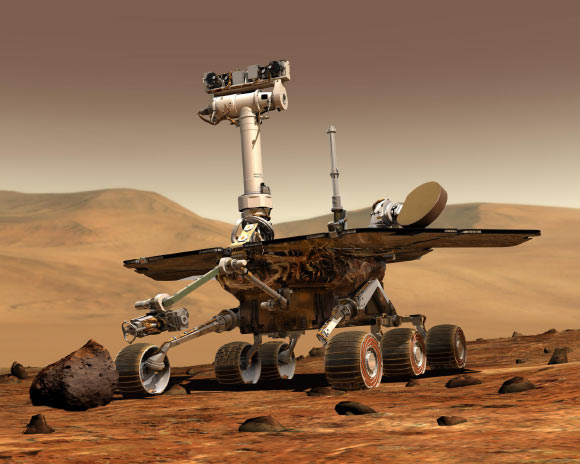
Hidden Clues in Spirit Rover Data Suggest Mars Once Had Far More Water than Scientists Realized

NASA’s Spirit rover on Mars. Image credit: NASA.

A new look at more than two decades’ worth of archival data from NASA’s Spirit mission suggests that the Martian soil may hold iron-bearing minerals -- hematite and altered magnetite -- that were too faint for scientists to detect in real time during the mission.

The post Hidden Clues in Spirit Rover Data Suggest Mars Once Had Far More Water than Scientists Realized appeared first on Sci.News: Breaking Science News.

  •  

New Study Reveals Mechanisms Behind High Iron Levels in Colorectal Cancer Cells

University of Michigan Rogel Cancer Center researchers have unveiled a groundbreaking metabolic mechanism that colorectal cancer cells exploit to maintain exceptionally high iron levels, a discovery that opens promising avenues for targeted cancer therapies. Published recently in Cell Metabolism, this study provides an unprecedented insight into how tumor cells sidestep iron toxicity and evade a form of cell death known as ferroptosis, potentially revolutionizing the understanding of metal metabolism in cancer biology.

Colorectal cancer cells are known to harbor elevated iron concentrations, far surpassing those found in healthy cells. Iron is a double-edged sword in cellular physiology—essential for processes like DNA synthesis and cell proliferation but lethal in excess due to its propensity to generate harmful reactive oxygen species. Ordinarily, cells with excessive iron succumb to ferroptosis, a specialized form of oxidative cell death driven by iron-mediated lipid peroxidation. Tumor cells subvert this natural safeguard, sustaining iron overload without triggering their own demise, but how they achieve this has remained elusive—until now.

The investigative team led by Dr. Yatrik Shah, Horace W. Davenport Collegiate Professor of Physiology at Michigan Medicine, employed a metabolism-directed CRISPR screening approach to systematically dissect the pathways protecting colorectal cancer cells from iron-induced oxidative damage. Surprisingly, canonical ferroptotic enzymes, previously presumed central to this resistance, were found non-essential for tumor survival. This redirected focus led the scientists to explore mitochondrial metabolism more profoundly.

Their research unveiled that the mitochondrial enzyme complex II plays a pivotal role in safeguarding cancer cells from iron-induced toxicity. Complex II regulates coenzyme Q (CoQ) within mitochondria, a key antioxidant molecule that quells oxidative stress. By fine-tuning CoQ’s redox state, complex II effectively buffers the destructive potential of accumulated iron, preventing ferroptosis and enabling cancer cell proliferation. When researchers knocked out complex II in colorectal cancer models, iron toxicity became unmanageable for the tumor cells, leading to widespread cell death and marked tumor growth inhibition.

Crucially, complex II’s protective mechanism appears specific to the high-iron environment of cancer cells. In mouse models, disruption of complex II elicited negligible adverse effects on normal tissues, underscoring the therapeutic potential of selectively targeting this mitochondrial axis in colorectal cancer. This specificity addresses a significant hurdle in oncology: minimizing treatment toxicity while maximizing antitumor efficacy.

Further intricacies emerged as the study revealed a feedback loop wherein iron itself modulates complex II activity, suggesting a sophisticated regulatory axis that maintains iron homeostasis within tumors. This bidirectional interaction offers additional molecular targets for disrupting iron tolerance in cancer cells and deepening our understanding of tumor metabolism.

These findings represent a paradigm shift from earlier hypotheses centered on canonical ferroptosis regulators, highlighting the necessity of focusing on mitochondrial metabolism in cancer research. By leveraging sophisticated genome-editing tools and bioenergetic profiling, the Rogel Cancer Center team charted a novel course for drug discovery efforts aimed at crippling iron addiction—a hallmark of not only colorectal but potentially many other malignancies.

The next phase of this research endeavors to identify and develop potent inhibitors of complex II or its associated metabolic pathways. Given that dysregulated iron metabolism is a common vulnerability across diverse cancer types, these interventions could herald a new era of broad-spectrum anticancer strategies. Moreover, detailed characterization of iron complex II interplay might uncover additional metabolic dependencies exploitable for therapeutic gains.

This transformative research underscores the intricate metabolic adaptations that empower colorectal cancers to circumvent intrinsic iron toxicity constraints. By illuminating the heme-complex II axis as a linchpin in maintaining oxidative balance amid iron overload, it offers a highly selective target for the design of next-generation anticancer agents.

Researchers anticipate that combining complex II inhibition with other therapies may amplify treatment responses and overcome resistance mechanisms. As the quest to outsmart cancer evolves, this study reinforces the vital role of mitochondrial metabolism understanding in crafting innovative clinical interventions.

In sum, the University of Michigan team’s discovery of complex II’s role in buffering iron toxicity not only deciphers a long-standing biological enigma but also charts a compelling translational pathway. It epitomizes how fundamental metabolic insights can accelerate the development of precision treatments conferring hope to millions affected by colorectal cancer worldwide.

Subject of Research: Cells
Article Title: Iron addicted colorectal cancers exploit heme-complex II axis to resist oxidative cell death
News Publication Date: June 17, 2026
Web References: http://dx.doi.org/10.1016/j.cmet.2026.04.020
References: “Iron addicted colorectal cancers exploit heme-complex II axis to resist oxidative cell death,” Cell Metabolism, DOI: 10.1016/j.cmet.2026.04.020
Image Credits: Shah Lab, Rogel Cancer Center
Keywords: Colorectal cancer, iron metabolism, ferroptosis, complex II, coenzyme Q, mitochondrial metabolism, oxidative cell death, tumor metabolism, cancer therapy

  •  

This Ancient Artifact Remained Unidentified for Decades—Now It’s Rewriting the History of One of Japan’s Early Iron Technologies

An iron artifact recovered by archaeologists may be the oldest of its kind ever found in Japan, according to new research.

Recovered during excavations at the Hayashi-Fujishima archaeological site in Fukui, the capital city of Fukui Prefecture, the artifact measures slightly more than an inch and a half across, just under an inch in width, and just a millimeter in thickness.

The presence of tiny, triangular teeth measuring up to 3 millimeters deep indicates the artifact’s use as an early saw, according to investigations by the Fukui Prefectural Archaeological Research Center, which recently announced the discovery.

While similar discoveries have been made in Japan, none are believed to be as old as this saw, which archaeologists have tentatively dated to the late Yayoi Pottery Culture Period, which thrived between the second and third centuries, making it the oldest known in the country.

Tomokatsu Uozu, Deputy Director at the Center, said the age of the discovery indicates the advancement of early iron technologies along the region’s coastal communities during the period.

“The artifact could be an important piece of evidence supporting the advancement of ironware culture along the Sea of Japan coast during the Yayoi period,” Uozu recently told The Asahi Shimbun.

Similar Discoveries in the Ancient East

The saw uncovered at the Hayashi-Fujishima archaeological site bears some similarities to saws from the same period that have been unearthed during past excavations in China.

Such similarities are important, since it is believed that the same iron processing techniques used in the creation of the saw from the Hayashi-Fujishima site originated in China, having been carried across the Korean Peninsula and eventually reaching northern Kyushu, where ancient traders carried it along the Sea of Japan to its eventual arrival at Fukui.

The saw recently showcased by the Fukui Prefectural Archaeological Research Center is only one example of the many artifacts recovered from the Hayashi-Fujishima site.

Identified Decades After Its Discovery

Past work at the site has uncovered additional iron artifacts, as well as stone tools, pottery, distinctive “magatama” and “kudatama” bead varieties, and a range of items during primary excavations, which were conducted during the late 1990s and early 2000s.

The site is believed to also host what remains of an ancient settlement dating to the Yayoi period, a period that was significant for the emergence of organized food production, as well as a unique element associated with the culture: the creation of distinctive, keyhole-shaped burial mounds.

However, it wasn’t until 2021, during restoration work with many of the artifacts retrieved from the site, that researchers first noticed something significant that had gone unnoticed decades earlier at the time of the artifact’s discovery: tiny serrations were present on one of its edges.

Further examination with the help of X-ray CT scan imaging confirmed the artifact’s identity as a triangular or “beak-shaped” saw, similar to other discoveries from later periods. At the time of its use, the complete saw would likely have measured up to five times the length of the remaining fragmentary portion.

Another notable feature of the saw is that the tip of the blade is bent, which archaeologists think may indicate that the saw was used for work involving fine crafting of wooden or stone items.

Breaking Earlier Records for Japan’s Oldest Saw

The discovery now overturns the previous oldest artifact of its kind known from the region, which was uncovered from a third-century burial mound in Hyogo Prefecture. That saw’s association with the Kofun Period, which thrived near the end of the third century, made it the oldest known at the time of its discovery.

Although additional studies are required, the team says that confirmation of the age of the Hayashi-Fujishima site’s saw would extend the timescales once again on the earliest use of such technologies by as much as a century.

  •  

Plants changed the chemistry of magmas

About 400 million years ago, the population of plants with vein systems for transferring water and nutrients, called vascular land plants, exploded. Soon thereafter, rocks from some continental magmas showed notable shifts in their chemical compositions. Geologists have suggested that these magma changes happened worldwide, but some argue that the data might be biased because some geographic regions have more samples to analyze than others. A new research team recently tested whether these magmatic changes occurred on a global scale, versus in isolated mountain belts or volcanic islands. 

Geologists use the chemistry of rocks formed from magma to understand a magma’s history. In particular, a mineral called zircon that forms from cooling magma preserves chemical clues about where the magma came from and what it interacted with. To test whether magma changes were global or local, the authors needed data ranging from the equator to the poles. Continents have shifted over the past 400 million years, so scientists use the latitude a rock had when it formed, called its paleolatitude, to compare samples from different parts of ancient Earth. To understand magma histories worldwide, the team used publicly available chemical data from zircons in magmatic rocks that formed across a wide spread of paleolatitudes.

Chemical elements with the same number of protons but different numbers of neutrons are called isotopes with different masses. To discern how plants influenced magma, the researchers analyzed 2 different isotope signals preserved in the zircons. The first isotope signal comes from the ratio of the heavy to light oxygen isotopes, which increases when sediment mixes into magma. Scientists refer to this value as δ18O, pronounced “delta 18-O.” 

The second isotope signal comes from the element hafnium, denoted Hf. Geologists use hafnium to estimate how long ago magmas melted and separated from the mantle. Zircon contains 2 Hf isotopes, one of which is stable and one of which is produced by radioactive decay. Because this decay happens over billions of years, the ratio between the 2 Hf isotopes over time shifts only slightly. Geologists express these tiny differences using a shorthand called εHf, pronounced “epsilon hafnium,” which shows how much a magma’s Hf signature has changed from Earth’s original mantle. Lower εHf values indicate magmas that incorporated older crustal rock, while higher εHf values reflect mantle sources.

The researchers found that δ18O values increased as εHf values decreased in these zircons. They concluded that this trend indicates increasing amounts of land-derived sediment in magmas, corresponding with the evolution of land plants. They suggested that land plants altered the ancient landscape, changing how sediments weathered and moved over land. 

To explore this pattern in detail, the team focused on the Andes Mountains, a region that preserves a long history of magmatic activity across a long span of space and time. Using a database, they accessed isotope data from zircon samples collected in the Andes Mountains by dozens of other research groups. These samples covered 32 degrees of modern latitude and 520 million years of Earth’s history, offering a broad window into how magma chemistry changed during that time.

They found that zircons older than 450 million years had no relationship between their εHf and δ18O values. However, in zircons younger than 450 million years, δ18O increased as εHf decreased. The researchers saw this pattern in magmas that formed along the edge of the continent, where one tectonic plate sinks below the other, called a subduction zone. They also saw this pattern in magmas that formed inland, away from the subduction zone, around 200 million years ago during the breakup of the supercontinent Pangaea.

 They found similar results in published zircon isotope data from igneous rocks in China, the Caribbean, Antarctica, Madagascar, and Tasmania. Zircons from each region showed the same relationship as zircons in the Andes. Since paleolatitude can also reflect ancient climate, the researchers compared the ratio of εHf and δ18O, written as εHf/δ18O, with paleolatitude to test whether ancient climate zones influenced magma chemistry. They found no link between paleolatitude and εHf/δ18O. 

With these results in mind, the researchers concluded that the relationship between εHf and δ18O shifted worldwide after vascular land plants evolved. They argued that as plants spread across the continents, their roots accelerated the breakdown of rocks. This accelerated weathering produced large amounts of sediment that washed into ocean basins and was eventually subducted into the mantle, forever changing the chemistry of magma formed there. They suggested that this chain of events illustrates how life on Earth’s surface can drive changes deep within the planet. 

The post Plants changed the chemistry of magmas appeared first on Sciworthy.

  •  
❌