❌

Reading view

How Do Archaeologists Tell a Settlement From a Ritual Complex?

Archaeologists rarely identify a settlement from one object. They combine buildings, hearths, tools, food remains, activity areas, and patterns of rebuilding to understand a site.

The post How Do Archaeologists Tell a Settlement From a Ritual Complex? appeared first on Curiosmos.

  •  

Karahantepe’s 11,000-Year-Old Figure Shows a Person Seated on a Leopard

A person sits on a leopard in a sculpture found inside a small stone building. What did this unusual pairing mean to the people of Karahantepe?

The post Karahantepe’s 11,000-Year-Old Figure Shows a Person Seated on a Leopard appeared first on Curiosmos.

  •  

11,000-Year-Old Stone Sculpture Unearthed at Göbekli Tepe’s Mysterious Sister Site Was Carved Millennia Before the First Human Societies

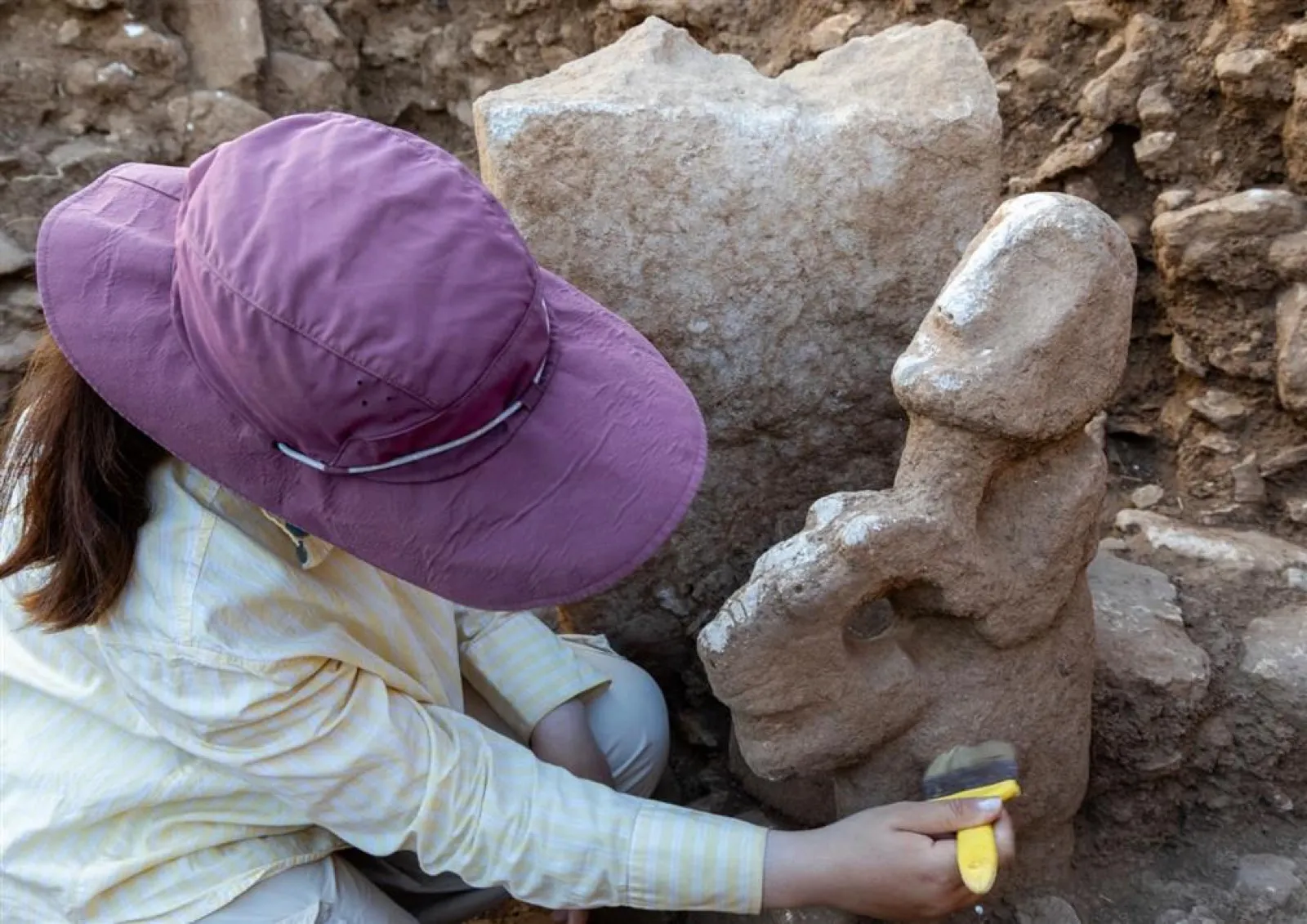
Officials from Turkey’s Ministry of Culture and Tourism working at Karahan Tepe, a “significant parallel site” to the enigmatic Göbekli Tepe, have announced the discovery of a unique stone sculpture depicting a human figure riding a leopard.

Ministry officials said the 70-centimeter-tall “composite sculpture,” likely carved thousands of years before the first organized human societies, “opens new questions” about the ancient Neolithic artist who created it.

The discovery also offers insights into the sophistication of the society and the types of artistic expression taking place thousands of years ago in this archaeologically rich region of southeastern Turkey, according to a recent Yenisafak news agency report.

11,000-Year-Old Composite Sculpture Found at “Parallel Site” to Göbekli Tepe

When most people think of ancient megalithic structures, well-known archaeological sites like the Egyptian pyramids, Stonehenge, and Machu Picchu likely come to mind. Critically, all those impressive feats of ancient engineering were accomplished after the generally agreed-upon formation of humanity’s first societies.

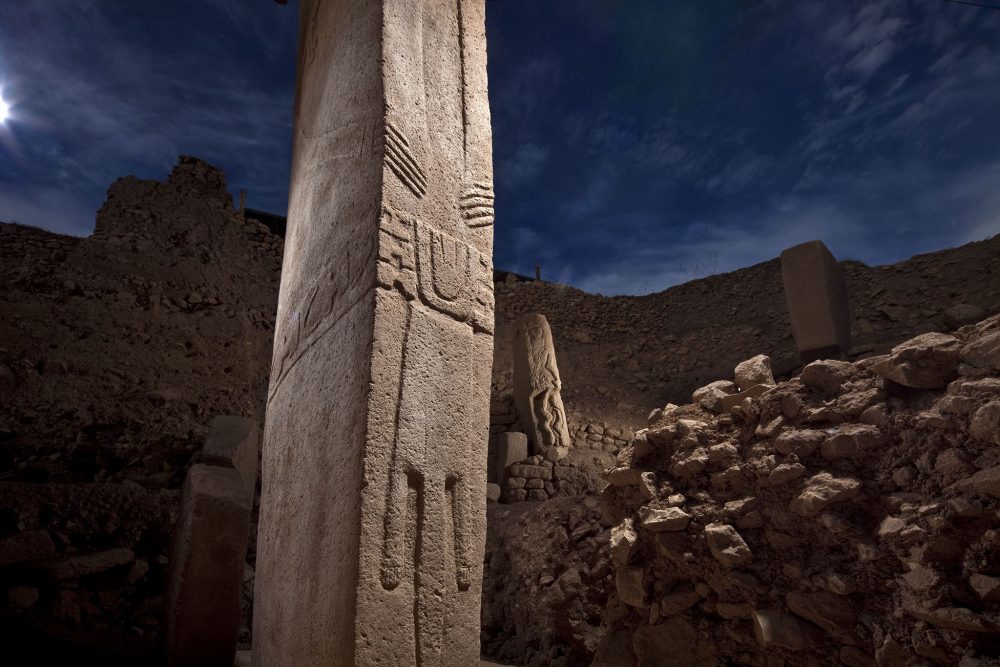
Those attitudes began to shift after the relatively recent discovery of Göbekli Tepe in southeastern Turkey. Famous for its massive stone pillars and lifelike animal sculptures found throughout much of the site, the site’s construction has been scientifically dated to between 11,500 and 12,000 years before present. That date places this impressive site and its artwork’s creation thousands of years before those first human societies.

While researchers continue to excavate Göbekli Tepe, they have also unearthed several historically rich sites in the same region. That includes the nearby Karahan Tepe, which has been dated to a few hundred years after its more famous neighbor.

“Composite Sculpture” Represents Style Not Previously Identified in Region

According to the ministry, Karahan Tepe lies approximately 30 kilometers from Göbekli Tepe. The historic sites are part of the larger Taş Tepeler archaeological project. That effort includes a cluster of Stone Hills sites previously dated to the Neolithic period more than 11,000 years before present.

When Turkey’s Culture and Tourism Minister Mehmet Nuri Ersoy announced the discovery, he described the ancient artwork as a “composite sculpture.” The Minister said the find, which he also described as 11,000 years old, represented a style not previously encountered at the ancient site, near Şanlıurfa.

The minister said the unusual sculpture was found during ongoing excavations this year. Instead of resting inside a majestic monument like the Göbekli Tepe sculptures, the leopard-and-man statue was found resting on a bench along the wall of a circular structure “roughly three meters in diameter.”

Notably, the structure’s floor was paved with flat stones. The ministry said this suggests a sophisticated level of deliberate architectural planning “during an era predating the emergence of cities and written records.”

Find “Opens the Door to New Questions About the Earliest Periods of Human History”

When discussing the discovery’s significance, the ministry pointed to the volume of monumental structures and elaborate artworks found in the region. They also noted the value of artifacts representing humanity’s transition “between mobile hunter-gatherer existence and settled agricultural life,” which “challenge previous assumptions about the timeline of complex social organization.”

“While Göbeklitepe has drawn international attention since the 1990s for its T-shaped pillars and animal carvings, Karahantepe has emerged as a significant parallel site since excavations began there in 2019,” the announcement explains.

After highlighting Turkey’s ‘Heritage to the Future’ initiative, which supported the effort, Minister Ersoy said the ancient statue’s discovery “opens the door to new questions about the earliest periods of human history” and would resonate throughout the scientific community.

Christopher Plain has spent the last six years as Associate News Editor and Head Science Reporter at The Debrief. Follow and connect with him on X, learn about his novels at plainfiction.com, or email him at christopher@thedebrief.org.

  •  

A New Discovery at Göbekli Tepe Could Reshape Our Understanding of One of the Ancient World’s Most Perplexing Sites

The enigmatic Neolithic site of Göbekli Tepe in Turkey, home to some of the world’s earliest advanced megalithic construction and sophisticated symbolic art, continues to surprise archaeologists.

Since the discovery of megalithic features during excavations at the site led by archaeologist Klaus Schmidt in the 1990s, Göbekli Tepe has long been recognized as a ceremonial site, where its ancient builders might have gathered for ritual purposes under the site’s distinctive circles of T-shaped pillars.

At the time of its discovery, archaeologists had never found earlier examples of such sophisticated megalithic construction. Remarkably, Göbekli Tepe predated the appearance of monumental structures in Egypt, and even sites like Britain’s Stonehenge, by several thousands of years.

Yet despite the location’s impressiveness, its purpose seemed to be primarily a functional one: little evidence could be found that the ancient Neolithic site—built at a time that predates agriculture, and even the known use of pottery—had also been a dwelling place.

Now, new evidence suggests that parts of Göbekli Tepe may have indeed once been a habitation site, with the discovery of possible dwellings.

Possible Dwellings at the World’s Oldest Temple

Archaeologist Necmi Karul of Istanbul University and the Stone Hills Project recently revealed the results of geophysical surveys and new excavations being conducted at the ancient site, which have produced traces of several large structures that were long hidden beneath the ancient earth that still covers—and also protects—much of the site.

Göbeki Tepe
The Göbeki Tepe site near Şanlıurfa in Turkey (Image Credit: E. Kekikciler/Unsplash)

Although the purpose of these buildings remains unclear, evidence based on the internal arrangements within these ancient structures does seem to suggest they may have been living spaces, and even individual residences in some cases.

“Our first impression is that they [were] used as housing,” Karul said in a statement.

If confirmed, the discovery could add a new dimension to archaeologists’ understanding of the famous site, since it has long been presumed that its ancient inhabitants were primarily hunter-gatherers, who ranged throughout the region in search of sustenance during a time long before farming helped to facilitate the more sedentary lifestyle of later societies.

Göbekli Tepe: Reshaping Our Knowledge of the Ancient World

Although the discovery could change our understanding of Göbekli Tepe, it would align with past revelations about the site that have caused archaeologists to have to rethink things about the Neolithic world of ancient Anatolia, since it was also once presumed that hunter gatherers, due to their nomadic lifestyle, would have had little use for monumental architecture as far back as 11,000 years ago—and yet this is precisely what excavations at Göbekli Tepe revealed.

In a posting on social media, Turkey’s Minister of Culture and Tourism, Mehmet Nuri Ersoy, said that in addition to the discovery of the new possible habitation structures, ongoing work at the site continues to help ensure its conservation, and several of the structures at the site have been reinforced to help preserve them.

“We are also securing the monoliths against tremors using steel cables,” Ersoy said. “By simultaneously conducting excavation, restoration, and conservation work across various parts of Göbeklitepe, we are carrying this unique heritage into the future through a holistic approach.”

Micah Hanks is the Editor-in-Chief and Co-Founder of The Debrief. A longtime reporter on science, defense, and technology with a focus on space and astronomy, he can be reached at micah@thedebrief.org. Follow him on X @MicahHanks, and at micahhanks.com.

  •  

Martin Sweatman dell'Università di Edimburgo ha individuato in uno dei pila…

Martin Sweatman dell'Università di Edimburgo ha individuato in uno dei pilastri di Göbekli Tepe il più antico calendario solare della storia, composto da 365 giorni, mesi lunari e giorni extra. Secondo l'analisi geometrica e astronomica del ricercatore, le incisioni a forma di "V" e i simboli zoomorfi del sito descrivono con estrema precisione l'impatto di uno sciame di frammenti di cometa avvenuto circa 13.000 anni fa.
  •  

Que mangeaient les bâtisseurs de l'un des plus anciens villages au monde ? Voici la surprenante réponse des archéologues

Que mangeaient les bâtisseurs du plus vieux village du monde, il y a 12 000 ans ? En analysant les vestiges de Karahan Tepe, en Turquie, des archéologues ont percé le secret de leur menu. Gazelle sauvage et légumineuses : le carburant, peut-être, de l'une des premières grandes aventures humaines.

  •  

What Göbekli Tepe Changed About Civilization

Göbekli Tepe sits on a limestone ridge near Şanlıurfa, in the Upper Mesopotamian zone where some of the world’s earliest farming communities would later emerge. Its oldest monumental structures were built between roughly 9600 and 8200 BCE, by hunter-gatherer groups working centuries before pottery and long before cities, metal, or the wheel. The first shock […]

The post What Göbekli Tepe Changed About Civilization appeared first on Curiosmos.

  •  
❌