❌

Reading view

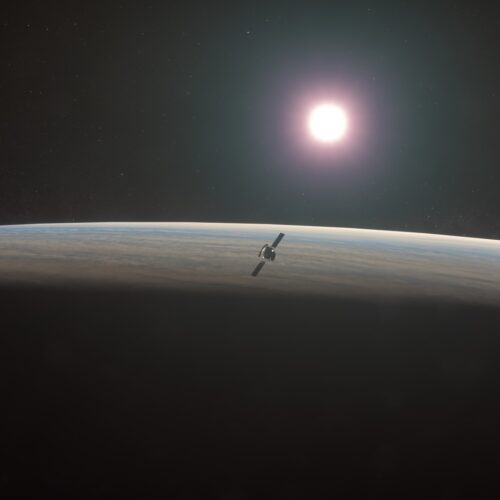
UARX Space troubleshoots anomalies on maiden OTV Flight

SAN FRANCISCO –Spanish startup UARX Space is remedying anomalies identified during the maiden flight of OSSIE-D, an orbital transfer vehicle (OTV) launched Oct. 1 aboard SpaceX’s Transporter-18 mission. At least […]

The post UARX Space troubleshoots anomalies on maiden OTV Flight appeared first on SpaceNews.

  •  

All of Today’s European Monarchs are Descended From a Family You’ve Never Heard of: The Oldenburgs

Most of us can rattle off Europe’s great royal houses: the Bourbons, the Habsburgs, the Plantagenets, the Stuarts, the Romanovs, the Windsors. Far fewer people have heard of the House of Oldenburg, yet few families have left a deeper or longer-lasting mark. Through a long chain of marriages, the Oldenburgs spread across the north of […]

  •  

Un Finlandais découvre en forêt un trésor record de l’époque viking… qui n’a peut-être jamais été viking, vue la trouvaille !

Une forêt située à une centaine de kilomètres d’Helsinki cachait depuis près d’un millénaire un ensemble archéologique hors norme. Repéré grâce à un détecteur de métaux, ce trésor pourrait désormais éclairer les échanges commerciaux qui traversaient le nord de l’Europe à la fin du premier...

  •  

UK employees splash £1B on genAI tools

Two new reports revealed shifting AI usage trends across the UK, with workers spending heavily on generative AI (genAI) tools and consumers increasingly turning to the technology to access news.

A study by Deloitte found UK workers spend an estimated £958 million of their own money annually on genAI to do their jobs. Of the 25,000 UK workers surveyed, 63% knowingly used genAI for their jobs and 17% paid for at least one tool themselves. Almost a quarter claimed to use genAI every day.

The findings suggested AI adoption is moving ahead of formal workplace policies, raising concerns over training and employer oversight. Nearly a third said they used the technology without their employer’s knowledge, while 65% said their organisation lacked convincing leadership on how AI should be used.

Around half of workplace genAI users said they had received no formal training on using the technology safely and effectively.

Workers said genAI saved them an average of 70 minutes a week, yet 23% reported a stigma around deploying it. In addition, 64% of weekly users were concerned managers would think the technology could do their jobs.

The survey found workplace usage remained relatively focused on routine daily tasks, with 43% claiming to deploy the technology to search for information or draft emails and 31% stating it helped them generate summaries.

“The challenge is no longer getting people to use genAI, it’s how businesses meet this growing demand in a way that is secure, responsible and creates lasting value,” noted Hayley McKelvey, chief AI officer at Deloitte UK.

AI news
A survey by Ofcom revealed AI is also becoming a prominent route into news. The UK watchdog found one in five adults used AI services to keep up with the news, while 21% of UK adults had used an AI app or service to access news during the previous month. ChatGPT was the most popular AI service for news, reaching 13% of adults.

Online intermediaries, including social media, search engines, news aggregators and AI tools were used by 73% of adults to access news, compared with 57% who went directly to publishers’ websites and apps.

Despite the shift towards digital intermediaries, around 56% of adults said they were less trusting of an AI-written news story than one written by a human.

Ian Macrae, director of market intelligence at Ofcom, said the shift meant public service media “must continue to evolve their distribution strategies to continue to meet audiences where they are”.

The post UK employees splash £1B on genAI tools appeared first on Mobile World Live.

  •  

EU sets out social media limits for children  

European Commission (EC) President Ursula von der Leyen (pictured) outlined plans to restrict children’s access to social media under the watchdog’s proposed EU Kids Act, as concerns mount over the impact of addictive online services and increasingly capable AI systems.

In her annual State of the Union address, von der Leyen told the European Parliament: “What we are witnessing is a great capture of our children. A capture of their attention, their focus, their minds.” She explained the proposed EU Kids Act would ban children under 13 from social media and bar under 15 users from having personal accounts.

Meanwhile, 13 to 15-year-olds would only be able to use “mini accounts” set up and supervised by parents, with limited features and time restrictions. Platforms would also be required to implement additional safety features for users aged 15 to 18.

“We are reversing the burden of proof,” she said, adding, “platforms will have to prove that they are safe”.

Von der Leyen noted young Europeans now spend four to six hours a day on screens, pointing to concerns around addictive features, harmful content, online bullying and growing rates of sleep issues, anxiety and suicide.

“We do not have to accept addictive features. We do not have to accept children being drawn into ever more extreme content. We do not have to accept that girls have their photos used for AI-generated sexualised images,” she argued.

The measures form part of the EU Kids Act, which the EC is due to propose tomorrow (17 September). The proposal would introduce age checks across social media, video sharing platforms, app stores, online games and AI services.

The EC is also preparing a broader Digital Fairness Act aimed at addressing addictive design features beyond services used by children.

AI tipping point
AI was also a focus of the address, with von der Leyen describing it as “the second tipping point of our times”.

She warned that increasingly capable models could create new security risks, including more powerful hacking capabilities and the potential for self-improving systems to cause mass harm.

She revealed the EC plans to work with partners including the UK and Canada on “model evaluation, verification, early warning, AI security and much more”, while also seeking greater European computing capacity and investment in local AI companies.

Von der Leyen called on the region to use AI to support sectors including healthcare, manufacturing, transport and agriculture, while retaining human oversight. “Our approach is clear. We want AI… But above all, we want AI with human agency.”

Global concerns have been mounting over the pace of AI development this week, as Anthropic and OpenAI chiefs called for a slowdown in frontier AI development after researchers warned of existential risks from increasingly capable systems.

The post EU sets out social media limits for children   appeared first on Mobile World Live.

  •  

European telco bosses call for EU to correct the course

Europe’s biggest operators urged European Union (EU) policymakers to rethink regulation they argue is restricting investment in connectivity, with spectrum, fibre and cybersecurity rules amongst their top concerns.

In a joint statement, 17 European telecoms chiefs including Telefonica chairman and CEO Marc Murtra, Deutsche Telekom CEO Tim Hoettges, Orange CEO Christel Heydemann and Telenor Group president and CEO Benedicte Fasmer called on the EU to “correct the course” of the proposed Digital Networks Act (DNA) and Cybersecurity Act (CSA).

The executives argued that “incoherent policy reforms” risk weakening the region’s position. They noted the mobile sector requires €475 billion to establish world-class mobile networks, “requiring a step change in investment”.

The DNA, unveiled by the European Commission (EC) in January to modernise and simplify connectivity rules, aims to harmonise regulation, facilitate cross-border operations and promote investment in fibre and mobile networks. However, the operators argued the framework fails to improve the investment and innovation environment for European connectivity.

The CEOs called for spectrum licences to be granted indefinitely by default, with terms of at least 40 years in exceptional cases. They explained a move away from frequent auctions would free up capital for 5G, fibre and future 6G deployment, adding European operators spent €110 billion on spectrum licences alone over the past 12 years.

The group also pushed back against mandated copper shutdowns, stating operators should decide when to retire legacy networks based on customer demand and market conditions. European operators invest more than €30 billion annually in fibre-to-the-home (FTTH) networks.

Safety net
More broadly, the telcos called for a shift away from rules designed for legacy networks, arguing “regulation should remain a safety net” in “today’s increasingly competitive fibre market”. It also urged policymakers to allow greater scope for innovation with advanced 5G and 6G services, including network slicing and quality differentiation.

On cybersecurity, the operators warned CSA rules mandating the removal of equipment from high-risk third-country suppliers including Huawei could result in up to €40 billion in replacement costs for the sector. They called for a “proportionate, risk-based approach” that considers alternative measures, adding blanket replacement requirements could divert capital away from fibre, 5G and 6G investment.

Ultimately, the group argued stronger connectivity would support growth across AI, sovereign cloud and defence technology. “As CEOs of Europe’s leading telecom companies, we are ready to play our part in delivering European tech leadership,” the executives stated.

Other signatories included executives from TIM, KPN, Proximus, Swisscom and Liberty Global.

The post European telco bosses call for EU to correct the course appeared first on Mobile World Live.

  •  

Tele2 lines up next commercial head

Tele2 sought out an experienced telecoms executive to become its next EVP and CCO in an appointment due to happen no later than 1 June 2027.

Vahdat Zehtab brings 18-years of experience in the telecoms sector and is set to join from the post of CEO with Valdyr, creator of an AI-native network operating system.

Tele2 is filling a role opened when it promoted Nicholas Hogberg to be president and CEO in July after Jean Marc Harion stood down for personal reasons.

Zehtab spent five-years heading Telia’s B2C Mobile unit covering its Swedish operation. Tele2 also highlighted broad international experience in commercial director roles “across several European and Asian markets”.

There was further B2C experience gained with Ncell in Nepal.

Valdyr appeared to cash in on news of the appointment by choosing today (15 September) to reveal the moniker as its new brand, replacing its previous Telness Tech name.

Executives said the rebrand better reflects “what remains once the old” telecom stack is removed.

The post Tele2 lines up next commercial head appeared first on Mobile World Live.

  •  

Spanish Amber Deposit Offers Rare Window into Cretaceous Life

Life reconstruction of Hallucinochrysa diogenesi. Image credit: J.A. Peñas.

El Soplao, a fossil site tucked into the hills of Cantabria in northern Spain, stands out for yielding amber pieces with a blue-violet hue and abundant bioinclusions, according to a new review paper.

The post Spanish Amber Deposit Offers Rare Window into Cretaceous Life appeared first on Sci.News: Breaking Science News.

  •  
  •  

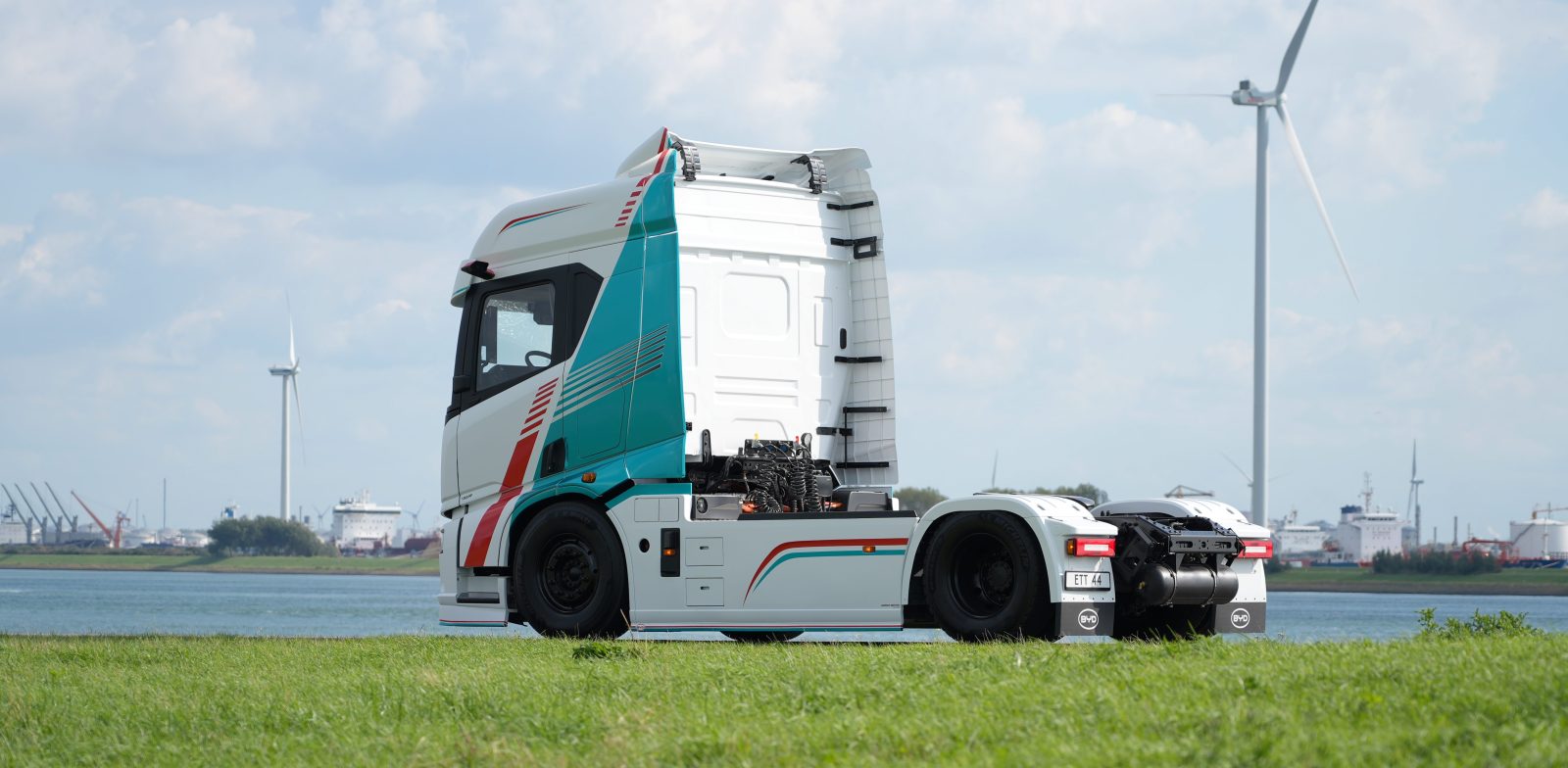
BYD unveils flagship 600 km electric truck with 1.5 MW charging

BYD unveiled its most complete electric commercial vehicle lineup yet at IAA Transportation 2026 in Hannover, headlined by the ETT 44, a heavy-duty tractor with up to 600 km of range and 1.5-megawatt charging.

It’s BYD’s clearest shot yet at Europe’s heavy-truck market, and it brings the “Flash Charging” pitch the company built around its cars straight to the freight business.

more…
  •  

Tesla reveals European Semi specs: 550 km range, 800 kW charging

Tesla revealed the European specs for its Semi electric truck, and they don’t match the version already in production in the US. The truck will offer up to 550 km (342 miles) of range at 40 tonnes fully loaded.

Tesla Europe posted the numbers today, days before the company plans to formally launch the Semi in Europe at the IAA Transportation show in Hannover.

more…
  •  

Interview: Lava MD outlines UK plan after mid-tier device launch

Indian smartphone manufacturer Lava International made its debut in the UK at the end of August with a mid-tier offering. To coincide with the launch MD Sunil Raina caught up with Mobile World Live to discuss how he hopes it can stand out in its first market in the West.

Lava is positioning the AGNI 4N smartphone as having the highest build and component quality available in the mid-range, with the added benefit of no so-called “bloatware”. It is priced around the £500 mark.

The company’s foray into the UK comes after 17 years of supplying feature phones and then smartphones in its home market, where it also manufacturers the handsets.

It has a presence in over 20 countries, but Raina noted the UK would be its first “Western” venture.

The executive highlighted the business has “continuously grown in smartphones over the last 5 years,” though from a relatively small base, in an era of flat conditions for the overall market.

This factor “typically means that you are able to take share” from larger rivals; something the company aims to do in its new mature market.

Rear view of a grey Lava 5G smartphone angled diagonally against a soft beige gradient background. The device features a large pill-shaped dual-camera module with two prominent lenses and an LED flash, a matte finish, and subtle Lava branding on the back. The phone appears suspended above a light-coloured surface under studio lighting.

Raina believes there is an opportunity in the UK’s Android segment given the high market penetration of Samsung and few alternatives in the mid-tier gaining significant traction.

He noted there was a relatively low penetration rate of Chinese brands in some Western markets, including the UK, companies which are stronger in this mid-range elsewhere in the world.

Lava’s origins, he hopes, will provide an advantage given India’s trustworthy status in the UK and the fact “there’s also a huge diaspora” who “I think would perhaps like to carry one of our products”.

Its debut device in the country is being sold initially through online channels. Subsequent releases are likely to be at the same or lower tier than the AGNI 4N.

“Because this is our first foray into a Western market we would like to gauge how it goes, take the first few steps wisely and cautiously,” Raina said, noting over the years it has learnt how to survive in a challenging and always shifting industry, building a brand for the long term.

“Very few companies who started around the same time we started could manage to survive in this industry,” he added, pointing to former big names who have come and gone include BlackBerry and HTC.

Youthful outlook
Lava intends to position its debut UK release at the “mid belly” of the market primarily to an audience of young people.

Promoted points include a lack of already installed apps and other “bloatware” on the device when people buy it and use of high-quality components for its price.

Raina noted there was a trend for some makers of Android-based phones to install “dozens of applications” before sale, which consume valuable memory and potentially raise security issues, as well as being a general inconvenience for the consumer.

Lava promotes supplying a “very clean” version of the operating system.

The executive noted it delivers a high build quality and performance levels at the upper end of the mid-range.

Its AGNI 4N has an aluminium alloy metal frame, glass back and uses a MediaTek Dimensity 8350 chipset, alongside AI and camera features similar to those frequently promoted in the mid-tier.

“Below a certain price point there are a lot of compromises that brands make in terms of the build quality of the phone,” he asserted, stating many around the mid-price were “more plasticy” than its offering.

Quote Icon

Below a certain price point there are a lot of compromises that brands make in terms of the build quality of the phone

Sunil Raina, MD Lava International

Raina argues some brands which also sell at higher tiers have a vested interest in making their top products “more aspirational and therefore compromise at the lower level”.

In terms of its audience, the device is aimed primarily at a younger demographic who want high performance to suit popular applications such as gaming, but may not have a premium budget.

“It’s in a sweet spot where young people will be able to do high performance tasks, but at a price point which is good for their pockets as well”.

“We believe this device will be able to do a lot more things that other devices cannot at this price segment,” he concluded.

The post Interview: Lava MD outlines UK plan after mid-tier device launch appeared first on Mobile World Live.

  •  

Des crânes transformés en coupes et des os découpés : ce que révèlent trois grottes du Néolithique dans cette région d’Europe

Le cannibalisme n’a pas été un phénomène isolé dans l’Europe du Néolithique. Des ossements humains retrouvés dans plusieurs grottes du sud de l’Espagne montrent que cette pratique a ressurgi à différentes périodes. Mais derrière des marques similaires sur les os se cacheraient des réalités bien...

  •  

Europe will go it alone on Venus mission after NASA yanks radar instrument

The European Space Agency is moving "full steam ahead" with development of a robotic mission to Venus after NASA officials determined they were unlikely to fulfill a commitment to provide a US-built radar instrument for the spacecraft, the mission's project scientist said.

The European orbiter, named Envision, will map the Venusian surface at 10 times higher resolution than the last radar mission sent to Venus by NASA in the 1990s. The planet is enshrouded in a blanket of thick clouds of sulfuric acid, rendering its mysterious surface unseen by optical cameras in orbit. Radar is the most effective way to penetrate the clouds of Venus to reveal the terrain below, and scientists will use Envision to look for signs of active volcanism.

NASA and ESA signed a memorandum of understanding in 2024 outlining their partnership on Envision. NASA agreed to supply a US-made synthetic aperture radar instrument, Envision's primary means of mapping the surface of Venus, along with providing tracking and communications support through NASA's Deep Space Network. In exchange, ESA would include US researchers on Envision's science team. Europe would build the Envision spacecraft and the rest of its science instruments and provide the launch on an Ariane 6 rocket.

Read full article

Comments

© ESA/Paris Observatory/VR2Planets

  •  

EC awards major deals for IRIS2 buildout

The European Commission (EC) handed contracts to Thales Alenia Space and Aerospacelab for the buildout of the IRIS2 constellation, as EC president Ursula von der Leyen (pictured) set out the bloc’s priorities for the space sector.

Starting with Aerospacelab, the company stated it was selected as a key prime contractor for the low Earth orbit (LEO) segment of the IRIS2 programme, entrusted with building 264 satellite platforms in a deal worth €2.4 billion.

Benoit Deper, CEO of Aerospacelab, said its selection for IRIS2 “reflects a deliberate industrial choice and a defining moment for Europe as a whole”.

“Institutions are now also placing their trust in a new generation of space manufacturers: companies like Aerospacelab, built from the ground up to deliver satellite infrastructure at scale and speed,” he added.

Meanwhile, Thales Alenia Space, a joint venture owned by Thales and Leonardo, stated it had agreed a deal with Eutelsat to provide governmental payloads dedicated to 330 IRIS2 telecoms satellites in LEO.

The value of the deal is worth around €500 million, while the company expects to gain around €3 billion from the project overall.

Around 66 LEO Ka-only telecoms satellites will be launched in 2029, with Thales Alenia Space developing the payloads and Airbus Defense and Space providing the platforms.

It will also be responsible for the government payloads for a further 264 Ku/Ka telecoms satellites, scheduled to launch from 2030.

Competitive space sector
Speaking at the International Space Summit in Paris, von der Leyen said the IRIS2 programme would ensure resilient communications across Europe, strengthen digital sovereignty and reduce reliance on non-European satellite systems.

During a speech, she also set out a commitment to strengthen Europe’s access to space through greater private investment, while expressing the importance of a “strong and competitive space sector that can grow, scale up and compete globally”.

The post EC awards major deals for IRIS2 buildout appeared first on Mobile World Live.

  •  

New EAMA highlights showcase 30-year cohort generation research findings

Thirty years after a small group of European professors of geriatric medicine first warned that the continent’s fastest-growing population was being cared for by physicians who had never been formally trained to care for them, the program they created to fix the problem is marking its anniversary with a scientific milestone of its own. A new special article published in European Geriatric Medicine documents the research output of the most recent graduating cohort of the European Academy for Medicine of Ageing, or EAMA, and in doing so offers a rare longitudinal measure of how a structured, pan-European leadership program in geriatric medicine translates into scholarly productivity, professional advancement and, ultimately, better care for older people.

The new paper, titled “‘Highlights of latest EAMA’: generation research outputs of the 30-year anniversary cohort,” was authored by Thomas Münzer of the Geriatric Clinic St. Gallen in Switzerland, Hannes B. Stähelin of Basel, and Barbara van Munster of the University of Groningen Medical School in the Netherlands, writing on behalf of the EAMA Board. It arrives at a moment when the demographic arithmetic of Europe has made the question of geriatric capacity more urgent than ever: the proportion of people over 65 continues to climb, multimorbidity, frailty and polypharmacy have become the daily reality of hospital medicine, and health systems across the continent still struggle to recruit and retain physicians trained specifically in the medicine of ageing. The article’s premise is simple but rarely examined with this degree of rigor — if you invest systematically in the education of mid-career geriatricians, what do you get back?

To understand the significance of the anniversary cohort’s research output, one has to go back to the early 1990s, when the group of European Professors in Medical Gerontology published a stark assessment in the journal Age and Ageing. Writing in 1994, Stähelin and colleagues documented that medical gerontology was taught unevenly, and in many countries not at all, in European medical schools. Geriatric medicine, despite being one of the few specialties whose patient population was guaranteed to expand every single year, was frequently a subordinate unit within internal medicine, staffed by physicians who had acquired their expertise on the job rather than through dedicated training. The professors’ conclusion was that Europe needed not merely more geriatricians but a new cadre of academic leaders — clinicians who could teach, publish, shape curricula and advocate for the specialty within their national health systems.

That diagnosis led, in 1995, to the founding of the European Academy for Medicine of Ageing, an intensive postgraduate program deliberately modeled on leadership academies rather than conventional continuing medical education. EAMA’s structure has remained remarkably stable across its three decades: a small, competitively selected cohort of physicians, typically already experienced clinicians, is brought together for a series of residential courses spread over roughly two years, interspersed with mentored projects that require participants to produce original scholarly work. The curriculum spans the full breadth of the medicine of ageing — from the biology of ageing and the physiology of frailty, through geriatric syndromes such as falls, delirium, incontinence and sarcopenia, to the organizational science of acute geriatric units, nursing home medicine, rehabilitation and end-of-life care. Crucially, faculty are drawn from across Europe, exposing participants to radically different national models of geriatric care and building a professional network that persists long after the formal courses end.

The “reloaded” reform of the program, described in a 2018 paper by Roller-Wirnsberger and colleagues in European Geriatric Medicine, formalized what three decades of experience had taught the academy’s faculty. That paper set out explicit competencies and standards for a European leadership program in geriatric medicine, defining what a graduate of EAMA should be able to do: not just diagnose and treat, but design services, lead multidisciplinary teams, mentor juniors, conduct and critique research, and represent the specialty at institutional and governmental levels. The competency framework aligned the academy with modern medical-education theory, in which learning objectives are specified in advance and assessed rather than assumed. It is against this framework that the anniversary cohort’s performance, as documented in the new article, can be read as an evaluation of the program itself.

The central finding of the new special article is that the latest cohort of EAMA graduates has generated a substantial body of research output — the “generation research outputs” of the title — spanning peer-reviewed publications, presentations and ongoing projects in geriatric medicine. Each participant in the program is expected to develop a scholarly project under faculty mentorship, moving from a research question through protocol design, data collection and analysis to presentation and, ideally, publication. For the 30-year anniversary cohort, the academy compiled and highlighted these outputs, creating what the authors describe as the “Highlights of latest EAMA” — a curated snapshot of what a single generation of emerging European geriatric leaders produced during and immediately after their training.

Why does this matter beyond the individual careers involved? The technical answer lies in how research capacity compounds. A single published paper changes one evidence base marginally; a cohort of trained researchers who continue publishing changes the trajectory of an entire specialty. Geriatric medicine has historically been under-represented in high-impact clinical research relative to the burden of disease it manages. Conditions such as delirium, frailty and multimorbidity were for decades excluded from major trials or treated as confounders rather than outcomes, precisely because the specialty lacked enough investigator-trained clinicians to insist on their inclusion. Programs like EAMA attack that bottleneck at its root: every graduate who learns to design a study, secure a mentor and navigate the publication pipeline becomes a node through which clinical questions from the bedside can flow into the literature and back.

The pedagogical machinery behind that outcome is worth examining, because it explains why the anniversary cohort’s productivity is treated by the authors as more than a curiosity. EAMA’s residential courses are built around case-based, small-group learning in which participants bring real clinical and organizational problems from their home institutions and work them through with international faculty. The mentored projects between courses impose deadlines and accountability — the two ingredients that, as anyone who has supervised doctoral students knows, most reliably convert good intentions into submitted manuscripts. The academy also functions as a peer-review incubator: draft papers are critiqued by senior European geriatricians before submission, giving participants exposure to the standards of international journals at a stage of their careers when feedback is most formative.

The anniversary article also carries a personal and institutional poignancy. Hannes B. Stähelin, one of the co-authors, is identified in the publication as deceased; he was among the founding professors whose 1994 analysis launched the academy, and his presence on the author line of a paper published in 2026 spans the full thirty-year arc of the program. The continuity from the GEPMG position paper through the 2002 retrospective review of the academy’s first years, published in Gerontology, through the 2018 competency framework, and now to this documentation of cohort research output, constitutes something rare in medical education: a thirty-year, multi-generation audit trail of a single intervention in specialty training, documented by the people who built it.

For health systems, the implications are concrete. Europe’s national models of geriatric care differ enormously — from the fully established departments of the United Kingdom and the Netherlands to countries where geriatrics is still fighting for recognition as an independent specialty. EAMA’s cohorts deliberately mix these national traditions, so that a geriatrician from a country without an acute geriatric unit model trains alongside colleagues who run such units daily. The research outputs of the anniversary cohort, the authors suggest, function as a form of technology transfer: projects conceived in one system are published in international journals and become adaptable blueprints for colleagues elsewhere. In an era when the European Union explicitly tracks health-workforce capacity, an academy that reliably produces clinicians who can lead services and generate evidence is a strategic asset, not a professional courtesy.

The article is also, implicitly, an argument about how educational interventions should be evaluated. Medical education research is notoriously dominated by satisfaction surveys and self-reported confidence measures, which correlate weakly with actual performance change. Research output — publications generated, projects completed, academic positions attained — is a harder, more objective endpoint, and the EAMA Board’s decision to compile and publish the anniversary cohort’s outputs signals a commitment to accountability by measurable results. It is a methodology other postgraduate leadership programs in medicine, from palliative care to rural health, could plausibly adopt: define the competencies, train against them, and then report what the trainees actually produced.

The publication timeline of the article itself — received in December 2025, revised in April 2026, accepted in June and published on 6 July 2026 in European Geriatric Medicine, the journal of the European Geriatric Medicine Society — places it squarely in the anniversary year it commemorates. As Europe’s population ages at a pace with no historical precedent, the question the founding professors asked in 1994 — who will teach the teachers, and who will lead the specialty? — has an answer that can now be pointed to in print: thirty years of EAMA cohorts, and a newest generation whose scholarly work is documented, highlighted and, the academy clearly hopes, replicated by the cohorts to come.

Subject of Research: Research outputs and scholarly productivity of the 30-year anniversary cohort of the European Academy for Medicine of Ageing (EAMA), a pan-European postgraduate leadership program in geriatric medicine

Article Title: “Highlights of latest EAMA”: generation research outputs of the 30-year anniversary cohort

Article References: Münzer, T., Stähelin, H. B., van Munster, B., & the European Academy for Medicine of Ageing (EAMA) Board (2026). “Highlights of latest EAMA”: generation research outputs of the 30-year anniversary cohort. European Geriatric Medicine. https://doi.org/10.1007/s41999-026-01536-5

Image Credits: AI Generated

DOI: 10.1007/s41999-026-01536-5

Keywords: European Academy for Medicine of Ageing, EAMA, geriatric medicine, medical education, research output, leadership program, ageing, Europe, geriatric care, anniversary cohort, lifelong learning

  •  

Eutelsat, Skynopy launch ground-based satellite venture

Eutelsat and French satellite startup Skynopy officially launched what the pair claim is one of the largest software-defined ground infrastructures for current and future satellite offerings, covering in-orbit, orbital data centres and telecoms services.

Announced at the International Space Summit being held this week in Paris, the joint offering is called Global AKAR and brings together Eutelsat’s global footprint with Skynopy’s software technology and “commercial traction.”

The duo explained the ambition of the project is to utilise Eutelsat’s ground network of base stations to create a data backbone for multi-mission constellations in the S, X and Ka-bands.

The partnership aims to deploy 100 operational antennas by the end of 2029, enabling “a real-time service” at a very high throughput for the fast growing Low Earth Orbit (LEO) services market.

Global AKAR is designed to significantly reduce data latency to less than three minutes compared to the current state of the art standard of one hour, while delivering 10Gb/s throughput.

Partially supported by the French government, the project is now underway after successfully demonstrating the technical feasibility through a three-antenna proof of concept for Earth Observation.

The same infrastructure is designed to support a new generation of in-orbit services, enabling satellites to transfer data more efficiency and interact with in-orbit computing capabilities.

Customers are in line to benefit from access to a secure, high-capacity and globally distributed network without having to build out and operate their own ground infrastructures, said the partners. They further pointed to secure architecture and interfaces, making Global AKAR suitable for defence and other sensitive applications.

Emmanuel Macron, President of France, hailed Global AKAR as an alliance of a European champion in Eutelsat and one of France’s promising startups in Skynopy, “working hand in hand to offer the best service on the missing element of the space economy: the ground segment”.

The post Eutelsat, Skynopy launch ground-based satellite venture appeared first on Mobile World Live.

  •  

Britain’s Tallest Standing Stones Traced to Their Geological Source

The Devil’s Arrows, the three towering gritstone megaliths on the western outskirts of Boroughbridge, Yorkshire, the United Kingdom. Image credit: Curtin University.

Scientists from Curtin University and the University of York have pinpointed the origin of the Devil’s Arrows, the three towering gritstone megaliths that have stood on the edge of Boroughbridge, Yorkshire, for roughly 4,000 years, ending a long-running archaeological debate.

The post Britain’s Tallest Standing Stones Traced to Their Geological Source appeared first on Sci.News: Breaking Science News.

  •  
❌