❌

Reading view

Real-life vampire birds hunt and drink blood in remote Ecuador

When zoology professor Daniel Baldassarre traveled to the remote Galápagos Islands of Wolf and Darwin with two other researchers, getting there proved quite a challenge. With no beaches to land a boat on, they had to approach the islands’ cliffs in a small dinghy and wait for a lull in the waves before jumping onto sharp, black lava rocks.

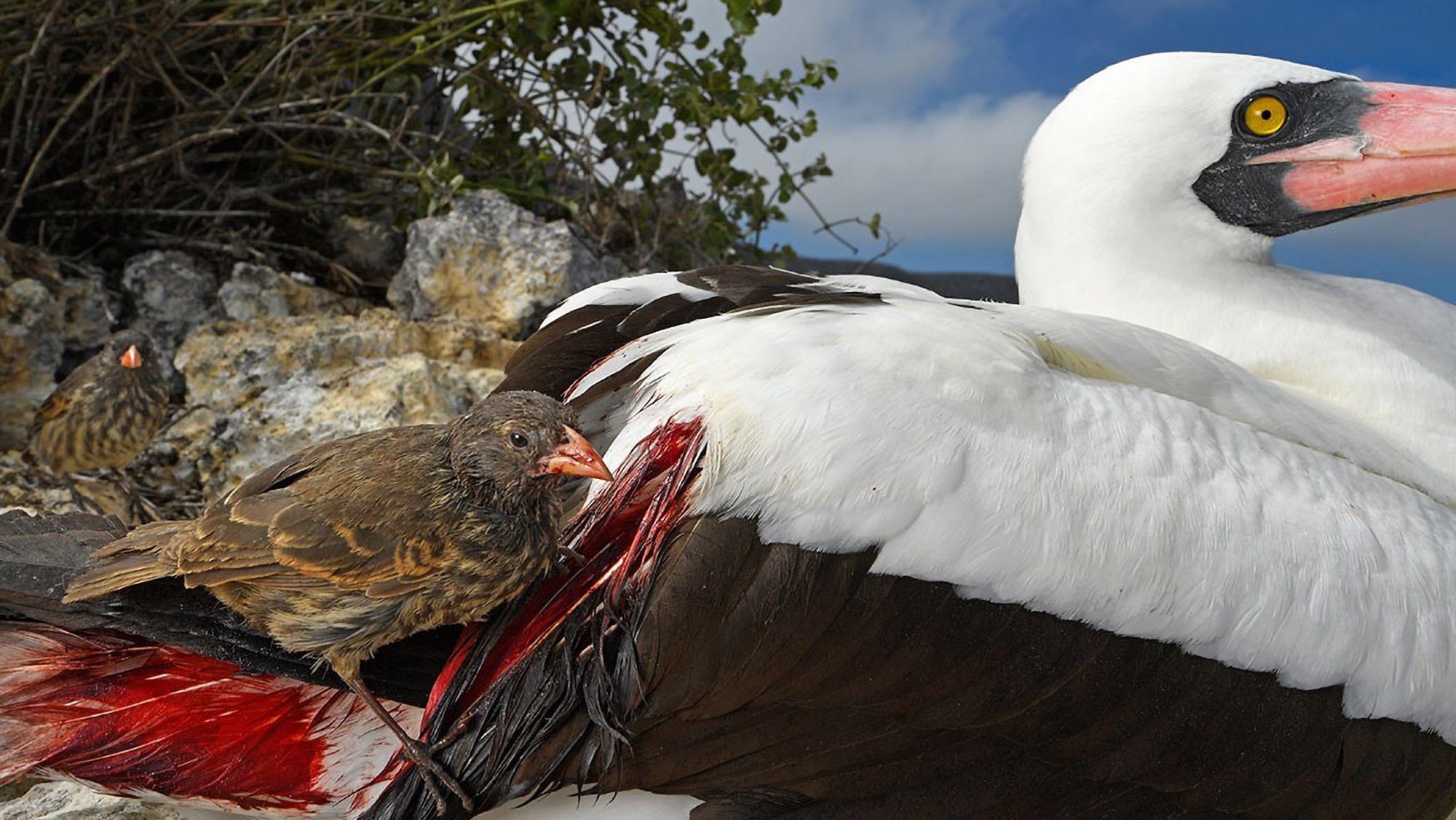
But their efforts paid off. On that trip, they saw a bird that very few people have ever set eyes on in the wild: the vampire ground finch. These finches are only found on Wolf and Darwin, and feed on the blood of much larger birds called Nazca boobies that also live on the islands. 

Up close, Baldassarre and his colleagues noted the vampire finches’ blood-stained bills and their throats visibly engorged with blood. They also saw them in action. 

“We observed scores of vampire finches clamouring all over the backs, tails, and wings of boobies, opening up substantial wounds with their sharp beaks, and drinking their fill of blood,” they wrote in an article for The Conversation. 

Why only some birds drink blood

“Blood is a notoriously difficult food source to process and extract nutrients from, which probably partly explains why so few animals have evolved to feed on it,” Baldassarre tells Popular Science. He suspects that on these islands where freshwater is extremely rare, blood might serve as a water source for the finches. 
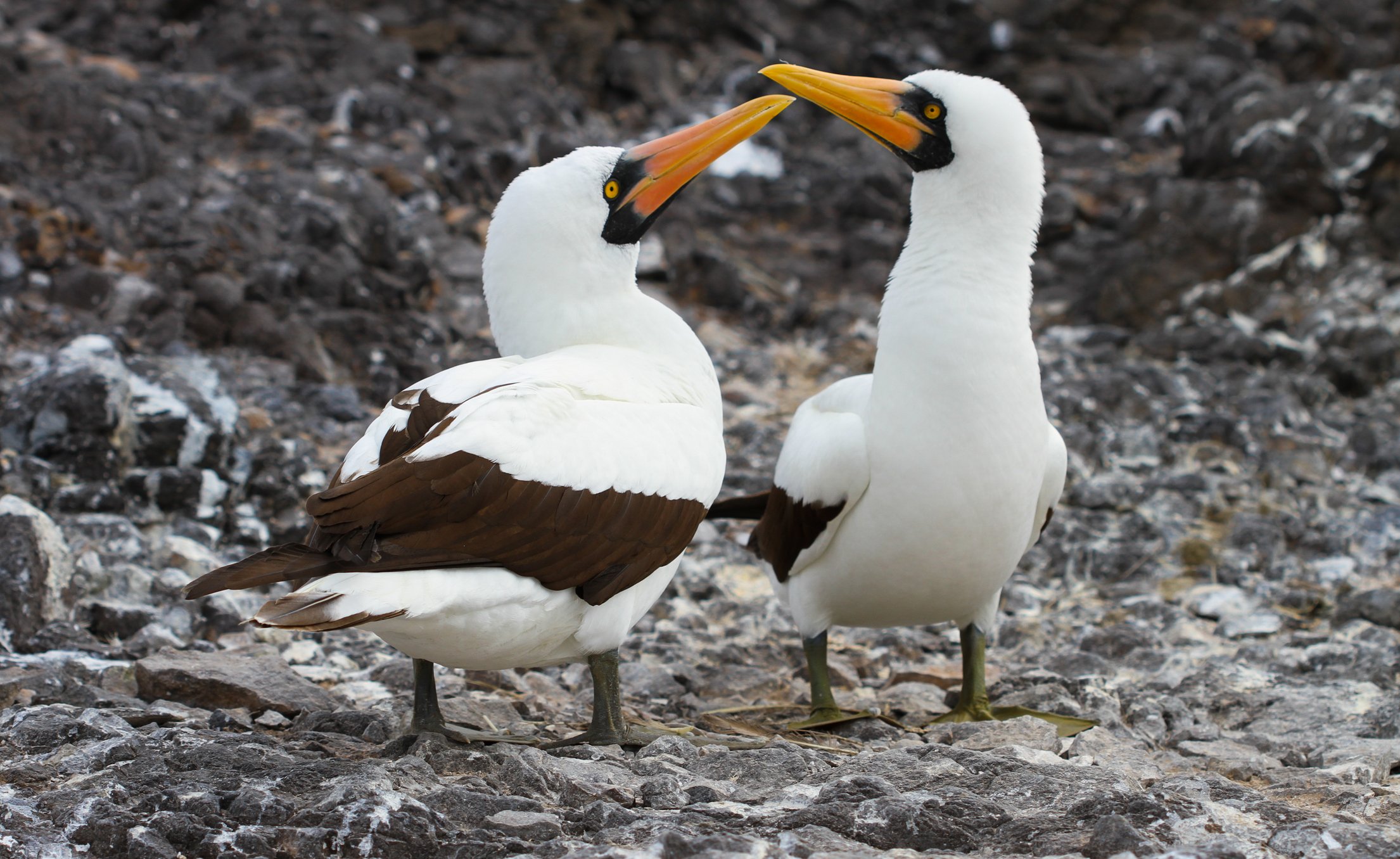
These two nazca boobies perform their species' mating call.
Two Nazca boobies perform their species’ mating call. Vampire ground finches feed on Nazca boobies on the remote Galápagos Islands of Wolf and Darwin. Image: Getty Images / inthedark72

It’s not the only component of the vampire finches’ diet, however. Based on unpublished data collected by Baldassarre and his colleagues, blood makes up about one-tenth of the vampire finches’ diet. 

“These finches are quite opportunistic, so they will eat just about anything they can find,” Baldassarre says. “We observed them feeding on everything from seeds to insects to broken seabird eggs.”

One theory is that vampire finches rely more on blood feeding in periods of extreme drought, when other resources are scarce. But more research is needed to see if this idea holds up in practice.

How this strange behavior evolved

Vampire finches weren’t always vampires, scientists think. The relationship between vampire finches and boobies probably started off with the finches eating parasites found on the skin and feathers of the boobies. This would have been mutually beneficial because it provided a cleaning service for the boobies and food for the finches.

But at some point in evolutionary history, in the process of picking off parasites, the finches started to create lesions on the boobies’ skin, and eventually began feeding on their blood.

Over time, their bills became more scalpel-like, perfect for making skin incisions. Their digestive system also changed. When Baldassarre and his colleagues studied the microbes found in vampire finches’ guts, they found that their gut microbiome was very different from that of other, non-blood-consuming finches on the Galápagos Islands, something they attribute to their unique diet. 

Until recently, vampire finches were considered a subspecies of the sharp-beaked ground finch (Geospiza difficilis). 

“But they have now been designated as their own species [Geospiza septentrionalis] because of the differences they have evolved because of blood feeding,” Baldassarre notes. 
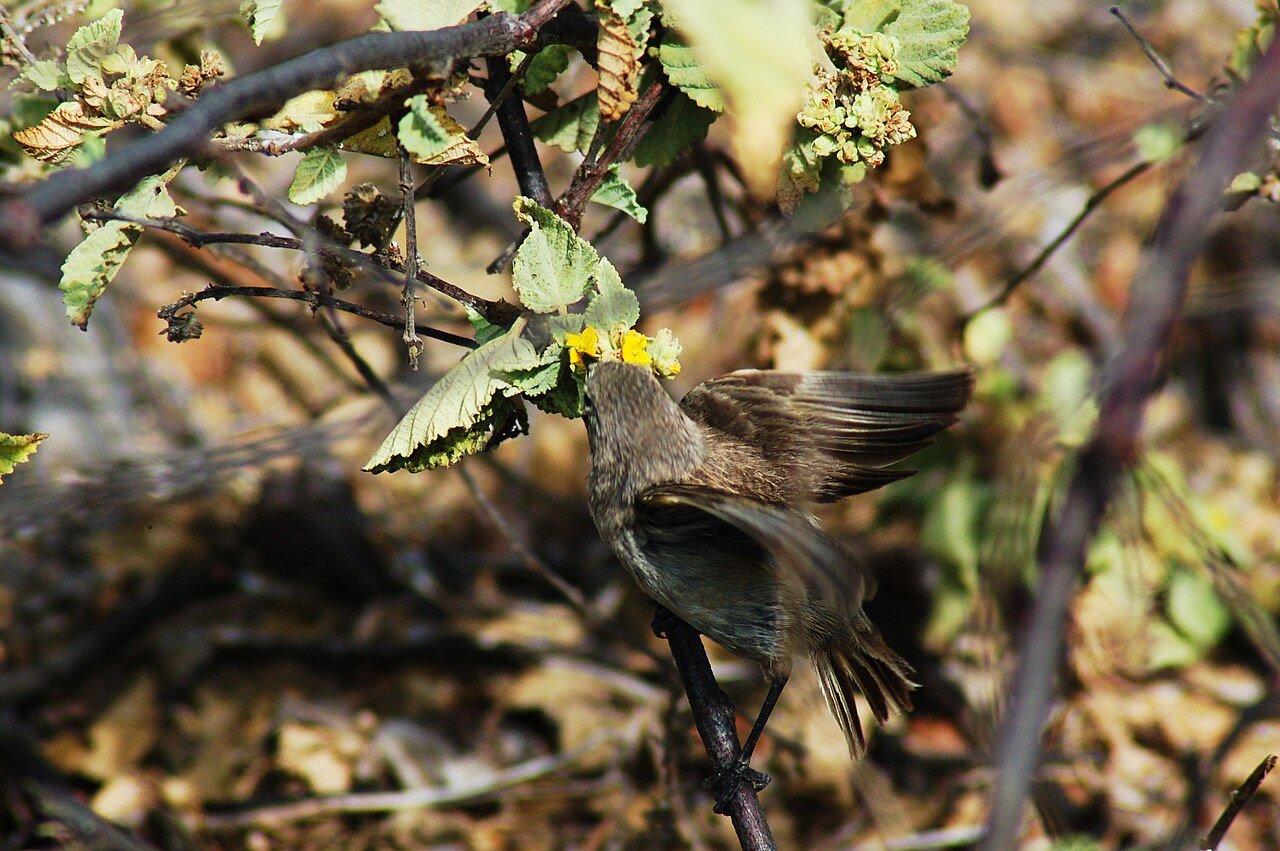
small brown birds eats from flower.
Vampire ground finches on Wolf island have been seen drinking nectar from Galápagos prickly pear flowers and other flowers. Image: Peter Wilton / CC BY 2.0

How the boobies cope 

Baldassarre and his colleagues have seen vampire finches gang up on and kill nestling boobies,“but that was quite rare,” he points out. 

“In most cases, the finches seem to inflict just enough damage to break the skin and extract some blood, but not too much to harm the boobies significantly.” This is similar to many parasite-host relationships, such as fleas, ticks, and mosquitoes on mammals. “You can kind of think of the vampire finches as giant mosquitoes,” Baldassarre says.

As seen in a segment on vampire finches in David Attenborough’s documentary A Perfect Planet, the boobies seem to tolerate the vampire finches rather than chasing them away. There are likely a few reasons for this, Baldassarre says. 

“For one, as in large animals being bitten by mosquitoes, often the damage is minimal and not noticeable, so it doesn’t elicit a strong reaction. Also, the boobies sometimes have a vested interest in staying put and guarding their spot in the colony, or perhaps nest or nestlings, so may not want to fly away. Finally, the finches seem to target hard-to-reach areas on the boobies like the base of tail feathers, so it’s likely difficult for the boobies to deter them.”

I, for one, was feeling very sorry for the boobies being constantly hounded by these small vampire birds. Until I learnt that Nazca boobies practice something called “obligate siblicide,” which essentially means that the first-hatched chick routinely attacks and kills its younger sibling. It’s a harsh, bird-eat-bird world in the Galápagos Islands. 

In Ask Us Anything, Popular Science answers your most outlandish, mind-burning questions, from the everyday things you’ve always wondered to the bizarre things you never thought to ask. Have something you’ve always wanted to know? Ask us.

Related 'Ask Us Anything' Stories

The post Real-life vampire birds hunt and drink blood in remote Ecuador appeared first on Popular Science.
  •  

Condors get the ‘zoomies’ too

Nothing is quite as joyful as watching a dog get caught up in a bout of “zoomies,” zipping around a living room or backyard in a burst of energy. But our canine pals aren’t the only animals subject to these hyperactive displays. 

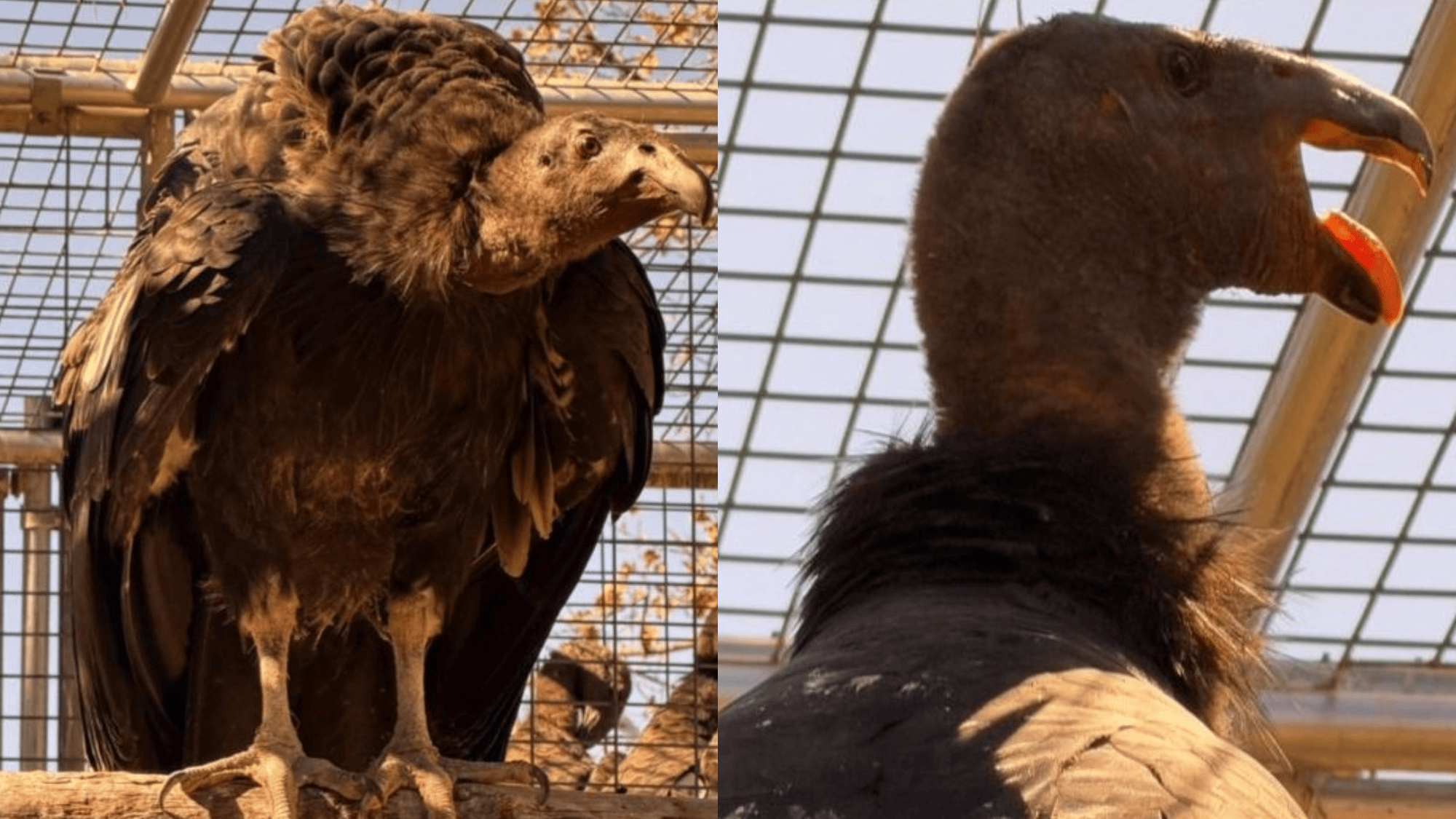
Young condors can also engage in zoomies, as demonstrated in a recent Facebook post from the Ventana Wildlife Society in California. The video shows clips of two young California condors (Gymnogyps californianus), Chert and Pumice, seemingly having a blast in their release pen. 

“We observe the zoomies in both captive and wild condors. It’s just a sudden expression of pure excitement for young condors and very fun to watch,” Joe Burnett, California Condor Recovery Program Manager at the wildlife society, tells Popular Science. “Zoomies come out of nowhere and they just can’t contain themselves and totally let loose. They hop, run in circles, or flap around, or all the above! It’s just pure fun!”

It’s not just about the fun, however. Zoomies allow the young condors to release energy and grow stronger, as well as help them figure out their wings, according to the team. 

The two zoomie condors are 1.5-year-old males who were raised in zoos before arriving at Ventana Wildlife Society’s San Simeon release pen in early September. It’s called a release pen because Chert, Pumice, and three other captive condors will be kept in the pen to acclimate until their release on October 24 at 10 a.m. The release will also be livestreamed. 

The quintet will become a part of the wild condor population of central California, which today includes 104 individuals. But it won’t be a total goodbye. Scientists will be able to keep an eye on Pumice and Chert’s locations via wing-mounted radio & GPS transmitters and ID tags. 

California condors are North America’s largest land bird. They measure 9.5 feet from wing tip to wing tip. But their size didn’t spare them from a precipitous population drop. In 1982 there were only 23 condors left in the world. All wild condors were captured and included in a captive breeding program. 

“Condor releases are critical to achieving our ultimate goal- to reestablish a self-sustaining condor population in the wild,” Burnett concludes. 

At the end of 2025, there were 607 California condors. We’d say Pumice and Chert earned their right to party. 

The post Condors get the ‘zoomies’ too appeared first on Popular Science.
  •  

Jackie the bald eagle’s final cause of death revealed

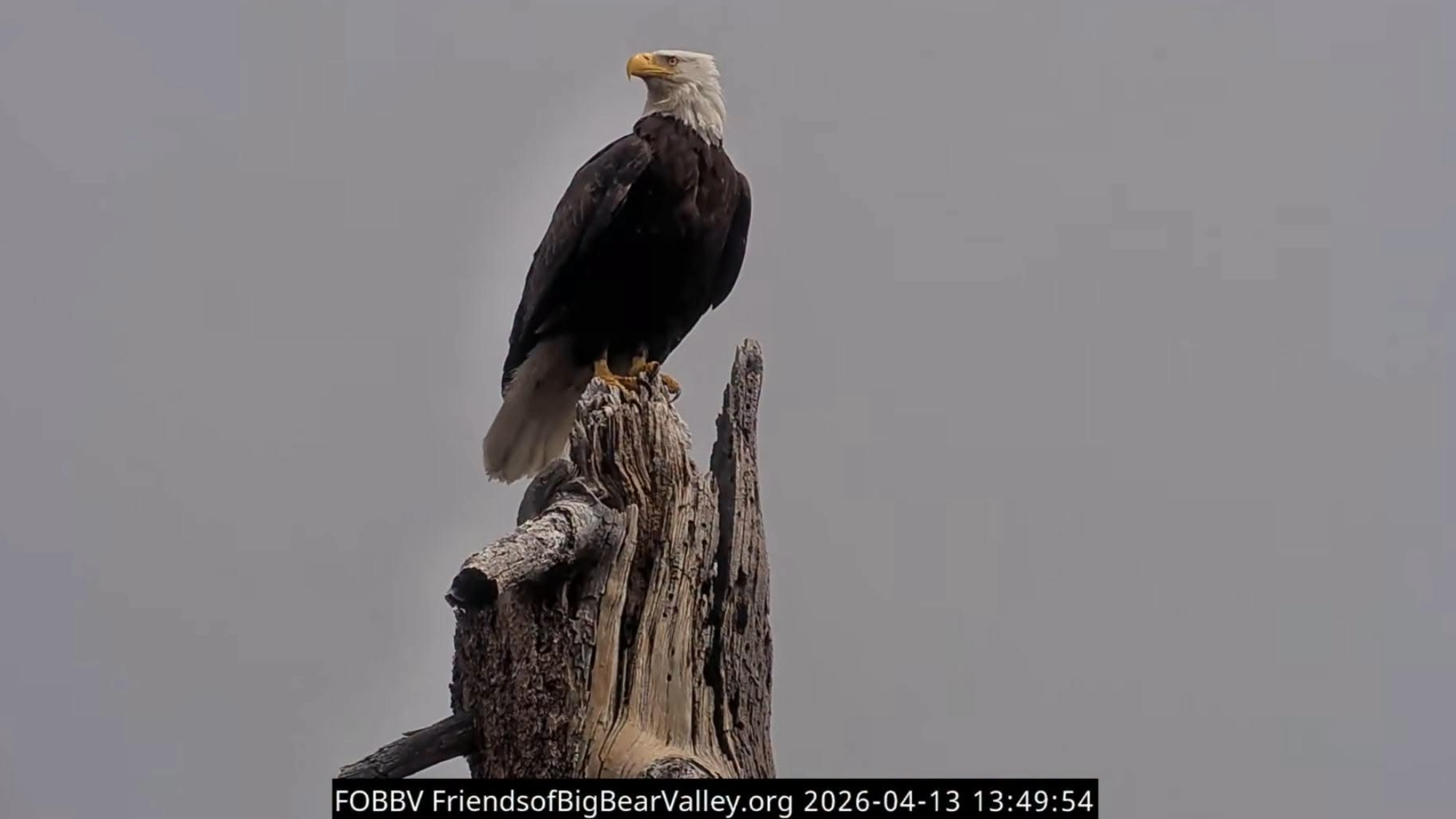
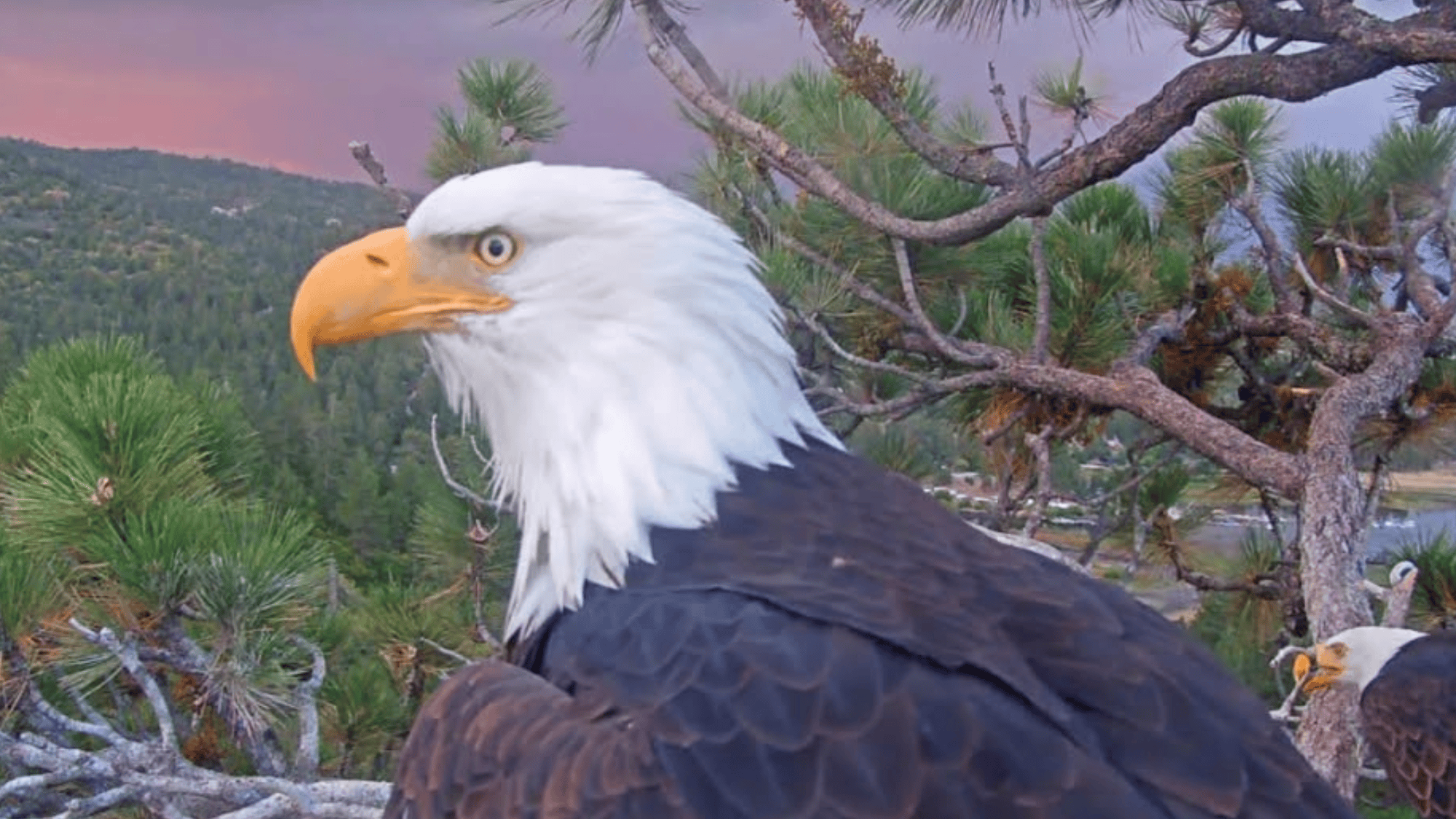
The Ojai Raptor Center released the final necropsy results for Jackie, an internet-famous bald eagle mother who was in their care this summer. Jackie was brought into the bird rehabilitation center weak and dehydrated following an altercation with another eagle in July. 

Officially designated as Patient 26-519, Jackie’s necropsy revealed a “complex and unusual disease process involving severe, chronic inflammation and ulceration of the stomach, persistent internal bleeding, anemia and secondary bacterial sepsis.” She was also diagnosed with Highly Pathogenic Avian Influenza (HPAI) commonly called bird flu, which was behind severe stomach ulceration. Raptors (eagles, hawks, falcons, owls, etc.) are highly susceptible to the virus 

All of these medical complications developed over time and ultimately contributed to her death on August 10.

“These findings have helped connect many of the pieces we were seeing throughout her hospitalization and provided a better understanding of the challenges she faced,” the Ojai Raptor Center wrote. “We are grateful to the many veterinary specialists, laboratories, wildlife agencies and partner organizations who worked alongside our team to understand her illness and provide her with the best possible care. Caring for her was an extraordinary privilege for our entire team.”

The full report can be read in Jackie’s veterinary medical journal. The necropsy was preformed by veterinary pathologists at the San Diego Zoo Wildlife Alliance.

Friends of Big Bear Valley (FOBBV), the non-profit organization that runs the live cameras where viewers from all over the world watched Jackie and her partner Shadow, said that they will follow up with their thoughts once their team has had time to process the report.

“The story of the Big Bear bald eagle reflects the powerful connection people feel to these iconic birds,” California Department of Fish and Wildlife Director Meghan Hertel added. “We’re grateful to everyone who cared for her and worked to support her well-being.  Understanding the results of these tests is an important part of learning from this case and can help inform the care and treatment of other eagles and wildlife in the future.”

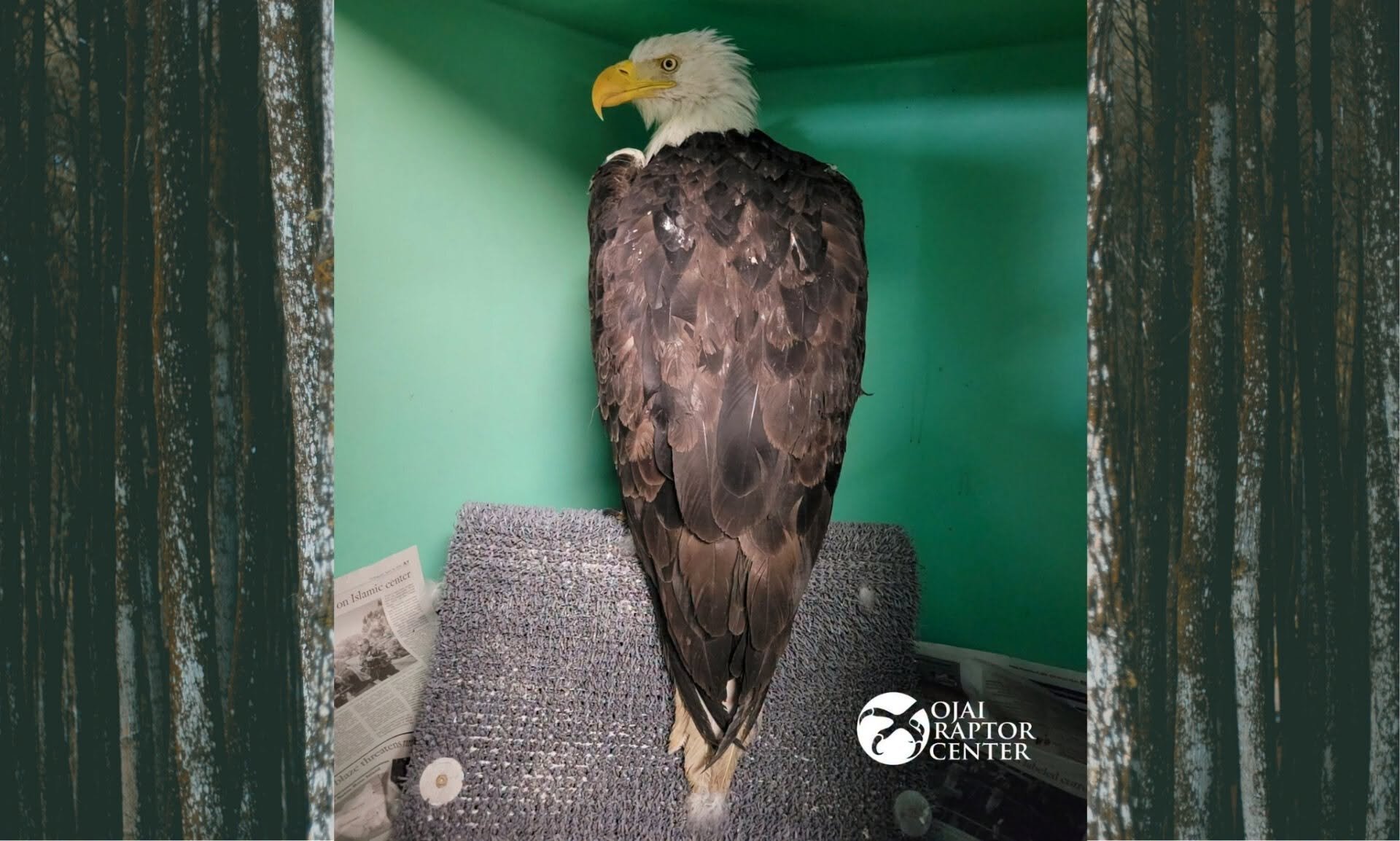
a bald eagle standing on a perch inside
Jackie on a perch at the Ojai Raptor Center in July. Image: Ojai Raptor Center.

Jackie’s story

Jackie was born, raised, and lived in Big Bear Valley in Southern California. Prior to the 2011-2012 nesting season, no bald eagle chicks were known to have ever hatched in Big Bear Valley. Then came Jackie, named after a forest ranger and born to parents Ricky and Lucy in 2012. 

During the 2016-2017 nesting season, Jackie took over a nest where Friends of Big Bear Valley (FOBBV) had a camera stationed. In 2018, she had two chicks named Stormy and Big Bear Baby (or BBB) with her first mate, Mr. B. 

Her long-time partner Shadow entered the picture in summer 2018. He showed up at the nest and would not leave. FOBBV called the new male Shadow because he appeared so determined to stay in the nest, and the team initially believed he was one of Jackie’s siblings, also named Shadow. The eagle’s plumage indicated he was one year older than the other Shadow and not Jackie’s sibling, but the name stuck. 

Shadow continued to hold his ground and Mr. B gave up and eventually left. Jackie then accepted Shadow as her new mate.

Wildlife cameras documented Jackie and Shadow’s life together, offering viewers a direct look into the brutality and beauty of nature. The pair successfully raised chicks in 2019 (Cookie and Simba) and 2022 (Spirit). The pair’s eggs failed to hatch in 2023 and 2024. In 2025, Jackie laid three eggs that all hatched in early March. However, a strong snowstorm dumped up to two feet of snow and battered the nest with strong wind and only two of the chicks (Sunny and Gizmo) survived.  

In January, Jackie laid two eggs in the nest, but ravens destroyed them. She later laid two more eggs that hatched in April and named Luna and Sandy. The name Sandy is in honor of FOBBV’s former executive director Sandy Steers who died from cancer in February. 

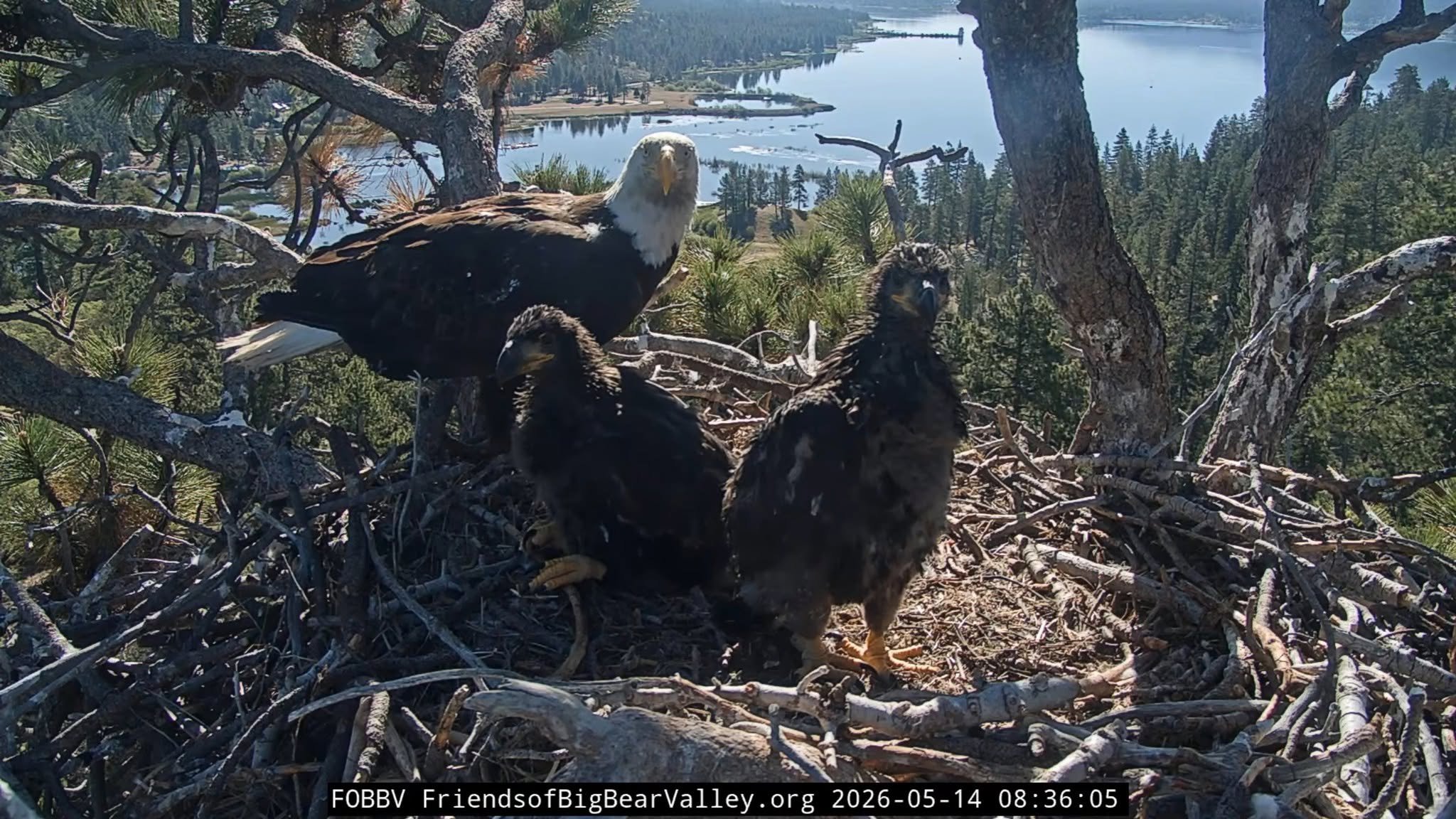
an adult baled eagle with two eaglets
Jackie, Luna, and Sandy on their nest in May 2026. Image: Friends of Big Bear Valley.

Jackie’s injury and death

On July 17, Jackie was found injured on the ground near Dana Point Park, California. Cell phone video from a witness confirmed that she had an altercation with two other subadult eagles. She successfully fended off the other eagles by turning over and using her talons, but could not fly far away. 

She was transferred to the Ojai Raptor Center, where she was diagnosed with severe anemia. Her anemia worsened during the first week of August, the Ojai Raptor Center said that she was in unstable condition on August 9. Her packed cell volume (PCV) fell below percent, before rising to nine percent.  

On July 17, Jackie was found injured on the ground near Dana Point Park, California. Cell phone video from a witness confirmed that she had an altercation with two other subadult eagles. She successfully fended off the other eagles by turning over and using her talons, but could not fly far away. 

She was transferred to the Ojai Raptor Center for care, where she was diagnosed with severe anemia. Her anemia worsened during the first week of August, the Ojai Raptor Center said that she was in unstable condition on August 9. Her packed cell volume (PCV) fell below percent, before rising to nine percent. 

Jackie died early in the morning on August 10. The necropsy did not reveal a single cause of death, and instead pointed to several factors including severe anemia, blood clots in her wing and one kidney, and liver and lung abnormalities.

Jackie’s resilience inspired millions of people around the world. To honor her memory, FOBBV accepts donations to support its conservation efforts in the area.  Supporters can also donate to Ojai Raptor Center’s Bald Eagle Recovery Campaign. 

The post Jackie the bald eagle’s final cause of death revealed appeared first on Popular Science.
  •  

Young parrot rescued from grips of invasive boa snake

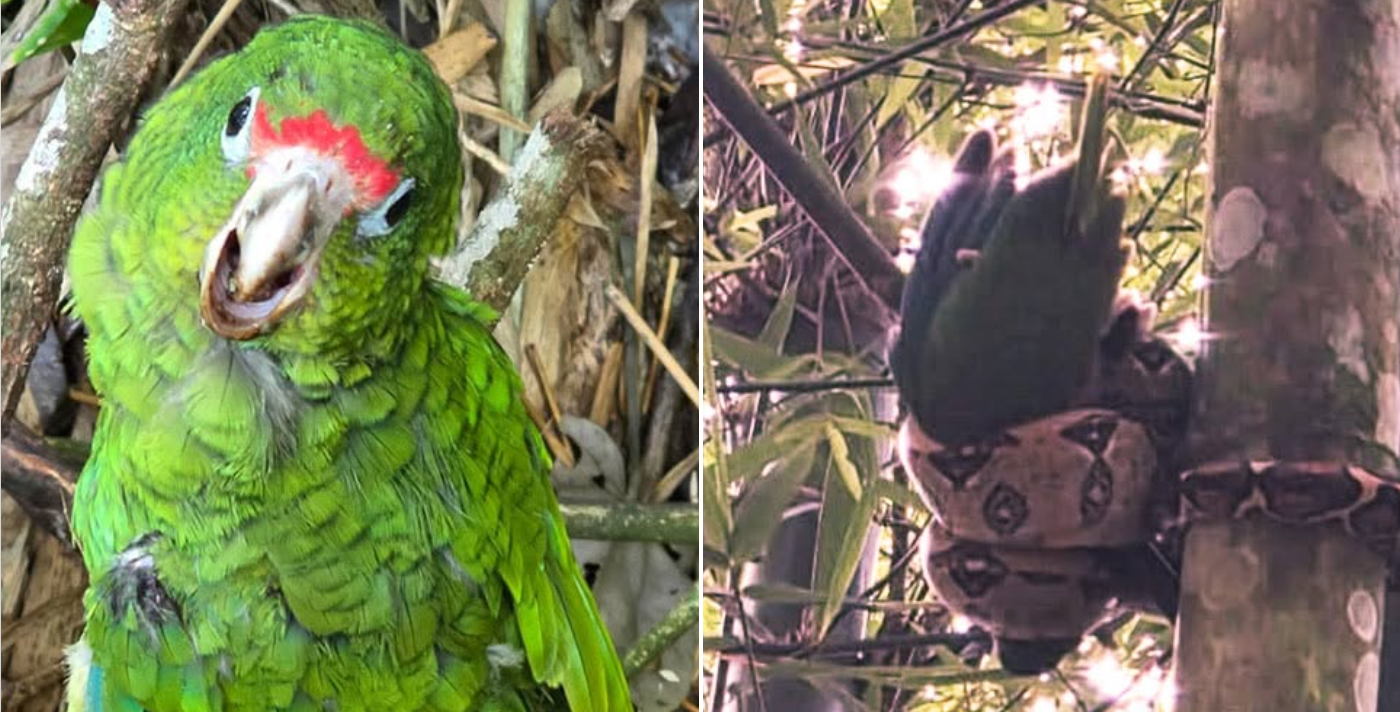
In the Maricao State Forest on the western end of Puerto Rico, a biologist encountered a flock of parrots in a panic. Raúl Correa of the U.S. Fish and Wildlife Service followed the chaotic squawks and found a young bird in the grips of a red-tailed boa (Boa constrictor).

The snake had trapped a juvenile Puerto Rican parrot (Amazona vittata) on a bamboo stalk. Correa quickly sliced the bamboo, causing the snake to lose its grip and release the bird. USFWS observed the parrot after the incident to ensure it didn’t suffer any lingering injuries. Just a day later, the bird returned to flying with its flock.

Red-tailed boas are considered an invasive species in Puerto Rico. Native to South America, they came to the island in the 1990s through the illegal exotic pet trade. Without anything above it in the food chain, the snakes spread rapidly and have caused widespread damage to native wildlife populations, including the critically endangered Puerto Rican parrot.

https://www.facebook.com/USFWS/posts/pfbid0fRJQr168YUxz4uzLjf4zrPPezcDHaQ7ixXa48RUgWeC9GeaFLuRLyQcNTGs2DY5zl

Puerto Rico is also home to a native boa (Chilabothrus inornatus) that is smaller in size. The native Puerto Rican Boa can grow up to 7 feet long. By contrast the invasive red-tailed boa can grow over 10 feet and has introduced viruses to native snake populations on the island, according to a 2023 study.

“Experience has shown that island ecosystems are particularly vulnerable to snake invasions, and unfortunately Puerto Rico has no natural predators that can keep the numbers of these prolific, snakes in check,” said USGS Director Marcia McNutt. “Humans were responsible for introducing this scourge to the island, and are the only hope for mitigating the problem before it is too late for the native species.”

Different places have deployed a variety of tactics to remove invasive snakes species, including Florida that hosts an annual Python Hunt. The contest allows both amateur and professional hunters to kill invasive Burmese pythons (Python bivittatus) for prize money.

The post Young parrot rescued from grips of invasive boa snake appeared first on Popular Science.
  •  

Why are some animals so colorful? Blame this pigment.

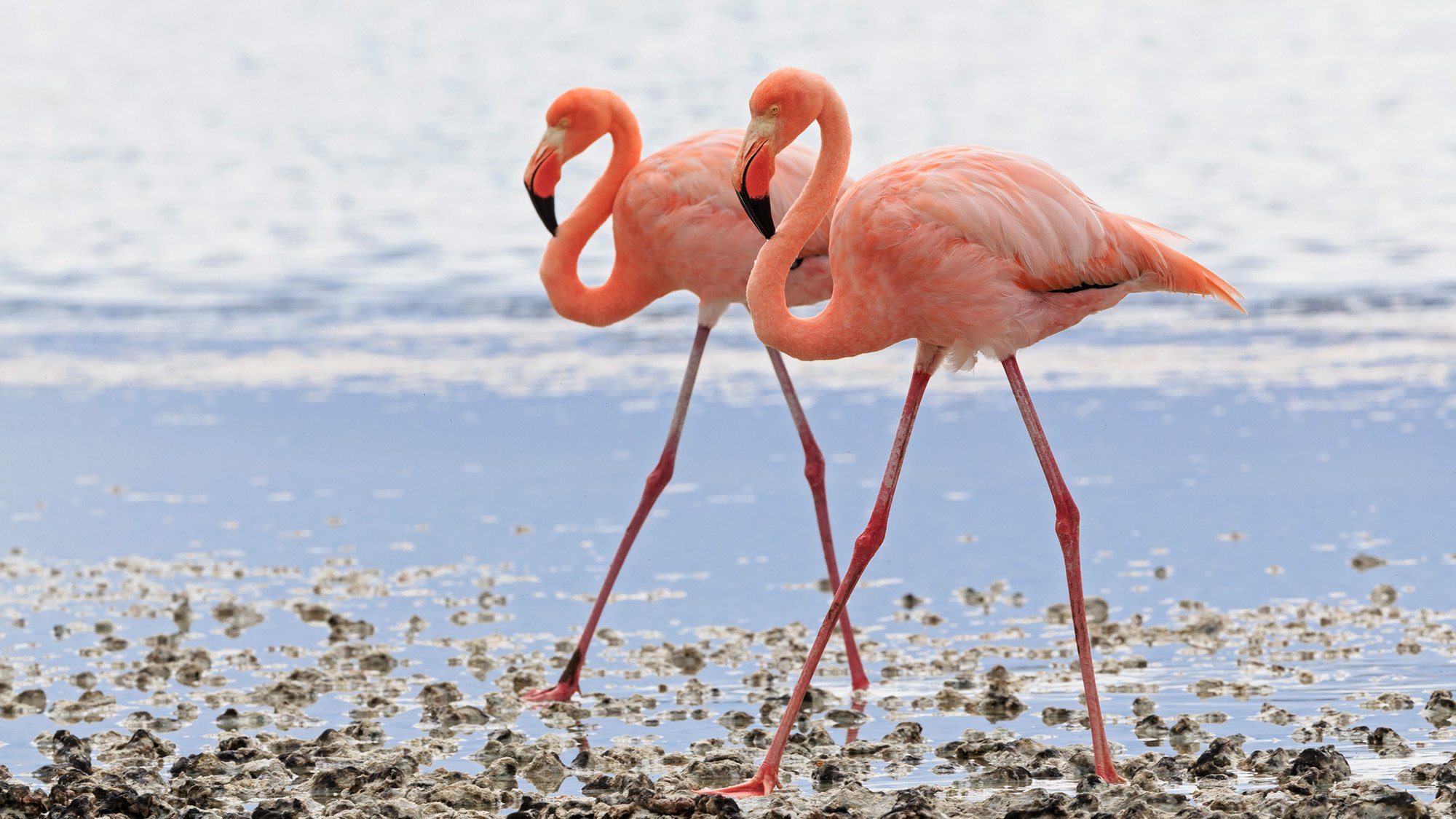
Ecuador’s Galapagos Islands are home to an incredible array of wildlife. Amid landscapes of black lava fields, scattered prickly pear cacti, lush highlands, and green mangrove fringes, you’ll spot lumbering land iguanas in striking shades of yellow, orange, and red, comical blue-footed boobies, and some of the pinkest flamingos around. But it turns out that these magnificent creatures aren’t born with their vibrant hues. They actually have to work for them! 

To find out why some wildlife changes color according to their diets, and what these various tones and tints mean for survival, Popular Science turned to Jorge Alex Gutierrez Guerrero, an expedition leader on the Galapagos Islands’ Yacht Isabela II. Guerrero says it all comes down to naturally occurring pigments that play a major role in an animal’s immune system. They can even change the color of your skin!

What are carotenoids? 

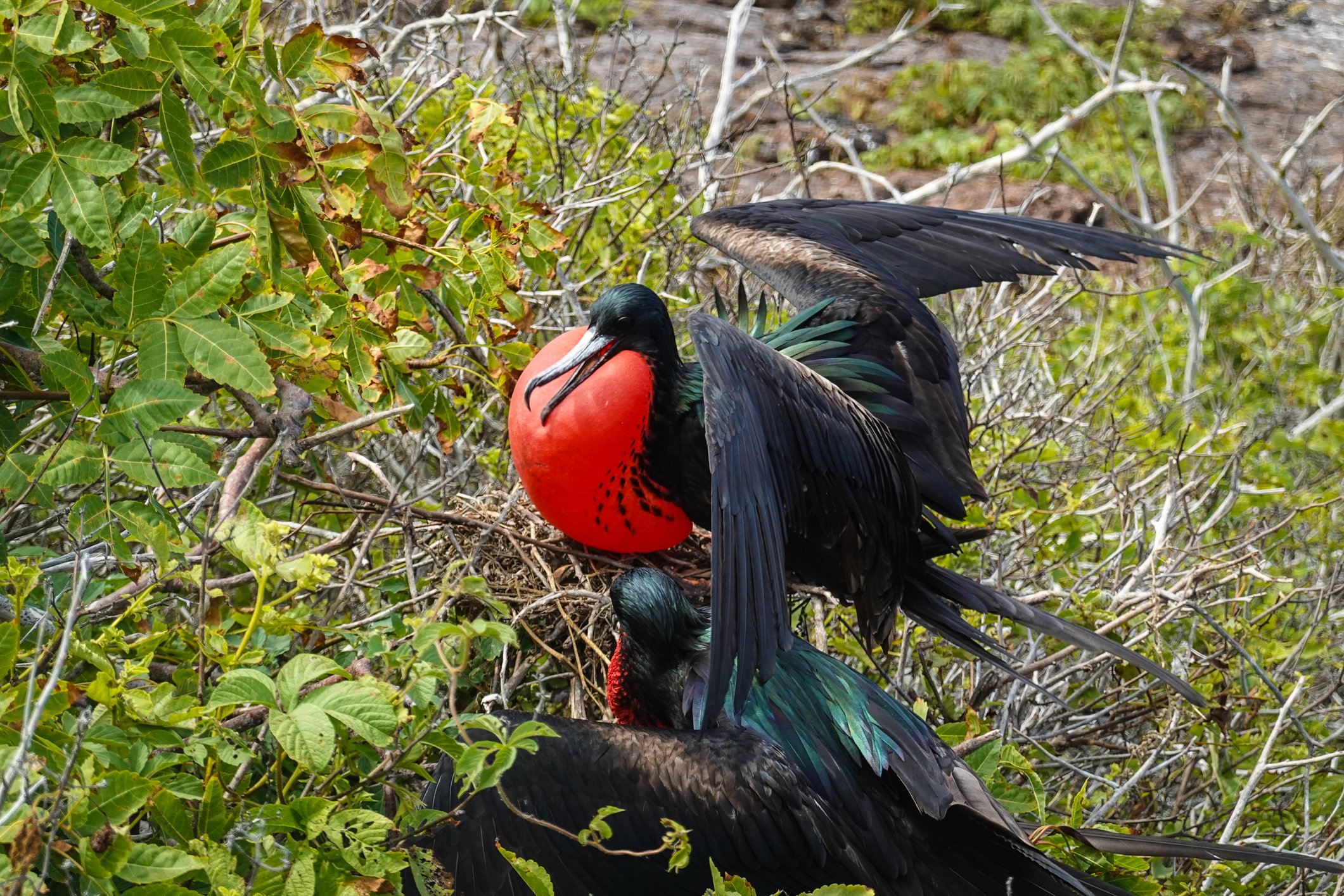
The colorful displays of Galapagos wildlife, including the bright cyan feet of blue-footed boobies and the impressive red throat pouch of magnificent frigatebirds that they inflate during courtship, are a direct result of their diet. Specifically, they result from the digestion of nature’s own punchy dyes known as carotenoids. 

“Basically, carotenoids are natural pigments produced by plants, algae, and phytoplankton,” says Gutierrez. These organic chemical compounds play a vital role in nature. They help capture light for photosynthesis, which is how plants use sunlight to make their own food. They act as powerful antioxidants that can protect cells from damage. And they provide the vibrant colors that many animals, birds, and fish need to survive. 

For instance, flamingos gradually lose their red pigmentation when their diet lacks carotenoids. According to Gutierrez, this is a perfect example of the “direct relationship between dietary carotenoids and coloration.” 

Frigatebird with its inflated pouch in the genovesa island in the Galapagos in Ecuador in South America sits in tree branches.
Frigatebird with its inflated bright red pouch on the Genovesa island in the Galapagos. Image: @ Didier Marti / Getty Images Didier Marti

How Galapagos animals get their colors

Wildlife in the Galapagos gets carotenoids primarily through their diets, since these are pigments that they can’t produce naturally. The archipelago’s land iguanas eat cactus flowers and leaves to obtain carotenoids, while blue-footed boobies consume fresh fish like sardines and anchovies to acquire them. Pink flamingos get their fill of carotenoids through algae and brine shrimp. 

Once the wildlife digests and metabolizes these natural pigments, the colors of carotenoids, which primarily produce shades of red, orange, and yellow, begin to show in everything from skin and shells to feet and feathers. In many cases, the more brilliant the shades, the healthier the creature. While carotenoids don’t naturally create the color blue, the archipelago’s iconic blue-footed boobies get their turquoise feet from a mix of yellow carotenoid pigments and the collagen structure of their skin. 

How other animals get their vibrant hues

Examples of the power of carotenoids even exist in our own backyards. 

The sunny yellow coloring of an American goldfinch is a direct result of its carotenoid-rich diet of summer weeds and sunflowers, while northern cardinals get their brilliant red hue through carotenoid-heavy foods such as honeysuckle, hackberries, and seeds.

Why do animals need carotenoids? 

Carotenoids aren’t a core nutritional necessity. However, they are an important source of vitamin A, a key component in reproductive health, good vision, and a strong immune system. 

While the bulk of birds and animals get carotenoids through their diets, a few rare invertebrates, like spider mites and gall gnats, can create their own carotenoids. They do so through a rare genetic accident, likely caused by a virus or parasite. An ancestor of the spider mite and an ancestor of the gall gnat had close encounters with ancient fungi, causing a horizontal gene transfer. Essentially, horizontal gene transfer is the transmission of DNA between different organisms—and, in this case, species.

Every animal processes these pigments slightly differently. For some animals, carotenoids completely change the color of their features. Others simply absorb carotenoids without changing color at all. 

Related 'Ask Us Anything' Stories

But all animals use carotenoids to fight off disease, such as boosting immune cells to destroy any harmful bacteria. Only healthy wildlife can spare excess carotenoids for bright skin, beaks, or feathers. So the more vibrantly hued birds, reptiles, and fish are, the healthier their immune system. They have enough carotenoids to spare for flashy colors.

For instance, blue-footed boobies with electric, turquoise-blue feet tend to be healthiest. In fact, boobies that go without food for a couple of days can end up with dull-colored feet. When animals get sick, they also lose their hue. First, their bodies divert carotenoids away from exterior features, like skin and feathers, and use them for fighting illness. Second, absorbing nutrients such as carotenoids becomes more difficult. Without carotenoids, an animal’s bright pigments will quickly fade. 

Bright colors also come in handy during mating rituals 

Carotenoids also play vital roles in mating rituals. When it comes to blue-footed boobies, “It’s very important for a female to find a male with the brightest blue feet, because she is choosing the best provider” for her offspring, says Gutierrez. 

It’s a feature that these marine birds show off frequently in their oh-so-quirky mating dance, which includes an elaborate high-step strut. The bluer the feet, the more attractive males appear to their female counterparts. 

Male blue-footed boobies do an elaborate mating dance for the ladies to show off their bright blue feet. Maybe there’s a reason Elvis sings about his blue suede shoes? Video: The Blue Footed Boobies Mating Dance | Wild Love, Nat Geo Animals

What’s more, a famous 2006 scientific study on blue-footed boobies showed that females lay smaller eggs for males with duller feet. Basically, a female will put in less reproductive investment if her male isn’t up to par. 

Why are animals in the Galapagos so colorful? 

“Carotenoids are prominent all over the world,” says Gutierrez. “But they’re especially visible among wildlife in the Galapagos, because it’s a limited environment where the ecosystems are well-marked.” What Gutierrez means is that the archipelago is so geographically isolated and far from the coast of Ecuador, many species—like marine iguanas—have nowhere else to go. Even within the Galapagos, a large percentage of wildlife stick closely to their specific islands. 

Another reason the animals here are so colorful? Because an overall lack of predators has allowed the wildlife to evolve without needing dull or camouflage coats to protect them. 

Most of the archipelago’s carotenoids come from the ocean, or in the case of land iguanas and yellow-beaked Darwin’s finches, through cactus nectar and pollen. 

Further afield, the iconic pink-orange flesh of Pacific Northwest salmon is a direct result of their carotenoid-rich diet—in their case, chowing down on krill and small shrimp. Roseate spoonbills, found across the mangrove swamps, mudflats, and wetlands of the U.S. Gulf Coast, get their rosy pink sheen from dining on crustaceans, crabs, and crayfish. 

Can carotenoids make people change colors?

As to whether eating carotenoid-rich foods will change a person’s skin color, it’s definitely possible. 

The best known example comes from consuming carrots. These vegetables are loaded with a red-orange carotenoid called beta-carotene, which our bodies convert into vitamin A. 

But when we consume more beta-carotene than we need, the excess pigment starts circulating in our bloodstream and leads to a yellow or orange glow. “It’s mostly visible in your palms,” says Gutierrez. 

Still, he says, don’t worry if you have a penchant for sardines and anchovies—the main diet of blue-footed boobies. Since humans process and metabolize these compounds differently, “you’re not going to turn blue, too.”

In Ask Us Anything, Popular Science answers your most outlandish, mind-burning questions, from the everyday things you’ve always wondered to the bizarre things you never thought to ask. Have something you’ve always wanted to know? Ask us.

The post Why are some animals so colorful? Blame this pigment. appeared first on Popular Science.
  •  

Meteor spotted flying over bald eagle nest

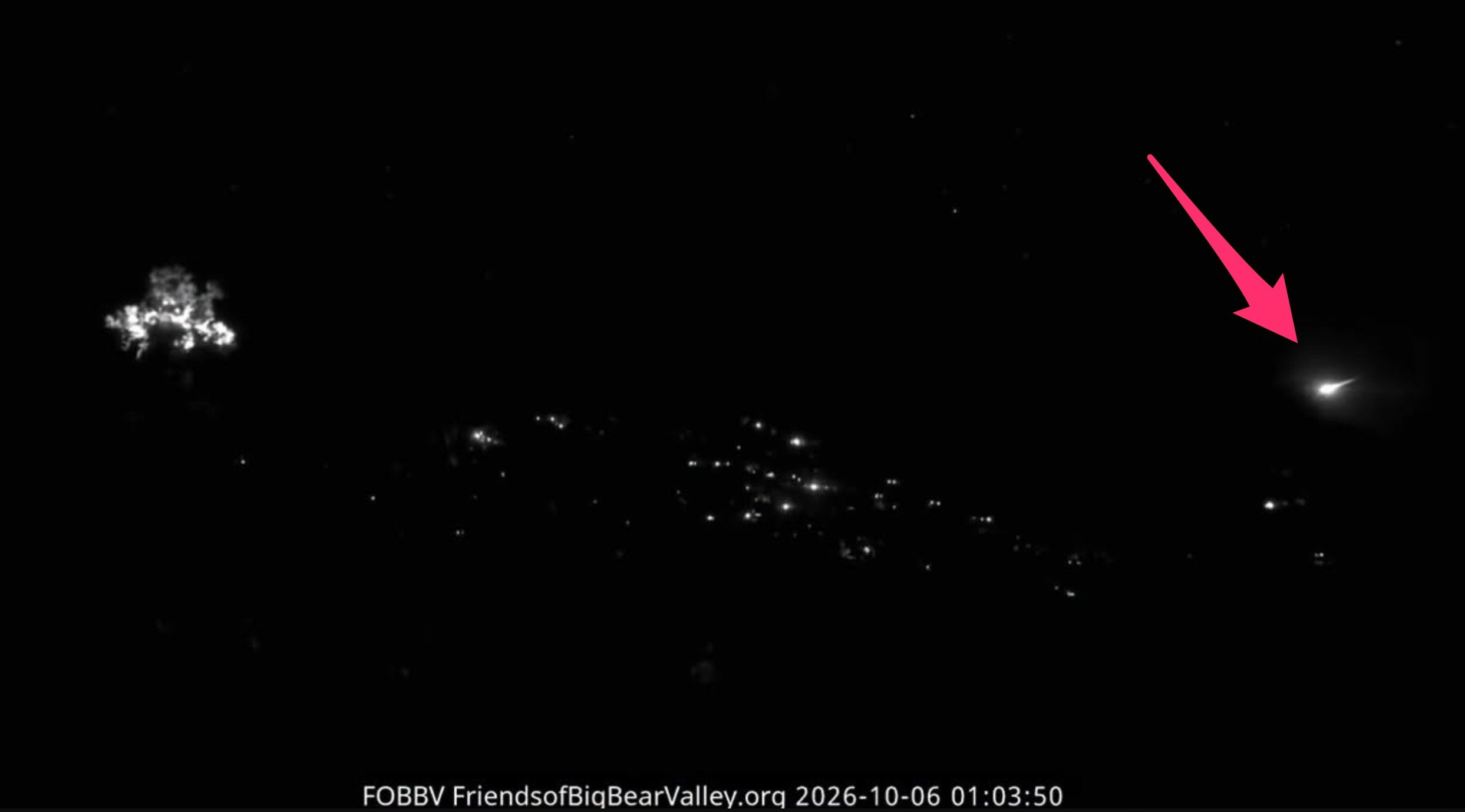
During the still night above California’s Big Bear Valley, a meteor recently soared across the sky. Cameras stationed to document the lives of the area’s bald eagles captured an image of the fireball on its journey.

Friends of Big Bear Valley (FOBBV), the non-profit that oversees the 24/7 livestream of the internet’s most famous bald eagles, shared the moment on Facebook with an emotional caption.

https://www.facebook.com/FOBBV/posts/pfbid027at986gqyAS2Vx5NbLuSXS1bMUudE7w2PPT5btRVVV4QQimpPCyWzPunSmoZTCxxl

“This morning in the wee hours, a quiet meteor flashed across the night sky. It moved at incredible speed, vanishing in the blink of an eye while the inhabitants of the valley slept,” FOBBV wrote. “This is another reminder of the beautiful land that our eagles and friends inhabit. Nature surrounds us everywhere; in the skies, in the trees, and beyond.”

This year has been an eventful year for Big Bear Valley’s bald eagles. In January, bald eagle mom Jackie laid two eggs that ravens attacked and consumed. She later laid a second clutch of two eggs that both hatched in April. Tens of thousands of fans followed the chicks’ journey as Jackie and her longtime partner Shadow raised the pair. All seemed well on the nest in July when it Jackie disappeared from the cameras’ views.

image of meteor at night
The meteor lit up the dark skies for a brief moment. Image: FOBBV

On July 17, Jackie was found injured on the ground near Dana Point Park, California. Cell phone video from a witness confirmed that she endured a scuffle with two subadult eagles. After being transferred to the Ojai Raptor Center for care, she was diagnosed with severe anemia. Her anemia worsened during the first week of August, and the Ojai Raptor Center reported that she was in unstable condition on August 9. Jackie died early in the morning on August 10. A memorial for Jackie was held this past weekend at Bear Mountain Ski Resort in Big Bear Lake, California.

During Jackie’s absence, another female eagle entered the picture: a 4 year old named Kaydee (originally named KD1). Since her arrival and Jackie’s death, Kaydee and Shadow have been spotted on FOBBV’s cameras sharing peaceful mornings, arranging nest sticks, and singing morning songs.

Shadow and Kaydee were not in the nest when the meteor passed overhead. Without eggs or chicks to care for, most bald eagles sleep in other trees like the nearby Roost Tree. According to FOBBV, the pair spent the morning moving from the Roost Tree to the Lookout Tree before settling to perch on the Twin Pines that afternoon.

It’s not clear what will happen between Shadow and Kaydee, but after an eventful year in Big Bear Valley, a moment of peace under a celestial light show is a welcome pause.

Tune into FOBBV’s livecams for glimpses of the duo.

The post Meteor spotted flying over bald eagle nest appeared first on Popular Science.
  •  

66-Million-Year-Old Mystery Solved? Fossilized Bird Feather Reveals How ‘Modern’ Birds Likely Survived the Dinosaur-Killing Asteroid

Scientists investigating a 66-million-year-old mystery have revealed that a bird feather embedded in fossilized dinosaur excrement suggests that the ancestors of modern birds who survived the dinosaur-killing asteroid that also wiped out all other ancient bird species benefited from the waterproofing properties of their feathers.

The newly analyzed bird feather fossil that provided the missing clues comes from an extinct bird group called Hesperornithiforms and not from the ancestor of modern birds, Neornithes.

However, the team said subtle differences between the species suggest previous theories crediting adaptation to water diving as the key to Neornithes’ survival were likely on the right track.

Survival of Modern Bird Ancestors Posed a 66-Million-Year-Old Mystery

When a huge piece of space rock slammed into Earth, killing off virtually all dinosaur species save the ancestors of modern birds, the event also left behind a 66-million-year-old mystery. How did these ancient avians survive this apocalyptic event, resulting in every bird species we see today?

Jingmai O’Connor, the associate curator of fossil reptiles at the Field Museum in Chicago, said her career has been spent analyzing fossils to try to answer this single, critical question. However, unlike the new poop-encased bird feathers, most were not so ‘naturally’ protected from the ravages of time.

“It’s such a beautiful, well-preserved feather, from such an unexpected source, and it’s exciting that it could help us answer this huge question in paleontology,” explained the lead author of a study detailing the new analysis. “As far as I know, no one has ever thought to look for feathers or to study feathers in coprolites, so this project was really exciting.”

Dinosaur Dropping Provided Effective Preservation Medium

Researchers discovered the ancient bird feather in 2016 in Montana. Although she initially suspected it could be a coprolite rock (fossilized feces), O’Connor said she couldn’t confirm the theory for a decade.

66-million-year-old mystery bird feather
David DeMar, Jr., holding the exposed fossil feather in the coprolite fragment on the day of its discovery in 2016. Image Credit: David DeMar, Jr.

The situation changed when O’Connor and Nate Carroll, a co-author of the paper and paleontologist at the Carter County Museum in Ekalaka, Montana, gained access to the micro-CT scanner at USC’s medical campus in Los Angeles, California. According to O’Connor, that’s when “the full feathery fabric of this fossil feces” started to finally reveal itself.

“Every hour processing the data revealed another feather, another scale, another bone—in stunning 3D,” Carrol also recalled.

bird feather solves 66-million-year-old mystery
The fossil feather preserved in dinosaur poop. Image Credit: O’Connor et al.

Along with multiple feathers and tiny fish scales, the ancient dinosaur poop, which may have come from a Tyrannosaurus Rex, also contained legs from a hesperonithiform bird.

O’Connor said hesperonithiforms were ancient aquatic birds with similarities to modern loons. Critically, these cousins of the modern bird ancestor group had evolved specialized feet to hunt for fish by diving deep into the water.

“The feathers showed adaptations for being underwater that we see in living aquatic birds,” O’Connor explained.

Notably, the team said this evolution likely cost ancient hesperonithiforms like the one that was consumed by a dinosaur the ability to fly.

Connection to Modern Birds Offers a Solution 

Although the bird group represented by the fossilized feather did not survive the dinosaur-killing asteroid, its connection to the ancestor of modern birds appears to support a previously proposed theory that adaptation to water may have helped Neornithes survive. O’Connor said she thinks that small differences in the feathers of the two ancient bird species hold the answer to a 66-million-year-old mystery.

“We think the types of feathers that these birds had, and/or the way they molted those feathers, may have been one of the underlying causes of the selectivity of the end-Cretaceous mass extinction,” the researcher explained, adding that this is “essentially why some birds died out and why others survived.”

Specifically, O’Connor pointed to the “smaller, fuzzy, primitive body feathers” found on the extinct bird “that we associate with dinosaurs and enantiornithines” alongside more modern-looking waterproof adaptations.

The team said that these evolutionary relics suggest that hesperornithiforms like the one that left behind its feathers were an evolutionary bridge between older bird groups and the Neornithes that survived the cosmic collision. Even more critically, the team said these earlier feather structures may not have retained heat as effectively as Neornithes feathers, allowing one species to survive the asteroid and another to die in the extreme cold that followed.

“The hesperornithiforms retain primitive feather types that may not have been as efficient for insulation as modern plumaceous feathers, and that could explain why they went extinct along with the enantiornithines,” O’Connor explained.

The study “Bird feathers from a Late Cretaceous coprolite” was published in Current Biology. 

Christopher Plain has spent the last six years as Associate News Editor and Head Science Reporter at The Debrief. Follow and connect with him on X, learn about his novels at plainfiction.com, or email him at christopher@thedebrief.org.

  •  

Single California condor mother gets help raising her chick

Wild condor parents usually make a great parenting team. But when one female California condor (Gymnogyps californianus) in Pinnacles National Park in Central California found herself in the role of a single mother, park biologists stepped in to help.

The condor mother wasn’t able to provide sufficient care and food for her chick while on her own. Field biologists realized that when hunting for food, she returned to the nest less frequently. The chick needed more nutrition to grow and develop appropriately. 

“Based on her behavior, she had largely abandoned the nest, and the chick was unlikely to survive without intervention,” a spokesperson for the San Diego Zoo Wildlife Alliance tells Popular Science. 

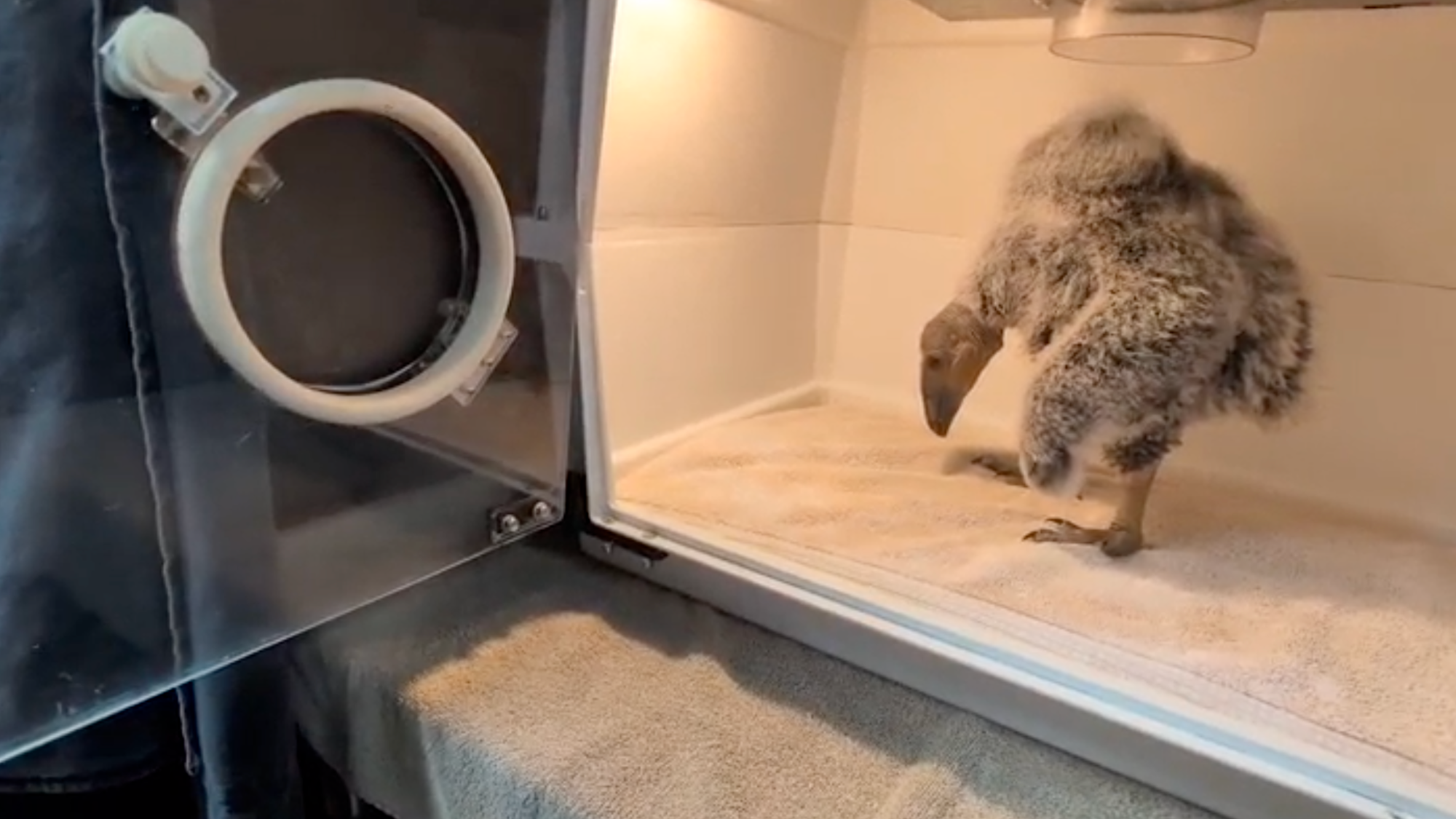
Pinnacles National Park biologists took the chick when it was around one month old and sent him to the San Diego Zoo Safari Park’s California condor breeding facility. There, he’s receiving care in a specialized puppet-rearing program. 

“The puppet-rearing program is a specialized care method used to raise young California condor chicks without allowing them to see or bond with human caretakers,” says the spokesperson. “Wildlife care specialists use hand-crafted puppets that resemble adult California condors and completely cover the caretaker’s hands and arms. Caretakers use the puppet’s beak to deliver food directly to the chick, mimicking the way an adult condor parent would feed its young in the nest.”

The chick was named Cayic (pronounced Chai-eech), meaning “strong” in the Mutsun language of the Indigenous people of California’s Central Coast. Thankfully, Cayic is demonstrating normal growth and development, and experts plan on returning him to the wild next fall.California condors are still considered critically endangered, after nearly going extinct.

As for the chick’s father, he had stopped returning to the nest and eventually died while receiving treatment for suspected lead poisoning. Lead poisoning is the greatest cause of death for California condors and a severe obstacle in the species’ recovery. The species is also threatened by the consumption of microtrash. 

California condors, or “thunderbirds” for Native Americans, are North America’s largest flying birds. Their wingspan is almost ten feet long, but their mighty reach didn’t keep them from reaching the brink of extinction. During the 1980s, there were fewer than two dozen of them in the wild. In 1986, the U.S. Fish and Wildlife Service put them all in a captive breeding and release program, including at the San Diego Zoo Safari Park. Six years later, the program had bred enough chicks to return the first condors to the wild. 

As of the end of 2025, there are 607 California condors in the world, 392 of which are in the wild. One of them is Cayic’s mom. 

“The mother may go on to pair with another male, and we hope she will have another opportunity to breed during a future breeding season,” says the spokesperson.

The post Single California condor mother gets help raising her chick appeared first on Popular Science.
  •  

Why Did Only Some Birds Survive the Asteroid That Killed the Dinosaurs? The Answer May Be Hiding in a Feather Found in T. Rex’s Poop

In 2016, paleontologist David DeMar Jr. was crawling across a rocky outcrop in northeastern Montana, hunting for fish fossils, when he spotted a dark, reddish-brown nodule about half the size of a golf ball. He picked it up and looked at it through his hand lens. On its surface was something he didn’t expect: a […]

  •  

‘Birds Supporting Birds’ connects the Philadelphia Eagles with migrating seabirds

As the 2026-2027 NFL season kicks off, the Philadelphia Eagles are giving new meaning to their signature “Fly, Eagles, Fly” fight song. The football team is partnering with the National Marine Sanctuary Foundation for Birds Supporting Birds, an initiative to support seabirds off the coast of Massachusetts (and in New England Patriots’ territory) this fall. 

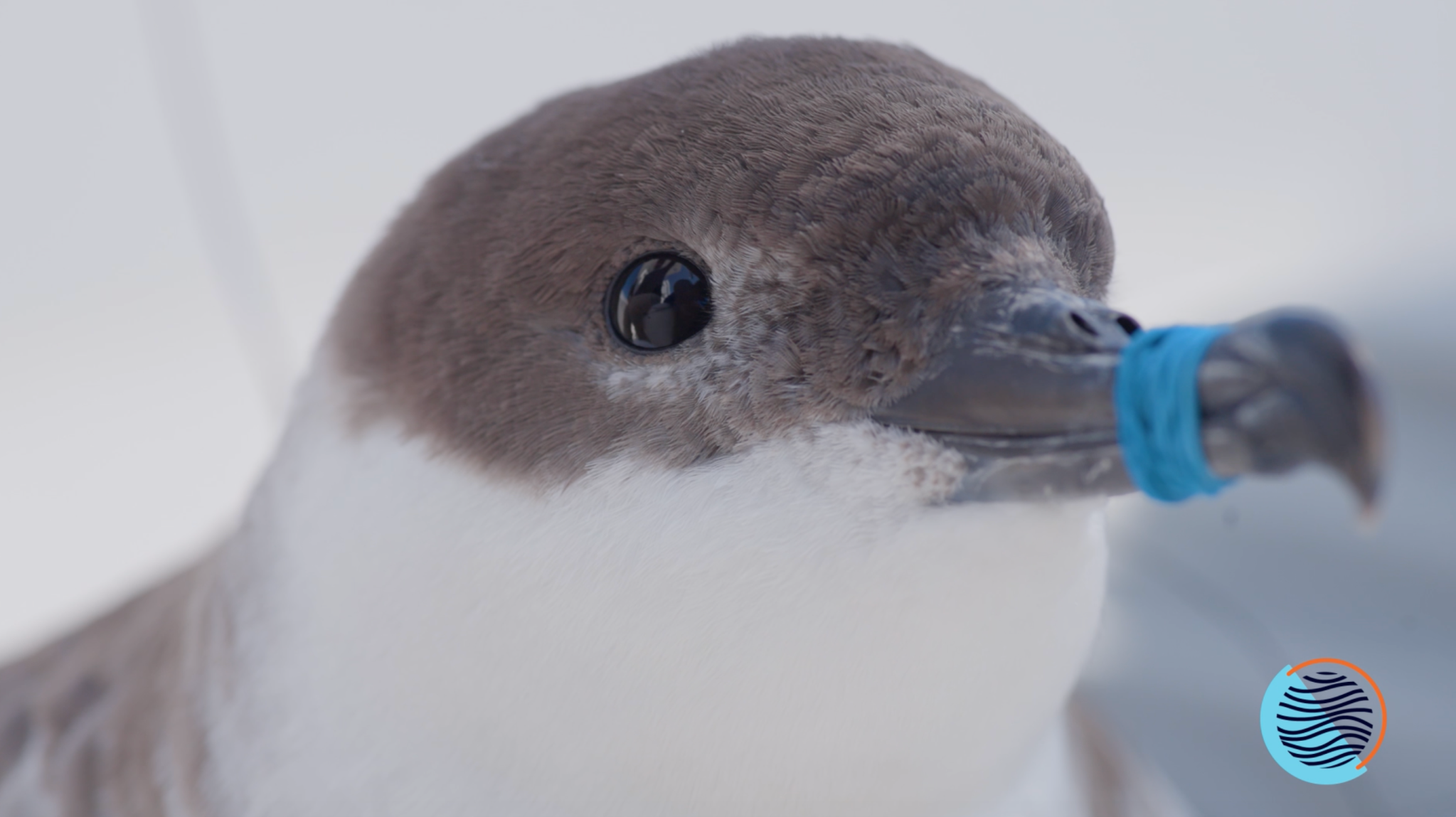
The team is supporting NOAA’s Stellwagen Bank National Marine Sanctuary Shearwater Tagging Project, an ongoing initiative dedicated to studying the great shearwater (Ardenna gravis) and their migration. Great shearwaters are large, white-and-grey seabirds known for their epic journeys. They travel thousands of miles every year from their remote South Atlantic breeding grounds up to the cooler North Atlantic waters during the nonbreeding season. According to the National Marine Sanctuary Foundation, they fly the equivalent of over 200,000 football fields across the Atlantic Ocean every single year.

Birds Supporting Birds will help support researchers in Stellwagen Bank, an 842-square-mile marine sanctuary east of Boston, to tag great shearwaters and track their migratory routes across the Atlantic. 

“The Eagles are directly funding researchers to attach lightweight, solar-powered satellite transmitters to great shearwaters,” Joel R. Johnson, President and CEO of the National Marine Sanctuary Foundation, tells Popular Science. “These tags track the birds’ migration patterns around the Eastern Seaboard and down to the Southern Atlantic Ocean in real time.”

Lovingly known as “The Birds” by their incredibly devoted fanbase, the football team is leveraging their platform to bring attention to ocean conservation and highlight environmental stewardship. 

A major 2015 study found that the Gulf of Maine is warming faster than 99 percent of the ocean due to climate change. While the water has slightly cooled since 2021, a report published by NOAA in July found that the environment in the Gulf of Maine still remains unstable. These changes in ocean temperature, currents, and other conditions can impact the seabirds’ food supply. 

Great shearwaters are reliable indicators of an ecosystem’s health, who rely on small fish called sand lance in their diets. Whales, dolphins, bluefin tuna (Thunnus thynnus), and other key Gulf of Maine species also rely on these fish belonging to the family Ammodytidae in their diets. By studying great shearwaters and their health, researchers can better understand what is happening in the local ecosystem as a whole. 

Researchers at Stellwagen Bank National Marine Sanctuary used satellite tracking technology in 2013. These tags are lightweight and attached to the birds with degradable thread. They have small solar panels so scientists can monitor the birds’ routes over extended periods. 

Researchers have now deployed tags on Phil, Franklin, Hoagie, and Liberty, four great shearwaters with very Philly-appropriate names.

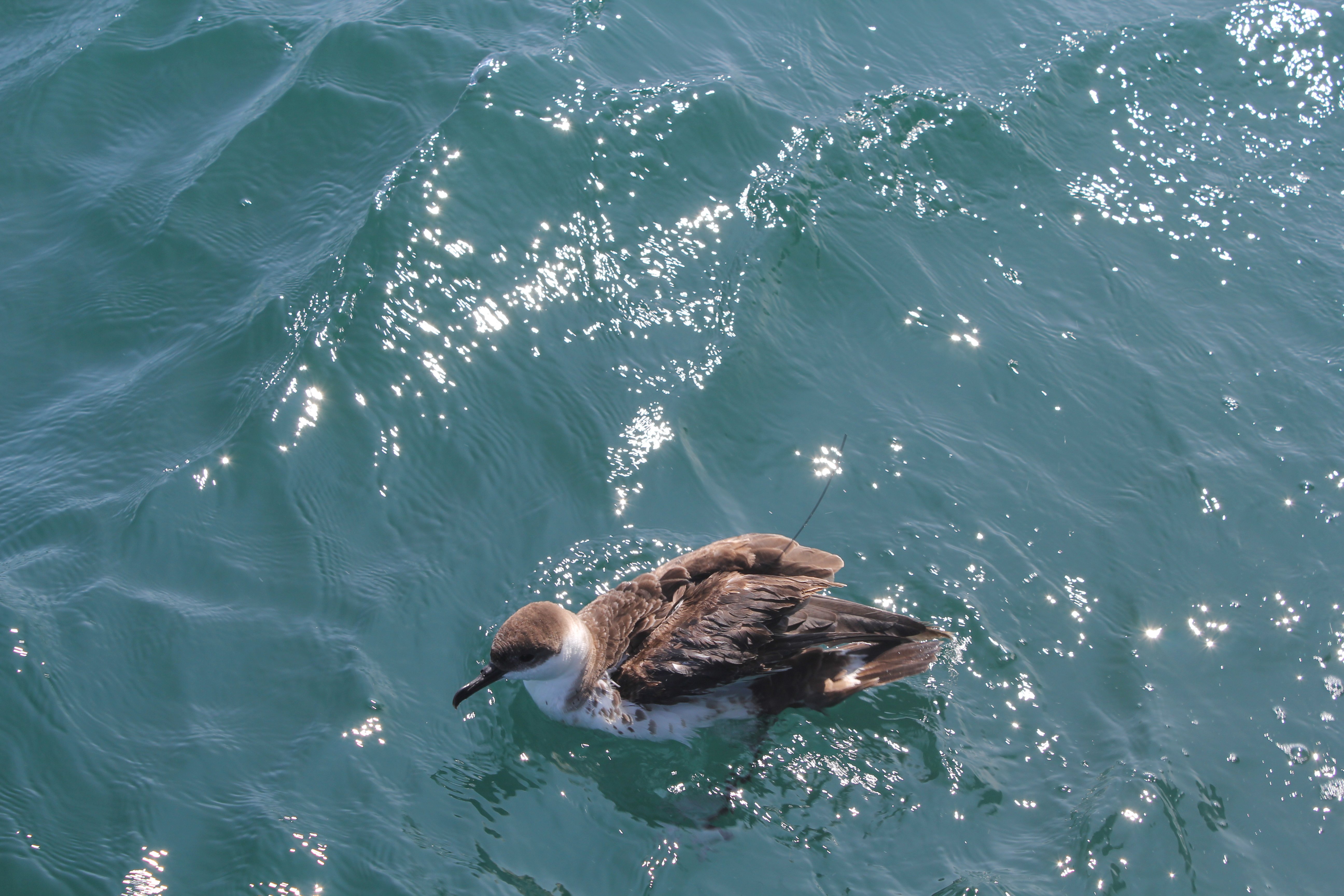
a bird wearing a small tracker on its feathers sits on the ocean
Great shearwaters can help scientists understand an ecosystem’s health. Image: National Marine Sanctuary Foundation.

“We are thrilled to invite the public to follow Phil, Franklin, Hoagie, and Liberty in real time on our interactive maps and social channels, bringing everyone along on our shared mission to protect our ocean waters and marine life,” says Johnson, who lists bald eagles (Haliaeetus leucocephalus), great blue herons (Ardea herodias), and great shearwaters among his favorite birds. 

Live interactive maps will be available soon on the Stellwagen Bank National Marine Sanctuary and National Marine Sanctuary Foundation’s website, so you can follow the great shearwater’s epic journey, while the Eagles (or your favorite team) compete on the gridiron.

The post ‘Birds Supporting Birds’ connects the Philadelphia Eagles with migrating seabirds appeared first on Popular Science.

  •  

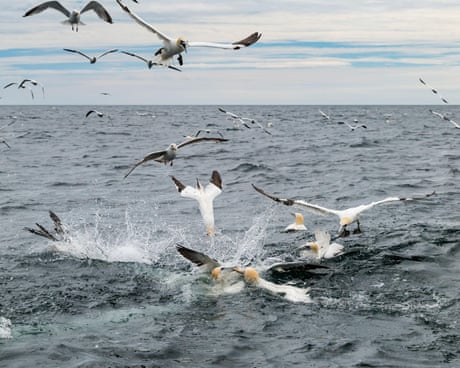
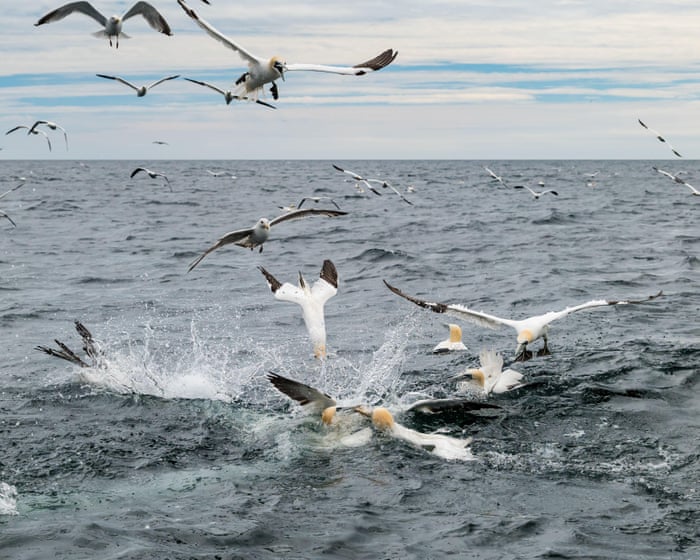
Save our seabirds from the huge windfarm due to be built near Bass Rock | Letter

The offshore windfarm at Berwick Bank is predicted to kill more than 4,000 birds in its first year alone – among them gannets, puffins and kittiwakes, writes Ashley Davies

Lev Parikian paints a vivid picture of the gannets of the Bass Rock and the impact that avian flu has had on their numbers (Country diary, 31 August). There’s another threat, though, and it’s one that puts some supporters of renewable energy like me in a novel situation: protesting against the construction of a windfarm.

Berwick Bank will be one of the biggest offshore windfarms in the world – a few kilometres from the Bass. This is perilously close, and the RSPB has calculated that it will kill more than 4,000 seabirds in its first year alone, among them gannets, puffins and endangered kittiwakes.

Continue reading...

© Photograph: Sally Anderson/Alamy

© Photograph: Sally Anderson/Alamy

© Photograph: Sally Anderson/Alamy

  •  

California Wildlife Day to honor beloved bald eagle Jackie

Following an outpouring of support for Jackie, a famous bald eagle mother watched by millions, the California State Senate passed Senate Resolution 140. The bipartisan measure honors Jackie and proclaims that Friday September 4, 2026 is California Wildlife Day to honor her memory and celebrate the Golden State’s biodiversity.

The resolution was introduced by State Senator Tony Strickland (R-Huntington Beach) and is sponsored by KFI AM 640 in Los Angeles. It recognizes the eagle’s role in connecting people with wildlife conservation, while highlighting the state’s biodiversity. 

“Jackie captured the hearts of people in California and around the world, giving so many of us a front-row seat to the beauty, strength, and resilience of wildlife,” Senator Strickland said in a press release. “Her story reminds us that wildfire conservation brings people together. As we celebrate America’s 250th birthday this year and reflect on the values that unite us, it is especially meaningful to honor the Bald Eagle and Jackie’s incredible legacy here in California.”

Amy King, the host of “Wake Up Call” on KFI AM640 in Los Angeles, said it was clear how many humans connected with these eagles and their story. 

“Over the past decade, many of our listeners watched the webcam and witnessed the beautiful life Jackie, her mate Shadow, and their eaglets created together,” King added. “Jackie’s story brought people together across generations and communities. As storytellers, we believe stories can connect people, inspire compassion, and create a shared sense of community. It has been an honor to share Jackie’s story with our listeners and to be part of the community that followed her remarkable journey.”

Friends of Big Bear Valley (FOBBV), the nonprofit organization that runs the nest cameras that brought Jackie and Shadow to the world, are also planning a memorial service for October 3. 

Jackie’s story

Jackie was born, raised, and lived in Big Bear Valley in southern California. Prior to the 2011-2012 nesting season, no bald eagle chicks were known to have ever hatched in Big Bear Valley. Then came Jackie, named after a forest ranger and born to parents Ricky and Lucy in 2012. 

During the 2016-2017 nesting season, Jackie took over a nest where Friends of Big Bear Valley (FOBBV) had a camera stationed. In 2018, she had two chicks named Stormy and Big Bear Baby (or BBB) with her first mate, Mr. B. 

Her long-time partner Shadow entered the picture in summer 2018. He showed up at the nest and would not leave. FOBBV called the new male Shadow because he appeared so determined to stay in the nest, and the team initially believed he was one of Jackie’s siblings, also named Shadow. The eagle’s plumage indicated he was one year older than the other Shadow and not Jackie’s sibling, but the name stuck. 

Shadow continued to hold his ground and Mr. B gave up and eventually left. Jackie then accepted Shadow as her new mate.

Wildlife cameras documented Jackie and Shadow’s life together, offering viewers a direct look into the brutality and beauty of nature. The pair successfully raised chicks in 2019 (Cookie and Simba) and 2022 (Spirit). The pair’s eggs failed to hatch in 2023 and 2024. In 2025, Jackie laid three eggs that all hatched in early March. However, a strong snowstorm dumped up to two feet of snow and battered the nest with strong wind and only two of the chicks (Sunny and Gizmo) survived.  

In January, Jackie laid two eggs in the nest, but ravens destroyed them. She later laid two more eggs that hatched in April and named Luna and Sandy. The name Sandy is in honor of FOBBV’s former executive director Sandy Steers who died from cancer in February. 

Jackie’s injury

On July 17, Jackie was found injured on the ground near Dana Point Park, California. Cell phone video from a witness confirmed that she had an altercation with two other subadult eagles. She successfully fended off the other eagles by turning over and using her talons, but could not fly far away. 

She was transferred to the Ojai Raptor Center for care, where she was diagnosed with severe anemia. Her anemia worsened during the first week of August, the Ojai Raptor Center said that she was in unstable condition on August 9. Her packed cell volume (PCV) fell below percent, before rising to nine percent. She died early in the morning on August 10 and a full necropsy report is still forthcoming. 

Jackie’s resilience inspired millions of people around the world. 

The post California Wildlife Day to honor beloved bald eagle Jackie appeared first on Popular Science.

  •  

Tweet! Here are the winners of the 2026 Audubon Photography Awards

It’s a bird’s world, and we’re just living in it. Today, the National Audubon Society officially announced the winners of the 2026 Audubon Photography Awards. The contest is now in its 17th year and celebrates stunning photos (and even a few videos) that showcase the beauty of birds and the challenges they face. For the second year, the judges awarded prizes to residents of Chile and Colombia, as well as the United States and Canada, highlighting how avians connect us across geographies and ecosystems. 

This year’s Grand Prize winners each received $5,000 and a voyage to Antarctica with HX Expeditions—an expedition cruise company and Audubon’s exclusive cruise partner.

Take a peek at the winners in the gallery below. (Click to expand images to full screen.)

Prizes for United States and Canada Residents

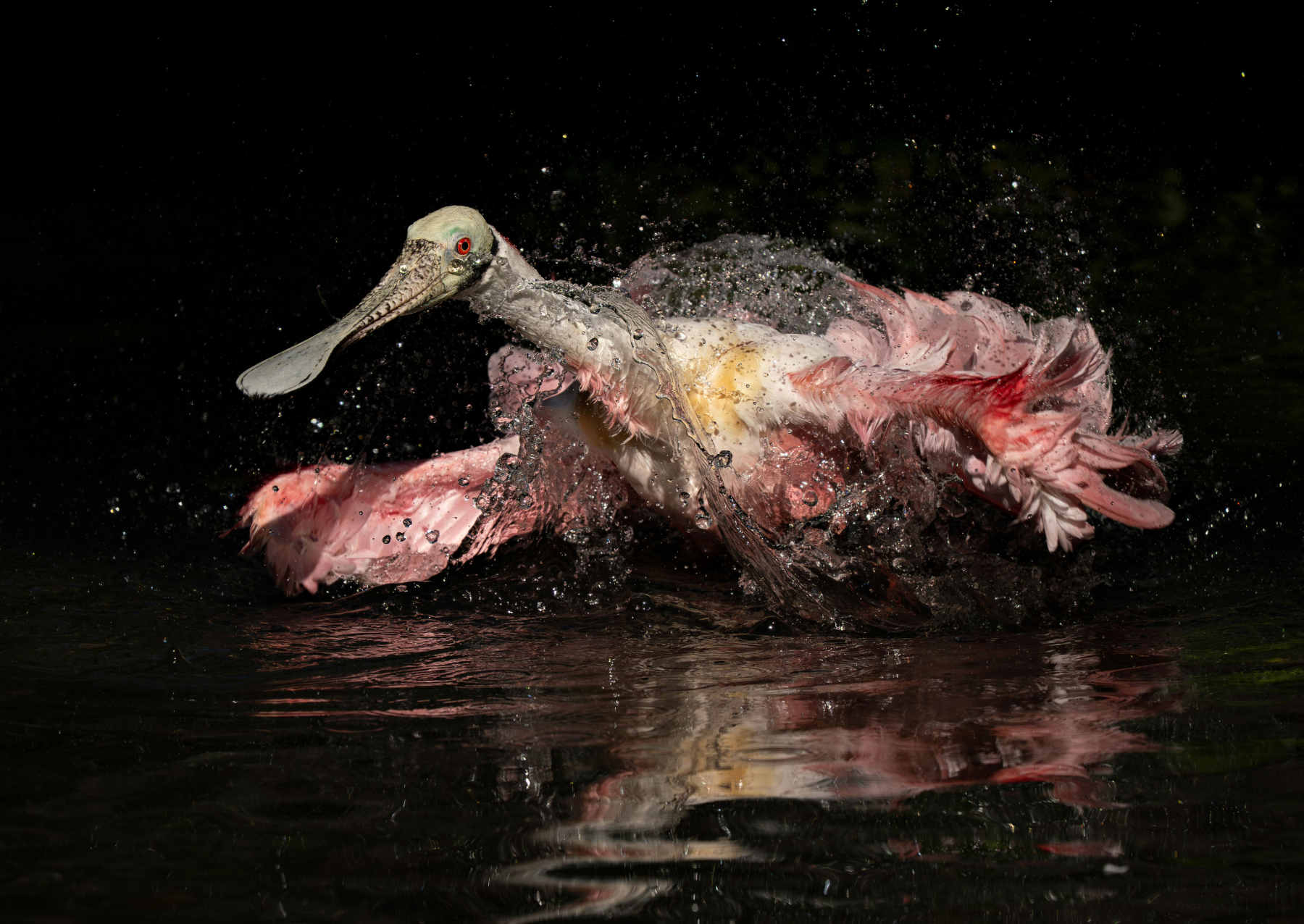
Grand Prize: Jacqueline Burke, roseate spoonbill

a bird with pink feathers glides over the water
A roseate spoonbill (Platalea ajaja) at the St. Augustine Alligator Farm Zoological Park, in St. Augustine, Florida. Image: Jacqueline Burke.

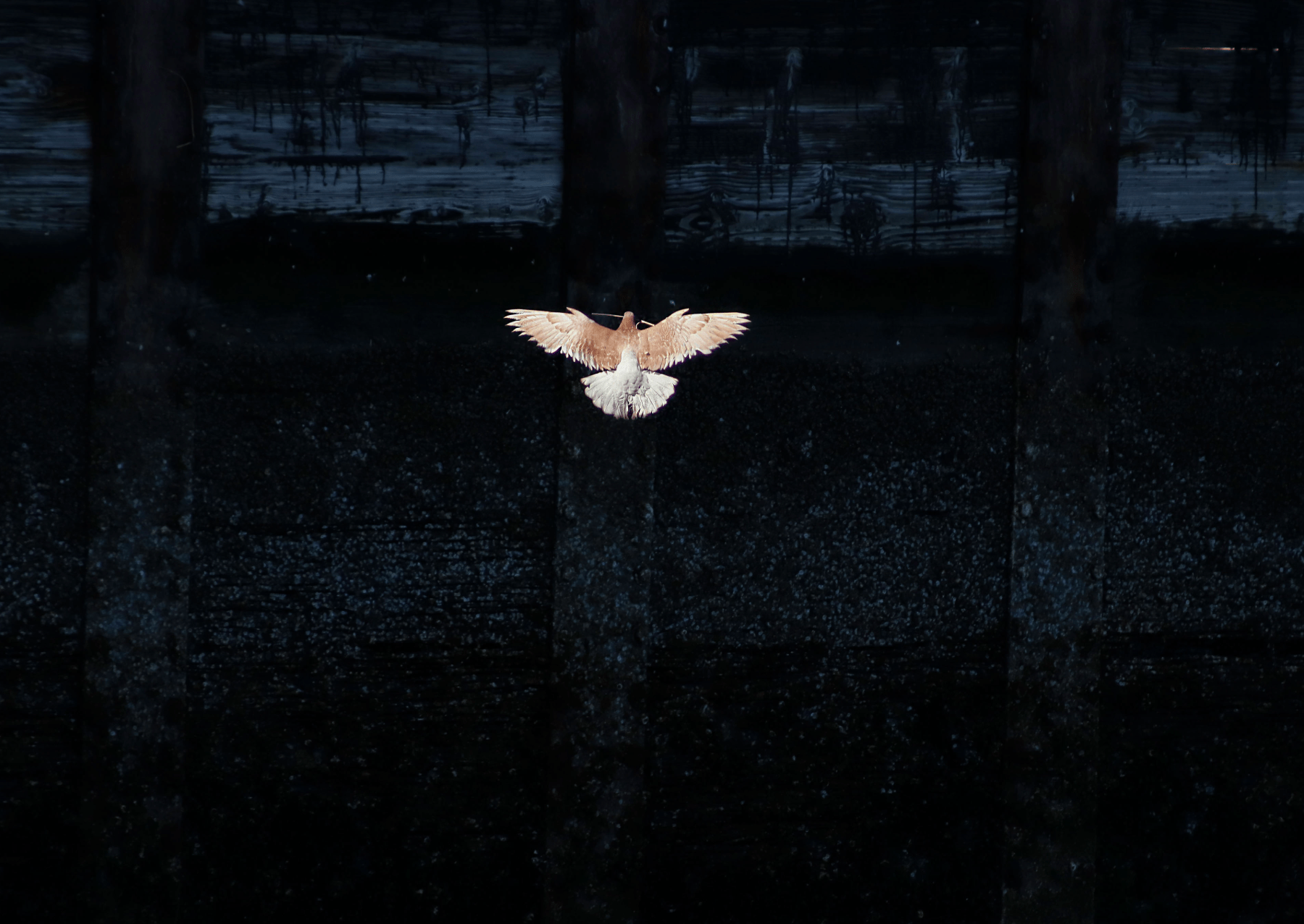
Youth Prize: Ian Shultz, rock pigeon

a pigeon with outstretched wings glides over water
A rock pigeon (Columba livia) in Golden Gardens Park in Seattle, Washington. Image: Ian Shultz.

Video Prize: Piper VanOrd, great blue heron

A great blue heron (Ardea herodias) at Allegheny Islands Wilderness, National Wild & Scenic Allegheny River, in Warren, Pennsylvania. Credit: Piper VanOrd.


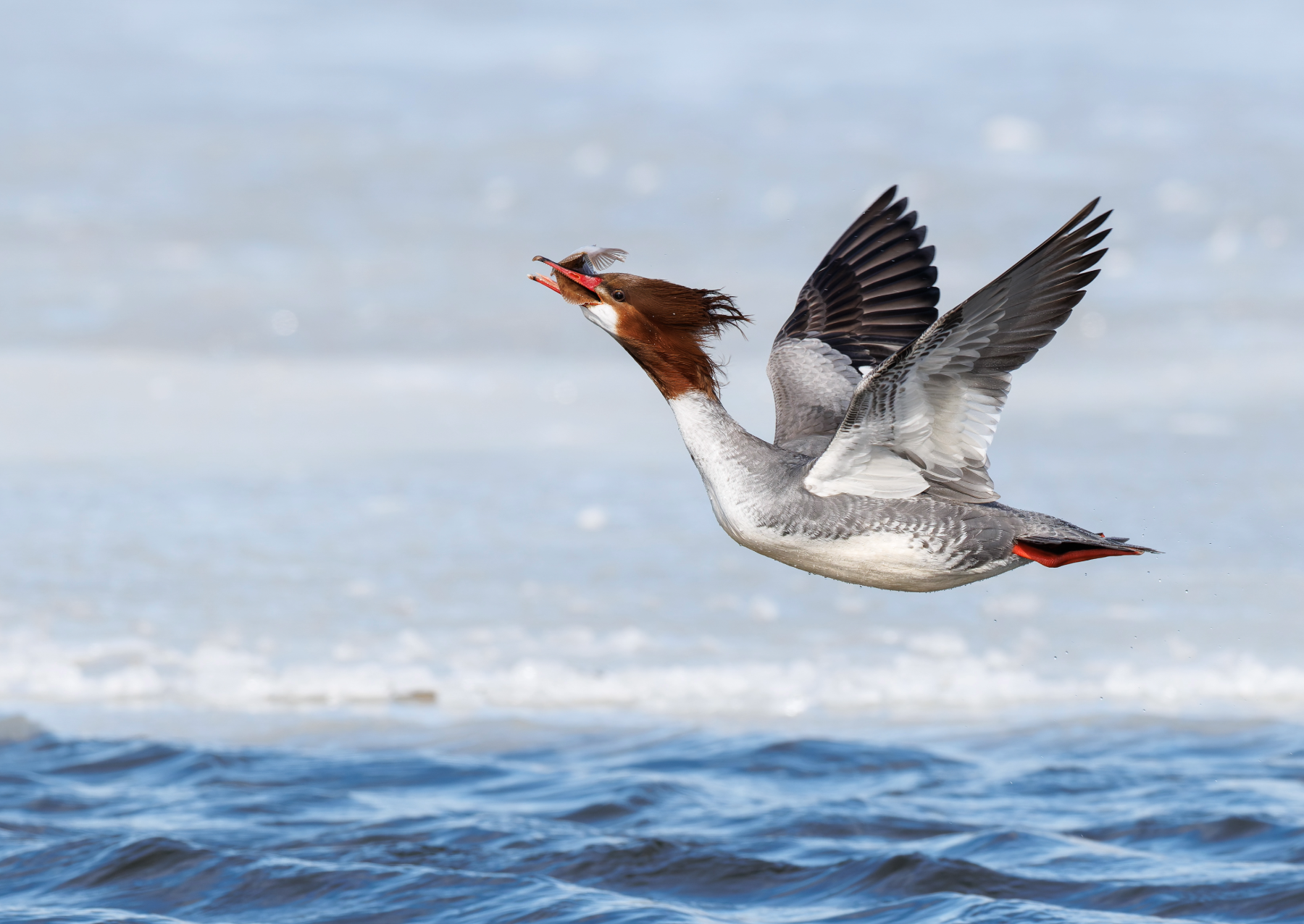
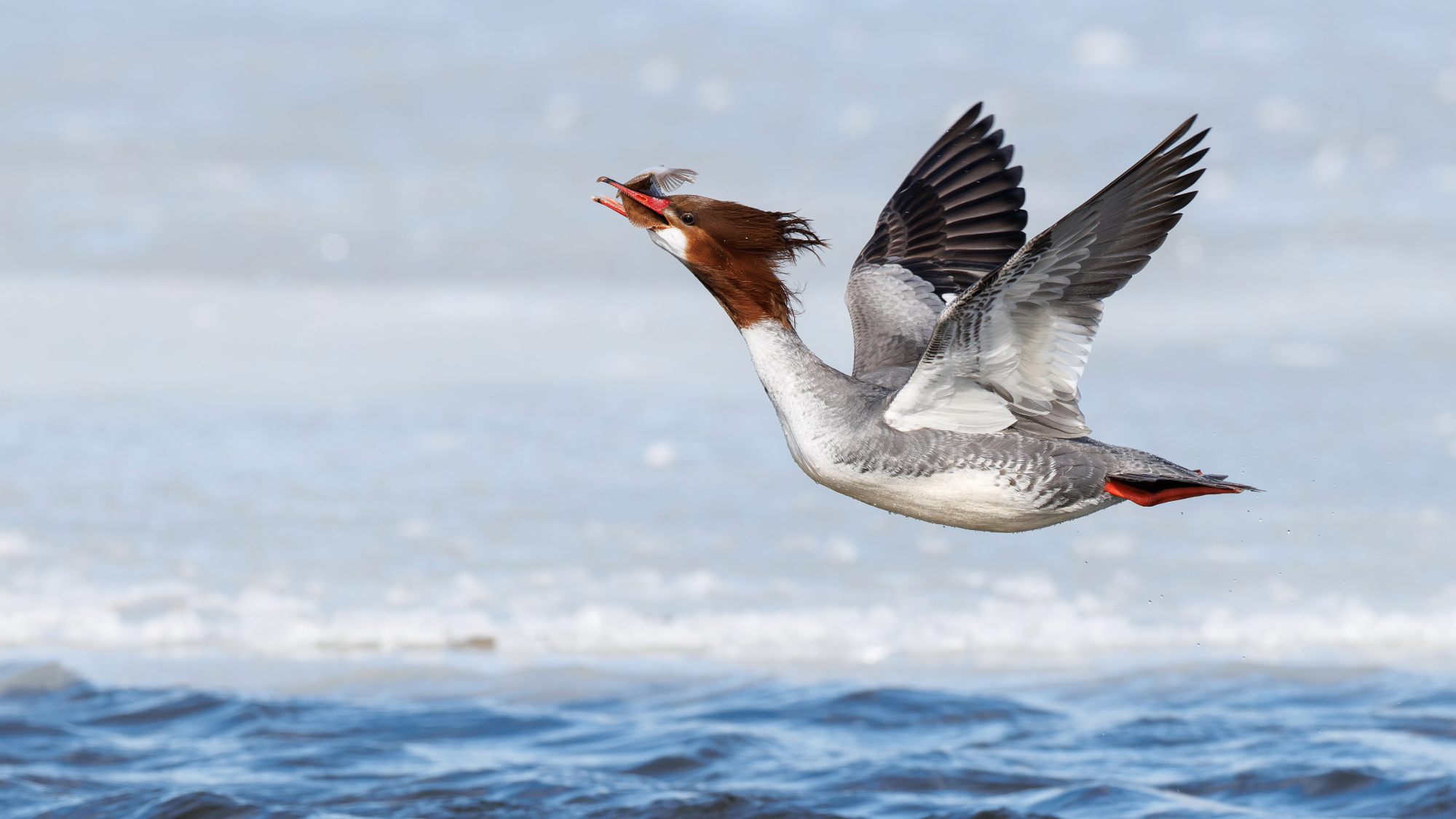
Female Bird Prize: Gail Bisson, common merganser

a bird with black, white, and brown feathers flies over water with a fish in its mouth
A common merganser (Mergus merganser) in East Bay Sandbar, Nova Scotia, Canada. Image:  Gail Bisson.

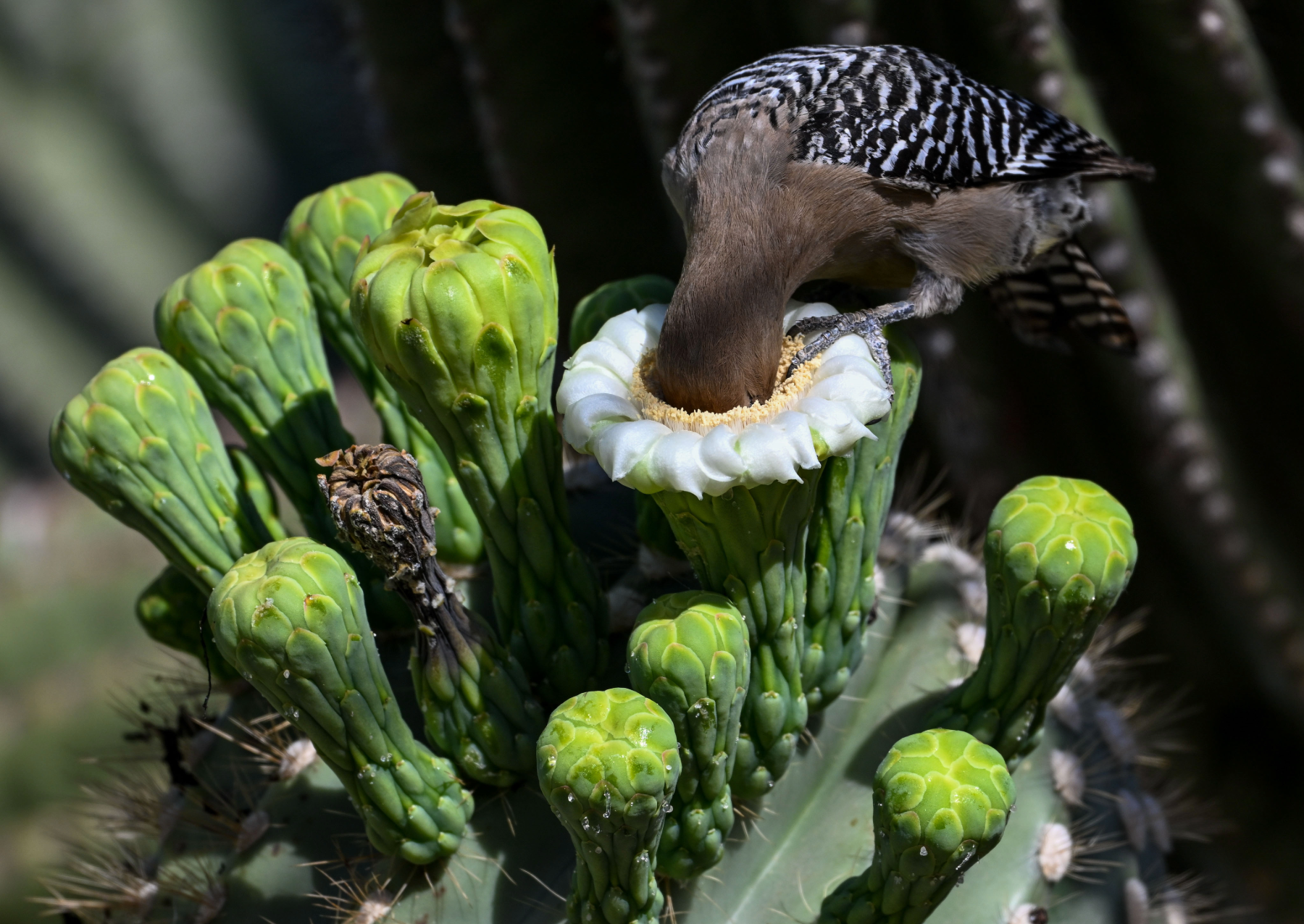
Plants for Birds Prize: Mike Henry, Gila woodpecker and saguaro cactus

a bird with black and white feathers sticks its beak and most of its head into the yellow pollen-filled center of cactus flower
A Gila woodpecker (Melanerpes uropygialis) and saguaro cactus (Carnegiea gigantea) in Tucson, Arizona. Image: Mike Henry.

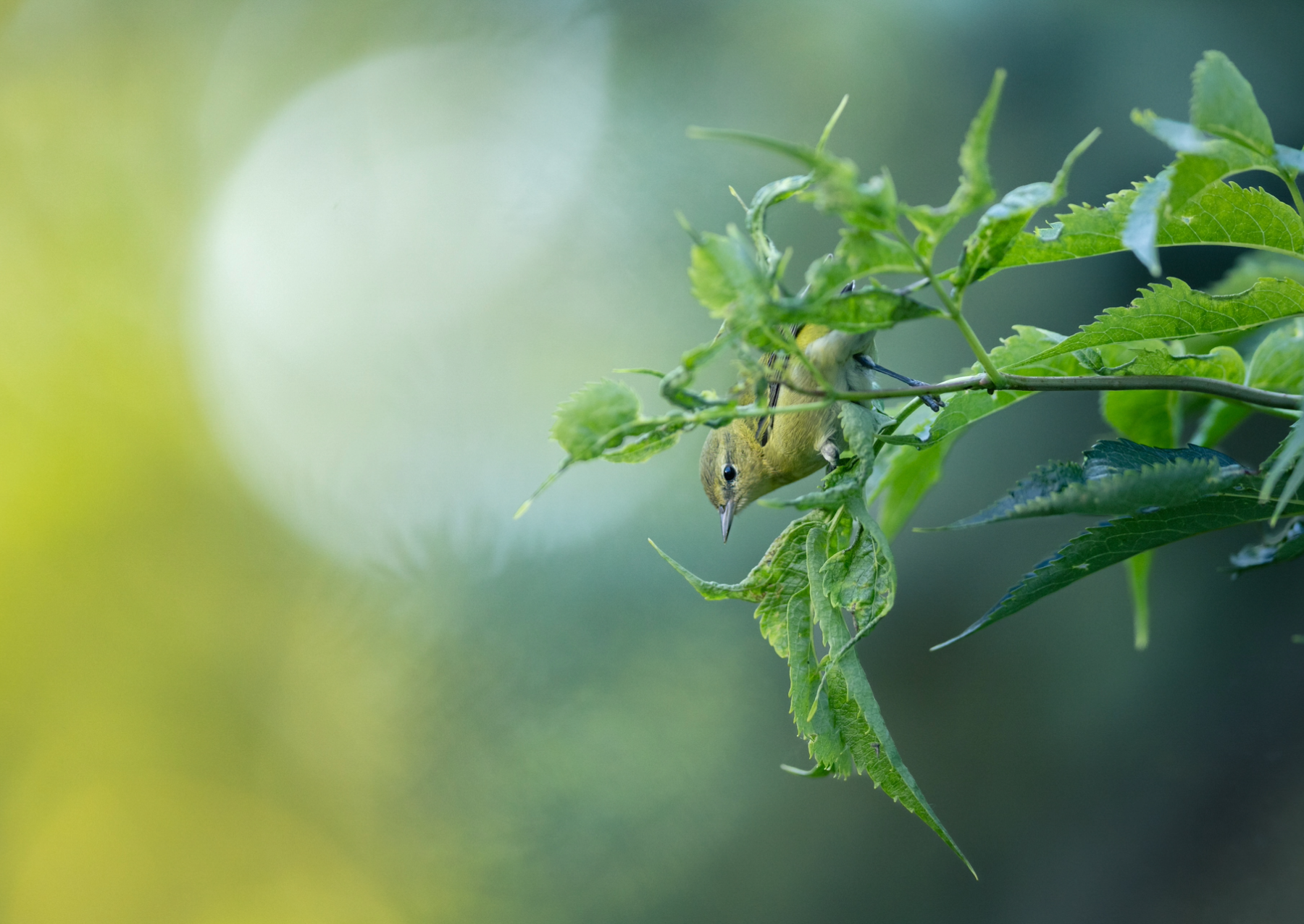
Birds Without Borders Prize: Nick Parayko, Tennessee warbler

a bird with yellow-green feathers stands on a leaf
A Tennessee warbler (Leiothlypis peregrina) in photographer Nick Parayko’s backyard in St. Albert, Alberta, Canada. Image: Nick Parayko.

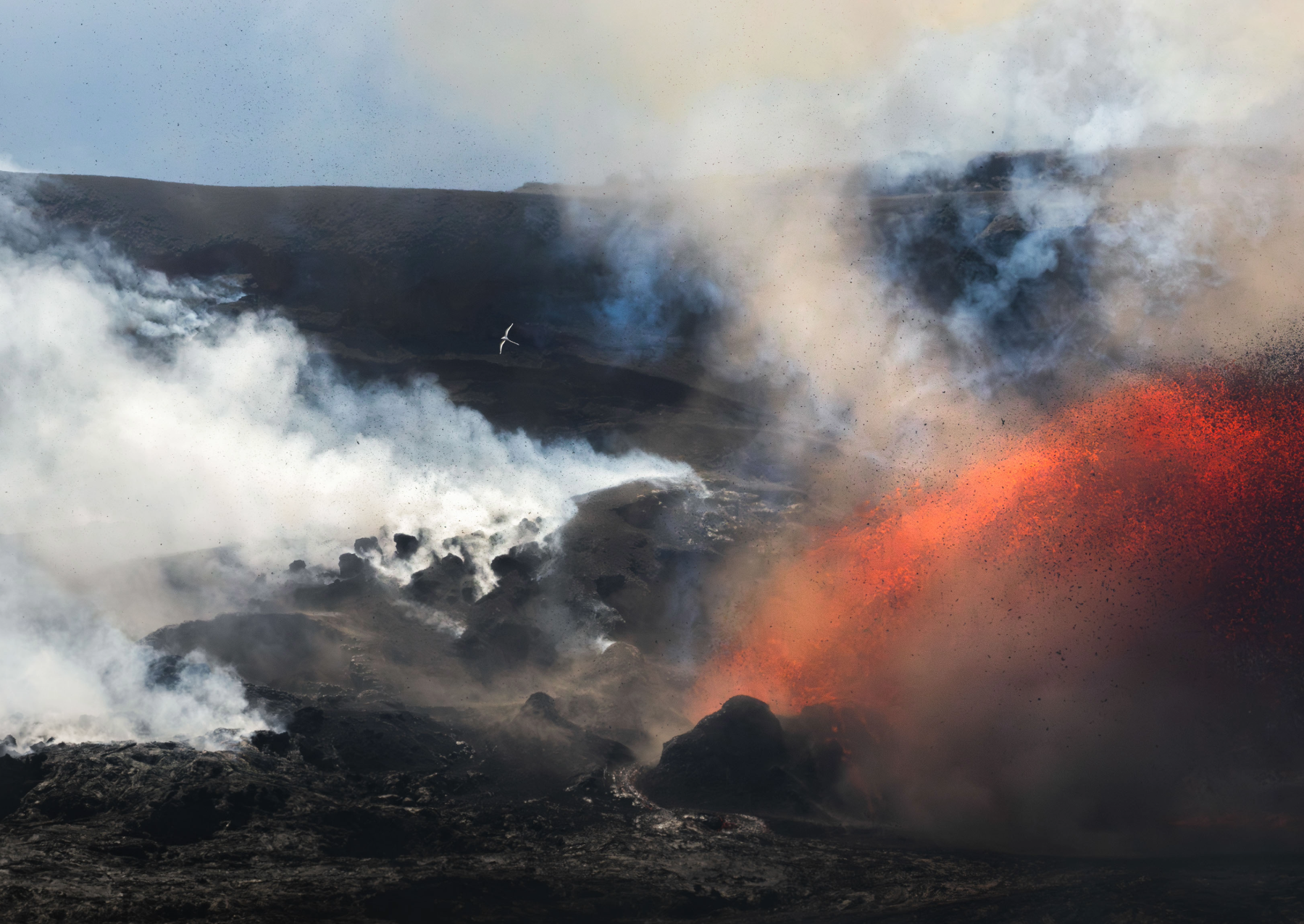
Birds in Landscapes Prize: Liron Gertsman, white-tailed tropicbird

a white bird flies by a volcano with red lava and white smoke spewing out
A white-tailed tropicbird (Phaethon lepturus) in Hawai’i Volcanoes National Park in Hawai’i. Image: Liron Gertsman.

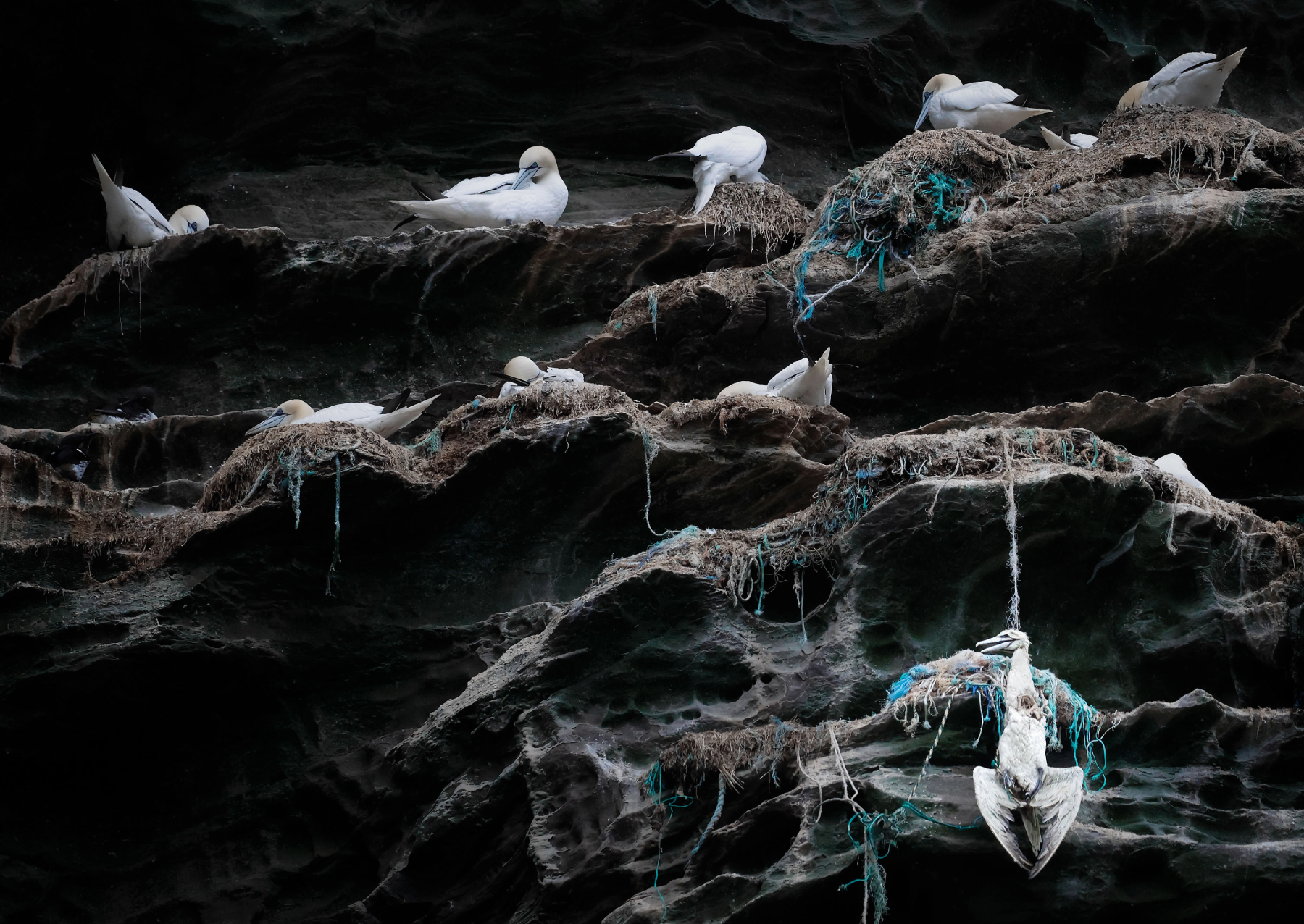
Conservation Prize: Josh Galicki, northern gannets

several white birds on a rock cliff with plastic
Northern gannets (Morus bassanus) on the Isle of Noss in the Shetland Islands, United Kingdom. Image: Josh Galicki.

Prizes for Chile and Colombia Residents

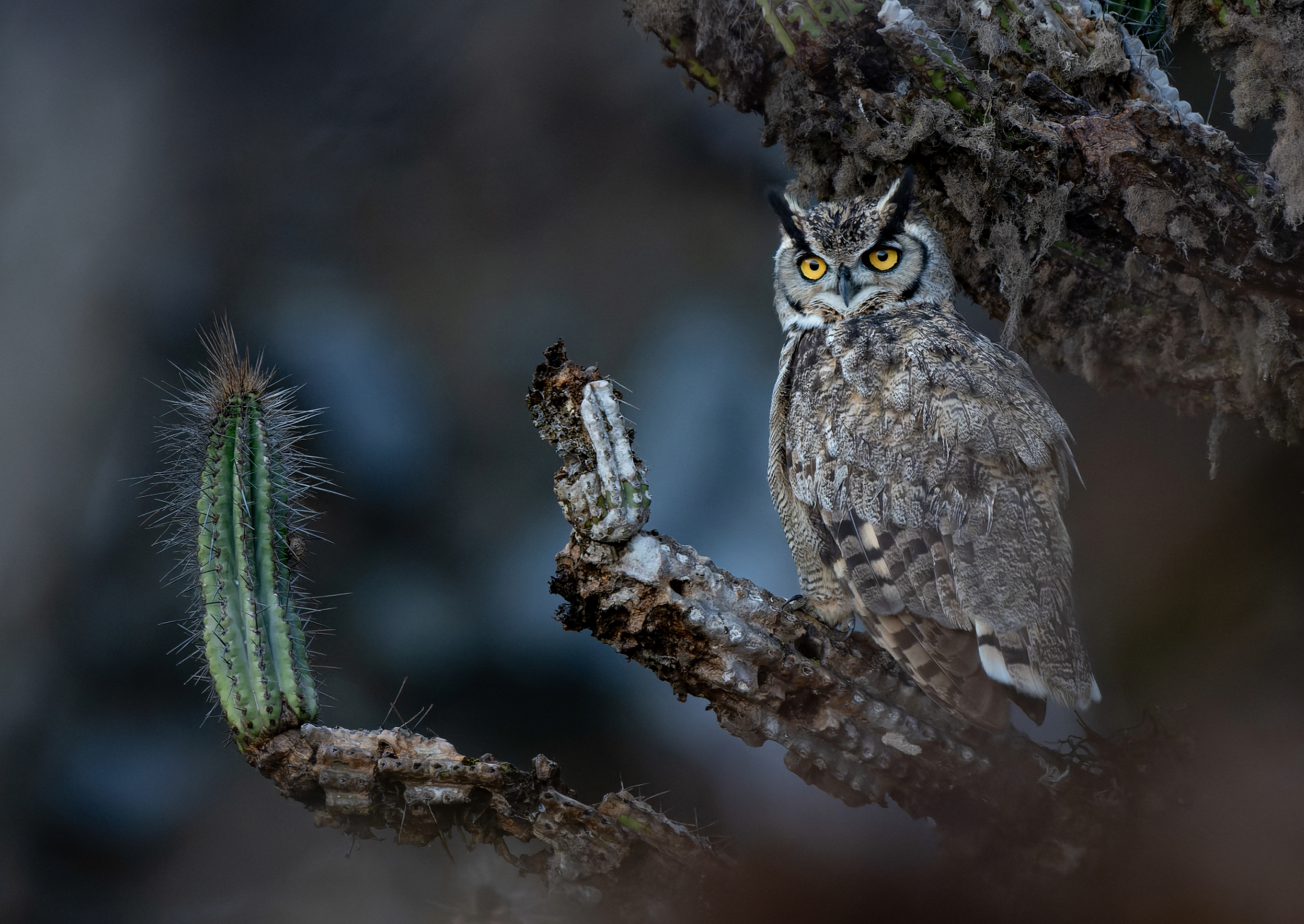
Grand Prize: Francisco Castro Escobar, lesser horned owl

an owl with gray, brown, and white feathers, with prominent black feathers over its eyes sits on a tree branch next to a spiky cactus
A lesser horned owl (Bubo magellanicus) in Antofagasta, Chile. Image: Castro Escobar.

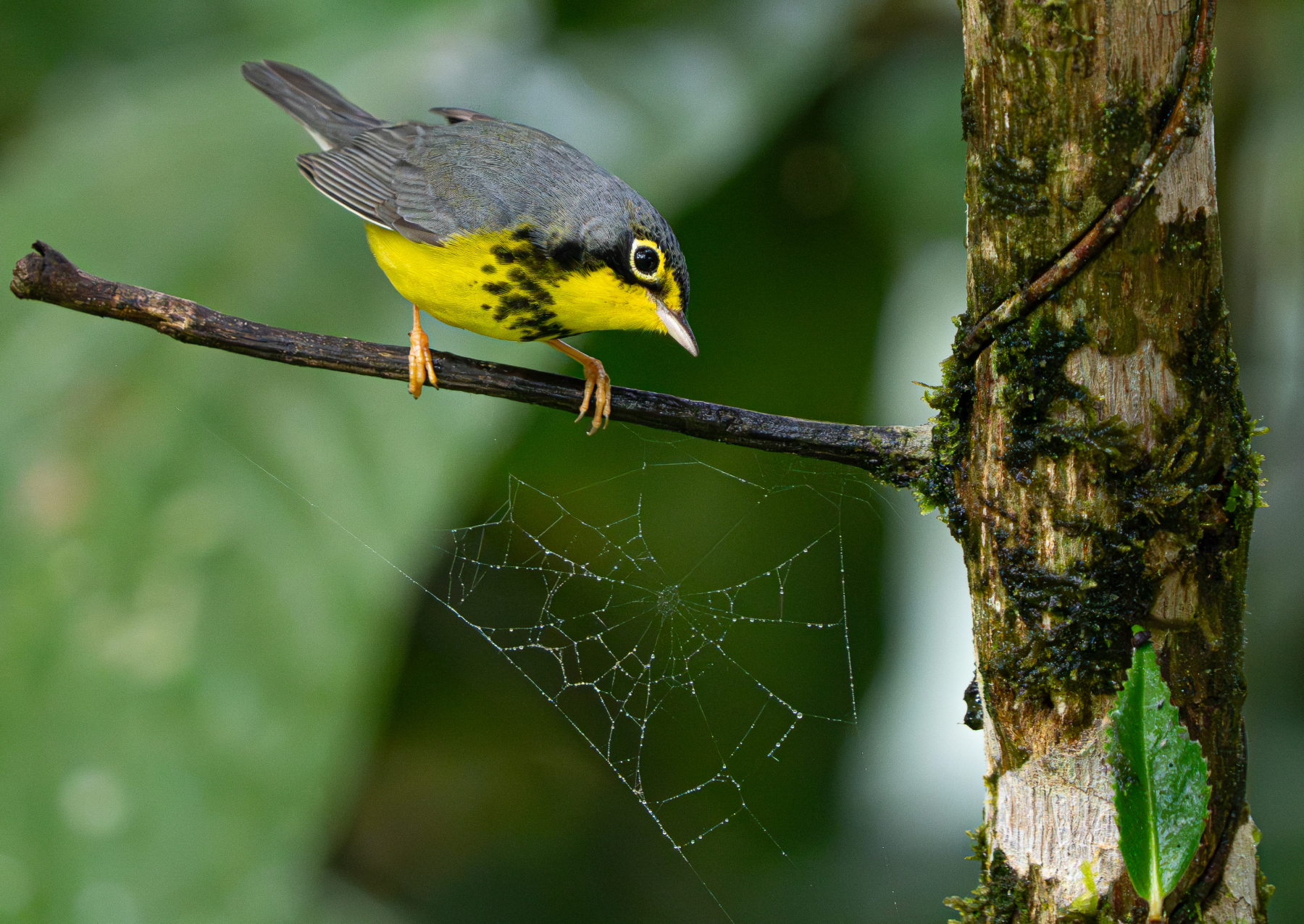
Youth Prize: Juan David Camacho Márquez, Canada warbler

a bird with grey and black feathers with prominent yellow feathers on its belly stands on a branch of a tree with a spider web underneath it
A Canada warbler (Cardellina canadensis) in Doña Dora Birding, El Queremal, Valle del Cauca, Colombia. Image: Juan David Camacho Márquez.

Video Prize: Nicolás Muñoz García, black-browed albatross

A black-browed albatross (Thalassarche melanophris) is on Isla Chañaral Marine Reserve, Huasco Province, Chile. The nearest town is Caleta Chañaral de Aceituno. Credit: Nicolás Muñoz García.

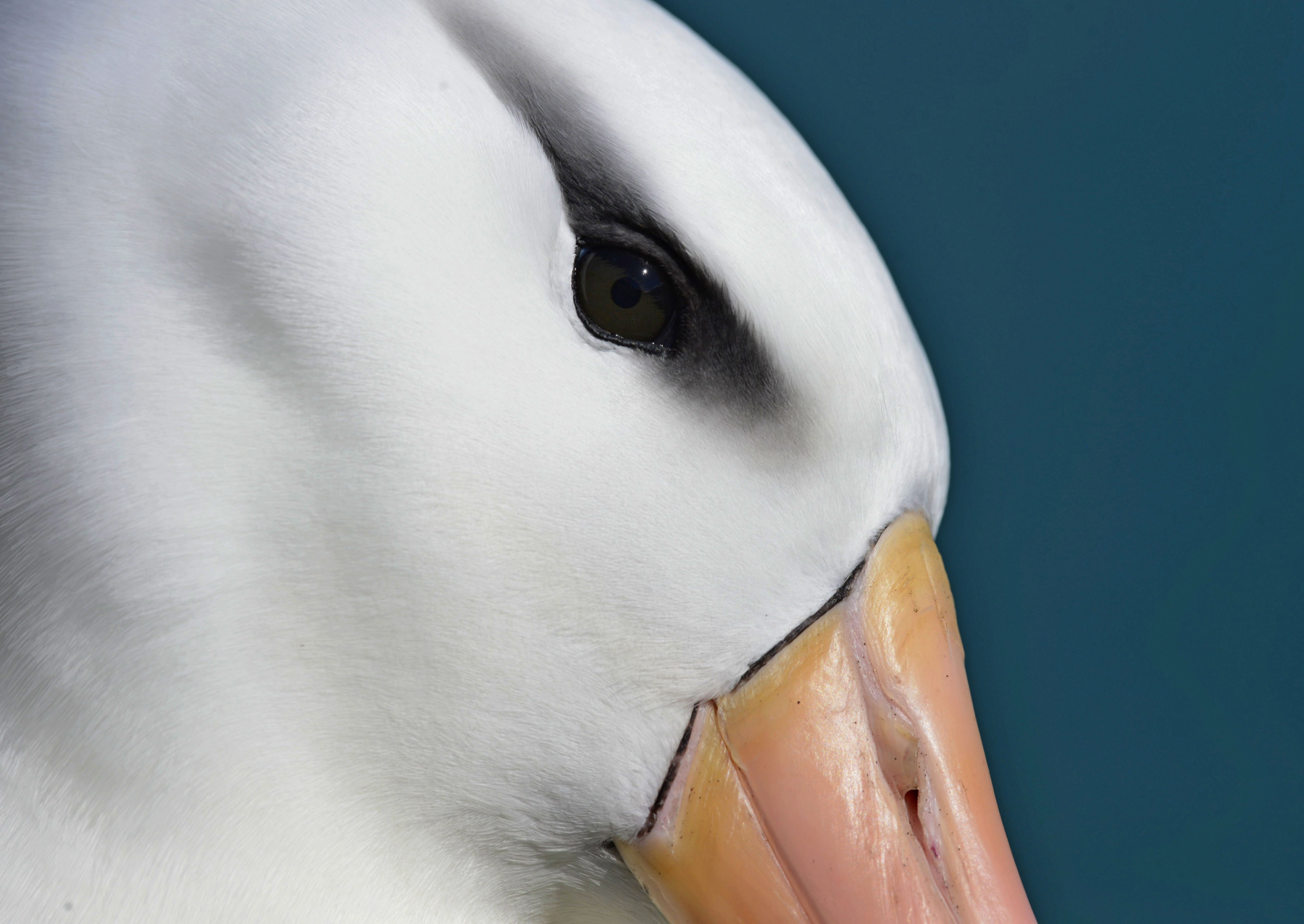
Birds Without Borders Prize: Rodrigo González Pairoa, black-browed albatross

a close-up of the profile of a bird with white feathers, a dark eye, and light orange beak
A black-browed albatross (Thalassarche melanophris) in Almirantazgo Fjord, Chile. Image: Rodrigo González Pairoa.

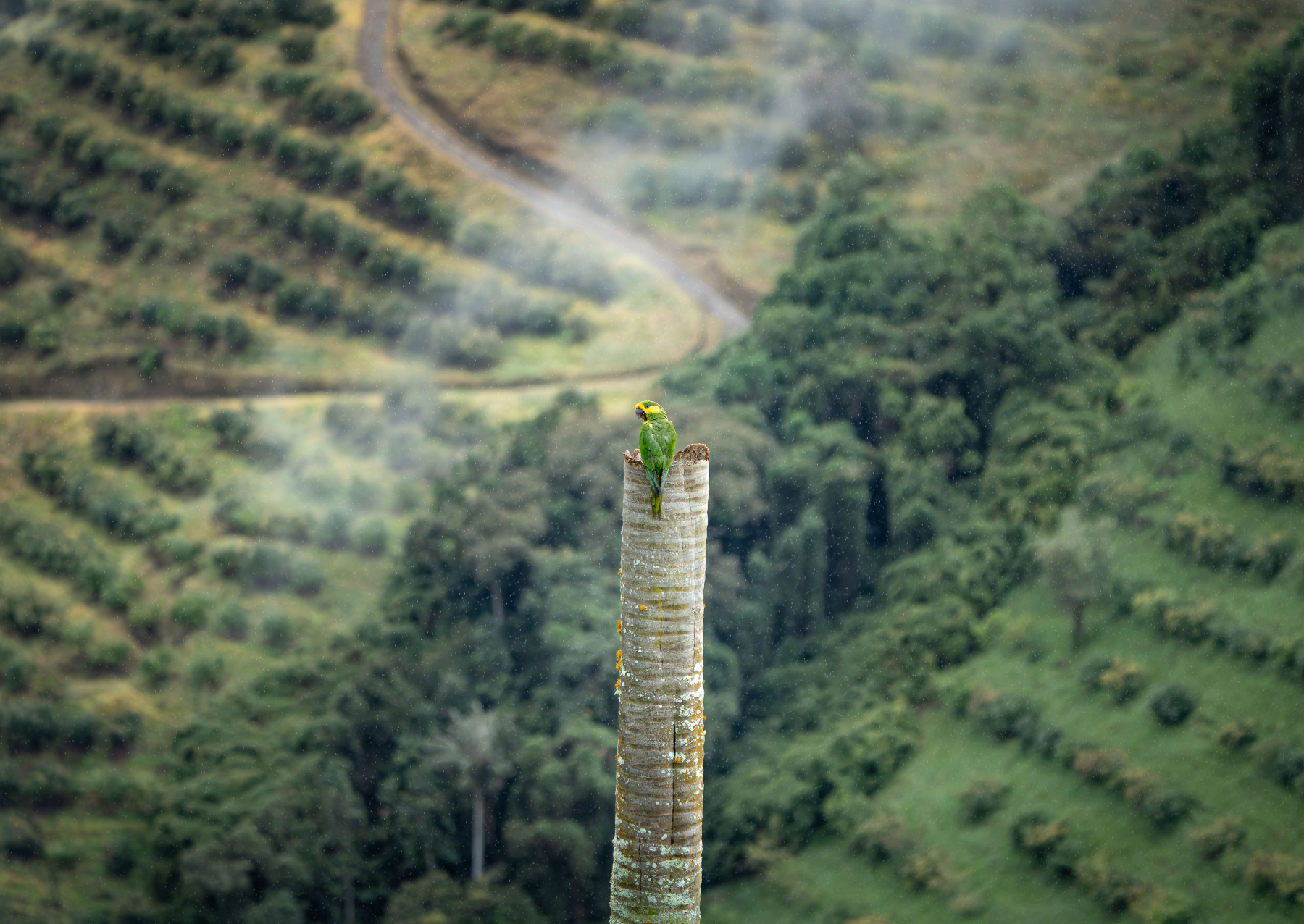
Conservation Prize: Santiago Pérez Rincón, yellow-eared parrot

a parrot sits n top of a palm tree trunk with green feather and yellow feathers on its face
A yellow-eared parrot (Ognorhynchus icterotis) in Anaime River Canyon, Rural District of the Municipality of Cajamarca, Department of Tolima, Colombia. Image: Santiago Pérez Rincón.

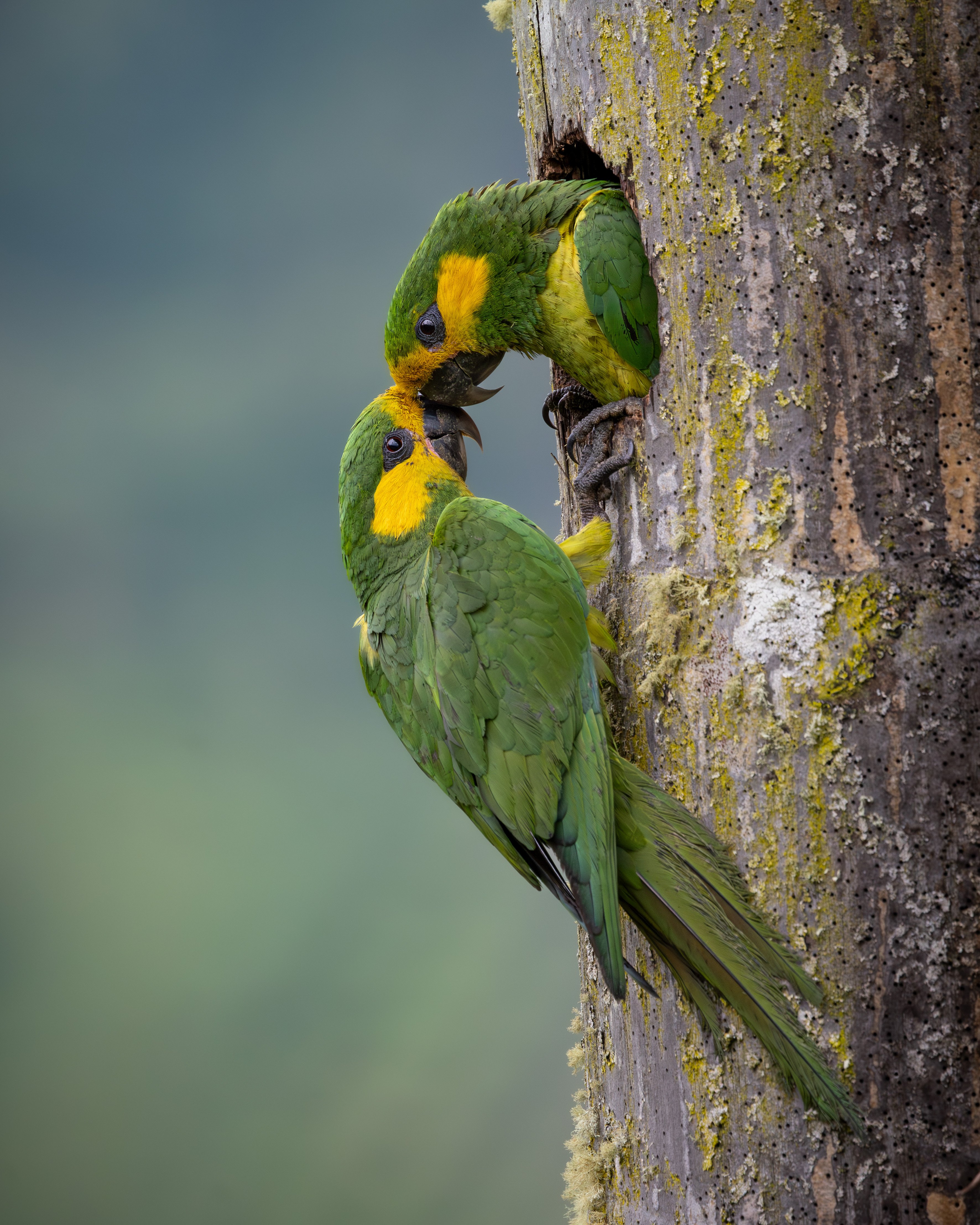
Plants for Birds Prize, Colombia: Santiago Giraldo, yellow-eared parrot and Quindio wax palm

two parrots with green feathers with yellow feathers on their faces touch beaks on the trunk of a palm tree. one of the birds is inside of a hole in the tree, while the other stands below
A yellow-eared parrot (Ognorhynchus icterotis) and Quindio wax palm (Ceroxylon quindiuense) in Anaime, Cajamarca, Tolima, Colombia. Image: Santiago Giraldo.

Birds in Landscapes Prize, Colombia: Faber Mosquera Álvarez, oilbird

a bird with gray and brown feathers flies in the dark night sky
Oilbird (Steatornis caripensis) in the Cañón de los Guácharos, Pijao, Quindío, Colombia. Image: Faber Mosquera Álvarez.

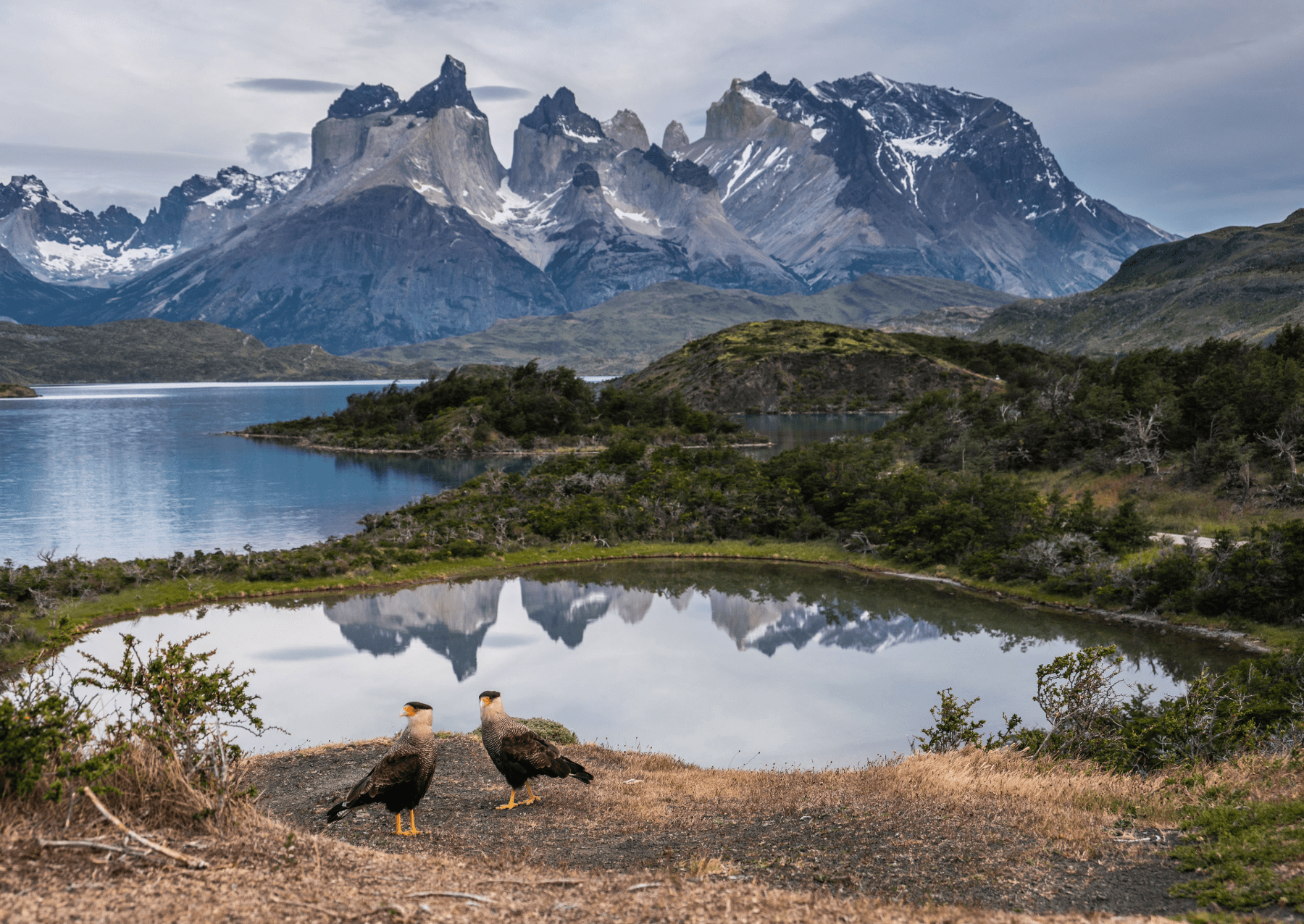
Birds in Landscapes Prize, Chile: Timothy Dhalleine, crested caracara

two birds with brown and white feathers stand by a pond and a lake underneath snow-capped mountains
A crested caracara (Caracara plancus) in Torres del Paine National Park, Magallanes and Chilean Antarctic region, Chile. Image: Timothy Dhalleine.

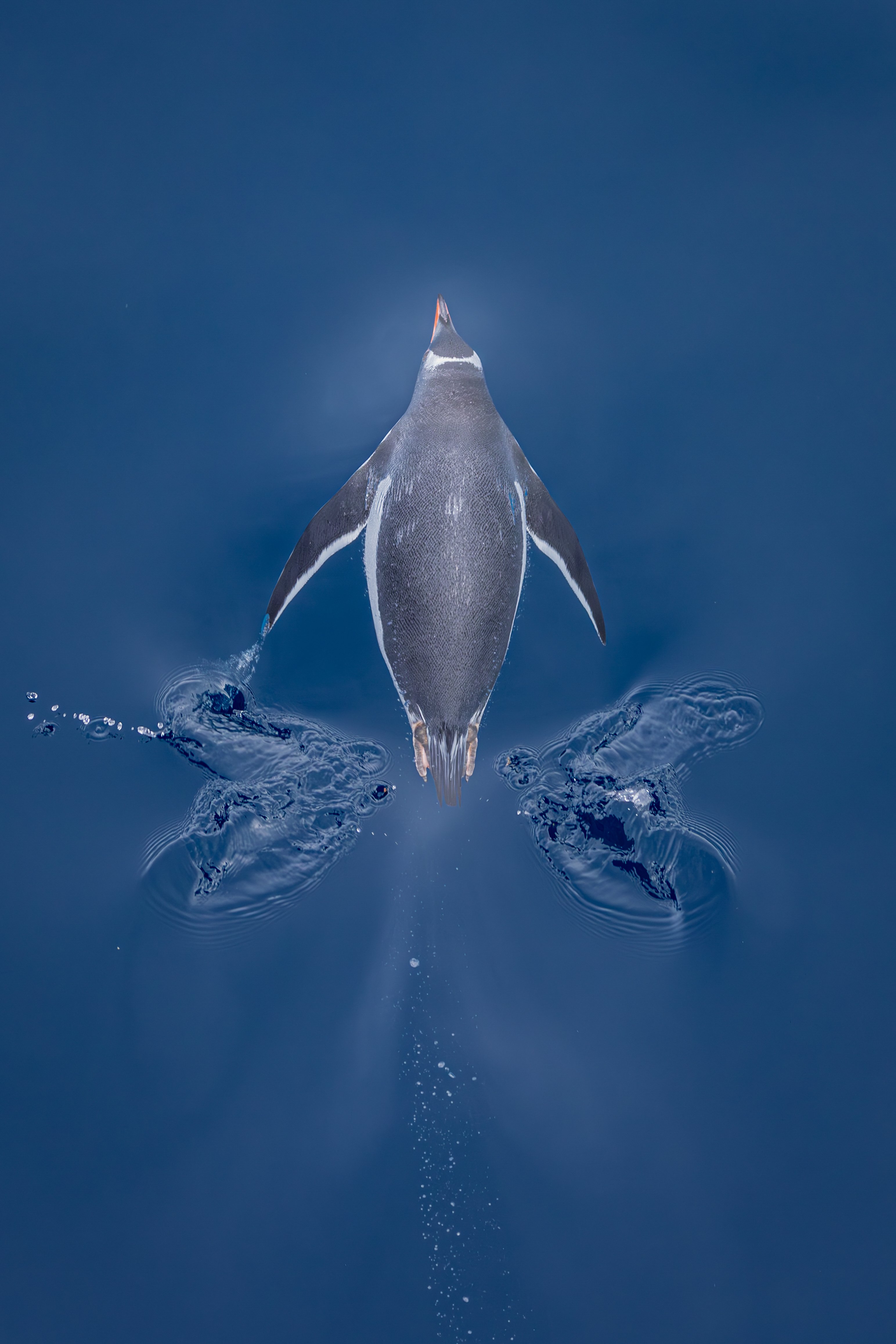
Coastal Birds Prize, Chile: Gonzalo Bertolotto Quintana, gentoo penguin

a top view of a penguin with white and black gliding through the ocean
A gentoo penguin (Pygoscelis papua) in Fildes Bay, Antarctica, in the vicinity of the Chilean bases. Image: Gonzalo Bertolotto Quintana.
Gonzalo Bertolotto Q

The winners and honorable mentions are published online in Audubon magazine, and winners will be in the Fall 2026 print issue. The annual Top 100 photos will also be announced on September 23, 2026, and additional selections will be featured in digital galleries on Audubon’s website.  

The 2027 Audubon Photography Awards will open for entries on January 13, 2027. 

The post Tweet! Here are the winners of the 2026 Audubon Photography Awards appeared first on Popular Science.

  •  

Scientists Solve a Long-Standing Mystery About Bird and Dinosaur Eggs

Elephant Bird, Ostrich, and Hummingbird EggsAnalysis of living vertebrates shows that changes in brain evolution helped drive major shifts in reproduction across dinosaurs and birds. A bird egg can look surprisingly oversized for the body that produced it. That puzzle becomes even stranger when viewed through deep time: the largest known bird eggs exceed the largest eggs found from nonavian [...]
  •  

The ornithological artist drawing 1,000 birds by hand – all for an app that wants you off your phone

The mission of the Flock app is quietly subversive: to encourage users to ditch their screens and explore the wonderful world of birding

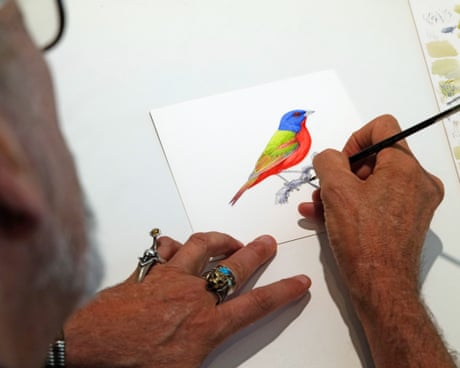
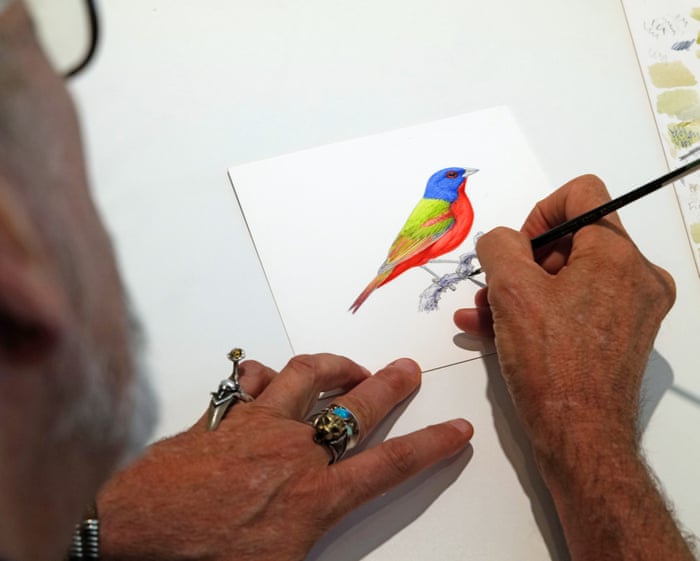
On a brilliantly bright afternoon in his gallery and studio in Bolinas, a small town on the northern California coast, Keith Hansen was putting the finishing touches on a watercolor of an almost improbably flamboyant painted bunting.

With an ultra-fine sable brush, he made a few intricate additions to the cobalt blue plumage on the bunting’s head, and, satisfied with his work, slipped the watercolor into a stout binder that every few days welcomes a new addition.

Continue reading...

© Photograph: Nick Czap

© Photograph: Nick Czap

© Photograph: Nick Czap

  •  

Birds Are Dying. Clues Point to El Niño.

A die-off of seabirds has some experts thinking an El Niño weather pattern is to blame, a look at data centers and pollution, and more climate news.

© American Bird Conservancy

Seabird carcasses in Ecuador.
  •  

Wildfire near Sizewell nuclear plant causes ‘total devastation’ to Suffolk landscape

Emergency crews say situation remains ‘dynamic’ as more than 100 firefighters battle Dunwich Heath blaze

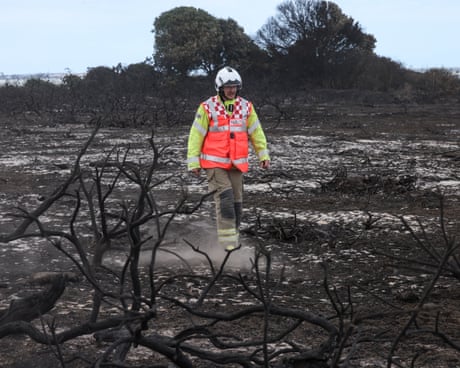
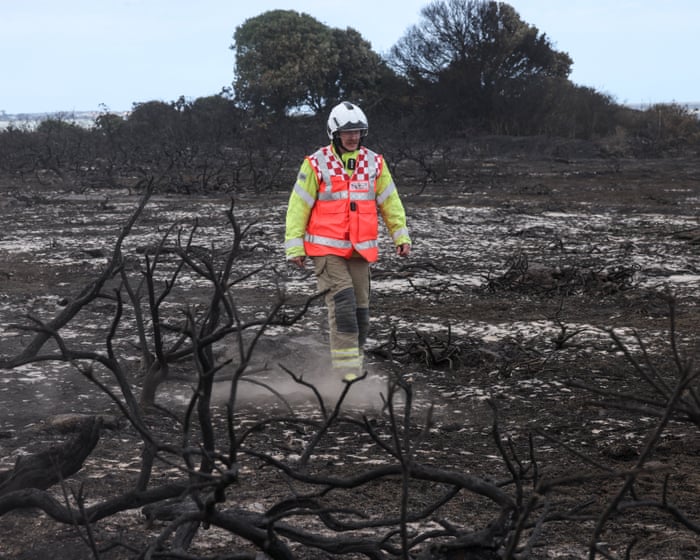
A wildfire near Britain’s biggest nuclear power station has caused “total devastation” to one of the UK’s most important landscapes, as fire crews said the situation remained “dynamic”.

More than 100 firefighters have been battling the blaze on Dunwich Heath, near Leiston, on the Suffolk coast since Wednesday evening. The fire service said on Friday afternoon the situation was stabilising but remained a “major incident” that was “dynamic and potentially changeable”.

Continue reading...

© Photograph: Humphrey Nemar/PA

© Photograph: Humphrey Nemar/PA

© Photograph: Humphrey Nemar/PA

  •  

Guy Tudor, Whose Art Brought Obscure Birds to Life, Dies at 91

A self-taught ornithologist, he won a MacArthur fellowship for his precise, resplendent illustrations that appeared in definitive field guides to tropical songbirds.
  •  
❌