The shoulder blade is such a wide and flat bone that in some areas it becomes almost translucent when held up to the light. That is why it is rare to find it whole, even in modern burials, and why it so surprised archaeologists from the University of Cambridge that from Shanidar Cave, in Iraqi […]
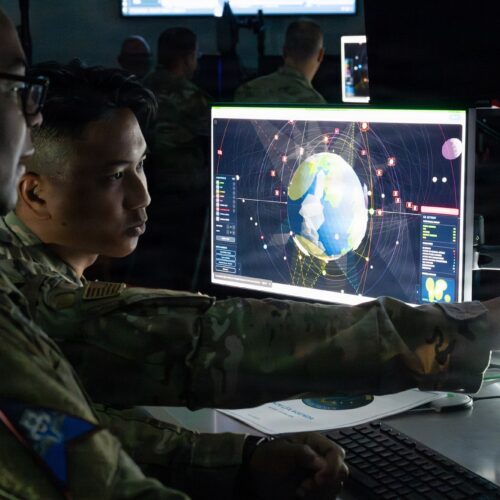
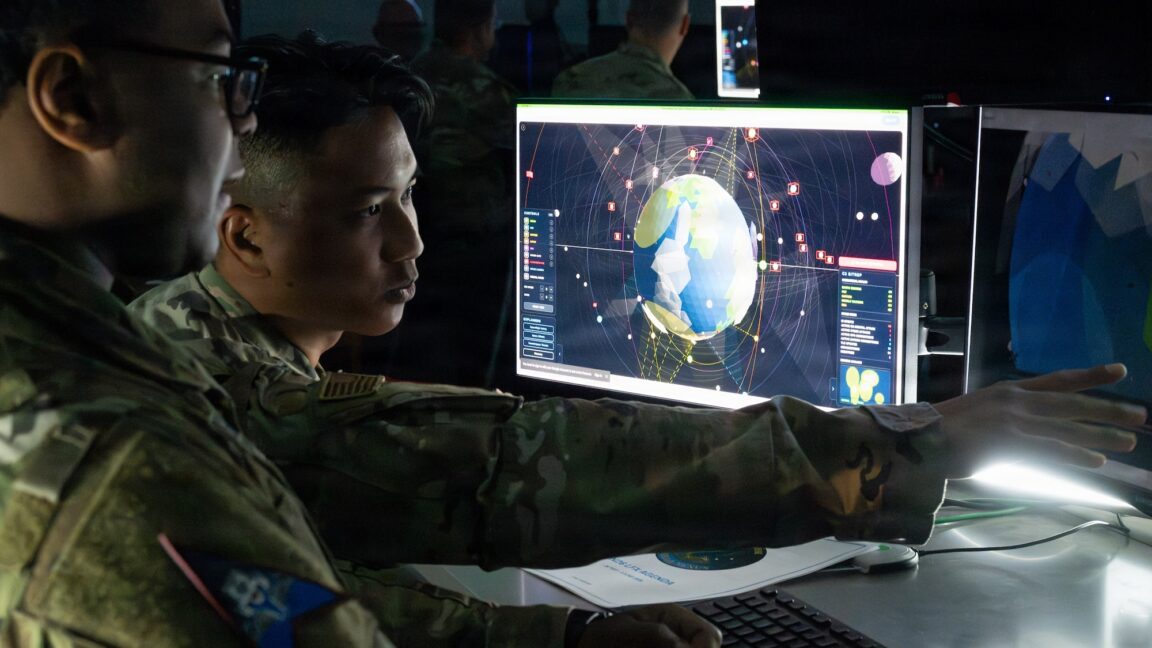
Air Force Secretary Troy Meink made the first public declaration Monday that the United States has placed "space control weapons" in orbit, an announcement that will surely reverberate in the power centers of Beijing and Moscow.
Space Force officials have previously expressed their interest in acquiring space-based weapons, and Pentagon leaders have become more open to discussing space warfare in recent years. Therefore, Meink's announcement Monday at the Air and Space Forces Association's annual Air, Space & Cyber Conference near Washington, DC, was not entirely unexpected.
“Today, we continue to ensure we remain ready to meet the challenges of evolving threats, wherever they exist. This is why the United States now has on-orbit space control weapons capable of defending the joint force against hostile adversary action,” Meink said in prepared remarks.
Chief of nuclear watchdog says secret Assad-era facility would have been able to produce fissile material
A nearly complete nuclear reactor built secretly during the rule of the toppled Syrian leader Bashar al-Assad would have been able to produce fissile material for possible use in nuclear weapons, the chief of the UN nuclear watchdog has revealed.
Inspectors from the International Atomic Energy Agency (IAEA) last month visited two sites, one in Deir ez-Zor and a second in an undisclosed location identified to them by Syrian authorities.
In the summer of 15 BC, Emperor Augustus’ two stepsons, Tiberius and Drusus, brought the Central Alps and the Swiss Plateau under Roman control. That campaign concluded decades of efforts to link the Gallic provinces with Illyricum and secure the routes between northern Italy and the Danube. However, while the western and eastern routes of […]
In March 2021, while serving as a senior fellow at the Brookings Institution, I hosted a discussion with General Chance Saltzman, now Chief of Space Operations for the United States […]
Donald Trump approves agreement to help country make fuel for civilian nuclear programme
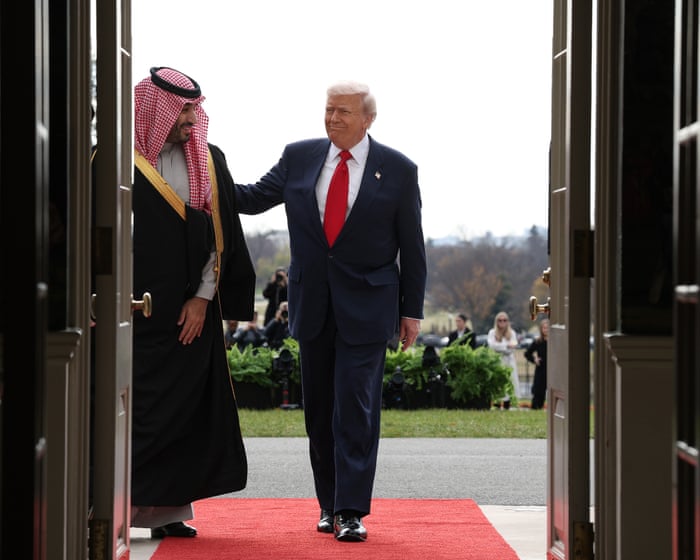
Donald Trump signed a nuclear agreement with Saudi Arabia on Wednesday that could enable the kingdom to enrich its own uranium for nuclear reactions.
The US energy secretary, Chris Wright, and his Saudi counterpart, Prince Abdulaziz bin Salman, signed “a peaceful nuclear cooperation agreement” and “an accompanying bilateral safeguards agreement,” according to a statement from the US Department of Energy.
Egyptian princesses may have trained extensively with weapons, according to a new archaeological assessment that suggests the weapons buried with their mummies were more than mere symbols.
The researchers examined five mummies of Egyptian Middle Kingdom royal women for a new paper published in Frontiers in Environmental Archaeology, finding that their musculature indicates they led physically active lives.
Their work offers new insight into a long-standing question: whether the weapons buried with these royal women served a practical purpose or were simply symbolic grave goods.
Discovering Egypt’s Mummies
“Members of the royal family, especially the women, were active participants in skilled, physically demanding activities such as archery and hunting,” said lead author Dr Zeinab Hashesh. “This conclusion is supported by the way their bones developed to sustain heavy muscle use, which corresponds directly to the weapons discovered in their tombs.”
On a western plateau overlooking the Nile Valley lies the Memphis Necropolis, a 19-mile-long series of funerary complexes. One of these, a collection of pyramids and shaft tombs known as Dahshur, includes the pyramid of Amenemhat III, where two of the mummies were recovered during excavations begun in 1894 by Jacques de Morgan. These first discoveries were King Hor and Princess Noub-Hotep.
Later in 1894, de Morgan began excavating Amenemhat II’s pyramid complex at Dahshur. There, in early 1895, he discovered what would later be identified as four daughters of the pharaoh: Princesses Ita and Khenmet, buried together in one chamber, and Princesses Itaweret and Sathathormeryt in another.
Only the remains of King Hor and Princess Noub-Hotep underwent scientific examination at the time of their discovery. Eventually, all six sets of remains were transferred to the Egyptian Museum in 1915, where they remained lost until their rediscovery in 2020.
Remains of the four daughters of Amenemhat II. Credit: Images provided by Zeinab Hashesh
Weapons of the Egyptian Dead
The complex was unusual because these women were buried with objects typically associated with men, including bows and arrows, and a dagger placed inside Princess Ita’s coffin.
The mummification techniques used on the remains were relatively crude compared with those employed in later Theban burials. As a result, the remains are poorly preserved, with soft tissues reduced to powder, some bones entirely missing, and the princesses’ skulls lost during the early 1900s. Fortunately, enough skeletal material survived to allow researchers to estimate their height, sex, age at death, illnesses, and injuries.
“Princess Ita was a young woman aged between 28 and 34 with strong upper-body muscle attachments, suggesting she habitually used weapons like maces or daggers,” said Hashesh. “Princess Khenmet was a woman in her late 30s or 40s who showed signs of thinning bones, but had very robust ligament attachments. Princess Itaweret was a young woman aged between 20 and 34 who survived broken ribs and foot fractures; her skeleton shows she was a skilled archer.”
All four sisters’ bones showed signs of physically active lifestyles consistent with weapons training.
“We found pronounced development in the upper limbs of these individuals, which correlates to repetitive, high-intensity actions like pulling a bowstring or stabilizing a weapon, proving these activities were habitual throughout their lives,” explained Hashesh. “This directly explains the presence of bows, arrows, and maces in the women’s tombs; these were not just symbolic gifts but tools they actively used.”
A Hard Life, Even for Royalty
The researchers suspect that either a blow or a fall caused Princess Itaweret’s broken ribs, and noted that such injuries were common across all the sets of remains. They also discovered evidence of inbreeding, as the sisters’ spinal abnormalities suggest their parents were closely related.
“These injuries were most likely caused by accidents, falls, hard blows, or other impacts linked to an active lifestyle, whether through hunting, military training, or other demanding activities,” said Hashesh. “What is remarkable is that the injuries healed well, which suggests they had access to advanced medical care for their time.”
Work on these mummies remains incomplete, however, hampered by the loss of the skulls. Moving forward, the researchers would like to conduct a stable isotope analysis to better understand the nutritional deficiencies detected in the bones.
“Our dream would be to go far beyond simply identifying the Dahshur royals,” said Hashesh. “We would try to tell their full life stories, their families, health, and even their political roles, with as much detail as possible. Beyond the science, we would preserve the remains, create 3D prints for teaching and virtual exhibitions, and display them alongside their jewelry, weapons, and funerary objects. All of this would be done with respect, ensuring the remains are presented ethically, just as they were originally buried.”
“Their objects and jewelry are truly fascinating, breathtaking in their craftsmanship. Yet, while archaeologists have long focused on preserving these treasures, the people themselves were often forgotten. Our study seeks to change that.”
Ryan Whalen covers science and technology for The Debrief. He holds an MA in History and a Master of Library and Information Science with a certificate in Data Science. He can be contacted at ryan@thedebrief.org, and follow him on Twitter @mdntwvlf.
NEW YORK — A study published last week in Nature Astronomy has proposed a new satellite design and technique to detect thermonuclear warheads in space. Funded in part by the […]
Dr. Daniel Nagase raises alarms about the dangers of COVID-19 mRNA vaccines, from DNA contaminants that could permanently alter the human genome. The rising cancer rates among Australians is due to these mRNA injections which are part of a coordinated effort to use bioweapons for global depopulation.
Officials at the World Health Organization (WHO) admit they are preparing for a “worst-case scenario” of nuclear weapons being used in the U.S. and Israel’s war against Iran. It also brings into focus the possible use of the Samson Option if the Israeli state is threatened with extinction.
Dr Michael Yeadon, former Pfizer vice president in charge of vaccine production, makes an impassioned appeal to the world against COVID-19 vaccinations. He exposes the truth behind the mRNA shots as deliberately designed sterilization depopulation bioweapons.

 Login