❌

Reading view

Elon Musk’s Growing Death Toll: “What He Put Into the Woodchipper Were Children”

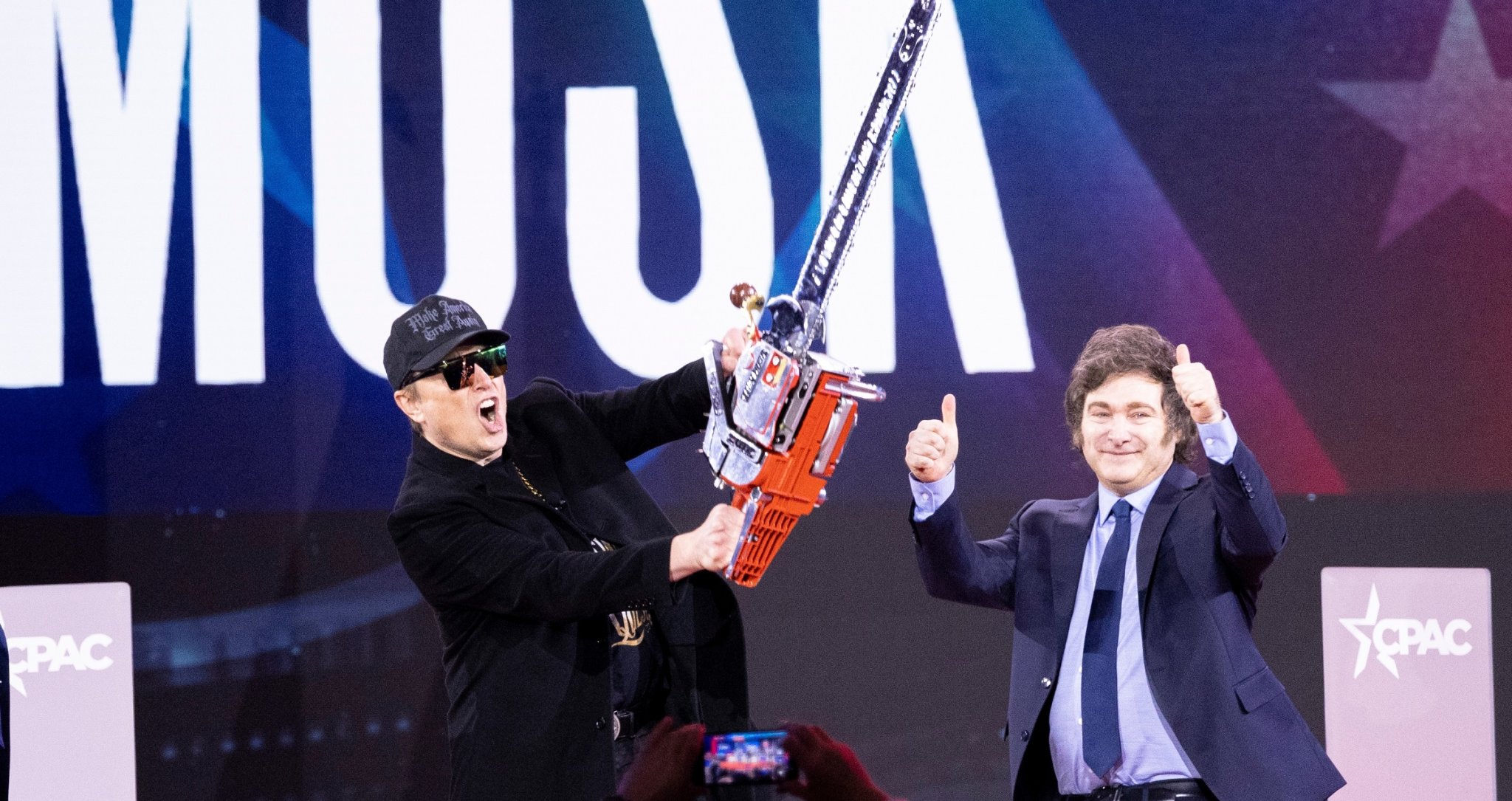
As Elon Musk tries to save face by claiming he’ll give every American child a chunk of SpaceX stock, here’s a chilling reminder of what he did that affected millions of children the second he had a whiff of federal power.

In a new interview, the documentary filmmaker Alex Gibney, who directed a just-released four-hour look at the billionaire’s life titled “Musk,” discussed the staggering death toll of Musk’s cuts to USAID, calling it a “crime against humanity.”

“There was an estimate that what [Musk] did by so suddenly cutting USAID would cost through disease and starvation as many as 14 million lives,” he told journalist Katie Couric. “Even if you discount that by an enormous amount, we know that within about a year of those summary cuts — where they were literally burning food that had already been paid for that was going to starving children — 500,000 children died.”

Musk, to Gibney’s astonishment, even joked about the cuts by saying he’d “put USAID into the woodchipper.” 

“What he put into the woodchipper,” Gibney said, “were children.”

Gibney, whose documentary Musk called a “hit piece,” is drawing from a 2025 study published in The Lancet, one of the most prestigious medical journals. It estimated the impact of Musk effectively neutering USAID by implementing a freeze on its foreign aid funding — which went to programs to combat HIV/AIDS, malaria, and to address food insecurities — and slashing nearly 10,000 employees. 

In sum, the researchers found that the “steep funding cuts could result in more than 14 million additional all-age deaths, including 4.5 million in children younger than age five, by 2030.”

Even conservative estimates concurred that the number of deaths would be staggering. A tracker created by Brooke Nichols, a professor and infectious disease mathematical modeler at Boston University, projects the 1-year death toll caused by the USAID cuts at 518,000 children.

It’s a touchy subject for Musk, who continues to bristle at accusations that his actions could’ve caused harm. This summer, he challenged his critics to “cite a single name of someone who died” as a result of him gutting USAID. Nicholas Kristof, a Pulitzer Prize-winning journalist, took him up on it and gave him a list of the specific children who had died directly from his policies, many of whom were in South Sudan and Liberia — places he had visited in person to talk to locals and healthcare workers.

Musk, rather than countering his arguments, called Kristof “evil.”

More on Elon Musk: Elon Musk Says It Was the Pentagon That Shut Down Starlink for the Ukrainian Military

The post Elon Musk’s Growing Death Toll: “What He Put Into the Woodchipper Were Children” appeared first on Futurism.
  •  

Wait, Was Elon’s “Flying Car” Just an Empty Shell?

Flying cars are right around the corner, if Tesla CEO Elon Musk is to be believed.

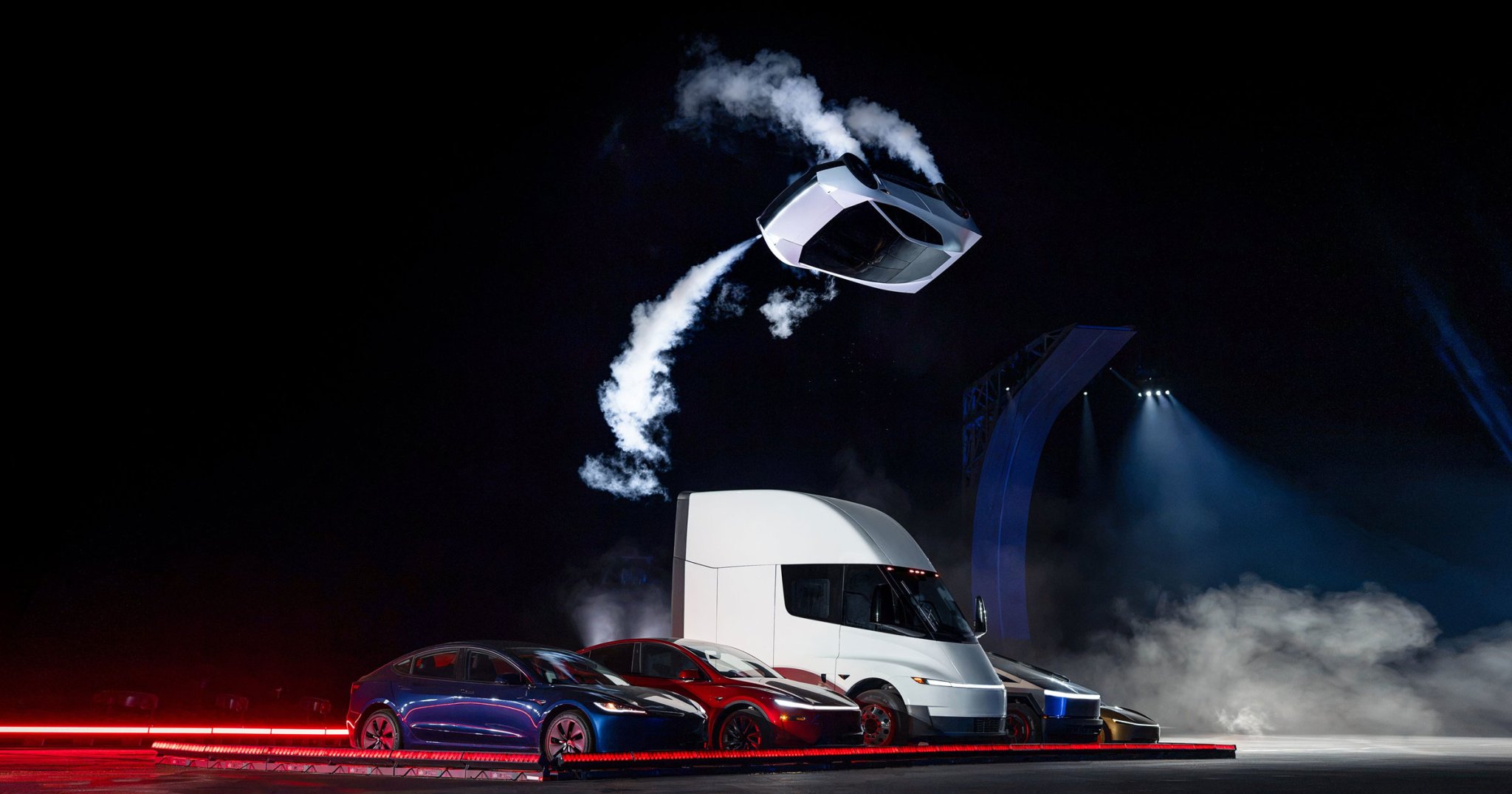
Last week, he unveiled the automaker’s long-awaited Roadster by having it drive to the top of a ramp, flipping upside down in the process, then fling itself into the air before using its cold-fuel thrusters to gently land in style. Minutes later, another Roadster did its best Evel-Knievel-with-a-jetpack impression by blowing itself into the air and leaping over a row of six Tesla vehicles, including its Semi Truck cab.

Sure, the Roadster can “fly.” There’s no denying that it was an impressive stunt. But huge questions remain, such as whether regulators will ever deem it road — let alone air — worthy. Another is if the cars used in the stunt will remotely resemble the actual product that’s sold to consumers, if such a thing does ever come to pass.

Tesla says the “Rocket” version of its Roadster is loaded with 600 liters of compressed air, 10 directional cold-gas thruster nozzles, and a huge suction-fan system on the bottom. To make room for it all, Tesla says it removed the passenger seat.

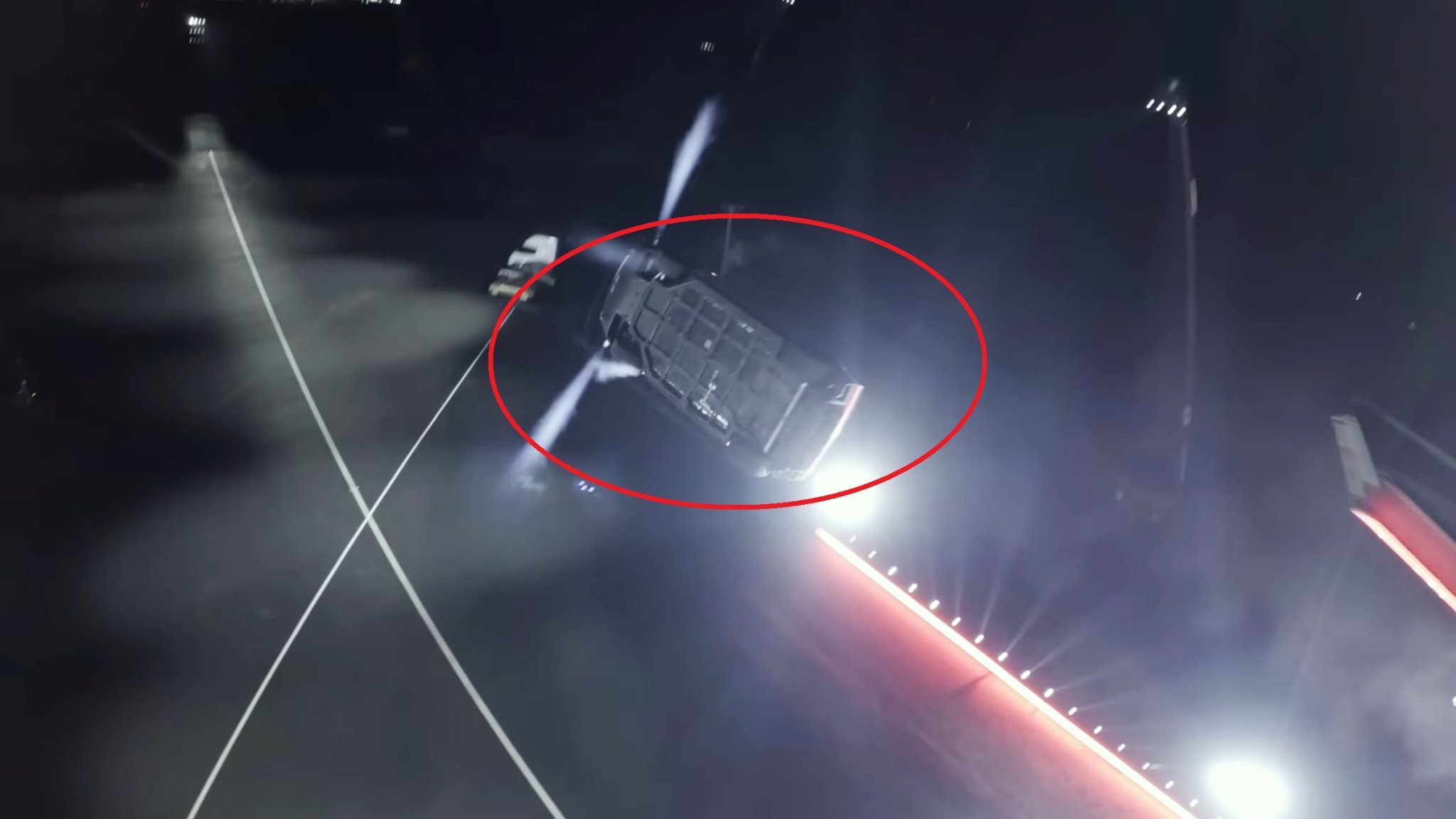
But some observers are wondering if the car is even more stripped down than that, perhaps even lacking a full-sized battery so the engineers could save room and cut down weight. Meanwhile, screenshots of the car’s sparse looking underside taken while it was midair seemed to show it lacking a suction fan, fueling further speculation that Tesla hasn’t figured out to fully combine its capabilities as they’re being presented. The car that stuck upside down to the top of the ramp and then cushioned its landing was, some skeptics allege, equipped with different hardware from the one that leaped into the air to leapfrog the other cars.

Practical questions abound. Without a full-sized battery, the car obviously wouldn’t be able to drive around on roads even if it were allowed to.

None other than computer scientist and “godfather” of AI Yann LeCun derided the Roadster’s aerial acrobatics display, calling it a “marketing stunt” and questioning its authenticity.

“Even assuming that 50 percent of the mass of the car is the compressed air, that gives you less than 10s of useful thrust (with thrust-to-weight ratio larger than 1.0). Probably more like 5 seconds, actually,” he wrote on X. “So the car must be an empty, lightweight shell containing big compressed air tanks. Cute demo, but totally impractical.”

A little bit of misleading showmanship certainly isn’t below Musk. Tesla stunned the world in 2016 with a promotional video of its self-driving car puttering along public roads and dutifully stopping for red lights. Musk boasted that it was clear evidence that “Tesla drives itself.” But later, its engineers admitted the whole thing was staged. 

At its glitzy “We, Robot” event in 2024, Tesla tried to wow investors with its Optimus humanoid robots that poured drinks, danced on stage, and mingled with attendees while holding down a conversation. But it quickly became apparent that what Tesla had unleashed weren’t real-life C-3POs, because the seemingly autonomous robots were in reality individually teleoperated.

In any case, it’s impossible to verify what Musk’s showing off with the Roadster since Tesla isn’t allowing the public — journalists included — to take a peek under the hood.

More on Tesla: Tesla Bros Using AI to Dream Up Improbable Scenarios Where the Flying Tesla Roadster Would Be Helpful

The post Wait, Was Elon’s “Flying Car” Just an Empty Shell? appeared first on Futurism.

  •  

Tesla Bros Using AI to Dream Up Improbable Scenarios Where the Flying Tesla Roadster Would Be Helpful

Tesla’s newly unveiled Roadster can apparently fly and spin through the air for a few seconds, using thrusters that work like a giant jet-pack.

It feels more like a car you’d buy in “GTA Online” than from an actual dealership, and there’s pretty much no conceivable way that this would ever be street legal, let alone practical. Nonetheless, that hasn’t stopped Elon Musk fanboys from dreaming up improbable scenarios where being able to go airborne in their Roadster — which they’ll definitely be able to afford — would actually be helpful.

One even tried to prove his point using the tool of choice for all of those who possess a boundless imagination: AI. 

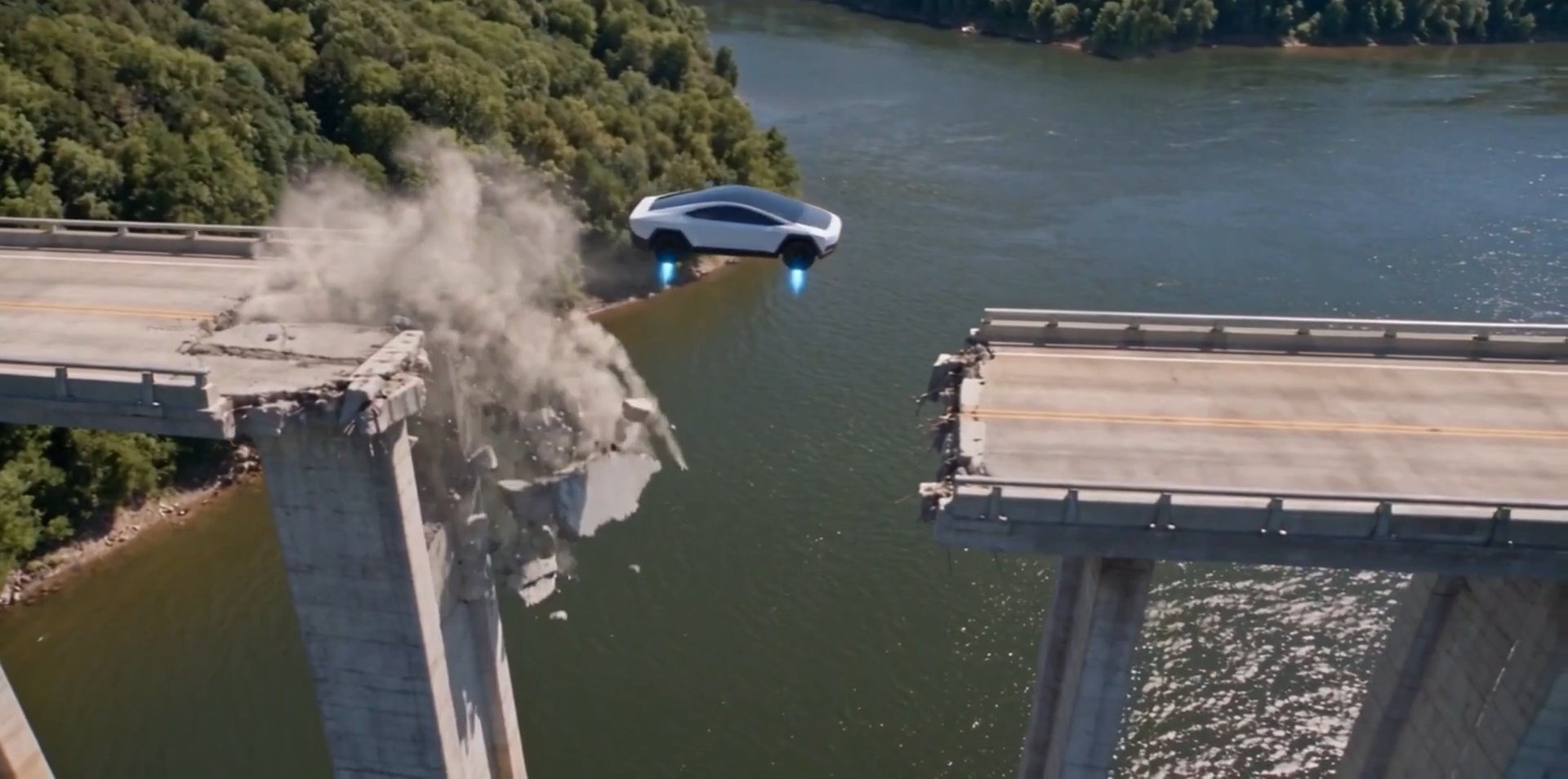
In a clearly AI-generated video, a Roadster is shown cruising down a bridge that spans a beautiful river valley. Using your car for a scenic roadtrip? That does sound useful. But no, that’s not what they’re getting at here. A part of the bridge instantly collapses ahead, so our quick-witted Roadster driver presses a big red button to activate its cold-gas thrusters and leap over to the other side in an epic slow-mo sequence.

“The Roadster could genuinely be a lifesaver in situations like these,” the Tesla fan wrote.

The Roadster could genuinely be a lifesaver in situations like these. https://t.co/iSNd2gGkgb pic.twitter.com/WDGI5CpIhQ

— Umesh Kumar (@itsumeshk) October 16, 2026

Let’s cut to the chase: there’s zero chance that something like this would happen, so using it to justify the Roadster’s existence is as feeble an exercise as thinking of comebacks you should’ve said after you lost an argument. Then again, as absurd as it is, we’re struggling of a better reason to have a briefly flying car. If it’s not to save your life, what’s it for?

There were other AI depictions of the Roadster’s aerial capabilities being put to good use. Some show it jumping over toll booths or flying over standstill traffic.

We hate to burst anyone’s bubble, but the Roadster is not going to be able to do any of this. The point is that these capabilities are a marketing stunt — an impressive tech demo, but nothing more. It’s not unlike how Musk heavily marketed the Cybertruck as “apocalypse-proof,” building it with (somewhat) bulletproof doors and windows and off-road capabilities. The reality, of course, is that it was hard to imagine an apocalypse where a car better known for easily breaking down and being held together with glue would be useful. Consumers agreed, and the expensive truck turned into an all-time flop.

The Roadster will almost certainly face similar struggles at finding a demographic who will want to buy it. But hey, you can always use AI to imagine an alternate reality where it turns out to be a best-seller, too.

More on Tesla: Tesla Bros Posting Videos Showing Them Hog Out on Decadent Meals While Careening Down the Road in Self-Driving Mode

The post Tesla Bros Using AI to Dream Up Improbable Scenarios Where the Flying Tesla Roadster Would Be Helpful appeared first on Futurism.

  •  

Tesla Running FSD Slams Into Police Cruiser After Driver Falls Asleep Behind the Wheel, Hospitalizing Two Officers With Serious Injuries

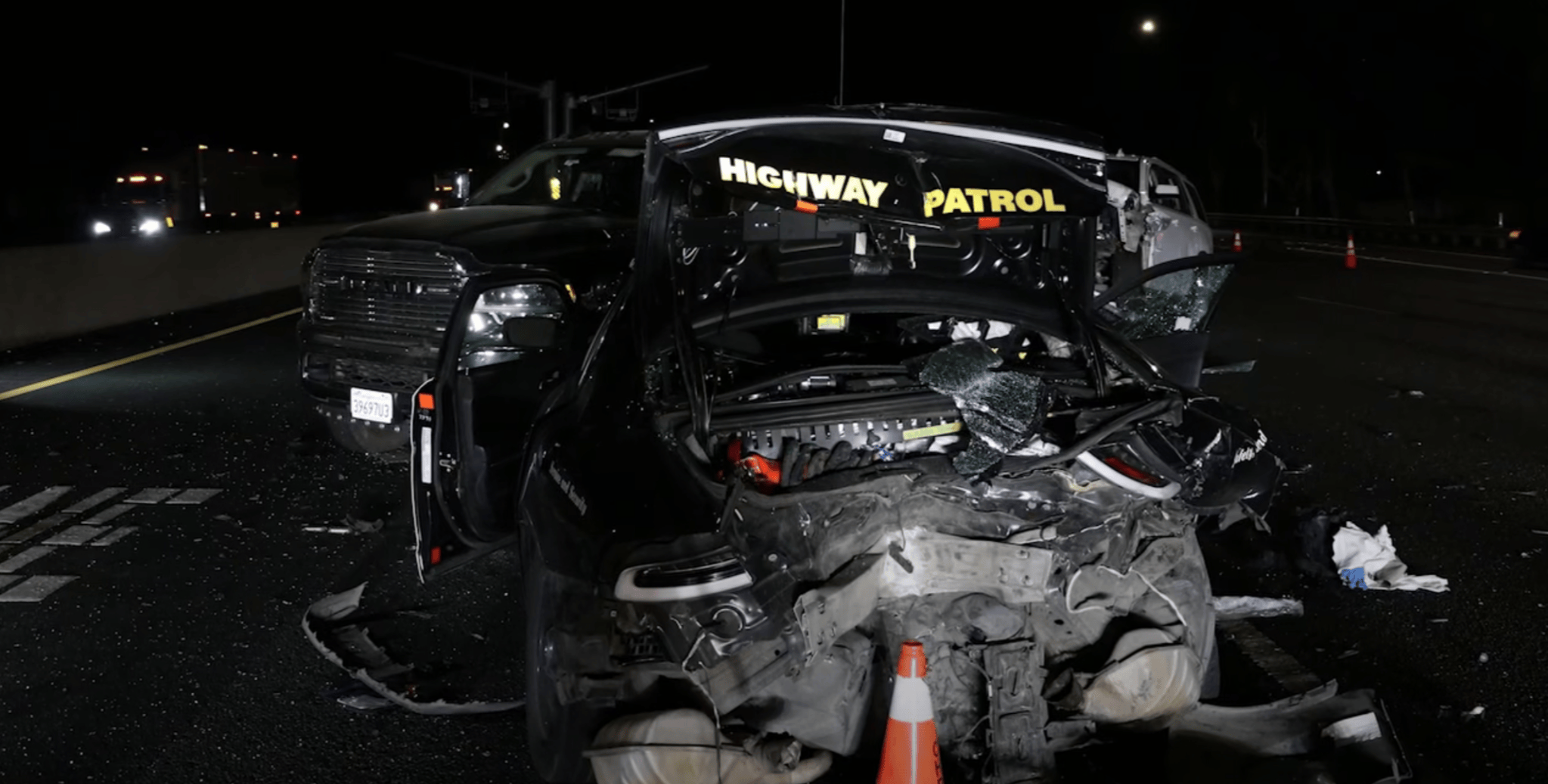
A Tesla slammed into a police cruiser after the driver said he fell asleep behind the wheel while the vehicle’s Full Self-Driving mode was activated.

According to the California Highway Patrol, KRON4 reports, the crash happened on the night of October 13 while the officers were pulled over to the side of Interstate 80 eastbound highway to investigate a fatal accident. 

Though the “lanes were closed with flares and cones, and several emergency vehicles were at the scene with emergency lights flashing,” police said, the Tesla veered into the clearly cordoned-off area and slammed into their patrol car. The impact sent their ride flying into another emergency vehicle, footage showed.

Both officers were hospitalized with serious injuries and have since been discharged from the hospital. The driver, a 22-year-old man, sustained minor injuries.

“The driver claimed he was asleep and that the vehicle was operating in Tesla’s Full Self-Driving mode at the time of the crash,” CHP said. “Despite its name, Full Self-Driving is not fully autonomous. It is an SAE Level 2 driver assistance system that requires continuous driver supervision.”

A self-driving Tesla crashed into a California highway patrol vehicle, seriously injuring two officers inside.

According to the officers, the driver said he was asleep at the time and using the car’s driver-assistance technology. pic.twitter.com/l36px6sqT4

— ABC News (@ABC) October 16, 2026

Drowsy driving is a common issue with Tesla’s FSD system, since it doesn’t require the motorist to be as engaged. To combat this, the vehicles have several safeguards to ensure drivers stay alert, including an in-cabin camera that monitors their eyes and face — but they don’t always work. 

Tesla has previously been investigated by federal regulators after an older version of its self-driving software, Autopilot, repeatedly crashed into emergency vehicles. In a 2024 report, the National Highway Traffic Safety Administration linked Autopilot and FSD to hundreds of crashes, concluding that it misled drivers into a false sense of security and caused them to be “not sufficiently engaged in the driving task.”

More on Tesla: Tesla Bros Posting Videos Showing Them Hog Out on Decadent Meals While Careening Down the Road in Self-Driving Mode

The post Tesla Running FSD Slams Into Police Cruiser After Driver Falls Asleep Behind the Wheel, Hospitalizing Two Officers With Serious Injuries appeared first on Futurism.

  •  

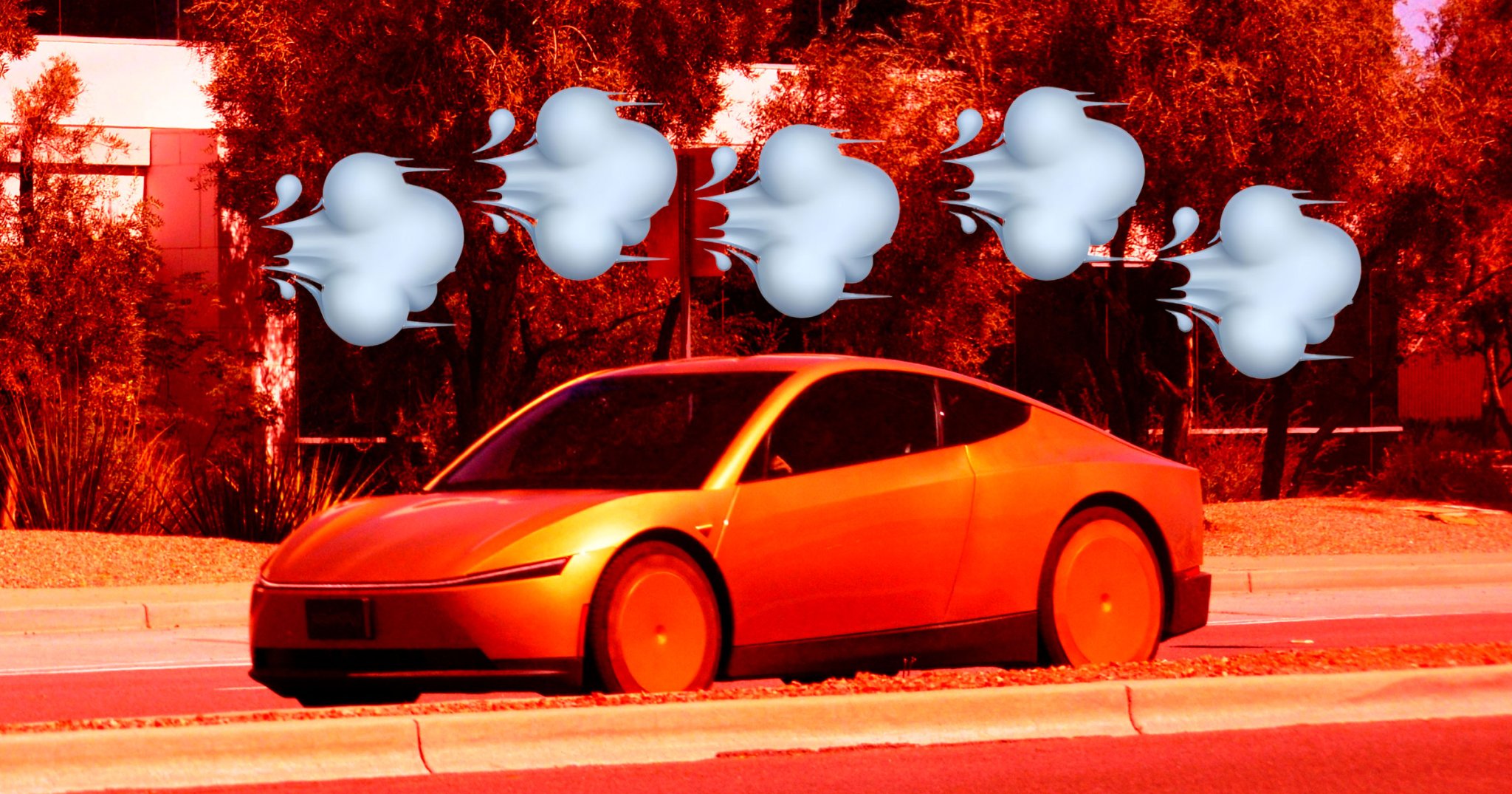
Passenger Disgusted When Tesla Robotaxi Gets Stuck on “Fart Mode”

In 2018, Elon Musk’s Tesla released a software update timed for the holidays that included a so-called “emissions testing” mode allowing Model S, 3, and X owners to play a variety of flatulent noises with the push of a button.

While the novelty of the prank feature has more than likely worn off for the vast majority of users, some Tesla employees continue to be haunted by it to this day.

As the San Francisco Standard’s Zara Stone experienced first hand, her Bay Area Tesla robotaxi seemingly got stuck in the mode, erupting in gaseous sounds during her ride. An Instagram video shows her bewildering encounter with far more flatulence than anybody could’ve bargained for.

When Stone asked the human safety driver — who Tesla is required to have behind the wheel as the company’s robotaxis are not licensed in California yet — why the car kept farting, he shrugged and replied “no idea.”

“That’s crazy!” a baffled Stone can be heard saying, while stifling laughter.

The driver said he was playing with the settings, only to lose control of the feature.

“It’s the first time I’m experiencing this,” he said. “Sorry.”

“Even the volume doesn’t control it,” the driver added, laughing.

The incident is particularly hilarious considering Tesla is trying to roll out a fully autonomous ride-hailing service in the country. Considering how controlling an eight-year-old prank feature is proving a little too challenging, it’s anybody’s guess what else could go wrong as the EV company lets software take the reins.

We’ve already seen plenty of reports of terrifying close calls, crashes, and shoddy service. Most recently, Musk admitted that the company’s software — which relies entirely on cameras, and not LIDAR or radar sensors — struggled not to “run over pets” at night.

More on robotaxis: Elon Musk Admits Why Tesla Robotaxis Can’t Be Trusted at Night

The post Passenger Disgusted When Tesla Robotaxi Gets Stuck on “Fart Mode” appeared first on Futurism.
  •  

Tesla’s New Flying Death Trap Looks a Lot Like a Cybertruck

Tesla CEO Elon Musk has been promising a next-generation Roadster for the better part of a decade. And while early promises that it will quite literally fly were met with incredulity back in early 2019, the EV maker has finally made good on its promise.

As demonstrated late Thursday evening, the new Roadster can indeed fly — briefly, at least — thanks to a “SpaceX package” made up of cold-gas thrusters. The company showed the company flipping around on stage, rotating on its own axis mid-air, leaping over the company’s entire EV lineup, and sticking to a vertical ramp thanks to a fan system that generates up to two Gs of downward force.

Good luck doing any of that on a public road, or even surviving on private property. And the flying car bears a striking resemblance to the company’s controversial Cybertruck, featuring extremely sharp body lines and flat panels. It’s a low-poly design approach that feels intimately familiar after a few years of the brutalist pickups.

And the similarities aren’t limited to the overall shape, either. The Cybertruck was and still is a major outlier in the automotive landscape — mostly for the worse. From rusting stainless steel body panels that were shoddily glued to the vehicle’s exterior and an excessive curb weight that greatly reduced range to a buggy steer-by-wire system, the Cybertruck was a major departure from design norms in the industry, much like Tesla’s latest Roadster.

While we don’t know if the Roadster will suffer from the same issues, its cold-gas thruster system is more than likely going to require some additional upkeep. Besides, considering the system can easily throw the car high into the air, anything going wrong could put any driver in severe danger. After all, Tesla has a long history of treating its customers as guinea pigs.

As Musk admitted during Thursday’s event, the bizarre rocket on wheels isn’t exactly going to be the next Honda Civic. It definitely won’t “move the needle in a major way financially,” the billionaire cautioned the audience, calling the Roadster a “small potato situation.”

As such, Tesla investors were left unimpressed, with shares bumping by less than two percent when the markets opened.

In other words, much like the Cybertruck, the latest Roadster is more tech demo than an actual consumer-facing product, a harsh lesson owners of the former are still learning as their vehicles continue to age like milk.

And whether we’ll ever see it gliding along mid-air at highway speeds on public roads is as unclear as ever. Tesla is looking to sell a thruster-less Performance variant, a “Race Ready” mid-tier version with rear-mounted cold-gas thrusters, as well an entirely not-road-legal and “invite only” model that can fly, as shown off on stage.

Even more so than the Cybertruck, the Roadster is the ultimate Tesla loyalty test. While the company has yet to release a price, the Roadster is undoubtedly going to cost a pretty penny — if you can even get your hands on one. Whether it will appreciate, like Musk has long promised about the company’s fleet, or turn into an expensive death trap after a short and likely terrifying stint of ownership, remains to be seen.

Perhaps it’s more of an attempt to warm up investors to the idea of merging Tesla and SpaceX, a high-stakes gamble that has investors unsettled.

More on Tesla: Tesla Robotaxi With No Driver Spotted Smashing Through Traffic Barriers

The post Tesla’s New Flying Death Trap Looks a Lot Like a Cybertruck appeared first on Futurism.
  •  

Tesla Bros Posting Videos Showing Them Hog Out on Decadent Meals While Careening Down the Road in Self-Driving Mode

Now years into the US release of Tesla’s so-called “Full Self-Driving” mode, brand loyalists are becoming increasingly comfortable trusting their lives — not to mention those of others on the road — to the company’s software.

While there have been plenty of videos showing Tesla drivers answering emails, vibecoding, or even gaming from the driver’s seat, a new genre of Tesla content is emerging in which Tesla bros dine out on huge feasts from behind the wheel.

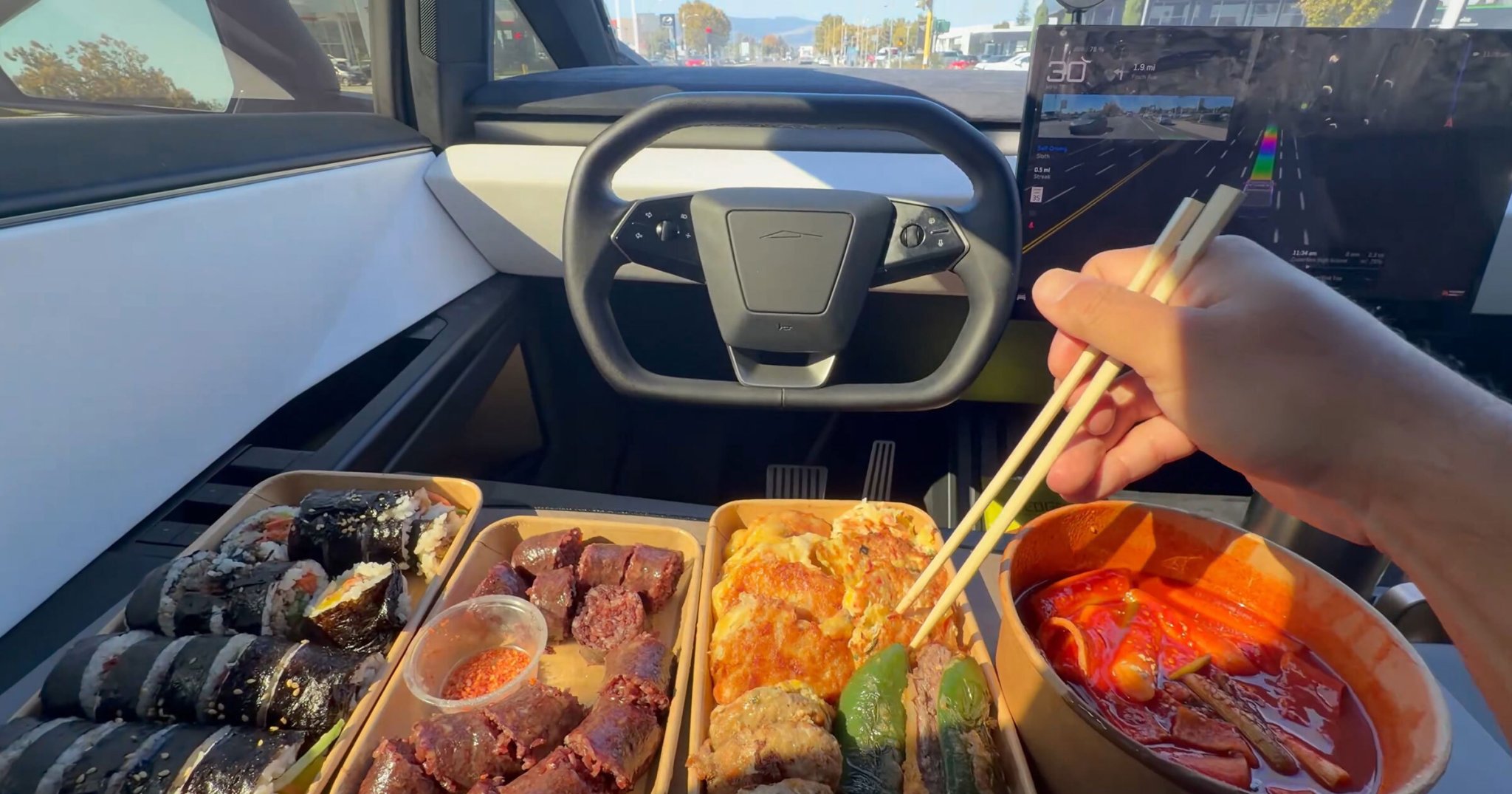
In a now-viral clip shared by the account Teslaconomics on X-formerly-Twitter, a Tesla driver presents the point of view from behind the wheel of what appears to be a Cybertruck. The driver in the video is going hog wild on a buffet of food, made up of sushi rolls, sausages, a fiery red stew, and what appears to be a tray of potato pancakes, biscuits, and peppers.

From the video, it’s immediately clear that the driver is careening down a busy roadway as they pick away at their potluck, drawing widespread ridicule from commenters.

“I don’t wanna share the road with people like this and I need them to start getting tickets, points on their license, all that good shit,” one user raged. “Healthy, normal societies don’t reward you for breaking the rules.”

Others pointed out that train riders have been able to do this for ages. “In China you eat while traveling 10 times faster,” another poster commented alongside a video of a Chinese high-speed train in action.

How I be eating on Tesla FSD pic.twitter.com/2MiMvUlf0f

— Teslaconomics (@Teslaconomics) October 10, 2026

“The comments and quote reposts of my video are pretty hilarious to me,” Teslaconomics carped in a follow-up comment. “First of all, I’m wearing Ray-Ban Meta glasses. They record exactly what I’m seeing, completely hands-free. I’m not holding a phone or a camera.”

“Second, this is Tesla FSD (Supervised),” the account continued. “That means I’m still responsible for watching the road, paying attention, and being ready to take over at any moment.”

Of course, the full tray of decadent foods between the driver’s hands and the steering wheel would make taking control difficult in a split-second emergency.

Teslaconomics is far from the only poster sharing clips like this. Another popular account with the handle Cyber_Trailer makes a point to share videos of Tesla owners eating while driving in a recurring segment called “What are you eating in your Tesla?”

One Reel shows a woman eating what looks to be a grape salad while her Tesla drives down the freeway. Another captures a Tesla driver carefully chowing down on a burrito, apparently more concerned about getting the fillings on herself than keeping her hands on the wheel.

Though the software has clearly given these drivers a false sense of security, it’s worth noting that Teslas operating in self-driving mode — even under close watch — can still cause enormous harm to pedestrians and other drivers, making the decision to pig out behind the wheel a selfish gamble with death.

More on Tesla: Tesla Argues in Court That the N-Word Is Acceptable Under Certain Circumstances

The post Tesla Bros Posting Videos Showing Them Hog Out on Decadent Meals While Careening Down the Road in Self-Driving Mode appeared first on Futurism.
  •  

Waymo Calls Cops on Passengers With Assault Rifle

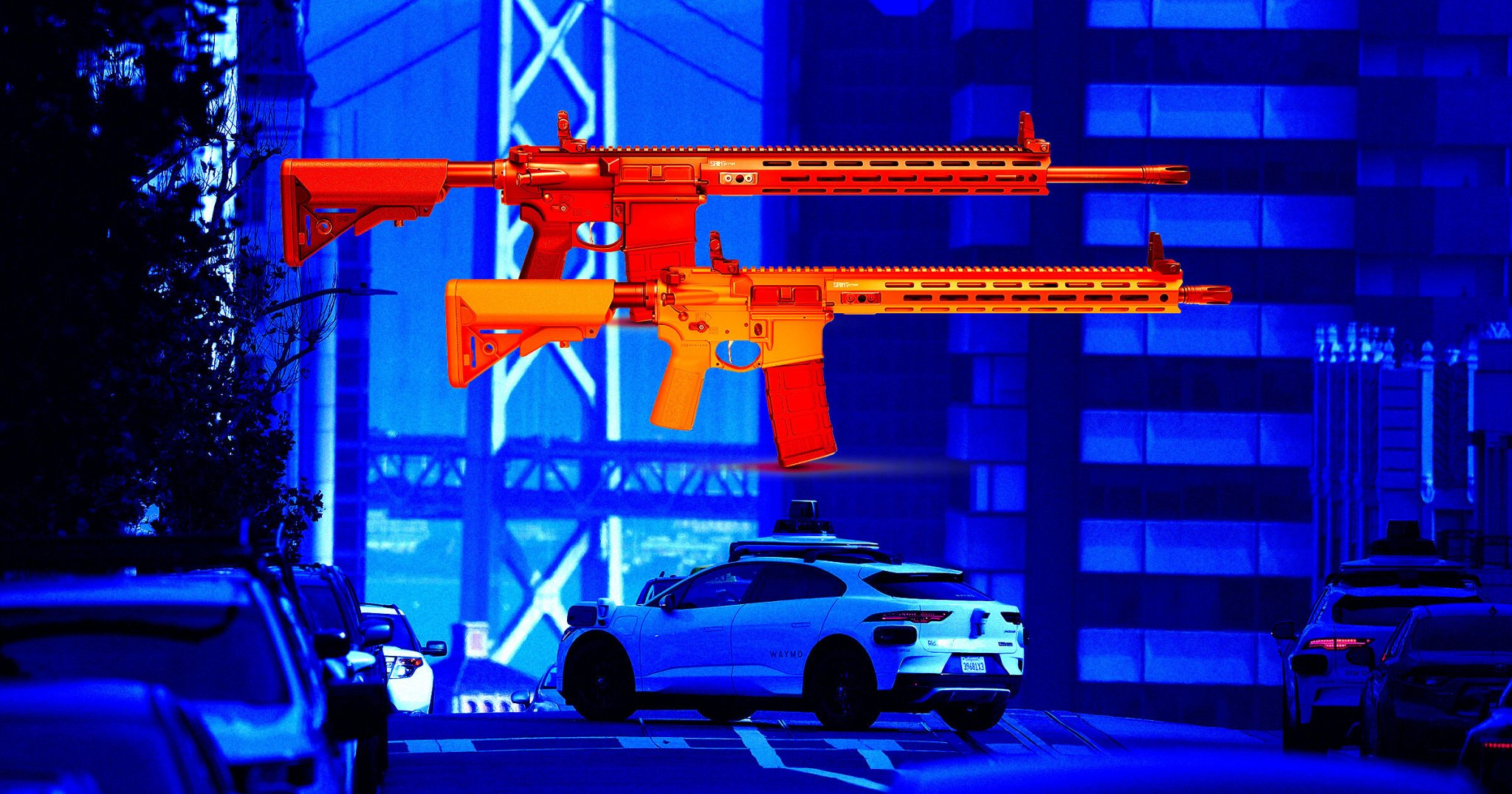
Waymo called the cops on two youths in San Francisco after catching them handling an assault rifle while in the back of one of its robotaxis, according to local reports. Both passengers, a boy and a girl, have been arrested.

On the morning of September 4, Waymo intervened and pulled over a vehicle after detecting a “violation of our terms of service involving a firearm,” a company spokesperson told the LA Times, after which it alerted emergency services.

Police were called to the scene in the city’s Richmond District just before 4 AM, and conducted a “high-risk vehicle stop,” a spokesperson for the San Francisco Police Department told SFGATE.

When officers searched the car, they found a “ghost gun” — an untraceable, homemade firearm assembled from kits or 3D-printed parts — imitating an AR-style assault rifle. They also found, less ominously, some “suspected marijuana and mace spray.”

The young pair were arrested and booked into a juvenile detention center, the spokesperson told SFGATE, and are facing charges related to illegally possessing a firearm. Their ages and identities haven’t been released.

Robotaxis rely on a host of cameras to observe their surroundings, and they also closely monitor what happens inside their cabs, making them an obviously bad choice to take a joyride in or possibly commit crimes. It remains unclear, though, what the teens intended by toting around their makeshift rifle.

This isn’t the first time Waymo has tipped off local law enforcement about its own passengers. In July, it pulled over a car and alerted the San Mateo Police Department after realizing that its riders, two 15-year-old boys, were reportedly drinking in the backseat and shooting water beads out of a toy gun.

There have also been incidents of unruly and possibly illegal behavior in its cars that didn’t lead to arrests. As Waymos and other robotaxis become more popular, rowdy passengers will almost certainly become a more frequent problem.

More on robotaxis: Oops! Many Tesla Cybercabs Actually Do Have Steering Wheels, Undercutting a Core Promise

The post Waymo Calls Cops on Passengers With Assault Rifle appeared first on Futurism.
  •  

SpaceX Manager Arrested for Allegedly Stabbing a Tesla Contractor Over Karaoke Performance

It’s always a good idea to carefully consider the company you keep — especially if you happen to work for one of Elon Musk’s massive companies.

According to local channel FOX7, SpaceX manager Kyle Gonzalez has been arrested over the alleged stabbing of a Tesla contractor during a team-building exercise gone horribly wrong.

During the night out with a group of co-workers and friends, Gonzalez reportedly got into a heated argument with the Tesla worker over a game of pool at the Waterhole Saloon, a roadside honky-tonk just outside of Austin, Texas.

Court documents viewed by the Austin American-Statesman claim that the SpaceX manager became irate after one of the women he had entered the bar with went to compliment the Tesla contractor’s performance on a karaoke song. When the Tesla worker asked the woman to join him for a game of pool, Gonzalez allegedly became angry, saying he was “going to kill” the contractor.

That’s when Gonzalez allegedly pulled out his pocket knife and stabbed the man in the neck, leaving him with a one-inch puncture wound, the Statesmen recounts.

The unnamed contractor was then rushed to the hospital for life-saving surgery, and is expected to pull through.

Gonzales was reportedly found hiding out in a nearby parking lot, still holding the bloody knife. Court documents note that the SpaceX manager said he hid “for his safety,” though he later apologized for the attack three separate times. He was charged with felony assault with a deadly weapon, with a bond set at $25,000.

More on SpaceX: SpaceX Vows to Keep Poisoning Nearby Towns With Its Fume-Belching Data Center For Another Year

The post SpaceX Manager Arrested for Allegedly Stabbing a Tesla Contractor Over Karaoke Performance appeared first on Futurism.
  •  

Bumbling Cybercab Gets Trapped in Hotel Parking Lot, Drops off Passenger Right Where He Started

In Austin, a man’s attempt to be chauffeured out of his hotel in style was foiled when his confused ride couldn’t even pull out of the building.

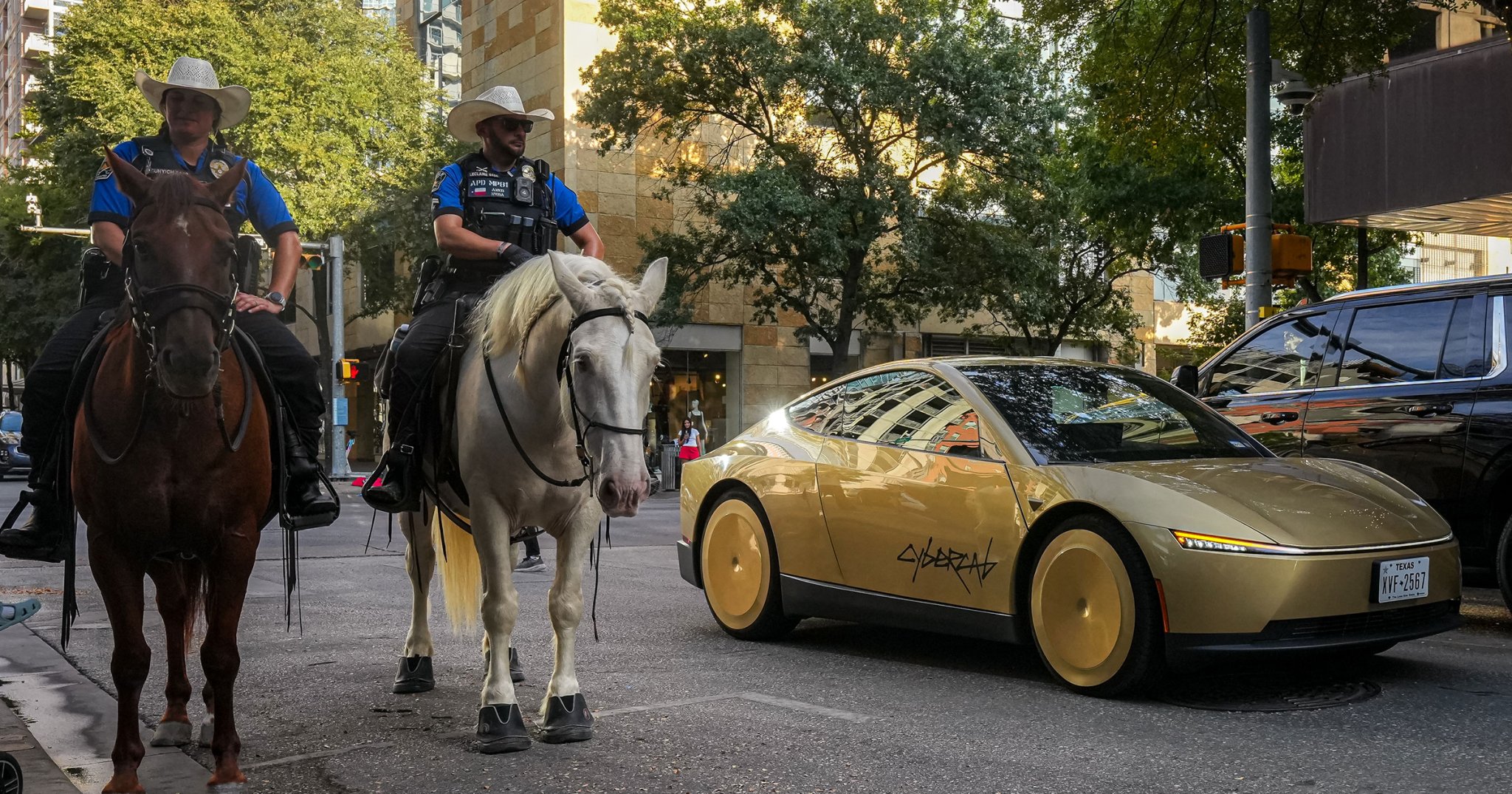
His ride, of course, was a Tesla Cybercab — Elon Musk’s self-driving, steer-wheeling free robotaxi.

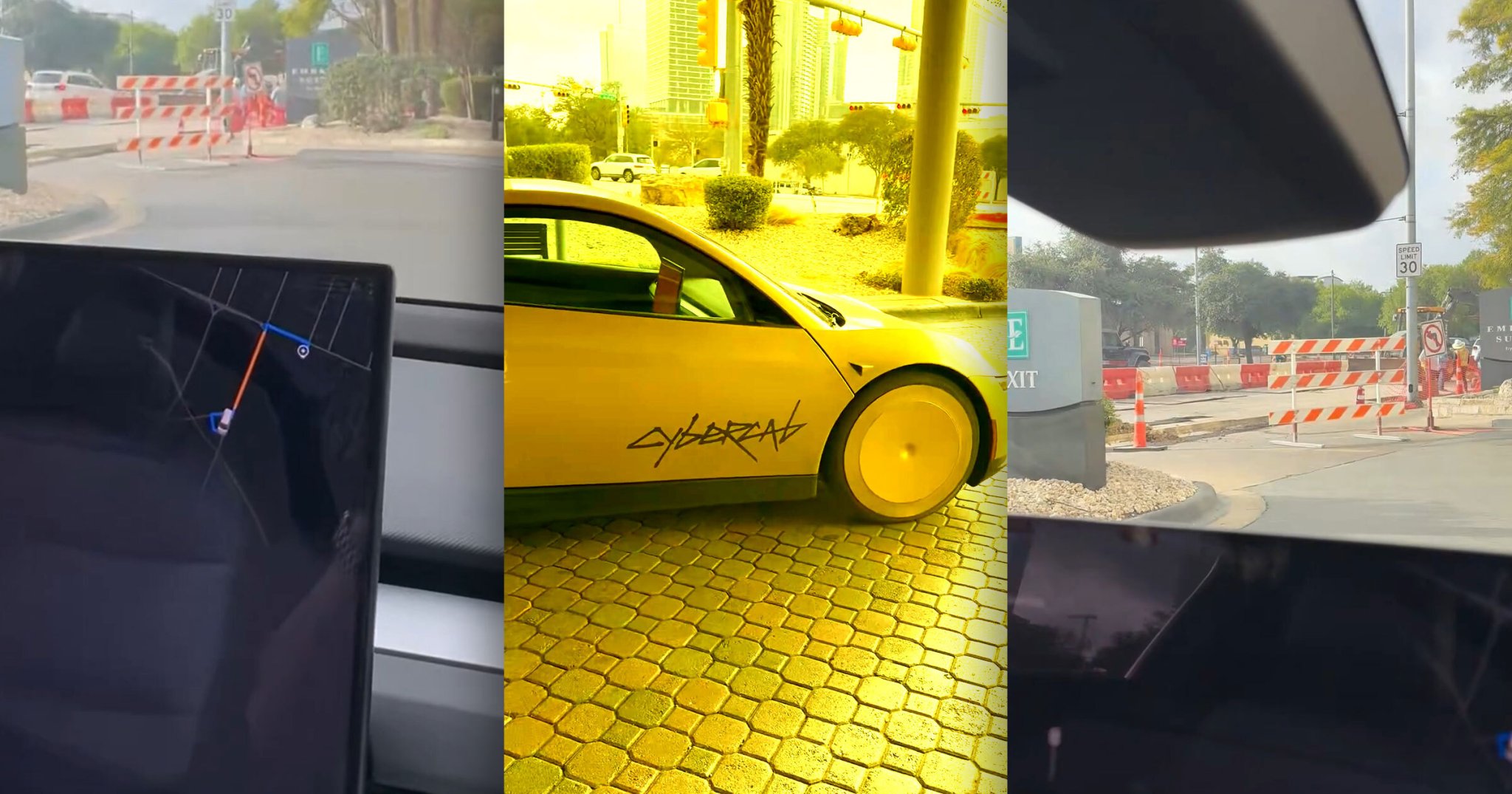
“The Robotaxi arrived… and then couldn’t get out of the hotel parking lot,” the man, who claims to be a computer engineer, wrote on X, posting brief footage of his trip.

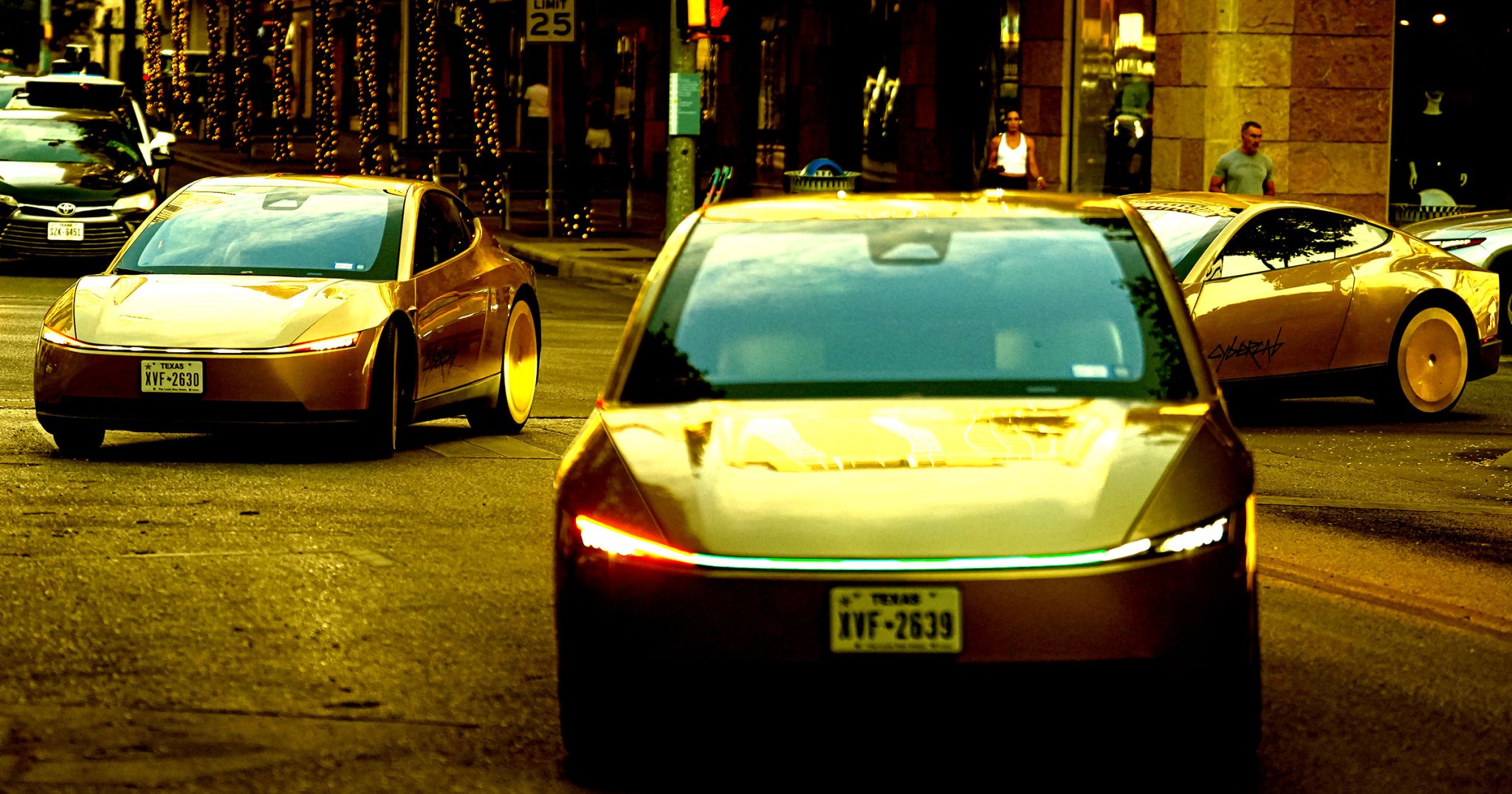
As he went on to explain, construction workers had blocked off one of the lanes. And the gleaming gold Cybercab, in all its canny computing power, couldn’t see the other lane that was left open.

He never made it to his destination, but he did arrive at a destination, albeit rather unceremoniously. The Cybercab “drove back and forth four times,” he said, “and then stopped and said I had arrived!”

“Not a great first experience!” he concluded. “Clearly this technology is nowhere close to being ready for large scale deployment.”

So I arrived in Austin and decided to take a robotaxi ride into work..

The Robotaxi arrived… and then couldn’t get out of the hotel parking lot. There was construction in one lane.. but it couldn’t see the other open lane. It drove back and forth 4 times and then stopped and… pic.twitter.com/101F04Al9n

— PK (@paul_k_0907) September 15, 2026

Tesla rolled out its two-seater Cybercabs in Austin earlier this month, after years of anticipation. The company had already operated a Robotaxi service in the city for over a year using modified Model Ys, but the Cybercab represents its first purpose-built robotaxi — and with its complete lack of driver controls like steering wheels and pedals, its no-turning-back commitment to pursuing genuine human-free driving. (Many of its Robotaxis still requiring a human safety monitor inside the car, something the company is clearly conscious about.)

It hasn’t made quite the splash that Tesla may have hoped, however, with many investors underwhelmed by the Cybercab’s launch. While the golden cars haven’t been involved in any high profile incidents yet, the software’s autonomous capabilities haven’t stacked up impressively next to robotaxi leader Waymo. The company is also being investigated by federal regulators over how it self-certified that the vehicles were safe for the road despite their lack of conventional controls.

The Cybercab’s hotel misfire is part of a long chain of weird behavior by Tesla’s robotaxis. Customers — many of whom are Tesla enthusiasts and boosters — complain that they often pick up and drop them off at inconvenient locations, ranging from the middle of busy intersections to hidden alleys, or at absurd distances from their actual destination.

Still, Tesla boosters have been hard at work trying to hype up the cars. Roughly a week before a Cybercab got trapped at a hotel, another Tesla account posted a video bragging about how a Cybercab picked them up from their own hotel. 

“You’ll feel like a VIP getting into this car!” he extolled.

More on Tesla: Cybercabs Are Taking Psychotic Routes That Turn Tiny Trips Around the Neighborhood Into Hour-Long Nightmares

The post Bumbling Cybercab Gets Trapped in Hotel Parking Lot, Drops off Passenger Right Where He Started appeared first on Futurism.
  •  

It’s Looking Like Tesla’s Cybercab Might Actually Be Illegal to Sell

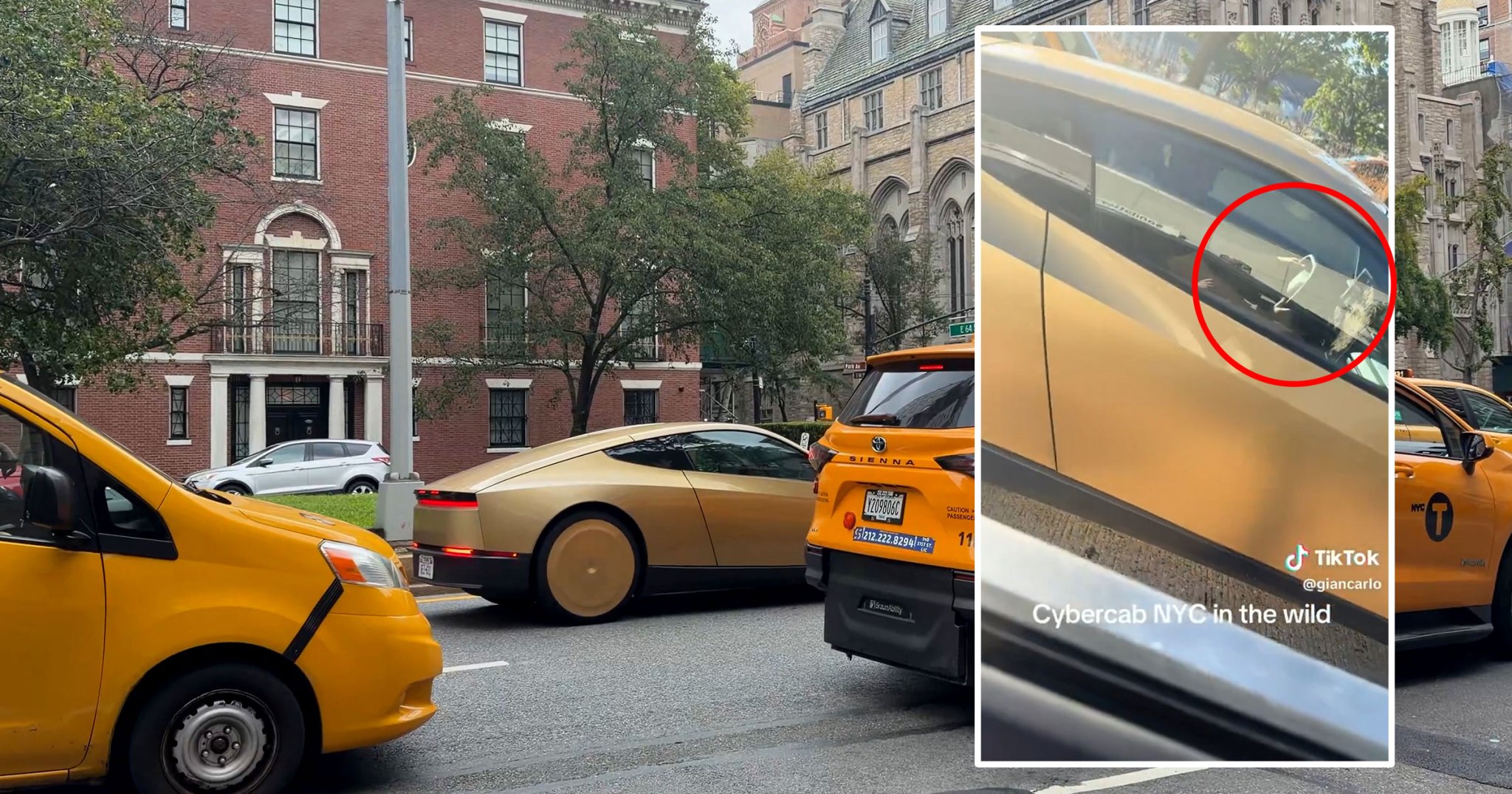
Almost immediately after Tesla unleashed its steering wheel- and pedal-free Cybercabs on the streets of Austin, Texas this month, regulators at the National Highway Traffic Safety Administration cried foul.

The regulator opened an investigation — an audit query, specifically — mere hours after the launch, aiming to find out whether the new Cybercab “meets all applicable Federal Motor Vehicle Safety Standards,” or FMVSS.

Days later, the agency followed up with a “Special Order” requiring the Elon Musk-led company to prove under oath that its Cybercabs meet federal safety standards, which were originally intended for human drivers, as Electrek reports. It’s a considerable escalation over its original query, and failure to do so by September 30 could force Tesla to pay a fine of up to $139 million. Falsifying information could land a responsible officer at the company in prison for up to 15 years.

Tesla’s efforts to brute force its self-driving vehicles onto public streets could end up meeting many more regulatory roadblocks from here, effectively making them illegal to sell. (Whether anybody will actually want to take on all those risks by investing in a fleet operated by Tesla is a separate, albeit just as hard to answer, question.)

Tesla self-certified its autonomous robotaxi as compliant with all vehicle safety standards, which assume a human driver behind the wheel. But given the lack of any physical driver controls, the NHTSA unsurprisingly has its doubts about them actually meeting these standards, given the Special Order.

The Cybercab’s lack of a brake pedal could especially make it difficult to meet certification standards. The FMVSS makes it clear that the brakes need to be activated “by means of a foot control.”

Put simply, Tesla appears to have taken some liberties in self-certifying its Cybercab, a decision that could end up coming back to haunt it. One possibility is that the EV maker temporarily bolted on physical controls, including a steering wheel and pedals, while going through the process, only to remove them ahead of delivery, as Electrek points out, a move that flaunts the FMVSS certification rules.

Amazon’s Zoox, in contrast, played by the rules and proved its cars were safe. The company managed to get an exemption from the NHTSA for its autonomous vehicles in July, which also lack a steering wheel and pedals.

It’s only the latest instance of an Elon Musk-led firm flaunting regulations to get what it wants, an ask-for-forgiveness-later approach that clearly isn’t going all too smoothly even under a government run by the billionaire’s allies.

Musk has made it clear again and again that he doesn’t believe in government intervention, with his business empire shamelessly breaking environmental rules, and abusing his workers.

“Regulations, basically, should be default gone,” Musk said last year shortly after forming the much-maligned “Department of Government Efficiency.” “Not default there, default gone.”

More on the Cybercab: There’s a Huge Economic Problem With Tesla’s Cybercabs

The post It’s Looking Like Tesla’s Cybercab Might Actually Be Illegal to Sell appeared first on Futurism.
  •  

Cybercabs Are Taking Psychotic Routes That Turn Tiny Trips Around the Neighborhood Into Hour-Long Nightmares

The Tesla Cybercab is innovating impressively impractical ways of getting from Point A to Point B.

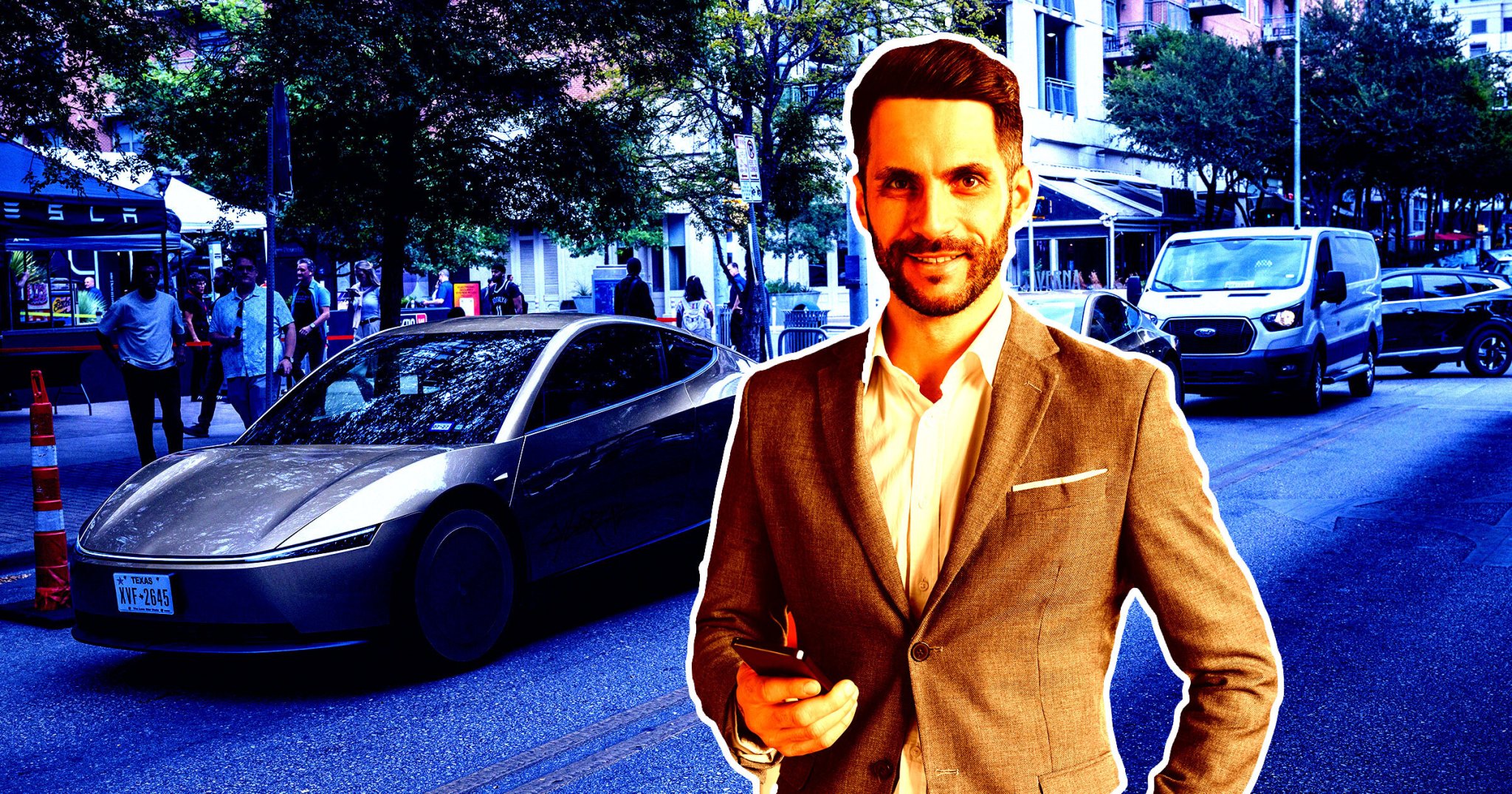
One Cybercab passenger in Austin complained that what should’ve been a ten minute trip devolved into a 70-minute long nightmare as the steering-wheel-free robotaxi spiraled its way down the most circuitous route possible. 

The driverless cab started the journey by driving in the complete opposite direction of the destination for miles, the exasperated passenger wrote in a Reddit thread, then turned around and took a “massive” detour through east Austin.

If it was instead a Google Maps car trying to image every inch of the city, you’d have to admit it was a job well done.

“My Cybercab held me hostage for an hour,” the rider wrote in the post, spotted by Electrek. “Guess the Cybercab wanted the scenic route today.”

According to Electrek, the reason that the trip took so long is almost certainly because the Tesla Cybercabs can’t drive on highways yet. The consequently tortuous routes that the cabs have to take may not immediately be clear to a passenger, though, as the app only shows a price estimate and not a projection of how long the trip will take, the blog noted.

Like other robotaxi services, the Cybercabs — which use a version of Tesla’s Full Self-Driving software that hasn’t been released to the public — operate only within a geofenced area that’s been extensively mapped. (Waymo, the leading robotaxi company, does already allow its cars to use highways in some cities.)

There are other signs that the Cybercabs (and Tesla’s confusing named “Robotaxis,” which are self-driving taxis in the form of modified Model Ys, instead of a purpose-built vehicle), are still walking on eggshells compared to its competitors. Some passengers say that the cabs also avoid railroad crossings, which could add to trip times. (Tesla is being investigated for FSD frequently going haywire near these crossings and driving into the path of oncoming trains.)  

Do all these restrictions make for a properly autonomous cab? If you had a time machine, you could go back to 2019 and ask CEO Elon Musk for an answer: “If you need a geofence area, you don’t have real self-driving!” he infamously proclaimed.

More on Tesla: Tesla Investors Disturbed by Cybercab’s Obvious Lack of Progress

The post Cybercabs Are Taking Psychotic Routes That Turn Tiny Trips Around the Neighborhood Into Hour-Long Nightmares appeared first on Futurism.
  •  

Six Ways India Is Redefining Energy Risk: Dispatch From the BNEF Summit New Delhi 2026

The US energy landscape is changing quickly. Demand for artificial intelligence is driving up power demand while electric vehicle (EV) adoption slows down and enters a more complex phase. Together, these trends are reshaping how utilities, policymakers, financiers and automakers respond to emerging challenges in the energy sector.
  •  

Tesla Investors Disturbed by Cybercab’s Obvious Lack of Progress

There was no livestream and the media wasn’t invited. We didn’t even see a euphoric Elon Musk embarrassing himself on stage.

Tesla’s rollout of its two-seater Cybercab robotaxis on the streets of Austin, Texas, this month left investors scratching their heads. With little fanfare, the company stated on Musk’s social media platform X that “Cybercab rides” would “open to public” on September 4.

The “Cybercab event was largely a bust,” tweeted Future Fund Advisors co-founder Gary Black at the time. “The launch offered little detail and key questions remained unanswered.”

The lack of enthusiasm has reignited concerns over the company’s ability to catch up with some extremely steep competition. Its fleet remains extremely small and limited to a geofenced area of Austin. Major regulatory hurdles could make expansion into other states exceedingly challenging. Early testing and data gathering in New York City required the company to install steering wheels and hire human drivers for its Cybercabs, effectively turning them into glorified — and cramped — Tesla EVs.

Investors are already peering through the thin coating of gaudy, gold-colored paint. As a group of asset managers and traders, who — perhaps ironically — refer to themselves as the “Bears of Wall Street” noted in a post on Seeking Alpha, they’re maintaining a “rating of Sell for Tesla.” That’s in large part due to “mounting risks,” such as a “negative free cash flow, surging [capital expenditures] above $25 billion, intensifying competition, and regulatory audits delaying robotaxi expansion.”

The Cybercabs are one of three pillars Musk has bet the fate of Tesla on, along with its humanoid robot Optimus and AI. But without any meaningful strides almost two years after Musk first showed off its robotaxi to the world, investors are left wanting a lot more.

That’s especially true as regulators are starting to ask some tough questions, with the National Highway Traffic Safety Administration opening a probe into the safety certification of its Cybercabs.

The company is also looking to a spend over a whopping $25 billion this year and taking on even more debt, with a “borrowing capacity” of up to $30 billion, as it attempts to stay relevant in the fast-moving AI race.

“Capex will grow for the next two or three years as we expand our Robotaxi fleet, expand our production capacity for Optimus, make investments for semiconductor fab, install solar manufacturing capacity, and AI compute infrastructure, in addition to all the other expansions we’ll do for other manufacturing for automotive,” the company’s CFO Vaibhav Taneja told investors in July.

Waymo continues to run circles around the company, offering its services across ten US metropolitan areas and providing half a million paid rides per week.

Meanwhile, its core business of selling cars continues to atrophy. While delivery numbers have recovered somewhat from a disastrous 2025 performance, the numbers still have a lot of ground to regain.

Then there’s the specter of a possible merge with Musk’s SpaceX, which is looking increasingly likely, at least in the long run. It’s a highly risky move that could saddle Tesla with even more debt.

“All of those risks make us believe that Tesla remains greatly overvalued even after the volatility of the last two months,” the Bears of Wall Street argued, valuing the company’s stock at “around 78 percent below the current market price.”

“The Cybercab launch was the catalyst that was supposed to justify Tesla’s valuation, and it delivered almost nothing that investors could measure,” the group concluded. “Instead of a fleet expansion plan, the company got a federal investigation, while its main competitor keeps adding cities.”

More on the Cybercab: Oops! Many Tesla Cybercabs Actually Do Have Steering Wheels, Undercutting a Core Promise

The post Tesla Investors Disturbed by Cybercab’s Obvious Lack of Progress appeared first on Futurism.

  •  

‘In this new car, I feel patronised’: which driver assistance systems actually improve safety?

Modern cars are fitted with features like autonomous emergency braking and fatigue monitoring. But do they support motorists or drive them to distraction?

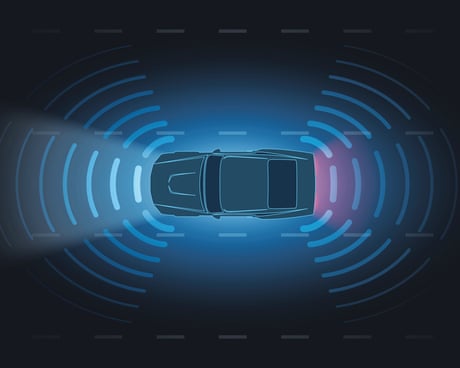
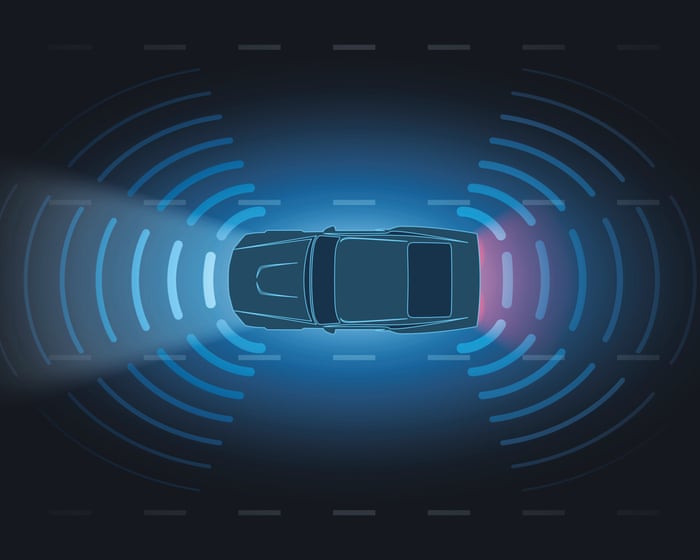
This new car I’m test-driving boasts all the latest bells and whistles – or, rather, beeps and bings. Peer sideways for too long checking traffic and the car emits an irritating sound. Should I take a hand off the wheel to scratch an ear, I’m admonished with a strident beep.

When the car determines it’s too near a white line, it tugs the wheel against my hands and brakes as a car slows ahead. Its haptic “buttons” feel like fingers pressing back – as if an invisible presence has its hands and feet on the controls: a ghost in the machine I’m inside.

Continue reading...

© Illustration: Getty Images

© Illustration: Getty Images

© Illustration: Getty Images

  •  

Oops! Many Tesla Cybercabs Actually Do Have Steering Wheels, Undercutting a Core Promise

Elon Musk’s Tesla has a lot of catching up to do when it comes to its Robotaxi autonomous ride-hailing network.

The company is currently operating a fleet of just 45 of its cramped Cybercabs in Austin, Texas, still falling well short of investor and Tesla bull Dan Ives’ lofty expectations of the company adding “$1 trillion of value” for Tesla “over the coming years” with the service.

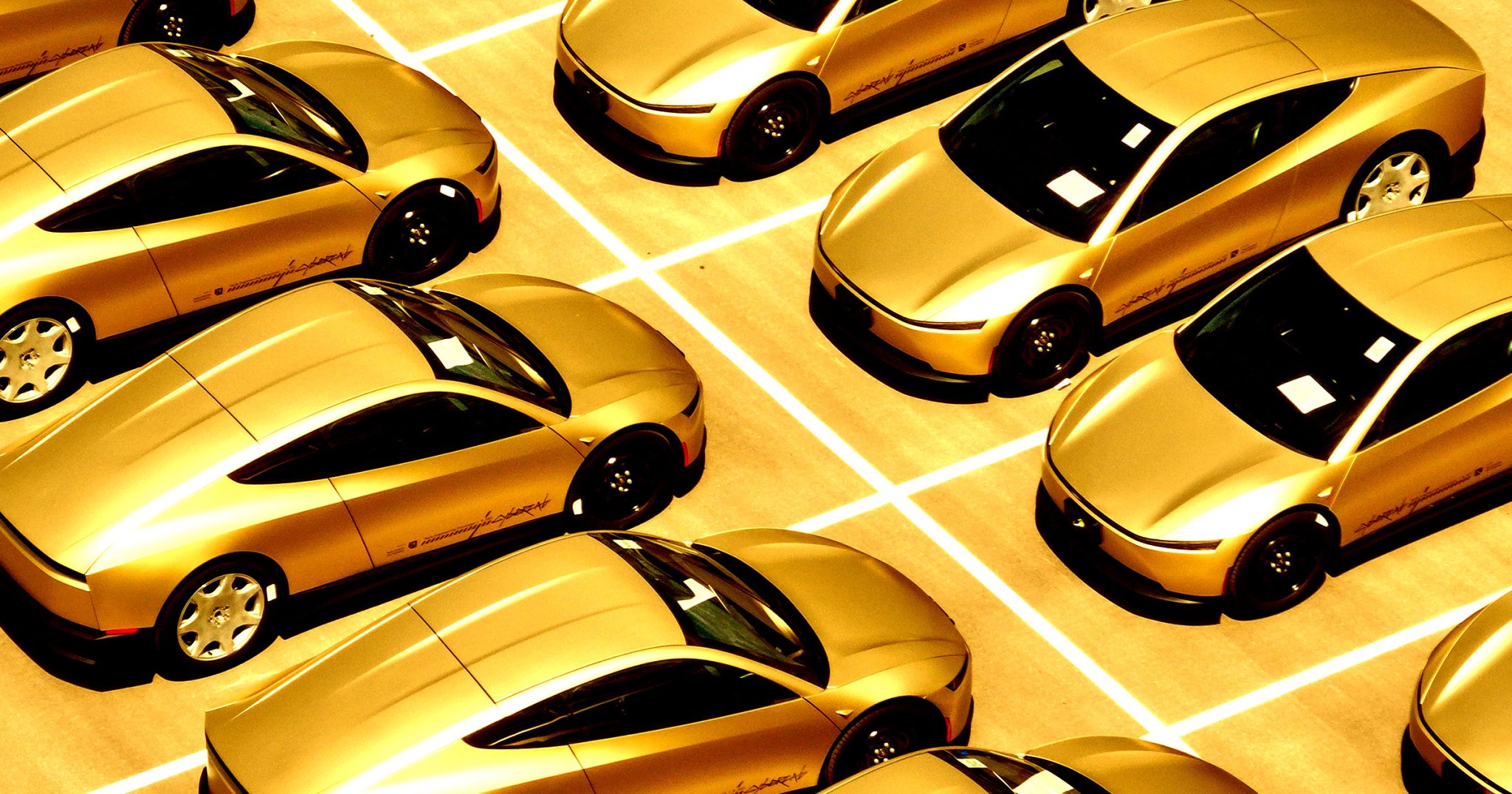
And unlike their counterparts in Texas and Florida, the Cybercabs that were recently spotted on the streets of New York City are featuring an unusual relic of a supposedly soon-to-be-bygone era: a steering wheel.

As Gothamist reports, the golden-hued cabs in the Big Apple are being overseen — and perhaps even operated — by a human in the driver’s seat with an old-fashioned steering wheel. It’s a significant departure from the original, steering wheel- and pedal-less Cybercabs Musk unveiled in 2024.

Officials confirmed the drivers are testing a “supervised” self-driving system, which still requires them to be able to take over control at any point. But Tesla refuses to say how many Cybercabs there are in the city or for how long they will be testing.

There’s likely a good reason Tesla has opted to go with more traditional controls. After all, it hasn’t even started the permit application process for autonomous vehicle testing with the New York Department of Motor Vehicles, as the Gothamist confirmed.

The EV maker is looking to collect driving data, not imminently launch a robotaxi service in the city.

In short, Tesla has a very long road ahead of it before it could ever roll out its Cybercabs nationally, let alone in other major urban areas. Other companies, however, have a massive head start, with Waymo claiming that it has already completed over half a million paid rides a week throughout the first quarter of this year. While Tesla has remained notably quiet on the matter, its numbers likely fall far short of that, considering it’s only operating with a fleet of a few dozen vehicles.

Meanwhile, Amazon’s Zoox vehicles received approval from regulators in late July to begin charging for rides in cars that don’t have a steering wheel. The company has been operating services free of charge in Las Vegas and San Francisco since 2025, according to the Associated Press.

More on Cybercabs: There’s a Huge Economic Problem With Tesla’s Cybercabs

The post Oops! Many Tesla Cybercabs Actually Do Have Steering Wheels, Undercutting a Core Promise appeared first on Futurism.
  •  

Lawyers Already Lining Up to Defend Victims of Cybercab Crashes

Tesla’s mawkishly sleek new Cybercab has begun rolling out to Austin, Texas this week, with more sighted in cities like New York, Washington DC, and San Diego. It’s the latest development in the world of self-driving taxi cabs — and in one dubious economic indicator, the nation’s personal injury attorneys are on high alert.

Case in point, the New Jersey based law firm Sarofiem and Antoun already has a blog post up courting customers wronged by Cybercab accidents. Billing himself as a “Tesla Cybercab accident lawyer,” Kerollos Antoun poses an important question: “if a driverless Tesla Robotaxi causes an accident, who is responsible when there is no human driver behind the wheel?”

Though Antoun concedes that Cybercabs don’t appear to currently be active in New Jersey, his blog registers a laundry list of considerations considering who can be held liable in accidents involving the autonomous vehicles — each highly theoretical and short on concrete answers.

“Could autonomous-driving software cause an accident,” for example? “Potentially,” Antoun writes. “If an accident occurs, attorneys may need to determine whether the autonomous system perceived the environment correctly and whether the vehicle’s response contributed to the crash.”

Other firms, like Funes Law in Miami and Angel Reyes and Associates in Austin, offer similar pitches: if you’re in an accident with a Cybercab, they want to litigate your case.

Though the tailor-made Cybercab blogs follow a familiar pattern of opportunism by corporate law firms, their point is fair enough. The technology behind Cybercabs is in a very early stage, and the legal precedent is even younger.

Whichever firm happens to scoop up the first Cybercab injury case would be making legal history — a chance to litigate a brand new product made by one of the most valuable companies in the world.

Though self-driving cars are only a few years old at this point, they’ve already resulted in startling legal firsts. In August of 2025, a jury in Miami handed down a landmark verdict against Tesla over a fatal crash involving a Model S being driven on the company’s “Autopilot” mode.

In that case, the total damages came out to a whopping $243 million — a landmark verdict that the nation’s accident attorneys are eager to replicate as Tesla’s gold-tinted coupe hits the pavement.

More on Tesla: Deranged Stalker Seizes Control of Woman’s Tesla Software to Terrorize Her While Driving

The post Lawyers Already Lining Up to Defend Victims of Cybercab Crashes appeared first on Futurism.

  •  

Deranged Stalker Seizes Control of Woman’s Tesla Software to Terrorize Her While Driving

It’s no secret that car owners have handed an immense amount of control over their vehicles to software. From infuriating touchscreens and convoluted user interfaces, to advanced — albeit flawed — driver assistance programs, we’ve never been more removed from the actual driving experience.

The situation become particularly harrowing for Sydney native Narghiza Ergashova, who watched helplessly as her former partner — who she says had already been abusing her for four years — started remotely controlling her Tesla from his smartphone.

As The Guardian reports, police records detail her terrifying experience at the hands of her domestic abuser, 50-year-old businessman Enrico Pucci, last year. Ergashova found that Pucci had activated a “parental control” profile on the vehicle, going as far as to tail her in his own car as he yelled at her about her new partner.

“You thought you’d get away with this,” he yelled, according to police records quoted by The Guardian. “I am in your car. I am in your maps.”

While Ergashova technically owns the vehicle, Pucci had previously offered to “assist her” by using the accompanying Tesla app, giving him extensive control over the car.

According to Tesla’s website, parental controls can be accessed via the accompanying mobile app and allow the user to change a long list of settings.

It also allowed Pucci to bring the Tesla to a crawl at just 25 mph on main roads, for instance, by activating a “Valet Mode” intended to only be used by valets. That caused “significant safety issues for the victim on the road,” according to the police documents.

Pucci also started setting the cabin temperature of the vehicle to extremely cold and hot temperatures and could even predetermine when the car could be driven by implementing curfew hours, features clearly intended for young learners.

“The victim has not had any control of her vehicle since she noticed the parental control profile added on the 1st November 2025,” law enforcement noted. “The accused has been the only one with access to the vehicle’s controls utilising the Tesla app. This has caused the victim significant stress, mental harm and fears for her physical safety when operating her own vehicle.”

Ergashova’s abuser has an extensive track record. Pucci has been convicted of 30 domestic violence-related offences, according to the Sydney Morning Herald, including eight counts of stalking, two counts of choking, one count of coercive control, and assault leading to bodily harm. He has also been convicted of creating revenge porn and theft.

Fortunately, he has been brought to justice. Pucci pleaded guilty and was sentenced to two years in prison last week.

More on Tesla: Tesla Robotaxi With No Driver Spotted Smashing Through Traffic Barriers

The post Deranged Stalker Seizes Control of Woman’s Tesla Software to Terrorize Her While Driving appeared first on Futurism.

  •  

There’s a Huge Economic Problem With Tesla’s Cybercabs

Tesla’s flashy unveiling of its Cybercab robotaxi in 2024 left some glaring questions unanswered.

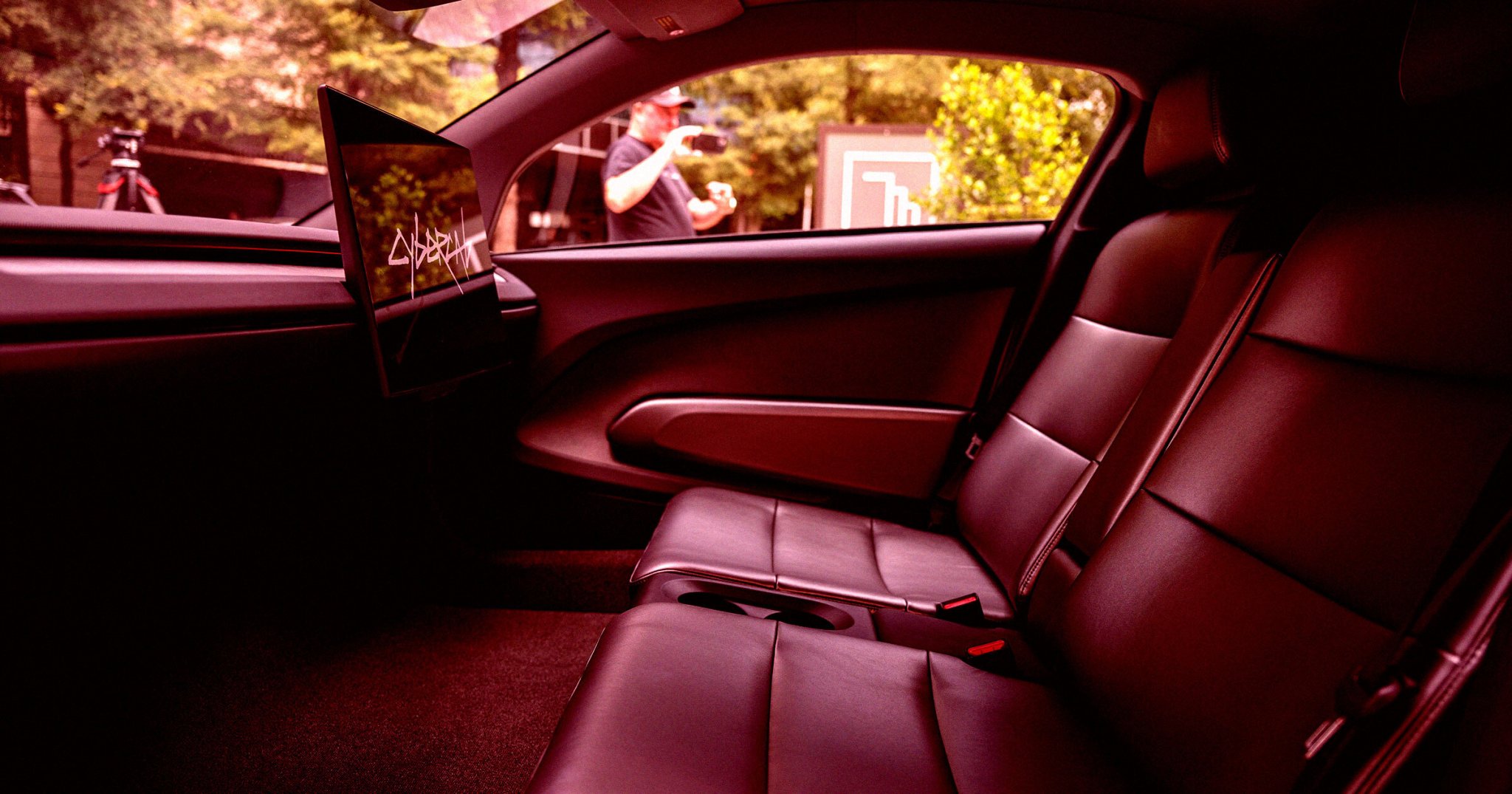
The sleek, gold-colored coupé impressed with a futuristic design, but baffled onlookers with its cramped two-seat interior, lack of a charging port, and a dubious, far-too-good-to-be-true $30,000 price tag.

Just under two years later, the first Cybercabs are starting to hit the streets in Austin, Texas — and Tesla is just itching to sell you one. Last week, the EV maker started handing out a “Robotaxi interest form,” as Electrek reported at the time, in an apparent effort attract would-be entrepreneurs willing to buy an entire fleet of the unusual vehicles.

Put simply, the idea is to share revenue from ride income with Tesla while the vehicles operate on the carmaker’s network, using its self-driving tech.

It’s part of a much broader plan. For many years, Tesla CEO Elon Musk has promised that its Full Self-Driving-enabled vehicles, including the Cybercab, could effectively turn into an appreciating money-printing machine, allowing owners to sit on their couch and magically watch the money roll in.

As early as 2018, Musk promised investors that he saw the “future as kind of a shared electric autonomy, so that you’d be able to do ride-hailing or share the car any way,” likening it to “some combination of like Uber, Lyft, and Airbnb.”

But there are plenty of reasons businesspeople should hesitate before takeing Tesla up on the offer of operating a Robotaxi fleet, as Electrek‘s Fred Lambert argued in a compelling essay this week.

Basically, he pointed out, “if running a fleet of Cybercabs were actually profitable, Tesla wouldn’t sell you a single one.” It’s like claiming you’ve found an infinite money glitch — and then instead of quietly profiting off it, selling a get-rich-quick book on how to do it yourself.

There are also looming technical questions. Musk’s lofty promises of a vehicle that completes ride-hailing requests autonomously while also appreciating in value has little, if any, bearing with reality in 2026. To the contrary, the EV maker’s offerings are among some of the fastest depreciating vehicles on the market today.

Then there’s the questionable value proposition. Tesla controls the entire network, the self-driving software, and prices. It even “sets the split,” as Lambert argues. Instead, fleet owners are stuck eating the “capital cost and the depreciation, while Tesla keeps the software margin and its cut of every fare.”

In other words, “you don’t own a business in that arrangement. You own the downside.”

It’s a dubious business opportunity closely reminiscent of Tesla’s infamous FSD advanced driver assistance software. Owners once shelled out a massive $15,000 — before it became exclusively a $99 a month subscription — to access a feature that’s still a complete disaster, leading to fatal collisions and terrifying close calls even after many years of development.

Not only are they spending the equivalent of a small car on faulty software, they’re willing to shoulder the risk as well. Tesla has a long track record of trying to wriggle out of lawsuits arising from these accidents, arguing it was the driver’s fault for engaging the software and not paying attention.

Much like its regular lineup of FSD-enabled vehicles, Tesla’s Cybercab relies entirely on a camera-based autonomous driving system, an approach that experts say is fundamentally flawed.

Nonetheless, as the Austin American-Statesman reports, local investors in Austin are chomping at the opportunity to run their own Cybercab fleet.

Meanwhile, regulators from the National Highway Traffic Safety Administration are watching closely. The agency opened a probe into the Tesla, questioning that its new Cybercab “meets all applicable Federal Motor Vehicle Safety Standards.”

More on the Cybercab: Tesla’s Glitchy Cybercab Accidentally Lets Passengers Access Controls to Manually Drive the Car Using Virtual Joystick on In-Vehicle Screen

The post There’s a Huge Economic Problem With Tesla’s Cybercabs appeared first on Futurism.

  •  
❌