❌

Reading view

UARX Space troubleshoots anomalies on maiden OTV Flight

SAN FRANCISCO –Spanish startup UARX Space is remedying anomalies identified during the maiden flight of OSSIE-D, an orbital transfer vehicle (OTV) launched Oct. 1 aboard SpaceX’s Transporter-18 mission. At least […]

The post UARX Space troubleshoots anomalies on maiden OTV Flight appeared first on SpaceNews.

  •  

Neanderthal Hand Found in a Spanish Cave Still Holds Its DNA After 46,000 Years

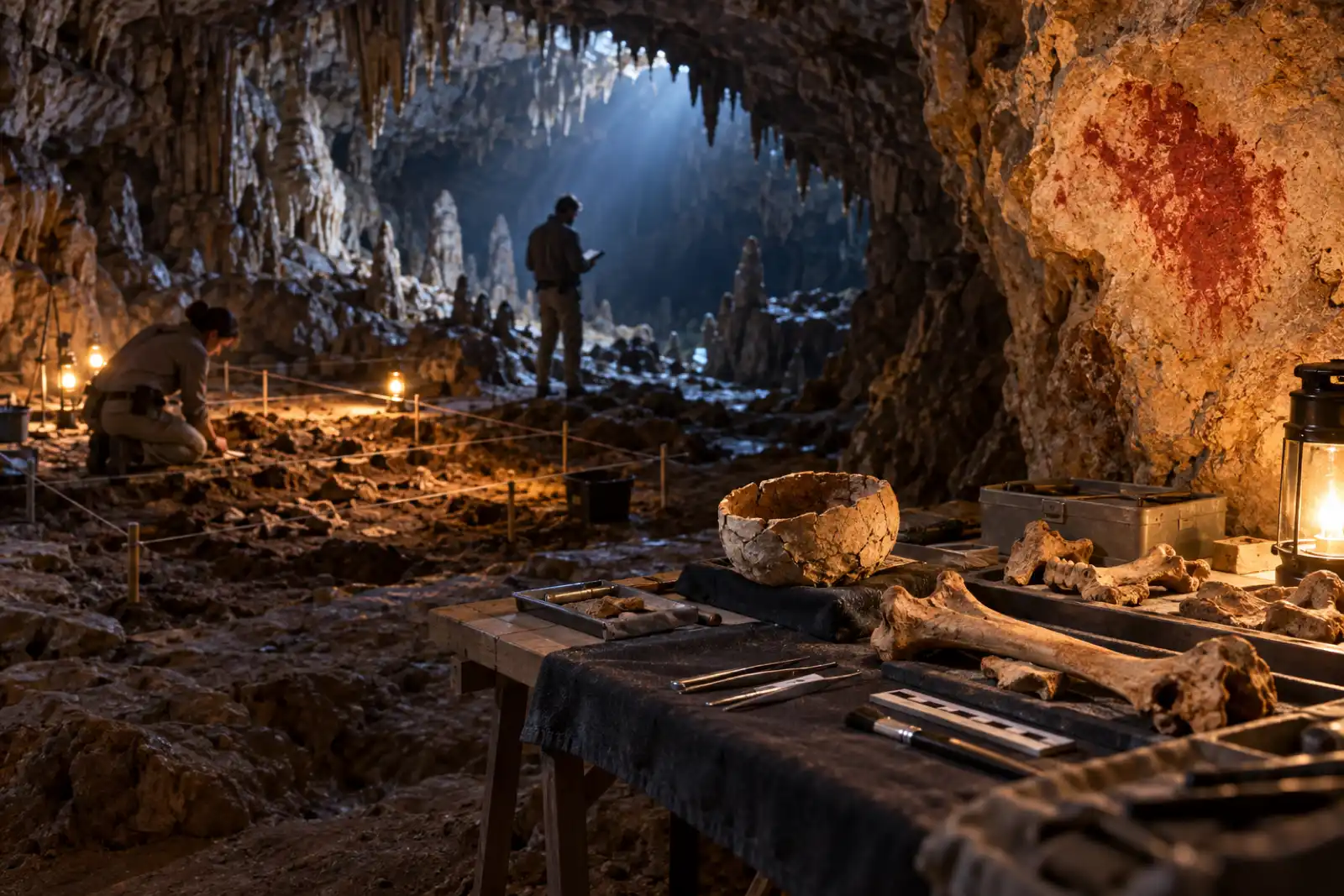
Neanderthals left plenty of traces in the western Pyrenees, the mountain range that separates Spain from France. Stone tools, butchered animal bones, the leftovers of their camps. What nobody had ever found in Navarre, the region of northern Spain whose capital is Pamplona, was a single bone of the people themselves. On Monday that changed, […]

  •  

Hilltop Villages, African Ivory and Wounded Skeletons: How Small Communities Resisted The First Bronze Age Power in Spain

Around 4,200 years ago, in the dry south-east of the Iberian Peninsula, a society began building cities on hilltops, stockpiling grain on a large scale and arming its warriors with halberds (blades like axe heads mounted on long poles) and metal swords. Archaeologists call it El Argar. Further north, in what are now La Mancha, […]

  •  

Clear Voices, Muddy Music: Scientists Measure How a Giant Roman Amphitheatre in Spain Sounds Today

Thirty-five thousand spectators. That is the capacity the authors of a new study attribute to the Roman amphitheatre of Itálica, in Santiponce, near Seville in southern Spain. It is roughly the crowd of a mid-sized modern football stadium, and there was not a single loudspeaker in those stands. Whatever happened on the sand had to […]

  •  

What Happened in These Neolithic Caves? Human Bones Record More Than One Kind of Cannibalism

Nearly 1,000 bones and teeth from three Granada caves show that Neolithic cannibalism was not one practice or one event. The dates and traces point to different stories.

The post What Happened in These Neolithic Caves? Human Bones Record More Than One Kind of Cannibalism appeared first on Curiosmos.

  •  

Spanish Amber Deposit Offers Rare Window into Cretaceous Life

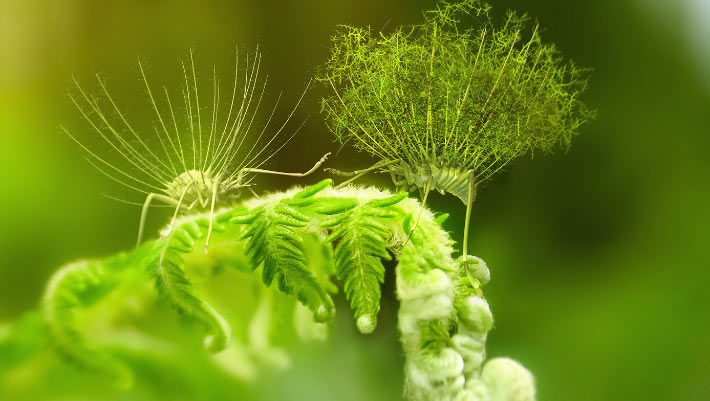
Life reconstruction of Hallucinochrysa diogenesi. Image credit: J.A. Peñas.

El Soplao, a fossil site tucked into the hills of Cantabria in northern Spain, stands out for yielding amber pieces with a blue-violet hue and abundant bioinclusions, according to a new review paper.

The post Spanish Amber Deposit Offers Rare Window into Cretaceous Life appeared first on Sci.News: Breaking Science News.

  •  
  •  

DNA From Ancient Grape Seeds Shows Spain’s Wine Came From the Phoenicians, Not the Romans

One grape variety still grown in Spanish vineyards, hebén, has never gone out of cultivation for at least the last 1,100 years, according to the new study. That takes its lineage back to roughly the year 929, around when the Caliphate of Córdoba was proclaimed in southern Spain. Eleven centuries of unbroken agriculture, and the […]

  •  

The Last Battle of America’s Indian Wars Wasn’t Fought by the Sioux or the Apache — It Happened in 1918

In the United States, the phrase Indian Wars conjures a specific set of images: the Battle of Little Bighorn, the massacres at Wounded Knee and Sand Creek, the forced marches of the Trail of Tears, the decades-long manhunt for Geronimo. All of it is generally remembered as a 19th-century story, closed out by the early […]

  •  

Neanderthals Returned to This Spanish Cave Every Year for Generations — Long Before Homo Sapiens Ever Set Foot Inside

Deep inside Ojo Guareña, one of the largest cave systems in Europe, in the northern Spanish province of Burgos, archaeologists have spent eleven consecutive summers digging through a single Neanderthal layer. This year’s season, which wrapped up in late August 2026, pushed the excavated area of that layer — known as level 4D — to […]

  •  

Women Also Organized Banquets: Epigraphy Reveals the Leading Role of Females in Public Celebrations in Roman Hispania

When we think about Roman society, the image that usually comes to mind is that of a world dominated by men: senators, magistrates, generals, and emperors. According to the traditional narrative, women occupied a secondary place, confined to the domestic sphere and excluded from public life. However, a recent study based on the analysis of […]

  •  

The Sons of Míl: The Science Behind the Irish Legend That Traces the Origins of the Celts to Northern Spain

In 2006, geneticist Bryan Sykes, Professor of Human Genetics at the University of Oxford, published the results of a study that had taken him a decade to complete. His team had collected and analyzed the mitochondrial DNA and Y chromosome of 10,000 volunteers from England, Scotland, Wales, and Ireland, with the aim of reconstructing the […]

  •  

Homo antecessor Had Surprisingly Modern Skull, New Fossils Suggest

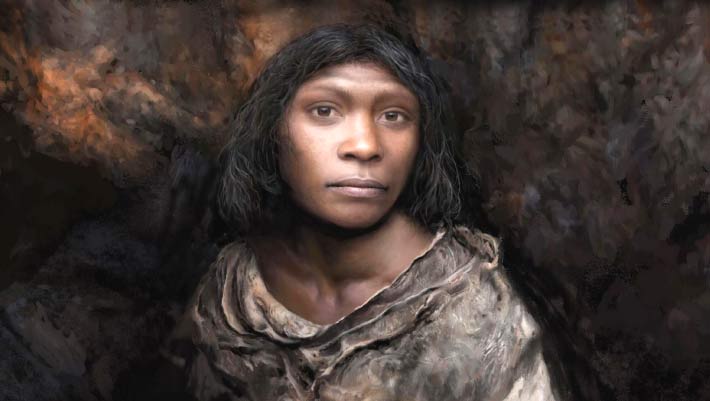
An artist’s rendering of a Homo antecessor individual known as the Girl of Gran Dolina. Image credit: Tom Björklund.

A new analysis of three skull fragments unearthed at the Gran Dolina cave site in Spain indicates that Homo antecessor had bone thickness closer to that of Neanderthals and modern people than to more archaic hominins.

The post Homo antecessor Had Surprisingly Modern Skull, New Fossils Suggest appeared first on Sci.News: Breaking Science News.

  •  

The Foundations of the Lost Hospedería of the Catholic Monarchs Found in Guadalupe

Excavations carried out during the past month of July in the monumental complex of Guadalupe (Extremadura, Spain) have brought to light the foundation remains of the former Hospedería of the Catholic Monarchs (Guesthouse of the Catholic Monarchs), a lost historic building that has nothing to do with the current Hospedería del Real Monasterio that operates […]

  •  

The Neanderthals of a Cave in Northern Spain Were Already Making and Reusing Bone Tools in a Standardized and Planned Way

A team of researchers from the University of Burgos and the Atapuerca Foundation has published the first detailed analysis of the bone retouchers found in the Valdegoba cave, in the municipality of Huérmeces (Burgos). This site, occupied by Neanderthals during the Middle Paleolithic, has yielded 38 bone fragments that were used as tools to retouch […]

  •  

Spain commits up to $2.3 billion for national military communications for IRIS²

WARSAW, Poland — The Spanish government announced it will allocate between 1.6 billion and 2 billion euros ($1.8 to $2.3 billion) to develop a national military satellite communications constellation that […]

The post Spain commits up to $2.3 billion for national military communications for IRIS² appeared first on SpaceNews.

  •  
❌