❌

Reading view

Hurricane Polo Explodes in Pacific, UK Aphid Swarm Wipes Out 30 Million Lettuces, Glasgow Braces for Rubbish Pileup — Today’s Environmental Briefing for Thu, Sep 24 2026

Satellite view of Hurricane Polo swirling over the Pacific Ocean with visible eye structure

Across the stories today, a common thread emerges: the planet is speaking in signals — some subtle, some deafening — and the question is whether our institutions can listen fast enough to act.

Start with the signals themselves. El Niño has surged to record strength weeks ahead of schedule, and its fingerprints are already visible — from Hurricane Polo’s explosive intensification in the Pacific to the climate volatility rippling through global weather systems. In the UK, an aphid outbreak wiped out 30 million lettuce heads almost overnight, a small but telling example of how shifting conditions can upend food systems in ways no one budgets for. In Malawi, an unexplained weed overgrowth has choked Chia Lagoon, stranding farmers and fishers in flooded fields nearly seven months after the rains should have drained. These aren’t isolated oddities. They’re the planet’s early warning system, written in crop yields and clogged waterways.

Then there’s the human response — uneven, but not absent. Germany’s landmark pledge to phase out fossil fuels by 2045 marks a rare moment of policy catching up to urgency, moving beyond vague “carbon neutrality” language toward something more concrete. The UK’s decision to declassify a once-suppressed intelligence report — warning that climate breakdown is a direct threat to global security — suggests governments are quietly acknowledging what scientists have said for years, even if political will lags behind. And at UN climate talks in New York, amid what The Guardian describes as a genuinely grim mood, solar power’s continued growth offered rare, tangible hope. As Al Gore noted twenty years after An Inconvenient Truth, he’s surprised by the ferocity of fossil fuel pushback — but still believes, cautiously, that the fight can be won.

Behind the numbers are real communities adapting in real time. In the Andes, villagers near Villa de Arma are turning to ancient wetland systems as glaciers they once walked across vanish into bare rock. In Guam, resident Leevin Camacho learned his family’s water contained a pesticide banned since 1987 — a stark reminder that militarization and environmental cost are often intertwined, especially in the Pacific. And in Sarawak, Indigenous communities are still reckoning with displacement from the Bakun megadam three decades later, a cautionary tale as the world races toward a “clean” energy future that doesn’t always ask who pays for it.

It’s a reminder that progress and pressure often arrive together. Endangered birds on South Australia’s Eyre Peninsula won last-minute protection from a rocket launch site — a genuine conservation victory — even as a Norfolk Broads housing levy was quietly slashed, raising fears that environmental safeguards elsewhere are eroding. Meanwhile, olive ridley sea turtles nesting for the first time ever on California beaches offer something rarer: wonder. A signal, too, but one that invites curiosity rather than alarm — proof that the natural world is still capable of surprising us.

As the week unfolds, all eyes will be on whether momentum from Climate Week — bolstered even by a monster from Sesame Street reminding children it’s okay to feel both fear and courage — translates into follow-through. The data, the disasters, and the small human stories all point the same direction: the era of asking “if” is over. What remains is the harder work of “how fast,” and “for whom.”

The post Hurricane Polo Explodes in Pacific, UK Aphid Swarm Wipes Out 30 Million Lettuces, Glasgow Braces for Rubbish Pileup — Today’s Environmental Briefing for Thu, Sep 24 2026 first appeared on EnviroLink Network.

  •  

Amid Climate Gloom at UN Talks, Solar Power Offers a Rare Ray of Hope

Amid Climate Gloom at UN Talks, Solar Power Offers a Rare Ray of Hope

As climate experts gather in New York this week for another round of high-stakes negotiations, the mood is grim. This year is on track to set a new global temperature record, and next year could break it again as El Niño intensifies. The planet has lurched from one disaster to the next: deadly European heatwaves, catastrophic flooding in Nepal that has erased entire communities, and unsettling new research suggesting the Atlantic Ocean’s major current systems may be approaching a dangerous tipping point. Despite the mounting evidence and urgency, political will to act remains stubbornly weak.

Yet amid this bleak landscape, there is one source of genuine optimism: solar power. Unlike political negotiations, which move at a glacial pace, solar technology has advanced rapidly and become dramatically cheaper, making clean energy more accessible than ever before. Advocates are now pushing world leaders to commit to an ambitious but achievable goal — bringing solar power to every corner of the globe by 2030.

The road ahead won’t be easy. Confronting entrenched fossil fuel interests and inertia among the powerful takes courage. But there’s a unifying truth that cuts through the complexity of climate politics: every person on Earth lives under the same sun. That shared reality, advocates argue, can become a source of collective strength — a reminder that the tools to address the climate crisis already exist and are within reach, if only the political will can catch up with the technology.

The post Amid Climate Gloom at UN Talks, Solar Power Offers a Rare Ray of Hope first appeared on EnviroLink Network.

  •  

California Lawmakers Pass Plug-In Solar Bill

Legislatures in nearly a dozen states have voted to legalize use of the technology, which can help homeowners reduce their rising electricity costs.

© Poppy Lynch for The New York Times

A plug-in solar panel on the balcony of a home in Sunnyvale, Calif.
  •  

Trump Issues Tariffs on Key Ingredient for Electronics and Solar Panels

The administration will impose a minimum import price for polysilicon, a key component for semiconductors and solar panels, as well as tariffs for products made with the material.

© Christian Monterrosa for The New York Times

A worker inspected solar panels at a factory in Dalton, Ga., in 2023.
  •  

What You Need to Know About Installing Plug-In Solar Panels

You can now buy panels that plug into electrical outlets, but there are some important safety issues to consider when picking and installing a system.

© Patrick Junker for The New York Times

Plug-in solar panels are as large as windows, and in Germany they are often installed on balconies.
  •  

Plug-In Solar Panels Are Starting to Sprout in U.S. Backyards

Ten U.S. states have legalized systems that can be plugged into standard wall outlets. The technology typically does not require permits or electricians.

© Poppy Lynch for The New York Times

Alex Ottoboni with his balcony solar panel at his condo in the San Francisco Bay Area
  •  

Your Home Could Help Solve AI’s Growing Power Demand

Tesla, Sunrun and Renew Home plan to tap solar panels, batteries, thermostats and other devices installed in millions of homes to meet the energy demands of artificial intelligence.

© Collin Chappelle for The New York Times

Installation of a Sunrun solar panel on a roof in California. Sunrun is working with Tesla and Renew Home to use home energy devices to help data centers get online faster.
  •  
  •  

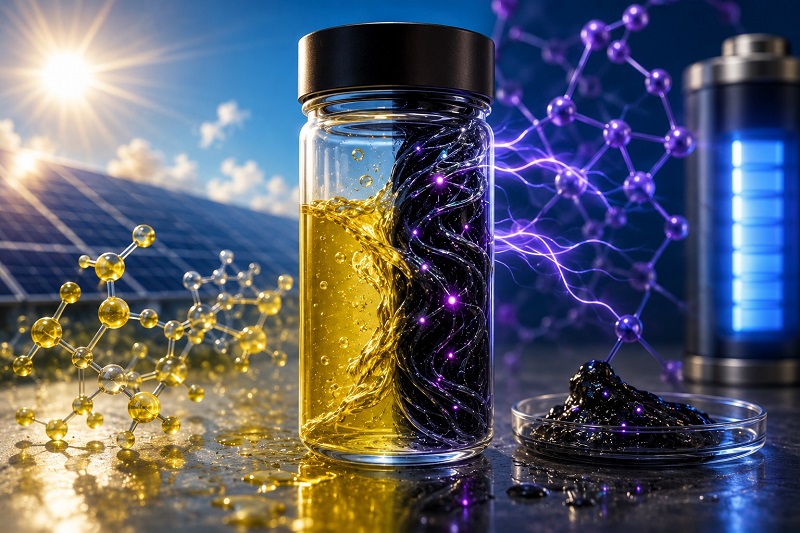
Scientists create a water-based material that stores solar energy like a living system

Scientists at Northwestern University have developed a remarkable new material that can capture energy, store it for months, use it when needed, and then reset itself for reuse. Even more surprisingly, it behaves in a way that resembles living cells. The new material could one day help store renewable energy, power chemical reactions, clean up […]

The post Scientists create a water-based material that stores solar energy like a living system appeared first on Knowridge Science Report.

  •  

El Niño Officially Begins as Solar Power Surpasses Coal, SpaceX Eyes Historic IPO — Today’s Environmental Briefing for Fri, Jun 12 2026

Satellite view of Pacific Ocean showing temperature patterns indicating El Niño weather phenomenon

**

Across the stories today, a common thread emerges: the planet is sending signals, and communities are finally learning to listen—sometimes by choice, sometimes by necessity.

The day’s most prominent signal comes from the Pacific, where scientists have confirmed the arrival of a powerful El Niño that could rank among the century’s strongest climate events. This naturally occurring phenomenon, which emerges every few years to reshape weather patterns globally, arrives at a moment when human communities are already stretching to adapt to climate disruption. For families from Florida to California already spending an extra $400 to $900 annually on climate-related costs—rising to over $1,300 in the hardest-hit areas—the prospect of intensified extreme weather represents more than meteorological curiosity. It’s a reminder that progress and pressure often arrive together.

Yet the day’s coverage also points to growing momentum around solutions that seemed impossible just years ago. Solar power has quietly crossed a historic threshold, generating more electricity than coal in the United States for the first time ever—12.8% versus coal’s 12.2% in May alone. Meanwhile, engineers in Barcelona have finally realized Antoni Gaudí’s sustainable architecture vision at the Sagrada Familia, using modern technology to complete designs that were ahead of their time by more than a century. These breakthroughs suggest that patient innovation can eventually bridge the gap between ambitious vision and practical reality.

The tension between environmental protection and human needs surfaces repeatedly across today’s stories, revealing communities grappling with complex tradeoffs. In Queens, residents debate whether an abandoned railway should become green space or renewed transit infrastructure. Nebraska towns that fiercely rejected wind and solar projects are welcoming nuclear power plants. Even Britain found time to celebrate, with the peacock butterfly claiming the crown in the nation’s first-ever favorite species poll—a small but significant reminder that public engagement with nature remains strong.

Behind the numbers are real communities adapting in real time. In London, new research shows that clean air zones have measurably reduced emergency hospital visits, translating policy into tangible health benefits. But the challenges run deep: in Alabama, a community that lacks basic sanitation infrastructure now faces a proposed data center that would strain resources further, while in Ecuador’s Amazon, an Indigenous community surrounded by two rivers cannot access clean drinking water due to mining pollution.

The natural world continues revealing both its resilience and vulnerability. Scientists captured the first-ever footage of goblin sharks in their deep-sea habitat, while researchers documented how elephant loss triggers immediate dung beetle extinctions in Kenya—the first direct evidence of coextinction in action. Perhaps most remarkably, new research has mapped the underground fungal networks that span 110 quadrillion kilometers worldwide, moving billions of tons of carbon in an invisible web beneath our feet.

These discoveries underscore how much we’re still learning about the systems that sustain life on Earth, even as we’re rapidly changing them. From pharmaceutical pollution in East African waters to the transformation of Miami’s Biscayne Bay into saltier, more acidic habitat threatening endangered sharks, the impacts of human activity continue cascading through ecosystems in ways we’re only beginning to understand.

As these stories unfold, they reveal a world where environmental challenges and solutions are increasingly inseparable from questions of justice, economics, and community resilience. The coming months will test whether the momentum behind renewable energy and conservation can match the scale of changes already underway.

The post El Niño Officially Begins as Solar Power Surpasses Coal, SpaceX Eyes Historic IPO — Today’s Environmental Briefing for Fri, Jun 12 2026 first appeared on EnviroLink Network.

  •  
❌