❌

Reading view

Pink, pretty, and protective. A dumbo octopus is here with a message from the deep-sea.

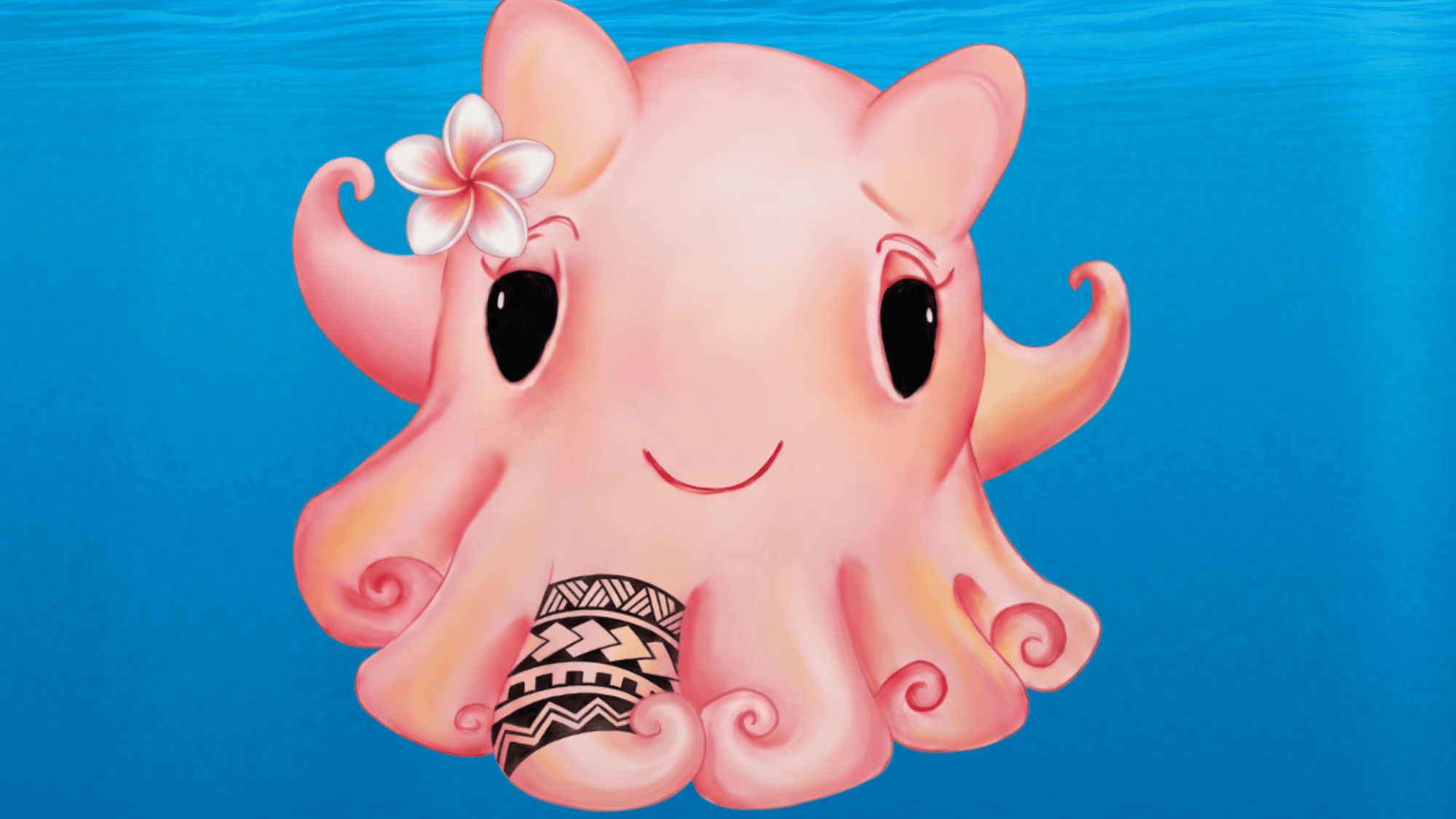
She’s bubblegum pink with a permanent little smile. She sports a pretty flower on her head sports a black tattoo on one of her eight arms. But don’t let this dumbo octopus’ adorable exterior fool you. Miss Abyss is here on serious business. 

“Miss Abyss is a dumbo octopus from the deep-sea, and she is on a journey all across the country looking for allies to support her to help defend the deep-sea,” Angelo Villagomez, a research fellow at the Center for American Progress (CAP), tells Popular Science. 

While Miss Abyss herself is an octopus illustrated by CAP research associate Jasia Smith, dumbo octopuses (genus Grimpoteuthis) are very real cephalopods. They live on the ocean floor, and many species can be found at extreme depths of 9,800 to 13,000 feet and are only about 8 inches tall. 

CAP’s’ Miss Abyss campaign is using the dumbo octopus to raise awareness about protecting public waters from deep-sea mining using the Flat Stanley method. Based on the children’s book Flat Stanley, children are are asked to take pictures of a paper doll in places near where they live for a popular school project. For Miss Abyss, supporters are asked to print out a picture of her and then take a photo or video of her in a place that represents their state or home and share it on social media. Supporters are also encouraged to sign CAP’s petition.

“One of the most popular things in the United States is our public lands and our public waters,” Villagomez says. “We’re creating a fun and engaging way for people of all ages to be creative and basically showcase their support.”
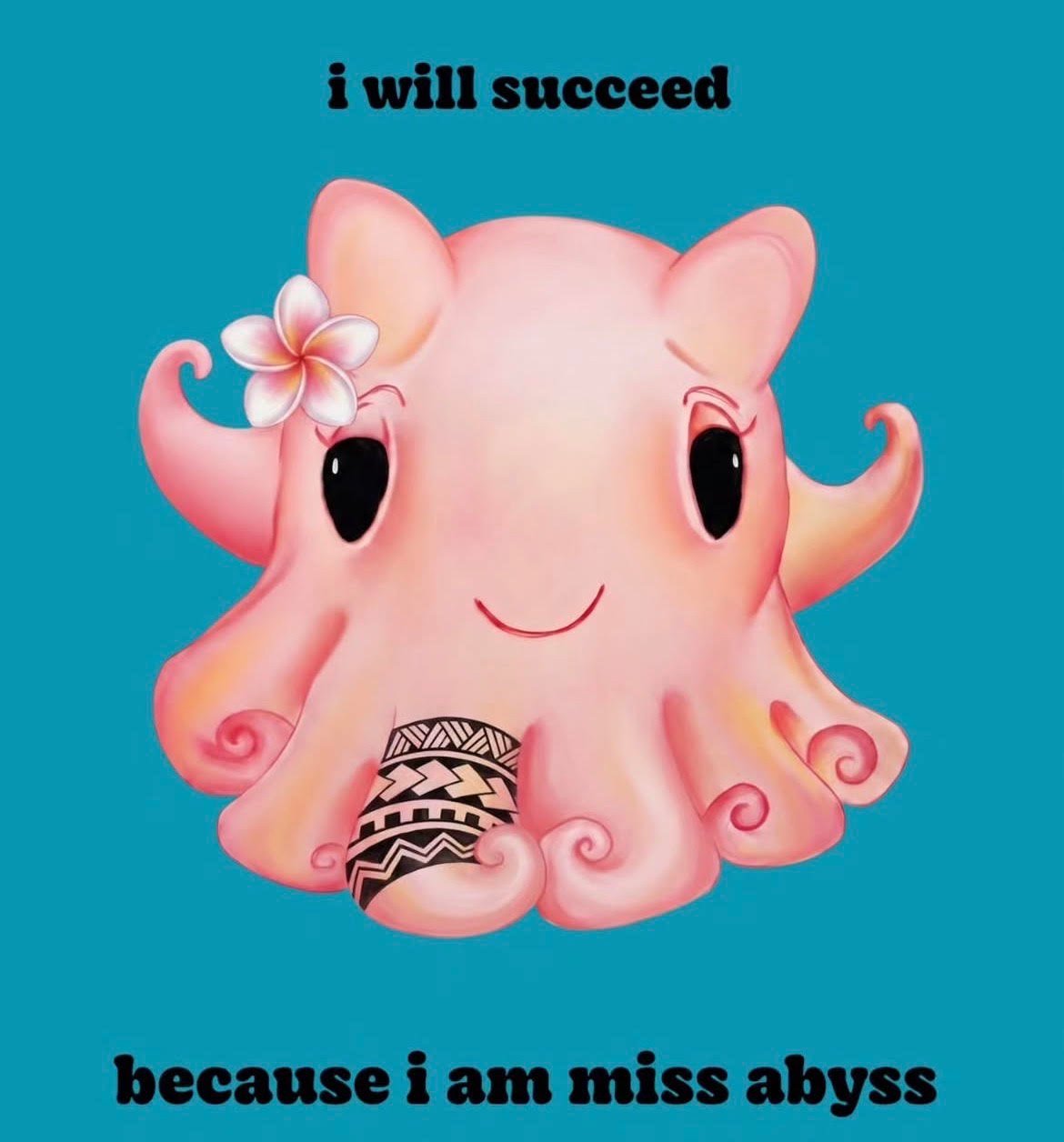
a poster of a small pink octopus with the text "i will succeed because i am miss abyss"
While Miss Abyss attempts to travel to all 50 states, real dumbo octopuses can be found in some of the deepest parts of the ocean. Image: Center for American Progress/Miss Abyss via Instagram.

What is deep-sea mining?

Deep-sea mining is the extraction of mineral resources including manganese, nickel, cobalt, copper, and rare earth elements from the ocean floor. Proponents of future deep-sea mining say that these and other minerals could help speed up the development of clean energy technologies. The global demand for nickel, cobalt and rare earth elements needed for digitization and decarbonization may double by 2040 to meet carbon emissions goals. Some also see the deep-sea as a safer alternative to mining on land. 

But the process could cause destruction to a critical ecosystem that we still do not know much about. As of April, only 28.7 percent of the global seafloor has been mapped. A 2025 report commissioned by the National Ocean Protection Coalition found that in the next 15 years, the economic, environmental, and technical challenges associated with deep-sea mining would make its profitability or commercial success highly unlikely. Waste discharge from deep-sea mining could also reduce food availability for the species that live there.

On November 12, 2025, the Bureau of Ocean Energy Management (BOEM) announced a Request for Information and Interest (RFI) for leasing land off the Northern Mariana islands for mining. While the comment period ended on January 12, organizations from Guam and the Northern Mariana Islands and their national partners collected over 60,000 petitions, letters, and comments opposing the plans to allow deep sea mining near the Mariana Trench.

On August 17, BOEM announced a Proposed Leasing Notice (PLN) and a 60-day comment period that outlines the terms and conditions of the potential sale. The date for the lease sale is currently set for December 16, 2026.

“Some of the least disturbed coral reef ecosystems on the planet are on these isolated Pacific islands in the U.S. Pacific territories,” says Villagomez. “I think part of the human spirit is knowing that there are places that are unexplored, that there are things on our Earth that are still yet to be discovered.”

As a result, roughly 31 million acres near American Samoa and 69 million acres near the Mariana Islands’ outer continental shelves could go up for auction. The U.S. federal government has also proposed lease sales to advance deep-sea mining near Alaska and Virginia. 

“We’re not talking about a small [mine on land] where it’s one open pit,” says Villagomez. “It’s as far as the eye can see in every direction.”

Environmental and indigenous rights

In addition to the environmental risks, deep-sea mining also presents an Indigenous sovereignty issue. The ocean is a sacred part of the identity, spirituality and traditions of the Chamorro and Refaluwasch people of the Marianas, and other communities of American Samoa.

“I am Indigenous Chamorro, born in Guam, but my family is from Saipan. I grew up knowing that I lived next to the Mariana Trench,” Villagomez says. “I remember being out fishing with my dad, and he would then tell dad jokes, like ‘Oh you see the mountain there? It’s the tallest mountain in the world because it stretches all the way down to the Mariana Trench.’” 

That was not just a dad joke. At 6.8 miles below sea level, the Mariana Trench is deeper than Mount Everest is tall (5.5 miles).

Mining in the deepest parts of the ocean may not yield minerals companies want. CAP says that the proposed areas in the Marianas do not even have nodule fields of significant commercial value, and alleges that the mining is a pretext for testing prototype equipment for future operations elsewhere.

“This is a really new environmental issue. Up until about a year ago, deep sea mining was science fiction, so the types of people who would be organized on this if it was a public lands issue are not necessarily as organized,” says Villagomez. “So we’re going out there gathering allies, not just pictures of people with Miss Abyss, but also as that collective power to bring to conservation.”

Oh the places she’ll go

Since launching in August, Miss Abyss has already visited about 20 states, gone backstage at a Spin Doctor’s concert, sat beneath the Brooklyn Bridge, and visited the Grand Tetons.
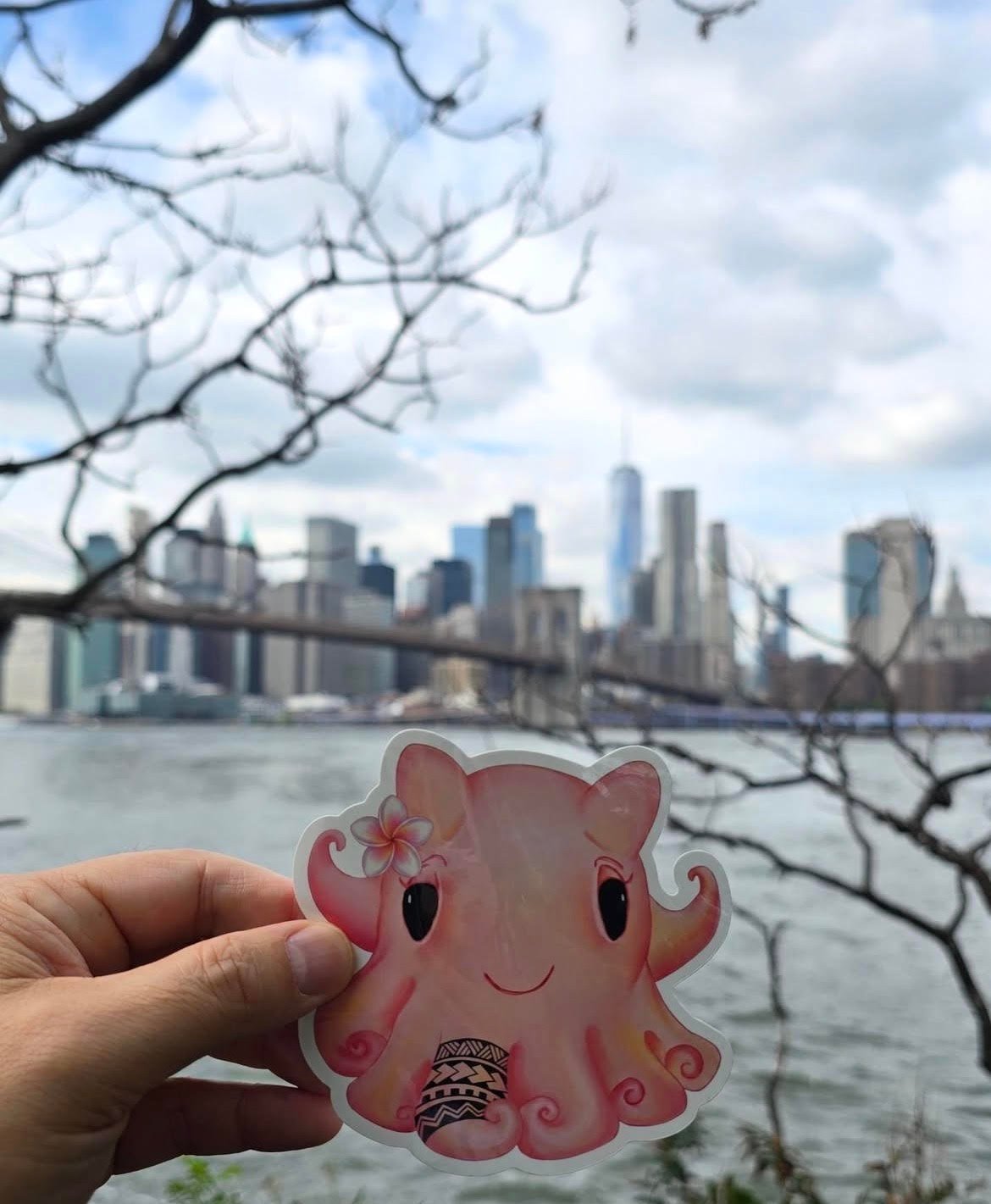
an illustrated pink octopus underneath the brooklyn bridge
Miss Abyss the dumbo octopus in a neighborhood called DUMBO near the Brooklyn Bridge. Image: Center for American Progress/Miss Abyss via Instagram.

Miss Abyss has also met oceanographer Dawn Wright. Nicknamed “Deepsea Dawn,” Wright is the first Black American and 27th human to dive to the bottom of the Mariana Trench. In July 2022, she dove the 6.8 miles below sea level to Challenger Deep at the southern end of the trench.

“She’s [Wright] just a great ambassador to the deep-sea herself,” says Villagomez. “So to see Miss Abyss and DeepseaDawn together was great.”

While Miss Abyss travels the globe for support, the team at CAP continues working at the policy level. The courts could intervene and stop the lease sales, but the situation remains fluid and uncertain. In the meantime, Miss Abyss will continue her journey on social media. 

And as for where Villagomez would like to see Miss Abyss continue to pop up? “I would love for her to visit our national parks.”

The post Pink, pretty, and protective. A dumbo octopus is here with a message from the deep-sea. appeared first on Popular Science.
  •  

Mark Zuckerberg Takes Aim at Anthropic in Debate Over A.I. Slowdown

On social media, Meta’s chief executive appeared to jab at Anthropic by saying that leading A.I. labs should be focused on safety rather than improving their own technology.
  •  

What if social media isn’t hurting kids?

Child using social media on a cell phone on a graphic green background.

Two years ago, social psychologist Jonathan Haidt released his New York Times bestseller The Anxious Generation. The book posits that the rise of social media and smartphone use is largely to blame for the prominent decline in teen mental health since 2010. It quickly became a central rallying cry of the social media backlash. Haidt has been credited with helping inspire Australia's nationwide teen social media ban. He has joined forces with bereaved parents who are fighting tech companies in court. His name comes up unprompted in conversations with people in power who say his book opened their eyes to an online crisis.

Haidt's theory has …

Read the full story at The Verge.

  •  

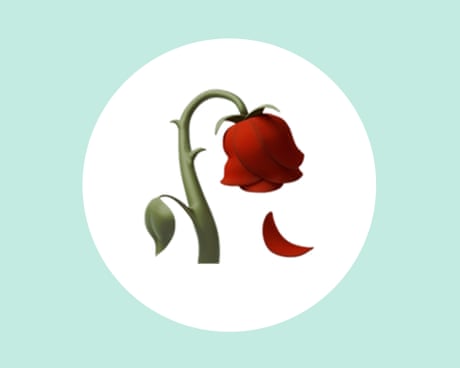
The wilting rose emoji: what its rise and fall tells us about gen Alpha

It was the fastest-growing emoji in 2025 – but if you’re older than 16, it has probably passed you by. Now, just as twentysomethings are catching up, it’s over

In the 2025 hit Netflix show Adolescence, DI Luke Bascombe’s 13-year-old son, Adam, has to explain to his father the way his generation use heart emojis. “Red means love, purple: horny, yellow: ‘I’m interested, are you interested?’, pink: ‘I’m interested but not in sex,’ orange: ‘You’re going to be fine,’” he explains. “It all has a meaning. Everything has a meaning.”

And those meanings are constantly evolving. Take the skull (), for example, which has come to be used as a reaction for finding something funny – a visual shorthand for the slang phrase: “I’m dead.” Or the wilting rose () which was, according to Google data analysed by the New York Times, the fastest-growing emoji in terms of popularity in 2025 – and was the 93rd most used. That the previously obscure wilting rose is now in the top 100 emojis is thanks to generation Alpha (those born between 2010 and 2024), who use it in place of the broken heart emoji () to signify sadness, or ironically, to suggest mock-heartbreak.

Continue reading...

© Composite: Guardian Design

© Composite: Guardian Design

© Composite: Guardian Design

  •  

The Route to Cappyness review – capybara boosterism is an ode to the internet’s favourite rodent

From a cappy-cafe owner in Japan to an escaped capybara in the UK, this homespun film takes the temperature of an international obsession

One of Midlands-based film-maker Sharon Walia’s previous works was The Keepers of the Pigs, proudly described on her production company’s website as “the first ever documentary about guinea pigs”. So it makes zoological sense that her latest film takes on capybaras, guinea pigs’ ridiculously cute semi-aquatic cousins that are indigenous to Latin America, and relatively recently became ubiquitous on social media in memes and short films alike. As glimpsed here, there was even a capybara in the recent Academy Award-winning animated feature Flow, some pro-cappy boosterism that captured the creatures’ chill vibe and snuffly sweetness.

Walia’s celebration of the species stays on script, rejoicing in the animals’ natural geniality, friendliness to other species in their natural habitat, and their compelling, remunerative charm that seems to have bolstered the fortunes of several animal attractions around the world.

Continue reading...

© Photograph: PR

© Photograph: PR

© Photograph: PR

  •  

Lenore review – incel’s obsession with online influencer turns into anatomy of dislocated digital-age mindset

Digital-age Australian psychodrama tracks the shut-in mania of dangerously disaffected male fan, but doesn’t get inside his mind

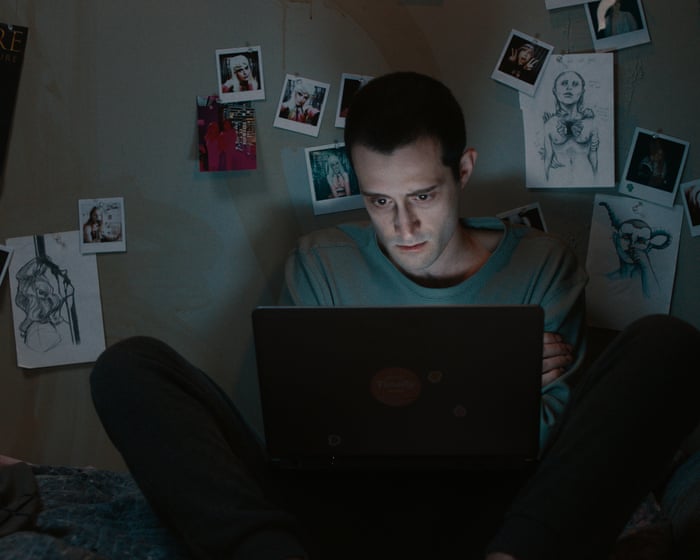
If the parasocial phenomenon is a kind of hell, then Max Wren, protagonist of this Australian digital-age psychodrama, resides in the ninth circle. Self-barricading in a basement room surrounded by screens, working on a documentary about the object of his disaffection (an enigmatic influencer called Lenore), this obsessive shut-in makes Eminem’s Stan look like the Dalai Lama. Touching on subjects including the attention economy, the male gaze, and incel isolation and misogyny, director David Ward feels both Max and Lenore’s pain. But his ungainly debut film doesn’t fully transcend its stage origins to capture the splintered headspace of the terminally online.

Like films about fictional pop stars that feature unconvincing music, it doesn’t help that the quickfire résumé of Lenore’s career only half-conveys her magnetism. A one-time beauty influencer called Veronica Brand, she later graduates to more extreme performance art-type stunts, such as livestreaming her miscarriage; a move that, spliced without her knowledge into a children’s TV broadcast, forced her into hiding. But this performative vulnerability, including hints of her abusive dad, apparently won her legions of OnlyFans-style acolytes. Not just Max, but also his colleague Sam (Sam Macdonald), a brash interloper outraged to find he was nothing special to Lenore and who turns up at Max’s door offering exclusive footage of her.

Continue reading...

© Photograph: Shaun Herbertson

© Photograph: Shaun Herbertson

© Photograph: Shaun Herbertson

  •  

Democracy v the machine: the birth of the digital age and the warnings that were ignored – podcast

Many hoped that the march of technology would usher in an egalitarian utopia – but some foresaw the threat it would pose to liberal society. Why did nobody listen?

By Jill Lepore. Read by Laurel Lefkow

Read the text version here

Support the Guardian today: theguardian.com/longreadpod

Adapted from The Rise and Fall of the Artificial State by Jill Lepore, published by Allen Lane on 25 August. To support the Guardian, order your copy at guardianbookshop.com

Continue reading...

© Photograph: Underwood Archives, Inc/Alamy

© Photograph: Underwood Archives, Inc/Alamy

© Photograph: Underwood Archives, Inc/Alamy

  •  

Deepfakes are wrecking influencers’ credibility, one fake ad at a time

Influencers aren’t just battling competitors for brand deals. They’re now battling AI versions of themselves

Earlier this year, Emily Schuman, the creator of the lifestyle blog Cupcakes and Cashmere, saw a photo of herself she didn’t recognize on Instagram. In a sponsored ad, Schuman, who has more than 500,000 Instagram followers, is holding up a vial of GLP-1 drugs, advertising the telehealth company Gala. There was just one problem: Schuman had never heard of Gala and had nothing to do with the ad.

The ad was based on a digitally altered version of a selfie Schuman had taken in her car and posted on Instagram years earlier. Once her followers got wind, they flooded her inbox with questions about the sponsorship as it didn’t seem consistent with Schuman’s personal brand. Soon after, Schuman discovered this was just the beginning. There was also an Instagram post where an AI version of her with darker hair appears to apply foundation to promote a makeup brand called Meroda Cosmetics, and TikTok posts with generated images of her promoting the blood testing company Superpower.

Continue reading...

© Illustration: Guardian Design/Tiktok

© Illustration: Guardian Design/Tiktok

© Illustration: Guardian Design/Tiktok

  •  
❌