
❌

Reading view

Denisovans Once Roamed Southwest China, New Fossils Reveal

An artist’s concept of a Penghu Denisovan walking under the bright Sun during the Pleistocene of Taiwan. Image credit: Cheng-Han Sun.

Paleoanthropologists have identified a trove of Denisovan fossils from a cave in China’s Yunnan province, extending the known range of the elusive human relative and providing the first-ever direct evidence of what its forearm bones looked like.

The post Denisovans Once Roamed Southwest China, New Fossils Reveal appeared first on Sci.News: Breaking Science News.
  •  

Homo antecessor Had Surprisingly Modern Skull, New Fossils Suggest

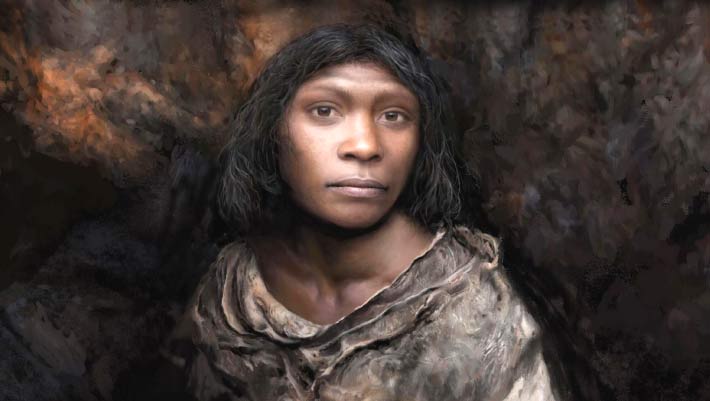
An artist’s rendering of a Homo antecessor individual known as the Girl of Gran Dolina. Image credit: Tom BjΓΆrklund.

A new analysis of three skull fragments unearthed at the Gran Dolina cave site in Spain indicates that Homo antecessor had bone thickness closer to that of Neanderthals and modern people than to more archaic hominins.

The post Homo antecessor Had Surprisingly Modern Skull, New Fossils Suggest appeared first on Sci.News: Breaking Science News.

  •  

Dodo Had Surprisingly Keen Sense of Smell and Owl-Like Vision, New Study Reveals

The dodo (Raphus cucullatus) by Frederick William Frohawk, 1905.

New research led by University of Lethbridge scientists offers the most detailed look yet at how the dodo (Raphus cucullatus) -- the flightless bird driven to extinction by the 1600s -- actually perceived its world, suggesting the β€˜stupid bird’ had a far more complex sensory life than its reputation implies.

The post Dodo Had Surprisingly Keen Sense of Smell and Owl-Like Vision, New Study Reveals appeared first on Sci.News: Breaking Science News.
  •  

224,000-Year-Old Homo Skull Fragment Adds New Mystery to Human Origins

A Homo heidelbergensis, a Neanderthal and a Cro-Magnon. Image credit: SINC / JosΓ© Antonio PeΓ±as.

A fossilized skull fragment of Homo sp. unearthed in central Spain offers paleoanthropologists a fresh window into the story of ancient humans who lived in Europe hundreds of thousands of years ago.

The post 224,000-Year-Old Homo Skull Fragment Adds New Mystery to Human Origins appeared first on Sci.News: Breaking Science News.
  •  

Did Early Snakes Burrow, Swim or Crawl? 80‑Million‑Year‑Old Fossil Suggests: All Three

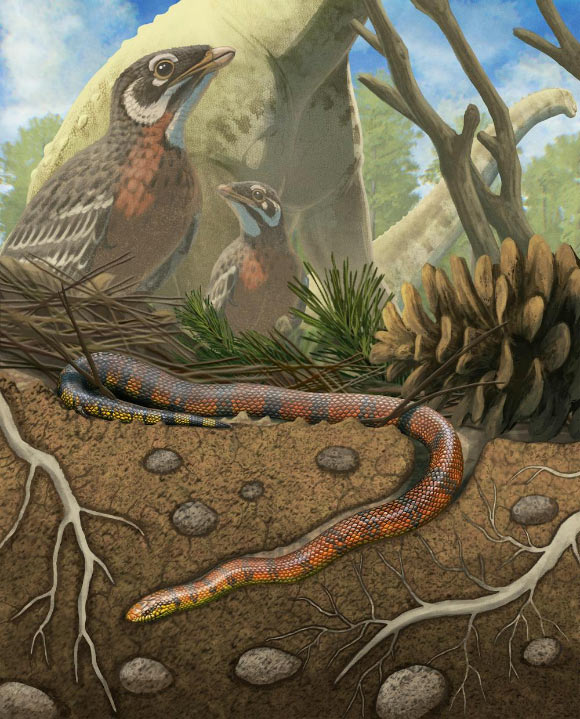
Life reconstruction of Tametara mirim. Image credit: Gabriel Ugueto.

Paleontologists have unearthed a remarkably preserved fossil snake in Brazil that is reshaping ideas about how the earliest snakes lived and complicating the long-running debate over whether their ancestors burrowed underground, swam in the sea or crawled the surface.

The post Did Early Snakes Burrow, Swim or Crawl? 80‑Million‑Year‑Old Fossil Suggests: All Three appeared first on Sci.News: Breaking Science News.

  •  

New Crested Dinosaur Species Identified in Canada

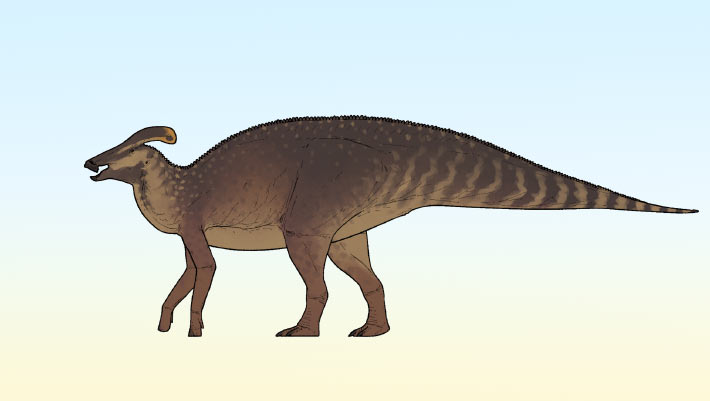
Life reconstruction of Plesiolophus warnerensis. Image credit: Connor Ashbridge / CC BY 4.0.

A new genus and species of lambeosaurine hadrosaurid dinosaur has been identified in southern Alberta, Canada, dating back 77 million years to the Campanian age of the Cretaceous period.

The post New Crested Dinosaur Species Identified in Canada appeared first on Sci.News: Breaking Science News.

  •  
❌