
❌

Reading view

Why you don't need an audiophile headset for gaming — comfort, convenience, and a good mic win over pure audio fidelity

"Best gaming headset for audiophiles" is one of the categories on our list of best gaming headsets, and it's easy to look at that and wonder if you shouldn't be looking at just audiophile headsets to begin with. Headsets are mainly about audio, after all, and it does seem to logically follow that audiophile headsets would have the best audio (I mean, it's in the name).

Well, not so fast.

Headsets are mainly about audio, but that doesn't mean that the "objectively" best-sounding headset by audiophile standards translates to the best-sounding headset by gaming standards. Nor does it mean that you should choose your gaming headset based on audio quality at the expense of everything else.

Audiophile headsets, including headphones, are primarily designed around one thing: audio fidelity. In other words, they're designed and tuned to reproduce audio exactly as it was recorded, which is exactly as the artist heard it when they were recording it, and is therefore exactly as the artist intended for it to be heard. This doesn't necessarily mean it's going to sound amazing to everyone. In fact, to many people it will probably sound somewhat underwhelming, but it's really the only objective way we have of measuring what makes audio "good," since how something sounds depends largely on individual listeners' preferences.

Gaming headsets, on the other hand, are designed around... well, everything else. This doesn't mean they ignore audio fidelity completely, but it tends to not be the priority. (Many premium flagship gaming headsets have been focusing more on audio fidelity in recent years, but it's still generally not the priority.) Gaming headsets tend to focus on other features, such as comfort, convenience, and communication. And when they do focus on audio, their priority is about making games sound good — which is generally not the same as making them sound accurate to their original recording.

Don't get me wrong, some of the "audiophile" elements do help games sound better; for example, detailed, layered sound and a wide soundstage make virtual environments sound more realistic. But ultimate realism isn't always what gamers are looking for. If you're playing a competitive first-person shooter, you're probably looking for audio cues to give you a tactical advantage: you want sound that's directionally accurate and that singles out specific details, such as footsteps and gunshots. You're not here to appreciate the individual details you can pick out from different layers of audio if those details prevent you from hearing what's important. If you're playing a game that's designed to make you feel something with the sound, an epic fantasy or a horror RPG, for example, then the goal isn't really accurate sound reproduction; it's for the game to sound epic (or horrifying, I guess).

There isn't a universally perfect answer, of course, because it depends on how you're going to use the headset. It's easy to get swept up in the audiophile hype, but you shouldn't ditch your mainstream gaming just yet. Here's what you should consider before buying into either side.

Comfort

There are plenty of audiophile headsets and gaming headsets that are comfortable — and plenty that are... not so much. While both categories tend to put comfort at least somewhat high on the priority list, comfort means different things for different listeners. Audiophile headsets tend to be larger and more open — larger drivers can produce more sound with less movement, and less movement means less distortion; an open-back design lets sound waves move through the headset instead of bouncing off the enclosure for a wider soundstage and better spatial accuracy. Open-back headsets offer more listening comfort: you won't feel like the sound is closing in and overwhelming you like you will with closed-back headsets, and you'll be able to listen for longer.

Turtle Beach Atlas Air on a Desk

Turtle Beach Atlas Air (Image credit: Tom's Hardware)

Gaming headsets, on the other hand, are largely closed-back (though there are several open-back gaming headsets on the market now, including the Corsair Virtuoso Pro and the Turtle Beach Atlas Air), with smaller drivers, so there's not as much consideration toward listening comfort. They do, however, tend to focus more on physical comfort. They are lightweight and flexible, with gamer-oriented features such as Turtle Beach's "ProSpecs" earpads, which have softer foam near the front to prevent discomfort for gamers who wear glasses. Or the hinge-free design of Logitech's G735 headset, to prevent snagging on longer hair and piercings. Audiophile headsets are designed to be physically comfortable, but gaming headsets are specifically designed around the gaming audience.

Convenience

Convenience is one area in which gaming headsets will basically always win, hands-down. Not only are audiophile headsets not designed with convenience in mind, they're usually the opposite: wired, with very little non-audio-focused tech, and many require a separate audio interface to even work with a PC or gaming console.

Razer Blackshark V3 Pro on a desk

Razer Blackshark V3 Pro (Image credit: Tom's Hardware)

Gaming headsets, on the other hand, are packed with technology to make your life easier. Headsets like the Turtle Beach Stealth Pro II and the Razer BlackShark V3 Pro let you connect to multiple devices and switch between them seamlessly, listen to two audio sources simultaneously, and quickly cycle through game-ready EQ presets. Gaming headsets try to put as many controls as possible at your fingertips, from on-ear dials and buttons to detailed app-based EQ tuning to separate desktop base stations (such as the one included with the HyperX Cloud Alpha 2 Wireless).
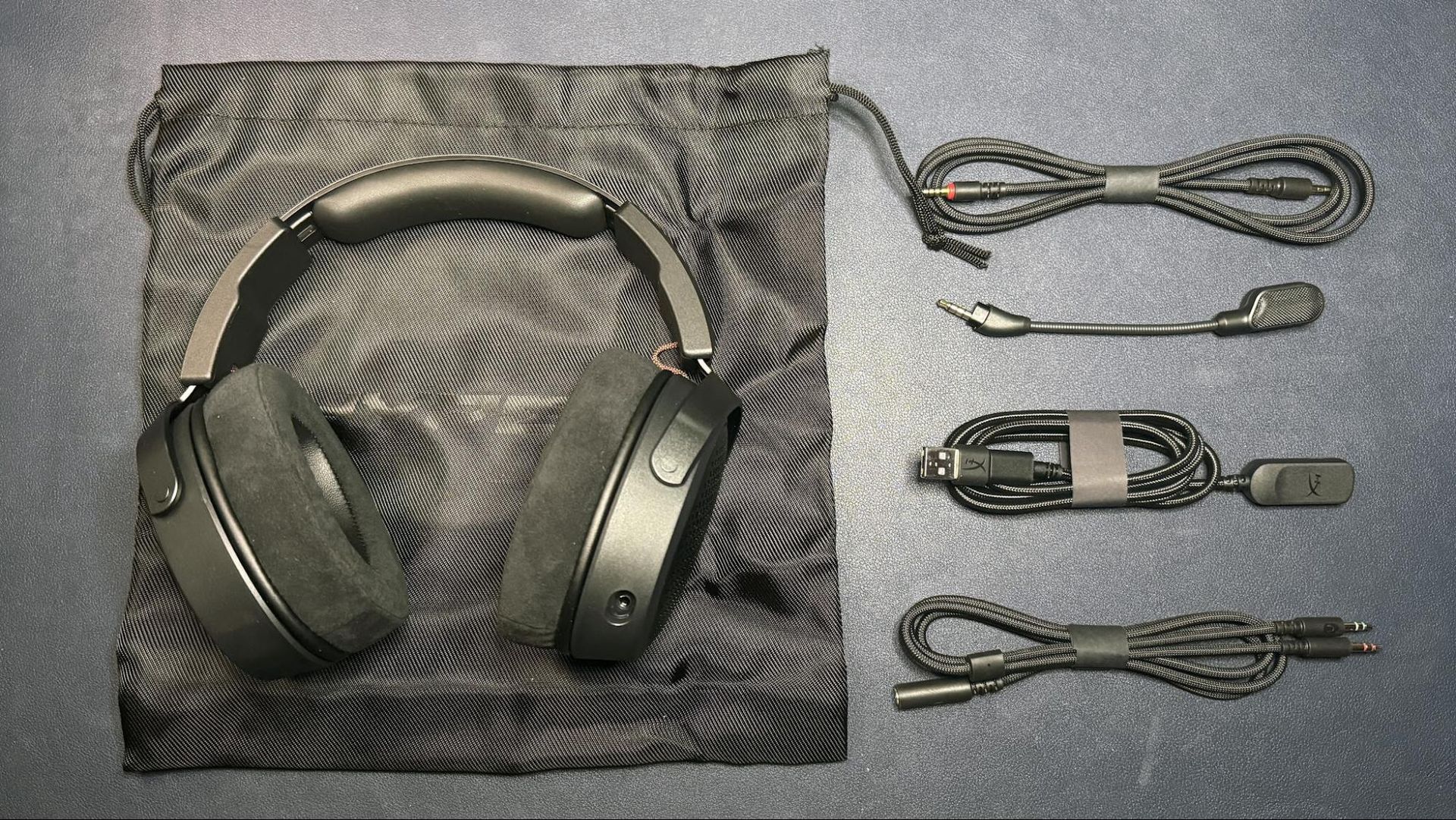
HyperX Cloud Alpha Air box contents, including cables and mics

HyperX Cloud Alpha Air (Image credit: Tom's Hardware)

Even wired gaming headsets often include multiple ways to connect to various devices. For instance, the HyperX Cloud Alpha Air is wired, but it comes with a standard 3.5mm analog cable for plugging into a standard audio jack, a USB-C extension (with USB-A converter) for plugging into a USB-C/USB-A port, and a PC headset extension for plugging into separate audio/mic jacks.

The wireless gaming headsets from the audiophile sector that have these features still manage to implement them in a way that is... well, inconvenient. Audeze's Maxwell and Maxwell 2 allow for dual-wireless connectivity but do not give you a way to manually switch between the two. Instead, Bluetooth always takes precedence over 2.4GHz wireless — full stop. It's infuriating, and it's one of my only real grievances with those headsets.

Communication

A standalone USB gaming mic will almost always make you sound better than a built-in headset mic. But that doesn't mean that you should ignore headset mics or how gaming headsets implement other features that help you communicate with others, whether they're team members or stream viewers, while gaming. (Besides, some headsets, such as the Razer BlackShark V2 Pro (2023), have microphones that actually can rival the best USB gaming mics.)

If you go with an audiophile headset — or headphones — you'll likely need to invest in a separate gaming mic regardless. There's more to communication than just the mic, though. Many gaming headsets, such as SteelSeries' Arctis Nova series, have built-in ChatMix, which lets you channel your game audio and your chat audio through different channels and mix them together on your headset. This lets you dial up (or dial down) chat if you need to hear what's being said over whatever epic music or sound effects are playing in the game. Gaming headsets are also backed by peripheral software that, while often frustrating, is, ultimately, designed around the needs of gamers. Software-based noise reduction/cancellation, microphone EQs, and sidetone are all particularly useful communication tools that you won't find on most audiophile headsets.

Audiophile or gaming headset?

At the end of the day, audiophile headsets tend to focus on audio above everything, which is exactly what audiophiles want. But it's not really what most gamers want. A great gaming headset does have to sound good, but that's not all it has to do.

Top-down view of the Audeze Maxwell 2

Audeze Maxwell 2 (Image credit: Tom's Hardware)

There are, of course, gaming headsets from audiophile companies, such as the Audeze Maxwell and Maxwell 2, as well as headsets from gaming companies that implement audiophile features, such as the open-back Corsair Virtuoso Pro. And while a headset like the Audeze Maxwell 2 does a decent job of bridging the gap between audiophile and gaming, it makes some sacrifices; it's a very heavy headset (thanks in part to its large, 90mm planar magnetic drivers), though it is relatively comfortable for its weight. It sounds great, but it doesn't do the best job of implementing the gamer side of things — while it has a wide soundstage and decent spatial immersion, that's not the same as pinpoint spatial accuracy when you're listening for footsteps and gunshots.
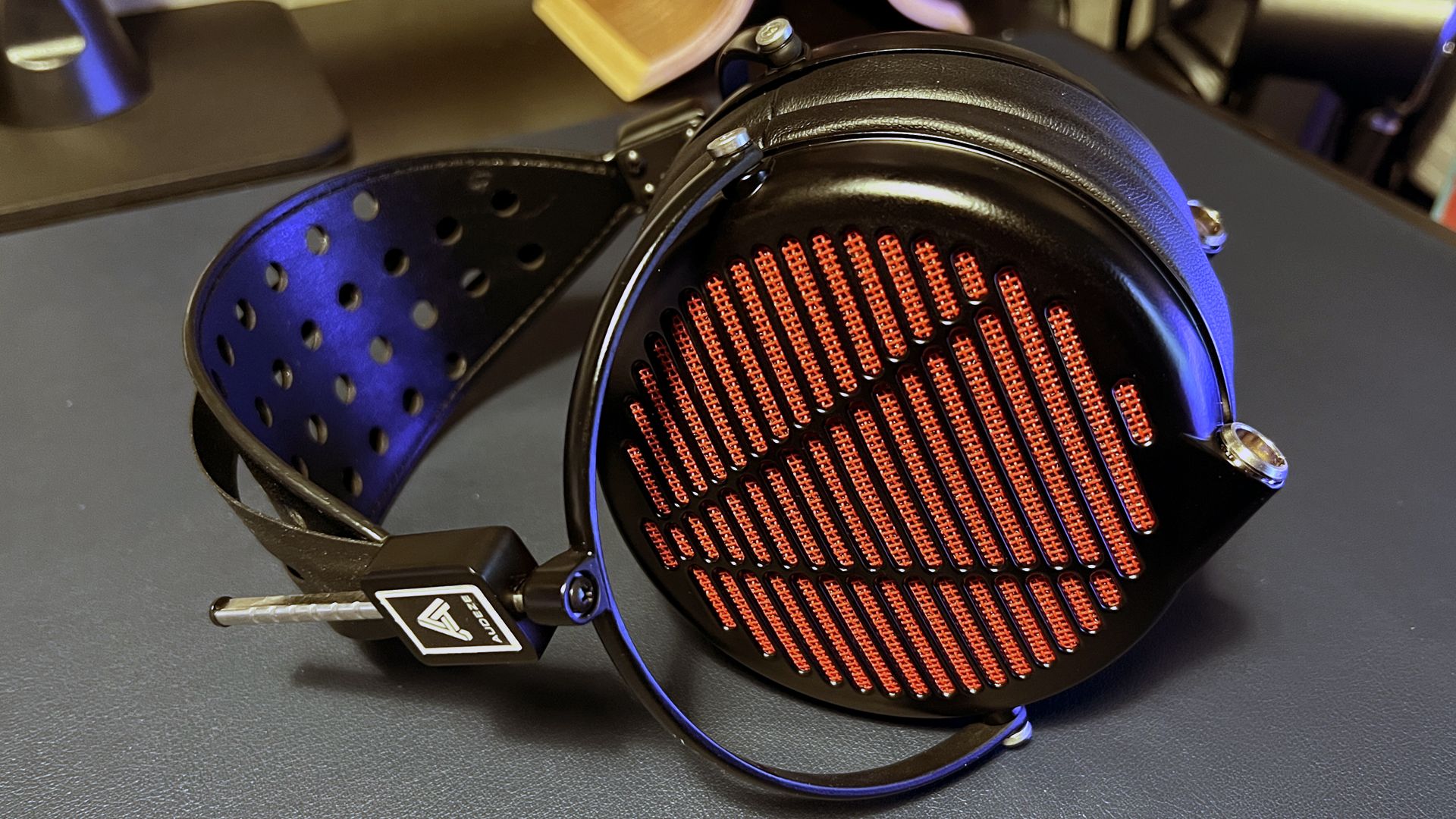
Audeze LCD-GX on a desk

(Image credit: Tom's Hardware)

And while the much pricier Audeze LCD-GX sounds incredible, it's basically the perfect example of how an audiophile headset focuses on sound at the expense of all else, as its gaming features are... mostly non-existent. The only thing that really makes the LCD-GX gamer-friendly is the fact that you can plug it directly into a PC because it comes with a 3.5mm cable and a PC (dual 3.5mm headphone/mic) converter.

So, should you get an audiophile headset in lieu of a gaming headset? Probably not. If you need a gaming headset for its gaming features: multi-device connectivity, super accurate positional audio for tactical advantage in shooting games, the ability to mix chat and game audio on the spot, convenient microphone, connection, and volume controls at your fingertips, or physical comfort for a marathon gaming session, definitely not. Yes, you will give up some audio fidelity and quality by picking a gaming headset over an audiophile one, but you aren't going to miss that when you're arguing over voice chat while trying to determine how far away the enemy is.

  •  

UK to Headphone Dodgers on Trains: Shush

Prime Minister Andy Burnham announced a campaign against listening to music or videos without headphones on public transportation. We asked London commuters to weigh in.
  •  

New Electrochemical Method Boosts Ocean Alkalinity to Capture Carbon

The ocean has quietly absorbed billions of tons of humanity’s carbon emissions over the past two centuries, but scientists and companies racing to supercharge that natural service have long been hampered by a stubborn and costly engineering problem. Now researchers at Stony Brook University, working with the Research Foundation for the State University of New York, have unveiled a method for electrochemical ocean alkalinity enhancement that they say can dramatically lower the cost of ocean-based carbon dioxide removal by eliminating one of the most expensive steps in the entire process: the pretreatment of seawater before it enters an electrochemical reactor. The innovation, now available for licensing through SUNY TechConnect, promises high-quality carbon offsets at a substantially reduced cost while simultaneously helping to counteract the acidification that threatens marine ecosystems worldwide.

At the heart of the challenge is a delicate chemical balancing act. As atmospheric carbon dioxide dissolves into seawater, it forms carbonic acid, which lowers the ocean’s pH and erodes the carbonate chemistry that corals, shellfish and other calcifying organisms depend upon. Ocean carbon dioxide capture exploits a simple principle: if the ocean becomes more alkaline, it can absorb more CO2 from the air and lock it away safely as bicarbonate, one of the most stable and abundant forms of inorganic carbon on Earth. This process, known as ocean alkalinity enhancement, effectively turns the surface ocean into a vast, distributed carbon sink. But adding alkalinity to seawater is not trivial, and doing it in a way that is energy-efficient, scalable and safe has become one of the central engineering puzzles of the emerging carbon removal industry.

One of the most promising approaches relies on electrochemistry, specifically a technique called bipolar membrane electrodialysis. In this system, ion-selective membranes are stacked between two end electrodes, and the arrangement allows operators to split ordinary saltwater into its constituent acid and base. When brine containing sodium chloride flows through the stack, the process generates hydrochloric acid on one side and sodium hydroxide, a strong base, on the other. The elegance of the scheme lies in its product handling: if the hydrochloric acid is kept on land, where it can be stored, neutralized or put to industrial use, and only the sodium hydroxide along with the treated seawater is returned to the ocean, the receiving waters gain a net infusion of alkalinity. That added alkalinity shifts the carbonate equilibrium, allowing the ocean to draw down carbon dioxide from the atmosphere and convert it into dissolved bicarbonate that remains stable for millennia.

This electrochemical pathway has attracted serious commercial interest precisely because it produces what carbon markets call negative emissions, meaning carbon dioxide is durably removed from the atmosphere rather than merely avoided. Companies pursuing net-zero targets increasingly rely on such carbon removal credits to offset their residual emissions, and ocean alkalinity enhancement is widely regarded as one of the largest-capacity avenues available, given the sheer scale of the world’s oceans. Yet the technology has been held back by a deceptively mundane problem: what flows into the reactor matters just as much as what flows out.

Seawater, and many other brine streams that might feed these systems, contains divalent cations, most notably calcium and magnesium ions, alongside the sodium and chloride that the process is designed to split. When these divalent ions encounter the high-pH conditions created at the base-producing side of a bipolar membrane stack, they precipitate as solid calcium and magnesium compounds that coat the membranes in a crust known as scale. The consequences are cascading. Scaled membranes lose their ion-selective efficiency, forcing the system to push harder and consume more electricity to achieve the same output. Over time, the deposits shorten membrane lifetime, increasing maintenance frequency and replacement costs. The conventional answer has been water softening pretreatment, in which the incoming seawater is stripped of calcium and magnesium before it ever reaches the electrodialysis unit. While effective, such pretreatment adds significant capital and operating expense, undermining the economic case for the entire carbon removal operation and eroding the value proposition of the resulting carbon credits.

The Stony Brook researchers behind the new method have essentially designed around this bottleneck. Their technology enables electrochemical enhancement of ocean alkalinity without any pretreatment of the incoming seawater at all. By rethinking how the electrochemical system handles brine streams laden with divalent cations, the researchers have created a process that tolerates raw seawater directly, sidestepping the water softening infrastructure that previous designs demanded. According to the announcement from the Research Foundation for SUNY, the result is a system that produces negative emission carbon offsets of very high quality at a substantially reduced cost, simply because the most expensive upstream step has been engineered out of existence. The advantages claimed for the approach are straightforward and commercially significant: it is cheaper, more energy efficient, and requires no expensive water softening pretreatment.

The implications ripple across both the carbon markets and the broader climate technology landscape. Carbon offset buyers, including corporations striving to meet net-zero commitments, place a premium on removal credits that are durable, verifiable and cost-competitive. Ocean alkalinity enhancement already offers exceptional permanence, since bicarbonate dissolved in seawater represents one of the most long-lived forms of carbon storage known. By cutting costs at the front end, the Stony Brook method could help push the price of these high-quality ocean-based offsets toward levels that make them viable at gigatonne scale, a threshold that analysts consider essential if carbon removal is to play a meaningful role in stabilizing the global climate. Cheaper alkalinity generation also strengthens the second major application of the technology: mitigating ocean acidification directly, without necessarily framing it as a carbon market product at all.

Ocean acidification itself is a mounting crisis. Since the industrial revolution, the average surface ocean pH has dropped measurably as the sea has absorbed roughly a quarter to a third of anthropogenic CO2 emissions. The consequences have been documented across coral reefs, oyster hatcheries, pteropods and other calcifying organisms whose shells and skeletons become harder to build in increasingly acidic waters. A technology that adds alkalinity to coastal waters and open ocean regions simultaneously addresses this chemical stress and harvests the carbon removal benefit, a dual function that distinguishes ocean alkalinity enhancement from many other carbon removal approaches. In regions where fisheries, aquaculture and reef ecosystems are economically vital, localized deployment of alkalinity-enhancing electrochemical systems could offer both environmental resilience and revenue through carbon credit sales.

The scientific pedigree of the work reflects the growing maturity of the carbon removal field. Stony Brook University, a flagship research institution within the SUNY system, has become an active hub for climate and energy innovation, and the new method is protected under intellectual property identified in the licensing announcement. The Research Foundation for the State University of New York, the nation’s largest research foundation supporting the nation’s largest public university system, is actively seeking development partners, commercial partners and licensees to translate the laboratory advance into deployed systems. The foundation describes a broad portfolio of SUNY-led research spanning artificial intelligence for the public good, quantum technologies, next-generation semiconductors, biotechnology and medicine, and energy and climate solutions, with system-wide research expenditures approaching 1.5 billion dollars in fiscal year 2025.

For the carbon removal industry, the timing of the announcement is notable. As voluntary and compliance carbon markets mature, buyers are demanding higher fidelity in the offsets they purchase, favoring durable removal over avoidance-based credits. Electrochemical ocean alkalinity enhancement, with its well-understood chemistry and measurable inputs and outputs, is well positioned to meet rigorous monitoring, reporting and verification standards. The obstacle has always been cost, and the pretreatment bottleneck has been a substantial contributor. If the Stony Brook design performs as described at industrial scale, it could remove one of the largest cost wedges standing between laboratory demonstration and commercial deployment, accelerating a technology class that many climate analysts view as indispensable to achieving deep decarbonization.

The broader lesson of the advance may be as important as the technology itself. In the race to scale carbon removal, progress often comes not from exotic new chemistry but from eliminating the hidden costs and fragilities that make promising concepts uneconomic in practice. Water softening pretreatment is exactly the kind of unglamorous engineering detail that determines whether a climate technology remains a paper exercise or becomes infrastructure. By designing a bipolar membrane electrodialysis system that thrives on untreated seawater, the Stony Brook researchers have addressed one of those decisive details. The ocean, meanwhile, stands ready. Every unit of alkalinity added is an invitation for the sea to take up more carbon dioxide and, in doing so, to heal a little of the acidification that a warming world has inflicted upon it. What remains now is the work of scaling, partnering and commercializing, and the SUNY licensing announcement signals that the researchers and their institution intend to see this chemistry leave the laboratory and reach the sea.

Subject of Research: Electrochemical ocean alkalinity enhancement for carbon dioxide removal and ocean acidification mitigation

Article Title: Method for electrochemical ocean alkalinity enhancement

Article References: Method for electrochemical ocean alkalinity enhancement. Research Foundation for the State University of New York, via EurekAlert! News by Subject: Tech & Engineering. Available at: SUNY TechConnect (https://suny.technologypublisher.com/) Original publication

Image Credits: AI Generated

DOI: Not provided

Keywords: ocean alkalinity enhancement, carbon dioxide removal, bipolar membrane electrodialysis, ocean acidification mitigation, carbon offsets, Stony Brook University, negative emissions, seawater pretreatment, net-zero goals, electrochemistry, Research Foundation for SUNY

  •  

MacVoices #26163: NAB – CYME Expands Peakto for Larger Libraries and Team Collaboration

In the CYME booth at NAB in Las Vegas, Matthieu Kopp, Chief Technology Officer, previews the next Peakto release, highlighting support for much larger media libraries, expanded collaboration, guest sharing, and secure on-premise access without cloud uploads. He also discusses other features such as new culling tools, improved ingest control, subclips for video workflows, and […]

💾

  •  

Apple Vision Pro may have found its reason to exist–and it’s not VR games

Macworld

When Vision Pro hit shelves in February 2024 with a $3,499 price tag, it was clear that it wasn’t going to be Apple’s next big seller. Not only did it cost more than most MacBook Pros, but it also didn’t really have a reason for people to spend that much on a headset. There were barely any games, a handful of immersive experiences, and no real killer app to lure people in.

Over two years later, the Vision Pro costs even more now (starting at $3,699 after a recent price hike) and still doesn’t have a compelling reason for most people to buy one. However, a recent report puts Apple’s headset in a different light. According to a study conducted at the UC San Diego Shiley Eye Institute, Apple Vision Pro is a remarkably effective tool for endoscopic lacrimal surgery. So effective, in fact, it actually saves time and money.

Among the study’s findings:

• 19 percent shorter operative times
• 100 percent functional success with no intraoperative or postoperative complications
• Significantly lower surgeon-reported workload
• Improved ergonomics

As the study explains, this surgery is ideal for Vision Pro’s design and functionality:

Endoscopic dacryocystorhinostomy (endoDCR) has become a mainstay in the surgical management of nasolacrimal duct (tear duct) obstruction and is now common practice among lacrimal surgeons. Compared with the traditional external approach, the endonasal route avoids a cutaneous incision and provides direct visualization of the intranasal surgical field while achieving comparable success rates. Because the procedure is performed entirely under nasal endoscopy, with the operative image displayed on an external monitor, it is a natural setting in which to evaluate a wearable, head-anchored display.

According to Horace Dediu at Asymco, who assessed the cost and space impacts of the Vision Pro for the study, “within the context of the operating room, the Apple Vision Pro is notable for being very small and very cheap. It is less than 1% of the cost and smaller than almost any piece of equipment.”

So while you and I might not have $3,699 to spend on a new Vision Pro, hospitals would actually be saving money by investing in the headset over their current equipment. And with an M5 chip and Siri AI, the Vision Pro could just be the next big thing for surgeons. After all, how many endoscopic dacryocystorhinostomy monitors let you kick back and watch a movie on the moon when you’re done with surgery.

  •  

★ Acelere o trabalho de criação 3D com o Flow Studio, da Autodesk

Uma boa parte das pessoas certamente já teve aquela ideia “matadora”, que acredita ser capaz de revolucionar ou transformar o mundo de alguma forma. Essa ideia, no entanto, quase sempre acaba esbarrando na falta de meios ou recursos para colocá-la em prática.

Com a criação de conteúdos audiovisuais, não é diferente. Muitas vezes, aquela ideia genial que poderia lhe render bons frutos no futuro acaba ficando estagnada seja por falta de conhecimento técnico para executá-la ou até mesmo por limitações de tempo ou dinheiro.

Flow Studio, da Autodesk

Nos últimos anos, a magia da inteligência artificial generativa vem mudando bastante esse cenário, tornando a produção mais acessível e prática até mesmo para não profissionais. E esse potencial é ainda maior quando usamos aplicativos dedicados no nosso workflow.

Um exemplo de app bem interessante focado em produção audiovisual é o Flow Studio. Basicamente, com ele você terá todos os recursos e facilidades para ajudar a transformar ideias em recursos 3D editáveis, performances animadas e tomadas bem trabalhadas.

Desenvolvido pela renomadíssima Autodesk, o Flow Studio é um hub que reúne ferramentas 3D baseadas na nuvem e alimentadas por IA para acelerar a produção gráfica, diminuindo a complexidade de tarefas que antes podiam ser para lá de técnicas.

Basicamente, o Flow Studio ajuda a transformar filmagens em cenas 3D editáveis e resultados prontos para direção, com ferramentas para captura de movimento, rastreamento de câmera, integração de CG e exportação — seja você um criador independente ou parte de uma equipe de efeitos visuais.

O recurso Wonder 3D, por exemplo, permite gerar rapidamente personagens ou objetos 3D a partir de uma simples solicitação de texto ou do envio de uma imagem. Após gerados, os assets podem ser refinados, editados e reutilizados em diversos projetos, plataformas e fluxos de trabalho.

Após gerar seu personagem, você pode usar o AI Rigging para ajudar no processo de animação — uma das etapas mais técnicas dessa fase — com poucos cliques. Ele também permite usar mockups de IA nos projetos ou exportar ativos manipulados para outras ferramentas.

O AI Rigging se integra ao Neural Layer no fluxo de trabalho mais amplo do Flow Studio: crie a estrutura dos personagens para animação e, em seguida, use o Neural Layer como uma etapa de finalização cinematográfica para aperfeiçoar a aparência das tomadas com renderização aprimorada diretamente na plataforma do Flow Studio — sem a necessidade de um pipeline de renderização tradicional.

Na prática, o Flow Studio reduz a distância entre a imaginação e a execução. Em vez de gastar horas com configurações técnicas, criadores de conteúdo audiovisual 3D podem dedicar mais tempo a experimentar, iterar e encontrar a melhor versão para as suas ideias.

NOTA DE TRANSPARÊNCIA: Este é um artigo fruto de um acordo comercial com um anunciante, que não influenciou a nossa opinião. O MacMagazine recebe uma pequena comissão sobre vendas concluídas por meio de links deste post, mas você, como consumidor, não paga nada mais pelos produtos comprando pelos nossos links de afiliado.

  •  

Qualcomm vai subir os preços a partir de setembro. Será esta a oportunidade da MediaTek?

A Qualcomm já confirmou que todos os seus produtos, incluindo o futuro Snapdragon 8 Elite Gen 6 Pro, vão ficar mais caros a partir do próximo mês. A subida abre uma janela de oportunidade à MediaTek, que, segundo rumores da cadeia de fornecimento, poderá vender o Dimensity 9600 Pro por bem menos dinheiro aos fabricantes de smartphones.

The post Qualcomm vai subir os preços a partir de setembro. Será esta a oportunidade da MediaTek? appeared first on Tek Notícias.

  •  

Brickset: a enciclopédia definitiva de LEGO com mais de 25 anos de história e uma comunidade de um milhão de colecionadores

Com fichas detalhadas de mais de 24.000 conjuntos, ferramentas de gestão de coleção, listas de desejos e preços de mercado atualizados, o Brickset é o sítio onde qualquer entusiasta de LEGO acaba por chegar, mais cedo ou mais tarde

The post Brickset: a enciclopédia definitiva de LEGO com mais de 25 anos de história e uma comunidade de um milhão de colecionadores appeared first on Tek Notícias.

  •  

PGS Browser: Personalized Polygenic Score Analysis Platform

In the ever-evolving field of genomics, a significant leap has been achieved with the introduction of the PGS Browser, a novel public platform designed to transform the way researchers, clinicians, and individuals interact with polygenic scores. Polygenic scores (PGS) are quantitative measures that capture the cumulative effect of numerous genetic variants across the genome, predicting an individual’s predisposition to complex traits and diseases. This new platform promises not just accessibility but also interpretative power, enabling a personalized approach to genomic data that could reshape personalized medicine and risk assessment paradigms worldwide.

At the heart of this transformative tool lies a sophisticated integration of vast genomic datasets, advanced computational algorithms, and user-friendly interfaces. The PGS Browser aggregates polygenic scores derived from an array of large-scale genome-wide association studies (GWAS), providing an unprecedented resource where users can explore the genetic architecture of diverse traits. One of the platform’s most compelling features is its capacity to personalize polygenic risk predictions by incorporating individual genetic data with contextual healthcare analytics, bridging the longstanding gap between raw genetic information and actionable clinical insights.

Traditionally, polygenic scores have been calculated using fixed sets of genetic variants, often constrained by limited population samples or specific ancestral backgrounds. This poses significant challenges regarding the portability and generalizability of these scores across diverse populations. The PGS Browser addresses this limitation head-on by incorporating multi-ancestry datasets and advanced statistical models that recalibrate polygenic scores for diverse genetic ancestries. This opens new horizons in achieving equity in genomic medicine, ensuring individuals from underrepresented populations have access to precise, contextually relevant risk evaluations.

The technical backbone of the PGS Browser involves complex methodologies that include linkage disequilibrium (LD) adjustment, penalized regression frameworks, and machine learning techniques, all optimized for high-throughput and scalable analysis. These computational advances optimize the balance between predictive accuracy and overfitting, a persistent challenge in polygenic score modeling. By dynamically adjusting for confounding genomic features and population stratification, the platform produces risk scores that are both statistically robust and biologically interpretable.

One of the critical innovations within the platform is its interpretability module, designed to unpack the black-box nature of polygenic predictions. Users are not only presented with their personalized polygenic scores but also receive detailed visualizations and annotations explaining the contribution of key genetic loci, biological pathways involved, and potential gene-environment interactions. This level of detail empowers clinicians to make informed decisions and patients to understand the genetic basis of their risks, paving the way for targeted preventative strategies and lifestyle modifications.

From a healthcare perspective, the implications of the PGS Browser extend far beyond academic research. The platform is a strategic tool for genetic counseling, allowing healthcare providers to identify individuals at elevated risk for complex diseases such as cardiovascular disease, diabetes, and certain cancers before clinical symptoms manifest. Early identification through polygenic risk enables preemptive interventions, personalized monitoring, and tailored therapeutic approaches, underscoring a shift from reactive to proactive medicine.

Moreover, the PGS Browser operates with a commitment to transparency and reproducibility, addressing critical concerns in genetic epidemiology. All computational workflows are openly accessible, enabling peer verification and fostering collaborative improvement. The platform also integrates with existing biobank data through standardized protocols, facilitating validation studies and meta-analyses that enhance the reliability of polygenic scores across global cohorts.

A particularly noteworthy aspect of the platform is its potential role in pharmacogenomics. By correlating polygenic scores with drug response phenotypes, the browser could assist in identifying individuals who might benefit from specific medications or require dosage adjustments. This integration with personalized medicine elevates the clinical utility of polygenic scores from risk stratification to therapeutic optimization, highlighting the multi-dimensional impact of genomic data in patient care.

The PGS Browser also bridges the gap between research and public engagement. Designed with intuitive navigation and educational resources, it invites an increasingly genomically literate public to explore their genetic predispositions within a responsible and secure framework. This democratization of genetic information fosters greater awareness and empowerment while maintaining stringent privacy standards, an essential consideration in the era of big data.

In operational terms, the platform boasts scalability features capable of handling millions of individuals’ data concurrently, a necessity given the rapid expansion of genomic databases worldwide. The utilization of cloud-based infrastructures, coupled with containerized computational environments, ensures flexible deployment across various institutional settings while preserving data security and compliance with regulatory frameworks such as GDPR.

From a scientific perspective, the availability of such a public platform catalyzes the discovery of novel gene-trait associations by allowing researchers to perform systematic, large-scale analyses that correlate polygenic scores with phenotypic data. This accelerates the identification of biological mechanisms underlying complex traits, informing subsequent functional studies and therapeutic development pipelines.

Ethical considerations permeate the development and deployment of the PGS Browser. The platform incorporates informed consent modules, guidelines on interpretation limitations, and warnings against deterministic views of genetic risk. By fostering responsible use and interpretation, the platform promotes ethical standards within a field where genetic data can easily be misunderstood or misapplied.

Furthermore, the PGS Browser represents a leap forward in standardizing polygenic score methodologies. Historically, disparate scoring algorithms and variable reporting conventions have hindered comparability across studies. This unified platform offers a harmonized framework that promotes methodological consistency, enabling the scientific community to consolidate findings and build upon a shared foundation.

The cross-disciplinary collaboration manifested in the creation of the PGS Browser highlights the convergence of genetics, bioinformatics, data science, and clinical medicine. This integrative approach is crucial to addressing the complexities of polygenic risk and translating genomic insights into tangible health benefits, marking a pivotal moment in the genomics era.

Looking forward, the PGS Browser sets the stage for continuous evolution. Planned enhancements include integration with longitudinal health records, expansion of trait coverage particularly in psychiatric and neurological domains, and real-time updating as new GWAS data emerge. Such adaptability ensures the platform remains at the forefront of personalized genomics research and application.

In conclusion, the PGS Browser embodies a landmark achievement in the democratization and personalization of polygenic score analysis. By merging rigorous computational techniques with accessible design and ethical mindfulness, it empowers a broad spectrum of users to harness the predictive power of genomic data. This innovation holds transformative potential for healthcare, research, and public understanding, catalyzing a new era in precision medicine where genetic insights are personalized, interpretable, and actionable like never before.


Subject of Research: Development and deployment of a public platform for personalized polygenic score analysis and interpretation.

Article Title: PGS Browser: A Public Platform for Personalized Polygenic Score Analysis and Interpretation.

Article References:
Kolosov, N., Reeve, M.P., Briotta Parolo, P.D. et al. PGS Browser: a public platform for personalized polygenic score analysis and interpretation. Nat Commun (2026). https://doi.org/10.1038/s41467-026-74461-7

Image Credits: AI Generated

  •  

Synthetic Data: Challenges and Insights in Gastrointestinal Medicine

In recent years, the advent of artificial intelligence (AI) has reshaped the landscape of medical research and clinical practice, ushering in an era where machines replicate—and increasingly surpass—human cognitive abilities in various domains. Among the most intriguing developments is the capability of AI systems to assimilate vast troves of real-world data, allowing algorithms to accurately recognize complex patterns within clinical environments. This includes the identification of intricate pathological features, accurate labeling of disease states, and support in making critical healthcare decisions. Central to this revolution is the notion of synthetic data generation, a cutting-edge technology poised to tackle longstanding barriers impeding medical innovation, particularly in the realm of gastrointestinal (GI) medicine.

Synthetic data generation refers to the process through which artificial datasets are created by AI algorithms, mimicking the statistical properties and underlying structures of real-world clinical data without exposing sensitive patient information. This technique promises to solve two critical challenges: preserving patient privacy and reducing the often exorbitant costs and logistical complexities associated with curating and annotating healthcare datasets. By producing realistic, unbiased, and privacy-preserving synthetic data, researchers and clinicians could unlock unprecedented opportunities for training sophisticated AI models and improving clinical decision support systems tailored to gastrointestinal health.

In the context of gastrointestinal diseases, where early detection and precise diagnosis are often paramount, synthetic data offers a transformative potential. GI disorders encompass a broad spectrum of conditions, such as inflammatory bowel disease, colorectal cancer, and liver cirrhosis, each demanding nuanced understanding and timely intervention. Traditional approaches to gathering data for AI training encounter significant roadblocks, including patient consent restrictions, heterogeneous data quality, and the inherent rarity of some disease presentations. Generating synthetic equivalents of such data not only bridges these gaps but also enables the continuous refinement of diagnostic algorithms through virtually unlimited and diverse data augmentation.

From a technical standpoint, generating high-fidelity synthetic GI data entails leveraging advanced generative models, such as Generative Adversarial Networks (GANs), Variational Autoencoders (VAEs), and diffusion models. GANs, for example, pit two neural networks against each other in a zero-sum game—the generator strives to create realistic data indistinguishable from original datasets, while the discriminator attempts to detect artificiality. This adversarial process gradually improves the quality of synthetic outputs, rendering them increasingly suitable for downstream clinical applications. However, the GI domain presents unique challenges due to the complexity and variability inherent in endoscopic images, histopathological slides, and multi-omics data.

A profound technical hurdle lies in ensuring that synthetic gastrointestinal datasets retain clinical validity and biological relevance. Unlike generic image synthesis, medical data synthesis must preserve subtle yet critical diagnostic details, such as mucosal texture alterations, microvascular patterns, and lesion morphology. Obtaining this level of fidelity mandates incorporating domain-specific constraints and annotation-guided synthesis protocols. Furthermore, the synthetic data must demonstrate robustness to common sources of variability: differences in imaging devices, procedural inconsistencies, and patient-specific anatomical variations. Without these safeguards, downstream AI models risk being trained on data that poorly represents true clinical scenarios and yield unreliable predictions.

Another pivotal aspect of using synthetic data in gastrointestinal medicine is its contribution to overcoming privacy legislation hurdles like HIPAA or GDPR. Traditional anonymization methods risk compromising data utility or may be insufficient in preventing re-identification attacks. Conversely, by training generative models on real patient data and producing artificial yet representative datasets, synthetic data generation preserves privacy inherently, as no direct personal identifiers or actual patient samples are included. This feature fosters a more open collaboration across institutions and research groups, catalyzing the development of multipurpose AI-driven tools capable of detecting early-stage GI malignancies, monitoring disease progression, and predicting therapeutic responses.

Despite the tremendous promise of synthetic data, translating this innovation from research laboratories to clinical workflows demands meticulous validation and regulatory compliance. Clinical decision support systems powered by synthetic data-driven AI must undergo rigorous testing against gold standards to verify their safety and effectiveness. Interpretability also remains a significant concern, as clinicians must trust and understand AI recommendations to incorporate them confidently in patient care. Efforts to integrate synthetic data into regulatory frameworks, combined with transparent reporting of generative model performance metrics, will be crucial to achieving widespread clinical acceptance.

Synthetic data not only enhances diagnostic AI but opens new frontiers for medical education and professional training in gastroenterology. Trainees often face limited exposure to rare or complex cases, which impedes skill acquisition and confidence-building. High-quality synthetic datasets can provide diverse and unlimited case simulations, including pathologies that might be encountered infrequently but require high diagnostic acumen. This approach supports immersive, hands-on learning without compromising patient safety or privacy, helping to shape the next generation of gastroenterologists equipped with AI-enhanced diagnostic abilities.

Moreover, the adoption of synthetic data dovetails with the broader trend of precision medicine and personalized healthcare. By complementing real patient data with synthetic counterparts generated under controlled conditions, AI models can better capture the heterogeneity of gastrointestinal diseases, including genetic, environmental and lifestyle factors. This richer informational substrate empowers clinicians to tailor interventions more precisely, leading to improved patient outcomes, reduced adverse effects, and optimized resource utilization. Synthetic data thus acts as a cornerstone technology in enabling AI systems to realize their full potential in individualized care pathways.

Nevertheless, emerging research highlights several critical challenges that warrant attention for synthetic data to reach its full utility. One major issue is preventing the inadvertent introduction of bias during data synthesis, which could propagate and amplify healthcare disparities if not carefully addressed. Ensuring equitable representation across demographics, comorbidities, and clinical settings is imperative. Additionally, synthetic data generation must grapple with the potential for overfitting or hallucination, where models produce plausible yet clinically inaccurate artifacts. Developing rigorous validation metrics, cross-institutional benchmarking, and consensus guidelines will be necessary steps to mitigate these risks effectively.

In parallel, fostering multidisciplinary collaboration among clinicians, computer scientists, data privacy experts, and ethicists will accelerate the adoption of synthetic data paradigms. This convergence of expertise will enable the design of sophisticated pipelines that uphold ethical standards, comply with legal mandates, and optimize clinical relevance. It will also stimulate innovation in enhancing generative model architectures, integrating multi-modal data sources, and streamlining model deployment within real-time endoscopy or pathology workflows.

Reflecting on the current trajectory, the era of synthetic data in gastrointestinal medicine signals a paradigm shift from data scarcity and privacy constraints toward unprecedented data abundance and accessibility. As AI algorithms evolve and healthcare systems embrace digital transformation, synthetic data will be pivotal in democratizing access to high-quality datasets, unleashing creativity in algorithm development, and fostering robust, scalable solutions for early disease detection and personalized treatment. The implications extend beyond GI diseases, serving as a blueprint for AI-driven clinical innovation across medical specialties.

In conclusion, the synthesis of artificial yet clinically meaningful datasets represents one of the most promising frontiers in AI and medicine. While significant challenges remain—technical, ethical, and regulatory—the momentum and early successes within gastrointestinal medicine are compelling. Future research should focus on refining generative approaches, validating AI models trained on synthetic data across diverse populations, and embedding these technologies seamlessly into clinical practice. Ultimately, the judicious application of synthetic data holds the key to unlocking the full transformative power of artificial intelligence for improved patient care and health system efficiency worldwide.


Subject of Research: Synthetic data generation and its application in gastrointestinal medicine.

Article Title: Synthetic data generation: challenges and perspectives for gastrointestinal medicine.

Article References:
Gatoula, P., Iakovidis, D.K., Diamantis, D.E. et al. Synthetic data generation: challenges and perspectives for gastrointestinal medicine. Nat Rev Gastroenterol Hepatol (2026). https://doi.org/10.1038/s41575-026-01216-6

Image Credits: AI Generated

  •  
❌