❌

Reading view

“We Couldn’t Believe What We Were Seeing”: Scientists Have Discovered a Bizarre New Microbe with an “Alien” Reproductive Strategy

A recent study published in Protist reports that a marine microorganism reproduces in a previously unknown way: by creating new cells inside its body, then rupturing to release them.

The bizarre process is reminiscent of the reproductive horror depicted in the movie Alien, albeit on a microscopic scale.

This microbe is part of the Labyrinthulomycetes, a group of marine microorganisms that play a key role in recycling nutrients by breaking down dead plants and animals in salty environments. Beyond their ecological importance, some species in this group are valued for producing omega-3 fatty acids like DHA, which is also found in oily fish, and carotenoids, pigments used in food coloring.

This newly discovered species also contains roughly 50% protein, adding to its potential commercial value for applications such as food supplements, infant formula, and aquaculture.

An “Alien” Reproductive Strategy

“Instead of dividing into two, as we would expect, the mature cells develop a large internal chamber in which entirely new daughter cells grow,” said Professor Peter Morris, a plant biologist at Heriot-Watt University.

“Some of those daughters already have another developing generation inside them, before they are released when the mother cell breaks open,” Morris added. “So, these microbes can be pregnant grandmothers, in the same way as some species of greenfly are born already pregnant.”

The researchers named the new species Caledochytrium aldermanii, drawing from Caledonia, the Latin name for Scotland, where it was discovered in three locations. The species name also recognizes Dr. David Alderman, whose early work culturing the microbe made the study possible.

This discovery resulted from a long-term collaboration among Heriot-Watt University, its spinout company Strameno, CEFAS Weymouth, and the Institute of Aquaculture at Stirling University.

Caught by Watching, Not Just Sequencing

Dr. Jane Polglase, who has spent nearly five decades studying Labyrinthulomycetes and co-founded Strameno with Alderman and Dr. Lydia Brown, helped document the microbe’s unusual reproduction. The team relied on traditional observation and description, an approach less common in today’s genomics-focused research.

“While lots of scientists now focus on the DNA of any creature, we’ve taken an old-fashioned approach, also observing the microbe’s behavior and describing its morphology fully,” Polglase said. “If we had not done that, we never would have captured this peculiar reproductive process on camera.” When the team finally caught it under an electron microscope, she said, “We couldn’t believe what we were seeing.”

Resourceful Marine Recyclers

Researchers found Caledochytrium in a variety of habitats, including octopus dens, on rainbow trout, and in a salt marsh along Scotland’s east coast. The researchers believe it contributes to nutrient recycling by breaking down animal and plant material.

An important part of this recycling process is the ectoplasmic net, a network of membranes the microbe creates to move around, feed, and stay buoyant. When it moves to a new surface, the microbe leaves the net behind, where marine larvae can feed on the leftover material, helping pass protein and lipids up the food chain.

What Comes Next

“Understanding how this species reproduces is key to understanding how it could be used in commercial settings, like aquaculture,” Morris said.

With this phase of research complete, the Heriot-Watt and Strameno team hopes others will continue the work. The discovery highlights how much remains to be learned about the diversity and behavior of life in the oceans.

Austin Burgess is a writer and researcher with a background in sales, marketing, and data analytics. He holds an MBA, a Bachelor of Science in Business Administration, and a data analytics certification. His work focuses on breaking scientific developments, with an emphasis on emerging biology, cognitive neuroscience, and archaeological discoveries.

  •  

Hidden in a Museum Collection for More Than a Century, Researchers Have Just Made a Bizarre New Discovery

Some of nature’s most unusual finds remain unrecognized for decades, or even centuries, after their initial discovery—and that has proven true once again with several strange new creatures recently uncovered in museum collections and from other sources.

The findings reveal at least ten new examples of some of the animal kingdom’s strangest worms, showcasing their remarkable diversity and a few unusual traits, such as bodies that appear to repeatedly branch into multiple different ends, almost evoking the fantastic beasts of ancient mythology.

Such characteristics, however, are what earned these creatures their unique name: branching worms. These marine animals belong to a group of creatures known as annelids and possess a single head but grow elaborate, almost plant-like networks of branching bodies.

The creatures are known to science, although they are reclusive, spending most of their lives hidden inside sea sponges that thrive in a range of different ocean environments, with their many branching appendages spreading throughout the internal structures of their aquatic hosts.

sponge branching worms
A Petrosia sponge, a variety that hosts bizarre branching worms (Image Credit: Nicole de Voogd

New Examples of Earth’s Strangest Worms

Previously, only three varieties of these oceanic oddities were known. However, a new study published in the Zoological Journal of the Linnean Society has revealed as many as ten likely new species, some of which had been hidden away in museum collections for more than a century.

The study, led by researchers at the University of Göttingen, used the specimens, along with genetic data and other information, to reconstruct the evolutionary history of the animals with the help of DNA sequencing, anatomical analyses, and several newly collected specimens.

Based on their findings, a total of thirteen distinct forms of branching worms are now known, which are found across the Indo-Pacific, the Red Sea, and the ocean waters near New Zealand. Based on the available genetic data, these creatures appear to stem from two major evolutionary lineages: Ramisyllis, a genus that was already known to researchers, and now an entirely new genus, which has been dubbed Cladosyllis.

“Our findings would have been impossible without access to valuable museum specimens,” said study leader Professor Maria Teresa Aguado, Scientific Curator of the Biodiversity Museum at Göttingen University. “These collections are not just repositories of old samples, but resources that continue to generate new discoveries.”

Hidden in Plain Sight

Remarkably, some of these specimens had been accessible to researchers for more than a century. Several of the newly assessed early specimens were retrieved from within sponges held in the Senckenberg collection, which dates to 1914.

Researchers were successfully able to reveal these “hidden” specimens without damaging their hosts by using micro-computed tomography (micro-CT) imaging.

branching worms
The “hidden” specimens were revealed with the help of 3D X-ray imaging techniques (Image Credit: Ekin Tilic and Maria Teresa Aguado Molina),

However, along with the discoveries, a few answers to longstanding questions have also emerged.

Going back to the nineteenth century, many of these rare branching worms were classified as a single widespread species. However, now researchers say that a far more diverse evolutionary family exists, with various kinds associated closely with specific sponge hosts in each of the geographic regions where they reside.

Some of the newly identified specimens inhabit sponges that thrive in shallow water, while others dwell within glass sponges, a species that is found at depths exceeding 1,000 meters below the surface. This reveals the level of specialization among different hosts, which the research team believes has been a driving force behind the diversity of these bizarre worms that have evolved to rely on them.

Despite their special adaptations, it is nonetheless believed that all branching worms evolved from a common ancestor, meaning that their very unusual body plan evolved only once, and thereafter produced two major lineages with some physical differences.

The research team believes there are likely to be other undiscovered varieties of branching worms out there, and thanks to the new research, discovering them could be more feasible in the near future, and may reveal additional insights into these bizarre ocean worms and their unique evolutionary place in marine biodiversity.

The study, “Many Branches, One Lineage: Museomic Insights into the Diversity and Evolution of Branching Syllid Worms,” appeared in the Zoological Journal of the Linnean Society.

Micah Hanks is the Editor-in-Chief and Co-Founder of The Debrief. A longtime reporter on science, defense, and technology with a focus on space and astronomy, he can be reached at micah@thedebrief.org. Follow him on X @MicahHanks, and at micahhanks.com.

  •  

Marine Heatwaves Are Hiding Far More Heat Than Scientists Realized

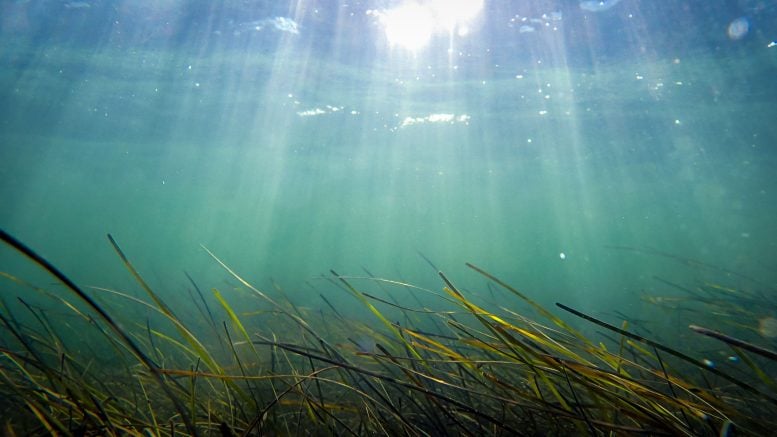
Sunlight on SeagrassThe first study of its kind shows that ecosystems experience far more cumulative heat than standard measurements reveal. A marine heatwave may have an official beginning and end, but the warm water affecting an ecosystem often does not. Like a pot that continues absorbing heat over time, coastal waters can remain unusually warm for weeks [...]
  •  

Underwater Cameras Expose the Secret Lives of Whale Sharks

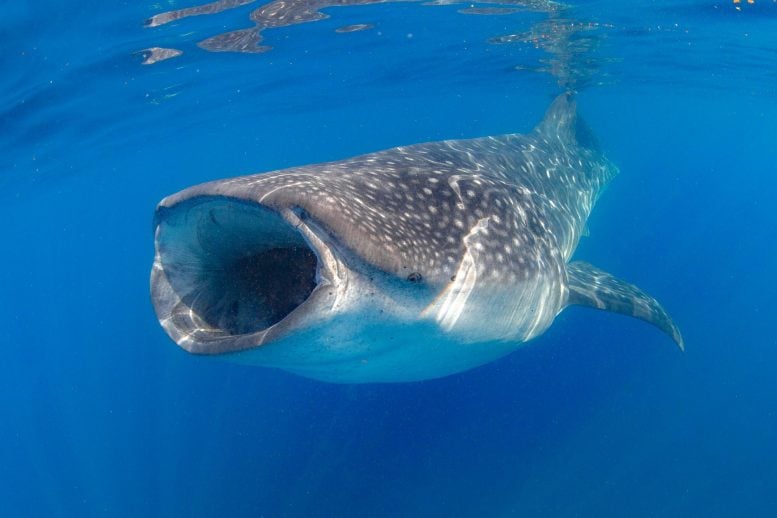
Whale Shark Swimming UnderwaterWhale sharks use a wider range of feeding strategies and depths than surface observations previously revealed. A whale shark can vanish beneath the surface in seconds, leaving researchers with little idea of what the world’s largest fish does once it disappears from view. Whale sharks (Rhincodon typus) are among the ocean’s most recognizable animals, inspiring [...]
  •  

“Weird Clams” Reveal a New Invasion Along the U.S. Northeast Coast

Empty Manila Clam ShellsA research team found reproducing populations of Manila clams in Cape Cod and Boston Harbor. A stretch of Atlantic shoreline that had remained free of Manila clams now appears to support reproducing populations of the invasive shellfish. Biologists led by the University of Massachusetts Amherst, MIT Sea Grant at the Massachusetts Institute of Technology and [...]
  •  

Annual SharkFest gets up close with hammerheads

Annual SharkFest gets up close with hammerheads Shark fans are warming up for their annual ‘SharkFest’ courtesy of National Geographic, now in its 14th year, and kicking off on July 5 with the...

The post Annual SharkFest gets up close with hammerheads first appeared on Science Illustrated.

  •  

Rare Goblin Shark Spotted Alive in Its Natural Habitat for the First Time

Goblin Shark Near Tonga TrenchScientists have reported the first-ever live observations of the elusive goblin shark in its natural deep-sea habitat, capturing footage at two remote locations in the Central Pacific. Few sharks are as strange—or as elusive—as the goblin shark. With its elongated snout, protrusible jaws, and ancient lineage stretching back nearly 125 million years, the deep-sea predator [...]
  •  

Scientists Just Repeated a Nobel Prize-Winning Experiment in a Creature Older Than Jellyfish

Comb Jellyfish Phylum CtenophoreA century after one of developmental biology’s most influential experiments, researchers have revisited the concept of the embryonic “organizer” in one of the oldest animal lineages alive today. A tiny cluster of cells in an embryo can act like a construction manager for an entire body. It helps determine which end becomes the head, which [...]
  •  

New Research Reveals Rays Use Chemical Signals to Warn Others of Danger

In a groundbreaking discovery that broadens our understanding of marine life communication, researchers at Oregon State University have identified a novel chemical signaling mechanism among bat rays (Myliobatis californica) that warns conspecifics of looming threats. This chemical disturbance cue, previously documented only in bony fish, now emerges as a key anti-predator strategy in cartilaginous fishes—specifically rays—revealing a layer of behavioral complexity that challenges long-held assumptions about elasmobranch social interactions.

Dr. Joshua Bowman, leading the study from OSU’s Big Fish Lab, devised an elegant experimental setup employing three isolated tanks interconnected through water flow but segregated visually and acoustically to eliminate confounding sensory influences. Each tank housed an individual bat ray, with one designated as the “signaler” and the other two as “receivers.” By simulating predatory pressure through a gentle chase of the signaler ray, the experimenters induced a natural defensive response while ensuring no physical harm.

Strikingly, within mere seconds of the signaler tank’s water being directed towards the receiver tanks, the bat rays in these isolated environments exhibited marked behavioral shifts characterized by increased swimming speed and evasive maneuvers. These responses mimic a flight reaction, confirming the transfer of a chemical alarm cue through the aquatic medium—a sensory pathway previously undocumented in cartilaginous species.

This discovery bears profound implications for understanding elasmobranch ecology and survival strategies. Bat rays, along with sharks and skates, belong to a class of cartilaginous fishes characterized by their distinct evolutionary lineage and physiology. These findings suggest sophisticated intraspecies chemical communication channels functioning as early-warning systems against predation risks, potentially reshaping our perception of their behavioral ecology.

Moreover, the research carries significance beyond bat rays. Whites sharks, apex predators renowned for their fearsome reputation, are known to exhibit avoidance behaviors when orcas, their potential predators, are nearby. Yet, these sharks often do not have direct visual contact with orcas. This study’s insights into chemical alarm signaling hint at unseen communication mechanisms that might underlie such evasive behavior, opening new avenues for exploration into shark sensory biology and their interactions within the marine predator-prey network.

The experiment’s methodological rigor enhances the credibility of these findings. By isolating variables—eliminating acoustic and visual cues—the team conclusively linked behavioral changes to chemical signals. High-resolution overhead video recordings captured nuanced shifts in locomotion dynamics, quantitatively analyzing the rays’ rapid swimming velocity increases immediately following exposure to the alarm chemicals. These data underscore a robust flight response triggered solely by chemical disturbance cues.

While the precise chemical compound or combination responsible for the alarm signaling remains unidentified, the study establishes a foundation for future biochemical and molecular investigations. Identifying the molecular structure of the alarm cue could unlock transformative understandings of elasmobranch chemical ecology, potentially informing conservation strategies and offering biomarkers for monitoring stress responses in marine populations.

Importantly, the research foregrounds broader ecological and ethical considerations. The evolutionary origin of these chemical disturbance cues underscores their critical role in survival and natural behavior modulation. Human interactions—whether through scientific research, fisheries, or recreational activities—may inadvertently trigger stress dissemination across populations via such chemical signals, amplifying disturbance impacts beyond the initially affected individual.

The OSU Big Fish Lab, recognized as a leading shark research facility on the U.S. West Coast, continues to spearhead innovative studies uncovering the intricate lives of marine cartilaginous fishes. This collaboration, involving co-authors Jamie Cornelius and Mauricio Cantor, integrates expertise spanning marine ecology, physiology, and animal behavior, thereby enhancing multidisciplinary perspectives crucial to advancing marine science frontiers.

By employing bat rays as a proxy for studying elusive white shark behavior, the researchers circumvent logistical challenges inherent to large predator studies. Bat rays’ accessibility and manageable size provide an ethical and practical model to dissect communication modalities applicable across related species, ensuring experimental feasibility while preserving ecological validity.

This study, recently published in the Journal of Experimental Zoology Part A: Ecological and Integrative Physiology, represents a significant milestone in marine biology. It not only documents, for the first time, chemically mediated disturbance cues in cartilaginous fishes but also stimulates critical reflection on the sensory worlds of sharks and rays, organisms whose behavioral sophistication may be far richer than previously appreciated.

Collectively, these findings herald a paradigm shift in our understanding of underwater communication networks. They remind us that aquatic ecosystems host complex, often hidden, language systems integral to species survival. As we deepen our inquiry into these chemical dialogues, we unlock new insights essential for protecting marine biodiversity in a rapidly changing ocean environment.

Subject of Research: Animals
Article Title: Behavioral Evidence for a Chemical Disturbance Cue in Bat Rays (Myliobatis californica)
News Publication Date: 10-Jun-2026
Web References: http://dx.doi.org/10.1002/jez.70102
References: Journal of Experimental Zoology Part A: Ecological and Integrative Physiology
Keywords: chemical disturbance cue, bat rays, cartilaginous fish, elasmobranchs, shark behavior, marine communication, anti-predator strategy, predator-prey interactions, aquatic chemical signaling, flight response, marine ecology, behavioral study

  •  

Scientists Discover a Sea Slug Smaller Than a Sesame Seed in Taiwan

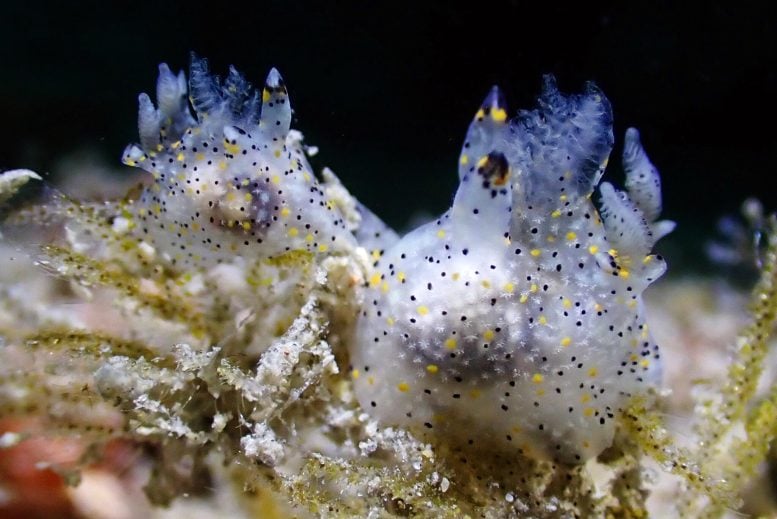
Thecacera sesama Feeding on BryozoanA sesame-seed-sized sea slug discovered in Taiwan is revealing a hidden world of tiny ocean life. A newly identified species of sea slug, so small that it is barely larger than a sesame seed, has been discovered in the coastal waters of Keelung, Taiwan. The tiny marine animal, named Thecacera sesama, features a translucent body [...]
  •  

A Tiny Bright-Blue Octopus Found in the Galápagos Is Completely New to Science

Blue Octopus Galápagos IslandsA newly discovered tiny blue octopus from the Galápagos is a striking reminder that the deep ocean still holds countless secrets. The Galápagos Islands, located off the coast of Ecuador, are famous for their remarkable wildlife. More than a thousand species of plants and animals found there exist nowhere else on Earth, including giant tortoises [...]
  •  

‘Ocean with David Attenborough’ – masterpiece and call to action

Wake-up call, and a call to arms The spectacular feature-length documentary ‘Ocean with David Attenborough’ is his very first partnership with National Geographic, now showing on Disney+ channel in Australia. With the great...

The post ‘Ocean with David Attenborough’ – masterpiece and call to action first appeared on Science Illustrated.

  •  
❌