❌

Reading view

Why Quarterly Reviews Matter More Than Annual Goals

I recently did a quarterly planning session with some of the MacSparky Labs members. I do that every quarter and find it really rewarding. It gives us a bit of a personal accountability circle. During the session, I started talking about the importance of quarterly review.

Now I know, reading this, you’re thinking that the new year is just around the corner. If you’re going to start thinking about planning and priorities, that seems like the ideal time to do it.

But think back to whatever you did this past January. Is it still on your mind? It likely isn’t, because January is a very poor boss of October.

I’m a big fan of quarterly planning. I think, as humans, we respond much better to a three-month plan than a year-long plan. It gives you a sense of renewal every three months, along with real, actionable feedback loops. Quarterly reviews give you a scheduled chance to make adjustments.

I’ve been working a lot lately on my health, but that isn’t a thing you can fix with one January resolution. In Q1, I was more focused on better eating habits and losing weight. In Q4, I’m thinking a lot more about how to gain more muscle and become more fit. Revisiting it quarterly lets me change the area of focus.

Annual planning gives your goals a lot of hiding places to disappear. Ninety days is much more concrete. You can pick a few things where you can actually move the needle and make progress.

I’ve got a lot more thoughts on this that I cover in the Productivity Field Guide, but here we are at the beginning of Q4. My advice to you is to start now. Don’t wait until January 1 to try to get serious about what’s important to you.

Figure out a few things today that you can do in the next 90 days and get to work.

The post Why Quarterly Reviews Matter More Than Annual Goals appeared first on MacSparky.

  •  

Science@MIT

Future Vision

Letter from the Dean

Welcome to another academic year, filled with excitement for our scientific research program and fraught with the perils of an unpredictable funding landscape.

We are lucky at the School of Science to have partners who see the long-term vision that brought us—and the world— major scientific discoveries. We honored one such visionary, Marilyn Simons, with the school’s inaugural 1932 Award. Together with her husband, the late Jim Simons ’58, the Simons Foundation has helped us in innumerable ways.

Read more from Dean Nergis Mavalvala

The Latest

Myriam Heiman heads The Picower Institute for Learning and Memory

Jesse Thaler leads the Laboratory for Nuclear Science

The Greatest

Marilyn Simons receives School of Science’s 1932 Award

Alnylam Pharmaceuticals creates fund honoring co-founder Phil Sharp

In the News

Astronomers find space sugar

Soft Serve with Scientists

Baby black holes

The post Science@MIT appeared first on MIT School of Science.

  •  

Marilyn Simons receives School of Science’s 1932 Award

1932 Award - 2026 Marilyn Simons

On May 11, 2026, the School of Science hosted the inaugural 1932 Award Dinner to honor Marilyn Simons and the late Jim Simons as philanthropists and as trusted partners of fundamental scientific researchers at MIT. The 1932 Award recognizes philanthropy that ignites new pathways of curiosity throughout the School of Science and celebrates its impact on basic science. Faculty, students, and friends of MIT gathered to commend Jim and Marilyn Simons and the Simons Foundation as visionary partners of the School of Science, who have advanced discovery across mathematics, neuroscience, and the physical sciences for three decades.

The Simons’s generosity reflects a deep and enduring partnership grounded in curiosity, collaboration, and a shared commitment to advancing fundamental science for the benefit of humanity. By recognizing their achievements with the 1932 Award, Dean Nergis Mavalvala and the School of Science community expressed gratitude to exceptional generosity that drives forward the scientific enterprise.

The post Marilyn Simons receives School of Science’s 1932 Award appeared first on MIT School of Science.

  •  

A New Organism’s “Alien” Reproduction, Levitation and Dark Matter, and Genetic Evidence of an Ancient Killer

cells

This week in stories we’re covering at The Debrief… Scientists say they have discovered an organism whose behavior mirrors the reproductive horror depicted in the “Alien” films. Elsewhere, physicists report that a recent levitation experiment could signal a breakthrough in the search for dark matter. Also, new genetic evidence of an ancient killer has surfaced in ancient medieval texts. And finally, a 15,000-year-old cave discovery in Ireland could push back evidence of the first humans on the island by 5,000 years.

Here’s a look at all the stories we’re tracking right now at The Debrief: 


  •  

The Search for a “Second Earth,” a Magnetic “Clock” in Ancient Pottery, and Alien Life Lurking in Venus’s Clouds

Roman telescope

This week in stories we’re tracking here at The Debrief: NASA’s Nancy Grace Roman Telescope was launched on Sunday, and experts think this could be one of its most important discoveries in the years ahead. Meanwhile, scientists have discovered a magnetic “clock” in ancient pottery that could help museums distinguish real artifacts from modern fakes. And elsewhere, scientists say it might be possible that aliens are lurking in the acidic clouds of Venus.

Ready to get caught up on more of the latest science news? Here’s a look at other stories we’re covering right now at The Debrief…

  •  

Mobile Hypersonic Spaceports, a Manhattan-sized “Ice Island,” and a Lost City Surfaces in Egypt

Rocket Lab
(Credit: Rocket Lab/CC 4.0)

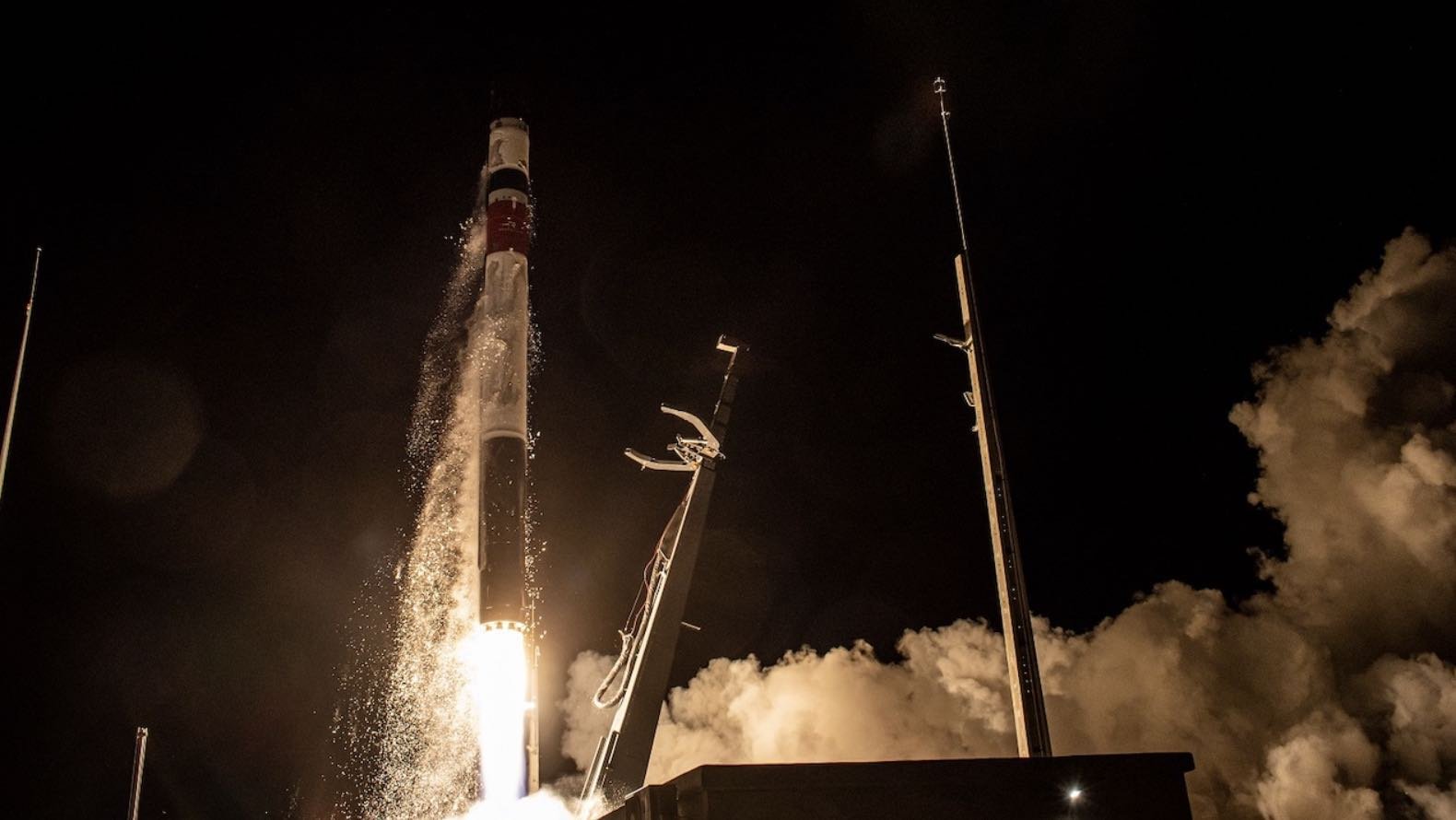
This week in stories we’re tracking at The Debrief… Commercial space company Rocket Lab just unveiled GHOST, a game-changing new launch capability that could enable payloads to be carried to orbit from virtually anywhere on Earth. Meanwhile, in a stunning event that unfolded in Greenland, European satellites managed to capture the dramatic moment an “ice island” the size of Manhattan was formed. Elsewhere, archaeologists have uncovered a mysterious inscription that could link recent excavations to a “lost city” known only from ancient Egyptian texts. Finally, in a Debrief exclusive, an Afghan woman provides personal on-the-ground commentary about life in Afghanistan in a poignant reflection written on the day of her country’s independence.

Meanwhile, here’s a look at other stories we’re covering right now at The Debrief:

  •  

Scientists Have a Plan to Detect Exotic Aliens, New Gamma Wave Glasses, and an Ancient Roman ‘Megastructure’ Resurfaces

3I/ATLAS MeerKAT
(Image Credit: SKAO/SARAO)

This week in stories we’re covering at The Debrief: Scientists have a new plan that could help them detect alien life that may be too exotic to be spotted otherwise. Elsewhere, these new transparent OLED glasses use “gamma wave entrainment” to supercharge brain connectivity, and in Bulgaria, a mile-long ancient Roman megastructure has surfaced from beneath one of Europe’s most famous waterways.

Finally, here’s a look at all the top stories we’re covering right now at The Debrief:

  •  

Antarctica’s Unusual Islands, 5,000-Year-Old ‘Sophisticated’ Egyptian Technology, and a 1.4-Million-Year-Old Fossil Surprise

Egypt
(Image Credit: Egyptian Ministry of Tourism and Antiquities)

This week in stories we’re covering at The Debrief… Recent NASA satellite imagery has revealed something odd about the color of Antarctica’s Danger Islands—and what that means for one of Earth’s most fragile ecosystems. Elsewhere, a 5,000-year-old Egyptian tomb discovery has revealed “sophisticated” knowledge that challenges past thinking on the origins of the pyramids. And lastly, scientists were recently very surprised when they learned what left these 1.4-million-year-old fossilized footprints on an ancient lakeshore.

Here are the top stories we’re covering right now:

  •  

An “Impossible” Physics Breakthrough, Hannibal’s Elephants, and an “Unusual” Underwater Archaeological Discovery

Dark Matter maps
(Image Credit: ESA/Hubble).

This week in stories we’re tracking at The Debrief… in a New York laboratory, an “impossible” synthetic motion breakthrough is opening new paths toward faster-than-light speed research for extreme physics applications. Elsewhere, a new study suggests war elephants helped determine Hannibal’s route across the Alps—and survived it better than soldiers. Finally, archaeologists are investigating an unusual underwater discovery deep within Germany’s Lake Constance.

In addition to these trending stories, here’s a look at other stories we’re covering right now at The Debrief:

  •  

A Solution to a Famous Feynman Problem, ‘Psychedelic’ Breathwork, and an Odd Stone Sphere is Unearthed

Feynman Sprinkler
Credit: NYU’s Applied Mathematics Laboratory

This week in science and technology news we’re covering at The Debrief: For decades, physicists have argued about Richard Feynman’s Sprinkler Problem, involving the question of how a reverse sprinkler would operate. Now we may finally know the answer… elsewhere, new studies reveal how breathwork may trigger psychedelic-like states, emotional breakthroughs, and psychological insights without drugs. Meanwhile, a stone sphere unearthed at an archaeological site in Azerbaijan is reportedly unlike anything previously documented in the South Caucasus.

Also, in an exclusive feature, University of Toronto bioethicist KM Bowman, Ph.D., writes for The Debrief about his firsthand experience with uncontacted indigenous tribes: “Through the haze stood a man. Barely clothed, carrying what appeared to be a weapon of some form, he remained motionless for only a few seconds before silently disappearing back into the forest.” In his essay, Bowman shares his experience and asks whether governments can protect “the uncontacted.”

Finally, here’s a look at more stories The Debrief is tracking right now…

  •  

Odd “Polygons” on Mars, a Rendezvous with Space Objects, and a Deep Earth Mystery

polygon structures Curiosity rover
(Image Credit: NASA/JPL-Caltech/MSSS)

This week in stories we’re covering at The Debrief… Japan’s Hayabusa2 spacecraft just completed its flyby of the mysterious asteroid Torifune over the weekend, in a celestial rendezvous that nearly coincided with the Chinese Tianwen-2 mission’s successful capturing of new images of Earth’s “quasi-moon”. Equally intriguing are the unusual “polygon” structures NASA’s Curiosity rover just spotted and photographed on the Martian surface; what are they, and what caused them? And finally, bringing things back down to Earth a bit, scientists have revealed new details about an odd “reversal” that occurred deep within the Earth’s molten core, and what new findings suggest that could mean.

In addition to these stories, here’s a look at more of the stories we’re following right now at The Debrief…

  •  

One of the Ancient World’s ‘Seven Wonders’ Resurfaces, a Red Planet Photo Op, and an “Impossible” Artifact

monumental blocks Mediterranean Sea
(Image Credit: GEDEON Programmes / CEAlex).

This week in stories we’re covering at The Debrief, one of the Seven Wonders of the Ancient World has been rediscovered and is now rising from its ancient resting place in the Mediterranean. Meanwhile on Mars, NASA’s Mars Reconnaissance Orbiter (MRO) just spotted something in a hilly area of the Red Planet that you have to see; fortunately, the space agency has unveiled it all in stunning new images. And finally, this unusual object should have been “impossible” to create using Iron Age tools… so how did its ancient crafters make it?

Ready to dive deeper? Here’s a look at several of the top stories we’re covering right now at The Debrief…

  •  

Scientists Use Math to Solve Viral Word Game ‘Wordle’ with 99% Success Rate

Wordle, a popular word-guessing game, challenges players to identify a five-letter secret word through iterative guesses and feedback on letter placement. The players must figure out the secret word within six guesses. After each guess, the letters will be color-coded based on different criteria. Optimizing the choice of guesses is critical for maximizing success within the limited attempts allowed. Image credit: Aladaileh et al., doi: 10.63562/2577-8439.1146.

Researchers at Binghamton University have applied a 70-year-old theory of information to the viral word game Wordle, revealing how a carefully chosen first guess can dramatically improve a player’s chances of solving the puzzle.

The post Scientists Use Math to Solve Viral Word Game ‘Wordle’ with 99% Success Rate appeared first on Sci.News: Breaking Science News.

  •  

Death Valley Superbloom Explained: Why the Desert Suddenly Explodes With Wildflowers

Earth Oddities • Strange Weather Phenomena • Desert Ecosystems • Go back to Strange Sounds Death Valley is experiencing a rare superbloom, a spectacular desert event in which vast numbers of wildflowers suddenly bloom across the valley floor after rare rainfall. This is the best flowering desert phenomenon in the driest place in North America […]

The post Death Valley Superbloom Explained: Why the Desert Suddenly Explodes With Wildflowers appeared first on Strange Sounds.

  •  

Saharan Dust Cloud Over Europe: How Desert Thunderstorms Launch Millions of Tons of Dust Into the Atmosphere

Earth Oddities • Strange Weather Phenomena • Global Dust Transport • Go back to Strange Sounds A massive Saharan dust plume has drifted across parts of Europe, hazing alpine views and coloring sunsets across the continent. But the most surprising part of the story is how the dust gets into the sky in the first […]

The post Saharan Dust Cloud Over Europe: How Desert Thunderstorms Launch Millions of Tons of Dust Into the Atmosphere appeared first on Strange Sounds.

  •  

Mount Merapi “Cold Lava” Flood: What a Lahar Is and Why Rain Makes Volcano Slopes Deadly (Mar 2026)

Volcano Hazards • Lahars • Rain + Ash = Mudflow • Go back to Strange Sounds Heavy rain on Mount Merapi triggered a “cold lava” flood — a lahar — surging downriver, killing people and dragging vehicles. When intense rainfall hits ash-covered slopes, loose volcanic debris turns into a fast-moving slurry that can carry boulders, […]

The post Mount Merapi “Cold Lava” Flood: What a Lahar Is and Why Rain Makes Volcano Slopes Deadly (Mar 2026) appeared first on Strange Sounds.

💾

💾

  •  

Brazil Landslides After 21 Inches of Rain in 6 Hours: Minas Gerais Disaster Explained (Feb 2026)

Earth Systems • Extreme Rainfall • Landslides & Mudflows • Go back to Strange Sounds Parts of Minas Gerais, Brazil, reportedly received about 21 inches (533 mm) of rain in roughly six hours. Landslides and flooding followed, with at least 64 reported deaths and thousands displaced. This deep dive explains why intense rainfall can trigger […]

The post Brazil Landslides After 21 Inches of Rain in 6 Hours: Minas Gerais Disaster Explained (Feb 2026) appeared first on Strange Sounds.

  •  

Earth Systems Update: Sinkhole Collapse, Aral Sea Warning & Ring of Fire Activity (Feb 2026)

Go back to Strange Sounds · Discover more in the Newsletter Archive From sinkholes swallowing roads to the disappearance of the Aral Sea, volcanic unrest across the Ring of Fire, and light measured in billionths of a second — reality is not static. It is constantly shifting. A vehicle sinks into a sudden roadway collapse […]

The post Earth Systems Update: Sinkhole Collapse, Aral Sea Warning & Ring of Fire Activity (Feb 2026) appeared first on Strange Sounds.

💾

  •  
❌