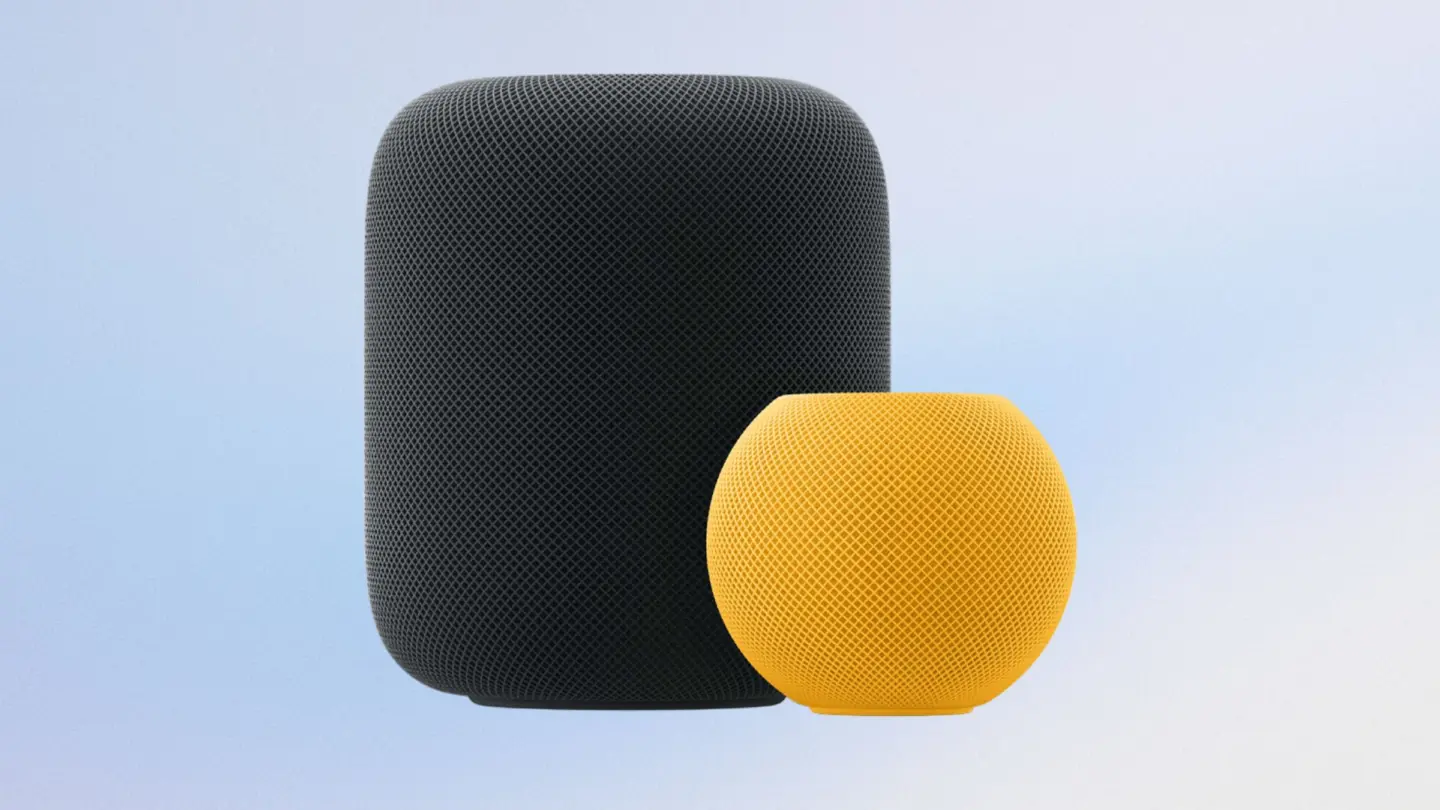
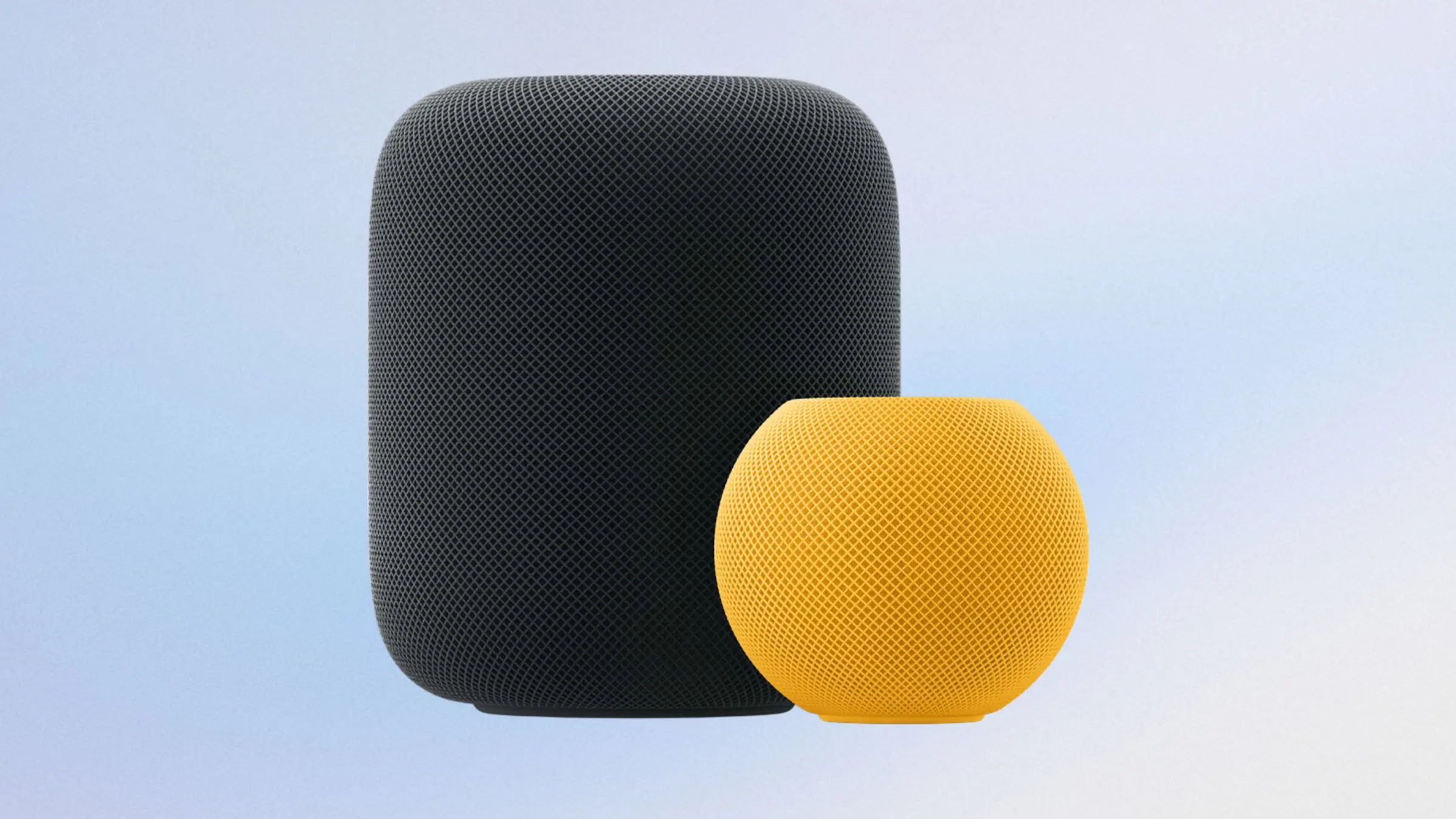
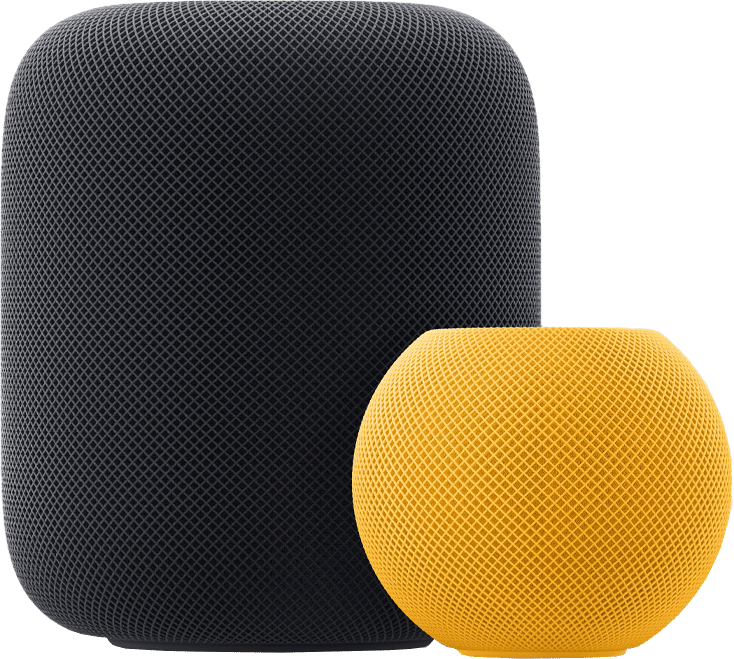
Apple is bringing a big audio upgrade to your living room. The company just pushed out the iOS 27.2 release candidate alongside several other device updates. Among these new changes, the latest tvOS 27 testing version quietly adds support for a four-speaker surround sound setup. Once this software goes public, you can connect multiple HomePod […]
HomePod mini 2 arrives October 30 at $149 (U.S.), and Apple says you will need an iPhone or iPad to get it running. “You can’t set up HomePod with a Mac,” Apple’s support guide states, and the device must be updated to the latest version of iOS or iPadOS first. The setup itself is short. […]
The HomePod mini 2 brings Siri AI, an S10 chip, Wi-Fi 6E, and Sound Glow lighting to Apple’s smallest smart speaker. It also enables four-speaker surround sound with the new Apple TV 4K. Pre-orders are open now at $149.
Apple has announced a home-focused product launch for 13 October 2026. Expected products include a long-rumored touchscreen home hub alongside a new Apple TV 4K and HomePod mini. And more?
Apple TV 4K and HomePod mini orders are showing extended delivery estimates in the U.S., while the orange HomePod mini is currently unavailable to order from Apple’s online store. The reported estimates apply to the U.S. online store at the time of the check and can change without an announcement. A color being unavailable online […]
Apple has barely finished unveiling the iPhone Duo, iPhone 18 Pro lineup, AirPods 5, and new Apple Watches, but the company already has a much larger pipeline queued up for late 2026 and the first half of 2027, according to Bloomberg News‘ Mark Gurman.
The coming products are part of what new CEO John Ternus has internally described as Apple’s most ambitious product road map yet. Many of the devices are designed to spread Siri AI more widely across the lineup and close some of the gap with rivals in artificial intelligence. As always, dates can slip and products can be delayed or canceled.
Later this yearGurman reports that Apple is preparing several updates before year-end:
• HomePod mini with Siri AI — Same familiar design as the 2020 model, but with a new chip to power the overhauled assistant.
• Apple TV with Siri AI — Another look-alike refresh, this time with a faster chip for navigation and the new Siri experience.
• Smart-home hub — A square display that can sit on a speaker base or mount on a wall. It will run a new operating system, support video calls, and use facial recognition to personalize what it shows. Apple had considered showing it at last week’s event and is now aiming as early as October, though the timeline remains fluid after repeated delays.
• Touch-screen MacBooks — The biggest MacBook Pro change since 2021, adding OLED panels and touch screens for the first time, with M5 Pro and M5 Max chips.
• Entry-level 14-inch MacBook Pro — Current design, updated with the M6 chip.
• iMac — New colors and an M6 processor.
• iPad mini — One of the line’s biggest upgrades, adding an OLED display.
The HomePod mini and Apple TV are already being tested with iOS 27. The new Macs are running macOS 27.1 internally, and the iPad mini is on iPadOS 27.1. Both of those software updates are expected late next month.
First half of 2027
The spring and early summer slate is heavier on refresh cycles than radical redesigns:
• MacBook Air — Same 13-inch and 15-inch designs, moving to the M6 chip.
• MacBook Neo — Follow-up model with an A19 Pro chip and more memory.
• Entry-level iPad — Faster chip so the cheaper tablet can run Apple Intelligence and Siri AI.
• iPad Pro — Chip upgrade plus vapor-chamber cooling similar to the iPhone 18 Pro.
• iPad Air — First OLED screens in that line, plus a new chip.
• iPhone 18 — Largely an A20 chip upgrade, with the notable change that the standard model is shifting from fall to spring.
• iPhone 18e — Another chip-focused update; Apple will need to make clear how it differs from the regular iPhone 18.
• iPhone Air 2 — More substantial: a 2-nanometer A20 Pro chip, better battery life, and a second rear camera for ultrawide shots.
• Apple Pencils — New Pencil Pro and USB-C models timed with the iPads; the iPhone Duo will support the stylus as well.
Looking further ahead
The second half of 2027 is expected to get more ambitious still, Gurman writes, with M7 updates to MacBooks, smart glasses, camera-equipped AirPods, a home security system, a redesigned Apple Watch, Twentieth Anniversary iPhones, and a second-generation foldable iPhone Duo.
MacDailyNews Take: Taken together, the road map suggests Apple is trying to do two things at once: push Siri AI onto more affordable and living-room devices, and finally refresh categories that have languished for years. Whether October brings a full event or quieter waves of launches, the next 12 months look unusually crowded with product launces!
Please help support MacDailyNews — and enjoy subscriber-only articles, comments, chat, and more — by subscribing to our Substack: macdailynews.substack.com. Thank you!
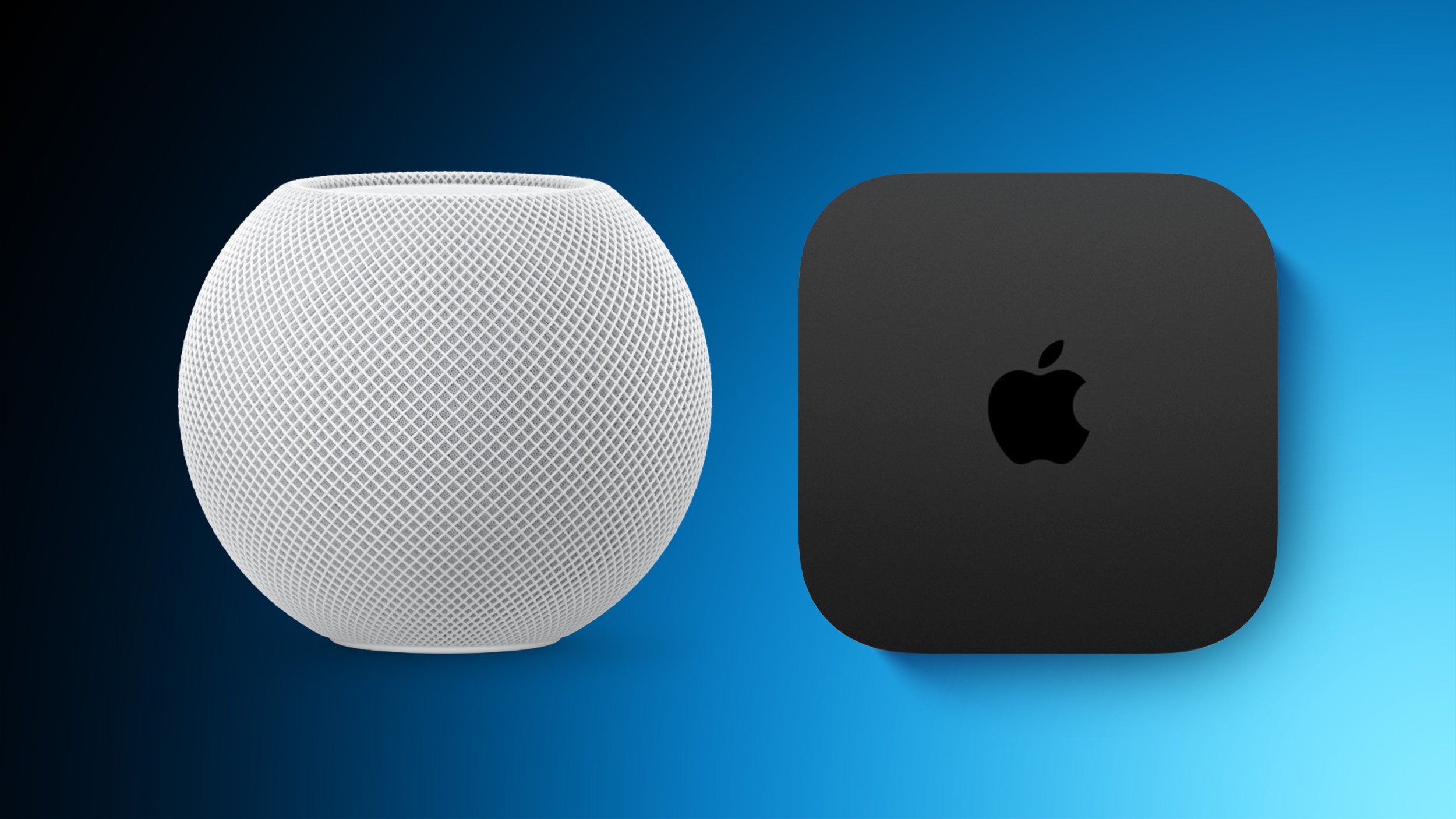
Apple TV and HomePod mini orders continue to face extended shipping delays on Apple's online store in the U.S., amid endless rumors about new models coming later this year. These shortages have been occurring on and off for more than a year.
Three examples today: estimated delivery dates for the Apple TV with 64GB of storage are pushing into October, the HomePod mini in orange is currently unavailable to order, and the HomePod mini in yellow is facing a November delivery estimate.
Apple is preparing a dedicated home-security product line and a companion monitoring service, according to Bloomberg News’ Mark Gurman, as the company maps a broader expansion of its smart-home business beyond next week’s iPhone event.
In a Sept. 4 report on Apple’s product pipeline under new Chief Executive Officer John Ternus, Gurman said the company is working on an in-home security sensor and system slated for 2027. The device is described as a privacy-centric camera and automation accessory that would use artificial intelligence to watch a room’s environment rather than continuously storing traditional video footage. That hardware, he wrote, is expected to tap into a new Apple home-security and monitoring service.
The framing is consistent with earlier Gurman reporting that Apple has been developing battery-powered security hardware — previously discussed as a camera and later as a small sensor, internally associated with the J450 project — that can recognize people, use infrared sensing, and trigger automations such as lights or music when a household member enters or leaves a room. Apple has also been said to be exploring a wider lineup that could eventually include additional cameras and a facial-recognition doorbell aimed at rivals such as Amazon’s Ring and Google’s Nest.
A service layer would be a notable shift. Apple already offers HomeKit Secure Video through iCloud, but Gurman’s latest account points to a more complete security and monitoring offering — the kind of recurring product that could sit alongside Apple’s other subscription businesses. Industry coverage of the same Bloomberg report has noted that such a service could later be bundled into Apple One, though Apple has not announced pricing, professional monitoring, or how much processing would stay on-device.
The security push is part of a larger home reset. Gurman and other reports have said Apple is first rolling out refreshed living-room hardware, including a new Apple TV 4K, an updated HomePod mini, and a screen-equipped home hub often referred to as a HomePad, before the 2027 security system arrives. The company has long lagged Amazon and Google in connected-home hardware even as it has marketed privacy as a differentiator. An AI-first sensor that avoids constant video recording would be an attempt to turn that brand position into a product category.
Apple has not publicly confirmed the devices or the service. Details on design, battery life, outdoor coverage, emergency dispatch, and whether video would still be captured after an AI alert remain unreported. What Gurman’s reporting does make clear is that Apple now sees home security as both a hardware line and a services opportunity — and that the company is targeting 2027 to bring them to market together.
MacDailyNews Take: This will be great – as long as it works with our Eufy cameras!
Please help support MacDailyNews — and enjoy subscriber-only articles, comments, chat, and more — by subscribing to our Substack: macdailynews.substack.com. Thank you!
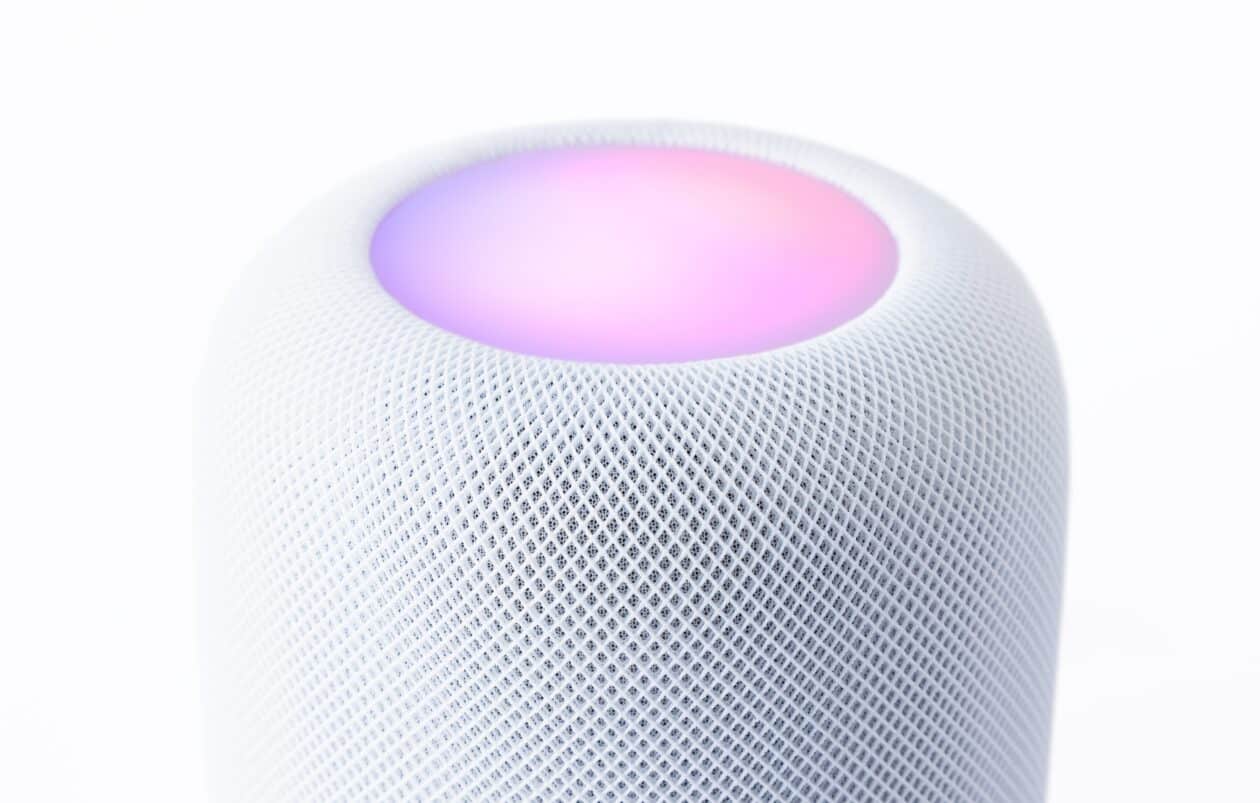
O HomePod e o HomePod mini não são lá um grande sucesso, mas isso não significa que eles sejam produtos ruins. A má fama deles se deve, em parte, à incapacidade da Siri de realizar muitas tarefas que outras assistentes teoricamente fazem com mais facilidade.
Se você possui um desses dispositivos, é importante saber qual a versão do software que eles estão rodando no momento. Assim, você pode usufruir de novos recursos e de correções de brechas de segurança.
Abra o app Casa (Home), toque em cima do card do HomePod por alguns segundos e vá em “Ajustes do Acessório”. Você também pode chegar a essa mesma tela tocando em cima do card e depois no botão dos ajustes (uma engrenagem).
Feito isso, role a página até o fim e veja a versão do software.
Pelo Mac
No computador, também no app Casa, clique com o botão direito do mouse em cima do card do alto-falante e vá em “Ajustes do Acessório”. Novamente, você pode chegar a essa mesma tela clicando no card e depois no botão dos ajustes.
Depois, é só rolar a página até o fim.
ComprarHomePod e HomePod minide Apple 🇺🇸Preço: a partir de US$129 Cores: meia-noite, branco, cinza-espacial, azul, amarelo ou laranja
NOTA DE TRANSPARÊNCIA: O MacMagazine recebe uma pequena comissão sobre vendas concluídas por meio de links deste post, mas você, como consumidor, não paga nada mais pelos produtos/serviços usando os nossos links de afiliado.
Apple released tvOS 26.6 and HomePod Software 26.6 on July 27, 2026, as part of a broader wave of point updates that also included iOS 26.6, iPadOS 26.6, macOS Tahoe 26.6, watchOS 26.6, and visionOS 26.6.
These are maintenance releases rather than feature-packed upgrades. With the major tvOS 27 and HomePod Software 27 updates already in beta and expected in the fall, Apple focused the 26.6 cycle on under-the-hood refinements: bug fixes, performance and stability improvements, and a substantial set of security patches. No significant new user-facing features were identified during the beta period for either platform.
tvOS 26.6
tvOS 26.6 is available for the Apple TV HD and all Apple TV 4K models. It arrives roughly two months after tvOS 26.5 and continues the pattern of incremental polish for the 26 series, which introduced the Liquid Glass design language and other enhancements in fall 2025.
Apple’s developer release notes highlight only a small number of resolved issues (such as specific HealthKit statistics query problems and StoreKit testing behavior in the simulator). The public-facing emphasis is on general reliability and security. The security content document lists dozens of fixes across frameworks including Accounts, App Store, Kernel, CoreAudio, ImageIO, and others—addressing potential issues like user fingerprinting, data access, denial-of-service conditions, and memory corruption.
Notably, tvOS 27 is expected to drop support for the Apple TV HD and the first-generation Apple TV 4K. Owners of those models will remain on the tvOS 26.x line (including future minor updates after 26.6) for as long as Apple continues to support them.
How to update:
On your Apple TV, open Settings > System > Software Update. Devices with automatic updates enabled should receive it without manual intervention.
HomePod Software 26.6
HomePod Software 26.6 (build 23L773) rolls out to the original HomePod, HomePod mini, and later models. Like the concurrent tvOS release, it carries no new headline features. Apple has not published detailed public release notes beyond the standard language of performance and stability improvements, which has been typical for most 26.x point releases after the initial HomePod Software 26 launch (that version added Crossfade for Apple Music and AirPlay refinements).
The update shares the same late-cycle focus on reliability and security hardening as the rest of the 26.6 family. It is installed automatically on most HomePods unless the feature has been disabled; manual installation is available through the Home app on iPhone, iPad, or Mac (Home Settings > Software Update).
These releases represent the late-stage maintenance phase of the 26-generation operating systems. Engineering attention has largely shifted to the 27 series unveiled at WWDC 2026, which is currently in public beta and slated for a fall launch. That upcoming generation is expected to bring more substantial changes, including further Siri and Apple Intelligence integration (particularly relevant for future HomePod and Apple TV hardware) and other refinements.
MacDailyNews Take: Both tvOS 26.6 and HomePod Software 26.6 deliver a quieter, but useful round of fixes and security updates. Installing them keeps your Apple TV and HomePod devices running smoothly and better protected while the bigger fall upgrades take shape.
Please help support MacDailyNews — and enjoy subscriber-only articles, comments, chat, and more — by subscribing to our Substack: macdailynews.substack.com. Thank you!
Apple, long viewed as a laggard in the smart home market, is preparing a significant expansion into the category with a slate of new devices and software centered on an upgraded Siri AI assistant, according to Bloomberg News’ Mark Gurman.
The company plans to begin this wave soon with a dedicated smart home hub built around the new Siri AI capabilities, people familiar with the matter told Bloomberg. Apple is also readying a new Apple TV 4K set-top box and a refreshed HomePod mini, the sources said, speaking on condition of anonymity because the plans remain private.
The updated Apple TV and HomePod mini are expected to launch this fall, while the long-awaited smart home hub featuring a screen is targeted for release between the end of the year and early next year, Gurman reports.
The moves mark a notable acceleration in Apple’s home strategy after years of more limited offerings. The new hardware is designed to work with enhanced Siri AI features that promise improved conversational abilities and deeper integration across the Apple ecosystem.
MacDailyNews Take: We wish Apple would release some indoor and outdoor cameras, but, as we need them now, we’re going to have to go with some other company instead.
Please help support MacDailyNews — and enjoy subscriber-only articles, comments, chat, and more — by subscribing to our Substack: macdailynews.substack.com. Thank you!
Citando pessoas familiarizadas com o cronograma de lançamentos da Maçã, ele explicou que a set-top box e o alto-falante inteligente deverão ser lançados durante o outono do hemisfério norte (nossa primavera, entre setembro e dezembro), enquanto o smart hub é previsto atualmente para algum momento entre outubro próximo e o início do ano que vem.
Rumorado há algum tempo, o smart hub deverá contar com uma tela de 7 polegadas e servir como peça central dessa nova investida da Apple no mercado de casa inteligente. Seu sistema operacional, por sua vez, será baseado no tvOS e apostará em uma interface que misturará elementos do iOS com características do watchOS, incluindo grades de ícones, widgets e apps.
Compatível com “chamadas de vídeo via FaceTime, monitoramento residencial e um sistema de interfone para residências que possuem vários dispositivos domésticos da Apple”, ele também será capaz de reproduzir mídia e contará com mostradores personalizáveis que lembram as watchfaces do watchOS. Além disso, é esperado que ele conte com um recurso de reconhecimento facial, permitindo-lhe distinguir os moradores de uma casa — algo que proporcionará experiências personalizadas.
Ainda segundo Gurman, há duas versões desse smart hub “no forno”. A primeira delas, de codinome J490, “posiciona a tela sobre uma base em formato de meia cúpula, semelhante a um HomePod mini cortado ao meio”; já a segunda, de codinome J491, foi projetada para ser afixada a uma parede com a ajuda de um sistema magnético. A ideia da Apple, que também está projetando uma interface “companheira” para o dispositivo no iPhone, é que o usuário tenha mais de um hub desse em sua casa.
A nova Apple TV (J265) e a próxima geração do HomePod mini (B525), por sua vez, não deverão introduzir mudanças significativas de design, mas contarão com chips mais velozes e suporte à Siri AI.
O jornalista, vale lembrar, também já apostou em uma câmera de segurança interna feita para competir com os dispositivos da linha Amazon Ring. Com o codinome J450, ela também chegou a ter seu lançamento especulado para este ano, mas não chegou a ganhar uma nova previsão nessa reportagem.
OpenAI, the company behind ChatGPT, the AI for newbies who don’t know better alternatives exist, is stepping into consumer hardware with its first device: a movable, screen-free smart speaker designed as an always-on AI companion for the home. According to a Bloomberg News report, the product — still in development — aims to control smart-home devices, play media, answer questions, handle messages, and leverage ChatGPT’s capabilities.
This sounds innovative on paper, especially with the promise of a more “humanlike” AI presence. But let’s be clear: Amazon, Google, and Apple pioneered this category years ago. OpenAI isn’t breaking new ground here — it’s trying to catch up to a market these giants have dominated for nearly a decade.
Apple’s HomePod mini
The Smart Speaker Revolution Started Long Before ChatGPT
Amazon lit the fuse in 2014 with the original Echo and Alexa. What began as a cylindrical speaker that could play music, set timers, and answer basic questions quickly evolved into a full ecosystem. Echo devices now control lights, thermostats, door locks, and more — exactly the smart-home hub role OpenAI envisions. Amazon iterated relentlessly with cheaper Dots, portable versions, and premium models, shipping hundreds of millions of units and embedding Alexa into countless third-party devices.
Google followed in 2016 with Google Home (later Nest Audio and similar), emphasizing superior search integration and natural language understanding powered by its vast data resources. These speakers became central to many households for information, entertainment, and automation. Apple entered the fray in 2018 with the HomePod, focusing on premium audio quality and tight integration with its ecosystem, later adding the more affordable HomePod mini.
By the time OpenAI is targeting a potential 2027 launch for its device, smart speakers will have been mainstream for over a dozen years. The core features OpenAI highlights — voice interaction, media playback, smart-home control, and AI assistance — are table stakes that consumers already expect.
What’s New (or Not So New) with OpenAI’s Approach?
The Bloomberg News description by Mark Gurman positions OpenAI’s speaker as a “new type of home computer for the AI era,” movable and screen-free for ambient use.
Earlier reports suggest possible camera integration for environmental awareness, object recognition, and even facial recognition for purchases — features that echo (pun intended) what existing devices already offer or are evolving toward. Many current smart speakers and displays already include cameras, microphones that listen continuously (with privacy toggles), and advanced AI for proactive suggestions.
OpenAI’s edge is presumably its cutting-edge language models, potentially enabling more conversational, context-aware interactions than today’s assistants. Yet even here, competitors aren’t standing still: Google has integrated Gemini, Amazon continues enhancing Alexa with generative AI, and Apple is finally significantly deepening Siri with on-device intelligence in its ecosystem.
Privacy Concerns Loom Large, Especially Versus Apple
One area where OpenAI’s entry raises fresh questions is privacy. An always-listening, camera-equipped AI companion that processes conversations, surroundings, and potentially personal interactions could amass intimate data about users’ daily lives. OpenAI has faced broader scrutiny over how it handles training data and user inputs with its models, and a device that lives in the home would amplify those risks — including potential data sharing, advertising uses, or breaches.
In contrast, Apple has long positioned itself as a privacy leader in the smart speaker space. HomePod devices prioritize on-device processing where possible, use randomized identifiers instead of linking data to user accounts, and offer straightforward controls to delete Siri history. Apple’s ecosystem design generally minimizes cloud transmission and avoids using customer data for ad targeting in the same way its competitors do. OpenAI, as a newer hardware player heavily reliant on cloud-based AI, will need to earn similar trust — something that could prove challenging given the always-on nature of the proposed companion.
Challenges Ahead for the Newcomer
OpenAI enters a crowded, mature market where hardware margins are thin, privacy concerns run high, and user loyalty to existing ecosystems (Amazon for shopping, Google for search, Apple for seamless device handoff) is strong. Building reliable hardware at scale, managing always-listening microphones and potential cameras responsibly, and competing on price (rumored $200–$300 range) won’t be trivial.
History shows that smart speakers succeeded because they solved simple, everyday problems affordably and reliably — not because they promised revolutionary AI companionship. OpenAI’s version may feel more “alive” thanks to advanced models, but it risks being perceived as a me-too product unless it delivers truly standout experiences that justify switching or adding yet another device to the home.
MacDailyNews Take: In the smart speaker space, OpenAI following well-trodden footsteps laid by Amazon, Google, and Apple. The real test will be whether ChatGPT can make the familiar feel fresh enough to stand out — while addressing privacy headwinds that Apple has long navigated more cautiously.
Our prediction is that it won’t.
OpenAI has always been skeevy, from eschewing its open source roots to Sam Altman to desperately overpaying for a washed Jony Ive. Just plain skeevy.
If ever a Skynet would arise, we expect it would spring from the diseased loins of OpenAI. – MacDailyNews, July 13, 2026
Please help support MacDailyNews — and enjoy subscriber-only articles, comments, chat, and more — by subscribing to our Substack: macdailynews.substack.com. Thank you!

 Login



 Apple TV and HomePod mini orders continue to face extended shipping delays on Apple's online store in the U.S., amid endless rumors about