 Login

Human-Caused Warming Played ‘Very Strong’ Role in Himalayan Floods, Report Finds
Rising temperatures contributed to the disaster by destabilizing the permafrost and ice around the collapsed rock, scientists concluded.

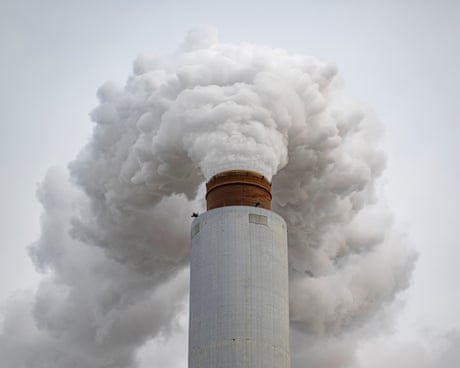
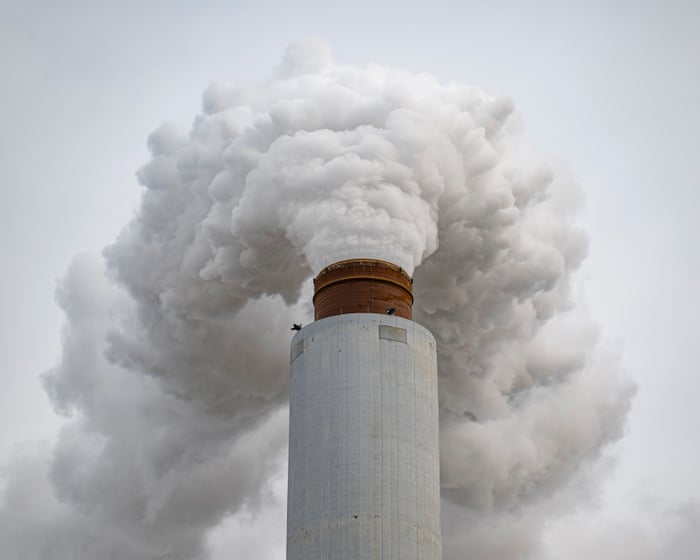
Trump’s EPA strips itself of regulating ability, gutting Clean Air Act in what experts say is a gift to planet polluters
On the heels of the hottest summer ever recorded in the US, the Trump administration has said it will erase any limits on emissions from coal and gas plants that are dangerously heating up our planet.
The US Environmental Protection Agency said it will strip itself of its ability to regulate greenhouse gas emissions coming from power plants under the Clean Air Act, removing a key tool to address the climate crisis.
Continue reading...
© Photograph: Jon Cherry/Getty Images
© Photograph: Jon Cherry/Getty Images
© Photograph: Jon Cherry/Getty Images
Energy Transfer, whose CEO is a major Trump donor, named as biggest single methane producer in new rankings
Down a short gravel track in a largely nondescript corner of Louisiana sits a gas processing facility, operated by a company whose chief executive is a major donor to Donald Trump. It may be the largest emitter of methane in the US.
The Energy Transfer site, located near the city of Shreveport, is named as the biggest single “super-emitter” in new rankings of US oil and gas operations for the largest releases of methane, a powerful greenhouse gas that is rapidly overheating our planet, according to a new UCLA study, which is based on satellite data.
Continue reading...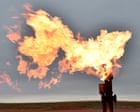
© Photograph: Matthew Brown/AP
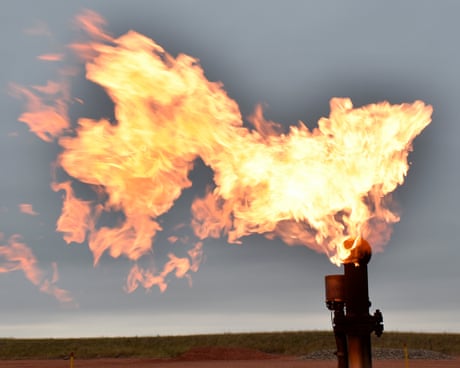
© Photograph: Matthew Brown/AP
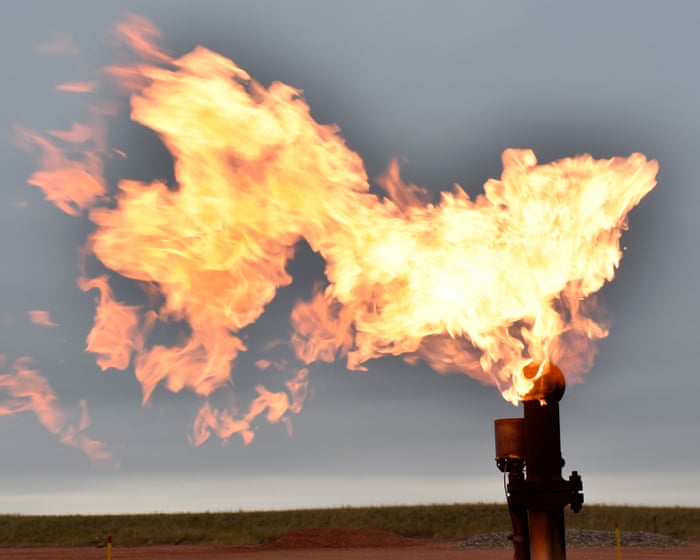
© Photograph: Matthew Brown/AP

© Olivier Morin/Agence France-Presse — Getty Images

© Julián Trejo Bax/Associated Press
Beneath every step we take, soils hold one of the planet’s largest reservoirs of carbon, a vast, slow-moving bank of organic matter that quietly regulates how much of the world’s carbon stays locked away and how much escapes into the atmosphere as greenhouse gas. Now a sweeping new review warns that climate-driven extremes, droughts, floods, and wildfires, are rewriting the rules of that subterranean economy in ways that conventional models and land-management practices have not yet caught up with. The analysis, led by environmental scientist Nanthi Bolan of the University of Western Australia and colleagues, including a corresponding authorship by Bolan himself, synthesizes a substantial body of global evidence on how extreme weather reshapes carbon inputs to soil, microbial processing, erosion, and the sequestration of carbon that underpins soil health, water retention, nutrient cycling, and agricultural productivity.
The work, published in the journal Carbon Research, is notable for the scale of its underlying evidence base. On 14 January 2026, the authors searched Google Scholar, PubMed, and Web of Science using terms spanning climate change, extreme weather, soil carbon, microbial activity, decomposition, erosion, dissolved organic matter, and leaching. The initial sweep returned 14,218 records; after removing duplicates and screening for eligibility, 3,754 articles remained for bibliometric and qualitative analysis. From those, 187 publications were selected for detailed synthesis based on relevance, methodological rigor, and the substantive quality of their findings. Keyword co-occurrence patterns were mapped with VOSviewer, a bibliometric tool that reveals the intellectual architecture of a research field. The result is a critical review grounded in structured literature screening rather than new experimental data, but its synthesis offers one of the most comprehensive maps yet of how extremes rearrange the soil carbon cycle.
The review’s central finding is that no two extremes act alike. Drought, the most widespread disturbance, operates largely through the plant side of the equation. When rainfall fails, photosynthesis slows, plant biomass production falls, and the total flux of carbon entering soils through roots, residues, and litter declines. There is a nuance here: under moderate water stress, plants may temporarily shift a greater proportion of their fixed carbon belowground, investing in roots to chase moisture. But prolonged drought overwhelms that compensatory response. Microbial biomass shrinks, litter decomposition stalls, and the living engine of the soil carbon cycle idles. Then comes the deceptive twist: when rain finally returns, rewetting triggers a rapid pulse of carbon dioxide as starved soil microbes seize upon the accumulated substrates left behind by months of suspended activity. That post-drought CO₂ flush, the review emphasizes, can erase much of the apparent “savings” that accumulated during the dry period. Across the assembled evidence, repeated and multi-year drought was consistently associated with declining soil organic carbon, with grasslands and arable croplands showing particularly pronounced losses, ecosystems that happen to anchor much of the world’s food production.
Flooding tells the opposite story, but it ends in many of the same places. Water saturation chokes off oxygen diffusion through soil pores, forcing microbial metabolism into anaerobic pathways. That shift changes everything downstream. Prolonged waterlogging can drive the chemical reduction of iron oxyhydroxides, minerals that in oxygenated conditions act as microscopic glues binding organic carbon to soil particles. When those minerals dissolve, the carbon they held is released as dissolved organic carbon, which can then be stripped away by erosion and leaching and exported to rivers, lakes, and ultimately the ocean. The review stresses, however, that flooding is not unambiguously a carbon loss story. Wetlands and other periodically inundated ecosystems can accumulate and retain enormous carbon stocks precisely because water constrains decomposition. Whether a flood event releases carbon or banks it depends on the interplay between plant inputs, oxygen availability, and hydrological transport, a delicate balance that shifting rainfall regimes are actively destabilizing.
Wildfire is the most dramatic and immediately visible of the three forces, and its effects cascade on multiple timescales. Combustion directly strips vegetation, litter, and soil organic matter, transferring carbon to the atmosphere in hours. But fire also rearranges the physical and biological landscape of the soil in subtler ways: it can increase erosion by removing protective ground cover, alter soil wettability in ways that change hydrological behavior, restructure microbial communities, and expose previously protected carbon, once shielded inside aggregates or mineral associations, to fresh decomposition. There is a paradoxical bright spot. Pyrogenic carbon, the charcoal-like residue of incomplete combustion, is chemically recalcitrant and can persist in soils for centuries or millennia, functioning as a long-term carbon sink. Whether a fire leaves a landscape as a net carbon source or stabilizes some of its carbon in pyrogenic form depends on fire severity, soil moisture, fuel load, ecosystem type, and the trajectory of post-fire recovery. The review is clear that this balance cannot be predicted from fire alone; it is contingent, site by site, on conditions that vary widely across the globe.
Perhaps the most consequential theme running through the synthesis is that carbon responses cannot be inferred from the type of extreme event alone. Land use, soil mineralogy, hydrology, salinity, vegetation composition, microbial community makeup, and the timing of events within a season all determine whether carbon ends up stored, mobilized, or released. Iron and aluminum oxyhydroxides and clay minerals, for instance, provide mineral protection that can shield organic matter even under stress, while sandy or low-clay soils offer little such refuge. Managed croplands respond differently from native grasslands; saline coastal soils behave differently from acidic forest soils. And compound events, drought followed by wildfire, or alternating drought and flooding in rapid succession, may produce effects that are qualitatively different from those of isolated disturbances, as when a dried landscape burns more intensely, or when post-fire soils, stripped of vegetation, wash away in the first heavy rain. The review argues that the climate science and soil science communities have largely studied these disturbances one at a time, while the real world increasingly delivers them in combination.
The implications for climate mitigation and adaptation are substantial. Soil organic carbon is frequently invoked in national climate pledges and voluntary carbon markets as a bankable sink, yet the review suggests that the security of that bank depends heavily on how often and how severely extremes strike. If multi-year droughts steadily drain carbon from grasslands and croplands, or if fires repeatedly reset accumulation cycles, the effective permanence of soil carbon storage becomes far more fragile than many accounting frameworks assume. Conversely, protecting and rebuilding soil carbon delivers benefits well beyond climate: it improves water retention in drought-prone regions, supports nutrient cycling, stabilizes soil structure against erosion, and sustains the microbial diversity on which fertility depends. Carbon stewardship, in other words, is not separable from food security or ecosystem resilience; it is the same problem viewed from different angles.
The authors are candid about the limits of the current evidence base. The article does not report newly generated datasets and does not present a dedicated limitations section, and its conclusions rest on a qualitative synthesis of selected publications. Consequently, they call for improved and more consistent evidence across soil types, land uses, and both terrestrial and aquatic environments, and across multiple temporal scales, from the instantaneous CO₂ pulse after rewetting to the multi-decadal trajectory of carbon storage. Standardizing measurements of carbon pools, microbial functions, and event intensity, they argue, would make results comparable across ecosystems and enable more confident generalization, something the field currently struggles to achieve given heterogeneous methods and site-specific reporting.
Looking forward, the review sketches a research agenda that is as technologically ambitious as it is mechanistically focused. The authors recommend integrating high-resolution remote sensing with ground observations, advanced spectroscopy, molecular analyses, and integrated modeling to track carbon as it moves through soils and into waterways. They single out several priorities: characterizing microbial genomic and functional diversity as it responds to stress, quantifying carbon stoichiometry, probing the interactions between organic matter and iron and aluminum oxyhydroxides, understanding clay-mineral protection mechanisms, tracking long-term storage outcomes, and systematically studying the sequencing of compound extreme events. Each of these threads addresses a gap in the mechanistic chain that links a weather event in the atmosphere to a molecule of carbon, stabilized or released, in the soil.
What emerges from the review is a picture of the soil carbon cycle not as a stable background process but as a dynamic, contested system whose behavior under climate extremes is far less predictable than once assumed. The same storm that floods a rice paddy and exports carbon to a river delta may, a few hundred kilometers away, end a drought and briefly green a grassland, with opposite consequences for the atmosphere. As extremes grow more frequent and more compound, the review makes the case that understanding, and safeguarding, the carbon held beneath our feet will require science that is as interconnected and as restless as the weather itself.
soil organic carbon, extreme weather, drought, flooding, wildfire, carbon sequestration, microbial activity, dissolved organic carbon, erosion, pyrogenic carbon, climate change, soil health
Article Title: Impacts of climate change-induced extreme weather events on carbon dynamics in soil
Article References: Bolan, N., Messiga, A. J., Sharma, S., Mukherjee, S., Bolan, S., Salehin, S. M. U., Rupngam, T., Rajan, N., Zhang, T., Yang, Y., Jagadesh, M., & Siddique, K. H. M. (2026). Impacts of climate change-induced extreme weather events on carbon dynamics in soil. Carbon Research, 5(1), Article 58. https://doi.org/10.1007/s44246-026-00300-5
Image Credits: AI Generated
DOI: 10.1007/s44246-026-00300-5
Keywords: adaptation of land management practices to climate extremes, challenges to conventional soil carbon models, Climate change impacts on soil carbon storage, effects of droughts and floods on soil microbial activity, global evidence on soil carbon dynamics, implications for greenhouse gas emissions, influence of extreme weather on nutrient cycling and water retention, resilience of soil carbon reservoirs to climate, review of climate-driven soil carbon processes, soil erosion and carbon loss due to extreme weather, soil health and agricultural productivity under climate stress, wildfire influence on soil organic matter

© Ahmad Mulia Panjaitan/Associated Press
Climate catastrophe is on our doorstep – yet Labour’s impending approval of further drilling will bring more pain for negligible gains
Pinch yourself, it’s happening again. Here is a Labour government spending a vast amount of political capital to earn tiny material gains while risking huge political losses. It occurred repeatedly under Keir Starmer, and now – with the impending decision to approve further gas and oil drilling in the North Sea – it is happening under Andy Burnham. You rack your brains to explain it, but no rational explanation comes.
Burnham is studiously cryptic about his reasons. His clearest statement to date goes as follows: “There is a resource there. When people are struggling, we can’t ignore that.” Does he mean that oil and gas workers are struggling? If so, this decision will be of little use to them. The Jackdaw gasfield, likely to be approved this week, will generate a grand total of 27 direct full-time jobs. The Rosebank oilfield, whose approval is likely to follow soon, will support 450 UK-based jobs during its lifetime. Yet the UK’s net zero economy directly employs 300,000 people, and a further 400,000 jobs are planned. The rest of the green economy employs more than 600,000. A just transition for fossil fuel workers, securing jobs in the green economy, is better for everyone.
George Monbiot is a Guardian columnist
Continue reading...
© Photograph: Jack Taylor/Reuters

© Photograph: Jack Taylor/Reuters

© Photograph: Jack Taylor/Reuters

© Yonhap News Agency, via Reuters


© Wahyudi/Agence France-Presse — Getty Images

© Cindy Schultz for The New York Times
Datacentres should generate their own power and control their emissions, writes Richard Lamming, while Michael McClelland says we should reduce our digital communication. Plus a letter from Malcolm Fraser
The case of future datacentres demanding more electricity than the entire United Kingdom (Two planned datacentres will have higher UK carbon emissions than ExxonMobil, analysis finds, 25 August) is an example of corporates transferring their problems to society and the electorate. This must not be allowed to happen.
One solution would be to make each datacentre responsible for generating all its own electricity and for reducing its CO2 emissions to zero. These installations will have vast areas of roofing and car parks that could be covered in solar panels, space for wind generation and battery storage, and for emissions scrubbers.
Continue reading...
© Photograph: mikkelwilliam/Getty Images

© Photograph: mikkelwilliam/Getty Images

© Photograph: mikkelwilliam/Getty Images
Secretive state begins repairs on ageing facilities after being revealed as worst country for leaks of potent greenhouse gas
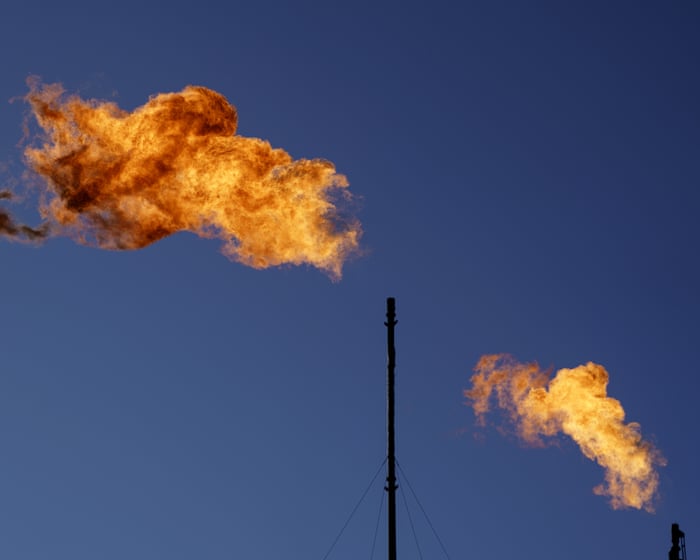
Turkmenistan has started plugging the mega-leaks of methane that spew from its ageing oil and gas facilities, the latest UN data shows, in a move hailed as a breakthrough.
Methane, also called natural or fossil gas, is a potent greenhouse gas. It traps 80 times more heat than carbon dioxide and causes 25% of global heating today. Stopping leaks can be quick and cheap and, because methane breaks down in the atmosphere far quicker than CO2, this has a rapid impact, with some experts calling it the climate “emergency brake”.
Continue reading...
© Photograph: David Goldman/AP
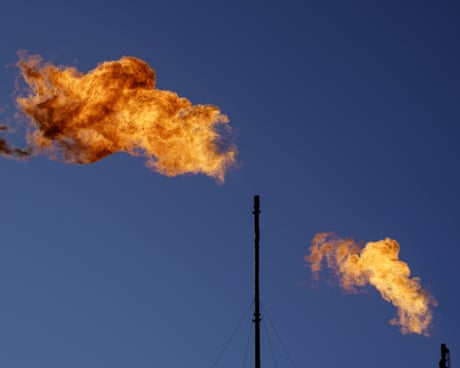
© Photograph: David Goldman/AP
© Photograph: David Goldman/AP
A climate shock that unfolded about 304 million years ago is offering scientists a dramatic warning about how quickly Earth’s climate system can amplify an initial temperature rise. During the Late Paleozoic Ice Age, a relatively modest increase in global temperatures appears to have triggered a much larger episode of warming, as methane released from thawing permafrost intensified the greenhouse effect. Researchers say the ancient event provides a powerful geological parallel for the climate changes occurring today.
The study, led by Le Yao of the Nanjing Institute of Geology and Paleontology with contributions from University of Cincinnati geosciences professor Thomas Algeo and international colleagues, examined a short-lived warming episode during Earth’s penultimate ice age. Their findings suggest that global sea surface temperatures eventually increased by more than 7 degrees Celsius, or approximately 12 degrees Fahrenheit. The rise was not necessarily caused by one enormous initial pulse of carbon. Instead, it may have developed through a chain reaction in which warming activated additional natural sources of greenhouse gases.
The Late Paleozoic Ice Age extended across a vast span of geological time, when large ice sheets covered parts of the supercontinent Gondwana. Although the planet was in an “icehouse” state, atmospheric carbon dioxide and methane still had the power to destabilize the climate. The newly analyzed warming event is particularly significant because it occurred under ice-age conditions rather than during an already warm greenhouse world. That makes it a valuable analog for the modern Earth, which still contains continent-scale ice masses in Greenland and Antarctica.
According to the researchers, the initial climate disturbance may have been linked to volcanic activity. Volcanic emissions can inject carbon dioxide and other gases into the atmosphere, where they absorb outgoing infrared radiation and prevent some heat from escaping into space. The warming may also have been assisted by changes in Earth’s orbit. Over long cycles, variations in orbital shape alter the distribution of sunlight across the planet, influencing the growth and retreat of ice sheets and changing the seasonal balance of solar energy.
At first, the additional carbon may have produced only a limited temperature increase. But once warming crossed a critical threshold, frozen ground in high-latitude regions began to thaw. Permafrost contains large quantities of organic carbon preserved in frozen soils. When that material becomes available to microbes, decomposition can release carbon dioxide and methane. Methane is especially powerful over shorter atmospheric timescales because, molecule for molecule, it absorbs considerably more infrared radiation than carbon dioxide, even though it remains in the atmosphere for less time.
This process can create a positive climate feedback. An initial warming causes permafrost to thaw, thawing releases greenhouse gases, and the additional gases produce further warming. That extra heat can accelerate more thawing, allowing the cycle to reinforce itself. The researchers describe the ancient event as a transient global warming episode in which a comparatively modest carbon release appears to have crossed a climatic tipping point and initiated much more extensive carbon emissions from natural reservoirs.
The geological timescale of the ancient warming is also central to the study’s relevance. Algeo said the temperature change unfolded over tens of thousands of years, with warming occurring at an average rate of roughly one-tenth of a degree Celsius per 1,000 years. Modern warming is progressing far more rapidly. Researchers have observed an increase of nearly 1 degree Celsius in global sea surface temperature over approximately the past century, a rate many times faster than the average change reconstructed for the ancient event.
The comparison does not mean that Earth is destined to repeat the precise conditions of 304 million years ago. Continents, ecosystems, atmospheric composition and ice-sheet geometry were all different in the Late Paleozoic. However, the physics of greenhouse warming and the existence of carbon feedbacks remain relevant. Ancient climate records reveal how a system that appears stable can respond nonlinearly when warming activates processes capable of releasing additional greenhouse gases.
The findings also place human history in a broader planetary context. All recorded human civilization has developed during the most recent ice age, despite the fact that the term can sound incompatible with today’s climate. In scientific usage, Earth remains in an ice age because substantial permanent ice sheets still exist in Greenland and Antarctica. The ancient warming episode matters precisely because it demonstrates that an ice age does not guarantee a permanently cold or stable climate. Even within an icehouse world, a small disturbance can trigger rapid and substantial changes when reinforcing feedbacks are engaged.
The research, published in the Proceedings of the National Academy of Sciences, underscores why scientists closely monitor permafrost, polar ice and other climate-sensitive carbon stores. The ancient record cannot provide an exact forecast of future warming, but it shows that Earth’s climate has repeatedly responded to carbon disturbances with amplifying feedbacks. As modern emissions continue to raise temperatures at an exceptional rate, the geological evidence offers a clear message: the danger lies not only in the carbon released directly by human activity, but also in the natural carbon sources that warming can unlock.
Subject of Research: Ancient global warming, permafrost methane feedbacks, and climate tipping points during the Late Paleozoic Ice Age
Article Title: A transient global warming event during Earth’s penultimate icehouse
Web References: https://doi.org/10.1073/pnas.2601643123
References: Proceedings of the National Academy of Sciences, DOI: 10.1073/pnas.2601643123
Image Credits: Andrew Higley, University of Cincinnati
Keywords: climate change, global warming, ice age, Late Paleozoic Ice Age, permafrost, methane, climate feedback, tipping point, paleoclimate, geology, volcanic activity, Earth’s climate history
Modelling finds AI-driven productivity gains in coal, oil and gas enable more emissions than applications in renewables avoid
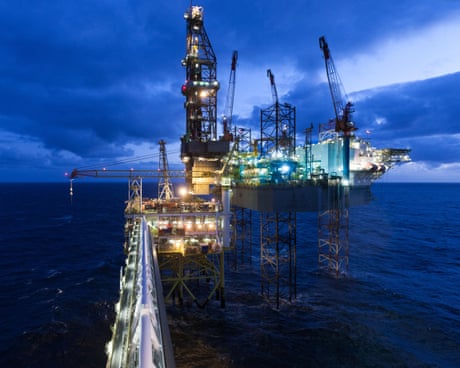
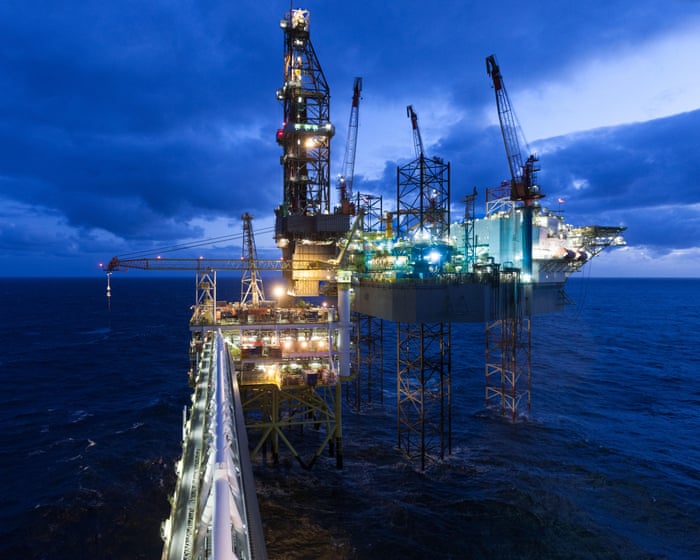
AI-driven productivity gains enable more planet-heating pollution from fossil fuels than they avoid from renewables, a study has found.
Researchers modelled the technical potential for AI to boost clean power generation along with projections for how it can help produce coal, oil and gas. Across 64 scenarios, they found net yearly carbon pollution rose by 0.47-1.8 gigatonnes, or about 1-5% of the energy sector’s annual emissions.
Continue reading...
© Photograph: KENDALL/Alamy
© Photograph: KENDALL/Alamy
© Photograph: KENDALL/Alamy
Modelling finds AI-driven productivity gains in coal, oil and gas enable more emissions than applications in renewables avoid
AI-driven productivity gains enable more planet-heating pollution from fossil fuels than they avoid from renewables, a study has found.
Researchers modelled the technical potential for AI to boost clean power generation along with projections for how it can help produce coal, oil and gas. Across 64 scenarios, they found net yearly carbon pollution rose by 0.47-1.8 gigatonnes, or about 1-5% of the energy sector’s annual emissions.
Continue reading...
© Photograph: KENDALL/Alamy
© Photograph: KENDALL/Alamy
© Photograph: KENDALL/Alamy
