A newly discovered platypus-like creature is the largest-known mammal relative from the entire Jurassic period, a new study finds — although it still only weighed as much as a Chihuahua.
The critter, which hunted salamanders in the freshwater lakes and rivers of what is now Inner Mongolia, China, lived during the mid-Jurassic between 168 million and 163 million years ago. It seems to be the earliest known mammal-type animal that lived a semiaquatic life.
Researchers unearthed the delicate and detailed fossil in 2016, which revealed that the animal likely weighed about 2.2 to 4.4 pounds (1 to 2 kilograms). It was large for a mammal relative during the Jurassic, but its name, Megacauda sungei, was inspired by its tail: Megacauda means "big tail." The discovery was detailed in a study published on Wednesday (Oct. 7) in the journalNature.
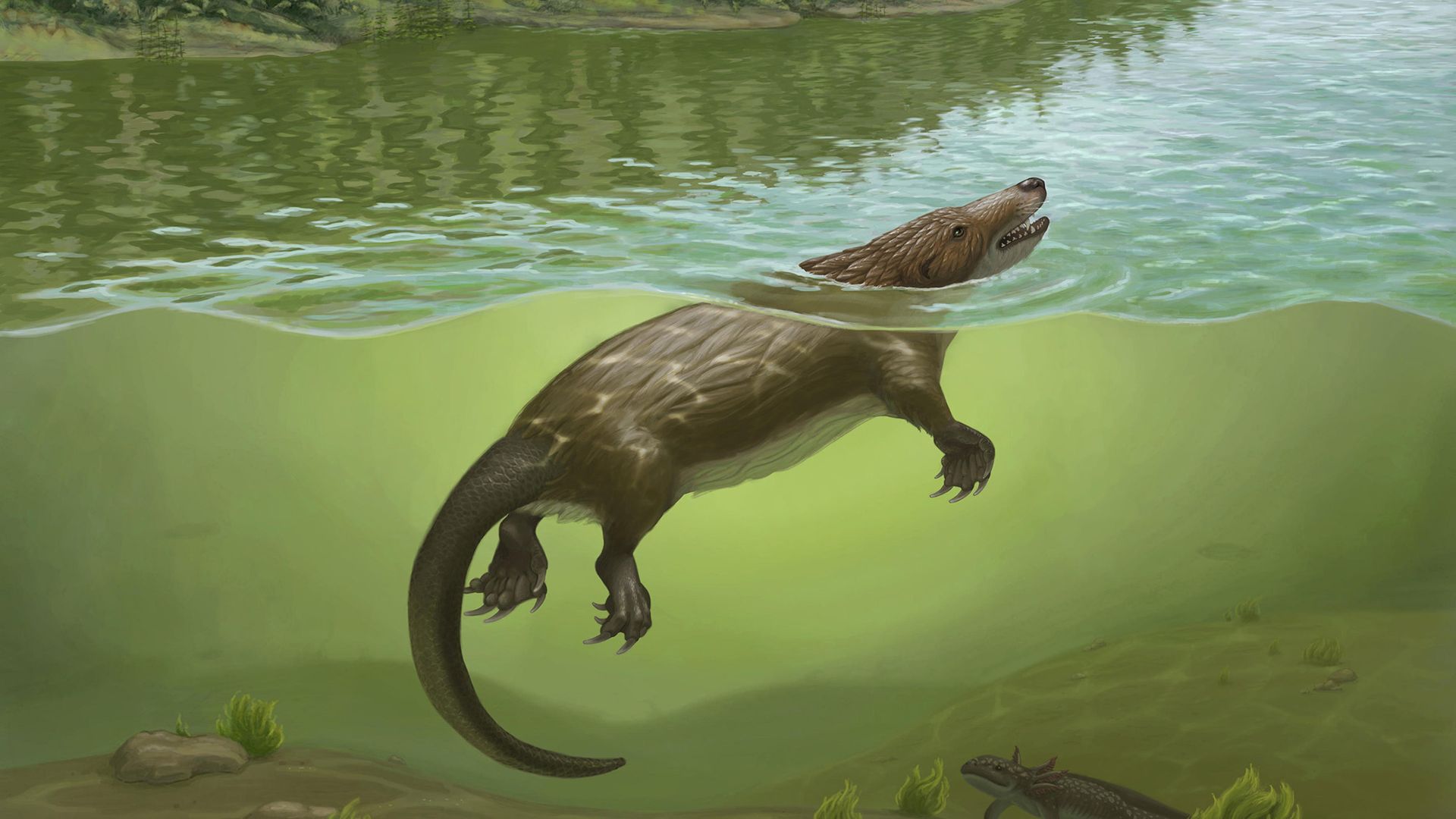
The furry predator had a mix of features seen in modern-day animals, with a broad, flattened tail that marks it as a powerful swimmer, and short hind legs with relatively long feet.
"It's like a chimera," study co-authorZhe-Xi Luo, a paleontologist at the University of Chicago, told Live Science. "The back half of this animal is very much like a platypus. As are the limbs, which would be capable of swimming or digging tunnels in river banks."
But the teeth "are definitely not like a platypus," Luo said. It possessed robust canines and shearing cheek-teeth that would cut and chew meat in a different way from modern carnivorous mammals. "It's a predator with gigantic and very specialized canines," Luo said. "So, it's partly otter-like and partly platypus-like."
A revealing fossil
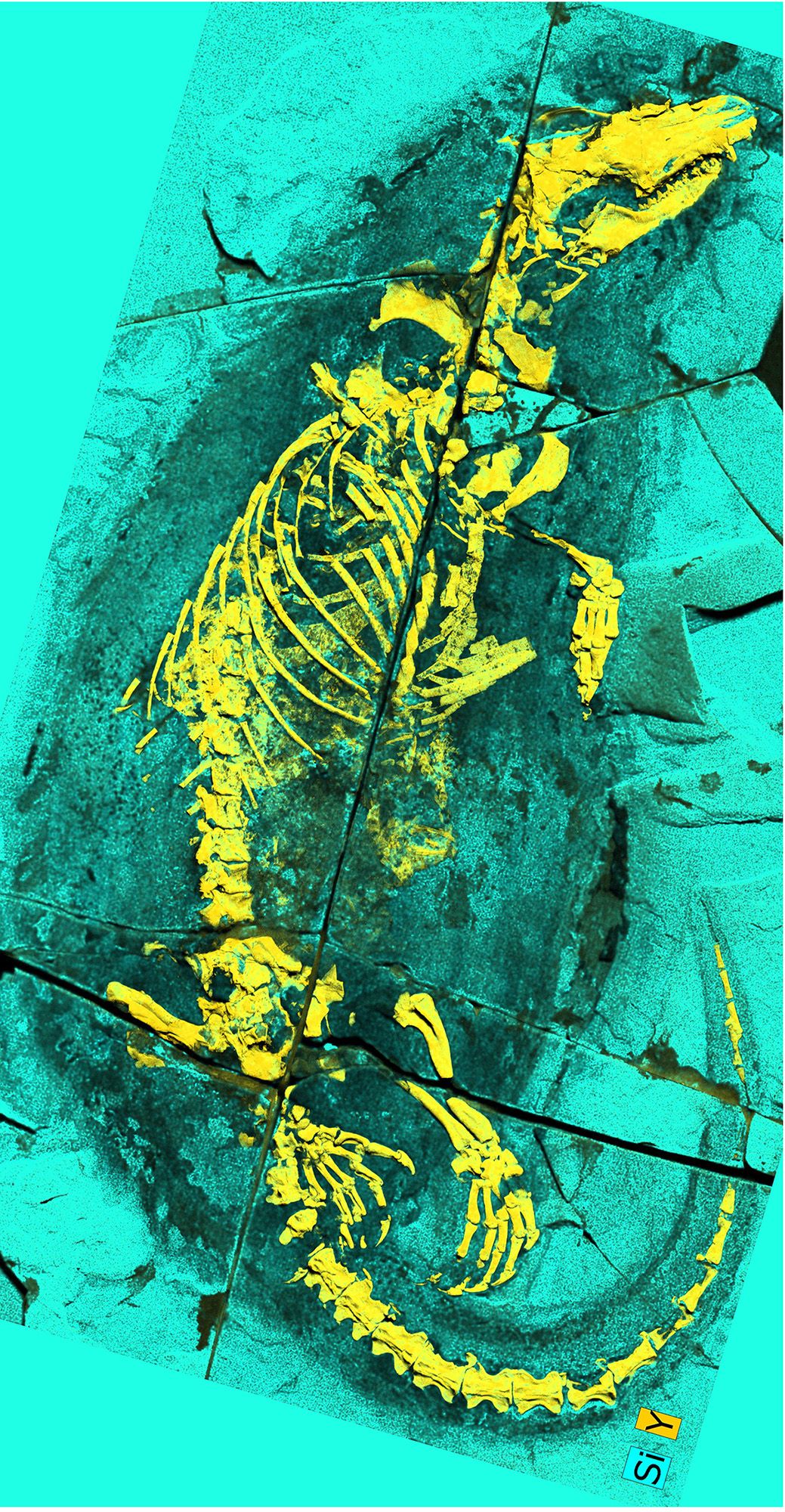
The fossil of Megacauda sungei, highlighting its bones and soft tissue. (Image credit: Luo et al., Nature (2026))
Tiny bits of vertebrate bones found in what would have been the animal's stomach and the surrounding fossil beds hint that M. sungei dined on salamanders, Luo said.
He added that M.sungei may have sheltered in burrows on land in the temperate plant-filled climate, and hunted in lakes and rivers for fish and invertebrates.
Another notable aspect of the fossil is its throat. Modern mammals, including humans, have hyoid bones in the throat arranged in a "U"-shaped saddle. These help us use throat muscles to swallow chewed food one chunk at a time, instead of gulping down huge bites or whole prey. The structures also enable babies to suckle their mother's milk.
M.sungei seems to have had the apparatus needed to do this, study co-authorThomas Martin, a paleontologist at the University of Bonn in Germany, told Live Science.
"This is an incredibly important evolutionary innovation," Luo said, adding that this capability is one of the things that helped early mammals diversify into carnivores, insectivores, herbivores or omnivores to take advantage of all sorts of foods.
Finding this in M.sungei suggests that the apparatus needed for suckling milk and swallowing had already evolved by the Middle Jurassic (around 174 million to 164 million years ago), Martin said.
This is before marsupials like kangaroos and placental mammals like primates and bears are thought to have diverged from each other 160 million years ago, after descending from an egg-laying common ancestor that lived approximately 180 million years ago.
"Now we push the history of it back to before the split of modern marsupials and modern eutherian [placental] mammals," Luo said.
"Neonatal suckling behaviour was previously thought of as being a hallmark of advanced mammals, but it now appears to have evolved well before then, in the common ancestor of docodontans and mammals at least 165 million years ago," said Sue Hand, a vertebrate paleontologist at the University of New South Wales in Australia who wasn’t involved in the study.
M.sungei is from an extinct lineage of docodonts, which are relatives of mammals from the dinosaur-dominated Jurassic and Cretaceous periods, living between about 200 million and 120 million years ago.
"It seems that an aquatic lifestyle arose often in early mammal-like species," saidTim Flannery, a mammalogist at the Australian Museum Research institute who wasn't involved in the work.
If anything, the newly described "spectacular fossil" shows that docodonts were wide-ranging during the dinosaur age, Hand told Live Science in an email.
"This very detailed study adds to accumulating evidence that mammaliaforms occupied a wide range of ecological niches long before the evolution of living mammals," Hand said.
Mammals first appeared on Earth over 200 million years ago, scuttling around alongside the dinosaurs as little mouse-sized creatures. But after the asteroid hit 66 million years ago, it was their time to shine — and the Age of Mammals began.
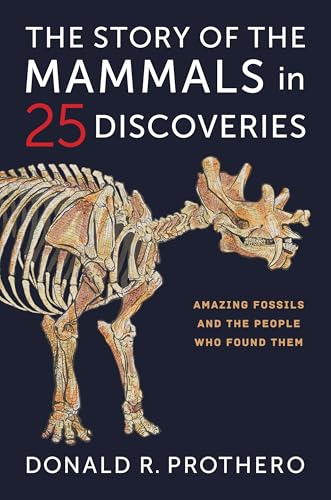
But the path to understanding our own branch of the animal kingdom hasn't been straightforward. In this excerpt from "The Story of the Mammals in 25 Discoveries" (Columbia University Press, 2026), author Donald R. Prothero looks at a time when philosophers and early naturalists believed giants roamed the Earth and explores the idea that extinction was heresy.
Many cultures around the world have a mythology that includes legends about gigantic races of humans that lived on Earth in the dark mysterious past. They may have fought against the gods, or they may have been destroyed by floods. These stories were reinforced by the discovery of gigantic bones, much larger than those of any living human, all over the Mediterranean and Europe.
The Greek philosopher Empedocles (492-432 BCE) reported gigantic bones from Sicily, supposedly remnants of a race of giants. The Roman historian Pliny the Elder (23-79 CE) mentioned fossil ivory in the ground, and according to the Roman historian Suetonius (69- 122 CE), Emperor Augustus owned a collection of large bones that had been found on the island of Capri, near Pompeii. The skulls of elephants, with their huge central opening in front (for the trunk), were thought to be the skulls of the one-eyed cyclops.
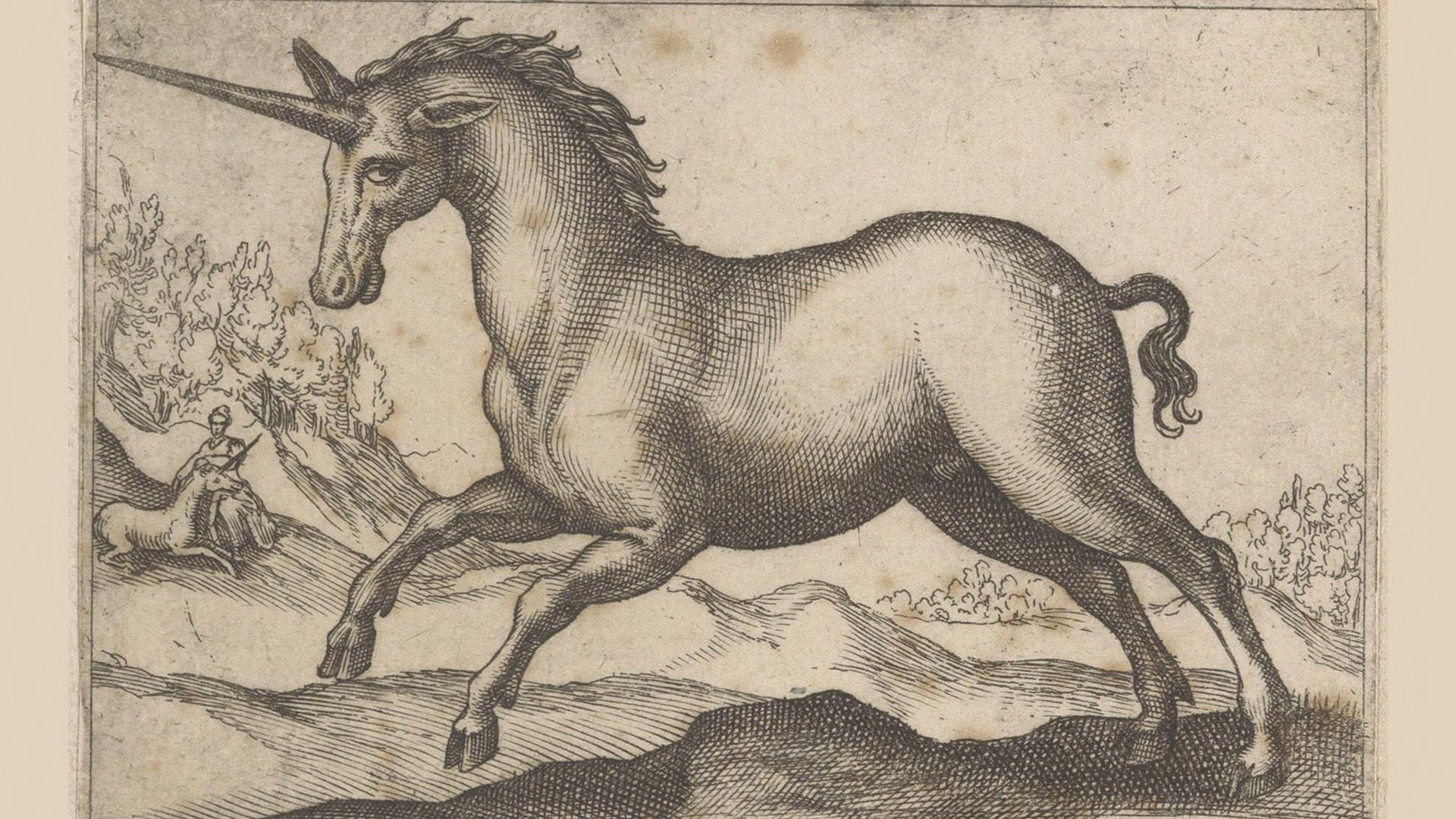
In the Middle Ages, these huge bones were again attributed to gigantic humans or other monsters (Genesis 6:4) that were drowned in Noah's flood. Giant tusks from Siberia were thought to be the horns of the mythical unicorn or the tusks of dragons. In some places gigantic teeth or vertebrae of mammoths were revered as relicts of saints. Nearly every possibility was suggested except that they were the bones of extinct elephants.
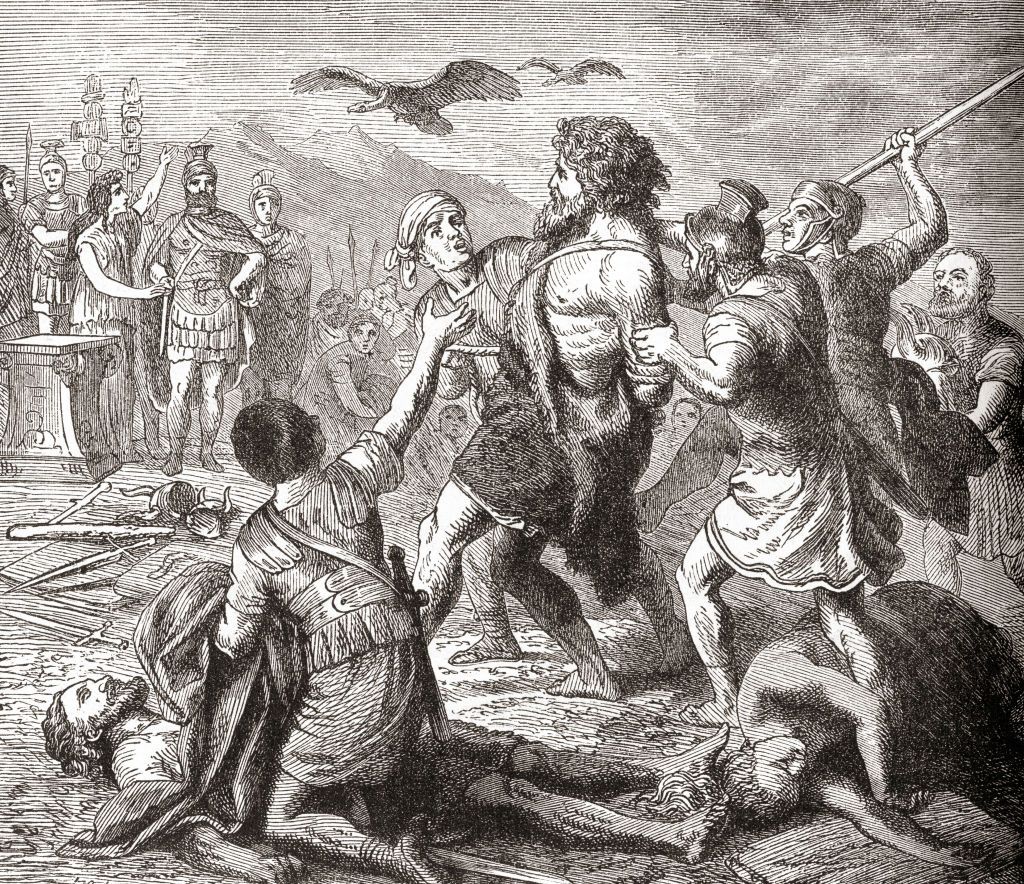
In the early seventeenth century, some giant bones dug up in a sand pit near Langon in southeastern France were exhibited around France as the remains of the giant Teutons, Germanic tribes that once roamed Gaul and were defeated by the Romans in 101 BCE.
Huge bones from southeastern France were once thought to belong to the giant Teutons. (Image credit: Universal History Archive via Getty Images)
But in 1613 the famous anatomist Riolan attacked the prevailing interpretation, suggesting that they were the bones of an elephant. This generated a raging controversy between physicians and anatomists and the barber-surgeons who called them gigantic human bones. Others thought they were hoaxes or generated by mysterious "plastic forces" (vis plastica in Latin) that percolated through Earth. Still others attacked the anatomists for questioning the biblical account of giants on Earth. The controversies died down in 1618 without being resolved, and for the next two centuries most people continued to interpret new finds as gigantic humans.
The giant bones that kept turning up in the New World were also a source of much mystery and consternation. The Native American tribes usually attributed them to giant monsters fought by their ancestors and incorporated them into their folklore. When these bones were first seen by European settlers, they were thought to be the bones of gigantic humans that roamed the earth in biblical times. Others thought that the giant tasks so revered by the Native Americans were the works of Satan, placed there to tempt the believer.
In 1519, the Spanish explorer and conquistador Hernan Cortez received a bone of a "giant," a gift from the friendly Tlascalan tribe of Mexico during the conquest of the Aztecs. He sent it back to the King of Spain as proof that giants at once lived in the New World. In 1706, the Reverend Cotton Mather of the Massachusetts Bay Colony pronounced them to be "the remains of godless giants drowned in Noah's Flood." He sent some bones to the Royal Society in London to have them certified as evidence of this "wicked giant" because biblical scholars were calculating Adam's height at 123 ft. 9 in.
The Royal Society never pronounced an opinion on these bones, although by that time many members were becoming skeptical of the literal interpretations of Genesis. The stifling effect of religious dogma about giants and Noah's flood was complicated by another idea: the notion of Divine Providence. An omnipotent, benevolent God would never allow any of his creatures to become extinct. As the poet Alexander Pope wrote in An Essay on Man (1734), "who sees with equal eye, as God of all, a hero perish, or a sparrow fall."
The prevailing concept was that of a "great chain of being" that linked the animals to man to the angels to God. Breaking any link in that chain implied the destruction of the whole chain. In the same poem, Pope also wrote: "Where, one step broken, the great scale's destroy'd; From Nature's chain whatever link you strike, Ten or ten thousandth, breaks the chain alike."
By the late 1700s, however, it was becoming more and more apparent that many of the recently discovered fossils had no living counterparts. Remote corners of the world were being explored, and although many new and surprising beasts were discovered, clearly the gigantic beasts were not hiding in South America or Africa or the East Indies. Many strange fossils, such as the bones of hippopotami in Paris and London, were clearly related to tropical animals, but it was assumed that these bones had been washed from the tropics during the Great Flood.
The notion of extinction was still blasphemous. The New World soon provided unequivocal evidence that these large bones were not simply gigantic humans. In 1739, Charles le Moyne, the second Baron de Longueil, left Montreal with French and Indian troops to fight the Chickasaw Indians along the Ohio River. Somewhere along the Ohio he found the remains of what appeared to be three elephants. When the war ended in 1740, le Moyne collected the bones and shipped them to New Orleans and ultimately to Paris, where they came to the attention of French naturalists.
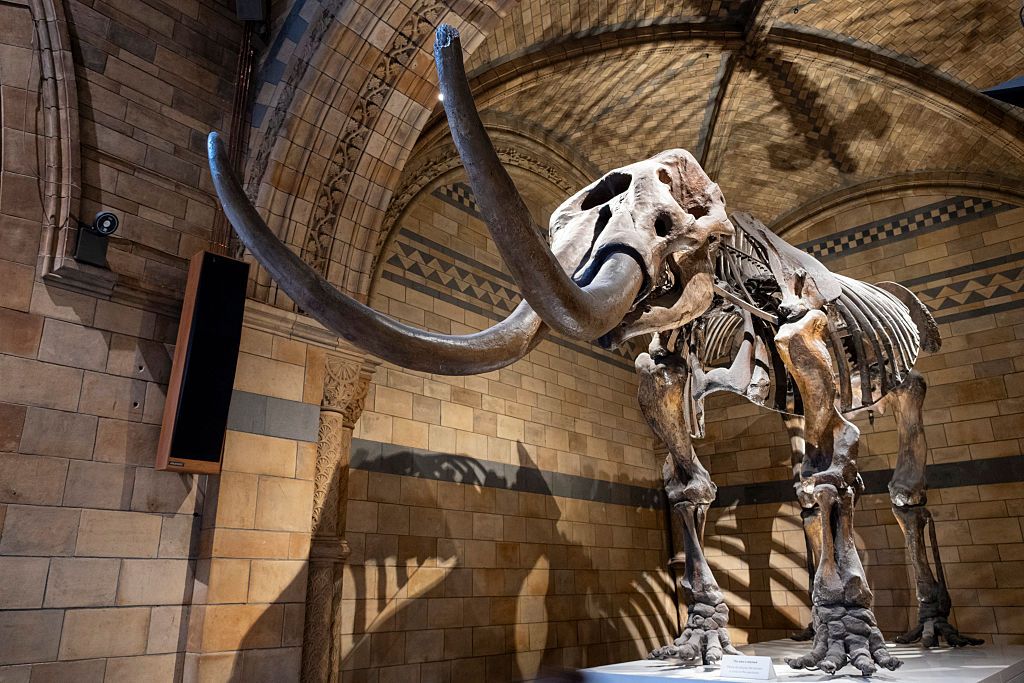
Fossils unearthed in Kentucky in the 18th century puzzled Benjamin Franklin, who thought they looked like an elephant, but the teeth were unlike those belonging to any known species. (Image credit: Mike Kemp via Getty Images)
In the 1740s and 1750s, English settlers in the region sent more of these bones from Big Bone Lick, Kentucky, off to England and also to Benjamin Franklin in America. Most of the bones (especially the tusks) were clearly like those of elephants and mammoths, but the teeth were puzzling. They were clearly unlike any living elephant, yet they were part of an animal of elephantine size. (We now know that these were specimens of the American mastodon, Mammut americanum.) Franklin speculated that the teeth were reminiscent of a carnivorous animal, although he and others later decided it was a vegetarian.
In 1769, the famous British anatomist William Hunter took the carnivory suggestion seriously and suggested this was not a true elephant but a "pseudelephant" or "American incognitum" (Latin for "unknown") that had independently developed ivory tusks:
"This monster, with the agility and ferocity of a tiger . . . cruel as the bloody panther, swift as the descending eagle, terrible as the angel of night. . . . And if this animal was indeed carnivorous, which I believe cannot be doubted, though we may as philosophers regret it, as men we cannot but thank Heaven that its whole generation is probably extinct."
This very precocious suggestion was still not accepted by naturalists of the time. Nevertheless, remains of the "incognitum" and also of the Siberian mammoth (including frozen carcasses with hair and skin) were turning up again and again. Georges Louis Leclerc, the Comte de Buffon (1707-1788), concluded in his Théorie de la terre in 1749 that although most of the supposedly extinct animals were hiding somewhere in an unknown region, it was likely that the large terrestrial mammals such as the mammoth and "incognitum" had actually perished.
By 1778, Buffon was relating their disappearance to his ideas of violent cataclysms in Earth's early history. During this time the climate was warmer and polar regions had once been tropical, so "elephants" (meaning mammoths) could live in Siberia. This implied a nonbiblical Earth of much greater antiquity. Buffon suggested it was as much as 75,000 to 3,000,000 years old, rather than the 6,000 years demanded by most literalist biblical scholars.
Naturally, such revolutionary ideas were not popular with the theologians in the Sorbonne. Buffon was protected by the king, however, so he was not persecuted for his heresy, although his ideas were not widely accepted either. The fact of extinction was finally proved by one of the greatest scientists of all time, the Baron Georges Cuvier (1769-1832).
Jean Leopold Frederic Georges Cuvier was an impressive man. Tall of stature, he had a "massive" head crowned by a large mane of hair. One admirer wrote that his head "gave to his entire person an undeniable cachet of majesty and to his face an expression of profound meditation." After his death, scientists weighed his brain and found that it was a massive 1830 grams [4 pounds], more than 400 grams [14 ounces] above average, and 200 grams [7 ounces] heavier than any brain ever measured at that time.
More important, he was one of the most brilliant men of his time, with a command of many subjects, some of which he invented all by himself. Before Cuvier, natural history was a field that resembled stamp collecting, with many amateur naturalists compiling long lists and descriptions of new species without analyzing the similarities in their anatomy. Cuvier almost single-handedly revolutionized natural history by dissecting many different animals and discovering their underlying similarities and differences.
This became the foundation of comparative anatomy, a subject that has been fundamental to biology ever since. Naturalists and explorers sent him their fossil bones, and he was the first to correctly describe many types of extinct animals. Cuvier solved the mystery of the puzzling fossil teeth called the "Great Incognitum" and recognized them as the teeth of the elephant-like mastodons. He also correctly deciphered the huge marine lizards we now know as mosasaurs.
For this reason, he is also considered to be the founder of vertebrate paleontology. Cuvier is most famous for his "law of correlation of parts," wherein he discovered that certain types of anatomical features tend to be associated. If you are a flesh eater, you will have sharp teeth and claws; if you are a plant eater, you will have flat grinding teeth and hooves; and so on. Using this law, paleontologists have been able to reconstruct whole animals from just a few key bones because the other parts of the anatomy are so predictable.
Excerpted from The Story of the Mammals in 25 Discoveries: Amazing Fossils and the People Who Found Them by Donald R. Prothero. Copyright (c) 2026 Donald R. Prothero. Used by arrangement with the Publisher. All rights reserved.
The Story of the Mammals in 25 Discoveries: Amazing Fossils and the People Who Found Them
Donald R. Prothero takes readers on a journey through the history of mammals, opening a window onto the worlds of some of the most incredible and peculiar animals that ever lived. He tells the dramatic stories of fossil findings and the paleontologists who unraveled them, showing how scientific ingenuity advanced our knowledge of both ancient and present-day mammals.
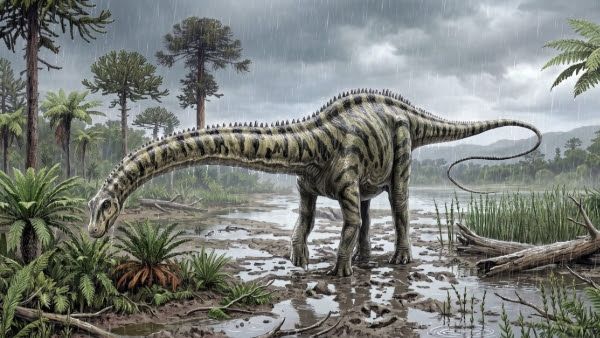
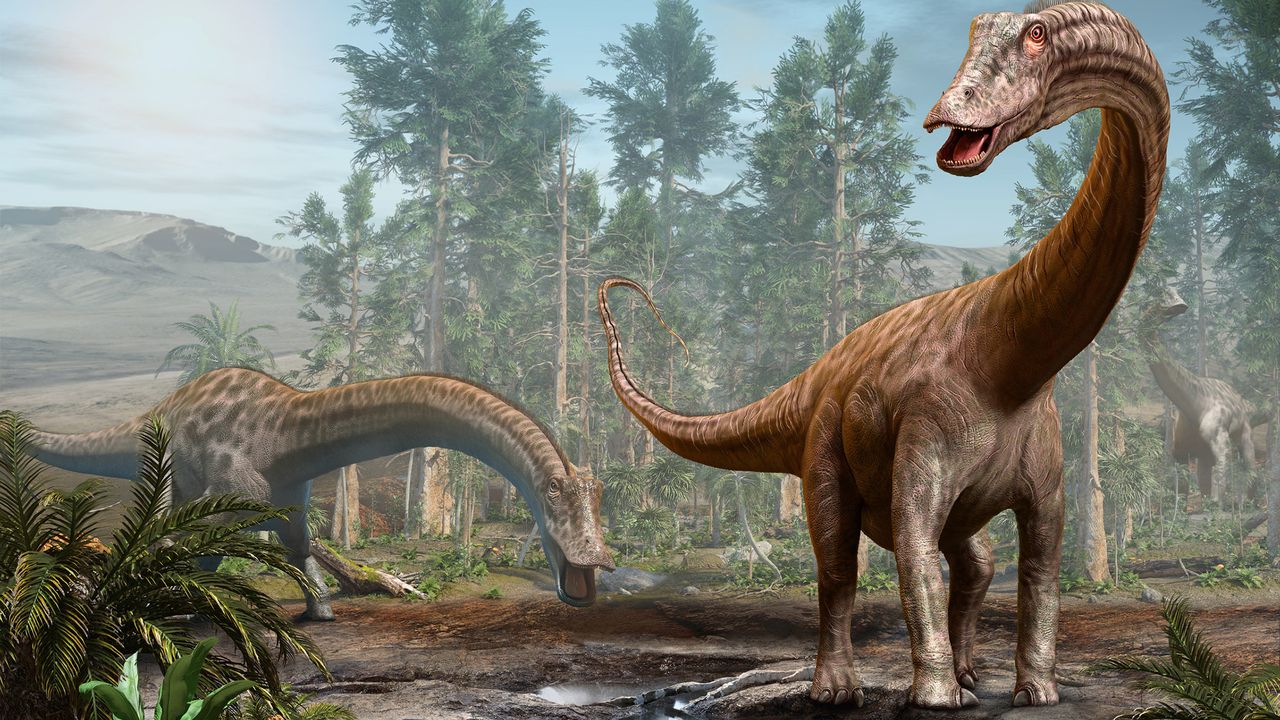
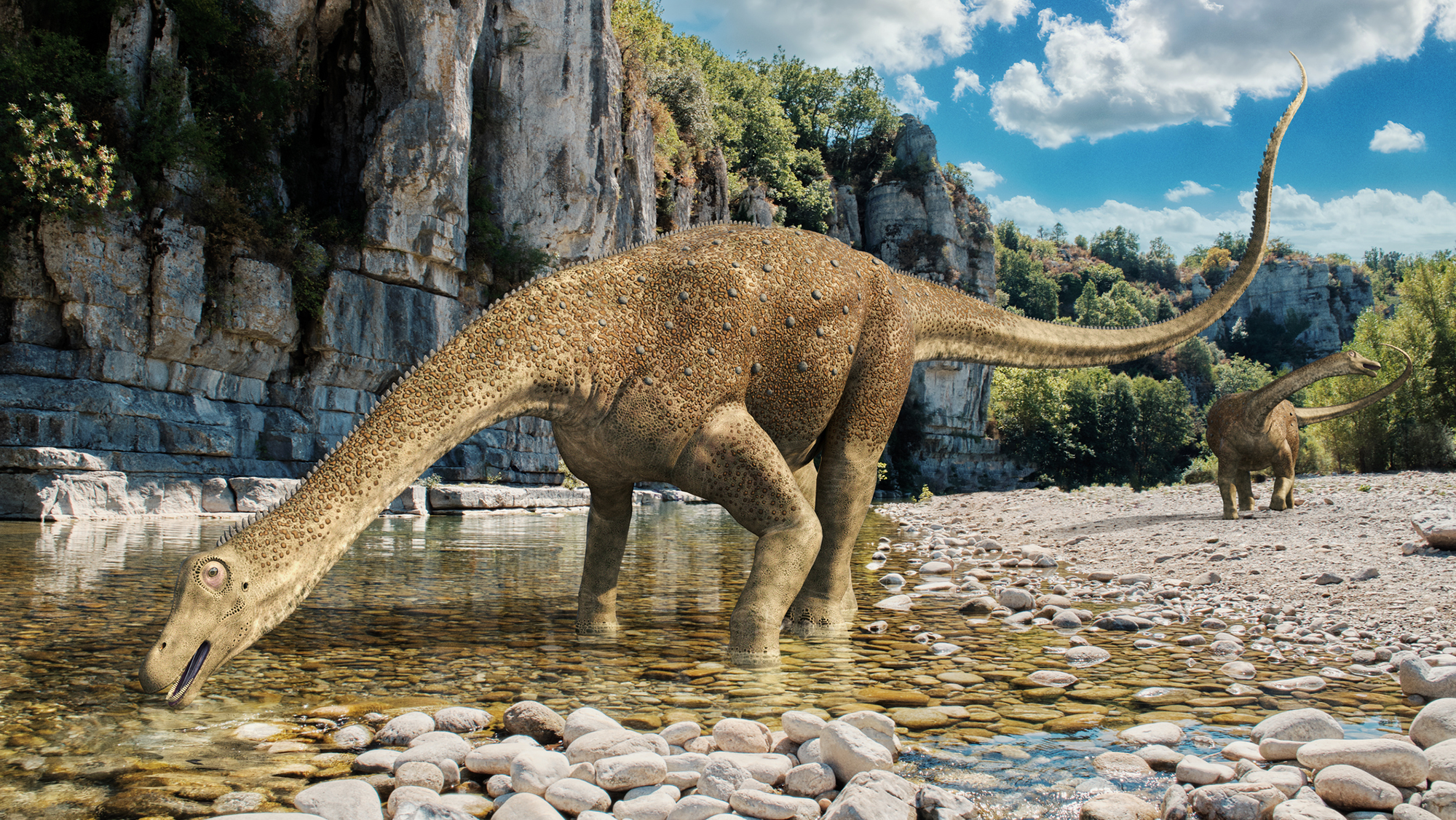
Paleontologists have identified the first confirmed remains of Diplodocus — "Dippy," for short — outside the western U.S., revealing that the iconic long-necked dinosaur reached what is now Spain roughly 150 million years ago.
The findings show that the enormous sauropod didn't live only in North America, as was long thought. Instead, it may have rambled across a land bridge all the way to Europe, the new study suggests.
The discovery, made at the La Tejería site near the small village of El Castellar in eastern Spain, provides some of the strongest fossil evidence yet that dinosaurs could move between North America and Europe during the Late Jurassic, when the Atlantic Ocean was still in its early stages of opening after the breakup of the supercontinent Pangaea. The researchers published their findings Tuesday (Sept. 15) in the Journal of Vertebrate Paleontology.
"Paleontological studies like this one help us better understand the history of life on Earth, reconstruct ancient ecosystems, and understand how they changed through time," study first author Sergio Sánchez Fenollosa, a doctoral student who studies biodiversity and evolutionary biology at the Joint Paleontology Foundation Teruel-Dinópolis (Dinópolis Foundation), a paleontological research institution, told Live Science via email.
A sauropod in Spain
Dippy is one of the best-known dinosaurs. After its fossils made their grand debut at the Carnegie Museum of Natural History in Pittsburgh in the early 1900s, life-size fossil replicas of the towering herbivore were sent around the world, including to England, France, Spain, Argentina and Russia.
But until now, Diplodocus' Late Jurassicfossils were known only from the Morrison Formation in the western United States — and the latest discovery shows that Dippy wasn't a homebody.
The newly unearthed Diplodocus specimen consists of 14 well-preserved tail vertebrae and several chevrons — bones that helped support blood vessels and muscles within the dinosaur's tail.
Study co-author and managing director of the Dinópolis Foundation, Alberto Cobos, said it was a friend who "thought he had spotted some bones on a mountainside," Cobos told Live Science via email. "That very day, I went to the site near El Castellar (a village in the province of Teruel). Sure enough, we saw a couple of sauropod vertebral centers."
Although only part of the skeleton has been recovered, the bones show a series of characteristics associated with Diplodocus, including large cavities corresponding to where air sacs would have been, along with deep grooves running alongside the underside of the tailbones.
The 14 vertebrate and several chevrons found in Spain correspond to the Dipolodocus' anatomy. (Image credit: Carmelo López)
"It was an exciting and continuous process of seeing the pieces of the puzzle gradually fall into place," Sánchez Fenollosa said in a statement. "From the early stages of the osteological study, we noticed strong similarities with several diplodocine sauropods … With each new result, the picture became clearer: we were looking at a Diplodocus."
It's unclear which species of Diplodocus the new specimen is, but like others of its genus, it was a huge dinosaur with an extremely long neck and whip-like tail.
"The Diplodocus from El Castellar was approximately 25 meters [82 feet] long (comparable in size to its North American relatives), making it another of the giant sauropods of the Spanish Jurassic," Cobos said in the statement.
An ancient bridge
Between 195 million and 170 million years ago, the supercontinent Pangaea broke apart as the Atlantic Ocean opened. But the ocean was much narrower than it is today, and the continents were not necessarily as isolated as their modern geography is now.
Evidence indicates that temporary land bridges may have allowed some animals to move between the two regions. The most famous prehistoric land bridge is the Bering Land Bridge that humans used to move between Asia and what is now Alaska. Previous research showed the Bering Land Bridge also existed around 68 million years ago, and it may have allowed an Asian ancestor of Tyrannosaurus rex to trek into North America.
Geological conditions may have allowed dinosaurs like Diplodocus to move between continents, Sánchez Fenollosa told Live Science in an email. "This interpretation is supported not only by the fossil record but also by geological evidence," he said.
The newfound Diplodocus fossils also suggest that the distribution of giant sauropods was more complicated than the fossil record previously indicated.
"More complete specimens will be essential to understand this story in greater detail, particularly to determine which Diplodocus species inhabited Europe: whether it was one already known from North America or a previously unknown species," Sánchez Fenollosa said. "This discovery reminds us that even for such iconic dinosaurs, there are still many unanswered questions about their evolutionary history and biogeography."
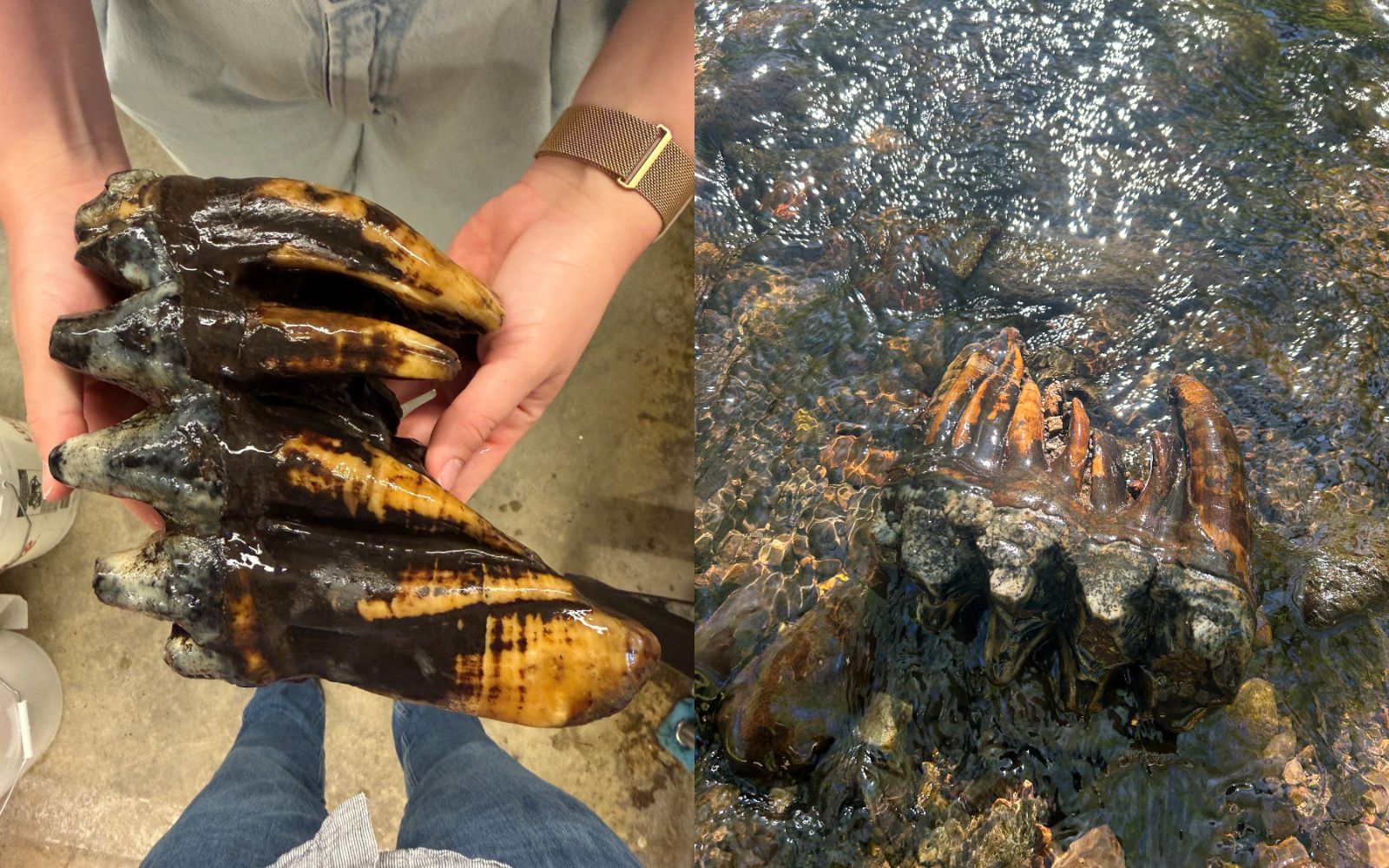
An exceptionally well-preserved fossilized molar belonging to an adult Pacific mastodon has surfaced in a nature preserve near San Francisco.
Upon first glance, the ancient tooth looked like an "oddly shaped rock" to geologists who were conducting fieldwork in the area, according to a statement from the Midpeninsula Regional Open Space (Midpen), which runs the preserve. But the find was quickly unmasked as a valuable fossil from the last ice age and was sent to scientists at Stanford University for carbon dating.
"The tooth itself is in immaculate condition," Wayne Thompson, a paleontologist and the CEO of Pacific Paleontology, a consulting firm that carried out a preliminary analysis, said in the statement. "It's the most complete mastodon molar from our area, and the most spectacular mastodon molar that I've ever seen. I had chills and shivers up and down my spine."
Brigid Lynch, a geomorphologist with the California-based hydrology consulting firm Balance Hydrologics, found the molar this summer while surveying a creek bed. "As a geologist, I've gone out and seen stuff in the field, but definitely nothing as exciting as this," Lynch said in the statement.
Lynch's team was working on a habitat enhancement project to support the threatened California red-legged frog (Rana draytonii) inside the preserve, which is located on the San Francisco Peninsula in San Mateo County. The fossil was a complete surprise and dates to at least 10,000 years ago, when the Pacific mastodon (Mammut pacificus) is thought to have gone extinct.
Mastodons are extinct, elephant-like creatures that lived during the last ice age. (Image credit: Midpen (left); Balance Hydrologics (right))
The Pacific mastodon was first recognized as a species in 2019. It was closely related to the American mastodon (Mammut americanum). Both elephant-like creatures lived in North America during the Pleistocene epoch (2.6 million to 11,700 years ago), but the Pacific mastodon inhabited regions farther west than its cousin, roaming parts of present-day Mexico, California, Oregon and the northern Rocky Mountains of the western U.S., according to the statement.
Pacific and American mastodon fossils reveal slight differences between the species, including a narrower third molar, thicker hind-leg bones and occasionally absent lower-jaw tusks in the Pacific mastodon, according to the Royal Alberta Museum.
The newfound tooth is "another puzzle in the Ice Age saga that we can put into place," Thompson said. To get a precise date for the fossil, Midpen donated it to Stanford University's Doerr School of Sustainability in July, the Los Angeles Times reported.
Researchers will produce a 3D copy of the molar that Midpen plans to use for public outreach and education, according to the statement.
Australia’s extinct thylacine, also known as the Tasmanian tiger, was not the powerful predator European settlers had assumed based on experiences with the dogs and wolves of their homeland, scientists say.
In a recent study of the skull of this creature, famously hunted to extinction, researchers from Flinders University and the University of Melbourne found something unexpected: the thylacine likely hunted only small prey. The team presented these findings in a paper published in Nature Communications, challenging the assumption that the Tasmanian tiger targeted large animals like sheep.
According to the new research, false European assumptions brought to a new land led to the overhunting and extinction of the thylacine species.
Reconsidering the Thylacine
The primary discovery in the work was that the thylacine’s long, deep jaw shape would be poorly suited to holding down large animals. Instead, it would be more effective at delivering a powerful snap to a much smaller animal.
“Our latest findings on their feeding adaptations counter the myths that drove the thylacine to extinction,” said lead author Professor Vera Weisbecker, from the College of Science and Engineering at Flinders University. “Thylacines were often compared to Northern Hemisphere predators such as wolves, jackals and foxes from the dog family Canidae. This resemblance gave them their species name ‘cynocephalus’, meaning ‘dog-head.’”
While the animal may have had some superficial resemblance to a wolf or dog, they followed a quite different evolutionary trajectory. Instead of being closely related to canines, they were more similar to kangaroos. Thylacines were marsupials, pouch-bearing mammals that separated from the broader mammalian lineage in the time of the dinosaurs.
Comparing the Thylacine skull with canid species makes its differences readily apparent. Credit: Vera Weisbecker (Flinders University)
The Strange Thylacine Skull
The researchers say the thylacine skull combines a set of features seen in no other living carnivorous mammal, making it a true outlier. At a glance, the team noted the extinct animal’s large skull, with its long, tall upper jaw that protrudes and ends in a wide snout—an unusual feature that is worthy of more detailed study.
“Even though the average thylacine may have weighed only half as much as the average wolf, its vastly oversized skull is about as large as a grey wolf’s skull,” said co-author Dr Douglass Rovinsky. “But while it was big, it wasn’t really shaped like the skull of a big predator. Instead, the thylacine’s snout was long and slender, almost delicate – not robust like the snout of a grey wolf. It very much looks like the snout of a fox or jackal, which can be much smaller than thylacines.”
Instead of holding down large animals, the researchers say these jaws would be better suited to capturing bandicoots, an animal similar in size to a rabbit, with a powerful snap.
“The longer a jaw is, the faster its tip moves when an animal bites. This increases the impact of the strike. We think that the thylacine’s huge skull size allowed it to withstand these bite forces,” says Professor Weisbecker.
Similar Carnivore Skulls
Intriguingly, while this skull configuration is not seen in carnivorous mammals, large-headed hunters with powerful snapping jaws are common outside of the mammal group.This shape is particularly useful in aquatic environments, where fast, slippery fish are a primary target for predators.
Long, tall jaws with a wide tip are frequently found in crocodiles and some predatory fish. While the shape is conducive to hunting, it is typically used to capture smaller, highly agile prey.
“Thylacines were hunted because of myths that they were ferocious predators of livestock, when there was little evidence for this. Their extinction is a story of ignorance and lack of respect for Australia’s unique wildlife and its Indigenous custodians,” Professor Weisbecker concluded. “As a country at the global forefront of mammal extinctions, we need to do all we can to safeguard equally irreplaceable surviving species.”
Ryan Whalen covers science and technology for The Debrief. He holds an MA in History and a Master of Library and Information Science with a certificate in Data Science. He can be contacted at ryan@thedebrief.org, and follow him on Twitter @mdntwvlf.
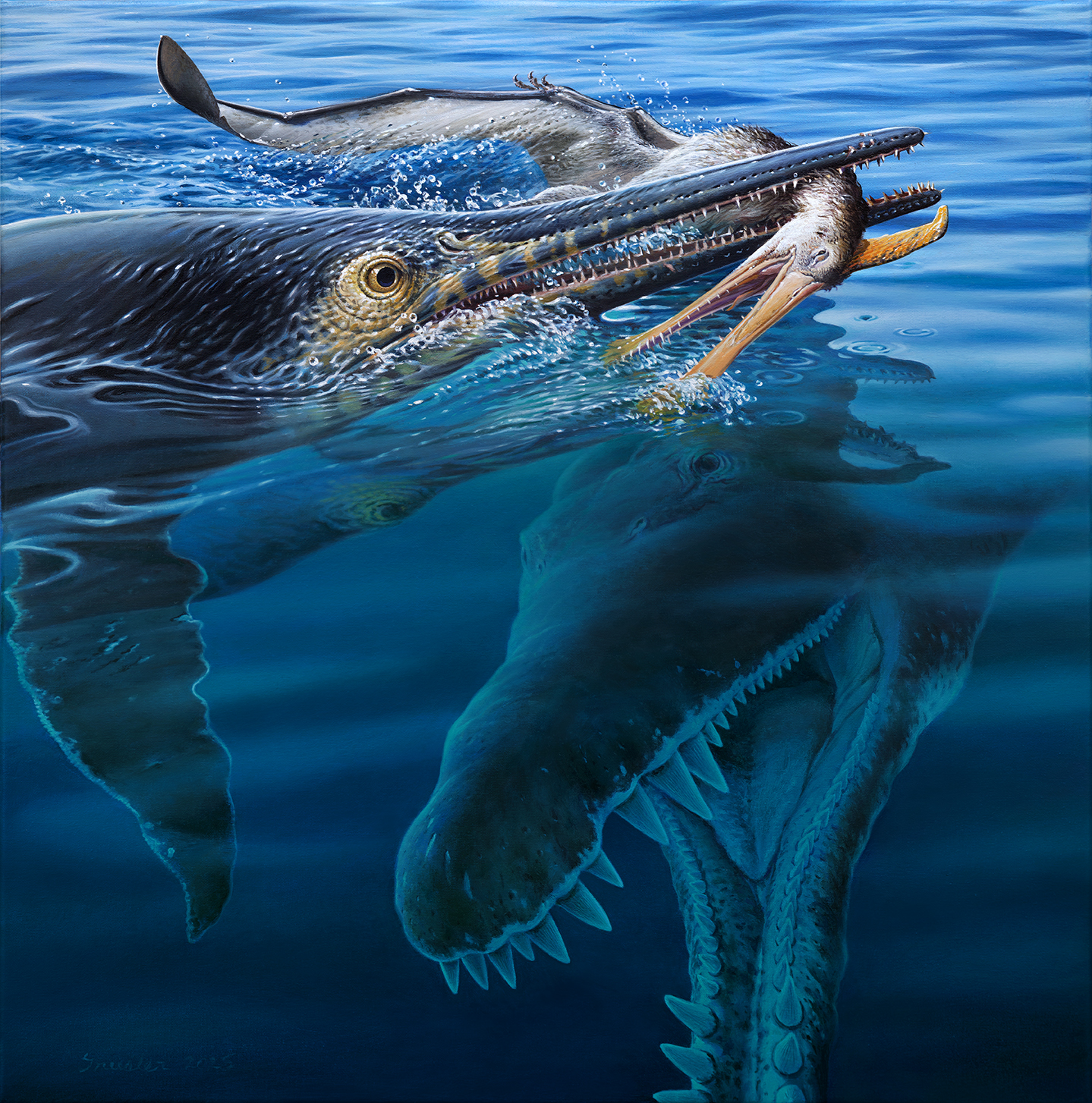
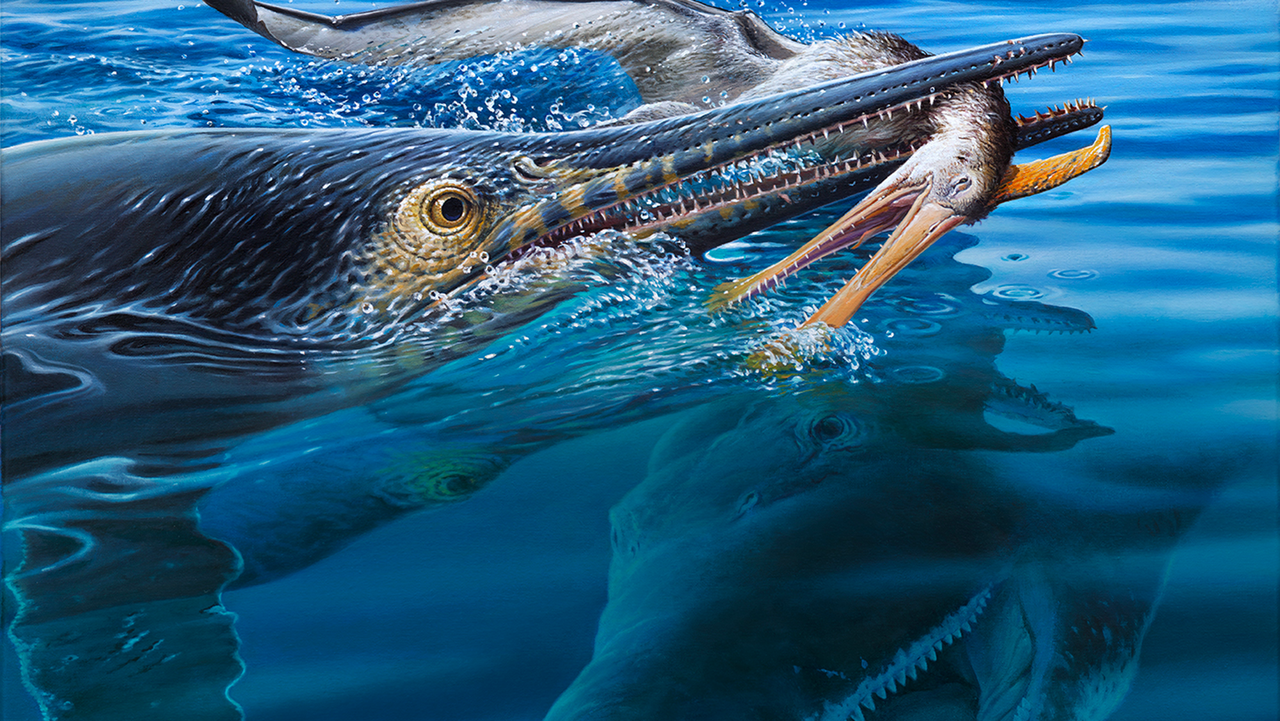
An illustration of an ichthyosaur eating a pterosaur, while a pliosaur lurks beneath. (Image credit: Peter Trusler)
An ichthyosaur fossil found in Australia's outback may preserve a rare snapshot of a prehistoric food chain. Around 100 million years ago, the enormous marine reptile swallowed a flying pterosaur before being attacked by a giant ocean predator, new research suggests.
The fossil set, nicknamed "BOB" or "Bag of Bones," belonged to a 20- to 23-foot-long (6 to 7 meters) ichthyosaur, an animal that belonged to a group of dolphin-shaped marine reptiles that lived alongside the dinosaurs during the Mesozoic era, from about 250 million to 90 million years ago. But in a new study, researchers discovered fragments of a pterosaur's jaw — along with fish and cephalopod remains — preserved inside the animal's body cavity.
The finding is the first confirmed evidence that ichthyosaurs ate pterosaurs, an extinct group of flying reptiles that ruled the ancient skies, according to the new study, published July 28 in the journal Gondwana Research.
The fossils may also hint at the ichthyosaur's violent end. Its skeleton — discovered in 2019 in Queensland's outback — contains shattered bones, missing ribs and large crushing injuries. Researchers think the gruesome wounds may have been inflicted by Kronosaurus queenslandicus, a colossal crocodile-like apex predator that lived 120 million to 100 million years ago in the ancient Eromanga Sea in Australia.
A rare prehistoric meal
Fossilized stomach contents are a rare find because they can be preserved only under very specific conditions.
"Rapid burial after death is essential to prevent decay and scattering of remains," study co-author Matt White, a research associate at the University of New England in Australia, told Live Science in an email. "The animal must have died soon after its last meal so stomach acids don't fully digest the prey."
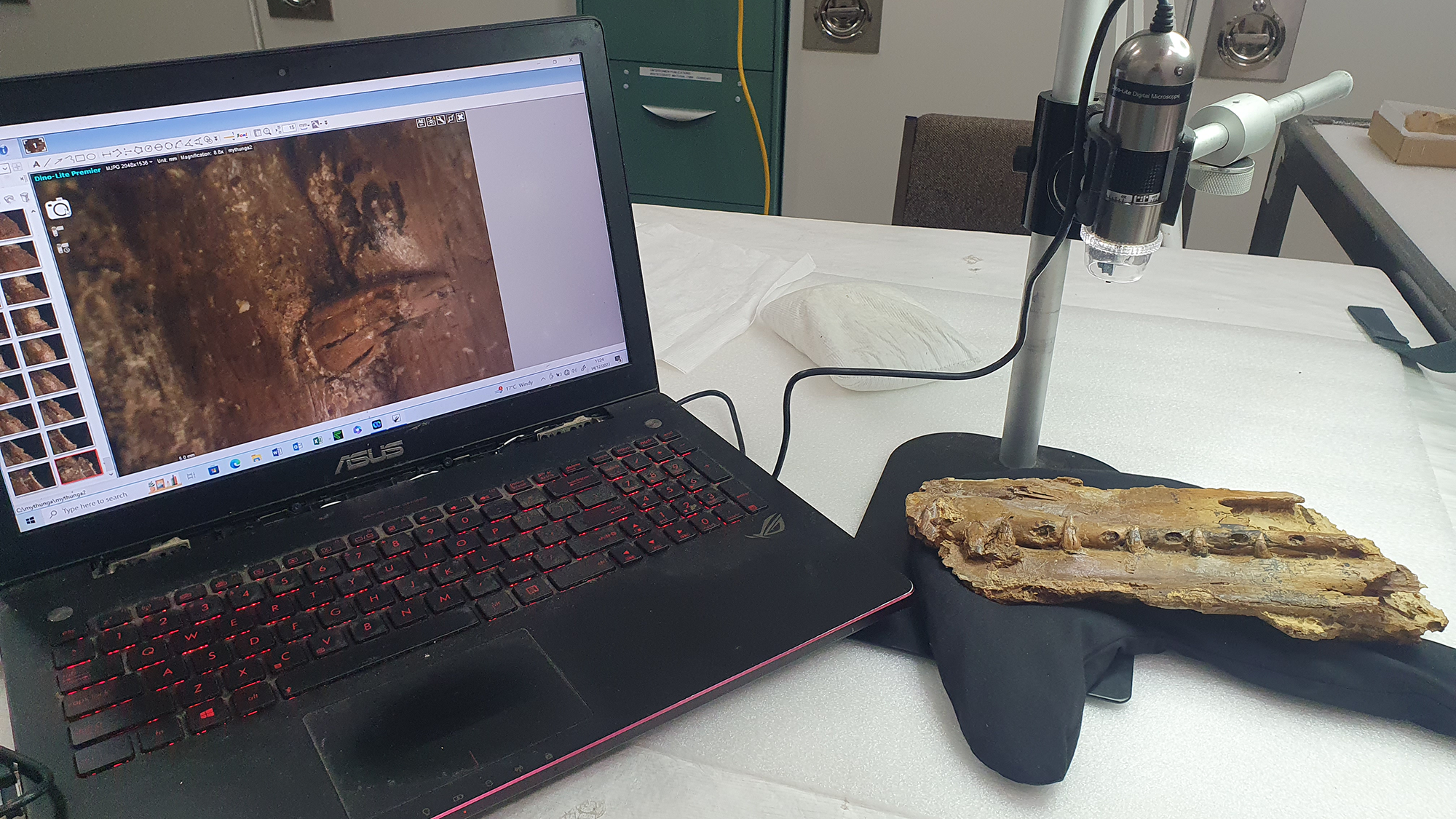
The ichthyosaur fossil set "BOB" gets scanned. (Image credit: Kronosaurus Korner Museum Queensland Australia)
Researchers used advanced neutron imaging to peer inside BOB's stomach contents without breaking any of the fossilized formations. The scans revealed hidden bones and helped scientists determine that the remains were likely associated with the ichthyosaur's digestive system.
White said that advances in imaging technology are making it possible to uncover evidence that would previously have remained hidden inside fossils.
"Scanning techniques have also improved, which has enabled us to see inside specimens and reveal what they potentially ate," White said. The methods can also reveal "the shape of various organs" and internal bone structures, he added.
The pterosaur remains were found near the front of the ichthyosaur's body cavity rather than in their expected position as digested prey, which White and his colleagues think may be because the ichthyosaur struck the seafloor headfirst shortly after its last meal, shifting some of its stomach contents forward.
"We believe the animal died in the water column — perhaps from a pliosaur (Kronosaurus) attack or natural causes — and then sank," White said. "It impacted the seafloor with its rostrum, and connected soft tissues kept most of the body in sequence."
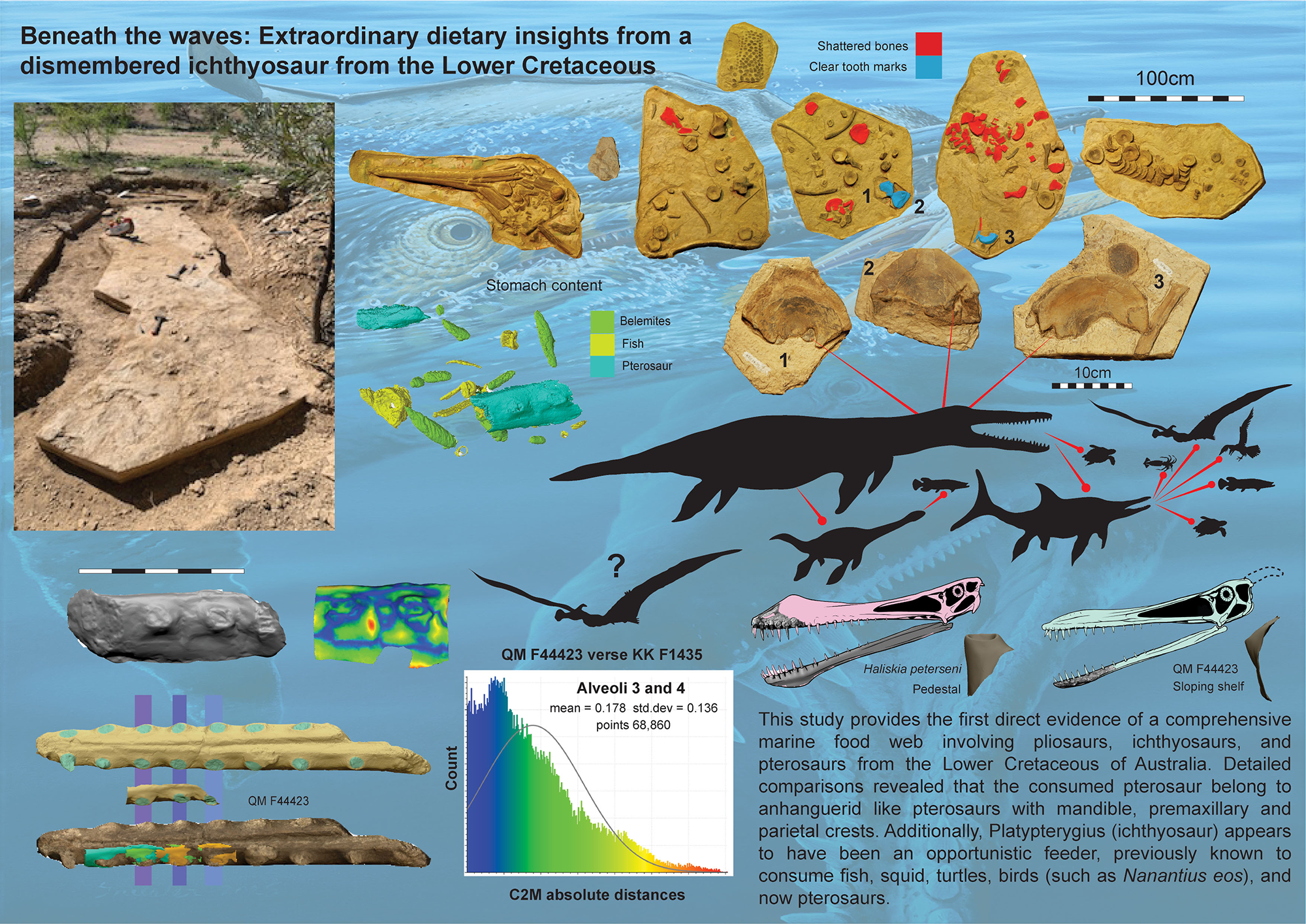
A graphical abstract of the research showing the complex food web of Cretaceous Australia. (Image credit: White et al. (2026))
The fossil offers a rare glimpse into the food web of the ancient Eromanga Sea, which covered much of central Australia during the early Cretaceous period around 145 million to 100 million years ago.
Although ichthyosaurs are known to have eaten fish and squidlike animals, evidence that they ate pterosaurs, a common predator of the ancient skies, has been elusive. The new fossil suggests that at least some ichthyosaurs may have fed on flying reptiles that landed on the water or died and floated to the surface.
"Such discoveries yield valuable information about trophic interactions and allow us to reconstruct ancient ecosystems in greater detail," White said.
When the famous Chicxulub asteroid struck what is now Mexico's Yucatán Peninsula 66 million years ago, it ended the reign of the nonavian dinosaurs. As ecosystems recovered, small, adaptable mammals rapidly spread into newly vacant niches, evolving new diets, larger bodies and more diverse ways of life until they dominated the land within a few million years.
Now, new evidence suggests that even before the asteroid hit, Earth was already beginning to rot.
A study published May 12 in the journal PNAS found evidence of environmental fungal blooms beforeand after the Cretaceous-Paleogene (K-Pg) mass extinction event. Looking at microscopic fossils from rocks dating to the K-Pg event in North America, a team of researchers led by Dr. Arturo Casadevall, chair of the Molecular Microbiology and Immunology Department at Johns Hopkins University, identified an earlier fungal bloom dating to roughly 30,000 to 100,000 years beforethe asteroid hit, during a period of cooling linked to intense volcanic activity in the Deccan Traps in what is now India.
Not all experts agree that the asteroid-impact led to the rise of mammals due to dinosaurs being more susceptible to fungal infections. (Image credit: MARK GARLICK/SCIENCE PHOTO LIBRARY via Getty Images)
The researchers also found a fungal spike immediately after the Chicxulub impact exactly when dead plants and animals would have littered devastated ecosystems. The finding adds to earlier evidence from New Zealand that suggests the fungal bloom wasn't just a local event.
This idea feeds into a controversial idea called the fungal infection-mammalian selection (FIMS) hypothesis. First proposed two decades ago by Casadevall and subsequently updated in 2018 and 2026 papers, the FIMS hypothesis suggests that the abundance of fungus before the asteroid impact may have helped mammals gain an evolutionary advantage over the dinosaurs that remained after that cataclysm.
The hypothesis doesn't argue that fungus wiped out the dinosaurs. Instead, it proposes that mammals' live births and immune systems may have helped them withstand the rise of fungus in ways egg-laying reptiles and nonavian dinosaurs could not, thereby giving them the upper hand in disrupted ecosystems full of rot, cold, starvation and polluted air.
"The fungal infection mammalian selection hypothesis is focused on how the mammals became the dominant land animals," Casadevall told Live Science via email, "not dinosaur extinction."
But not all experts are convinced. Mary O'Connell, the Chair of the Zoology department at the University of Manchester told Live Science via email that the hypothesis doesn't fit all the evidence and that "it emerges from a chain of plausibility arguments rather than direct evidence, and the links in the chain are weaker than the framing may suggest."
A fungal world before the asteroid
To find this pre-asteroid fungal bloom in their new study, Casadevall and Rosanna Baker, who researches fungus at Johns Hopkins, focused on palynomorphs — tiny fossilized organic remains, including fungal spores, fungal hyphae and plant pollen — preserved in ancient sediment layers from the Denver Basin in Colorado dating back to the K-Pg extinction.
Baker counted between 100 and 500 microfossils per sample across sediment layers spanning about 60,000 years before the K-Pg mass extinction eventto 30,000 years after it. Most samples were dominated by plant material, but some layers contained 50% or more fungal spores. The researchers interpreted this high proportion of fungal spores as a sign of ecological disturbance — more dead material and more fungi feeding on it, especially after the dinosaur-killing asteroid.
Baker and Casadevall also found an earlier fungal bloom dating to roughly 10,000 to 30,000 years before the asteroid impact.
"What surprised us was the proliferation in association with Deccan volcanism, which implies ecological disruption prior to [the] meteor impact," Casadevall told Live Science via email.
In other words, ecosystems may have already been under stress — and faced with a fungal overgrowth — before the asteroid delivered the final blow.
The case for FIMS
When Casadevall first proposed the FIMS hypothesis, it rested on a simple observation: Mammals are unusually resistant to invasive fungal diseases.
Fungi are major pathogens of plants, insects, amphibians and many reptiles, but life-threatening systemic fungal infections are relatively rare in mammals with healthy immune systems. Casadevall argued that mammals' relative resistance to fungi came from their sophisticated immune systems. In mammals, first-line, relatively nonspecific defenses such as neutrophils recognize fungal cell walls, engulf spores and attack invasive filaments, while the adaptive arm of the immune system excels at building customized antibodies that selectively target specific fungi, and then creating immune memory so the invaders are recognized the next time they're encountered.
Casadevall also initially believed that mammals' high, stable body temperatures — generally around 97 to 104 degrees Fahrenheit (36 to 40 degrees Celsius) — could prevent many environmental fungi from growing well enough to establish an infection.
"The success of mammals made no sense given their high energy needs and this idea provided a plausible mechanism for their success," Casadevall said.
The effects of the asteroid would have included increased volcanism and worsening air quality as ash and dust filled the sky. (Image credit: Mark Garlick via Getty Images)
After the asteroid hit, forests burned, plants died, darkness fell and dead matter piled up, providing a feast for fungi. If fungal spores filled the air, surviving animals may have inhaled enormous, possibly dangerous doses.
However, the FIMS hypothesis proposes that mammals had several possible adaptations against these fungal invaders that other animals did not. In addition to having warm body temperatures and complex immune systems, mammals who could maintain stable body temperatures could forage during the cold "impact winter," when ash and dust blocked out the light of the sun. Meanwhile the dinosaurs, who were originally thought to be the "cold-blooded," would have struggled to stay active and find food, leading them to become weaker and more susceptible to disease.
Differences in gestation may have mattered, too. Many mammals protect developing embryos inside the mother's body, where warmth and immunity could shield them from fungi. In contrast, all dinosaurs laid eggs. Those eggs developed in nests, which were often in contact with soil and decaying plant matter — the exact environments where fungi thrive. Modern fungi can invade reptile eggs, and fossilized hyphae, a type of fungus, was described in dinosaur eggshells in a 2008 study.
That does not prove fungi wiped out dinosaur nests. Fossilized hyphae could suggest either that fungi invaded a living egg, or that fungi colonized the egg after death. Still, eggshells provide one clue that fungi were a problem for the survival of dinosaur young..
A sick sauropod
Another potential line of evidence to buttress the FIMS hypothesis came from dinosaur bones that showed evidence of fungal infection.
Sauropods had long, air-filled neck bones connected to their respiratory system. In fossils of healthy sauropods, the places where air-sac tissue met bone are smooth, sometimes glass-like, Woodruff told Live Science.
But in this animal, the normally smooth sockets were rough and irregular. "Coming out of the socket — like imagine coming out towards you —it looked like fossilized heads of broccoli florets," Woodruff said. "And I had never seen that."
Unsure what he was looking at, Woodruff posted a photo online and asked whether anyone had seen anything similar. Other anatomists and paleontologists quickly weighed in. Their response, he recalled, was essentially, "That's exactly what we would have predicted a respiratory infection to look like," he said.
Recent evidence revealed that a sauropod could have suffered from a fungal infection. (Image credit: ROGER HARRIS/SCIENCE PHOTO LIBRARY via Getty Images)
However, the researchers could not identify the exact disease that caused the inflammation. In modern birds, airsacculitis can be caused by fungal infections such as aspergillosis, but also by bacterial infections. Without preserved soft tissue or fungal structures, they stopped short of confirming a fungal infection diagnosis.
Either way, Woodruff thinks the sauropod was probably sick enough that the infection contributed to its death. It may have become too weak to keep up, too ill to eat or drink properly, or too vulnerable to escape predators.
The case against FIMS
Even so, many experts remain skeptical of Casadevall's hypothesis. For one thing, the asteroid and its aftermath already explain a tremendous amount. The impact triggered tsunamis, earthquakes and a global food-web collapse. Those disasters alone would have killed off large dinosaurs at the top of disrupted food chains.
Another problem revolves around body temperature. In 2005, when Casadevall first proposed his hypothesis, dinosaurs were often thought of as "cold-blooded," while mammals were "warm-blooded." But over the years, research has uncovered that many nonavian dinosaurs, such as Velociraptor, T. rex and Brachiosaurus, were likely warm-blooded, too — so body temperature wouldn't explain why fungus would have been a big problem for many dinosaurs.
Complicating the picture, birds — the only surviving dinosaurs — often have higher body temperatures than mammals do. So the FIMS theory rests on an assumption that living examples of dinosaurs don't support, Flynn said.
If everything we know that suggests dinosaurs are more susceptible to fungal infections is based on living dinosaurs (birds) and they survived, doesn't that rather undermine this hypothesis?
Jingmai O'Connor, paleontologist at the Field Museum in Chicago
Around the time of the asteroid impact, cold-blooded creatures like turtles and crocodilians that lived in the water "don't really suffer as severely as other groups, even including mammals," Andrew Flynn, an assistant professor of paleobotany at New Mexico State University, told Live Science. "Clearly this fungal thing is not probably what's causing mammals to rise up and go on to dominate the ecosystem."
The FIMS hypothesis also has a contradiction at its heart, said Jingmai O'Connor, a paleontologist at the Field Museum in Chicago.
"It's just a hypothesis I had vaguely heard about but was not popular, not often mentioned, and I guess I would say 'out of favor,'" O'Connor told Live Science via email. "If everything we know that suggests dinosaurs are more susceptible to fungal infections is based on living dinosaurs (birds) and they survived, doesn't that rather undermine this hypothesis?"
Dr. Isabel Jimenez, an assistant professor at Johns Hopkins University and a proponent of FIMS, agrees that this discrepancy must be explained.
"For the FIMS hypothesis to still hold water, we have to consider alternative mechanisms by which dinosaurs could have been more susceptible to fungal diseases than mammals," Jimenez told Live Science in an email.
Modern-day birds are avian theropods — the surviving branch of the dinosaur family tree — and likely faced the same fungal pressures as their extinct relatives. More recently, in 2026, Jimenez and Casadevall have suggested a tweak to their theory: that some of the small-bodied, beaked, flying or semiflying theropods may have been able to pull through, despite some baseline higher susceptibility to fungal disease. That's because they were small, had feathers to better insulate their bodies, and maintained generalist diets that enabled them to use more food sources than the dinosaur lineages that died out.
Working with Jimenez, Casadevall outlined an updated version of the FIMS hypothesis in a paper published earlier this year. In it, they propose that dinosaurs' respiratory systems may have made them more at risk than their mammalian counterparts.
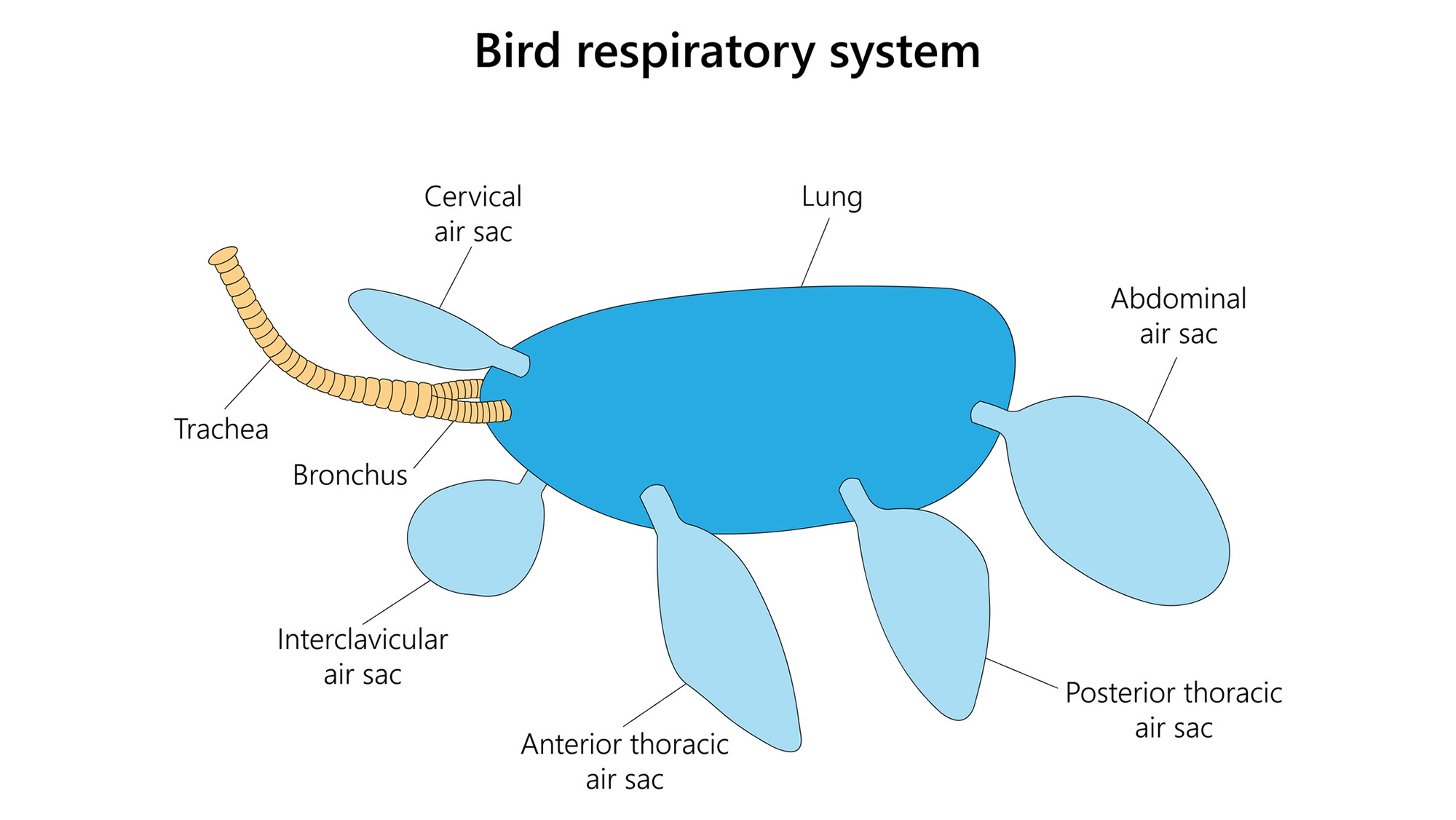
Whereas mammals breathe by expanding and contracting flexible lungs filled with blood-rich alveoli, modern birds — and probably many dinosaurs — have rigid lungs ventilated by a network of thin-walled air sacs. The air sacs act as bellows, maintaining one-way airflow through the lungs, but they perform little gas exchange and have relatively poor blood supply. This system could have also carried inhaled fungal spores deep into the respiratory tract, where they may have settled in air sacs that are harder for circulating immune cells to reach and clear.
While birds have a similar sophisticated immune system as mammals — including macrophages and antibodies — their air sacs extend throughout the body and sometimes into the bones, making fungal infections easier to spread beyond just the respiratory system.
This possible weakness is what Jimenez and Casadevall suggest is what made air-sac-bearing dinosaurs vulnerable to fungal infections, similar to modern birds.
A diagram of the avian respiratory system, with its many air sacs found around the bird's body (Image credit: Anatoliy Stepura via Getty Images)
After the asteroid strike, there would have been soot and sulfur polluting the air and dinosaurs would have been nutritionally stressed. "So secondary fungal infections are certainly possible," Jimenez said, referring to infections that take root after the body's defenses are weakened.
But skeptics argue that even with these updates in the FIMS hypothesis, more evidence is needed to show it's not just possible but likely.
The idea that their air-sac respiratory systems made them more vulnerable to fungus is "a more testable claim," but its likely impact on dinosaurs would also be more limited, because of competing environmental factors, O'Connell said.
And because only a handful of fungal species actually cause disease in animals, to show that fungi worsened dinosaur deaths, researchers would need to find evidence of elevated fungal disease in dinosaur fossils from right after the asteroid struck, O'Connell said.
"We would also need to be able to identify elevation of pathogenic fungal spores in the sedimentary record at that boundary, rather than just more spores," she said.
Overall, "the fungal infection-mammalian selection hypothesis feels like a conjecture in search of any supporting evidence," paleontologist and science writer Riley Black, told Live Science in an email.
How much do you know about the king of the dinosaurs? Test your knowledge with our T. rex quiz!
What it means: Coprolites are fossilized poop. Scientists have found coprolites from animals as diverse as fish, dinosaurs and saber-toothed cats. Teeth in the saber-toothed cat poop indicated that it had been eating baby sloths, which frankly feels a bit unfair from a creature with 11-inch-long (28 centimeters) teeth.
These fossils form when poop gets rapidly buried and mineralized instead of rotting away. Coprolites can be hard to match to the animal that produced them, but undigested bones and teeth in the fossilized poop can often provide clues to the kinds of animals that other animals eat.
How to use it in a sentence: If you're ever in a science museum and a volunteer, with a twinkle in their eye, asks you what you think a chunky, rock-looking thing is, the answer is always coprolite.
Can you crack our science word of the day puzzle, Chain Word?
Scientists managed to confirm pregnancies in three giant mantas with underwater ultrasound scans, offering clues to the animals’ elusive reproductive habits.
An oil refinery in Punto Fijo, Venezuela. In a meeting with the president, the Chevron chief executive pushed for an extension of the company’s license to operate in the country.

 Login