❌

Reading view

Hubble and Webb Team Up to Spy Tiny Frozen Worlds beyond Neptune

This artist’s concept depicts a trans-Neptunian object. Image credit: NASA / ESA / Leah Hustak, STScI.

For the first time, astronomers combined Hubble and Webb space telescopes to hunt down some of the smallest, faintest objects ever spotted in the outer Solar System.

The post Hubble and Webb Team Up to Spy Tiny Frozen Worlds beyond Neptune appeared first on Sci.News: Breaking Science News.

  •  

Ancient DNA Rewrites Story of Enigmatic ‘American Cheetah’

Miracinonyx trumani and the ecosystem this species lived in. Image credit: Julius Csotonyi.

For several decades, paleontologists have described Miracinonyx trumani -- an extinct species of cheetah-like felid that roamed the North American prairies and steppe terrains more than 13,000 years ago -- as North America’s answer to the African cheetah (Acinonyx jubatus).

The post Ancient DNA Rewrites Story of Enigmatic ‘American Cheetah’ appeared first on Sci.News: Breaking Science News.

  •  

“Surpassing the Evolutionary Boundaries of Biological Photoreception”: Scientists Invent Eyeglasses That Let Wearers See the Infrared in Full Color

Scientists from the Beijing Institute of Technology have revealed a colloidal quantum dot (CQD)-based infrared-to-visible upconverter that transforms the infrared spectrum into full color, allowing people to ‘see’ the infrared in the visible light spectrum.

The research team behind the novel invention said their upconverter can be used in eyeglasses to improve human vision and for augmented reality (AR) applications. They also reported a successful implantation of an upconverter in mice, opening the possibility of an implantable photoreceptor to repair or improve vision in human eyes.

Attempts to Convert Infrared to Full Color Face Limitations

In a published study detailing the novel, full-color IR glasses, the human eye is “inherently blind” to infrared radiation. Although IR radiation interacts with the retina, infrared wavelengths lack the energy to trigger the photoisomerization of the retinal chromophore that lets people distinguish colors. As a result, humans don’t have visual access to over half of the solar spectrum.

Still, the researchers write, “harnessing this imperceptible radiation is critical, as infrared perception unlocks a vast reservoir of inaccessible information.” For example, this added visual information enables critical functions in other animals, such as navigation in darkness or detecting predators and prey from their heat. Still, they observe that our natural visual-light spectrum vision is “utterly inadequate” to access this information that so many animals rely upon.

In their study, the researchers highlight recent advances in accessing the IR spectrum, including “ocular injectable photoreceptor-binding upconversion nanoparticles” that convert infrared light into visible emissions. Other studies have also evaluated wearable lenses with nonlinear upconversion projecting infrared-transformed visible light onto the cornea and photovoltaic nanowire networks.

Although these approaches achieved some IR sensitivity, the study authors said they remain “fundamentally constrained” to narrow near-infrared (NIR) spectral response. These prior efforts also relied on high-intensity laser excitation that the team notes is “incompatible with natural infrared radiation.” The result is a “mostly monochromatic output” lacking infrared spectral discrimination in full color.

Subtle IR Wavelength Variations Facilitate Upconversion

For their new approach, the research team investigated a mercury telluride (HgTe) CQD-based infrared-to-visible upconverter. They note that this material combination leverages the material’s “quantized energy level states” in synergy with a separate, dual-emissive-layer organic light-emitting diode (OLED).

Specifically, the engineered layers captured IR photons in strategically engineered hole-trapping barriers. The team explains that this “allows for subtle differentiation of infrared input by tuning the emitted visible color and luminance” based on infrared wavelength and intensity.

see infrared in full color
Above: The infrared-to-full-color upconverter is applied as (A) the wearable eyeglass and (B) the new-generation retinal photoreceptor (Image credit: Fu, C., Zou, J., Yang, X., Hao, Q., Tang, X., & Mu, G. (2026). Multispectral infrared-to-full-color upconversion expanding human vision).

“This upconversion yields a discrimination sensitivity to subtle infrared variations exceeding two orders of magnitude higher than conventional single-color modes, capitalizing on the human eye’s intrinsic superiority in chromatic differentiation over simple luminance contrast,” they explain.

To test their material’s IR upconversion ability, the researchers designed a pair of lightweight (23 grams) semi-transparent wearable eyeglasses. The team said these tests were a success, achieving “high-resolution infrared imaging” derived from the infrared spectral information. However, instead of monochrome, the research team said that data is displayed as full-color visible patterns directly onto the retina, “enabling intuitive infrared vision without obstructing natural sight.”

Surpassing the Evolutionary Boundaries of Biological Photoreception

Although the current version of the full-color, infrared-capable glasses is still in the development stages, the team said the technology could lead to advancements in visual prosthetics, augmented reality (AR), and “navigation under environmental conditions where normal sight is degraded.”

Following the successful validation in mice, the team said their technology could also serve as the technological basis for an implantable new-generation retinal photoreceptor. In that design, the team said an implanted device could transform infrared light into visible light emissions “that stimulate light-sensitive proteins on retinal neurons to bypass damaged photoreceptor cells and potentially restore visual function across both the visible and infrared spectra.”

“By surpassing the evolutionary boundaries of biological photoreception, this technology paves the way for next-generation visual prosthetics, high-fidelity augmented reality, molecularly sensitive substance identification, and robust navigation in degraded visual environments,” they conclude.

The study “Multispectral infrared-to-full-color upconversion expanding human vision” was published in Science Advances.

Christopher Plain is a Science Fiction and Fantasy novelist and has spent the last six years as Associate News Editor and Head Science Writer at The Debrief. Follow and connect with him on X, learn about his books at plainfiction.com, or email him at christopher@thedebrief.org

  •  

Firefox 153 transforma contêineres em recurso nativo do navegador

O Mozilla Firefox foi atualizado hoje para a versão 153, tanto no macOS quanto no iOS/iPadOS. Entre as várias novidades introduzidas pelo update, estão os Contêineres (Containers), que permitem separar as diferentes partes da sua vida online na mesma janela do navegador.

Assim como a extensão Multi-Account Containers, o novo recurso torna possível logar em diferentes contas sem precisar abrir uma outra instância do Firefox. Ao recorrer aos Contêineres (que ainda estão em preview, diga-se), você também mantém os seus cookies e dados de anúncios direcionados isolados em ambientes distintos.

Segundo a Mozilla, ao tornar um recurso desse tipo em uma ferramenta nativa do navegador, a versão 153 livra usuários de ter que procurar por um add-on, além de facilitar a abertura, a criação e o gerenciamento de contêineres de páginas que você já costuma acessar. Usuários de longa data do Multi-Account Containers, no entanto, não serão deixados de lado, uma vez que a nova solução mantém “a funcionalidade, a flexibilidade e a identidade visual” da extensão.

Nesse preview, já é possível abrir páginas em contêineres específicos, customizá-los com nomes, cores e ícones da sua escolha e gerenciá-los diretamente do menu “Configurações”. Para abrir uma aba contêiner, basta clicar com o botão direito do mouse ou tocar e segurar no botão de nova aba (+) e selecionar a opção correspondente.

Outras novidades

Agora, é possível compartilhar qualquer página com um código QR ao clicar com o botão direito do mouse em uma aba e ir em Compartilhar » Gerar código QR.

Código QR do Firefox para o compartilhamento de uma página composto por pontos pretos com o logo do navegador (um globo envolto por uma raposa avermelhada). Logo abaixo, há botões para salvar ou copiar o código.
Divulgação/Mozilla

Também passou a ser possível juntar múltiplos PDFs em um único documento ao arrastar um arquivo do tipo para a barra lateral de PDF, bem como adicionar imagens como novas páginas de um documento usando o editor de PDF nativo do Firefox.

Ademais, digitar “pick color”, “color picker” ou “eyedropper” na barra de endereço agora faz com que o seletor de cores nativo do Firefox, o Pick a color, seja ativado. Na mesma toada, o Firefox passou a permitir que usuários digitem “labs” ou “experiment” na barra de endereço para acessar a ação rápida “Open Firefox Labs” facilmente.

Usuários de Mac, por sua vez, notarão que o atalho de teclado fn (tecla representada por um globo) F agora é suportado pelo Firefox, permitindo entrar rapidamente no modo de tela cheia do macOS.

O ícone de acesso à localização do usuário agora fica destacado em vermelho sempre que um site obtém acesso às suas coordenadas, além de ficar visível em páginas de resultados de busca (antes ele era ocultado).

Ícone de acesso à localização do Firefox 153, destacado em vermelho no canto esquerdo da barra de endereço.
Divulgação/Mozilla

Por fim, o assistente Smart Window (ainda em beta) agora permite selecionar diferentes modelos de inteligência artificial (IA) diretamente da sua interface, e a Nova aba (New Tab) do recurso ganhou uma barra de endereço mais familiar para acessar sites ou pesquisar na web.

Seletor de modelos de IA (em formato de lista) do assistente Smart Window no Firefox 153, posicionado no canto inferior direito da barra de endereço.
Divulgação/Mozilla

O Firefox 153 já está disponível para download tanto no desktop quanto em dispositivos móveis. Em ambos os casos, o update também introduz uma série de correções de bugs e melhorias de desempenho, as quais podem ser conferidas aqui e na página do browser na App Store.

  •  

This Color-Changing Material Could Give Robots a New Way to Detect Touch

Engineers at Queen Mary University of London have created a tactile sensor, described in a study published in Science Advances, that allows robots to detect touch using a simple camera.  

The sensor converts mechanical forces into visible color patterns, reducing the need for dense arrays of embedded sensors. Giacomo Sasso, a postdoctoral researcher at Queen Mary’s School of Engineering and Materials Science, led the team that developed this new sensor. Rather than relying on embedded electronic sensors, they created a soft material that changes color when pressed or bent.

This effect, known as structural color, is the same reason butterfly wings look iridescent without pigment. Pressure causes microscopic structures within the material to shift, altering how light reflects and creating a real-time visual indicator of force.

Touch Without the Computation

Most vision-based tactile sensors can map contact and force in detail, but only at the cost of heavy computation that slows them down. Simpler systems are faster, but sacrifice detail. The new material developed by Sasso’s team sidesteps this problem by building the sensing function into the material itself. With just a standard USB camera, researchers can track color changes on the surface and immediately infer pressure, strain, and contact shape without complex data reconstruction.

“You won’t guess how much information is generated when your finger presses a light switch. A human hand contains more than 10,000 mechanoreceptors to do the job, yet touch sensing remains one of the major challenges in robotics,” Sasso said. “We were happy to capture the finger ridges, as no existing technology can reproduce such sensor density at [a] comparable scale and simplicity. The key idea behind this project was to think outside the box: instead of embedding dense and overengineered sensor arrays, sensing is moved into the material itself, where mechanical cues are directly transformed into colour fields and captured using a simple low-cost USB camera.”

Professor James Busfield, one of the paper’s co-authors, described the advantage more simply: “What is particularly powerful is that the information is already in the light signal. You are no longer reconstructing touch – you are observing it directly.”

From Precision Manufacturing to the Operating Room

Reducing the computational demands of touch sensing opens up new possibilities. A robotic gripper made with this material could handle tiny parts more gently, since changes in force are immediately detectable. Prosthetic limbs equipped with similar sensors could also provide users with more detailed tactile feedback.

The researchers also see potential applications in surgery, where detecting subtle pressure differences could help clinicians interpret tissue properties.

A Decade of Groundwork Behind One Material

Professor Federico Carpi from the University of Florence and Professor James Busfield from Queen Mary worked together on this project, merging years of separate work on stretchable sensors and polymer behavior into one material system. This allowed the team to use a mechanochromic material as the sensor itself, not just as a base for electronics.

Many approaches to robotic touch have relied on increasingly complex sensor arrays, wiring, and computing systems. Rather than adding more electronics, Sasso’s team’s approach allows the material itself to encode touch into visible color. It remains unclear whether this color-based method can be scaled for use in commercial robotic hands, but this work suggests that the future of robotic touch might rely as much on smart materials as on advanced electronics.

Austin Burgess is a writer and researcher with a background in sales, marketing, and data analytics. He holds an MBA, a Bachelor of Science in Business Administration, and a data analytics certification. His work focuses on breaking scientific developments, with an emphasis on emerging biology, cognitive neuroscience, and archaeological discoveries.

  •  

125-Million-Year-Old Crocodile Relative Reveals Its True Colors

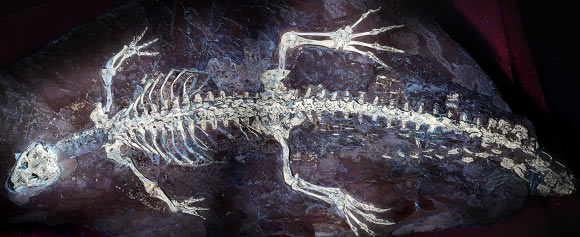
The holotype specimen of Montsecosuchus depereti. Image credit: Castillo-Visa et al., doi: 10.1093/zoolinnean/zlag076.

Exceptionally preserved skin of Montsecosuchus depereti, an extinct crocodylomorph no larger than a house cat that prowled the tropical wetlands of Early Cretaceous Spain, has allowed paleontologists to reconstruct details of its scales, sensory organs and even possible banded markings along its tail.

The post 125-Million-Year-Old Crocodile Relative Reveals Its True Colors appeared first on Sci.News: Breaking Science News.

  •  

Scientists Demonstrate What Pianists Have Argued for Over 100 Years


For more than a century, musicians have maintained that the way a pianist touches a key influences the sound that emerges. Many scientists, however, have argued that after the hammer strikes the string, the instrument itself determines the outcome, making the pianist’s touch irrelevant.

Now, a recent study published in the Proceedings of the National Academy of Sciences provides some of the strongest evidence yet in support of the musicians’ perspective.

A research team led by Dr. Shinichi Furuya of the NeuroPiano Institute and Sony Computer Science Laboratories developed a custom sensor system called HackKey. This system can record the movement of all 88 piano keys at 1,000 frames per second, with a spatial precision of 0.01 millimeters. The team invited 20 internationally recognized pianists to play notes while intentionally aiming for contrasting timbres, such as bright versus dark and light versus heavy. Listeners were able to distinguish among the different timbres, even individuals with no experience playing the piano.

The Movements Behind the Sound

The researchers identified a series of micro-movements beneath each keystroke. These movements are so subtle that they are almost impossible to see, but precise enough for listeners to perceive differences in sound.

Small changes in how quickly a key accelerates, slight overlaps between notes, and variations in the speed of initial contact with the key all influenced how listeners described the resulting sound. When each of these factors was adjusted individually, the perceived timbre changed. Adjusting a single movement feature was enough to reliably change how listeners perceived timbre. The results show that touch has a direct effect on sound, independent of factors such as volume or tempo.

The study describes these micro-movements as a motor skill developed through years of advanced training. The researchers call the emerging science of mapping movement to musical experience “dynaformics.”

A Debate as Old as the Modern Piano

The debate over whether touch can alter piano timbre dates back to at least the early 1900s, when music educators began discussing what distinguishes one performer’s sound from another. The piano’s mechanical action appeared to support the skeptics, since the hammer, once released, moves independently before striking the string and is not directly contacted by the pianist’s finger.

As a result of this mechanical process, many acousticians concluded that any reported differences in tone were psychological, influenced by context, volume, or timing rather than by touch. Musicians maintained their position but did not have the scientific tools to prove it.

To settle this debate, Furuya’s team developed a custom biometric contact-sensing system called HackKey, capable of recording the movement of all 88 piano keys at 1,000 frames per second with sub-millimeter precision. The system captured in-depth piano movement data that previous technology could not. For the first time, researchers could observe the specific actions of elite pianists and relate those movements to listeners’ descriptions of sound.

What It Means Beyond the Concert Hall

Piano teachers have often used general phrases like “play warmer” or “use a softer touch” because the specific movements that create certain sound qualities were not well understood. This study now offers a guide to those movements.

Future training tools may allow students to see precisely what their fingers are doing when a note is played successfully or not. Instead of relying on a teacher’s metaphor, students could compare their own keystrokes to a standard and work to improve their technique. The researchers suggest that this approach could make expressive technique easier to teach and visualize, especially for students who find it difficult to translate verbal instructions into physical actions.

The research may also apply to rehabilitation, robotics, and human-computer interaction. Discovering that small differences in movement can shape auditory perception offers new insight into how the brain links movement and sensory experience. Some researchers are exploring whether systems based on expressive musical movement could help patients recover dexterity and coordination after injury.

Most scientific research on music has focused on elements that are easier to measure, like pitch, loudness, and rhythm. Timbre, or the quality or “color” of a sound that makes one instrument or voice different from another, has been harder to measure. This study offers a new way to understand the mechanics behind this concept. The findings suggest that some of the most expressive parts of music come from movements too small to see, developed through years of practice.

Austin Burgess is a writer and researcher with a background in sales, marketing, and data analytics. He holds an MBA, a Bachelor of Science in Business Administration, and a data analytics certification. His work focuses on breaking scientific developments, with an emphasis on emerging biology, cognitive neuroscience, and archaeological discoveries.

  •  
❌