❌

Reading view

AAS 248: Day 4

Andromeda Galaxy

Editor’s Note: This week we’re at the 248th AAS meeting in Pasadena, CA. Along with a team of authors from Astrobites, we will be writing updates on selected events at the meeting and posting each day. Follow along here or at astrobites.com for daily summaries, or follow @astrobites.bsky.social on Bluesky for more coverage. The usual posting schedule for AAS Nova will resume on 22 June

Table of Contents:


Plenary Lecture: Ian Roederer, The Ultraviolet Path to the Origin of the Elements (by Susanna Kohler)

When the universe first formed, the only elements present were the three lightest — hydrogen, helium, and lithium. Today, there are 118 confirmed chemical elements that make up the periodic table. So where did the heavier elements come from, when were they first created, and what can they tell us about the first stars that formed in the universe? In the final plenary of AAS 248, Ian Roederer (North Carolina State University) walked us through how ultraviolet observations are the key to understanding the origin of the elements.

We know that hydrogen, helium, and lithium were cycled through the earliest stars in the universe, where fusion and other processes produced the first heavy elements that were spit back out into the cosmos when these stars ended their lives as supernovae. According to Roederer, within just the first two or three generations of stars, every element with stable or long-lived isotopes had already been created. For the heaviest of these elements, the dominant source is likely a process called r-process nucleosynthesis, in which a rapid burst of neutrons bombards atomic nuclei, resulting in the quick capture of the neutrons to form very massive nuclei that subsequently decay to stable isotopes.

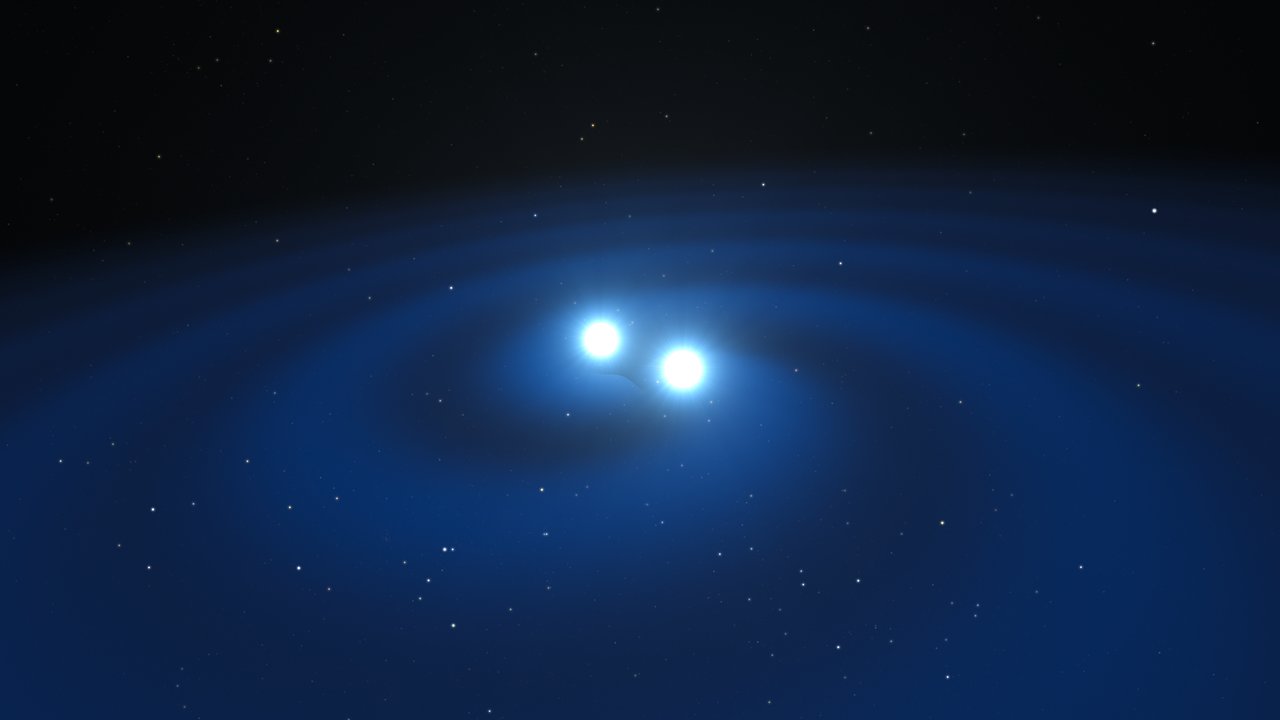
illustration of a neutron star merger

Illustration of two neutron stars approaching a merger, emitting gravitational waves as they draw closer together. [ESO/L. Calçada/M. Kornmesser; CC BY 4.0]

The conditions needed for r-process nucleosynthesis are too extreme to reproduce in a laboratory on Earth, so we rely on models and observations of the cosmos to better understand it. We know that to get a rapid burst of neutrons, you need some sort of explosive event — and, in fact, the first example of an r-process event caught in the act was GW170817, the first detected neutron star–neutron star merger.

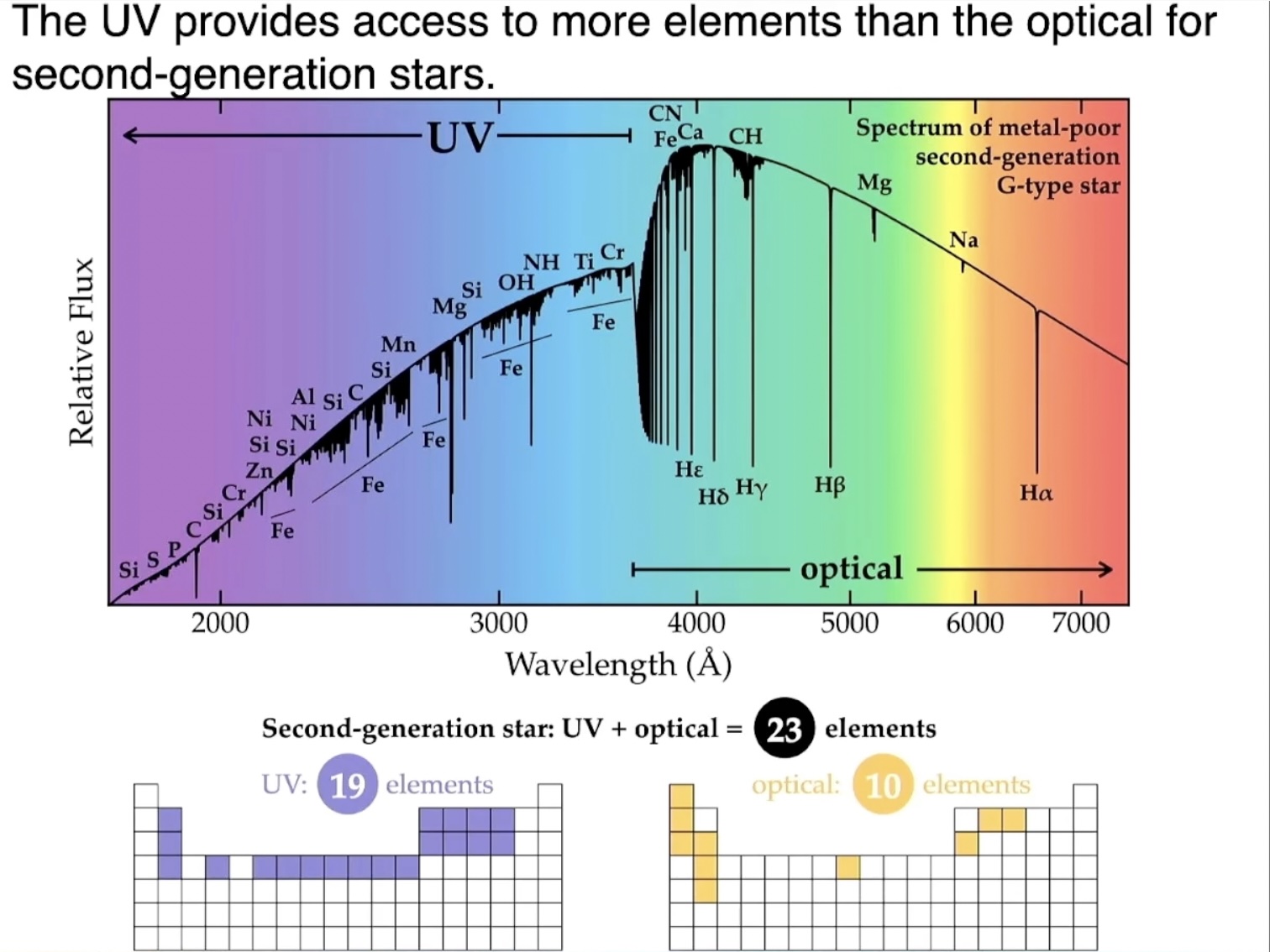
But remember all those news headlines about how binary neutron star mergers produce gold and platinum? Roederer points out that these were all inferred results — we didn’t actually observe direct evidence of gold and platinum in the aftermath of this explosion. That’s because it’s very difficult to detect the spectroscopic emission lines of heavy elements. To do so effectively, Roederer argues, requires high-resolution ultraviolet (UV) spectroscopy. He showed that in a cool star, high-resolution UV spectra provide a 50% increase in the number of elements you can detect. The heaviest of elements are only detectable with spectra in the UV range.

A stellar spectrum shows a large number of metal lines identified in the UV, as compared to fewer lines in other wavelengths. Text at the top of the slide reads "the UV provides access to more elements than the optical for second-generation stars."

An example spectrum for a second-generation star shows how the UV is critical for identifying a broad range of elements. [Roederer 2026]

Roederer walked us through some of the insights we can gain into the production of the heaviest nuclei found in nature when we use a combination of UV and optical spectroscopy. He also gave examples of what we can learn about even some of the lighter elements like phosphorus or boron when we have high-resolution UV spectroscopy to reveal the presence of these elements in low-metallicity stars.

Roederer ended his talk with a look ahead at the future of UV spectroscopy and the path to the universe’s first stars. Right now, the only mission we have that produces high-resolution UV spectroscopy is Hubble. NASA’s next big flagship mission with a high-resolution spectrograph, the Habitable Worlds Observatory (HWO), will be transformational in the ability to detect — or verify the absence of — heavy elements in stellar atmospheres. An observatory like HWO will provide our best shot at identifying low-mass, metal-free stars that survive from the first generation of stars in our universe. As Roederer concluded, “The future of studying the origin of the elements is bright in the UV.”

You can read Astrobites’s interview with Ian Roederer here.

The post AAS 248: Day 4 appeared first on AAS Nova.

  •  

AAS 248: Day 3

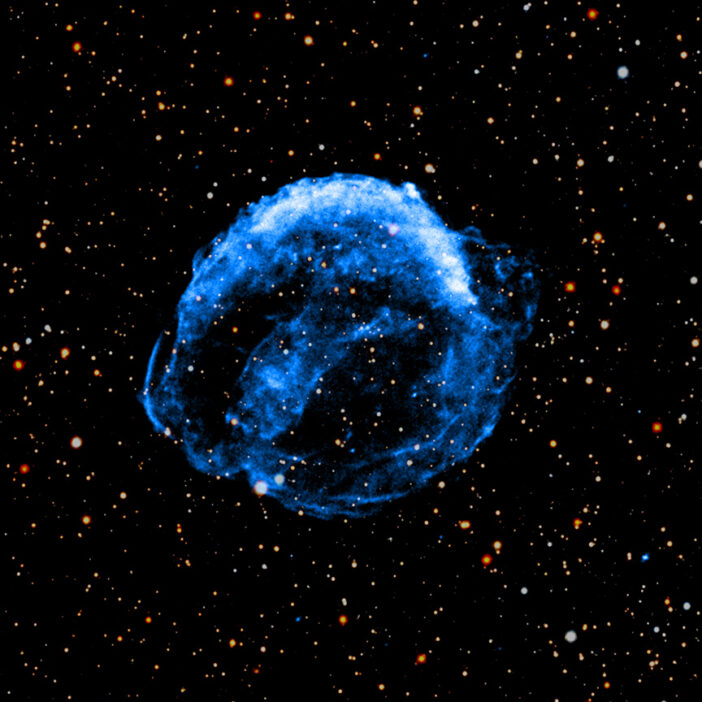
double supernova remnant

Editor’s Note: This week we’re at the 248th AAS meeting in Pasadena, CA. Along with a team of authors from Astrobites, we will be writing updates on selected events at the meeting and posting each day. Follow along here or at astrobites.com for daily summaries, or follow @astrobites.bsky.social on Bluesky for more coverage. The usual posting schedule for AAS Nova will resume on 22 June.

Table of Contents:


Plenary Lecture: Eliza Kempton, Common Worlds, Uncommon Complexity: Sub-Neptune and Super-Earth Atmospheres in the JWST Era (by Lexi Gault)

Eliza Kempton began her talk addressing the undergraduates in the room, showing the meeting website from AAS 200, which she attended as an undergraduate in 2002. Searching this page, there were no presentations on exoplanets — a stark difference from the boom of exoplanet science that we see 24 years later at AAS 248, marking how significantly a field can transform from the start of your career.

Situating us outside of the solar system, Kempton showed the quintessential mass–period plot of all 6,000+ detected exoplanets thus far. Strikingly, we have discovered new types of planets that are not seen in our own solar system, but uncovering exoplanet populations is heavily skewed due to detection limits. While it is much easier to find large planets closely orbiting their stars, occurrence rate studies have shown that small planets on close-in orbits are much more common and typically come in two sizes: gas-rich sub-Neptunes and rocky super-Earths. However, actually deciphering their compositions relies on detailed studies of their atmospheres, which is the primary research work Kempton dove into.

How do we study exoplanet atmospheres? Thankfully, JWST provides the wavelength range and collecting area necessary for observing the minute details in exoplanet atmospheres. Beginning with sub-Neptunes, Kempton laid out four important takeaways from recent work coming from her team:

  1. Sub-Neptune atmospheres composed of heavier elements and molecules are common.
  2. Clouds and hazes are pervasive for planets that get a moderate amount of light from their host star. Early JWST observations showed signatures that may point to soot formation in sub-Neptune inner atmospheres; this soot can rise, making the upper atmosphere we observe hazy.
  3. Sub-Neptune atmospheres may provide a window into their interiors. Observed atmosphere compositions may indicate no solid planetary surface, but rather magma, water, and/or gas that can mix more readily with the upper atmosphere.
  4. Tying atmospheric observations to formation scenarios is still a challenge. Constraints on planets’ bulk composition has not provided clear answers.

Moving down to super-Earths, Kempton introduced the idea of the cosmic shoreline — the empirical relationship between planetary escape velocity and stellar irradiation shows a stark dividing line between planets with and without atmospheres in our solar system. Does this concept of a cosmic shoreline exist for exoplanets? Kempton highlighted three takeaways for the study of super-Earth atmospheres:

  1. Spectroscopy of super-Earth atmospheres presents degeneracies in determining their characteristics. A featureless spectrum could be due to the presence of heavy molecules and clouds, or it could just mean the planet has no atmosphere.
  2. Thermal emission is a powerful tool for identifying candidate atmospheres. The eclipse depth of a transiting planet is directly related to the day-side temperature of the planet. Planets with and without atmospheres will have different day-side temperatures — hotter without an atmosphere, cooler with an atmosphere.
  3. Many (but not all) transiting super-Earths are bare rocks. 

Clearly, JWST has allowed astronomers to make significant progress in understanding exoplanet composition and subsequently their possible formation and evolutionary histories. Kempton ended with reminding us where we came from 24 years ago — the field of exoplanet science has boomed, and we can wonder how much we’ll continue to uncover in the next 24 years.

Return to Table of Contents.


Press Conference: Stars Reshaping Galaxies: Clusters, Feedback, and Explosive Aftermaths (Briefing video) (by Niloofar Sharei)

This press conference brought together four very different views of star-forming environments: the most distant galaxy cluster caught strongly lensing a background galaxy, the dense young star clusters tucked inside the rings of nearby galaxies, the extreme feedback physics inside the closest luminous infrared galaxy merger, and the first known pair of supernova remnants born from a binary star system.

A New Era of Galaxy Cluster Analysis at Cosmic Noon: JWST’s View of a Distant Galaxy Cluster

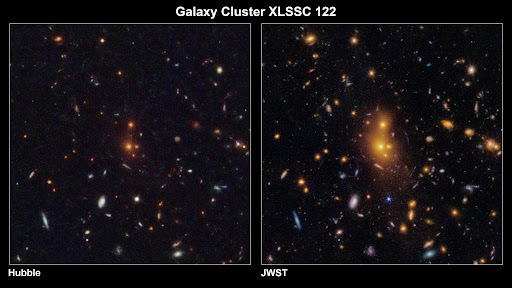
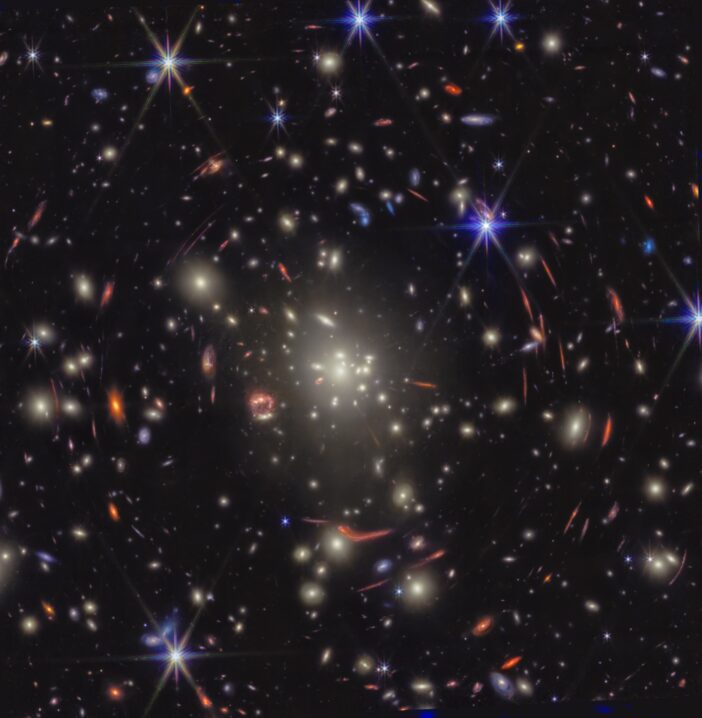
Kyle Finner (IPAC/Caltech), presented the discovery of strong gravitational lensing in XLSSC 122, the most distant known galaxy cluster, seen as it was about 10.3 billion years ago. When the team got their JWST imaging back, they noticed bright blue arcs around the brightest cluster galaxy, a clear signature of strong lensing from a background galaxy sitting in just the right place behind the cluster. Using those arcs, the team measured the radial dark matter profile and found that XLSSC 122 is much more centrally concentrated than cosmological simulations predict. To check whether the cluster itself is unusual, they combined the JWST result with multiwavelength data. All of those tracers show an elongated structure pointing the same way as the dark matter, which is a strong sign that XLSSC 122 is a merging cluster. But mergers usually lower concentration rather than boost it, so the question of why this early cluster looks so concentrated is still open. The team plans to follow up with more strong-lensing measurements. | Press release

This two-panel image shows a distant galaxy cluster

This two-panel image shows a distant galaxy cluster as it has been observed by NASA’s Hubble Space Telescope and JWST. [NASA, ESA, CSA; Kyle Finner (Caltech/IPAC) Image processing: Robert Hurt (Caltech/IPAC-SELab)]

Hidden Gems in the Hearts of Nearby Galaxies: Evolution of Young Massive Star Clusters in Circumnuclear Rings

Sajia Shahrin Neha (University of Kentucky) presented a study of young massive clusters in the circumnuclear rings of two nearby galaxies: NGC 3351, a normal spiral, and NGC 1097, which hosts an active galactic nucleus. Young massive clusters are extreme star-forming systems that pack hundreds of thousands to millions of stars into a small region, and the ring-shaped star-forming zones around these galactic nuclei provide exactly the kind of dense gas and dust reservoir these clusters need. Because the clusters are heavily obscured, optical, ultraviolet, and infrared light cannot pass through cleanly, so Neha and collaborators turned to radio continuum imaging with the Atacama Large Millimeter/submillimeter Array and the Very Large Array, which can see through the dust. Their team identified 53 young massive cluster sources across the two rings. They also placed them on an evolutionary sequence: heavily embedded “starless” clumps, newborn clusters that are just starting to become visible, and older “exposed” clusters that have already burned through much of their gas. All evolutionary stages are present in both galaxies, regardless of whether the host has an active nucleus. | NRAO press release | U. Kentucky press release

Dusty and Over-Pressured: Measuring Stellar Feedback in the Closest Luminous Infrared Galaxy

Deb/Debosmita Pathak (The Ohio State University/IPAC) presented new measurements of pre-supernova stellar feedback in NGC 3256, the closest luminous infrared galaxy and a merger between two roughly Milky Way–mass galaxies. NGC 3256 forms stars about 60 times faster than the Milky Way, which makes it a useful nearby laboratory for the intense, clumpy star formation that dominated the early universe. Using JWST plus multiwavelength data, the team measured feedback pressures around roughly 1,700 young star clusters and compared them with what we see in quieter, normal star-forming galaxies. The results break the standard picture in two ways. First, the feedback and interstellar medium pressures in NGC 3256 are about a hundred times higher than what is typical in normal star-forming galaxies. Second, the dominant feedback mode is different: instead of warm ionized gas pressure doing most of the work, ultraviolet and infrared radiation pressure on dust dominates in these much dustier environments. Even at these much higher pressures, most clusters are still over pressured relative to their surroundings, meaning radiation is strong enough to drive expansion against a dense ambient interstellar medium. | NRAO press release | OSU press release

Unveiling the First Binary-System Supernovae

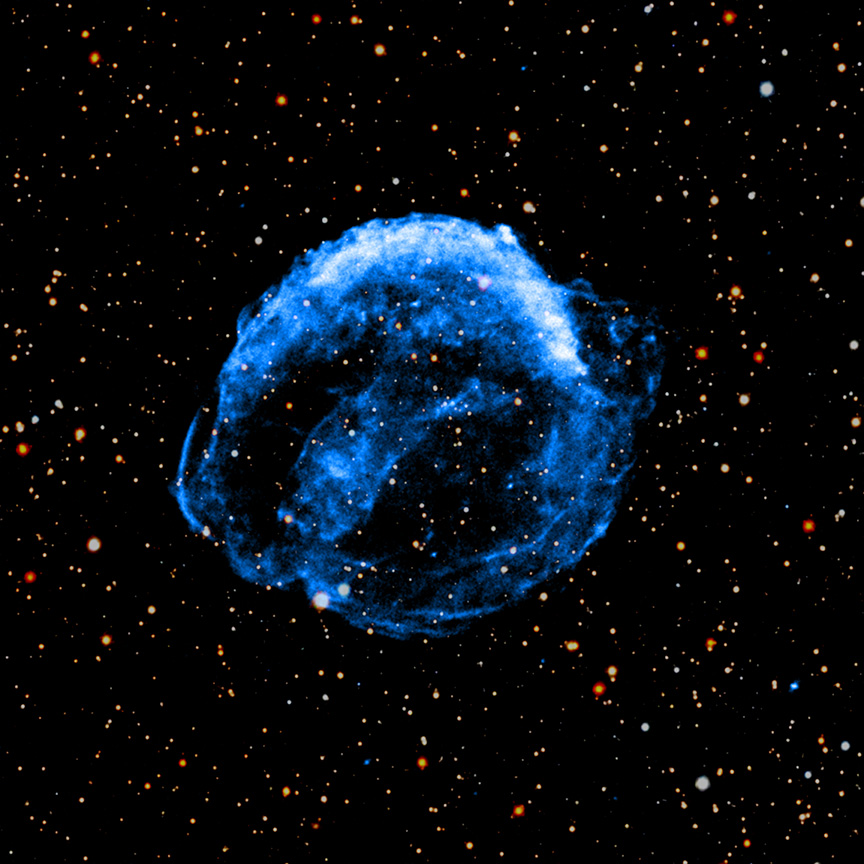
Miltiadis Michailidis (Kavli Institute for Particle Astrophysics and Cosmology (KIPAC)/Stanford University/SLAC National Accelerator Laboratory) closed the session with the discovery of what appears to be the first known supernova remnant pair born from a binary star system. The starting point is IC 443, one of the best-studied supernova remnants and one of the brightest gamma-ray sources in the sky, thanks to its interaction with a dense nearby molecular cloud. Recent eROSITA observations showed that the faint X-ray “shell” long noticed next to IC 443 is in fact a second, overlapping supernova remnant. The question was whether the two are physically related or just a chance alignment on the sky. They used 15 years of Fermi gamma-ray data and modeled and subtracted IC 443’s contribution and uncovered a distinct, hidden gamma-ray source associated with the new remnant.

The gamma-ray emission is strongly spatially segregated: its northern boundary, where it overlaps the same molecular cloud that IC 443 illuminates, is dominated by accelerated protons colliding with dense gas, while its southern boundary is dominated by accelerated electrons. The team also showed that the optical filament along the northern boundary is a radiative shock that has cooled past the point of efficient particle acceleration. Combined with the fact that both remnants sit at the same distance (about 6,000 light-years), and that a population-synthesis run with a million massive binaries reproduces the observed separation and age difference, the team argues that the two remnants are the remains of a true binary pair. | Press release

Return to Table of Contents.


Plenary Lecture: George Helou, The Cosmic Infrared Window: Photons, Technology, and People (by Kerry Hensley)

George Helou (Caltech) gave a sweeping overview of infrared astronomy over the past 40 years, including the impressive role of the Infrared Analysis and Processing Center, or IPAC, which is celebrating its 40th anniversary.

The infrared portion of the electromagnetic spectrum is broad, encompassing wavelengths from 1 to 1,000 microns. In that wavelength range, there’s a lot going on in our universe: redshifted emission from distant galaxies, stars revealed by the drop in dust extinction, rotational and fine structure lines, molecular transitions, and fully half of the radiation density in the universe.

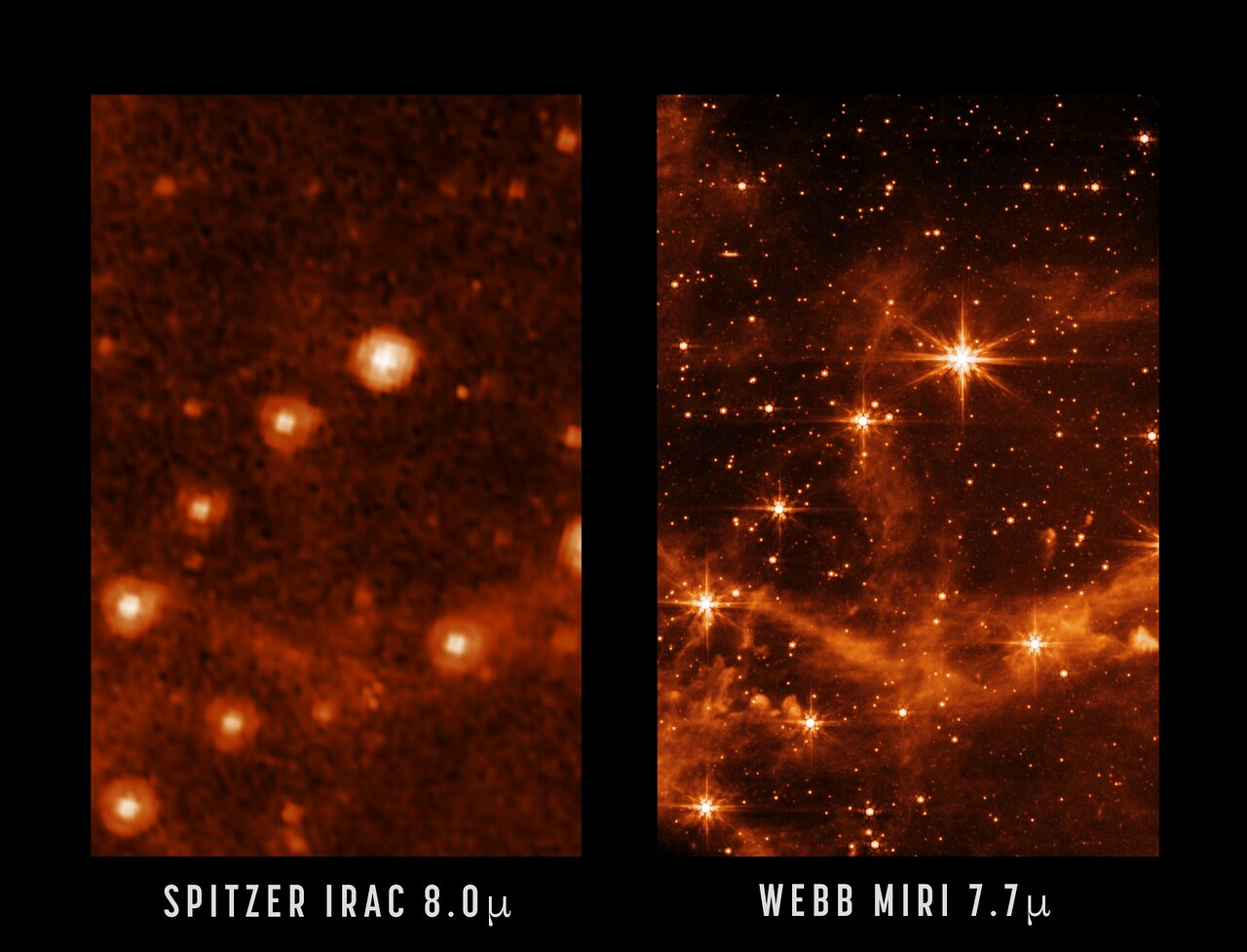
comparison of Spitzer and JWST images

An example of how infrared capabilities have improved over time. [NASA/JPL-Caltech; MIRI: NASA/ESA/CSA/STScI]

There have been many successful ground- and space-based infrared missions and surveys over the past four decades, starting with the Infrared Astronomical Satellite (IRAS), which proved the potential of infrared astronomy from space and set a new standard for making data accessible and well documented. Next, the Infrared Space Observatory (ISO) revealed the full span of infrared emission from objects like galaxies and gave researchers their first glimpse of H2 lines. The Two Micron All Sky Survey (2MASS) produced the first fully digital survey of the sky at high angular resolution, creating a dataset that is still widely used. The Spitzer Space Telescope, the Wide-field Infrared Survey Explorer (WISE), the Herschel Space Observatory, and the Planck satellite followed, bringing a slew of new and unexpected discoveries, and pushing the field of infrared astronomy to longer wavelengths.

Helou introduced a few science areas in which infrared missions have contributed greatly. First was the study of polycyclic aromatic hydrocarbons (PAHs), which are a class of molecules containing interconnected rings of carbon atoms. Thanks to infrared instruments, astronomers showed that various unassigned spectral features arose due to PAHs and that these molecules were important for the heating and cooling of the interstellar medium. As infrared instruments became more capable, observations showed how the fraction of carbon that is locked up in PAHs changes with metallicity and revealed novel species like deuterated hydrocarbon nanoparticles.

In the field of exoplanets, IRAS found evidence of excess infrared emission around Vega, hinting at a disk of debris that was later confirmed. (IPAC was instrumental in this discovery; the star Vega was being used for calibration, and the calibration wouldn’t converge because of the unexpected infrared excess.) Later, ISO used spectroscopy to investigate stellar debris disks and showed that they were similar in properties to solar system comets. Though Spitzer wasn’t initially expected to be used for exoplanet studies, the telescope made the first detection of photons from the surface of a planet and helped to discover several planets in the TRAPPIST-1 system. (Here, IPAC played an integral role again; instrument teams and flight engineers worked to ready the spacecraft for exoplanet observations by modifying the heaters on the spacecraft for pointing stability and finding “sweet spots” for photometric stability.) Today, JWST continues to advance the field with sensitive measurements of exoplanet atmospheres.

Finally, Helou touched on the work that IPAC has done to archive data. IPAC maintains the NASA/IPAC Extragalactic Database, or NED, which receives at least three queries per second. It’s also responsible for the Infrared Science Archive, data from which is used in more than 50% of research articles. IPAC also manages the NASA Exoplanet Archive, showing that the center isn’t limited to infrared astronomy!

As for the future of IPAC and infrared astronomy, it’s clear that there is much left to explore and lots of exciting work to be done; the Roman Space Telescope is scheduled to launch in a few months, and within a few years the Near-Earth Object Surveyor will follow. The Ultraviolet Explorer, for which IPAC will provide the UVEX Science Data Center, is slated to launch in 2030, and the PRobe far-Infrared Mission for Astrophysics (PRIMA) is under final review.

Read Astrobites’s interview with George Helou.

Return to Table of Contents.


Plenary Lecture: Carolyn Kuranz, Creating Astrophysical Conditions at High Energy Density Facilities (by Lucas Brown)

While astronomy and astrophysics are often considered primarily observational sciences, with most targets of interest being millions to trillions of miles away from us — Carolyn Kuranz’s plenary talk helped to challenge this idea, demonstrating how we can sometimes bring the heavens down to Earth with high energy density (HED) facilities. The basic idea behind Kuranz’s work, and the field of HED laboratory astrophysics more broadly, is that some extreme astrophysical environments, particularly plasmas, can indeed be studied in the lab by producing smaller-scale analogs — so long as we choose the right types of experiments.

Kuranz structured her talk around three big questions she commonly gets asked about her field: firstly, why would astronomers want to do laboratory experiments? Then, what defines the “high energy density” in HED astrophysics? And finally, how do we actually do these experiments in practice? Starting with the why, Kuranz notes that studying systems in astrophysics is inherently difficult as a result of the fact that they are far away, and theoretical models can suffer from a lack of data or missing physics. Experiments can bridge the gap here, providing the ability to collect more data on specific systems of interest, complementing both theoretical models and observations.

While this philosophy can apply to a variety of laboratory astrophysics areas, such as laboratory-based studies of the chemistry of planetary atmospheres, Kuranz focused specifically on the emerging role of HED laboratory astrophysics. Typically, high energy density refers to systems with more than 1 million atmospheres of pressure and temperatures above 1 million K. Generally, this means we’re in plasma territory. In some ways, it’s only natural that studies of these sorts of environments would eventually help astrophysicists, given that around 99.9% of the matter in the universe is in plasma form. Despite this, the laboratory astrophysics side of HED physics has really only emerged over the past 30 years, with its origins being traced to work out of Lawrence Livermore National Lab, the current site of the National Ignition Facility (NIF).

Today, the NIF is only one of a few dozen facilities in which HED laboratory astrophysics experiments are conducted. This is because the type of equipment needed to reproduce environments analogous to various astrophysical systems can vary greatly. This gets to Kuranz’s third question of how these experiments are conducted. The process begins by answering a set of questions, including: do the astrophysical and proposed laboratory environments obey the same governing equations (conservation of mass, momentum, etc.)? Is one able to re-scale the physical parameters in each system (timescale, size, density, pressure, etc.) in a way that retains relevant dynamics like viscosity, Reynolds number, and so on? Once these details have been nailed down, a researcher can assess what types of facilities they may need. For example, the NIF, which uses symmetrical arrangements of lasers to compress and heat up millimeter-scale pellets containing gases that can undergo nuclear fusion, provides a fairly natural environment for studying processes in the cores of stars, which are also hot, dense, and neutron-rich environments where fusion is actively occurring.

As for the future, things look promising for HED laboratory astrophysics — since the NIF achieved “ignition” in 2022, producing a net gain of energy from one of these pellet-crushings for the first time, a huge amount of interest and investment has been flowing into facilities studying HED physics. These facilities range from private companies working to achieve sustained nuclear fusion power generation to longstanding federal research centers working on understanding nuclear weapons and stockpile management, but they all provide astronomers with the opportunity to do what was once unthinkable: bring the universe’s most extreme environments down to Earth.

Return to Table of Contents.


Plenary Lecture: Cara Battersby, Our Galaxy’s Dynamic Center (by Niloofar Sharei)

Cara Battersby (University of Connecticut) used her plenary to walk us through her group’s ongoing effort to understand one of the most extreme environments in our own galaxy: the central molecular zone (CMZ), which is a dense, turbulent gas reservoir at the heart of the Milky Way. Her talk pulled together large surveys, new high-resolution zoom simulations, and machine-learning methods designed to bridge between the two.

She opened with the PRobe far-Infrared Mission for Astrophysics (PRIMA), the far-infrared probe mission concept she is a co-investigator on. This mission concept was developed in response to NASA’s recent billion-dollar probe mission call, and selection is expected later this year. PRIMA covers roughly 1.8–25 microns with imaging and spectroscopy, and galactic ecosystems make up about a quarter of its science case.

Battersby paused mid-talk to speak directly to early-career people in the audience about work-life balance, including bringing her daughter and sister with her to the meeting, and the SPARK program at UConn that supports women and underrepresented groups in physics. Her message: astronomy should be done from a place of joy, and visible work-life balance is something the community should be more open about.

Battersby framed the Milky Way as the natural laboratory for star formation across a huge range of environments, and briefly reviewed the ALMAGAL survey, which observed roughly 1,000 high-mass star-forming regions across the disk. But her main focus was the CMZ, which she argued is essentially a different kind of galaxy embedded inside our own. About 80% of all the dense molecular gas in the Milky Way sits in the CMZ, and its gas properties — density, turbulence, temperature, and pressure — are extreme compared to the rest of the disk. Because nearby starburst and high-redshift environments share many of these properties, the CMZ is the closest place we can actually resolve individual star-forming cores under conditions that resemble the early universe.

She showed that gas in the CMZ is extremely filamentary across all scales, and that the relationship between dense gas and star formation rate is unusual: when individual clouds in the CMZ actually form stars, they form them much like clouds elsewhere in the galaxy, but a large fraction of the dense gas in the CMZ never engages in star formation at all. Battersby argued that this is likely because so much of that gas is being shaped by flows toward the black hole and the strong turbulence and dynamics of the central environment, and it never cools and collapses into stars.

She closed with the simulation and machine-learning side of the program. Her group runs zoom simulations that can follow individual star-forming regions and can resolve down to CMZ scales while still capturing the full ~5 kpc bar driving gas inward. To extract more from these simulations than just side-by-side image comparisons, the team built a GPU-accelerated radiative transfer code that runs roughly 10,000 times faster than existing codes. They generate hundreds of thousands of synthetic observations and use them to train an encoder–decoder convolutional neural network that learns to predict the top-down structure of a region from the side-on view we actually observe. Applied to the CMZ, the network produces 3D reconstructions that are physically plausible and broadly consistent across independent training runs.

Read Astrobites’s interview with Cara Battersby.

Return to Table of Contents.

The post AAS 248: Day 3 appeared first on AAS Nova.

  •  

AAS 248: Day 2

NGC 2210

Editor’s Note: This week we’re at the 248th AAS meeting in Pasadena, CA. Along with a team of authors from Astrobites, we will be writing updates on selected events at the meeting and posting each day. Follow along here or at astrobites.com for daily summaries, or follow @astrobites.bsky.social on Bluesky for more coverage. The usual posting schedule for AAS Nova will resume on 22 June.

Table of Contents:


Helen B. Warner Prize Lecture: Kyle Kremer, Globular Clusters: Astronomical Factories of Gravitational-Wave and Electromagnetic Transients (by Lucas Brown)

Kyler Kremer (University of California, San Diego) kicked off day two of AAS 248 with a “dynamic” talk on the complex interactions and environments that exist within globular clusters — the most massive category of stellar clusters, which can contain upwards of one billion stars. Because of the extreme stellar density of these environments, they are thought to be good factories of systems ranging from accreting white dwarfs to millisecond pulsars, which are often spun up to high speeds via accretion from companion stars. Such accretion, whether onto pulsars or other compact objects, can often generate bright X-rays, and as Kremer noted early on in his talk, it was in fact these X-ray sources that provided some of the earliest evidence of the abundance of exotic systems within globular clusters. By the early 2000s, hundreds of X-ray sources had been identified in globular clusters.

Along with these brightly emitting compact binary systems, we expect globular clusters to be home to a vast population of darker, more elusive objects — black holes. Kremer noted that because about one out of every thousand stars is thought to be massive enough to evolve into a black hole, older globular clusters are thought to produce tens or hundreds of thousands of black holes over time. These black holes are then expected to gradually sink towards the centers of the clusters through dynamical friction, where they will increasingly find themselves in the company of other black holes, or black hole binaries. As these massive objects swing by each other, they can occasionally merge or eject black holes out of clusters entirely. This leads to a complex evolutionary history, leaving many open questions in regards to how many black holes should persist in globular clusters today and with what properties.

Luckily, strong evidence for the presence of black holes in globular clusters began to come in around the early 2000s as a result of the direct measurements of stellar orbits around an invisible, at least 4-solar-mass object in NGC 3201. Since this discovery, multiple others have been made via similar techniques. The role of black holes in shaping our observation of globular clusters may go well beyond these isolated systems, however. Theoretical work has also shown that the presence of black hole binaries in the centers of globular clusters may contribute to dynamical heating of the overall cluster. This suggests that globular clusters that have not undergone core collapse, which represents over 80% of clusters, should retain significant black hole populations today.

While individual black holes can often be hard to spot, black hole binaries are becoming increasingly easy to hear, thanks to the advent of gravitational wave astronomy. At facilities like LIGO, Virgo, and KAGRA, merging black hole binaries are now regularly detected, creating a population-level catalog of black hole binary properties. While many of these systems can be well explained by black holes formed in the “isolated” channel, meaning originating from a preexisting binary star system, some mergers show signs of a “dynamical” formation history, which can arise in the sort of dense environments globular clusters provide. As one example, there seems to be more black holes in the 40-solar-mass and above range than many models predicted. At these high masses, more potential progenitor stars actually become too large to form black holes thanks to a phenomenon called pair instability. However, such massive black holes could be formed from the repeated mergers of smaller black holes — a hierarchical process that simulations have consistently shown can be highly efficient in globular clusters, especially the most massive ones. On top of this, Kremer noted that individual gravitational wave signals have recently shown other telltale signs of hierarchically formed binary black holes, such as asymmetric masses and spin–orbit misalignment.

Finally, Kremer turned to another class of exotic astrophysical objects to explore other ways globular clusters can generate interesting phenomena: pulsars. Pulsars, like black holes, form from the collapse of massive stars. This rapidly rotating sub-category of neutron stars beams radiation from their poles, which gradually slows them down and depletes the strength of their radio emission over millions or billions of years. Because of this, one would expect older globular clusters to have a slowly rotating and mostly invisible population of pulsars. Instead, we see many rapidly rotating millisecond pulsars in these environments, suggesting that the dense cluster environment allows for many of these systems to be spun back up through accretion from other stars. In contrast, we also see young globular clusters which contain slowly rotating pulsars — another puzzle, yet one that may again be explained by the dense environment. Some researchers believe that these pulsars are formed via the direct merger of multiple white dwarfs, rather than from the collapse of a massive star. Such systems may also be the source of some fast radio bursts; the first fast radio burst associated with a globular cluster was discovered in 2020. It seems like globular clusters may be the gift that just keeps on giving!

Return to Table of Contents.


Press Conference: Our Changing Galaxy and the Skies We See (Briefing video) (by Niloofar Sharei)

This press conference walked through four very different ways our view of the Milky Way and our skies are changing right now — from extreme gas physics at the Galactic Center, to the hidden stellar populations of a cluster, to the rapid flickers of dying stars, and finally, to a very practical question: what are dark night skies actually worth to the public?

Resolving the Supersonic-to-Subsonic Gas Transition in the Galactic Center for the First Time

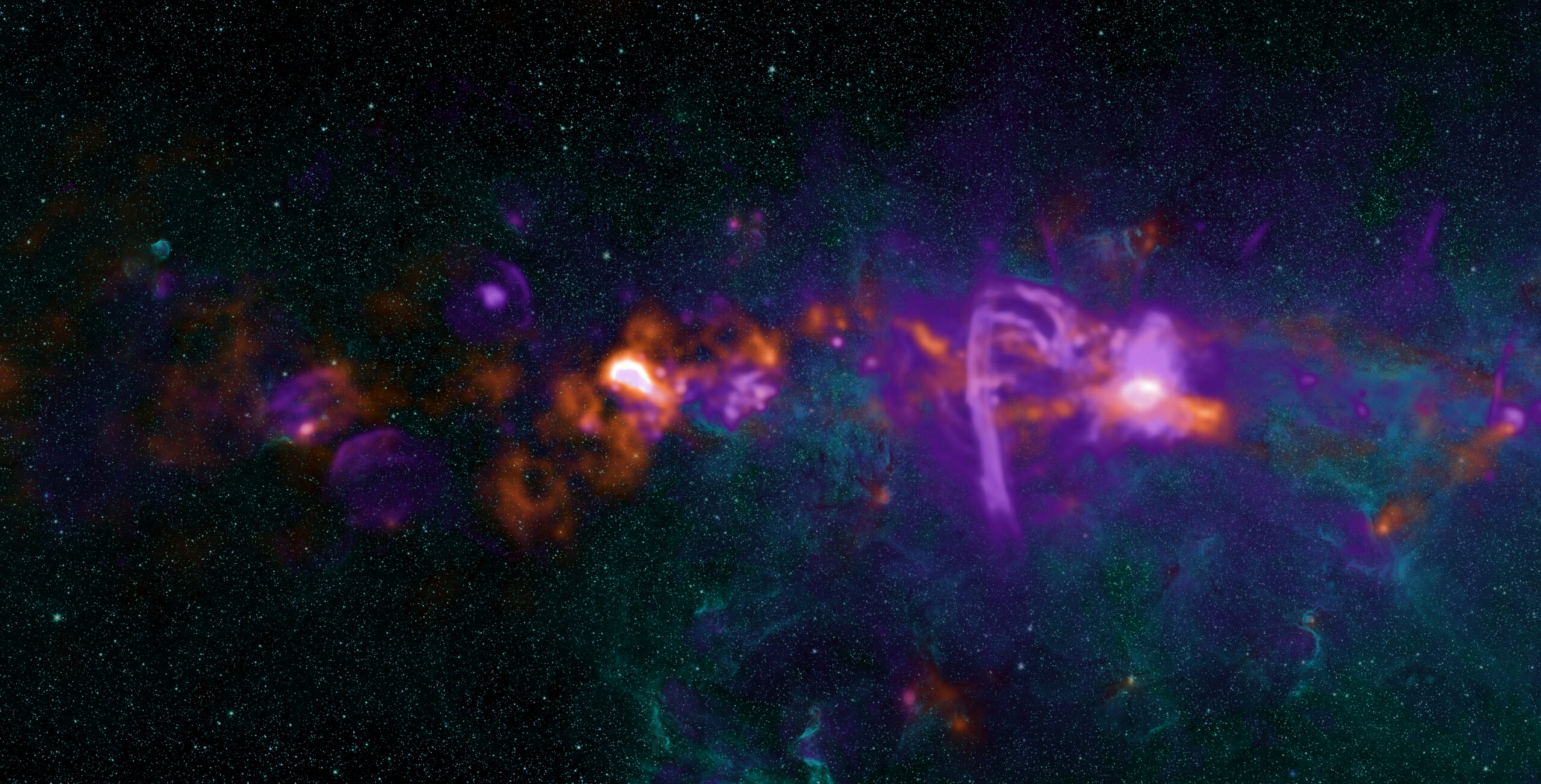
central molecular zone

The galactic center and the surrounding central molecular zone make up the most active star formation region in the Milky Way. [NRAO/AUI/NSF; CC BY 4.0]

Rojita Buddhacharya (Center for Astrophysics | Harvard & Smithsonian; Liverpool John Moores University) presented new results from the central molecular zone (CMZ), the dense gas reservoir at the center of our galaxy about 25,000 light-years from Earth. The CMZ is one of the most extreme environments we know of: gas there is roughly a hundred times denser, hotter, and more turbulent than what we see in nearby molecular clouds. Despite holding huge amounts of star-forming fuel, the CMZ forms stars at a surprisingly inefficient rate, and one of the puzzles is what conditions actually let any of that gas collapse into stars.

Buddhacharya mapped how gas transitions from highly turbulent, supersonic motion to calmer, subsonic motion across a region in the CMZ. This transition is well known in nearby clouds, where it usually precedes gravitational collapse, but it had never been clearly resolved in the CMZ before. Their team found a “calm island” of subsonic gas embedded in the otherwise turbulent sea. This is the first observation of its kind in the galactic center.

The Multi-Age Stellar Populations of Terzan 5 as Revealed by JWST

R. Michael Rich (University of California, Los Angeles) presented new JWST and Hubble Space Telescope observations of Terzan 5, an unusual stellar system near the center of the Milky Way that looks like a globular cluster but doesn’t act like one. Earlier work had already shown that Terzan 5 hosts at least two distinct stellar populations with very different ages and chemical abundances, which is unusual for a typical globular cluster.

Because Terzan 5 sits behind a thick screen of foreground stars and dust, separating real cluster members from contamination is one of the hardest parts of the analysis. The team combined JWST and Hubble imaging to measure stellar proper motions, then used a vector point diagram to isolate the stars that move together with the cluster. They identified two additional stellar populations beyond the two already known. Rich argued that Terzan 5 may be a “fossil fragment,” possibly the leftover core of a small galaxy or early bulge structure that was accreted long ago.

Sub-Day Periodic Variability of Two Central Stars of Planetary Nebulae

Gaoyang Du (Dalian University of Technology) reported the discovery of new short-period signals in the central stars of two planetary nebulae. These central stars are the hot, exposed cores left behind by Sun-like stars at the end of their lives, and finding rapid brightness variations in them tells us about their interior structure and pulsation physics.

Short-period signals well under a day are very hard to recover from the ground because Earth’s rotation introduces strong one-day aliasing, so the team turned to the Transiting Exoplanet Survey Satellite, which observes continuously from space. Using a neural-network pipeline designed to handle the crowded, contaminated backgrounds these stars sit in, they recovered the previously known variability in NGC 1501 and detected a new signal at roughly half an hour. Follow-up spectroscopy will be needed to pin down whether the signals come from pulsations, rotation, or something else, but the result opens a new window on the rapid variability of dying-star cores.

Artificial Light at Night Significantly Degrades the Value of Public Lands

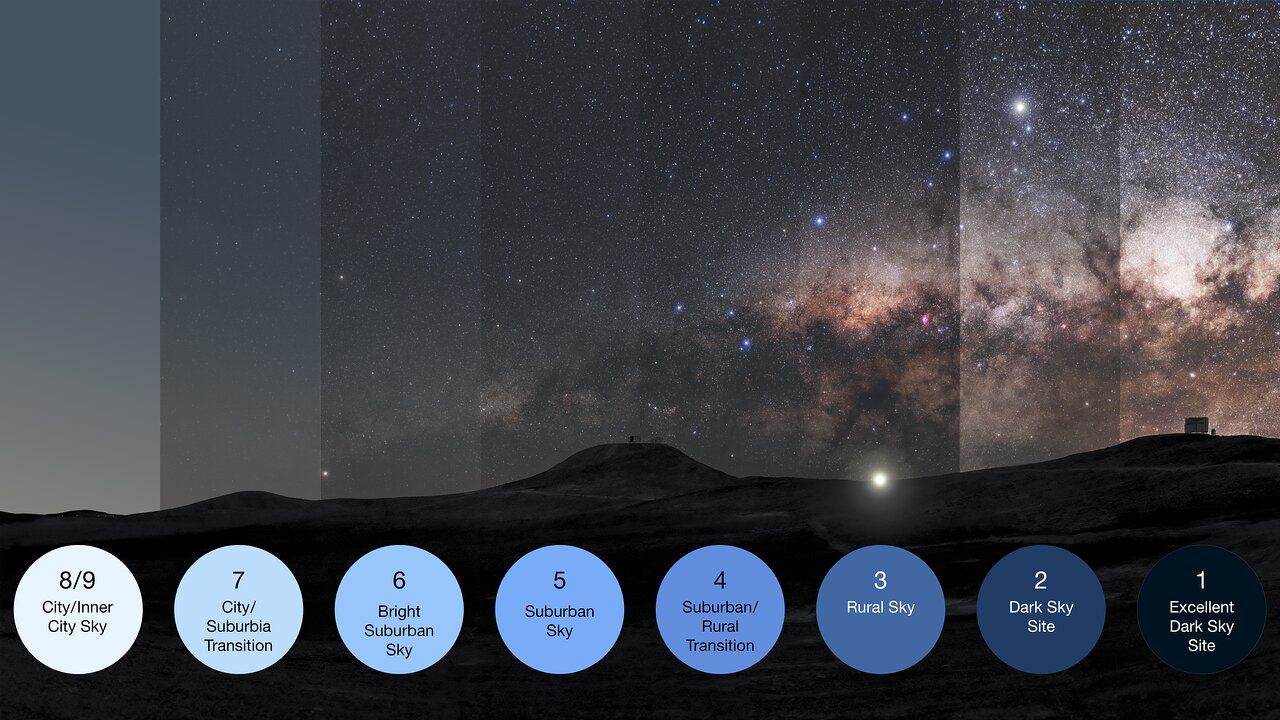
Jordan Smith (Utah State University) closed the press conference with a very different kind of measurement: the economic value of dark night skies. While astronomers usually treat light pollution as an observing problem, Smith and his collaborators are asking what the public is actually losing and what people would pay to keep dark skies on public lands. The team surveyed 634 visitors across International Dark Sky-certified parks, asking detailed questions about visitation behavior, motivations, and willingness to pay. Combining those surveys with satellite-based sky-brightness data, they estimated how the actual darkness of a site translates into the value visitors place on a trip. Based on the survey results, they found that visitors were willing to pay $45 more per visit to go to a park with skies one level darker on the Bortle scale. That sounds small per visitor, but scaled across all visits to all dark-sky public lands, it represents a very large economic value tied to a public good that current policy frameworks rarely account for.

illustration of the Bortle scale

An illustration of the Bortle scale, which quantifies the degree of light pollution at a given location. [ESO/P. Horálek, M. Wallner; CC BY 4.0]

Return to Table of Contents.

High Energy Astrophysics Division Early Career Prize Lecture: Carolyn Kierans, Developing Next-Generation MeV Telescopes (by Niloofar Sharei)

Carolyn Kierans (NASA Goddard Space Flight Center) was awarded the AAS High Energy Astrophysics Division Early Career Prize for her work on developing the next generation of megaelectronvolt (MeV) gamma-ray telescopes. Her talk laid out why the MeV band is so valuable (it contains nuclear emission lines like the 511 keV positron-annihilation line that traces high-energy processes in our galaxy) and why it has been so technologically difficult to observe well, since photons at these energies do not focus easily and the dominant interaction in the detector is Compton scattering. She walked through her work using balloon-borne Compton telescopes to mature the technology, the tools her team has developed in recent years to improve event reconstruction, and the broader roadmap for the next generation of MeV instruments.

Read Astrobites’s interview with Carolyn Kierans.

Return to Table of Contents.


Press Conference: Fire and Ice in Planetary Systems Near and Far (Briefing video) (by Kerry Hensley)

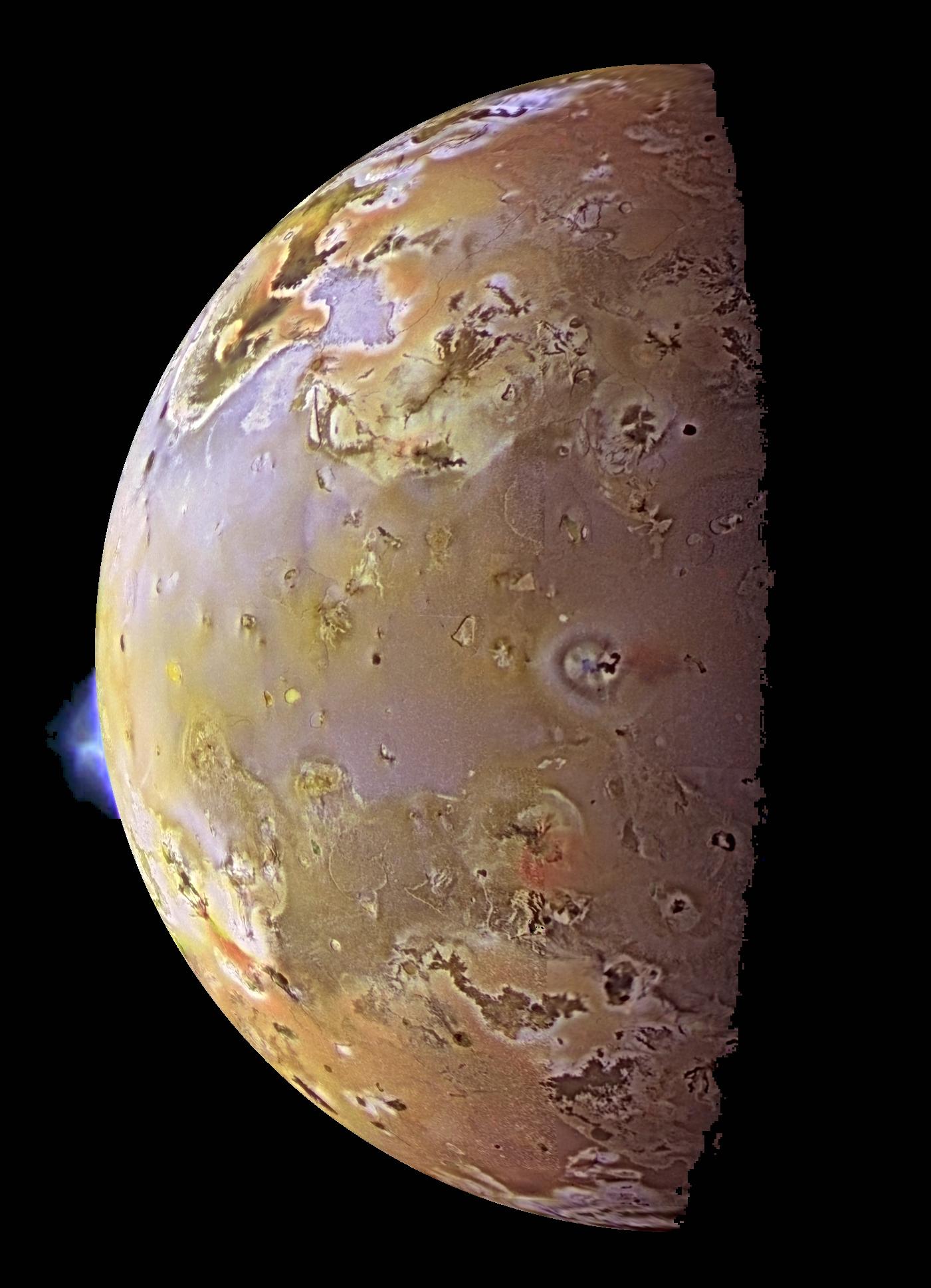
volcanic plume on Io

An image from the Galileo spacecraft of a volcanic plume on Jupiter’s moon Io. [NASA/JPL/University of Arizona]

The afternoon press conference was convened by Astrobites’s own Niloofar Sharei, this meeting’s Astrobites Media Intern. First up in the parade of planetary presentations was Neal Turner (NASA’s Jet Propulsion Laboratory/Caltech). Turner’s focus was Io, a moon of Jupiter and the most volcanically active body in the solar system. Turner’s team put forward a new claim: that the long-lived volcanoes that speckle Io’s surface spew out volcanic ash in their plumes, producing enough of this material to rapidly erase impact craters.

The team modeled Io’s plumes in order to explain the moon’s lack of impact craters, understand how certain plumes have persisted on Io for more than 45 years, and motivate a possible mission concept that includes a plume flythrough and sample return. They modeled the formation of ash as magma rises in a volcanic vent as well as the trajectory of the ash once it’s ejected into the plume, aiming to 1) match the plume observations from the Galileo spacecraft and 2) understand how an ash-filled plume might look different from one filled only with sulfur dioxide. While Turner found that Galileo data couldn’t discern between the two scenarios, ash makes a dramatic difference at the sub-millimeter wavelengths accessible to the Atacama Large Millimeter/submillimeter Array, which the team hopes to use to test this prediction. Finally, returning to the development of the mission concept, Turner proposed using a probe to first fly through the shadow of a plume to assess the particle size before sending the spacecraft through to collect a sample.

Up next, Tunhui Xie (University of California, Los Angeles) turned to Io’s neighbor, Europa. Europa and the other large icy moons of Jupiter are of interest to researchers because they might have subsurface oceans. Observations of Europa from ~30 years ago show that the moon has strange radar properties: its radar albedo is large, and the return signal retains the strong circular polarization of the outgoing signal.

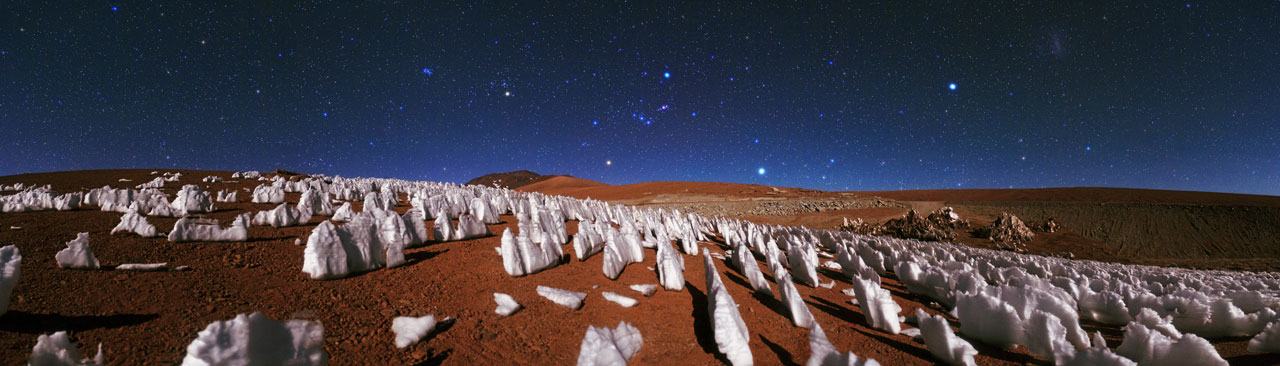
To investigate the moon’s radar weirdness further, Xie’s team observed Europa from 2011 to 2024 and showed that the moon’s albedo (fraction of light reflected from its surface) is roughly constant with longitude. There is some evidence of differences between Europa’s hemispheres, which could be a sign of spiky ice structures called penitentes protruding from the frosty surface; Europa’s trailing hemisphere might be subjected to more particles from Jupiter’s magnetosphere, which could suppress the growth of penitentes in that region and cause a difference in the albedo. Xie also addressed the polarization behavior of the radar signal, showing that this is likely due to the coherent backscatter opposition effect. Finally, Xie showed how observations helped to place an upper bound of 32 meters for the penetration depth of X-band radar photons into Europa’s icy shell.

penitentes

Penitentes in the Atacama Desert. [ESO/B. Tafreshi (twanight.org); CC BY 4.0]

Bryce Bolin (Eureka Scientific) reported on the third known visitor from another star system: 3I/ATLAS. Using the Multi-Object Spectrograph for Infrared Exploration on the Keck I telescope, Bolin’s team obtained some of the first infrared images of the interstellar visitor and detected its fuzzy coma — the cloud of gas and dust that surrounds the solid body of the comet — shortly after its discovery in July 2025. In August, observations revealed that the comet had started to grow a tail. As the team monitored 3I/ATLAS during its journey through our solar system, they saw significant changes. The comet was initially very red, likely due to space weathering from the galactic environment, but it became greener as the comet became active and refreshed its surface.

In some of the earliest spectroscopy taken by a large-aperture telescope, Bolin’s team found cometary volatiles like CN, but not C2 or C3, which are common in comets, giving them a green color. These missing species emerged a couple of months later, which coincided with the comet taking on a greener appearance. As the comet retreated from its encounter with the Sun, these emission features faded. This presentation by Bolin showed how early and continuing monitoring of an interstellar object by a large-aperture telescope can reveal how these objects are affected by their journeys through our solar system.

Moving out of the solar system entirely, Tiffany Kataria (NASA JPL/Caltech) turned the discussion toward exoplanets. Kataria discussed HD 80606b, a 4.1-Jupiter-mass planet on an extremely eccentric (e = 0.93) orbit with a period of 111 days around a solar-type star. Kataria used JWST to observe HD 80606b’s phase curve, which revealed different parts of the planet as it travels along its orbit. Each time the planet makes its extremely close approach to its host star, it gets “flash roasted” and experiences a rapid increase in temperature. This rapid heating event is complex, depending on factors like the planet’s atmospheric chemistry and winds. The JWST data revealed that HD 80606b’s temperature skyrockets an incredible 1,100℉ over the course of its orbit. There’s still much more to learn from the rich spectroscopic dataset from JWST, so keep an eye out for more findings about this flash-roasted exoplanet in the future!

Finally, Aurora Kesseli (IPAC/Caltech) discussed another toasty exoplanet called CoRoT-2b, which is a hot Jupiter on a 1.7-day orbit around its star. Because hot Jupiters orbit their hosts so closely, astronomers expect all of these extreme exoplanets to be tidally locked, with one side of the planet perpetually facing the star and the other side in perpetual darkness. However, CoRoT-2b might be breaking that trend. In 2018, researchers reported that CoRoT-2b had winds that blew in the opposite direction from all other known hot Jupiters. They drew this conclusion from the location of the hottest point on CoRoT-2b, which appeared just after the planet ducked behind its star, rather than just before — unlike all other hot Jupiters studied so far. At the time, researchers hypothesized that the unusual location of the hotspot was due to clouds on one side of the planet, a magnetically induced westward wind, or a lack of tidal locking.

Using new data from the Very Large Telescope and Gemini South, Kesseli found that the planet’s strange properties can be explained best by a lack of tidal locking. CoRoT-2b appears to rotate at 2.24 km/s — far slower than the 4.37 km/s expected if the planet were tidally locked. There are no theories yet that explain why CoRoT-2b wouldn’t be tidally locked, so it remains a mystery for now!

Return to Table of Contents.


Solar Physics Division George Ellery Hale Prize Lecture: Yi-Ming Wang, The Sun as a Laboratory for Astrophysical Magnetic Fields (by Kerry Hensley)

Yi-Ming Wang (Naval Research Laboratory) gave the AAS Solar Physics Division’s George Ellery Hale Prize Lecture for “sustained, foundational contributions to understanding solar magnetism, the solar cycle, and the solar wind.” Wang is perhaps most known for the Wang–Sheeley–Arge solar wind model, which is widely used in space weather forecasting.

Wang began by musing on how his winding career path brought him to solar physics. Initially a theorist who modeled neutron stars, Wang was later hired to do radio astronomy but arrived for the position later than expected, so he was roped into working on solar physics instead — where he learned many things about magnetic fields that he wished he’d known when working on neutron stars!

extreme-ultraviolet image of the Sun

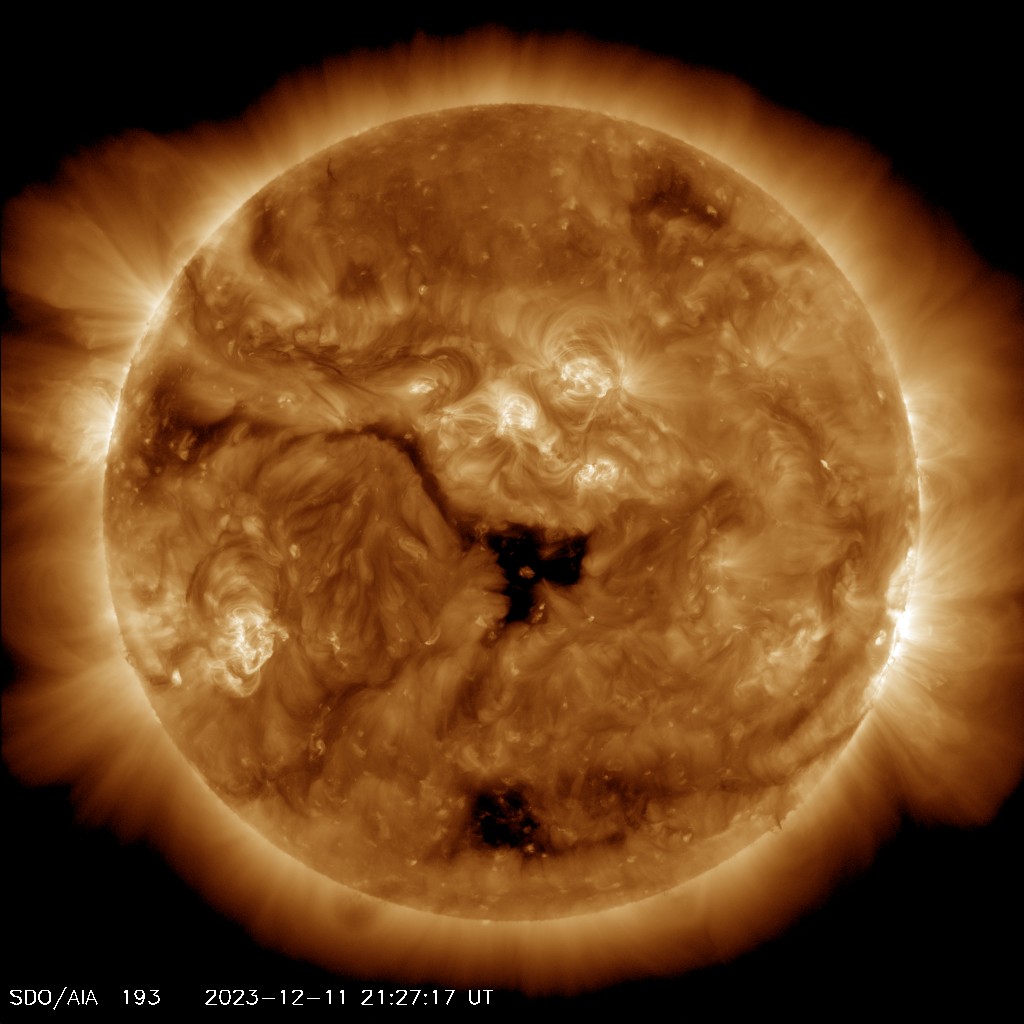
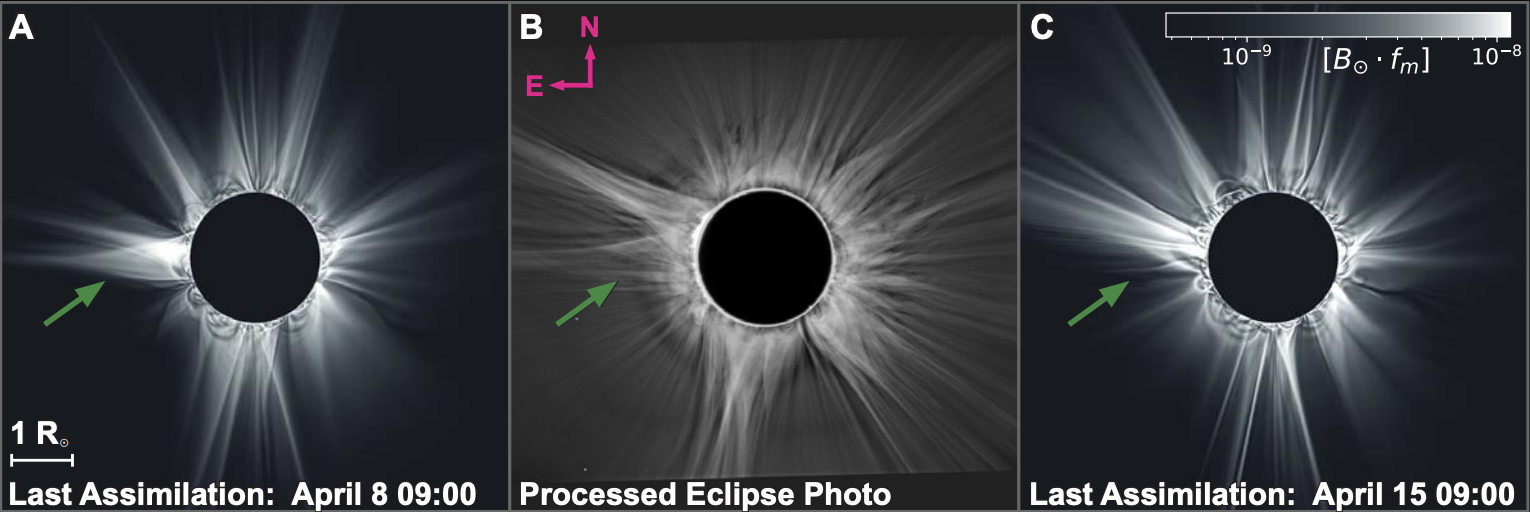
This 19.3-nanometer image, taken by the Solar Dynamics Observatory on 11 December 2023, shows at the center of the Sun’s disk the remnant of a large coronal hole. [NASA/SDO and the AIA, EVE, and HMI science teams]

In this talk, Wang gave an overview of three aspects of the Sun related to its magnetic field: quasi-rigid rotation of coronal holes, the source of coronal heating, and the speed of the solar wind. First up, coronal holes: these are dark areas in the solar corona where magnetic field lines stream out into space, which solar physicists call “open” field lines. (“Closed” field lines curve back to the solar surface.) Wang described how we know that coronal holes are regions of open field lines by extrapolating the photospheric magnetic field. (The photosphere is the visible “surface” of the Sun.) Because coronal holes rotate quasi-rigidly (compared to the photosphere, which rotates differentially), magnetic field lines must be continually converted from closed to open and vice versa at the boundaries of these holes.

Next, Wang discussed the source of coronal heating. The solar corona is famously extremely hot, running at a few million degrees compared to the ~6000K solar photosphere. For decades, the Parker nanoflare model has been the leading explanation for how the corona gets so hot. In this model, the places where coronal loops touch down in the solar photosphere are continually wiggled around by random motions of the photosphere, which tangles up the magnetic field lines in the coronal loop. When the current sheets in this system dissipate, the corona is heated. Instead, Wang favors an observationally based model in which the heating comes from magnetic reconnection with underlying small-scale fields.

Finally, Wang briefly touched on the connection between the Sun’s magnetic field and the speed of the solar wind. The solar wind has been measured at Earth since the 1960s, and these measurements have shown that the mass and energy flux density of the solar wind scales with the strength of the footprint magnetic field strength, but the observed solar wind speed is independent of the footprint field strength. Instead, the speed scales inversely with the rate of magnetic flux-tube expansion in the corona. Thus, the solar wind speed at Earth can be calculated from the rate of flux-tube expansion along open magnetic field lines using maps of the photospheric magnetic field.

In the end, Wang’s work on the solar magnetic field did connect back to his earlier work in high-energy astrophysics, with relevance to period changes in binary pulsar systems and other areas. Magnetic fields really do connect all parts of astrophysics!

Read Astrobites’s interview with Yi-Ming Wang.

Return to Table of Contents.


Plenary Lecture: David Jewitt, The Interstellar Interlopers (by Niloofar Sharei)

David Jewitt focused his plenary talk on a rare kind of small body: the three confirmed interstellar objects that have passed through the solar system so far. He opened with the Oort cloud as a framing device. Comets in the Oort cloud did not form there — they formed near the giant planets and were scattered out by gravitational interactions. The same process leaks comets to interstellar space very efficiently: only about 1–10% are trapped into a star’s own Oort cloud. Across the galaxy, that implies a free-floating population on the order of 1024–1025 objects. Seeing some of them pass through our solar system is exactly what we should expect.

artist's impression of Oumuamua

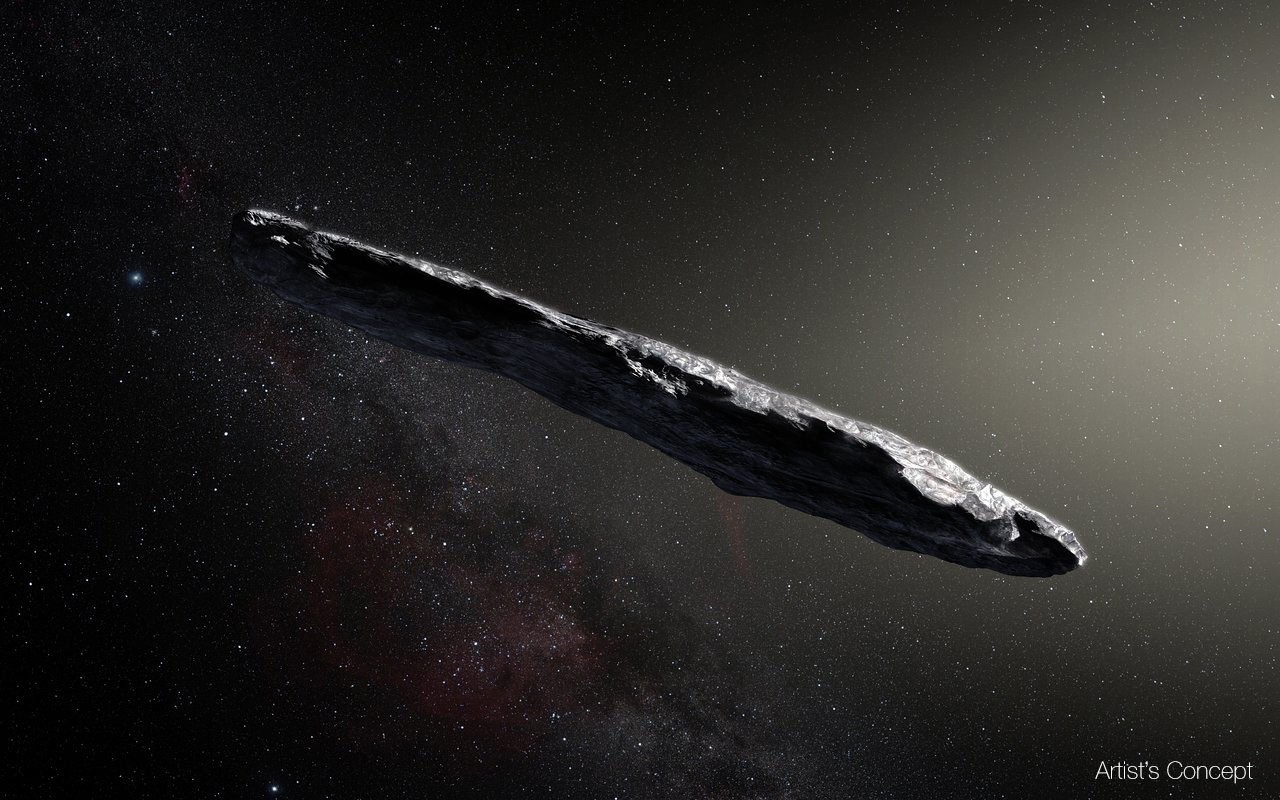
Artist’s impression of the first known interstellar object to visit our solar system. ʻOumuamua. [ESO/M. Kornmesser; CC BY 4.0]

The bulk of the talk walked through the three known interlopers. ʻOumuamua (1I/2017 U1) is the strangest: a tiny inert body about 80 meters across, with an extreme light curve consistent with either a 6:1 elongated shape or a flattened disk, and a non-gravitational acceleration of about 0.1% of solar gravity despite no detectable outgassing. Jewitt walked through the proposed explanations: exotic ices, ultra-low-density fluffballs, and sail-like sheets, and showed why each runs into a physical problem. 2I/Borisov (2019), by contrast, looks like a perfectly normal comet, with a ~400–500-meter nucleus, a coma, a tail, and a solar-system-like composition. 3I/ATLAS is the largest at roughly a kilometer, and JWST infrared spectroscopy has revealed CO2 emission about an order of magnitude richer than typical solar system comets. This is the first detailed look at the volatile inventory of an interstellar visitor.

Jewitt then turned to what the three objects tell us as a population. The strongest constraint comes from ʻOumuamua, precisely because its discovery was such a near miss: catching one in that brief visibility window implies roughly 1,000 similar objects crossing the solar system per year. The three objects look very different in size, activity, and composition, which is consistent with sampling a broad galactic population, and their velocity dispersion lines up with the disk-heating picture, in which older galactic populations are kinematically hotter. The leading origin story is the same one he set up at the start: scattering from the protoplanetary disks of giant planets around other stars.

Read Astrobites’s interview with David Jewitt.

Return to Table of Contents.

The post AAS 248: Day 2 appeared first on AAS Nova.

  •  

AAS 248: Day 1

Virgo Cluster

Editor’s Note: This week we’re at the 248th AAS meeting in Pasadena, CA. Along with a team of authors from Astrobites, we will be writing updates on selected events at the meeting and posting each day. Follow along here or at astrobites.com for daily summaries, or follow @astrobites.bsky.social on Bluesky for more coverage. The usual posting schedule for AAS Nova will resume on 22 June.

Table of Contents:


Fred Kavli Plenary Lecture: Richard Teague, Revealing the Dynamics of Planet Formation (by Lexi Gault)

Richard Teague (Massachusetts Institute of Technology) gave the Fred Kavli Plenary Lecture on his groundbreaking work in the dynamics of planet formation. The study of planet formation, as Teague introduced, has advanced significantly in the last two decades with the discovery of thousands of exoplanets and the launch of cutting-edge instruments. While planets are found everywhere orbiting a wide variety of stars, not all planetary systems look the same. Our solar system looks very different from other exoplanetary systems, challenging our understanding of planet formation and requiring us to build a picture that works across the board.

Where do we look to build a better understanding of planet formation? Planets are inherently the byproduct of star formation, forming in protoplanetary disks around new stars. These disks are filled with gas and dust, concentrating mass into rings that then eventually form planets. Exactly how this process proceeds is variable, and the resulting planetary system depends on how the material in the protoplanetary disk mixes and combines into planets. Teague compared planets to bread: we know the simple list of ingredients that it takes to make them, but what you end up with depends on how you bring those same ingredients together. We need to study what is happening in the planetary mixing bowls to understand how planets form.

exoALMA disks

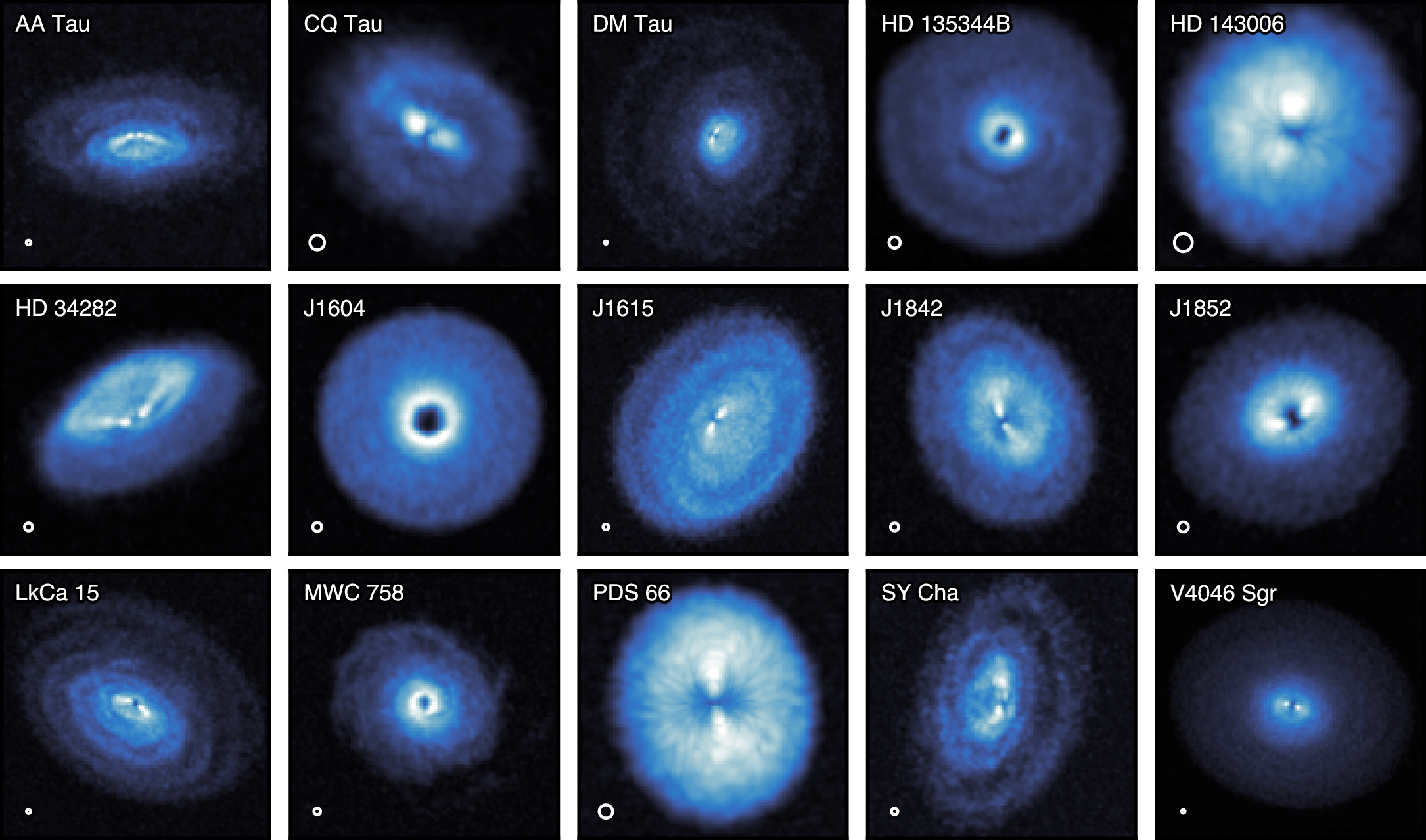
The full exoALMA sample. All 15 disks show evidence of substructure in their gas emission. [Teague et al. 2025]

Leveraging the high spatial and spectral resolution of the Atacama Large Millimeter/submillimeter Array (ALMA), Teague and collaborators have developed exoALMA, a planet-hunting campaign focusing on the still-forming planets of protoplanetary disks. This project has focused on 15 sources, obtaining and analyzing high-resolution observations to explore the kinematics, 3D velocity structures, and mass distributions within these protoplanetary disks.

The first science results from exoALMA have started to reveal that the planet formation process is highly dynamical — precise kinematic measurements uncover dynamical perturbations within protoplanetary disks across their sample. These perturbations point to the impacts protoplanets have on disk kinematics and mass distributions as they continue to form, and the high resolution of ALMA observations unlocks the inner workings of protoplanetary disks.

Looking forward, Teague emphasized that the future is broad for planet formation science. The upcoming Wideband Sensitivity Upgrade on ALMA will enable even more detailed maps of protoplanetary disks, unlocking the mysteries of planet formation while it happens.

Return to Table of Contents.


Press Conference: The Science of Stellar Remnants (Briefing video) (by Lucas Brown)

In AAS 248’s very first press conference session, we heard from a variety of scientists and research teams on all sorts of stellar remnants: white dwarfs, supernovae, pulsars, and beyond. Basically, if it came from a dying star, it was fair game for this session.

Boron and Beryllium as Unlikely Probes of Extrasolar Planets

First up was Ben Zuckerman (University of California, Los Angeles), who updated us on ongoing research into the presence of boron and beryllium in certain white dwarf systems. For some context, there exist many white dwarf systems in which a companion object — sometimes a planet — can have its material accreted onto the surface of the white dwarf due to tidal disruption during close approaches in its orbit. This deposition of material can then be detected via spectral signatures in observations of the white dwarf.

In 2021, evidence was first presented for two white dwarfs being “polluted” with trace amounts of beryllium, which is a particularly rare element, cosmically speaking. This raises the question of how so much beryllium ended up in these systems. In the hunt for answers, however, another mystery has emerged: missing boron. As Zuckerman went on to describe, boron was also recently discovered in some of these white dwarf systems, but at an abundance roughly equal to that of the beryllium. This is despite boron being about a hundred times more common in the universe, further muddying the waters of what exactly is causing such a strange pattern of heavy metals in these systems. Work remains ongoing to find a physical model that can reconcile these observations.

White Dwarf Kicks via Episodic Mass Ejection from Red Giant Stars

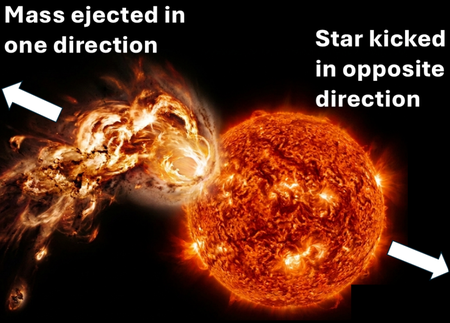
Image showing a star undergoing a massive coronal ejection event. Text superimposed on the image indicates that the mass being ejected in one direction pushes the star in the opposite direction.

In the model explored by Jim Fuller and collaborators, repeated mass-ejection events can cause red giant stars to be “kicked” up to a relatively high velocity before they collapse to form white dwarfs, explaining the high velocities many white dwarfs are observed to have. [Jim Fuller]

Next we heard from Jim Fuller (Caltech). Fuller filled us in on some recent studies aiming to explain why white dwarfs often obtain such high velocities when formed. Just like our own Sun occasionally ejects plumes of plasma from its surface, the red giant stars that eventually form white dwarfs are expected to periodically undergo mass-ejection events. But unlike with our own Sun, these ejections can shear off a significant amount of the star’s total mass — up to ~0.01% per ejection. Each time such an ejection occurs, Newton’s 3rd law ensures that the star itself will also receive a random velocity boost in the opposite direction. Over many thousands of ejections, assuming they occur randomly in all directions, this can significantly “kick” a meandering red giant up to speeds exceeding half a kilometer per second. Once such a star collapses to form a remnant white dwarf, the white dwarf will have this excess velocity too.

Additionally, this random ejection process predicts that red giants in binary systems will experience a sort of “random walk” in their orbital parameters, not just their overall velocity. This can lead to the complete dissociation of binaries, or to the direct collision of a red giant with its companion — leading to predictions about how many widely spaced white dwarf binary systems should exist. | Press release

Probing Intrabinary Material in a New Spider Millisecond Pulsar

Rebecca Kyer (Michigan State University) gave an update on research into so-called “spider” millisecond pulsars. These rapidly rotating neutron stars are a sub-class of pulsar characterized by their very high spin rate and the presence of a companion from which the pulsar is accreting material. Such systems are further sub-classified as either “Black Widows,” which have very low-mass companions (~3% solar mass), “Redbacks,” which have larger companions at ~10-80% solar mass, and “Huntsmans,” which have more massive red-giant companions. These Huntsman pulsars are the newest category, with only two known cases — until now!

Kyer presented evidence collected by their team that may indicate the discovery of a third Huntsman pulsar. The evidence involves radial velocity measurements of the companion star, which shows an orbital period of 3.64 days and variable H-alpha emission. In these systems, the radio emission typically associated with the pulsar can be blocked from our view for unpredictable amounts of time due to clouds of hot gas and dust that emerges from the complex interaction between the pulsar and red giant winds. Despite this, Kyer hopes that with enough targeted observations with the Green Bank Telescope, a radio signal will eventually be detected, confirming the pulsar’s presence.

Image of galaxy M83 in X-ray and optical light.

Image of Messier 83 in both X-ray and optical light. Prominent X-ray sources can be seen as small colorful blobs strewn throughout the galaxy. Some of these X-ray sources are supernova remnants, a subset of which have recently been found to show variability in their brightness. [X-ray: NASA/CXC/SAO; Optical: NASA/ESA/AURA/STScI, Hubble Heritage Team, W. Blair (STScI/Johns Hopkins University) and R. O’Connell (University of Virginia); Image Processing: NASA/CXC/SAO/A. Jubett, L. Frattare and P. Edmonds]

NASA’s Chandra Finds Unexpected Fireworks in Aftermath of Stellar Explosions

Finally, we heard from a team of three researchers — Andrea Prestwich (Catholic University of America / NASA Goddard SFC), Roy Kilgard (Wesleyan University), and Zoe Hoiland (Vassar College) — on an unexpected supernova discovery. Traditionally, supernovae are modeled as having a relatively constant or slightly decreasing luminosity, at least after their initial explosion. As the stellar material is blasted away from the progenitor’s core, it interacts with the surrounding interstellar medium and a blob of hot, shocked gas is left over. This blob will eventually cool and dim, but often over a long time period, leading to the aforementioned prediction of constant or slightly decreasing brightness.

However, in 14-year Chandra observations of a supernova remnant in Messier 83, Prestwich and her collaborators actually found significant X-ray variability, with the remnant occasionally even increasing in brightness. In a follow-up study, it was found that supernova remnants in Messier 51 likewise show this up-and-down variability. In contrast, an analysis of remnants in Messier 101 showed zero variable remnants. Notably, the former two galaxies are very actively star-forming, while the latter is not. Some possible theoretical models to explain this variability include the possibility of stellar material falling back on the compact object leftover by the supernova, creating an accretion disk that can generate variable emission. Alternatively, it has been proposed that there could be a neighboring star to the remnant object, forming an accreting X-ray binary system that could also induce variability. | Press release

Return to Table of Contents.


Plenary Lecture: Sanmi (Oluwasanmi) Koyejo, The Measurement Gap: What AI Can Get Wrong and Why Astronomers Are the Fix (by Lexi Gault)

Sanmi (Oluwasanmi) Koyejo, a professor of computer science at Stanford University, focused this plenary talk on the limitations of AI as it becomes more integrated with science and how astronomers can help solve these problems. Koyejo began by addressing the question of why an AI researcher is talking to astronomers. His research explores how to set AI standards and how to best assess the performance of an AI model, which becomes particularly important when these models are used to do science.

Evaluating the performance of an AI model relies on benchmarks, a fixed set of questions with known answers that are used to score the AI. These benchmarks are simple, reproducible, and comparable, but passing a benchmark does not equate to getting a meaningful scientific result. Benchmarks assume cheap checks, fast feedback, and fixed questions, but science is none of those things; answering astronomy questions relies on telescope time, and ground truth cannot be found quickly.

Much like telescopes, AI benchmarks are measuring instruments with noise that can compound. If you run an AI model many times, the goal is often convergence on an agreed-upon answer, but getting to an agreed-upon answer does not mean that the answer is correct. Koyejo’s recent research found that AI models more often agreed with each other than they did with the actual truth. This is made worse when AI is used to evaluate itself. For example, Koyejo notes the rising number of academic paper submissions due to AI-written papers greatly exceeds the capacity of human reviewers. If AI tools are used to evaluate AI-generated paper submissions, the AI will tend to favor AI-written materials, ignoring the actual scientific merit. Making evaluation of AI an AI problem compounds its failures, straying further from a correct answer.

This is where astronomers come in. Having the expert knowledge of what “correct” looks like, being able to judge which errors matter, access to expensive ground truth (telescope time), and a culture of blind analysis (not knowing exactly what the answer should be), astronomers are well equipped to build standards for AI evaluation. We can define what good AI is for astronomy and use our expertise to help build the standards. Koyejo left the audience with the charge to engage with AI (engagement does not mean endorsement), so that astronomers can help set the standards for appropriate AI use in science.

Read Astrobites’s interview with Sanmi Koyejo.

Return to Table of Contents.


Press Conference: Variable, Windy, and Disruptive: The Behavior of Supermassive Black Holes (Briefing video) (by Niloofar Sharei)

This press conference focused on what supermassive black holes do to the world around them, from relativistic jets of the most famous black hole, to the multi-phase winds launched from active galactic nuclei, to temperature-shifting coronae, and even the radio burps that are produced years after a black hole tears apart stars.

Chandra Tracks the Evolving Jet from Messier 87’s Black Hole: 

Camille Poitras (Laval University) presented the largest Chandra X-ray movie of jet evolution in the famous supermassive black hole Messier 87 (M87). M87 has been studied across the electromagnetic spectrum, but X-ray observations of its jet have always suffered from blur because high-energy photons are hard to focus. Using improved Chandra calibrations and deconvolution techniques, the team produced a 13-year X-ray movie of M87’s jet from 2012 to 2025. Tracking a bright knot within the jet, Poitras’s team saw it split into two components in 2023, with one component moving at an apparent five times the speed of light (which is a known illusion called superluminal motion). That allowed the team to look into where and how the particles are being accelerated to extreme energies along the jet. | Press release

Watching a Black Hole Wind Grow: Chandra and Hubble Reveal the Early Stages of Galaxy

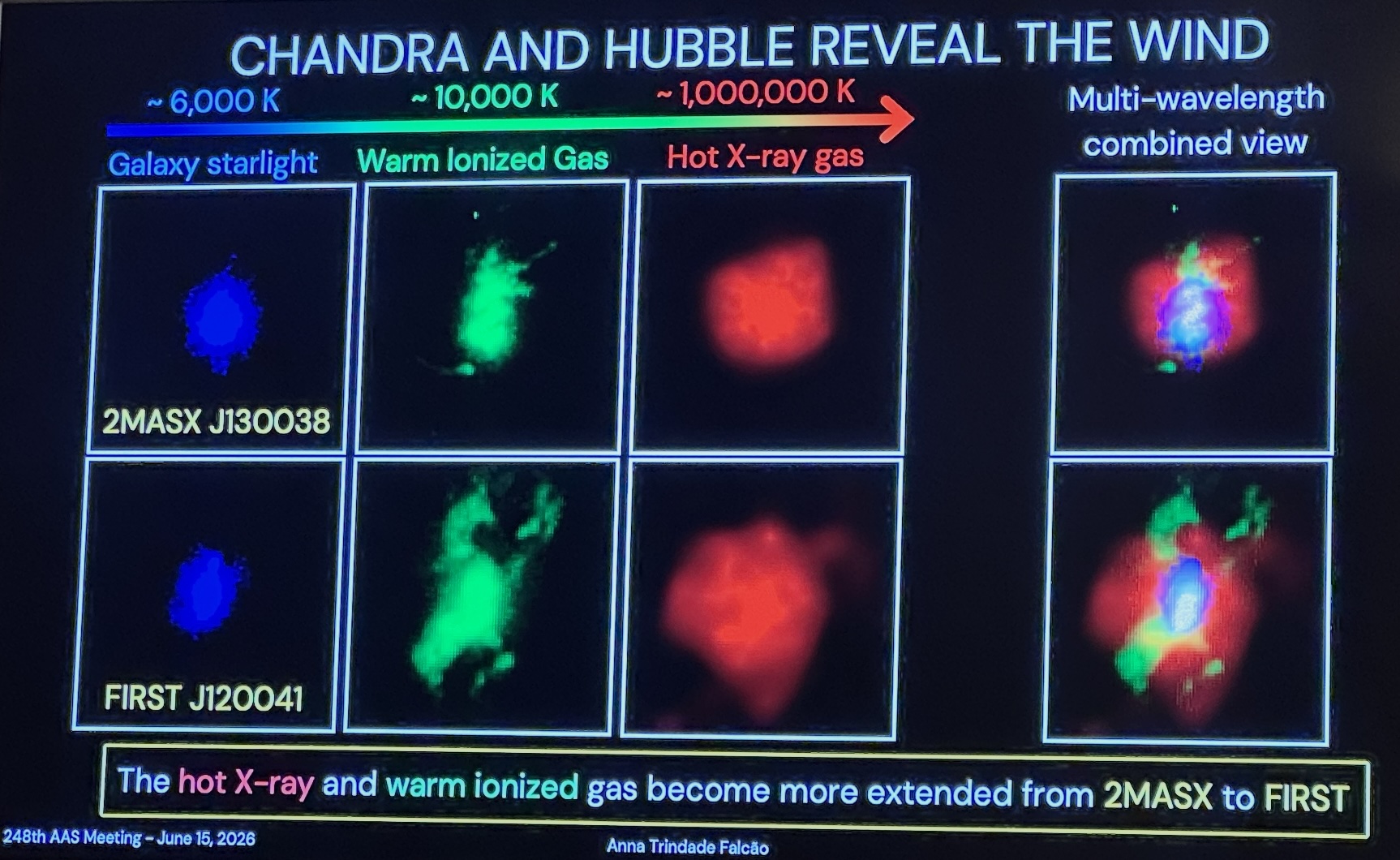
Multi-wavelength images of two quasars

Multiwavelength images of two nearby quasars show that the hot X-ray (red) and warm ionized (green) gas are far more extended in the bottom system. Click to enlarge. [Anna Trindade Falcao]

Anna Trindade Falcao (NASA Goddard SFC) presented combined Chandra and Hubble observations that may capture a supermassive black hole wind in its earliest stages of growth. Active galactic nucleus (AGN) feedback is thought to happen, but how it begins remains poorly understood. Studying two nearby quasars in which Chandra (tracing hot X-ray wind) and Hubble (tracing warm ionized gas) data are aligned, the team found that the hot and warm phases extend together and not independently. This would suggest a single multi-phase outflow. Their team proposed a four-stage sequence for AGN feedback and also argued that their two systems capture the earliest stages of that process.
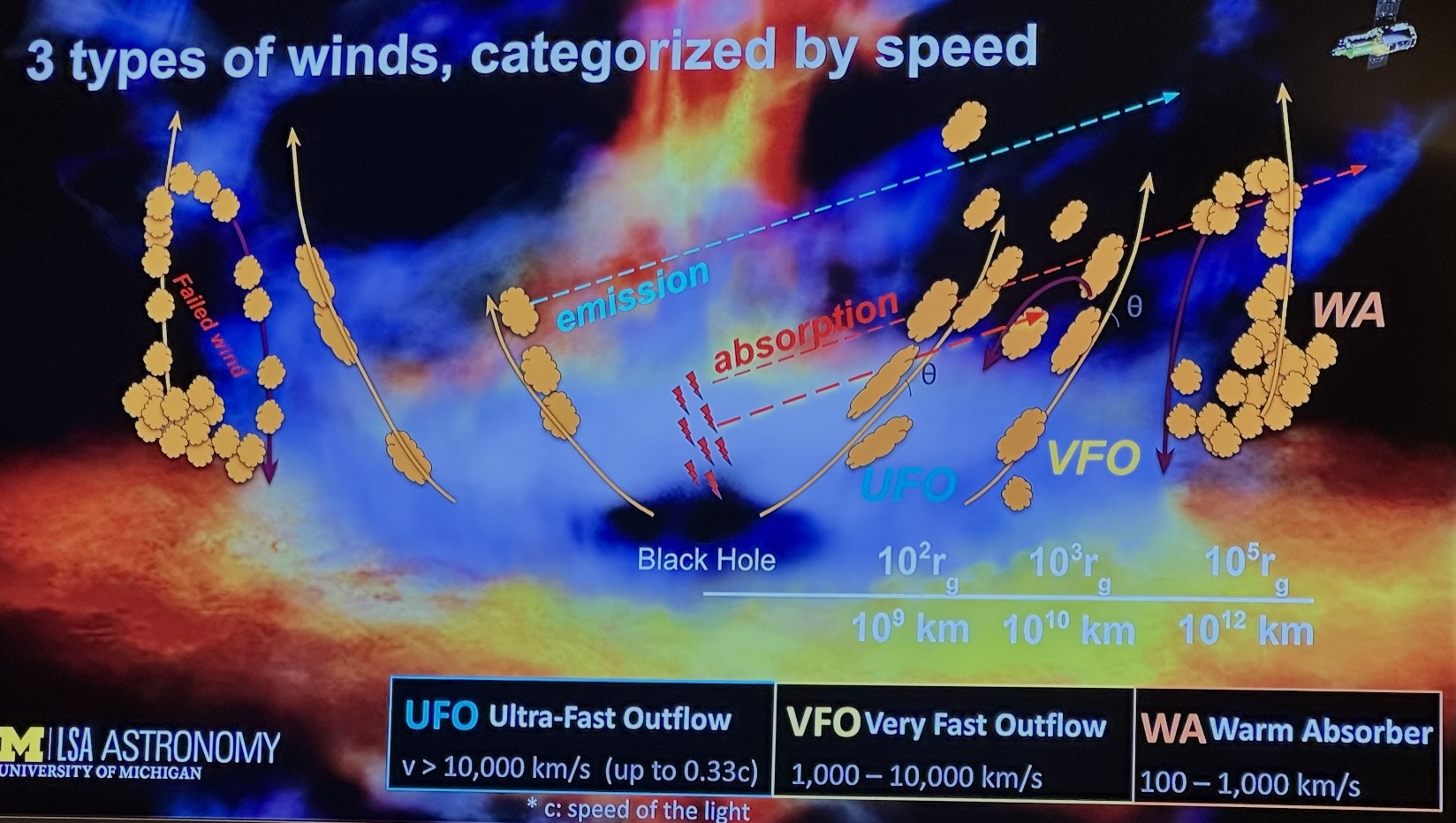
three black hole wind types at increasing distances

The three types of wind launched from an accreting supermassive black hole. Click to enlarge. [Xin Xiang]

XRISM Reveals Changing Accretion-Driven Winds in a Nearby Active Galaxy:

Xin Xiang (University of Michigan) presented the most detailed X-ray portrait of the winds flowing out of NGC 4151, an active galaxy roughly 16 million light-years away with a 30-million-solar-mass black hole. Every major X-ray observatory has observed this galaxy before, but earlier instruments could not separate its multiple wind components. With the high-resolution X-Ray Imaging and Spectroscopy Mission (XRISM) spectrometer, Xiang resolved three wind populations by velocity: warm absorbers (100–1,000 km/s), very fast outflows (1,000–10,000 km/s), and ultra-fast outflows (over 10,000 km/s). Across 14 XRISM observations over a year, they found that the fast winds turn on three hours after each bright X-ray flare, matching the predicted timescale for magnetically driven wind. | Press release

NuSTAR Reveals a Significantly Variable Active Galactic Nucleus Corona

Xiurui Zhao (Caltech) presented the first observational evidence of significant temperature variation in the corona of an AGN. The corona produces about 90% of all X-ray photons from an AGN, but its temperature can only be measured with X-ray missions sensitive to high-energy spectral curvature like NASA’s NuSTAR. They compared NuSTAR’s observations across multiple years and found that despite having the same luminosity in 2015 and 2024, the 2024 corona was significantly cooler than the 2015 corona. In follow-up observations in 2025, it was back at its earlier temperature. This is the first clear observation of coronal temperature variability in an AGN. | Press release

New Surprises from Radio Observations of Tidal Disruption Event Outflows

Kate Alexander (University of Arizona) presented new radio observations of tidal disruption events (TDEs). TDEs occur roughly once every 100,000 years in a given galaxy. It happens when a star drifts too close to the black hole, is stretched and squeezed into a long stream of debris (a process astronomers call spaghettification) and some of that debris falls onto the black hole while the rest is thrown outward and lights up in radio. Alexander and her team used six years of Very Large Array monitoring of several dozen nearby TDEs. They found that many TDEs unexpectedly turn on in the radio years after the original event, even long after their optical light has faded. Their team combined radio data with X-ray and optical accretion-rate measurements and found that these late-time radio flares appear when the black hole is eating either very quickly or very slowly, but not at moderate rates! This pattern matched what is seen in stellar-mass black holes and this suggests that accretion physics may operate similarly across many orders of magnitude in black hole mass. | Press release

Return to Table of Contents.


Plenary Lecture: Mario Jurić, Early Results from the Rubin Observatory: Mapping the Solar System and Beyond (by Kerry Hensley)

Mario Jurić (University of Washington; PI of the University of Washington Rubin operations element) began by remarking on how our collective concept of what an astronomer is has been transformed over the past 25 years. While a Google image search for “astronomer” yields an array of people pointing small telescopes at the night sky, today’s version of professional astronomy looks quite different: huge telescopes with enormous cameras covering vast swaths of the sky, with analysis aided by software and data deposited in massive databases.

This rapid transition was first spurred by enterprises like the Sloan Digital Sky Survey, which collected 20 terabytes of raw data from 1.2 billion observations. Now, digital sky surveys are common, and they’re becoming ever larger. The next massive digital sky survey will be the Legacy Survey of Space and Time from the NSF–DOE Vera C. Rubin Observatory — an observatory that can “download the universe” and is poised to transform our understanding of everything from asteroids to dark energy.

Rubin released its first images on 23 June 2025, and among these stunning images is a broad view that contains thousands of galaxies in the Virgo cluster, a golden tangle of four colliding galaxies, a nearby galaxy cluster, a distant galaxy cluster, and a handful of nearby spiral galaxies bursting with star formation. As fantastic as this image is, Jurić emphasized that it’s just one still image in a movie: as Rubin returns to the same fields of view time and time again, it’ll spot things that change brightness (like variable stars and transients) and things that move (like asteroids).

Jurić highlighted four areas in which Rubin has already contributed greatly, focusing on discoveries within our solar system:

    1. Asteroid variability: Rubin has already collected hundreds of thousands of observations of asteroids, resulting in the discovery of extremely fast rotators like 2025 MN45, which must have an extremely high tensile strength not to fly apart.
    2. Observations of interstellar object 3I/ATLAS: During the observatory’s commissioning survey, the Rubin team realized that they had observed 3I/ATLAS before it was discovered — but in observations that were technically under embargo. Recognizing the high impact of the data, the team found a way to share their findings, leading the 150-person collaboration to write a paper on their findings in a mere three days.
    3. High-precision asteroid photometry: While analyzing the commissioning data, the Rubin team discovered systematic offsets in the positions of asteroids — but no other types of objects. They found that this effect varied across the sky and was worse in the south. They eventually discovered that because most asteroids are observed from the north, that catalogs of asteroid orbits are systematically biased at a level of 20-40 milliarcseconds. Luckily, Rubin will provide the much-needed southerly data necessary to clean up these catalogs within about a year.
    4. Outer solar system studies: Researchers discovered 380 new trans-Neptunian objects in Rubin’s commissioning data. (Compare that to just 5,000 known trans-Neptunian objects in total!) In the time since the commissioning data were collected, hundreds more candidate objects were discovered.

With such enormous data yields from Rubin, how do we efficiently turn data into science? Jurić outlined strategies for handling massive datasets using well-crafted data formats, computing tools, and AI. In particular, Jurić highlighted the Astronomical Catalog Inference Driver, or ACID, which he built in four weeks on his phone using Claude. The tool is comparable to “a product developed in >3 years by extremely capable human professionals” and can rapidly handle immense data tables, showing how AI can accelerate the development of tools to handle tomorrow’s datasets.

Read Astrobites’s interview with Mario Jurić.

Return to Table of Contents.


Plenary Lecture: Esra Bulbul, Cosmology and Baryons Across Scales: Probing Halo Mass Function to Cosmic Filaments with eROSITA (by Lexi Gault)

Esra Bulbul (Max Planck Institute for Extraterrestrial Physics) began her plenary talk at the beginning of time — the Big Bang marked the start of the universe, and from there we attempt to constrain cosmological parameters in order to understand how the universe was born and how it has evolved. Bulbul notes that a lot of work has been done to constrain cosmology from the cosmic microwave background (CMB), and we must compare those early time measurements to those from later times to build a full picture. In cosmology, tensions have arisen between early-time and late-time probes. CMB measurements of the Hubble constant and S8, the “clumpiness” parameter of the universe, do not agree with late time probes that find that the universe is accelerating faster with smaller fluctuations than the CMB predictions. How do we work toward resolving this tension?

The extended ROentgen Survey with an Imaging Telescope Array (eROSITA) is a space telescope that has performed the first imaging all-sky survey in the medium X-ray range, seeking to map the large-scale structures of the universe to better constrain cosmological constants. eROSITA focuses on finding galaxy groups and clusters via the hot X-ray gas within and between them across the last 5-7 billion years of the universe. Since its launch in 2019, eROSITA has completed more than four full-sky surveys. Of the million X-ray sources detected by eROSITA, only 12,247 (1%) are galaxy clusters and groups.

From the observed X-ray emission from the galaxy clusters and groups, the eROSITA team has been able to measure the temperature of the intercluster medium within the sample. Working with weak gravitational lensing surveys, they have been able to measure the masses of the newly discovered clusters and groups. These measurements show that eROSITA has detected sources across three orders of magnitude in mass, reaching from the galaxy level to large-scale clusters.

The galaxy cluster and group observations allow them to constrain a few cosmological parameters including S8 (density fluctuations), Ωm (matter density), and w0 (dark energy). From the impressive eROSITA data, Bulbul showed that they could constrain S8 and Ωm to five times better precision than ever before! These late-time results are fully consistent with what has been measured from the early-time CMB measurements. Additionally, the dark energy measurements agree with what has been measured thus far from the Dark Energy Spectroscopic Instrument survey.

Bulbul then switched us from the exciting cosmological results to those regarding baryon detection. A striking result from eROSITA was the detection of hot gas well beyond what is typically considered the gravitational extent of a galaxy cluster — reaching out to 16 million light-years, often larger than the galaxy cluster itself. This underscores the importance of X-ray surveys in detecting the very extended gas encapsulating the largest-scale structures of the universe.

Looking forward, Bulbul discussed the future work planned for eROSITA. Transitioning now to working with the deepest data of the survey, the team expects to find about 40,000 galaxy clusters with about half of those being used for cosmology. They anticipate obtaining even higher precision on cosmological parameter measurements, comparable to that obtained from CMB observations. The work of eROSITA is revolutionizing cosmology at later times in the universe, and the future is exciting.

Read Astrobites’s interview with Esra Bulbul.

Return to Table of Contents.

The post AAS 248: Day 1 appeared first on AAS Nova.

  •  

AAS 248: Welcome!

banner for AAS 248

This week, AAS Nova and Astrobites are attending the American Astronomical Society (AAS) summer meeting in Pasadena, CA.

AAS Nova Editors Kerry Hensley and Susanna Kohler and AAS Media Fellow Lexi Gault will join Astrobites Media Intern Niloofar Sharei and Astrobiter Lucas Brown to live-blog the meeting for all those who aren’t attending or can’t make it to all the sessions they’d like. We plan to cover all of the plenaries and press conferences, so follow along here on aasnova.org or on astrobites.org! You can also follow Astrobites on Bluesky at astrobites.bsky.social for more meeting content.

Where can you find us during the meeting? We’ll be at the Astrobites booth in the Exhibit Hall all week — stop by and say hello! You can also find Susanna, Kerry, and Lexi at the press conferences in Ballroom H Monday and Tuesday at 10:15 am and 2:15 pm PDT and Wednesday at 10:15 am PDT. AAS press conferences are open to all attendees, and they can also be found on the AAS Press Office YouTube channel for anyone not attending the meeting.

In addition to the usual press conferences, the AAS Press team has collaborated with Los Angeles’s own Griffith Observatory to arrange a special live recording of the Observatory’s acclaimed astronomy program, All Space Considered. This event is open to all AAS 248 attendees and will take place Wednesday, 17 June, at 2:15 pm PDT in Ballroom H. We hope to see you there!

Finally, you can read the currently published AAS 248 keynote speaker interviews, which were conducted by Astrobiters Niloofar Sharei, Amaya Sinha, Sowkhya Shanbhog, Katya Gozman, and Natalie Price. Be sure to check back all week as the remainder are released!


Education, Outreach, and More at AAS 248

AAS 248 features a broad range of sessions related to education and outreach. For a comprehensive and curated list of sessions, check out this post from AAS Director of Education Programs Tom Rice. Here are a few highlights (all times PDT; must be logged in to aas.org for links to work correctly); note that times and locations are subject to change:

On Monday, kick off the meeting with the Astronomy Education, Outreach, and Night-Sky Stewardship iPoster session, 9:00–10:00 am in Exhibit Hall A. Wrap up your day by attending the Reception for Astronomy Educators from 6:30 to 8:00 pm in Room 107.

Tuesday morning, hear about pressing issues relating to climate change at the Special Session What Astronomers Can Do About Climate Change: Infrastructure, Education, and Communication, from 10:00 to 11:30 am in Ballroom G. That afternoon from 2:00 to 3:30 pm, tune in to the Pathways into Modern Space Science oral session in Ballroom C.

On Wednesday, learn how to Make Your Voice Heard as an Advocate for Science in a Special Session co-sponsored by the AAS and the American Institute of Physics from 10:00 to 11:30 am in Ballroom G. Throughout the week, check in with the League of Women Voters in the Exhibit Hall — they’ll be conducting a voter registration drive during the meeting.

Thursday, the final day of the meeting, closes with a look at a local institution in the 40 Years of Community Engagement at IPAC: Lessons Learned Special Session from 2:00 to 3:30 pm in Ballroom F.

If you’re sticking around Pasadena after the meeting, consider heading to Griffith Observatory for their open house on Saturday, 20 June, 2:00–10:00 pm, which will showcase accessible observing techniques like tactile images, 3D models, live camera feeds, and sonification.

And remember, you can find a longer curated list of education-related sessions here!

The post AAS 248: Welcome! appeared first on AAS Nova.

  •  

AAS Publishing at AAS 248 in Pasadena

banner for AAS 248

The 248th meeting of the American Astronomical Society, to be held in Pasadena, CA, 14–18 June, is nearly here. The AAS Publishing team looks forward to connecting with meeting attendees, and you can find representatives from the publishing and journals’ editorial staff at the AAS booth in the Exhibit Hall in the Pasadena Convention Center. AAS Director of Scholarly Publishing Kerry Kroffe will be available at the AAS Publishing booth, so be sure to stop by to say hello, chat about the journals, and pick up some swag!

AAS Nova Editors Kerry Hensley and Susanna Kohler, AAS Media Fellow Lexi Gault, Astrobites Media Intern Niloofar Sharei, and the rest of the Astrobites team will also be available periodically at the Astrobites booth in the Exhibit Hall. We look forward to seeing you there!


AAS Peer Review Workshop

This workshop led by the scientific editors of the AAS journals will teach participants about the peer review process, give them the opportunity to see both poor and exemplary referee reports, and provide them with hands-on experience in writing a peer review report. Participants will receive a graduation certificate. While signups for the AAS 248 peer review workshop are closed, more workshops are planned for future AAS meetings, so keep an eye out for more information about upcoming opportunities!


Open Science, Data, and AI in Astronomy: Sessions to Look for at AAS 248

Note: The links in this section take you to the corresponding entries in the AAS 248 block schedule. You must be logged in for the links to work correctly; otherwise, they will take you to the main block schedule page. Note that times and locations are subject to change.

The upcoming AAS meeting has a number of sessions, workshops, and lectures for those interested in open-source tools, data management strategies, and AI’s role in astronomy. Sunday, 14 June, will feature a trio of data-related workshops. (Note that these workshops require an additional fee and can be added to your registration.) The “Euclid Data in the Cloud: Access, Analysis, and Science Opportunities” workshop (10:00 am – 11:30 pm PDT in Room 101) will introduce participants to accessing and analyzing data from Euclid, a European Space Agency mission with NASA participation. The overlapping workshop “High Energy Science Analysis with HEASARC Services” (10:00 am – 12:00 pm PDT in Room 102), organized by the High Energy Astrophysics Science Archive Research Center (HEASARC), is targeted toward early-career scientists and anyone curious about HEASARC services. The workshop will begin with an overview of available services before transitioning into hands-on experimentation with these tools. Finally, “An Introduction to Fornax: Scalable Data and Compute for Scientific Analysis” (2:00–4:00 pm PDT in Room 101) will introduce attendees to NASA’s new Astrophysics Science Platform through live demonstrations and guided exercises.

Of particular interest regarding AI in astronomy is Monday morning’s plenary lecture from Sanmi (Oluwasanmi) Koyejo titled “The Measurement Gap: What AI Can Get Wrong and Why Astronomers Are the Fix.” This session will take place from 11:40 am to 12:30 pm PDT in Ballroom DE.

The “AI-Driven Science in the Survey Era” Special Session will take place on Tuesday, 16 June, from 2:00 pm to 3:30 pm in Ballroom F. This session will highlight recent breakthroughs in a broad range of astronomical sub-fields that have greatly benefited from the use of AI and machine-learning techniques. Also on Tuesday, check out recent work on imaging and data-handling methods at the “Observational Imaging Methods and Data Pipelines” iPoster session from 5:00 pm to 6:00 pm in the Exhibit Hall.

The post AAS Publishing at AAS 248 in Pasadena appeared first on AAS Nova.

  •  

AAS 247: Day 4

NGC 1300

Editor’s Note: This week we’re at the 247th AAS meeting in Phoenix, AZ. Along with a team of authors from Astrobites, we will be writing updates on selected events at the meeting and posting each day. Follow along here or at astrobites.com for daily summaries, or follow @astrobites.bsky.social on Bluesky for more coverage. The usual posting schedule for AAS Nova will resume on 12 January.

Table of Contents:


2025 Annie Jump Cannon Award Lecture: Gravitational Waves from the Stellar Graveyard, Maya Fishbach (University of Toronto) (by Bill Smith)

Maya Fishbach delivered her Annie Jump Cannon Award plenary on what we have learned about binary black holes from the LIGO, Virgo, and KAGRA (LVK) detectors. She began by explaining that gravitational waves are tiny ripples in spacetime created when massive, compact objects orbit and merge. LVK detects these ripples with laser interferometers that measure minute changes in the length of kilometer-scale arms. After several observing runs and hundreds of detections, the field has evolved from studying just individual events to analyzing the full population of binary black hole mergers.

To understand this population, we first ask how these black holes form astrophysically. Fishbach outlined multiple formation channels. The most well known channel is stellar binary evolution: two massive stars in a binary orbit live and die together, eventually becoming binary black holes that later merge. Another channel is dynamical formation in dense star clusters, where black holes can pair up and merge simply because the environment is crowded. Crucially, key properties of a merger are encoded in the gravitational waveform, especially the masses and spins of the black holes, and these can offer clues about which channel produced a given event.

Fishbach then described how population models fit these properties across many events. For example, the mass distribution, as a first-order approximation, can be approximated by a power law. LVK models incorporate measurement uncertainties and selection effects, recognizing that the detectors are more sensitive to some signals than others. They also include more complex models than simple power laws. A central component of this story is the pair-instability mass gap, a theoretically predicted mass range in which normal stellar evolution should not produce black holes. Early LVK population studies found black holes in this gap, prompting new ideas about how black holes could exist there. The leading explanation is hierarchical mergers: two black holes merge to form a heavier remnant, which later merges with a third black hole. LVK researchers refer to first-generation black holes as 1g, second-generation as 2g, and label events accordingly, for example a “1g+1g merger” or “1g+2g merger.”

She highlighted several recent results from population studies. Work by Claire Shi Ye shows a small subpopulation where both merging black holes lie in the mass gap. Hui Tong’s analysis focuses on the distribution of the lighter mass (also called the secondary mass) in the pair. Events with primary masses in the gap tend to have higher spins, a pattern consistent with hierarchical formation scenarios.

She concluded with additional evidence of generational mixing in the population, including work suggesting a population of 2g+1g mergers at lower masses, and newer analyses that are increasingly confident in separating the mass distributions of first- and second-generation black holes. Research by Amanda Farah and Aditya Vijaykumar indicates that 2g+1g mergers are more common at higher redshifts.

Fishbach concluded by thanking her LVK collaborators, the University of Toronto/CITA, and the Compact Objects and Other Loosely Related Stuff (COOLS) group.

You can read Astrobites’s interview with Maya Fishbach here.

Return to Table of Contents.


Press Conference: High Redshifts and High Energies (Briefing video) (by Drew Lapeer)

An Unlensed Barred Spiral Before Cosmic Noon

The barred spiral galaxy COSMOS-74706

The barred spiral galaxy COSMOS-74706, seen as it was just 2 billion years after the Big Bang. [Daniel Ivanov]

Many spiral galaxies, including our own Milky Way, present prominent bar-like features in their central regions. Galactic bars are thought to form through perturbation processes — influences on the galaxy’s disk that then propagate to the center. The timescale for bar formation in the early universe has important implications for galaxy evolution models, guiding our understanding of how quickly galaxy disks form and become stable and the influence that bar features have on their host galaxies.

At this morning’s press conference, Daniel Ivanov (University of Pittsburgh) presented results on a barred spiral galaxy in the early universe. At a redshift of z = 3.1591, or just 2 billion years after the Big Bang, this is the most distant barred spiral galaxy ever detected without gravitational lensing. Ivanov and collaborators confirmed the presence of the bar feature using three independent analysis methods. They hope to get further observation time with JWST to further understand the distant galaxy, placing it in a cosmological context to better understand galaxy evolution. | Pitt Press Release | UMass Press Release

A Precessing Radio Jet Drives Super-Heated Gas Outflows from a Disk Galaxy 

Thursday morning, Vivian U (Caltech/IPAC) presented new multi-wavelength results studying the active supermassive black hole (SMBH) in nearby galaxy VV340a. Active SMBHs rapidly accrete gas from their surroundings, and they can drastically influence their host galaxy by injecting some of that gas into the surrounding environment.

JWST observations revealed an extended jet of heated gas emerging from the galaxy’s central region. While such features are common in galaxies with active SMBHs, VV340a’s jet is unique due to its size and orientation. The jet is significantly longer than other examples, stretching at least 20 light-years outward from the galaxy’s center (typically, jets are ~10x smaller). In addition, the jet isn’t perpendicular to the galaxy disk, suggesting that the jet is shifting its orientation over time.

Archival data from the Very Large Array (VLA) radio telescope revealed a colder, older, more extended component of the jet, providing a “fossil record” to study the system. From the data, Vivian U and collaborators estimated the speed at which the jet is moving, finding a precession period of ~820,000 years. Using data from Keck, they also estimated the rate at which the jet is depleting the galaxy’s gas reservoir. The deduced mass outflow rate of 19 solar masses per year suggests that the galaxy is using up its reservoir quickly, unless an additional inflow of gas is present to sustain the loss. Several scenarios could produce this wobbly jet — such as two SMBHs in the center of VV340a or an instability in the disk of material surrounding the SMBH. More data is needed to fully confirm the nature of the system. While this is a benchmark case for synergetic observations of active SMBHs, more data is needed to fully understand the system. | Keck Press Release | NRAO Press Release

A Close Quasar Pair in  a Massive Galaxy Merger at z = 5.7 

Quasars, some of the most luminous objects in the universe, are powered by rapidly accreting supermassive black holes (SMBHs). When two galaxies merge, dormant SMBHs in one, or both, of the galaxies can be triggered, with the latter being exceptionally rare. Such systems are called “quasar pairs.” In Thursday’s press conference, Minghao Yue (University of Arizona) presented new results showcasing a new close quasar pair in two merging galaxies at a redshift of z = 5.7.

The two sources, named J2037-4537, were initially found in 2021 and marked as the first double quasar candidate at z > 5. Dedicated follow up observations from the ALMA radio telescope confirmed that the pair were indeed two individual, physically close galaxies with quasars in their center. Such a system at z > 5 places important constraints on galaxy evolution models, with the search for similar systems still ongoing. Yue and collaborators are hoping to obtain follow up observations with JWST to further understand the groundbreaking system.

An Ultra-Luminous Fast Transient Powered by Rapid Accretion of a Star onto a Black Hole

In 2018, a new enigmatic transient event was detected. These so-called Luminous Fast Blue Optical Transient events are as bright as, or brighter than, supernova explosions, but they disappear much faster. Initial work proposed many models to explain observations of these events, such as stars being destroyed by massive black holes. Since 2018, several other events have been detected, but follow-up observations always occurred too late to constrain the physical origin of the emission.

Daniel Perley (Liverpool John Moores University) announced Thursday that a new event had been detected, named AT2024wpp. The event was originally detected in data from the Zwicky Transient Facility, with follow up observations from Keck. AT2024wpp is one of the most luminous cosmic explosions ever detected, with a peak brightness of 100 billion times that of our Sun. Follow-up observations failed to reveal an expected abundance of spectral lines, challenging theories on the origin of these events. Follow up data from the VLA and ALMA revealed an extremely powerful shock wave passing through a zone of dense gas, moving ~20% the speed of light. To explain this event, Perley and collaborators posited that it was produced by a massive star being eaten by a black hole companion. Future observations obtaining spectra of similar events before they dim can further constrain the nature of these mysterious events. | Summary | LJMU Press Release | NRAO Press Release

Return to Table of Contents.


Bruno Rossi Prize Plenary: The Dawn of Low-Frequency Gravitational Wave Astronomy, Maura McLaughlin (West Virginia University) & Xavier Siemens (University of Wisconsin, Milwaukee), on behalf of the NANOGrav Collaboration (by Neev Shah)

Maura McLaughlin delivered the Bruno Rossi Prize Plenary Lecture on behalf of the NANOGrav Collaboration. She mentions that Xavier Siemens, who was also going to be there to deliver the plenary, but could not make it due to travel difficulties. Her lecture is on how we use giant radio telescopes across the world to look at extremely precise pulsar clocks to search for gravitational waves. NANOGrav was started in 2007 and is now a NSF Physics Frontier Center with more than 200 members. It is also part of the International Pulsar Timing Array, which consists of a worldwide collaboration of different teams with a common goal, searching for nanohertz gravitational waves.

She starts by talking about how electromagnetic observations over decades have shown us that galaxies grow and evolve through mergers. Most galaxies contain a central supermassive black hole (SMBH). When two galaxies merge, their respective central SMBHs can come close to each other and form a SMBH binary (SMBHB). However, she mentions that we don’t understand the behaviour of SMBHB at close separations very well, commonly referred to as the “final parsec problem.” We also cannot easily study SMBHB through electromagnetic observations, which is where gravitational waves enter the picture.
graphic showing the locations of stars in the pulsar timing array

Locations of pulsars (blue stars) in the NANOGrav pulsar timing array relative to the location of the Sun (yellow star). Some pulsar locations are approximate. Click to enlarge. [Ross Jennings / NANOGrav; CC BY 4.0]

Unlike the ground based LIGO-Virgo-KAGRA GW detectors, we have a galactic scale gravitational wave detector network that consists of a “spider web” of pulsars. As gravitational waves pass between the pulsars and Earth, the distance between them changes, which can be detected in the timing data of pulsars. She mentions that radio observations of recycled millisecond pulsars are crucial for this purpose. We know of around 500 galactic millisecond pulsars, and they are extremely accurate clocks with their pulses arriving regularly at precision of hundreds of nanoseconds. As they observe these pulsars for decades, their dataset is sensitive to nanohertz gravitational wave frequencies. She speaks about the Hellings and Downs (HD) correlation, which is the smoking-gun signature of a stochastic gravitational wave background. She also mentions that this background is a red spectrum, as there are more binaries at lower frequencies.

Speaking about the dataset, she highlights that NANOGrav observed 68 millisecond pulsars with various radio telescopes such as GBT, Arecibo (rip!), VLA and CHIME. She mentions that a key step in studying pulsars is fitting the arrival times of their pulses with a timing model, which takes into account all the effects that can cause changes in their arrival times. The next step is to search for gravitational waves by cross-correlating the residuals in the timing data of all the pulsars, where the residuals are what is left in the data after subtracting out the timing model. As the stochastic background has a red noise, they search for such a spectrum in their timing residuals as well.

However, she cautions that there could be many other sources of noise, as pulsars are not perfect rotators; there are pulse jitters and various other effects that need to be carefully accounted for. However, all these noise sources have different signatures, and the gravitational wave background has a unique noise signature that can be teased out in the data.

After decades of accumulating data, in June 2023, NANOGrav, along with various other pulsar timing array collaborations across the world announced the discovery of the stochastic gravitational wave background. She emphasizes that finding the background is just the initial step. But more importantly, what do we learn from it? They find that the slope of the spectrum is consistent with what is expected of SMBHBs, but the signal is also in agreement with many other exotic scenarios. They also perform searches for gravitational waves from individual SMBHBs, and although they do not find any evidence for a signal, they are able to place constraints that will significantly improve in the future.

Speaking about the future, she highlights that NANOGrav is currently working on their 20-year-long dataset. She also shows a preliminary Hellings–Downs curve, which is now much more tightly constrained than in the original discovery paper. The worldwide collaboration of various pulsar timing arrays, called the IPTA, is working on their third data release, which will be the most sensitive dataset in the world for searchers for nanohertz gravitational waves. She also mentions that with improved radio instrumentation and new telescopes such as the Deep Synoptic Array, they will be able to detect and study many more pulsars. With an amazing sensitivity, they expect that many tens of SMBHBs could be detected, and there could also be synergy with electromagnetically identified sources for targeted searches, embarking on a new era in multimessenger astronomy.

You can also read Astrobites’s interviews with Maura McLaughlin and Xavier Siemens.

Return to Table of Contents.


Press Conference: Active Galactic Nuclei Across the Universe (Briefing video) (by Lexi Gault)

Hidden Hearts: The Central Galactic Structures That Grow Black Holes

Sky surveys have revolutionized our understanding of galaxy-wide morphologies — observations of galaxies across the sky reveal various structures and shapes that can clue us in to what may be happening inside these galaxies. Michael Koss (Eureka Scientific, Inc.) presented the importance of high-resolution imaging of nearby galaxies. Sometimes missed in shallower surveys, higher resolution observations from the Hubble Space Telescope and Keck often reveal detailed internal structures like nuclear dust lanes, spiral arms, and clumpy structures. These features, Koss pointed out, could provide fuel for active supermassive black holes within these galaxies. With planned missions like Euclid and Roman, these telescopes will be able to see through obscured galaxy light and reveal things like mergers and detailed structures that provide better insights into the internal structures and mechanisms of galaxies. Given the volumes of these surveys, citizen scientists can help through Galaxy Zoo to classify galaxies with these types of structures, supporting community engagement while pushing a science goal forward.

From Dwarfs to Giants: A Complete Census of Active Galactic Nuclei

How common are active supermassive black holes? Mugdha Polimera (Center for Astrophysics | Harvard & Smithsonian) presented a census of active galactic nuclei in galaxies across a range of masses. Using different search methods for different galaxy types, the team was able to decipher active black hole light from the glare of star formation. This study included 8,000 galaxies and found that only 2–5% of dwarf galaxies house an active black hole. While this value is up from previous studies estimating only about 1% for dwarfs, this fraction is still far below what Polimera’s team measured for medium and large galaxies, 16–27% and 20–48%, respectively. Looking further into galaxy properties, the dwarf population tends to have little dust, high star formation activity, and high gas content. Despite having ample fuel for hungry black holes, dwarf galaxies rarely house an accreting central black hole. Further investigation is necessary to determine if this is driven by detection limitations or physical properties in dwarf galaxies suppressing supermassive black hole accretion. | Press release

Monsters and Misalignment: Do Active Galactic Nuclei Influence Counter-Rotation in Low-Mass Galaxies?

Within galaxies, we anticipate the gas and stars to generally orbit the galactic center together, but this is not always the case. Low-mass galaxies, which are more susceptible to mass loss from multiple avenues, are sometimes observed to have misaligned gas and stellar rotation. Dominic Schwein (Colorado College) and team were curious if active galactic nuclei could be the culprit of this phenomenon. Using Sloan Digital Sky Survey MaNGA spectroscopy, they were able to map the velocities of the stars and gas in detail for 94 small galaxies with active galactic nuclei (AGN). Through their analysis, they found that counter rotation — when the stars and gas rotate in opposite directions — is much more common in galaxies with AGN, with 52% counter rotating. This analysis provides clues to how AGN can impact their host galaxies, with AGN feedback likely redistributing the gas content leading to counter rotation. Comparing the 94 galaxies to a broader sample of 3,000 galaxies, they find that galaxies with misaligned stars and gas are more likely to host AGN. This study is helping to improve the understanding of AGN and their influence on their host galaxies. | Press release

Galactic Rain: Cool Gas Inflows in Red Geyser Galaxies

One of the important questions in galaxy evolution is how galaxies stop forming stars. Theory predicts that supermassive black holes can suppress star formation in their hosts by heating up the gas, preventing it from collapsing into new stars. However, observations have revealed that some AGN inhabit star-forming galaxies, meaning their impacts on star formation may be a bit more complicated. Looking at a rare galaxy class, red geysers, Arian Moghni (University of California, Santa Cruz) and collaborators sought to understand how some AGN still appear star-forming. The ionized gas in red geysers appears to be outflowing and does not indicate star formation, which is assumed to be the impact of the AGN. However, if gas is being pumped out, what is keeping the AGN active? Moghni looked into the cold gas using specific chemical tracers that can reveal the location and motions of the cool gas in the galaxy. Through this analysis, they found that the cool gas seems to be inflowing into the red geysers, keeping their supermassive black holes active. The exact origins of this cool inflowing gas are not yet fully understood, but it could be accreted from the local environment or from interactions with nearby galaxies. From their analysis, the team found that interactions are the likely culprit, maintaining the AGN activity and keeping star formation in red geysers suppressed. | Press release

Return to Table of Contents.


From CubeSats to Flagships: Innovation Through Exoplanet Exploration, Evgenya Shkolnik (Arizona State University) (by Lexi Gault)

A professor at Arizona State University, Evgenya Shkolnik presented this afternoon’s plenary on the interconnection between the smallest satellites and the largest flagship missions in the context of exoplanetary science. In order to understand the missions we need, she took us back to the basics, starting with a big science question. For Dr. Shkolnik, a big science question is one that takes many people and often multiple generations to get to the answer. This requires us to break these large-scale questions into more manageable objectives and needed measurements in order to reach the broader science goals.

In exoplanetary science, one of the big driving questions is, “are we alone?” This question, though only three words, is massive in scope scientifically. To search for life, we need to understand exoplanet populations, atmospheric biosignatures, and how a planet’s host star shapes its atmosphere and environment. No single instrument or mission can target every science objective at once; thus, we need an ecosystem of tools to solve big science questions. For example, the first exoplanet discoveries required a variety of telescopes and teams of people to achieve these breakthroughs.

To date, there have been more than 6,000 exoplanets discovered through a variety of methods, with a combination of on-ground and in-space telescopes. From these discoveries, we have learned that exoplanets are everywhere, and they are extremely diverse. Excitingly, it has been estimated that about 25% of all stars have rocky planets in the habitable zone — the atmospheres of these planets are the keys to keep them habitable. However, as we experience solar flares and weather from the Sun here on Earth, the stellar environment a planet is exposed to regulates its atmosphere and subsequent habitability. Therefore, understanding stellar activity and the high energy photon emission at an exoplanet’s orbit is critical in the search for life.

Launching in the early hours on Sunday, 11 January, SPARCS, the Star–Planet Activity Research CubeSat, is a small telescope that will stare at 20 stars for a month each in order to catch ultraviolet flares. This little but significant telescope will collect a wealth of stellar activity data, providing insights into the environments in which potentially habitable planets reside. Not only does SPARCS enable important observations, but it will also test technology that may be employed on future flagships like the Habitable Worlds Observatory.

SPARCS is an example of a small instrument that is part of a larger ecosystem of astronomical tools to explore the universe. Dr. Shkolnik provides a framework for us to consider when thinking about building our science: scaling up, laddering up, and pairing up. Scaling up allows us to build better instruments that provide better measurements. Laddering up connects smaller projects that contribute science results and instrument testing to multiple larger missions that come after them. Pairing up allows us to pull together multiple missions that work simultaneously to address the same big science questions. As we move forward, thinking about these aspects will improve both small- and large-scale missions, making science goals ambitious and achievable.

Return to Table of Contents.


Lancelot M. Berkeley – New York Community Trust Prize Lecture: Measuring Cosmic Sound with DESI, Daniel Eisenstein (Harvard University), on behalf of the DESI collaboration (by Bill Smith)

Daniel Eisenstein accepted the Lancelot M. Berkeley – New York Community Trust Prize for Meritorious Work in Astronomy on behalf of the DESI collaboration. His plenary talk, Measuring Cosmic Sound with the Dark Energy Spectroscopic Instrument DESI, focused on the physics of baryon acoustic oscillations, the DESI instrument, the latest cosmological results, and what those results mean for the future of cosmology.

He began with the hot Big Bang model, which posits that the very early universe was hot, dense, and nearly smooth, and that it cooled and developed structure over time. This framework has been remarkably successful, explaining much of cosmology with a small set of parameters and well-understood physics. In this model, small inhomogeneities in the early universe grew through gravity into the web of galaxy clusters we see today, and measuring this large scale structure has been one of the most powerful tests of the Big Bang model. A key component of this picture is dark energy, the somewhat recently discovered phenomenon driving the accelerated expansion of the universe.

This is where baryon acoustic oscillations, or BAO, come in. BAO are sound waves from the very early universe, roughly 400,000 years after the Big Bang. Before that time, the universe was hotter and ionized, and photons exerted large pressure and restoring forces on baryons. Overdensities in this matter distribution generated spherical sound waves that propagated at approximately 57% of the speed of light. At the epoch of recombination, the baryons cooled, became neutral, and photons began to travel freely. The sound speed then dropped rapidly, freezing in the pattern of those waves. The result is a faint but measurable statistical imprint in the clustering of matter that persists through cosmic time. Because the expected separation scale of this imprint depends only on the sound speed and the propagation time, it can be used as a standard ruler for measuring distances across the universe.

After outlining the BAO theory, Eisenstein turned to DESI, which was designed to map cosmic expansion and the growth of structure through BAO. Building on the legacy of the Sloan Digital Sky Survey, DESI has mapped about 40% of the sky from redshift z = 0 to z = 3.5. Over four and a half years, through spectra, DESI has measured 45 million extragalactic redshifts and observed 18 million stars.

He then presented the BAO constraints from DESI Data Release 2, which are the tightest to date. He presented correlation functions for several galaxy samples, each revealing a clear BAO signal at the expected separation distance, and he added independent BAO evidence from the Lyman-alpha forest. In the final part of the talk, Eisenstein discussed the implications of these and other DESI results for LambdaCDM cosmology. He emphasized the strong synergy between BAO and Type Ia supernovae as complementary distance probes. When used independently, the BAO-based estimate of the Hubble constant differs from the value inferred from supernovae, further reinforcing the growing issues of the “Hubble tension.” He also presented analyses showing that DESI’s results favor models with evolving dark energy over a simple constant dark energy, and that this preference strengthens when cosmic microwave background and supernova data are included.

He closed by touching on other DESI measurements, including the Alcock Paczynski effect and measurements of gravitational lensing of the cosmic microwave background. Together, these results point to a rapidly improving picture of cosmic history and highlight how DESI’s precise mapping of structure can sharpen our understanding of the universe’s contents and evolution.

Return to Table of Contents.

The post AAS 247: Day 4 appeared first on AAS Nova.

  •  

AAS 247: Day 3

JWST image of galaxy cluster MACS J0308+2645

Editor’s Note: This week we’re at the 247th AAS meeting in Phoenix, AZ. Along with a team of authors from Astrobites, we will be writing updates on selected events at the meeting and posting each day. Follow along here or at astrobites.com for daily summaries, or follow @astrobites.bsky.social on Bluesky for more coverage. The usual posting schedule for AAS Nova will resume on 12 January.

Table of Contents:


Plenary Lecture: Sharp New Views of the Interstellar Medium of Nearby Galaxies, Adam Leroy (Ohio State University) (by Niloofar Sharei)

Adam Leroy’s plenary talk showed how new high-resolution surveys are transforming our view of the interstellar medium (ISM) in nearby galaxies. He framed the ISM as the gas and dust between stars, the raw material for star formation and a key link between small-scale physics and galaxy-wide evolution.

He began by showing how different wavelengths trace different phases of the ISM. Optical and ultraviolet light reveal stars, optical emission lines trace ionized gas around young stars, ALMA observations of CO trace cold molecular gas where stars form, and JWST infrared images reveal dust, polycyclic aromatic hydrocarbons, and deeply embedded young regions. Taken together, these views place star-forming regions along an evolutionary sequence from molecular clouds to exposed star clusters. He explained about PHANGS surveys, which combine ALMA, JWST, Hubble Space Telescope, Very Large Telescope, and other facilities to study the nearest star-forming galaxies at cloud-scale resolution. Using these data, Leroy showed that molecular gas properties vary across galaxies. Lower-mass galaxies and outer disks have lower gas surface densities and narrower line widths, while massive galaxies and galaxy centers show denser gas and more energetic motions. By averaging cloud-scale measurements within regions, their team found strong correlations between molecular cloud properties and large-scale disk structure, such as stellar surface densities. This may suggest that molecular clouds are shaped by their galactic environment rather than being universal objects. He argued that these trends are consistent with molecular clouds being moderately over-pressurized relative to their surroundings.

Finally, he turned to the origin of molecular clouds from atomic gas. New Very Large Array surveys of the closest galaxies now resolve atomic hydrogen into filaments and clouds at scales comparable to molecular data. He concluded that resolved, multi-wavelength observations now allow galaxies to be dissected into individual star-forming regions which shows how gas, stars, and feedback interact across environments, with ALMA and JWST leading the way and future facilities promising even deeper insights soon.
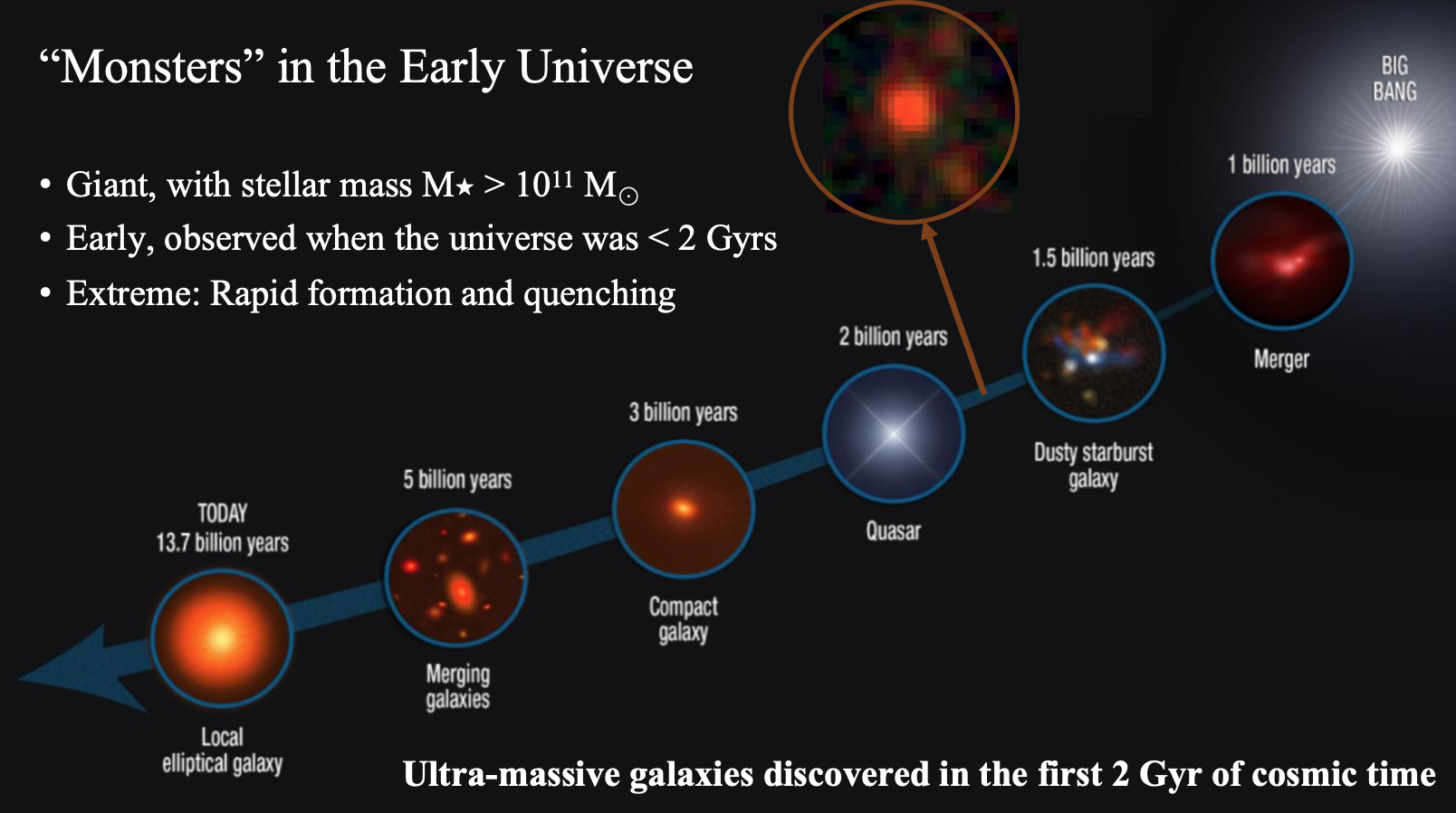
You can read Astrobites’s interview with Adam Leroy here.

Return to Table of Contents.


Press Conference: Asteroids, Low-Mass Stars, and a Mystery from History (Briefing video) (by Amaya Sinha)

NSF–DOE Vera C. Rubin Observatory Spots Record-Breaking Asteroid in Pre-Survey Observations
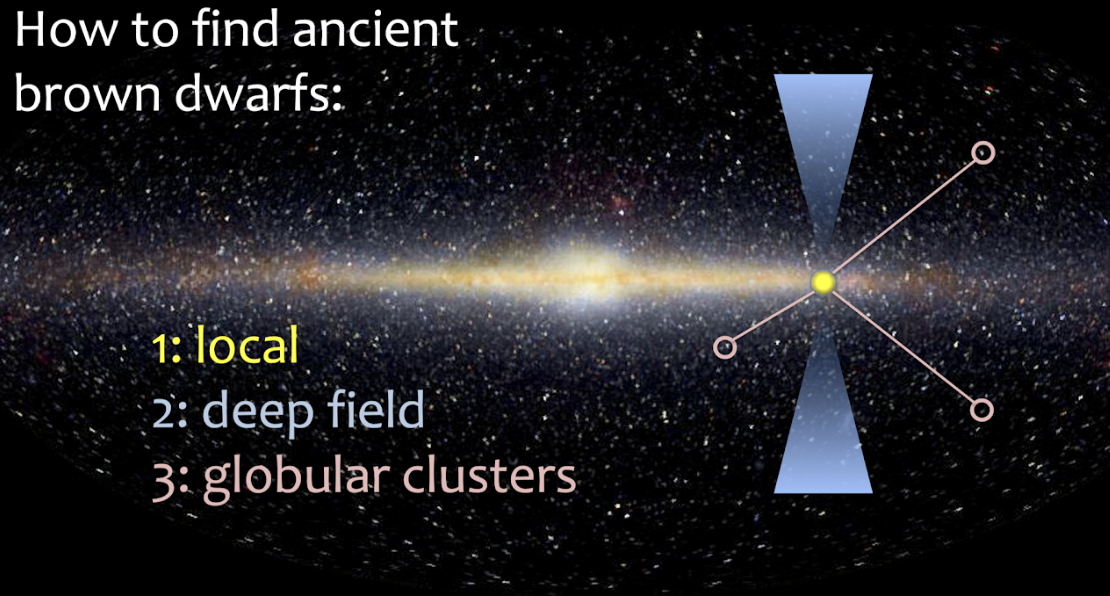
A one-of-a-kind observatory in terms of size, speed, and resolving power, the Vera C. Rubin Observatory will construct an astronomical movie of the night sky like never before over the next few decades. One of the key advances it will bring is a better understanding of the objects in our own solar system, particularly of small asteroids. And yet, it has already been blowing our minds with the first photons it received in 2025 during commission. Sarah Greenstreet (NOIRLab) presented asteroid findings from the telescope’s commissioning data, which involved taking more than 1,000 pictures of the Virgo cluster, located near the ecliptic plane. In these commissioning pictures, it identified more than 2,000 solar system objects, approximately 1,900 of which had never been observed before. Furthermore, due to the large number of images, Rubin scientists were able to create light curves for each object to determine what they were, what they were composed of, and even whether they were rotating or not. One of the most exciting discoveries from this analysis was the discovery of MN45 — an asteroid more than 500 meters across — which shattered all previous asteroid records for rotation for an asteroid of its size, with a rotation period of 1.88 minutes. In summary, we’ve not even begun to show science data from the Rubin Observatory, and it is already changing our understanding of the universe. You can read a press release about this research here.

It’s Not Complicated: Life Is Simple on Cool-Star Planets

Does life exist elsewhere in the universe? If so, where is it? And what does it look like? These are all questions that are at the heart of modern astronomy. Fortunately for us, William Welch of San Diego State University has answers for us! He took a novel approach to answering this question by looking at how life on Earth would have evolved around late-type M dwarfs. These stars comprise over 75% of all stars in the galaxy, and due to their extremely low masses, we can reliably detect exoplanets around them, such as in the TRAPPIST-1 system. So what are the chances of life on these worlds? Unfortunately, not great. See, life (as it exists on Earth) thrives on visible light between 400 and 900 nanometers, as that’s the region most useful for oxygenic photosynthesis. However, TRAPPIST-1 emits relatively little light in that wavelength range, having a much larger contribution from the infrared sections of its spectral energy distribution. This means that — in an Earth-analog scenario — oxygen-breathing life that forms the basis for our life wouldn’t exist, it would have been outcompeted by bacteria that can perform anaerobic photosynthesis. The results of this would drastically change the course of evolution. They likely wouldn’t result in the Cambrian evolution that brought so much of life into existence. You can read a press release about this research here.

Naturally Occurring “Space Weather Station” Elucidates New Way to Study Habitability of Planets Orbiting M-Dwarf Stars

One of the great joys of the modern world is our ability to predict the weather. While this is typically limited to knowing if it’ll rain tomorrow, it’s also essential to understand space weather, or how the Sun’s activity affects our delicate little planet. This is not limited to Earth, though; understanding the interactions between stars and planets is crucial to determining whether life exists there. While astronomers are familiar with studying light from stars and planets, it is generally more challenging to study particle interactions between them; however, these are the interactions that can strip planets of their atmospheres. To overcome this issue, Luke Bouma at Carnegie Science conceived the idea of using a special class of M dwarfs: complex periodic variables. These stars have complexly varying lightcurves that reflect the structure and interactions between the star and its circumstellar hydrogen. From this, Bouma was able to study not just light from the star, but the actual localized space weather around it. Therefore, it would be possible to use objects like these complex variables in the future to identify which kinds of worlds could be potentially habitable and which have been stripped barren by stellar winds. You can read a press release about this work here.

E. E. Barnard’s Star Near Venus — A 130-Year-Old Mystery Solved?

If you’ve been in astronomy, you’ve likely heard of Barnard’s Star, one of the closest stars to the solar system. However, that is not the only notable star associated with the famous E. E. Barnard. In 1892, when he was first starting out at the Mount Lick Observatory, he observed a 7th-magnitude star near Venus that didn’t appear on any existing almanacs or star charts. Certainly, no one could have misplaced a star that bright, right? Well, yes, and yet no matter what he did, he couldn’t figure out what the object in question was! This question remained unanswered for decades and was still unsolved when Barnard passed away in 1923. However, in 2025, over a century later, it appears we have an answer. William Sheehan, a preeminent historian and author of Barnard’s biography, led a team in an attempt to identify the mystery star in question. After trying every classification under the Sun — from nebulae to RR Lyrae stars — they found an answer so simple and yet so hidden: Barnard had likely just misclassified the star’s brightness. See, at the time he observed it, he was still new to using the 36-inch refractor and significantly overestimated the star’s actual brightness, because the human eye is notoriously poor at judging absolute scales. But when the team took a measurement in 2025 to confirm this, the star was right where it should be, right at the magnitude it should have been.

Return to Table of Contents.


Plenary Lecture: Partisan Disparities in the Use, Funding, and Production of Science, Alexander Furnas (Northwestern University) (by Bill Smith)

The relationship between science and politics has been on the minds of many astronomers this past year, so it was not surprising that Dr. Alexander Furnas, a political scientist who studies science policymaking, drew a dense crowd of astronomers for his plenary talk. He began by unequivocally rebuking the myth that science is apolitical, with astronomy being no exception. Given the long time horizons required to answer fundamental scientific questions, the substantial public investments that support both research missions and researchers’ salaries, and national security concerns, he argued that scientists must now, more than ever, understand the science policy process as part of their professional development and for career success. He then challenged the way that most scientists think about how science policy is crafted — in which scientists make discoveries, gain recognition for their work, policy is created around their new knowledge, and then scientists go back to work creating new knowledge. Instead, he proposed a model in which science policy is a political system, and one in which intermediary organizations, such as think tanks, professional societies, and others, mediate the process between knowledge creation and policy creation, often with incentives beyond supporting science for science’s sake at play.

One of his main points was that there are four main areas in which politics always enters science: funding, evaluation, translation, and uptake. For each of these areas, he showed evidence from his research. Regarding science funding, he presented evidence suggesting that, at least until 2020, both Democratic and Republican lawmakers tended to fund science at the same level, counter to the intuitions of many in the science community, and that the current administration represents a stark departure from even historical Republican administrations.

For translation, his main point to the scientific community is that “intermediaries matter.” Congressional staffers are not trained to read journal articles or to understand how rigorous methodologies are applied across fields, so they rely on intermediary organizations, most notably think tanks, to translate basic science into policy recommendations. These think tanks, Furnas explained, are highly polarized, and this polarization has been increasing over time. He went on to explain that, in this context, polarization has multiple meanings. First, very few scientific and policy studies are cited by both parties. Second, the two parties draw from different “clusters” of research at different rates and for different purposes. Democrats, on average, cite scientific research about 1.8 times more than Republicans across topics, and left-of-center think tanks cite scientific papers roughly five times more than right-leaning institutions. Third, there are systematic differences in how research is framed and used, in that citations are often selective to pre-existing agendas. Furnas also noted that political elites and decision-makers tend to have higher trust in science than the general voting public, which shapes both evaluation and uptake even when the broader public is skeptical.

He emphasized that how scientific work “travels,” who translates it, how it’s framed, and which networks pick it up, can matter as much as the findings themselves. He showed data from an experiment in which congressional staffers were given information from a hypothetical petitioner in their district, and showed that staffers were more likely to act on a recommendation when it came from an ideologically aligned intermediary, a pattern that held for both parties.

Turning to geopolitics, Furnas argued that international collaboration is now heavily politicized, with security concerns often dominating decisions. He described evidence from an NSF evaluation experiment that the political context around countries of those on a proposal (e.g., China versus Germany) influences how proposals are judged. Expecting scientific excellence alone to overcome these pressures, he warned, asks too much of scientists working within the realities of the system.

Furnas closed by underscoring that institutions matter more than individuals. Professional societies, advisory bodies, and other collective organizations play a crucial role in building credibility and continuity in science policy. His caution to the scientific community, including astronomers, was clear: while science remains vital, it is not neutral, but overt partisanship can make institutions less trustworthy. Astronomers will strengthen their impact by becoming policy literate, engaging thoughtfully with credible intermediaries, and framing their work for translation and uptake across polarized institutions. Understanding the politics of science, he argued, isn’t a distraction from doing science, it is increasingly part of doing science well.

You can read Astrobites’s interview with Dr. Furnas here.

Return to Table of Contents.


Press Conference: Cosmology and Galaxy Clusters (Briefing video) (by Skylar Grayson)

The Strongly Lensed Supernova Pantheon as Revealed by JWST

Massive galaxy clusters warp spacetime, creating a lens that can impact our view of background galaxies. Lensed galaxies appear warped, magnified, or can even show up multiple times. When one of these multiply-imaged galaxies has a supernova go off in it, it provides a great opportunity to measure the expansion of the universe. Conor Larison from the Space Telescope Science Institute presented the discovery of two supernovae in lensed galaxies, one that happened when the universe was half its current age, and one at an even greater distance, when the universe was only as third as old as it is now. Each of these supernovae happened in galaxies that appear multiple times due to lensing, but the supernova itself only shows up in one image. That’s because of an effect called time delay, where because the light from the galaxy is taking a different path, with a different length, to make each image, we’re actually seeing it at different times. Which means that while only one image shows the supernova right now, we will see them again! One will reappear in 1–2 years, while the other won’t be seen for over 60 years. But once we have those observations, we can use them to measure how fast the universe is expanding, quantified by the Hubble constant, H0. This technique gives us a new way to measure H0 and could help shed some light on the current tension in its value that arises from different ways of measuring it. (For more on this idea check out this Astrobite.) You can find the full press release for these results here.

The Discovery of a Strongly Lensed Protocluster Core Candidate at Cosmic Noon

Galaxy clusters are some of the most massive structures in the universe, but currently most galaxies in clusters are not actively forming new stars. Understanding how they built up their mass requires peering back in time, looking for the “protoclusters” that are the early stages of clusters as we see them in today’s universe. Nicholas Foo, a graduate student at Arizona State University, presented observations of one such protocluster, seen when the universe was only a few billion years old. This protocluster is being gravitationally lensed, giving us a magnified glimpse of 11 dusty star-forming galaxies in its core. These galaxies showcase some of the most extreme star-forming environments in the universe, producing new stars at a rate 5,000 times higher than what we see in the Milky Way. Thanks to the strong lensing caused by a fully formed cluster closer to us, we are able to get a glimpse of this early moment of stellar build up, helping uncover how galaxy clusters came to grow so large and what early stages of their lives could have looked like. You can find the full press release here.

ODIN: Mapping the High-Redshift Cosmic Web via Protoclusters and Filaments at Cosmic Noon

Protoclusters, the infant stages of the massive galaxy clusters we see in today’s universe, provide crucial information about structure formation and galaxy evolution. Vandana Ramakrishnan from Purdue University presented results from a survey called ODIN, which hunted for these protoclusters in the early universe. She shared two unique objects they discovered, both of which were extremely massive. One of them is actually a proto-supercluster containing the mass of 5,000 Milky Ways and located at the highest redshift of any proto-supercluster found to date. Using spectroscopic follow-up of these baby clusters, they were able to generate 3D maps of their structure. These maps revealed clumpy and irregular shapes, subgroups, and filamentary structures that feed material into cluster cores. These structures are well aligned with what’s predicted from our models of cluster evolution, and showcase many of the features seen in cosmological simulations.

Scorching Hot Intracluster Gas in a Baby Galaxy Cluster 12 Billion Years Ago 

Galaxy clusters are the most massive structures in the universe, but most of their baryonic mass is not actually in the galaxies themselves. Instead, it’s found in the diffuse gas between galaxies known as the intracluster medium, which plays a big role in shaping galaxy evolution and can provide key information about the mass of dark matter halos. But observing this gas, especially at large distances, is quite difficult. Dazhi Zhou from the University of British Columbia presented results from an attempt to observe this gas in a protocluster seen when the universe was only 1.4 billion years old. He utilized the thermal Sunyaev–Zeldovich (SZ) effect, which happens when hot gas scatters with light from the cosmic microwave background. Using the ALMA telescope, he detected a hot intracluster medium using the SZ effect at high significance, the earliest detection of this gas to date. And the detection showed something weird; the gas is hot. Over five times hotter than what we would expect based on observations of nearby clusters and some of our cosmological simulations. Most likely, the extra heating is coming from active galactic nuclei in the protocluster, which drive jets that can deposit energy in the intracluster medium. This is the first such observation of the hot intracluster medium in the early universe, and opens up some exciting questions about the accuracy of our models when it comes to capturing the early stages of cluster growth. You can read the full press release here.

Return to Table of Contents.


2025 Dannie Heineman Prize Lecture: Unveiling the First Black Holes in the Universe, Priyamvada Natarajan (Yale University) (by Drew Lapeer)

This year’s Dannie Heineman Prize Lecture was given by Dr. Priyamvada Natarajan, professor of astronomy and physics at Yale University. Her talk focused on some of the earliest drivers of galaxy formation and evolution — supermassive black holes (SMBHs) in the early universe. Professor Natarajan’s work in this field has been revolutionary, with much of her theoretical work laying the groundwork for interpreting cutting-edge JWST observations.

She began by giving an overview of two recent leaps in our understanding of SMBHs in the early universe. First is JWST, opening up the door to high-redshift (z > 10) studies of individual SMBHs, just a few hundred million years after the Big Bang. Many of the individual SMBH candidate sources detected with JWST — such as UHZ1 — challenge our understanding of SMBH formation and evolution due to their large masses. More recently, the detection of the gravitational wave background has shed light on the broader population of SMBHs across cosmic time.

Natarajan went on to outline the theoretical models which can produce the population of SMBHs detected by JWST and provided an overview of how we can test these models. Various sources can produce SMBHs as we see them in the local universe. Such models include the direct collapse of massive gas clouds in the early universe, rapid growth of less massive black holes in dense star clusters, and primordial black holes formed very shortly after the Big Bang. Growing evidence points towards the possibility of multiple seeding channels, says Natarajan, but formation of SMBHs via “heavy seeds,” through processes like the direct collapse of gas clouds, is likely a key driver. Moving forward, Natarjan discusses how important it is to understand which of these channels is the most efficient, thus being most likely to produce the current-day SMBH population.

A slide from Priyamvada Natarajan's plenary talk

A slide from Priyamvada Natarajan’s plenary talk at AAS. [Priyamvada Natarajan]

Turning to empirical constraints on these models, Natarajan outlined several promising avenues. The ubiquity of central SMBHs in present day galaxies can provide crucial constraints on seeding mechanisms. In addition, further work measuring the mass of early universe SMBHs with JWST will continue to revolutionize our understanding of SMBH formation.

The plenary closed with an overview of the future prospects of the field. The Laser Interferometer Space Antenna (LISA) is a next-generation gravitational wave director that’s set to start operations in the 2030s. With LISA, astronomers can pinpoint merging massive black holes. The frequency of these mergers, and follow up with other observatories, will open a new door into SMBH evolution science.

You can find our interview with Professor Natarajan here.

Return to Table of Contents.


Plenary Lecture: Probing the Accretion History of AGN using X-Ray and Multi-Wavelength Surveys, Tonima Tasnim Ananna (Wayne State University) (by Neev Shah)

Dr. Tonima Tasnim Ananna delivering her Plenary Lecture at the AAS 247 meeting in Phoenix, Arizona. A cartoon of the different regions around an AGN disk can be seen on the screen behind.

Dr. Tonima Tasnim Ananna delivering her plenary lecture at AAS 247.

Dr. Tonima Tasnim Ananna, a faculty member at Wayne State University delivered her plenary lecture on the multiwavelength view of accretion history in active galactic nuclei (AGN). She emphasizes that understanding the behaviour of supermassive black holes (SMBHs) is extremely vital as they are located at the centers of most galaxies. As matter falls into them, it can form an accretion disk around the SMBH, which emits radiation in the ultraviolet and optical. They also have an X-ray corona around them, as well as a torus that absorbs the ultraviolet and optical radiation, re-radiating it in the infrared. She describes the unified model of AGN, which explains their different properties with the help of a simple geometric viewing-angle effect. She highlights that observing them in different wavelengths is crucial as they all provide complementary information. Dr. Ananna describes the key questions in the field, which are:

  1. How are the first black holes (BHs) seeded?
  2. How and when do these black holes grow?
  3. Are AGN driven mostly through mergers or secular evolution?
  4. How is matter regulated around an AGN?

She mentions that the two ways to answer these questions are through either studying individual objects, or using large datasets to produce statistical functions. Although she primarily focuses on the latter, she emphasizes the importance of the former as well, with the example of how UHZ1 demonstrated the heavy seed scenario for forming the first black holes. Next, she discusses the curious case of the little red dots (LRDs) and mentions that although JWST has found numerous LRDs, they are surprisingly not seen in X-rays or are poor X-ray emitters. She finds that LRDs also contain overmassive BHs. A possible explanation for the lack of X-rays in LRDs could be that we see the SMBHs through lots of obscuration. Another possibility is that the SMBHs are accreting matter at a super-Eddington rate, as that can trap photons and stop the production of X-rays. She describes the receding torus model, which occurs as the AGN has a high luminosity, which makes the torus smaller, and increases the viewing probability. In such a scenario, the obscured fraction should drop with luminosity. She mentions that this can be tested with the help of Swift data, as it provides an unbiased sample of obscured and unobscured sources.

However, Dr. Ananna suggests that perhaps it is not the luminosity that controls the matter around an AGN, but the Eddington ratio, which accounts for the counteracting forces of gravity and radiation pressure. She finds that this model, called the “radiation regulation unification model,” is more accurate than the receding torus model. To summarise, she highlights that at low Eddington ratios, a geometric unification provides a good solution, but at high Eddington ratios, the sources can start to get obscured and show temporal evolution. With that, Dr. Ananna has answered the questions 1) and 4), and concludes with her thoughts on how to tackle questions 2) and 3).

You can find our interview with Dr. Tonima Tasnim Ananna here.

Return to Table of Contents.

The post AAS 247: Day 3 appeared first on AAS Nova.

  •  

AAS 247: Day 2

X-ray and optical image of Kepler's supernova remnant.

Editor’s Note: This week we’re at the 247th AAS meeting in Phoenix, AZ. Along with a team of authors from Astrobites, we will be writing updates on selected events at the meeting and posting each day. Follow along here or at astrobites.com for daily summaries, or follow @astrobites.bsky.social on Bluesky for more coverage. The usual posting schedule for AAS Nova will resume on 12 January.

Table of Contents:


Historical Astronomy Division LeRoy E. Doggett Prize Plenary: Don’t Let Anybody Tell You to Plan Your Career, Thomas Hockey (University of Northern Iowa) (by Niloofar Sharei)

Thomas A. Hockey accepting the Doggett Prize on stage at the AAS 247 meeting, with the conference backdrop visible behind him.

Thomas A. Hockey receives the AAS Historical Astronomy Division’s Doggett Prize at AAS 247 in Phoenix.

Today’s awards session for the Historical Astronomy Division’s Doggett Prize featured a lecture by prizewinner Thomas A. Hockey, who used his own winding career path to argue for staying open to unexpected opportunities. He described how early interests in planetary observing gradually led him toward the history of astronomy, with side projects that became central, from untangling long-standing myths about Jupiter’s Great Red Spot to preserving oral histories from figures such as Clyde Tombaugh. A recurring theme he went back to was that historical observations can meaningfully inform modern astrophysics, but only when their limitations are carefully respected. He closed by returning to eclipse-chasing and long-baseline sky watching, emphasizing how real celestial events, rather than rigid plans, ultimately shaped his career, encouraging all young astronomers to be open to opportunities that come along.

You can read Astrobites’s interview with Thomas Hockey here.

Return to Table of Contents.


Press Conference: News from the High-Redshift Universe (Briefing video) (by Niloofar Sharei)

Today’s press conference highlighted how JWST, together with ALMA and Hubble, is sharpening our view of galaxy growth in the universe’s first billion years, while nearby low-metallicity “analogs” help us test the physics we cannot resolve at high redshift.

The ALPINE-CRISTAL-JWST Survey: A New Multi-Wavelegth Survey Reveals Early Galaxies Grow Up Fast

Schematic illustration showing how heavy elements are produced, and expelled during early galaxy evolution, from supernova enrichment in the first 100 million years to metal production in older stars over billions of years

Schematic overview of early chemical enrichment in galaxies. Supernova explosions rapidly enrich the interstellar medium within the first 100 million years, metals are mixed and then driven into surrounding gas, and later generations of stars continue metal production over billions of years. Click to enlarge. [Andreas Faisst, Caltech]

Andreas Faisst (IPAC at Caltech) presented results from a large multi-wavelength program targeting “typical” galaxies within the first billion years after the Big Bang, combining Hubble (stars), JWST (ionized gas and emission-line maps), and ALMA (cold gas and dust). The key message was that heavy elements like oxygen and carbon, what astronomers call “metals,” appear very early: some galaxies at these epochs already reach metal abundances approaching local galaxies. By comparing metallicity versus stellar mass, the team argues that rapid enrichment is achievable on short timescales, consistent with intense early star formation and supernova-driven metal production, with additional evidence that metals are not confined to the galaxies themselves but also appear in surrounding gas, implying efficient feedback and outflows. These results are discussed in a paper previously covered on Astrobites. | Caltech press release; NRAO press release

A New Population of Point-Like Narrow-Line Objects Revealed by the James Webb Space Telescope

Haojing Yan and Bangzheng Sun (University of Missouri – Columbia) introduced a small but fascinating set of JWST sources that look almost like point sources in images but show narrow emission lines when you look at their spectra. Yan described them as the “platypuses of the universe.” On their own, none of their properties are especially strange, but when you put everything together, they do not fit neatly into any familiar category. Normally, unresolved sources turn out to be either stars or quasars. Yan showed that these objects are not stars based on their colors and spectra. They also do not behave like typical quasars: although they are compact, they are less luminous and lack the broad emission lines that come from fast-moving gas around a supermassive black hole.

Because of this, the team argued that these sources are not standard quasars. Two possibilities remain. They could be a previously unknown type of narrow-line active galactic nucleus, where a compact central engine dominates over an extremely faint host galaxy, or they could be very young, compact star-forming galaxies, probably younger than about 200 million years, whose early growth kept them unusually small and smooth. Either way, the speakers emphasized that this appears to be a new population, and that deeper and more detailed JWST spectroscopy will be needed to figure out what these objects really are. | University of Missouri press release; STScI press release

Supermassive Stars as the Engines Behind Little Red Dots

Devesh Nandal (Center for Astrophysics | Harvard & Smithsonian) proposed an alternative explanation for at least some little red dots: instead of being compact galaxies powered by active black holes, their light might come mainly from a single, extremely massive star growing through rapid accretion. A key motivation for this idea is what these objects don’t show: they lack detectable X-ray emission, which would normally be expected if an actively accreting black hole were present. At the same time, their very compact unresolved appearance makes them hard to explain as normal galaxies, and their spectra do not look like those of typical stellar populations either. In this picture, a supermassive star forms out of nearly pristine gas and accretes fast to push past the limits of classical stellar evolution. As long as the accretion rate stays above a critical threshold, the star remains bloated and relatively cool, giving it a red appearance even as it continues to gain mass. In theory, such a star could grow to around a million times the mass of the Sun before becoming unstable and collapsing directly into a black hole, offering a natural route to forming massive black hole seeds.

Diagram showing accretion rate versus maximum mass for stars and black holes, highlighting supermassive stars and Little Red Dots as possible precursors to massive black holes formed through rapid accretion and gravitational instability.

Schematic showing where JWST’s little red dots fall in a mass–accretion framework, illustrating how rapidly accreting supermassive stars could grow to extreme masses and collapse directly into massive black holes. Click to enlarge. [Devesh Nandal]

To test this, they built detailed stellar-atmosphere models and compared the resulting spectra to those observed for little red dots. They showed that, in some cases, a single supermassive star can reproduce several key features at once, including the overall luminosity, a prominent emission feature around Hβ, and a rising continuum shape. This can be done without adding extra components like complex dust geometry or an embedded active galactic nucleus. Nandal stressed that this is not a settled explanation, but a testable one. If little red dots really do host supermassive stars, they could give us a rare chance to catch these objects just before they collapse and seed supermassive black holes. | Press release

Webb Reveals Early-Universe Analog’s Unexpected Talent for Making Dust

Elizabeth Tarantino (Space Telescope Science Institute) focused on Sextans A, a nearby metal-poor dwarf galaxy used as a local analog of early galaxies, which are otherwise too distant to study in detail. Using JWST spectroscopy of a massive asymptotic giant branch star, the team found clear evidence for dust production, but not in the usual Milky Way form. The spectrum lacked the classic 10 μm silicate feature and instead pointed to iron-rich dust, showing that asymptotic giant branch stars at low metallicity can still be efficient dust producers, just with different chemistry. JWST imaging also revealed weak, clumpy polycyclic aromatic hydrocarbon emission, suggesting small dust grains survive only in protected pockets. The results show that even metal-poor galaxies can host substantial stellar and interstellar dust, reshaping how we interpret dust in the early universe. | Press release

Return to Table of Contents.


2025 Newton Lacy Pierce Prize Plenary: What Happens to Planets After Their Stars Die?, Andrew Vanderburg (Harvard University) (by Skylar Grayson)

Andrew Vanderburg delivered a plenary centered on using white dwarfs, the leftover cores of dead stars (and a glimpse into the future of our own sun) to study exoplanets. We’re currently entering a crucial time for exoplanet astronomy, with the number of known exoplanets rapidly increasing and sophisticated techniques and instrumentation allowing us to push to more extreme and smaller systems, including those that could host life. However, there are still many open questions around habitability, what is and is not a biosignature, and our understanding of the systems life could exist in.

His talk was focused on two core questions in exoplanet research that white dwarfs can help us answer. First up: what elements are rocky exoplanets made of? This is relevant for considerations of magnetic fields and plate tectonics, the elements available for chemical processes, and (crucially) identifying geology that could produce false positives for biosignatures. Determining the composition of rocky planets with our current tools is extremely difficult, but his group has explored using the spectra of white dwarfs to uncover planetary composition. The extreme gravity of white dwarfs makes them chemically stratified, meaning the surface is almost entirely hydrogen and a little bit of helium, offering a blank slate for spectroscopic study. Planets around a white dwarf can be tidally disrupted and torn apart, and that debris can then fall onto the surface of the white dwarf, adding interesting fingerprints to the stellar remnant’s spectrum. Vanderburg’s team has been developing new methods of generating mock spectra to compare to white dwarf observations, and they are laying the groundwork for quick analysis of upcoming spectral surveys in order to efficiently hunt for chemical signatures that could be traced back to exoplanets.

The second half of Vanderburg’s talk was focused on using dead stars to understand life. When the Sun becomes a red giant, then eventually loses its outer atmosphere and becomes a white dwarf, the solar system will completely change. The inner planets will likely be swallowed up, and planets will move around in their orbits, adjusting to the changed gravity of the much smaller white dwarf remnant. But, as he explained, just because planets are orbiting a dead star doesn’t mean they themselves are dead. White dwarfs still have a habitable zone (where liquid water could exist on a planet’s surface), but it’s very, very near to the stellar remnant, in a region where any planets would have been destroyed in the death of the progenitor star.

white dwarf WD 1856+534

The white dwarf WD 1856+534, shown at the center of this image, hosts an exoplanet at an orbital distance of just 0.02 au. [Limbach et al. 2025]

In a survey of thousands of white dwarfs, his group has found one with a planet at a very low orbital radius, although not quite in the habitable zone. How the planet got there is a bit of a mystery, although it likely started much farther away and traveled inward through disrupted orbits. Vanderburg’s team is also using JWST to try and directly image exoplanets at larger radii around white dwarfs, identifying many candidates that will receive follow-up observations soon to see if they are in fact a part of the white dwarf system and not just background objects. Those more distant planets, though far past the habitable zone, could provide powerful data about how planets are impacted by the death of their star, and they could have hosted or still host habitable moons.

Overall, the work presented in this plenary sets the stage for the next generation of exoplanet research. Finding planets in unique environments such as near white dwarfs, understanding the conditions under which life could be sustained, and exploring new ways to determine the composition of exoplanets will help prepare for upcoming missions like the Habitable Worlds Observatory and play a big part in the hunt for life beyond Earth.

You can also read our interview with Dr. Vanderburg here.

Return to Table of Contents.


Press Conference: The Milky Way and Stellar Explosions (Briefing video) (by Skylar Grayson)

Resolving Iron Doublets for Galactic Center Molecular Clouds with XRISM

XRISM (the X-ray Imaging and Spectroscopy Mission) is providing higher resolution X-ray spectroscopy than anything we’ve seen before, and it’s allowing us to study components of the universe in a whole new way. Stephen DiKerby, a researcher at Michigan State University, has been using XRISM to look at molecular clouds in the center of the Milky Way. Iron in these clouds emits X-rays, and the high spectral resolution of XRISM has allowed us to study that emission in detail. One particular line, called Fe Kɑ, was revealed with XRISM to actually be a doublet, and the redshift of the iron-emitting gas could be constrained to within 10 km/s, an unparalleled precision in X-ray spectroscopy. The XRISM results have also shed some light on where the iron emission is coming from, as the lack of certain spectral features can rule out certain emission pathways. The XRISM data prefer a process called X-ray reflection, wherein material around the supermassive black hole in the center of the Milky Way produced a lot of X-ray emission that travelled to the molecular cloud over the course of 100 years, eventually exciting the gas and generating the observed Fe Kɑ. In order to produce the emission observed in the molecular cloud, the supermassive black hole would have needed to be thousands of times brighter than it is today! This work highlights how novel observations, such as high-resolution spectroscopy, can be used to constrain the underlying physics of the interstellar medium. | Press release

Continued Monitoring with Chandra of Kepler’s Supernova Remnant over 25 Years

X-ray and optical image of Kepler's supernova remnant.

X-ray and optical image of Kepler’s supernova remnant. [X-ray: NASA/CXC/SAO; Optical: Pan-STARRS]

In 1604, Johannes Kepler observed a Type Ia supernova in the Milky Way — the most recently observed supernova in our galaxy. In 2000, the Chandra X-ray Observatory observed the remnant of this supernova for the first time, and in the 25 years since, it has returned several times to watch the remnant evolve. Jessye Gassel, a graduate student at George Mason University/NASA GSFC, presented the result of Chandra’s efforts: the longest movie the X-ray telescope has ever produced. This movie, which spans only 6% of the remnant’s lifetime, shows how the material has expanded, creating shockwaves as it interacts with the surrounding interstellar medium. These observations allowed Gassel and collaborators to measure the velocity of the expanding material in different regions of the remnant, which revealed that the expansion rate is significantly different in different parts. Material is traveling at 14 million miles per hour in the southern part but only 4 million miles per hour in the north. This points to very different densities in the ambient material interacting with the supernova in these regions, and highlights how long-lasting studies can be used to explore supernovae and the interstellar medium. | Press release

Where Do Stars Explode in the Interstellar Medium?

Supernovae play a major role in galaxy evolution, shaping the interstellar medium, regulating future star formation, impacting baryon cycles, and more. Understanding where supernovae happen is a key part of understanding their impacts, whether they’re embedded in dense clouds of gas and dust that they blow apart, or are located outside of dense regions and can drive winds that compress material and trigger more star formation. In order to unpack this, Sumit Sarbadhicary, a research scientist at Johns Hopkins University, has generated the first detailed census of stellar explosions in the nearby galaxy Messier 33. He looked at massive stars that are near the end of their lives (i.e., future supernovae) and compared their locations to that of atomic and molecular gas clouds as observed by the Atacama Large Millimeter/submillimeter Array and the Very Large Array. This has provided the first measurement of the correlation between massive stars and dense gas clouds. Overall, a majority of the stars won’t explode in dense gas regions, but the results did depend on the mass of the star. More massive stars were more likely to be in dense gas, which could have interesting implications for what types of stars shape cavities in the interstellar medium or trigger future star formation. Overall, these results will be important in the development of simulations moving forward, in order to ensure that we are accurately capturing the physics of stellar evolution and supernovae. | Press release

Return to Table of Contents.


Plenary Lecture: The Creating Equity in STEAM (CrEST) Experiential Learning Programs, Raja GuhaThakurta (University of California, Santa Cruz) (by Neev Shah)

Prof. Raja GuhaThakurta beginning his 2025 AAS Education Prize Plenary Lecture at the AAS 247 meeting in Phoenix, Arizona. An overview of various CrEST programs is seen on the screen behind.

Prof. Raja GuhaThakurta delivering his 2025 AAS Education Prize Plenary Lecture at AAS 247. [Neev Shah]

Prof. Raja GuhaThakurta delivered his AAS Education Prize Plenary Lecture where he spoke about the Creating Equity in STEAM (CrEST) Experiential Learning Programs that he has helped develop over the last two decades. He started by emphasizing that in current times, when all of us are surrounded by misinformation and disinformation, it is essential to engage young people in critical thinking. He also highlights that Diversity, Equity, and Inclusion is essential for human society to reach its full potential. GuhaThakurta spoke about the three programs that are part of CrEST: Shadow the Scientists (StS), Python and Research (PyaR), and the Science Internship Program (SIP).

Shadow the Scientists (Dipping your toes in the water): GuhaThakurta mentions that StS started in November 2020, in the middle of the pandemic when many telescopes were shut down and were being operated remotely. It started at the Keck and Lick observatories, where school students participated in remote observing sessions with the help of live translations into many languages. He also recalled a particular instance where a school consisting of Israeli and Palestinian students shadowed scientists for a project, with simultaneous live translations from English to Hebrew and Arabic. Now supported by a grant from the Heising-Simons foundation, StS has expanded to include students from Africa, Asia, Latin America, and the Middle East. He mentioned numerous examples of projects where students could shadow scientists in their work, with one of them being exploring the famous comet 3I/ATLAS. He also highlighted that StS has now expanded to several other telescopes such as Subaru, Gemini, Las Cumbres Observatory, CHARA, and CFHT, and is also in conversations with DESI at the Mayall Telescope and LIGO Hanford. To highlight the large impact of this program, he also mentioned that StS has also gone beyond astronomy to include many other projects in stem cell biology, ecology, and even volcanology

Python and Research (Learning swim strokes): GuhaThakurta next spoke about the PyaR, started in November 2018. This program, which runs every few months, develops free online tutorials for students to learn about research through coding and data analysis. He credited his former graduate students Claire Dorman, Emily Cunningham, and Amanda Quirk, who have contributed significantly to the development of these tutorials. It was initially started in an all girls high school in the Bay Area, but it has since expanded and has served a few thousand students since its beginning. He also highlighted that it has been adapted to create tutorials in computational biology, and will soon also have a new module to explore particle physics with the help of data collected at the Large Hadron Collider in CERN.

Science Internship Program (Taking a deep dive): Next, GuhaThakurta spoke about the first program that he started in 2009, SIP, which is a research internship for high school students. It is divided into a week-long online component, followed by 7 weeks in person, where they are mentored by UCSC researchers, which include graduate students, postdocs, research staff, and faculty members. Although originally started in astronomy, SIP has now expanded to all the academic divisions in UCSC. He mentions that high school students get the opportunity to be closely mentored on open-ended real research projects, which generally includes a carved-out piece of research being done by the mentors, and has a shallow learning curve through which mentors can also teach the students about the broader context of the work that they are doing. Although SIP originally started with just three students from one school, it has grown significantly and had 300 students last summer from across the world. Since 2009, SIP has also had students from 750 high schools. In fact, he highlighted that many students return to do SIP multiple times, and the program has had about 2,500 unique students. He also mentions that about a third of SIP students have had to overcome serious obstacles in their life, and the program strongly focuses on BIPOC, low-income, and first-generation students. He highlighted a study done by psychology researchers on the impact of SIP. They found a strong increase in students’ interest and confidence in STEM. He also mentioned that SIP is beneficial not just for the students, but also for the mentors as they gain leadership, project management, pedagogical experience and are also paid a stipend. Mentors are also able to advance their own research with the help of the students, and broaden the impact and awareness of their work to other communities

GuhaThakurta mentions that the CrEST programs have now reached many communities in the US, and also various countries in Africa, South America, Europe, and Asia. CrEST has an annual budget of three million dollars, with 72% of it coming from the fees paid by the students participating in the SIP program, 20% via philanthropic contributions from individuals, families and even corporate gifts. The remaining 8% comes from the StS grant funded by the Heising-Simons Foundation. He emphasizes that a third of SIP students are provided need-based scholarships as well.

GuhaThakurta recalls several other outreach initiatives that he is involved with, such as teaching courses to prison inmates at the SC county jail. He is also involved with a UC-wide program called COSMOS, which is a four-week research camp for high school students.

He emphasizes the need for more mentors and appeals to the AAS community to contact people involved with CrEST to learn more about the programs, as well as to host StS sessions. He also appeals to the audience to spread the word about CrEST programs to their network of researchers, and also to potential participants who may benefit from them. To increase impact, he also recommends others  to start new programs, or even modifying the existing experiential learning programs at our own home institutions.

He ended his plenary lecture by sharing a link to a document that includes his slides and many other related resources to learn more about him as well as the programs that he spoke about.

You can also read our interview with Prof. GuhaThakurta here.

Return to Table of Contents.


Henry Norris Russell Lecture: Finding the Most Distant Galaxies Using the James Webb Space Telescope, Marcia Rieke (University of Arizona) (by Niloofar Sharei)

This Henry Norris Russell Lecture was a mix of personal history, instrument-building, and science results. Marcia Rieke used her own career story, from early hands-on observing to leading roles on major infrared missions, to show how decades of technical progress steadily removed the practical barriers to finding the first galaxies.

She began by describing what high-redshift galaxy work looked like when she started, when infrared observations were done from the ground using single-aperture photometers. Galaxies were often not directly visible, and positions were measured by offsetting from nearby guide stars. At that time, the main motivation was cosmology rather than galaxy evolution, with the hope that distant galaxies, especially ellipticals, could act as standard candles to constrain the geometry of the universe.

She then walked us through the missions that built up the way to JWST. NICMOS marked the transition from single-pixel measurements to infrared imaging from space and revealed how powerful arrays could be. Spitzer pushed sensitivity much further, but its small mirror led to confusion-limited images. Combining Hubble and Spitzer data showed how features like the Balmer break could be identified at high redshift and revealed that extreme emission lines can strongly bias broadband colors. Another limitation was that hydrogen absorption wipes out light shortward of the Lyman break, meaning Hubble can only reach to about z ~ 10 before redshift estimates rely on a single filter.

When she turned to JWST, she explained how the mission was shaped by careful science planning and a small set of key requirements. She highlighted NIRCam’s dual role: it is used to align the telescope’s mirrors, but it is also the main camera for deep surveys searching for the most distant galaxies. The scientific payoff comes from JADES, which combines NIRCam imaging with NIRSpec spectroscopy. She described how galaxies are first identified in imaging and then confirmed with spectra. This approach led to early confirmations at redshift z ≈ 13.2, followed by sources at redshifts beyond z = 14. She noted that the field is now moving away from single record-breaking objects toward building real samples of galaxies at z > 10.

You can read our interview with Dr. Rieke here.

Return to Table of Contents.

The post AAS 247: Day 2 appeared first on AAS Nova.

  •  

AAS 247: Day 1

starless gas cloud Cloud-9

Editor’s Note: This week we’re at the 247th AAS meeting in Phoenix, AZ. Along with a team of authors from Astrobites, we will be writing updates on selected events at the meeting and posting each day. Follow along here or at astrobites.com for daily summaries, or follow @astrobites.bsky.social on Bluesky for more coverage. The usual posting schedule for AAS Nova will resume on 12 January.

Table of Contents:


Welcome Address, Dara Norman (by Lindsey Gordon)

AAS President Dara Norman opened up this year’s winter AAS meeting in Phoenix, AZ, by acknowledging what a weird year it’s been in scientific funding and politics. She thanked the community for their work with the AAS policy office in pushing for action in Congress and with their representatives to advocate for science funding. President Norman led a land acknowledgement to the Akimel O’odham and the 22 Tribal Nations in Arizona. She then ceded the stage to John Davis for a performance of two songs from local Indigenous cultures, followed by a video message from US senator and former astronaut Mark Kelly.

Return to Table of Contents.


Fred Kavli Plenary Lecture: From Launch to Legacy: How OSIRIS-REx Changed Our Understanding of Asteroids, Daniella DellaGiustina (University of Arizona) (by Lindsey Gordon)

Dr. DellaGiustina gave the Fred Kavli Plenary Lecture for her work on groundbreaking insights into the origins of Earth and other bodies as part of the OSIRIS-REx team. OSIRIS-REx was the first US mission to collect and return a sample from an asteroid — Bennu — and has become the OSIRIS-APEX mission, traveling to the asteroid Apophis.

This sample mission was incredibly significant because of the gap in our understanding of asteroids between telescope observations, like those from the Hubble Space Telescope, and meteorites that have gone through Earth’s atmosphere. Understanding the nature of asteroids in space is essential for understanding their formation, the early solar system, and the formation of planets including Earth. The OSIRIS-REx mission went to observe Bennu, a nearby carbon-rich asteroid, taking observations of it up close and then retrieving a sample that could be returned to Earth without contamination by that pesky Earth atmosphere.

The team was in for a surprise when the mission arrived at Bennu, which did not look like what they had expected based on their existing data. They had designed the sample retrieval expecting centimeter-scale dust grains, and instead found a much larger, rugged rocky object. In 2019, Bennu also began ejecting material from its surface, a kind of active geology no one had expected or seen on such a small asteroid before. In 2020, they found a spot in this “rubble pile” of an asteroid that they could take a sample from, and in 2023 the mission returned with 121.6 grams of material, more than twice the amount the mission had defined as a successful retrieval.

After a very careful contamination control protocol to make sure the sample stayed clean, they began analysis and the results are still forthcoming today. They found indications of rock–water interactions and an origin beyond the major snow lines of the disk. The material contains lots of pre-solar dust, with a factor of six enrichment of carbon not seen in meteorites. They found that the presence of melting ice can enable abiotic organic molecule synthesis, and a bias of left-handed chirality that suggests it might be a general property of molecules and not just a unique feature of Earth. Just this year they published their findings of ribose, a molecule used in RNA, and the first-ever discovery of glucose. They know their sample control was strong, and that these molecules aren’t just contaminants from being on Earth. This suggests that complex chemistry doesn’t require full planets or massive oceans, and molecules could have started forming in the very early solar system.

Up next: Apophis, an asteroid infamous for previously having been predicted to have an Earth-impact trajectory. We know now it’s not going to hit us in the next 100 years at least, but it is going to get super close to us (10 times closer than the Moon!), and it’s not clear what that interaction will cause for the asteroid. OSIRIS-APEX will study the asteroid after its close approach and then use its thrusters to stir up the asteroid’s surface, allowing the team to study the sub-layers of the asteroid.

You can also check out our interview with Dr. DellaGiustina here.

Return to Table of Contents.


Press Conference: Galaxies Big and Small (Briefing video) (by Niloofar Sharei)

This press conference highlighted how galaxies evolve across a large range of scales, from the resolved stellar populations of a nearby starburst, to rare galaxy morphologies mapped in huge surveys, to galaxies that shut down star formation early, and even a “failed galaxy” that never managed to form stars.

JWST image of the starburst galaxy M82 showing resolved stars in a dusty, crowded disk.

JWST image of the starburst galaxy M82 demonstrating how infrared observations pierce the dusty, crowded disk and resolve individual stars across the galaxy. [Adam Smercina / JWST]

The Gates of Cibola: Revealing the Stellar Populations of the Starburst Galaxy, M82, with JWST 

Adam Smercina (STScI) presented a new JWST imaging survey of the nearby starburst galaxy Messier 82 (M82). M82 is forming stars at roughly 10 times the Milky Way’s total rate, but heavy dust has long made it difficult to reconstruct its detailed star formation history. With JWST’s sensitivity and resolution, the team can now resolve individual stars across the system, including about 16.5 million stars across the face of M82, enabling a much more direct, population-by-population view of when and where stars formed during the starburst.

Revealing Polar-Structure Galaxies Across Cosmic Time with DESI and Euclid

Jacob Guerrette (Brigham Young University) described “polar structure galaxies,” systems with rings, disks, or other stellar and gaseous structures oriented roughly perpendicular to the main galaxy body. Because these orthogonal structures likely arise from environmental events like mergers or accretion, building large samples is key to learning how often these interactions happen and what they do to galaxies. Earlier catalogs contained only a few hundred objects (about 150 identified in 1990, then a few hundred more in later Sloan-based work), but combining modern wide surveys produces an order-of-magnitude jump. The new DESI-based catalog and early Euclid imaging suggest that the full Euclid survey could yield thousands of strong candidates, including rarer subtypes that were previously underrepresented.

Slide showing a timeline of galaxy evolution highlighting ultra-massive galaxies forming and quenching within the first two billion years of the universe.

Slide illustrating ultra-massive (“monster”) galaxies in the early universe, with stellar masses exceeding 1011solar masses and rapid formation and quenching within the first 2 billion years of cosmic time. Click to enlarge. [Wenjun Chang]

Dusty or Dead? Far-Infrared to Radio Insights into the Nature and Properties of Ultra-Massive Galaxies at z ≥ 3 

Wenjun Chang (UC Riverside) presented results from the MAGAZ3NE survey, which uses more than 30 nights of Keck/MOSFIRE spectroscopy, plus far-infrared and radio data from ALMA and the Very Large Array to study the most massive galaxies at redshifts around z ≈ 3 to 4. A central goal is to clarify whether these systems are genuinely “dead” or simply dusty and star-forming. The multi-wavelength view shows a diverse set of evolutionary states at a fixed epoch: while many ultramassive galaxies are truly quiescent, others show residual dust emission or signs of obscured star formation, and some are in intermediate phases of shutting down. You can find the related press releases here and here.

The First RELHIC? Cloud-9 Is a Starless Gas Cloud

Rachael Beaton (STScI) discussed “Cloud-9,” a compact neutral hydrogen cloud that appears to be a convincing example of a galaxy that never formed a normal stellar population. Cloud-9 was first identified in a FAST radio telescope survey as a reionization-limited H I cloud, and follow-up searches in the DESI imaging survey found no associated stellar system. Subsequent observations with the Green Bank Telescope confirmed the H I detection.  Radio observations reveal roughly a million solar masses of hydrogen, consistent with a dark matter halo of order 100 million solar masses, but deep follow-up with the Hubble Space Telescope (8 orbits) reveals at most a single candidate star, allowing the team to rule out any stellar population more massive than about 103.5 solar masses. Despite being near thermal equilibrium with the universe and massive enough that it should have formed stars, Cloud-9 appears to have remained starless. This makes it the most convincing observational example to date of a “failed galaxy” predicted by ΛCDM, a halo that acquired gas but never converted it into stars. You can find the press release here.

Return to Table of Contents.


2025 Royal Astronomical Society Gold Medal in Astronomy Lecture: Understanding Galaxies, James Binney (by Bill Smith)

James Binney’s lecture focused on methods for turning the flood of stellar measurements into a physical understanding of how galaxies work. “We are drowning in amazing data,” Binney opened. With Gaia delivering astrometry for more than a billion stars (and radial velocities for a substantial fraction), complemented by MUSE integral-field spectroscopy, ground-based surveys like RAVE and APOGEE, and missions like Kepler, Binney argues the question is no longer how to get data, it’s how to synthesize that data into models that reveal how galaxies are structured and how they came to be that way. A central point of his plenary address was the relationship between galaxy structures and galactic history, about which he said that “discussion of history is pointless until structure has been established.”

One of his core methodological messages was that modern dynamical modeling must live in phase space (x, v), not just real space. While galaxies are not strictly in equilibrium, Binney emphasized that they are near equilibrium, a crucial simplification that lets us use equilibrium models as scaffolding and then study departures by perturbing them. The goal for understanding galaxies, he said, is to synthesize the data into a self-consistent “chemo-dynamical” model in which orbits (dynamics) are labeled and weighted in concert with stellar ages and abundances (chemistry), and then gently perturbed to interpret disequilibria from bars, spirals, accretion, and galactic mergers. Binney reviewed why some familiar tools struggle in the data-rich era. N-body simulations, though powerful, he argued, are specified by uncertain initial conditions, are difficult to steer toward specific observational constraints, can be expensive to run, and often hide the “why” behind emergent structure.

Binney then advocated a methodology based on actions and angles using torus machinery, in which one computes orbital actions, which can be thought of as embeddable constants of motion, and uses them to label orbits in a way that’s physically meaningful and robust to slow evolution. To do this, however, requires using the Hamilton–Jacobi equation, which is solvable only for a few potentials. Binney advocated using torus generators, fast “plug-in replacements” that return positions and velocities for a given set of inputs, and argued that they should largely replace brute-force integration. One sticking point, however, is the inverse map (finding the action given x and v). For that, practitioners still rely on the “Stackel fudge,” a fast, approximate method Binney dubbed “cheap and cheerful.”

He then turned to what the Milky Way’s actions reveal about its formation. The local stellar sample shows that essentially all stars co-rotate with the disk. Binney stressed that more than 99% of the stars we see were born in the rotating disk from gas already moving in the same direction, consistent with a formation scenario dominated by quiescent gas accretion rather than mergers. This is a cautionary note for merger-driven narratives: in the Milky Way, at least, the bulk stellar population does not look like a debris field.

Binney’s prescription for the next decade is to build chemo-dynamical models that synthesize data into a coherent distribution function for stars and dark matter, include quiescent gas accretion and mergers as perturbations rather than starting points, and use torus-based perturbation theory to interpret disequilibria. Do this, and we will not only map structure, we will have a firm foundation for credible histories of how galaxies, including our own, were made.

You can read Astrobites’s interview with James Binney here.

Return to Table of Contents.


Press Conference: Stars and Their Behavior (Briefing video) (by Neev Shah)

Discovery of the Wake Caused by Siwarha — the Betelgeuse Companion

Betelguese, a red supergiant seen on the shoulder of the constellation Orion, is one of the brightest stars in the night sky. It also shows a variability in brightness over a timescale of about 6 years, called its long secondary period. Recently, a couple of papers proposed that the best explanation for its long secondary period is that Betelguese has a buddy, a faint companion orbiting it. Andrea Dupree (Center for Astrophysics | Harvard & Smithsonian) and collaborators presented one of the first observations that suggest that they have found evidence for a companion, Siwarha. They utilized optical and chromospheric spectra from ground based telescopes as well as the Hubble Space Telescope. They observed changes in the spectra that are characteristic of a ”wake” left by a companion within the atmosphere of Betelguese, similar to how a boat moving through water leaves a wake behind it. These observations suggest that Betelguese indeed might have a companion around it, and future observations will be crucial to confirm this discovery. Press releases: NASA; Center for Astrophysics | Harvard & Smithsonian

A Volume-Complete All-Sky Spectroscopic Census of More Than 2,100 Nearby K Dwarfs: Insights from the RKSTAR Project

K dwarfs are some of the most common stars in the Milky Way, comprising approximately 11% of all stars in the solar neighborhood. They also have long life times, which makes them an excellent tracer of abundances and star formation history in a stellar population. However, they are often neglected in exoplanet studies, and we do not know much about their intrinsic population. To mitigate this, Sebastian Carrazco-Gaxiola, a graduate student at Georgia State University, and collaborators started the RKSTAR project. They created a volume-complete sample of over 2,100 K dwarfs within 40 parsecs of the Sun. They also used several spectrographs to obtain high resolution spectra for these stars, which can be used to estimate their ages. Combining this information with Gaia astrometry, they have found that many K dwarfs are young, active and some of them are also part of young moving associations. This provides the first such complete catalog of nearby K dwarfs that will be extremely useful to study their properties and will aid in future studies exploring the habitability of exoplanets around these stars.

A Previously Unknown Binary Star System in the Eagle Nebula

Steven Cromwell and Tyler Peters, undergraduate students at San Diego State University, had just started working on a research project through the STARTastro program. Their aim was to try finding exoplanets around eclipsing binary systems. As part of this program, they were learning how to code and access public astronomical data for the first time. They started with analyzing some test data in the Eagle Nebula, home to the famous Pillars of Creation. During this, they found that one of the stars had a TESS light curve that showed periodic brightness variations, a key indicator for the system being an eclipsing binary in a ~3.5-day orbit. Interestingly, as they searched through public catalogs, they found that this star had never been categorized as a binary — they had discovered a new eclipsing binary system! Such systems are extremely useful as they provide direct measurements of the masses and radii of the stars, which can be used to calibrate stellar evolution models and to help estimate the age of the Eagle Nebula. They also highlighted that their serendipitous discovery was done using data and tools that are openly accessible to everyone, demonstrating the benefit of having such resources available to the community.

Compact Objects and the Physics of Accretion Survey (COPAS)

White dwarfs are often found to be accreting matter from companions in binary systems. The accretion processes can lead to outbursts as matter builds up in a disk around them. Such systems are called cataclysmic variables (CV) if the donor star is on the main sequence, and are called AM CVn if the donor star is also a white dwarf or a helium star. TESS, a satellite built to search for exoplanets, has a cadence of just 2 minutes, which is extremely useful in identifying systems that show outbursts. Wendy Mendoza, a graduate student at the University of Texas Rio Grande Valley, and collaborators utilized transient alerts from the Zwicky Transient Facility, Gaia, and data from thousands of TESS light curves to identify CV and AM CVn systems. They found several new systems and obtained a better characterization for the known ones. In the future, they plan to expand their analysis to the rest of the vast TESS data set and conduct follow up observations of their candidates to better characterize them. They also highlight the benefit of TESS in overcoming gaps in data, which prevents misclassification and provides a unique opportunity to study outbursts in accreting white dwarfs.

Witnessing Giant Planet Formation in the Act

Disks are a natural product of the process of star formation, and are also the sites where planets form. Such disks, when viewed edge on, provide a direct view of the radial and vertical distribution of gas and dust within it. Charles Law, a NASA Sagan Fellow at the University of Virginia used ALMA to study such an edge-on system, called Gomez’s Hamburger (GoHam), due to its hamburger-like shape. GoHam is also one of the most massive disks that we know of, and has enough material to form a multi-planetary system in the future. With the help of ALMA’s extremely high resolution, they were able to set unique constraints on the size of the dust grains, and also measure the distribution of various molecules such as CO and CS. Interestingly, they also detected emission from the molecule SO on just one side of the disk. When matter in a disk collapses, it increases in temperature and density, which can change the disk chemistry, and also increase the abundance of SO, which is exactly what they find. This hints that they have found evidence for a fragment in the disk, called GoHam b. This discovery provides the first evidence for one of the earliest stages of giant planet formation. The full press release can be found here.

Return to Table of Contents.


Plenary Lecture: The Brown Dwarf–Milky Way Connection: How Failed Stars Play a Unique Role in Galactic Archaeology, Adam Burgasser (University of California, San Diego) (by Niloofar Sharei)

Adam Burgasser’s plenary talk focused on how brown dwarfs, objects too low in mass to sustain hydrogen fusion, can be used as powerful tracers of the Milky Way’s formation history. The big idea is that, while many classic stellar tracers tangle age and metallicity in ways that are hard to disentangle, brown dwarfs give a cleaner “evolutionary clock.”

Brown dwarfs are born hot and then cool continuously over time. Their luminosities, temperatures, and spectra change in predictable ways, so their observed properties carry direct information about age. Because they are fully convective and never undergo sustained fusion, their atmospheres retain the chemical composition of the gas from which they formed, making them valuable “chemical clocks” as well as age tracers.

Burgasser also emphasized that brown dwarfs are extremely common. Roughly one in every five objects in the Milky Way is a brown dwarf. Their wide mass range also makes them sensitive probes of dynamical processes that depend on mass, making them have a different perspective on galactic evolution than higher mass stars alone.

The main challenge, historically, has been that brown dwarfs are faint, especially for “ancient” populations far from the Galactic disk. Burgasser showed how this is now being overcome by three approaches. First, local populations can be isolated using kinematics, like proper motion cuts, with major contributions from citizen science projects such as Backyard Worlds. Second, deep surveys with JWST are pushing brown dwarf detections out to kiloparsec scales, sometimes revealing brown dwarfs misidentified at first as high-redshift galaxies. Third, globular clusters provide clean, single-age environments where the cooling of brown dwarfs can be used to constrain cluster ages and test evolutionary models.

Schematic view of the Milky Way showing three strategies for finding ancient brown dwarfs: nearby local populations, deep-field surveys probing distant regions, and brown dwarfs in globular clusters.

Three complementary approaches to identifying ancient brown dwarfs in the Milky Way: nearby local samples selected by kinematics, deep-field observations that probe distant populations, and brown dwarfs in old globular clusters. [Adam Burgasser, Cool Star Lab]

He highlighted several examples that show the potential of this approach, including the discovery of extremely metal-poor and high-velocity brown dwarfs, JWST spectroscopy detecting phosphine in a brown dwarf atmosphere, and the first confirmed brown dwarf candidates in old globular clusters. He also underscored that interpreting these new observations depends on improving evolutionary and atmospheric models, especially at low metallicity.

You can also check out our interview with Dr. Burgasser here.

Return to Table of Contents.


Plenary Lecture: A New Era of Planetary Astrophysics with JWST and High-Resolution Spectrographs, Björn Benneke (University of Montreal) (by Lindsey Gordon)

Dr. Benneke’s plenary covered his work on big questions in the field of exoplanet physics and chemistry. He focused on three major questions in the field.

The first is the elemental abundances in giant planets and how they may differ from system to system. There are three big building blocks of element types: gases (H, He), refractories (Fe, Mg, Si, Ni), and ice forming / volatiles (C, O, N). Understanding the ratios of these different groups is essential for understanding the formation and evolution of the planet.

For giant planets in our own solar system, these measurements are quite hard to do. Jupiter only has 8–9 elements measured, and Uranus and Neptune are even worse because they’re colder. But with exoplanets, we have a much larger population to pick from and the ability to observe from a distance. It’s actually easier to study elemental composition when you can see the planet in the context of the light of its star through spectroscopy. His team works with JWST spectra of hot gas giants to estimate the chemical abundances in the planets, allowing them to begin to sequence and classify the planets by their abundances.

The second is understanding sub-Neptune worlds, and the ratio of the three building blocks of element types within them. We can measure the mass and the radius, but there’s a lot of degeneracy as to how that mass is split up. By using JWST to measure the atmospheres of these planets, you can get an estimate of the metallicity of the atmosphere. They found that the atmospheres were mixed gas envelopes, not stratified or layered models as many people predicted. A paper in 2015 (Soubiran & Militzer) actually predicted this, but the result went largely unnoticed until these measurements. The team also found that there’s not a clear temperature dependence for the presence of clouds in the atmospheres. Seemingly similar planets in terms of mass and radius, but with different temperatures, don’t have a clear scaling law as to how cloudy they are. This could be due to the different chemical compositions or their formation locations in their systems, and this result needs more follow-up observations and theoretical models.

Finally, he discussed the atmospheres of rocky planets. More specifically: whether or not they have them. You need a really big ratio of star to planet size to be able to see a very compact, CO2-based atmosphere, which means we need planets around very tiny stars. The TRAPPIST-1 system is a great example of this, and JWST has studied many of the planets in this system in detail. A study of TRAPPIST-1d — likely in the habitable zone — found no evidence for a compact CO2-based atmosphere or larger hydrogen-based atmosphere, but if there had been one they would have found it. This rules out an atmosphere similar to that of Venus, Mars, or Earth for this planet. More studies of similar targets are underway in the JWST Rocky Worlds program to get data on eclipses of favorable targets to study their atmospheres.

Return to Table of Contents.

The post AAS 247: Day 1 appeared first on AAS Nova.

  •  

AAS 247: Welcome!

banner graphic announcing the 247th meeting of the American Astronomical Society

This week, AAS Nova and Astrobites are attending the American Astronomical Society (AAS) winter meeting in Phoenix, AZ.

AAS Nova Editors Kerry Hensley and Susanna Kohler and AAS Media Fellow Lexi Gault will join Astrobites Media Intern Amaya Sinha along with Astrobiters Neev Shah, Drew Lapeer, Skylar Grayson, Lindsey Gordon, Bill Smith, and Niloofar Sharei to live-blog the meeting for all those who aren’t attending or can’t make it to all the sessions they’d like. We plan to cover all of the plenaries and press conferences, so follow along here on aasnova.org or on astrobites.org! You can also follow Astrobites on Bluesky at astrobites.bsky.social for more meeting content.

Where can you find us during the meeting? We’ll be at the Astrobites booth in the Exhibit Hall all week — stop by and say hello! You can also find Susanna, Kerry, and Lexi at the press conferences Monday through Thursday at 10:15 am and 2:15 pm MST. AAS press conferences are open to all attendees, and they can also be viewed on the AAS Press Office YouTube channel for anyone not attending the meeting.

Finally, you can read the currently published AAS 247 keynote speaker interviews, which were conducted by Astrobiters Neev Shah, Sowkhya Shanbhog, Sarah Stevenson, Skylar Grayson, Nathalie Korhonen Cuestas, Lindsey Gordon, Katherine Lee, and Bill Smith. Be sure to check back all week as the remainder are released!


Education, Outreach, and More at AAS 247

AAS 247 features a broad range of sessions related to education and outreach. For a comprehensive and curated list of sessions, check out this post from AAS Education Program Manager Tom Rice. Here are a few highlights (all times MST; must be logged in to aas.org for links to work correctly):

Start things off on Monday with education-related poster sessions at 9:00–10:00 am in the Exhibit Hall, then check out The National Landscape of Undergraduate Astronomy Majors session from 2:00 to 3:30 pm (organized by the AAS Education Committee). Wrap up the day with a Reception for Astronomy Educators from 7:30 to 9:00 pm.

On Tuesday, check out a panel and discussion from the AAS Working Group on Graduate Admissions, happening from 10:00 to 11:30 am. After lunch, join the special session on Disability and Accessibility in Education/Outreach from 2:00 to 3:30 pm, or hear from notable amateur astronomers in the 2:00–3:30 Promoting Professional–Amateur Collaboration in Astronomy splinter session. Be sure not to miss the 2025 AAS Education Prize Winner’s talk, “The Creating Equity in STEAM (CrEST) Experiential Learning Programs” from 3:40 to 4:30 pm. Finally, take a break from the convention center to join the public star party that the AAS Education Committee is organizing from 3:00 to 8:00 pm; don’t forget to sign up if you want to attend or help out!

Wednesday kicks off with the Bridging AAS Outreach Efforts into the 2020s and Beyond: Eclipse Efforts, Shapley Lectures, and More splinter session from 10:00 to 11:30 am. In the afternoon, from 2:00 to 3:30 pm, check out a special session on Transforming Astronomy Classrooms: Active Learning in Practice by APS/AAS/AAPT Faculty Teaching Institute Alumni, or hear about astronomy-adjacent careers at the Beyond Academe: Exploring Astronomy-Powered Career Paths splinter session. End your day by learning about how to Get Involved with NASA Citizen Science during an iPoster session from 5:30 to 6:30 pm in the Exhibit Hall.

Finally, on Thursday, the 9:00–10:00 am poster session in the Exhibit Hall will feature a number of education-related sessions. Immediately following the poster session is the Non-Federal Funding Mechanisms for Undergraduate Research Programs special session, organized by the AAS Education Committee.

And remember, you can find a longer curated list of education-related sessions here!

The post AAS 247: Welcome! appeared first on AAS Nova.

  •  

AAS Publishing at AAS 247 in Phoenix

banner graphic announcing the 247th meeting of the American Astronomical Society

The 247th meeting of the American Astronomical Society, to be held in Phoenix, AZ, 4–8 January, is nearly here. The AAS Publishing team looks forward to connecting with meeting attendees, and you can find representatives from the publishing and journals’ editorial staff at the AAS booth in the Exhibit Hall in the Phoenix Convention Center. AAS Director of Scholarly Publishing Kerry Kroffe, AAS Editorial Operations Manager Alex Andrews, and AAS Journals Data Editors Greg Schwarz and Gus Muench will all be available at the AAS Publishing booth, so be sure to stop by to say hello, chat about the journals, and pick up some swag!

AAS Nova Editors Kerry Hensley and Susanna Kohler, AAS Media Fellow Lexi Gault, Astrobites Media Intern Amaya Sinha, and the rest of the Astrobites team will also be available periodically at the Astrobites booth in the Exhibit Hall. We look forward to seeing you there!


Open Science, Data, and AI in Astronomy: Sessions to Look for at AAS 247

Note: The links in this section take you to the corresponding entries in the AAS 247 block schedule. You must be logged in for the links to work correctly; otherwise, they will take you to the main block schedule page. Note that times and locations are subject to change.

If you’re interested in open-source software and its uses in astronomy, be sure to check out the “Open-Source Tools for Scalable Astronomical Data Analysis” iPoster session on Monday, 5 January, 9:00–10:00 am in the Exhibit Hall.

Dive into data issues on Tuesday, 6 January, at the “Data Roundtable” splinter session, which will run from 10:30 am to 3:00 pm in Room 121C. This session will be split into a moderated discussion with several short talks and an opportunity for attendees to engage with specific problems that they’re interested in.

Ever wondered why the AAS journals ask you to select five keywords to accompany your research article, or how to pick the best keywords? Join the “5 Keywords and Me” splinter session on Wednesday, 7 January, from 9:00 am to 12:00 pm in Room 121C to learn about the Unified Astronomy Thesaurus and how it makes your work more discoverable.

AAS 247 will include several sessions relating to the use of AI in astronomy. Of note: join the “Advancing AI Infrastructure for Large Astronomy Datasets” special session on Tuesday, 6 January, 2:00–3:30 pm in Room 232A to learn how AI tools can benefit upcoming large astronomical surveys. Wednesday, 7 January, will feature two sessions related to AI: a splinter session from the NASA Artificial Intelligence Science and Technology Interest Group from 10:00 am to 11:30 am in Room 231ABC, and the “AI and Foundation Models for Astronomical Inference” oral session from 2:00 to 3:30 pm in Room 228B. Finally, on Thursday, 8 January, the special session “AI Meets Stars: Advancing Our Understanding of Stellar Lives and Fates with Machine Learning” will take place 10:00–11:30 am in Room 226A.

The post AAS Publishing at AAS 247 in Phoenix appeared first on AAS Nova.

  •  

AAS 246: Day 4

solar activity over the solar cycle

Editor’s Note: This week we’re at the 246th AAS meeting in Anchorage, AK, and online. Along with a team of authors from Astrobites, we will be writing updates on selected events at the meeting and posting each day. Follow along here or at astrobites.com for daily summaries, or follow @astrobites.bsky.social on Bluesky for more coverage. The usual posting schedule for AAS Nova will resume on June 16th.

Table of Contents:


Solar Physics Division Plenary: Karen Harvey Prize Lecture: Building Connections in Heliophysics with Surface Flux Transport Modeling, Lisa Upton (by Kerry Hensley)

The 2025 Karen Harvey Prize, “awarded in recognition of a significant contribution to the study of the Sun early in a person’s professional career,” went to Lisa Upton (Southwest Research Institute) for her work on large-scale solar flows and magnetic flux transport. Upton began by honoring Karen Harvey, with whom she shares many scientific interests. Harvey’s interest in solar physics began as a teenager observing sunspots with a small telescope, which led to her first scientific paper. She is remembered for her service to the solar physics community, her spirit of collaboration, and her education and public outreach efforts.

a large, dark sunspot surrounded by a pattern of solar granules

An extreme close-up of a sunspot taken by the Daniel K. Inouye Solar Telescope in Hawai’i. [NSO/AURA/NSF; CC BY 4.0]

Upton began by studying coronal loops — arches of plasma confined by magnetic fields and suspended within the Sun’s outer atmosphere, or corona — before transitioning to her current work on the solar activity cycle. The Sun’s 11-year activity cycle, which manifests as periodic changes in the frequency of sunspots, solar flares, and coronal mass ejections, is intimately related to the Sun’s complex magnetic field. The Sun’s interior acts like a fluid, allowing the magnetic field to be frozen into the plasma, meaning that the motion and evolution of the magnetic field is largely dictated by the behavior of the plasma. As Upton noted, this is unlike anything we see on Earth.

How the Sun’s magnetic field explains the existence of the solar cycle is described by the Babcock dynamo model. In this model, the differential rotation of the Sun — the faster rotation of the Sun at its equator than at its poles — stretches the submerged magnetic field and makes it stronger. The field then becomes buoyant and causes sunspots to emerge at the Sun’s surface. The turbulent convective motion of the Sun that cycles material from the interior to the surface causes the surface magnetic flux to spread out, eventually being transported to the poles, where it cancels out the old magnetic field and creates a new field pointing in the opposite direction. This starts the solar cycle anew.

Upton described her research, which has covered a remarkably broad range of topics within solar physics. For example, she has studied large-scale flows, leading to the discovery of the long-sought-after giant cells. She also described her work on surface flux transport modeling, simulating the emergence and decay of magnetic flux through the solar surface. By incorporating observations of extreme-ultraviolet light from the far side of the Sun, Upton and collaborators greatly improved models of solar active regions emerging on the far side. More recently, Upton has been working to connect phenomena on the solar surface to the solar corona and beyond, working to predict the appearance of the solar corona during a solar eclipse, among other projects. She has also worked to generate realistic synthetic solar active regions, enabling both predictions of active region behavior as well as historical reproductions of the Sun’s appearance going back 200 years. Looking forward, she hopes to extend her research to the study of activity on other stars, where we see starspots far larger than anything on the Sun.

To close, Upton emphasized the need to remain united, support each other, and advocate for science as we navigate the challenging conditions in the world today.

Return to Table of Contents.


Public Policy Plenary: The Current Landscape for Science Policy and How YOU Can Make a Difference (by Lucas Brown)

To finish out a wonderful week at AAS 246, we heard from a panel of AAS leadership and participants in the recent AAS Congressional Visits Day on ways to make a difference in today’s current science policy landscape. First, we heard from AAS Deputy Chief Executive Officer and Director of External Affairs and Public Policy Joel Parriott, who provided an overview of what AAS’s stated science policy priorities are — focusing on the Society’s top priority of addressing the significant global issues that affect astronomy. A common theme that echoed throughout the plenary was that the advancement of these goals requires the advocacy and voices of as many people as possible.

Next, AAS Deputy Director of Public Policy Roohi Dalal spoke about the current state of science policy — from the large amount of proposed budget cuts we have seen come from the federal government over the past six months to the actions of the AAS in advocating for funding astronomy research. Specifically, AAS launched a “share your story” campaign to highlight the human impact of these cuts and has interfaced directly with representatives and their staff through initiatives like Congressional Visits Day. Dalal’s talk once again returned to the idea that the AAS needs everyone’s voice to make change.

AAS President Dara Norman then took the stage to explain in greater detail what actions people can take in supporting the policy goals of the Society and astronomy more broadly. Her top recommendation was to pay attention to AAS action alerts, which provide detailed instructions as to what actions will have the most impact at any given moment. Right now one of those top actions is to get in contact with local elected officials either via email, phone, or through an in-person meeting.

After Norman’s speech, the plenary transformed into a panel discussion featuring Lori Porter from Columbia University, Becka Phillipson from Villanova University, and Marcel Agüeros also from Columbia University, all of whom participated in this year’s Congressional Visits Day program. They spoke about the real impact that these sort of one-on-one visits with congressional staff or representatives can have, and shared tips on how to approach communicating effectively during such a visit. Their words of advice once again underscored the power of people’s voices in ensuring the future of astronomy remains bright.

Photo of the participants in AAS's 2025 Congressional Visits Day posing in front of the US Capitol Building

Photo of the participants in AAS’s 2025 Congressional Visits Day posing in front of the US Capitol Building. [AAS]

Return to Table of Contents.

The post AAS 246: Day 4 appeared first on AAS Nova.

  •  

AAS 246: Day 3

Composite Webb NIRCam image of galaxy cluster Abell 2744, showing the locations of young starburst galaxies.

Editor’s Note: This week we’re at the 246th AAS meeting in Anchorage, AK, and online. Along with a team of authors from Astrobites, we will be writing updates on selected events at the meeting and posting each day. Follow along here or at astrobites.com for daily summaries, or follow @astrobites.bsky.social on Bluesky for more coverage. The usual posting schedule for AAS Nova will resume on June 16th.

Table of Contents:


Plenary Lecture: The Hubble Space Telescope at 35: Eyeing the Future, Jennifer Wiseman (Goddard Space Flight Center) (by Margaret Verrico)

Hubble image of the spots where the fragments of comet Shoemaker–Levy 9 impacted Jupiter

Hubble image of the spots where the fragments of comet Shoemaker–Levy 9 impacted Jupiter. [Hubble Space Telescope Comet Team and NASA]

Wednesday started bright and early with a plenary talk by Hubble Space Telescope Senior Project Scientist Jennifer Wiseman. AAS Vice President Grant Tremblay opened the talk with a story about seeing comet Shoemaker–Levy 9 impact the planet Jupiter on the news, an event that was imaged with Hubble and that he said influenced his decision to pursue astronomy. It was an appropriate anecdote to start the celebration of Hubble’s 35th year in orbit, which Dr. Wiseman credited with opening many new worlds in astronomy.

Dr. Wiseman began by describing how our science community has been transformed by Hubble’s impact. She highlighted Hubble’s multiple science instruments and ultraviolet–optical capabilities, which cover a crucial part of the electromagnetic spectrum that is not covered by other flagship observatories like JWST. She described the evolution of Hubble, from the first description of a space telescope by Dr. Lyman Spitzer in 1946 to its announcement by Nancy Grace Roman in 1977 and eventually its launch on the space shuttle in 1990. Its key science drivers originally included measurements of the expansion rate of the universe, understanding how galaxies have evolved throughout the history of the universe, determining whether supermassive black holes really exist at the centers of massive galaxies (only a theory at the time of launch), and studying planets in our solar system. Over the past 35 years, Hubble’s ~1.7 million observations of over 100 million objects have revolutionized our understanding of the solar system, star formation, and the evolution of the universe, leading to the discovery of the accelerating expansion of the universe, confirmation of the existence of supermassive black holes, and an understanding of a dynamic and evolving solar system.

Dr. Wiseman described how Hubble is a crucial part of the suite of Great Observatories in operation today. She emphasized its importance as a follow-up telescope for transient events like supernovae, its decades-long archive for long-term monitoring of solar system planet atmospheres, and its ultraviolet coverage that complements the infrared range of JWST. She promoted new support services for Hubble data, including the Hubble Spectroscopic Legacy Archive (HSLA) — a publicly available database of archival Hubble spectra — and the upcoming Hubble Advanced Spectral Products (HASP) database, which will be public later this summer. Dr. Wiseman cited Hubble’s continually improving user support and data archives as a crucial piece of the observatory’s future while warning that continued budget cuts have impacted their ability to fund new research and threaten the facility’s ability to support new science through the end of the 2020s.

Dr. Wiseman closed with a hope that the audience would leave her talk and the AAS meeting inspired to join the celebration of Hubble’s 35 years of discoveries. She expressed excitement for the new discoveries that will be enabled by Hubble through the early 2030s and its essential part in the suite of Great Observatories over the next half decade.

Read an interview with Jennifer Wiseman here.

Return to Table of Contents.


Press Conference: Recent and Upcoming Discoveries in the Broader Universe (by Lucas Brown) (Briefing video)

jellyfish galaxy NGC 4858

HST imagery of NGC 4858, a “jellyfish” galaxy that exhibits long tails of gas and stars extending outwards from the disk. These tails are expected to form as the result of drag forces as the galaxy moves through a gas-dense region of intergalactic space. [HST/ALMA/H. Souchereau]

In our final press conference of AAS 246, we heard five talks unveiling new insights into galaxies, reionization, and the universe at large. The first of these talks was given by Harrison Souchereau of Yale University, titled “Inner Tail Gas Asymmetries and Fallback in a Jellyfish Galaxy.” Jellyfish galaxies are a type of galaxy with star-forming tails of gas that trail behind the main disk. These tails are formed as a result of external pressures caused by the galaxy moving through a gas-dense medium like the space within a galaxy cluster. Souchereau’s team observed one such galaxy—NGC 4858—with the Atacama Large Millimeter Array (ALMA) radio telescope to map out not just the positions, but the velocity of gas in these tails. In doing so, they found that not only was the gas distribution asymmetric, but the gas appeared to be falling back in towards the galaxy. The team believes this shows that the gas was preferentially stripped from one side of the galaxy due to the direction of its rotation, and that the gas has since collected on the other side of the galaxy while beginning to fall back inwards. The full press release can be found here.

Next, in “In the Belly of the Beast: Massive Clump Formation in the Hearts of Major Mergers,” we heard from Sean Linden of University of Arizona about new insights from JWST into the dense star-forming clumps found in many major galaxy mergers. These clumps are unlike anything seen in typical, non-merging galaxies in the universe today, and they’re thought to be the “building blocks” of galaxies in the early universe. Thanks to the space telescope’s increased resolution and sensitivity to infrared light, it has been able to peer through the obscuring dust found within some of the universe’s biggest mergers to identify the presence and characteristics of such clumps. These new observations confirm many predictions about clump formation made in prior simulations. The full press release can be found here.

Third, we were briefed on “UNCOVERing the Drivers of Reionization with JWST” from Isak Wold of NASA and The Catholic University of America. Reionization was a period of a few hundred million years in the very early universe wherein the neutral hydrogen that permeated the cosmos at the time was nearly completely ionized. The exact origin of the necessary radiation to set off this reionization has long been a source of speculation. In Wold’s talk, new evidence was presented advancing the idea that a class of young, star-forming, and oxygen-III-emitting galaxies could completely source this ionizing ultraviolet light. Wold’s team draws on new JWST observations of such galaxies, which indicate that the galaxies are numerous, largely dust-free and metal-poor, and indeed emit abundant ultraviolet light—all the ingredients needed for a strong candidate to explain the epoch of reionization. The full press release can be found here.

Fourth, in “The ‘Dark-Matter Dominated’ Galaxy Segue 1 Modeled with a Black Hole and No Dark Halo” presented by Nathaniel Lujan of The University of Texas San Antonio, we heard about a new model for the structure of the dwarf galaxy known as Segue 1. Previous observations of the galaxy, which has few stars but a large amount of mass, suggested that the galaxy contains a large amount of dark matter. In order to derive the new model, Lujan and his collaborators compared observations of stellar motion against a set of 100,000 simulations of stellar motion given different underlying parameters describing the distribution of mass in the galaxy. The team found that a model including a central black hole with the mass of 500,000 suns and only minimal dark matter fits better than a dark matter–dominated model, challenging previous assumptions about the system, the prevalence of dark matter in dwarf galaxies, and the abundance of supermassive black holes in our universe. The full press release can be found here.

one of the first images from SPHEREx

One of the very first images taken by the SPHEREx mission. The color gradient present across the frame is the result of linear variable filters that cause different parts of each image to be sensitive to different wavelengths of light. By taking many images while panning over a patch of sky, this filtering allows each pixel in the image to be spectroscopically characterized. [SPHEREx]

And finally, in our very last press briefing of AAS 246, we heard from Caltech’s Phillip Korngut on “First Light with the SPHEREx Observatory.” This briefing provided an update on the status of NASA’s newest space observatory, the Spectro-Photometer for the History of the Universe, Epoch of Reionization and Ices Explorer (SPHEREx), which aims to take detailed infrared spectra of millions of galaxies and other astrophysical systems over the course of the next few years. The mission will accomplish this by scanning the entire sky with linear variable filters placed above the camera’s sensor, which essentially causes each row of each image to be sensitive to different wavelengths of light. By slowing panning over areas of the sky, this allows each pixel of an image to eventually be characterized spectroscopically. We were able to view the very first images taken by SPHEREx, as well as compilations of imagery that demonstrate the mission’s unique ability to observe objects like the nebula NGC 1760 across a wide variety of wavelengths. Data products from the mission are expected to go public in early July.

Return to Table of Contents.


Plenary Lecture: Advancing Exoplanet Characterization: Five Years of High-Resolution Spectroscopy with KPIC, Dimitri Mawet (California Institute of Technology) (by Margaret Verrico)

The next plenary lecture was given by Professor Dimitri Mawet, the David Morrisroe Professor of Astronomy at Caltech and a Senior Research Scientist at NASA’s Jet Propulsion Laboratory. Professor Mawet talked about the importance of ground-based observatories and high-resolution spectroscopy for exoplanet science.

artist's impression of K2-18b

An artist’s impression of the planet K2-18b orbiting its host star. [ESA/Hubble, M. Kornmesser; CC BY 4.0]

Professor Mawet began with an overview of exoplanet science in the 21st century. The primary science goals in exoplanet research are understanding exoplanet demographics and diversity, learning how exoplanets form and evolve, and finding evidence of habitability and even life. More than 6,000 exoplanets have now been detected, but the vast majority have never been observed spectroscopically, which is crucial for characterizing their atmospheres, spins, orbital parameters, and weather. High-resolution spectroscopy in particular is crucial for measuring these properties, as it allows for the separation of exoplanet spectral features from the properties of the host star or Earth’s atmosphere. To that end, Professor Mawet helped develop the Keck Planet Imager and Characterizer (KPIC), a high-resolution spectrometer optimized for exoplanet science. KPIC has led to the detection of more than 30 exoplanets and brown dwarfs and several exciting discoveries.

Professor Mawet highlighted several works by his students on KPIC exoplanets. Mawet’s student Jason Wang directly imaged HR 8977, a four-planet system, and obtained spin measurements for all four planets, which can be used to study the relationship between the planets and their magnetic fields. Another one of his students, Chih-Chun (Dino) Hsu, will be giving a talk later today on the differences in the spin properties between giant planets and brown dwarfs. Using KPIC’s high-resolution spectrometer, Professor Mawet’s group has made groundbreaking discoveries in exoplanet formation science, paving the way for future work with ground-based and space-based observatories.

To wrap up the talk, Professor Mawet talked about the future of ground-based exoplanet science with the High resolution Infrared Spectrograph for Exoplanet Characterization (HISPEC) and Multi-Objective Diffraction-limited High-resolution Infrared Spectrograph (MODHIS). In particular, HISPEC is expected to nearly double the number of directly imaged planets and brown dwarfs when it comes online in 2027.

Read an interview with Dimitri Mawet here.

Return to Table of Contents.


Donald E. Osterbrock Book Prize Lecture: Where Are We? How Past Astronomers Found Their Place in the Universe — and on Earth, Seb Falk (University of Cambridge) (by Olivia Cooper)

Seb Falk during the plenary talk

Figure 1: Seb Falk giving his plenary talk, pictured with the astronomical chart that is the cover image for his book. [Seb Falk / Olivia Cooper]

In the afternoon, we heard from University of Cambridge historian Seb Falk, author of the book “The Light Ages: The Surprising Story of Medieval Science”. In his plenary (see Figure 1), Falk shared how our understanding of the Universe has evolved over the past several centuries, with a particular focus on the science of the middle ages. Before the existence of telescopes, astronomers were watching the skies and charting the motions of the stars and planets to incredible accuracy, even demonstrating that Earth is a sphere and calculating its size to within a few percent. In his book, Falk focuses on the journey of a 14th-century monk who navigated by the night sky, developed mathematical techniques to track the motions of the solar system, and kept time by the stars. Across the globe, in all regions and cultures, astronomy has been used in both tangible and esoteric ways, from ship navigation to interpretation of faith. Yet all of these pursuits are ultimately centered on understanding our position and direction as we move through the universe.

Throughout the talk, Falk shared a handful of lessons he has taken from the history of astronomy, about how to do astronomy in a changing world. First, everyone has a contribution to make: there are countless unknown, unnamed, historically-unrecognized people taking measurements, developing knowledge, and constructing instruments. Next, motivations matter, for better or worse. Our motivations for doing science (and for the way we conduct science) can provide momentum, and can also create biases and limit our scientific understanding. Further, astronomy is never pointless: though our work often seems abstract, the implications are quite grounded, and have led to the development of mathematical techniques, new technologies, art, storytelling, and more. Regarding the practice of astronomy, Falk reminds us that it is most impactful through physical experience, when we contextualize the act of doing astronomy by the experience of looking at the night sky. Upon these experiences, he notes that modeling matters; how we encode, distill, and distribute knowledge in turn impacts our collective interpretation of the cosmos.

Towards the end of the talk, Falk remarked that the pre-modern world was a time of amazing creativity, teamwork, patience, and interdisciplinarity. Although there were certainly misconceptions about the Universe and our place in it, he notes the importance of giving dead ends and disappointments a chance to pan out, and reminds us to persevere through times of political unrest and threat to scientific pursuit, as did astronomers of the past worldwide.

Read an interview with Seb Falk here.

Return to Table of Contents.


Plenary Lecture: Things in Disks: Towards a New Understanding of Galactic Nuclei, K.E. Saavik Ford (CUNY Borough of Manhattan Community College/American Museum of Natural History) (by Margaret Verrico)

The final plenary of the day was given by K.E. Saavik Ford, a Professor in the Science Department at CUNY Borough of Manhattan Community College, Professor of Physics at the CUNY Graduate Center, research associate at the American Museum of Natural History, and a visiting scientist at the Flatiron Institute’s Center for Computational Astrophysics. She discussed her work understanding “things in disks,” particularly stellar- and intermediate-mass black holes in active galactic nucleus disks.

Professor Ford opened with an image of the orbits of stars around the Milky Way’s central supermassive black hole, Sagittarius A*. Most of these stars are Type B, meaning there was once a population of O-type stars that have since gone supernova and left behind black holes and neutron stars. She argued that this should also be true around actively accreting supermassive black holes (active galactic nuclei, or AGN), meaning these stars and stellar remnants should be interacting with the AGN disk. These interactions will eventually have enough drag to bring those stars and their remnants into a coplanar orbit inside the AGN disk and can contribute to the formation of black hole binaries. In fact, Professor Ford argues that AGN may be a dominant formation pathway for black holes over 50 solar masses, which should not be able to form from supernovae of isolated stars. These objects have been observed as the progenitors of black hole mergers with LIGO, so their formation channels are an important piece of the gravitational wave puzzle.

Professor Ford spent most of her talk advertising McFACTS, a Monte Carlo simulation code for stellar-mass black holes embedded in AGN disks. She highlighted a few results from collaborators and students who have used the code, including her student Vera Delfavero’s modeling of the supermassive black hole mass peak at 108 solar masses (ADS link here) and predictions by Harrison Cook for the gravitational wave signatures of the AGN channel (ADS link here). She also discussed ongoing and future work to improve the software’s ability to model stars, electromagnetic signatures of black hole mergers in AGN disks, and transient events like tidal disruption events, changing-look AGN, and quasi-periodic eruptions that might result from those mergers.

Professor Ford closed out the talk with several pieces of advice. She advised working with kind people and being kind in return. She reminded the audience to control what they could control and to work sustainably. She emphasized the importance of doing research, building community, having hobbies, having a plan B, and wearing sunscreen. To close out today’s series of talks, she remarked that no one knows what the future holds, whether for good or for bad.

Read an interview with Saavik Ford here.

Return to Table of Contents.

The post AAS 246: Day 3 appeared first on AAS Nova.

  •  

AAS 246: Day 2

coronal mass ejection seen by PUNCH

Editor’s Note: This week we’re at the 246th AAS meeting in Anchorage, AK, and online. Along with a team of authors from Astrobites, we will be writing updates on selected events at the meeting and posting each day. Follow along here or at astrobites.com for daily summaries, or follow @astrobites.bsky.social on Bluesky for more coverage. The usual posting schedule for AAS Nova will resume on June 16th.

Table of Contents:


Laboratory Astrophysics Division Plenary Lecture: Icy Ocean Worlds, Europa Clipper, and the Search for a Second Genesis, William McKinnon (Washington University in St. Louis) (by Karthik Yadavalli)

In this talk, Dr. William McKinnon gave a detailed overview of the Europa Clipper mission and the science that is expected from this mission. The mission will fly by Europa, a moon of Jupiter. Dr. McKinnon started by comparing the Europa Clipper mission to the Cassini mission. The Cassini mission flew by Saturn during 2004–2017, learning about both Saturn and its many moons.

Europa is somewhat like a “smaller Earth,” with a large ocean and a cooler (~100 Kelvin) surface. JWST has found solid carbon dioxide on its surface. The clipper is meant to be a comprehensive mission that studies the ice, composition of the moon, and geology of the moon. Europa is expected to have many of the ingredients for life:

  1. Water: Europa has much more water than all of Earth’s oceans
  2. Essential elements: Elements like hydrogen, carbon, nitrogen, and oxygen would have been present from formation and were likely also added to Europa from impacts and collisions
  3. Chemical energy: Though the surface is likely too cold for life, there would be sources of energy both from Jupiter’s emission and from deep-sea vents.
A schematic of the Europa Clipper showing all of the instruments on the clipper.

Figure 1: A schematic of Europa Clipper and all of its instruments. [Slide by William McKinnon]

Because Europa Clipper is meant to study many aspects of the physics of Europa, it has many instruments, as seen in Figure 1.

Dr. McKinnon then went on to describe the Clipper mission in detail. It launched in October 2024 and will enter Jupiter orbit in early 2031. During that period, it will orbit around Jupiter for several years. The Clipper already has flown past Mars and taken a thermal image of the surface of Mars (see Figure 2).

This shows thermal images of the surface of mars. The one on the left is a black and white image showing the data taken from the instrument on Europa Clipper. On the right is a detailed and color image taken by a different, more sensitive image.

Figure 2: Thermal image of Mars taken by Europa Clipper (left) compared to a detailed thermal image of Mars by TES (right), a dedicated instrument for that task. The two images agree with each other very well, showing that the Europa Thermal Emission Imaging System works extremely well. [Slide by William McKinnon]

Dr. McKinnon also emphasized that at least two other missions will overlap with the Clipper while in Jupiter’s orbit. Both Juice, a European Space Agency mission, and Tianwen-4, a Chinese mission, will overlap in Jupiter orbit, potentially allowing for synergies in science.

Dr. McKinnon finished by emphasizing that planned future exploration of the Jupiter systems is going to be very exciting. Three of Jupiter’s moons, Europa, Ganymede, and Callisto, will in particular be well-studied by the three planned missions.

Return to Table of Contents.


Press Conference: Planets, Exoplanets, and Brown Dwarfs (by Lexi Gault) (Briefing video)

Revealing the Classical Uranian Satellites in Ultraviolet — Christian Soto (Space Telescope Science Institute)

With the Hubble Space Telescope, Christian Soto and collaborators obtained ultraviolet spectroscopy of four moons of Uranus — Ariel, Titania, Umbriel, and Oberon — to investigate how Uranus’s magnetosphere affects the surfaces of the moons. This system is particularly interesting to study because Uranus’s axis of rotation is tilted 98 degrees from the plane in which its moons orbit. This extreme tilt causes the magnetic field lines to sweep past the moons frequently, causing charged particles moving along the field lines to interact with the moons. Soto and team hypothesized that since these four moons are tidally locked, meaning that one side of the moon always faces Uranus (“leading” side) and the other always faces away (“trailing” side), interactions with the charged particles trapped in the magnetosphere would primarily hit the trailing sides, causing them to darken. However, their observations revealed that the leading sides of the two outer moons, Titania and Oberon, show evidence of darkening — the opposite of their hypothesis. Instead, the group suggests that dust from irregular satellites orbiting Uranus is hitting the leading sides of these moons, causing them to darken, and interactions with the magnetosphere are actually less influential than previously thought. Upcoming JWST observations of the system will help us to further understand this interesting result. The full press release can be found here.

Off-Polar Hint: Hottest-Star Sub-Saturn Obliquity — Emma Dugan (Indiana University)

The planets in our solar system orbit the Sun in the same direction that it spins, however, in many exoplanet systems, this is not always the case. In particular, Jupiter-mass planets orbiting hot stars tend to be misaligned, while Jupiters around cooler stars tend to be more well aligned. However, recent observations show that smaller sub-Saturn-type planets can be misaligned around cool stars, often with polar orbits — but few observations exist for sub-Saturns around hot stars, limiting our understanding of sub-Saturn formation. Aiming to add to the picture, Emma Dugan and collaborators investigated the spin–orbit alignment of the sub-Saturn TOI-1135 b, which orbits the hottest star with such measurements to date. Using observations obtained with NEID on the WIYN 3.5-meter telescope, the team found that TOI-1135 b has a near-polar orbit, unlike the polar orbits of sub-Saturns around cooler stars. This observation suggests that sub-Saturns orbiting cooler stars may be more misaligned than sub-Saturns orbiting hot stars, the opposite of what is observed for Jupiter-mass planets. Further observations of sub-Saturns will aid in filling out this dataset and understanding the formation mechanism governing sub-Saturns.

14 Herculis c

The new image of the exoplanet 14 Herculis c from JWST. The white star marks the location of the host star, which is blocked from view by a coronagraph. [NASA, ESA, CSA, STScI, W. Balmer (JHU), D. Bardalez Gagliuffi (Amherst College)]

JWST Coronagraphic Images of 14 Her c: a Cold Giant Planet in a Dynamically Hot, Multi-Planet System — William Balmer (Johns Hopkins University) & Mark Giovinazzi (Amherst College)

When studying exoplanets, astronomers want to understand how planetary systems form and evolve over time. One of the best ways to understand and characterize exoplanets is through directly imaging them, but this is a difficult task when these planets, especially cold ones, are so faint next to their host stars, hidden within the overpowering bright stellar light. However, with JWST’s great sensitivity to longer wavelengths where cold planets appear brighter, direct imaging becomes a possibility. William Balmer and Mark Giovinazzi presented the first JWST direct image of the cold giant planet 14 Her c, which was one of two planets previously detected through radial velocity measurements of the system. Their observations reveal that 14 Her c was fainter than anticipated based on modeling, which is likely due to updrafts and water-ice clouds in its atmosphere. Additionally, the team refit the orbits of the two planets and determined that 14 Her c was likely scattered out to its current, far-out orbit due to dynamics and interactions with the other planet in the system. See the full press release here.

Detailed JWST Observations of a Multi-Planet System Around a Sun-Like Star — Kielan Hoch (Space Telescope Science Institute)

YSES-1 is an exoplanetary system with multiple planets orbiting a young Sun-like star, only ~16 million years old, that was originally directly imaged in the Young Suns Exoplanet Survey. This system is interesting because it has two planets that are both orbiting very far from the central star — YSES-1 b at 160 times the distance of Earth to the Sun and YSES-1 c at 320 times the distance of Earth to the Sun. With the launch of JWST, Kielan Hoch and her collaborators wanted to directly image these planets again with the high-resolution spectroscopy and imaging of JWST. From their observations, the team was able to detect different molecules in the atmospheres of the two planets. For YSES-1 c, the spectra show evidence of silicate clouds in its atmosphere, demonstrating the strongest absorption feature observed in an exoplanet to date. For YSES-1 b, the team observed a disk around the planet that is likely material that will feed onto the planet. However, such disk-like features are typically only present for planets younger than YSES-1 b, so the team suggests that this may be a second-generation disk of material that is involved in forming a moon. Further observations and modeling will reveal more information and clues into the formation history of these planets. See the full press release here.

Return to Table of Contents.


Plenary Lecture: The Missing Link: Planet Formation from Millions to Billions of Years, Meredith Hughes (Wesleyan University) (by Karthik Yadavalli)

In her talk, Dr. Meredith Hughes (Wesleyan University) presented results from the ALMA survey to resolve exoKuiper belt structure (ARKS). She started by emphasizing how rapidly the field of exoplanet observations has evolved in the past two decades, and that we now know that on average every star in the galaxy likely has at least one planet. As such, it is now possible to ask detailed questions about how planets are formed around stars. When a star forms from a large dust cloud, a protoplanetary disk also forms alongside it. Planets will eventually form in this disk. Protoplanetary disks only last about ~10 million years after the star forms, whereas the planets we detect are expected to have ages of ~billions of years. As such, the evolution stages in between the protoplanetary disk and the full-fledged planet have not been observationally mapped out.

Dr. Hughes focuses on trying to find systems that are in between these two stages. With ALMA, Dr. Hughes has been able to take very detailed images of the “debris disk,” the intermediate stage between the protoplanetary disk and fully formed planets. The solar system’s Kuiper Belt is the analog of a debris disk. ALMA is now sensitive enough to take detailed images of debris disks. In particular, the ARKS survey has obtained 18 new high-resolution observations of previously not observed debris disks.

presentation slide showing possible vertical profiles of a debris disk

Figure 1: Vertical structure in a debris disk can reveal the mass of the planet living in the disk. More massive planets will cause the disk to flare up, whereas lower-mass planets will keep the disk quite flat. [Slide by Meredith Hughes]

Dr. Hughes went into detail about three findings about the debris disks from the ARKS survey: 1) finding substructure, 2) studying the vertical extent of debris disks (see Figure 1), and 3) finding gas content in the debris disks. With the increased sensitivity of the ARKS survey, much more substructure of debris disks is visible. Sensitivity to substructure allows for detailed study specifically of planet-disk interactions. Studying the vertical extent of debris disks allows for better constraints on the mass of the observed planet.

Dr. Hughes concluded by briefly describing the institution at which she works, Wesleyan University. Wesleyan is primarily an undergraduate institution and therefore the research at the university is primarily done by younger students rather than by postdocs and PhD students. It also offers a path to an astronomy PhD for nontraditional students, including those who have not started their academic careers in astronomy (see Figure 2).

presentation slide presenting information about Wesleyan University

Figure 2: Wesleyan University offers a path into astronomy academia for nontraditional students and primarily focuses on undergraduate studies. [Slide by Meredith Hughes]

Return to Table of Contents.

Press Conference: New Views and Insights into the Sun and Its Surroundings (by Lucas Brown) (Briefing video)

coronal mass ejection seen by PUNCH

[An image from the Narrow Field Imager (NFI) camera on board a spacecraft that is part of the PUNCH mission. PUNCH enables extremely wide field-of-view observation of the Sun’s corona. [SwRI]

Our second press conference of Day 2 was all about the Sun — from the dynamics right at its surface to the solar corona and all the way out into deep interplanetary space. First up, we heard “Polarimeter to Unify the Corona and Heliosphere (PUNCH): Mission Overview and First Light” from Craig DeForest of the Southwest Research Institute. This briefing provided updates on the PUNCH mission which launched in March of this year. DeForest described the mission as providing a look at “space weather like you’ve never seen before,” referring to the mission’s unique capability of observing the corona and solar wind across a whopping 90-degree field of view. The mission accomplishes this by pulling from data across four satellites evenly spaced throughout a polar orbit oriented to enable constant views of the Sun. While the mission is still in the commissioning phase and the satellites have not reached their final configuration, DeForest was able to show some amazing preliminary video footage compiled from the satellites for the very first time. The video demonstrated the mission’s ability to track solar coronal behavior from very close to the Sun all the way out to Earth — and to produce some incredible footage of space weather like no one has ever seen before! The full press release can be found here.

Second, in “The Coronal Diagnostic Experiment (CODEX): First Light,” Nicholeen Viall of NASA Goddard Space Flight Center presented on another new solar physics experiment that has recently been initiated. Whereas PUNCH focused on achieving a wide field of view of the Sun, Viall explained that CODEX is all about getting up close and personal with the dynamics of the corona closer to the solar surface. The experiment is mounted on the International Space Station and uses occulting disks to create an artificial eclipse, blocking out light from the disk of the Sun in order to view the corona. CODEX features numerous innovative technologies that allow it to measure temperatures and velocities of coronal material better than previous experiments, which will hopefully improve our understanding of the intricate dynamics and flow of energy that occurs within the solar corona. The full press release can be found here.

Third, we heard a briefing on “Cracking the Solar Code: Hybrid Machine Learning for Predicting Hemispheric Bursts and Cycle Trends,” given by Juie Shetye of New Mexico State University & Armagh Observatory and Planetarium and Mausumi Dikpati of High Altitude Observatory/NSF-NCAR. Their work focuses on trying to employ mathematical modeling, statistics, and machine-learning methods to better predict individual “bursts” of solar activity. Whereas solar cycles are periodic and fairly predictable, understanding when solar activity is going to suddenly rise on short timescales to produce things like coronal mass ejections is very difficult. Their team hopes that through synthesizing physics-informed models and advanced machine learning techniques, they can improve our ability to predict these events and therefore minimize the damage they cause here on Earth.

Three views of the solar corona observed during a total solar eclipse in April 2024 are shown, with the two on the outer edges being simulated from solar magnetic field data. The inner image is a real image of the solar corona from the moment of totality.

Simulated and real imagery of the solar corona during the April 2024 total solar eclipse. The image on the left is simulated using software from Predictive Science Inc., relying on solar magnetic field data taken in the days leading up the eclipse. The central image shows an actual image of the solar corona on the day of the eclipse. The final image shows a further-updated simulation. The simulations share many of the major structural features of the real image. [Jon Linker/Predictive Science Inc.]

Continuing the theme of predicting solar behavior, our final presentation of the day was “A Near-Real-Time Data-Assimilative Model of the Solar Corona,” given by Jon Linker of Predictive Science Inc. Linker spoke about the work his team has been doing to work towards solar corona models that are informed by near real-time solar observations. They used custom magnetohydrodynamics code which, informed by real measurements of the Sun’s magnetic field, can model the behavior of magnetic field lines in different regions of the Sun and subsequently predict the general structure of the corona and its evolution through time. The team demonstrated their model’s capabilities by running it with real-time input for 32 days leading up to the April 2024 total solar eclipse and showing that they were indeed able to predict many of the overall features of the corona during totality. Linker hopes that this sort of modeling will become more common, mirroring how weather prediction on Earth relies on real-time data inputs from satellites.

Return to Table of Contents.


Plenary Lecture: Exoplanets in Multi-Star Systems, David Ciardi (NASA Exoplanet Science Institute-Caltech-IPAC) (by Kerry Hensley)

The first of three back-to-back plenary sessions was given by David Ciardi, the deputy director of the NASA Exoplanet Science Institute. Ciardi described what we’ve learned about the properties of planets in multi-star systems and compared them to single-star systems.

Though our solar system contains only one star, many stars have companions: essentially all stars with spectral types O, B, and A have companions, as do 50% of F, G, and K stars and 25% of M stars. On average, every star also has a planet, which means that a rather large number of planets must occupy systems with more than one star.

As Ciardi explained, the presence of stellar companions affects how we detect and characterize planets. Many exoplanets are discovered via the transit method, in which a planet blocks some of the light from its host star as seen from our perspective. If the host star has an unknown companion, the planet radius derived from the transit method can be underestimated by a factor of two or more — and the planet might even orbit the unseen star instead of the star that’s being studied!

Using transit fitting, researchers have developed ways to determine which star in a binary or multiple system a planet is orbiting. These methods suggest that most planets orbit the primary star in the system. This is likely a result of observational bias, because primary stars are typically brighter, and it’s easier to detect a planet around a brighter star. However, a nonzero fraction of planets have been found to orbit the secondary stars of their systems, with more waiting to be found.

In terms of how binarity affects the likelihood of a star hosting planets, studies have shown that roughly 20% of single stars host giant planets, compared to just 10–12% of binary stars. However, wide binaries (orbital separations greater than 100 au) host giant planets at essentially the same rate as single stars, while close binaries host giant planets at a greatly reduced rate. In contrast, research suggests that wide and close binaries might host small planets at approximately the same rate.

Researchers have also discovered a small but growing number of planets in extremely close binary systems that are orbiting both stars at once. Estimates suggest that 10–40% of close binaries might have circumbinary planets, but this number is still uncertain. Recent findings suggest that essentially all of these systems are aligned, with the orbit of the planet in the same plane as the orbits of the stars.

Finally, Ciardi noted that while finding small planets is already difficult, the presence of a stellar companion makes it even more difficult. Research shows that we’re likely sensitive to only about 50% of Neptune-size planets in binary systems and scarcely any Earth-size planets. Combining this information with existing observations suggests that there are likely 10–30% more small planets in our galaxy than previous estimates that don’t account for binarity have suggested.

Return to Table of Contents.


Plenary Lecture: Unraveling AGN Feeding and Feedback: JWST, ALMA, and Integral Field Spectrometers to the Rescue, Erin Hicks (University of Alaska Anchorage) (by Maggie Verrico)

Professor Erin Hicks from the University of Alaska Anchorage gave the second plenary talk of the session. She highlighted several recent results by the Galaxy Activity, Torus, and Outflow Survey (GATOS) collaboration on active galactic nucleus fueling and feedback mechanisms which were made possible by high-resolution instruments like the Atacama Large Millimeter/submillimeter Array (ALMA) and JWST.

diagram of the unified model of active galactic nuclei

A diagram of the unified model of active galactic nuclei, showing an accretion disk, dusty torus, and jets. [B. Saxton NRAO/AUI/NSF; CC BY 4.0]

We think all massive galaxies host central supermassive black holes, some of which are actively accreting material — so-called “active galactic nuclei.” These active galactic nuclei are connected to their host galaxies by a complex fueling structure that funnels gas in the galaxy down to the supermassive black hole’s accretion disk. Under the “unified theory of active galactic nuclei,” that accretion disk is surrounded by a donut-shaped structure called the “dusty torus,” which can obstruct certain sightlines toward the active galactic nucleus. Professor Hicks’ work has been to complicate our model of the dusty torus; instead of a small, donut-shaped dusty structure, the work she highlighted has revealed that the torus is a large and dynamically complex interface between the accreting black hole and the nucleus of its host galaxy. She emphasized the importance of the torus as both a site of active galactic nucleus fueling by gas inflows and where feedback drives gas outflows which can have a huge impact on the host galaxy.

Professor Hicks first highlighted several studies of individual active galactic nucleus hosts in the nearby universe to demonstrate that active black holes can have very different relationships with their host galaxies, even when they are similar in luminosity. In particular, she discussed how the relative orientation between the torus and the host galaxy is crucial for understanding active galactic nucleus feedback. When the torus is aligned with the host galaxy, the active galactic nucleus drives outflows perpendicular to the plane of the galactic disk, sometimes inducing star formation outside the galactic disk (so-called “positive active galactic nucleus feedback”; seen in this work by GATOS collaborator Laura Hermosa Muñoz). On the other hand, when the torus is perpendicular to the plane of the disk, the active galactic nucleus drives outflows that deplete the molecular gas in the central region of the galaxy. In theory, this should drive “negative active galactic nucleus feedback,” a process by which the active black hole limits star formation in its host.

Professor Hicks hinted at future work regarding this active galactic nucleus–host galaxy coupling, particularly in finding ways to test how well-coupled the black hole system is with the host galaxy molecular gas reservoir. She highlighted a recently submitted work by her graduate student Lulu Zhang studying different ionized emission lines as a tracer of the chemical and physical qualities of gas in the nucleus around active black holes. She also discussed the need for population studies which can reveal larger patterns in behavior, like this article by Santiago Garcia-Burillo that uses decades of ALMA observations to find evidence of feedback in the central 50 parsecs of high-luminosity active galactic nucleus hosts. These high-resolution datasets will be crucial for understanding the complex relationship between active galactic nuclei, their dusty tori, and the galaxies in which they live.

Return to Table of Contents.


SPD Plenary: González Hernández Prize Lecture: Solar Connections: Reflecting and Leaning Forward, Holly R. Gilbert (High Altitude Observatory/NCAR) (by Lexi Gault)

Dr. Holly R. Gilbert was awarded the inaugural Irene González Hernández Prize, which recognizes mid-career scientists for their outstanding contributions to the field of solar physics. This award, as Dr. Gilbert began her talk acknowledging, honors the memory of Irene González Hernández, a solar physicist remembered for her significant contributions and dedication to the solar physics community.

Following this recognition, Dr. Gilbert provided an overview of her career path that she fondly referred to as a “random walk.” Having originally planned to become a concert cellist, Gilbert was drawn to astronomy and decided to pursue a career as a solar physicist. Interested and inspired by images of the Sun, she wanted to understand how it worked and what mechanisms were behind this extremely close star.

extreme-ultraviolet image of the Sun

An example of a solar prominence. If this prominence were viewed against the Sun’s disk, the relatively cool plasma would appear dark against the solar surface. [NASA/STEREO]

In particular, Dr. Gilbert was interested in understanding how prominences worked. Solar prominences are bright filaments of material extending from the surface of the Sun into the corona that follow along the Sun’s magnetic field. During the earlier stages of her career, she used observations of solar prominences to guide new physical insights about these features. Along with collaborators, Gilbert modeled and measured the mass of material involved in observed prominences, finding that down flow of neutral hydrogen and helium leads to mass loss within the structures. These processes can impact the evolution of prominences and show that the Sun’s magnetic field governs interactions of the solar surface and in the corona.

From here, Dr. Gilbert discussed the importance of continuing to study the Sun’s magnetic field and how understanding the corona and solar surface will allow for better predictions and monitoring of solar weather. She highlighted a number of proposed missions including the Chromospheric Magnetism Explorer (CMEx), the Coronal Solar Magnetism Observatory (COSMO), and the Next Generation Global Oscillations Network Group (ngGONG), which would all aid in understanding space weather, unlocking huge discoveries and advancing the field of solar physics. However, Gilbert acknowledged that looking toward the future in the current climate is hard. All of these planned missions and hopes for advanced science are at risk, but she charged the community to stay resilient and work together in order to continue doing the impactful and critical science we are passionate about.

Return to Table of Contents.

The post AAS 246: Day 2 appeared first on AAS Nova.

  •  

AAS 246: Day 1

galaxy cluster

Editor’s Note: This week we’re at the 246th AAS meeting in Anchorage, AK, and online. Along with a team of authors from Astrobites, we will be writing updates on selected events at the meeting and posting each day. Follow along here or at astrobites.com for daily summaries, or follow @astrobites.bsky.social on Bluesky for more coverage. The usual posting schedule for AAS Nova will resume on June 16th.

Table of Contents:


Fred Kavli Plenary Lecture: Unveiling the First 500 Myr of the Universe with CEERS, Steven Finkelstein (University of Texas, Austin) (by Olivia Cooper)

Kicking off Day 1 of AAS 246, Professor Steve Finkelstein (UT Austin) gave his prize plenary titled “Unveiling the First 500 Myr of the Universe with CEERS.” In it, he shared the stories and surprises of CEERS (Cosmic Evolution Early Release Science Survey), one of the earliest programs with JWST, comprised of an international team of extragalactic astronomers led by Prof. Finkelstein. Though he admittedly “suffered from a lack of imagination” at first and supposed the survey would merely confirm past assumptions about galaxy evolution, instead CEERS has uncovered new mysteries about galaxies in the very early universe.

Prof. Finkelstein’s main scientific goal is to find out when the lights first turned on, or when galaxies formed out of the cosmic dark ages. To understand this beginning of everything, Finkelstein and his team work to observe galaxies at earlier and earlier times, count them up, and investigate what they look like. With the longer wavelength coverage and sensitivity of JWST, we can push this galaxy counting technique to even earlier times, within the first few 100 million years (of about 14 billion years from the Big Bang to now). Even in the first few days after receiving the first data from CEERS (see Figure 1), the team found a few surprises, all of which have since held up: the early universe is full of (1) too many unexpectedly bright galaxies, (2) galaxies that are too massive, and (3) lots of accreting supermassive black holes. With more detailed data coming in from spectroscopic follow-up programs, the team is now working towards confirming these galaxy puzzles, and eventually determining the physical origins of the seemingly rapidly evolving early universe.

images of CEERS data

A few team members looking at some of the first data from CEERS at the TACC visualization lab at UT Austin. The image is full of galaxies, and is displayed over multiple screens spanning the room, with the scientists’ silhouettes appearing over the image. [R. Larson]

Throughout his talk, Finkelstein shared his appreciation for the CEERS team and continually promoted the work of junior scientists (including Katherine Chworowsky, Rebecca Larson, Mic Bagley, Alexa Morales, Pablo Arrabal Haro, and more). He emphasized that it is an explicit goal of CEERS to enable tons of science within the broader astronomy community, and pointed us to the CEERS survey paper and website, where you can download data products and find detailed jupyter notebooks to reduce JWST data. Lastly, Finkelstein reminded us that to support our community in light of the ongoing threat to science in the US, it is essential to be vigilant in our resistance.

Return to Table of Contents.


Press Conference: Cosmic Accelerators and Active Black Holes (by Lucas Brown) (Briefing video)

This press conference session marked the very first of the meeting, and featured five presentations covering various exciting developments in the study of our universe’s biggest and brightest natural particle accelerators.

The first of these presentations, “Multimessenger Probes of Galactic PeVatrons,” was given by Shuo Zhang from Michigan State University. PeVatrons are, broadly speaking, any astrophysical source that is able to accelerate particles to PeV-scale energies. These are thought to include pulsar wind nebulae, supernova remnants, molecular cloud interactions, star-forming regions, and various black hole systems. Zhang shared that her team recently identified a pulsar wind nebula candidate that was spatially associated with an energetic cosmic-ray event detected by the Large High Altitude Air Shower Observatory (LHASSO) known as J0343+5254u. They believe this system could be the source of this particular high-energy event. Additionally, Zhang shared that her team has launched new searches for PeVatron star-forming regions using the IceCube neutrino detector. The full press release can be found here.

galaxy cluster PLCK G287.0+32.9

A composite image of the galaxy cluster PLCK G287.0+32.9 shown in radio and X-ray emission is displayed. The X-ray signal shines strongest in a central spherical region, while the radio is offset and in the form of two large arcs. [X-ray: NASA/CXC/CfA/K. Rajpurohit et al.; Optical: PanSTARRS; Radio: SARAO/MeerKAT; Image processing: NASA/CXC/SAO/N. Wolk]

Next up was “Where Giants Collide: Particle Acceleration in the Universe’s Largest Structures,” presented by Kamlesh Rajpurohit from the Center for Astrophysics | Harvard & Smithsonian. Whereas the previous presentation focused on grand cosmic accelerators that exist within our own galaxy, the focus here was on something a bit larger in size: galaxy clusters. When these clusters — which constitute some of the largest structures in the universe — collide, they release an incredible amount of energy. Rajpurohit’s group recently discovered a vast radio emission cloud filling the entire volume of the galaxy cluster PLCK G287, the largest ever observed. Such persistent and voluminous radio emission requires the continual acceleration of electrons throughout the cluster, which Rajpurohit’s team believes may be sourced from shocks and turbulence in the diffuse gas between galaxies. The full press release can be found here.

Third, in “Chandra Reveals Two Distant Quasars Transforming Universe’s First Light into High-Energy X-Ray Jets,” Jaya Maithil from the Center for Astrophysics | Harvard & Smithsonian talked about quasars, which are the brightest objects in the entire universe. She shared that her team identified two quasars in the early universe (with the light from them originating only 3 billion years after the Big Bang). Quasars from this era are important to understand because this cosmic epoch is when star formation and quasar activity is thought to have peaked. These quasars were detectable thanks to the exceptional power of the Chandra X-ray Observatory and the quasars’ ability to boost cosmic microwave background photons to X-ray energies due to their strong jets. In one of the quasars, the team found that the jet contributed a whopping half of the quasar’s entire energy output, the equivalent of 10 trillion suns! This discovery will hopefully shed light (literally) on the role of quasars in shaping galactic environments in the early universe. The full press release can be found here.

Finally, in “Multi-Phase Shocks and Feedback in a Nearby Spiral Galaxy Revealed by JWST Imaging,” Travis Fischer from the Space Telescope Science Institute informed us on JWST’s new insights into the role of shocks and active galactic nucleus feedback within galaxies. This work focused specifically on a nearby galaxy NGC 4258. While radio emission features in this galaxy have long been assumed to result from active galactic nucleus jets, JWST’s high-resolution observations of substructure in the galaxy for various different materials like iron or dust grains makes the jet-origin scenario less likely. Instead, Fischer’s team believes that a slower-moving active galactic nucleus wind provides a better explanation for the distribution of materials along the regions where radio emission is observed, supporting the idea that extended radio features in galaxies may not always be the result of jets as previously assumed.

Hubble and JWST images of NGC 4258

This collage features three views of Messier 106, also known as NGC 4258. The first two images show the target in visible light as seen by Kitt Peak National Observatory and the Hubble Space Telescope. The image on the right is from JWST in the infrared. [ESA/Webb, NASA & CSA, J. Glenn, KPNO/NOIRLab/NSF/AURA, the Hubble Heritage Team (STScI/AURA), R. Gendler, M.T. Patterso, T.A. Rector, D. de Martin & M. Zamani; CC BY 4.0]

Return to Table of Contents.

Helen B. Warner Prize Lecture: Magnetism and Morphology: Decoding the Interstellar Medium, Susan Clark (Stanford University) (by Karthik Yadavalli)

This session, chaired by Grant Tremblay, was the lecture given by Dr. Susan Clark after receiving the Helen B. Warner Prize Lecture. Dr. Clark gave a detailed overview of the interstellar medium (ISM) and how the galactic magnetic field permeates through it. She detailed how the magnetic field can be probed through Faraday rotation, synchrotron radiation polarization of starlight, and polarization of dust emission. One of the key findings presented by Dr. Clark is that the distribution of the magnetic field in the ISM is correlated with the distribution of neutral hydrogen in the ISM. It turns out that even though the neutral hydrogen component isn’t charged, a very small fraction (~10-4) of that hydrogen is actually ionized, allowing the magnetic field to couple to the gas. Therefore, Dr. Clark and her group are able to learn about dust polarization from observations of the neutral hydrogen density and velocity fields.

map of neutral hydrogen velocity field

The velocity field of neutral hydrogen overlaid with the direction of the magnetic field. Color gives the observed line-of-sight velocity and the contours give the direction of the magnetic field. The two are correlated over this patch of the sky. [Adapted from Ade et al. 2023]

Using this, her group is able to train a neural network in this paper that is able to decompose the ISM into the warm and cool components, literally from just an image of the neutral hydrogen map.
interstellar material decomposed into cold, warm, and noise components

A decomposition of the interstellar material into a cold component (top), warm component (middle), and residual noise (bottom) using an autoencoder. [Adapted from Lei et al. 2025]

Return to Table of Contents.

Press Conference: From Molecules to Molecular Clouds: Discoveries in the Milky Way (by Olivia Cooper) (Briefing video)

This press conference covered recent findings within our home Milky Way galaxy, from the detection of complex dust molecules, to the emergence of elusive stellar activity, to advances in techniques for mapping the galaxy’s gaseous disk.

cyanocoronene molecule

Artist’s rendition of the cyanocoronene molecule, which has seven interconnected benzene rings and a cyano group. [NSF/AUI/NSF NRAO/P.Vosteen; CC BY 4.0]

First up was “If You Like It Put More Rings on It: Discovery of Interstellar Cyanocoronene” by Gabi Wenzel (MIT/Center for Astrophysics | Harvard & Smithsonian). Wenzel and her team utilized laboratory spectra and observations from the Green Bank Telescope in tandem to discover interstellar cyanocoronene (see Figure 1), the largest polycyclic aromatic hydrocarbon (PAH) molecule ever detected in an interstellar environment. PAHs are a type of dust that contributes to many processes related to star and planet formation, and this detection provides new context regarding the chemical origins and evolution of the cosmos. The full press release can be found here.

Next, in “Discovery of the Elusive Radio Burst Indicators of Massive Eruptions in a Young Active Star,” Atul Mohan (NASA-GSFC/The Catholic University of America) presented the first detection of coronal mass ejection–associated radio bursts in an active star. He noted that though these bursts of radio emission are expected alongside these energetic stellar eruptions, they have not yet been detected in a decades-long search until now, primarily due to line-of-sight effects given that the radio emission is localized.

In “The Spotty Surface of the Blue Giant Xi Persei,” Tahina Ramiaramanantsoa (Arizona State University) showed the second case of bright spots discovered on a massive star. These spots are unexpected for massive stars as they have fundamentally different structures than the Sun, where such spots are typically seen. Through time–frequency analysis of 13 years of space-based observations from small and large satellites, the team found that the spots come and go, but their origin remains unknown.

Peter Craig (Michigan State University) took us from individual molecules and stars to the larger structure of the Milky Way in “A Map of the Outer Gas Disk of the Galaxy with Direct Distances from Young Stars.” Given our viewpoint from within the galaxy, it is challenging to construct a complete map of the gaseous disk of the Milky Way, which we know must have a complex structure. In the past, astronomers have used the motions of the gas relative to our position to infer the structure from a top-down view. However, it is prohibitively challenging to measure the distance to each parcel of gas, meaning these conversions can suffer from inaccuracies. In their recent work, Craig and team demonstrated a new technique to map the disk more accurately and completely: first, they measure the motion of the gas, then, assuming young stars remain near their natal gaseous clouds, measure distances to the stars to estimate the distance to the gas. This has resulted in more accurate maps, which reveal fluffy spiral structures in the galaxy’s gas disk. See the full press release here.

infrared images of the center of the Milky Way

Infrared images of the galactic center, showing gas and dust clouds illuminated in red and blue with a few bright red or blue stars embedded in the clouds. Two star forming regions that were studied are shown as zoomed-in insets, where hot, blue massive stars are seen causing the gas clouds to glow. [J. De Buizer (SETI) / SOFIA / Spitzer / Herschel]

Closing out the session, Wanggi Lim (Caltech/IPAC) presented “The SOFIA Mid-Infrared Giant H II Region Survey: Galactic Center.” This work provides the best and most recent view of ongoing massive star formation in the galactic center using the Stratospheric Observatory for Infrared Astronomy (SOFIA) telescope, an airplane-borne infrared instrument. The central region of our galaxy is thought to have relatively dampened star formation activity, where only a single generation of stars may have formed. While the team found generally consistent results with this notion (Figure 2), they also found a potentially new type of stellar nursery, where star formation rates are low, but the fuel for future star formation remains. The full press release can be found here.

Return to Table of Contents.


George Ellery Hale Prize Lecture: Why are the Coronae of the Sun and Other Stars so Darned Hot?, James Klimchuk (NASA GSFC) (by Karthik Yadavalli)

This session, chaired by Dawn Gelino, was the lecture given by Dr. James Klimchuk after receiving the George Ellery Hale Prize Lecture. In this talk, Dr. Klimchuk specifically wanted to present about three different studies he did recently, each on three different approaches: observational, theoretical, computational. The guiding question about his research is why the Sun’s corona is so hot. Dr. Klimchuk presented what must be the story of how the corona is structured and heated in this way. Magnetic field lines travel through the solar photosphere, loop through the corona, and loop back into the photosphere. Dynamics of the plasma in the photosphere move around the “foot points” of the magnetic field lines, causing the field lines to get twisted with each other. This twisting causes the field lines to suddenly “snap,” releasing a burst of energy. This energy is thought to heat the corona.

ultraviolet image of the Sun

Left: A representative ultraviolet image of the Sun, showing the magnetic field loops in the corona. Right: A zoom in on one active region where a lot of energy can be emitted into the corona. [Slide by James Klimchuk]

The first study he presented was the observational one, which found that the magnetic field loops must have circular cross sections. The second study was a numerical (simulation) study that actually simulated the “snap” of magnetic field lines and showed how much energy comes out from the simulation. The third study is an order-of-magnitude theoretical study that explains why the magnetic fields suddenly reconnect after slowly building up magnetic pressure.
simulation schematic and flux from a flux tube cross section

Left: A schematic of the simulation, showing the field tube. Right: The flux emitted along one cross section of the field tube as it “snaps.” This flux heats the solar corona. [Slide by James Klimchuk]

Return to Table of Contents.

Plenary Lecture: Supernovae: The Ultimate Laboratories of Extreme Astrophysics, Danny “Dan” Milisavljevic (Purdue University) (by Lucas Brown)

For our final plenary lecture of the day, we heard from Dr. Danny Milisavljevic. His talk was focused on our modern understanding of supernovae, particularly from the perspective of analyzing supernova remnants within our own galaxy. As Milisavljevic pointed out early in his talk, while supernovae go off with regular frequency in galaxies all throughout our universe, these events are so distant that we can only get so much out of our observations of them. On the other hand, supernovae within our own galaxy are too infrequent to make regular observations of, meaning we have to rely on observing their remnants many hundreds or thousands of years after the initial explosion. This leaves open a lot of difficult questions regarding what features in remnants can be attributed to the explosion itself as opposed to interactions between the environment and ejected material, as well as questions about how to evolve supernova models through hundreds of years.
Dan Milisavljevic speaks at AAS 246

Dan Milisavljevic speaks at AAS 246. [Lucas Brown]

In order to reduce these uncertainties as much as possible, it’s helpful to study supernova remnants that are as young as possible. The prime example Milisavljevic focused on was Cassiopeia A — a supernova that likely went off in the mid 1600s and is particularly close to us (it’s a measly 11,000 light-years away!). Several prominent features of Cassiopeia A were highlighted, including the clear spatial separation of elements of different masses, outward and inward shock fronts, bubbles, rings, and more — all of which could be explained by computer simulations or fairly well-established physics. In the era of JWST, our understanding of this system has deepened, while other questions have opened up. For example, JWST observations unveiled a previously invisible substructure of gas dubbed the “green monster” for its strong appearance in green imaging filters. Additionally, researchers uncovered a web-like structure within the central region of the remnant, which Milisavljevic believes could be un-shocked ejecta material. On a final note, Milisavljevic provided a tantalizing preview of what could be the future of supernova science: a network of neutrino and gravitational wave detectors forewarning us about a supernova in our own galaxy before it even goes off, allowing telescopes around the world to observe the explosion in real time! But until then, we can still enjoy some beautiful images of their ancient afterglow.

Return to Table of Contents.

The post AAS 246: Day 1 appeared first on AAS Nova.

  •  

AAS 246: Welcome!

AAS 246 banner

This week, AAS Nova and Astrobites are attending the American Astronomical Society (AAS) summer meeting in Anchorage, AK.

AAS Nova Editor Kerry Hensley and AAS Media Fellow Lexi Gault will join Astrobites Media Interns Lucas Brown and Maggie Verrico along with Astrobiters Olivia Cooper and Karthik Yadavalli to live-blog the meeting for all those who aren’t attending or can’t make it to all the sessions they’d like. We plan to cover all of the plenaries and press conferences, so follow along here on aasnova.org or on astrobites.org! You can also follow Astrobites on Bluesky at astrobites.bsky.social for more meeting content.

Where can you find us during the meeting? We’ll be at the Astrobites booth in the Exhibit Hall all week — stop by and say hello! You can also find Kerry and Lexi at the press conferences Monday through Wednesday, with AAS Nova Editor Susanna Kohler assisting online. AAS press conferences are open to all in-person and virtual meeting attendees, and they can also be viewed on the AAS Press Office YouTube channel for anyone not attending the meeting.

Finally, you can read the currently published AAS 246 keynote speaker interviews, which were conducted by Astrobiters Neev Shah, Lucas Brown, Maria Vincent, Sowkhya Shanbhog, Maggie Verrico, and Karthik Yadavalli. Be sure to check back all week as the remainder are released!


Education, Outreach, and More at AAS 246

AAS 246 features a broad range of sessions related to education and outreach. For a comprehensive and curated list of sessions, check out this post from AAS Education Program Manager Tom Rice. Here are a few highlights (all times AKDT; must be logged in to aas.org for links to work correctly):

Monday will kick things off with multiple education-related poster sessions in the Exhibit Hall from 9:00 to 10:00 am. This poster session will immediately be followed by the Education and Public Engagement oral session from 10:00 to 11:30 am, and there will be an eclipse-related special session from 2:00 to 3:30 pm. Close out your day at 49th State Brewing with an informal gathering of astronomy educators starting at 7:30 pm; RSVP here (optional but encouraged).

Tuesday begins with an education-related special session, Sharing Astronomy with Blind and Low Vision Audiences, from 10:00 to 11:30 am, immediately followed by an outreach event at the Anchorage Museum from 11:30 am to 1:30 pm. This event will feature a Sun observation table, solar telescopes, live music, and more; learn more about the event here. In the afternoon, check out the education-related parallel oral sessions Undergraduate Research with the Rubin Observatory and Moving Toward Mutuality in Astronomy Today from 2:00 to 3:30 pm.

On Wednesday, you can take your pick of six education-related parallel sessions, three in the morning from 10:00 to 11:30 am and three in the afternoon from 2:00 to 3:30 pm.

Thursday begins with three education-related poster sessions, Education and Public Outreach, Education Research, and Community and Profession, from 9:00 to 10:00 am in the Exhibit Hall. Finally, be sure to stick around for the closing plenary from 11:40 am to 12:30 pm, “The Current Landscape for Science Policy and How YOU Can Make a Difference.”

The post AAS 246: Welcome! appeared first on AAS Nova.

  •  

AAS Publishing at AAS 246 in Anchorage

AAS 246 banner

Hundreds of astronomers are soon to assemble in Anchorage, AK, for the 246th meeting of the American Astronomical Society. The AAS Publishing team looks forward to connecting with meeting attendees, and you can find various members of the publishing and journals’ editorial staff at the AAS booth in the Exhibit Hall in the Dena’ina Civic & Convention Center. Ethan Vishniac (AAS Journals Editor in Chief) and Frank Timmes (Associate Editor in Chief and Lead Editor of the High Energy Phenomena and Fundamental Physics research corridor) will be available at the booth throughout the week, and Kerry Kroffe (AAS Director of Scholarly Publishing) will be staffing the booth on Wednesday and Thursday. Be sure to stop by the AAS booth in the Exhibit Hall to say hello, chat about the journals, and pick up some swag! While the trio of AAS data editors won’t be present at this meeting, they’re just an email away; reach out to data-editors@aas.org to have your data questions answered.

AAS Nova Editor Kerry Hensley, AAS Media Fellow Lexi Gault, Astrobites Media Interns Lucas Brown and Maggie Verrico, and the rest of the Astrobites team will also be available periodically at the Astrobites booth in the Exhibit Hall, while AAS Nova Editor Susanna Kohler will be available via the AAS 246 Slack workspace. We look forward to seeing you there!


Open Science at AAS 246

Note: The links in this section take you to the corresponding entries in the AAS 246 block schedule. You must be logged in for the links to work correctly; otherwise, they will take you to the main block schedule page.

Looking to learn more about open science? Here are a few sessions to get you acquainted. On Tuesday, the oral session “Open Science & Computation, Data Handling, and Image Analysis” will be held from 10:00 to 11:30 am AKDT in the Dena’ina Civic & Convention Center, Tubughnenq’ 4. This session will cover everything from the sonification of galaxy images to enable aural classification of galaxies to a spectroscopic data reduction pipeline that is being tuned to process JWST data.

Wednesday’s oral session “Community and Profession,” held from 10:00 to 11:30 AKDT in Dena’ina Civic & Convention Center, Tubughnenq’ 4, will also cover a broad range of topics. Of particular interest are a discussion of the past successes and future plans of the multi-institution Solar wind with Hydrogen Ion charge Exchange and Large-Scale Dynamics (SHIELD) DRIVE Science Center, which aims to advance our understanding of the heliosphere while broadening the heliospheric community; a presentation about the LightSound project, which continues to make solar eclipses more accessible to the blind and low-vision community; and an exploration of how the principles of architectural Universal Design can be used to make astronomy more accessible. This talk will include a description of how these principles can be applied to academic departments, conferences, and outreach and will offer guiding questions for departments wanting to become more accessible to those with disabilities.

Finally, on Thursday from 1:00 to 2:00 pm AKDT in the Dena’ina Civic & Convention Center Exhibit Hall, there will be a poster session on “Computation, Data Handling, Image Analysis.” These posters will focus on improving astronomical search algorithms, tools for background subtraction, high-precision image alignment, and more.

The post AAS Publishing at AAS 246 in Anchorage appeared first on AAS Nova.

  •  
❌