❌

Reading view

‘If you’re building Frankenstein, stop’: JD Vance dismisses calls for AI regulation

US vice-president’s comments come as former Anthropic researcher revisits recent claim AI could destroy humanity

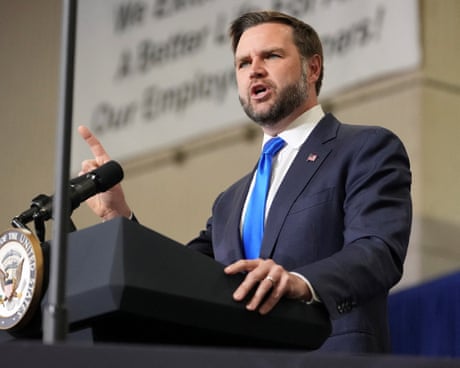
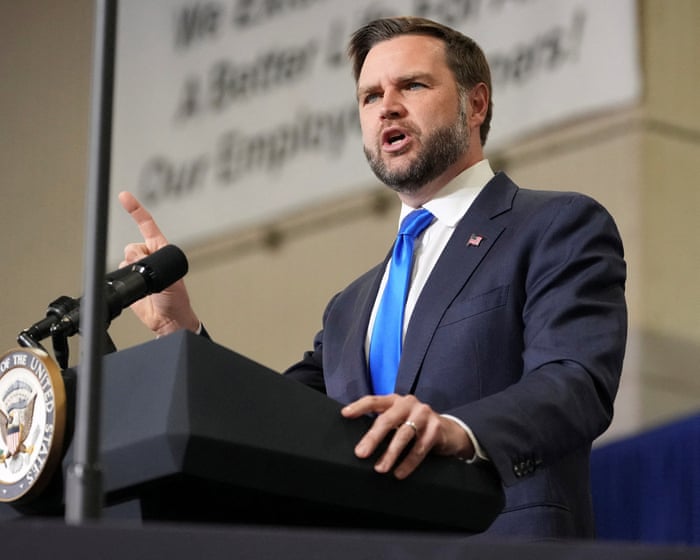
The US vice-president has dismissed calls for global regulation of AI safety risks, telling companies creating the most advanced models: “If you’re building Frankenstein, stop.”

In remarks addressed towards Dario Amodei, the co-founder of Anthropic who has called on Washington DC to coordinate control of AI systems, including with China, JD Vance said: “If you’re gonna create Frankenstein, don’t come to the government and say we need regulation.”

Continue reading...

© Photograph: Mark Schiefelbein/Reuters
© Photograph: Mark Schiefelbein/Reuters
© Photograph: Mark Schiefelbein/Reuters


  •  

Could AI really wipe out humanity – six experts spell out the risks

We examine claims and counterclaims about the risks and calls to slow down the pace of AI development

There have been some shocking claims in recent days about AI safety: we face a 10% chance of doom; AIs are worse than nukes; a “botnet” threatens the entire internet; it’s all a big tech psyop.

Below, we look at six claims and reactions to them.

Continue reading...

© Illustration: wildpixel/Getty Images

© Illustration: wildpixel/Getty Images

© Illustration: wildpixel/Getty Images

  •  

Digital ID comes of age as pubs and bars get go-ahead for biometric scan tech

New laws coming into force this week aim to streamline age checks although old-style plastic IDs will still be allowed

Younger drinkers in England and Wales will be able to prove their age with a digital ID starting this week as new laws give pubs, off-licences, nightclubs and restaurants the right to use biometric scanning technology to check customers are over 18.

Customers will be able to download software that scans their faces into their own phone to generate a QR code proving their age based on a stored proof of age. Other tech under consideration as part of the government push to digitise age verification for alcohol sales include a device which scans the veins in a drinker’s finger to verify their age. That system has not yet been approved for use.

Continue reading...

© Photograph: Keith Morris/Alamy

© Photograph: Keith Morris/Alamy

© Photograph: Keith Morris/Alamy

  •  

‘Too little, too late’: critics perplexed and suspicious of AI leaders’ call for a slowdown

From the Trump administration to AI experts, plans by the Anthropic boss to boost safety have spawned a largely negative response

The safety debate that ignited when whistleblowers last week warned that the most advanced AI poses an existential threat to humanity should come with a health warning: side effects include whiplash. It was only seven days ago that AI enthusiasts were cheerily toying with OpenAI’s newest model GPT-6 Astra which was marketed in part as a lifestyle tool to help people book tennis courts, run fashion companies and order takeaways.

By Wednesday, cutting-edge AI started to look a lot less appealing when the resigning Anthropic researcher Jacob Coxon warned “the people building AI earnestly believe that it could kill us all by the end of the decade”. Yes, he was talking about artificial superintelligence – an as-yet-nonexistent version of the technology that outcompetes humans in most domains – but his comments, and the chorus of experts that echoed him, jangled plenty of nerves.

Continue reading...

© Photograph: Dado Ruvić/Reuters

© Photograph: Dado Ruvić/Reuters

© Photograph: Dado Ruvić/Reuters

  •  

OpenAI not on track to reduce risk of ‘catastrophic’ loss of control, says board member

US government adviser Paul Christiano warns of risks to AI industry as he joins OpenAI’s non-profit foundation

OpenAI is not on track to reduce the risk of “catastrophic” loss of control to an acceptable level, a member of its non-profit board has said, amid spreading public and political concern that super-advanced AIs could one day wipe out humanity.

Paul Christiano, a US government technology adviser, said: “There is a meaningful risk that rapid acceleration in AI capabilities leads to catastrophic and irreversible loss of control in the very near term.”

Continue reading...

© Photograph: Dado Ruvić/Reuters

© Photograph: Dado Ruvić/Reuters

© Photograph: Dado Ruvić/Reuters

  •  

AI could kill all humans in next decade, warn experts: but how seriously should we take them?

Alarming warnings from industry insiders increase pressure for curbs on artificial superintelligence

Does artificial superintelligence really pose a risk greater than nuclear weapons? Is there a significant chance of “a Chornobyl-sized catastrophe”. Might there even be a greater than 10% chance that AI could “kill all humans” in the next decade?

These warnings were issued over the past 48 hours on both sides of the Atlantic about the potential impact of a technology that most people still think of as a more talkative search engine.

Continue reading...

© Illustration: Ales Utouka/Alamy

© Illustration: Ales Utouka/Alamy

© Illustration: Ales Utouka/Alamy

  •  

‘Mistrust’ of Palantir may affect NHS research, says health minister

James Frith says patients may be less willing to share data as new figures show a rise in opt-outs

Concern is being raised about Palantir’s work with the NHS as new figures showed tens of thousands of patients have withdrawn their data from use in research projects.

James Frith, the health innovation minister, said he was worried about “mistrust” of the US defence and health tech company and “the impact it could have on people’s willingness to share data with the NHS”.

Continue reading...

© Photograph: Jonathan Brady/PA

© Photograph: Jonathan Brady/PA

© Photograph: Jonathan Brady/PA

  •  

TikTok facing UK investigation amid fears over age checks and harm to children

Ofcom concerned TikTok’s age verification is ineffective, leaving some exposed to posts on suicide, self-harm and pornography

TikTok is under formal investigation over concerns it has failed to protect children from harmful content, the UK’s online regulator, Ofcom, has announced.

The social media platform’s approach to checking the ages of users has sparked “particular concerns” at the watchdog, almost a year after measures to protect children from the worst of online content came into effect under the Online Safety Act.

Continue reading...

© Photograph: True Images/Alamy

© Photograph: True Images/Alamy

© Photograph: True Images/Alamy

  •  
❌