❌

Reading view

As 'Avatar: Fire & Ash' hits Disney+, we look at 3 of the weirdest alien creatures in the 'Avatar' movies

Avatar: Fire and Ash was a box office smash hit when it dropped in December 2025, and it's easy to see why. Compelling characters, breathtaking action, beautiful environments, and an array of wondrous alien creatures.

We've explored the strange creatures of the Avatar universe before, but now that the third movie has finally hit Disney+, we're taking another look at three more awe-inspiring alien creatures from these movies, including some new stunners introduced in Fire & Ash.

If you’re more of an RDA fan (or at least admire the humans’ technology), we also took a good look at Avatar’s most iconic spaceships and vehicles. James Cameron rarely misses when it comes to gorgeous sci-fi designs β€” man-made or natural β€” and eagle-eyed veterans might even spot an explicit reference (which we won’t spoil here) to Aliens in Fire and Ash.

Watch Avatar: Fire & Ash on Disney+:
Disney+ (With Ads): $11.99/month
Disney+ Premium (No Ads): $18.99/month or $189.99/year

It might be a while before we get more updates on Avatar 4 and 5’s status, so if you're itching to explore Pandora more after watching Fire and Ash on Disney+, then you should also check out the video game, Avatar: Frontiers of Pandora. Ubisoft’s open-world game is a memorable – and surprisingly brutal at times – experience, but it also lets fans explore the world, see the creatures, and dive deeper into the lore.

Now, let's mask up and prepare to drop into the wilderness of Pandora as we look at three of the Avatar series’ coolest (and weirdest) alien creatures.

Akula

The Akula, an alien sea creature from the movie Avatar: The Way of Water

(Image credit: 20th Century Studios)

First seen in Avatar: The Way of Water, the akula is a carnivorous fish that essentially acts as the great white shark of Pandora’s oceans, though it’ll remind paleofanatics of Earth’s armored Dunkleosteus. Its most shocking feature β€” and one perfectly showcased when it tries to eat Lo’ak in the second movie β€” is a three-part jaw that opens up in a big triangular shape.

Like most creatures in the Pandoran seas, the akula is important to the Metkayina’s culture. Those Na’vi choose to model their traditional knives after the teeth of the fearsome creature, and some members of the tribe even wear the akula’s actual teeth with necklaces. It’s terrifying to them, too, and thus deserves respect.

The lead creature designer on the Avatar sequels, Zachary Berger, revealed the process behind the akula’s creation, stating the basis for the final design was born from a sketch WΔ“tā Workshop had done a long time ago. Unsurprisingly, it seems the mouth β€œreveal” was the final touch the otherwise familiar design needed to fully come together.

Nightwraith (ska’avum)

The Nightwraith, an alien flying creature from the movie Avatar: Fire & Ash

(Image credit: 20th Century Studios)

Another scary aerial predator introduced in the sequels is the nightwraith, which the Na’vi call ska’avum.

First seen in Fire and Ash as the ride of choice of villain Varang, it’s a four-winged monster with folding vanes that give it a distinct shape against the sky. It’s also slightly larger in size than the more common ikran, as seen during Varang and Neytiri’s ferocious clashes. Moreover, its β€œbony crests” give it an additional edge when it comes to attack and defense.

As far as we know, Varang is the only Na’vi to ride a nightwraith. This is a good fit considering the character’s fiery nature, but it wasn’t always the plan, as her aerial partner wasn’t defined in the script and was developed into an all-new creature after shooting had wrapped. Word is that Varang was originally meant to ride an armored ikran instead.

Southern squidray (tsyong)

The Southern squidray, an alien squid-like creature from the movie Avatar: Fire & Ash

(Image credit: 20th Century Studios)

Fire and Ash also added Pandora’s own giant squids to the already crowded bestiary, and those things are gnarly... even outside the water. When Eywa goes to war (again) during that third act, things get scary very fast if you’re on the human invaders’ side. Enter the four-eyed southern squidray, called tsyong by the Na’vi.

With razor-toothed tentacles and an oversized beak that opens up horizontally and can bite through most natural materials, these deep-sea hunters can feed on almost any other animal in the sea due to their impressive speed and strength in numbers.

Even the agile ilu have a hard time escaping them, so you can quickly understand why the Na’vi treat them as β€œdark spirits” sent by Eywa to judge. By the end of the third Avatar movie, the RDA is the one being judged (harshly) by the nightmare-inducing cephalopods.

Watch Avatar: Fire & Ash on Disney+:
Disney+ (With Ads): $11.99/month
Disney+ Premium (No Ads): $18.99/month or $189.99/year


  •  

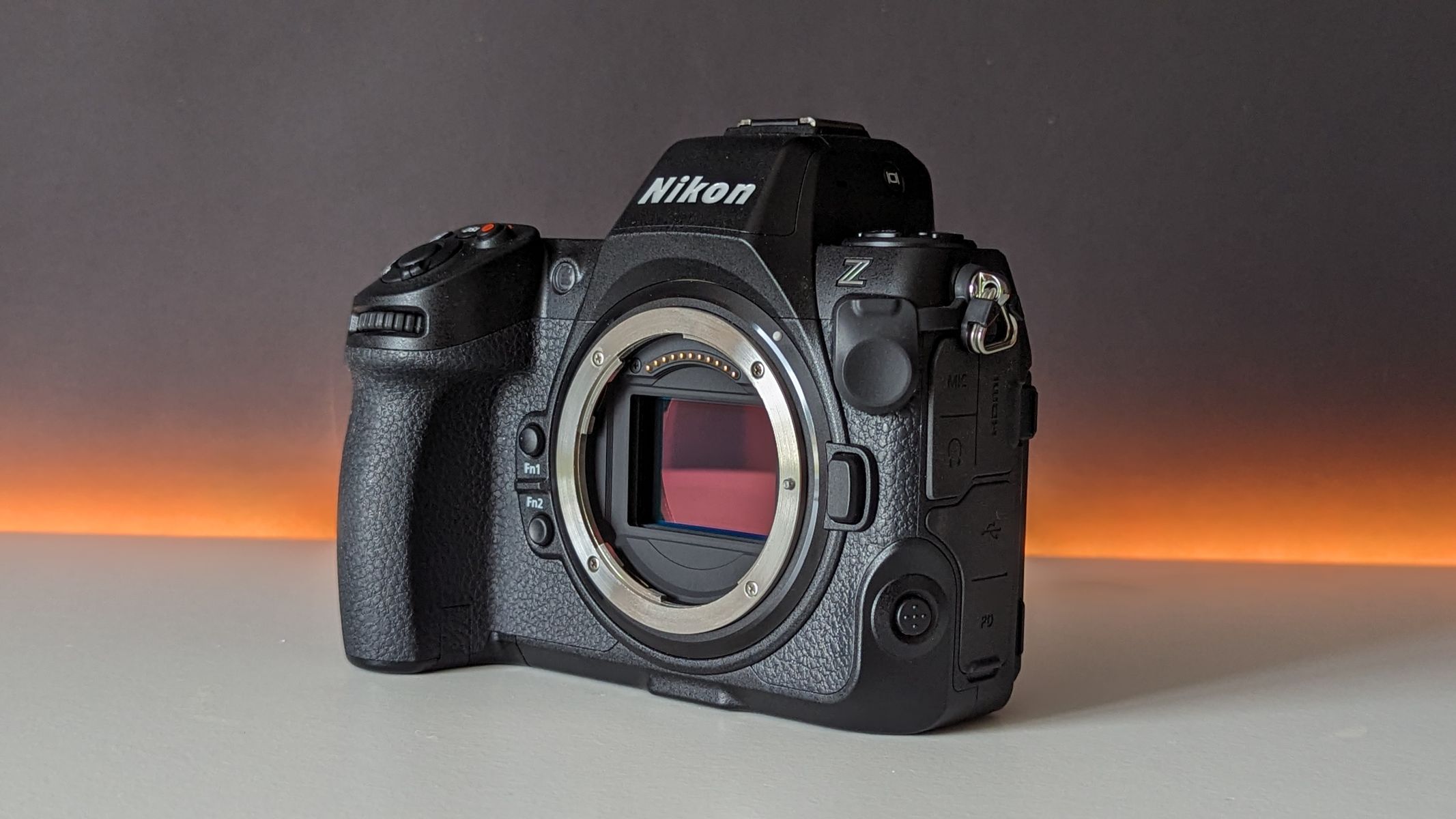
β€œSeeing this Nikon Z8 deal is painful β€” especially since I bought mine at full price!” Our Senior Manager took the hit so you don’t have to!

The Nikon Z8 is an exceptional camera, so much so that our Senior Manager, Jase, bought one recently for astrophotography. Unlucky for them, though, as they paid full price for it.

Since Jase's Nikon Z8 review, there have been several price drops during sales events like Amazon Prime Day and Black Friday, but we've yet to see it as cheap as Walmart's current price of $3,189.95. This is $80 less than Amazon's current listing price of $3,268, though we expect that to price match soon.

Pick up the Nikon Z8 for $3,189.95 at Walmart today β€” the cheapest we've seen online right now.

The Z8 is our choice as the best overall camera. There is nothing the Nikon Z8 can't do. It is especially great for astrophotographers and low-light shooters. This is the cheapest we've ever seen it.View Deal

We know, we know, this camera, even at the discounted rate, isn't cheap, but there's a reason we rave about it. The Nikon Z8 features in many of our 'best for' guides, including the best cameras for photo and video, where we rank it as best overall, the best cameras for astrophotography, and the best Nikon cameras. We can't remember a time when we've seen the price lower than $3,200.

In Jase's hands-on Nikon Z8 review, they awarded it 5/5 stars, praising both its specifications and real-world performance. A particularly impressive feature is the Starlight View mode, which enables autofocus detection down to -9EV. The best Jase had seen (and they have seen and tested a lot of amazing cameras over the years). There is a dedicated night vision mode for astrophotographers and an expanded ISO range up to 102,400.

Nikon Z8 on a white table
The night vision mode on the Z8 shows a dim and red display by default.Jase Parnell-Brookes
Nikon Z8 on a white table
The Z8 is 30% smaller than the Nikon Z9 from which it takes many inspiring features.Jase Parnell-Brookes
Nikon Z8 on a white table
Jase Parnell-Brookes
Nikon Z8 on a white table
Jase Parnell-Brookes
Nikon Z8 on a white table
Jase Parnell-Brookes
Nikon Z8 on a white table
Jase Parnell-Brookes

The Nikon Z8 has plenty of features that make it a fantastic choice for low-light photography and astrophotography, but those weren't the only things that impressed Jase during his review.

Nikon has long been known for getting its button layouts right, and the Z8 is no exception. It is so easy to adjust exposure settings on the fly, thanks to the command and sub-command dials, plus the ISO and exposure compensation buttons are positioned right next to the shutter release. It makes the camera incredibly intuitive to use and allows photographers to react quickly in changing conditions.

We've already touched on the Night Vision (Starlight View) mode, but it deserves another mention because it is genuinely useful rather than being a gimmick or a 'nice to have'. It even helps preserve your night vision by displaying menus and settings in red! Pair that with a red headlamp or flashlight and you're golden for not spoiling your stargazing experience.

Key features: Full-frame 45.7MP, 64-25,600 (expandable to 102,400), 8K 60p 12-bit, single SD UHS-II and single CFexpress/XQD card.

Product launched: May 2023

Price history: This camera started life on the market selling for around $4,300. Over time, it has dropped to a typical selling price of around $3,600, with special sale prices in the region of $ 3,400. The Walmart price of $3,189.95 is the cheapest we've seen.

Price comparison: Amazon: $3268 | Walmart: $3189 | B&HPhoto $3396

Space: β˜…β˜…β˜…β˜…β˜… | Livescience: β˜…β˜…β˜…β˜…Β½ | TechRadar: β˜…β˜…β˜…β˜…β˜…

Featured in guides: Best cameras, best cameras for astrophotography, best mirrorless cameras, best Nikon cameras.

βœ… Buy it if: You want one of the best mirrorless cameras on the market.

❌ Don't buy it if: You're a beginner. This is still an expensive, advanced camera that might be overkill and somewhat intimidating for new users.

Check out our other guides to the best telescopes, binoculars, cameras, star projectors, drones, lego and much more.

  •  

NASA looks for the origins of interstellar comet 3I/ATLAS | Space photo of the day for June 24, 2026

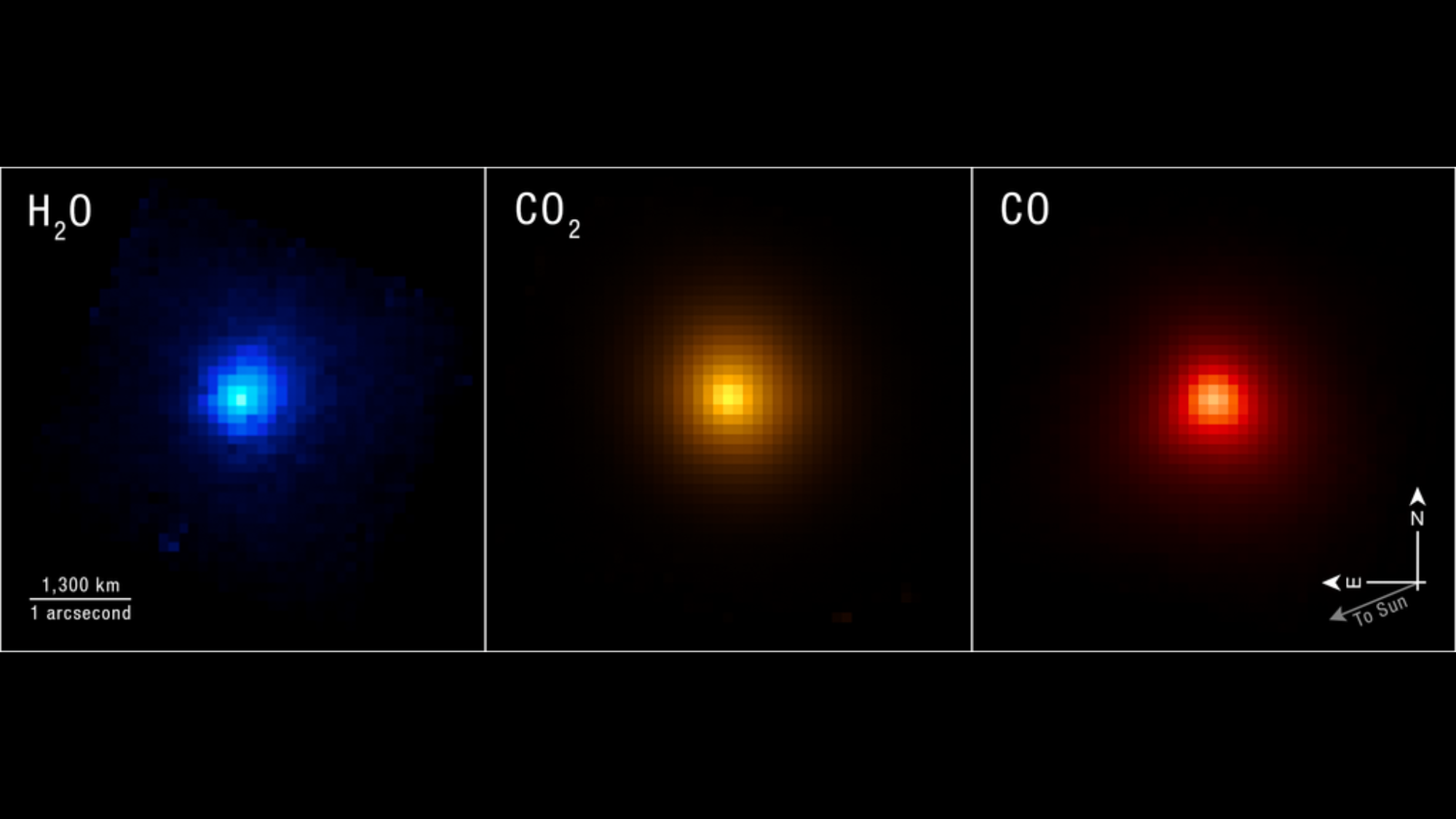
Three boxes contain a glowing center that in the left box is blue, the middle box is yellow, and the right box is red.

Researchers using JWST are finding clues about comet 3I/ATLAS' origins. (Image credit: NASA, ESA, CSA, STScI, Martin Cordiner (CUA, NASA-GSFC); Image Processing: Alyssa Pagan (STScI))

NASA's James Webb Space Telescope is finding clues that are leading scientists closer to understanding the origins of the interstellar comet 3I/ATLAS.

What is it?

Comet 3I/ATLAS captured the world's attention when it was discovered nearly a year ago on July 1, 2025. The comet was first spotted by the Asteroid Terrestrial-impact Last Alert System (ATLAS), and is only the third interstellar object every discovered.

The comet swooped through our solar system, passing by Earth at a far (and safe) distance on its tour of our cosmic neighborhood. It is on a long trajectory that will take it out of our solar system, never to return.

In observations from the James Webb Space Telescope, scientists were able to look in the direction the comet as it began moving away from the sun in December of last year. While in close proximity to our star, the sun's heat warmed the comet, making it extra bright and easy to observe.

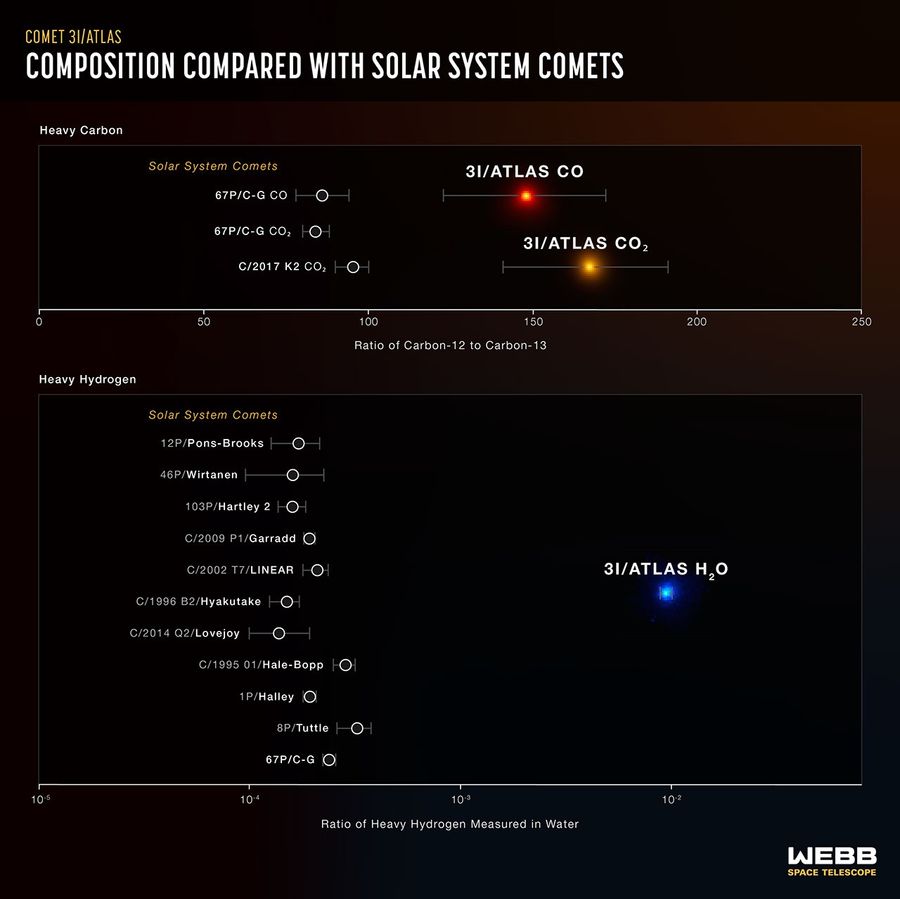
With this view, astronomers were able to calculate some of the ratios of the chemicals present in the comet. This further highlighted that the object is from out of our solar system, as they found ratios of carbon and heavy hydrogen not found in comets in our solar system.

Researchers described their results in a new paper published June 22 in the journal Nature.

A chart exploring the new findings about 3I/ATLAS.

This graph shows some of the differences between 3I/ATLAS and comets found in our own solar system. (Image credit: NASA, ESA, CSA, Martin Cordiner (CUA, NASA-GSFC), Leah Hustak (STScI))

Why is it incredible?

Being only the third interstellar object ever found, people were excited about 3I/ATLAS. They were so excited, in fact, that conspiracies about the object sprouted up quickly. Due to it being from outside of our solar system, some claimed that the comet could be some sort of alien spaceship, similar to the initial suspicions about the interstellar object 'Oumuamua found years earlier.

But with new information coming in from space telescopes, and astronomers eager to understand this object better, these clues are leading us closer and closer to the true origins of this strange comet.

  •  

ESA chief calls for greater European space autonomy as trust in US partnership erodes

The head of the European Space Agency has issued a wakeup call to decision makers amid partners cancelling missions and geopolitical changes affecting the space sector, calling for Europeans to be pilots rather than passengers.

In a LinkedIn post published last month, European Space Agency (ESA) Director General Josef Aschbacher stated that recent decisions taken by the United States to pause the lunar Gateway station and cancel the Mars Sample Return mission campaign β€” both major projects with deep ESA commitments β€” have revealed how dependent the agency is on outside actions.

"Europe has become too exposed to decisions beyond its control," Aschbacher wrote, before laying out the challenge the continent faces. "The choice before Europe is clear: Do we pilot, or are we merely passengers?"

The situation for ESA and its 23 member states is complex, requiring Europe to both develop agency and autonomy while balancing this with fruitful collaboration, Aschbacher noted.

"The current environment demands both diversified international partnerships and strengthened autonomous capabilities," he wrote. "Only under these conditions can Europe decide when to act independently and when to cooperate globally, protecting our investments and our industrial base amid geopolitical uncertainty."

With trust in the U.S. as a reliable partner taking a hit, collaboration with other space actors such as Japan, South Korea and Australia could grow, while Europe also pursues its own capabilities.

Human spaceflight is one area Aschbacher is keen to push Europe forward, describing it as a necessity rather than a luxury, and one needed to secure ESA's freedom to unlock the "scientific, economic, strategic and geopolitical benefits of space and to inspire a new generation to shape Europe's future."

The question is not new β€” it has long been debated by European policy makers and the space sector β€” but recent events and Aschbacher's comments have brought the issue to the fore. And there is clear support and grounds for greater European autonomy in space.

"The disruption brought by the Trump administration has made this question more pressing," said Marco Aliberti, associate manager and lead on international engagement at the European Space Policy Institute (ESPI) in Vienna, an independent think tank that advises European space policymakers. "There is a realization in Europe that so far we have not been pursuing autonomy."

Europe, Aliberti argued, has built genuine technical capacity, including the ability to build and operate world-class space systems, but, at the same time, has consistently failed to secure the political autonomy to decide how and with whom those capabilities are deployed.

"Participation without agency is yet another form of dependency dressed up as ambition," he said. In other words, Europe has built the capacity to execute in space, but not the autonomy to decide its own agenda.

Aliberti pointed out that this is not the first time Europe has needed to move to acquire greater autonomy. The birth of Europe's Ariane rocket in the 1970s was a response to an asymmetric relationship. The United States refused to launch the Franco-German Symphonie communications satellite unless Europe agreed to forgo commercial use, with the aim of protecting American dominance in commercial communications. European governments concluded they had no choice but to build their own launch capability.

Aliberti went on to point out that history could, potentially, repeat itself, this time in the lunar realm, as a European partner dependent on U.S. transportation could face unacceptable conditions. "The U.S. may tell us: I will continue bringing you to the lunar surface, provided that you do not engage in commercial activity," he said. "We do not see the risks that being a passenger entails."

And investment in space can bring huge payoffs. For example, NASA's Commercial Orbital Transportation Services contracts in the 2000s gave early funding to SpaceX, enabling the development of the company's workhorse Falcon 9 rocket, and ultimately, the rise of its Starlink broadband megaconstellation.

"It was the billions that NASA gave to SpaceX that enabled the birth and growth of SpaceX," Aliberti stated. "Let's not neglect the impact that space exploration investment has across other parts of the ecosystem."

a circular machine on four legs launches a small rocket from the surface of a dusty reddish-orange planet

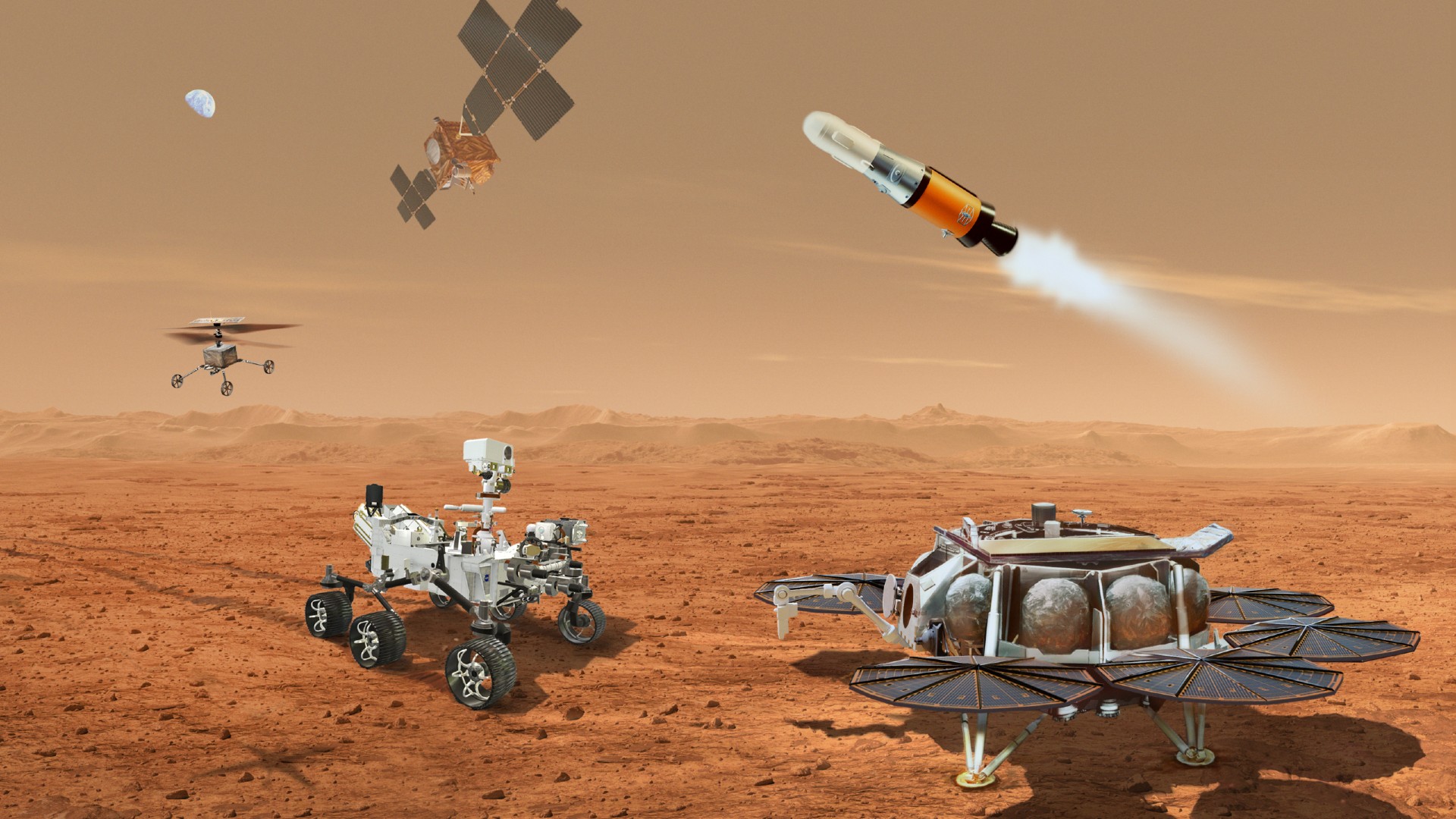
Eartly artist's illustration of the major parts of a planned NASA-ESA Mars sample return campaign. NASA has canceled that version of the project and is looking for other ways to get samples collected by its Perseverance rover back to Earth. (Image credit: NASA/JPL-Caltech)

a circular machine on four legs launches a small rocket from the surface of a dusty reddish-orange planet

(Image credit: NASA/JPL-Caltech)

ESA's DG has signaled the need for action and its urgency, although he admitted it will take years to build autonomous capability. "If not now, then when? If not ESA, then who?" Aschbacher asked.

What comes next is unclear. Institutionally, Aschbacher sees opportunities in a convergence of key meetings and milestones, including an ESA Council in mid-June, a ministerial focused specifically on exploration scheduled for December, and the crucial once-every-three-years ESA Ministerial Council in 2028. At the same time, the European Union, with a growing interest in space separate to ESA, is drafting its Multiannual Financial Framework for 2028-2034.

Aliberti warned that, if ESA cannot act promptly, its member states could move to act alone to address shorter-term needs. He cited the recent development of the French government reaching an agreement to send a pair of its astronauts on missions with U.S. space station firm Vast.

As confidence in the partnership with the U.S. government erodes, individual European nations may look to explore bilateral arrangements with commercial American providers, meaning less interest in investing into joint European efforts. The window for collective European action is open, but perhaps not for long.

"If we take decisions by the Ministerial Council in 2028, we will be able to play a role and be pilots in 10 years," Aliberti says. "If not, it may become too late."

  •  

It's a crime these Lego Star Wars sets are being retired but you can save big before they go

Lego is amazing, and Lego Star Wars in particular. The fact that you can spend $1000 on a gigantic Death Star set is a clear sign it's not just for kids.

But there's a catch; Lego retires sets, meaning that, unless you're willing to pay silly prices on eBay, they're forever out of your reach. Oh, sure, Lego might need space for new sets, and stores likewise, but that's no excuse to rob builders of the best Lego Star Wars sets, especially with Star Wars' 50th anniversary next year.

I've rounded up the best deals on retired or retiring Lego sets. Some of these sets have been this price before Prime Day but don't count on them sticking around much longer.

Save $24 on this Lego model of the first ship you see in Star Wars, pursued by a Star Destroyer right after the opening crawl. View Deal

Save $42 on this Lego Star Wars Guard Gunship, a particularly cool variant of the Republic Gunship.View Deal

Get $10 off this Attack of the Clones troop carrier, which was bumped out by the Venator in Return of the Sith. View Deal

This isn't reduced but it's such an awesome set, a mini-sized model of the original trilogy's biggest vessel, you need this on your shelves. View Deal

Save 20% on the Galactic Empire's heavy-hitter, the Tie Bomber, complete with three minifigures. View Deal

Save $12.00 on this N-1 Starfighter, The Mandalorian's second favorite ship. It's been replaced by the far pricier UCS N-1 set but you can still grab this if you're fast. View Deal

Get $10 off the helmet worn by Captain Rex, a Clone Commander who managed to outlive many of his manufactured brethren. View Deal

This Clone Wars walker is another set that's not reduced but it's such a brilliant, play-friendly build that Lego should be ashamed for retiring it. View Deal

  •  

'Everybody wanted to be the first': Apollo astronauts were more competitive, Artemis 2 pilot says

A lot has changed since NASA last sent astronauts to the moon β€” including the attitudes of those space explorers.

That's the view of Victor Glover, the NASA astronaut who served as pilot on the Artemis 2 mission around the moon's far side this past April.

"When you look back on the Apollo missions, there was a lot more competition back in the office. Everybody wanted to be the first, and then everybody wanted to be the next," Glover told Angels Broadcast Television on June 12, shortly before he threw out the first pitch before a baseball game between the Los Angeles Angels and the Tampa Bay Rays.

"I think our office learned a lot from them," he added. "There are some good things about that. It makes you work really hard, but it also can create some unnecessary conflict. And so my office really wants to support everybody β€” wants you to be the guy that does it, and somebody just gets picked to do it, and that's OK."

Glover and his Artemis 2 crewmates β€” NASA's Reid Wiseman and Christina Koch and Jeremy Hansen of the Canadian Space Agency β€” did indeed seem to forge a very strong bond during their training and their time in space.

For example, shortly before Artemis 2's April 1 launch, Glover, Koch and Hansen came up with a plan to name a crater on the moon after Wiseman's wife Carroll, who died of cancer in 2020.

"They said the three of them had talked, and they would like to do this," Wiseman said on April 6, the day Artemis 2 looped around the moon and got farther from Earth than any crewed mission ever had. "That was an emotional moment for me. And I just thought that was just a total treasure, that they had thought through this, and they had offered this."

Wiseman, Artemis 2's commander, said he broke down when Hansen radioed mission control with the naming request. In fact, all four astronauts were overcome with emotion at that moment.

"That was, I think, where the four of us were the most forged, the most bonded, and we came out of that really focused on that day ahead," Wiseman said.

an astronaut in a white spacesuit descends from a gold-foil-wrapped spacecraft onto the gray lunar surface, with an american flag planted in the dirt nearby

This image taken by Buzz Aldrin of the Apollo 11 landing site is the only good picture of mission commander Neil Armstrong on the lunar surface. (Image credit: NASA)

The atmosphere was a bit different during the 1960s and early 1970s, as Glover noted; undercurrents of competition and rivalry reportedly ran through the Apollo crews.

For example, multiple people, including Apollo 17 astronaut Gene Cernan, have said that Buzz Aldrin lobbied to be the first person to set foot on the moon, an honor that eventually went to Apollo 11 crewmate Neil Armstrong. (Aldrin has disputed this version of events, saying he didn't want to be the first-ever moonwalker.)

There are other big differences between Artemis and Apollo, of course. Apollo was designed to get people to the moon before the Soviet Union could do so, a goal that was regarded as a national security imperative because it would demonstrate American technological supremacy. As a result of this need for speed, Apollo did not build anything permanent on the moon, leaving behind only flags, footprints and defunct spacecraft.

Artemis, on the other hand, aims to establish a permanent and sustainable presence on Earth's nearest neighbor. If all goes to plan, NASA will build one or more moon bases near the lunar south pole, then use the skills and knowledge gained from this endeavor to get astronauts even farther afield β€” to Mars.

  •  

Hubble Space Telescope images galaxy scientists thought was impossible to find

A bright, dense cluster of hot, massive stars in a galaxy that existed 1.4 billion years after the big bang has been found helping to end the early universe's foggy days during which neutral hydrogen gas was draped across the cosmos, obscuring ultraviolet light from luminous objects.

The cluster was found emitting ultraviolet light in a small but quickly growing galaxy by the Hubble Space Telescope. The presence of this ultraviolet light, and the star-forming history of the cluster producing it, suggests that bursts of star formation contributed to waves of ionizing radiation that gradually cleared out the opaque neutral hydrogen.

In the aftermath of the big bang, the universe was filled with neutral hydrogen gas that is opaque at short wavelengths of light, such as ultraviolet. However, this ultraviolet light was the neutral hydrogen's worst enemy, gradually ionizing the gas across the universe. Once ionized, hydrogen gas cannot absorb ultraviolet light β€” and so, the cosmos became transparent at those wavelengths.

Because of this, the first billion or so years are called the Epoch of Reionization. It is referred to as "reionization" rather than ionization because, technically, the gas had already been ionized once before during the first 379,000 years after the Big Bang.

While investigating what brought about this epoch, astronomers had identified two chief suspects that could have produced sufficient amounts of ultraviolet light to ionize the neutral hydrogen. One is active supermassive black holes and the other is the first generations of hot, massive stars. The problem is, given that neutral hydrogen is adept at absorbing the ultraviolet light, astronomers have had difficulty tracing that ultraviolet back to its source and identifying which of the two suspects are the main culprit.

In 2023 the James Webb Space Telescope (JWST) made a major breakthrough, finding a galaxy that existed just 900 million years after the Big Bang that was producing enough energy to ionize the neutral gas surrounding it.

Now the Hubble Space Telescope has gone further, detecting ultraviolet light from a galaxy called MXDFz4.4. This ultraviolet light should only be visible if the surrounding gas had already been ionized.

"Observing a galaxy like this was thought to be impossible," said Ilias Goovaerts of the Space Telescope Science Institute (STScI) in Baltimore, who led the discovery, in a statement. "Researchers expected the 'fog' of neutral hydrogen that filled the early universe would be too thick and obscure our view of its ionizing light. Hubble not only spotted that light, but it also helped reveal incredible details about the galaxy's characteristics."

A full version of the header image, showing lots of colorful blobs with an inset that shows the galaxy of note. It's kind of a blueish white dot. There is a faint reddish ring around it.

The full Hubble Space Telescope's view of MXDFz4.4 and its surroundings from our vantage point. (Image credit: NASA/ESA/CSA/STScI/Ilias Goovaerts and Anton Koekemoer (STScI)/Marc Rafelski (STScI, JHU)/ Image Processing: Alyssa Pagan (STScI))

MXDFz4.4 was first identified in the MUSE eXtremely Deep Field (MXDF), with MUSE being the Multi Unit Spectroscopic Explorer on the European Southern Observatory's Very Large Telescope in Chile. The "z4.4" part of its name tells us that the galaxy exists at a redshift of 4.4, meaning that it existed 12.37 billion years ago. As the universe has expanded in the time since then, the ultraviolet light has been redshifted into visible wavelengths that were detected by Hubble.

"Astronomers have found many galaxies that existed at this point in the history of the universe, but we haven't detected ionizing photons from any of them, making MXDFz4.4 one of a kind," said Marc Rafelski, who is the Hubble Deputy Mission Head at STScI.

MXDFz4.4 is 100 times smaller than our Milky Way galaxy but is forming stars ten times faster than our galaxy is. Many of those stars are being born in the tight, luminous cluster producing the ionizing ultraviolet.

A blue and white glowing, hazy blob against a dark background.

An artist's impression of the young, distant galaxy MXDFz4.4 and its dense cluster of luminous stars. (Image credit: NASA/ESA/Leah Hustak (STScI))

The cluster contains "A lot of young, hot, massive stars in a small space [that] do a better job of blasting through opaque gas," said Goovaerts.

Furthermore, by comparing Hubble's observations of MXDFz.4.4 with those of the JWST, which probed for cooler, older stars in the galaxy, Goovaerts and Rafelski's team discovered that the stars in the cluster had formed in bursts, each burst producing fresh quantities of ionizing ultraviolet radiation that helped to clear out more and more of the neutral gas over time. We now see the galaxy about 250 million years after it finished reionizing the surrounding gas. These hot, massive stars in the cluster end their lives after a few million years as supernova explosions, the blast waves and radiation from which can create bubbles in the gas light years across, creating further pathways for ultraviolet light to escape and be detected by Hubble.

The observations seem to nail down the theory that clusters of hot, massive, luminous stars in young galaxies in the early universe played a dominant role in ionizing the universe's neutral gas.

"Hubble's observations of MXDFz4.4 let us test our hypotheses much closer to the Era of Reionization than ever before," said Rafelski. "Finding more galaxies, especially at slightly later cosmic times where larger samples are within reach, would let us refine these measurements and figure out what cleared our view as that era was ending."

The results were published on June 23 in The Astrophysical Journal.

  •  

What is Starfall? A look at SpaceX's mysterious new return capsule

SpaceX just launched a brand-new return capsule that it has been developing in the dark.

That vehicle, called Starfall, lifted off atop a Falcon 9 rocket this morning (June 23), on a test mission designed to show that it can fly in a controlled fashion and survive the fiery trip down through Earth's atmosphere.

The demonstration flight may have caught some space fans by surprise, for SpaceX has revealed little about Starfall to date. And that air of secrecy extended through today's launch; the company cut off its webcast about 10 minutes after liftoff, a practice usually associated with national security missions.

SpaceX provided a very brief overview of Starfall today, saying via X that the new vehicle "will enable affordable, routine access to the microgravity environment for scientific research and in-space manufacturing."

Details about the vehicle are harder to come by β€” but we have some, thanks to an environmental assessment published by the U.S. Federal Aviation Administration (FAA) last month. That report looked at the potential environmental impact of two Starfall demonstration reentries, one or both of which was set in motion by today's launch. (It's unclear how many Starfall vehicles the Falcon 9 lofted on this initial flight.)

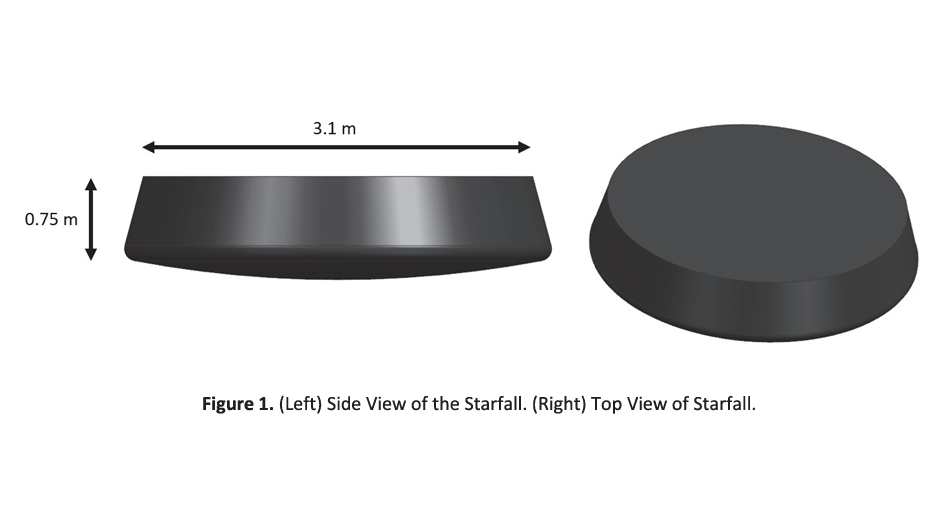
According to the FAA document, Starfall is a disk-shaped spacecraft that stands about 2.5 feet (0.75 meters) tall, with a diameter of 10.2 feet (3.1 m). It weighs roughly 4,600 pounds (2,100 kilograms) and can carry about 2,200 pounds (1,000 kg) of payload. The vehicle can launch on both the workhorse Falcon 9 and Starship, the megarocket SpaceX is developing to help humanity settle the moon and Mars, among other tasks.

Starfall consists of two parts: an aluminum "top plate" that weighs about 3,090 pounds (1,400 kg) and a detachable carbon-fiber heat shield. Cargo rides in the top plate, which features a payload bay 8.2 feet long, 4.9 feet wide and 1.6 feet tall (2.5 by 1.5 by 0.5 m).

For comparison, SpaceX's Dragon capsule, which routinely flies people and cargo to and from the International Space Station, stands about 14.7 feet (4.5 m) tall, with a diameter of 13.0 feet (4.0 m). Dragon can haul about 13,230 pounds (6,000 kg) to low Earth orbit and bring 6,600 pounds (3,000 kg) back down, according to its SpaceX specifications page.

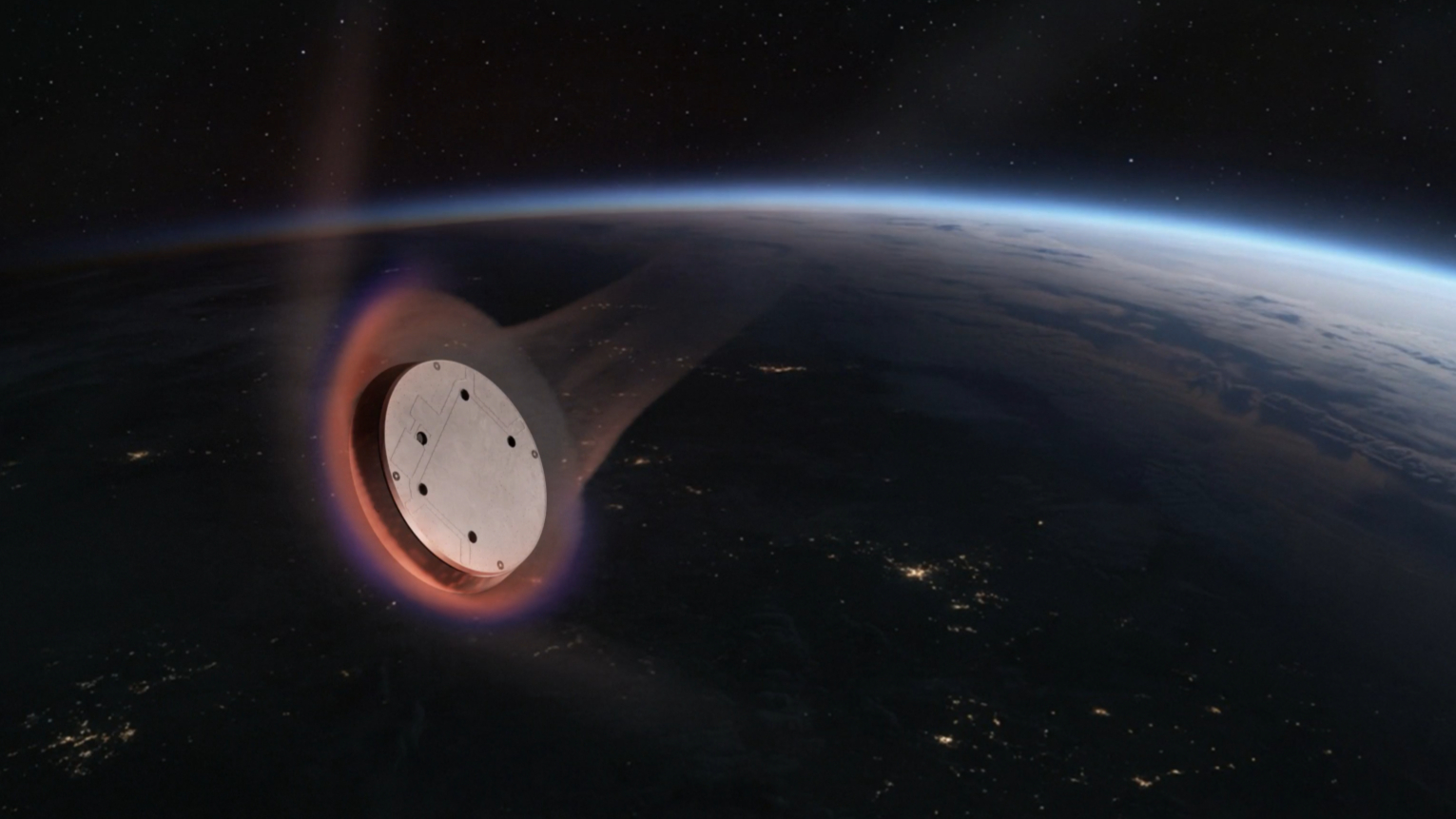
a flat space capsule reenters Earth's atmosphere

Artist's illustration of a SpaceX Starfall capsule reentering Earth's atmosphere. (Image credit: SpaceX)

Starfall is not capable of carrying astronauts. And, in another departure from Dragon, the newly debuted return vehicle does not have a traditional propulsion system.

It has only "an attitude control system which uses compressed inert gas (for example, compressed nitrogen gas) to perform small attitude control maneuvers, such as pointing the capsule's heat shield in the correct direction to safely reenter Earth's atmosphere," the FAA's assessment reads.

"Capsules do not have the ability to de-orbit themselves and can only control their attitude," it adds. "Individual capsules would reenter Earth's atmosphere on a pre-planned trajectory and splash down with the assistance of parachutes."

That splashdown β€” at least of the first two Starfall vehicles β€” will take place in the open Pacific Ocean, about 700 nautical miles (1,300 kilometers) off the west coast of the United States. Starfall, and its cargo, will then be collected by recovery boats.

SpaceX has two main goals for Starfall, according to the FAA document. The vehicle will "enable point-to-point delivery of critical cargo through space on rapid timelines" and also "create a self-sustaining commercial in-space manufacturing market by offering access to microgravity and vacuum, loiter on orbit, and safe return from orbit as a service at scale."

two perspectives of a black, hokey-puck-looking shape on a white background.

An illustration of a Starfall vehicle from an Environmental Assessment published by the Federal Aviation Administration. (Image credit: Federal Aviation Administration (FAA).)

SpaceX isn't alone in pursuing these opportunities. For example, the California-based company Varda Space has already launched and landed five of its 650-pound (300 kg) "W-series" spacecraft, which are designed to be both orbital mini-factories and return capsules.

And another California outfit, Outpost Space, is developing a line of "CarryAll" return vehicles that can get very large payloads β€” those weighing up to 22,000 pounds (10,000 kg) β€” down from space with pinpoint accuracy, within 80 feet (25 m) of a target anywhere on Earth.

The CarryAll Block 3 will be a "flagship vehicle for in-space manufacturing and warehousing, Earth return, military resilience and humanitarian aid," Outpost's website states.

a red square covers an area of ocean on a map off the California coast.

SpaceX is targeting an area 700 nautical miles (1,300 km) off the United States West Coast for Starfall splashdowns. (Image credit: Federal Aviation Administration (FAA))

So SpaceX is not breaking new ground with Starfall. But the company is poised to play a leading role in the nascent Earth-return field, thanks to its launch dominance and vertical integration.

The Falcon 9 flew a whopping 165 times in 2025, after all, and SpaceX envisions launching Starship thousands of times per year when that massive rocket comes fully online. So it shouldn't be too difficult for SpaceX to send hundreds of Starfall vehicles up and then back down again, delivering space-made pharmaceuticals and other high-value goods to customers around the world.

  •  

Space.com just launched an app! Get your inside scoop on space exploration

Hey, space fans! For over 25 years, we here at Space.com have dedicated ourselves to bringing you the best space mission news, astronomical discoveries, night sky guides and out-of-this-world sci-fi. Now, we're launching into a whole new frontier. Yes, we have an app.

Our new Space.com app is available free on Android on the Google Play store and for iOS via the Apple Store and includes the same great coverage that you'll find on your laptop or desktop, but now in the palm of your hand.

Are you wondering how to prepare for this summer's great total solar eclipse in August? We've got that. How about NASA's plans to launch the first-ever commercial spacecraft to rescue a falling space telescope? We've got that. (That Swift Boost mission will launch this Saturday, June 27, by the way.) And if you're wondering just how close Steven Spielberg's "Disclosure Day" is to how the U.S. government could handle the real discovery of E.T. in real life, we even have that. The Space.com app also allows you to curate your space news experience by picking your favorite news categories and saving articles and features for later reading.

If you download our Space.com app, register for free and get your daily space news fix, but are still left wondering how you can better support the amazing work of our news and reviews team, there is a way. Our Space.com app has an ad-free version available for a small recurring monthly fee (or one annual subscription) that helps support or live on-site coverage of space missions like NASA's upcoming Artemis 3 moon lander test flight and more.

I'm extremely excited to welcome you to our Space.com app and look forward to any thoughts and feedback you might have about it. Have a question, comment or complaint? You can let me know directly through my email above or below.

Thank you all for your interest in space and for supporting Space.com over the years. We look forward to another 25 years and more of taking you out of this world, every day.

Sincerely,

Tariq Malik
Editor-in-Chief, Space.com
tmalik@space.com

  •  

These anti-Prime deals are giving Amazon a good run for their money

Amazon Prime Day 2026 has just kicked off and we are seeing plenty of discounts across telescopes, binoculars and cameras. But what if you don't want to line the pockets of Jeff Bezos but still want a great deal? Fear not, for there are plenty of anti-Prime Day deals that either match Amazon's price or even better, blow it out of the water! Like this Walmart deal that gives you $74 off the Amazon price of the Fujinon Techno-Stabi 1640 image-stabilized binoculars!

Amazon has tried to commandeer the summer sales space since it started Prime Day in 2015, but other retailers always come out swinging and bring with them some of the best deals. Even if they are not cheaper than Amazon, rivals tend to at least match the price, so you can still save money with your morals intact.

Our Prime Day hub has all the best Amazon deals as well as those coming from Adorama, Best Buy and BH Photo and Video.

Best anti-Prime Day telescope deals

Save $100 on our best telescope for beginners. It has a 4-inch aperture and go-to technology for help finding your favorite night sky objects.

We gave it four stars in our full Celestron NexStar 4SE review.

Amazon price matchView Deal

Save $150 and grab an iconic NexStar 6SE with an observer's kit that includes two Plossl eyepieces, a 2x Barlow Lens/T-Adapter, three filters for different viewing conditions, a microfiber cleaning cloth and a foam-lined carry case.

Check out our full Celestron NexStar 6SE review.View Deal

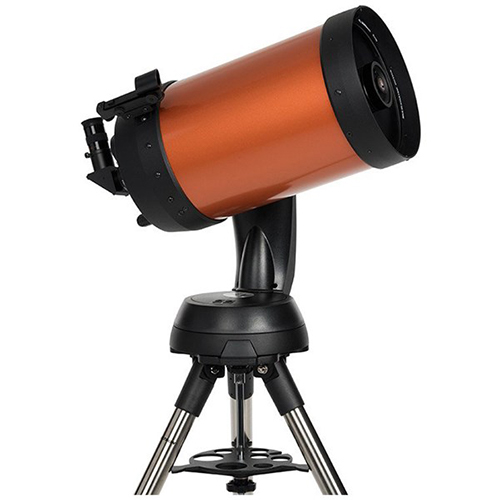
Save $200 on the best motorized telescope in our best telescopes guide. We rated it four and a half stars in our NexStar 8SE review.

It features an eight-inch aperture, a useful magnification of up to 180x, an easy-to-operate hand controller and stunning optics, perfect for almost any night sky object.

Amazon price matchView Deal

Save $126 on this huge Dobsonian telescope from Sky-Watcher with a 10-inch aperture, perfect for gathering the most light from faint deep-space objects like galaxies and nebulas.

We reviewed the Sky-Watcher 200P telescope and gave it four and a half stars. View Deal

Save $265 on this powerful refractor telescope with a 4.7-inch aperture and StarBright XLT coatings for maximizing light transmission.

Check out our full Celestron Omni XLT 120 review.

Amazon price matchView Deal

Save $264 on this 8-inch aperture Dobsonian from Celestron. It has StarSense technology to help you find your chosen night sky target.

Check out our full Celestron StarSense Explorer 8" Dobsonian review.View Deal

Save $85 on this premium solar set-up that includes the high-end Heliostar 76mm solar telescope and the SolarQuest mount that has powerful solar tracking capability.

This is great for solar imaging and getting an HD view of the upcoming total solar eclipse.View Deal

Best anti-Prime Day binocular deals

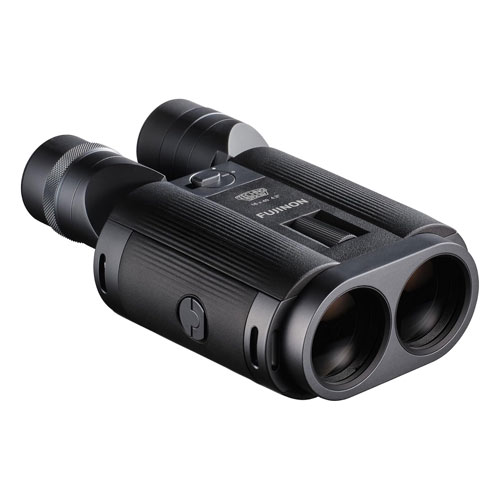
Save a huge $275 on the incredible Techno-Stabi TS-L 1640 image-stabilized binoculars. They contain Fujifilm's premium optics in a lightweight package with some of the strongest image stabilization on the market.

I gave them four and a half stars in my full Fujifilm Fujinon Techno-Stabi TS-L 1640 image stabilized binoculars review.View Deal

Save $100 on these Canon image-stabilized binoculars from Canon. Their 15x magnification, light-gathering 50mm objective lenses and judder-free views make them excellent for stargazing. View Deal

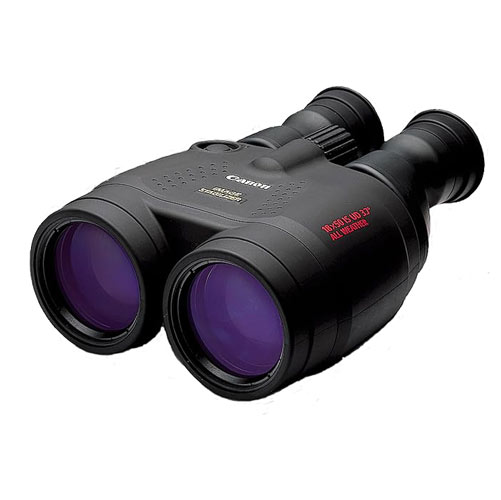
Save $100 on these great image-stabilized binoculars from Canon. They have a huge 18x magnification and big 50mm objective lenses so you can get very close to the stars.

Check out our full Canon 18x50 IS binocular review.View Deal

Best anti-Prime Day camera deals

Save over $200 on this workhorse camera, capable of 40MP stills and 8K video at up to 30p. It features a 5.76-million-dot viewfinder, a CFexpress card slot and advanced video output with Apple ProRes and raw video capability.

We think it's the best Fujifilm camera for professionals because of its powerful functionality and advanced features.View Deal

Save $929 on the latest hybrid A7 model from Sony. We reviewed the Sony A7R IV and gave it four and a half stars. This model has more advanced video capability and more autofocus points than the A7R IV.View Deal

Save over $1000 on this workhorse from Canon. It has a 45MP sensor, dual-pixel autofocus and 8K video capability.

Check out our full Canon EOS R5 Mark II review. View Deal

  •  

Rocket Lab launches US Space Force mission with less than 17 hours' notice β€” a new record

Rocket Lab has successfully launched the second spacecraft for the U.S. Space Force's Victus Haze Tactically Responsive Space (TacRS) mission, setting a new readiness record in the process.

Only 16 hours and 42 minutes passed between Rocket Lab receiving the Notice To Launch from the Space Force's Space Safari Program Office and liftoff of the company's Electron launch vehicle, beating the previous TacRS record set by Firefly Aerospace on the September 2023 Victus Nox mission by more than 10 hours.

Liftoff occurred on Friday (June 19) at 6:19 a.m. EDT (1019 GMT, 10:19 p.m., local time), from Rocket Lab's Launch Complex-1, in New Zealand, beginning a rapid-response demonstration designed to simulate a real-world orbital threat scenario.

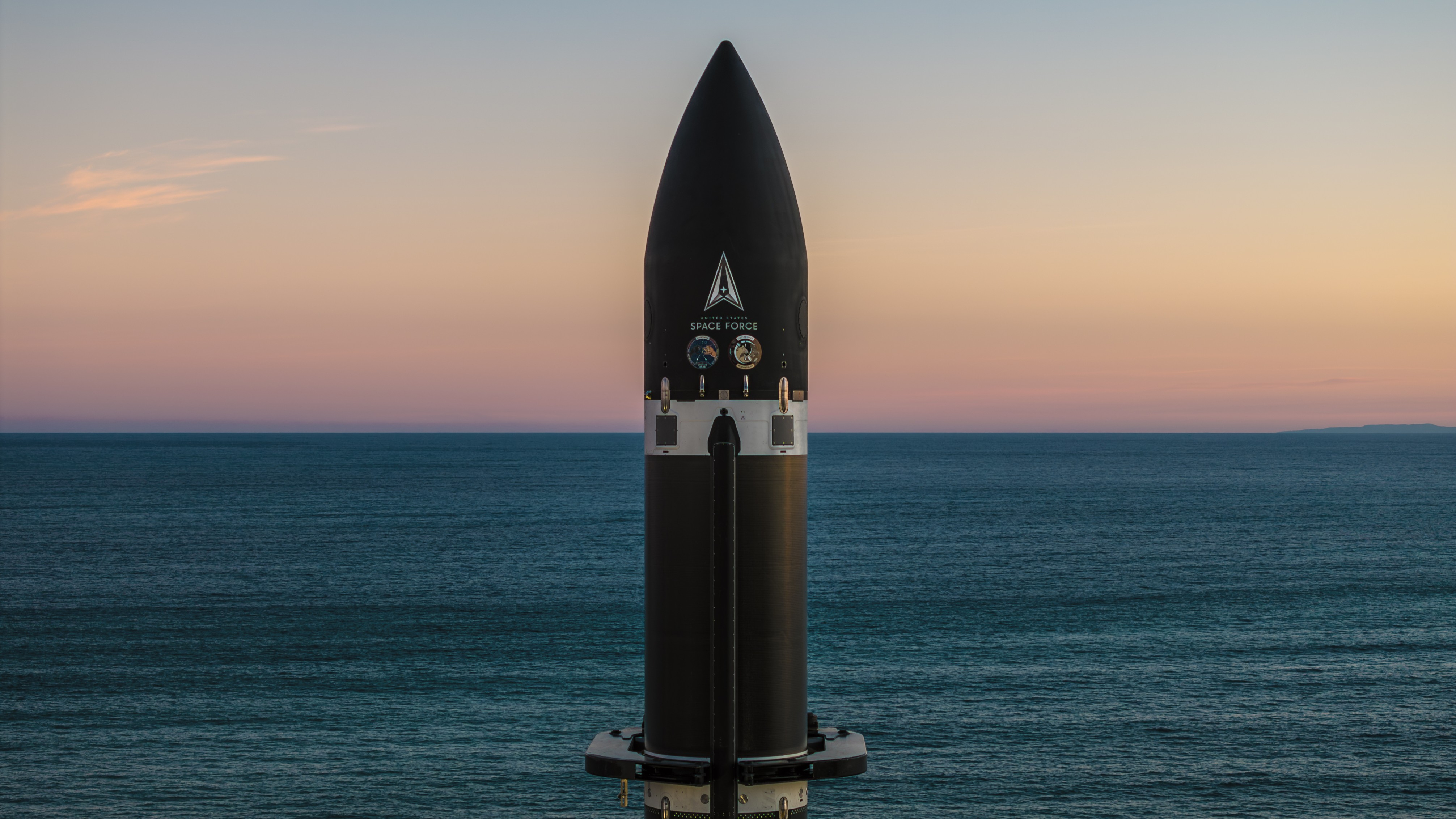
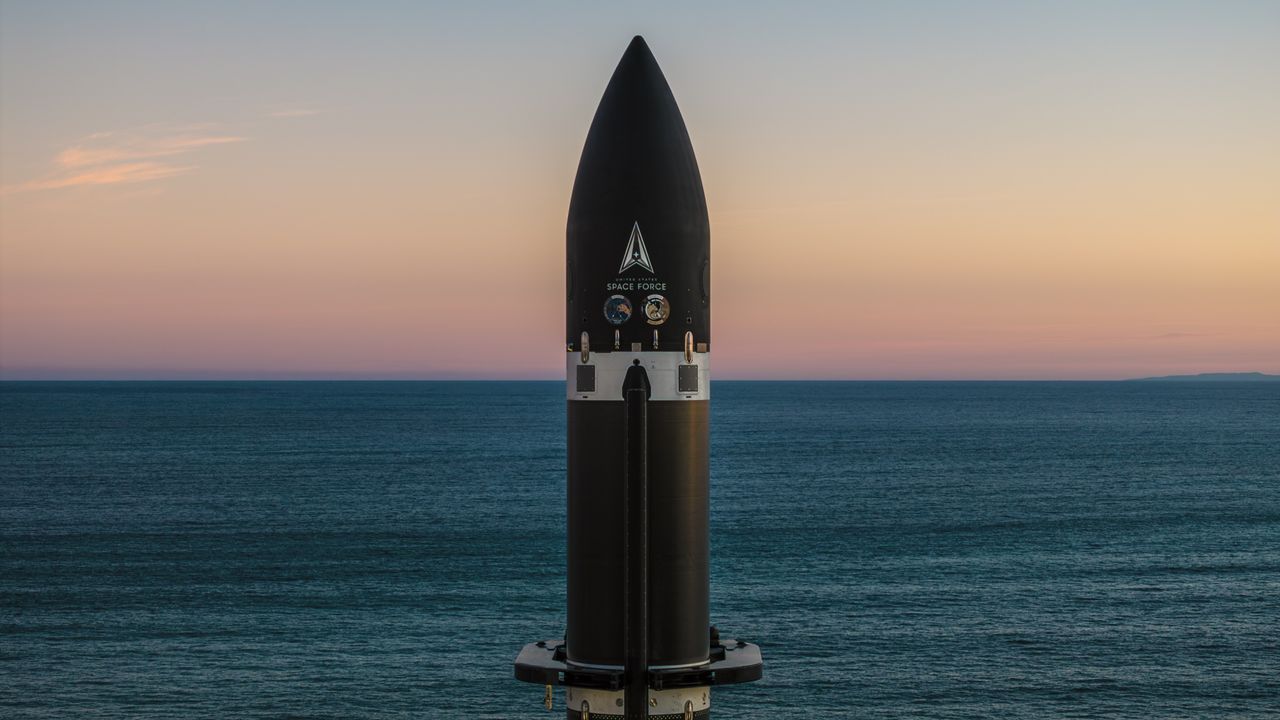
The top of a black rocket stands against a background of rich sea parted in the center by the horizon, and a cool, orange-hued sky.

Rocket Lab's Electron rocket launched on Friday (June 19) at 6:19 a.m. EDT (1019 GMT, 10:19 p.m., local time), from Rocket Lab's Launch Complex-1, in New Zealand. (Image credit: Rocket Lab)

Electron delivered a Rocket Lab-built Pioneer spacecraft to low Earth orbit (LEO), where it has begun pursuit of another Victus Haze spacecraft that was launched by SpaceX in May and serves as the target vehicle for the demonstration β€” True Anomaly's Jackal satellite. According to a June 22 Rocket Lab statement, "[Pioneer] is now fully commissioned and conducting complex orbital maneuvers to chase down another spacecraft on orbit and conduct Rendezvous and Proximity Operations (RPO)."

Victus Haze is a TacRS mission managed by Space Systems Command's Space Safari Program Office, with the objective of demonstrating the rapid acquisition, launch and operation of spacecraft in response to orbital threats and "non-compliant satellites," the Rocket Lab release said.

"Rendezvous and Proximity Operations on such short timelines are certainly not trivial, especially in a crisis or conflict scenario, but this demonstration of our ability to commission a complex and capable space vehicle within less than 72 hours, and immediately begin an RPO scenario thereafter, shows that we can field capability to deny adversaries first-mover advantage into novel orbits,” said Lt. Col. Lincoln Miller, Space Safari system program manager, in the statement.

Rocket Lab and True Anomaly teams are now managing their respective spacecraft in orbit. They will soon enter the RPO phase of Victus Haze, conducting space domain awareness (SDA) threat-response scenarios and "dynamic engagements with the other," according to a separate statement from the U.S. Space Force (USSF).

The VICTUS HAZE mission explained. Phase 1: Launch on demand πŸš€ The @USSpaceForce's @USSF_SSC called, told us to launch, and just 16 hours 42 minutes hours later, Electron successfully left the pad from LC-1.Phase 2: πŸ›°οΈ With Pioneer spacecraft checkouts complete 34 hours… pic.twitter.com/lJK226LhzTJune 23, 2026

Space Force officials have increasingly looked to commercial providers to develop new capabilities and technologies to address potential conflicts in space. β€œVictus Haze is primed to further demonstrate our readiness to lean on our commercial partners to deny, disrupt, and counter any adversarial advantage β€” no matter where they try to operate in space,” acting Space Force portfolio acquisition executive Col. Bryon McClain said in the USSF statement.

With its Electron rocket and Pioneer spacecraft both vertically integrated into Rocket Lab's manufacturing processes, this Victus Haze launch marks the first TacRS mission to be carried out by a single prime contractor, providing the spacecraft, launch vehicle and on-orbit operations.

"This is what modern space power looks like: the ability to reinforce and reimagine national security space architecture at will," said Rocket Lab CEO Peter Beck. "We’re proud to be providing the nation with those next-generation space capabilities, today.”

  •  

This might be your last chance to pick up a retired Lego Star Wars set before it flies off forever, and it's under $100 on Amazon for Prime Day

Star Wars' Clone Wars-era Republic Gunship may not be a miracle of practicaliy but I think it's cool as heck and that alone is reason enough to pick up this Lego Star Wars Coruscant Guard Gunship, $42 off for Amazon Prime Day.

Save $42 on this Lego Star Wars Coruscant Gunship set

The other reason? This set has already been retired by Lego meaning that not only are you saving big, this could be your last chance to buy the Lego Star Wars Coruscant Guard Gunship, before scalpers start selling it for silly money on eBay.

On top of looking seriously imposing, this Lego set has major play potential. You can swoosh it round the living room, loaded it up with the five included mini figures and accidentally drop Chancellor Palpatine because there's something off about that guy.

If this set isn't to your taste (maybe you're one of those evil Separatists), we've rounded up the Best Lego Star Wars sets. And don't forget to check out our other Prime Day deals.

Save $42 on this Lego Star Wars Guard Gunship, a troop-carrier which, on Coruscant, has been commandeered for Chancellor Palpatine's non-sinister agenda. View Deal

LEGO Star Wars: The Clone Wars Coruscant Guard Gunship
The Lego Star Wars: The Clone Wars Coruscant Guard Gunship is now retired and this might be your last chance to buy it.Lego
LEGO Star Wars: The Clone Wars Coruscant Guard Gunship
Lego
LEGO Star Wars: The Clone Wars Coruscant Guard Gunship
Lego

This is a real Prime Day deal double-whammy. Not only is this Lego Star Wars Coruscant Guard Gunship $42 off, the cheapest it has ever been, but as a retired set this could be your last chance to own it. Without paying silly money to eBay scalpers, that is; it's already sold out on Lego's website.

Not only does this set look good on a shelf, but it has got real potential, with opening and closing doors, firing missiles and a special handle to swoosh it around your living room!

It also boasts five minifigures: Three Clone Troopers, Chancellor Palpatine and Senator Padme Amidala. Go on, Padme, give Palpatine a push. It'll save you a lot of trouble in the long run.

If you love the Clone Wars era of Star Wars, this is a superb offer but you'll have to move fast.

Key features: 1083 pieces, builder's age 9+, 27.5 Γ— 5.5 Γ— 14.5 Γ— 16 in. / 15 Γ— 37 Γ— 41 cm size

Product launched: September 2023

Price history: We've seen the price drop a little, but this is the lowest it's ever been and likely your last chance to buy it.

Price comparison: Amazon: $98

Reviews consensus: We loved the UCS Lego Star Wars Republic gunship, and this smaller model is also extremely cool, albeit with just five figures. Its Amazon reviews are near unanimous; few complain about the price tag and this price cut addresses that.

βœ… Buy it if: You want a brilliant, play-friendly set to go with your other Clone Wars Lego sets.

❌ Don't buy it if: You're not a fan of the Clone Wars era. Instead, consider something like this Lego Star Destroyer, also reduced for Prime Day.

Check out our other guides to the best telescopes, binoculars, cameras, star projectors, drones, lego and much more.

  •  

A 'new' star could finally appear in the night sky this week, thanks to a once-in-a-lifetime explosion

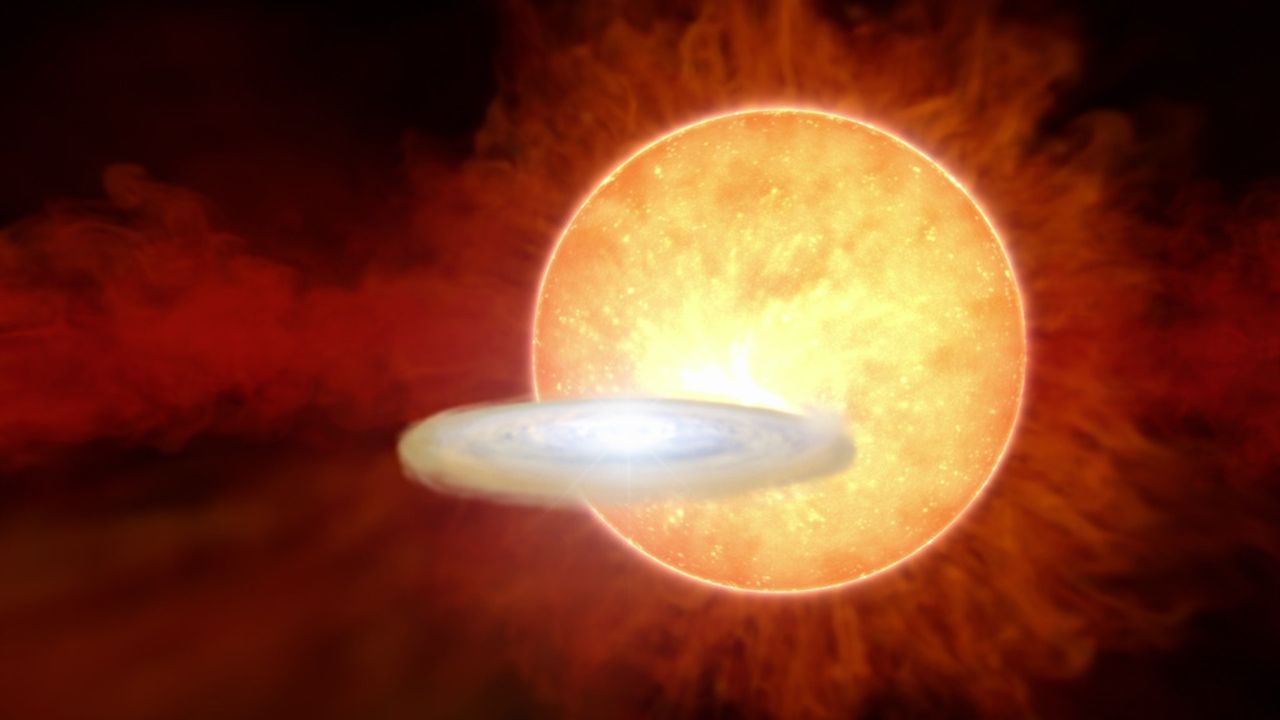
A once-in-a-lifetime stellar eruption could occur at any time, potentially causing a 'new star' to appear in the night sky. If it does, the star system T Coronae Borealis could suddenly brighten to rival Polaris, the North Star. Here's what you need to know about the "Blaze Star" T. Coronae Borealis (T CrB).

T CrB is a prime example of a recurring nova. This thermonuclear explosion erupts from the atmosphere of a white dwarf star roughly once every 80 years, when it reaches a point of critical mass, having stripped vast quantities of material from a co-orbiting red giant.

After each eruption, the white dwarf returns to vampirically feeding on its companion star, until ready to start the process anew. Recurring novas like T CrB are extremely rare, with only five known to exist within the entirety of the Milky Way, according to NASA.

When will T. Coronae Borealis erupt?

T CrB brightens roughly once every 80 years β€” an average based on eight centuries of historical observations. The most recent deluge of nova light reached Earth in 1946, prompting some astronomers to predict that the next brightening could occur as early as February 2024, based on an earlier dip in the system's light that echoed historical data.

It seems that T CrB had other ideas, however, and instead has remained stubbornly dim through numerous unsuccessful prediction attempts. Astronomers repeatedly attempted to fit subtle shifts in the brightness of T CrB to the few points of reliable historical data on offer, while accounting for fluctuations in the white dwarf's feeding rate.

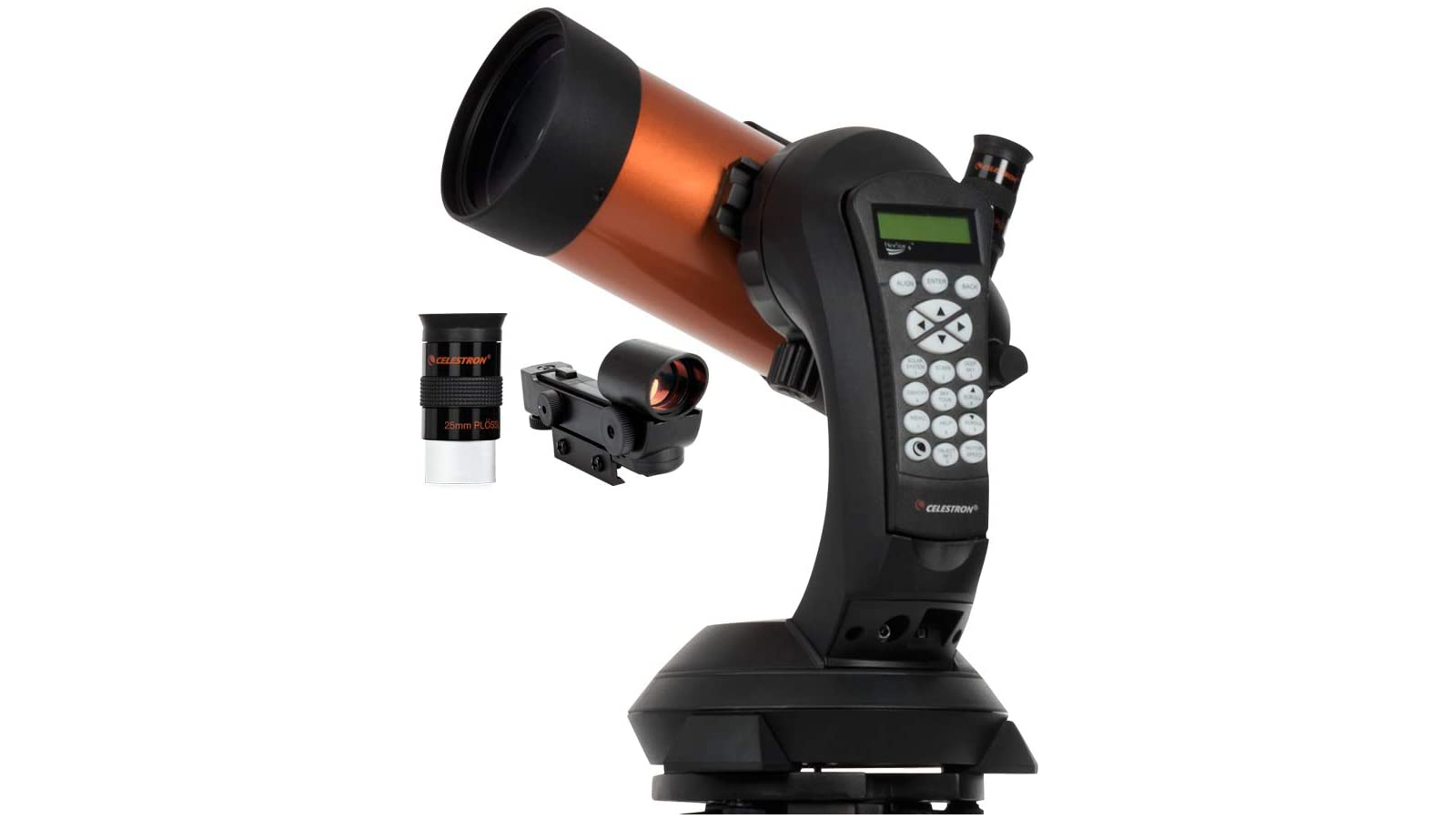
Celestron NexStar 4SE

Celestron NexStar 4SE Computerized Telescope

(Image credit: Amazon)

The Celestron NexStar 4SE is ideal for beginners wanting quality, reliable and quick views of the night sky. It's sturdily built, quick to set up and automatically locates night sky targets and provides crisp, clear views of them. For a more in-depth look at our Celestron NexStar 4SE review

"We know it has to happen," astrophysicist Elizabeth Hays, project scientist on NASA's Fermi gamma-ray space telescope, told Space.com in 2024. "We just can't pin it down to the month."

One paper authored by Jean Schneider of the Paris Observatory put forward a set of four potential dates for the brightening β€” the last of which falls on June 25, 2026 β€” based on the presence of a theoretical third body in the T CrB system. However, other astronomers were sceptical of the predictions, as no evidence of this phantom third body has been spotted in modern data.

What should I expect?

Each nova explosion triggers a dramatic surge in T CrB's apparent brightness, as radiation cast out in the cataclysmic event finally reaches us, having spent approximately 3,000 years racing through the near-perfect vacuum of space.

T CrB is usually far too dim to see with the naked eye, shining as it does with an average brightness, or magnitude, or just +10. Magnitude is the scale used by astronomers to track the apparent brightness of objects in the night sky. The lower the number, the brighter the object, with the human eye capable of spotting targets down to a magnitude of +6 from a dark sky location.

During a nova surge, T CrB can jump from +10 to a magnitude of +2, making it easily visible to the naked eye as it shines with a brilliance comparable to that of the North Star, Polaris.

Where can I find T. Coronae Borealis in the night sky?

T CrB shines close to the semicircle of stars of the lesser-known constellation Corona Borealis, also known as the Northern Crown, which can be found glowing brightly overhead between the constellations of Bootes and Hercules after sunset in early summer.

A starmap showing the location of Corona Borealis in the context of nearby constellations.

How to find Corona Borealis in the summer sky. (Image credit: Created by Anthony Wood in Canva)

You'll need a pair of 10x50 binoculars or a small telescope to find the Blaze Star before it brightens to naked eye visibility. First, locate the magnitude 4.28 star Epsilon Coronae Borealis, which is the second star in from the left of the semicircular formation, as viewed from the Northern Hemisphere.

Next, sweep your scope over the patch of sky one degree to the lower right of Epsilon Coronae Borealis β€” roughly the width of your little finger held at arm's length β€” to find the patch of sky containing T CrB.

A starmap showing the location of Corona Borealis in the context of nearby constellations.

Finding T. Coronae Borealis in the constellation Corona Borealis. (Image credit: Created by Anthony Wood in Canva)

How long will T CrB be visible for?

Once the Blaze Star erupts, its nova light should remain visible to the naked eye for a little under a week, according to NASA, though you'll be able to follow its progress for longer using a pair of binoculars! You can also keep an eye on T CrB's brightness via the American Association of Variable Star Observers (AAVSO) website, which allows you to plot a light curve for the distant star system based on recent member observations.

Be sure to check out our roundups of the best telescopes and binoculars for observing the night sky, to ensure that you're ready to make the most of T. Coronae Borealis' fleeting appearance before it disappears for another 80 years. Photographers may also want to peruse our picks of the top cameras and lenses for astrophotography, along with our guide to capturing the night sky.

Editor's Note: If you capture an image of T. Coronae Borealis and with Space.com's readers, then please send your photo(s), comments, and your name and location to spacephotos@space.com.

  •  

China's space plane appears to have released a mystery object in orbit

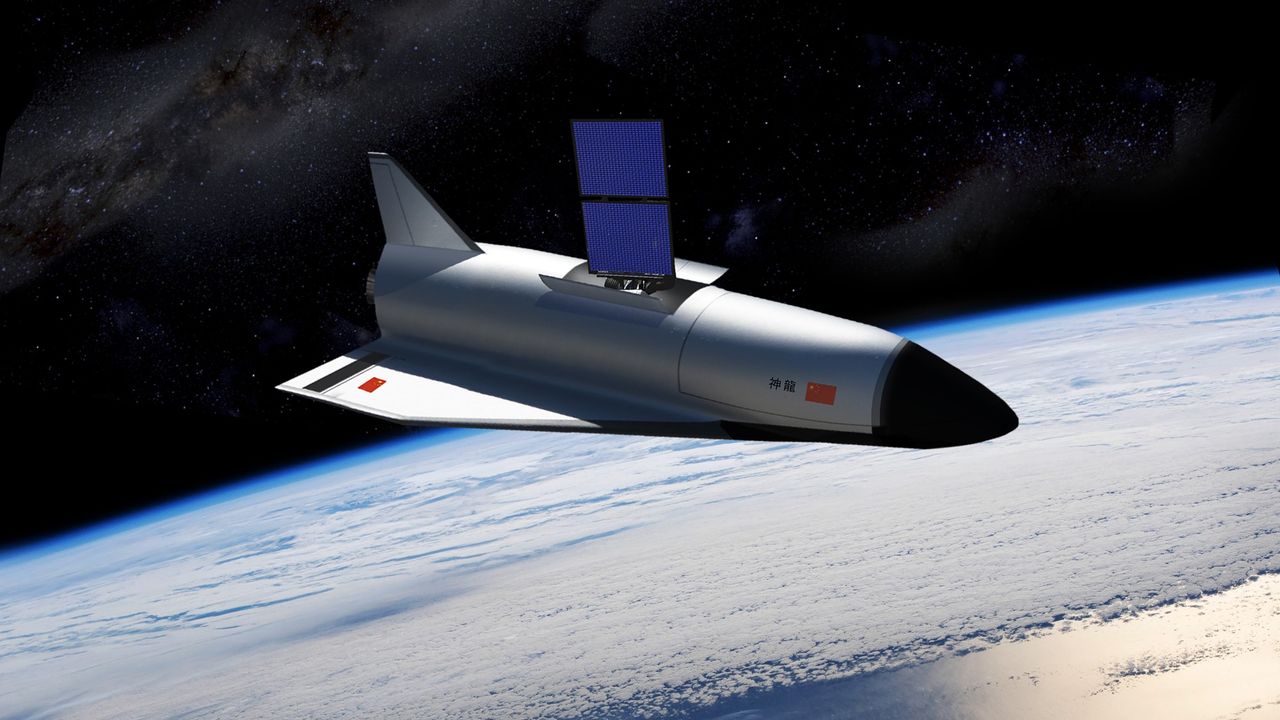
China's Shenlong space plane appears to have released a mystery object while in orbit, according to a private space surveillance firm.

Shenlong launched on its fourth mission on Feb. 6, 2026 atop a Long March 2F rocket that lifted off from China's Jiuquan Satellite Launch Center in the Gobi Desert. As with previous flights, the objectives of this mission were not disclosed to the public. But according to recent observations by the commercial orbital intelligence company LeoLabs, one part of Shenlong's latest mission appears to involve releasing an unknown object.

"At 02:30 UTC on 22 June 2026, LeoLabs detected an unknown object in the vicinity of the Chinese Shenlong reusable space plane," LeoLabs posted to X. "This object did not correlate to any other object in our catalog. It was first observed by our Tracker radar in New Zealand."

"Following additional observations across our global network and analysis via LeoLabs Delta, we have independently cataloged this object and assessed with high confidence that it was released from the Chinese space plane," the company added in the post. "This activity is consistent with sub-satellite deployments conducted by the space plane in previous missions."

Space tracker Jonathan McDowell noted on X that the object has now been catalogued by the U.S. Space Force.

Shenlong, or "Divine Dragon," is a reusable space plane that launches atop a rocket but lands on a runway like an aircraft. Its overall design is believed to be similar to the United States Space Force's X-37B, or somewhat like NASA's storied space shuttle. Exact specifications are difficult to come by, given how secretive China's space program remains about Shenlong.

Very few images exist of Shenlong, and most of what we have seen of the space plane are telescopic images of the vehicle taken from ground-based telescopes.

black-and-white images of an aircraft-like object rotating in space

Imagery of China's Shenlong space plane caught on camera in 2024 by Felix SchΓΆfbΓ€nker in Upper Austria. (Image credit: Felix SchΓΆfbΓ€nker )

This isn't the first time that Shenlong has appeared to release objects while in orbit. In June 2024, observers noticed that the space plane may have released a subsatellite or ejected an unnecessary piece of hardware as it approached the end of its mission.

Six months earlier, observers believed the space plane had ejected six objects at once, but those were later determined to be debris left over from launch.

Observers on the ground have also noticed what appear to be solar arrays extending from Shenlong, based on analysis of telescope imagery.

On previous missions, Shenlong has appeared to conduct what are known as rendezvous and proximity operations (RPO), meaning it tested the capability to maneuver close to other objects in space, according to SpaceNews.

White these RPOs can be conducted for peaceful purposes such as repairing or refueling other spacecraft, it might also be the case that space superpowers such as China and Russia are developing these capabilities to potentially tamper with adversary satellites should warfare ever make it to space. In May, two Russian satellites came within 10 feet (3 meters) of one another in orbit, following a pattern of the country testing the capabilities of these so-called "inspector" spacecraft.

There's no reason to believe the United States isn't developing its own RPO capabilities for similar reasons, and the nation has released official artwork suggesting as much.

  •  

What telescope could cause our astrophotography expert to break their hard-and-fast rule about not traveling with a telescope? This one! Now even cheaper in this Prime Day telescope deal

Our astrophotography expert, Jamie Carter, has reviewed countless telescopes and optics equipment for us but always maintained a no travel rule when it comes to telescopes. All that changed when they reviewed the ZWO SeeStar S30 Pro, and this Prime Day, it's $35 cheaper.

Get the ZWO Seestar S30 Pro telescope on sale right now at Amazon for $664.

That's not to say the ZWO Seestar S30 Pro is just for deep space; it's a superb all-round smart telescope and we think the previous model, the ZWO Seestar S30, is one of the best telescopes and best smart telescopes.

But what made it just a game-changer for our expert was that, eschewing the bulk of normal telescopes, he could pack it into his camera bag as he explored New Brunswick's dark-sky corridor. He was absolutely stunned by the views of the Whirlpool Galaxy that popped up on his smartphone.

If you want to be similarly awed, snap up the ZWO Seestar S30 Pro and don't forget to check out the other Prime Day Deals on offer.

Save $35 on a telescope we rank as one of the best beginner telescopes and best smart telescopes. Not only will you get great views, it's super-portable with it. View Deal

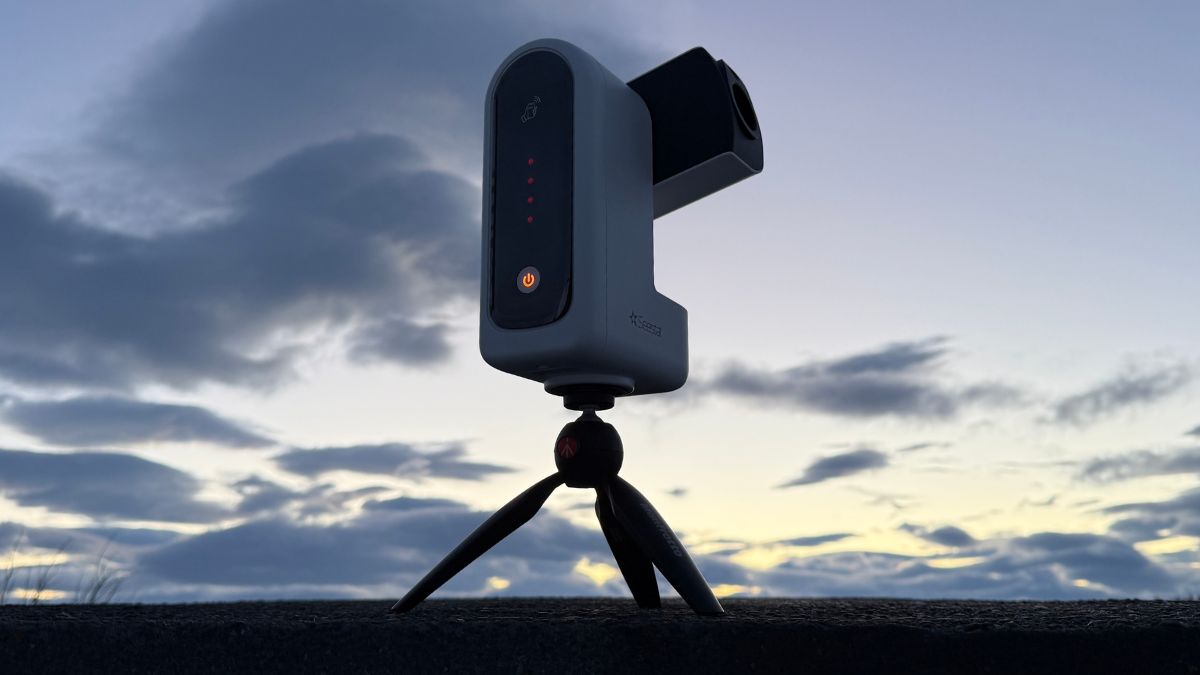
a seestar s30 pro against a partially cloudy twilight sky.

Jamie used the SeeStar S30 Pro when on location in New Brunswick. (Image credit: Jamie Carter)

The ZWO Seestar S30 is a superb smart telescope, featuring in our best beginner telescopes and best telescope guides, and now ZWO has taken things to the next level with the upgrade, the S30 Pro.

Our expert called the ZWO Seestar S30 Pro a life-changing device. Why? Because it's small enough to fit in a camera bag and yet, it's a impressive alternative to the best cameras for astrophotography.

Venturing into a dark sky zone, he captured some stunning images, including the Whirlpool Galaxy.

"In the smart telescope era, traveling light doesn't have to mean leaving a telescope behind," he remarked, now convert to smart scopes.

It captures 8.3MP / 4K images and side from the telescope itself, comes with a mini-tripod, shoulder strap and bag. You do operate it via a smartphone, and view images on its display, which may not be to everyone's taste.

But if the ZWO Seestar S30 Pro can convert Jamie, our expert astrophotographer, it can convert anyone.

Key features: 30 mm objectiver, 3.1" Γ— 5.5" Γ— 8.3" in., 3.6 lbs weight, battery powered, smartphone required.

Product launched: December 2025

Price history: This is the cheapest the ZWO Seestar S30 Pro has ever been.

Price comparison: Amazon: $664 | Seestar $699

Reviews consensus: Talking about their ZWO Seestar S30 Pro experience, our expert praised this smart telescope and our sister sites Livescience and T3 also sang its praises. The S30 Pro's Amazon reviews are just as positive, with no real criticisms.

Livescience: β˜…β˜…β˜…β˜… | T3: β˜…β˜…β˜…β˜…

Featured in guides: Best beginner telescopes, Best telescopes

βœ… Buy it if: You want a super-portable smart telescope that you can take to dark sky sites.

❌ Don't buy it if: You prefer to skywatch the old fashioned way or will only ever stargaze from one site.

Check out our other guides to the best telescopes, binoculars, cameras, star projectors, drones, lego and much more.

  •  

NASA wants to dump the ISS in the sea. Experts say the plan 'raises serious concerns for ocean health'

NASA's plan to deorbit the International Space Station in coming years has fallen under the scrutiny of a government watchdog group and stirred up a wave of reaction by a leading ocean conservation organization.

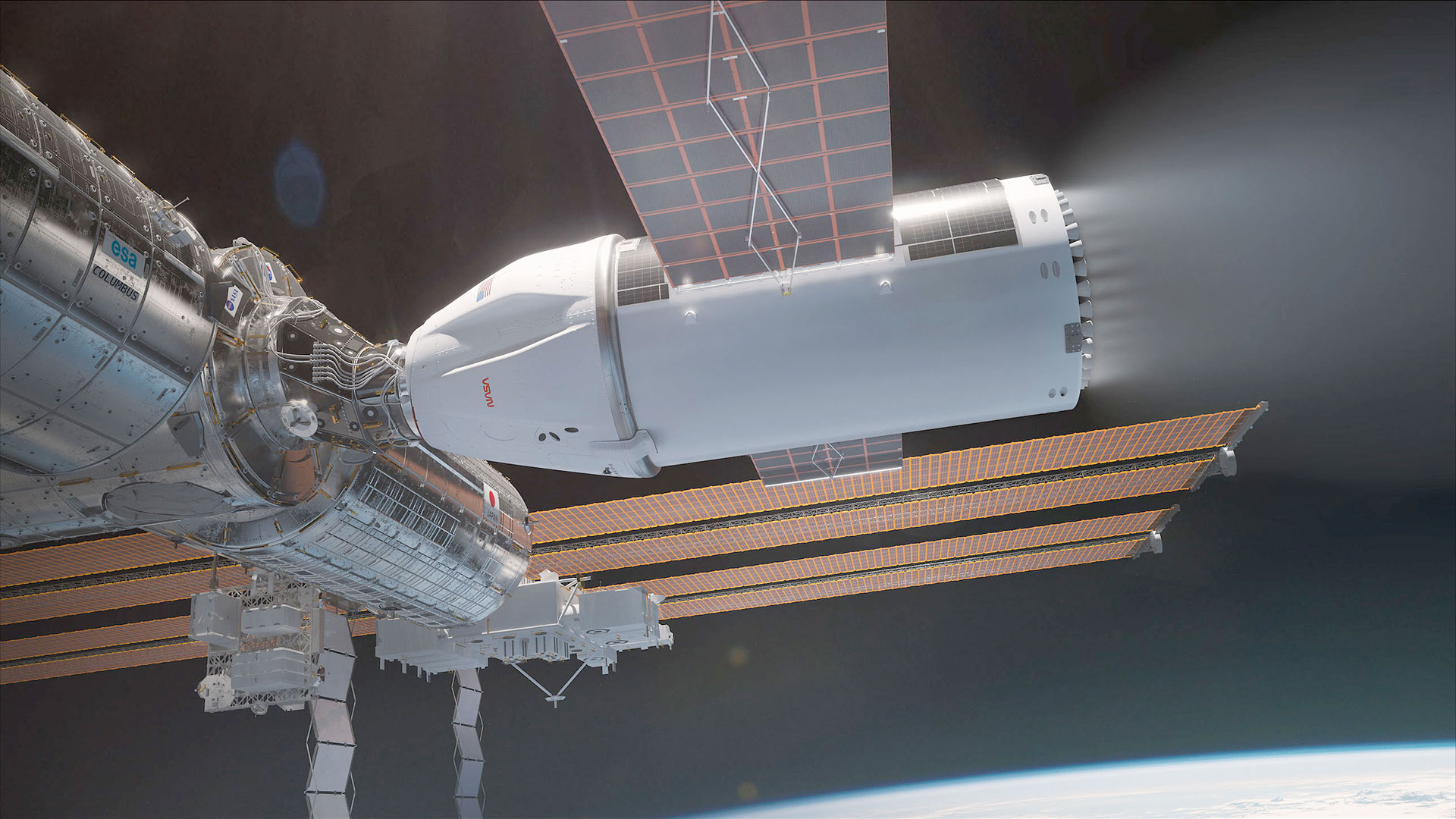
As presently blueprinted by NASA, the International Space Station will be de-orbited via a series of actions. Firstly, in early to mid-2028, the ISS will start to be lowered through a combination of Earth's natural atmospheric drag and the execution of re-entry maneuvers by the ISS's Russian segment. Then, in mid-2029, NASA plans to launch a SpaceX-supplied, government paid for, U.S. Deorbit Vehicle (USDV) and attach that craft to the ISS, which will fire its 46 Draco thrusters and push the station down to a watery grave.

But there's one issue that has ecology experts concerned. The Ocean Foundation, a Washington, D.C.-headquartered group with a mission to improve global ocean health and the human relationship with the sea via carefully chosen strategies and projects, says the planned deorbit of the International Space Station "raises serious concerns for ocean health that the space community has not adequately grappled with," according to Mark Spalding, president of the foundation.

A troubling gap

A just-issued U.S. Government Accountability Office (GAO) report has focused on issues related to NASA's plan to bring down the International Space Station (ISS) and transition from the ISS to commercial space stations, namely NASA's concern about having a "gap" in continuous human presence in low Earth orbit.

The GAO report explains that, at the end of 2030 or early 2031, the USDV is to perform a re-entry burn. That would push the ISS through the Earth's atmosphere and into a pre-determined spot – an ocean zone called Point Nemo.

"As part of the reentry process, NASA expects portions of the ISS and deorbit vehicle to break up and fall into the remote part of the ocean to minimize the risk to populated areas," states the GAO report.

a cone-shaped white spacecraft attached to a metallic cylinder in space

SpaceX rendering of its U.S. Deorbit Vehicle (USDV), a Dragon-derived spacecraft with 46 Draco engines designed to propel the International Space Station into a controlled reentry. (Image credit: SpaceX)

But as for using Point Nemo or any part of the ocean as a convenient dumping ground, Spalding told Space.com that "there is a troubling structural gap in international law that the ISS de-orbit throws into sharp relief."

Under the Space Liability Convention of 1972, if space debris falls on another nation's territory or damages property, Spalding said, the launching nation owes compensation - absolutely and without needing to prove fault. "But no equivalent protection exists for the ocean," he said.

"As a result, when space agencies have control over where debris falls, they aim for the high seas, and in doing so, they incur no legal obligation to pay for cleanup or environmental remediation," said Spalding.

The Ocean Foundation leader said he understood the legitimate safety rationale for targeting Point Nemo, the point on Earth farthest from any populated area. "But the ocean's remoteness from human infrastructure should not be mistaken for a lack of value or vulnerability," Spalding said. "The ocean and its creatures deserve the same protection that international law affords to national territories."

Concerning the ocean's ecosystems, Spalding asks what happens to the marine ecosystems and creatures on the seafloor where the ISS leftovers land?

"The honest answer is, we don't fully know. That is deeply troubling for a structure the size of a football field. We do know that not everything burns up on reentry. Denser components will survive and reach the seafloor," Spalding added.

a map of earth with a red marker on a spot west of south america

Point Nemo (marked in red) in the south Pacific Ocean is farther from land than any other point on Earth. It is also home to the world's largest "Spacecraft Cemetery." (Image credit: Β PGC/NASA IBCAO Landsat/USGS/Google)

The problem: uncertainty

What denser, specific materials from the ISS re-entry will be, and what harm they may cause to marine life, Spalding said, "has not been adequately studied or disclosed. That uncertainty is itself the problem."

Additionally, what environmental harm may begin before the debris hits the water is worrisome. As the largest reentry in history, the cumulative atmospheric impact of down-falling ISS hardware deserves serious study, he said.

For one, Spalding flagged a newly negotiated High Seas Treaty (BBNJ Agreement) that is relevant to downing the ISS. It requires parties to conduct environmental impact assessments for activities that may affect the marine environment beyond national jurisdiction when effects are unknown or poorly understood.

"It is fair to ask whether the ISS deorbit β€Šβ€” the largest such reentry in history, targeting the high seas β€Šβ€” should trigger that obligation," Spalding said.

a T-shaped space station floats above Earth

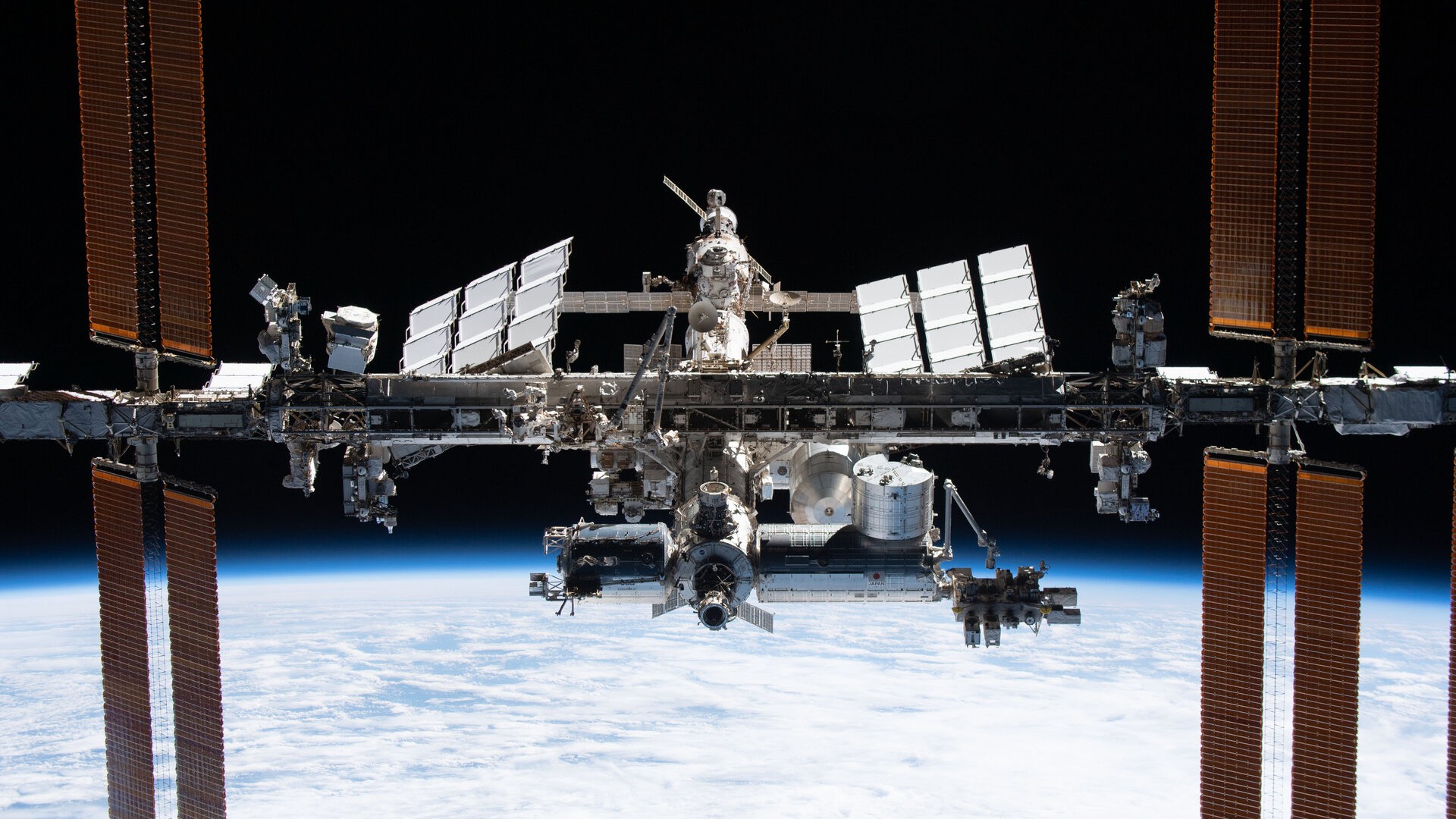
The International Space Station. (Image credit: NASA/ESA–T. Pesquet)

Position statement

As for the Ocean Foundation's position on the ISS deliberate crashing into the Pacific Ocean, the group believes that discussion points prior to the ISS downing include:

  • A full environmental impact assessment of the anticipated seafloor debris field and atmospheric effects;
  • Public disclosure of all materials that will survive reentry and reach the ocean floor;
  • A rigorous legal analysis of obligations under the UN Convention on the Law of the Sea (UNCLOS,) the London Protocol of 1996 that provides an international standard and framework for countries to individually and collectively protect and preserve our oceans from pollution caused by the dumping of wastes and other matter into the ocean, along with the BBNJ Agreement.

The high seas have no sovereign who can demand accountability, concluded Spalding. "We believe this gap in international law needs to be closed, and the ISS de-orbit is a vivid illustration of why."

  •  

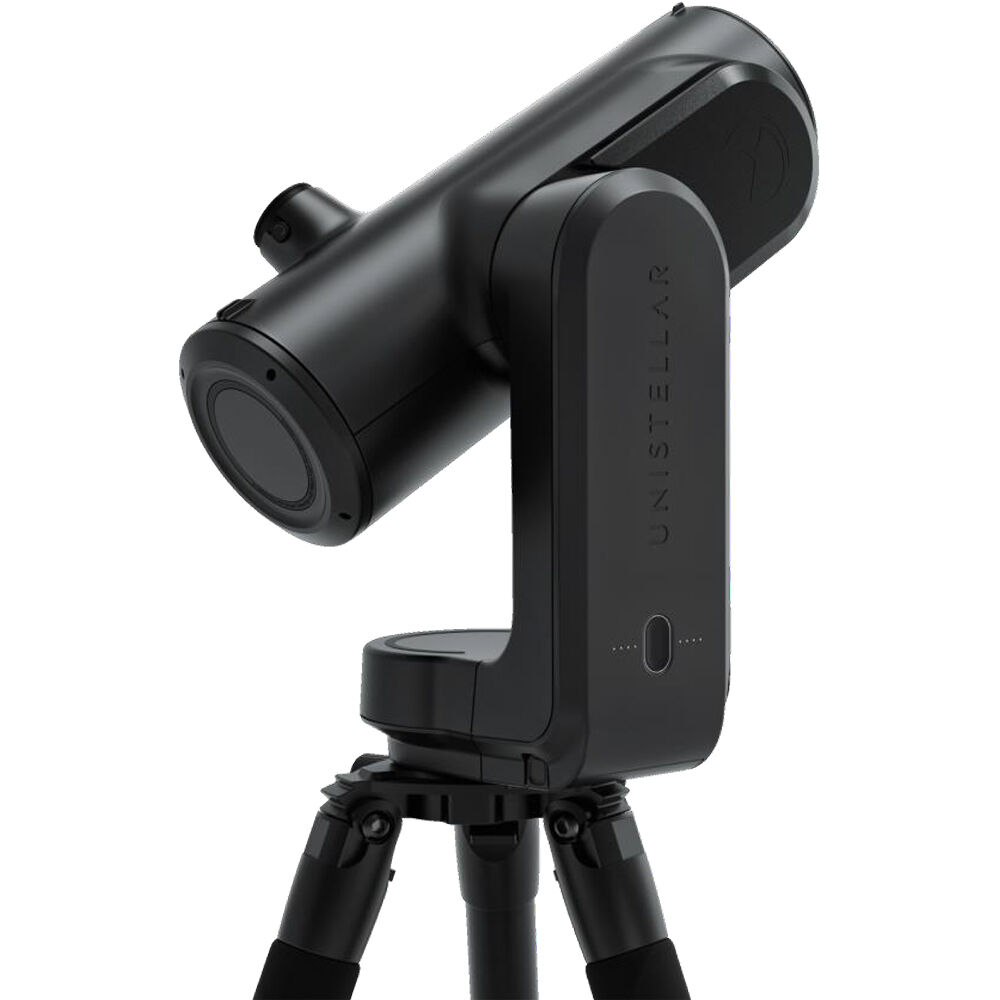
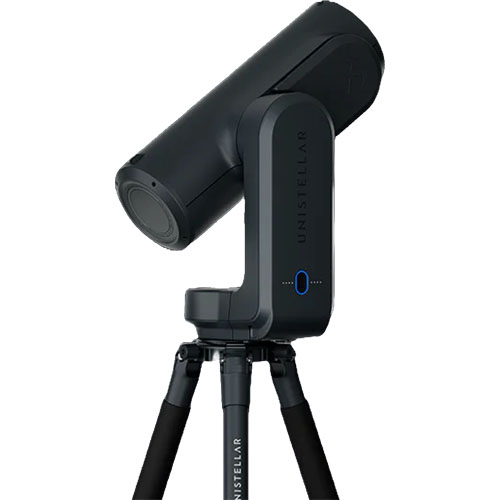
The Unistellar Odyssey Pro helped me feel in touch with the universe and it's now 15% off

Astrophotography can be confusing and when combining mirrorless cameras, astrocams and telescopes, there is a huge learning curve that can throw people a bit sideways if they are looking to get into it. The Unistellar Odyssey Pro was the first smart telescope that I used and it helped me on my astrophotography journey, allowing me to quickly and easily take awe-inspiring images of deep space objects like the Great Pegasus star cluster and a range of galaxies.

You can get the Unistellar Odyssey Pro smart telescope, on sale right now for $3,909 at Unistellar.

Alongside the usual go-to technology present in all of Unistellar's smart telescopes, the Odyssey and Odyssey Pro models also have autofocus to help even more when imaging the night sky. With Amazon Prime Day well underway and running until June 26, keep an eye on the best prices across all skywatching gear on our Prime Day hub, which tracks deals from all major retailers.

Save $690 on this beginner-friendly smart telescope that even works in light-polluted areas to observe and image over 5,000 night sky objects.

We gave it four and a half stars in our Unistellar Odyssey Pro review and we have used it since for continued night sky observation and astrophotography. It is easily operated via an intuitive smartphone app.View Deal

Save $390 on our best smart telescope for versatility, thanks to its small form factor and light weight compared to the rest of the Unistellar line-up. It has autofocus and doesn't require collimation, so it is the perfect smart telescope for a beginner.

It got four and a half stars in our Unistellar Odyssey review thanks to its great views of deep space objects and good color rendition on astrophotography shots. View Deal

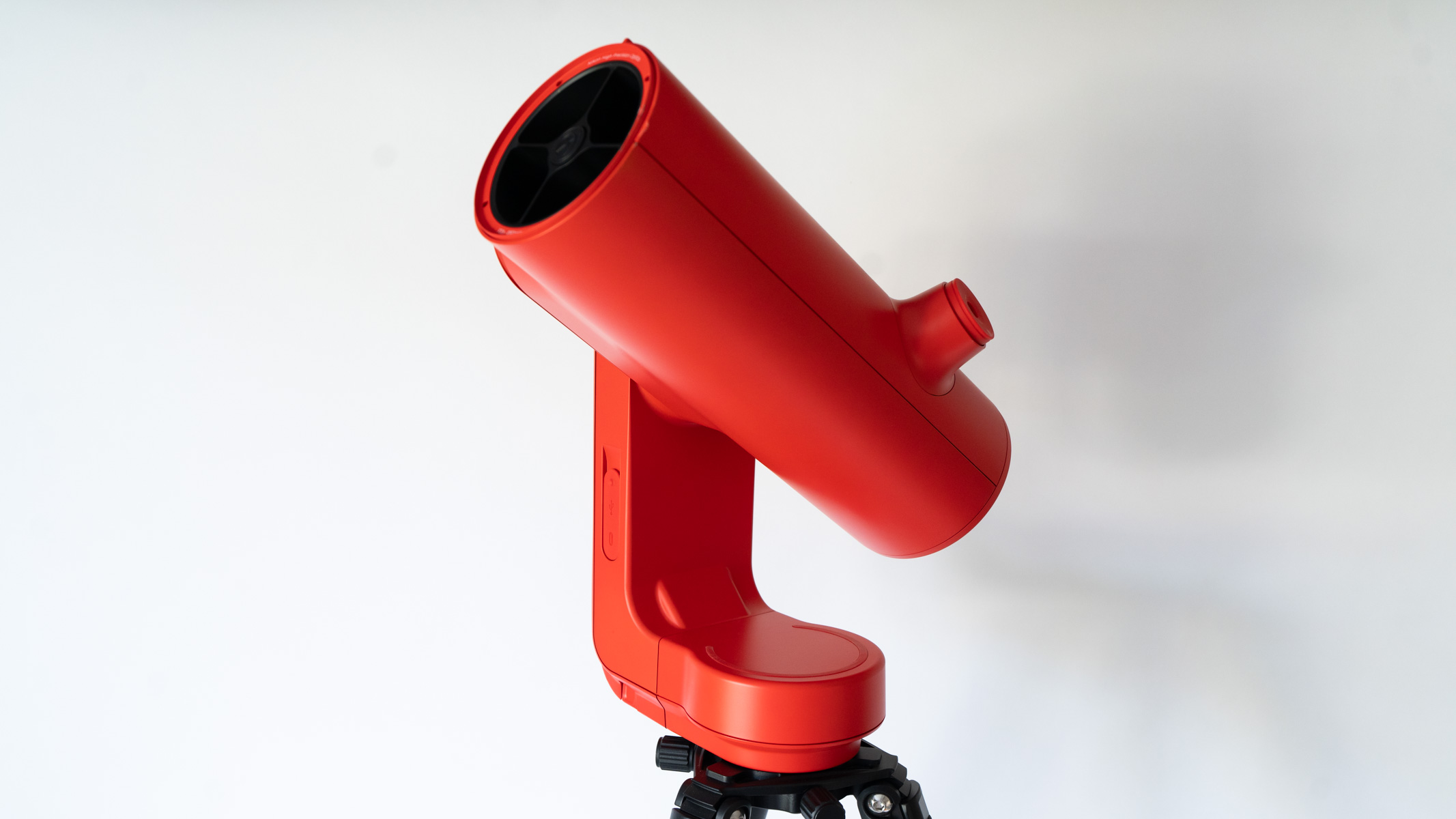
Unistellar Odyssey Pro smart telescope on a white background
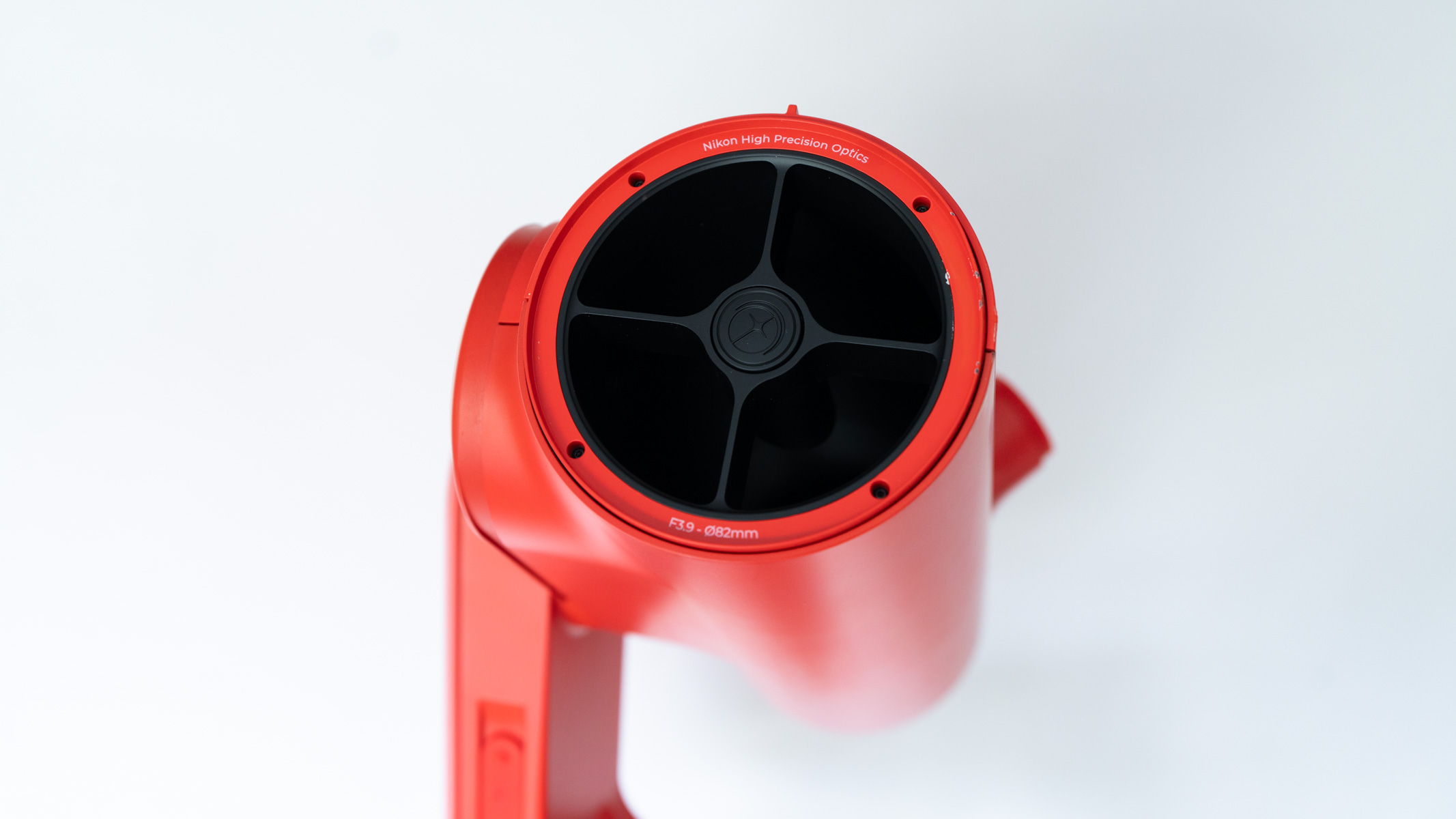
The Odyssey Pro features the same specs as the non-pro version apart from an upgraded 4.1MP sensor and Nikon-made eyepiece.Jase Parnell-Brookes
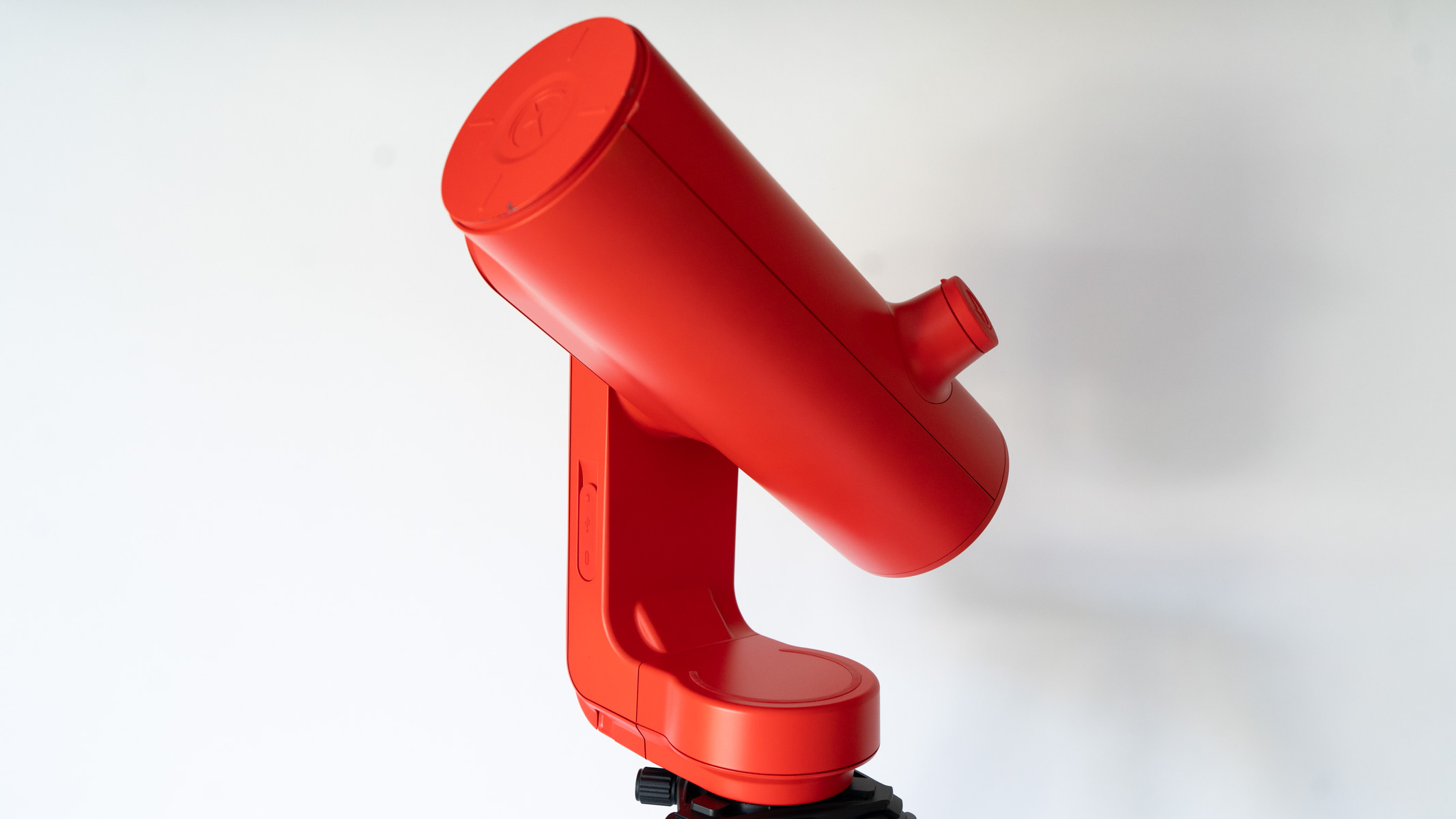
Unistellar Odyssey Pro smart telescope on a white background
A lens cap keeps the mirrors safe from dust when not in use. Jase Parnell-Brookes
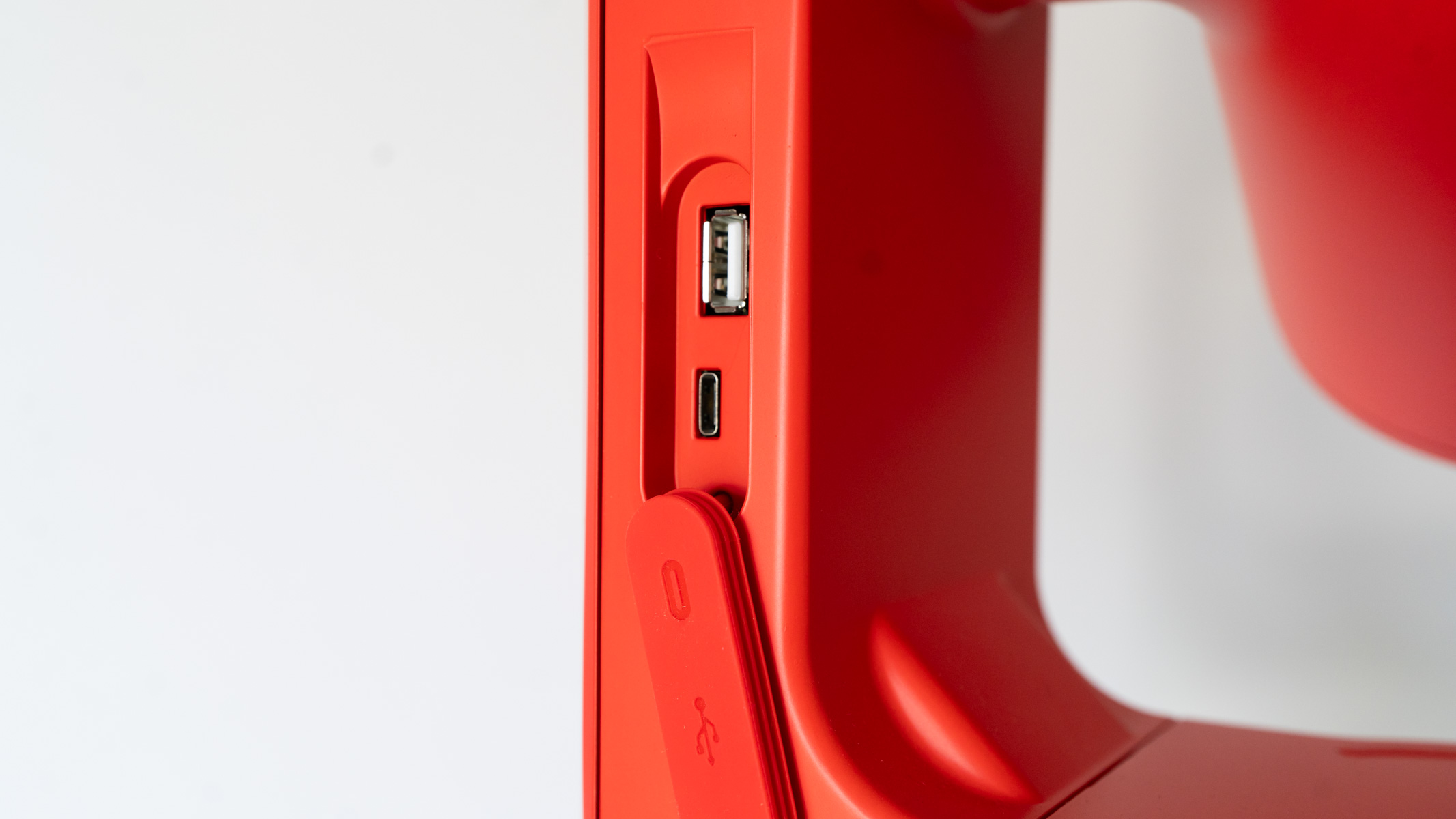
Unistellar Odyssey Pro smart telescope on a white background
A USB-A and a USB-C port can be found on the side for charging and data transfer.Jase Parnell-Brookes
Unistellar Odyssey Pro smart telescope on a white background
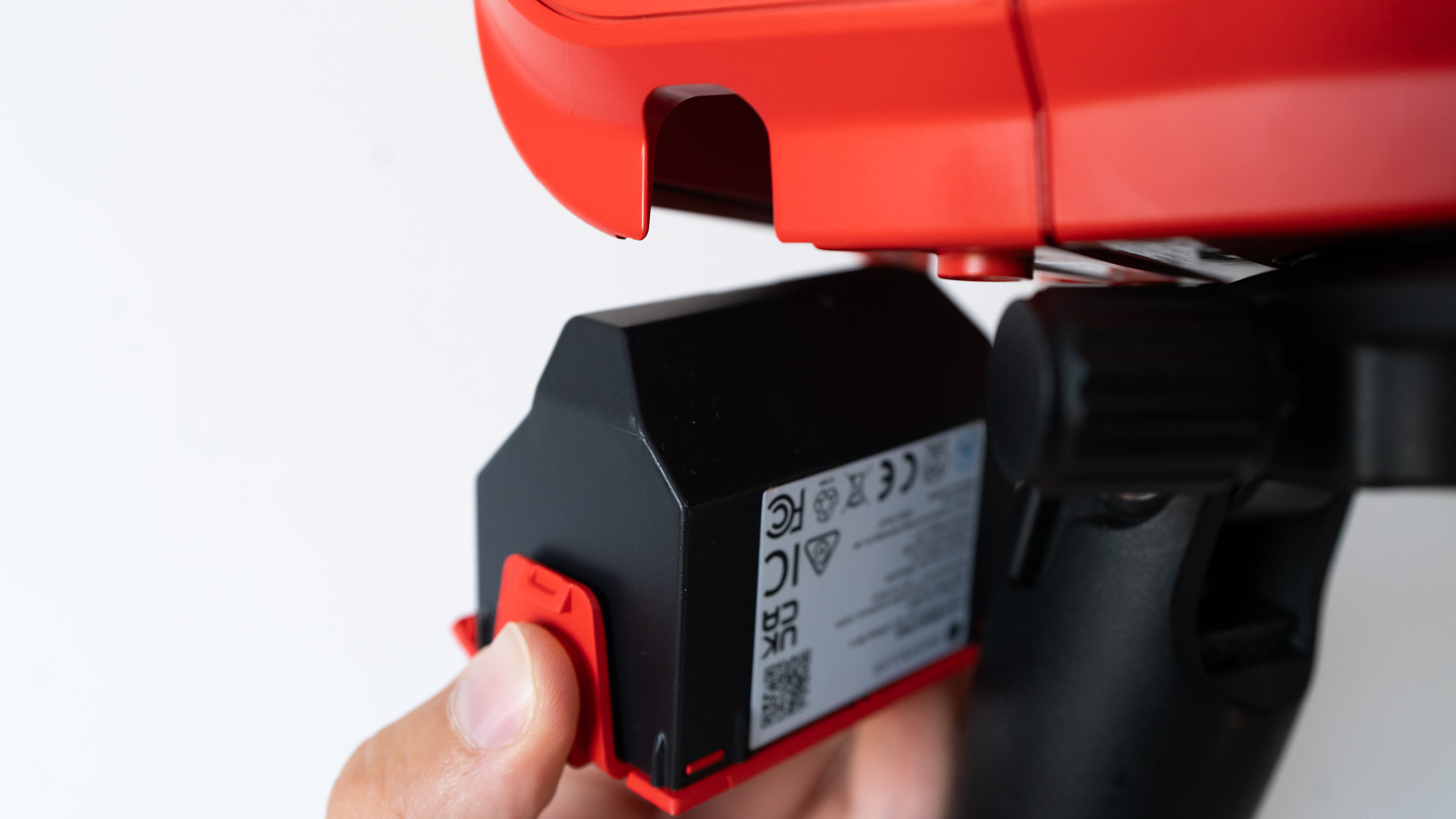
The lithium-ion battery is removable.Jase Parnell-Brookes
Unistellar Odyssey Pro smart telescope on a white background
Traditional observers will like the Nikon-made eyepiece which shows the same view as on the smartphone.Jase Parnell-Brookes
Unistellar Odyssey Pro smart telescope on a white background
There is no focusing wheel on the Odyssey Pro and the telescope focuses on night sky objects automatically.Jase Parnell-Brookes
Unistellar Odyssey Pro smart telescope on a white background
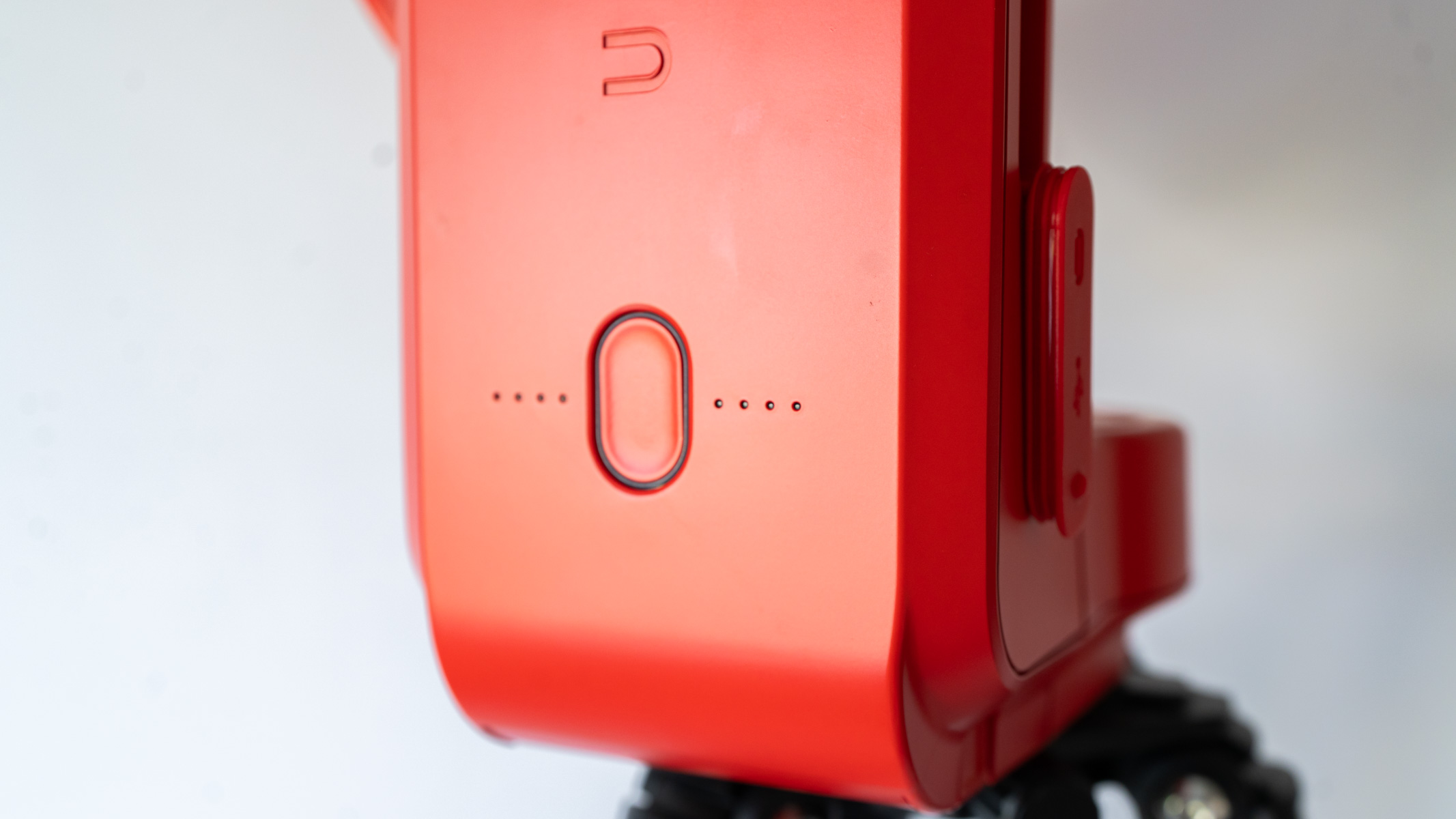
The minimalist design features a single power button. Jase Parnell-Brookes
Unistellar Odyssey Pro smart telescope on a white background
The Unistellar Odyssey Pro has a three-inch aperture.Jase Parnell-Brookes
Unistellar Odyssey Pro smart telescope on a white background with solar filter attached
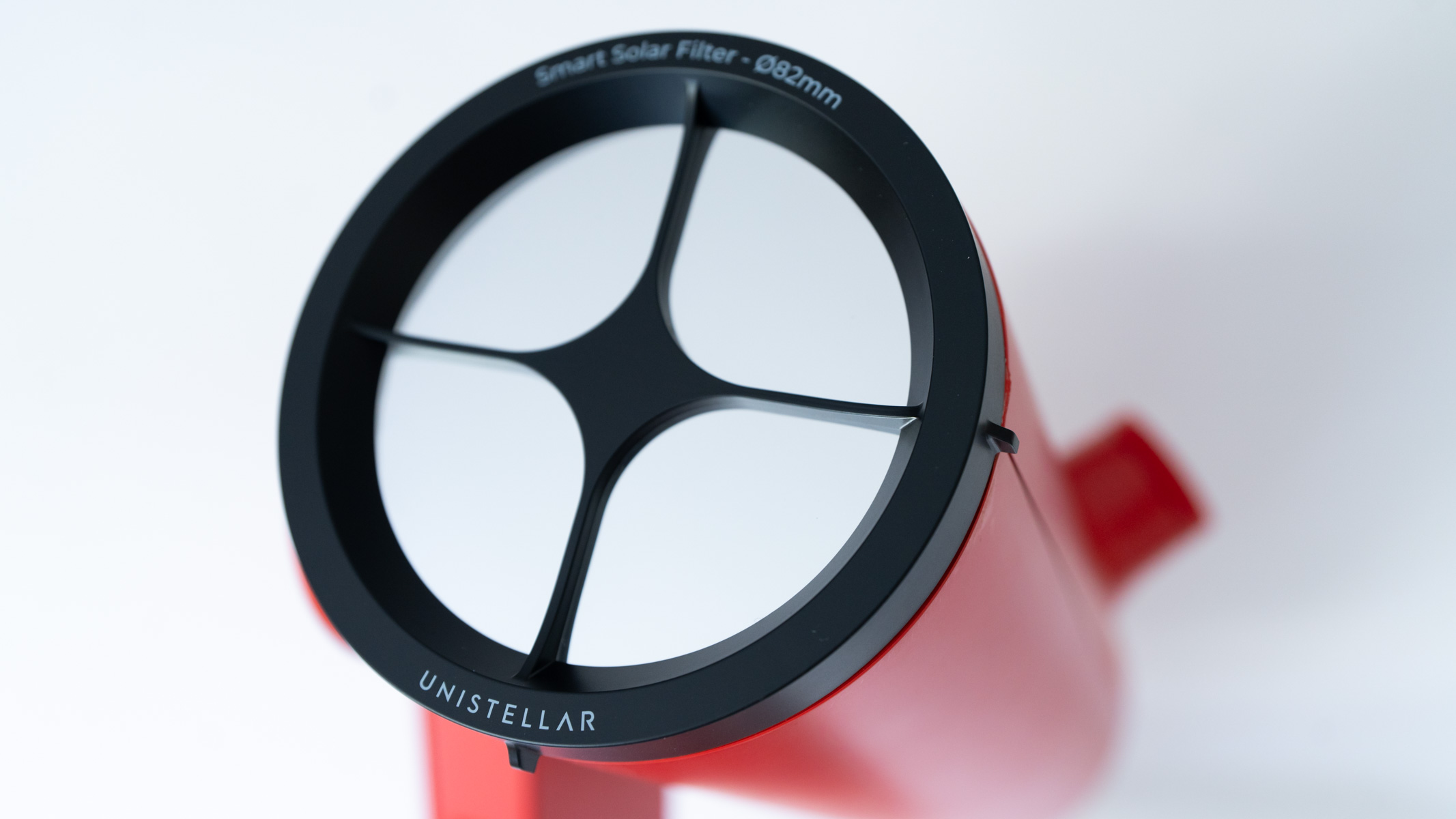
A Unistellar solar filter can be bought separately and used for solar imaging. Jase Parnell-Brookes
Astrophotograph taken with the Odyssey Pro
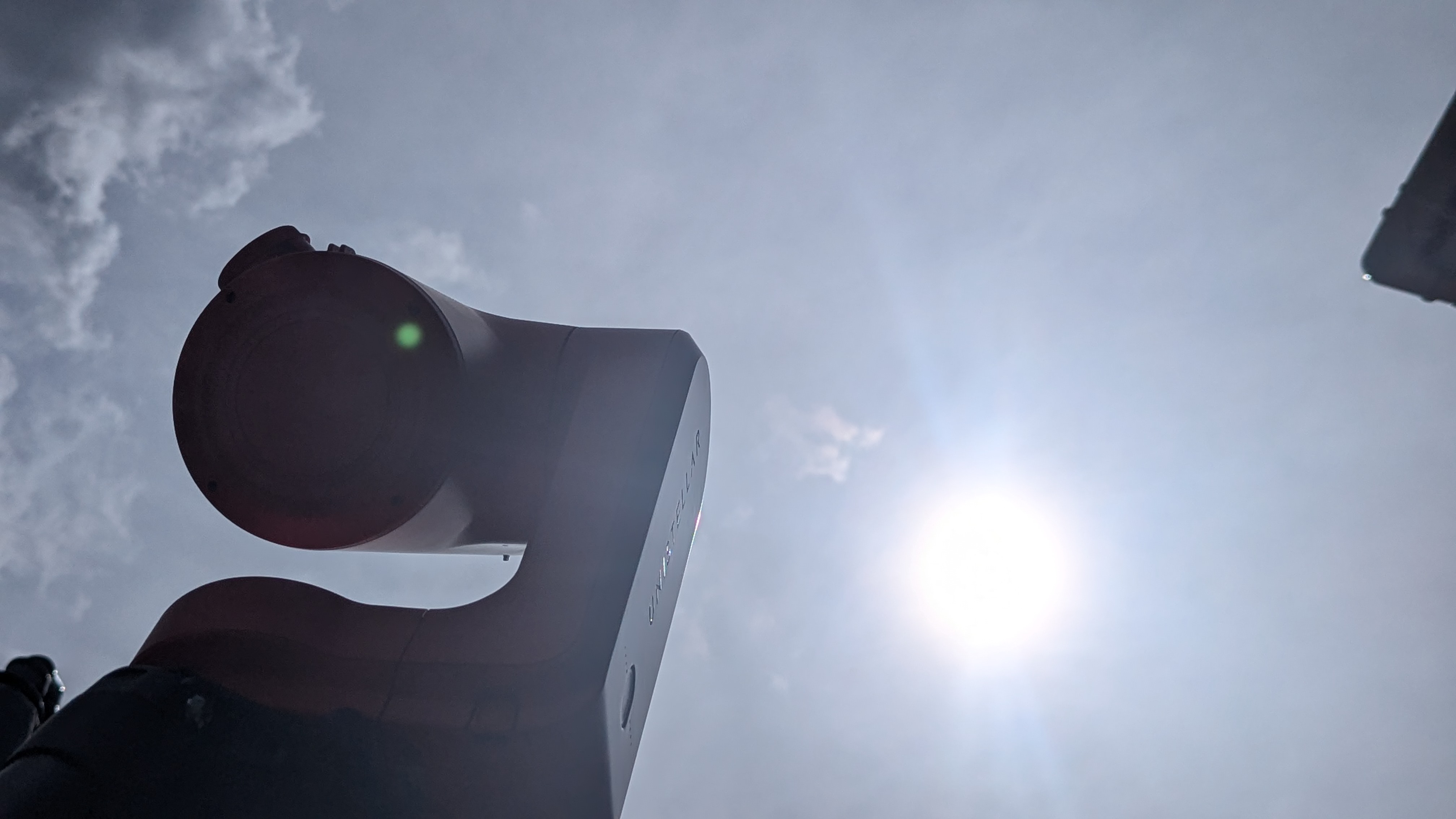
Daytime use of the Unistellar Odyssey Pro is possible with the Unistellar Odyssey Pro. Jase Parnell-Brookes
Astrophotograph taken with the Odyssey Pro
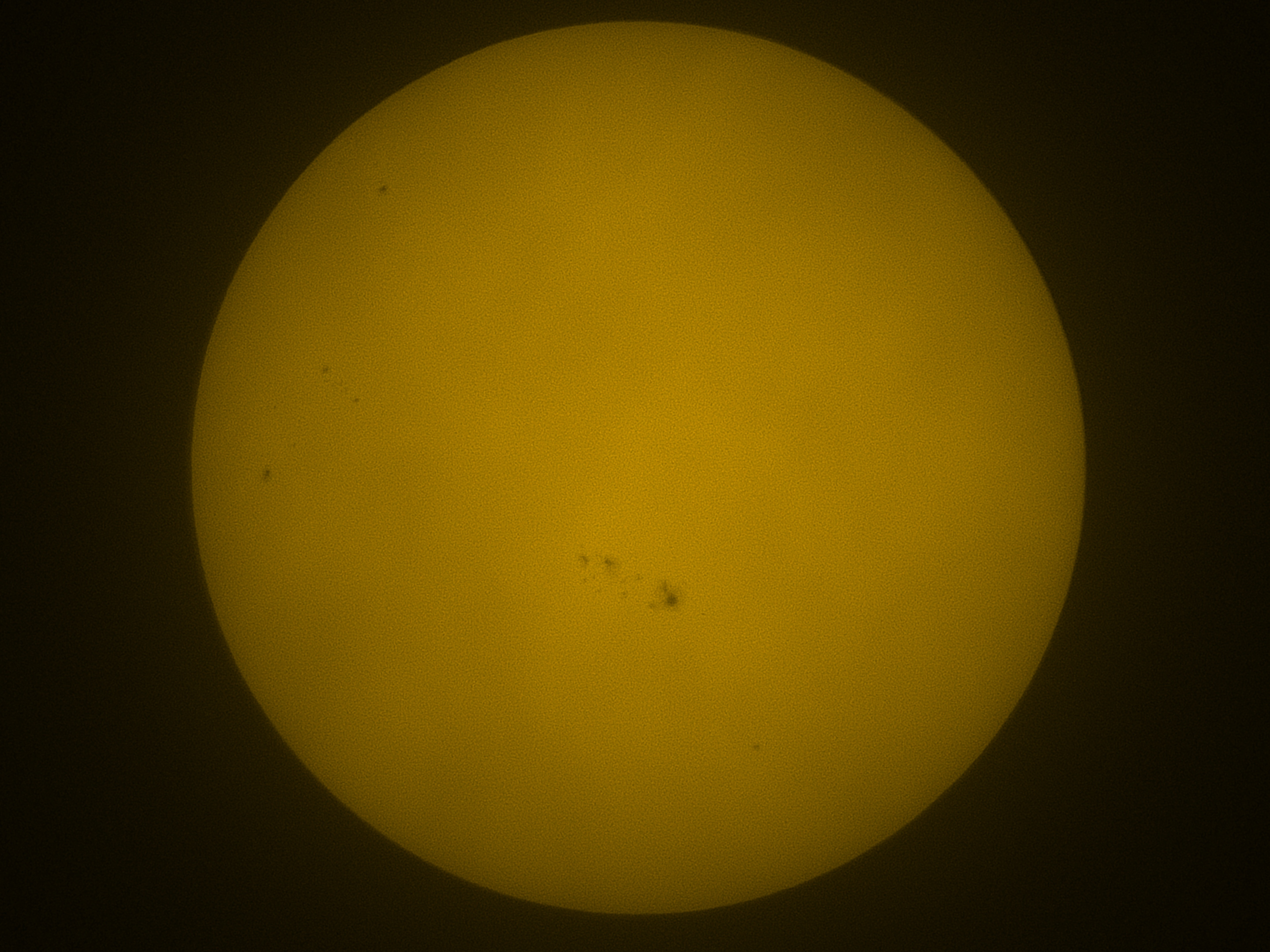
The solar disk as imaged by the Unistellar Odyssey Pro.Jase Parnell-Brookes
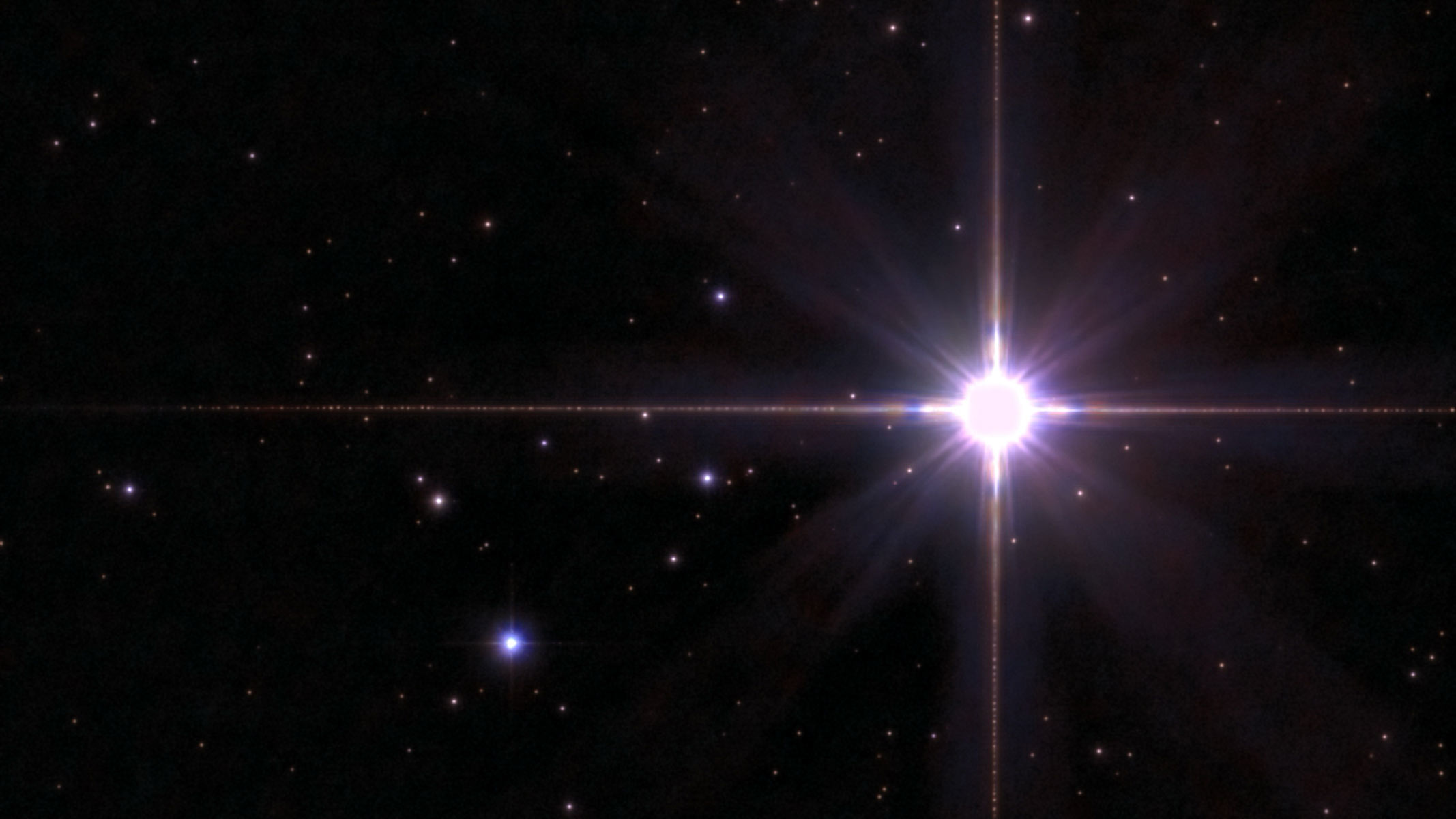
The star Arcturus shining in the starry night sky.
The star Arcturus as imaged by the Unistellar Odyssey Pro.Harry Bennett / Future
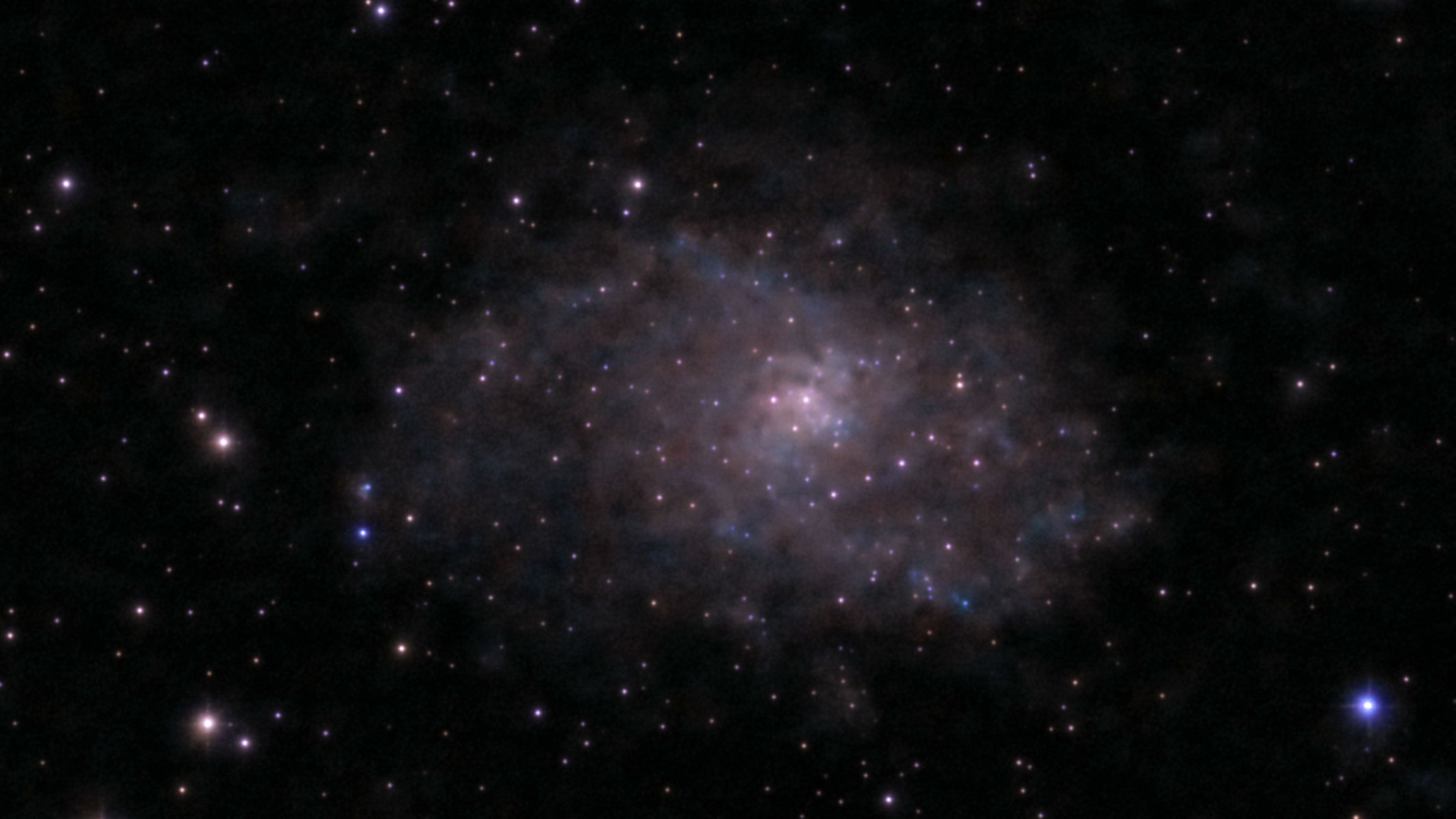
The Triangulum galaxy (M33) as imaged from a Unistellar Odyssey Pro.
The Triangulum galaxy (M33) as imaged by the Unistellar Odyssey Pro.Harry Bennett / Future
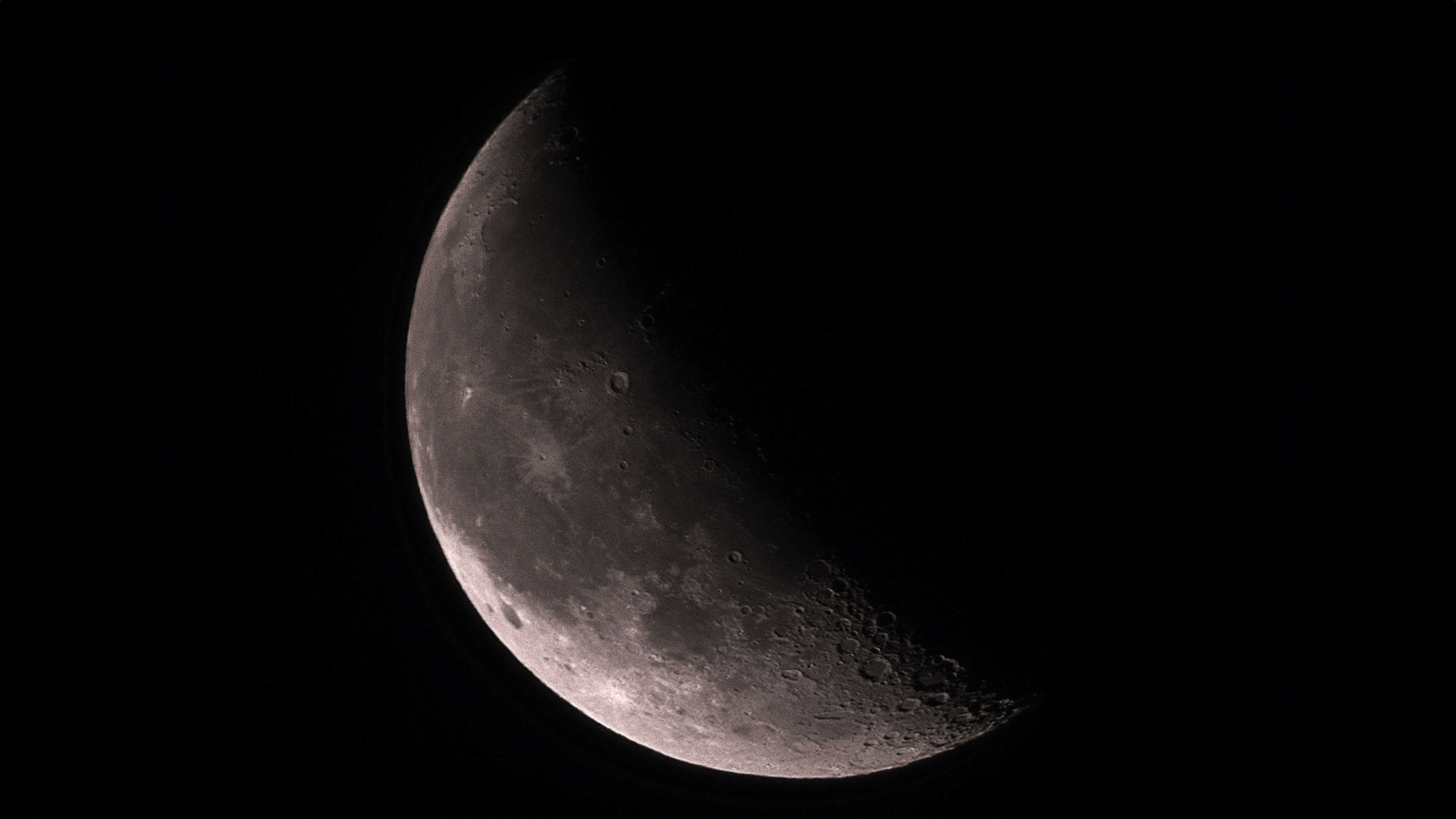
The crescent moon as imaged from a Unistellar Odyssey Pro.
The crescent moon as imaged by the Unistellar Odyssey Pro.Harry Bennett / Future
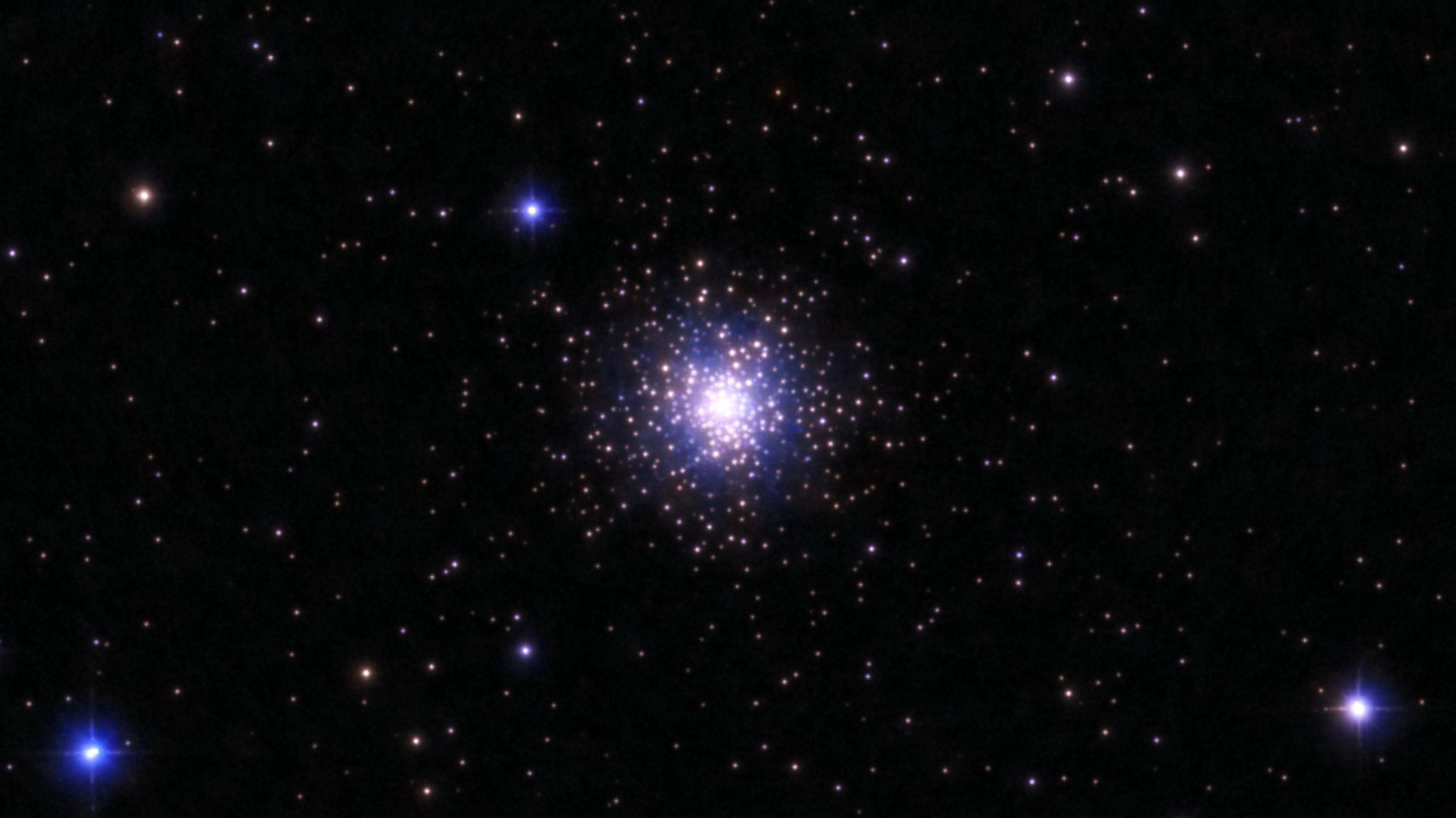
The Great Pegasus Globular Cluster (M15) as imaged from a Unistellar Odyssey Pro.
The Great Pegasus Globular Cluster (M15) as imaged by the Unistellar Odyssey Pro.Harry Bennett / Future

The Unistellar Odyssey Pro is great for beginners and it was the first smart telescope that I used, so I have a soft spot for it. To start using it, all I had to do was set it up on a clear night and link it to my phone, before allowing the telescope to orient itself and choosing a target to observe. After that, I selected 'enhanced vision' mode, which stacks four second exposures on top of each other to build a stronger and more detailed image, something that makes details in galaxies stand out.

It's definitely a model aimed at those who have very little experience with astronomy and astrophotography, as it not only finds your target, but it focuses on it, too. This is especially useful if you are not confident focusing on stars with a Bahtinov mask and getting them as sharp as possible.

I have hands-on experience with the Pro version, which has a built-in eyepiece with a digital display, but the rendered image is the same as what you can see on your smart device. In all honesty, if you aren't bothered about having a "traditional telescope experience," skip the Pro model and grab the regular Odyssey for $2,209 to save an extra $1,000. For a range of other telescope models, cameras and skywatching gear, check out our Prime Day hub, which tracks all of the best deals amongst this year's summer sales.

All of the Unistellar smart telescopes are great for assisted and easier stargazing, as they all have smooth go-to technology and astro capability. If you think that you may want more control over the focus in your astrophotography or if you want a higher resolution sensor, the eQuinox 2 and eVscope 2 are the company's pro lineup. With all of their models on sale for Father's Day, now is a good time to grab one. While there isn't as much darkness at the moment, they also all double up as solar telescopes with the purchase of a solar filter, something that may come in handy for the Aug. 12 total solar eclipse.

Key features: Newtonian reflector optical design, 5-hour battery life, 4.1 MP Sony sensor, 3.3-inch (85 mm) aperture, 12.6-inch (320 mm) focal length, weight 8.8 lbs (4 kg), fully motorized alt-azimuth mount, 64 GB storage, Nikon-made eyepiece, celestial database of over 5,000 objects.

Product launched: January 2024

Price history: The retail price for Unistellar Odyssey Pro is $4,599. Unistellar has a site wide 15% discount for Prime Day and has taken the price down to $3,909. It was discounted with 20% off for Black Friday last year, but this is the cheapest the price has dropped to since then.

Price comparison: Unistellar: $3,909 | Amazon: $3,909

Featured in guide: Best smart telescopes

Reviews consensus: We thought it gave us great views of the Ring Nebula and the Hercules globular cluster in our Odyssey Pro review. Other users praise the automation, portability and Nikon-made eyepiece for the Pro model. Some users wanted more battery life.

Space: β˜…β˜…β˜…β˜…Β½ | Digital Camera World: β˜…β˜…β˜…β˜…Β½

βœ… Buy it if: You want a quick set-up telescope that you can easily control with a smartphone app and get stargazing in seconds.

❌ Don't buy it if: You need manual controls or higher resolution. You may be better suited to the Unistellar eVscope 2, which is also on sale.

Check out our other guides to the best telescopes, binoculars, cameras, star projectors, drones, lego and much more.

  •  

'Rick and Morty' cast talk vocal health, hot viscous liquids, and their favorite season 9 moments (interview)

Adult Swim's smash animated series "Rick and Morty" recently unleashed its ninth season, and it's already shaping up to be one of the best seasons so far, with plenty of interdimensional shenanigans, existential excursions, evolutionary entanglements, hostile living room furniture, a potential trip to Boob World, and Pool Time!

We chatted to the creators Dan Harmon and Scott Marder earlier this month, but now we're catching up with the main cast to hear from Ian Cardoni (Rick), Sarah Chalke (Beth), Harry Belden (Morty), and Spencer Grammer (Summer) on the rigors of voice acting, playing in the multiverse, and watching all your plosives.

"We've got what we would consider classic adventures, balanced by a lot of fresh and new directions for these characters and for these stories," Cardoni tells Space.

Rick Sanchez from Rick and Morty, pictured alongside his voice actor Ian Cardoni

Rick Sanchez from Rick and Morty, pictured alongside his voice actor Ian Cardoni (Image credit: Getty Images / Adult Swim)

"I can honestly say that some of my favorite moments of episodes of the whole series run are coming in season 9, and I'm excited for fans to see that. Sci-fi in its best form is human stories. It may be our future, and I think we get glimpses of that by tapping into the human elements. With all the wacky hijinks that take place, we're in for a really amazing season and some real good science fiction."

Those hijinks call for some suitably animated vocal performances from the vast though. "These are voices that take a toll, even when it’s not a session, when it requires the intense gravel or yelling of Rick," explains Cardoni.

"It requires your full instrument. I like to prep with a full cardio workout because oxygen support is what you need. Then I go on vocal rest before and after sessions. I have all kinds of warm, hot, viscous liquids to soothe. I use a vocal steamer. Harry [Belden] is really religious about his regimen, but I’ve got my own way to get myself into the voice, but not burn out. Voice acting is acting. And the show doesn’t pull any punches emotionally."

Beth and Space Beth from Rick and Morty, pictured alongside their voice actor Sarah Chalke

Beth and Space Beth from Rick and Morty, pictured alongside their voice actor Sarah Chalke (Image credit: Getty Images / Adult Swim)

Chalke relishes her time playing Beth and Space Beth and adamantly declares season 9 as her favorite season they’ve ever done.

"There's a couple of specific episodes, 'Salute Your Morts' and 'Jer Bud' where you really get to go deeper into the relationships," she notes. "The fun part of 'Rick and Morty' as an actor is all the unique challenges because there's no limits and because it's a multiverse and because the show can go anywhere, you’re always doing things with your voice you've never done before.

"None of us have to do the voice intensity Ian does with Rick. You're working those vocal chords so hard with the burping and all of that," Chalke remarks to Cardoni. "For me, Space Beth is more in that direction than Beth. So I always record all of that first and Space Beth second because she has more of a gravelly, raspy quality to it. It's whatever you need to do to make it grounded and as real as you can."

Morty from Rick and Morty, pictured alongside his voice actor Harry Belden

Morty from Rick and Morty, pictured alongside his voice actor Harry Belden (Image credit: Getty Images / Adult Swim)

For Belden, it was gratifying for Morty to experience a great deal of personal growth this season.

"There are a lot of intense situations that he finds himself in, and I’m excited for fans to see him go through that and come out the other side," he adds. "For me, my favorite episode is going to be the finale ["Field of Dreams"] for sure, and the journey that Morty goes on. There's so much good stuff in there."

Regarding his own regimen of keeping his vocal health tip-top, Belden explains:

"I like to run a couple of miles before I start, stretch out the entire body, do the actual vocal warmups. Morty being such a particular voice, I need a lot of breath support, so I have a wide stance and create a powerful base. I’m expanding my ribcage to support myself. And that’s not without even getting into tongue placement, spreading your lips wide to get the sound out, watching your plosives on the letter 'p.' It's all this stuff you would never ever think about."

Grammer is thrilled to see some fan favorite characters make return cameos in season 9, as we get to watch Summer and Morty just being terrible teenagers, and loves the fact that the Smith family gets a swimming pool.

Summer from Rick and Morty, pictured alongside her voice actor Spencer Grammer

Summer from Rick and Morty, pictured alongside her voice actor Spencer Grammer (Image credit: Getty Images / Adult Swim)

"I kind of learned on the job about 14 years ago," she reveals. "I was trained as an actor though, so I have a pretty good vocal ability. But it's very demanding, especially as you get older. There’s these tiny muscles and tiny folds. The last few years, I’ve really devoted to vocal health and got to a place where I can comfortably do the Summer role really well."

Grammer has really embraced the role of Summer, but it's also led to some major lifestyle changes for her. "You have to choose where you want to live. I don’t see a lot of people now. I just work a lot", explains Grammer.

"I can’t go to a party that’s going to be loud and talk to people. And that's fine. Alcohol is really bad for hydration, so I don’t really drink anymore. I’m constantly drinking water or something really slimy all the time. I have a whole kit of just things for your voice that I always take with me."

Executive produced by Dan Harmon and showrunner Scott Marder, "Rick and Morty season 9" airs Sundays at 11 p.m. on Cartoon Network's Adult Swim, and will also begin streaming weekly on Hulu and HBO Max starting June 15, 2026.

Watch Rick & Morty Seasons 1-8 on HBO Max:

Basic (Ads): $10.99/month or $109.99/year
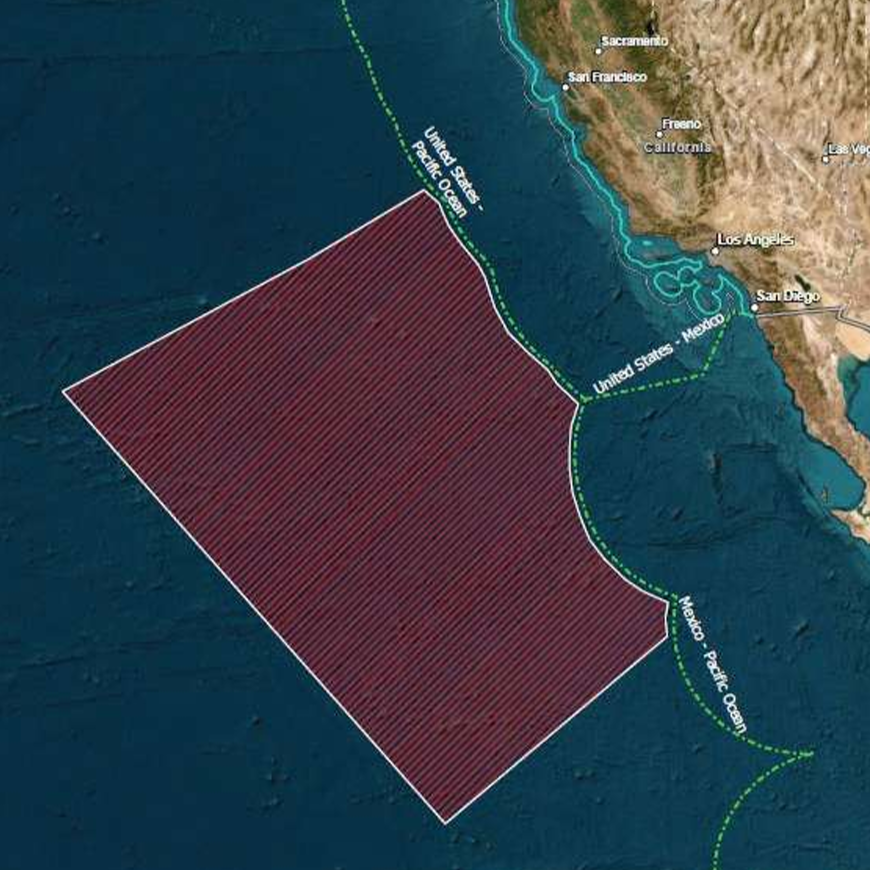
Standard (No Ads): $18.49/month or $184.99/year
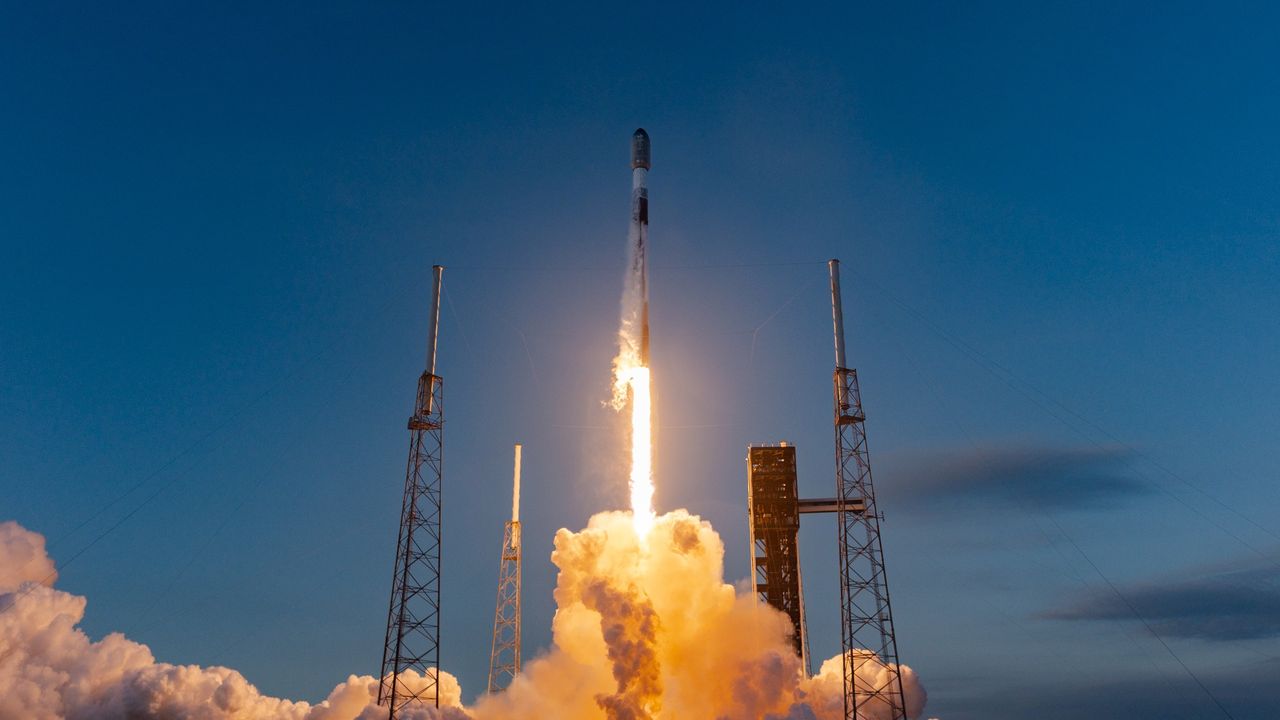
Premium (4K): $22.99/month or $229.99/year

  •  

Ignite a child's imagination with the stars: Our expert-picked Astronaut Galaxy Star Projector is a Prime Day steal at just $25
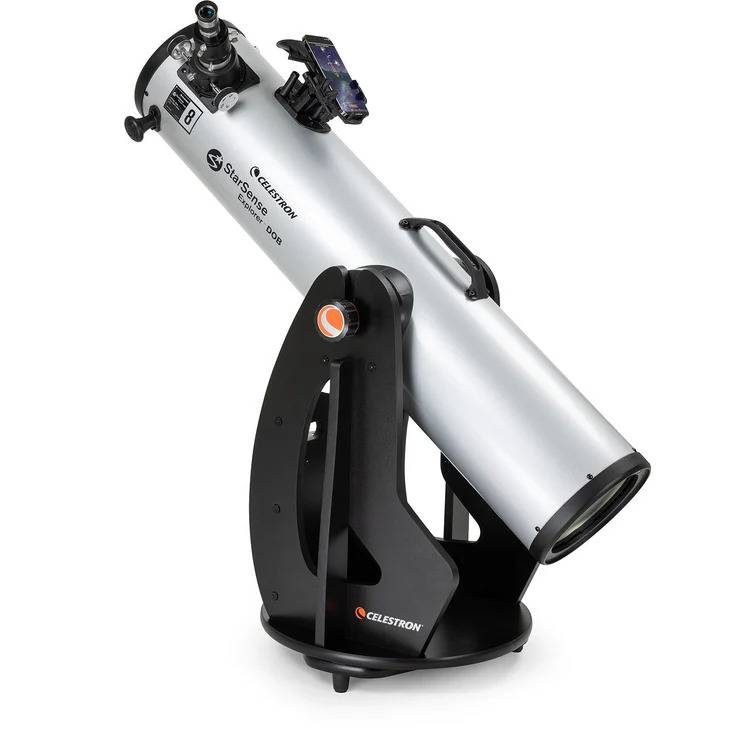
Are you scratching your head, wondering what to buy for a child? Our expert Tantse recommends this Astronaut Galaxy Projector and right now, during Prime Day, it's just $25.

Enjoy stunning, starry displays with this Astronaut Galaxy Projector, now $25 at Amazon

Faced with buying a present for her nephews, and having been suitably impressed when she reviewed this Astronaut Galaxy Projector, Tantse (our long-time star projector reviewer), settled on this gift and she's had no complaints!

We rank it one of the best star projectors and best star projectors for kids because, despite its budget price tag, it creates some amazing, room-filling displays that'll leave children wide-eyed. Adults are just as likely to be delighted, too!

Looking for more savings? Check out our other Prime Day deals.

Save 17% on this compact but powerful star projector, which is capable of transforming children's bedrooms with its starry displays. View Deal

Astronaut Starry Sky Projector review photo
It may be cheap but there's nothing nasty about this projector, which can light up a whole room. Tantse Walter
Astronaut Starry Sky Projector review photo
The astronaut's power pack has its own power port, a cute design feature.Tantse Walter
Astronaut Starry Sky Projector review photo
The star projector, disassembled.Tantse Walter

As challenges go, one of the biggest trials in life is buying a gift for someone else's child. Assuming you like their respective adults, a drum set or a Nerf gun is right out. Fortunately, our expert Tantse Walter has the answer, with this impressive but pocket-friendly Astronaut Galaxy Projector.

Despite the name, this cool projector, which Tantse gifted to her nephews, projects both stars and galaxies. It's not scientifically accurate, but it punches well above its price tag.

In Tantse's review of the Astronaut Galaxy Projector called it "a well-made novelty star projector that every kid, or space fan, will love to have in their bedroom," and even if the kids in question aren't skywatchers, it could well kindle their interest in the cosmos.

With its remote control, customizable displays and 45-90 minutes sleep timer, adults will find it a handy meditation tool or relaxation tool too. At $25, this Astronaut Galaxy star projector is a superb gift that can transform any room.

Key features: Remote control, projects light shows, sleep timer, compact

Price history: This model tends to retail for between $29.99 and $34.99. We've sometimes seen it dip cheaper, though there are also several versions of this projector.

Price comparison: Amazon: $25

Reviews consensus: In our review of the Astronaut Star Projector, expert Tantse awarded it four stars out of five and Amazon purchasers rank it even higher.

Space: β˜…β˜…β˜…β˜…

Featured in guides: Best star projectors, best star projectors for kids

βœ… Buy it if: You want a star projector that, despite its novelty appearance, offers excellent performance and won't cost you a fortune.

❌ Don't buy it if: You want scientific accuracy because, as impressive as they are, this projector's displays don't match the night sky. Instead, consider the Sega Toys Homestar Flux.

Check out our other guides to the best telescopes, binoculars, cameras, star projectors, drones, lego and much more.

  •  

SpaceX Dragon says goodbye to the ISS | Space photo of the day for June 23, 2026

A view out of the window of the ISS sees the SpaceX Dragon capsule with Earth in the background.

SpaceX's Dragon capsule leaves after dropping off some supplies and science at the ISS. (Image credit: NASA/Jessica Meir)

SpaceX's Cargo Dragon capsule shines in the sunlight over Earth as it departs from the International Space Station in a new image snapped from onboard the station.

What is it?

Peering through the window of the International Space Station (ISS), NASA astronaut Jessica Meir snapped a striking photo as she watched a SpaceX Cargo Dragon capsule depart from the station.

With sunbeams gleaming downward, reflecting off of the spacecraft's hull, the Dragon can be seen backing away from the station mere moments after undocking from the port on the station's Harmony module. The undocking is so recent that you can clearly see both the docking port and the hatch of the Dragon where the two connected.

The Dragon disconnected from the space station on June 16, and just one day later, parachuted into the Pacific Ocean off the coast of Southern California where it was retrieved, chock-full of cargo and finished science experiments.

Why is it incredible?

The space station has been in orbit since 1998 and continuously occupied since November, 2000. With decades of work in orbit, it can be easy to take for granted the incredible transport system that supports cutting-edge research hundreds of miles above Earth's surface.

The work done on the station is impressive, but this system is just as mind-boggling. In addition to launching and returning astronauts who perform critical maintenance and repair work on the station on top of their research duties, cargo missions keep the station stocked.

From food and clothing to medical equipment and intricate science experiments, these missions are essential for both keeping astronauts safe and healthy on station as well as continuing the progression of science in-orbit. This back-and-forth between Earth and the space station is an impressive feat, and this photo shows the system fully in-motion.

  •  
❌