Archaeologists in Germany have unearthed an unusual burial of an injured man who was thrown into an abandoned kiln nearly 5,000 years ago. Because archaeologists don't typically find artifacts or bones in kiln pits, they suspect the man may have been a human sacrifice.
While workers were constructing a power line near Gerstewitz, a village in central Germany, archaeologists found a Corded Ware culture grave, according to a June 15 statement from the State Office for Heritage Management and Archaeology (LDA) Saxony-Anhalt.
The Corded Ware culture, named after the distinctive cord-like impressions found in their pottery, spread across Northern Europe between the Late Neolithic and the Bronze Age, around 2900 to 2050 B.C. Graves of Corded Ware people tend to follow a strict pattern: Men were buried on their right side, women were interred on their left, and everyone was buried in a crouched position facing south. But sometimes, graves deviate from this pattern.
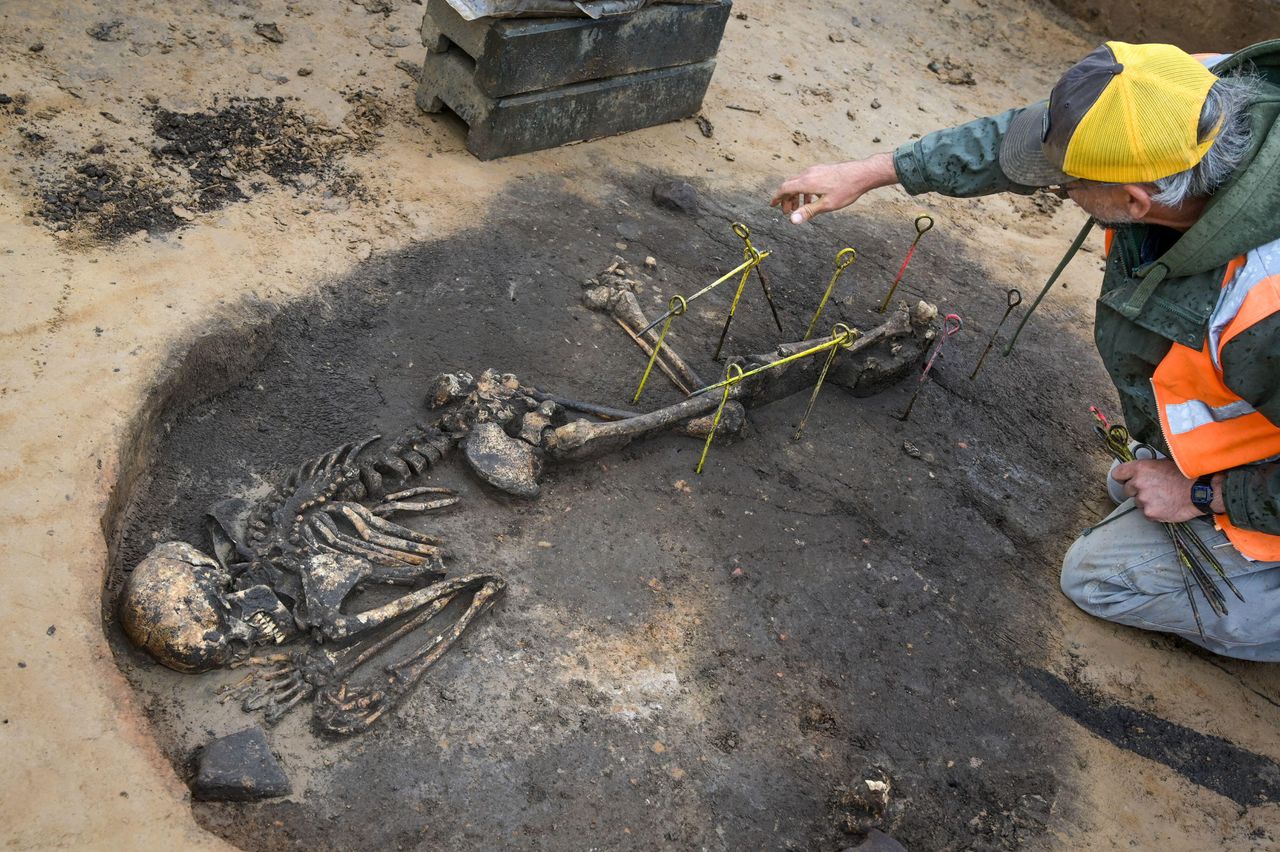
The newly excavated grave at Gerstewitz revealed the skeleton of a man who was about 25 years old when he died. He was buried in a crouched position facing south, but rather than being placed in a grave or under a small mound, he was found in a kiln pit. This pit, essentially a hole that had been dug into the ground, held ancient evidence that people had used it to burn material, such as wood or food, or to fire clay. Additionally, the man's skull showed signs of injury.
Experts have suggested three possible explanations for the unusual burial. The skull injury may have resulted from violence, meaning someone murdered the man. Alternatively, he could have perished in a Copper Age battle lost to history. But a third possibility is that he was placed in a kiln pit as a human sacrifice.
The man buried in the kiln pit sustained an injury to his head before he died. (Image credit: dpa Picture-Alliance)
Oliver Dietrich, an archaeologist at LDA Saxony-Anhalt, wrote in the statement that, in rare cases, Corded Ware kiln pits contain cow or dog bones thought to be sacrificial offerings to unknown deities. While it's possible this man was a human sacrifice, Dietrich noted that future laboratory analysis should provide more information about the grave and the person buried there.
This is not the first time a sacrificial pit has been found in Gerstewitz. Last year, archaeologists with LDA Saxony-Anhalt discovered 12 pits ringed by a moat-like ditch. The pits were full of dog bones, human skulls and complete ceramic pots and had been sealed with the rubble of burnt houses, according to a 2025 statement about that discovery. An additional human skeleton was found buried in a converted oven pit. These finds, however, were attributed to the Salzmünde Culture (3400 to 3050 B.C.), which predated the Corded Ware people.
Other discoveries near Gerstewitz have revealed that the area was settled and occupied for over 6,000 years. The excavation there will last until at least 2027, when the power line project is expected to be completed.
What do you know about the Paleolithic, Mesolithic and Neolithic eras? Find out with our Stone Age quiz!
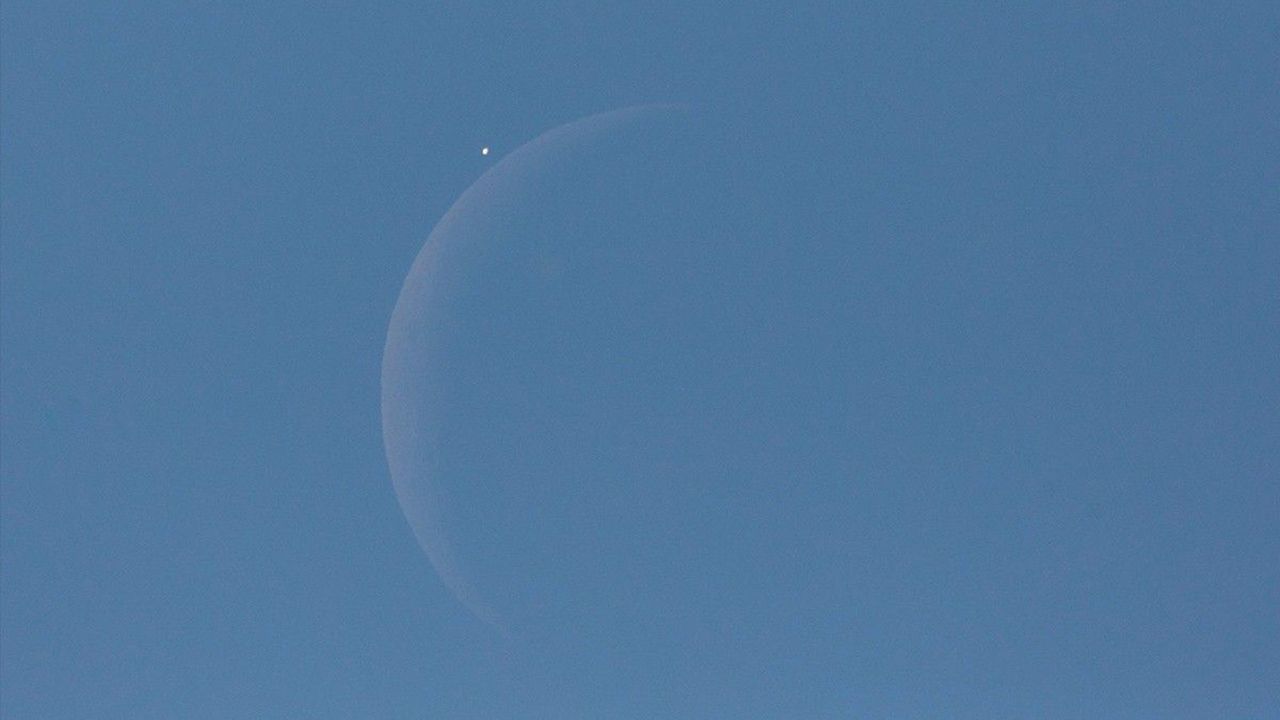
Today (June 17), for the first time in 11 years, people across North America will be able to look up in the daytime sky and see Venus temporarily vanish behind the faint crescent moon.
The rare skywatching spectacle can be viewed with the naked eye and recorded without any special equipment, as long as the weather cooperates — however, using a good pair of binoculars or a backyard telescope will make it much easier to see the faint light of Venus in the daytime sky. No matter how you go about skywatching, you must take great care not to stare directly at the sun while doing so.
During the event, known as a lunar occultation, the moon will briefly pass between Earth and Venus, which has been shining especially bright over the past few weeks while hanging out alongside Jupiter in the evening sky. As a result of the occultation, the hellish planet will appear to blink out of existence, before reappearing around an hour later, allowing for two separate skywatching experiences. The last time this happened was on Dec. 7, 2015, and you will not be able to see it again until 2029.
How to see Venus disappear
The occultation will be visible from the 48 contiguous U.S. states, as well as from large parts of Canada and some countries in the northern half of South America — assuming there are clear skies at the time of the event. (The latest forecast suggests that weather conditions will be most favorable along the West Coast.)
As with most skywatching events, such as solar eclipses, not everyone will see it at the same time. For example, people in San Francisco will observe Venus vanish at around 11:34 a.m. PDT, while those in Miami will watch the planet disappear at about 4:06 p.m. EDT (around 92 minutes later when disregarding time zones).
The duration of the occultation will also vary with location. For example, Venus will reappear after around 58 minutes for viewers in San Antonio, but people in Philadelphia will have to wait roughly 80 minutes to see the planet again.
The best place to watch both the disappearance and reappearance of Venus will be from within the shadow of a large tree or building. Blocking out the sun will not only make it easier to see both the moon and Venus but also reduce the risk of sustaining eye damage by looking directly at the sun.
If you are struggling to see the occultation, try using your phone camera to zoom in on the waxing crescent to better locate and record Venus, Spaceweather.com recommends.
What the June 17 lunar occultation will look like
During the event, around 11% of the moon will be faintly visible in the daytime sky, according to Sky & Telescope. Around three-quarters of Venus will be visible — although it will look like a single spot to the naked eye — so the planet will shine much brighter than the moon. The pair will be collectively located around 38 degrees from the sun in the sky.
Venus will vanish behind the side of the moon opposite the illuminated crescent and will take around 30 seconds to disappear completely. It will then reappear above the crescent, similar to the iconic "Earthrise" photos taken by lunar astronauts, such as the Artemis II crew. (The exact spot where Venus disappears and reappears will depend on where you are in the world.)
If you miss this occultation or fancy another skywatching spectacle, be sure to head back outside later the same day, around an hour after sunset, when Venus, Jupiter and Mercury will shine alongside the crescent moon as it passes in front of the Beehive Cluster (also called M44).
A colossal chunk of sea ice roughly the size of Texas is missing from the west coast of Antarctica, and scientists fear it might never form again.
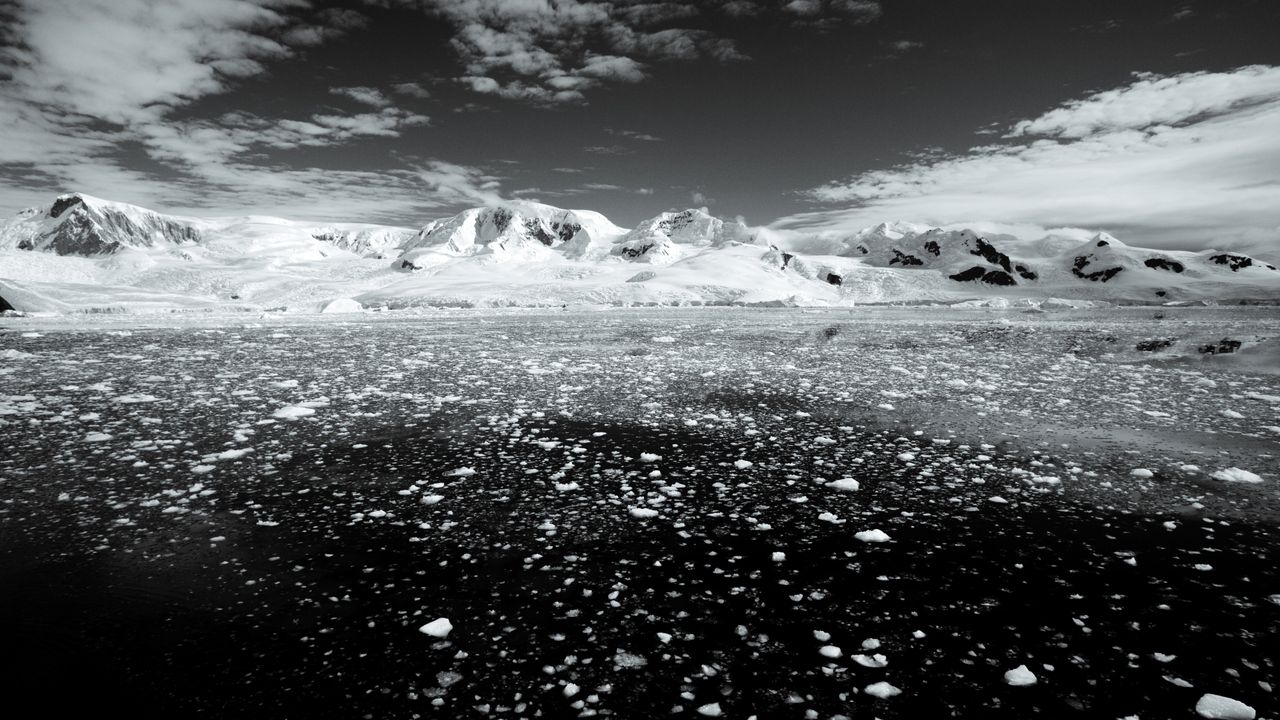
Antarctica is currently in winter, which runs from March to October on the southernmost continent. During the winter months, floating sea ice surrounding the continent typically grows, driving currents that regulate Earth's climate. But this year, there's a notable ice gap over the Bellingshausen Sea, on the western side of the Antarctic Peninsula.
Satellite observations have revealed that around 250,000 square miles (650,000 square kilometers) of sea ice hasn't formed yet, compared with the average amount of sea ice between 1991 and 2020, The Guardian reported last week. For comparison, the ice gap covers an area slightly larger than France or nearly the size of Texas.
Will Hobbs, a sea ice-ocean interaction scientist at the University of Tasmania, told The Guardian that he was "concerned" by the lack of sea ice and that it was "depressing." Hobbs noted that this year represents the third time in four years that the region's sea has been very low.
"I don't think we will see sea ice there any more," he said. "It's done."
Researchers still have a lot to learn about sea ice changes in Antarctica. Hobbs said that the sea ice loss was likely linked to changes in the ocean and that scientists are trying to determine whether global warming was a factor.
Sea ice has declined much more slowly in Antarctica than in the Arctic. But in recent years, scientists have been witnessing an astonishing change in the sea ice extent. One record low in 2016 was followed by another in 2022 and then a third in 2023.
Edward Doddridge, a physical oceanographer at the Institute for Marine and Antarctic Studies in Australia, told ABC News (Australia) that he was no longer surprised by sea ice loss.
"It's not good news, but it has become a pattern that we're expecting now," Doddridge said. "A warming world is going to have less sea ice."
The diminished winter sea ice is likely to have a variety of knock-on effects. For example, this area of sea ice normally provides important habitat for animals like krill and penguins. Sea ice also plays an important role in regulating the climate, including by driving key ocean currents, insulating the ocean from the sun, and protecting ice shelves at the mouths of glaciers.
Down the coast from the missing sea ice, researchers have warned that a key ice shelf is about to disintegrate from Antarctica's Thwaites Glacier — nicknamed the "Doomsday Glacier" because its collapse could raise sea levels by 2.1 feet (65 centimeters) in the coming centuries, flooding coastal communities worldwide. The ice shelf helps protect the mouth of the glacier by acting as a buttress, thereby restraining the flow of ice from the glacier into the sea.
Thwaites Glacier has been melting rapidly since the 1980s, which is part of a wider concern for the West Antarctic Ice Sheet that it helps to support. The collapse of such an ice sheet is considered one of the major environmental tipping points, or "points of no return," that humanity must avoid in the fight to rein in climate change.
The wreck of a Japanese prison ship that was sunk by U.S. warplanes and went down with more than 1,000 Allied prisoners of war in 1944 has been discovered in the Philippines.
The vessel was one of the notorious "hellships" used by the Japanese to ferry POWs between work camps. Many of the prisoners who died when the ship sank had worked on the infamous Burma-Thailand "Death Railway."
"Sadly, a lot of these prisoner transport ships were sunk by the Allies," expedition leader and American TV show host Josh Gates told Live Science. "The ships were painted to just look like military vessels, and they were inside the Japanese convoys — so the Allies thought they were legitimate military targets."
Gates teamed up with the Hellships Memorial Foundation, a U.S.-registered non-profit based in Subic Bay in the Philippines, to investigate the sinking of the hellship Hōfuku Maru. Its wreck had never been found, probably because searchers were guided by incorrect U.S. records to look too far north, he said.
But Japanese wartime records were more precise about the wreck's location, helping the team find the remains of the Hōfuku Maru in January, Gates said. His team has since made five dives to the wreck, which sits a few miles off the west coast of the main Philippines island of Luzon at a depth of about 160 feet (50 meters).
The newfound wreck lies a few miles from the coast of the main Philippines island of Luzon, northwest of Manila. (Image credit: Evan Kovacs, Marine Imaging Technologies, LLC)
Prison ships
Japan used more than 130 hellships during World War II, but the wrecks of only a few have been found. Many hellships, including the Hōfuku Maru, were converted freighters. The Hōfuku Maru was used as a prison ship from 1942 until its sinking about two years later.
Gates said the vessel was part of a Japanese military convoy sailing from the Philippines to Japan when it was attacked on Sept. 21, 1944. U.S. warplanes had spotted the convoy, and one dropped a torpedo that cut theHōfuku Maru in half. It quickly sank.
But the ship had roughly 1,200 Allied POWs on board, from the British and Dutch armies, many of whom had been forced to work on the Death Railway. Some were able to swim ashore, but they were recaptured by the Japanese. About 1,040 died in the sinking, Gates said.
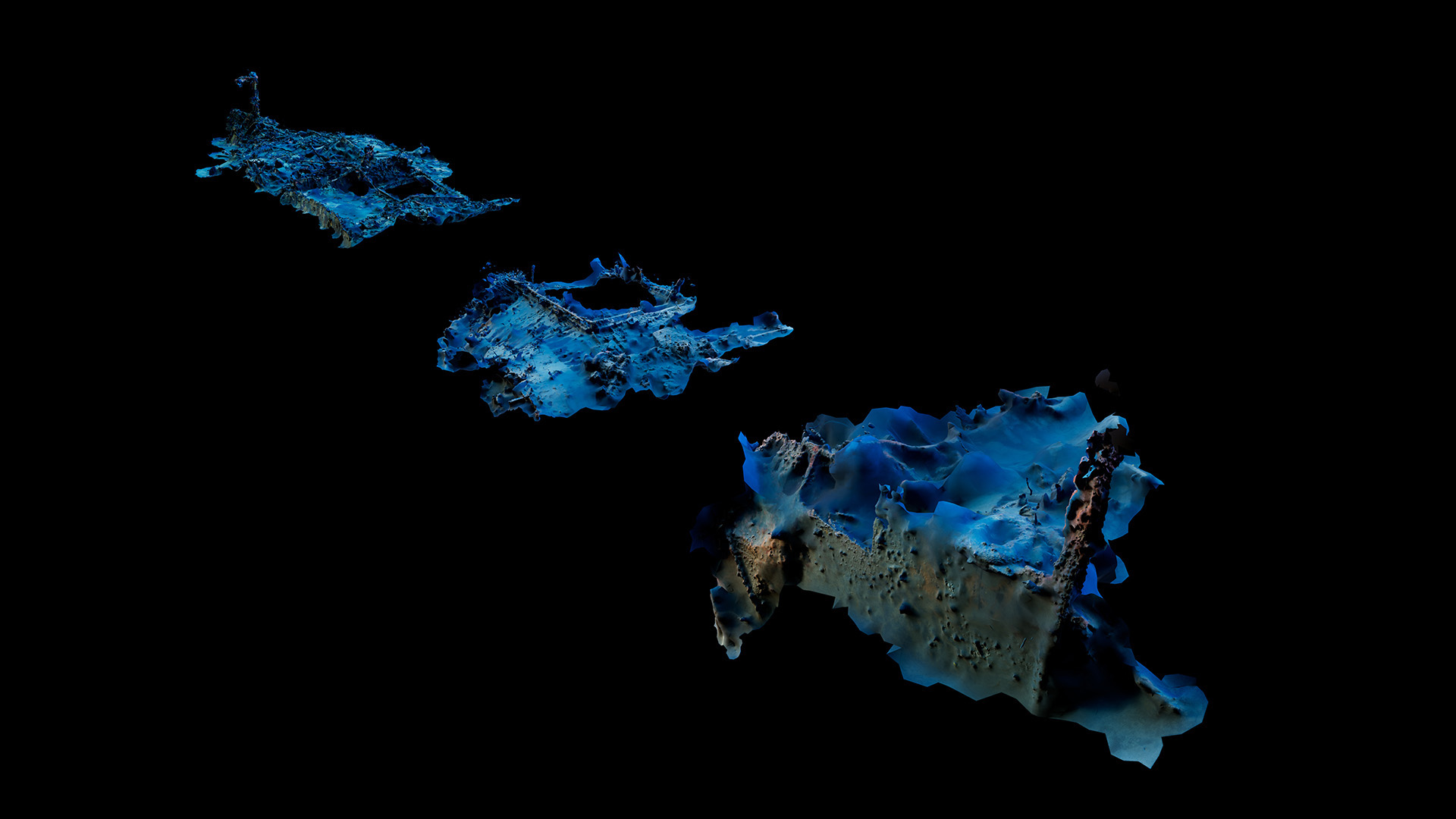
Mapping with an underwater drone has identified three separate sections of the wreck. (Image credit: Evan Kovacs, Marine Imaging Technologies, LLC)
War captives
The 1929 Geneva Convention placed strict limits on the use of prisoners of war for labor, but Japan was infamous for flouting these rules during World War II, claiming that it never ratified the convention and that wartime made POW labor important. Japan used POWs for slave labor on railways and docks, as well as in factories and mines. Of the roughly 132,100 prisoners captured from the United States and United Kingdom armies, nearly a third of them — about 35,000 people — died of exhaustion, malnutrition and disease.
Gates said the Japanese hellships used to ferry thousands of POWs between work camps were miserable places themselves: there was little light, air or food, and prisoners might be kept there for months. Human remains have been identified on the newfound wreck, and it will now be considered a war grave, he said. International conventions aim to prevent such wrecks from being disturbed.
The team first spotted the wreck with sonar, and then dove to identify parts of the structure that confirmed it as the Hōfuku Maru. They also mapped the wreck with a remotely operated underwater vehicle, which helped them determine that the ship had split into separate parts, just as accounts of the sinking had reported.
The Hellships Memorial Foundation would now work to try to locate the families of the victims, Gates said.
At age 19, John McFall thought he might never walk again after his right leg was amputated above the knee following a motorcycle accident. Fast-forward more than two decades, and he is now on the verge of becoming the first physically disabled person in space.
McFall, 45, is a British surgeon and former Paralympic athlete who won multiple medals as a T42-class sprinter. In 2022, he joined the European Space Agency's (ESA) Fly! program, which aimed to see if a person with a physical disability could live and work in low Earth orbit. And in February 2025, he became the first member of the program to be cleared for a potential future mission to space.
More recently, on June 2, the U.K. government announced that McFall had been selected as a prospective member of the first crew to live on Haven-1, an upcoming commercial space station from U.S. company Vast that is scheduled to be the first of its kind in low Earth orbit, if it launches on time early next year.
If everything goes according to plan, the roughly 30-day mission will help answer a series of interesting questions about how living in space might be both challenging and advantageous for people with physical disabilities.
Live Science spoke with McFall about what it would mean to break new ground, wearing a prosthesis in space and how microgravity might uniquely affect him.
Harry Baker: How did it feel to get the news that you might be going to space next year?
John McFall: Awesome. Very awesome, very exciting. And it feels like we're one step closer to realizing this amazing opportunity and achieving this very exciting milestone in human space exploration.
HB: What would it mean to you personally to become the first physically disabled astronaut in space?
JM: To me personally, it doesn't make a difference. In terms of "what an achievement for me," I don't tend to think of it like that. However, I am very aware that the broader message that it sends to wider society about what people are capable of — whether they have a disability or not — is very interesting and powerful. So I'm proud to be a very small part of that movement, if you like, and the journey of making society a more tolerant and inclusive place.
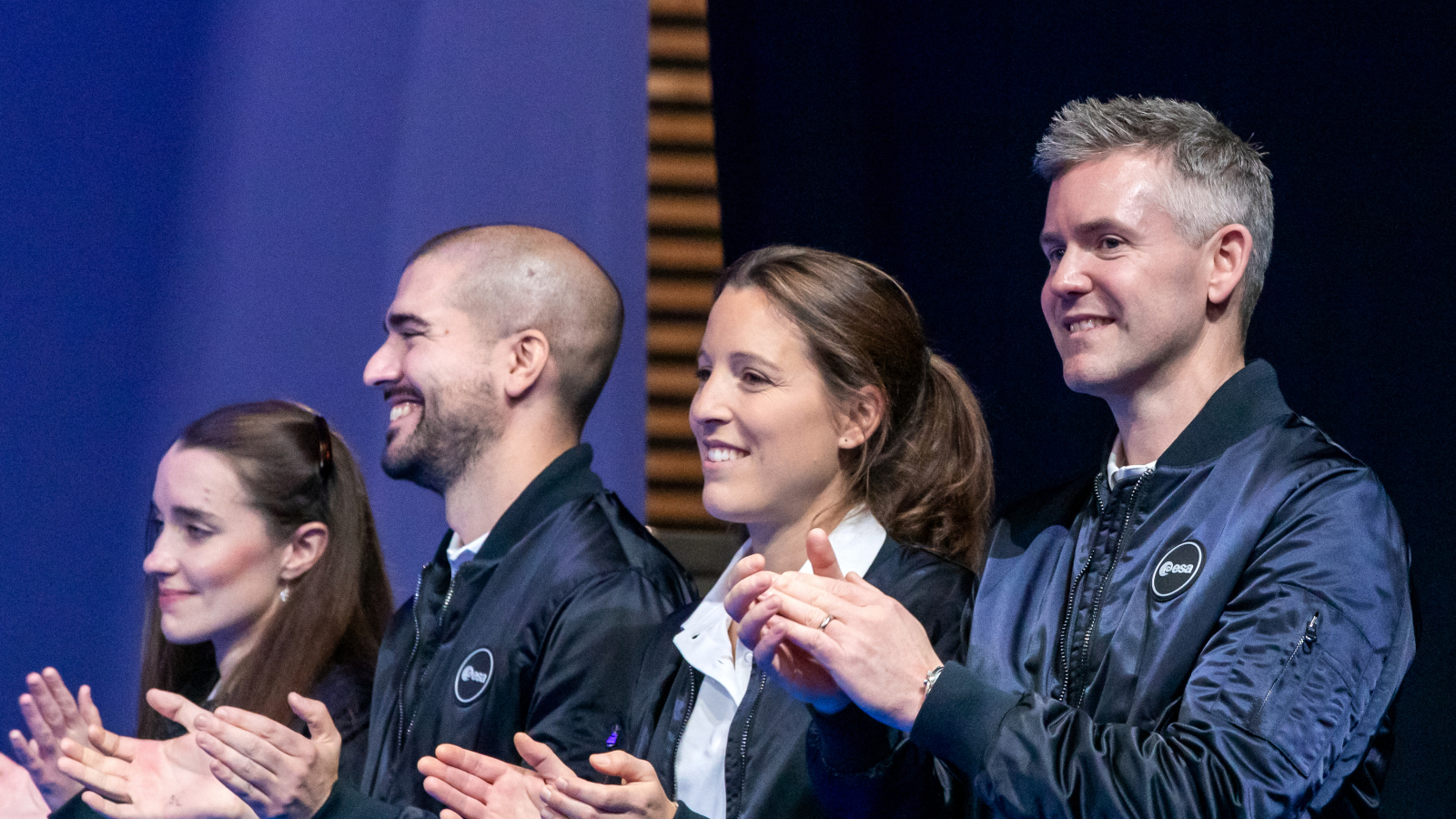
McFall (far right) joined ESA in 2022. This photo shows him alongside some of his fellow Class of 2022 astronauts at an event in Paris the same year. (Image credit: JOEL SAGET / AFP via Getty Images)
HB: What advantages do you think your disability might give you in space compared with other astronauts?
JM: It's a good question because we don't actually know. We can hypothesize, but until we actually get into space and conduct some science that's specifically relevant to my disability, we won't know. But there are some theoretical benefits.
One is that when you live in microgravity, you get a shift of fluid from the lower part of your body up into the upper part of your body and your cranium. This can cause swelling of the optic disk, which can temporarily affect vision. It's called spaceflight-associated neuro-ocular syndrome (SANS), and it affects around 70-75% of astronauts. I would hypothesize that, having a reduced lower limb volume to start with, you're going to get a proportionally smaller fluid shift in microgravity, relative to your physiological capacity to process it, reducing the risk of things like SANS.
Another is that in microgravity, because you're weightless, you're not using your bones as much, and your body naturally resorbs them. So your bones get weaker and thinner. And one of the byproducts of this is that you have to excrete a lot of calcium, and you do this via peeing it out. As it [calcium] passes through your renal system, or kidneys, this causes an increased risk of kidney stones in microgravity. So again, having lower bone mass to start with — but retaining the same physiological capacity to metabolically process calcium — there is potentially a lower risk of kidney stones.
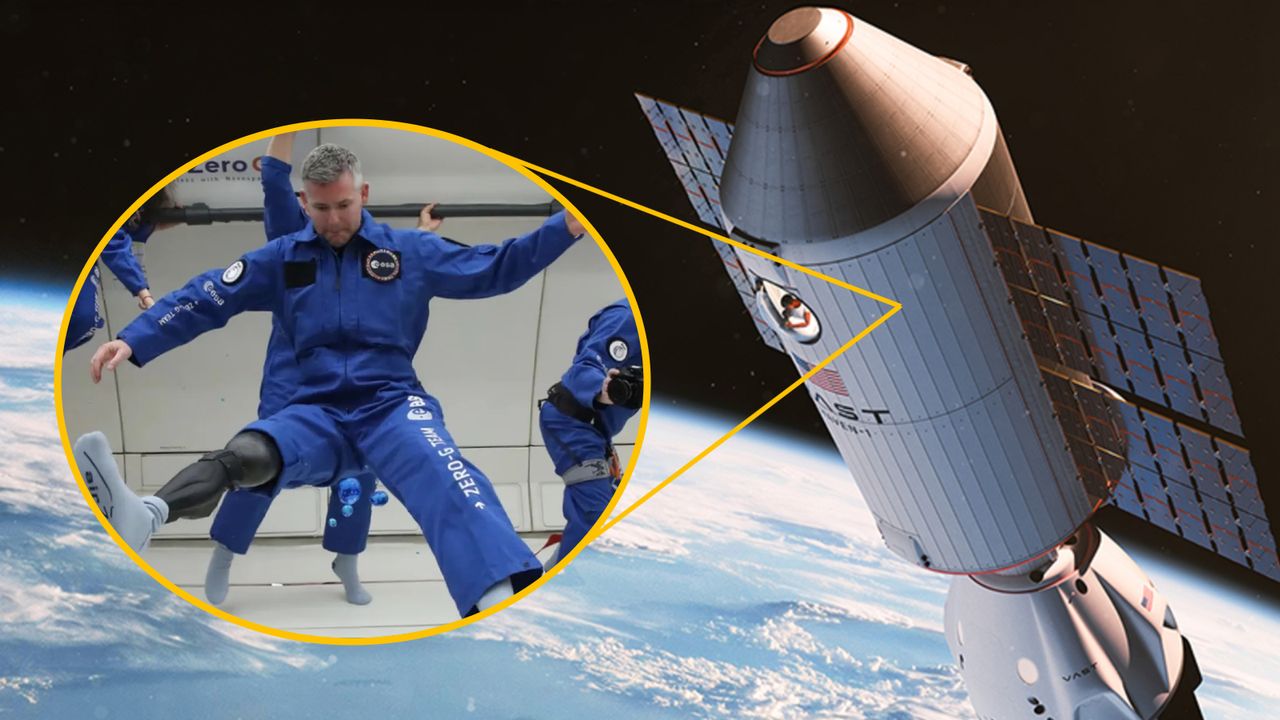
Haven-1 is scheduled to be the first ever commercial space station. It will launch in early 2027 and could host its first astronauts, including McFall, later the same year. (Image credit: ESA/Novespace)
So those are two small-but-hypothetical benefits of my particular disability in space. But the real answer is, we don't know until we do the science (i.e., urine samples, blood samples and eye examinations in orbit).
HB: How might space be more challenging for you than for other astronauts?
JM: Again, we don't know. The question is, do you really need both your lower limbs to help you stabilize and support yourself whilst your hands are doing tasks? And is having two legs useful in what we would call normal intravehicular operations [conducted inside the spacecraft], whether it be cargo operations, maintenance, this sort of stuff?
When we went through the feasibility initiative, trying to think of and work out all these scenarios, we couldn't really think of a disadvantage other than maybe having to work slightly harder.
HB: Will you be wearing a prosthesis in space?
JM: The plan is to wear a prosthesis. We deemed quite early on that wearing a prosthesis in a spacecraft would be a necessity, mainly at launch time. If there was an emergency that required me to get out of the spacecraft and get off the crew access arm and away from the launch site, it would be ideal wearing a prosthesis to do that.
But in space, we don't know whether it's going to be an advantage or be required for these intravehicular activities. Where I would definitely need to use one is on a long-duration mission where I need to exercise lots. I use a prosthesis to exercise on Earth, and I would use a prosthesis to exercise in orbit. However, short-duration missions [like this one] do not.
McFall won several medals as a T42-class sprinter, including a bronze at the the 2008 paralympic Games in Beijing. (Image credit: Andrew Wong via Getty Images)
The prosthetics I use are modular, so I wear a socket — that's what's left of my leg goes inside — and then the hardware, what we call the terminal device, is attached to the socket. What I would envisage doing is always wearing the socket, because that way, you maintain consistency. But [for] the terminal device itself, I have a quick-change adapter that you can just unplug the device, and you can take it off and, likewise, put it back in again.
It's "plug and play," if you like, and [it will allow me to] make assessments of whether it's useful or not.
HB: Will your prosthesis need to be specially made for the trip?
JM: Not really. We are certifying a number of prosthetic hardware items to fly, but they're all what we call "commercial, off-the-shelf items." So they're products that are widely available.
However, there are some very small changes that we need to make to make them compliant with the safety requirements of the space station environment and the spacecraft, such as fireproof tape around certain parts of the device or changing the hydraulic fluid so it's less toxic in case there is a leak.
We're also doing a small amount of redesigning to the shape of the foot to make it more ergonomic to interface with things like rails and straps inside the space station, because you often slip your foot under rails and straps.
HB: Could anything you learn from your mission help physically disabled people back on Earth?
JM: Yeah, I think so, certainly from a prosthetics point of view. There are prosthetic developments that we have made that will benefit other prosthetic users in the future.
I mentioned this quick-change adapter. We have revised or reengineered this particular device to perform in a certain way, which I think will have advantages for a whole range of lower-limb amputees. The socket technology — the interface between my stump and the prosthesis — is [also] going to be redesigned and potentially has very beneficial applications for lower-limb amputees again.
McFall was cleared to fly to space last year. Before then, he featured in the opening ceremony for the 2024 Paralympic Games in Paris (photographed). (Image credit: Mauro Ujetto/NurPhoto via Getty Images)
HB: Are you hoping to be selected for more missions in the future? And would you like to become the first physically disabled person on the International Space Station (ISS) or the moon?
JM: Yeah, absolutely. I hope that we use this opportunity to demonstrate that it is very feasible, and I hope that that would put me in line for selection of missions in the future.
I would love to, in the future, potentially spend longer in space, demonstrating that it's possible for someone with a disability to live and work in space and cope with everything that comes with that.
And absolutely, I would love to go to the moon. You know, someone with a lower-limb disability, when you propose that against walking on the moon, it's quite a powerful statement, and I would love to do that.
Editor's note: This interview has been condensed and edited for clarity.
For decades, physicists have pursued a goal that sounds nearly impossible: to build a clock that keeps time using an atom's nucleus rather than the electrons orbiting it.
Now, researchers have demonstrated the first functioning nuclear clock — an advancement that could eventually lead to more robust timekeeping devices and new ways to search for dark matter and physics beyond the Standard Model.
"Having worked in this field for more than 15 years, it is just beautiful, how a very 'wild' idea such as manipulating an atomic nucleus with a laser has turned into reality," Thorsten Schumm, a professor of quantum metrology at the Vienna University of Technology and a member of the research team, told Live Science via email.
How is a nuclear clock different from an atomic clock?
Today's most accurate clocks are optical atomic clocks, which measure the frequency of electrons jumping between different energy levels inside atoms. These clocks are so precise that they would lose less than a second over a 100 million years.
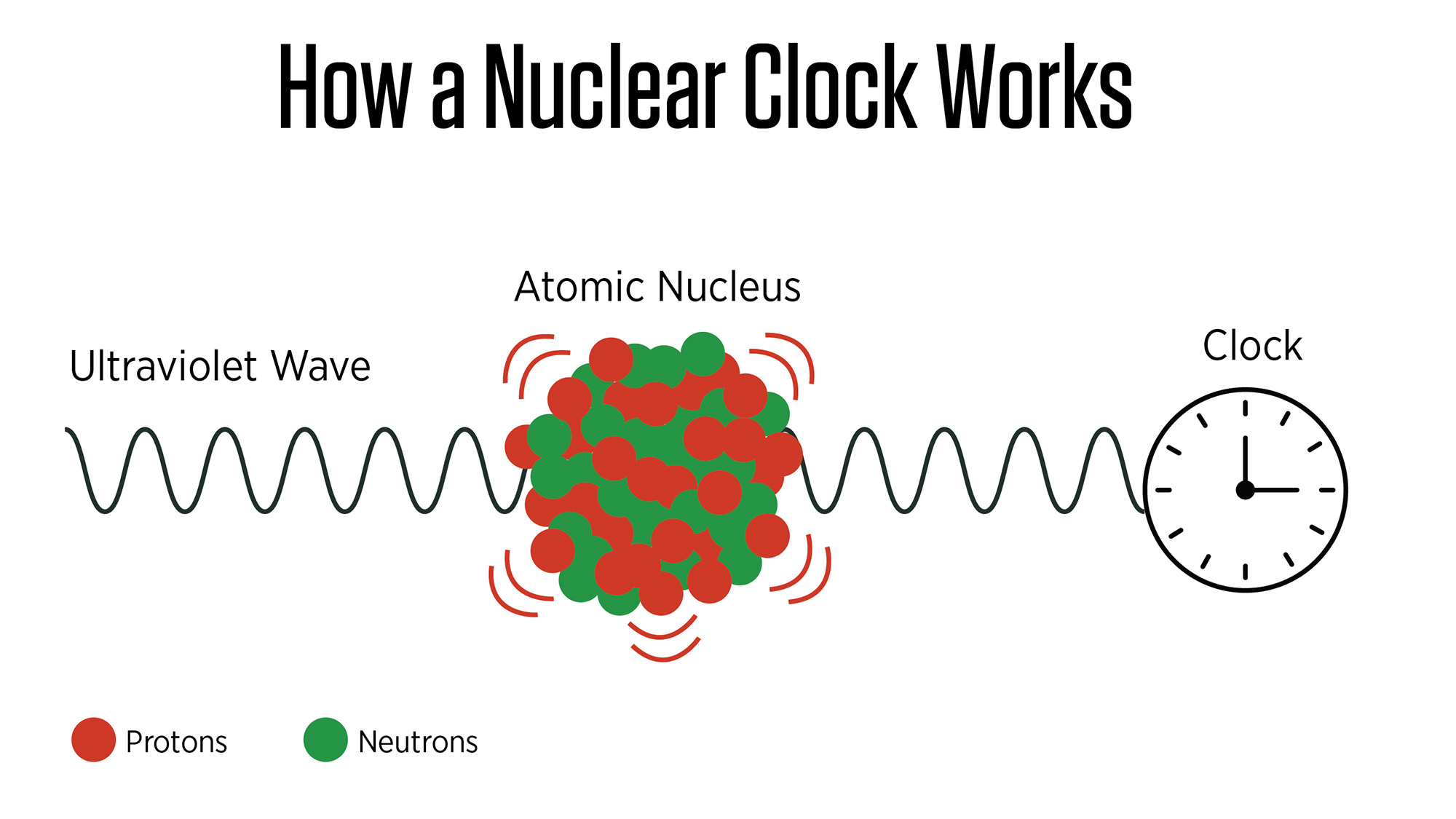
A nuclear clock works similarly, but it uses a transition within the nucleus itself, where the nucleus jumps between energy levels. Because the nucleus sits deep inside the atom, it's far less affected by external disturbances from things like electric or magnetic fields. According to Schumm, the nuclear transition can be 1,000 to 10,000 times less sensitive to environmental noise than atomic transitions are.
A diagram showing how a nuclear clock works. (Image credit: N. Hanacek/NIST)
"This means that it would be easier to stabilize a nuclear clock over long periods of time," Jacob Higgins, a postdoctoral researcher at Northwestern University who previously worked on thorium clock experiments at JILA in Colorado but was not affiliated with the study, told Live Science in an email. "The transition used for the nuclear clock experiment has a higher quality factor than optical atomic clock transitions, which means that in principle, it can be measured more precisely given the same amount of measurement time."
Together, those advantages could allow nuclear clocks to outperform even today's best atomic clocks according to Higgins.
Why thorium-229 is special
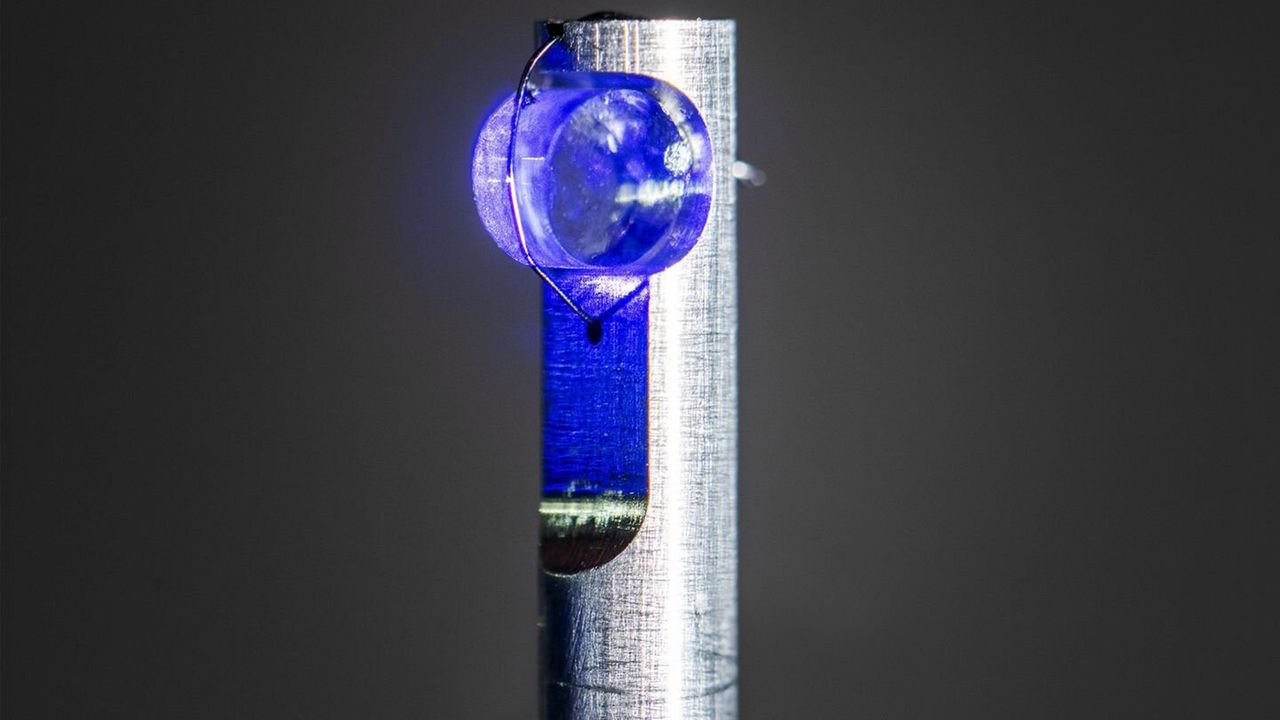
The nuclear clock relies on a rare isotope called thorium-229, whose nucleus contains an unusually low-energy excited state that can be manipulated with ultraviolet laser light.
For decades, scientists had suspected thorium had a low transition, but identifying and controlling it proved extremely challenging. Researchers spent years testing different thorium-containing materials, laser systems and detection methods before finally pinning down the transition.
"It was a long road," Higgins said.
One key advancement was the development of continuous-wave lasers that operate at the precise wavelength needed to excite the thorium nucleus. Before those lasers existed, researchers had to excite the nucleus and then wait several minutes for it to decay and emit a detectable signal. That process was too slow to build a practical clock.
"With the continuous lasers, we can measure the nucleus in absorption and get an immediate response, whether the laser is still at the right frequency (and if not, correct it back)," Schumm said. "Once we had that, it was 'just' implementing some electronics and atomization to have the clock stabilize itself to the nucleus."
Thanks to this set-up, the researchers kept the nuclear clock running continuously for 24 hours.
Unlike many optical atomic clocks, which require ultracold atoms to be suspended in a vacuum chamber, the thorium nuclei are embedded inside a crystal at room temperature.
Because the thorium transition remains stable inside a solid material, researchers may eventually be able to build compact clocks that are useful for navigation systems, telecommunication networks and data synchronization.
NASA's Deep Space Atomic Clock, seen here in an artist's illustration, was launched in June 2019 to use atomic clocks in space. (Image credit: NASA)
A tool for studying the universe
Some physicists are more excited about what nuclear clocks could reveal about fundamental physics, rather than the clocks' timekeeping abilities.
Atomic clocks primarily probe electromagnetic interactions involving electrons. Nuclear clocks, by contrast, are sensitive to the strong nuclear force, weak nuclear force and electromagnetism — three of the four fundamental forces of the universe, along with gravity. This can make them useful detectors of new physics, in a way.
"The nuclear clock is foremost a different clock, ticking on different fundamental physics mechanisms," Schumm said. "Essentially all modern theories beyond the standard model predict additional particles or 5th forces … which can be probed with the nuclear clock in some parameter regime."
Thorium-229 is particularly intriguing because the energy difference between its two nuclear states results from a delicate balance between electromagnetic and nuclear forces. Because those large contributions nearly cancel each other out, even tiny changes in the underlying forces could shift the clock's frequency.
Researchers, including Higgins, have already used early versions of the clock to place constraints on some dark matter models, and they expect its sensitivity to improve as the technology itself gets better.
Although the first functioning nuclear clock is a major achievement, these timekeepers remain in their infancy. Scientists still need to gain a better understanding of how the thorium transition responds to factors like temperature and magnetic fields while developing more powerful and stable laser systems.
"I think it will be many years before the thorium clock can compete with today's best optical atomic clocks," Higgins said, "but we will learn a lot of new science on the pathway to getting there."
The San Andreas and San Jacinto fault systems are at their highest levels of tectonic stress in 1,000 years, raising the threat of a major, imminent earthquake that could devastate Southern California, a new study finds.
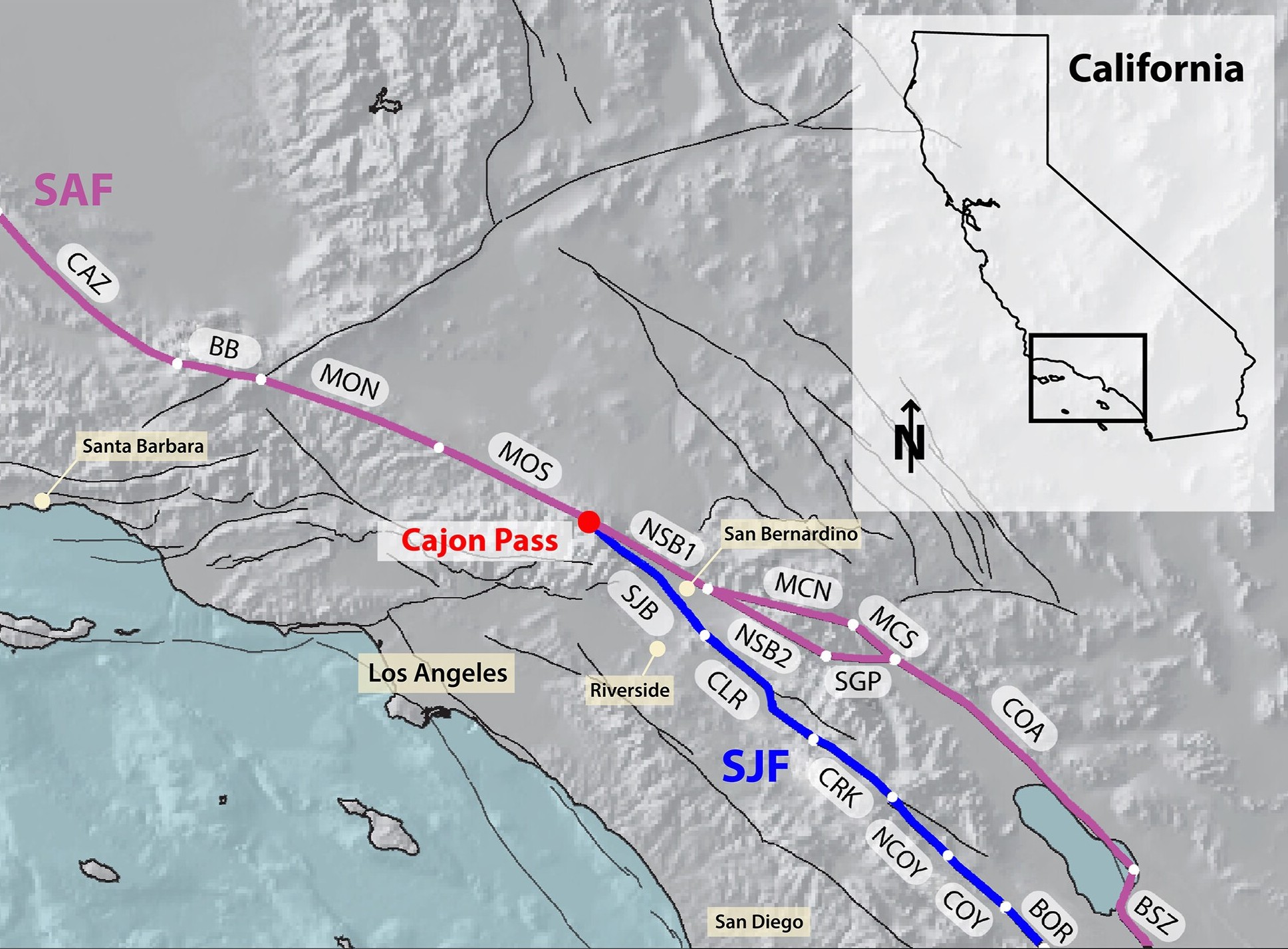
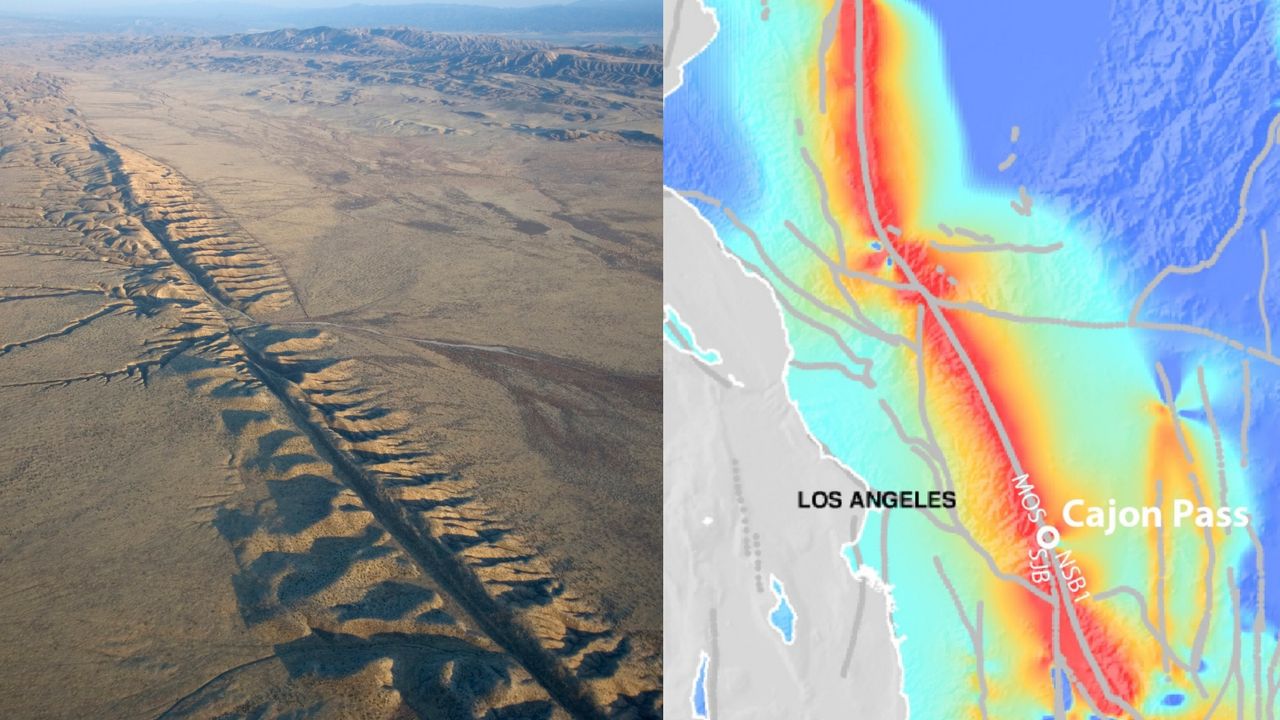
The faults could rupture separately or together, thanks to an "earthquake gate" between them at Cajon Pass, where the San Jacinto fault splits from the main trace of the San Andreas fault. Researchers discovered that Cajon Pass can prevent or facilitate earthquakes moving between the faults, depending on how similar their stress levels are at the time of rupture.
And right now, the San Andreas and San Jacinto faults appear to have comparable, extremely elevated stress levels, potentially spelling trouble for Los Angeles, San Bernardino, Riverside and the Coachella Valley, the team warned.
Cajon Pass, where the San Andreas and San Jacinto faults connect, is an "earthquake gate" that can facilitate the spread of ruptures. (Image credit: Burkhard et al., 2026. JCR Solid Earth. (CC BY 4.0))
"Our results show that stress levels on multiple fault segments are now at or above the highest values seen in the past millennium and that the region may be capable of a large through-going rupture involving both fault systems," study first author Liliane Burkhard, a planetary geologist at the University of Bern in Switzerland and at the University of Hawaii at Manoa, said in a statement.
The San Andreas and San Jacinto faults have caused 36 earthquakes with magnitudes of 6.4 or above in the past 1,000 years. Southern California's last "big one" was a magnitude 7.9 event in 1857, when a 205-mile (330 kilometers) segment of the San Andreas fault slipped horizontally between Parkfield and Cajon Pass. That rupture did not propagate through Cajon Pass, but a similar megaquake in 1812 did, suggesting this could happen again in what is now a much more built-up and densely populated environment, according to the study.
To estimate this risk, Burkhard and her colleagues built a model replicating the last 1,000 years of major earthquake activity along the southern San Andreas and San Jacinto fault systems.
The researchers used observations such as tree-ring records and age data from sediments that have been displaced to reconstruct Southern California's earthquake history. They fed this information into the model, which simulated the accumulation, release and propagation of tectonic stress in the San Andreas and San Jacinto faults.
The results, published June 3 in the Journal of Geophysical Research: Solid Earth, suggest the San Andreas and San Jacinto faults are primed for an Earth-shattering rupture, which may involve the earthquake gate at Cajon Pass opening to unleash more destruction than a single-fault event would on its own.
If a rupture were to occur along the two branches of the San Andreas fault that connect at Cajon Pass, it would be a joint rupture, according to the study. If both branches of the San Andreas fault and the San Jacinto fault were involved, this would constitute a tripartite rupture.
The chance of each event happening and the timing of a potential rupture are unknown, but understanding how much stress is building up inside the system could help planners and policymakers prepare for whatever comes next, Burkhard said.
"What we can say is that the system is critically stressed, and that physics-based models like this one give us a clearer picture of the range of scenarios we should be prepared for," she said. "That information matters for hazard assessment, infrastructure planning, and emergency preparedness."
The researchers say their model could apply to other fault junctions and be used as a tool for hazard assessment globally. "We are using rigorous, quantitative science to better understand the risk facing millions of people," Burkhard said.
An elusive dwarf fox that was feared extinct has been photographed for the first time, after being spotted near a highway in Cozumel, Mexico.
The tiny animal was part of the mysterious Cozumel fox population, a potentially undescribed species that had not been officially sighted in more than 20 years.
Cozumel foxes live only on Cozumel, an island near Cancún. Researchers know very little about these mysterious predators, which are roughly 20% to 40% smaller than their gray fox (Urocyon cinereoargenteus) cousins that live on the mainland.
Park and museum officials spotted and captured the fox in 2023 and, after a health assessment, released it back into the wild. Researchers have now shared the photographs and documented the encounter in a new study published May 4 in the journal Neotropical Biology and Conservation.
Although the rediscovery confirms that Cozumel foxes are still alive, they are likely on the brink of extinction, the study authors noted; the photographs highlight the need for focused research and conservation efforts.
"The biggest challenge facing the Cozumel fox is that we still know almost nothing about it, including its remaining population size, distribution, or ecology," study first author Travis Bayer, executive director of the conservation organization Pathos Wildlife, said in a statement. "That uncertainty alone is dangerous, because it makes effective conservation extremely difficult."
Cozumel foxes are an example of insular dwarfism, an evolutionary process in which larger animals, including fox-sized mammals, evolve to be smaller after colonizing islands, where there are limited resources and less space than on the mainland. The foxes aren't the only mammals that have shrunk on Cozumel over time; other examples include the island's critically endangered pygmy raccoons (Procyon pygmaeus) and dwarf coatis.
Archaeological evidence suggests that Cozumel foxes have lived on the island for at least 5,000 years, likely since before the arrival of the Maya within the past few millennia, and potentially for tens of thousands of years before that. Prior to this rediscovery, the last confirmed sighting of a Cozumel fox was in 2001, according to the study.
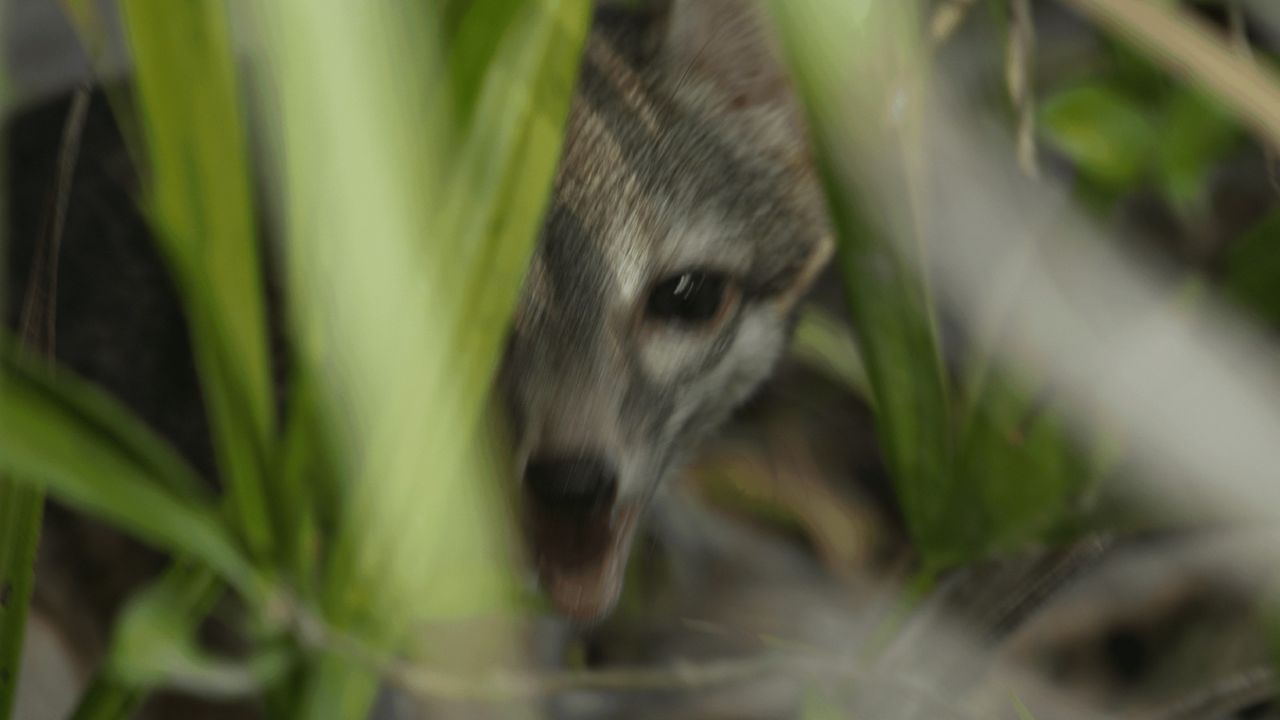
This photo, taken as the fox was partially obscured by foliage next to a highway, is the first known photograph of a Cozumel fox (Image credit: Rafael Chacón)
The rediscovery began with reports of a disoriented animal wandering near the highway on the southeastern side of the island. Officials with the Parks and Museums Foundation of Cozumel located and captured the fox, an adult male, on Sep. 14, 2023. They checked its health and later released the fox in the Laguna Colombia State Reserve, a protected area just south of where it was captured.
Recent and historical sightings suggest that Cozumel foxes could have an extremely restricted range in the island's South, where nature is increasingly threatened by development, land-use change, invasive species and natural disasters, the study authors noted.
The researchers recommended surveys to determine the current distribution and size of the Cozumel fox population, along with morphological and genetic assessments to establish its evolutionary status and conservation efforts to protect its assumed habitat in southern Cozumel and minimize human-wildlife conflict.
"Ultimately, we hope this work helps move the Cozumel fox from a little-known, uncertain presence on the island to a better-understood key part of Cozumel's ecosystems," Bayer said. "We also hope it demonstrates that conservation is often most urgent when certainty is lowest and that uncertainty itself can be a call to action."
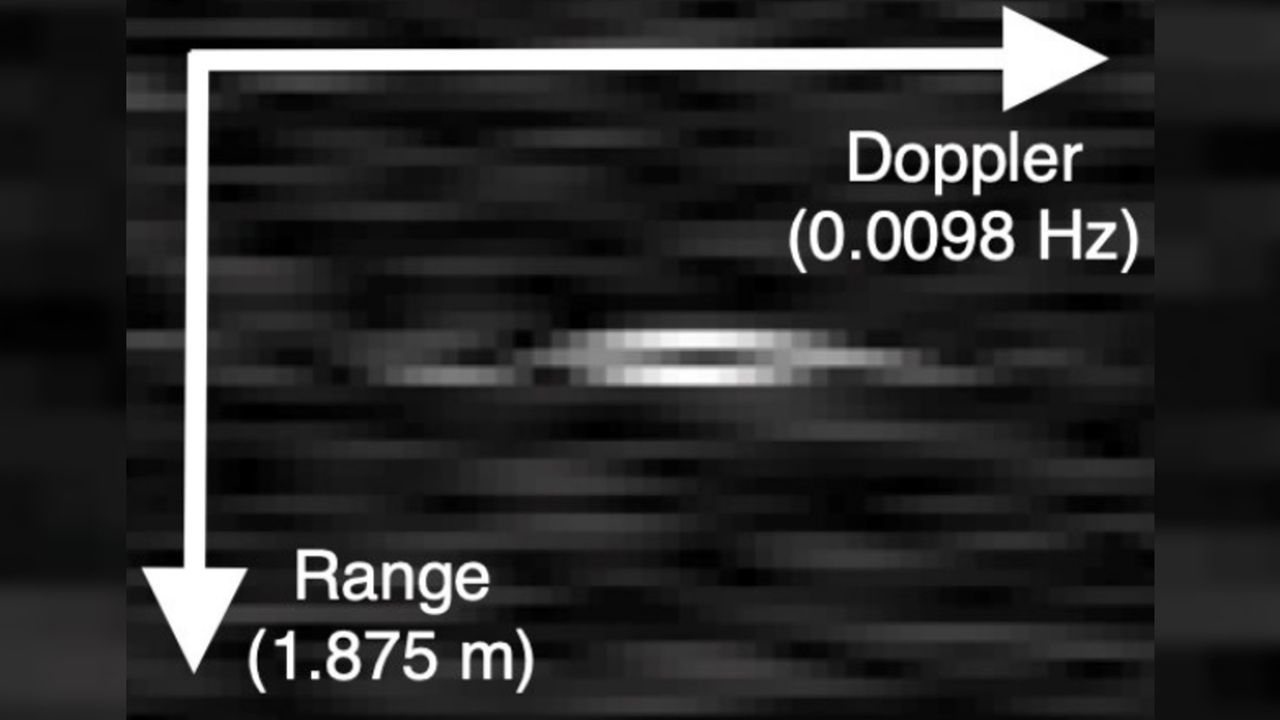
Since it launched from Kennedy Space Center on April 1, 2026, we've been treated to some truly incredible photos of NASA's historic Artemis II mission, including a dump of 12,000 images captured by the crew. But a blurry snap, which shows the crewed Orion capsule as nothing more than a handful of black and white pixels, is a contender for the most impressive Artemis II photo — because it was captured by an Earth-based telescope more than 200,000 miles (320,000 kilometers) away.
This makes the photo a candidate for the longest-distance image of humans ever taken from Earth. (Images like the "Pale Blue Dot," which were taken from space, don't count.)
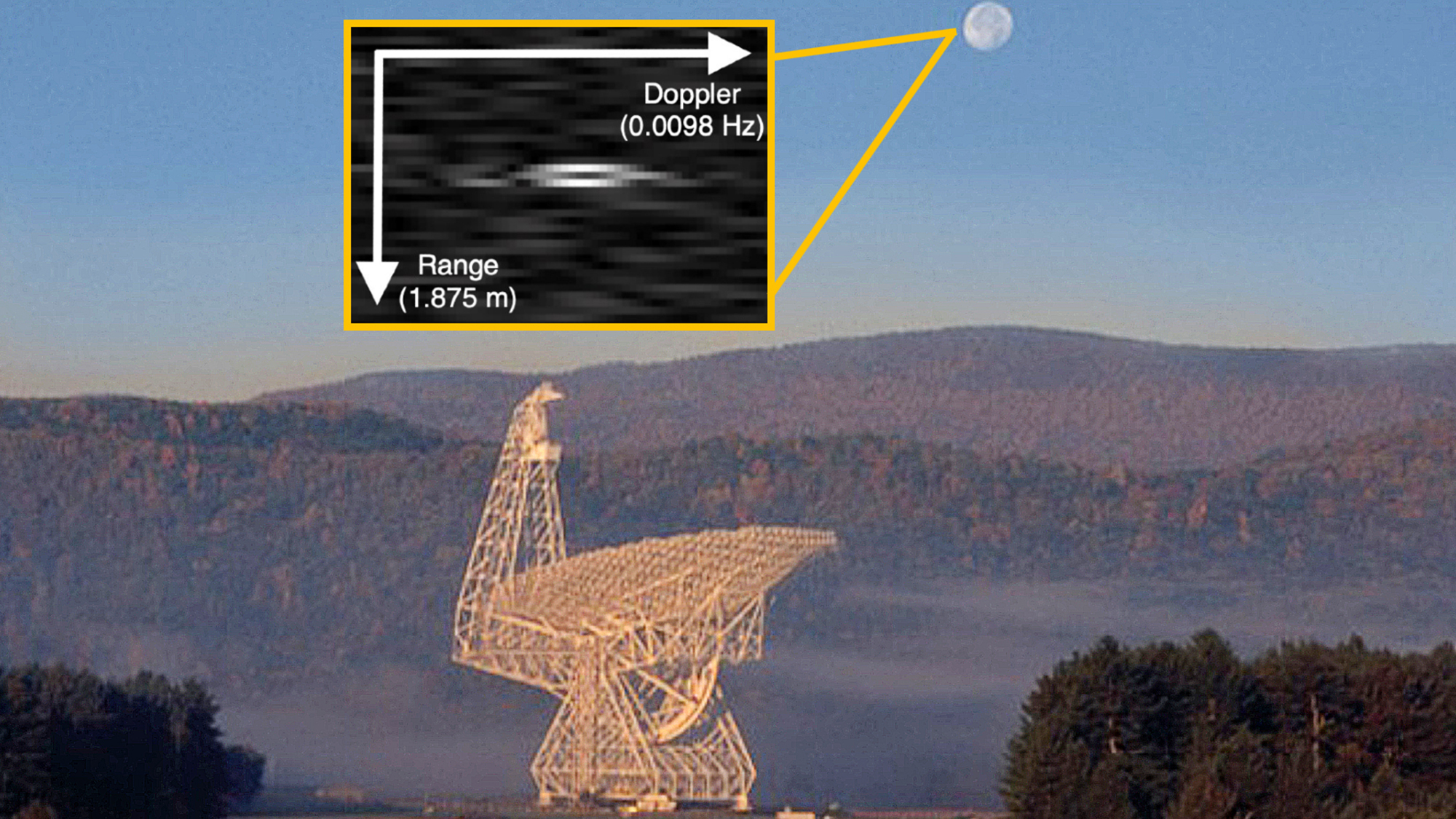
The trippy image, shared May 6 by the National Radio Astronomy Observatory (NRAO), was captured by the U.S. National Science Foundation Green Bank Telescope (NSF GBT) in West Virginia. NSF GBT consists of a 328-foot-wide (100 meters) radio dish on a circular rail, making it the world's largest fully steerable radio telescope. It played a key role in tracking the Orion capsule (nicknamed Integrity) throughout the Artemis II mission.
At first glance, the photo might not seem striking, but when you start to think about what you're actually looking at and the technology required to capture it, it becomes much more impressive.
The National Science Foundation Green Bank Telescope in West Virginia snapped the Artemis II crew from approximately 213,000 miles (343,000 km) away, shortly before or after their record-breaking slingshot around the moon. (Image credit: Main: GBO/NRAO; insert: JPL & NSF/AUI/NSF NRAO)
"There are four people in those pixels," Will Armentrout, a NSF GBT astronomer who helped track Artemis II, commented to his colleagues when they first saw the image, according to an NRAO statement.
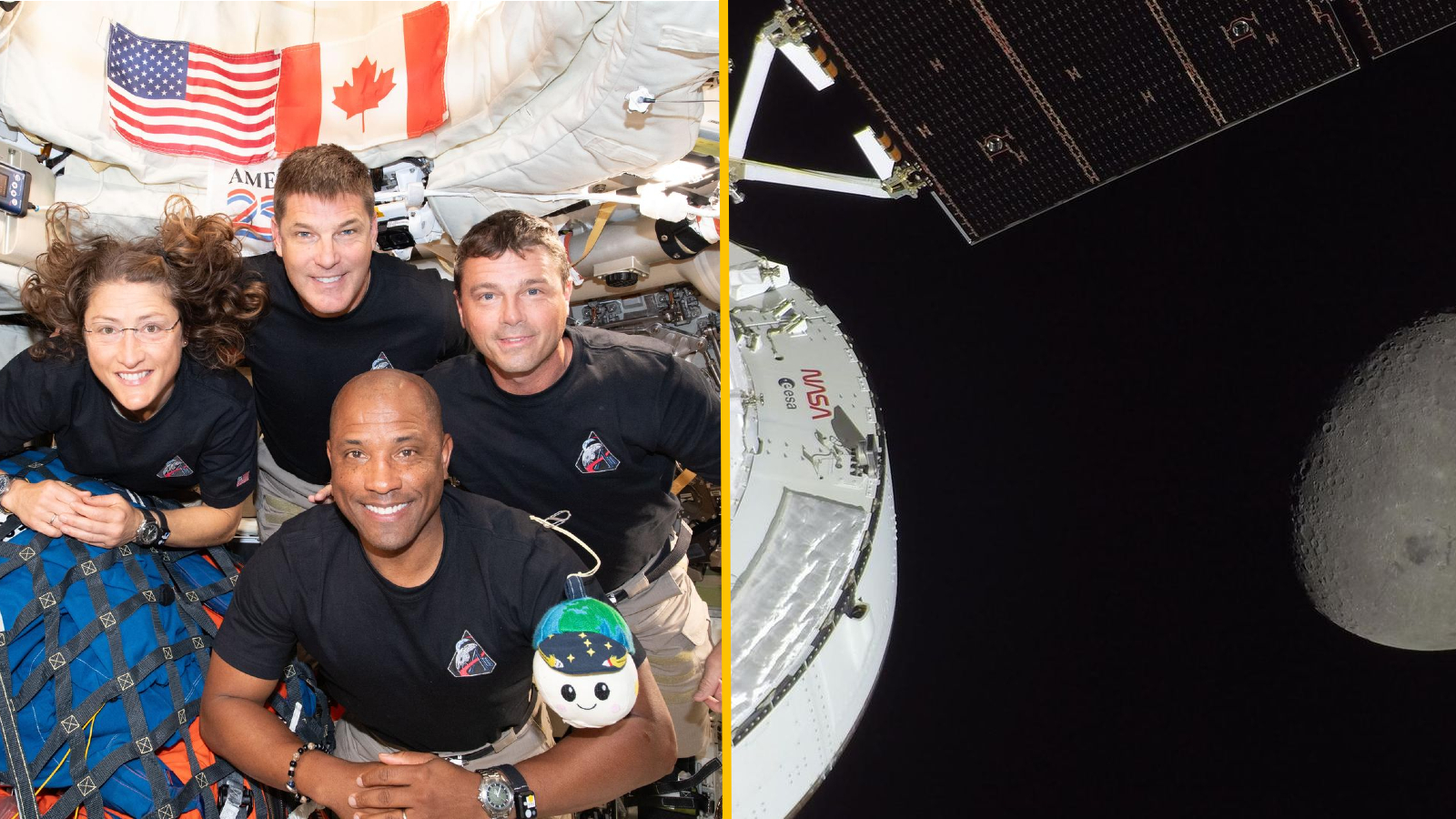
Those four people were mission commander Reid Wiseman, pilot Victor Glover and mission specialist Christina Koch of NASA, as well as mission specialist Jeremy Hansen of the Canadian Space Agency — each of whom broke a different individual spaceflight record during the mission.
Astronauts Reid Wiseman (right), Victor Glover (bottom), Christina Koch (left) and Jeremy Hansen (top) traveled further from Earth than any other human in history when they went around the moon on April 6. (Image credit: NASA)
The NSF GBT team was also keeping a close eye on Artemis II and helped to accurately track the crew's progress during six-hour observation windows on each of the five days Integrity was closest to the moon. The telescope's extreme sensitivity and precision helped provide crucial data that will help NASA prepare for future Artemis missions, which aim to establish a base on the moon.
"With the GBT, we were able to track the movement of the spacecraft within 0.2 millimeters [0.008 inches] per second of what NASA calculated in its projections," Anthony Remijan, the NSF GBT's site director, said in the statement. "It's like having a speedometer in your car that can track your speed within 0.0004 decimal places per hour."
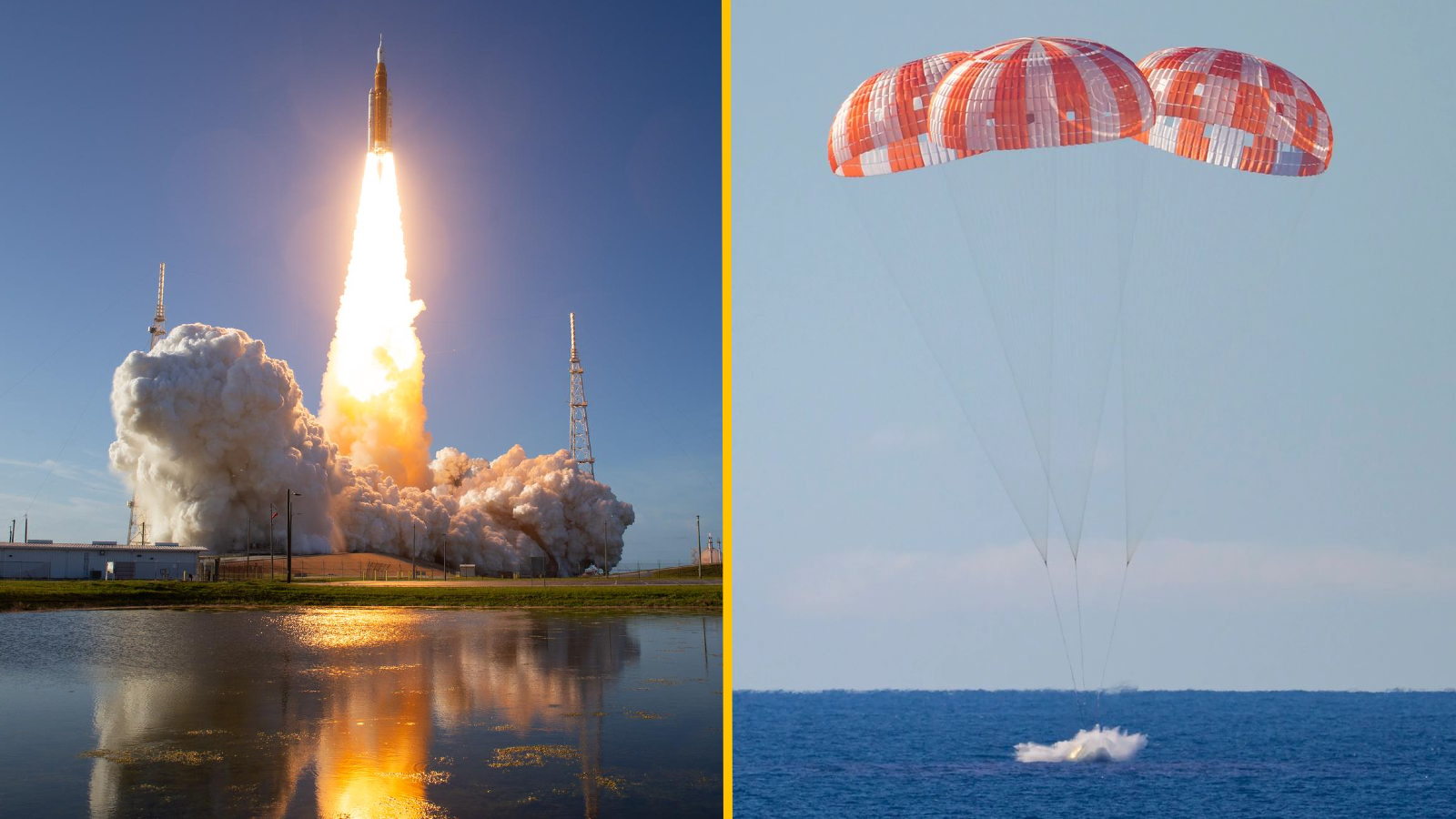
The Artemis II crew lifted off from the Kennedy Space Center in Florida on April 1 and landed just off coast of San Diego on April 10, having traveled a total of 695,000 miles (1.1 million km). (Image credit: NASA/Bill Ingalls)
This is a great example of how scientific institutions across the globe contributed to the mission.
"To get big things done like we're doing in this capsule … you need a big team behind you," Hansen said during an interview while on board Integrity.
This article was first published May 14, 2026.
Artemis II quiz: Is your knowledge of NASA's historic moon mission out of this world?
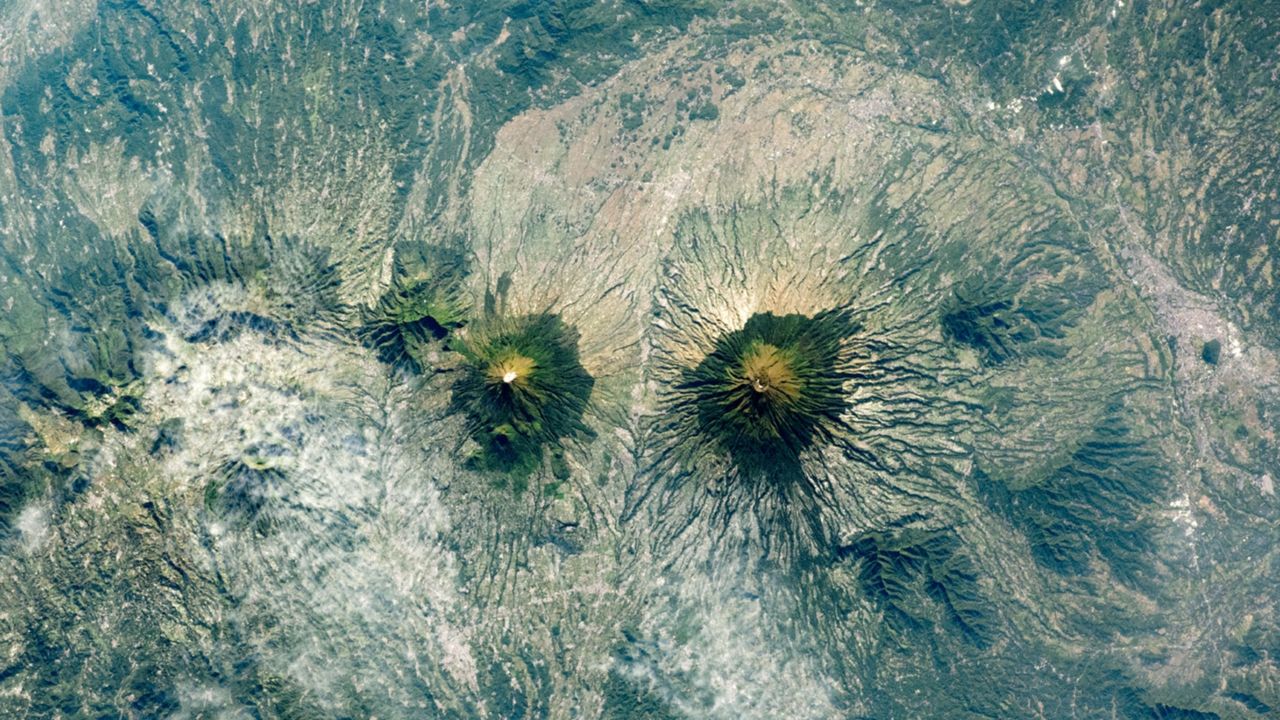
What's in the photo? Mount Sundoro (left) and Mount Sumbing (right)
Who took the photo? An unnamed astronaut on board the International Space Station
When was it taken? May 10, 2021
This awesome astronaut photo shows the striking symmetry of "twin" stratovolcanoes at the heart of Java, Indonesia. The parallel peaks are an eye-catching reminder of the region's extreme tectonic activity.
Mount Sundoro (also known as Sindoro or Sindara) on the left of the image, reaches a maximum height of 10,331 feet (3,149 meters). Its partner, Mount Sumbing, sits to the southeast (on the right of the image) and is slightly taller, at 11,056 feet (3,370 m) above sea level.
Both are considered active. Although Sumbing has not erupted since 1730, Sundoro has blown its top more recently, in 1971, and has experienced seismic activity as recently as 2012, according to the Smithsonian Institution's Global Volcanism Program.
The volcanoes' peaks are just 7.5 miles (12 kilometers) apart. A raised ridge with a major highway runs perpendicularly between them.
Each volcano also has a smaller, secondary cone on its flank left over from previous eruptions (to the upper left of Sundoro and the upper right of Sumbing in the image), and their orientations make the volcanoes look like mirror images of each other.
The two volcanoes also have strikingly similar profiles when viewed from ground level. (Image credit: Rizky Panuntun via Getty Images)
The slopes of both cones are covered with rings of dark-green forest that sharply terminate at their bases. The volcanic soils surrounding the mountains are excellent for growing crops such as rice, corn, coffee and sugarcane, which has led to the deforestation of their surroundings, according to NASA's Earth Observatory.
This matching coloration accentuates the similarities between the pair, especially when viewed from above.
One of the few differences between Sundoro and Sumbing is that the latter volcano has a sizable crater at its summit, which was carved out by the 1730 eruption. As a result, the larger volcano appears to have a darker point at its top.
The volcanoes are commonly referred to as "twins," due to their near-identical profiles. However, local people often call them "husband and wife," according to a local travel site. In this narrative, Sumbing is considered the husband due to its slight height advantage and "more masculine" profile.
The land surrounding Mount Sundoro and Mount Sumbing (photographed) is rich with volcanic ash, making it ideal for growing various crops. (Image credit: Wikimedia)
Sundoro and Sumbing are part of the wider Dieng Volcanic Complex, which consists of around 20 volcanic cones stretching across central Java. Indonesia is also positioned along the "Ring of Fire," a roughly horseshoe-shaped arc of volcanoes that runs along a series of tectonic plate boundaries encircling the Pacific Ocean.
Over the past few years, there have been a number of significant eruptions in Indonesia, including a pair of violent blasts at Mount Lewotobi Laki-laki, on Flores Island, in 2024 and 2025. As of June 2026, there are seven ongoing eruptions in Indonesia — the most of any nation.
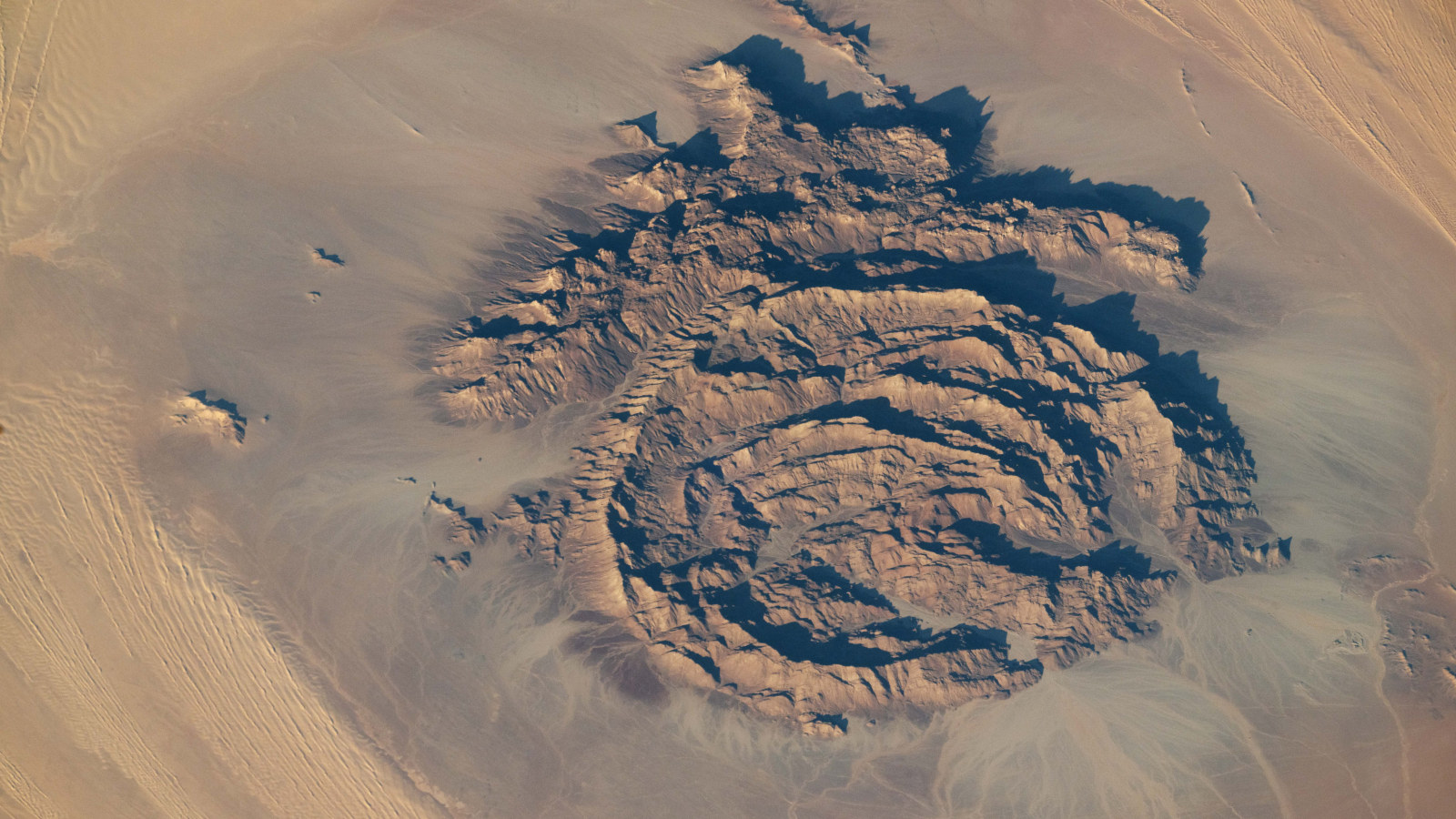
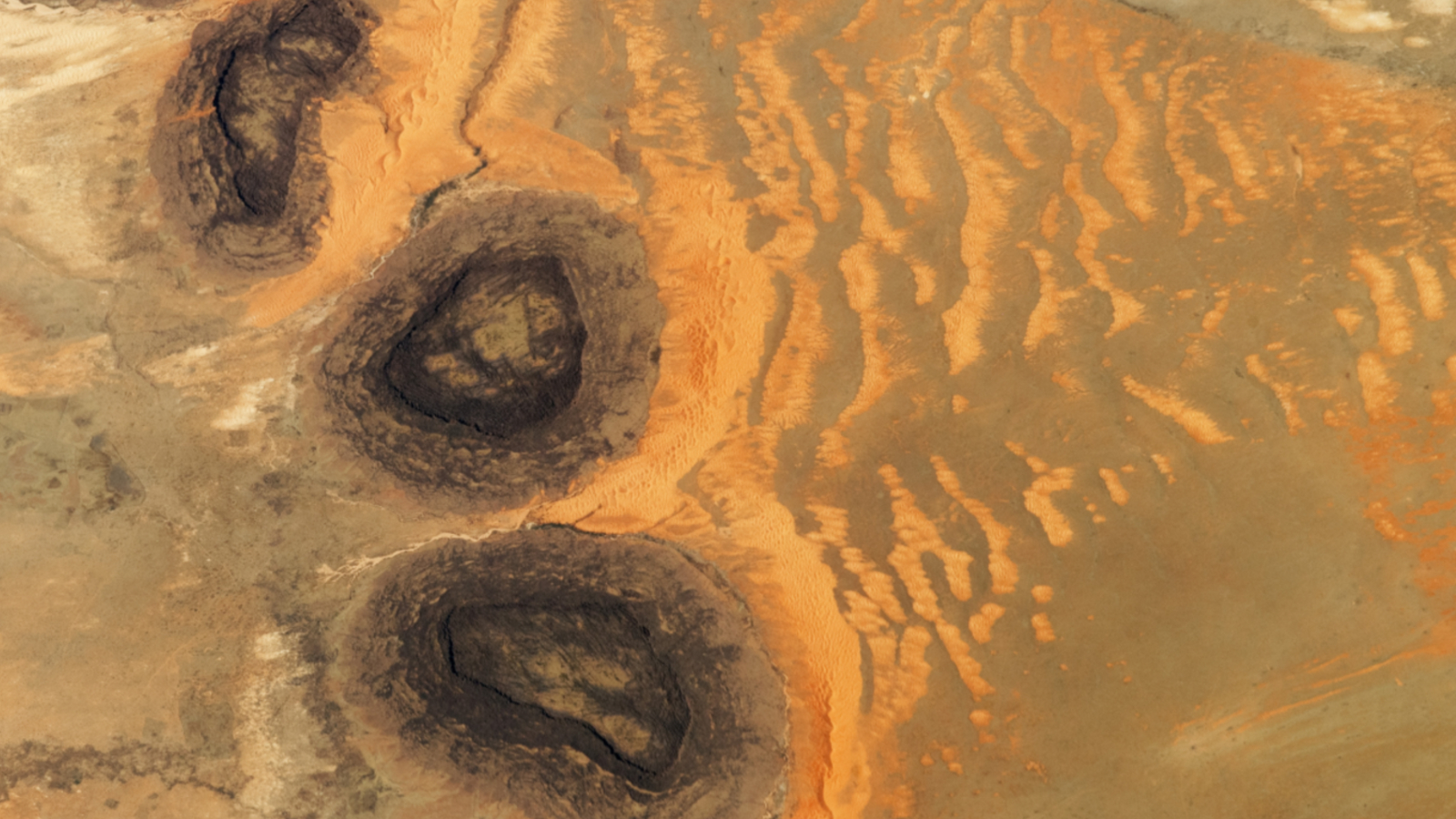
A 2023 astronaut photo shows three dark hills, or mesas, towering above southern Mauritania. The structures are remnants of a single Paleozoic-era formation.
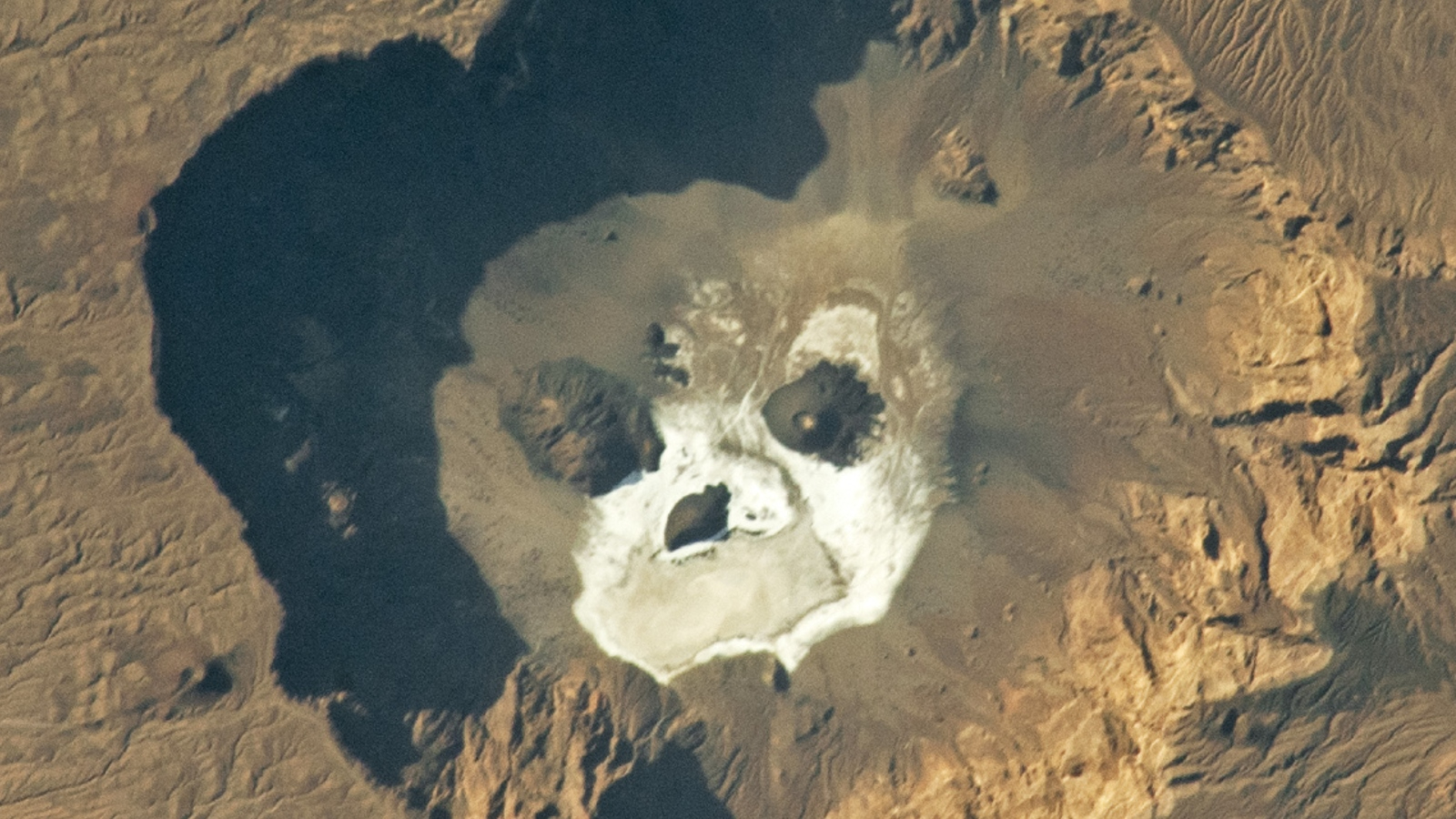
A 2023 astronaut photo shows off an unusual cranium-like structure appearing to stare up into space from the floor of a large volcanic caldera in Chad.
As the World Cup kicks off across the U.S., Canada and Mexico, scientists have predicted that extreme heat could play a decisive role in determining the outcome.
Nearly half of the scheduled matches — especially those in more southerly areas of the U.S. and low-lying parts of Mexico — have at least a 50% likelihood of "performance-impairing heat." To prepare, many teams have been training intensively in hot conditions, and during the tournament, they will have access to cold-water immersion tubs, ice vests and misting fans to help cool players down if they overheat.
Compared with these major sporting events, which have resources to adapt to extreme heat, community sports participants and recreational exercisers often have fewer options. This lack of adaptability may increasingly affect when, where and how people can safely exercise, especially as climate change makes extreme warming events more frequent and intense.
"The majority of people who play sport for competition or just for fun, recreation and leisure have a fraction of that power [of professional sports organizers] but face greater challenges and harms," Jessica Murfree, an assistant professor in the Department of Exercise and Sport Science at the University of North Carolina at Chapel Hill, told Live Science.
How hot is too hot for exercise?
Sports governing bodies typically use wet-bulb globe temperature (WBGT) to assess heat risk. It measures the combined impacts of temperature, humidity, direct sunlight and wind speed on the human body.
Taking humidity into account is key because, with more water in the air, it's harder for sweat to evaporate off the skin and cool the body. WBGT was developed by the U.S. military in the 1950s to prevent heat-related deaths in training camps. Nowadays, it also shapes safety guidelines for outdoor workers, as well as athletes.
The American College of Sports Medicine divides the U.S. into three regions to account for varying levels of heat acclimatization and defines WBGT ranges that pose a "very high" risk in each region. That threshold is a WBGT of 82.2 degrees Fahrenheit (27.9 degrees Celsius) or higher in Southeastern and Southwestern states, 79.9 F (26.6 C) in Central states, and 76.3 F (24.6 C) in Northern regions.
For unacclimatized individuals and those with poor physical fitness, the health risk jumps at lower thresholds.
Gulf Coast states — particularly Southern Texas, Louisiana, Mississippi, Alabama and Florida — tend to experience the highest WBGT values. High-risk conditions begin in May in South Texas and South Florida, before expanding northward and peaking in July and August. Studies suggest the number of extreme humid heat events has more than doubled in most parts of the U.S. since 1980, and that globally, climate change added roughly three weeks' worth of dangerous humid heat in 2024 alone.
An individual's overall health and fitness, hydration levels and amount of exertion need to be considered, and systemic factors like socioeconomic status also come into play, Murfree said. For instance, lower-income families are more likely to live in hotter urban environments and lack access to air conditioning, meaning they may already be experiencing heat stress at home.
While high humidity and heat make it so sweat can't evaporate easily, the body has other means to cool down. It also sends more blood to the skin, arms and legs, allowing heat to be released through the skin. But physical exertion in extreme heat makes this more difficult.
"We only have a limited amount of blood in our body, and we're simultaneously trying to use it to fuel the reactions in our muscles to be able to facilitate exercise, as well as send it to our skin to help us cool down," said Grant Lynch, a research fellow in the Heat and Health Research Centre at the University of Sydney.
When the body can no longer get rid of extra heat, symptoms of heat exhaustion — including dizziness, nausea, headache and muscle cramps — may set in. If the body continues to overheat, this can progress to heat stroke, a serious and potentially fatal medical emergency where a person's core body temperature rises to 104 F (40 C) or above. Heat stroke can cause central nervous system dysfunction and delirium, convulsions or coma.
Heat can be especially dangerous for children and teens, compared to adults. (Image credit: Frazao Studio Latino via Getty Images)
Reducing health risk in hot weather
The body can acclimate to extreme heat, to some extent. At the University of Sydney’s thermal ergonomics laboratory, researchers use a climate chamber to test the body’s capacity to adapt by increasing its blood plasma volume and lowering heart rate and resting temperature.
"We would have them come in for anywhere from five to 14 consecutive days of exposure," Lynch said. "They would be cycling or running for between 90 minutes to 2 hours every day, and the conditions would be [95 F to 104 F] 35 C to 40 C in the room for that entire duration."
The benefits achieved through this kind of heat acclimation aren't permanent. Research suggests that, for every two days spent in a cool environment, one day of heat acclimation is lost. For people exercising just a few times a week in hot weather, "it's pretty unlikely you are physiologically adapting as much as you think you are," Lynch said.
While WBGT is considered the "gold standard" for heat safety monitoring, the special device required to measure it may not be accessible to every community sports organization or individual person exercising. The danger, Lynch said, is that many people focus on ambient temperature alone to determine risk, when multiple factors are involved and can compound.
Sports Medicine Australia, the country's national body for sports medicine and sports science, developed a tool to calculate risk and suggest safety precautions. It combines data automatically extracted from weather stations — including ambient temperature, humidity, wind speed and solar radiation — with sport-specific information, such as typical uniforms and duration of activity.
Generally speaking, the sports body recommends staying hydrated before, during and after physical activity; wearing lightweight and breathable clothing; taking frequent rest breaks using ice towels and misting fans when possible; and delaying or cancelling games when the risk level gets too high. If someone begins to feel overheated, immediate action is important to prevent further heat strain.
"The most important thing to do, without a doubt, is to stop or reduce the intensity of the activity you're performing, seek shade, go into an area where you are not exposed to direct sunlight, and then douse the skin with water," Lynch said.
Heavy sweating, painful muscle cramps, nausea, dizziness, and cool, pale, clammy skin are all signs that someone may be suffering from heat-related illness. Heat stroke symptoms include a very high temperature; hot, dry skin or profuse sweating; confusion; and loss of consciousness. These symptoms should prompt immediate cooling with a cold water bath and emergency medical care.
Murfree said she would like to see heat safety training introduced in schools in areas prone to extreme heat in the U.S., similar to existing fire safety education.
"Sport often asks us to push ourselves harder, be faster and tougher," Murfree said. "It's OK to take breaks, stop, slow down, reschedule and advocate for our bodies and our wellness in the heat."
This article is for informational purposes only and is not meant to offer medical advice.
How much do you know about the greatest athletic feats of all time? Find out with our sports record quiz!
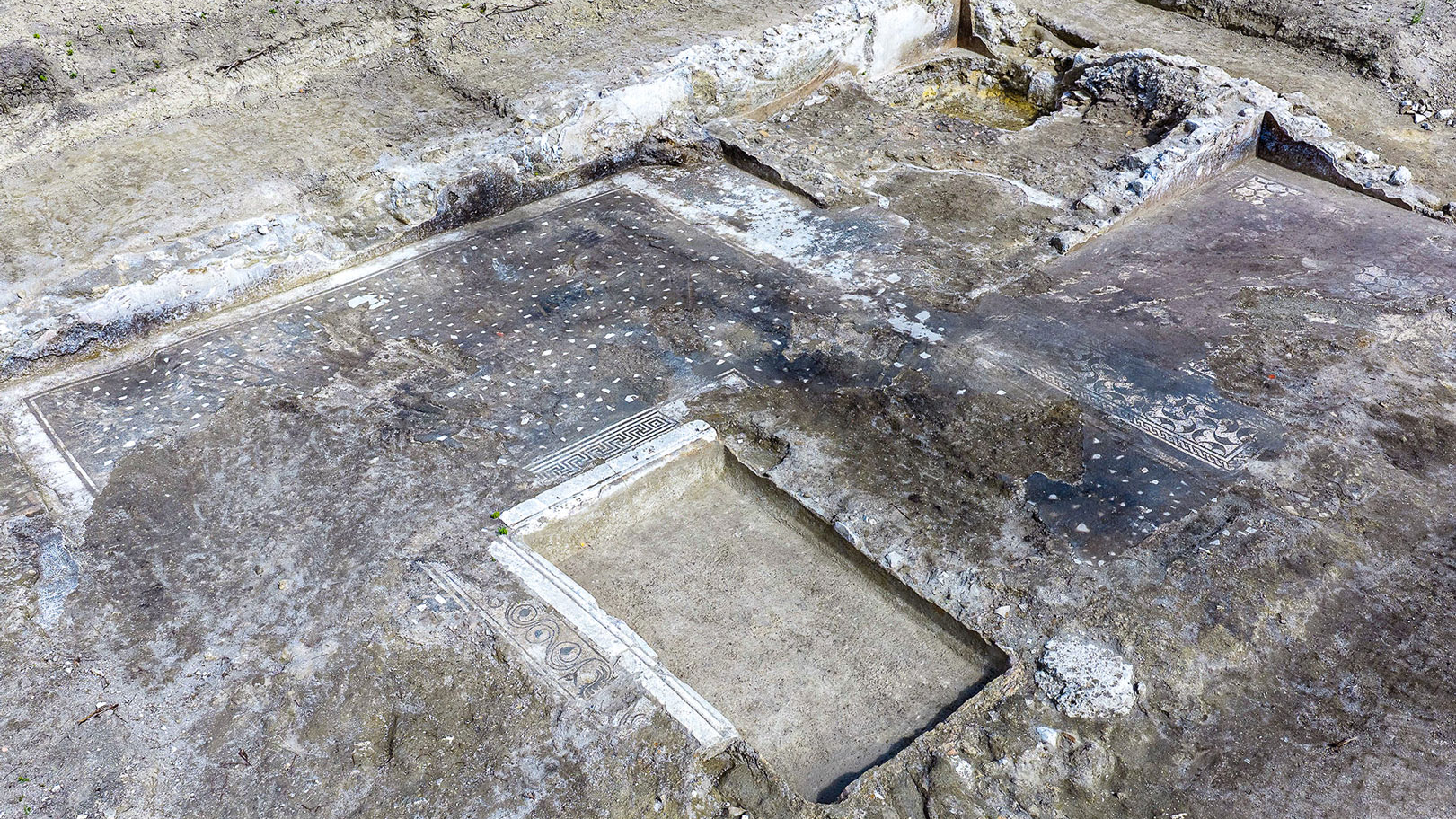
A clandestine excavation on the outskirts of Rome has brought to light a "splendid villa" that may have belonged to a member of the Antonine imperial family, according to archaeologists with the Special Superintendency of Rome. The remains of the first-century villa, which was previously unknown to archaeologists, include frescoed walls and mosaic floors that showcase the elite social status of the owners.
The villa was discovered at Castel di Guido, a village about 12 miles (19 kilometers) west of the ancient city walls of Rome. In ancient times, the area was known as Lorium, and it was frequented by prestigious Roman families, including the Roman emperorsHadrian, Antoninus Pius and Marcus Aurelius.
In February, the local police were alerted to illegal excavations at Castel di Guido on government-owned land, according to a June 15 translated statement from the Italian Ministry of Culture's Special Superintendency of Rome. The unauthorized excavations had been undertaken with a backhoe, which made deep cuts into the villa and left huge piles of dirt.
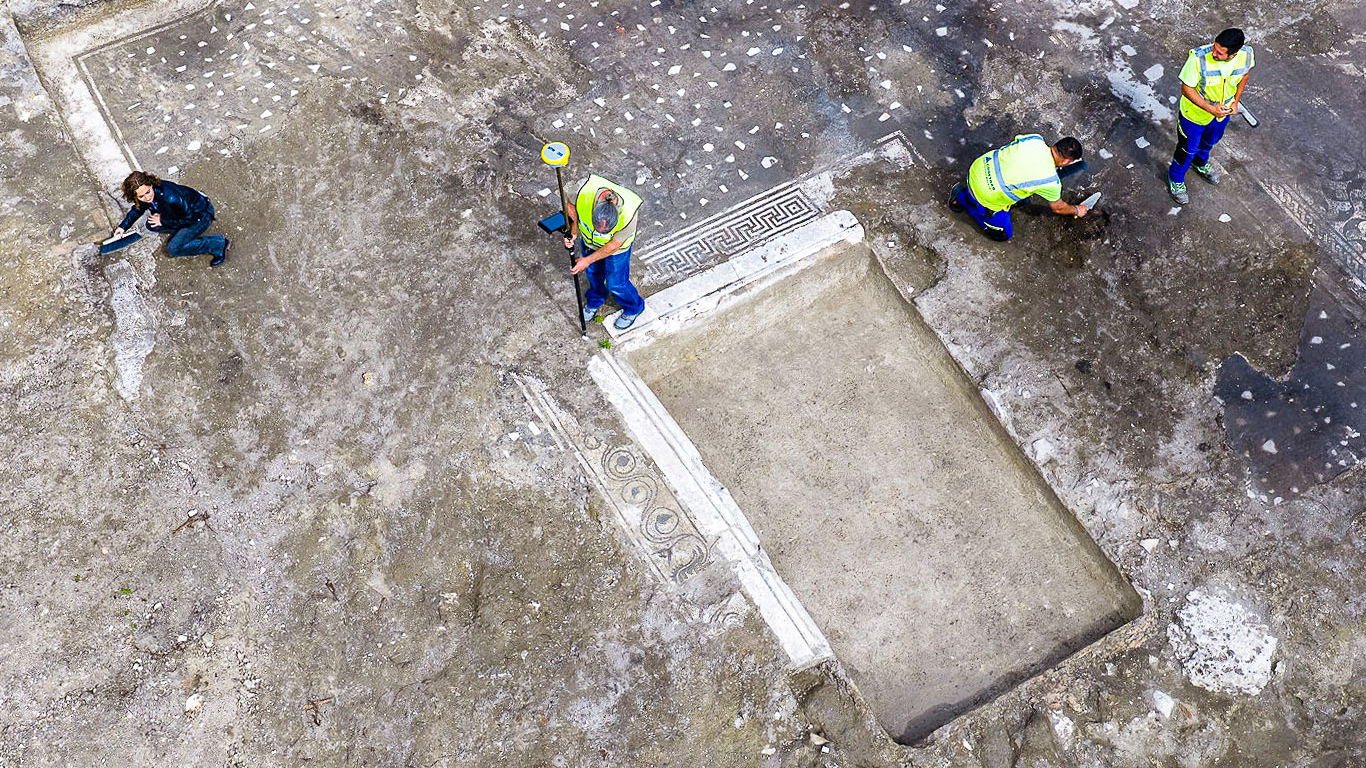
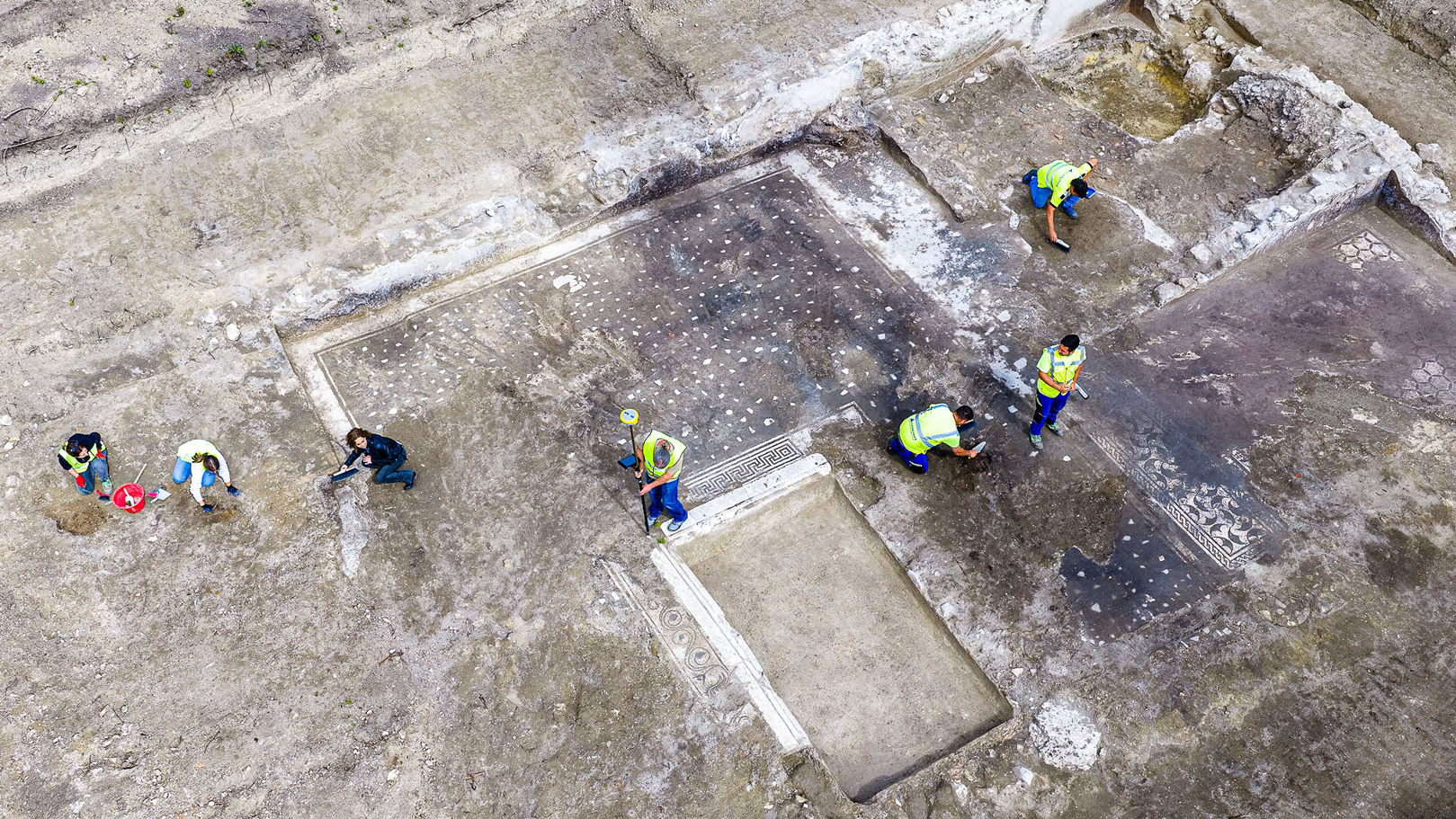
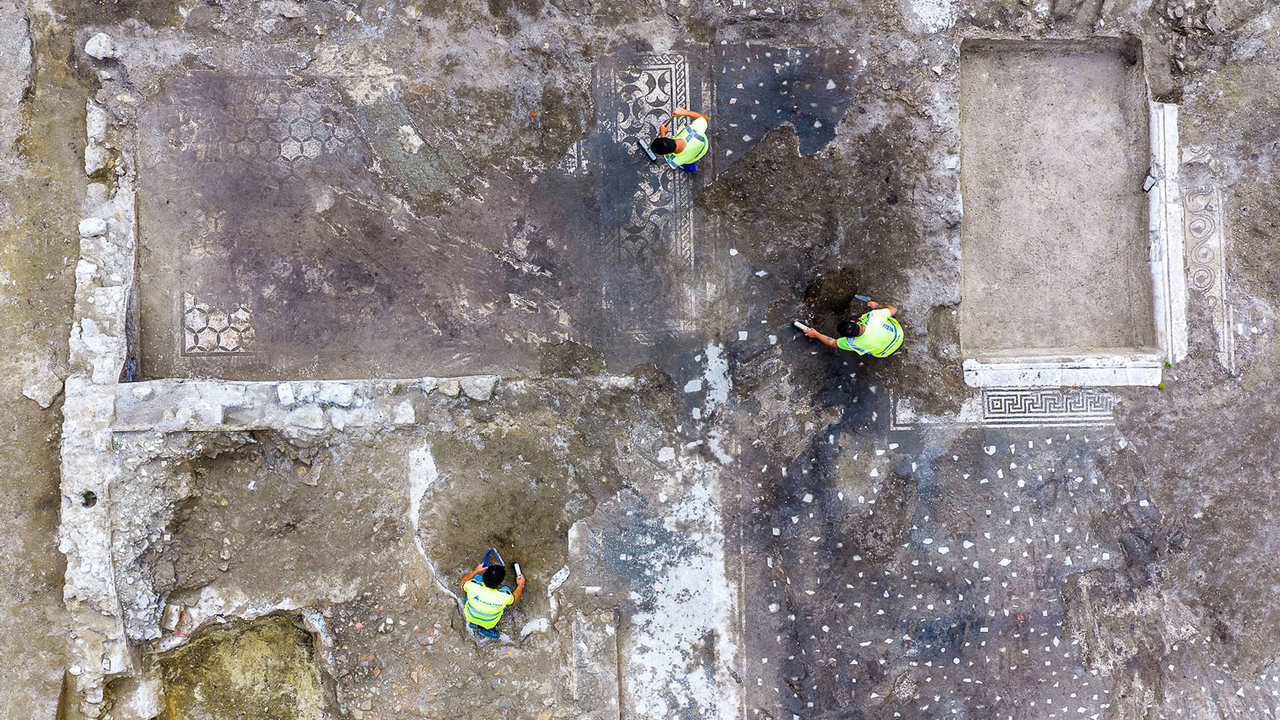
Superintendency archaeologists led by Alessia Contino carried out emergency excavations to document and stabilize the architecture at the site.
"Thanks to the local report and prompt intervention, it was possible to identify part of a large, previously unknown Imperial-period villa and uncover a splendid array of decorations, as well as the discovery of a statue in fine white marble," Contino said in the statement.
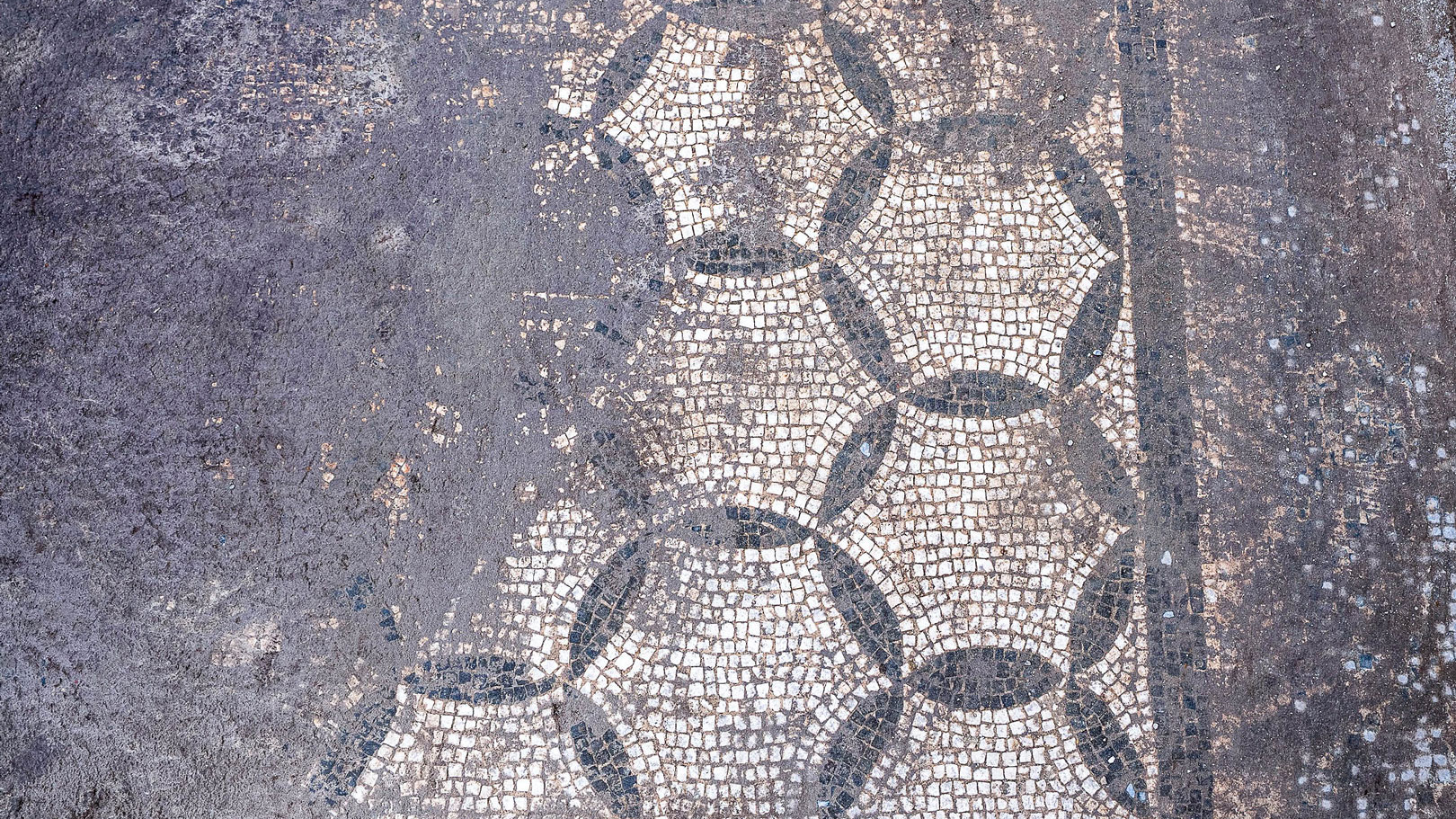
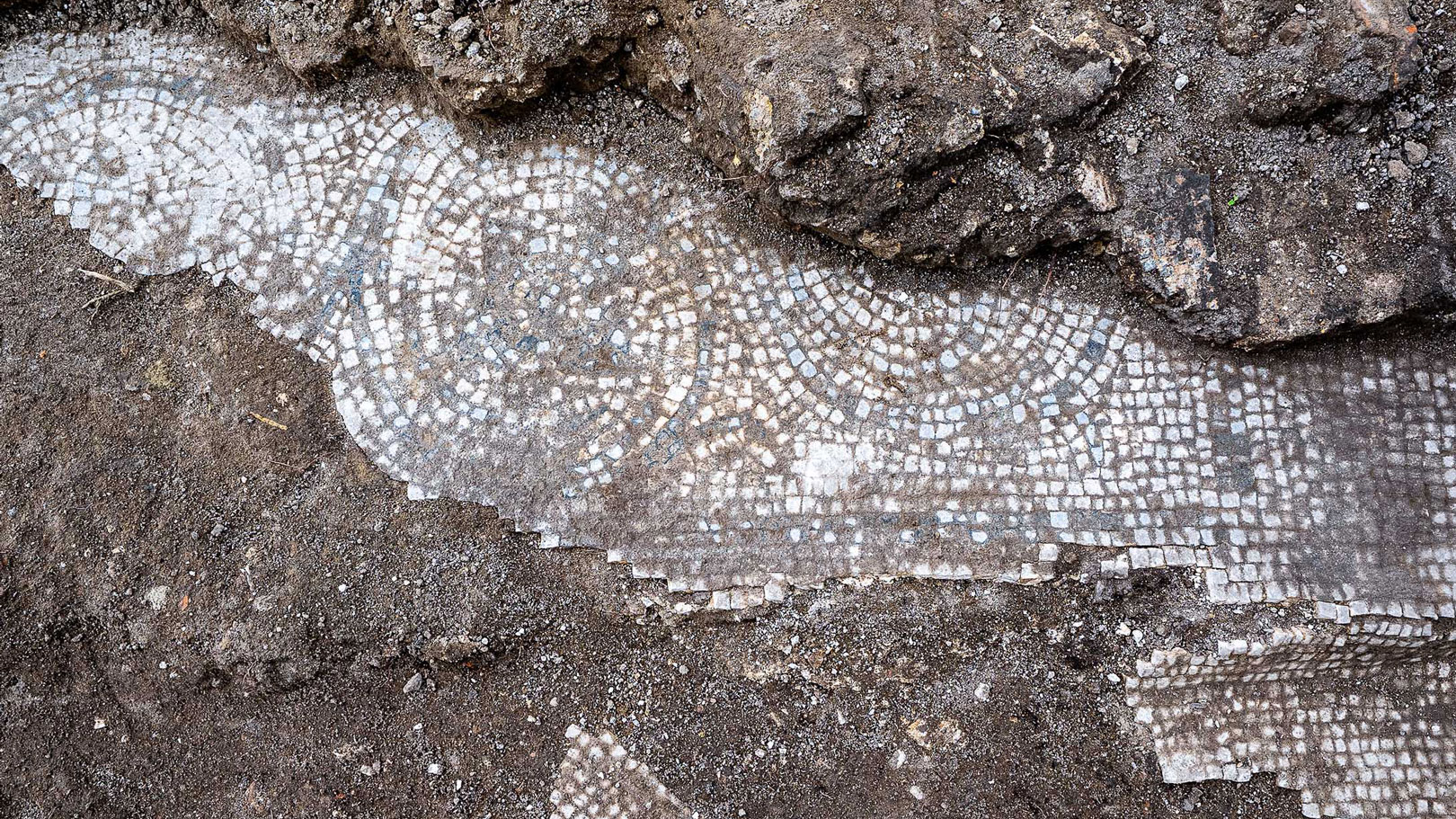
The excavation revealed the atrium at the entrance of the villa, two rooms decorated with frescoes and mosaics, and several other spaces related to the agricultural activities of the large, rural house. The villa was likely built in the early first century and abandoned in the third century.
Italian Ministry of Culture / Special Superintendency of RomeItalian Ministry of Culture / Special Superintendency of RomeItalian Ministry of Culture / Special Superintendency of RomeItalian Ministry of Culture / Special Superintendency of RomeItalian Ministry of Culture / Special Superintendency of RomeItalian Ministry of Culture / Special Superintendency of RomeItalian Ministry of Culture / Special Superintendency of RomeItalian Ministry of Culture / Special Superintendency of RomeItalian Ministry of Culture / Special Superintendency of RomeItalian Ministry of Culture / Special Superintendency of RomeItalian Ministry of Culture / Special Superintendency of RomeItalian Ministry of Culture / Special Superintendency of Rome
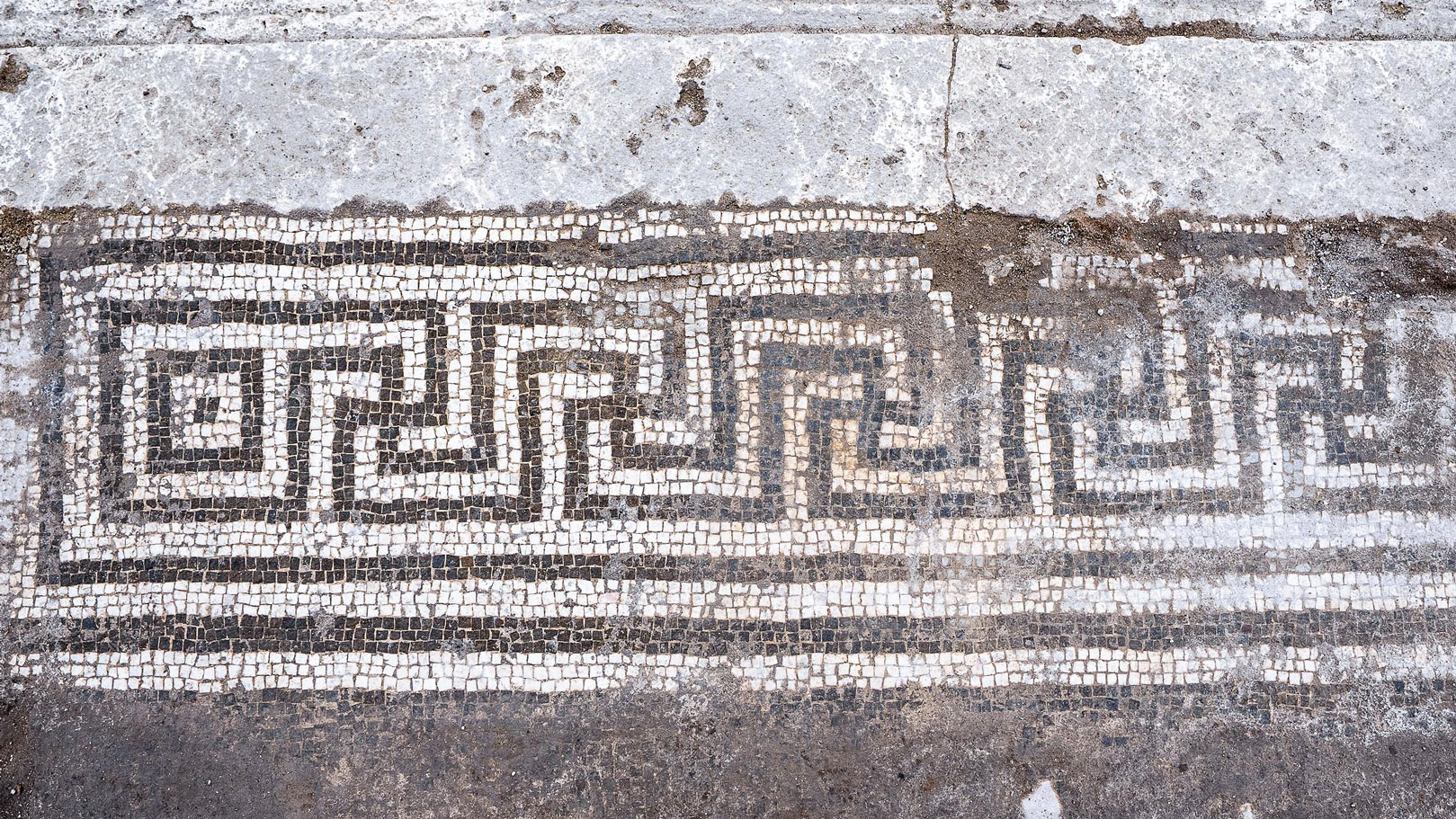
The atrium's central impluvium — a marble basin in the center of many ancient Roman houses that collected rainwater from an opening in the roof — was surrounded by a floor decorated with bands of black-and-white botanical and geometric mosaics. The rear wall of the room, about 5 feet (1.5 meters) of which was still preserved, was painted red as part of a fresco that featured multicolor panels with human figures and botanical elements.
Surrounding the large room were four smaller ones, three of which still have preserved mosaic floors. One room includes nine black-and-white geometric panels, another includes black octagons on a white background, and the third has black rectangles.
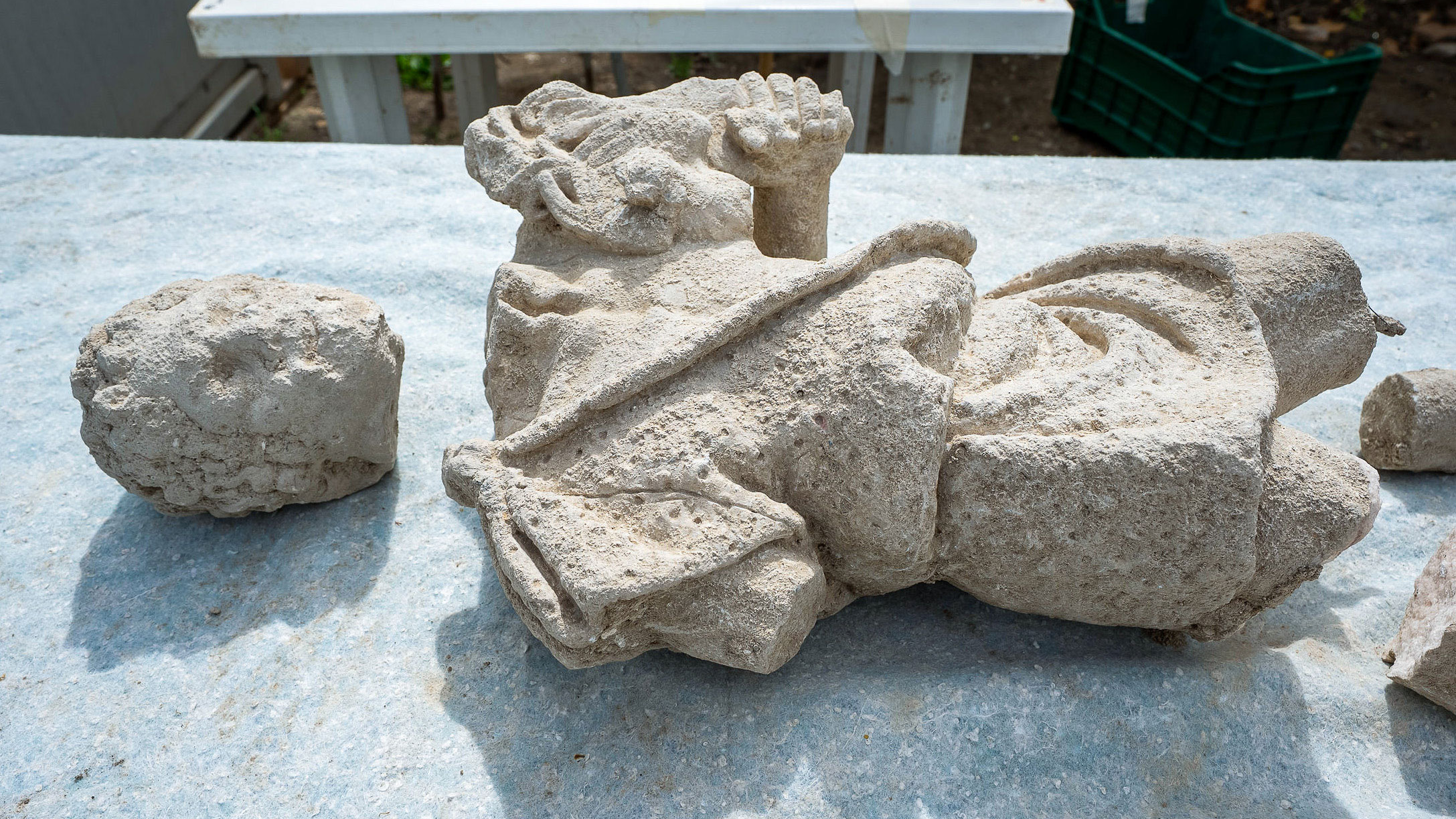
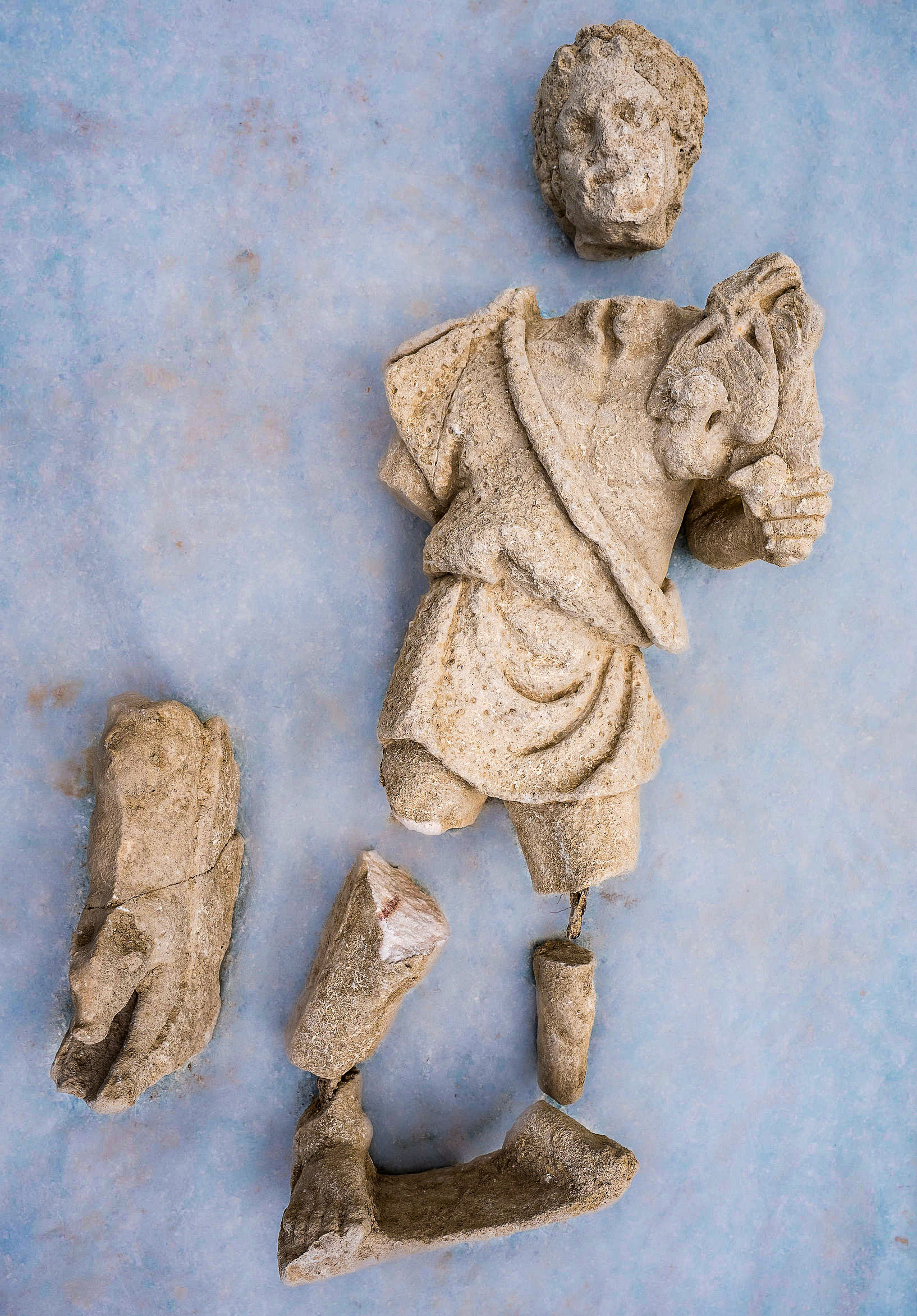
Within the villa's central basin, archaeologists found a broken statue, about 31 inches (80 centimeters) tall, depicting a bearded man wearing a short tunic and carrying a basket with birds and fruit. The statue may represent Silvanus, the Roman deity of woods and other uncultivated lands, who watched over domesticated flocks of animals. Silvanus was also a companion of Bacchus (known in Greek as Dionysus), the god of wine and ecstasy.
Archaeologists discovered a statue of the ancient Roman deity Silvanus, guardian of the flocks. (Image credit: Italian Ministry of Culture / Special Superintendency of Rome)
The scale of the villa and the quality of the mosaics and frescoes suggest that the villa's owners were Roman aristocrats and may have even been members of the imperial family, according to the statement. In the Roman Empire, elite families like the Aurelii and the Arrii — the paternal and maternal families of Antoninus Pius, who reigned from A.D. 138 to 161 — lived in Lorium. Ancient sources suggest that Antoninus Pius spent his childhood in Lorium, built his imperial palace there, and died there at age 74.
Lorium was also frequented by Emperor Hadrian, who adopted Antoninus Pius to make him his heir, and by Marcus Aurelius, who was Antoninus Pius' nephew, adopted son and son-in-law. Because of Lorium's strong connection to the Antonine imperial dynasty, numerous villas and ancient estates have previously been discovered in the region.
But the newly uncovered villa "is another important piece of the puzzle," Contino said, "opening up new perspectives for understanding and preserving our history-rich territory."
Further work on the villa and its artifacts will help archaeologists date the building more accurately and work out whether it was abandoned when the imperial household was relocated out of Lorium, according to the statement.
Although work on the villa has not been completed, the public has a chance to visit the newly excavated villa and its mosaics on June 20 through a free archaeological hike and guided tour organized by the Special Superintendency of Rome.
From Augustus to Nero, see how much you know about ancient Rome's famous leaders with our Roman emperor quiz!

 Login