❌

Reading view

'It's a huge deal': Archaeologists discover second cannonball from the Battle of the Alamo, and it was likely fired by Texans

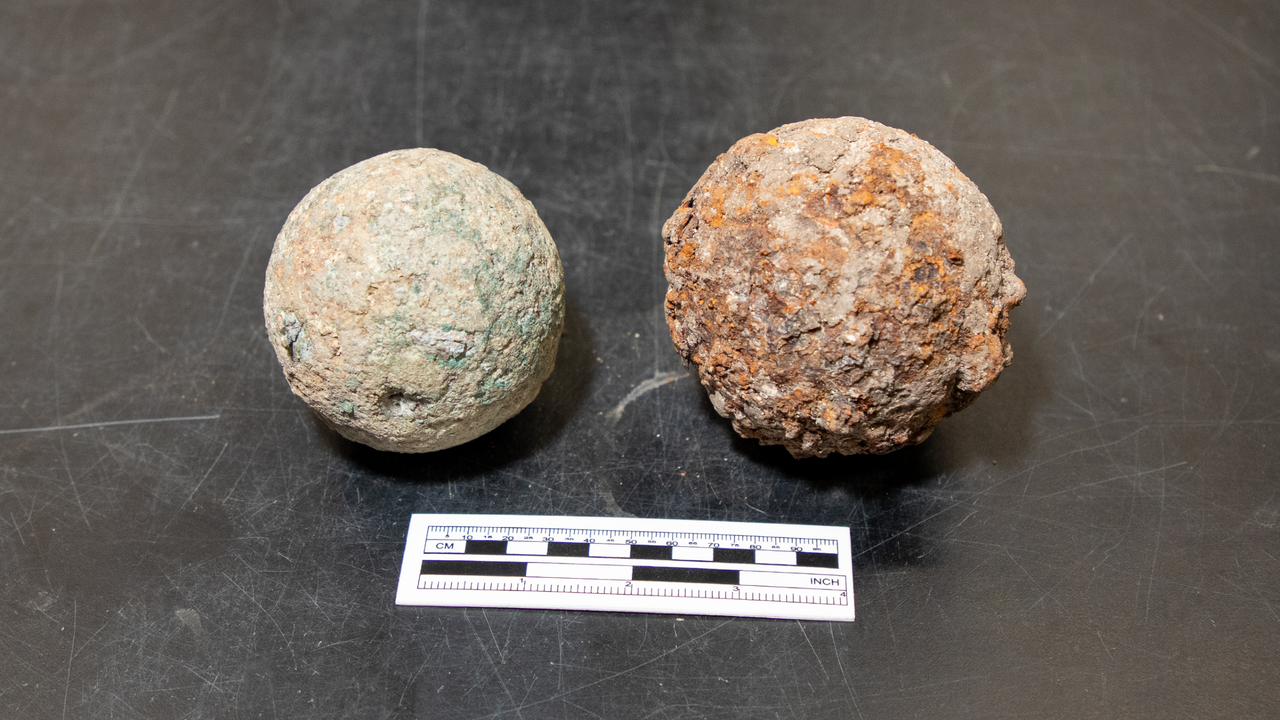
Archaeologists have discovered an iron cannonball fired by Texans at the Battle of the Alamo in 1836. This is the second intact cannonball they have discovered from the famous conflict. The first one, a bronze cannonball, was found earlier this year and was likely fired by the Mexican army.

"It's a huge deal," Tiffany Lindley, director of archaeology at the Alamo, said in a video statement from Alamo Trust. "We all thought, 'There's no way we can top it,'" she said, referring to the bronze cannonball discovered March 5, just a day before the 190th anniversary of the conflict that killed Davy Crockett, "and then we found another one."

Both cannonballs were recovered from the northeast corner of the church at the Alamo, which was originally built in 1718 as a Spanish mission and fortress in what is now San Antonio. But the Alamo is better known as the location of an 1836 battle during the Texas Revolution, in which Anglo-American settlers and Hispanic Texans known as Tejanos seceded from the Republic of Mexico.

In a 13-day siege culminating in a deadly assault on March 6, 1836, Mexican troops, commanded by Gen. Antonio LΓ³pez de Santa Anna, surrounded the Alamo and killed the 180 Texan rebels defending the structure, including Davy Crockett. The cry "Remember the Alamo!" was used in later skirmishes in the Texas Revolution as soldiers fought Mexican troops for independence.

The newly excavated iron cannonball was found June 2, according to a statement from Alamo Trust.

Of the two cannonballs, "the newest one is slightly larger" and was likely fired from a cannon that shot 6-pound [2.7 kilogram] cannonballs, Kolby Lanham, a senior researcher and historian at the Alamo, said in the statement. "The likelihood is that the bronze one belonged to the Mexican Army and the iron one belonged to the Texans."

Over the years, archaeologists have found numerous pieces of ammunition and shrapnel at the Alamo, Lindley said, but these cannonballs are the first examples of solid shots β€” spherical projectiles fired from a gun or cannon β€” they have ever found.

"It's just a huge kind of once-in-a-lifetime deal," Lanham said. "But obviously, it's happened twice."
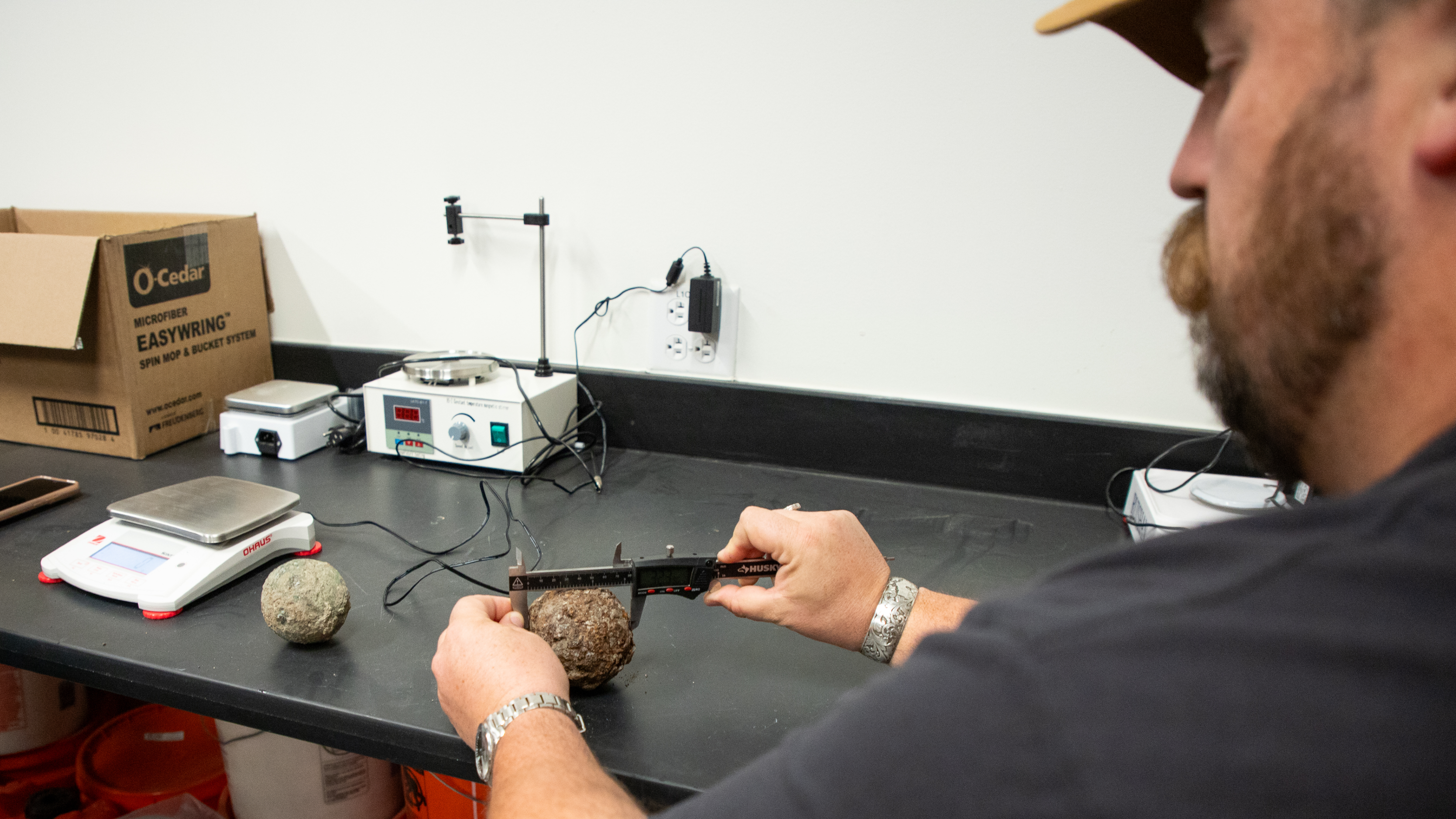
a light-skinned man measures a metal cannonball with calipers in a lab setting

The size and weight of the cannonball suggests it was fired by a cannon that shot 6-pound cannonballs. (Image credit: Alamo Trust)

The Mexican and Texan cannonballs were found near each other, so they are likely the historic remains of the two sides shooting at each other in the fateful siege nearly two centuries ago.

"Whenever they were dropped the very first time β€” possibly in 1836, probably β€” they haven't been touched since, and that's what makes them extra special," Lindley said. "I don't think you can undersell it."

The Alamo remains an active archaeological site, where experts have discovered artifacts that span its centuries of history, from Indigenous stone tools that predate the Spanish mission through the late 19th century, when the structure was converted into a general store and warehouse.

Can you identify these historical objects of war? Test your smarts with our weapons of the world quiz!
  •  

5,000-year-old burial of man with battered skull found in kiln in Germany β€” and he may have been a human sacrifice

Archaeologists in Germany have unearthed an unusual burial of an injured man who was thrown into an abandoned kiln nearly 5,000 years ago. Because archaeologists don't typically find artifacts or bones in kiln pits, they suspect the man may have been a human sacrifice.

While workers were constructing a power line near Gerstewitz, a village in central Germany, archaeologists found a Corded Ware culture grave, according to a June 15 statement from the State Office for Heritage Management and Archaeology (LDA) Saxony-Anhalt.

The Corded Ware culture, named after the distinctive cord-like impressions found in their pottery, spread across Northern Europe between the Late Neolithic and the Bronze Age, around 2900 to 2050 B.C. Graves of Corded Ware people tend to follow a strict pattern: Men were buried on their right side, women were interred on their left, and everyone was buried in a crouched position facing south. But sometimes, graves deviate from this pattern.

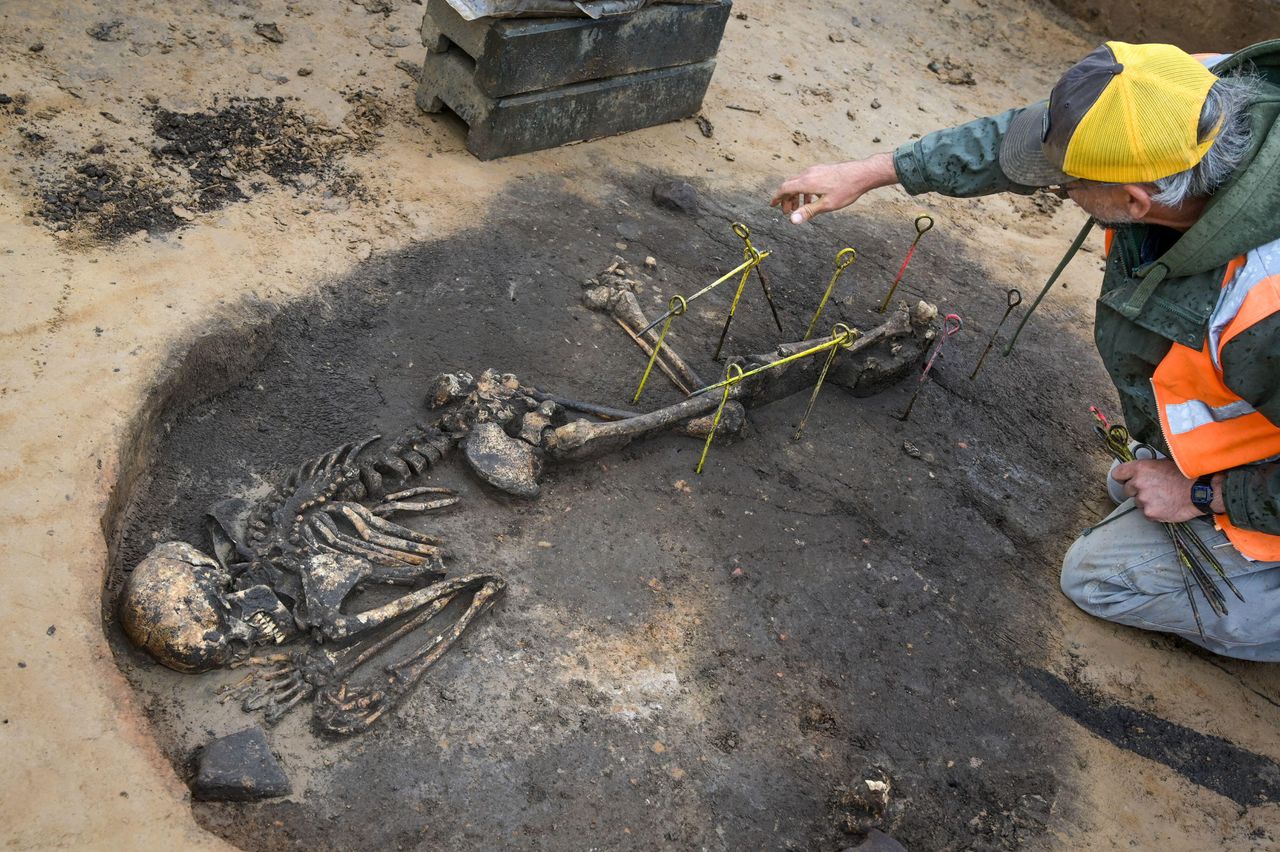
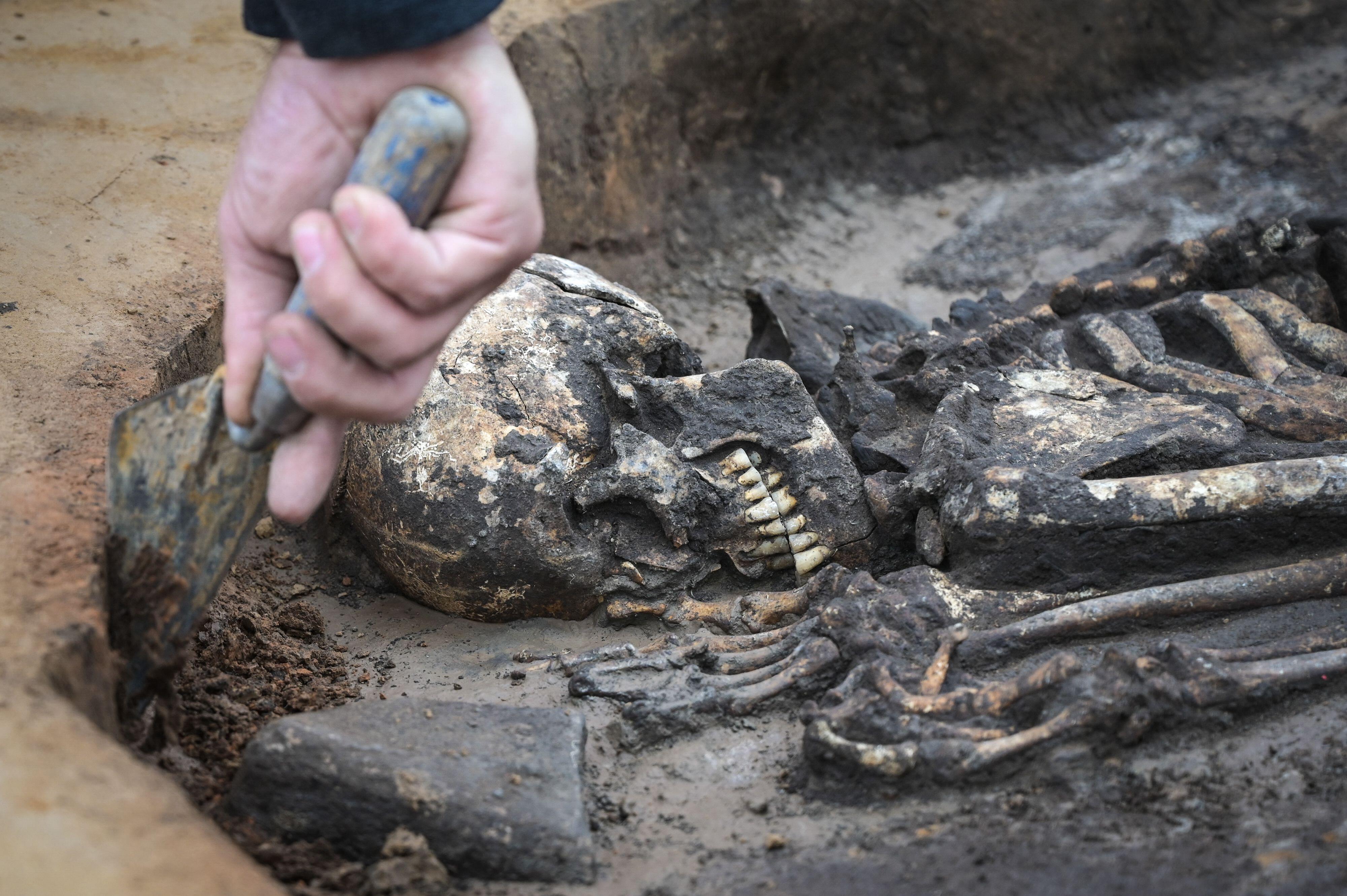
The newly excavated grave at Gerstewitz revealed the skeleton of a man who was about 25 years old when he died. He was buried in a crouched position facing south, but rather than being placed in a grave or under a small mound, he was found in a kiln pit. This pit, essentially a hole that had been dug into the ground, held ancient evidence that people had used it to burn material, such as wood or food, or to fire clay. Additionally, the man's skull showed signs of injury.

Experts have suggested three possible explanations for the unusual burial. The skull injury may have resulted from violence, meaning someone murdered the man. Alternatively, he could have perished in a Copper Age battle lost to history. But a third possibility is that he was placed in a kiln pit as a human sacrifice.

an archaeologist places the point of a trowel near the skull of a person who died 5,000 years ago

The man buried in the kiln pit sustained an injury to his head before he died. (Image credit: dpa Picture-Alliance)

Oliver Dietrich, an archaeologist at LDA Saxony-Anhalt, wrote in the statement that, in rare cases, Corded Ware kiln pits contain cow or dog bones thought to be sacrificial offerings to unknown deities. While it's possible this man was a human sacrifice, Dietrich noted that future laboratory analysis should provide more information about the grave and the person buried there.

This is not the first time a sacrificial pit has been found in Gerstewitz. Last year, archaeologists with LDA Saxony-Anhalt discovered 12 pits ringed by a moat-like ditch. The pits were full of dog bones, human skulls and complete ceramic pots and had been sealed with the rubble of burnt houses, according to a 2025 statement about that discovery. An additional human skeleton was found buried in a converted oven pit. These finds, however, were attributed to the SalzmΓΌnde Culture (3400 to 3050 B.C.), which predated the Corded Ware people.

Other discoveries near Gerstewitz have revealed that the area was settled and occupied for over 6,000 years. The excavation there will last until at least 2027, when the power line project is expected to be completed.

What do you know about the Paleolithic, Mesolithic and Neolithic eras? Find out with our Stone Age quiz!

  •  

Lavish Roman villa discovered outside Rome's walls may have been frequented by Hadrian and Marcus Aurelius

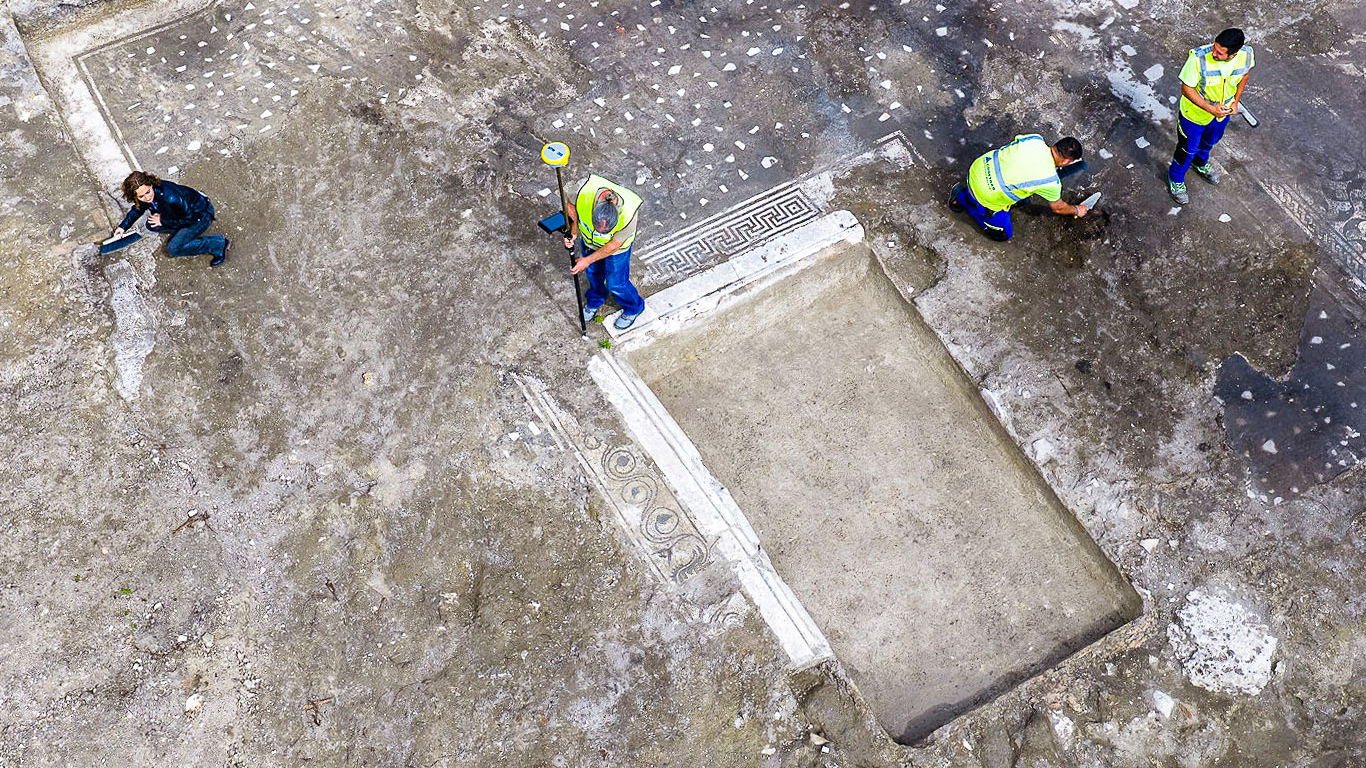
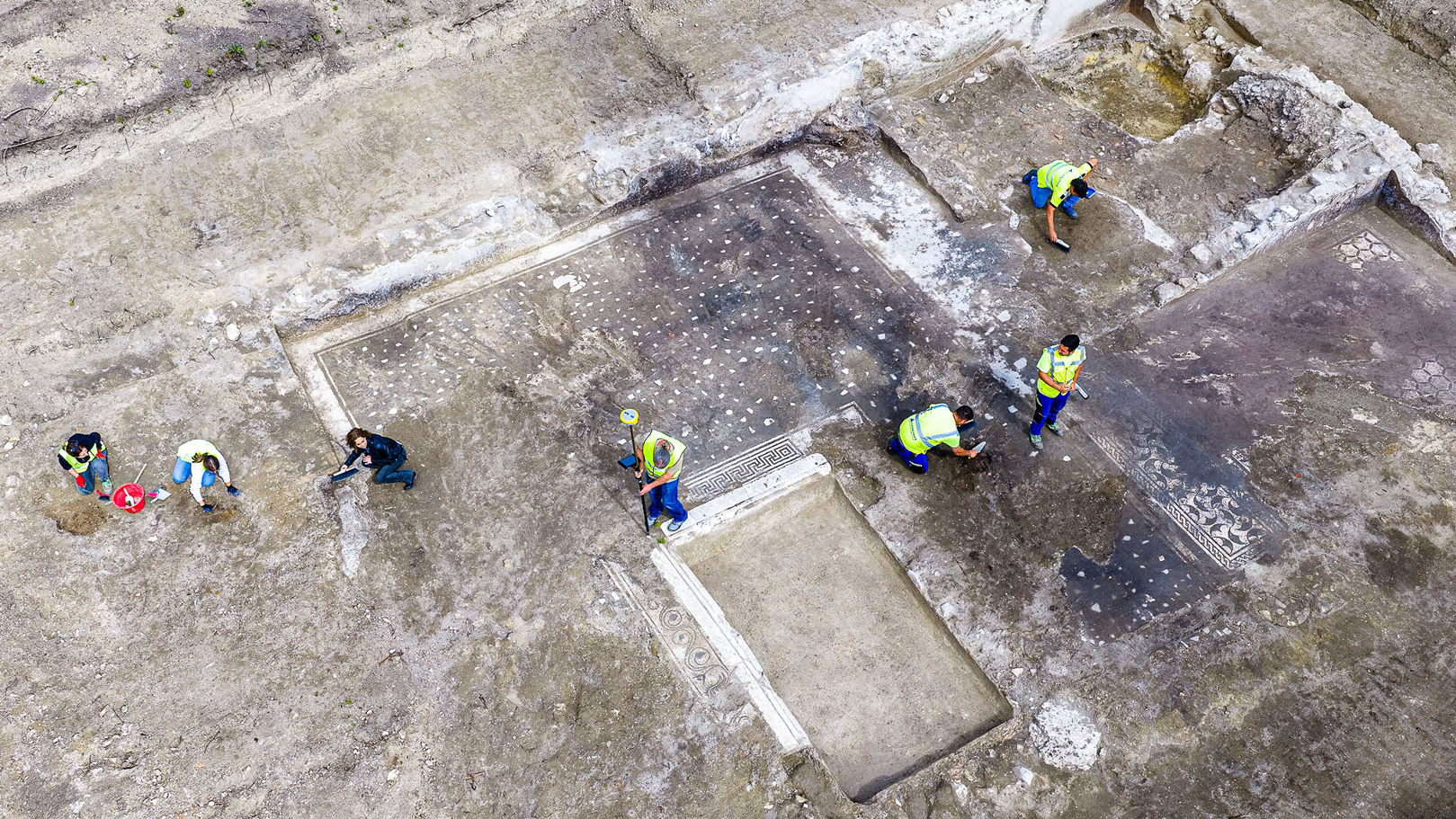
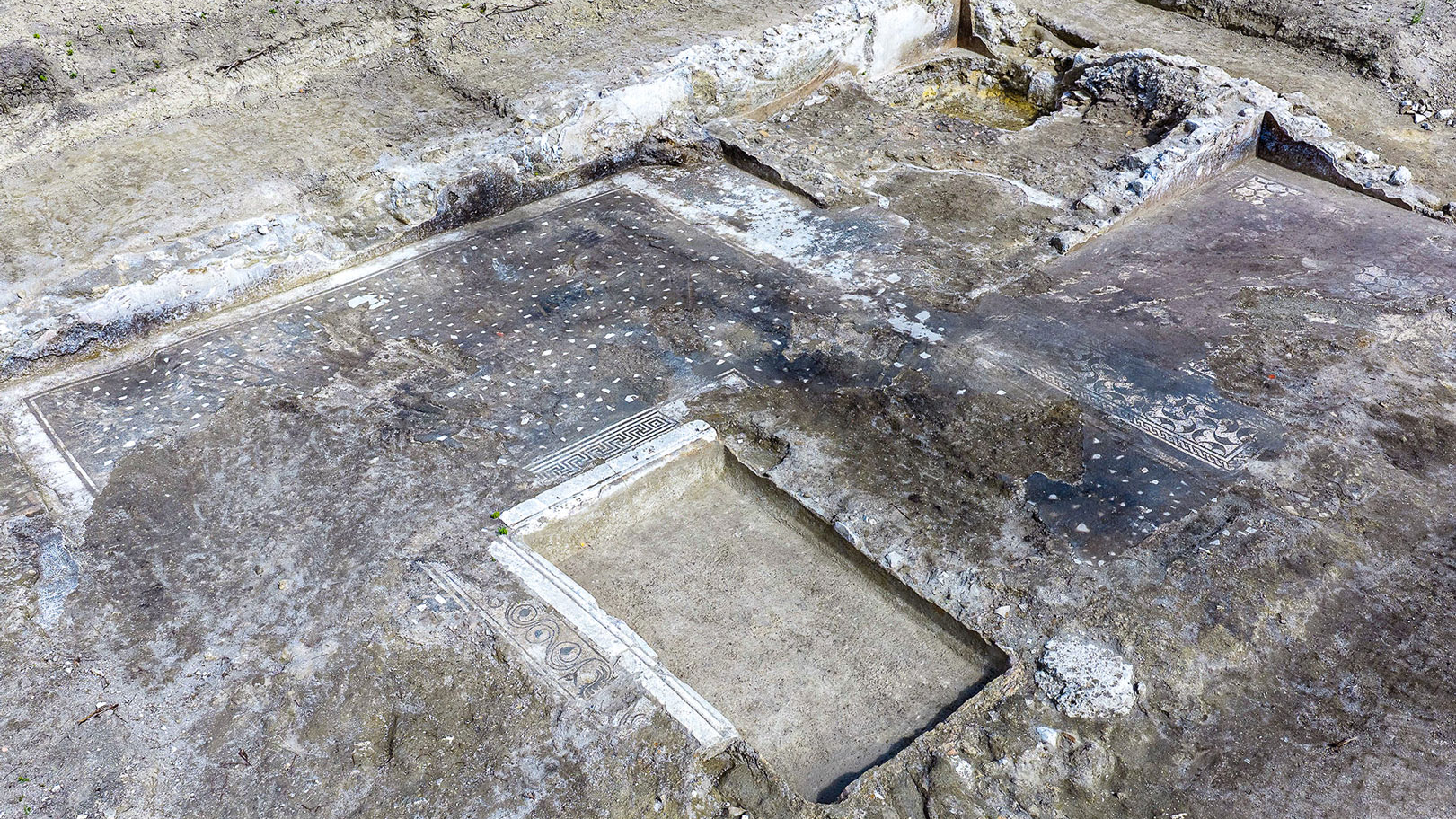
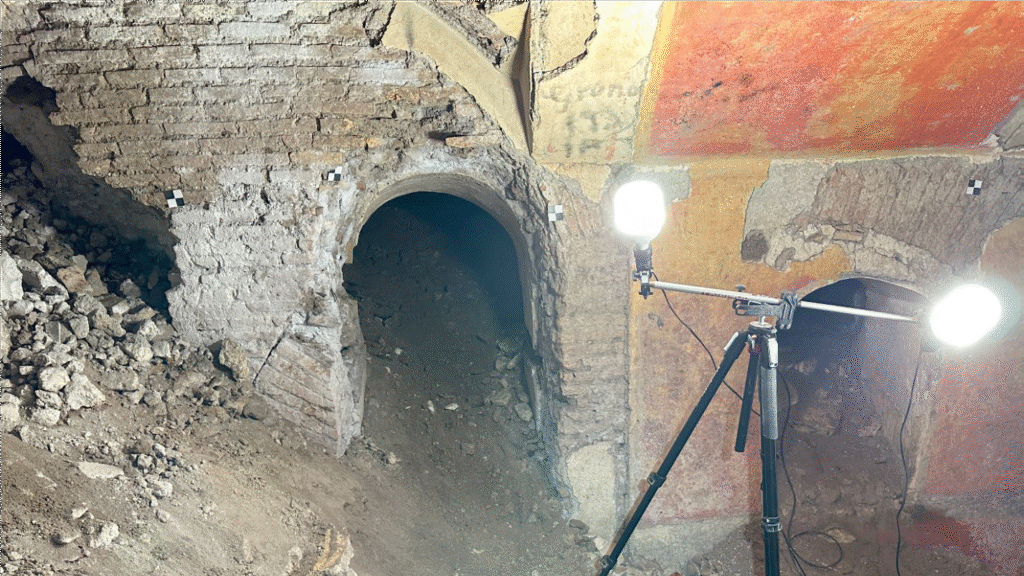
A clandestine excavation on the outskirts of Rome has brought to light a "splendid villa" that may have belonged to a member of the Antonine imperial family, according to archaeologists with the Special Superintendency of Rome. The remains of the first-century villa, which was previously unknown to archaeologists, include frescoed walls and mosaic floors that showcase the elite social status of the owners.

The villa was discovered at Castel di Guido, a village about 12 miles (19 kilometers) west of the ancient city walls of Rome. In ancient times, the area was known as Lorium, and it was frequented by prestigious Roman families, including the Roman emperors Hadrian, Antoninus Pius and Marcus Aurelius.

In February, the local police were alerted to illegal excavations at Castel di Guido on government-owned land, according to a June 15 translated statement from the Italian Ministry of Culture's Special Superintendency of Rome. The unauthorized excavations had been undertaken with a backhoe, which made deep cuts into the villa and left huge piles of dirt.

Superintendency archaeologists led by Alessia Contino carried out emergency excavations to document and stabilize the architecture at the site.

"Thanks to the local report and prompt intervention, it was possible to identify part of a large, previously unknown Imperial-period villa and uncover a splendid array of decorations, as well as the discovery of a statue in fine white marble," Contino said in the statement.

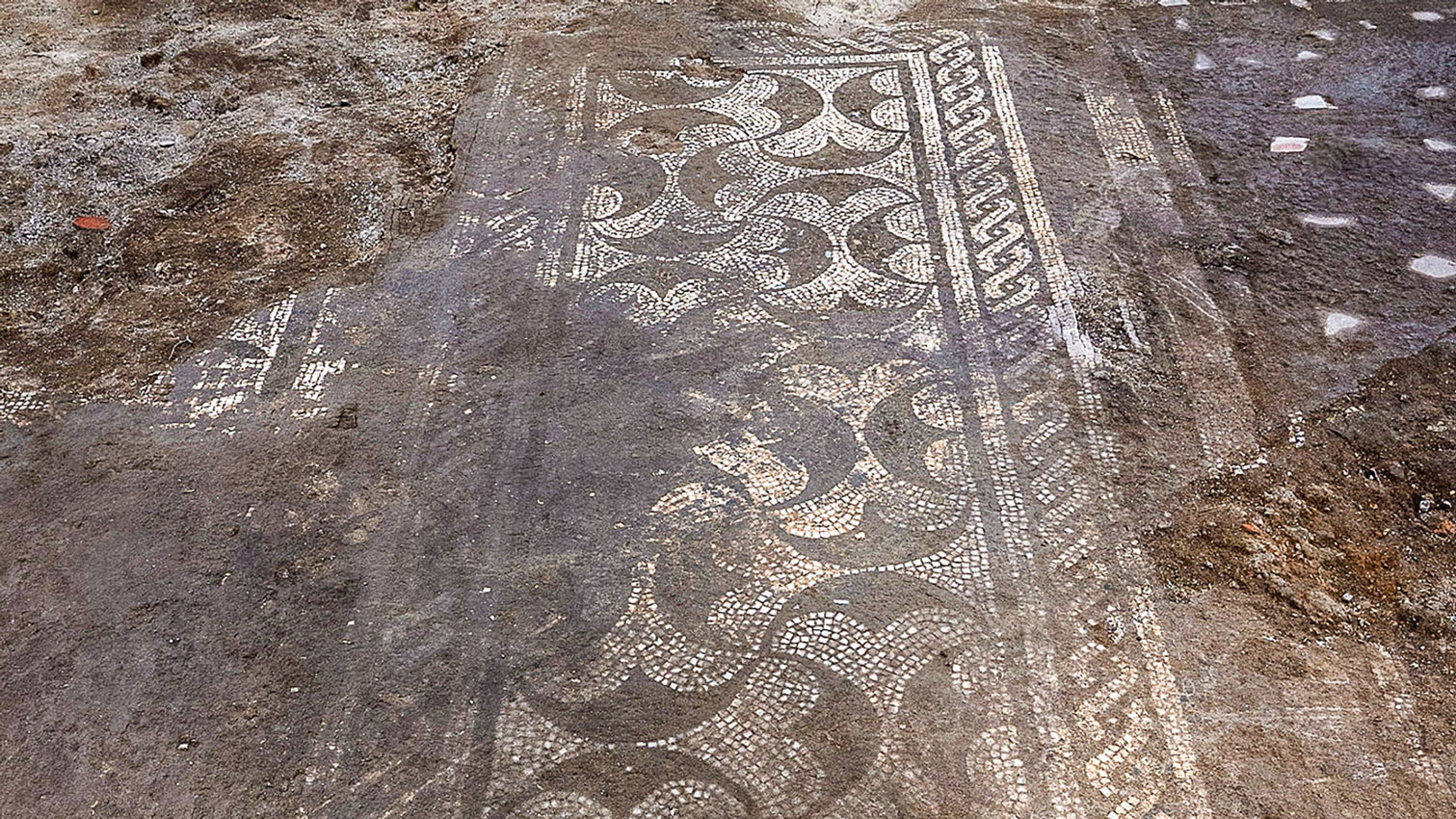
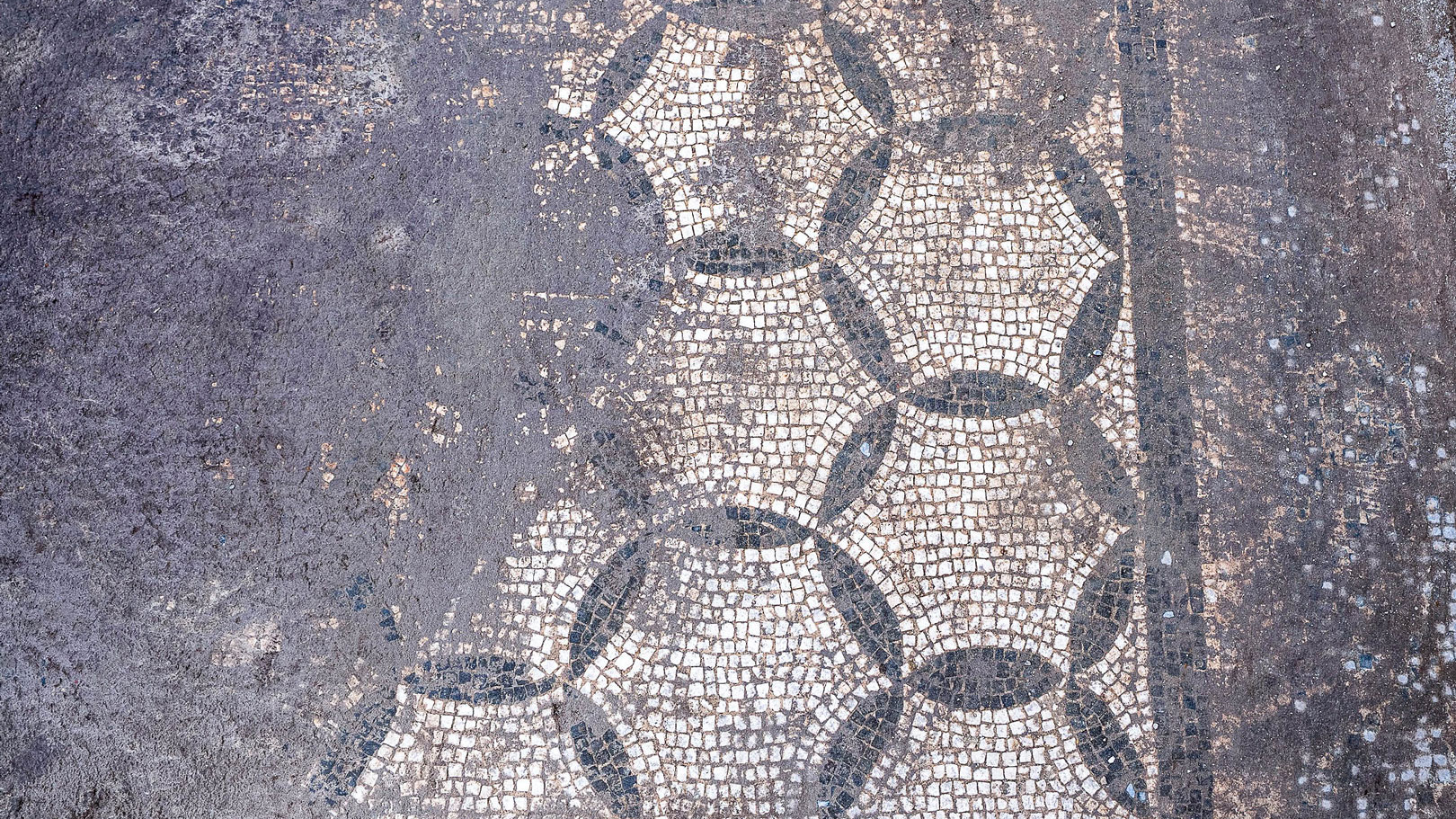
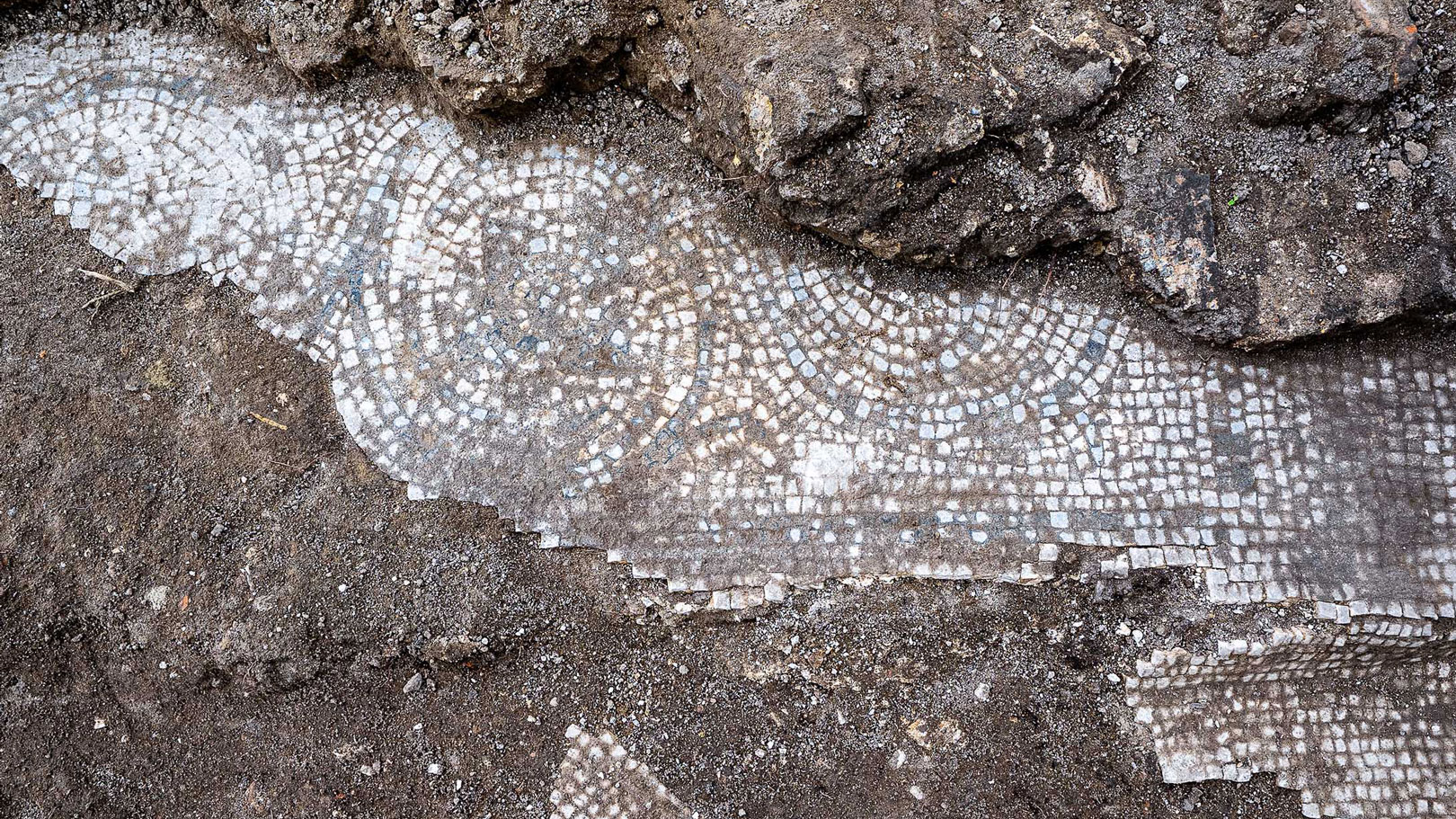
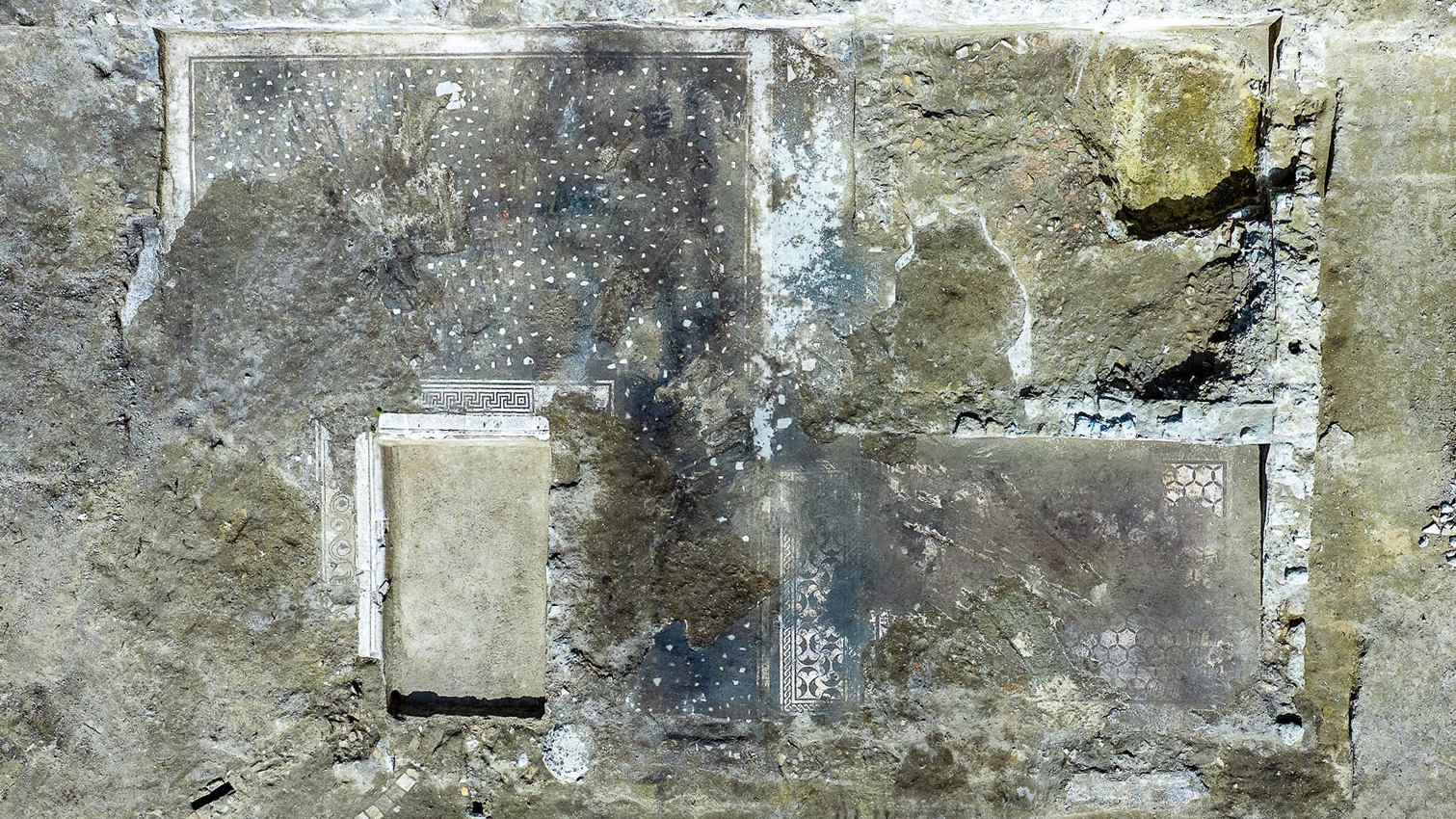
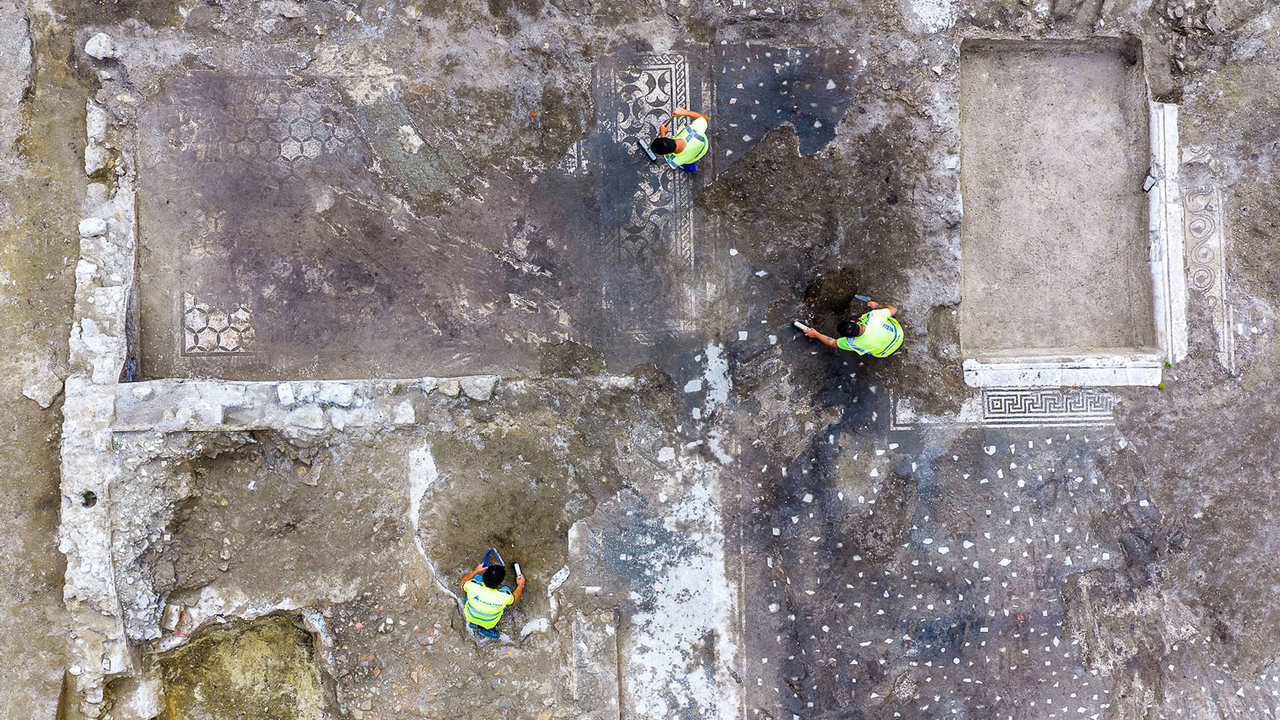
The excavation revealed the atrium at the entrance of the villa, two rooms decorated with frescoes and mosaics, and several other spaces related to the agricultural activities of the large, rural house. The villa was likely built in the early first century and abandoned in the third century.

archaeologists work at an ancient Roman site revealing mosaic floors and frescoed walls of a villa
Italian Ministry of Culture / Special Superintendency of Rome
archaeologists work at an ancient Roman site revealing mosaic floors and frescoed walls of a villa
Italian Ministry of Culture / Special Superintendency of Rome
archaeologists work at an ancient Roman site revealing mosaic floors and frescoed walls of a villa
Italian Ministry of Culture / Special Superintendency of Rome
archaeologists work at an ancient Roman site revealing mosaic floors and frescoed walls of a villa
Italian Ministry of Culture / Special Superintendency of Rome
archaeologists work at an ancient Roman site revealing mosaic floors and frescoed walls of a villa
Italian Ministry of Culture / Special Superintendency of Rome
archaeologists work at an ancient Roman site revealing mosaic floors and frescoed walls of a villa
Italian Ministry of Culture / Special Superintendency of Rome
archaeologists work at an ancient Roman site revealing mosaic floors and frescoed walls of a villa
Italian Ministry of Culture / Special Superintendency of Rome
archaeologists work at an ancient Roman site revealing mosaic floors and frescoed walls of a villa
Italian Ministry of Culture / Special Superintendency of Rome
archaeologists work at an ancient Roman site revealing mosaic floors and frescoed walls of a villa
Italian Ministry of Culture / Special Superintendency of Rome
archaeologists work at an ancient Roman site revealing mosaic floors and frescoed walls of a villa
Italian Ministry of Culture / Special Superintendency of Rome
archaeologists work at an ancient Roman site revealing mosaic floors and frescoed walls of a villa
Italian Ministry of Culture / Special Superintendency of Rome
archaeologists work at an ancient Roman site revealing mosaic floors and frescoed walls of a villa
Italian Ministry of Culture / Special Superintendency of Rome

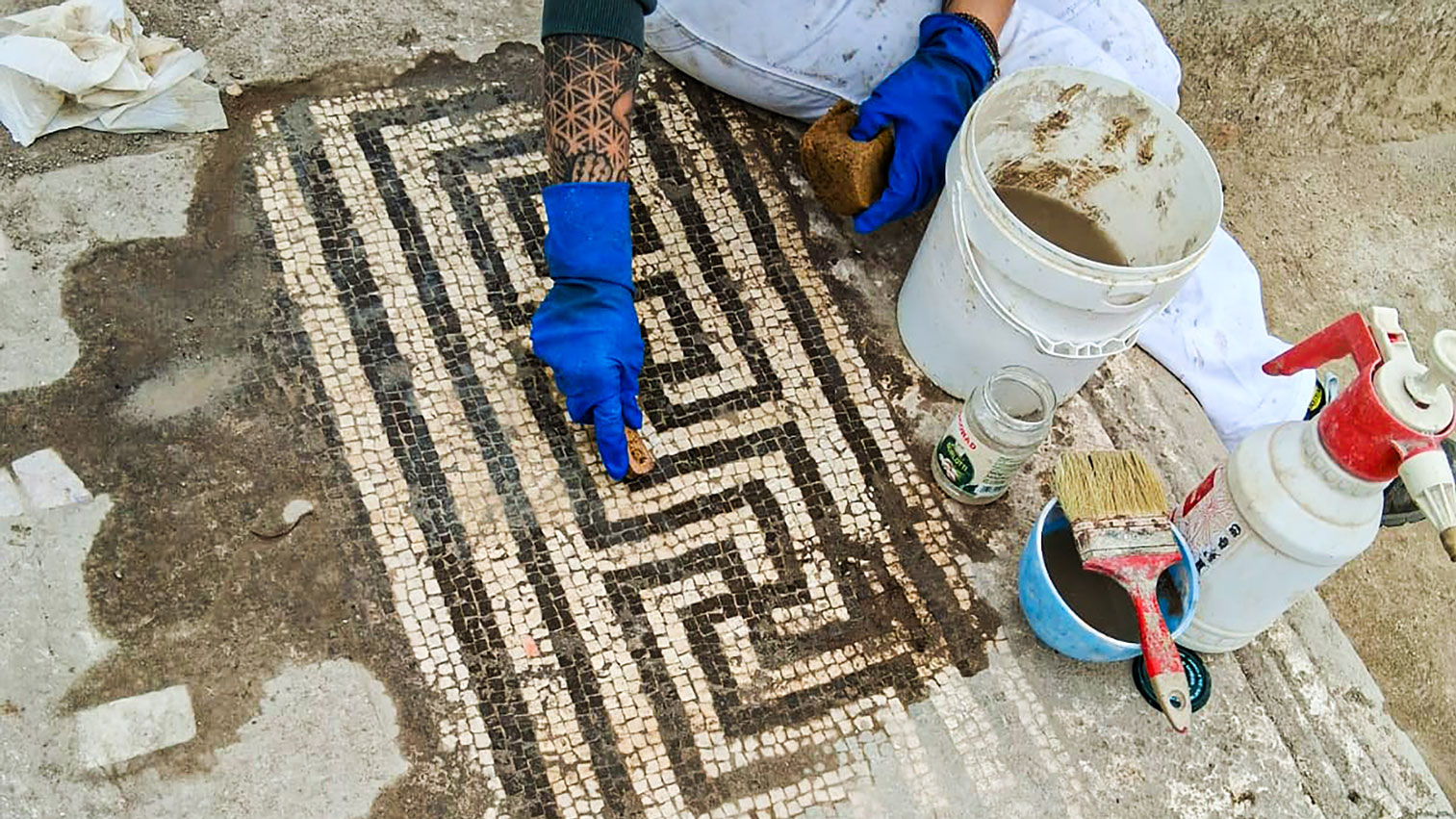
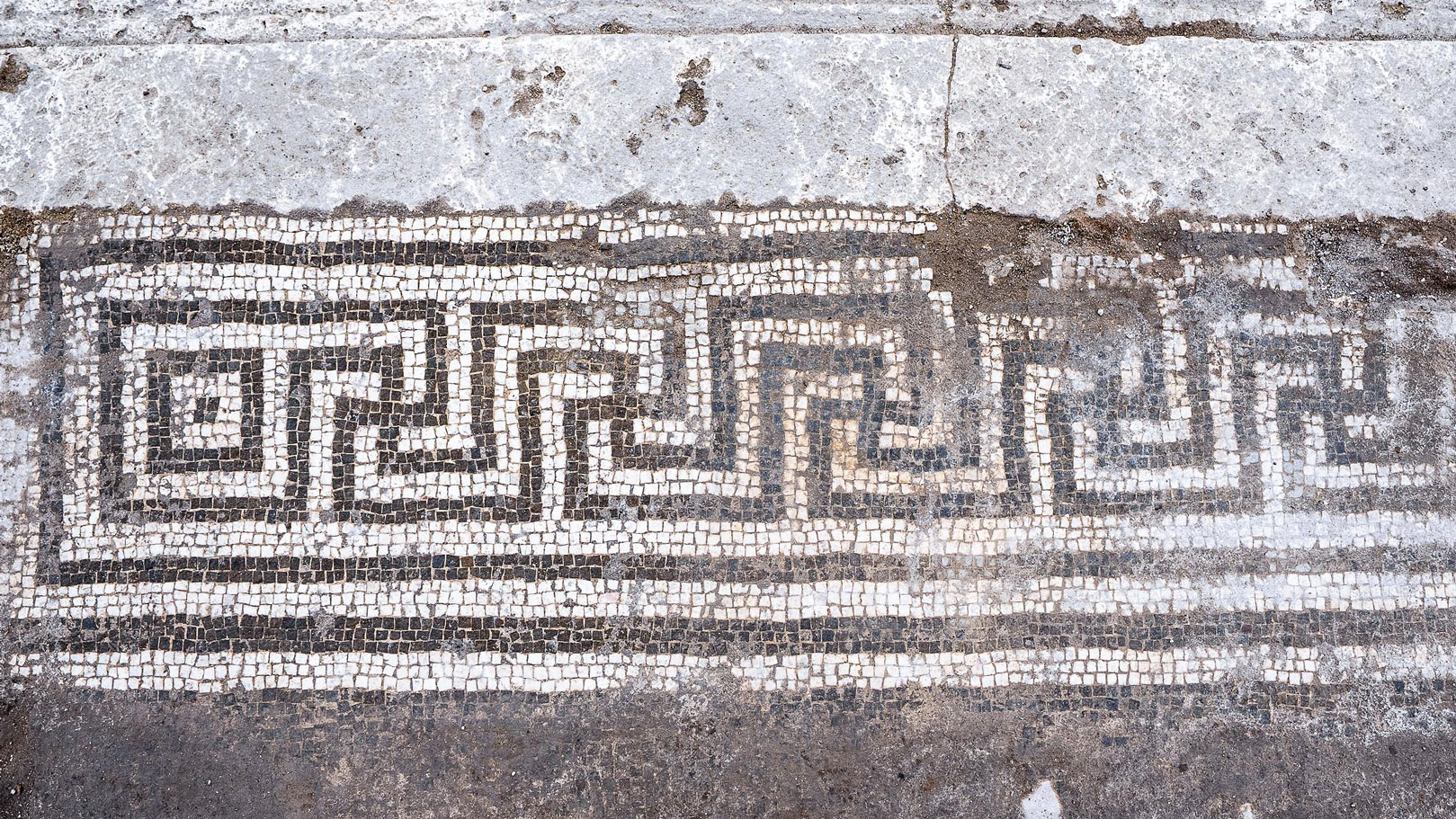
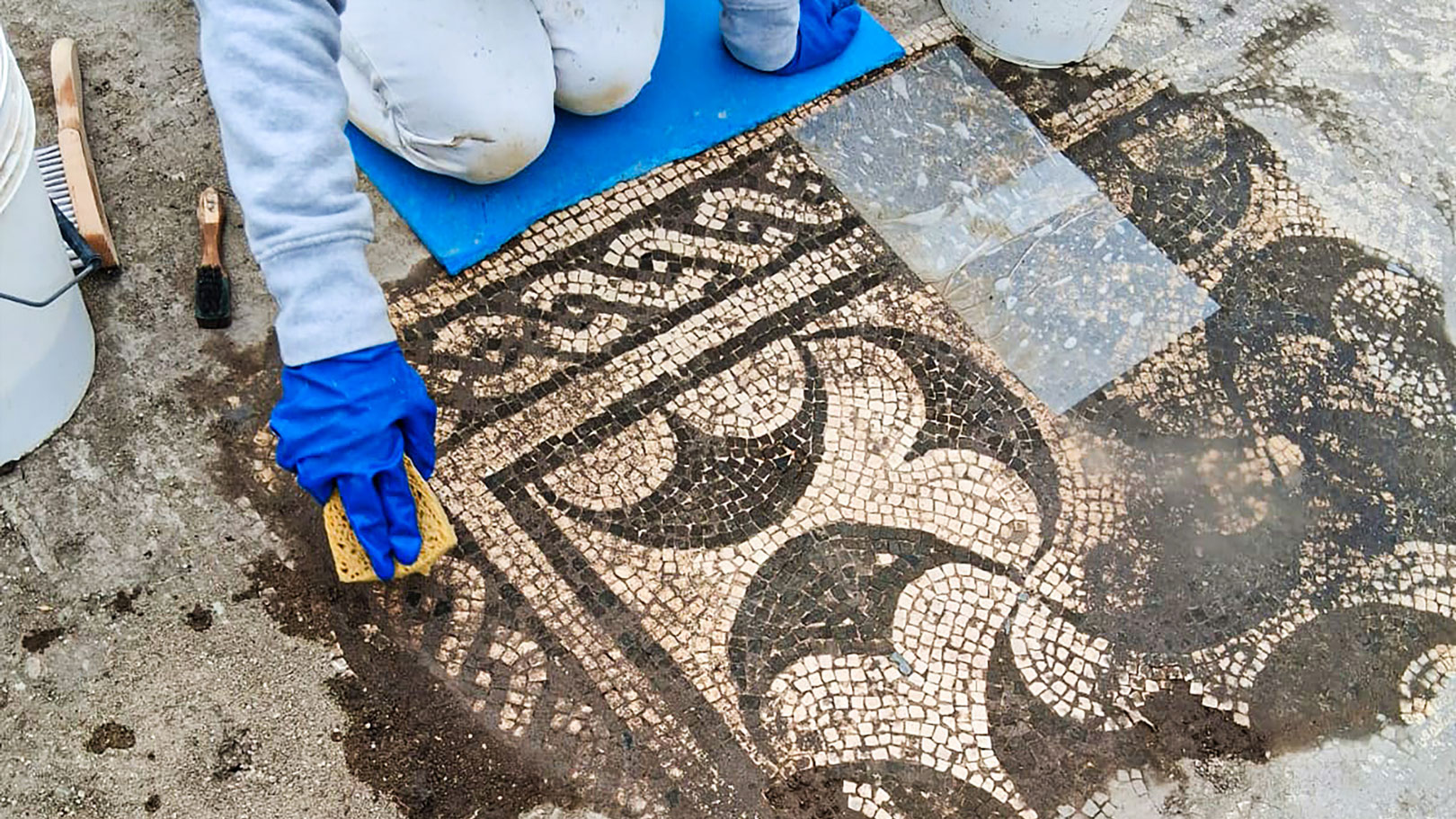
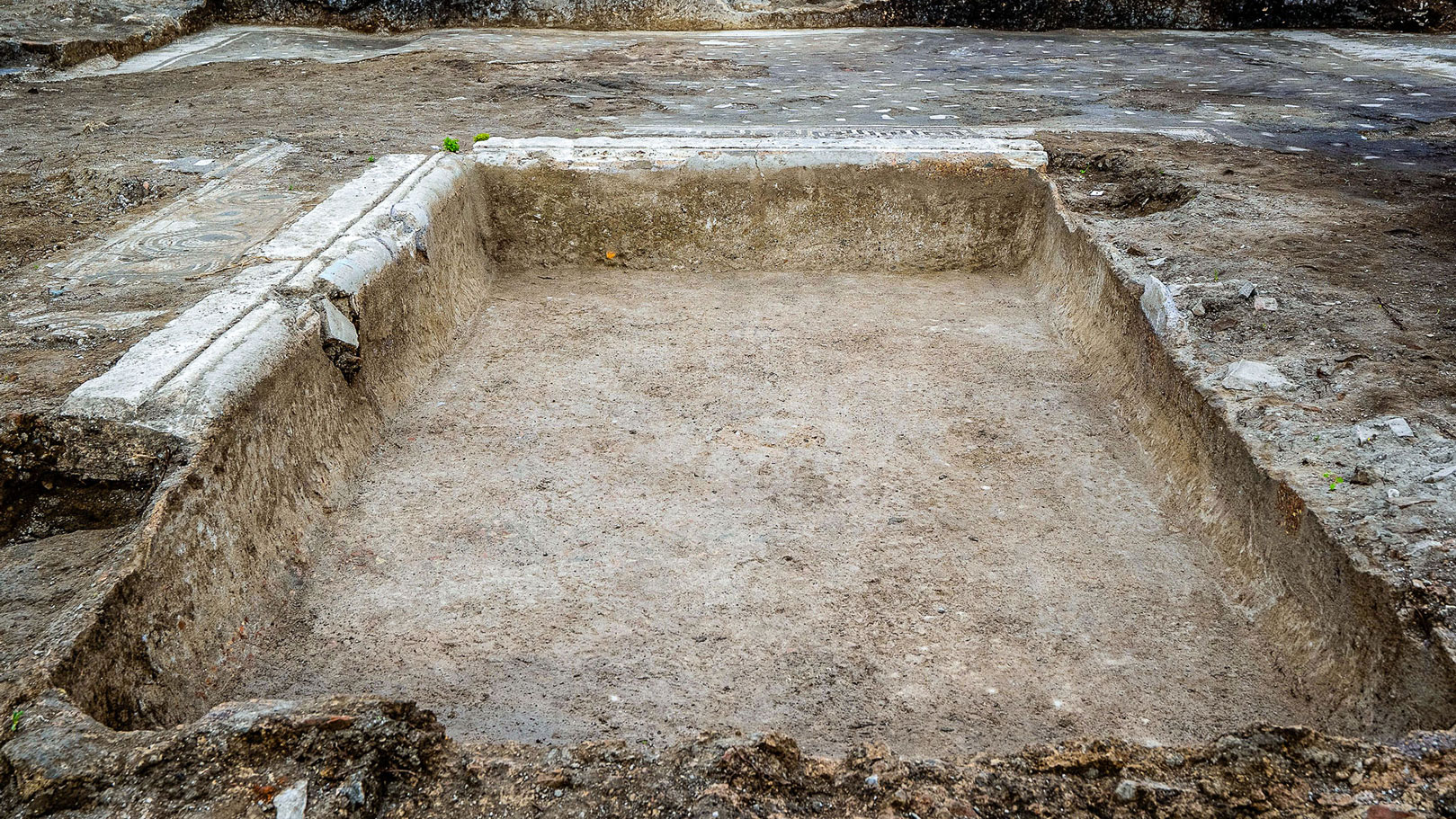
The atrium's central impluvium β€” a marble basin in the center of many ancient Roman houses that collected rainwater from an opening in the roof β€” was surrounded by a floor decorated with bands of black-and-white botanical and geometric mosaics. The rear wall of the room, about 5 feet (1.5 meters) of which was still preserved, was painted red as part of a fresco that featured multicolor panels with human figures and botanical elements.

Surrounding the large room were four smaller ones, three of which still have preserved mosaic floors. One room includes nine black-and-white geometric panels, another includes black octagons on a white background, and the third has black rectangles.

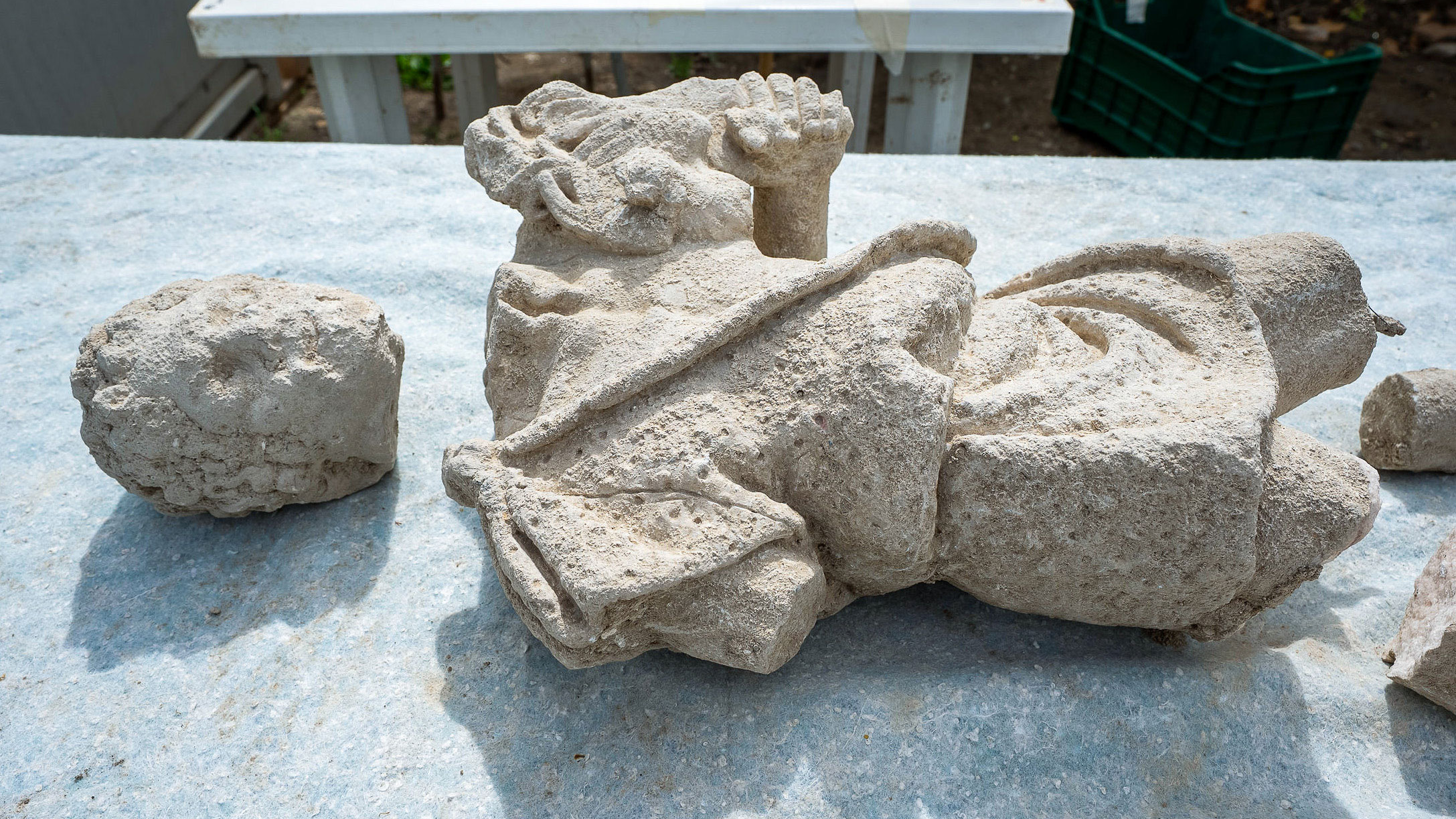
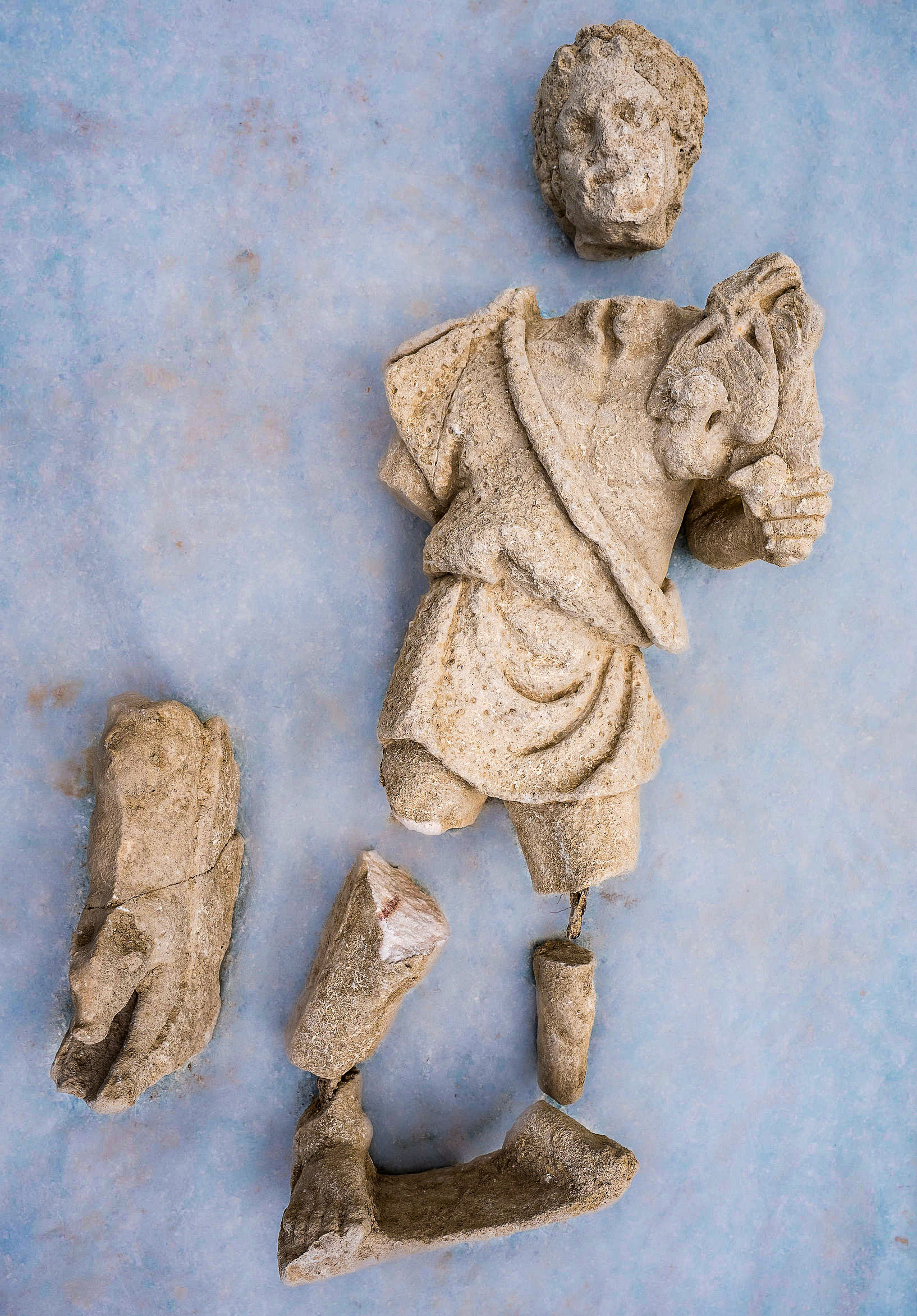
Within the villa's central basin, archaeologists found a broken statue, about 31 inches (80 centimeters) tall, depicting a bearded man wearing a short tunic and carrying a basket with birds and fruit. The statue may represent Silvanus, the Roman deity of woods and other uncultivated lands, who watched over domesticated flocks of animals. Silvanus was also a companion of Bacchus (known in Greek as Dionysus), the god of wine and ecstasy.

a fragmented marble sculpture of an ancient Roman deity (Silvanus) lies on a blue table

Archaeologists discovered a statue of the ancient Roman deity Silvanus, guardian of the flocks. (Image credit: Italian Ministry of Culture / Special Superintendency of Rome)

The scale of the villa and the quality of the mosaics and frescoes suggest that the villa's owners were Roman aristocrats and may have even been members of the imperial family, according to the statement. In the Roman Empire, elite families like the Aurelii and the Arrii β€” the paternal and maternal families of Antoninus Pius, who reigned from A.D. 138 to 161 β€” lived in Lorium. Ancient sources suggest that Antoninus Pius spent his childhood in Lorium, built his imperial palace there, and died there at age 74.

Lorium was also frequented by Emperor Hadrian, who adopted Antoninus Pius to make him his heir, and by Marcus Aurelius, who was Antoninus Pius' nephew, adopted son and son-in-law. Because of Lorium's strong connection to the Antonine imperial dynasty, numerous villas and ancient estates have previously been discovered in the region.

But the newly uncovered villa "is another important piece of the puzzle," Contino said, "opening up new perspectives for understanding and preserving our history-rich territory."

Further work on the villa and its artifacts will help archaeologists date the building more accurately and work out whether it was abandoned when the imperial household was relocated out of Lorium, according to the statement.

Although work on the villa has not been completed, the public has a chance to visit the newly excavated villa and its mosaics on June 20 through a free archaeological hike and guided tour organized by the Special Superintendency of Rome.

From Augustus to Nero, see how much you know about ancient Rome's famous leaders with our Roman emperor quiz!

  •  

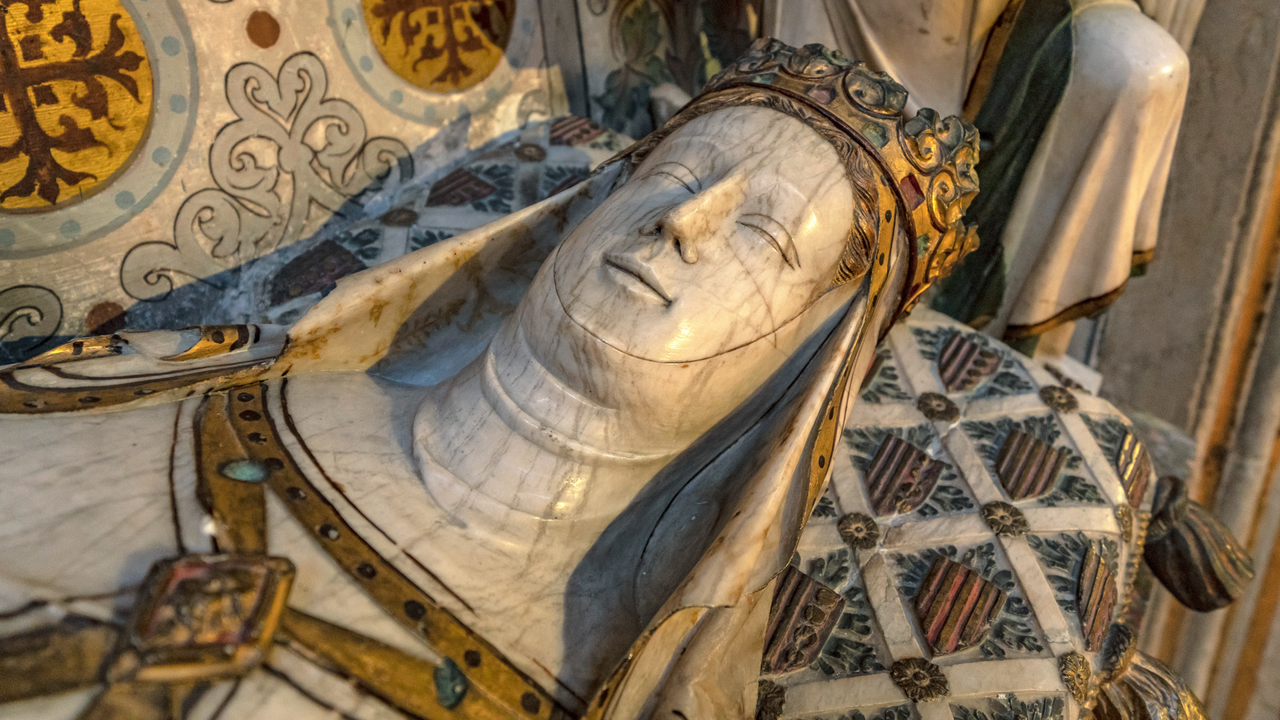
Skeletal remains of Queen Elisenda, one of the most powerful rulers in medieval Europe, unearthed in Barcelona β€” along with several others who bore unexplained stab wounds

In honor of the 700th-anniversary founding of the Royal Monastery of Santa Maria Pedralbes in Barcelona, scientists opened eight 14th-century graves and studied the 25 people found inside, including a queen.

  •  
❌