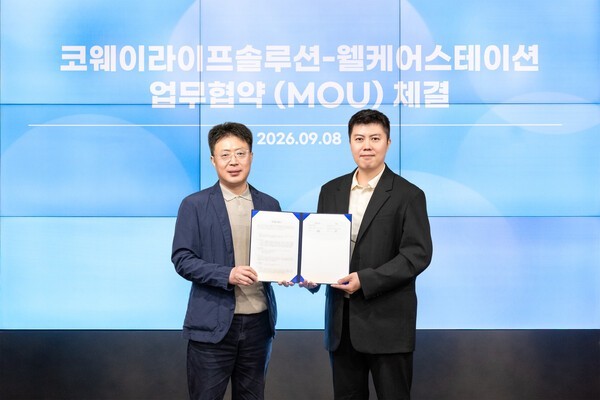
Coway Life Solution CEO Kim Myung-gon, left, and Wellcare Station CEO Kook Kyung-min pose for a photo at a memorandum of understanding signing ceremony at G-Tower in Guro, Seoul, on Sept. 8. (Photo: Coway)
Coway Life Solution CEO Kim Myung-gon, left, and Wellcare Station CEO Kook Kyung-min pose for a photo at a memorandum of understanding signing ceremony at G-Tower in Guro, Seoul, on Sept. 8. (Photo: Coway)
Coway Life Solution is partnering with integrated home care provider Wellcare Station to expand care services for customers with dementia and long-term care needs.
Coway Life Solution said Sept. 9 it signed a memorandum of understanding with Wellcare Station to support home care services for senior customers who need care and their families.
Wellcare Station is an integrated home care provider where doctors, nurses and care workers collaborate to provide home nursing and home care services. It also offers in-home care services including hospital accompaniment and support for using South Korea’s long-term care family leave program.
Under the agreement, Coway Life Solution customers with family members who require continuous care due to dementia or other conditions can receive support for long-term care services.
The service covers checking eligibility for the long-term care family leave program, connecting customers with care workers and coordinating schedules. For customers without a long-term care grade, it also handles related administrative procedures, including preparing documents needed to apply for a grade and filing applications with the National Health Insurance Service.
Wellcare Station will operate a dedicated service channel for Coway Life Solution customers. Customers using home care services will also receive priority assignment of care workers on their preferred dates.
Coway Life Solution is also expanding dementia care and caregiving support for senior customers. In partnership with digital healthcare company Silvia Health, it provides cognitive function assessments and personalized cognitive training. It also has partnerships with caregiving and long-term care providers Caring and Caredoc.
“We will help Coway Life Solution customers access long-term care-related services more conveniently,” Wellcare Station CEO Kook Kyung-min said.
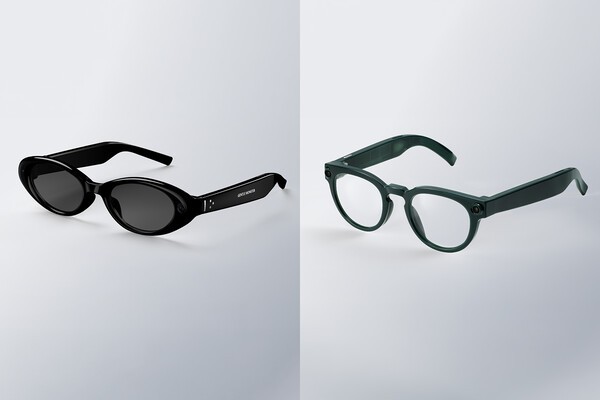
AI glasses jointly developed by Samsung Electronics and Google. (Photo: Samsung Electronics)
AI glasses jointly developed by Samsung Electronics and Google. (Photo: Samsung Electronics)
Samsung Electronics has begun developing its first artificial intelligence glasses equipped with a display. The device is designed to show color visual information across the front of the lens.
Samsung Electronics asked Samsung Display last month to develop a microdisplay for AI glasses, according to industry sources on Sept. 9. It provided requirements covering the product form factor, information display area, color and price.
Samsung is expected to evaluate the performance and cost of panels that meet its requirements, including OLED-on-Silicon (OLEDoS) and LED-on-Silicon (LEDoS). Industry officials expect the product to launch in the second half of next year or the first half of 2028, with the timing depending on panel development and product validation.
Samsung has considered an ultra-small panel measuring 0.2 inch or less that can fit inside an eyeglass frame. An optical system would magnify the panel image and deliver it to the user’s eye. The device is intended primarily to display simple information such as text, notifications, icons and navigation arrows. Samsung has yet to decide whether to use a binocular design with displays for both eyes or a monocular design for one eye.
Rather than a high-resolution display capable of finely reproducing colors and contrast, Samsung is pursuing limited gradation of about 4 bits. Gradation refers to the number of brightness levels. Four bits per color channel provides 16 levels, compared with 256 levels for 8 bits. The approach is expected to prioritize easy recognition of text and symbols rather than rich colors for photos and video.
Industry officials consider white OLEDoS a practical option in terms of cost and production yield. OLEDoS is an ultra-small display that forms organic light-emitting diodes (OLEDs) on a silicon substrate. The white approach combines white OLEDs with color filters to produce colors. RGB OLEDoS does not require color filters but is more difficult to manufacture at high yields and carries higher production costs.
LEDoS combines microscopic light-emitting diodes (LEDs) with a silicon substrate. Its strength is high brightness, but color reproduction and mass-production yields remain challenges. It also requires technologies such as integrating red, green and blue (RGB) elements or converting light from blue LEDs into red and green.
Another technical challenge is securing a wide field of view (FOV), which determines the angular range over which users can see the virtual display. Because Samsung wants information displayed across the front of the lens, the viewing angle must also be wide. The product must achieve this while meeting color and cost requirements.
Samsung is planning the AI glasses as a smartphone companion accessory, keeping the smartphone as the primary device while allowing users to view necessary information through the glasses.
Samsung’s first AI glasses, scheduled for release this year, operate without a display and focus on camera and voice functions. They were jointly developed with Google, Gentle Monster and Warby Parker, combining Samsung’s hardware engineering, Google’s AI technology and designs from the two eyewear brands.
Meta commercialized color-display AI glasses in September last year. Meta Ray-Ban Display uses a monocular design with a screen only in the right lens. The display has a resolution of 600×600 pixels and a 20-degree FOV. Its full-color screen can display messages, photos, maps and translated subtitles, with the display positioned to the side of the user’s field of vision to avoid obstructing the forward view. Samsung, by contrast, plans to display text and symbols across the front of the lens using limited gradation.
“Samsung plans to evaluate OLEDoS, LEDoS and other panels that meet its requirements before commercializing the product,” an industry official said. “Samsung has not specified a particular panel technology, but RGB OLEDoS presents significant cost and production-yield challenges. Realistically, white OLEDoS is the more likely option.”
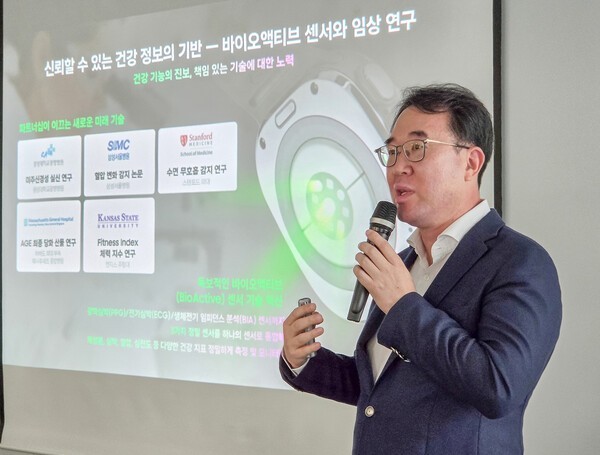
Choi Jong-min, executive vice president of the Digital Health Team at Samsung Electronics’ MX Business, introduces heart health management technologies for Galaxy Watch and the Samsung Health app. (Photo: Samsung Electronics)
Choi Jong-min, executive vice president of the Digital Health Team at Samsung Electronics’ MX Business, introduces heart health management technologies for Galaxy Watch and the Samsung Health app. (Photo: Samsung Electronics)
Samsung Electronics has expanded heart health management features based on its Galaxy Watch devices and Samsung Health app.
Samsung introduced features including blood pressure and electrocardiogram (ECG) measurement, a heart health score, vital signs monitoring and health data sharing among family members at a media briefing held Sept. 9 at the Taepyeong-ro Building near Seoul City Hall.
Samsung introduced an optical photoplethysmography (PPG) sensor with the Galaxy S5, Gear 2 and Gear Fit in 2014 and has since continued to expand its health management technologies. In 2020, its Samsung Health Monitor app for blood pressure and ECG measurement received medical device approval from South Korea’s Ministry of Food and Drug Safety.
In 2021, Samsung introduced the BioActive Sensor on the Galaxy Watch4, combining optical heart rate, ECG and bioelectrical impedance analysis (BIA) sensors. In 2023, its Irregular Heart Rhythm Notification feature, which alerts users to signs of possible atrial fibrillation, received clearance from the U.S. Food and Drug Administration (FDA) and South Korea’s Ministry of Food and Drug Safety.
The Galaxy Watch Ultra2 and Watch9 support a heart health score feature. It analyzes health data including sleep, activity levels, vascular stress and body composition to provide a score and health management guidance.
The devices also support a vital signs feature that tracks physical conditions during sleep. It measures five indicators — heart rate, heart rate variability, respiratory rate, skin temperature and blood oxygen saturation — and alerts users when changes differ from their usual baseline.
Samsung Health also includes health data sharing. With user consent, data including steps, exercise, sleep, weight, body composition, food intake, heart rate, stress, blood pressure, blood glucose, medication and vital signs can be selectively shared with family members or acquaintances.
Linking family profiles with Samsung accounts allows family members to view one another’s health records.
Samsung also disclosed real-world examples of the features in use. In Jordan last year, a user discovered atherosclerosis and underwent a procedure after receiving an irregular heart rhythm notification. In Brazil, a user who repeatedly received inconclusive ECG readings sought medical attention and addressed the risk of myocardial infarction, Samsung said.
“We are combining Galaxy Watch sensor technology with Samsung Health’s analytical capabilities to help users manage heart health risk factors,” said Choi Jong-min, executive vice president of the Digital Health Team at Samsung Electronics’ Mobile eXperience (MX) Business. “We will introduce smart healthcare services focused on prevention.”
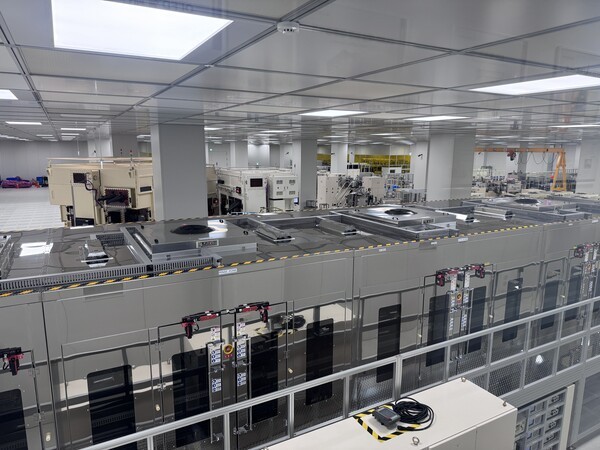
A second-generation production line at the Display Innovation Process Center. (Photo: THE ELEC)
A second-generation production line at the Display Innovation Process Center. (Photo: THE ELEC)
The Display Innovation Process Center at Chungnam Techno Park is starting revenue-generating operations. The center aims to secure operating funds following completion of its infrastructure project by attracting demand for process development, prototype production support and materials evaluation.
According to Chungnam Techno Park on Sept. 8, the center is developing an operating model under which three to five companies would continuously use its fab. It plans to provide various processes according to each company’s development schedule while supporting individual process evaluations for other companies between equipment-use periods. The goal is to maintain a steady equipment utilization rate.
The center plans to cover operating expenses through equipment-use fees and follow-up research and development projects. Electricity alone costs about 1.3 billion to 1.5 billion won annually. Equipment must remain powered even when not in use to maintain its condition, while air conditioning, cooling and wastewater treatment also add costs.
Passing all fixed costs on through usage fees would impose a heavy burden on companies that require only small samples. The individual publicly funded projects currently underway are also too small to cover operating expenses. The center plans to pursue corporate development projects alongside large-scale follow-up projects.
The center opened in April last year and completed setup of individual processes around October. It began full-scale support for materials, components and equipment companies this year. The center is currently preparing the final report for its infrastructure project and coordinating schedules for internal performance reviews with relevant organizations.
CLAP, a tenant company, is using the center’s fab and office space to develop prototypes with the goal of supplying a South Korean automaker. It has also relocated its chemical synthesis laboratory to the center. CLAP is responsible for product development, while the center provides facilities and process support. Several other companies have also expressed interest in using the production line, and the center is discussing equipment and process support tailored to their development needs.
The center is addressing demand from both companies that need only individual processes and those seeking to relocate their development operations. Its model combines individual equipment-use fees with revenue from projects that provide long-term process development and prototype production support.
The center has also secured evaluation projects linked to Samsung Display. Samsung Display used laser equipment at the center to evaluate a crystallization process and confirmed favorable results. It has also advised suppliers of polyimide (PI) materials for flexible organic light-emitting diode (OLED) substrates to provide evaluation data generated at the center.
The center provides process equipment and analytical facilities to materials, components and equipment companies that have difficulty securing opportunities for customer evaluations. Companies can verify the process characteristics of products under development without building their own fabs. Equipment utilization has increased as a result. From last year through April this year, 85 companies used the facilities, excluding duplicates. Process equipment utilization rose to a cumulative 65.8% as of April this year from 59.7% last year, while utilization of testing and evaluation equipment increased to 73.3% from 64.0%.
The center is also carrying out eight projects, including government-funded programs, to prepare for emerging technologies. In a project to develop 2,500-pixels-per-inch (PPI) glass-based displays, researchers are evaluating the characteristics of technologies originally developed on wafers when applied to second-generation rectangular substrates.
Researchers aim to improve the cost and productivity of displays for extended reality (XR) applications through ultra-high-resolution glass-based processes. The center is also supporting a project to develop immersive spherical free-form displays by implementing foundational technologies on second-generation substrates.
The center also operates professional training programs. It trained 122 people through its Display Academy last year and aims to train 150 this year. Courses cover OLED process equipment, oxide processes and materials analysis. Current three- and five-day programs provide explanations of the entire process and opportunities to observe equipment inside the fab. To expand the scope of corporate support, the center is establishing process conditions required to produce complete panels. It has evaluated red, green and blue (RGB) illumination using its own test substrates and produced prototypes for exhibition.
Corporate support currently focuses on individual processes and multilayer structure evaluations. The center has yet to establish a track record of supporting companies through an integrated end-to-end process. Engineers are repeatedly conducting deposition and patterning while adjusting film quality, alignment and etching conditions.
The central government, local governments and the private sector have invested a total of 528.1 billion won since 2019 in the Display Innovation Process Platform project, including 377 billion won in central government funding. The project includes R&D for core OLED technologies and construction of the center’s infrastructure. The center is equipped with 65 units across 63 types of process, testing, evaluation and utility equipment.
“The center’s role is to evaluate products developed by materials, components and equipment companies so they can secure preliminary data to present to Samsung Display and LG Display,” said Jung Byung-hwa, head of the Display Innovation Process Center. “Our engineers can also enhance their technical capabilities by responding to requests from various companies and evaluating process results.”
AP Systems has formed an open innovation fund to identify companies in deep technology and the materials, components and equipment sectors.
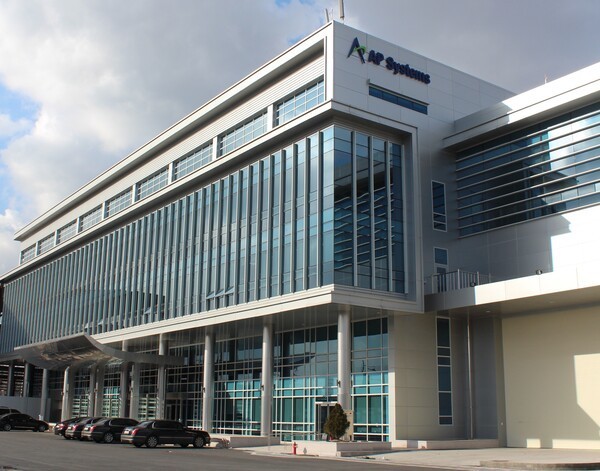
AP Systems said Sept. 8 that it formed the Gravity-AP Systems Open Innovation Investment Partnership No. 1 with venture capital firm Gravity Ventures.
The fund will combine AP Systems’ technology and commercialization capabilities with Gravity Ventures’ expertise in identifying and investing in deep-tech startups. Gravity Ventures will handle company sourcing, investment screening and execution, and post-investment management, while AP Systems will support technology reviews and business cooperation.
Investment targets will include deep-tech and materials, components and equipment companies that can be linked to AP Systems’ existing and new businesses. The two companies will also pursue business cooperation from the investment review stage, including proof-of-concept (PoC) testing, joint development and supply-chain integration.
Key areas under consideration include advanced laser and optical application technologies, advanced semiconductor packaging and back-end process solutions, artificial intelligence (AI)-based smart manufacturing and process intelligence, AI-based automated optical and visual inspection (AOI and AVI), physical AI and robotics-based factory automation, and technologies for advanced materials, defense and medical applications.
Portfolio companies will be given opportunities to use AP Systems’ manufacturing infrastructure and industry network for technology validation and field deployment, as well as cooperation in commercialization and mass production. AP Systems aims to secure technologies applicable to industrial sites at an early stage and expand links between its existing and new businesses.
Gravity Ventures has invested in early-stage companies in deep tech, semiconductor materials, components and equipment, and physical AI. In the first half of this year, it operated “Gravity Pulls,” a program to identify and foster startups in those fields.
Samsung Electronics’ “Welcome to Foldables” outdoor advertisement featuring the Galaxy Z Fold8 series in Shibuya, Tokyo. (Photo: Samsung Electronics)
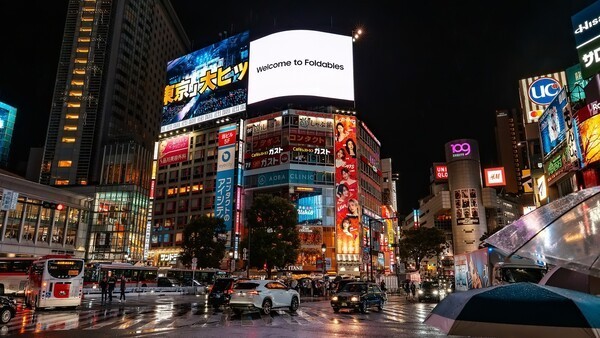
Samsung Electronics’ “Welcome to Foldables” outdoor advertisement featuring the Galaxy Z Fold8 series in Shibuya, Tokyo. (Photo: Samsung Electronics)
Samsung Electronics is running a “Welcome to Foldables” outdoor advertising campaign featuring its Galaxy Z Fold8 series in major cities around the world.
Samsung Electronics said Sept. 8 that it has been rolling out digital outdoor advertisements since Sept. 2 at six major landmarks, starting with KT Square in Gwanghwamun, Seoul, followed by K-POP LIVE at COEX, Shibuya Station in Tokyo, and Piccadilly Circus and Outernet in London.
The advertisements feature three messages: “Ultra Thin,” “The world’s lightest fold” and “Built to outlast.”
Samsung Electronics has developed its foldable products over eight generations since launching its first Fold model in 2019. The Galaxy Z Fold series has evolved with software optimized for the foldable form factor, artificial intelligence (AI) and connectivity across Galaxy devices.
The latest Galaxy Z Fold8 series set a record for Galaxy smartphone pre-orders in South Korea. The series is currently sold in 106 markets worldwide.
KAIST Professor Kim Sang Kyu (left) and Gyeongsang National University Professor Kim Yun Hee. (Photo: Toray Advanced Materials Korea)
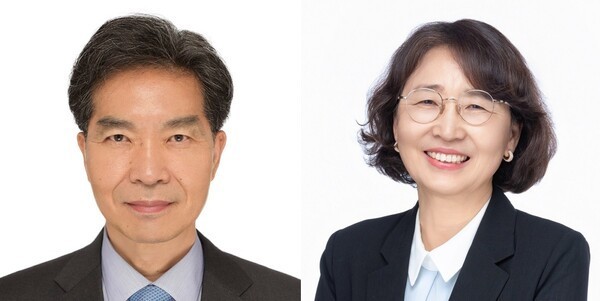
KAIST Professor Kim Sang Kyu (left) and Gyeongsang National University Professor Kim Yun Hee. (Photo: Toray Advanced Materials Korea)
The Korea Toray Science Foundation has selected the winners of the 9th Korea Toray Science and Technology Award.
The foundation said Sept. 8 that it selected KAIST Professor Kim Sang Kyu in the basic research category for chemistry and materials and Gyeongsang National University Professor Kim Yun Hee in the applied research category. Each will receive 100 million won in prize money.
Kim Sang Kyu developed experimental techniques to observe changes in chemical reactivity depending on molecular structure. He was recognized for elucidating the structural dynamics of transition states and conical intersections that determine chemical reaction rates. He has also conducted research into electron-nuclear correlations by controlling electrons in anions.
Kim Yun Hee has conducted research on the synthesis of organic semiconductor materials. She secured core technology for high-efficiency deep-blue organic light-emitting diode (OLED) materials and was recognized for contributing to the localization of materials and the development of related technologies and human resources through industry collaboration.
The foundation also selected five early-career scientists for the Korea Toray Fellowship. Each researcher will receive a total of 150 million won in research funding over three years.
In the basic research category, DGIST Department of Chemistry and Physics Professor Song In Taek and Seoul National University Department of Chemistry Professor Hong Seung Youn were selected. In the applied research category, Sogang University Department of Chemical and Biomolecular Engineering Professor Kim Hyung Jun, POSTECH Department of Materials Science and Engineering Professor Chun Dong Won and Hanyang University Department of Chemical Engineering Professor Ham Dong Hyo were selected.
The foundation selected the recipients after soliciting nominations from April through June and evaluating candidates based on their academic achievements, originality and potential contributions to future advances in science and technology. The awards ceremony will be held in October.
The Korea Toray Science Foundation was established in 2018. Including this year's recipients, it has selected 18 winners of the Korea Toray Science and Technology Award and 40 fellowship researchers. The foundation also provides scholarships to 30 science and engineering students each year and has supported a cumulative 255 students through the second semester of 2026.
Coway’s Zero Food Waste Processor Microbial Type. (Photo: Coway)
Coway’s Zero Food Waste Processor Microbial Type. (Photo: Coway)
Coway is expanding its food waste processor lineup from grinding-type models to microbial systems.
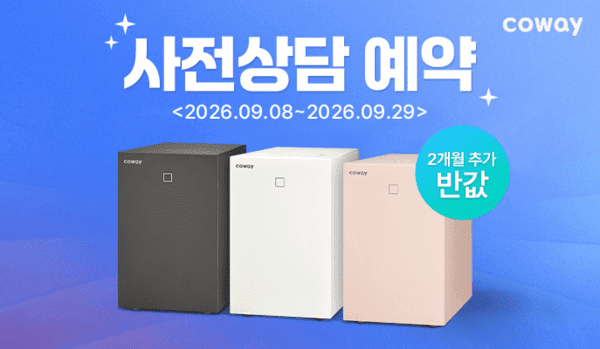
Coway said Sept. 8 that it will accept advance consultation reservations through Sept. 29 for its Zero Food Waste Processor Microbial Type, scheduled for launch later this month.
The new product uses microorganisms inside the unit to continuously break down and reduce food waste. Users can add waste whenever it is generated, while the remaining byproducts need to be removed once every one to three months.
The product is designed for immediate use after installation without a separate microorganism cultivation period. It uses a high-capacity activated carbon filter and patent-pending microorganisms extracted from traditional Korean fermented sauces. The system removes 99% of eight types of odors and harmful gases generated during food waste processing.
The unit is 24 centimeters wide and can process up to 0.7 kilograms of food waste per day. It is available in three colors: Porcelain White, Dark Gray and Mild Pink.
Customers can choose between in-home maintenance visits by Coway’s Cody service staff or self-maintenance. Rental customers will receive one additional supply of the microbial agent during the rental period.
Customers who make an advance consultation reservation and sign up for a new rental will receive an additional 50% discount on rental fees for two months.
The Zero Food Waste Processor Microbial Type is eligible for government subsidies for food waste reduction equipment. Customers purchasing the product outright may receive partial reimbursement of the purchase cost, depending on the criteria set by their local government.

 Login