❌

Reading view

Telechips Returns to Profit in Second Quarter on Strong IVI Chip Sales

(Source: Telechips)
(Source: Telechips)
(Source: Telechips)
(Source: Telechips)

Telechips returned to profitability in the second quarter of 2026, driven by increased sales of in-vehicle infotainment (IVI) chips.

The company said on Aug. 6 that second-quarter revenue rose 33.6% year over year to 59.2 billion won. Operating profit came in at 3.18 billion won. Operating margin improved to 5.4% from negative 8.0% a year earlier.

Growth was primarily driven by the automotive IVI chip business. Increased shipments of products supplied to existing customers supported the company's earnings improvement during the quarter.

Revenue recognition from a system-on-chip (SoC) development contract worth approximately 77.2 billion won, signed in October 2025, also contributed to results. The contract began contributing revenue in the fourth quarter of 2025 and has supported the company's top-line recovery since then. However, the impact was smaller than in the first quarter. A Telechips representative said revenue recognized from the contract exceeded 10 billion won in the first quarter, while the amount recorded in the second quarter was lower.

Net loss narrowed 27.3% from a year earlier to approximately 4.1 billion won. The company said the loss was affected by a decline in the valuation of its stake in Chips&Media, in which Telechips held a 7.25% stake as of the first quarter. Chips&Media's share price fell 31.4% over the 12-month period, declining from around 16,900 won at the end of June 2025 to 11,600 won at the close on June 30, 2026.

"We will continue to improve profitability in the second half by expanding our existing customer base and increasing mass production for new projects," a Telechips representative said.

  •  

POSCO Future M Agrees 190,000-Ton LFP Cathode Deal

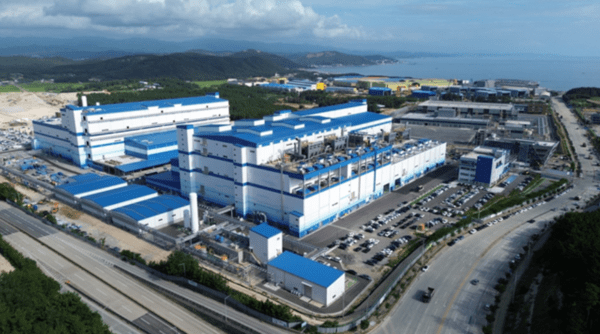
POSCO Future M's cathode material plant located in the Yeongilman 4 Industrial Complex in Pohang.

POSCO Future M has reached an agreement with a South Korean battery manufacturer to supply more than 190,000 metric tons of lithium iron phosphate (LFP) cathode materials under a long-term contract.

The company said on Aug. 6 that it agreed to supply more than 190,000 tons of LFP cathode materials over a six-year period from 2027 through 2032. The two companies plan to finalize detailed terms and sign a definitive supply agreement during the third quarter.

To support the supply program, POSCO Future M recently converted part of a high-nickel cathode production line at its Pohang plant into an LFP cathode production line. The company is currently conducting customer qualification procedures for prototype products and plans to begin mass-production shipments by the end of this year.

POSCO Future M said it will strengthen price competitiveness by leveraging raw-material advantages within the POSCO Group. The company plans to lower production costs by utilizing iron oxide generated as a byproduct of steelmaking processes and lithium produced from salt lake operations in Argentina.

The company is also in discussions with other battery manufacturers regarding additional LFP cathode material supply agreements. It said production capacity will be expanded in line with future order intake.

  •  

EcoPro BM Selected for South Korea's 'Super Eul' Program for Solid-State Electrolyte Development

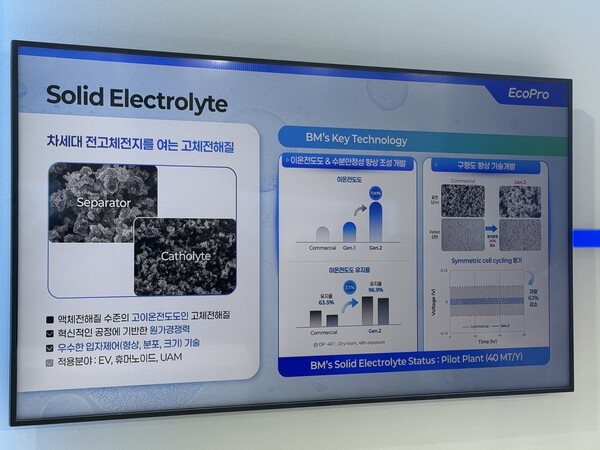
EcoPro BM's solid electrolyte technology showcased at InterBattery 2026 in March. (Photo: THE ELEC)

EcoPro BM said its sulfide-based solid electrolyte development project for all-solid-state batteries has been selected for South Korea's third-generation "Super Eul" program, a government initiative led by the Ministry of Trade, Industry and Resources to foster globally competitive materials, components and equipment technologies.

The company said on Aug. 6 that its sulfide-based solid electrolyte project was chosen as a beneficiary of the program. The Super Eul initiative is a research and development (R&D) support scheme designed to cultivate key companies capable of securing world-leading technologies in strategic materials, components and equipment sectors. Selected projects can receive up to 20 billion won in R&D funding over a period of more than seven years.

Sulfide-based solid electrolytes are a key material for all-solid-state batteries. They are considered a promising next-generation battery material due to their high ionic conductivity and strong safety characteristics.

EcoPro BM currently operates a pilot plant with annual production capacity of 40 metric tons of sulfide-based solid electrolytes. The company said it has completed qualification processes with major battery manufacturers and is targeting mass production in 2027. It has finalized the design of its commercial production line and plans to build manufacturing facilities in line with customer demand.

In addition to solid electrolytes, EcoPro BM is also developing cathode materials for all-solid-state batteries. The company aims to strengthen its competitiveness in next-generation battery materials by leveraging its existing expertise in high-nickel cathode technologies.

"Discussions are under way with major customers regarding pilot-scale production, and the earliest timeline for mass production is expected to be 2027," said Gong Bo-hyun, vice president of research and development at EcoPro BM. "We have completed the design of the production line and are prepared to begin construction immediately once customer demand is confirmed."

  •  

SanDisk to Showcase HBF and Other AI Inference NAND Technologies at FMS 2026

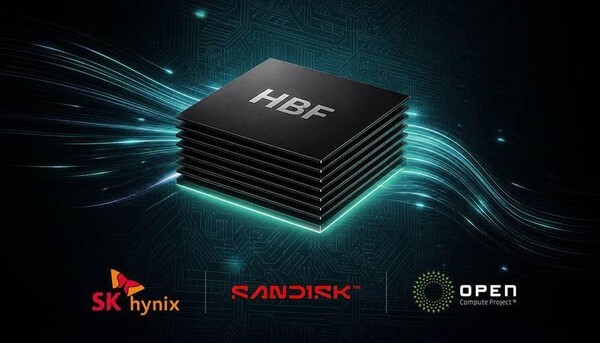
SanDisk will showcase next-generation NAND technologies, including HBF, at FMS 2026. (Photo: SK hynix)

SanDisk announced on Aug. 6 that it will unveil next-generation NAND technologies for artificial intelligence (AI) applications at Future of Memory and Storage (FMS) 2026.

The technologies to be showcased include High Bandwidth Flash (HBF), next-generation NAND products and enterprise solid-state drives (SSDs). The solutions are designed for AI computing environments such as high-speed data lakes, model storage, retrieval-augmented generation (RAG) and key-value (KV) cache workloads. SanDisk plans to demonstrate how these technologies can address the diverse requirements of AI inference.

HBF is a NAND-based memory technology. Similar to High Bandwidth Memory (HBM), it vertically stacks NAND dies to increase data transfer speeds. The technology delivers high-bandwidth performance while offering greater capacity scalability than DRAM because it is NAND-based. HBF is designed for large-scale AI inference workloads that require both high bandwidth and large memory capacity.

SanDisk is participating in the HBF Specification Standardization Consortium alongside SK hynix. On Aug. 4, the consortium released its first HBF standard. The specification defines two configurations using eight-layer and 16-layer NAND die stacks. Maximum memory capacity is set at 512GB, while bandwidth is categorized into three performance tiers ranging from 0.4 terabytes per second (TB/s) to 3TB/s.

The company will also present its next-generation BiCS10 quad-level cell (QLC) NAND technology. The 3D NAND product is designed to improve density, performance and power efficiency to meet growing storage demand from AI data centers and cloud computing environments. SanDisk shipped samples of its BiCS10 triple-level cell (TLC) NAND last month.

In the enterprise SSD segment, SanDisk will showcase products based on the PCI Express (PCIe) 6.0 standard. The SSDs are designed in the E3.S form factor, a next-generation server storage specification. The products feature enhanced endurance for KV cache applications and reduced onboard DRAM requirements to maximize storage capacity. DRAM inside SSDs is typically used to store mapping tables that track the location of stored data.

The company will also introduce its AI Data Cycle Framework, an enhanced version of SanDisk’s proprietary framework designed to provide a comprehensive view of storage requirements across AI workloads. AI storage systems are used for functions including raw data archives, high-speed data lakes, model training, inference and generative content repositories.

“Growing inference workloads are creating demand for memory and storage technologies that can deliver optimal performance, capacity and power efficiency,” said Khurram Ismail, Chief Product Officer at SanDisk.

  •  

POSCO Air Solution Receives International Certification for Aerospace and Defense Rare Gases

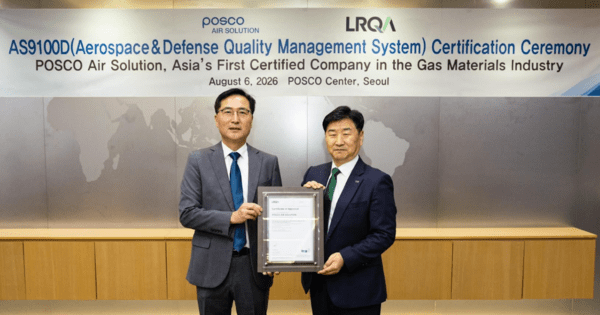
Photo caption: Kim Dae-yeon (left), Chief Executive Officer of POSCO Air Solution, and Lee Il-hyung, Chief Executive Officer of LRQA Korea, pose for a commemorative photo.

POSCO Air Solution, the industrial gas subsidiary of the POSCO Group, has obtained an international quality certification for the production of high-purity rare gases used in aerospace and defense applications.

The company announced on Aug. 6 that it received AS9100D certification, the globally recognized aerospace and defense quality management system standard, from LRQA.

AS9100D is an international standard based on ISO 9001 that incorporates additional quality requirements for the aerospace and defense industries. POSCO Air Solution said it is the first company in Asia to obtain the certification in the field of high-purity rare gas manufacturing.

In June, the company completed construction of a high-purity rare gas production facility at the Donghoan industrial site within POSCO’s Gwangyang Steelworks complex. The plant has an annual production capacity of 130,000 normal cubic meters (N㎥).

POSCO Air Solution recently participated in propulsion technology development testing conducted by the Korea Aerospace Research Institute, where the performance of domestically produced xenon (Xe) and krypton (Kr) gases was successfully verified for electric propulsion applications.

“The certification will serve as an opportunity to expand our supply of rare gases for aerospace and defense applications,” Chief Executive Officer Kim Dae-yeon said.

  •  

DB HiTek Donates MEMS Equipment to National Nano-Fab Platform MoaFab

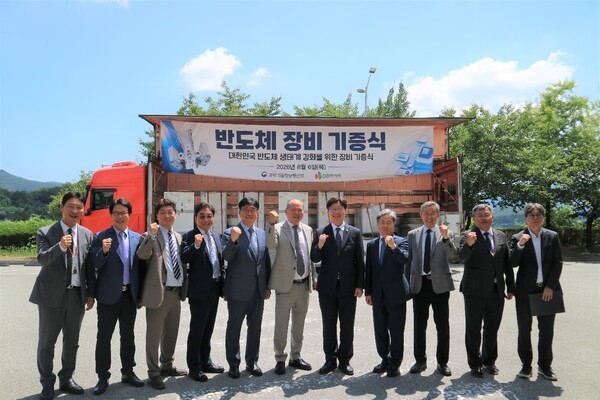
Participants pose for a commemorative photo during the DB HiTek equipment donation ceremony held in Eumseong, North Chungcheong Province, on Aug. 6. (Photo: DB HiTek)

DB HiTek announced on Aug. 6 that it has transferred semiconductor process equipment to MoaFab, South Korea's national integrated nano-fab platform, as part of efforts to strengthen the country's semiconductor research and development infrastructure.

The company held a semiconductor equipment transfer ceremony at its Sangwoo Campus in Eumseong, North Chungcheong Province, together with the Ministry of Science and ICT and MoaFab. The initiative is aimed at supporting microelectromechanical systems (MEMS) research and development.

MEMS refers to technologies used to manufacture miniature precision mechanical devices at the micro- and nanoscale.

Under the agreement, DB HiTek is donating a total of three pieces of equipment, including one high-temperature thermal processing system and two etching systems.

The equipment will be used by the National NanoFab Center and the Nano Convergence Technology Center for research and development activities as well as prototype production.

In March, DB HiTek signed a memorandum of understanding with the Ministry of Science and ICT, Samsung Electronics, SK hynix and other organizations to strengthen the competitiveness of MoaFab.

MoaFab is a national nano-fabrication support platform established by the Ministry of Science and ICT and the National Nano Infrastructure Council. The platform integrates and manages nano-fabrication equipment and facilities across South Korea to support nanotechnology research, education and prototype development.

  •  

KT&G Raises Full-Year Outlook After Record First-Half Revenue

KT&G posted record first-half revenue, driven by strong growth in its overseas tobacco business, and raised its earnings outlook for the full year.

The company said on Aug. 6 that second-quarter revenue reached 1.70 trillion won, while operating profit increased to 414.5 billion won. Compared with the same period a year earlier, revenue rose 9.9% and operating profit grew 18.5%.

KT&G also revised its full-year guidance upward. The company raised its projected annual revenue growth rate to 5–7% from a previous forecast of 3–5%, while expected operating profit growth was increased to 10–13% from 6–8%.

The tobacco business remained the primary earnings driver, generating revenue of 1.22 trillion won and operating profit of 382.5 billion won during the quarter.

Revenue from overseas cigarette operations rose 18.9% year over year to 557.7 billion won. Operating profit from the business increased 45.6%, supported by higher sales volumes and improved selling prices.

In South Korea, KT&G maintained a cigarette market share of 67.9% during the first half.

The next-generation product (NGP) business also continued to expand. NGP revenue increased 23.8% from a year earlier to 242.7 billion won, driven by strong sales of the lil AIBLE 3.0 heated tobacco device. The company's domestic NGP market share reached 48.2%.

KGC, KT&G's health functional food subsidiary, reported operating profit of 10.0 billion won, up 61.3% from the previous year, supported by higher domestic sales.

KT&G also announced enhanced shareholder returns. Its board of directors approved an interim dividend of 2,000 won per share, up from 1,400 won a year earlier.

The company said it will proceed with previously announced plans to repurchase and retire treasury shares during the second half of the year. It also plans to unveil a new mid- to long-term shareholder return policy, including additional dividend measures, in the fourth quarter.

  •  

Lotte Energy Materials Enters AI Ultra-Thin Copper Foil Market, Challenging Mitsui’s Dominance

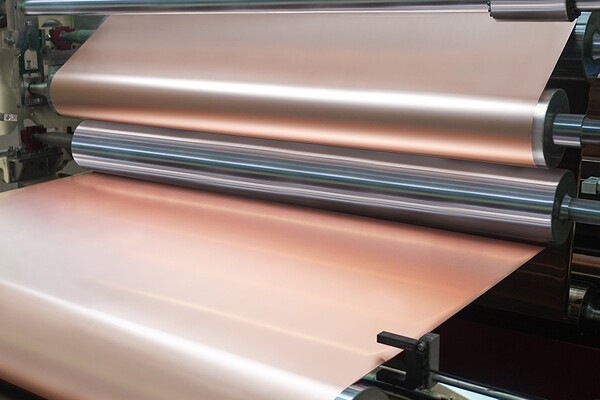
Circuit foil produced by Lotte Energy Materials.

Lotte Energy Materials has entered the market for ultra-thin copper foil used in artificial intelligence (AI) data centers and is considering a third capacity expansion based on binding customer agreements.

The company disclosed its third-phase expansion strategy on Aug. 6, centered on ultra-thin copper foil products. Ultra-thin copper foil, measuring between 1 and 3 micrometers in thickness, is a next-generation circuit material used in AI data center optical transceivers and semiconductor packaging applications. The product is significantly more difficult to manufacture than conventional circuit foil due to its extremely thin profile.

Lotte Energy Materials currently supplies reverse-treated foil (RTF) and high-voltage low-profile (HVLP) copper foil for AI data center optical transceivers. The materials are used in the inner and outer layers of transceiver substrates. RTF products range from 12 to 70 micrometers in thickness, while HVLP products range from 12 to 35 micrometers.

The company plans to expand its portfolio into the thinner ultra-thin copper foil segment to target the rapidly growing optical transceiver market.

The ultra-thin copper foil market is currently dominated by Japan’s Mitsui Chemicals. However, rising investment in AI data centers has created an opportunity for new entrants. Demand for ultra-thin copper foil has surged as optical networking transitions toward 800G and 1.6T architectures. At the same time, North American customers have increasingly sought non-Chinese supply chains. Lotte Energy Materials is currently the only company operating a circuit foil production base in South Korea.

The company emphasized that any third-phase expansion will depend on securing binding agreements with customers. Future investment decisions will be based on confirmed demand commitments rather than speculative capacity additions.

“Customer demand for additional expansion is strong, and we are reviewing a third expansion phase either at available space within our domestic facilities or at a new site,” the company said. “The project will proceed once binding customer contracts are signed and economic feasibility is secured.”

Lotte Energy Materials added that it plans to determine the timing and scale of investment through discussions with customers and is already conducting preliminary preparations, including concept design work, due to strong demand from key clients.

The broader circuit foil business is also shifting toward AI-related applications. Demand has expanded beyond traditional IT products into high-end copper foil for AI accelerators, network switches and optical transceivers.

High-value-added HVLP products currently account for roughly 20% of circuit foil sales. Following completion of the second expansion phase next year, the proportion is expected to exceed 50%. Some production lines dedicated to AI-focused HVLP products are already being operated exclusively for specific customers.

The company began mass production earlier this year of HVLP 1 and HVLP 2 products used in AI networking equipment supplied to Nvidia systems. Production yields have reached approximately 60%, and commercial shipments began in the second quarter after customer qualification procedures were completed.

Production capacity for HVLP 3 and HVLP 4 products designed for Nvidia’s next-generation Rubin platform was secured through the first expansion phase completed in May. Initial mass production began in the second quarter, and related revenue is expected to increase in the second half as Rubin shipments expand.

Lotte Energy Materials completed its first expansion phase in May, increasing annual circuit foil production capacity from 3,700 metric tons to 6,700 metric tons.

The second expansion phase, currently under construction, will add annual capacity of 16,000 metric tons. Major equipment contracts have been finalized and manufacturing has begun. The company plans to accelerate equipment delivery schedules and start operating part of the new production lines in the second quarter of 2027, ahead of the original timetable, with full operations beginning in the fourth quarter.

The company also reported second-quarter consolidated revenue of 286.4 billion won and an operating loss of 9.2 billion won. Despite higher copper foil sales volumes and increased revenue from AI-focused high-end products, earnings remained in the red due to initial expansion costs and production stabilization expenses.

“Both pricing and demand are entering a more stable phase,” Chief Executive Officer Kim Yeon-seop said. “We believe a turnaround is only a matter of time and can be achieved in the near future.”

  •  

Shinheung SEC to Boost Battery Component Output by 20% Amid Samsung SDI Cylindrical Cell Shortage

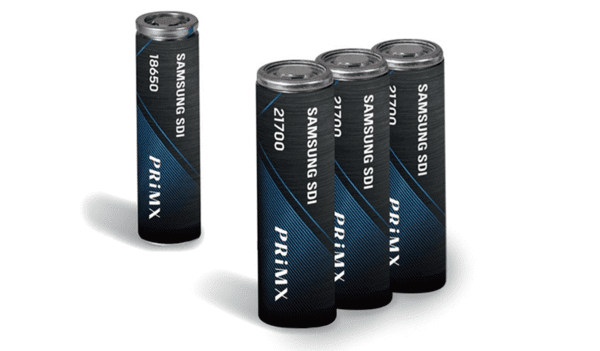
Samsung SDI's 18650 and 21700 cylindrical batteries.

Shinheung SEC, a key supplier to Samsung SDI, is increasing production capacity for cylindrical battery components by 20% as demand for battery backup units (BBUs) used in artificial intelligence (AI) data centers drives a shortage of cylindrical batteries.

According to industry sources on Aug. 6, Shinheung SEC is expanding production facilities for cylindrical battery current interrupt devices (CIDs) at its Malaysian plant. Monthly production capacity will increase from 80 million cylindrical-cell components to 100 million units.

Shinheung SEC supplies 80% to 90% of the cap assemblies and core CID components used in Samsung SDI's cylindrical batteries. The company is the exclusive supplier for Samsung SDI's Malaysian cylindrical battery plant.

Batteries are generally categorized into cylindrical, prismatic and pouch formats. Cylindrical batteries consist of electrodes housed within a metal cylinder. The cap assembly serves as the battery's top cover and contains safety components such as the CID, a positive temperature coefficient (PTC) device that controls overcurrent, and a vent for gas release.

Among these components, the CID is a critical safety device that disconnects electrical current and releases internal gas when battery pressure rises, reducing the risk of explosion.

The expansion is being driven by Samsung SDI's growing cylindrical battery production. Malaysia serves as the company's main production base for cylindrical cells. Since 2022, Samsung SDI has invested approximately 1.7 trillion won to establish production lines for 2170 cylindrical batteries, which measure 21 millimeters in diameter and 70 millimeters in height.

Following the expansion, production and sales at the Malaysian battery plant initially fell short of expectations due to slowing demand in power tools and micromobility applications such as electric bicycles. However, market conditions have changed as demand for AI data center BBUs has surged.

BBUs provide emergency power for server racks in data centers. Because server environments require compact form factors and high instantaneous power output, high-performance cylindrical batteries are commonly used.

"Samsung SDI expanded its Malaysian production capacity first, but when output remained weak in the early stages, there was little need for suppliers to increase component capacity," an industry source said. "Recently, demand from AI data centers has risen sharply, significantly boosting cylindrical battery production, and Shinheung SEC is now accelerating facility expansion to keep pace."

Based on the supply capacity of Shinheung SEC's Malaysian operations, Samsung SDI's Malaysian plant is estimated to have annual cylindrical-cell production capacity exceeding 1.2 billion cells. Using an industry assumption that 100 million cylindrical cells correspond to roughly 2 gigawatt-hours (GWh), annual capacity is estimated at more than 24 GWh.

Samsung SDI Energy Malaysia (SDIEM) reported first-quarter revenue of 311.3 billion won this year, more than doubling from 142.0 billion won a year earlier. Annual revenue reached 1.06 trillion won last year, surpassing the 1 trillion won mark again for the first time since 2023.

Shinheung SEC's Malaysian subsidiary also posted strong growth. First-quarter revenue increased to 11.2 billion won from 2.6 billion won a year earlier. Revenue from its small cylindrical CID business rose from 11.0 billion won, representing 10.6% of total sales, in the first quarter of last year to 25.3 billion won, or 20.5% of total sales, in the first quarter of this year.

The company's earnings are expected to improve further beginning in the fourth quarter. Samsung SDI is scheduled to begin mass production of lithium iron phosphate (LFP) prismatic batteries for energy storage systems (ESS) in October at StarPlus Energy (SPE), its joint venture with Stellantis in Indiana.

Shinheung SEC will supply prismatic battery cap assemblies for those batteries. Prismatic cap assemblies are the company's core business, generating first-quarter revenue of 88.5 billion won, up about 6% from 83.5 billion won a year earlier.

The Korea IR Council projects that Shinheung SEC's operating profit will increase from 5.9 billion won in 2025 to more than 20 billion won in 2026, driven by expanding prismatic cap assembly shipments to SPE and rising demand for cylindrical battery components used in AI data centers.

  •  

YAS May Join Visionox's 8.6G OLED Expansion Bid as Second-Phase Investment Nears

Chinese display maker Visionox is preparing a follow-on investment for its 8.6-generation OLED production line, with industry attention focused on whether South Korean equipment suppliers such as YAS can secure orders after missing out on the first phase.

According to industry sources on Aug. 6, Visionox is planning a second-phase investment for its V5 fab under construction in Hefei, Anhui Province. While the exact timing has not been finalized, the project is widely expected to begin in the first quarter of 2027.

The V5 facility is designed for a total production capacity of 32,000 glass substrates per month. The first phase covers 8,000 substrates per month, while the second phase will add the remaining 24,000 substrates per month—three times the size of the initial investment.

The first phase included equipment supplied by South Korean companies such as AP Systems, SynusTech and ICD. Applied Materials (AMAT) won the order for the deposition equipment, widely considered the most critical tool in the production line. The company began delivering equipment in May and is currently conducting installation, commissioning and process validation for Visionox's ViP technology, a fine-metal-mask (FMM)-less OLED manufacturing process. Yield rates on the line are reportedly in the 30–40% range.

Although both AMAT and YAS deposit organic materials onto substrates by heating solid organic emissive materials in a vacuum environment, their approaches differ significantly.

AMAT uses a vertical deposition architecture in which 8.6-generation glass substrates are positioned upright during processing. The system integrates deposition, substrate transfer and encapsulation processes within a connected vacuum environment. Maintaining uniform film thickness across large vertically transported substrates is a key technical challenge.

YAS, by contrast, employs a horizontal architecture in which substrates remain flat while organic materials are deposited from evaporation sources located beneath them. The system maintains a constant distance between the evaporation source and substrate to ensure uniform film formation across the entire panel. As a result, chamber structures, transfer systems and overall equipment configurations differ substantially from those used by AMAT.

AMAT benefits from operational data and process conditions accumulated from the first-phase V5 line. If Visionox selects the same equipment for the expansion, previously developed deposition recipes and process parameters can be reused. Adopting YAS equipment, however, would require fresh validation of both equipment performance and manufacturing processes because of the different substrate-handling architecture.

Commenting on the possibility of YAS participating in the second phase, a Visionox official said, "We are currently validating the AMAT equipment, but yields remain low and pricing is high. If we adopt YAS equipment, we would need to conduct new verification work, so there are many factors to consider."

Visionox had also previously considered applying the conventional FMM process to portions of the V5 line. In May last year, the company discussed introducing FMM deposition equipment from Japan's Canon Tokki and South Korea's Sunic System. However, it ultimately chose the ViP approach.

According to Visionox, the likelihood of reverting to FMM technology in the second phase remains low.

Asked whether poor yields on the initial ViP line could lead the company to reconsider FMM technology, a Visionox official said, "Even if yields do not meet expectations, there is almost no possibility of returning to the FMM method. If we were to go back to FMM, it would raise questions about the rationale behind the investment, and we do not know whether the Hefei government would approve such a move."

Visionox is expected to determine the supplier for the second-phase deposition equipment based on the results of equipment installation, commissioning and ViP process validation on the first production line.

For the first-phase investment, Visionox selected lithography equipment from Canon, excimer laser annealing (ELA) and laser lift-off (LLO) systems from AP Systems, plasma-enhanced chemical vapor deposition (PECVD) and sputtering equipment from Applied Materials, and certain sputtering tools from ULVAC. Dry etching equipment was supplied by Tokyo Electron and ICD, while logistics and material-handling systems for array and deposition processes were provided by SynusTech.

  •  

Samsung Electronics Launches Galaxy Z Series Globally

Samsung Electronics models pose with the Galaxy Z series smartphones. (Photo: Samsung Electronics)

Samsung Electronics will launch its new Galaxy Z series smartphones and Galaxy Watch models in more than 100 countries, including the United States, the United Kingdom, India and Japan.

The company said on Aug. 6 that it will begin domestic sales of the Galaxy Z Fold8 Ultra, Fold8 and Flip8, along with the Galaxy Watch Ultra2 and Watch9, starting Aug. 7.

The Galaxy Z series recorded 1.44 million pre-orders between July 28 and Aug. 3. Approximately seven out of 10 buyers chose a Galaxy Z Fold8 model.

Among customers who pre-ordered through Samsung.com, people in their teens through their 30s accounted for half of all buyers. The number of female customers in their teens through their 30s who purchased the Galaxy Z Fold8 Ultra or Fold8 more than doubled compared with buyers of the previous-generation Galaxy Z Fold7.

By color, the most popular options were Graphite and Violet Shadow for the Galaxy Z Fold8 Ultra, Cream and Graphite for the Galaxy Z Fold8, and Pink and Cream for the Galaxy Z Flip8.

Half of customers who pre-ordered unlocked models through Samsung.com also enrolled in the New Galaxy AI Subscription Club program.

Pre-orders for the Galaxy Watch Ultra2 and Watch9 increased by double-digit percentages from their predecessors during the same period. Female customers accounted for a roughly 15% larger share of Galaxy Watch Ultra2 pre-orders compared with the previous model.

  •  

Gaon Cable Wins First Contract for Singapore MRT Power Grid Project

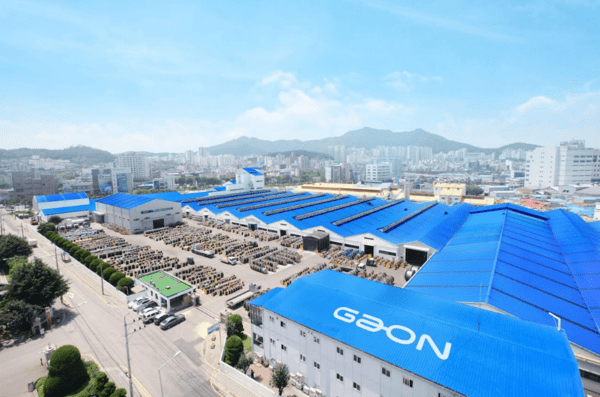
Gaon Cable, a subsidiary of LS Cable & System, will participate in a Singapore Mass Rapid Transit (MRT) power infrastructure project for the first time.

The company said on Aug. 6 that it will supply approximately 60 billion won worth of distribution cables for an MRT power grid construction project commissioned by Singapore’s Land Transport Authority (LTA). The contract marks Gaon Cable’s first order since it was registered as an approved LTA vendor last year.

Singapore plans to expand its MRT network from approximately 240 kilometers today to more than 360 kilometers by the early 2030s. With new rail lines under construction and power infrastructure upgrades planned for existing routes, demand for distribution cables is expected to remain strong.

“We will continue increasing the share of overseas revenue by focusing on strategic markets such as the United States and Singapore, while improving both profitability and growth,” Chief Executive Officer Chung Hyun said.

  •  

LS Electric Begins Mass Production of Next-Generation ESS Power Conversion System

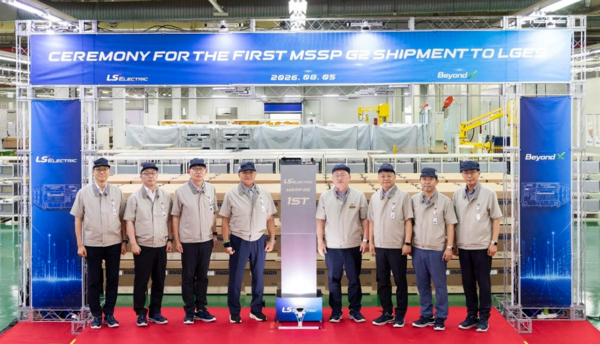
LS Electric Chairman Koo Ja-kyun (fourth from left) and company employees pose during the first-shipment ceremony for the G2, the company’s next-generation PCS for energy storage systems. (Photo: LS Electric)

LS Electric has begun mass production of its next-generation power conversion system (PCS) for energy storage systems (ESS).

The company said on Aug. 6 that it held a first-shipment ceremony for its next-generation ESS PCS, known as G2, at its DC Factory in Cheonan, South Chungcheong Province, on Aug. 5, marking the start of full-scale production.

The event was attended by Chairman Koo Ja-kyun and company employees. Koo toured the dedicated G2 production line and reviewed manufacturing plans and quality management operations.

G2 is a next-generation PCS developed for the global ESS market. The system incorporates liquid-cooling technology, improving thermal management performance and durability compared with conventional air-cooled designs. It also features a space-saving architecture designed to enhance installation efficiency.

The product will be manufactured at LS Electric’s Cheonan DC Factory, a facility operated entirely on direct current (DC) power distribution. The factory employs DC-based equipment, including solid-state transformers (SSTs), solid-state circuit breakers (SSCBs) and ESS infrastructure, improving overall energy efficiency by more than 10%, according to the company.

“Following the launch of mass production for our next-generation ESS PCS, we plan to further expand our presence in overseas markets,” an LS Electric official said. “We will secure global customers based on our competitiveness in DC technologies and product quality.”

  •  

Lotte Energy Materials to Bring Malaysian Copper Foil Operations to Full Capacity This Year

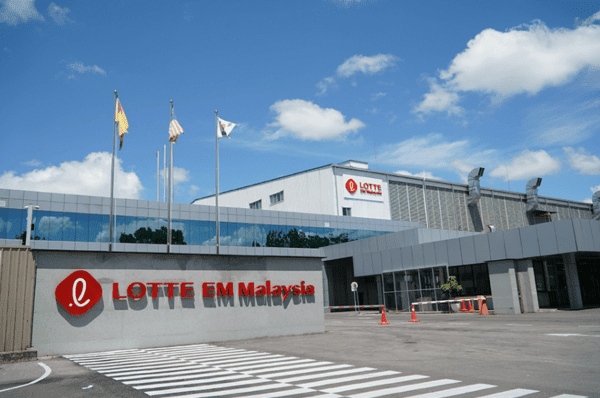
Lotte Energy Materials' manufacturing facility in Malaysia.

Lotte Energy Materials plans to bring its Malaysian battery copper foil manufacturing operations to full production capacity by the end of this year.

The company reported second-quarter revenue of 194.2 billion won and an operating loss of 16.9 billion won on Aug. 6. Revenue increased 21.5% from the previous quarter, driven by higher sales of high-power small batteries, copper foil for North American energy storage systems (ESS), and circuit foil products.

Demand from battery backup units (BBUs) and high-power batteries used in power tools supported performance during the quarter. Sales of copper foil for North American ESS applications and circuit foil used in artificial intelligence (AI) substrates also remained solid.

Lotte Energy Materials plans to expand production capacity at its Malaysian facilities. The company began operations at its fifth Malaysian plant in July and intends to move forward the start-up of its sixth plant from next year to the fourth quarter of this year. It aims to transition its Malaysian operations to a fully operational production and sales system within 2026.

Demand for high-performance circuit foil is also increasing as investment in AI data centers accelerates. The circuit foil market is shifting away from products primarily used in conventional information technology devices toward higher-end offerings, including reverse-treated foil (RTF), high-voltage low-profile (HVLP) foil and ultra-thin copper foil.

The company said demand for non-China products is growing, particularly among customers in North America.

“We will respond to demand from the AI data industry through our portfolio of advanced circuit foil and battery copper foil products,” Chief Executive Officer Kim Yeon-seop said. “We will strengthen our production capabilities and pursue earnings growth.

  •  

CMTX Says It Has No Plans to Issue Convertible or Warrant-Linked Bonds

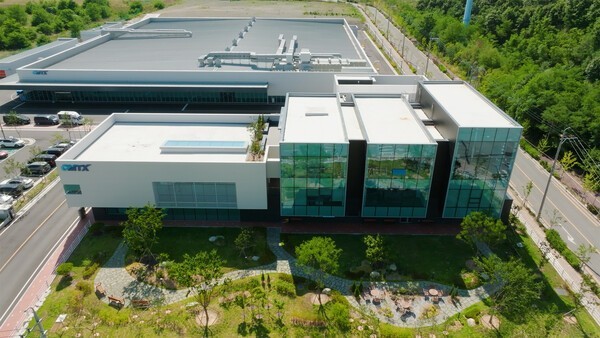
CMTX’s M Campus in Gumi, North Gyeongsang Province (Photo: CMTX)

CMTX said through its shareholder communication platform that it has no plans to issue convertible bonds (CBs) or bonds with warrants (BWs), dismissing concerns raised after its recent extraordinary general meeting.

The company said amendments approved at the extraordinary shareholders’ meeting held on July 22 included the introduction of an independent director system in line with revisions to Korea’s Commercial Act, as well as an increase in the issuance limits for CBs and BWs. “We currently have no plans to issue CBs or BWs,” CMTX said.

Following shareholder approval, CMTX increased the issuance limit for both CBs and BWs to 50 billion won each from 10 billion won previously. The company said the move was intended as a preparatory measure to provide flexibility for future mergers and acquisitions (M&A) and strategic investment opportunities. It added that it currently holds approximately 90 billion won in cash and cash equivalents and has secured 100 billion won in available credit facilities from financial institutions, making external fundraising unnecessary at this time.

CMTX said that if it had been planning a large-scale issuance of CBs or BWs in the near future, it would have raised the limits by a substantially larger amount. The company described the amendments as a minimum-level revision designed to address potential future needs. It also emphasized that any future financing decisions would be made with the goal of minimizing dilution for existing shareholders.

The company also revised its articles of incorporation to reflect changes to the Commercial Act, including replacing outside directors with independent directors and increasing the required proportion of independent directors from at least one-quarter of the board to at least one-third.

Through its recently launched shareholder communication forum, CMTX said it plans to continue sharing key management information, including earnings analysis, investment and capacity expansion progress, new customer acquisition, and shareholder return policies.

  •  

HanWool Semiconductor Unveils AI-Powered Ultrasound Inspection System for MLCC Defects

(Photo: HanWool Semiconductor)

HanWool Semiconductor on Aug. 6 unveiled its strategy for AI-based multilayer ceramic capacitor (MLCC) back-end manufacturing equipment, highlighting an ultrasound inspection system and a second-generation mounter capable of conducting high-speed, full-scale inspection of internal defects.

The company aims to expand its presence in automotive electronics and AI server markets by transforming MLCC inspection methods. As demand grows for high-reliability MLCCs, inspection requirements are extending beyond external appearance to internal structures and evolving from sample-based checks to high-speed, 100% inspection.

HanWool is developing an “AI-based ultrasound full inspection system” capable of non-destructively detecting microscopic cracks, delamination and voids inside MLCCs. The system combines AI-driven judgment technology with ultrasound signal analysis to overcome the limitations of conventional sample inspections while improving both inspection speed and reliability.

A key element of the strategy is the company’s proprietary deep-learning inspection platform, HaWAIe. The platform is designed to detect defects such as microcracks, chipping, electrode failures and foreign materials that are difficult to identify through visual inspection or rule-based algorithms. HanWool plans to expand its use beyond visual inspection equipment to ultrasound inspection systems and process automation equipment.

The company is also developing a second-generation mounter designed for high-value-added MLCC production. HanWool said the new system will improve production yield and throughput by more than 30% compared with existing equipment while supporting ultra-small MLCC products.

“The MLCC inspection market is rapidly evolving from simple visual inspection toward high-speed full inspection capable of identifying internal defects,” a HanWool Semiconductor official said. “Through commercialization of our AI ultrasound inspection system and second-generation mounter, we aim to secure a leading position in the market for high-value MLCC manufacturing equipment.”

  •  

LG Display Files Two Trademark Applications for FLiPP Maskless OLED Technology

LG Display's FLiPP trademark logo. (Photo: KIPRIS)

LG Display has filed trademark applications for logos associated with its maskless OLED technology, FLiPP.

According to the Korea Intellectual Property Rights Information Service (KIPRIS) on Aug. 5, LG Display submitted two FLiPP logo trademark applications on July 30.

The application numbers are 40-2026-0155774 and 40-2026-0155775. Both applications are currently awaiting examination. The designated goods include display panels, monitors, smartphones, tablet PCs, televisions and flexible displays.

The logos feature the FLiPP brand name alongside the phrase “FMM-Less innovative Pixel Patterning.” Separate versions were filed for use on light and dark backgrounds. Portions of the lettering incorporate red, green and blue (RGB) colors.

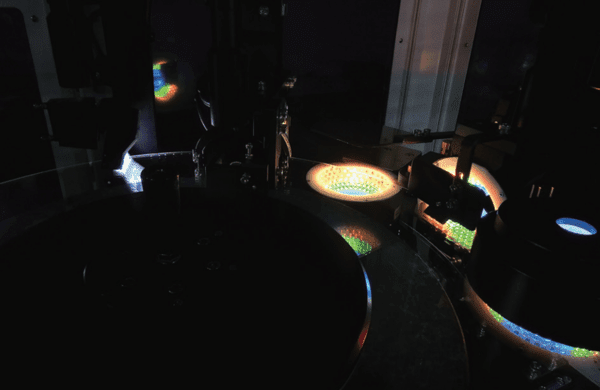
FLiPP is a technology that patterns RGB OLED subpixels using photolithography-based processes instead of fine metal masks (FMMs).

Conventional RGB OLED manufacturing selectively deposits red, green and blue emissive materials through FMMs containing microscopic apertures. As substrate sizes increase and pixel dimensions shrink, it becomes increasingly difficult to manage mask sagging, thermal deformation and alignment errors. The physical thickness of the mask can also create shadow effects that limit pixel aperture ratios.

FLiPP replaces FMMs with exposure and patterning processes to form RGB OLED subpixels. The approach is expected to reduce the physical limitations associated with FMMs, making it more suitable for high-resolution displays and larger substrates. However, challenges remain in suppressing damage to organic emissive layers during patterning and achieving commercially viable manufacturing yields.

LG Display is currently conducting research and development on FLiPP-related manufacturing processes.

  •  

FADU Targets 2028 Sampling of Seventh-Generation SSD Controller

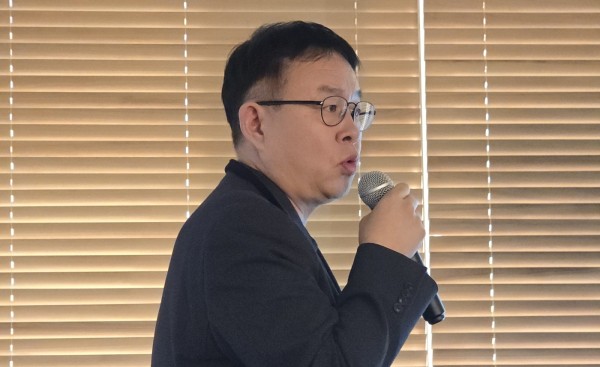
Nam Yi-hyun, Chief Executive Officer of FADU. (Photo: THE ELEC)

FADU plans to begin supplying samples of its seventh-generation solid-state drive (SSD) controller in 2028, according to a technology roadmap unveiled at FMS 2026.

Nam Yi-hyun, Chief Executive Officer of FADU, disclosed the plan on Aug. 4 during the Future of Memory and Storage (FMS) 2026 conference in Santa Clara, California.

The company did not provide detailed specifications for the seventh-generation controller. However, FADU previously stated in December that it aims to improve SSD performance by more than tenfold compared with the previous generation.

Its long-term target is to achieve random read performance of 100 million input/output operations per second (IOPS) for 512-byte workloads.

At FMS 2026, FADU operated an exhibition booth featuring demonstrations of its sixth-generation SSD controller.

The Gen6 controller, which was recently completed, is scheduled to begin shipments in the second half of this year.

According to the company, the new controller delivers more than twice the performance of its fifth-generation predecessor while helping reduce total cost of ownership (TCO) for data center operators.

FADU is also pursuing a strategy of supplying SSD controllers directly to server customers rather than relying exclusively on memory manufacturers as intermediaries.

The company is seeking to expand its roster of hyperscale customers as part of that effort.

Meta is among FADU's existing hyperscale customers, and the company aims to secure additional large-scale cloud and data center operators as demand for high-performance storage infrastructure continues to grow.

  •  

Microchip and Micron Demonstrate PCIe 6.0 Storage System at FMS 2026

Microchip Technology and Micron are demonstrating a PCIe 6.0-based storage system at FMS 2026, the annual memory and storage industry conference being held in Santa Clara, California, from Aug. 4 to Aug. 6.

The demonstration combines Microchip's Switchtec PCIe 6.0 switch with Micron's 9650 NVMe solid-state drive (SSD).

PCIe switches distribute PCIe connectivity from a central processing unit (CPU) to multiple devices, including SSDs and graphics processing units (GPUs), enabling high-bandwidth communication across data center systems.

According to Microchip, the demonstration connects the entire data path—from the host processor to the SSD—using PCIe 6.0 technology to illustrate the real-world performance benefits of the new standard.

PCIe 6.0 supports transfer rates of 64 gigatransfers per second (GT/s) per lane, doubling the bandwidth available under PCIe 5.0.

Microchip's sixth-generation Switchtec PCIe switch is manufactured using a 3-nanometer process technology.

The device includes multicast functionality, allowing data to be distributed simultaneously to multiple endpoints, as well as secure boot capabilities based on post-quantum cryptography.

The switch also supports disaggregated infrastructure architectures, enabling storage resources to be pooled and dynamically allocated across servers as needed.

"Improving data center performance cannot be achieved through any single component alone," said Brian McCarson, Vice President of the Data Center Solutions Business Unit at Microchip.

"By combining the strengths of switching and storage technologies, we aim to demonstrate a scalable architecture for next-generation AI platforms," he added.

The PCIe 6.0 ecosystem is beginning to move into commercial deployment following AMD's recent launch of Venice, the first server CPU to support the new interface standard.

At FMS 2026, several companies are showcasing PCIe 6.0 products, including Samsung Electronics and Kioxia with PCIe 6.0 SSDs, as well as South Korean fabless semiconductor company FADU, which is presenting a PCIe 6.0 SSD controller.

  •  

Simmtech's Second-Quarter Operating Profit Surges More Than Elevenfold on AI Package Substrate Demand

Simmtech.
Simmtech.
Simmtech.
Simmtech.

Simmtech reported a sharp increase in second-quarter earnings as sales of package substrates for artificial intelligence semiconductors continued to expand.

The company disclosed on Aug. 5 that it recorded consolidated revenue of 514.6 billion won and operating profit of 62.9 billion won for the second quarter.

Compared with the same period last year, revenue increased 51.0% while operating profit surged 1,034.4%, more than elevenfold. On a sequential basis, revenue rose 21.8% and operating profit increased 358.7%.

For the first half of 2026, Simmtech posted cumulative revenue of 936.9 billion won and operating profit of 76.6 billion won.

The company's operating margin reached 12.2% in the second quarter, up 10.6 percentage points from a year earlier and 9.0 percentage points from the previous quarter.

Net profit totaled 44.9 billion won, compared with a net loss in the year-earlier period, marking a return to profitability.

Simmtech expects growth to continue in the second half of the year.

In a separate disclosure, the company forecast second-half consolidated revenue of 1.0719 trillion won and operating profit of 163.1 billion won. The projected operating profit exceeds the company's first-half operating profit by more than two times.

The company said demand for system IC package substrates is expected to remain strong, while sales of products for SOCAMM are set to expand in earnest.

As a result, the proportion of high-value-added products used in AI applications is expected to increase further during the second half of the year.

  •  
❌