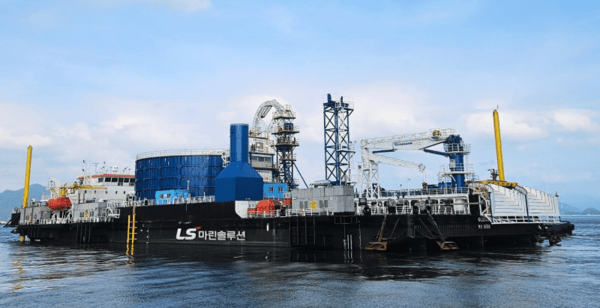
LS Marine Solution's submarine cable-laying vessel GL2030.
LS Marine Solution's submarine cable-laying vessel GL2030.
LS Marine Solution, a subsidiary of LS Cable & System, has completed a major upgrade of its cable-laying vessel GL2030, significantly increasing its cable carrying capacity to strengthen its competitiveness in large-scale offshore wind and high-voltage direct current (HVDC) transmission projects.
The company announced on July 22 that it has increased the vessel's submarine cable carrying capacity from 4,000 metric tons to 7,000 metric tons.
The upgrade enables the GL2030 to install submarine cables over distances exceeding 100 kilometers in a single continuous operation, reducing the number of voyages required for a project and lowering both construction time and costs.
LS Marine Solution expects demand for submarine power and telecommunications cable installation to increase as South Korea expands offshore wind generation, advances the West Coast HVDC transmission project and invests in new international submarine communications networks.
The company plans to deploy the GL2030 primarily for coastal projects while assigning its 13,000-ton next-generation cable-laying vessel, currently under construction, to long-distance and large-capacity projects, further expanding its offshore construction capabilities.
"We will expand our participation in domestic power grid projects, including the West Coast HVDC Energy Highway, while strengthening our presence in the US and European markets," an LS Marine Solution official said.
Yujin Technology said on July 22 that it has been selected as the preferred bidder for the South Korean government's 2026 AI Transformation (AX) One-Stop Voucher Program, led by the Ministry of Science and ICT and the National IT Industry Promotion Agency (NIPA).
Yujin Technology will carry out the project through a consortium with Plan I and Gabia, developing a generative AI-based manufacturing platform for battery equipment.
The project will receive approximately 1.1 billion won in government funding during its first year. A second year of funding of a similar scale is expected following an evaluation of the first year's performance.
During the first phase, Yujin Technology plans to complete development of the AI platform and conduct proof-of-concept demonstrations. The second phase will focus on deployment in production environments and further enhancement of the platform's capabilities.
The company also plans to expand the platform beyond the battery industry into other manufacturing sectors, including semiconductors and precision machining.
"By establishing a generative AI-driven business innovation framework and a data-centric smart manufacturing system, we aim to improve both productivity and product quality," a Yujin Technology official said.
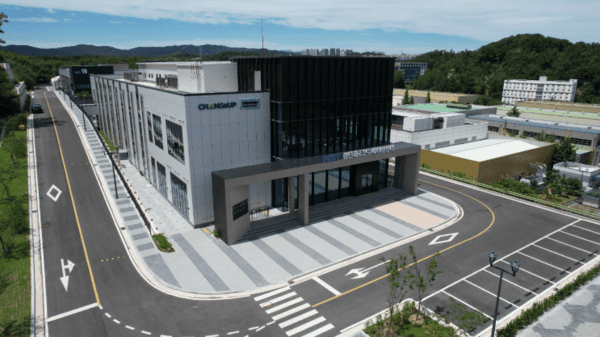
The RIST Advanced Manufacturing Incubation Center in Pohang. (Photo: POSCO Group)
The RIST Advanced Manufacturing Incubation Center in Pohang. (Photo: POSCO Group)
POSCO Group has opened an advanced manufacturing incubation center in Pohang, creating a new hub to support technology validation and commercialization for regional manufacturing startups.
The company announced on July 22 that it has opened the RIST Advanced Manufacturing Incubation Center at the Research Institute of Industrial Science & Technology (RIST). The facility was established jointly by POSCO Group, the Ministry of SMEs and Startups, North Gyeongsang Province and the City of Pohang.
The two-story facility has a total floor area of 4,074 square meters and can accommodate up to 10 companies.
The center is designed to support startups developing advanced materials and energy and environmental technologies. It is equipped with demonstration infrastructure, including cooling water, compressed air and industrial gases such as hydrogen, nitrogen and oxygen. RIST will provide testing and analysis services, reliability evaluation and process engineering support.
POSCO Group said it will leverage its venture investment, manufacturing and research capabilities to support resident companies throughout the commercialization process, including startup discovery, R&D, production scale-up, commercialization and market development. The Ministry of SMEs and Startups and North Gyeongsang Province will oversee operation of the center.
Four startups have already moved into the facility: Enforus, which develops high-temperature steam electrolysis technology for hydrogen production; Solarize, a manufacturer of photovoltaic inverters; Verycore Materials, which develops environmentally friendly coating materials; and EAFOS, which develops solvent extractants for battery manufacturing.
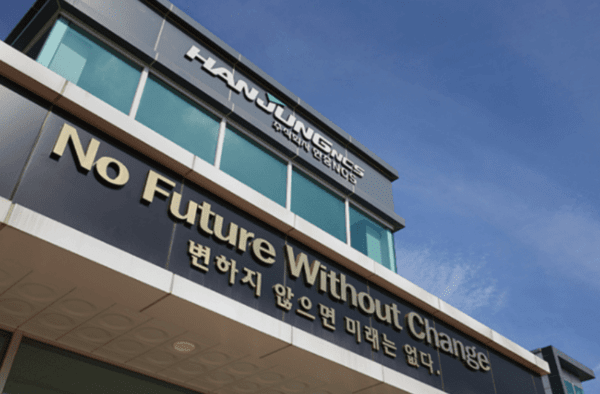
Kim Sang-kyun, chief executive officer of Hanjung NCS, has outlined his first management vision since taking office, pledging to strengthen the company's technology competitiveness and pursue profit-focused, accountable management.
Hanjung NCS announced on July 22 that Kim delivered a message to shareholders and employees outlining the company's mid- to long-term management strategy following its transition to a co-CEO structure on July 15.
Kim said the company will reinforce its existing businesses by leveraging its battery thermal management technologies while expanding new growth engines in energy storage systems (ESS), AI-based energy solutions and the North American market. He added that the company's North American expansion will be pursued with thorough preparation and disciplined risk management.
Kim also identified four core management principles: strengthening differentiated technological competitiveness, pursuing profitable growth, maintaining financial soundness and making decisions focused on enhancing shareholder value. The company said future investments and business expansion initiatives will be evaluated with profitability as the primary consideration.
"We will practice accountable management centered on technological competitiveness and profitability while enhancing corporate value," Kim said.
The company also noted that Kim recently purchased Hanjung NCS shares on the open market, underscoring his commitment to shareholder-aligned management.
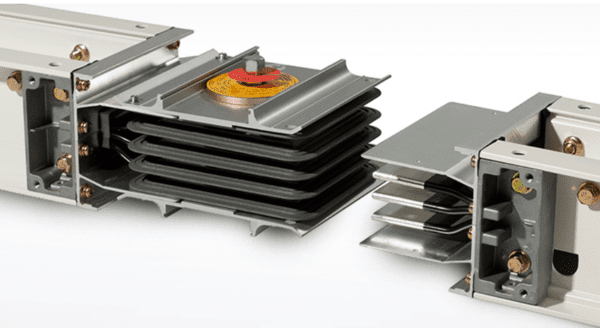
LS Cable & System's busduct product. (Photo: LS Cable & System)
LS Cable & System's busduct product. (Photo: LS Cable & System)
Busduct installation at MAAC expands company's presence beyond AI data centers into EV battery manufacturing
LS Cable & System has supplied busduct power distribution systems to Hyundai Motor's battery manufacturing campus under construction in Anseong, expanding its power infrastructure business from AI data centers into the electric vehicle battery sector.
According to industry sources on July 22, LS Cable & System is responsible for the electrical infrastructure work at the Future Mobility Battery Anseong Campus (MAAC), which Hyundai Motor is building in the Fifth General Industrial Complex in Anseong, Gyeonggi Province. MAAC is Hyundai Motor's 1.2 trillion won battery research and pilot production facility. LS Cable & System has supplied power infrastructure, including busduct systems, to the site. Construction began in early 2025 and the project is understood to be more than 80% complete. The supply contract is estimated to be worth several hundred billion won.
This marks the first time that LS Cable & System's busduct supply for a Hyundai Motor battery facility has become publicly known. The company declined to comment on specific customers or supplied products. LS Cable & System already supplies enameled wire for traction motors used in Hyundai Motor and Kia electric vehicles, including the IONIQ 5 and EV6, making the latest project an expansion of its partnership in electric vehicle components.
Busduct is a high-capacity power distribution system consisting of copper or aluminum conductors enclosed within a prefabricated metal housing. Compared with conventional cable-based electrical installations, busduct systems are better suited for transmitting large electrical currents while reducing power losses and simplifying installation. Their use has expanded across power-intensive facilities such as semiconductor fabs, display plants, battery factories and AI data centers, although initial installation costs are generally higher than conventional cabling.
LS Cable & System and Taihan Cable & Solution are the leading domestic manufacturers of busduct systems. LS Cable & System developed South Korea's first busduct in 1984 and currently holds more than 50% of the domestic market. Its products have been installed at major industrial facilities, including Samsung Electronics' Pyeongtaek Campus and LG Display's Paju manufacturing complex.
The company manufactures a full lineup of busduct products ranging from low- to high-voltage systems and from small- to large-capacity configurations. Its products feature cold-resistant designs capable of operating at temperatures as low as minus 55 degrees Celsius as well as seismic resistance, allowing deployment in factories, high-rise buildings, wind power plants and ships.
Globally, LS Cable & System competes with companies including Schneider Electric, ABB, Eaton, Siemens and Mitsubishi Electric. The company has been expanding overseas orders by emphasizing shorter manufacturing and delivery times. While overseas competitors typically require more than a year—and sometimes as long as two years—from design through installation and commissioning, LS Cable & System says it can complete deliveries in approximately four to five months.
The company's fast delivery has proven particularly advantageous in the rapidly growing AI data center market, where minimizing construction schedules is critical. This year, LS Cable & System and its subsidiary Gaon Cable secured a series of busduct orders from global technology companies, including Amazon, Meta and Tesla. Their cumulative order backlog has exceeded 5 trillion won, including long-term supply agreements (LTAs). LS Cable & System expects revenue from its busduct business to more than double next year to approximately 2 trillion won.
Industry sources also said LS ELECTRIC is participating in the MAAC project. The company has previously supplied power equipment for Hyundai Motor's dedicated electric vehicle plant in Ulsan, Gwangju Global Motors (GGM), Hyundai Motor's Indonesia factory, Kia's Kazakhstan plant and Hyundai Mobis' motor and battery pack assembly lines. With Hyundai Motor planning to invest more than 9 trillion won in a future industrial cluster centered on AI, robotics and hydrogen energy in Saemangeum, industry observers expect additional opportunities for both LS ELECTRIC and LS Cable & System to supply power infrastructure.
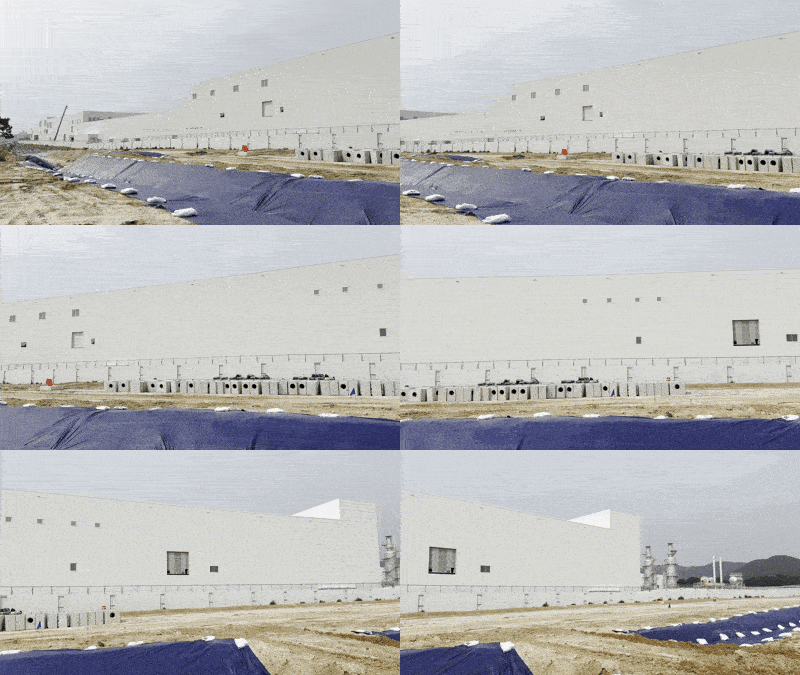
Hyundai Motor's Future Mobility Battery Anseong Campus (MAAC) construction site photographed on July 17. Most of the building construction has been completed, with work continuing on external infrastructure. (Photo: THE ELEC)
MAAC is being constructed by Hyundai Engineering, with building work now in its final stages and completion targeted within the year. Hyundai Motor has traditionally conducted advanced battery research covering materials, cells and design at its Namyang and Uiwang research centers. MAAC will expand those capabilities to include battery cell development suitable for commercial vehicles and validation for mass production. The campus will incorporate the full battery manufacturing process, including electrode production, cell assembly and formation, using equipment supplied primarily by South Korean battery equipment manufacturers.
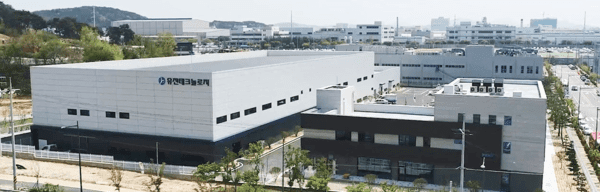
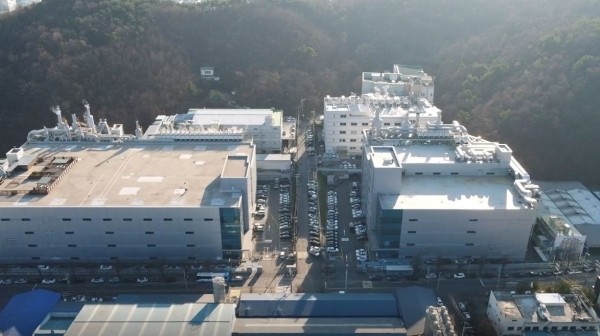
Daeduck Electronics' headquarters and FC-BGA manufacturing facility. (Photo: Daeduck Electronics)
Daeduck Electronics' headquarters and FC-BGA manufacturing facility. (Photo: Daeduck Electronics)
Daeduck Electronics is negotiating long-term supply agreements (LTAs) with multiple global technology companies as customer demand for additional semiconductor substrate capacity continues to rise. The company expects the agreements to be finalized by the end of the year.
Daeduck Electronics said on July 22 that it is in discussions with several global technology companies on LTAs covering flip chip ball grid array (FC-BGA), flip chip chip scale package (FC-CSP) and memory substrates.
"We are in negotiations to conclude LTAs, and discussions are largely in the final stages," a Daeduck Electronics official said. "Customers are requesting both long-term supply agreements and capacity expansion backed by advance payments. We are reviewing the production volumes we can support based on our manufacturing capacity and investment plans." The company added that it is discussing multiple product categories simultaneously with some customers but is being selective because demand exceeds its available production capacity.
An LTA is a multi-year agreement under which customers commit to purchasing specified volumes over several years. The contracts typically establish purchase quantities and supply terms in advance through memorandums of understanding or definitive agreements. Such arrangements allow customers to secure stable supplies while enabling substrate manufacturers to expand production with greater demand visibility.
The use of customer advance payments to finance facility investments is also becoming more common. Under this model, customers provide a portion of future purchase payments upfront to help suppliers accelerate capacity expansion. Substrate manufacturers invest the funds in new production lines and gradually offset the advance payments through product shipments, reducing the financial burden associated with large-scale capital expenditures.
Daeduck Electronics is pursuing a major capacity expansion using both customer advance payments and its own financial resources. On July 20, the company announced a 497 billion won investment in manufacturing facilities. It also agreed to acquire Newflex's Ansan plant for 52.8 billion won to secure additional production space for future expansion. Including a previously announced 213 billion won investment in a new FC-CSP plant in May and the revival of a previously postponed 90 billion won to 100 billion won FC-BGA investment announced in 2022, Daeduck Electronics' total investment plan exceeds 850 billion won. The company expects to complete the investments by the end of 2027.
The newly announced 497 billion won investment will be directed toward high-value semiconductor substrate production, including FC-BGA, FC-CSP and memory substrates, excluding conventional multilayer boards (MLBs). At its B2 Center in Ansan, Daeduck Electronics will install additional FC-BGA production equipment. The facility currently houses four FC-BGA production buildings, and the company plans to utilize approximately 70% of the available space in one newly constructed building while continuing maintenance of existing production lines. At its B1 Center in Siheung, Daeduck Electronics is adding a third FC-CSP production building to its existing two-building complex. Part of the new investment will be allocated to equipment installation at the facility. The new FC-BGA production line is scheduled to begin operations in the second quarter of 2027, followed by the FC-CSP line in the third quarter.
The company's product portfolio has also shifted toward higher-value AI-related applications. Since the fourth quarter of 2025, FC-BGA products have expanded beyond automotive applications to include AI server controllers, networking equipment and optical modules. FC-CSP products are also becoming increasingly focused on controllers and automotive applications rather than smartphones. Its multilayer boards are primarily supplied for satellite communications and aerospace applications.
The trend toward customer-backed investment through LTAs is spreading beyond large corporations to mid-sized substrate manufacturers. Samsung Electro-Mechanics is expanding FC-BGA production at its Sejong facility and investing 1.8 trillion won in Vietnam at the request of North American technology customers. LG Innotek is also in discussions with multiple customers regarding FC-BGA capacity expansion at its Gumi and Vietnam facilities.
"As AI demand continues to drive shortages in semiconductor substrates, capacity expansion based on long-term supply agreements is becoming increasingly common," an industry official said. "In the past, substrate makers expanded capacity based on their own demand forecasts. Now, customers are initiating the investment requests. This represents a significant shift for an industry that has traditionally operated on a build-to-order basis."
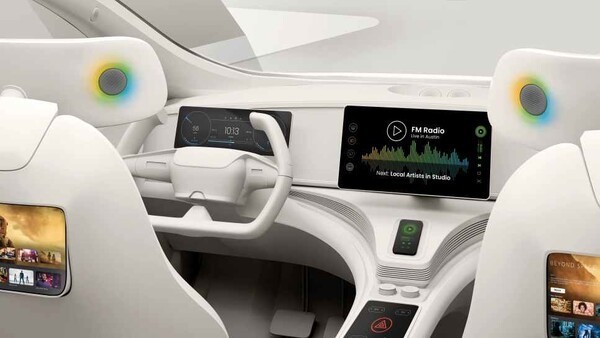
NXP Semiconductors has introduced a new automotive radio and audio processor that significantly enhances artificial intelligence (AI)-based audio processing, targeting next-generation software-defined vehicles.
The company announced on July 21 that it has launched the SAF9800, an automotive radio and audio processor that integrates analog radio reception and AI/ML-enabled audio processing into a single chip.
The SAF9800 combines AM/FM radio reception with an integrated audio digital signal processor (DSP).
Its DSP supports AI-based sound separation, enabling the system to distinguish voice commands, emergency vehicle sirens and abnormal vehicle noises from surrounding background noise. The processor also provides real-time noise reduction and adaptive audio processing capabilities.
NXP said the chip integrates a neural network-enabled DSP and dedicated hardware accelerators, delivering more than 10 times the audio processing performance of the previous generation.
The processor also incorporates EVAM-lite, NXP's latest AM radio denoising technology. Electric vehicles often experience degraded AM radio reception because electromagnetic interference generated by electric motors and inverters affects AM frequencies. According to NXP, EVAM-lite helps mitigate this interference. The technology comes as US lawmakers continue to consider legislation requiring AM radio in new vehicles because of its role in delivering emergency alerts.
NXP said automakers using the SAF9800 will be able to configure and update radio and audio functions through software, responding to the shift toward software-defined vehicles (SDV).
The SAF9800 began supplying customers starting in May 2026.
"The automotive industry is transitioning from hardware-centric infotainment systems to integrated software-defined architectures," said John van den Braak, senior vice president of Infotainment Audio Systems at NXP. "With a flexible single-chip solution, we aim to simplify vehicle development while enabling automakers to scale their platforms."
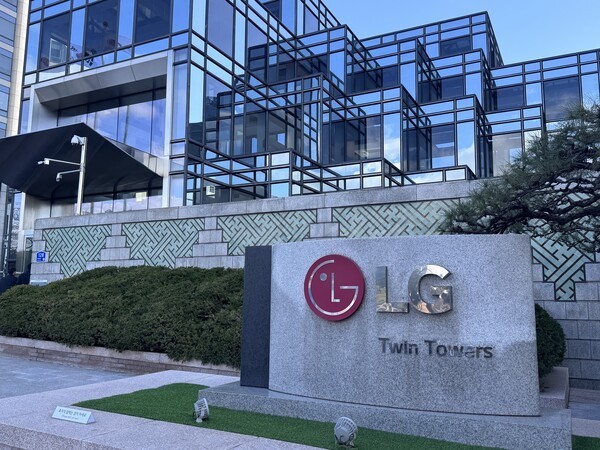
LG Twin Towers in Yeouido, Seoul. (Photo: THE ELEC)
LG Twin Towers in Yeouido, Seoul. (Photo: THE ELEC)
LG Display returned to an underlying operating profit in the second quarter after excluding one-off voluntary retirement costs, reflecting the success of its OLED-focused business restructuring, yield improvements and technology-driven cost reductions. Securities analysts now expect the company to post an operating profit in the mid-1 trillion won range this year.
The company reported second-quarter revenue of 5.6121 trillion won and an operating loss of 108.0 billion won on July 22. Revenue increased 1% from the previous quarter and remained broadly unchanged from a year earlier, while the operating loss narrowed slightly from 116.0 billion won in the second quarter of 2025.
The reported operating loss included approximately 240 billion won in one-off expenses related to workforce optimization, including voluntary retirement programs. Excluding those costs, LG Display generated an operating profit from its core business.
"Over the past four to five years, we consistently recorded operating losses in the second quarter," Kim Sung-hyun, chief financial officer of LG Display, said during the earnings conference call. "The significance of this quarter is that, excluding one-time costs, we have broken out of that structural pattern of second-quarter losses."
For the first half of the year, LG Display posted cumulative revenue of 11.1461 trillion won and an operating profit of 38.7 billion won, compared with an operating loss of 82.9 billion won in the same period of 2025. It marked the company's first first-half operating profit since 2021. Although revenue declined from a year earlier, operating earnings improved by 121.6 billion won.
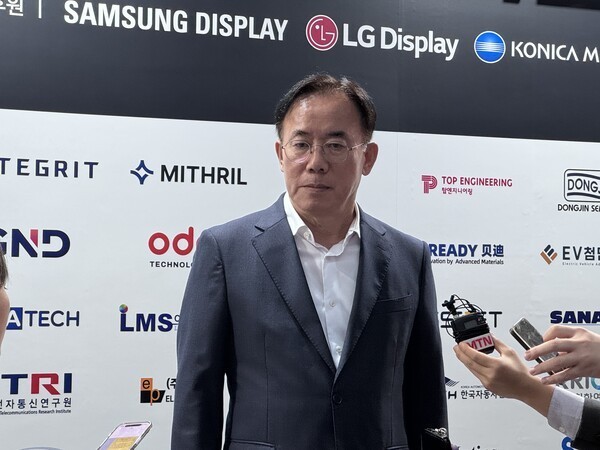
The results reflect the business transformation strategy championed by Jung Cheol-dong, president and chief executive officer of LG Display. Speaking to reporters after the VIP tour at K-Display 2026 on July 22, Jung said the company is strengthening its profitability by building a more resilient business structure. "We are moving toward establishing a stable earnings structure and improving profitability based on stronger business fundamentals," Jung said. "We expect to deliver solid results in the second half as well."
Jung also emphasized technology-driven cost innovation through new materials, manufacturing methods and production processes. Rather than relying solely on cost-cutting measures, the company aims to lower production costs by enhancing technological competitiveness while delivering differentiated value to customers.
Second-quarter shipment area reached 3.6 million square meters, up 12% from the previous quarter, driven by increased shipments of large-sized products, including TVs and monitors. Revenue per square meter declined 13% to $1,079, reflecting the seasonal slowdown in mobile OLED demand. OLED products accounted for 57% of total revenue.
LG Display expects shipment area to increase by the mid-single-digit percentage range in the third quarter as the mobile OLED business enters its seasonal peak. Revenue per square meter is projected to rise by the high-teens percentage range. Capital expenditures this year are expected to increase modestly to the mid-to-high 2 trillion won range.
The company said it will continue improving profitability in the second half through higher production yields, product portfolio optimization and technology-based cost innovation.
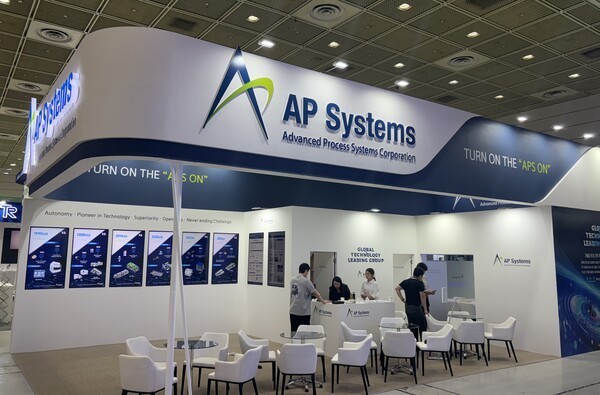
AP Systems' exhibition booth at K-Display 2026. (Photo: AP Systems)
AP Systems' exhibition booth at K-Display 2026. (Photo: AP Systems)
AP Systems unveiled laser processing equipment designed for Gen 8.6 IT organic light-emitting diode (OLED) production, highlighting systems aimed at improving productivity and maintenance efficiency for large-area substrates.
The company said on July 22 that it is showcasing its Gen 8.6 Excimer Laser Annealing (ELA) system and Solid Laser Annealing (SLA) platform at K-Display 2026, which opened at COEX in Seoul.
ELA equipment uses laser technology to crystallize the semiconductor layer on display substrates. The Gen 8.6 ELA system on display has been designed to process large-area glass substrates and increase throughput, improving both panel production speed and manufacturing efficiency.
The SLA platform is a thermal processing system that utilizes solid-state lasers. AP Systems said the platform was developed to reduce maintenance requirements while improving equipment uptime. Gen 8.6 OLED production lines are primarily intended to manufacture larger display panels for tablets and notebook PCs rather than smartphones. AP Systems plans to expand shipments of related equipment as global panel makers accelerate investments in Gen 8.6 OLED production.
"We plan to support large-area IT OLED production for global panel manufacturers through our Gen 8.6 equipment," an AP Systems representative said.
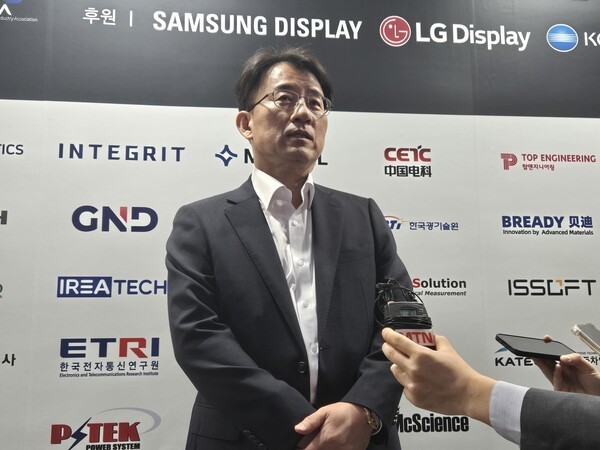
Jeong Cheol-dong, president and chief executive officer of LG Display. (Photo: THE ELEC)
Jeong Cheol-dong, president and chief executive officer of LG Display. (Photo: THE ELEC)
LG Display President and Chief Executive Officer Jeong Cheol-dong said the company expects its performance to improve in the second half of the year, expressing confidence that its earnings recovery will continue after returning to profitability on a first-half basis despite a second-quarter loss.
Speaking to reporters at K-Display 2026 in Seoul on July 22, Jeong said, "Our second-quarter results did not meet market expectations due to one-time costs. However, we expect to achieve better results in the second half than we did in the first."
Earlier in the day, LG Display reported second-quarter revenue of 5.6121 trillion won and an operating loss of 107.7 billion won. Revenue rose 0.4% from 5.587 trillion won a year earlier, while the operating loss narrowed from 116.1 billion won in the second quarter of 2025.
Jeong said the company is focused less on short-term earnings and more on strengthening the long-term fundamentals needed to sustain its business. Employees across all business divisions are working toward the shared goals of enhancing technological competitiveness and delivering greater value to customers, he added.
LG Display is also preparing to expand its tandem OLED technology into smartphones. The company currently uses tandem OLED panels in TVs and IT products and is evaluating broader adoption in mobile devices. For Gen 8.6 OLED, Jeong said LG Display is reviewing multiple technology options and business feasibility but declined to provide specific investment plans or timelines, adding that further details will be disclosed once the technology and business plans are finalized.
The company is also developing next-generation OLED technologies. Asked about future innovations, Jeong said LG Display is preparing a range of OLED technologies, including one internally referred to as "Flip." He declined to elaborate, saying additional details will be announced when appropriate.
Jeong acknowledged that rising memory prices are increasing costs but said the impact remains manageable. He added that the company is addressing the pressure through ongoing cost-improvement initiatives.
LG Display will continue capital investment within the limits of its available financial resources, he said. Asked whether additional one-off costs related to workforce optimization could occur, Jeong said it was too early to provide a definitive answer.
"Everyone in the company is working together as one team, focusing our capabilities on technology and creating value for our customers," Jeong said. "We will continue delivering results that earn our customers' trust and recognition."
Lee Chung, president and chief executive officer of Samsung Display. (Photo: THE ELEC)
Lee Chung, president and chief executive officer of Samsung Display. (Photo: THE ELEC)
Samsung Display is preparing to resume investment in its Display City Campus 2 in Asan, South Chungcheong Province, reviving a 67 trillion won investment project that forms part of Samsung Group's 140 trillion won investment plan for the Chungcheong region.
Speaking to reporters after a VIP tour at K-Display 2026 at COEX in Seoul on July 22, Lee Chung, president and chief executive officer of Samsung Display, said preparations to restart the Campus 2 project are already underway.
"We are preparing now," Lee said. "It is something we committed to publicly, so we intend to move forward without delay."
Earlier this month, Samsung officially announced plans to invest 140 trillion won in the Chungcheong region. Under the initiative, Samsung Display will invest 67 trillion won in Asan to upgrade its existing manufacturing facilities and construct new organic light-emitting diode (OLED) production lines at Campus 2.
Campus 2 is a separate manufacturing site developed adjacent to Display City Campus 1, where Samsung Display's existing production lines are concentrated in Asan. The company began site development in 2017 but suspended construction in 2020, citing market uncertainty.
Lee also said market conditions for the display industry are expected to remain challenging in the second half of the year. Rising semiconductor prices have increased costs for smartphone and IT device manufacturers, reducing panel demand while intensifying pressure on component suppliers to lower prices.
"Demand for smartphone and IT OLED panels has declined significantly overall," Lee said. "As our customers face a difficult business environment, suppliers of components, including display panels, are also under substantial pricing pressure."
Lee expressed concern over continued investment and capacity expansion by Chinese display makers.
"Chinese companies continue to invest, and we expect their production capacity to keep increasing," he said. "That represents a major challenge for South Korea's display industry."
He added that the Korean display industry must continue leading with OLED technology while preparing next-generation technologies.
"We have maintained global leadership for more than 50 years, and we cannot afford to lose that position," Lee said.
Lee also expressed confidence in Samsung Display's technological leadership in foldable OLED panels.
"Excluding Chinese customers and Chinese panel makers, Samsung Display holds an overwhelming share of the foldable display market," he said. "We believe we remain well ahead in terms of quality, durability and overall display performance."
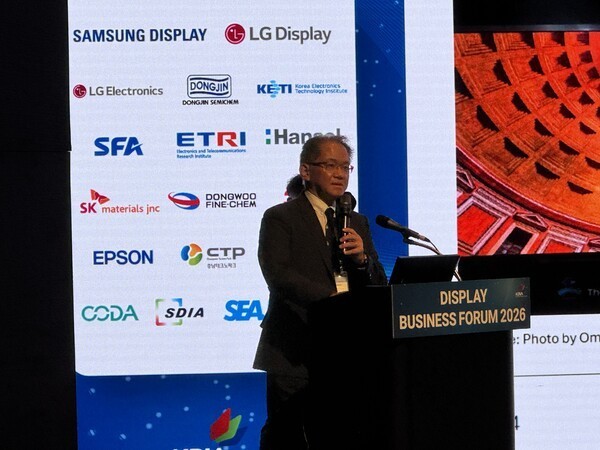
David Hsieh, senior research director at Omdia, speaks on "OLED Market and Technology Megatrends" at the Display Business Forum 2026 held at COEX in Seoul on July 21. (Photo: THE ELEC)
David Hsieh, senior research director at Omdia, speaks on "OLED Market and Technology Megatrends" at the Display Business Forum 2026 held at COEX in Seoul on July 21. (Photo: THE ELEC)
Samsung Display and LG Display were the only profitable suppliers in the mobile organic light-emitting diode (OLED) market during the first quarter of 2026, while their Chinese competitors remained heavily loss-making despite rapidly expanding shipments, according to market research firm Omdia.
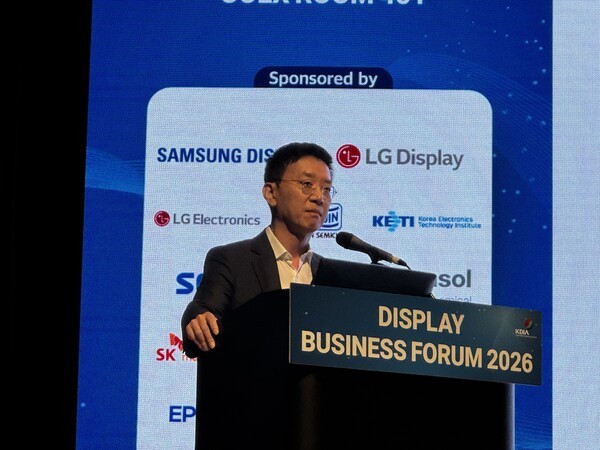
Speaking at the Display Business Forum 2026 in Seoul on July 21, David Hsieh, senior research director at Omdia, said few companies are generating profits in the mobile OLED business as the industry faces rising investment requirements for next-generation manufacturing technologies.
"There are not many companies that are actually making money in mobile OLED," Hsieh said. "The industry will continue to require substantial investment in equipment, materials and manufacturing processes."
According to Omdia's estimates, Samsung Display posted a 10% operating margin in its mobile OLED business during the first quarter, while LG Display recorded an operating margin of 6%. They were the only profitable companies among the seven panel makers included in the analysis.
All five Chinese manufacturers remained in the red.
TCL CSOT posted an estimated operating margin of -7%, followed by BOE at -8%, Tianma at -15%, Visionox at -33%, and Everdisplay Optronics (EDO) at -43%. The average operating margin across the five Chinese suppliers was -21.2%, while the gap between Samsung Display and Everdisplay Optronics reached 53 percentage points.
In terms of shipments, South Korean and Chinese manufacturers each accounted for roughly half of the global market for small- and medium-sized OLED panels used in smartphones and other mobile devices.
The figures suggest that although Chinese manufacturers have largely caught up with their South Korean rivals in production volume, they continue to trail significantly in profitability.
Chinese panel makers are investing aggressively in advanced OLED technologies for foldable smartphones and other premium mobile devices while simultaneously expanding manufacturing capacity. Omdia said the combination of new capital expenditures and depreciation costs from recently built production lines has prevented higher shipment volumes from translating into stronger earnings.
The slowdown in the smartphone OLED market is adding further pressure.
Although OLED penetration in smartphone displays has already exceeded 50%, Omdia believes the market has begun to peak this year and is entering a period of gradual decline.
"Rising memory prices have contributed to slower market growth, but the bigger challenge is that consumers are replacing their smartphones less frequently," Hsieh said. "In the AI era, consumers may choose to upgrade software, applications or platforms instead of replacing their devices."
AMD will begin supplying its Helios AI systems to Microsoft in the second half of this year, the company announced on July 20.
Microsoft will deploy Helios in its Azure cloud platform to support customer AI models and inference workloads. The rollout expands the partnership between the two companies following Microsoft's adoption of AMD's MI300X graphics processing units (GPUs) in 2023.
Microsoft will also introduce two new virtual machine (VM) series, Azure HDv2 and Azure HXv2. The companies jointly designed the HDv2 VM platform, which is optimized for agentic AI workloads, while the HXv2 series targets electronic design automation (EDA) applications.
Beyond Microsoft, AMD has secured Meta, OpenAI, and Oracle as Helios customers.
Meta announced in February that it plans to deploy AMD GPUs across 6 gigawatts (GW) of AI infrastructure and is expected to utilize approximately 1GW of Helios capacity this year. OpenAI and Oracle also plan to deploy Helios beginning this year.
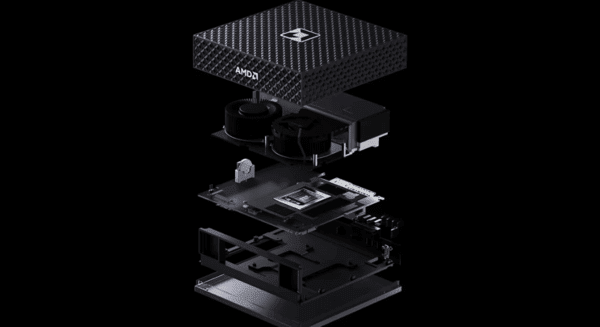
Helios is AMD's rack-scale AI system that integrates GPUs, central processing units (CPUs), networking equipment and cooling infrastructure into a single platform. AMD first unveiled plans earlier this year to launch the system in the second half of 2026.
Each Helios rack is equipped with 72 AMD Instinct MI455X GPUs and 18 sixth-generation EPYC "Venice" CPUs. Built on an open rack architecture, the platform is compatible with third-party GPUs and CPUs.
The system also incorporates AMD's Pensando data processing unit (DPU). AMD strengthened its networking portfolio through the acquisition of Pensando Systems in 2022.
The MI455X is AMD's first GPU to feature HBM4 (High Bandwidth Memory 4). In March, AMD signed a strategic memorandum of understanding with Samsung Electronics to use Samsung's HBM4 memory in the MI455X.
Samsung's HBM4 delivers data transfer speeds of up to 13 Gbps and memory bandwidth of 3.3 TB/s.
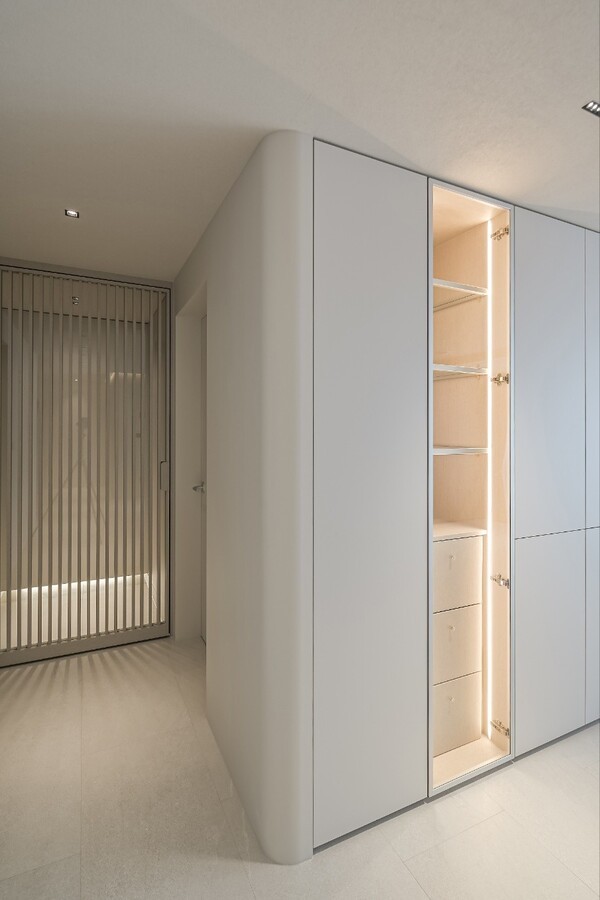
Interior design featuring Toray Advanced Materials Korea's high-performance PET interior film. (Photo: Toray Advanced Materials Korea)
Interior design featuring Toray Advanced Materials Korea's high-performance PET interior film. (Photo: Toray Advanced Materials Korea)
Toray Advanced Materials Korea has jointly developed a high-performance polyethylene terephthalate (PET) interior film with Hansol Homedeco, expanding the use of PET materials in interior finishing applications.
The company announced on July 21 that it completed the development of the high-flexibility PET interior film after nearly two years of joint research with Hansol Homedeco.
PET films are widely used as decorative surface finishes for furniture doors because of their processability and appearance. However, the material's relatively high stiffness has limited its application on curved surfaces and sharp corners, where conventional films tend to lift or peel away.
Toray Advanced Materials Korea said it overcame those limitations by combining its film processing and manufacturing technologies with elastic materials, producing a PET film with approximately twice the flexibility of conventional polyvinyl chloride (PVC) films.
The enhanced flexibility allows the film to adhere more reliably to curved surfaces and edges while maintaining a high-quality finish.
The newly developed material will be incorporated into Hansol Story Film, Hansol Homedeco's interior film product lineup.
"We will continue developing high-performance interior materials while expanding our product portfolio, including flame-retardant PET films," a Toray Advanced Materials Korea official said.
Hanwha Aerospace has completed a $500 million US dollar-denominated public bond offering, becoming the first South Korean defense and aerospace company to issue an overseas public bond.
The company announced on July 21 that it had finalized the issuance of $500 million in fixed-rate notes with a three-year maturity.
The bond offering attracted approximately $3.3 billion in orders from investors across Europe and Asia, representing demand of roughly seven times the issuance size.
In June 2026, S&P Global Ratings assigned Hanwha Aerospace a long-term issuer credit rating of A-, making it the first South Korean defense and aerospace company to receive an A-range long-term rating from the global credit rating agency.
Hanwha Aerospace said it plans to use the proceeds from the bond issuance for working capital and the repayment of existing debt.
The transaction was jointly arranged by Citigroup Global Markets, Crédit Agricole CIB, and UBS.
"We successfully completed our inaugural overseas public bond offering with strong interest from international investors," a Hanwha Aerospace official said. "Supported by a stable funding base, we will continue strengthening our competitiveness in global markets."
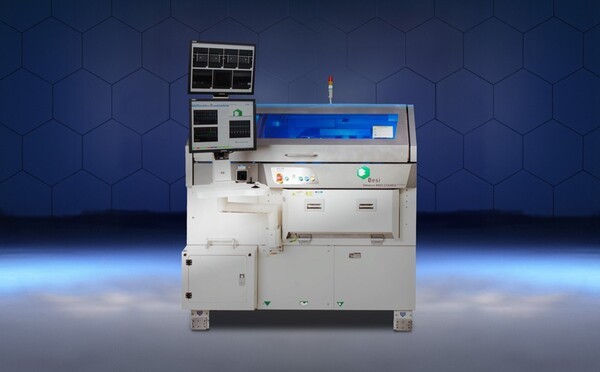
BESI's Datacon 8800 Cameo Ultra Plus AC hybrid bonding system. (Source: BESI)
BESI's Datacon 8800 Cameo Ultra Plus AC hybrid bonding system. (Source: BESI)
Samsung Electronics is preparing to build a production-scale die-to-wafer (D2W) hybrid bonding line equipped with approximately 50 bonders at its Pyeongtaek semiconductor campus to support next-generation high-bandwidth memory (HBM) and advanced logic chips. Equipment installation is expected to begin toward the end of this year.
According to industry sources on July 21, Samsung has selected Dutch advanced packaging equipment maker BE Semiconductor Industries (BESI) as its preferred supplier and has begun the procurement process for around 50 D2W hybrid bonding systems. The line is expected to be installed in the P5 fab at the Pyeongtaek campus.
Richard Blickman, chief executive officer of BESI, previously said during the company's first-quarter earnings call in April 2026 that "more definitive developments" regarding Samsung's adoption of its hybrid bonders were expected around the middle of this year. At the time, BESI's hybrid bonding equipment was undergoing Samsung's qualification process.
The order, however, has yet to be finalized. Samsung has requested design modifications to the equipment, delaying agreement on delivery schedules. Such modifications involve changes to system architecture, components or modules to meet customer-specific requirements.
Pricing has also complicated negotiations. Industry sources estimate that BESI's hybrid bonders cost roughly 6 billion won per unit—about twice the price of competing systems.
"BESI supplies hybrid bonders to companies such as TSMC and Micron, and it is reluctant to redesign its equipment exclusively for Samsung," one industry source said. "Samsung still considers BESI's technology the strongest option, but as negotiations become more complicated, it is also evaluating domestic suppliers that can respond more quickly to its requirements."
Samsung's semiconductor equipment subsidiary Semes has also been asked to provide D2W hybrid bonders for the production line and is hoping to supply equipment for two hybrid bonding production lines at the Pyeongtaek campus.
"Semes initially felt significant pressure after Samsung prioritized BESI, but sentiment has shifted recently," another industry source said.
Semes completed development of its D2W hybrid bonder earlier this year and delivered evaluation units to Samsung for performance verification. Industry sources believe the equipment has successfully passed internal testing.
Samsung is also considering Hanwha Semitech as a potential supplier. The company completed development of its second-generation D2W hybrid bonder, SHB2 Nano, in February and delivered an evaluation system to SK hynix in April 2026.
The evaluation platform was supplied as an integrated cluster that combined Hanwha Semitech's bonder and plasma activation module with an EFEM (Equipment Front End Module) from CyMechs and a wafer cleaning module from Zeus.
Samsung's investment in a D2W hybrid bonding production line at Pyeongtaek is closely tied to advanced packaging for HBM and logic semiconductors.
In addition to its existing advanced packaging operations in Cheonan, Samsung is developing next-generation hybrid bonding capabilities at Pyeongtaek for future HBM products.
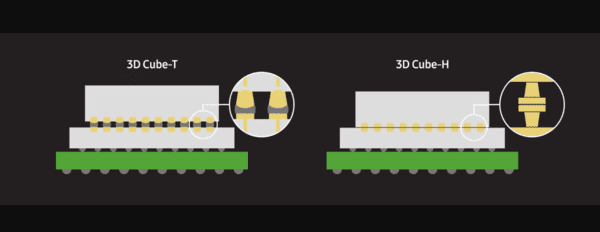
Samsung Foundry's 3D Cube-H advanced packaging technology. (Source: Samsung Electronics)
Replacing conventional thermo-compression (TC) bonding with hybrid copper bonding (HCB) between HBM DRAM dies can significantly improve performance, reduce power consumption and lower heat generation. The technology directly bonds copper and dielectric materials without using microbumps, shortening interconnect distances between chips.
The technology is expected to play a key role in custom HBM (cHBM). Samsung plans to replace the conventional HBM base die with a customer-specific logic die incorporating proprietary compute intellectual property (IP). The logic die will complement external CPUs and GPUs while optimizing data transfer, with HBM DRAM stacks vertically integrated above it in a 3D system-in-package (SiP) architecture.
In June 2026, Samsung Foundry introduced 3D Cube-H, its next-generation hybrid bonding-based 3D vertical stacking solution. The heterogeneous integration technology targets AI chips and high-performance computing (HPC) systems, offering improvements in performance, power efficiency and bandwidth over existing packaging technologies. Samsung Foundry is actively promoting the technology to customers.
Hybrid bonding equipment is expected to begin arriving at Samsung's Pyeongtaek campus later this year. Internally, however, Samsung is targeting 2030 for large-scale commercial production using hybrid bonding, reflecting the technology's greater manufacturing complexity compared with conventional TC bonding.
One industry source said widespread adoption of hybrid bonding is likely to coincide with the introduction of NVIDIA's next-generation Feynman AI accelerator, expected around 2029.
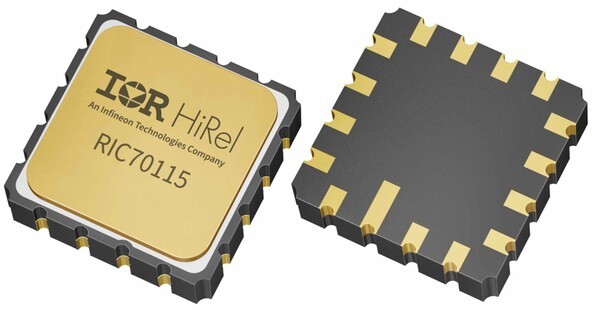
Infineon's radiation-hardened RIC70115 gate driver for space applications is designed to operate reliably in harsh radiation environments. (Photo: Infineon)
Infineon's radiation-hardened RIC70115 gate driver for space applications is designed to operate reliably in harsh radiation environments. (Photo: Infineon)
Infineon Technologies has introduced the RIC70115, a radiation-hardened gate driver designed to control gallium nitride (GaN) power semiconductors in space applications, the company announced on July 15.
A gate driver is a control IC that switches power semiconductors on and off. The RIC70115 supports both silicon and GaN power devices and is engineered to withstand radiation-induced performance degradation and malfunction, making it suitable for satellites and other space systems, according to the company.
Prolonged exposure to radiation in space can gradually degrade semiconductor performance, while high-energy particles may trigger transient circuit failures.
Infineon said the RIC70115 is qualified to withstand a total ionizing dose (TID) of up to 100 krad(Si) and has been verified to tolerate single-event effects up to a linear energy transfer (LET) level of 81.9 MeV·cm²/mg.
The company said these specifications provide sufficient radiation tolerance for low Earth orbit (LEO) satellites as well as more demanding space environments.
The RIC70115 incorporates a Miller clamp function that prevents unintended turn-on of power semiconductors caused by voltage transients. It also includes integrated noise reduction circuitry to minimize electromagnetic interference.
An integrated low-dropout (LDO) regulator generates a 4.8V gate drive supply from either a 5V or 12V input, reducing the number of required external components.
The device operates across a temperature range of -55°C to 125°C and complies with MIL-PRF-38535, the US military specification for high-reliability microelectronics used in defense and space applications.
"Adoption of GaN power solutions is accelerating rapidly," said Mike Mills, senior vice president of Infineon's High Reliability (HiRel) business. "The RIC70115 is designed to support the transition to GaN-based power systems for space applications."
The RIC70115 and its evaluation board, RIC70115EVAL1, are now commercially available.
Choi Young-seok, chief technology officer of LG Display, speaks on "Tandem OLED Expansion and the Architecture Driving Growth in the AI Era" at the Display Business Forum 2026 held at COEX in Seoul on July 21. (Photo: THE ELEC)
Choi Young-seok, chief technology officer of LG Display, speaks on "Tandem OLED Expansion and the Architecture Driving Growth in the AI Era" at the Display Business Forum 2026 held at COEX in Seoul on July 21. (Photo: THE ELEC)
LG Display is extending its tandem OLED technology from TVs, automotive displays and IT products to smartphones, aiming to reduce power consumption as on-device artificial intelligence increases energy demands.
Speaking at the Display Business Forum 2026 in Seoul on July 21, Choi Young-seok, chief technology officer of LG Display, unveiled the company's Advanced Tandem OLED for smartphones.
Tandem OLED stacks multiple organic light-emitting layers to generate light, allowing the display to achieve the same brightness as a conventional single-stack OLED while using less current. The architecture reduces power consumption, extends smartphone battery life and improves panel longevity.
According to LG Display, tandem OLED panels offer more than twice the lifespan of conventional single-stack OLEDs while reducing power consumption by more than 30%. Depending on display usage, power savings can reach up to 60%.
In smartphone testing, display power consumption fell 39%, from 533 milliwatts (mW) to 315 mW. The test was conducted using a 6.7-inch-class display and a screen brightness of 100 nits. Under the same conditions, battery runtime increased from 2.6 hours to 3.9 hours.
LG Display said it developed the smartphone tandem OLED in response to rising power requirements driven by AI features. Running AI workloads directly on smartphones places heavier demands on application processors (APs), neural processing units (NPUs) and memory.
Because smartphone battery capacity is constrained by device size, reducing display power consumption allows more energy to be allocated to AI processing without sacrificing battery life.
LG Display first introduced tandem OLED technology in large OLED TVs in 2013. It later expanded the technology to automotive displays in 2019, followed by notebooks and tablets in 2024.
Its TV panels use multiple organic layers to generate white light, which passes through color filters to produce images. For automotive and IT applications, the company employs an RGB tandem OLED architecture that stacks red, green and blue emissive layers.
The smartphone panel marks LG Display's first application of tandem OLED technology in mobile devices. Commercialization would give the company a tandem OLED portfolio spanning TVs, automotive displays, notebooks, tablets and smartphones.
Competition in smartphone tandem OLED technology is also intensifying. At SID Display Week 2026 in the US in May, Chinese display makers BOE and TCL CSOT both showcased tandem OLED panels.
BOE unveiled a 6.5-inch tandem OLED for smartphones, while TCL CSOT introduced a foldable 18-inch tandem OLED display.
"We will expand tandem OLED technology across our entire product portfolio, from large-sized to small- and medium-sized displays, to meet growing demand for low-power displays in the AI era," Choi said.
Rapidus is bringing agentic artificial intelligence into its foundry platform as it seeks to attract customers for its upcoming 2-nanometer manufacturing process.
The Japanese foundry announced on July 16 that it is partnering with US electronic design automation (EDA) software provider Cadence Design Systems to advance AI-assisted chip design.
Under the collaboration, Cadence's InnoStack AI Super Agent will be integrated into RAADS (Rapidus AI-Agentic Design Solution), the company's chip design platform.
The partnership is believed to mark the first time a foundry has directly integrated an EDA vendor's agentic AI technology into its customer-facing design platform. Industry observers view the move as part of Rapidus' strategy to strengthen its competitiveness and attract customers as a late entrant to the global foundry market.
Unlike conventional AI tools that optimize individual design tasks, agentic AI can independently determine which design tools to use, execute them and decide the next steps without requiring engineers to issue commands for each stage. The technology is designed to orchestrate the entire chip design workflow rather than optimize isolated tasks.
Cadence's InnoStack automates the execution of conventional EDA tools used during the back-end stages of chip design, including placement and routing, timing analysis and power optimization. Instead of engineers repeatedly adjusting design parameters manually, the AI explores design alternatives and identifies optimized solutions.
Rapidus said the collaboration is expected to reduce the time required from initial chip design through final pre-manufacturing verification by as much as 50%.
Rapidus is backed by major Japanese companies including Toyota Motor, Sony Group, SoftBank, Kioxia, and Nippon Telegraph and Telephone (NTT), with substantial financial support from the Japanese government. The company is developing a 2nm process based on technology from IBM and aims to begin mass production in 2027.
"Advanced system-on-chip (SoC) design requires AI agents that coordinate the entire design flow, not AI that simply optimizes individual tasks," said Anirudh Devgan, president and chief executive officer of Cadence. "Our technology will help customers improve productivity and bring advanced chips to market more quickly."
Atsuyoshi Koike, representative director and chief executive officer of Rapidus, said combining RAADS with InnoStack will enable customers to design increasingly complex SoCs more efficiently.
"We expect the integration to significantly reduce design time while maximizing the value of Rapidus' advanced process technologies," Koike said.
Knowles' pulse power film capacitor, used in CO2 lasers for semiconductor manufacturing as well as medical and defense equipment. (Photo: Knowles)
Knowles' pulse power film capacitor, used in CO2 lasers for semiconductor manufacturing as well as medical and defense equipment. (Photo: Knowles)
Knowles, the US company best known as a supplier of microelectromechanical systems (MEMS) microphones for Apple's iPhone, is expanding its business into aerospace, defense, industrial and medical applications as it completes its transition away from consumer electronics.
On July 17, the company announced that it is expanding its portfolio of high-performance pulse power capacitors. Pulse power technology stores electrical energy and releases it in a highly controlled burst over an extremely short period. Capacitors are key components that store electricity and discharge it precisely when needed.
The company's pulse power capacitors are designed for applications including defense radar and electronic warfare systems, CO2 lasers used in semiconductor manufacturing, drilling equipment for energy exploration and medical defibrillators. These systems require highly reliable capacitors capable of delivering precise amounts of energy repeatedly at exactly the right moment.
"Consistency is everything in pulse power," said Jeff Niew, president and chief executive officer of Knowles. "Once a system leaves the laboratory and enters real-world applications, components must do more than work once—they must deliver stable, repeatable performance under demanding operating conditions."
Founded in 1946, Knowles built its reputation as a supplier of miniature microphones and receivers for hearing aids before becoming a leading manufacturer of MEMS microphones for smartphones during the 2000s. The company was spun off from US industrial manufacturer Dover Corporation in 2014 and subsequently listed on the New York Stock Exchange.
Knowles began reshaping its business in 2023. In September of that year, it announced a strategic transformation into an industrial technology company and acquired US film capacitor manufacturer Cornell Dubilier for $263 million, expanding its portfolio beyond ceramic capacitors into high-power film capacitors for industrial applications. The newly introduced pulse power capacitor lineup is based on technologies acquired through that transaction.
In 2024, Knowles sold its consumer MEMS microphone business, which supplied components for smartphones and wireless earbuds, to US AI semiconductor company Syntiant for $150 million. The company said the divestiture reflected its strategy to reduce exposure to consumer electronics and concentrate on high-reliability components for defense, medical and industrial markets.
The restructuring has begun to improve financial performance. Knowles reported first-quarter revenue of $153.1 million, up 15.8% from a year earlier. Its Precision Devices segment, which includes capacitor and radio-frequency (RF) components, recorded new orders exceeding revenue by 19% during the quarter, marking the sixth consecutive quarter in which orders outpaced sales. The company subsequently raised its full-year financial guidance.
Today, Knowles operates two core businesses: medical acoustic components, including products for hearing aids, and precision capacitor and RF components.

 Login