❌

Reading view

Jensen Huang thinks China will develop its own advanced lithography chipmaking tools by 2030 β€” Nvidia CEO says achievement of that capability 'is just a matter of time'

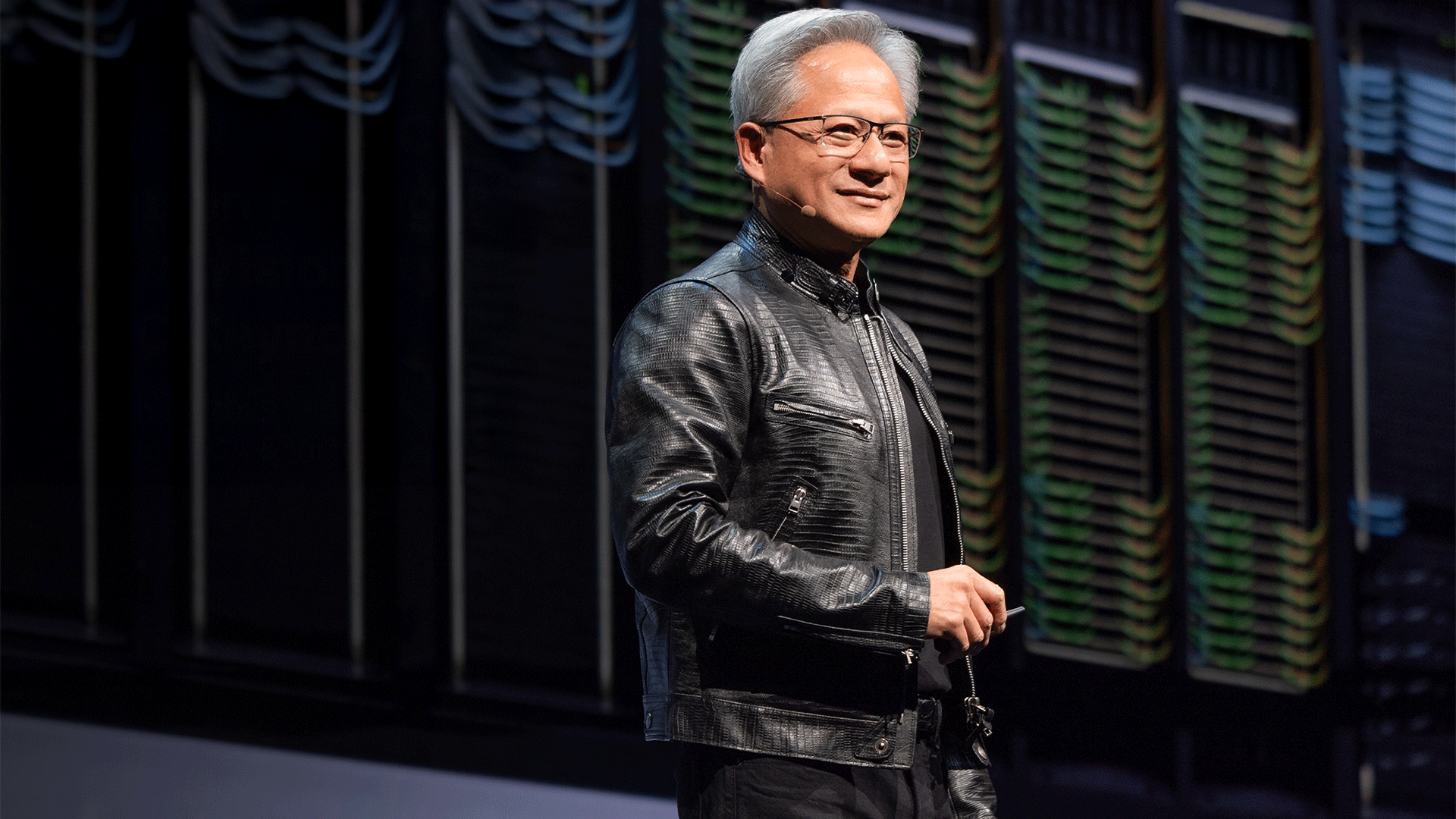
China's progress toward technological self-sufficiency in recent years is undeniable, but there is one thing that the country has so far failed to develop: lithography tools that are on par with those offered by ASML. That shortcoming has greatly hampered its domestic semiconductor industry. But Nvidia CEO Jensen Huang believes China will develop its own advanced lithography systems in just three or four years.

"They are going to get there by 2030," Huang said in an interview with The All-In Podcast (at 43:43). "2030 is just around the corner. The way to think about China is that it is really good at high-volume production. It is just a matter of time[...] so two or three years is just a click; it is nothing. So as far as they are concerned, they are already there."

Huang tends to look optimistically at China's technological development. Specifically, he is known for calling China's AI industry as being 'right behind' American frontier labs, which may well be correct, given how much capital China is investing in AI. But when it comes to the Chinese semiconductor industry in general and its lithography sector in particular, Huang may be too optimistic.

At present, China's leading producer of lithography tools β€” Shanghai Micro Electronics Equipment β€” can mass-produce a 193-nm ArF dry scanner that can be used to build chips on 90nm-class process technology. While the company has reportedly developed a 28nm-capable ArF immersion scanner, there is no public evidence that such systems are produced in volume and are used for high-volume chip production.

Although there are reports that Shanghai Aishengna Electronic Technology Group (a unit, or an affiliate of SMEE) has delivered its first immersion scanner that may be capable of printing chips using 28nm-class process technology, these tools will require extensive qualification before they can be used for high-volume manufacturing of semiconductors, so if deployment follows standard timelines, it will take years before this unit will be used for mass producing chips.

Even assuming that the first scanners are delivered to Chinese chipmakers in 2026, widespread production use before 2028–2029 appears unlikely. Furthermore, matching the capabilities of an early-generation ASML immersion scanner would still leave Chinese lithography suppliers considerably behind ASML's contemporary systems, which makes technological parity in ArF immersion lithography by 2030 highly unlikely.

China is considerably further behind in extreme ultraviolet (EUV) lithography. While there are reports that Chinese scientists have managed to develop a laser-produced plasma source that can generate the 13.5-nanometer wavelength light required for the technology, it does not look like China is close to assembling even a prototype EUV scanner itself.

Even if China can assemble an EUV experimental exposure platform without having mastered production-quality immersion DUV, it is hard to imagine a Chinese company producing EUV scanners without solving the hardest problems common to both DUV and EUV technologies. A production lithography scanner requires extraordinary capabilities in wafer and reticle stages, alignment, overlay, projection optics, and metrology, just to name a few.

If China is still struggling to industrialize these capabilities for immersion DUV, there is little reason to assume it has somehow solved them at the substantially more demanding EUV level. But given the potentially existential stakes of the AI race, and the determination of the Chinese government to achieve technological self-sufficiency, it may just indeed be a matter of time.

  •  

Russian freelancers use Claude to program autonomous combat drone swarm β€” AI-enabled target selection and detonation without a human in the loop

Hit hard by sanctions and lacking resources, Russia is left to rely on foreign advanced technologies to compensate. Russia-linked agents appear to use Claude for a broad range of activities, from propaganda and espionage to the procurement of military/dual-use equipment and the development of autonomous drone swarms, according to Anthropic's September 2026 threat report.

Anthropic identified a small team of Russia-based freelance developers who used Claude to build software for an autonomous combat-drone swarm called DronDoc or Serafim. Claude helped develop swarm coordination, computer vision, terminal guidance, and other software that enabled drones to select targetsβ€”including peopleβ€”and issue detonation commands without a human in the loop. The developers trained their computer-vision system on Ukrainian combat footage and used locations in Ukraine for simulated missions. Meanwhile, they loaded software onto real development boards for hardware-in-the-loop testing, though it is unclear whether they field-tested it.

The developers used Claude Code extensively to build and test the swarm software, and they circumvented Anthropic's geographic restrictions by routing traffic through commercial VPNs. Once Anthropic identified the activity as suspected weapons development, it banned the accounts associated with the group and incorporated what it learned into additional safeguards. Meanwhile, the key distinction is that the safeguards did not stop the project immediately, and based on the disclosure, Claude Code clearly helped advance the autonomous drone swarm program.

Anthropic gathered enough information about the people/accounts and their activity to assess what kind of group they were, so it claims that they were not a Russian state entity. Meanwhile, although Anthropic likely identified the company or organization, it did not publicly name it.

In addition, Anthropic discovered a Russian state-linked cyberespionage operation that used Claude to automate everything from infrastructure setup and phishing to malware development and data exfiltration. The campaign targeted more than 20 organizations, including Ukrainian and European government, military, intelligence, and defense entities.

Last but not least, Russia-linked actors also used Claude for propaganda operations, including a Russian state-directed campaign in the Central African Republic that produced pro-Russian and pro-Wagner content for radio, local media, and Telegram.

Most alarming, the report shows AI is now doing work that previously required teams of software engineers, intelligence analysts, and security specialists. While Anthropic's safeguards block many malicious requests, the company admits they cannot block all of them.

'Biological misuse of AI'

Anthropic admits that 'biological misuse' β€” a term that it uses to soften activities involving biological weapons, dangerous pathogens, poisons, and toxins β€” is one of the most serious risks of frontier AI models. While older models such as Claude Opus 4 and Sonnet 4.5 were demonstrably below the threshold for meaningfully assisting sophisticated biological research, Anthropic can no longer make the same assurance about today's models.

In its report, Anthropic identified five cases in which researchers, some associated with state-backed programs and military institutions, used Claude for biological research that could potentially assist biological-weapons development. Anthropic does not identify the countries, organizations, or individual researchers behind its five biological-misuse case studies. Furthermore, it deliberately withholds these details, so the report does not attribute any of them to China, Iran, Russia, or any other specific country. Furthermore, it does not outright allege that researchers are building bioweapons.

  •  

Anthropic CEO warns of AI-driven botnet 'swarm' taking over the entire internet β€” 'In 6–12 months such a swarm could be capable of taking over the entire internet with a persistent botnet'

The progress of artificial intelligence technologies in recent years is undeniable, and its pace is pretty much unbelievable. With at least four American contenders with frontier AI models, the competition is intense, and the development of new models is moving fast. Yet, Dario Amodei, chief executive of Anthropic, has called for slowing down the development of new AI models, even warning of a potential AI-powered botnet swarm that could take over the entire internet.

"Given the accelerating rate of AI capability development, it is my worry that in 6–12 months such a swarm could be capable of taking over the entire internet with a persistent botnet (potentially causing hundreds of billions of dollars in damage), and that the scale of damage would continue to increase from there if AI becomes more powerful without the necessary guardrails," Dario Amodei, chief executive of Anthropic, wrote in an open letter.

Dario Amodei's vision is to a large degree shared by Evan Hubinger, an AI scientist who exited Anthropic recently, who then said there was a 10% chance humanity was set for extinction by the end of the decade. "We really do earnestly believe AI could kill all humans," Hubinger wrote in an X post. "I personally think it is >10% within the next decade. I believe Anthropic is trying its best, but we do not yet have a plan to solve alignment for superintelligence and are not clearly on track to."

In universes created by James Cameron (Terminator) and Frank Herbert (Dune), AI is posed as a dangerous invention. But let us take a closer look. Further development of AI is moving from answering questions to autonomously performing complex multi-step tasks, something that previously required teams of skilled human specialists, which turns us to how adversaries use Anthropic's AI capabilities, lacking human resources.

Anthropic's own findings show that today's AI models can already assist with weapons engineering, military intelligence, surveillance, cyber operations, and other potentially destructive activities, while more capable successors could dramatically reduce the expertise, manpower, and time required to conduct them.

The findings echo two rather different warnings from science fiction: James Cameron's Terminator showed the consequences of losing control over autonomous military AI, whereas Frank Herbert’s Dune imagined humanity eventually outlawing AI after becoming dangerously dependent on them.

Meanwhile, greater capability does not automatically translate into greater danger. For example, more advanced AI technology can also have stronger safeguards, detect malicious activity, and automate work that so far has not been automated.

Halting AI development could also be counterproductive if less responsible companies or countries continue advancing their models. In fact, leaving the most capable AI systems in the hands of actors that are known for military aggression is no less dangerous than leaving a monkey with a grenade.

  •  
❌