❌

Reading view

How chimps teach their kids tool tricks

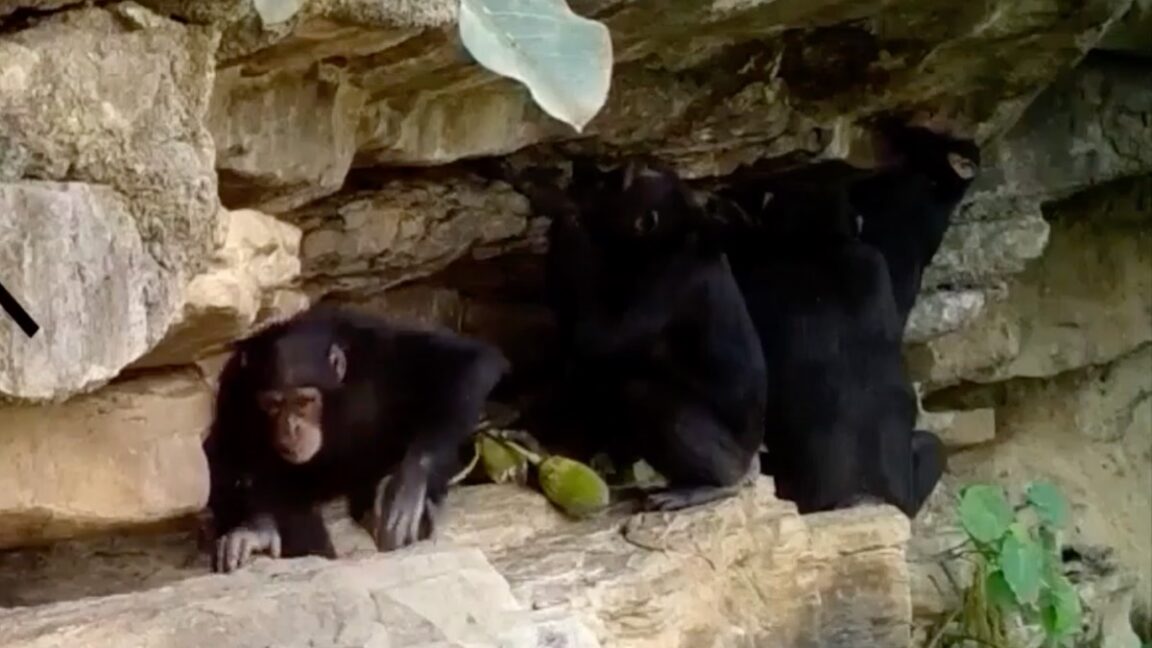
Chimpanzees are known to use rudimentary tools when foraging for food. According to a new paper in the journal Frontiers in Psychology, this learned behavior is passed down from adults to offspring through social learning. Specifically, adult chimps deliberately model the behavior, then turn their tools over to the youngsters so they can mimic the same motions.

"Receiving food and tools from experienced individuals, which we call food or tool transfer, may help chimpanzees learn to use technology to extract foods that are difficult to access,” said co-author Andreu Sánchez-Megías, a graduate student at the University of Barcelona and the Jane Goodall Institute Spain in Senegal. “Tool transfers thus appear to be a form of teaching, together with observation and supervised practice. It appears that mothers are the main models and teachers for young chimpanzees in this manner.”

As we have previously reported, tool use was once thought to be one of the defining features of humans, although Charles Darwin observed chimpanzees using stones to crack nuts in 1871. In 1960, the late primatologist Jane Goodall observed a chimp named David Greybeard bend a twig, strip off the leaves, and use it to spoon termites out of a nest and into his mouth. When he learned of the behavior, Goodall's mentor, Louis Leakey, famously observed, “Now we must redefine ‘tool,’ redefine ‘man,’ or accept chimpanzees as humans.” Since then, chimps have been observed making sponges out of leaves to soak up liquids, shaping sticks to collect algae, and sharpening rudimentary spears for hunting.
Read full article

Comments

© Jane Goodall Institute Spain in Senegal
  •  

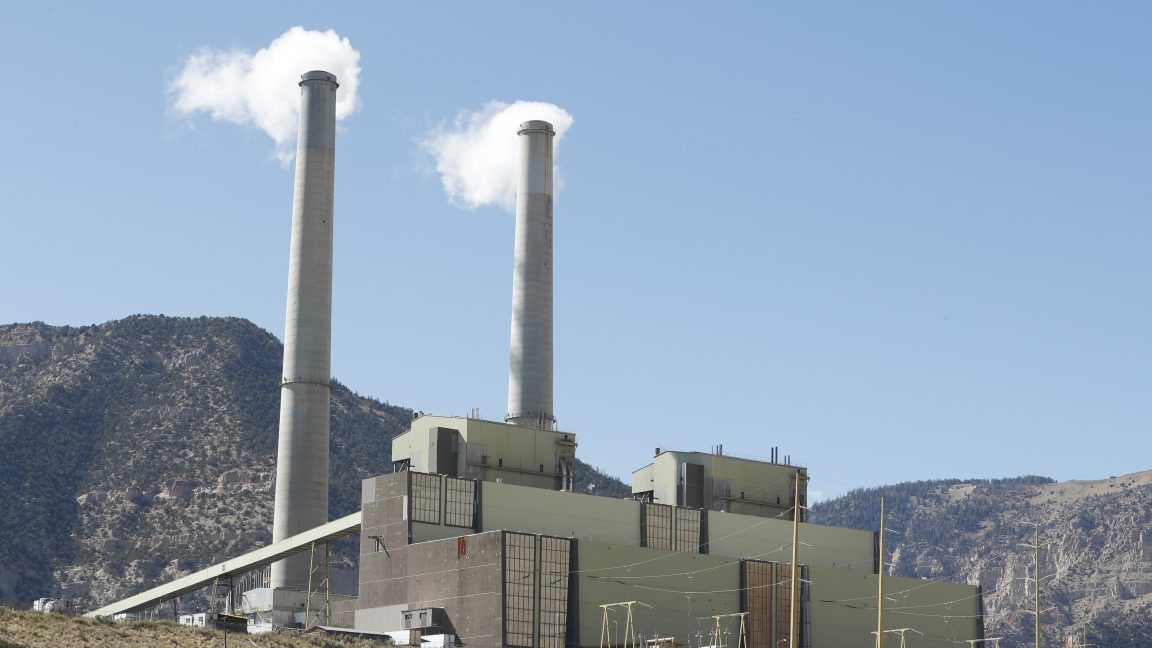
Trump EPA moves to wipe out climate rules for power plants

On the heels of the hottest summer on record and a United Nations report warning that global temperatures are likely to push climate risks to “increasingly dangerous heights,” the Trump administration overturned most of a Biden-era rule limiting climate pollution from power plants, the second-largest source of greenhouse gas emissions.

The Environmental Protection Agency announced a final plan Monday that guts the 2024 Carbon Pollution Standards, which the agency said exceeds its authority under the Clean Air Act by requiring control technologies “that are not adequately demonstrated.” The agency also proposed revoking “all remaining GHG emissions requirements for power plants,” arguing their emissions “have no material impact on climate change.”

The plan to revoke the Carbon Pollution Standards was initially revealed last spring.

Read full article

Comments

© George Frey/Getty Images

  •  

This Atlantic hurricane season is about to do something that hasn't happened in 175 years

Last week, the Atlantic hurricane season blew through its traditional peak—which comes around September 10—with nary a tropical wave in sight, let alone a storm or hurricane.

This is remarkable. Usually this is the time of year when sea surface temperatures reach their warmest in the tropics, and with a favorable atmosphere it should be smooth skating for tropical systems. But this year, the main region where most tropical systems develop is choked with Saharan dust and wind shear.

No one is complaining. Landfalling hurricanes are incredibly destructive for coastal areas and have the potential for considerable inland rainfall. Even storms at sea, in the Gulf of Mexico, can send energy prices skyrocketing—the last thing needed this year.

Read full article

Comments

© NOAA/Tropical Tidbits

  •  

For the first time, the US military confirms it has deployed weapons in orbit

Air Force Secretary Troy Meink made the first public declaration Monday that the United States has placed "space control weapons" in orbit, an announcement that will surely reverberate in the power centers of Beijing and Moscow.

Space Force officials have previously expressed their interest in acquiring space-based weapons, and Pentagon leaders have become more open to discussing space warfare in recent years. Therefore, Meink's announcement Monday at the Air and Space Forces Association's annual Air, Space & Cyber Conference near Washington, DC, was not entirely unexpected.

“Today, we continue to ensure we remain ready to meet the challenges of evolving threats, wherever they exist. This is why the United States now has on-orbit space control weapons capable of defending the joint force against hostile adversary action,” Meink said in prepared remarks.

Read full article

Comments

© US Space Force/David Dozoretz

  •  

A new solar cell could generate electricity underwater

In one episode of the Hanna-Barbera cartoon Birdman, the eponymous hero struggles to fight the evil Dr. Shark aboard a submarine without solar energy to recharge his powers. So Birdman would surely appreciate the new perovskite solar cells developed by a team led by Simin Ma at Yunnan University, since they are designed to work underwater.

Solar cells made from perovskites rather than silicon are always a tale of trade-offs. They can be made cheaply, they can take interesting forms (like thin, flexible, transparent films), and they can convert substantially more of the incoming solar energy into electricity. The difficulty is that they tend to degrade quite quickly.

Tuned for the deep

Moisture is particularly destructive to perovskites, making them a seemingly odd choice for an underwater solar panel. But these materials have another critical superpower: They can be tuned to work with different wavelengths of light. Water quickly blocks the wavelengths of light that silicon solar panels absorb, but a carefully designed perovskite cell could still make electricity in the deep blue sea. And actually, the lower light levels and cooler temperatures should help it live longer.

Read full article

Comments

© Richard A. Brooks

  •  

Prehistoric builders transported Devil's Arrows 11 miles

Stonehenge is the most famous example of megalithic architecture across Britain and Ireland, but there are plenty of others, including Calanais, Newgrange, and Avebury, as well as the Devil's Arrows. The latter is Britain's tallest standing stone alignment, yet little is known about the provenance of its stones. Scientists have confirmed that the stones came from a site 18 kilometers (11 miles) away, transported by humans rather than glacial movement, according to a paper published in the Proceedings of the Royal Society A: Mathematical, Physical and Engineering Sciences.

"Sites in southern England and Scotland receive considerable attention but monuments like the Devil's Arrows have remained comparatively understudied despite their significance," said co-author Jim Leary of the University of York. "We have now proved that Neolithic communities moved several 25-ton stones across Yorkshire, transforming a familiar site into an epic quest to create a sacred landscape."

Stonehenge has been the focus of recent chemical analyses identifying where all the stones that make up the structure came from, revealing that many originated in quarries a significant distance away. For instance, a 2019 study concluded that the 42 bluestones that make up the inner ring came all the way from western Wales. The outer layer of sarsen stones hails from much closer to home: Marlborough Downs, an area of round, grassy hills 25 to 30 km (17 miles) north of Stonehenge, which has the largest concentration of sarsen in the UK.

Read full article

Comments

© University of York

  •  

Some satellite companies still have an appetite for boutique launch services

If you ask most satellite companies aside from SpaceX, they will tell you the world doesn't have enough capacity for launching payloads into orbit. This is despite the blistering launch cadence we've seen around the world in recent years, led by SpaceX's Falcon 9 rocket.

Customers in any sector will, of course, usually welcome competition. Theoretically, competition will lead to lower prices and allow the best to rise to the top. It seems like the customers buying launch services were right. SpaceX is dialing back its Falcon 9 launch program, and there is no certainty about when SpaceX's reusable next-generation super-heavy-lift rocket, Starship, will carry anything to orbit besides the company's own Starlink satellites.

So it's no surprise satellite operators are cheering the success of a new launch provider. This was especially the case a few days ago, when Germany's Isar Aerospace reached orbit for the first time with its Spectrum rocket. The launcher delivered a batch of CubeSats to low-Earth orbit from a spaceport in northern Norway, and Isar tasted success after its first test flight ended in failure last year.

Read full article

Comments

© Isar Aerospace

  •  

Random rewards enrich classic game-theory insights

Games may be life with all the hard bits removed, but they provide a way to study why people make the choices they make. Traditional games are usually played against a static background: the rewards per outcome are constant. That limits their relevance to behavior because, in real life, the rewards and consequences of strategic choices are ever-changing. Now, researchers have used a mathematical model to study a series of games that include evolving strategies and randomly varying returns.

A bit of history

Perhaps the most famous game-theory contest is the prisoner’s dilemma. In the prisoner’s dilemma, a pair of thieves have been captured and are being separately interrogated by the police. If both clam up, they will be punished for a lesser crime. If one prisoner makes a deal (defects) then that prisoner gets to go free and the other gets a heavier sentence. If both make a deal, they both get an in-between punishment.

The person running the game can start it with different rewards for cooperating and defecting to explore how the optimum strategy varies with reward and risk, which the players can figure out by varying the strategies across multiple rounds. Depending on the balance between the reward for staying silent (cooperating) and betrayal, the game stabilizes with everyone betraying everyone. In this simple situation, everyone loses.

Read full article

Comments

© NurPhoto

  •  

Trump's forced coal plant extensions thrown out by judge

The use of coal to generate electricity on the US grid has been plunging for nearly two decades, and the first Trump administration was unable to affect the trend. So his second administration has attempted more aggressive interventions to prop up coal use. One of its most direct means of doing so is to order coal plants that were scheduled to close to remain open, even if there is no need for them.

The administration's justification for these orders is a statute that allows the Department of Energy (DOE) to declare an emergency in the case of wartime or a sudden shortfall in generation. A number of parties, including states where coal plants have been slated to close, have challenged this declaration. And on Friday, in the first of these cases to make its way through the courts, the declaration was judged to be contrary to the statute. While this only affects a single coal plant in Michigan, the reasoning of the decision will apply to every coal plant closure that has been blocked by the DOE.

No emergency

The decision was issued by a unanimous three-judge panel from the DC Circuit's Court of Appeals. It focuses on the J.H. Campbell Generating Plant, which was scheduled to close last year but has been kept open by a total of five emergency declarations by the DOE, each limited to 90 days by the Federal Power Act. At issue was section 202(c) of that Act, which allows the DOE to declare emergencies when the US is at war or when “an emergency exists by reason of a sudden increase in the demand for electric energy, or a shortage of electric energy.”

Read full article

Comments

© UCG

  •  

Scientists unlock secrets of ancient Egyptian materials with proteomics

Credit: Museum of Mediterranean and Near Eastern Antiquities, Stockholm

The precise composition of ancient Egyptian paints, binders, adhesives, and similar materials used to make artifacts is largely unknown, in part because a full analysis would require taking samples that would damage those valuable artifacts. The development of cutting-edge, non-destructive techniques has been helping to unlock those secrets, aiding conservation efforts.

Most recently, researchers have used mass spectrometry-based proteomics to analyze the glues and adhesives in a broad set of Egyptian artifacts, according to a new paper published in the journal Science Advances. They found plenty of expected sources, such as animal collagens and egg proteins, but also plant proteins, specifically from sesame and drumstick tree (moringa) cereals.

As previously reported, the ancient Egyptians had a highly formalized (and easily recognizable) painting style, and there has been considerable interest in gaining insights into the specific pigments and painting techniques employed. Common pigments included hematite and realgar for red; goethite and orpiment for yellow; Egyptian blue; Egyptian green; carbon-based black; and calcite, gypsum, anhydrite, and huntite for white. (Just last year, Washington State University researchers were able to re-create Egyptian blue by mixing together silicon dioxide, copper, calcium, and sodium carbonate in varying proportions and heating them at very high temperatures akin to those of ancient kilns.)

Read full article

Comments

© Johan Jeppsson/Museum of Mediterranean and Near Eastern Antiquities, Stockholm

  •  

What happens when quantum mechanics and relativity meet?

Almost a hundred years ago, physicists theorized out what free fall should do to a quantum wave. If the solution they came up with is wrong, quantum mechanics and Einstein's theory of gravity flatly contradict each other. But testing it has been impossible because nobody has managed to build an interferometer that could perform the necessary measurement.

Now, a team led by Ron Folman, a physicist at Ben-Gurion University of the Negev, with collaborators in Germany, the UK, and the US, including Nobel laureate Roger Penrose, has done it. They built a new interferometer that gives a single atom two possible paths at once: one that involves a free fall, and another where it is held perfectly still. Both paths end at the same place at the same moment, allowing the team to measure what the fall does to a wave-like property of the atom.

Long time coming

Ever since Galileo, physicists have known how to describe a falling object—where it is, how fast it goes, or how quickly it accelerates. Quantum mechanics, though, insists that every object is also a wave. “Every particle, doesn't matter if it's a car or a spaceship or an atom, is a wave,” Folman says. “Everything that is a wave, like sea waves or sound waves, goes up and down. And if you're up or down, this is measured by something called a phase. A phase just tells you if you are at the top of the wave or at the bottom.”

Read full article

Comments

© ALIOUI Mohammed Elamine

  •  
❌