❌

Reading view

US's climate.gov site, taken down by Trump, relaunched by nonprofit

Over decades, researchers in the US government and programs it sponsored built up a tremendous number of climate resources, from comprehensive analyses to massive datasets to basic explainers meant to inform the public. And people within the government built the climate.gov website to make it all accessible. But if you try to navigate there today, you get redirected to the climate page of the National Oceanic and Atmospheric Administration, and are greeted with the following message:

In compliance with Executive Order 14303 (“Restoring Gold Standard Science”), the White House Office of Science and Technology Policy’s June 23, 2025 Memorandum (“Agency Guidance for Implementing Gold Standard Science in the Conduct & Management of Scientific Activities”), 15 USC § 2904 (“National Climate Program”), 15 USC § 2934 (“National Global Change Research Plan”), and 33 USC § 893a (“NOAA Ocean and Atmospheric Science Education Programs”), you have been redirected to NOAA.gov. Future research products previously housed under Climate.gov will be available at NOAA.gov/climate and its affiliate websites.

Climate.gov was essentially gone, and the team that deleted implied that it happened because climate research somehow failed to uphold what the administration was calling "gold standard science."

But the people who put together climate.gov didn't go away. While the government didn't hesitate to delete inconvenient climate information, dedicated volunteers outside the government managed to preserve copies of much of the material, which the federal government is prohibited from copyrighting. The volunteers and former climate.gov admins got together and launched climate.us. On Tuesday, the team announced that it had completed the project to restore everything lost when climate.gov shut down.


Read full article

Comments

© NASA

  •  

Early land animals skipped the tadpole phase

For decades, biologists thought that early tetrapods, ancient vertebrates that started conquering the land over 300 million years ago, developed like modern amphibians—beginning their lives as purely aquatic tadpoles and then metamorphosing into terrestrial adults. “A lot of that comes from this old ‘scala naturae’ idea that you had fish that evolved into the next stage up, which were amphibians, and then amphibians evolved into the next stage up, which were reptiles that evolved into birds and mammals,” said Jason Pardo, a research associate at the Field Museum.

We’ve never had evidence that early tetrapods had an amphibian lifestyle; we have assumed it because it made intuitive sense. “It’s easier to make the transition from water to land if you’re already making that transition as part of your life cycle,” Pardo said. But now, a new Science study that Pardo co-authored with Arjan Mann (the Field Museum's assistant curator of early tetrapods) shows our most basic assumptions about the first tetrapods that started living on land might be wrong.

Baby monsters

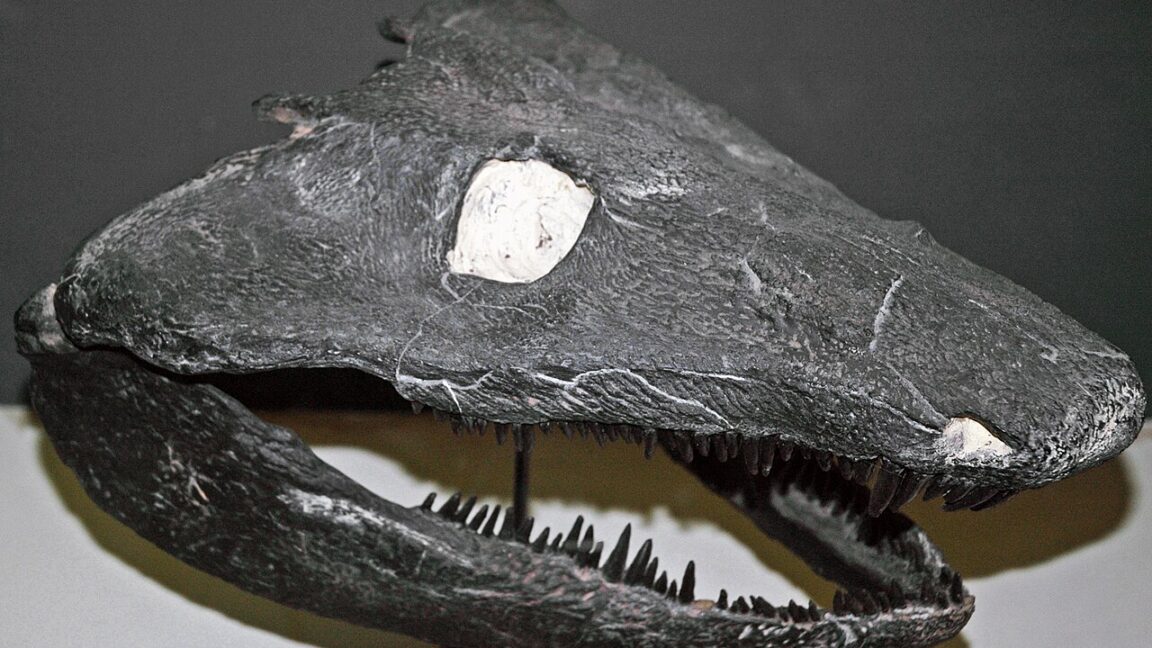
The researchers' study focused mainly on embolomers, an extinct group of large predators that lived roughly 300 million years ago. Embolomers looked like a cross between a crocodile and an eel, with large skulls full of sharp teeth, followed by long, eel-like bodies. It had short, stocky limbs adapted mainly for paddling in water, but also capable of powering brief, clumsy excursions on land. They are thought to be one of the first vertebrates that made a partial transition from an aquatic to a terrestrial lifestyle. These animals could reach over three meters in length, but to understand the very beginning of their life cycle, scientists focused on examining some of their centimeter-scale babies.

Read full article

Comments

© James St. John/Wikimedia

  •  

With Starfall, SpaceX eyes an edge in global cargo delivery from orbit

A SpaceX Falcon 9 rocket lifted off on Tuesday to test a new reentry vehicle designed to deliver cargo anywhere in the world from low-Earth orbit.

The company developed the new saucer-shaped reentry pod, called Starfall, under a veil of secrecy. Its purpose is to support the "transport and delivery of goods through space," according to an environmental assessment published by the Federal Aviation Administration last month.

The first demonstration of the Starfall vehicle began at 6:53 am EDT (10:53 UTC) with liftoff aboard a Falcon 9 rocket from Cape Canaveral Space Force Station, Florida. At least one Starfall reentry pod rode to orbit on the Falcon 9, perhaps alongside another undisclosed payload. After circling the planet two times, the Falcon 9's upper stage was expected to release Starfall for atmospheric reentry, targeting a parachute-assisted splashdown in the Pacific Ocean around 800 miles west of California.

Read full article

Comments

© SpaceX

  •  

A US military exercise in space got underway with barely anyone noticing

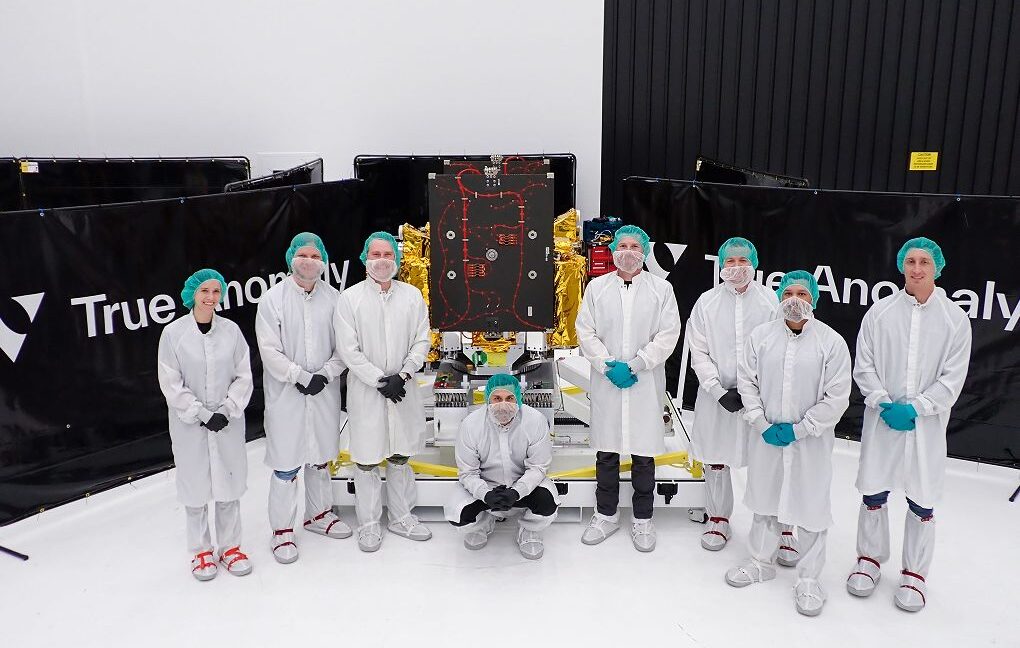
Rocket Lab quietly launched a small satellite from New Zealand on Friday in a high-flying military exercise to test the US Space Force's ability to rapidly respond to a crisis in low-Earth orbit.

The launch was scarcely announced in advance. The only public indication of an impending launch was the release of a warning for pilots and sailors to steer clear of the rocket's flight path. Rocket Lab did not provide a livestream of the launch, as it does for most of its missions. As of Monday morning, officials from Rocket Lab and the Space Force had not acknowledged the launch in any official public statements.

But the US military's catalog of space objects was updated over the weekend to reflect the launch. A new satellite, designated Victus Haze Puma, showed up in the catalog with a launch date of Friday from Rocket Lab's privately run spaceport at Māhia Peninsula in New Zealand. The Space Force cataloged the spacecraft in a polar orbit ranging between 215 miles and 286 miles (347-by-461 km), with an inclination of about 97.5 degrees from the equator.

Read full article

Comments

© True Anomaly

  •  

Trump admin’s coal investments assist plants with repeated violations

In 2023, after years of pollution, equipment failures, and health concerns, the Cumberland Fossil Plant in Tennessee was slated to close within the decade.

The coal-fired plant had been part of a multibillion-dollar settlement in 2011 after its operator, the Tennessee Valley Authority, failed to install pollution control technology a decade earlier. Regulators cited the plant for more air-pollution violations in 2017 and 2023. TVA said it would shutter Cumberland’s units in 2026 and 2028.

Then the Trump administration replaced four of TVA’s board members, and the agency reneged on its retirement plan in February. Now, TVA has a federal pledge for $46 million to extend Cumberland’s lifespan—part of a nationwide push by President Donald Trump to keep older coal plants running.

Read full article

Comments

© Stephen A. Smith/Southern Alliance for Clean Energy

  •  

Rocket Report: Rebuild begins at Blue Origin launch pad; Relativity targets Mars

Welcome to Edition 8.46 of the Rocket Report! We don't mention Starship in the body of this week's report, so I'll give a brief update here. The next test flight of SpaceX's mega-rocket—Flight 13—could happen as soon as next month, according to Gwynne Shotwell, the company's president and chief operating officer, in a recent interview with CNBC. There's still a fair bit of work to do before Flight 13, so don't count on a launch next month just yet. What we do know, based on Shotwell's comments to CNBC, is the next Starship test flight will look a lot like the previous one last month, with a suborbital flight path and a splashdown of the ship in the Indian Ocean. SpaceX is holding off on an orbital flight until at least the following launch, Flight 14, after the ship was unable to complete a critical engine restart in space on the last flight.

As always, we welcome reader submissions. If you don't want to miss an issue, please subscribe using the box below (the form will not appear on AMP-enabled versions of the site). Each report will include information on small-, medium-, and heavy-lift rockets, as well as a quick look ahead at the next three launches on the calendar.

Isar test flight scrubbed again. Isar Aerospace still commands top position among a new generation of European rocket startups, but the company’s efforts to launch a critical test flight of its Spectrum rocket continue to encounter roadblocks, Ars reports. The latest delay came Monday, when Isar scrubbed a launch attempt after "detecting off nominal behavior in the vehicle’s fluid systems," according to a social media post. "The teams are analyzing the new data to isolate the root cause." Isar is flush with cash, having raised nearly $1 billion to date, but is still lacking in the critical currency of flight experience. The Spectrum rocket has flown just once to date, on a failed launch last year that lasted less than 30 seconds.

Read full article

Comments

© Relativity Space

  •  

As global warming threatens corals, scientists search for reefs that can take the heat

MAJURO, Marshall Islands—Perched on the bow of an aluminum landing craft, Anne Cohen gazed a few yards ahead of the vessel toward a yellow robot gliding across the emerald Majuro lagoon.

The unmanned surface vehicle, called Yellowfin, was quickly becoming one of the coral researcher’s most dependable guides in these Central Pacific waters.

“She’s the best dive buddy,” said Cohen, a tenured scientist at the Woods Hole Oceanographic Institution in Cape Cod. Programmed to navigate to a precise set of coordinates, the robot cut through small swells like a tiny sailboat without a mast, directing Cohen toward a destination she had traveled thousands of miles to revisit.

Read full article

Comments

© Lukasz Larsson Warzecha/Getty Images

  •  

A bold satellite rescue mission came together in record time, but will it work?

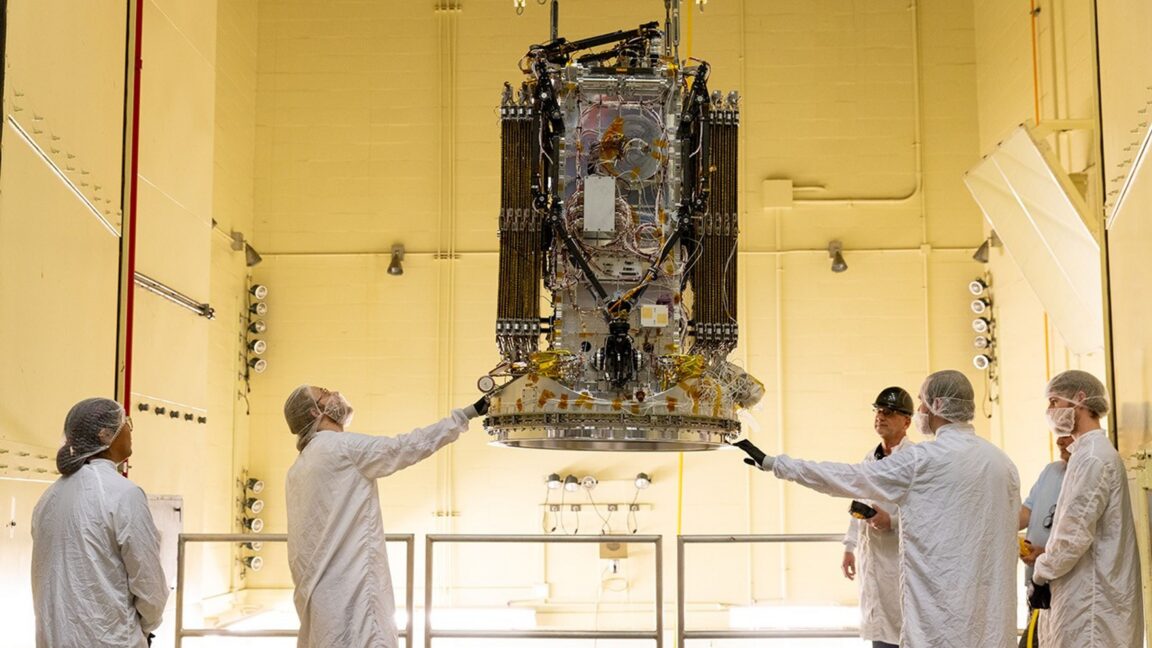
WALLOPS ISLAND, Va.—Just 10 months ago, NASA asked three companies if they could do something nobody had done before. Could they build and launch a satellite to save a $500 million astronomy mission at risk of crashing back to Earth? What's more, could they do it in less than a year on a tight budget?

Katalyst Space Technologies, a startup founded in 2020, presented the most compelling solution. "They came back with a response that was technically and programmatically plausible, and then we were like, 'Yeah, let’s do it,'" said Shawn Domagal-Goldman, director of NASA's astrophysics division.

That was in August of last year. In September, NASA awarded Katalyst a $30 million contract to build, test, and launch a small satellite to chase down Swift and latch onto it with three robotic arms. Then, Katalyst's Link servicing spacecraft will boost Swift's orbit back to a safe operating altitude, allowing it to resume scientific observations. Easier said than done.

Read full article

Comments

© NASA/Scott Wiessinger

  •  

After Senate vote, Trump admin backs off plans to kill ocean monitoring

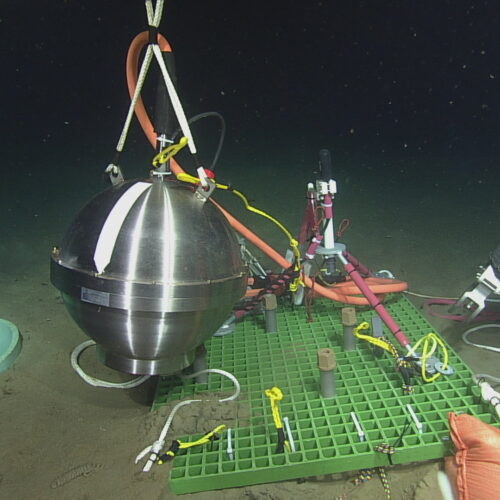
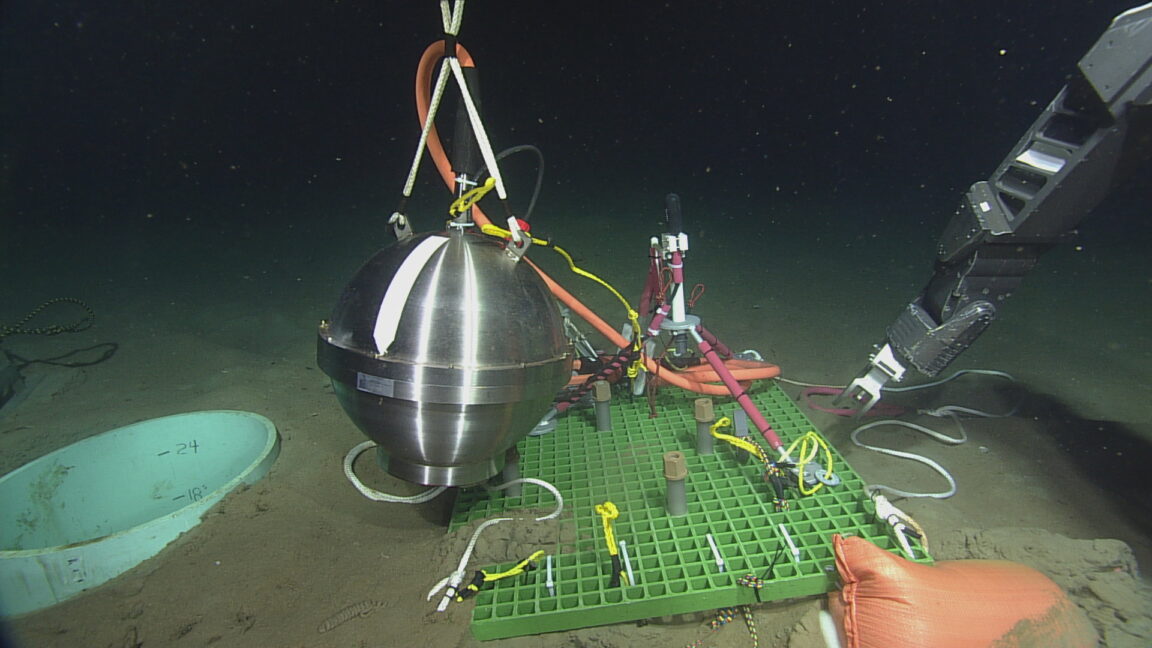
In May, the federal government announced without warning that it would take apart a network of ocean monitoring systems that it had spent over $350 million to build. No reason was given for the decision to shut down the Ocean Observatories Initiative (OOI), but suspicion immediately focused on the network's role in tracking climate change.

But the OOI also provides data that's useful for weather forecasting and fisheries management, leading to widespread opposition. Today, it appears that the opposition has won, as the government will announce that it's reversing the decision. The big remaining question is how much damage the OOI took during the intervening month.

As of now, there is no formal statement available from the federal government. However, The New York Times reports that the decision will be announced later today, and Ars received a statement from Zoe Lofgren, the ranking Democrat on the House Science Committee, indicating that the decision has been made.

Read full article

Comments

© OOI

  •  

Hunter-gatherers in Siberia died of a plague outbreak 5,500 years ago

Plague swept through groups of hunter-gatherers in southeastern Siberia 5,500 years ago, leaving dozens dead in its wake—with DNA from Yersinia pestis bacteria still trapped inside their teeth.

University of Oxford ancient DNA researcher Ruairidh Macleod and his colleagues recently sequenced the telltale bacterial DNA in teeth from plague victims at four ancient cemeteries in the area around Russia’s Lake Baikal. The tragedy that befell these communities is now the earliest known plague outbreak, courtesy of the oldest strain of Y. pestis ever sequenced.

Unearthing a new backstory for the plague

Until recently, scientists who study the evolution of diseases have held two fairly solid ideas about the origins of plague, the disease caused by Yersinia pestis bacteria. It's a scourge so awful that it has gone down in history as not just a plague but the plague. The first idea is that the earliest strains didn't have the right genetic traits to be really lethal. And the second is that the plague first began menacing humans when the first farmers settled in densely packed towns alongside rats and domestic animals.

Read full article

Comments

© Kevin WIlson

  •  

Sooner than expected? Useful quantum error correction promised for 2028.

Quantum computing news usually picks up near the end of the year, as companies try to provide evidence that they are hitting benchmarks on time. However, there have been interesting announcements as the summer starts this year, from incremental progress to attention-grabbing promises. As we did earlier this month, Ars has a rundown of some of the most significant announcements.

These include a promise of useful, error-corrected quantum computing as soon as 2028, details on an updated trapped ion processor, and a case in which claims of quantum supremacy have been cut back a bit thanks to advances in more traditional algorithms.

2028 is remarkably soon

Many people in the field expect that useful quantum computers are still about five to 10 years away. While there may be a few useful algorithms that can be run on existing error-prone hardware, almost all of the interesting problems that quantum computing can be applied to will require some form of error correction enabled by linking a small collection of hardware qubits together into what's called a logical qubit. Logical qubits include the redundant storage of information along with neighboring qubits that can be measured to determine when errors occur and how to fix them.

Read full article

Comments

© QuEra

  •  

Cockroaches scurry around with thousands of pieces of bacterial genomes

Last week, we looked at a new study of the origin of complex cells, one that showed that our ancestors' genomes were pieced together from bits and pieces of multiple species. It put a spotlight on a phenomenon called horizontal gene transfer, in which a gene from one species is incorporated into the genome of a distantly related species. The frequency of horizontal gene transfer means that, in addition to the neatly branching trees that relate species by common descent, there are small threads connecting distant branches of the tree of life.

It's easy to see why horizontal gene transfer would be common among microbes. They often live in complex communities that are likely awash in the DNA of dead and damaged cells. Plus, bacteria and archaea lack a membrane between their DNA and the rest of the cell, making it easier for environmental DNA to find its way to the genome.

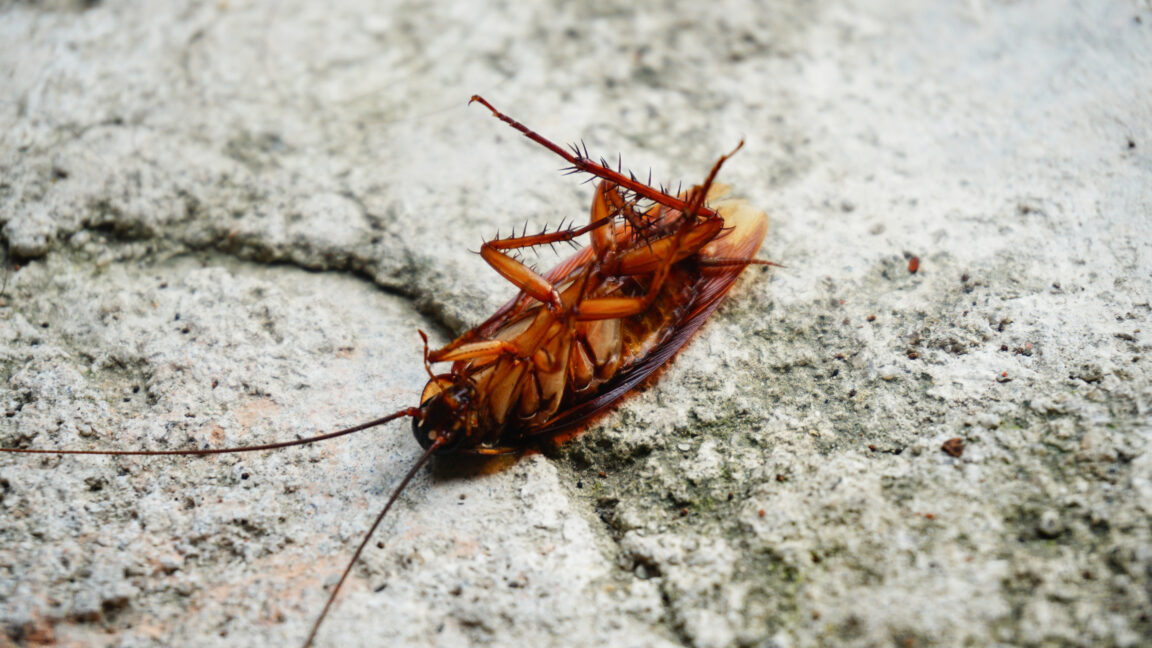
However, a new study this week shows that horizontal gene transfers are remarkably common even in multicellular animals. And it does so by examining the genomes of multiple cockroach species, which have had bits of bacterial DNA for millions of years.

Read full article

Comments

© Nugroho Ridho

  •  

Trump admin abandons fight against wind energy as clean energy output surges

The Trump administration has abandoned its effort to halt wind energy projects across the United States and dropped its challenge to the court ruling that tossed President Donald Trump’s order freezing federal permitting and leasing for wind projects. States that challenged the order hailed the development as one of the most significant legal victories against the Trump White House’s campaign against the energy transition.

On Monday, the US Court of Appeals for the First Circuit dismissed the appeal after the Justice Department filed a motion for its voluntary dismissal on June 10.

The case against Trump’s executive order was filed in May 2025 by a coalition of attorneys general from 17 states and Washington, DC, led by New York Attorney General Letitia James.

Read full article

Comments

© glegorly

  •  

Key mission for Europe's commercial space enterprise scrubbed again

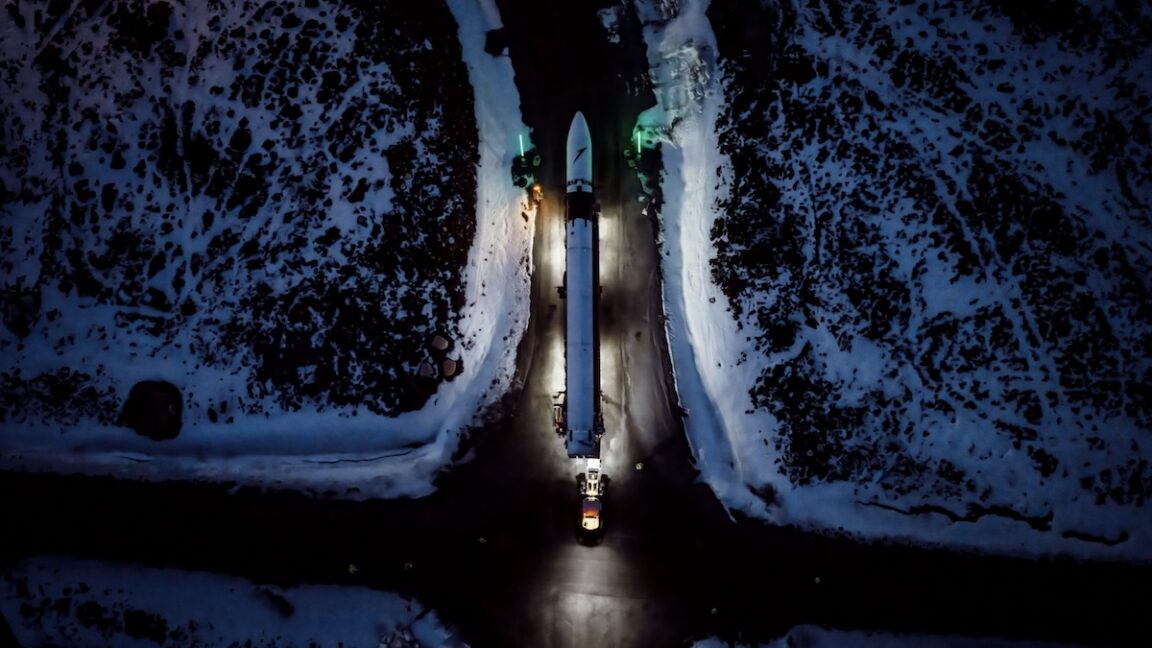
Isar Aerospace still commands top position among a new generation of European rocket startups, but the company's efforts to launch a critical test flight of its Spectrum rocket continue to encounter roadblocks.

The latest delay came Monday, when Isar scrubbed a launch attempt after "detecting off nominal behavior in the vehicle's fluid systems," according to a social media post. "The teams are analyzing the new data to isolate the root cause."

The two-stage, 92-foot-tall (28-meter) Spectrum rocket was awaiting liftoff from Andøya Spaceport in northern Norway. It was the fourth time in five months that Isar Aerospace, headquartered near Munich, Germany, had reached a target launch date for the second test flight of the Spectrum launch vehicle.

Read full article

Comments

© Isar Aerospace

  •  

Good news—we have extra time before the Sun ends life on Earth

It’s a bit worrying when a scientific paper begins, “How long will life on Earth survive?” But in this case—a study by Jacob Haqq‐Misra of Blue Marble Space and Eric Wolf at the University of Colorado Boulder—the billion-plus-year timeline under consideration shouldn’t cause you too much existential panic.

The context for this question is that we understand the Sun will brighten as it eventually matures into a red giant that swallows the Earth in a solar furnace. So, where along that 5 billion-year path will life on Earth, in fact, be cooked?

Weathering and the weather

This isn’t just a question of incoming radiation. Among the thermostat-like stabilizing feedback loops in Earth’s climate, the cycling of CO2 through the solid Earth is a major factor over timescales this long. The weathering of silicate rocks at the surface converts atmospheric CO2 into carbonate that ends up on the seafloor, where it can be subducted into the mantle with tectonic plates. (And eventually, it can cycle back out to the atmosphere through volcanoes.)

Read full article

Comments

© NASA/GSFC/SDO

  •  

Did a medieval flying monk spot Halley's comet, twice? It's complicated

Early in the 11th century, a young Benedictine monk named Eilmer jumped from the 150-foot tower of his abbey in the small English town of Malmesbury, wearing a pair of crude wings he’d fashioned from willow wood and cloth. Eilmer managed to glide a good 600 feet, passing over the city wall before crash-landing in a small valley near the river Avon. The fall broke both his legs, crippling him. Malmesbury Abbey still boasts a stained-glass window in honor of Brother Eilmer.

This legendary experiment in medieval aviation comes to us via 12th-century historian William of Malmesbury in an account written circa 1125, although William neglected to provide future historians with an exact date for the feat. But William does mention another key episode in Eilmer's life when the monk was "advanced in years": Eilmer witnessed Halley's comet in 1066, commenting, "It is long since I saw you." Some historians have interpreted this to mean that Eilmer saw Halley's comet on an earlier fly-by in 989, when he would have been a young boy.

Assuming Eilmer was at least 5 years old in 989, he would have been born no later than 984. This would make Eilmer in his 80s in 1066, with his attempt at flight—which occurred when he was "in his first youth"—likely falling between 1000 and 1010. However, it's an estimate that is based on a lot of assumptions, according to James Aitcheson of the University of Leicester, who argues in a paper published in the journal Notes and Queries that Eilmer may have seen a different comet altogether in his youth—the comet of 1018. If so, he would have been born much later, and the date of his flight would have occurred between the 1020s and 1040s.

Read full article

Comments

© Andrew Dunn/CC BY-SA 2.0

  •  

Threads of underground fungal networks are long enough to reach beyond the Solar System

Hidden underground around the world lie 110 quadrillion kilometers of arbuscular mycorrhizal fungal networks—webs of ultra-thin threads that, if connected in a single line, would stretch almost a billion times the distance between the Earth and the sun, according to new research published in Science on Thursday.

These fungal communities form intimate relationships with the roots of plants, which they provide with nutrients like phosphorus and nitrogen in exchange for carbon, 1 billion tons of which the networks sequester underground annually, previous research has found. If the fungal network wasn’t storing it, that carbon would be warming the atmosphere.

But those networks have never been mapped globally until now. The new study led by Society for the Protection of Underground Networks, or SPUN, an organization founded to map mycorrhizal fungi networks, used a combination of literature review, soil samples from around the globe, machine learning and laboratory testing to estimate the distribution and mass of these systems and map where they are densest.

Read full article

Comments

© HHelene via Getty Images

  •  

Have politics finally come for the National Academies of Science?

Founded during the US Civil War to provide advice to the government, the National Academies of Science have become one of the most prestigious scientific organizations. Its primary function is to prepare comprehensive reports on scientific and technological issues, aided by its ability to attract top talent from across the country.

Those reports have not been afraid to weigh in on matters of public controversy and risk offending powerful groups, which it has managed to do without losing the respect of the governmental organizations that fund these reports. But this year, there have been increasing signs that the Academies' ability to dodge political firestorms has reached its limit. Yesterday, a deeply reported story from Politico explained the breakdown between the National Academies and Republican politicians.

The National Academies is preparing an expert report on attribution of weather events to human-driven climate change, and fossil fuel companies are worried it will lead to findings of liability in the many cases where those companies are being sued.

Read full article

Comments

© csfotoimages

  •  

After nearly breaking, NASA's Deep Space Network "worked well" on Artemis II

NASA pushed its Deep Space Network beyond its limits during the Artemis I mission nearly four years ago. The global array of deep space communications antennas couldn't keep up with the routine demands of 40 robotic science missions and the extraordinary surge required by NASA's Orion space capsule as it flew around the Moon.
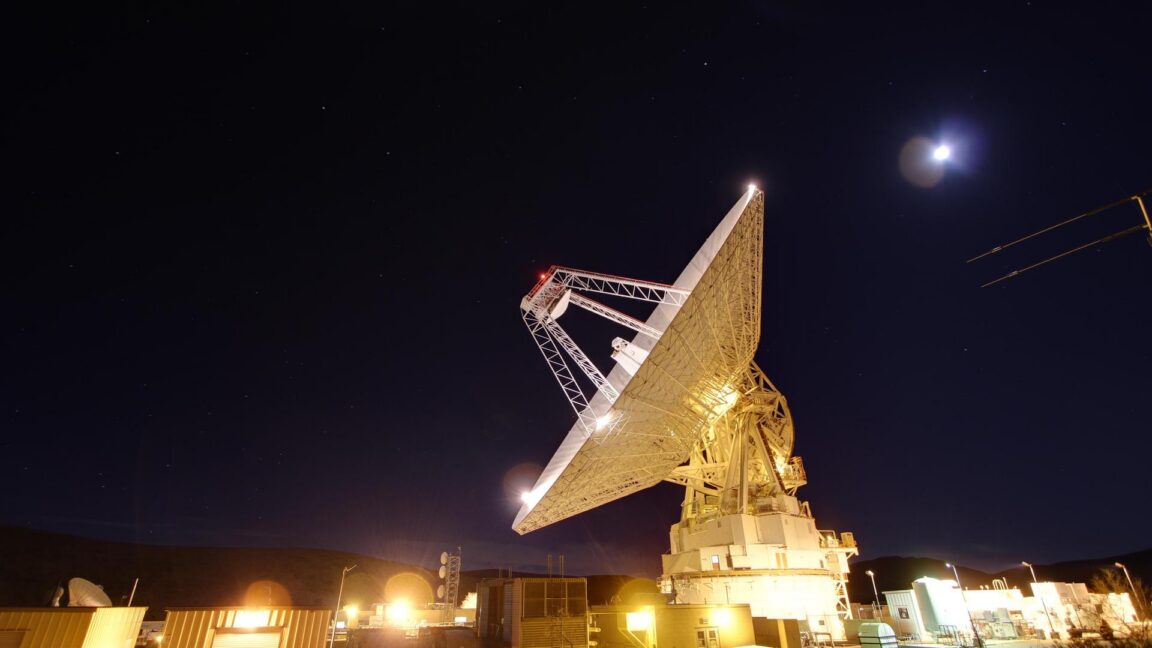
The experience in late 2022 reduced or delayed downlinks from several high-profile science missions, including the James Webb Space Telescope and Mars rovers, as the data-hungry Artemis I mission took priority on NASA's communications network. And that was before the first Artemis mission with astronauts onboard. When Artemis II launched April 1, NASA called upon the Deep Space Network (DSN) again to connect Mission Control to the Orion capsule as it soared more than a quarter of a million miles from Earth.

With a crew of four flying inside the spacecraft, the agency's appetite for data from Orion on Artemis II was even higher than it was on Artemis I. But at a little more than nine days, the Artemis II mission was shorter than the 25 days Artemis I spent in space, helping alleviate the communications overload. Artemis I also launched 10 small CubeSats into deep space, many of which required tracking and telecom services from the DSN. Artemis II carried fewer CubeSats.

Read full article

Comments

© NASA/JPL-Caltech

  •  

Did Iron Age Britons remove brains of the dead?

Very little is known about funerary practices in Iron Age Britain, since few human remains have survived. However, the environment in northwest Scotland is more conducive to preserving bone from that period. Archaeologists have previously noted evidence of postmortem manipulation of human remains, such as mummification, and of modifying human bones into tools or decorative artifacts. Now a new paper published in the journal Antiquity describes evidence of postmortem brain removal in remains from that region, as well as sharpened limb bones, possibly for use as tools.

The remains in question were found in 2000 at a burial cairn in Loch Borralie, near the most northwest tip of the Scottish mainland, after erosion revealed a human cranium. The excavated remains belonged to two individuals: one an adult female and the other a juvenile of (at the time) indeterminate sex; the cranium belonged to the latter. The authors of the new paper conducted a fresh osteoarchaeological analysis as well as multi-isotope and ancient DNA analysis. Radiocarbon dating of molar teeth from both sets of remains placed their deaths as occurring between 50 BCE and 70 CE.

In the case of the female individual, the authors noted an unusual break at the base of the cranium that likely occurred near the time of death. It's the kind of fracture that one gets from high-velocity impacts, including vehicular collisions, sporting accidents, falls, assaults, or even long-drop hanging. But the known forensic patterns observed in the aforementioned scenarios don't exactly match the pattern of the Iron Age cranium, leading the authors to conclude that it likely resulted from a targeted impact. They also noted perimortem fractures on both scapulae.

Read full article

Comments

© Rebecca Ellis-Haken

  •  
❌