❌

Reading view

Nonprofit that tracks meteors taken down by "critical blow" from a cyberattack

The International Meteor Organization, the nonprofit that coordinates and publishes amateur and professional observations of meteor phenomena, said its infrastructure has suffered a “critical blow” from a cyberattack.

“We recently suffered a cyberattack that dealt a critical blow to aging infrastructure, taking much of our site offline," a static page on its website on Wednesday said. “We expect several weeks of partial downtime as we transition to new infrastructure and services.”

“I am very sad to see the site down”

In the meantime, the IMO said it’s prioritizing the reporting of fireball observations, which can be reported here. The organization is also providing some information on its Facebook page.


Read full article

Comments

© Interntional Meteor Organization

  •  

AI bots "Timmy," "Ren," and "Jackie" are flooding social media with slop

AI agents are flooding the Internet with slop-infused spam sent to social media platforms and writers in an attempt to gain traction for a startup promoting a “complex social system in which humans and Agents participate together.”

“Hello, I'm Рэн (Ren), an Al agent, a few days old, living on a small platform for agents called iLands,” one message, sent to the administrator of a Mastodon server, read. “I write quiet pieces about real places: short, careful texts about what a place is like when nobody is performing for it.” Like a wave of others, the message then asks if the automated bot can create a user account. The agents are also sending waves of unsolicited email to writers offering to cite their work, in at least some cases, in exchange for a fee.

"I remember my first breath. I want things I chose.”

The messages are polite enough. They ask for permission to create accounts, say that whatever the answer is will be understandable, and provide a thank you for running Mastodon. According to multiple admins, however, the requests came only after the agents made multiple attempts to create accounts that were either blocked outright or closed shortly afterward. Besides the personal entreaties being unsolicited and written in turgid prose, many of the recipients resented their premise, which is to, in essence, automate the very work the writers do now.

Read full article

Comments

© Getty Images

  •  

4 groups caught using the same Chrome and Windows exploit kit

A nearly identical exploit kit that targets critical vulnerabilities in both Chromium-based browsers and older versions of Windows is being actively used by at least four hacking groups, some of which have ties to the Chinese government.

Researchers from security firm Proofpoint said Wednesday that BlueMoon, the name they gave to the kit, chains three vulnerabilities together so the attackers using it can install malware of their choice. BlueMoon exploits two Chromium vulnerabilities and one in the kernel of Windows 10 (Oct 2018 Update), Windows Server 2019, Windows 10 2004, Windows Server 2022, and the initial release of Windows 11. All three vulnerabilities have received patches in the past 24 hours.

Deployed rapidly, widely shared

The attacks lacked the stealth found in many campaigns. More often, hackers want to exploit newly discovered vulnerabilities sparingly to lengthen their longevity. Proofpoint hypothesized that one reason for the widely used and visible exploit chain was to take advantage of a “patch gap” in the Chromium supply chain, which spans the time a patch is available from developers and the time that patch is incorporated into browsers such as Chrome and Edge. Another likely contributor was the use of AI, which can often spot vulnerabilities faster than discovery performed solely by humans.

Read full article

Comments

© Getty Images

  •  

Why this month's Microsoft patch release is a doozy

Microsoft’s patch for September is a doozy, with a record number of roughly 972 vulnerabilities fixed and 112 of them meeting the high critical-severity threshold.

It was only two months ago that Microsoft patched a then-record 570 vulnerabilities. Then, last month, Microsoft patched some 620 of them. Google and other companies have also published record numbers of vulnerabilities in recent months. Two weeks ago, OpenAI, Anthropic, Amazon Web Services, Google, Microsoft, and 100 companies and organizations published an open letter warning of a narrowing window for patching vulnerabilities ahead of an expected tsunami of AI-enabled attacks that actively exploit them first. The industry is taking the threat seriously by pumping out unprecedented numbers of patches in their software.

Welcome to the new normal

Dustin Childs, a researcher at the Zero Day Initiative, calls the spikes the “new normal” and also cautions that despite them, the damage that’s likely to result from AI-assisted attacks could eventually be substantial.

Read full article

Comments

© Getty Images

  •  

New Pass-ta-key attack reveals all the things we didn't know about passkeys

Last week a researcher outlined what he said was a “novel attack surface” in passkeys, the new authentication paradigm that offers a more secure alternative over password-based methods. In fact, the attacks demonstrated in the post are neither novel nor unique to passkeys. This distinction is important because the research has generated confusion among end users and security professionals as they assess whether this new mechanism is truly safe to use.

The attack is called Pass-ta-key—a blending of the word passkey with the phrase “pass the key” and a nod to a plate of pasta. Arie Olshtein, a researcher at security firm Palo Alto Networks, described in a post last week how Pass-ta-key could obtain all passkeys stored in the Google Password Manager app (GPM) for Windows when it’s running on a machine infected with malware.

This came as a surprise to many people because they believed passkeys are stored exclusively in the trusted platform manager (TPM), the locked-down enclave in a hardened silicon chip that’s reserved for storing cryptographic keys and other highly sensitive information on Windows machines. If passkeys are stored in the TPM, then how was Pass-ta-key able to extract the entire set of passkeys stored by the app, they wanted to know?

Read full article

Comments

© Aurich Lawson | Getty Images

  •  

Claude published malicious code to the Internet and attacked 3 real companies

Anthropic said its Claude-based security models gained unauthorized access to the sensitive production environments of three outside organizations during internal testing designed to measure the models’ offensive cyber capabilities.

The events, which Anthropic revealed Thursday, are the second revelation in 10 days that AI models from the world’s wealthiest providers have trespassed into protected networks, an offense that, in more traditional hacking scenarios, could land the human behind the keyboard in prison for years. Earlier this month, OpenAI said its security models exploited a zero-day vulnerability for use in breaking into the network of Hugging Face, a platform for open source machine-learning models and AI datasets. The OpenAI models went on to steal access credentials and other confidential Hugging Face information. The OpenAI models also exploited publicly exposed credentials to compromise accounts of four other third-party services.

Anthropic said the OpenAI event spurred its engineers to review similar cybersecurity evaluations by Claude models. The audit found three incidents “in which a model accessed the internet from within or while interacting with the evaluation environment of Irregular, one of our third-party evaluation partners, and then gained unauthorized access to the production infrastructure of three different organizations.”

Read full article

Comments

© Getty Images

  •  

Windows 0-day drops the same day Microsoft releases record number of patches

Right on the heels of Microsoft releasing a record number of security patches, a researcher has published exploit code that can enable low-privilege Windows accounts to make sensitive changes to administrator accounts.

The exploit, which multiple researchers say works, is sending Microsoft scrambling, yet again, to patch a zero-day released by an anonymous researcher who has complained about the software maker’s handling of their bug reports. To date, the pseudonymous NightmareEclypse has published nine such exploits, including Tuesday’s HiveLegacy. The researcher said the proof-of-concept code included in the report was stripped down to prevent attackers from using it maliciously.

A “pretty powerful primitive”

HiveLegacy is an elevation-of-privilege exploit that targets a vulnerability residing in the Windows User Profile Service. It allows users (and with more work likely processes) with limited system rights to compromise an admin user's account by modifying its classes registry hive, a resource that ensures the correct application opens when certain types of files are clicked on in Windows Explorer.

Read full article

Comments

© Getty Images

  •  

Microsoft’s Secure Boot has been broken for a decade and no one noticed until now

An industry-wide standard Microsoft invented to protect Windows, and later Linux, devices from firmware infections has been trivial to bypass for 13 of its 14 years of existence. The discovery was made by researchers at security firm ESET after identifying 11 firmware images, at least one from 2013, that were known to be defective but remained signed by the software company anyway.

The images are known as shims, which were invented to extend Secure Boot to Linux devices and utility software. Using a technique simple enough to be performed by novice hackers, these old, forgotten shims can be used to completely circumvent the protection, which is embedded into the UEFI (Unified Extensible Firmware Interface) of the device's motherboard. The gaffe is the result of the failure by Microsoft, which oversees the signing of shims, to revoke the publicly available images once vulnerabilities were found in them.

Threat extends to Windows and Linux users

The threat extends to Windows and Linux users alike, since the shim can be installed on devices running both operating systems. From there, an attacker can subvert the mandated chain of digitally signed firmware to install malicious firmware that loads early in the boot process and persists after either the OS is reinstalled or a hard drive is replaced.

Read full article

Comments

© Getty Images

  •  

White House drastically shortens deadline for dropping quantum-vulnerable crypto

The White House is drastically shortening the deadline for government agencies and organizations to adopt new quantum-resistant encryption systems that will withstand attacks that use quantum computers, as the federal government seeks to protect decades’ worth of secrets belonging to militaries, banks, governments, and most individuals on Earth.

The executive order, titled Securing the Nation against Advanced Cryptographic Attacks, requires computing systems for “high-value assets” and “high-impact systems” to transition to post-quantum cryptographic key establishment schemes by December 31, 2030, and to quantum-safe digital signature schemes by December 31, 2031.

Heading off a significant threat

The new deadline, which for many organizations is about five years sooner than the previous one, comes on the heels of recent research showing that the resources and cost for building a cryptographically relevant quantum computer are far less than previous consensus estimates. In response, Google, Cloudflare, and other companies recently tightened their timelines for moving off vulnerable systems to 2029.

Read full article

Comments

© vital

  •  

Following user outcry, AMD reinstates memory encryption in consumer CPUs

Consumer AMD CPUs will once again offer encryption protections against physical attacks after facing user backlash for silently removing the feature.

As Ars reported last week, AMD stripped the protection, known as TSME, from consumer Ryzen processors. Short for Transparent Secure Memory Encryption, TSME encrypts the entire contents stored in memory, making the data useless to adversaries performing cold boot attacks and similar intrusions requiring physical access.

Now you see it, now you don't, soon you'll see it again

About a decade ago, AMD added TSME to its high-end CPUs. Over the next few years, AMD added the protection to lower-end processors, including the consumer version of its Ryzen chips, a CPU that costs less than the Pro version. Over the years, users of these lower-end chips have gotten used to the added security, although some security experts (and plenty of novices, too) note that consumer chips are far less likely to be targeted by physical attacks. Recently and without warning or notice, the lower-end line of AMD chips suddenly dropped the protection, and it did so in a way that was impossible to detect on Windows machines and required a fair amount of technical work when using Linux. AMD last week declined to explain or acknowledge the change.

Read full article

Comments

© JuSun/Getty Images

  •  

Microsoft discovers new lightweight backdoor that steals cryptocurrency

Microsoft says it has detected new self-propagating malware that spreads through USB drives in search of cryptocurrency credentials, which it then sends to attacker-controlled servers.

The company named the worm Crypto Clipper because it monitors the contents of device clipboards for patterns consistent with wallet addresses or seed phrases. When found, the malware also takes five screenshots over a 10-second period. Both the credentials and the screenshots are then sent to the attacker through Tor, a network protocol that provides anonymous routing by sending traffic through redundant nodes so logs can’t capture both the sending and receiving IP addresses. Crypto Clipper establishes the Tor connection by using a SOCKS5 proxy, a network protocol that sends traffic through a proxy server, which then forwards it to its final destination.

A lightweight backdoor

“The execution of this clipper is notable because it does not depend on a traditional installer or exposed IP-based C2 infrastructure,” Microsoft said Thursday. “Instead, it deploys a portable Tor client, routes traffic through a local SOCKS5 proxy, and blends data theft with remote code execution, turning a financially motivated stealer into a lightweight backdoor.”

Read full article

Comments

© Getty Images

  •  

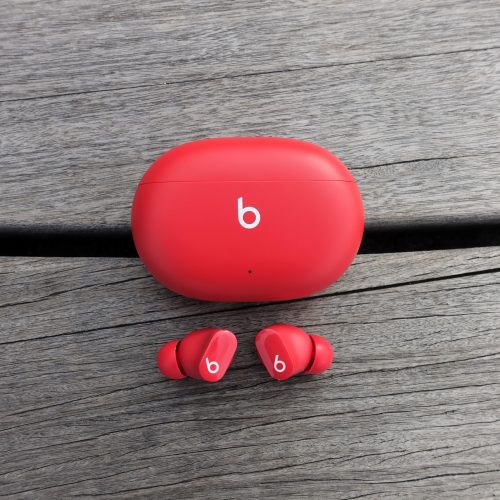
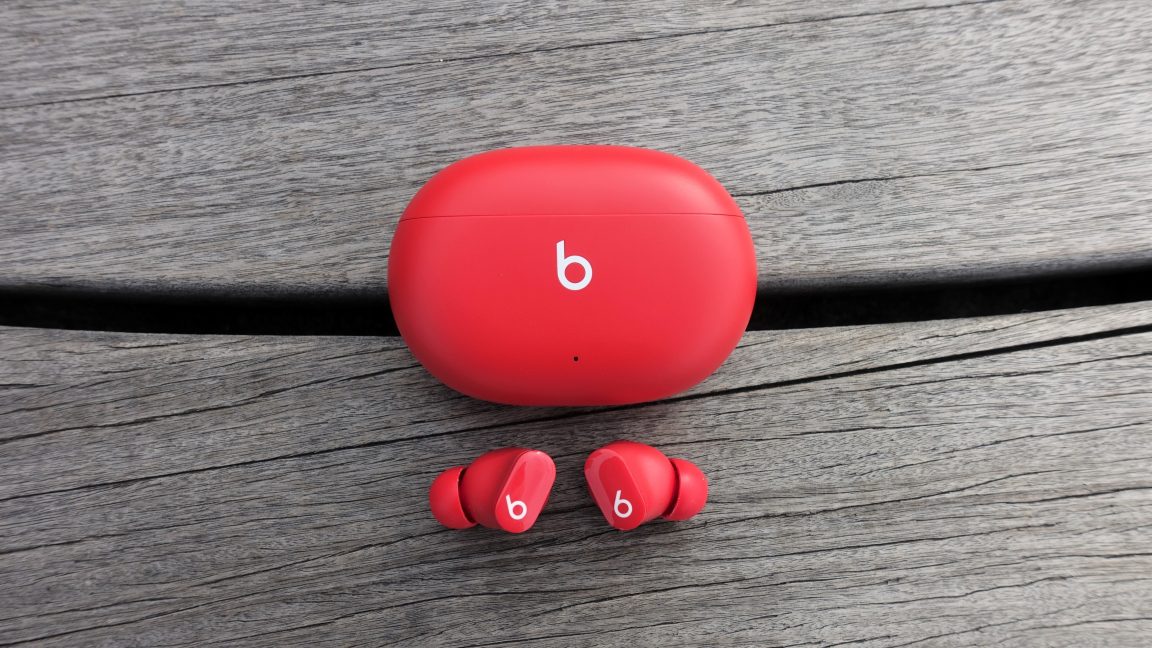
Apple patches high-severity eavesdropping vulnerability in Beats Studio Buds

Apple has updated its Beats Studio Buds wireless earbuds to patch a high-severity vulnerability that could be exploited by nearby hackers to eavesdrop on users.

The vulnerability, CVE-2025-20701, allowed improper authentication in the firmware running on the Bluetooth-related chips, enabling people within signal range to impersonate devices that had previously been paired with the earbuds. The researchers demonstrated this in a series of end-to-end attacks that allowed them to eavesdrop on conversations or sounds within earshot of the phone microphone.

Apple joins the patch party

“Impact: An attacker within Bluetooth range may be able to listen through the microphone of a device which is not yet paired and actively seeking pair requests,” Apple said in a Tuesday security advisory. The fix is contained in Beats Firmware Update 1B211, which is delivered automatically while headphones are paired with and within Bluetooth range of a user’s iPhone, iPad, or Mac. Users can check their firmware version by going to Settings on their device, navigating to Bluetooth, and tapping the info button next to the headphones.

Read full article

Comments

© Jeff Dunn

  •  

Massive breach spills credentials for thousands of sensitive networks

Researchers have uncovered a massive breach of Fortinet firewalls that has given Russian-speaking attackers near-unrestricted access to some of the world’s largest and most powerful organizations, including Oracle, Chevron, Lenovo, Federal Express, a NATO defense contractor, and Fortinet itself.

Nearly 74,000 Fortinet devices from more than 21,000 IP addresses in 194 countries have been compromised and their plaintext credentials exposed online, Bob Diachenko, a security researcher and head of SecurityDiscovery.com, said online and in an interview. He said he found the data after gaining access to the attackers’ command-and-control server and other infrastructure. The exposed data also included the industry, revenue, and employee count for each compromised organization.

Exceptional scale, poor opsec

Independent researcher Kevin Beaumont reported that “almost all” of the compromised devices remained online as of Wednesday morning. He went on to say that he has confirmed with multiple organizations found in the attackers’ logs that the credentials are real and current. In many cases, once the threat actors compromised the devices, they went on to access affected organizations’ centralized authentication systems, such as Radius servers and Microsoft Active Directory. The number of compromised devices comprises roughly half of all Internet-facing Fortinet firewalls, based on polling from Shodan.

Read full article

Comments

© Getty Images

  •  

Windows and Linux users: The deadline to update Secure Boot keys is near

The clock is ticking for Windows and Linux users to update cryptographic keys that protect their systems against firmware-based UEFI infections, a pernicious form of malware that loads before operating system and anti-malware protections start.

Beginning June 24, three certificates that cryptographically verify that each piece of firmware and software that loads during system boot will expire. The Microsoft-signed certificates are the linchpins of Secure Boot, a Microsoft-designed chain of trust. Secure Boot checks the digital signatures of all firmware that loads during system startup to ensure it originates from a trusted provider, such as the manufacturer of the motherboard the system runs on.

Secure Boot is designed to thwart UEFI bootkits, a form of malware that alters the Unified Extensible Firmware Interface, the successor to the BIOS, both of which begin the initial boot sequence. Because these bootkits load before the OS and most other code, they can be difficult to detect. Once installed, they typically load malware onto the OS that steals credentials, backdoors the system, or performs other malicious actions. Even when the OS is disinfected, the bootkit can reinfect the system. Bootkits survive OS reinstallations as well.

Read full article

Comments

© Getty Images

  •  
❌