❌

Reading view

‘One Shell, Two Cells’: CATL unveils shared packs for lithium and sodium batteries
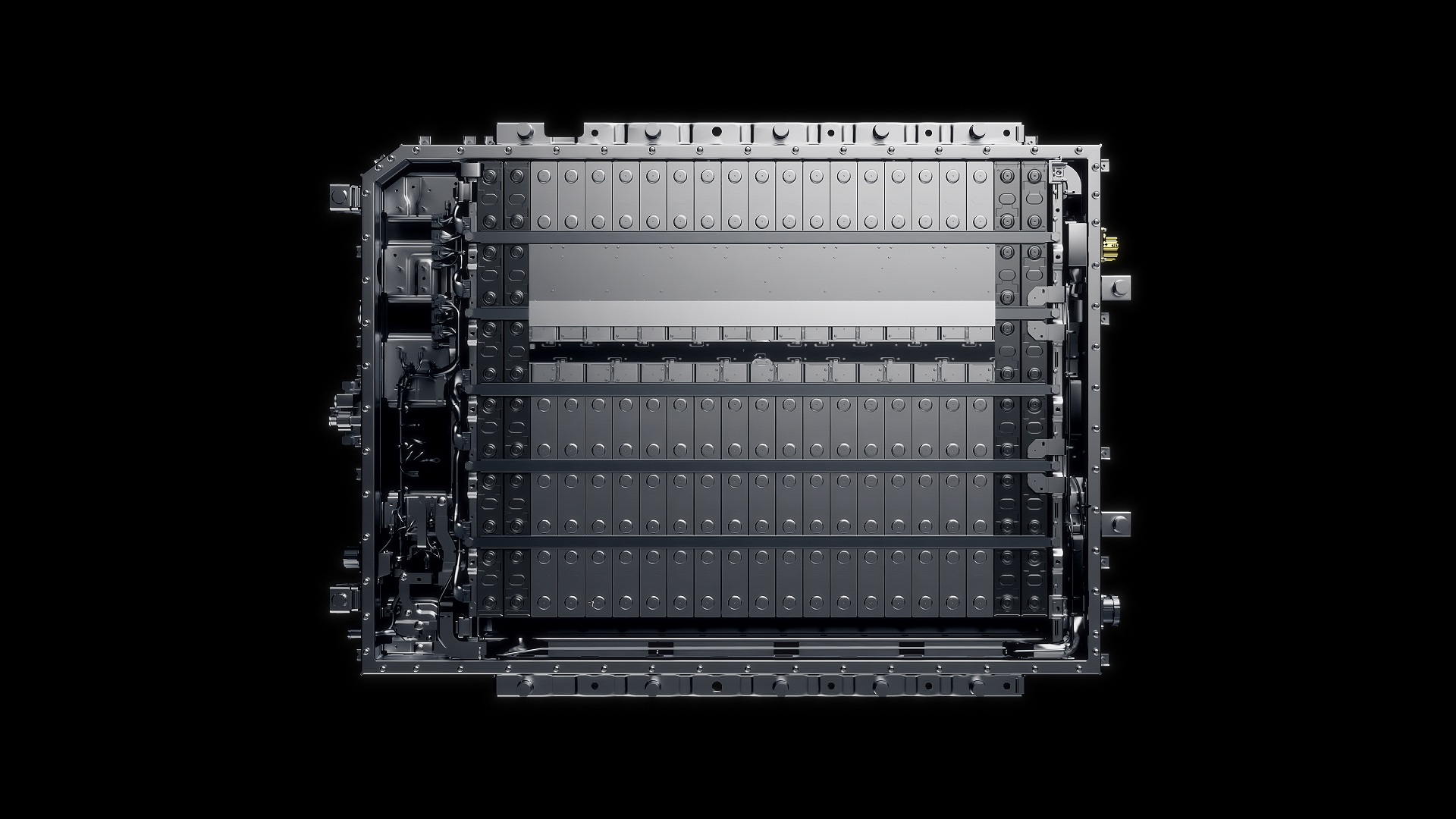
China’s largest battery maker CATL has unveiled a new battery pack architecture that allows sodium-ion and lithium-ion batteries to be used inside the same enclosure, a move aimed at accelerating sodium-ion deployment in electric vehicles, battery-swapping networks, and energy storage systems.

The design, called “One Shell, Two Cells,” was disclosed during an industrial research event organized by China’s Ministry of Industry and Information Technology (MIIT) News Centre and reported by Securities Times.

The platform uses a standardized battery enclosure capable of housing either lithium-ion or sodium-ion cells without changing the pack’s physical dimensions. The approach could help manufacturers and infrastructure operators switch between battery chemistries without redesigning vehicles, battery-swapping stations, or thermal management systems.

This modular approach could also simplify large-scale battery deployment, allowing manufacturers to streamline production lines while reducing redesign requirements across different vehicle platforms and energy storage systems.

The announcement comes as China’s battery industry pushes sodium-ion technology as a solution to one of lithium batteries’ biggest weaknesses: poor performance in extremely cold temperatures.

One pack, two chemistries

In regions such as Xinjiang, where winter temperatures can fall below -25°C, lithium iron phosphate batteries can experience slower charging and significant capacity losses. Sodium-ion batteries are viewed as a potential alternative because they maintain stronger performance in cold conditions.

According to CATL, the new architecture allows sodium-ion and lithium-ion systems to be exchanged within the same footprint, simplifying deployment across mobility and energy storage applications.

The design could prove particularly useful for battery-swapping operators. The same station infrastructure could support sodium-ion packs in cold northern regions while continuing to use lithium-based batteries in warmer areas.

The development builds on CATL’s broader sodium-ion strategy. Earlier this year, the company’s Chief Scientist Wu Kai said manufacturing bottlenecks affecting sodium-ion batteries had been resolved and that future versions could deliver driving ranges of up to 600 kilometers.

The company is also preparing commercial deliveries of its first sodium-ion energy storage systems later this year.

Durability targets emerge

Beyond the pack architecture, industry participants used the event to highlight progress in sodium-ion battery durability.

CATL and several suppliers reported reaching a 15,000-cycle benchmark, a level that could support operating lifetimes of up to 20 years in stationary storage and other high-use applications.

Cathode supplier Ronbay Technology said its sodium iron phosphate materials have also surpassed 15,000 charge-discharge cycles while improving electrode density. The company currently operates 6,000 tons of annual production capacity and plans significant expansion over the next two years.

Meanwhile, chemical producer Wanhua Chemical outlined efforts to reduce reliance on imported biomass feedstocks used in hard-carbon anodes. The company is developing synthetic hard-carbon materials derived from resin and coal, aiming to lower costs and strengthen domestic supply chains.

The latest announcements suggest China’s sodium-ion battery sector is moving beyond laboratory-scale development and into large-scale commercial deployment. With standardized pack designs, longer lifetimes, and expanding material production, manufacturers are positioning sodium-ion batteries as a complementary technology to lithium-ion systems rather than a direct replacement.


  •  

Tim Cook’s final WWDC keynote delivers Apple’s biggest Siri AI and iOS rollout ever

During his final Worldwide Developers Conference keynote before stepping down as Apple CEO in September, Tim Cook unveiled the long-awaited Siri overhaul that has been at the center of Apple’s AI ambitions for years.

At WWDC 2026, Apple formally introduced Siri AI, a rebuilt version of its digital assistant that arrives after delays and growing pressure from rivals in the artificial intelligence race. The keynote also brought a broad expansion of Apple Intelligence features across the iPhone, iPad, and Mac, making AI the defining theme of Cook’s final developer conference.

Alongside the AI announcements, Apple revealed iOS 27, new family safety tools, refinements to its Liquid Glass design language, and the next version of macOS, called Golden Gate.

Siri’s AI transformation

The headline announcement was Siri AI, a redesigned version of Apple’s voice assistant built to handle more natural conversations and provide more contextual responses. Users can now customize how Siri sounds through new pacing and expressiveness controls, while also interacting with the assistant through voice or text.

Apple has moved Siri into a dedicated app while maintaining integration across its operating systems. The assistant also gains access to Visual Intelligence features, allowing it to identify locations and other details from images stored on a user’s device.

Siri AI using personal context to share updates. Credit – Apple Newsroom

The launch marks a significant milestone for Apple after months of scrutiny surrounding delays to advanced Siri features. The company is positioning the new assistant as a central part of its broader AI strategy moving forward.

Apple Intelligence spreads across iOS

Apple Intelligence is now reaching deeper into many of the company’s most-used applications. Safari can monitor webpages and notify users when information changes, while Messages and Mail gain smarter contextual reply suggestions.

Calendar can create events from conversational prompts, and the Home app can summarize camera activity and make footage easier to search. Apple is also bringing AI-assisted automation to Shortcuts, allowing users to describe a task and have the software build the shortcut automatically.

The updates reflect Apple’s effort to weave AI features directly into everyday workflows rather than confining them to standalone tools.

iOS 27 expands compatibility

Apple also highlighted the scale of its upcoming software rollout. The company said iOS 27 will support every iPhone model dating back to the iPhone 11, making it one of the broadest compatibility expansions in the platform’s history.

Apple claimed the update will reach more users than any previous iOS release. The company also announced several performance improvements, including faster photo loading, quicker AirDrop transfers, and multitasking enhancements.

Alongside iOS 27, Apple introduced new tools for families. Parents will be able to create approved app lists for child accounts and manage access over time. A new Communication Safety feature will help prevent children and teenagers from viewing shared content that contains nudity, graphic imagery, and other sensitive material.

Parents can now schedule screen time for their children in iOS 27. Credit – Apple News

Apple also refined its Liquid Glass interface with new readability improvements and user-controlled transparency settings. The company closed the software showcase with a preview of macOS Golden Gate, which will become the next major release for Mac users.

New slider setting allows users to personalize Liquid Glass transparency. Credit – Apple Newsroom

Taken together, the announcements represented Apple’s most ambitious AI-focused software update yet, giving Cook a fitting final WWDC centered on the Siri upgrade that many users had been waiting to see.

💾

Siri AI has arrived. Apple used WWDC 2026 to expand Apple Intelligence across its ecosystem and bring iOS 27 to iPhones dating back to 2019.

  •  

New military satellite antenna blocks electronic warfare in space with 95% less power

The Pentagon is searching for new ways to protect military satellite communications from electronic attacks in space. MIT Lincoln Laboratory engineers are now developing a lightweight antenna system designed to keep U.S. forces connected even during heavy jamming attempts.

The prototype was built for proliferated low-Earth orbit, or pLEO, where large constellations of smaller satellites require compact and power-efficient hardware. Researchers say the antenna could deliver advanced beamforming capabilities while using far less power than conventional systems.

Lowering satellite power needs

Modern military satellites increasingly rely on adaptive antenna arrays that can rapidly redirect signals and block interference. Those systems help operators maintain links during hostile jamming attempts.

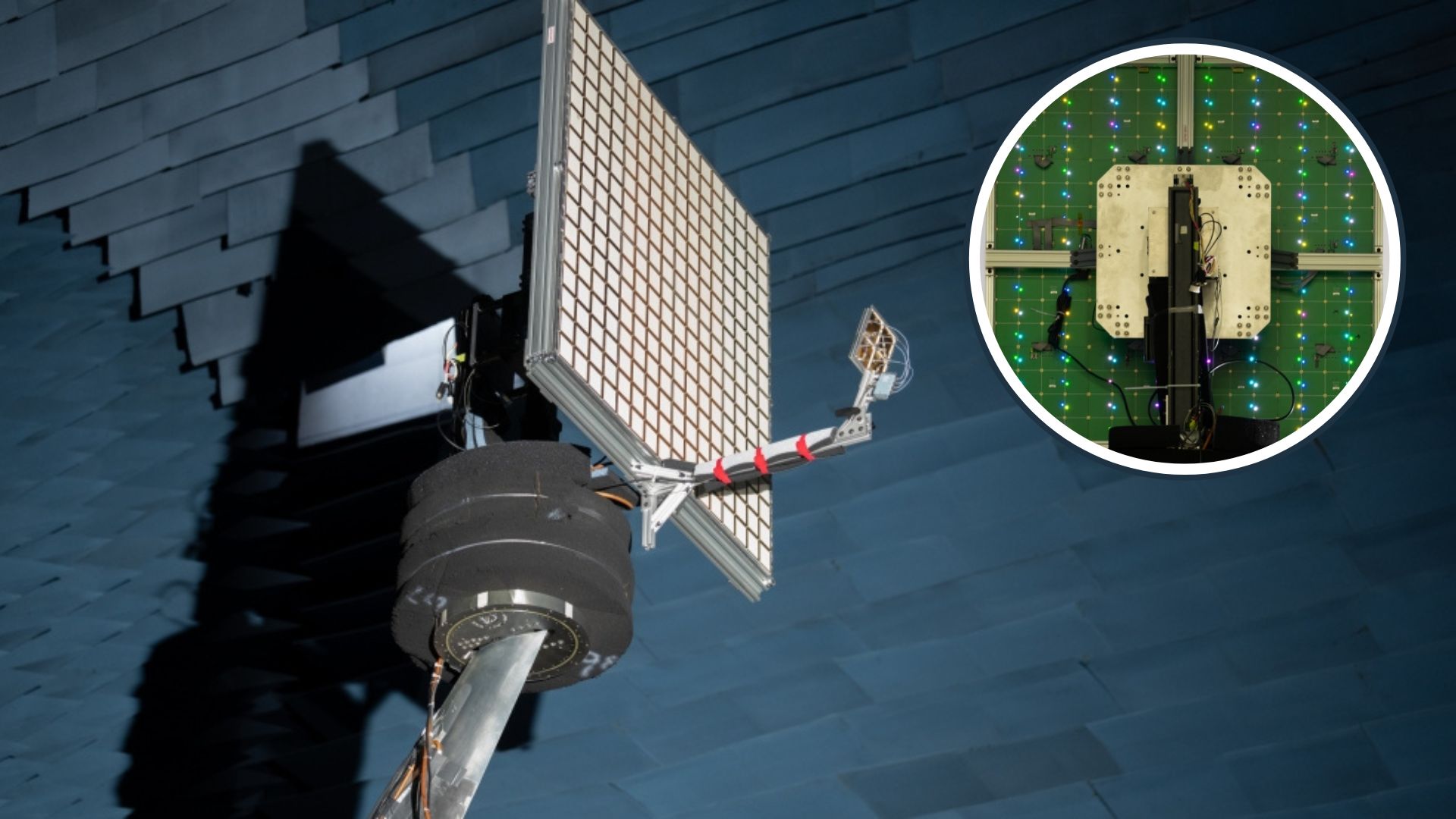
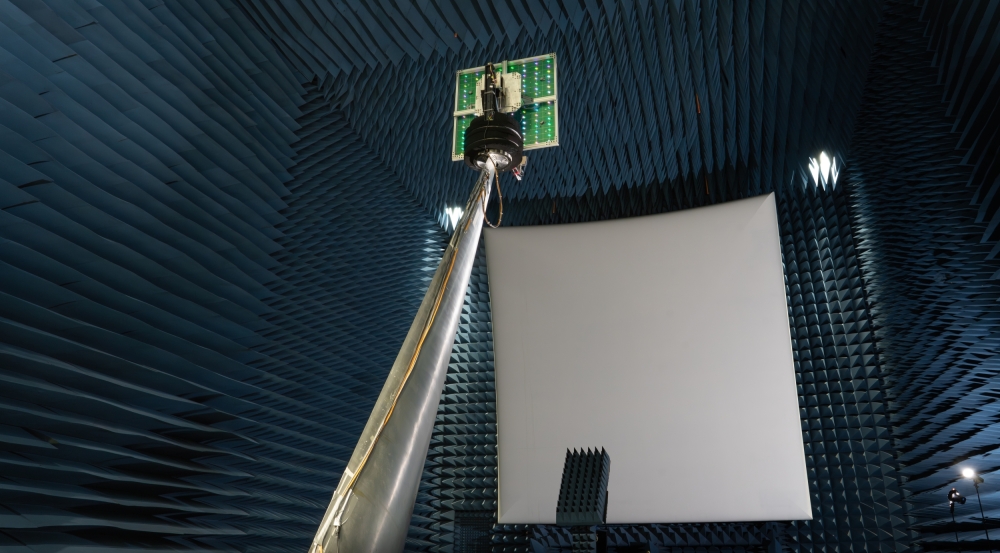
However, traditional phased-array antennas consume large amounts of power and require complex hardware. MIT Lincoln Laboratory’s answer is a scanning reflectarray antenna called Hosted Nimble Beamforming Anti-Jam Reflectarray, or HoNi BAJR.

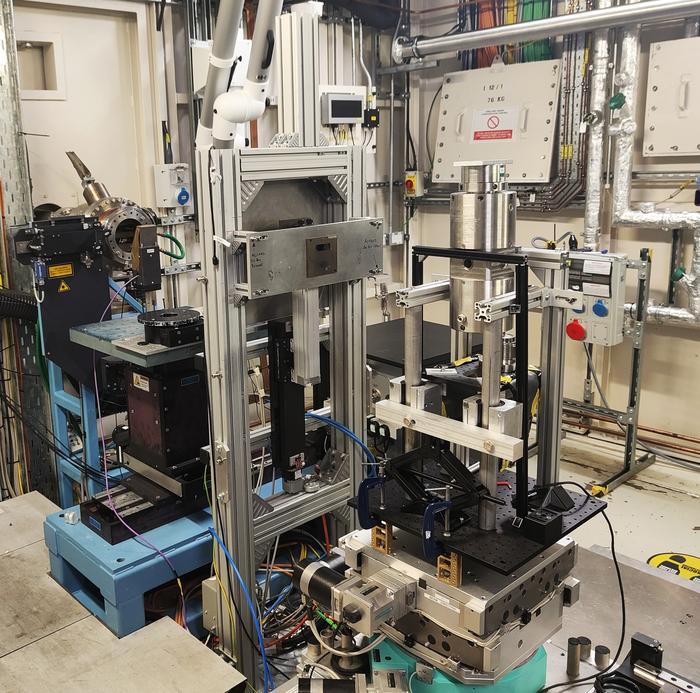
Reflectarray antenna during laboratory testing. Credit – Glen Cooper/Lincoln Laboratory

Instead of using amplifiers across every antenna element, the design relies on a reflective surface with individually controlled elements. Incoming signals bounce off the surface and shift phase before traveling toward a separate feed antenna.

That process shapes and steers the beam while reducing hardware complexity. Engineers estimate the reflectarray design cuts power consumption by roughly 95% compared with traditional array systems.

The smaller footprint also allows the antenna to fit on compact satellite platforms commonly used in pLEO constellations. Researchers believe that advantage could make the technology attractive for future military satellite constellations.

Michael Craton, a technical staff member in the laboratory’s Tactical Satellite Communications Group, said future military satellite networks need scalable systems with lower size, weight, power, and cost requirements.

“We want to think about ways we can achieve exquisite performance using less expensive hardware,” Craton said. He added that the team also wants to prepare for emerging threats before they become operational problems.

Blocking jamming in orbit

The HoNi BAJR system focuses heavily on anti-jamming performance. Adaptive arrays normally counter interference by creating “nulls,” which suppress signals coming from hostile directions.

During testing at the laboratory’s RF Systems Testing Facility, the prototype demonstrated wide-angle scanning capability. Researchers also confirmed the antenna could split beams between multiple users with minimal signal degradation.

The team pushed further by developing broader interference suppression zones rather than targeting single jamming points. Engineers attempted this by reshaping beam side lobes to reduce interference across wider regions.

That approach produced mixed results during early testing because small signal variations affected side-lobe control. Researchers believe improved calibration methods could solve much of the instability.

Calibration remains challenging

Calibration now stands as one of the project’s biggest technical hurdles. Unlike conventional phased arrays, scanning reflectarrays lack extensive operational history in military satellite systems.

Engineers still need to determine how to precisely measure and compensate for signal distortions across the antenna. Researchers say accurate calibration will improve beam steering, interference suppression, and overall system performance.

The laboratory also continues studying where reflectarrays fit best within future military architectures. Early findings suggest the technology works well in scheduled beam operations, power-limited spacecraft, and environments with persistent but less dynamic interference.

“Designing hardware is always a challenge,” Craton said. “But figuring out how to fit the technology into a complete and functional system that meets mission needs is the hardest part.”

Future work will refine beamforming techniques, improve calibration procedures, and explore operational use cases for the antenna technology.

  •  

7 futuristic aircraft moving closer to real-world service

Aviation is entering a strange but exciting phase.

For decades, most passenger aircraft have followed the same basic design: a long tube, two wings, and engines under the wings. But that may not remain the case forever.

A new generation of aircraft is progressing at different speeds, ranging from early research concepts to full-scale flight demonstrators. Some are focused on cutting fuel burn. Others are built around electric propulsion, hydrogen, or completely new aircraft shapes.

Not all of them will enter service quickly. Some may arrive by the late 2020s, while others may take until the 2030s or even later. But all of them show where the future of aviation could be heading.

1. Boeing X-66A Truss-Braced Wing

Credit: Wikimedia Commons

Boeing’s X-66A is not a normal passenger plane. It is a NASA-backed demonstrator designed to test a new wing concept.

The aircraft uses an ultra-long, thin wing supported by diagonal trusses. This design is called the Transonic Truss-Braced Wing. The idea is simple: longer and thinner wings can reduce drag, but they need extra support to remain strong.

NASA and Boeing expect the design to cut fuel burn by around 8–10% compared with the best single-aisle jets available today. The first flight is planned for 2028.

If the technology works, it could influence the next generation of 130- to 210-seat aircraft in the early-to-mid 2030s.

2. Heart Aerospace ES-30

Credit: Heart Aerospace

The Heart Aerospace ES-30 is one of the more practical aircraft on this list.

It is a 30-seat hybrid-electric regional aircraft designed for short routes. On battery power alone, it can fly up to 124 miles (200 kilometers) with zero emissions.

In hybrid mode, its range can increase to around 249 miles (400 kilometers) with a full passenger load, or up to 497 miles (800 kilometers) with fewer passengers and reserves.

This makes it useful for short regional flights where fully electric aircraft may still struggle because of battery limitations.

Heart Aerospace is targeting entry into service around 2028. Airlines such as Air Canada, United, and Mesa have already shown interest through orders.

3. JetZero Pathfinder / Z4

Credit: JetZero

JetZero is developing one of the most radical aircraft designs on this list.

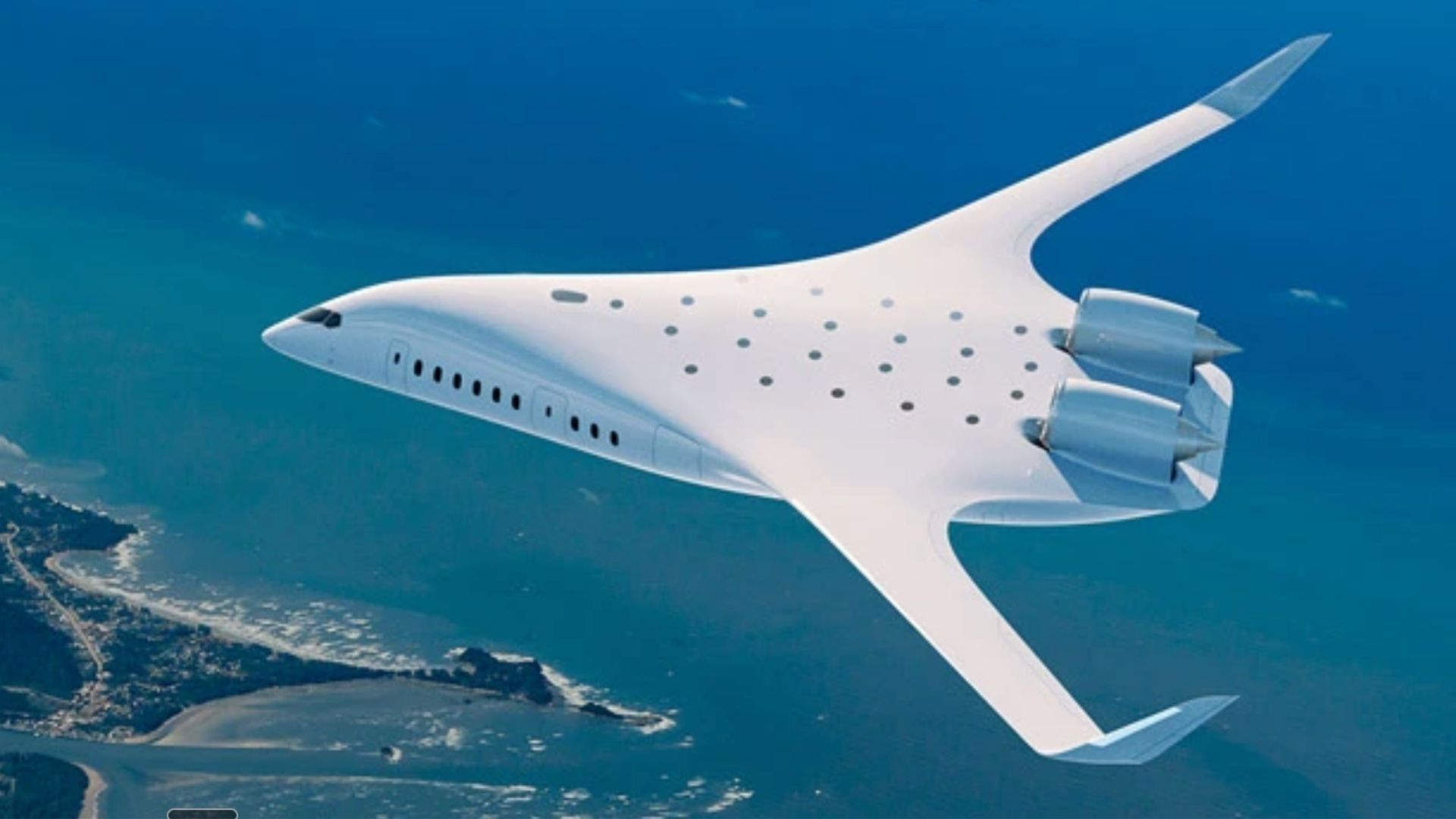
The California-based startup is working on a blended-wing-body aircraft, where the wings and fuselage are merged into one large lifting surface. Instead of looking like a traditional tube-and-wing airliner, the aircraft has a much wider, flatter shape.

The main advantage is efficiency. Since more of the aircraft helps generate lift, the design can reduce drag and burn less fuel. JetZero claims its Z4 aircraft could cut fuel burn and emissions by up to 50% compared with similar aircraft flying today.

The 250-passenger Z4 is expected to have a range of roughly 5,754 miles (9,260 kilometers).

4. Airbus ZEROe Hydrogen Aircraft

Credit: Airbus

Airbus’s ZEROe program is one of the biggest attempts to bring hydrogen-powered aircraft into commercial aviation.

The original goal was to introduce a hydrogen aircraft around 2035, but the timeline now appears more likely to move toward the late 2030s or around 2040.

Early concepts included hydrogen turbofan aircraft, turboprops, and even a blended-wing-body design. Airbus has since focused more on fuel-cell-driven electric propulsion, where hydrogen is used to generate electricity for propellers.

If successful, ZEROe could become one of the world’s first large zero-emission commercial aircraft.

5. Bombardier EcoJet

Bombardier’s EcoJet is a futuristic business jet research project.

Like JetZero’s aircraft, it uses a blended-wing-body design to improve efficiency. Bombardier says the project could help cut emissions by as much as 50% compared with today’s business jets.

The company has already been testing an autonomous demonstrator with an 18-foot wingspan. The goal is to study aerodynamics, structures, and systems before applying the lessons to future aircraft.

There is no firm service date yet, but Bombardier sees EcoJet as a step toward the future of low-carbon business aviation.

6. Flying-V Long-Haul Concept

Credit: Flying V

The Flying-V is one of the strangest-looking aircraft concepts in development.

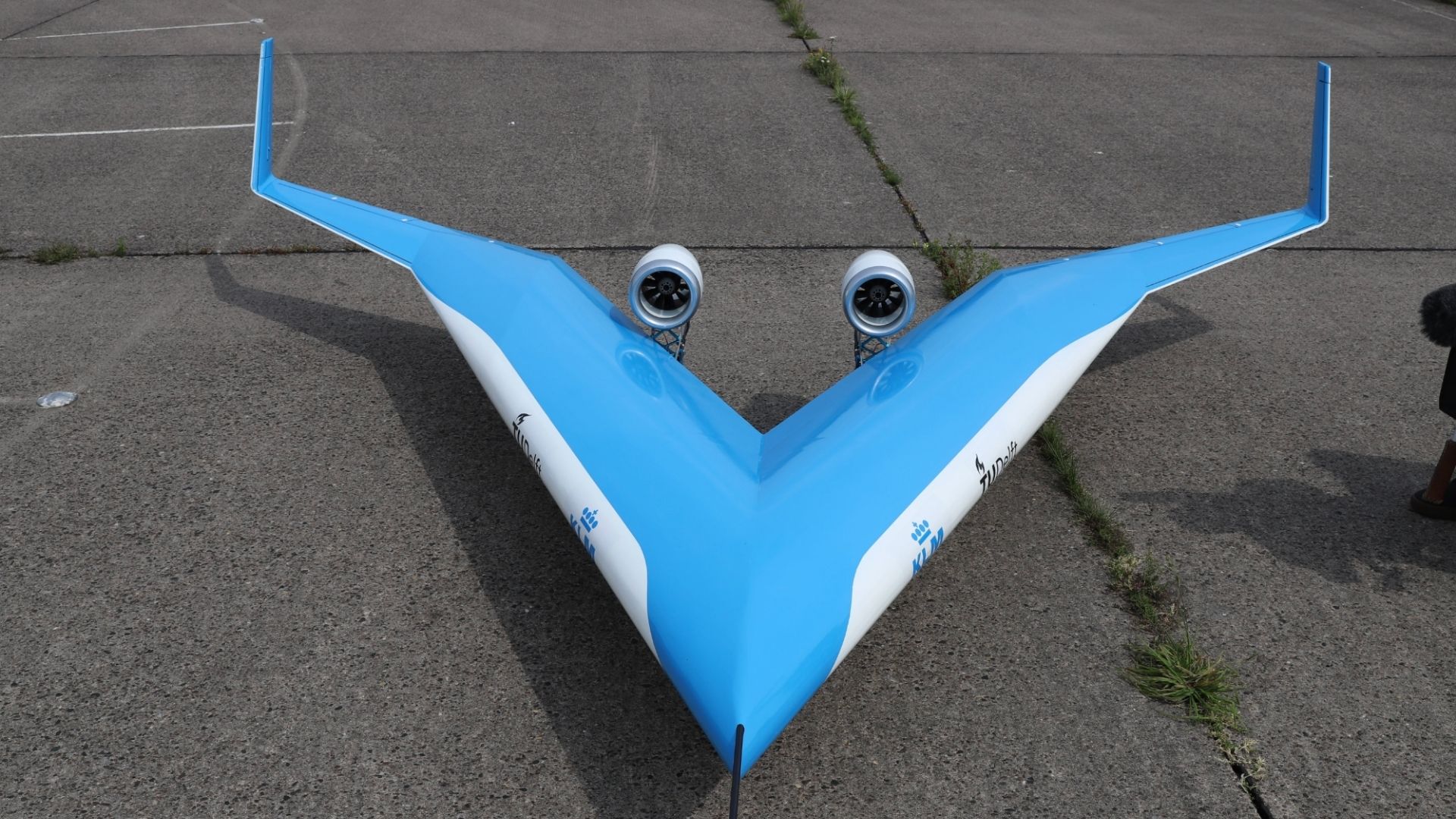
Created by KLM and TU Delft, the aircraft has a V-shaped design where passengers, cargo, and fuel are all placed inside the wings. It is designed to carry about the same number of passengers as an Airbus A350 while using around 20% less fuel.

A small-scale model has already completed its first flight. However, this is still a long-term project. Researchers believe a commercial Flying-V would not carry passengers before around 2040 at the earliest.

7. Eviation Alice Electric Commuter

Eviation’s Alice is a fully electric commuter aircraft designed to carry nine passengers.

It completed its maiden flight in 2022 and showed how quiet, clean short-range electric aviation could look.

However, battery limitations have made the project difficult. Its expected range has been reduced to around 288 miles (463 kilometers), and entry into service has been delayed several times.

The project was also paused in 2025. Still, if the company can solve its funding and technology challenges, Alice, or an aircraft inspired by it, could become one of the first fully electric commuter planes to enter commercial service.

Taken together, these seven projects show that the future of flight is not a single silver bullet, but a portfolio of electric, hybrid, hydrogen, and radically aerodynamic designs converging on the same goal – drastically lower emissions and noise without giving up speed or range.

  •  

7 natural wonders on Earth that look almost unreal

Earth is filled with places and phenomena so spectacular that they seem almost unreal.

From glowing skies to giant reefs, massive canyons, towering mountains, and roaring waterfalls, the planet’s greatest natural wonders show just how powerful and diverse nature can be.

While different lists exist, these seven natural wonders are unanimously celebrated for their scale, beauty, and uniqueness.

1. Aurora Borealis

Credit: Wikimedia Commons

The Aurora Borealis, or northern lights, is one of the most magical sights on Earth. It appears when charged particles from the sun collide with gases in Earth’s upper atmosphere, creating glowing waves of green, pink, violet, and sometimes red light.

The display is never exactly the same twice, which makes it feel alive and unpredictable. Seen in polar regions on clear dark nights, it is one of the few natural wonders that can turn the sky itself into a spectacle.

2. Grand Canyon

Credit: Wikimedia Commons

The Grand Canyon in Arizona, USA, is one of the world’s most famous geological landmarks. Carved by the Colorado River over millions of years, it reveals layer after layer of rock that tells the story of Earth’s ancient past.

Its vast scale, steep cliffs, and shifting colors make it look different throughout the day. At sunrise and sunset, the canyon becomes especially dramatic, with light and shadow deepening its immense depth.

3. Great Barrier Reef

Credit: Wikimedia Commons

The Great Barrier Reef off the coast of Australia is the largest coral reef system on the planet. Stretching over an enormous area, it is made up of thousands of reefs, islands, and cays.

Beneath the surface lies a thriving world of coral, fish, turtles, sharks, and countless other species. It is not only beautiful but also ecologically vital, serving as one of the richest marine habitats on Earth. Its scale and biodiversity make it a true natural treasure.

4. Harbor of Rio de Janeiro

Credit: Wikimedia Commons

The Harbor of Rio de Janeiro is famous for its stunning setting, where the sea meets steep mountains and rocky peaks. Sugarloaf Mountain and the surrounding coastline create a natural amphitheater around the city.

The combination of water, stone, and urban life gives Rio one of the most dramatic landscapes anywhere in the world. It is a place where geography and beauty come together in a way that feels almost cinematic.

5. Mount Everest

Credit: Wikimedia Commons

Mount Everest is the highest mountain above sea level on Earth and one of the most iconic peaks in human history. Rising from the Himalayas, it stands as a symbol of endurance, adventure, and extreme natural grandeur.

Its snowy summit and harsh conditions make it both beautiful and formidable. For climbers, it represents one of the greatest challenges imaginable; for everyone else, it remains a breathtaking reminder of how high and powerful the Earth can be.

6. Parícutin

Credit: Wikimedia Commons

Parícutin, in Mexico, is one of the rarest natural wonders because people actually witnessed its birth. In 1943, a volcano erupted suddenly in a farmer’s field and began growing rapidly from the ground.

Within a short time, it had formed a new volcanic cone and reshaped the surrounding landscape. Unlike ancient mountains or reefs, Parícutin is a modern geological event, making it a unique example of nature creating something new before human eyes.

7. Victoria Falls

Credit: Wikimedia Commons

Victoria Falls, on the border of Zambia and Zimbabwe, is one of the largest and most powerful waterfalls in the world. The Zambezi River plunges into a deep gorge, creating a massive curtain of water and a cloud of mist that can rise high into the air.

The local name, “The Smoke That Thunders,” captures the sound and force perfectly. Victoria Falls is unforgettable because it combines raw power with extraordinary beauty in one dramatic scene.

Taken together, these seven wonders highlight the many forms greatness can take in nature. Some are visible in the sky, some carved into stone, some hidden beneath the sea, and others formed by fire or water.

What they all share is the ability to inspire awe. They remind us that Earth is not only our home, but also a planet full of extraordinary wonders waiting to be seen.

  •  

Humanoid robot climbs 20,341-foot volcano as team eyes Mount Everest next

A humanoid robot has successfully reached the summit of Ecuador’s Chimborazo volcano. This is a new milestone in efforts to push legged robots beyond controlled environments into some of the world’s harshest environments.

The robot, a modified Unitree G1 named “Pemba,” recently completed an expedition to the 20,341-foot (6,200-meter) peak, according to project details shared by the team and reported by Humanoids Daily. The climb is the first stage of an ambitious “Triple Crown” robotics expedition that could eventually see the humanoid attempt Mount Everest.

Unlike the increasingly common videos of robots dancing, running, or performing acrobatics, the Pemba project is designed to answer a different question. Can humanoid robots become useful tools in remote environments where humans face significant risks and conventional machines struggle to operate?

A robot designed for the wilderness

The project is led by engineer Pablo Berlanga Boemare, founder of Geologic Dome, who previously worked on conservation initiatives with the World Wildlife Fund (WWF) in regions including the Congo Basin and the Amazon rainforest.

Pablo has posted a video on X, in which he notes that the concept emerged from a practical challenge. Many protected areas rely on extensive networks of stationary cameras and sensors to monitor wildlife, illegal logging, poaching, and environmental changes. The team argues that mobile robotic platforms could eventually provide a more flexible alternative.

Rather than installing thousands of fixed cameras across remote regions, a humanoid robot equipped with cameras, sensors, satellite connectivity, and onboard AI could patrol large areas autonomously while collecting environmental data. The project envisions future systems powered by solar energy and connected through satellite networks such as Starlink.

Introducing Pemba.

The first humanoid to climb to 20,000ft.

Everest next. More below. pic.twitter.com/k1BHkRLYjm

— pabs (@pabloberlangab) June 7, 2026

The reality behind the summit

While the ascent of Chimborazo represents a significant achievement, it was not a fully autonomous climb. According to the project team, Pemba walked independently on sections of terrain with inclines of less than 30 degrees. During steeper and more technically demanding portions of the 16-hour summit push, expedition members carried the robot.

The goal now is to gradually expand the robot’s autonomous capabilities through reinforcement-learning systems trained to handle increasingly difficult terrain. The challenge goes far beyond locomotion.

Extreme altitudes expose electronics and batteries to freezing temperatures, rapid temperature changes, and reduced cooling efficiency. To cope with those conditions, engineers developed custom thermal management systems and ventilation hardware integrated into the robot’s protective clothing.

Huanoids Daily reports that these modifications build on earlier cold-weather testing conducted in China’s Altay region, where Unitree’s G1 reportedly operated at temperatures as low as -47.4°C (-53.3°F).

Everest remains the ultimate challenge

The team’s long-term objective is to send the humanoid into the Himalayas. According to reporting by The Kathmandu Post, Geologic Dome and Nepal-based Fourteen Peaks Expedition have proposed deploying a robot on Mount Everest as part of a research mission focused on the performance of robotics in extreme environments.

The plan would test the robot between Everest Base Camp and Camp IV at nearly 8,000 meters (26,247 feet), collecting data on battery performance, locomotion, joint stress, and environmental resilience. Researchers also hope future robotic systems could assist with waste collection, glacier monitoring, search-and-rescue operations, and environmental surveying in the Everest region.

However, the project faces an unexpected obstacle. Nepal currently lacks a legal framework governing robotic expeditions on Everest. Officials have reportedly requested new regulations covering non-human climbers before any such mission can proceed. As a result, the Everest attempt has been delayed while organizers work with authorities to establish appropriate guidelines.

More than a climbing experiment

The significance of the Pemba project extends beyond mountaineering. Humanoid robotics companies increasingly claim their machines will eventually operate in warehouses, factories, construction sites, disaster zones, and remote environments. Yet proving those capabilities requires testing outside carefully controlled settings.

Mountain environments offer a uniquely demanding proving ground. Robots must cope with unstable terrain, extreme temperatures, limited communications, power constraints, and unpredictable weather. All conditions that expose weaknesses in both hardware and AI systems.

Whether Pemba ultimately reaches Everest remains uncertain. But its successful ascent of Chimborazo demonstrates that the next frontier for humanoid robots may be some of the most challenging terrain on Earth.

  •  

Researchers build 25-liter pilot reactor for recycling plastic waste into oil

A mobile pilot plant has been designed to convert various types of plastic waste into oil. 

Developed by the Catalysis Engineering Group at the University of Amsterdam (UvA), the Solvothermal Liquefaction (STL) process uses a potent mix of solvent, heat, catalysts, and intense pressure to cook mixed plastic waste back into oil.

Interestingly, the resulting dark brown oil contains the precise molecules needed to remake brand-new, virgin plastic, thereby closing the recycling loop.

The pilot plant is heading to Spain to face its ultimate test: real municipal plastic waste. It offers a viable solution for keeping these materials out of landfills and incinerators.

“We have gained a deep insight into the process and are confident that it merits scaling up to industrially relevant volumes. That’s why we have now designed and manufactured a pilot reactor system as a first important step towards actual application,” said Associate Professor Dr Shiju Raveendran.

Cooks unsorted trash

The underlying technology is called Solvothermal Liquefaction. 

Rather than requiring workers or optical sensors to sort polyethylene from polypropylene, the STL process accepts the mixed plastic stream as is. The waste is fed into a 25-liter reactor vessel. Inside, it is blasted with solvent, subjected to high heat, and exposed to elevated pressure.

The key ingredient of all is the specialized nanostructured solid catalysts developed by the UvA team. These microscopic structures accelerate the chemical breakdown without being consumed by the reaction. In just 30 minutes, the molecular bonds of the plastics collapse.

The process cleanly splits the waste into three distinct products: gas, which is diverted to help power the system; char, which is filtered out as a solid byproduct; and a dark brown oil. This oil is packed with the pure monomers needed to manufacture brand-new, high-quality plastic.

Interestingly, the entire process closes the loop completely. The resulting plastic is identical to material made from fossil fuels, completely overcoming the degradation that usually happens during mechanical melting.

Circular plastic recycling

Academic breakthroughs die in labs every day because scaling them up is highly difficult. The team is attempting to beat those odds.

Backed by over €1.5 million from the larger €20 million European “PLASTICE” project, the technology has officially reached Technology Readiness Level (TRL) 6/7. In engineering, it means that the tech is ready for operational reality.

The Amsterdam researchers also partnered with an industrial engineering firm in India. Together, they designed and manufactured a heavy-duty, transportable system. The entire plant is complete with storage tanks, remote-control software, and rigorous safety overrides. It is mounted on automated steel frames called skids.

In Spain, the public waste management company COGERSA will host the pilot plant. For the first time, the machine will run on raw municipal waste streams rather than controlled laboratory feeds.

“Our lab experiments already included actual plastic waste, but we will certainly encounter challenges we could not fully foresee. That is precisely the purpose of this scale-up phase—to move the technology toward genuine industrial relevance,” said Raveendran.

If the skid-mounted reactor can withstand the chaotic composition of Spanish household waste this summer, it could pave the way for modular, decentralized recycling plants worldwide. 

💾

The Solvothermal Liquefaction (STL) process uses a potent mix of solvent, heat, catalysts, and intense pressure to cook mixed plastic waste back into oil.
  •  

Robots move beyond mapped worlds with advanced lidar sensing

A lidar technology company and a robotics AI developer have announced a collaboration to improve how general-purpose robots perceive and navigate complex environments.

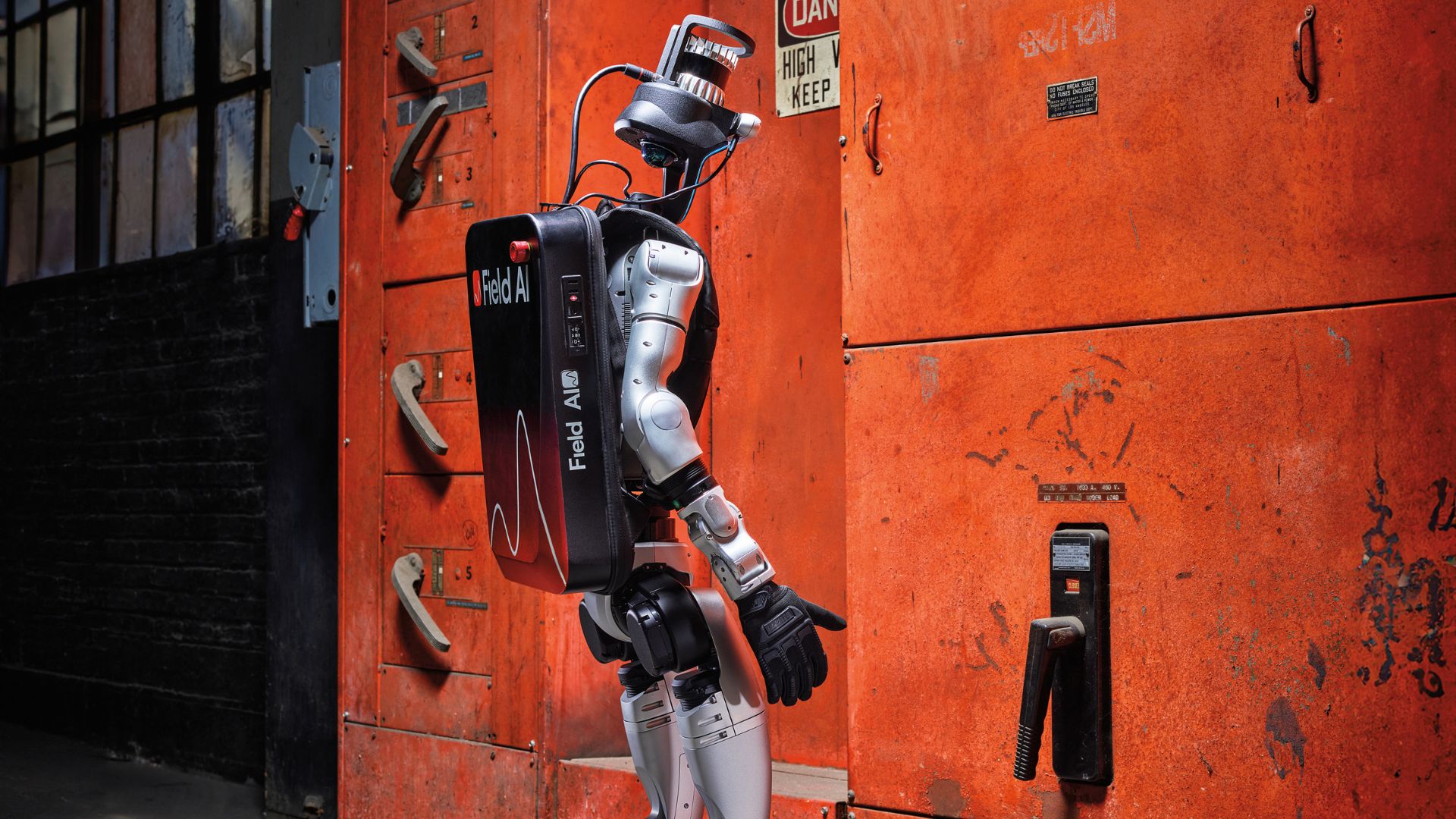
The partnership between San Francisco-based Ouster and California -based FieldAI combines high-resolution lidar technology with a universal robot intelligence platform designed to operate across different robot types, tasks, and environments.

The system enables robots to be deployed at new sites without prior maps, pre-planned routes, supporting infrastructure, or environmental modifications.

“Scaling autonomous systems in demanding real-world conditions starts with advanced sensor technology,” said Andrew Mullen, Head of Hardware at FieldAI, in a statement.

Robots gain perception

The collaboration between Ouster and FieldAI aims to accelerate the deployment of autonomous robots in some of the world’s most challenging industrial environments by combining advanced sensing hardware with general-purpose robot intelligence.

The partnership centers on the integration of Ouster’s Rev8 native color digital lidar technology with FieldAI’s Field Foundation Models, a robotics AI platform designed to enable autonomous operation across a wide range of robot types, tasks, and environments. The companies believe the combination can help robots perform reliably in complex, unstructured settings where traditional automation systems often struggle.

FieldAI has developed what it describes as a universal robot “brain” capable of operating across radically different robotic platforms. Unlike conventional robotic systems that typically require detailed maps, carefully planned routes, specialized infrastructure, or extensive site preparation, FieldAI’s technology is designed to allow robots to enter a new worksite much like a newly hired employee. The robots can assess unfamiliar surroundings, understand environmental conditions, and begin operating without prior knowledge of the location.

At the core of this capability are the company’s Field Foundation Models, large-scale AI models trained to understand and interact with the physical world. These models are intended to help robots navigate unpredictable environments where terrain, obstacles, equipment, and working conditions can change continuously. Such environments include construction sites, mines, industrial facilities, energy infrastructure, and remote operational areas where conventional robotic systems often face significant limitations.

To support these capabilities, FieldAI relies on Ouster’s digital lidar sensors, which provide a detailed three-dimensional perception of the surrounding environment. Lidar technology uses laser pulses to measure distances and generate highly accurate spatial maps. Ouster’s latest Rev8 platform adds native color perception to lidar data, enabling robots to capture richer environmental information while maintaining precise depth sensing.

Scaling physical AI

The Rev8 digital lidar platform is designed to deliver high-resolution perception in conditions where cameras or GPS-based systems may be less effective.

According to its developers, it is particularly important in unmapped environments, indoor facilities, underground operations, and GPS-denied locations where autonomous systems must rely heavily on onboard sensing. The technology’s rugged construction also makes it suitable for deployment in harsh industrial conditions involving dust, vibration, weather exposure, and heavy machinery.

FieldAI already uses Ouster’s lidar technology to support navigation and autonomy in complex operational settings. As the company expands deployments with major industrial customers, it plans to incorporate the enhanced sensing capabilities of the Rev8 platform to further improve robot safety, environmental awareness, and decision-making. The addition of native color data is expected to provide greater interpretability of robot actions and improve the ability of autonomous systems to identify and understand objects and conditions in their surroundings.

The collaboration is expected to support the broader adoption of physical AI systems across industries where labor-intensive, hazardous, or difficult-to-access tasks remain challenging for human workers. Target sectors include construction, mining, energy production, manufacturing, security operations, and government applications.

💾

Two US technology firms partner to combine lidar and AI, enabling robots to navigate complex sites without maps or setup.
  •  

Top 7 deadliest helicopters

Designed to hunt tanks, support ground troops, and strike targets with precision, these flying gunships have become some of the most feared machines ever to take to the skies. Over the decades, a select group of helicopters has distinguished itself through combat performance, survivability, and sheer battlefield presence. From Cold War legends to modern battlefield predators, these are seven of the deadliest helicopters ever used by military forces around the world.

1. AH-64 Apache

The AH-64 Apache is widely regarded as the world’s most successful attack helicopter. Entering service in the 1980s, it proved its effectiveness during the Gulf War, where it helped destroy large numbers of Iraqi armored vehicles. Armed with Hellfire missiles, rockets, and a 30 mm chain gun, the Apache has accumulated millions of flight hours across conflicts in Iraq, Afghanistan, Kosovo, and Syria. Its combination of survivability, sensors, and precision strike capability has made it the benchmark for modern attack helicopters.

2. Mil Mi-24 Hind

Part troop transport and part flying gunship, the Soviet Mi-24 Hind became one of the most feared helicopters of the Cold War. Nicknamed the “Devil’s Chariot” by Afghan fighters, it combined heavy armor, anti-tank missiles, rockets, and troop-carrying capability in a single platform. The Hind saw extensive combat in Afghanistan, Africa, the Middle East, and Eastern Europe, earning a reputation for speed, durability, and overwhelming firepower. More than 50 countries have operated the helicopter since its introduction in the 1970s.

3. Bell AH-1 Cobra

The AH-1 Cobra was the world’s first purpose-built attack helicopter and fundamentally changed aerial warfare. Developed during the Vietnam War, it provided close air support, escorted transport helicopters, and hunted enemy positions with rockets, cannons, and missiles. Its narrow fuselage and tandem cockpit became the template for future gunships. The Cobra served as the backbone of U.S. Army attack aviation for decades and remains one of the most influential military helicopters ever built.

4. Kamov Ka-52 Alligator

Russia’s Ka-52 Alligator represents one of the most heavily armed attack helicopters in service today. Its distinctive coaxial rotor system eliminates the need for a tail rotor while improving maneuverability. Equipped with anti-tank missiles, guided rockets, and advanced targeting systems, the Ka-52 has seen extensive combat in Syria and Ukraine. The helicopter became particularly known for conducting stand-off strikes against armored targets while operating beyond the reach of many battlefield threats. Its modern sensors and weapons make it among the deadliest rotorcraft of the 21st century.

5. Mil Mi-28 Havoc

Often described as Russia’s answer to the Apache, the Mi-28 Havoc was designed specifically to destroy tanks and provide battlefield fire support. Featuring heavy armor, a powerful 30 mm cannon, and anti-armor missiles, the helicopter has been used in Syria and Ukraine. Unlike the troop-carrying Hind, the Mi-28 is a dedicated attack platform built around survivability and firepower. Its armored cockpit and ability to operate day or night make it one of the most capable attack helicopters currently flying.

6. AH-1Z Viper

The AH-1Z Viper is the latest and most capable evolution of the Cobra family. Operated by the U.S. Marine Corps, it combines decades of combat experience with modern sensors, precision-guided weapons, and advanced targeting systems. The helicopter can carry Hellfire missiles, Sidewinders, rockets, and a 20 mm cannon while operating from ships or austere forward bases. Designed for expeditionary warfare, the Viper has become one of the most versatile and lethal attack helicopters in Western service.

7. Eurocopter Tiger

Europe’s Tiger attack helicopter earned its combat credentials in Afghanistan, Libya, Mali, and the Middle East. Developed jointly by France and Germany, it combines high agility with advanced sensors and precision-guided weapons. Though produced in smaller numbers than the Apache or Hind, the Tiger demonstrated its value in counterinsurgency and expeditionary operations. Its combat deployments across multiple continents have cemented its reputation as one of the most effective attack helicopters ever fielded by a European nation.

  •  

China’s nuclear arsenal expands to 620, ‘growing faster than any other country’: Report

China is expanding its nuclear weapon arsenal faster than any other country, according to a report by a Swedish think tank. The Stockholm International Peace Research Institute’s (SIPRI) latest yearbook states that Beijing now has around 620 nuclear warheads.

In what could be a major cause of concern for the US and its allies, the report goes on to state that it is continuing to develop new nuclear systems. It states that China could “potentially have at least as many ICBMs as either Russia or the USA by the turn of the decade.”

Beijing displayed some of the new missile systems during its 2025 military parade.

China’s nuclear warhead stockpile

The SIPRI report says that by January 2026, “China had loaded hundreds of missiles into three large missile silo fields in the north of the country, while working to complete 30 silos in three mountainous areas in the east.”

Moreover, the country now has 34 deployed warheads, up from 24 in 2025. The number of stored warheads has also risen from 576 in 2025 to 586 in 2026, leading to an overall number of 620 nuclear warheads in the stockpile.

It is important to note that the US and Russia still have the highest number of nuclear warheads in their stockpile. While the US has 3,700 warheads, Russia has an estimated 4,400 nuclear warheads in its military stockpile.

Even if China surpasses 1000 warheads by 2030, that will still amount to only about one quarter of each of the current Russian and US nuclear stockpiles, according to the report. However, China has shown the highest percentage growth in the production of these tools of destruction, and recent trends indicate it is not looking to stop.

The global inventory stands at an estimated 12,187 warheads – and of this, around 9,745 are in military stockpiles for use in case of a conflict. Of the total warheads in military stockpiles, roughly 4,012 are deployed with missiles and aircraft, while the rest are in storage.

There haven’t been many additions to the stockpiles of other nuclear-armed nations, such as the United Kingdom, France, and Pakistan, since 2025. India seems to have added 10 warheads, 12 of which are deployed, bringing its total count to 190.

Lack of dialogue among nuclear-armed nations

The report goes on to add that the growth of nuclear programs will very likely be pursued by all countries in the years to come in the post-New START world. It highlights that there is a lack of strategic dialogue or direct communication among certain nuclear-armed states.

SIPRI Director Karim Haggag states that world leaders advocating nuclear weapons as a guarantee against attack by a hostile state could ‘significantly increase nuclear risks.’

“The dangers associated with nuclear weapons are growing due to advances in weapon technology, the breakdown of nuclear arms control and heightened geopolitical tensions, among a range of other factors,” Haggag said.

“Along with the reduction in transparency and the loss of diplomatic channels for crisis management, the drift towards authoritarianism in some nuclear-armed states is contributing to even greater unpredictability,” said Matt Korda, Associate Senior Researcher with SIPRI’s Weapons of Mass Destruction Program and Associate Director for the Nuclear Information Project at FAS.

The report also predicts that for the first time since the end of the Cold War, the pace of gradual dismantlement of retired nuclear warheads by Russia and the USA could slow down, leading to a situation in which the global inventory keeps rising.

There hasn’t been a significant increase in the inventories of Russia and the USA, but the modernization programs being pursued by both countries lead SIPRI to believe that they will likely “increase the size and diversity of their arsenals in the future.”

  •  

MIT team uses diamond to cool gallium-nitride chip to boost wireless electronics

Researchers at MIT and elsewhere have developed a chipmaking technique that could help future wireless systems become faster, more powerful, and more energy-efficient.
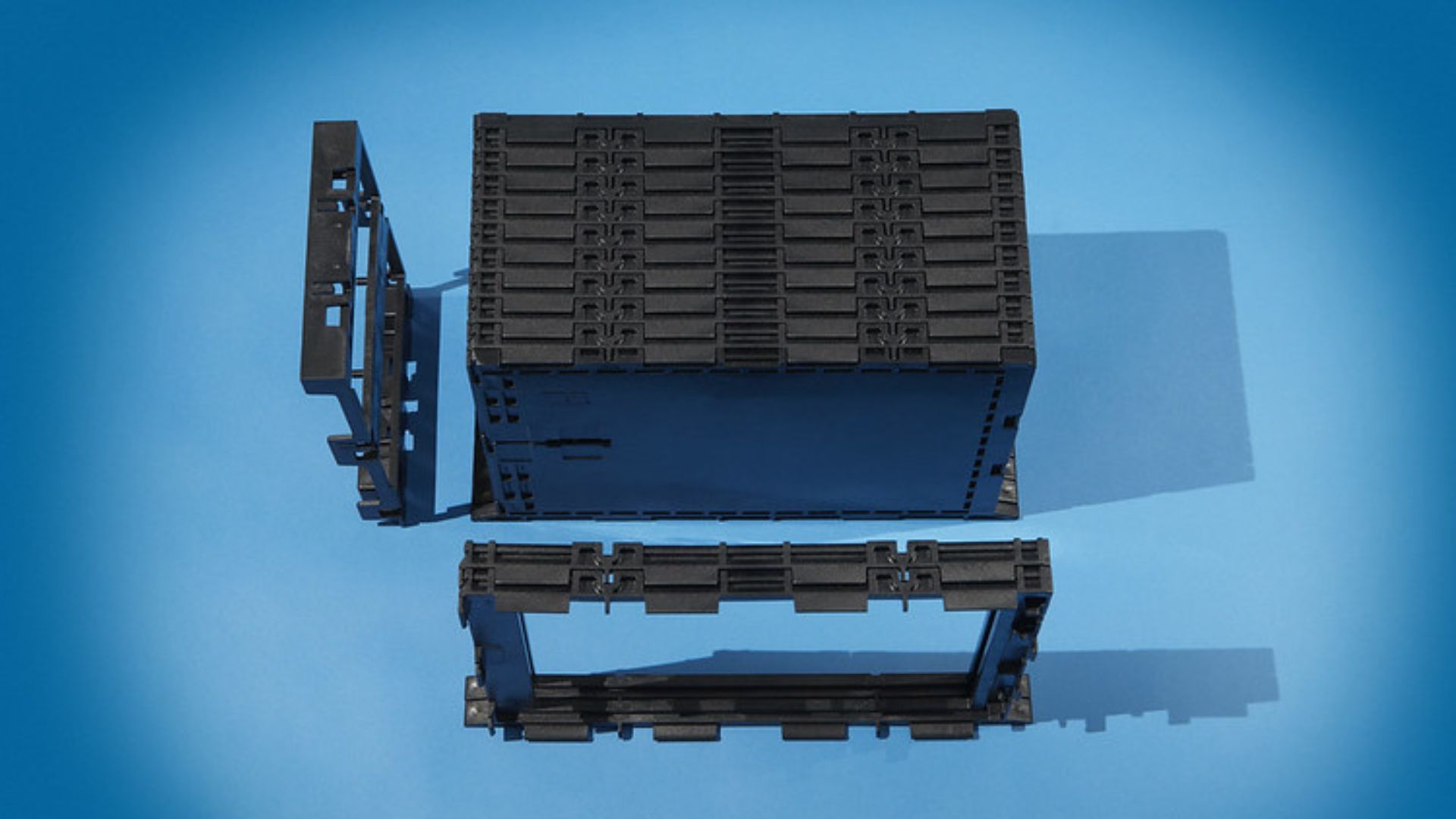
The team embedded gallium nitride transistors into an ultrathin diamond layer, enabling the diamond to act as a heat spreader within the chip. 

The approach helps normalize temperature across the device, letting the transistors approach peak performance without reducing reliability.

A promising alternative

Gallium nitride, or GaN, is seen as a promising alternative to silicon for demanding wireless applications such as 6G and satellite communications.

Silicon, which forms the foundation of most computer chips, has fundamental limits in how much power it can manage. GaN can handle higher speeds and energy levels, but heat remains a major obstacle.

As more GaN transistors are packed into smaller areas on silicon chips, localized hot spots can degrade reliability and hamper performance. The new diamond-based method is designed to address that bottleneck.

“No single material can do everything well in a wireless device, so these 3D heterogeneously integrated systems are here to stay,” said Pradyot Yadav, a lead author of a paper on this advance.

“The key challenge left has been reliability and thermal management, and we might have now unlocked the final step we need to make these systems operate at scale and high volume,” he added.

A multimaterial chip design for faster wireless systems

The work builds on heterogeneously integrated systems, where multiple materials are stacked into one package to use the strengths of each.

MIT researchers had previously stacked GaN on silicon and glass to create higher-performance chips.

However, each material in such a chip can operate at a different temperature, which can affect reliability.

The researchers used a lab-grown, jewelry-grade diamond. Diamond has the highest thermal conductivity of any known material, and advances in single-crystal diamond wafer growth have made its use in chips more feasible.

Earlier work involved growing ultrathin diamond layers on top of GaN transistors. But that process is difficult to scale and can introduce unwanted capacitances that slow circuit operations.

Instead, the MIT-led team embedded tiny GaN transistors, called dielets, into an ultrathin single-crystal diamond interposer.

Embedding transistors into the diamond

“By putting these GaN transistors into a diamond interposer, we are actually able to improve the performance of the device, as opposed to degrading it. We can get the best of both worlds,” Yadav said.

The process begins with a femtosecond laser cutting GaN dielets from a wafer and drilling precise cavities into the diamond substrate. A 20-micron die attach film is placed at the bottom of each cavity before the dielet is added.

New benchmark for GaN chips

The team then stacked dielectric and metal layers on top of the GaN and diamond to create a working circuit. Using the method, the researchers built a power amplifier for wireless communications.

The amplifier achieved higher output power, efficiency, and gain than any similar device the researchers found in the literature, including one they designed in prior work.

The results show that the technique could support demanding applications such as high-power radars, space communications, and industrial drones.

It could also be used to manage heat in systems that convert power in data centers, thereby improving energy efficiency.
  •  

New 3D-printed metacrystal panels could help 6G signals reach every corner indoors

Next-generation mobile internet will be incredibly fast, but it has one major physical weakness. It can be stopped dead by a single concrete wall or a passing crowd.

Now, a new kind of “metacrystal panel” has been designed to address this major problem in 6G networks. 

Developed by researchers at Finland’s Aalto University, these affordable, 3D-printed devices passively guide radio waves around physical barriers like walls and corners.

Interestingly, these smart panels can be mounted on walls, ceilings, or furniture to effortlessly bounce signals around corners, into dead zones, and directly toward specific devices.

6G signal blocking issue

The tech industry is currently sprinting toward ultra-fast 6G networks. Future 6G networks will likely achieve unprecedented terabit-per-second data speeds by utilizing terahertz waves (also known as submillimeter radiation or far-infrared light).

However, the higher-frequency channels needed to carry massive amounts of data are fragile. 

Compared with the broad waves of older networks, 6G signals struggle to bend around obstacles. Usually, fixing a dead zone means buying more electronics.

Carriers install power-hungry routers, complex repeaters, and expensive base stations just to push the signal into hard-to-reach places like basements, factories, or long corridors.

But the Aalto team thinks they can solve this issue using just a low-tech solution. Metacrystal panels are 3D-printed plastic blocks that bounce, bend, and shape radio waves without electricity.

“When a room is too dark, you can bring in more lamps – or use simple mirrors to guide the already available light. This is what these metacrystals do, but with radio waves,” explained Mahdi Asgari, doctoral researcher. 

Rather than relying on wires or microchips, these panels use geometry to do the work. These are volumetric structures designed using advanced computer optimization. 

Researchers can control multiple signals at the same time by precisely calculating how the internal plastic shapes interact with electromagnetic fields. 

Earlier attempts at this technology used flat, single-layer metasurfaces. However, a 2D flat surface lacks the physical degrees of freedom to manipulate multiple angles at once. If a signal hits it from the wrong angle, it becomes useless.

“Unlike previously proposed single-layer intelligent surfaces, these volumetric metacrystals can be designed to control multiple incoming signals or frequency bands independently — a key requirement for realistic wireless communication,” added Asgari.   

Low-cost solution

Compared with conventional intelligent surfaces that rely on expensive, high-maintenance control circuits, these 3D-printed metacrystal panels offer an affordable, low-maintenance alternative. 

Using cheap consumable materials costing only a few tens of euros per piece, the panels can be custom-fabricated to fit specific environments rather than relying on a one-size-fits-all model. 

For industrial spaces, this could be a massive win. Setting up a 6G layout in a sprawling warehouse or a complex factory floor usually requires a huge amount of infrastructure. Worse, those networks constantly pull power and demand routine maintenance.

According to researchers, this makes them highly attractive for industrial settings with static or slowly changing layouts, such as factories, warehouses, long corridors, and indoor 5G/6G networks. In these settings, passive, custom-designed structures can quietly route signals without requiring ongoing maintenance or active electricity.

The research team is currently looking for industrial collaborators to commercialize the technology. 

While the current prototypes are static, the next frontier is to make them adaptable. The team is already working on ways to create tunable, reconfigurable panels that can adjust as the environment changes, all while keeping the manufacturing simple and cheap.

💾

Developed by researchers at Finland’s Aalto University, these affordable, 3D-printed devices passively guide radio waves around physical barriers like walls and corners.
  •  

China pushes 350 Wh/kg semi-solid batteries for next-generation electric cars

For years, solid-state batteries have been promoted as the next major breakthrough in electric vehicles, promising greater safety, longer driving range, and faster charging. But while fully solid-state batteries remain years away from widespread adoption, a transitional technology is beginning to reach the market.

Hybrid solid-liquid batteries, often called semi-solid-state batteries, are increasingly finding their way into production vehicles in China as automakers search for new ways to differentiate themselves in an intensely competitive EV market.

According to China Daily, several Chinese automakers and battery manufacturers are accelerating commercialization efforts, viewing the technology as a practical path toward improved battery performance without the manufacturing challenges associated with fully solid-state designs.

What are semi-solid-state batteries?

Conventional lithium-ion batteries use liquid electrolytes to transport ions between the battery’s electrodes. While highly effective, these liquid electrolytes are flammable and can trigger thermal runaway under certain conditions.

Fully solid-state batteries replace the liquid electrolyte entirely with solid materials, potentially offering significant safety improvements and higher energy density. However, manufacturing challenges, high costs, and material limitations have slowed their commercial deployment.

Semi-solid-state batteries sit somewhere between the two approaches. Rather than eliminating liquids completely, they use a combination of solid electrolyte materials and a smaller amount of liquid electrolyte. The result is a battery that retains many of the manufacturing advantages of existing lithium-ion systems while potentially improving safety and energy performance.

This technology is a bridge between today’s batteries and the fully solid-state systems many companies hope to commercialize later this decade.

Why automakers are interested

For China, one of the biggest advantages of semi-solid-state batteries is their compatibility with existing manufacturing infrastructure. Jin Yong, an academician at the Chinese Academy of Engineering, told China Daily that the technology offers a realistic route to industrialization because it can leverage China’s extensive lithium-ion battery production ecosystem rather than requiring entirely new factories and supply chains.

For automakers, the potential benefits extend beyond manufacturing. Reducing the amount of liquid electrolyte can lower the risk of thermal runaway, one of the most closely watched safety concerns in the EV industry. Researchers also believe the technology can improve performance in cold-weather environments, where conventional lithium-ion batteries often experience reduced efficiency and slower charging speeds.

Higher energy density is another attraction. By storing more energy within the same weight, future semi-solid-state batteries could help increase vehicle range without requiring larger battery packs.

Chinese manufacturers push commercialization

Several Chinese companies have already begun moving beyond laboratory development. The China Daily report notes that SAIC Motor’s MG brand has equipped its MG4 and MG4X electric vehicles with hybrid solid-liquid batteries developed in partnership with battery manufacturer Qingtao Energy. The company says testing has demonstrated improvements in durability, safety, and low-temperature performance.

Dongfeng Motor is also advancing the technology through vehicle trials under its Nammi and ePi brands. The company has reportedly set a target to mass-produce batteries with an energy density of 350 watt-hours per kilogram by 2026, a figure that would place it among the most energy-dense automotive batteries currently under development.

Not replacing lithium-ion anytime soon

Despite the growing interest, experts caution against viewing semi-solid-state batteries as an immediate replacement for conventional lithium-ion systems. Production volumes remain limited, costs are still higher than those of traditional batteries, and manufacturers continue working to improve materials, cell design, production consistency, and long-term durability.

Zhu Xichan, an automotive safety expert and former professor at Tongji University, told China Daily that liquid, semi-solid-state, and fully solid-state batteries are likely to coexist for many years because each serves different applications and market needs.

  •  

NASA’s Artemis III gets 8 final booster segments for 7.2 million pounds of thrust

NASA is preparing to send the next Artemis astronauts to space. Though Artemis III won’t land on the moon, it will be the final preparation mission before Artemis IV and V finally land humans on the lunar surface for the first time since 1972.

Ahead of that mission, Northrop Grumman has transported the last eight solid rocket booster motor segments to the Kennedy Space Center in Florida by train. 

The boosters, which will eventually generate 7.2 million pounds of thrust at liftoff, will be stacked this summer.

Northrop Grumman’s SLS booster delivery

Northrop Grumman transported the booster segments from its facility in Promontory. These will join segments already delivered in April. Together, they will be the first hardware stacked on NASA’s mobile launch platform this summer, ahead of Artemis III.

Northrop Grumman manufactures the twin five-segment solid rocket boosters that form the most powerful human-rated motors ever built. Together, they generate 7.2 million pounds of thrust at liftoff, supplying the majority of the power for NASA’s Space Launch System (SLS) rocket during the initial ascent.

Northrop Grumman technicians are preparing the Artemis III center solid rocket motor segment. Image Source: Northrop Grumman

If all goes to plan, Artemis III will be a key step toward sustained lunar exploration and future crewed missions to Mars.

Artemis III will send astronauts to low Earth orbit aboard the Orion spacecraft. Once there, they will conduct rendezvous operations with human landing systems.

Though preparations are well underway, the recent explosion of Blue Origin’s New Glenn rocket, which was due to fly its Mk 1 lander to the moon later this year, could prove to be a major setback as NASA aims to beat China to the lunar surface.

Flying back to the Moon

NASA’s SLS program has faced criticism for delays and overspending, as well as for its reliance on old technologies.

According to Northrop Grumman, though, its solid rocket motors have been proven over decades, having served the Space Shuttle program. 

The legacy contractor notes that the motors delivered this month also incorporate modern enhancements for greater performance and reliability. The boosters successfully lifted both Artemis I and II.

In a press statement, Northrop Grumman highlighted the role of its manufacturing facilities and skilled workforce as key factors enabling these crucial missions.

This capacity will support NASA’s planned increase in Artemis launch cadence while also addressing national security requirements.

Each of the boosters consists of three major assemblies, with the motor segments representing the largest portion. Technicians at the Utah site prepared the hardware, including one center segment featuring NASA’s iconic “worm” logo.

Once at Kennedy Space Center, technicians will assemble the boosters before linking them with the SLS core stage and other elements. The full stack will eventually launch the crewed Orion vehicle toward the Moon.

According to Northrop Grumman, this delivery completes the preparation of booster hardware for Artemis III. It reflects steady progress in NASA’s effort to return humans to the lunar surface. 

If that mission is a success, Artemis IV will then aim to land astronauts near the lunar south pole, where water ice and other resources could support a long-term human presence.

Northrop Grumman continues to produce boosters for upcoming Artemis missions. According to the firm, it has the capacity to “accelerate solid rocket motor production to meet NASA’s increased Artemis mission launch cadence”.

  •  

US lab cracks the code for building powerful magnets free of rare earth metals

Scientists at the Ames National Laboratory in the U.S. have developed a systematic path to the discovery of new approaches to building permanent magnets without relying on rare-earth elements. The approach combines physics-based modeling and high-throughput simulations with reasoning-based artificial intelligence (AI) tools to guide the discovery process even before materials are made in the laboratory. 

Permanent magnets are a crucial part of our everyday lives. From aiding data storage to helping us drive electric vehicles (EVs) to enabling high-quality medical imaging, permanent magnets are used everywhere. 

High-performance permanent magnets made with rare-earth elements are used in defense applications and energy generation. However, the U.S. is highly dependent on other countries to refine its rare earth elements, which increases costs and security risks. Scientists at the Ames National Laboratory have therefore been tasked with developing permanent magnets that do not use rare-earth elements. 

AI, AI everywhere

At a time when AI adoption is soaring and no organization wants to remain behind, another story about AI workflows is not a major surprise. However, for an AI model to perform perfectly, it must be trained on the right data. 

For a general use case, an AI model can be trained on general data. However, for an AI that needs to excel in materials science, a research team led by Prashant Singh, a scientist at Ames, ensured that models were trained on experimentally measured and scientifically calculated material properties. Only this can ensure that the predictions the AI model is making are grounded in real-world behavior. 

“Understanding the physics of materials is important to include in AI frameworks when you are trying to design new materials. If you just use the data to train your models, you are going to get only the predictions within the range of information you have,” said Singh in a press release. 

“But once you understand the physics of what controls specific properties, then you and your agentic tools or AI frameworks can search arbitrary material space,” added Singh. 

Addressing the full pipeline

The advantage of using such an AI-based approach is that it uses a material’s atomic structure and electronic behavior to determine its properties. Magnetization strength, resistance to demagnetization, energy storage capacity, and the permanent magnet’s behavior at high temperatures are major parameters that determine its usefulness. 

Using an AI model that accounts for this allows researchers to identify the most promising material candidates and arrive at likely outcomes through computations rather than real-world iterations. 

“Ames Lab’s strength comes from its deep expertise and a long history of data in the magnet space that no other institution has,” elaborated Singh in the press release. 

“In any material design problem, you need to know how combining two elements will change their performance before you ever run an experiment. We have been building both theoretical and analytical tools to answer that question, and we are now bringing AI into that process to make it faster and broader in scope.”

However, the researchers did not just stop there. The AI tools also take into account the availability and cost of the material. Since the frailty of supply chains has been repeatedly exposed in the past decade, the AI models also factor in these conditions during the discovery process itself to ensure that the material developed is practically possible and can be scaled. 

In doing so, the researchers have addressed the complete pipeline from discovery to industrial availability as the U.S. looks to reduce its dependence on other countries for critical components. 

The research findings were published in the journal Materials Science and Engineering.

  •  

Chinese firm to deploy 100 humanoid robots to households for daily chores

A Chinese robotics company has begun placing its humanoid robots inside real homes, marking a significant step in the race to develop machines capable of performing everyday household tasks.

Wuhan-based GigaAI recently deployed the first batch of 100 SeeLight S1 humanoid robots for household testing, according to reports from China. The trial is being positioned as China’s first large-scale real-home test of a general-purpose humanoid robot designed for domestic use.

While humanoid robots have become increasingly adept at performing carefully choreographed demonstrations, researchers say the real challenge lies in operating inside unpredictable human environments.

From robot demos to real household work

In a demonstration apartment in Wuhan, two SeeLight S1 robots carried out a variety of household chores. According to Global Times and China Daily reports, one robot prepared breakfast by retrieving food items, heating chicken in a microwave, clearing dishes, and loading a dishwasher. Another removed laundry from a dryer, folded clothes, and organized them in a wardrobe.

According to GigaAI, the robots learned these tasks through less than a month of on-site training. The company’s executives argue that household robotics represents a fundamentally different challenge from the acrobatic robot videos that often dominate social media.

“Tasks such as dancing or performing flips mainly rely on what we can call the robot’s cerebellum,” GigaAI co-founder and chief scientist Zhu Zheng told Global Times. “Household robots, however, depend on the brain.”

That distinction reflects a broader challenge in robotics known as embodied AI, where machines must perceive their surroundings, understand spoken instructions, plan actions, and adapt to constantly changing environments.

Check out China's SeeLight S1, a household humanoid robot capable of cooking, doing laundry, folding clothes, and organizing spacespic.twitter.com/oHqbb0B6oZ

— Shenzhen Channel (@sz_mediagroup) May 22, 2026

Why are homes harder than factories?

Factories are structured and predictable. Homes are not. Furniture gets moved, objects are left in unexpected places, lighting conditions change throughout the day, and every household follows different routines.

Researchers often point to Moravec’s paradox, a long-observed phenomenon in artificial intelligence where tasks humans consider difficult, such as advanced mathematics or strategic games, can be easier for machines than seemingly simple activities like folding clothes, grasping objects, or navigating cluttered rooms.

The SeeLight S1 attempts to address this challenge through what GigaAI describes as an embodied foundation model. Rather than following pre-programmed action sequences, the system is designed to process natural-language instructions, interpret its surroundings, create a plan, and execute tasks autonomously. According to the company, the robot can also adapt when furniture layouts change and continue operating even when interrupted during a task.

Still far from a robotic maid

Despite the impressive demonstrations, reports from users and observers suggest there is still considerable room for improvement.

According to Global Times, some household tasks remain slow. Organizing a few books can take several minutes, while folding a single piece of clothing may require more than ten minutes. The robot has also reportedly struggled with tasks such as handling cups without spilling liquids.

Those limitations highlight the gap that still exists between controlled demonstrations and practical household automation. The current SeeLight S1 is therefore less a finished consumer product and more a data-collection platform designed to learn from real-world environments.

GigaAI plans to launch an upgraded SeeLight S2 later this year with a smaller chassis, longer battery life, improved arm reach, and more advanced AI algorithms. The company also intends to expand testing into homes with elderly residents, children, and various living arrangements to expose the robots to a wider range of real-world scenarios.

While humanoid assistants capable of seamlessly handling household chores remain a work in progress, the deployment of 100 robots into actual homes represents an important experiment. The question is no longer whether robots can perform tasks in carefully staged demonstrations. It is whether they can cope with the messy, unpredictable reality of everyday life.

  •  

China discovers quartz source that can be refined to 99.9% purity, could cut US reliance

China’s efforts to secure a key material for solar panels and semiconductors have taken a big step forward. Researchers have found a promising new source of high-purity quartz in Tibet.

High-purity quartz is a key raw material for advanced manufacturing. It is used to make semiconductors, solar panels, optical parts, and many types of electronics. Even though China is a major manufacturer, it has mostly depended on foreign suppliers, especially the United States, for high-grade quartz.

Tibetan granite emerges as a valuable resource

The study looked at leucogranites from the Dinggye area in Tibet. These pale granites have a lot of quartz, which could be used to make very pure silica materials.

“This study evaluates Tibet leucogranites as a potential raw material for high-purity quartz,” according to the paper published in April.

After studying the minerals and the rocks’ purification potential, the researchers found that these deposits could yield very high-quality quartz.

“Our results demonstrate that these leucogranites hold considerable potential to produce high-purity quartz with [silica] contents above 99.995 percent,” the team from the University of Science and Technology of China and the China Geological Survey wrote.

The researchers found that impurities in the quartz can be removed during processing. Improving purification methods could make the quartz even purer.

Critical ingredient for solar and chip industries

Quartz is the second most common mineral in Earth’s crust, but quartz that meets high-tech standards is much rarer. High-purity quartz has at least 99.9 percent silica and special qualities needed for advanced industries.

Because it resists heat and corrosion, insulates well, and expands very little with temperature changes, high-purity quartz can handle the tough conditions in semiconductor and solar manufacturing.

The material is used to make polysilicon, which helps solar panels turn sunlight into electricity. It is also needed to make quartz crucibles, which are essential for manufacturing semiconductor wafers, electronic components, optical equipment, and solar cells.

As the world needs more clean energy and advanced electronics, finding steady supplies of high-purity quartz is becoming more important.

Supply risks drive domestic exploration

According to the Chinese researchers, there is not much high-purity quartz in the world, and most of it is found in just a few places. “Global high-purity quartz resources are scarce and highly unevenly distributed, leading to significant supply chain risks,” the team noted.

China is currently the world’s largest importer of the material. A significant portion of global supply originates from the famous quartz deposits in Spruce Pine, North Carolina, which have long served as a major source of high-grade quartz for industries around the world.

Depending on imports has become a strategic issue for Chinese leaders, especially as competition grows in the semiconductor and renewable energy fields.

China expands search for strategic minerals

China has recently accelerated its search for domestic sources of high-purity quartz. In 2020, it found its first mineable deposit in Henan province, and another was found in Xinjiang in 2021.

After these discoveries, China’s Ministry of Natural Resources officially listed high-purity quartz as the country’s 174th mineral to be developed in 2025. This move shows how important the material is becoming for China’s industry and technology goals.

The new quartz deposits found in Tibet could play a key role in this plan. Researchers think the area’s many leucogranite formations could support future resource development.

“The widely distributed leucogranites in the Tibet region of China provide an ideal research target for achieving breakthroughs in high-purity quartz resources and ensuring national resource security,” the team wrote.

The study was published in the European Journal of Mineralogy.

  •  

Europe unifies autonomous vehicle laws, speeds up robotaxi expansion

Autonomous taxi services, which have scaled rapidly across major metropolitan areas in the United States and China, are poised to break into mainstream European transit networks following a decisive regulatory shake-up.

The European Union has moved to eliminate fragmented regional transport laws by introducing a unified “testbed” approach for autonomous vehicle validation. The streamlined framework allows driverless fleet operators to bypass highly bureaucratic country-by-country approval processes.

Backed by European transport ministers, this policy shift removes long-standing regulatory friction and clears the way for extensive autonomous trials across major European capitals this season.

Navigating Europe’s patchwork regulations

For years, autonomous tech firms have faced severe deployment delays across Europe compared to their international peers. While Waymo operates thousands of driverless rides in the US and Baidu’s Apollo Go blankets dozens of Chinese cities, Europe has lagged behind due to highly fractured cross-border safety rules.

Industry critics, including France’s high planning commissioner, have frequently lambasted the bloc for falling into regulatory stagnation while foreign operators built massive real-world data advantages.

The newly adopted testbed protocol directly addresses this imbalance. By establishing centralized baselines for safety, liability, and hardware evaluation, an autonomous platform approved in one EU member state can deploy test fleets across neighboring EU member states with minimal administrative delay.

This single-approval template transforms the financial calculus for mobility operators, allowing developers to aggregate real-world urban telemetry from a diverse mix of European driving conditions—ranging from high-speed roundabouts to historical narrow streets—without re-litigating safety certifications at every national border.

Global tech collides on European asphalt

The regulatory loosening has immediately triggered an aggressive land grab among global ride-hailing networks, domestic automakers, and international AI developers. Several cities are at the forefront of this transformation, each playing a distinct role in the unfolding autonomous vehicle landscape.

Zagreb, Croatia serves as Europe’s primary operational testbed. In a collaborative venture, Croatian startup Verne—backed by hypercar manufacturer Rimac—has partnered with Uber and Chinese AI leader Pony.ai to run a pilot fleet of 10 fully driverless robotaxis on public roads.

London, United Kingdom is set to become a highly contested arena. Three major tech syndicates are initiating field trials this year. These include US sector leader Waymo, British autonomy pioneer Wayve (partnered with Uber), and Chinese tech giant Baidu’s commercial unit, Apollo Go.

Madrid and Munich are witnessing rapid continental expansions. Chinese developer WeRide has partnered with Uber to run dynamic fleet testing in the Spanish capital, while German roads will see Uber vehicles integrated with Momenta and Autobrains AI control suites.

The urban-rural disconnect

Despite the regulatory momentum, industrial analysts warn that market forces and political goals in Europe remain sharply misaligned. Management consulting firms like Boston Consulting Group predict that by 2035, the global operational volume of robotaxis will reach roughly three million vehicles.

However, while China is projected to host 850,000 units and the US up to 350,000, Europe’s stringent municipal laws and cautious investment profiles are expected to limit the continent to just 120,000 active autonomous commercial vehicles.

A primary sticking point centers on geographic targeting. Robotaxi developers are intensely focused on high-density, lucrative downtown districts where ride-hailing demand peaks and software routing is highly profitable.

Conversely, local European policymakers are pressuring tech firms to deploy their fleets in suburban and rural outer rings to fill critical gaps left by shrinking public transportation budgets.

Reconciling this economic mismatch—while transitioning vehicle designs through highly specialized validation testing—will dictate whether Europe’s newly fast-tracked autonomous networks achieve commercial viability or remain restricted to hyper-localized pilot loops.

  •  

‘World’s first’ shapeshifting soft robotic cells that adapt on demand unveiled

London-based startup morph has launched a new soft robotics platform designed to bring physical intelligence directly into products through adaptive, deformable materials.

Founded by a former reconstructive surgeon, the company says its “soft robotic cells” combine embedded sensing and adaptive control to enable real-time changes in shape and stiffness.

The technology is aimed at creating products that can sense, adapt, and respond to human interaction, marking a shift from traditional static systems to responsive, AI-enabled physical solutions for consumer and enterprise applications.

“With our platform, we can build a new generation of products embedded with soft robotic cells that adapt in real time to support natural movement,” said Dr. Jean Nehme, Founder of morph, in a statement.

A soft robotics platform

The UK startup has unveiled what it describes as the world’s first soft robotics platform, introducing a new approach to physical AI through adaptive, deformable robotic materials.

Founded by London-based Dr. Jean Nehme, a former reconstructive surgeon and founder of surgical AI company Digital Surgery, morph is developing “soft robotic cells” — modular robotic units made from synthetic materials that can sense, process information, and physically adapt to changing conditions.

Unlike traditional robots built from rigid components and designed primarily for industrial environments, soft robots are constructed from flexible materials that allow safer and more natural interaction with people.

The company’s technology enables robotic cells to alter their shape and stiffness in real time in response to environmental conditions and user needs. By embedding sensing, adaptive control, and intelligence directly into materials, morph aims to create products that can actively respond to human movement and interaction rather than remain static. The approach represents a shift toward embodied AI, where intelligence is integrated into physical systems capable of taking action through the product itself.

According to morph, these soft robotic cells can be combined and configured across a range of products, generating data that supports richer interactions between humans and the physical world. The platform is designed to serve as a foundation for multiple industries, allowing manufacturers to integrate adaptive robotic capabilities into their own products.

Future mobility reimagined

Morph’s initial applications will focus on human performance, mobility, and longevity. Early products are being developed for athletic performance enhancement, injury prevention, and mobility support. The company believes its technology could eventually expand into healthcare, automotive, and industrial safety sectors, where adaptive materials could improve comfort, safety, and functionality.

Inspired by the adaptability of octopuses, morph has built a development platform that allows engineers to program robotic cell behaviors, simulate real-world environments, and rapidly prototype deformable components intended for direct human interaction. The system combines reinforcement learning with high-fidelity physics-based simulations, helping accelerate the transition from concept to deployable product while maintaining safety and reliability standards.

The company is currently working with several industrial partners and plans to operate primarily as a software, design, and fabrication partner for businesses seeking to adopt soft robotics technology. Through its business-to-business strategy, morph aims to help companies incorporate adaptive robotic materials into future products.

“Driven by a worldwide team of experts in robotics, AI, medicine, design, and manufacturing, morph enables the creation of products that embed robotic cells. Initial product offerings will focus on human performance and longevity,” claims the firm in a statement.

💾

A UK startup has unveiled soft robotic cells that sense, adapt, and reshape in real time, bringing physical AI into everyday products.
  •  

Scientists discover why similar volcanoes have vastly different eruptions

An international research team led by The University of Manchester has shown how superheating alters how a volcano erupts.

Superheating is a process where magma is heated beyond the temperature at which its crystals can remain stable. The new study found that superheating delays crystal formation strongly as it rises toward the Earth’s surface. 

It helps explain why similar volcanic systems exhibit vastly different eruptive behaviors.

The researchers focused their investigation on magma collected from the 2021 Tajogaite eruption on Spain’s La Palma.  It was a devastating 85-day disaster that destroyed 3,000 buildings and displaced thousands of residents.

Experimental setup showing the X-ray transparent internally heated pressure vessel used at Diamond Light Source (UK) for real-time experiments. Credit: Barbara Bonechi.

Creating volcanic conditions

Imagine two identical volcanoes. These two have the exact same chemical makeup, the same gas content, and the same underground pressure. Yet when the eruption occurs, one gently oozes harmless sludge, while the other violently blasts curtains of fire into the sky.

Experts have long struggled to explain this erratic behavior. Now, they have an answer. 

It turns out that magma’s hidden thermal history dictates how dangerously it behaves.

To unlock this secret, the researchers traveled to La Palma, Spain, and collected cooling rock from the Tajogaite eruption. 

The team took these volcanic samples and recreated the thermal process using a newly designed X-ray-transparent pressure vessel. The rocks were blasted with intense heat and pressure. Then, the team watched the magma melt in real time using high-powered synchrotron X-ray microtomography.

What they saw changed everything. Normally, as liquid magma cools on its way to the surface, it relies on microscopic crystal “seeds” to start solidifying.

It is like dust in the atmosphere, helping raindrops form. But when magma experiences a sudden injection of extreme heat before its ascent —a state known as superheating — those tiny crystal seeds dissolve.

The underground alchemy in volcano

The study shows that extreme temperatures melt away microscopic crystal seeds and homogenize the magma’s internal structure, severely hindering new crystal growth. 

This structural change keeps the magma highly fluid, directly dictating how fast it rises to the surface and how easily trapped volcanic gases can escape. These two critical factors ultimately determine whether an eruption will be a violent explosion or a gentle flow.

It was discovered that non-superheated magma crystallizes in just 20 minutes, while superheated magma delays crystal growth for over eight hours. 

When these delays were plugged into computer simulations of magma ascent, the models revealed a stark contrast in volcanic behavior. The prolonged fluid state of superheated magma allows it to rush rapidly to the surface and trigger spectacular lava fountains. On the other hand, early-crystallizing magma becomes thick and sluggish, allowing gases to safely escape and resulting in much gentler, slower lava flows.

Until now, standard volcanic hazard models have completely ignored this thermal history. Scientists only measured a volcano’s current chemistry, gas levels, and pressure.

“This work suggests that pre-eruptive thermal history and crystallization kinetics may also play an important role in controlling magma ascent and eruptive behavior, with implications for volcanic hazard assessment,” said Dr Margherita Polacci, Senior Lecturer in Volcanology at The University of Manchester. 

The discovery could help decode volcanic monitoring signals and anticipate impending eruptions.

The study was published in the journal Nature Communications on June 8.

💾

An international research team led by The University of Manchester has shown how superheating alters how a volcano erupts.
  •  
❌