❌

Reading view

SpaceX Just Launched a Mysterious Classified Mission for the U.S. Space Force—Here’s What We Know

USSF-153 classified mission SpaceX
(Image Credit: SpaceX)

Welcome to this edition of The Intelligence Brief… This week, SpaceX launched USSF-153, a classified U.S. Space Force mission carrying a mysterious payload into orbit aboard a Falcon 9 rocket, highlighting the growing intersection between commercial spaceflight and U.S. national security operations. In our analysis, we’ll be looking at 1) what we currently know about the highly secretive USSF-153 mission, 2) how details surrounding its flight path may offer clues that classified satellites potentially based on SpaceX’s Starshield platform were aboard, 3) how the mission comes amid growing concerns about an emerging era of military competition and potential conflict in Earth’s orbit, and 4) why the launch represents another milestone for SpaceX as reusable commercial rockets play an increasingly important role in national security space missions.

Quote of the Week

“SpaceX’s ongoing work with the Department of Defense and other partners demonstrates our ability to provide in-space and on-ground capability at scale.”

– SpaceX Statement

If you enjoy the news and perspectives offered by The Debrief, make sure that you aren’t missing our stories by making us one of your “preferred sources” on Google News. You can simply follow this link to add The Debrief to your list of favorites, and you can read more about Google’s preferred sources in our article here.


RECENT NEWS from The Debrief


A Classified Mission is Carried to Orbit

Earlier today, SpaceX launched a classified mission for the U.S. Space Force, which carried a mysterious payload to orbit on one of the company’s Falcon 9 rockets.

The mission, officially known as USSF-153, lifted off from Vandenberg Space Force Base in California at around 11:37 a.m. EDT on Thursday. Beyond that, little else is known about what, exactly, the classified payload carried aboard the Falcon 9 might have been.

Here’s a look at what we currently know about this morning’s secretive launch, and how it may be related to other recent developments involving the growing use of Earth’s orbit in the advancement of U.S. national security objectives.

USSF-153 Mission

According to the company’s website, SpaceX says the USSF-153 mission marks the 27th flight for the first stage SpaceX rocket booster supporting this mission.

The same booster was previously used for the launches of missions that included the Crew-7, CRS-29, PACE, Transporter-10, EarthCARE, NROL-186, Transporter-13, TRACERS, NROL-48, COSMO-SkyMED Second Generation FM3, and 16 Starlink missions, according to an update on the USSF-153 mission page.

“Following stage separation, the first stage will land on the Of Course I Still Love You droneship, which will be stationed in the Pacific Ocean,” the SpaceX update read, noting that it may be possible for sonic booms to be heard in the region around Santa Barbara and surrounding communities, adding that “what residents experience will depend on weather and other conditions.”

Clues About a Classified Payload

The launch was live-streamed by SpaceX, and the moment of takeoff of the classified mission was subsequently added to the company’s official X account. However, few additional details about the exact nature of the mission were revealed, although experts have noted that at least a few details about the rocket’s mission could be discernible from its planned flight path, offering some clues about what USSF-153 might be carrying.

Some outlets have noted the similarity between the current mission’s rocket-stage drop zones and those from past SpaceX Starlink Group 15 missions, which could mean that a group of classified satellites, possibly built using SpaceX’s Starshield satellite platform, may be part of what’s on board.

Serving as the national-security counterpart to the technologies driving SpaceX’s massive Starlink broadband constellation, the program reportedly uses the company’s existing satellite and launch technology to support national security missions. If this is indeed a part of USSF-153’s mission, it would add to the increasingly important role commercial space technologies are playing in U.S. military and intelligence operations.

A New Cold War in Space

Last week’s Intelligence Brief newsletter covered recent concerns about potential future conflict in space, which include the use of sophisticated military capabilities in space by the U.S. and foreign adversary nations.

Experts warn that Earth’s orbit might become a critical battlefield in future conflicts, with recent examples of technologies currently being tested for this that include China’s secretive Shenlong spaceplane, as well as the U.S. and its allies demonstrating similar “dogfighting,” rendezvous, and other potentially military operations in orbit.

Additionally, Russia’s longstanding pursuit of anti-satellite weapons adds to the emerging threats that may soon occupy Earth’s orbit. Although it remains unknown whether Thursday’s mission could be related to such capabilities and other technologies aimed at leveraging Earth’s orbit for military purposes, its classified nature does leave this possibility open.

A New Milestone for SpaceX

Finally, Thursday’s mission also represents a milestone in SpaceX’s busy 2026 launch schedule, with USSF-153 expected to become the company’s 104th Falcon 9 mission of the year.

Eighty of those launches have been dedicated to expanding the company’s ever-growing Starlink constellation, which now consists of more than 11,000 active satellites in low Earth orbit.

Despite the unusual secrecy surrounding its cargo, the USSF-153 launch showcases the new reusable commercial rocket industry SpaceX has developed, which is now frequently relied on by the U.S. military for carrying national-security hardware into orbit.

That concludes this week’s installment of The Intelligence Brief. You can read past editions of our newsletter at our website, or if you found this installment online, don’t forget to subscribe and get future email editions from us here. Also, if you have a tip or other information you’d like to send along directly to me, you can email me at micah [@] thedebrief [dot] org, or reach me on X: @MicahHanks.

Here are the top stories we’re covering right now…

  •  

A New Organism’s “Alien” Reproduction, Levitation and Dark Matter, and Genetic Evidence of an Ancient Killer

cells

This week in stories we’re covering at The Debrief… Scientists say they have discovered an organism whose behavior mirrors the reproductive horror depicted in the “Alien” films. Elsewhere, physicists report that a recent levitation experiment could signal a breakthrough in the search for dark matter. Also, new genetic evidence of an ancient killer has surfaced in ancient medieval texts. And finally, a 15,000-year-old cave discovery in Ireland could push back evidence of the first humans on the island by 5,000 years.

Here’s a look at all the stories we’re tracking right now at The Debrief: 


  •  

Astronomers Detected Three Mysterious “Glitches” in a Pulsar That Had Gone Silent for Years

Astronomers monitoring an unusual young neutron star report a stellar surprise after years of apparent silence, as the space object has displayed sudden changes in its rotation, including one large event they characterize as a “glitch” that could point to evidence of exotic matter.

The discovery involves a 41,000-year-old pulsar known as PSR J1637−4642, which completes each of its rotations approximately every 154 milliseconds. Glitches like the one recently observed by astronomers are common for young pulsars like this, although this one had shown no similar behavior for close to a decade after its initial discovery.

The new observations have prompted questions over why PSR J1637−4642 has suddenly begun to display such activity.

When a Pulsar’s Spin Speeds Up

Pulsars are a variety of neutron stars characterized by their rapid rotation, which releases beams of electromagnetic radiation that can sweep past Earth at frequent intervals. Because of this, it allows astronomers to track their rotation with extreme precision.

Every so often, the regularity of their activity can become interrupted if a pulsar begins spinning more quickly, and scientists currently don’t fully understand what drives these “glitches.” One possible reason they occur involves interactions between the neutron star’s solid exterior and the exotic superfluid material they are believed to contain.

Based on this interpretation of pulsars, the differences in rotation that occur between the crust and their superfluid centers may give rise to the accumulation of angular momentum, which is suddenly transferred to the crust. This may create the energy required to speed up their observable rotation.

More Than a Decade of Observations

The research, led by Zhaoyi Wang of Xiamen University, looked at more than fifteen years of observations collected using Australia’s Murriyang radio telescope at Parkes. Based on their analysis, three rotational glitches were detected, beginning with a particularly powerful event that occurred in 2018.

At that time, the frequency of the pulsar’s rotation abruptly increased by around 17.54 microhertz­—a fractional change of roughly 2.7 parts per million. The two other, much smaller glitches followed at around three years and 2.7 years later.

“PSR J1637−4642 adds to the growing class of young pulsars that exhibit large glitches after extended intervals of apparent quiescence,” the researchers write in a recent study detailing their findings.

During observations of PSR J1637−4642, astronomers found that its most significant glitch didn’t end immediately, and instead underwent a gradual period where it relaxed over more than 100 days of monitoring.

“Our results demonstrate that even ‘quiet’ pulsars can harbor significant glitch activity,” the researchers conclude.

Ultimately, the several years of silence exhibited by this pulsar before its sudden, massive glitch may represent the culmination of a period during which stresses accumulated over time, building up to an unusual detection by astronomers that offers new insights into this peculiar class of stars.

The team’s findings were reported in a recent study, “Discovery of Three Glitches in the previously quiet pulsar PSR J1637−4642,” which was uploaded to the arXiv preprint server and has been accepted for publication in the Astrophysical Journal Letters.

Micah Hanks is the Editor-in-Chief and Co-Founder of The Debrief. A longtime reporter on science, defense, and technology with a focus on space and astronomy, he can be reached at micah@thedebrief.org. Follow him on X @MicahHanks, and at micahhanks.com.

  •  

Physicists Report Levitation Experiment That May Signal a Breakthrough in the Search for Mysterious Dark Matter

In a promising advancement in the search for dark matter, scientists have transformed a tiny magnet into a detector that can sense some of nature’s faintest forces—with a little help from levitation.

The research could help researchers detect some of the heaviest particles that are believed to have ever inhabited the universe, according to physicists.

Led by Rice University physicist Christopher Tunnell, the achievement was made using a tiny permanent magnet—one around the size of a grain of sand—which they levitated over a superconductor that was chilled to freezing cold temperatures just above absolute zero.

Since the magnet floats without encountering any surfaces, this dramatically reduces friction, allowing the Rice team to carefully monitor its movements, some of which are as small as around one-hundredth of a single atom. Such subtleties of its motion offer a novel possibility: that the magnet’s faint movements could serve as an effective signal if a massive dark matter particle passed through the detector.

levitation magnet
The tiny magnet used by the Rice University research team (Image Credit: Christopher Tunnell/Rice University).

Unusual Candidates for Dark Matter Particles

“Dark matter could be hiding at masses that our traditional experiments were never built to reach,” Tunnell said in a recent statement, noting that by leveraging the team’s novel detector, “we can begin searching a part of the dark matter landscape that has largely been out of experimental reach despite being the focus of extensive theoretical study by my Rice cosmology colleague Andrew Long.”

Among the most mysterious phenomena in the universe, dark matter is believed to comprise most of the matter that populates the cosmos and exerts gravitational effects that influence the formation and behavior of galaxies. Despite this, scientists have remained unsuccessful in detecting it or even determining what it is comprised of.

There are several experiments that hunt for hypothetical dark matter particles, which scientists believe have masses that are similar to those of atoms or subatomic particles. Still, there are some theoretical models which suggest much heavier particles could also qualify—some approaching sizes as large as a human cell.

A Novel Means of Detecting Dark Matter

Detecting something so large would require a very different kind of dark matter detector. To search for the kinds of interactions that smaller particles would be expected to generate, the Rice researchers instead looked for an impulse—one more likely to result from such an “ultraheavy” dark matter particle as it interacted with the detector.

“Instead of looking for a steady signal, we are waiting for very small knocks,” explained Rice postdoctoral researcher Juehang Qin.

Tunnell levitation Rice University
The Rice research unit, led by associate professor Christopher Tunnel (left).

Over the course of one month, the team collected observations that focused mainly on quiet overnight periods when vibrations and other environmental disturbances were minimized. Unfortunately, no promising detections were made during this time.

Still, important results can also be derived from a lack of any definitive discoveries, especially when it comes to a field like particle physics. In this case, that’s because the absence of a signal allowed the researchers to place a few constraints on the combinations of dark matter masses and interaction strengths that should have been expected to produce detectable effects.

Altogether, the team’s experiment looked at nine orders of magnitude in its search for possible dark matter particle passes, which included searches for particles as much as 10 million times heavier than those investigated in past similar experiments.

Next Steps

Going forward, the next step would be to increase the experiment’s sensitivity by cooling the magnet even further, observing for longer periods, and eventually successfully levitating several magnets simultaneously. Multiple detectors could also help scientists determine whether real interactions involving dark matter are occurring, as opposed to false positives that might arise from vibrations or other kinds of interference.

Although the Rice team’s work is only a first step, their experiments with a tiny levitating magnet mark a promising pathway toward future potential detections, which may finally unlock new clues to the universe’s mysterious dark matter landscape.

The team’s research was detailed at the 2026 International Conference on Particle Physics and Cosmology, and additional details can be found here.

Micah Hanks is the Editor-in-Chief and Co-Founder of The Debrief. A longtime reporter on science, defense, and technology with a focus on space and astronomy, he can be reached at micah@thedebrief.org. Follow him on X @MicahHanks, and at micahhanks.com.

  •  

15,000-Year-Old Cave Discovery in Ireland Could Push Back Earliest Evidence of Humans on the Island by 5,000 Years

Prehistoric art hidden in caves throughout southwestern Ireland for thousands of years could push back the timeline on the earliest human presence on the Emerald Isle by as much as 5,000 years, archaeologists say.

The remarkable discoveries may reveal a previously unknown chapter in the ancient history of human migrations across the British Isles during the Ice Age, and how they once traversed a portion of the landscape that is now sunken beneath the Irish Sea.

Reported by a team of researchers with the international Lost Land Bridge Project, the discoveries involve prehistoric markings located in eight caves in Ireland that could potentially date as far back as 15,000 years ago.

Some are engravings into the cave’s stone walls, while others are markings made with ochre and charcoal, and include lines traced along cave surfaces that appear to depict ancient animals that include deer, and extinct species such as mammoths.

If confirmed, Ireland’s long-hidden ancient artwork could dramatically shift past thinking about the earliest evidence of human arrivals on the island, which was previously believed to have occurred around 10,500 years ago.

Ireland cave
One of the entrances to Killavullen Caves, a limestone cave system which is known to have been inhabited over time (Image Credit: Fattonyni/Wikimedia Commons/CC 3.0)

Early Humans Crossing an Ice Age Landscape

If humans arrived in Ireland this early, it also raises an intriguing possibility: that they might have done so by traversing terrain that would only have been exposed amid the lower sea levels that prevailed toward the end of the last Ice Age.

This effect was due to the amount of water that was held within the vast glaciers near Earth’s poles, which, in addition to lowering sea levels, helped to reshape the geography of northwestern Europe during the Pleistocene.

Because of this, certain portions of the ancient landscape that are now submerged beneath ocean waters would have been exposed. Among these, one that stretched from modern Pembrokeshire in Wales and southeastern Ireland near Rosslare might have been used by ancient travelers who could have made their way to Ireland, leaving a record of their Ice Age journey on the walls of caves they used as shelter, according to Dr. George Nash of the University of Liverpool, who coordinated the project.

Nash believes this ancient crossing could have comprised a 46-mile-long area, where ancient nomadic people following natural subsistence patterns would have encountered vast expanses of grassland and vegetation, along with ample resources that included horses, bison, reindeer, mammoths, and other animals that these ancient hunter-gatherers were skilled at hunting.

Evidence from throughout Europe and other parts of the ancient world already shows that ancient hunter-gatherers were well-accustomed to following migrating animals and seasonal resources, and that the landscape could have provided a natural route westward.

Nash recently said that until now, archaeologists had relied mainly on accidental discoveries that suggested a human presence in Ireland by around 10,500 years ago. However, a growing number of archaeologists had begun to doubt that this was the period when humans initially arrived.

“We just weren’t looking hard enough, and not in the right places,” Nash said.

Technology Unveils Evidence of Ancient Art

To determine locations where reliable evidence of an earlier human presence might be found, the researchers examined several features associated with prehistoric caves in southern Wales, where documented discoveries linked them to an early human presence.

Based on these characteristics, the team then relied on computer modeling to help them identify Irish locations that had similar features.

The team was assisted by Shane Diffily, an expert in caving, and digital mapping consultant Darren Lee, which allowed them to quickly narrow their search to just under 30 potentially promising caves throughout southwestern Ireland, according to Heritage Daily.

Of those locations, eight were found to contain what appeared to be various kinds of prehistoric rock art. The exact locations of those caves have not been released by the team, to protect the sites from vandalism, or potential looting—a major issue that has long complicated archaeological investigations.

Striking Discoveries

Along with direct engravings into limestone surfaces and markings made with ochre and charcoal, researchers also discovered a few instances of what appear to be “finger flutings,” where soft surfaces such as clay or sediment were marked by ancient artists who dragged their fingers along such surfaces.

One of the most significant discoveries uncovered by Nash and the team appears to be a portion of a deer, and an image within one of the caves that appears to represent a mammoth. Examples like these could potentially help provide connections to similar examples known from prehistoric rock art that has been documented in Wales.

From those sites, some of the same prehistoric artists may have made their way across the ancient land bridge that was once available, leaving their markings at similar sites that once offered shelter as they arrived in Ireland.

Unveiling a Lost Chapter of Ireland’s Past

The initial discoveries at the newly identified eight cave locations may represent only a small portion of the long-overlooked archaeological evidence throughout Ireland, which may document its earliest arrivals. Future investigations will likely focus on sites located near Wexford, Waterford, Cork, and other areas along routes that people may have followed as they made their way to southwestern Ireland.

As investigations continue, Nash and the research team say that reliable dating of the art will be an important next step toward determining how early these prehistoric artists might have arrived.

Once that testing is completed, it will help determine whether the timescales on the arrival of Ireland’s earliest human inhabitants will indeed be pushed back by thousands of years. If so, the newly uncovered cave art could offer an unprecedented look at the lives of those ancient hunter-gatherers who once traversed a landscape before it sank beneath rising ocean waters as Ice Age glaciers retreated.

Micah Hanks is the Editor-in-Chief and Co-Founder of The Debrief. A longtime reporter on science, defense, and technology with a focus on space and astronomy, he can be reached at micah@thedebrief.org. Follow him on X @MicahHanks, and at micahhanks.com.

  •  

Hidden in a Museum Collection for More Than a Century, Researchers Have Just Made a Bizarre New Discovery

Some of nature’s most unusual finds remain unrecognized for decades, or even centuries, after their initial discovery—and that has proven true once again with several strange new creatures recently uncovered in museum collections and from other sources.

The findings reveal at least ten new examples of some of the animal kingdom’s strangest worms, showcasing their remarkable diversity and a few unusual traits, such as bodies that appear to repeatedly branch into multiple different ends, almost evoking the fantastic beasts of ancient mythology.

Such characteristics, however, are what earned these creatures their unique name: branching worms. These marine animals belong to a group of creatures known as annelids and possess a single head but grow elaborate, almost plant-like networks of branching bodies.

The creatures are known to science, although they are reclusive, spending most of their lives hidden inside sea sponges that thrive in a range of different ocean environments, with their many branching appendages spreading throughout the internal structures of their aquatic hosts.

sponge branching worms
A Petrosia sponge, a variety that hosts bizarre branching worms (Image Credit: Nicole de Voogd

New Examples of Earth’s Strangest Worms

Previously, only three varieties of these oceanic oddities were known. However, a new study published in the Zoological Journal of the Linnean Society has revealed as many as ten likely new species, some of which had been hidden away in museum collections for more than a century.

The study, led by researchers at the University of Göttingen, used the specimens, along with genetic data and other information, to reconstruct the evolutionary history of the animals with the help of DNA sequencing, anatomical analyses, and several newly collected specimens.

Based on their findings, a total of thirteen distinct forms of branching worms are now known, which are found across the Indo-Pacific, the Red Sea, and the ocean waters near New Zealand. Based on the available genetic data, these creatures appear to stem from two major evolutionary lineages: Ramisyllis, a genus that was already known to researchers, and now an entirely new genus, which has been dubbed Cladosyllis.

“Our findings would have been impossible without access to valuable museum specimens,” said study leader Professor Maria Teresa Aguado, Scientific Curator of the Biodiversity Museum at Göttingen University. “These collections are not just repositories of old samples, but resources that continue to generate new discoveries.”

Hidden in Plain Sight

Remarkably, some of these specimens had been accessible to researchers for more than a century. Several of the newly assessed early specimens were retrieved from within sponges held in the Senckenberg collection, which dates to 1914.

Researchers were successfully able to reveal these “hidden” specimens without damaging their hosts by using micro-computed tomography (micro-CT) imaging.

branching worms
The “hidden” specimens were revealed with the help of 3D X-ray imaging techniques (Image Credit: Ekin Tilic and Maria Teresa Aguado Molina),

However, along with the discoveries, a few answers to longstanding questions have also emerged.

Going back to the nineteenth century, many of these rare branching worms were classified as a single widespread species. However, now researchers say that a far more diverse evolutionary family exists, with various kinds associated closely with specific sponge hosts in each of the geographic regions where they reside.

Some of the newly identified specimens inhabit sponges that thrive in shallow water, while others dwell within glass sponges, a species that is found at depths exceeding 1,000 meters below the surface. This reveals the level of specialization among different hosts, which the research team believes has been a driving force behind the diversity of these bizarre worms that have evolved to rely on them.

Despite their special adaptations, it is nonetheless believed that all branching worms evolved from a common ancestor, meaning that their very unusual body plan evolved only once, and thereafter produced two major lineages with some physical differences.

The research team believes there are likely to be other undiscovered varieties of branching worms out there, and thanks to the new research, discovering them could be more feasible in the near future, and may reveal additional insights into these bizarre ocean worms and their unique evolutionary place in marine biodiversity.

The study, “Many Branches, One Lineage: Museomic Insights into the Diversity and Evolution of Branching Syllid Worms,” appeared in the Zoological Journal of the Linnean Society.

Micah Hanks is the Editor-in-Chief and Co-Founder of The Debrief. A longtime reporter on science, defense, and technology with a focus on space and astronomy, he can be reached at micah@thedebrief.org. Follow him on X @MicahHanks, and at micahhanks.com.

  •  

What Caused Antarctica to Freeze Millions of Years Ago? New Clues Could Finally Solve This Longstanding Climate Mystery

New clues to the formation of our planet’s oldest and largest ice sheet could help resolve a longstanding enigma about the southernmost continent.

Around 34 million years ago, Antarctica’s ice sheet began to take shape during a period when global temperatures were predominantly warmer than they are at present. The exact reason why such a large portion of Earth’s water would be subsumed into a massive ice sheet under such conditions has long perplexed researchers.

Now, a new study published in the journal Science suggests that clues to the mystery may exist beneath the ice itself, according to researchers who point to geological evidence that could help explain what led to the formation of Antarctica’s glaciers during a comparatively warm period in our planet’s history.

Clues to Why a Continent Froze

The East Antarctic Ice Sheet (EAIS) holds enough frozen water that it could raise sea levels around the world by more than 50 meters if a sudden, total melting event were ever to occur. Fortunately, scientists don’t anticipate that happening any time soon, although questions over what caused the formation of the largest mass of ice on our planet have remained one of the most predominant mysteries about Antarctica’s ancient history.

Based on geological evidence and paleo-climatological proxy data, the ice sheet’s formation occurred near the transition between the Eocene and Oligocene eras around 34 million years ago, marking a significant step along our planet’s path toward the cooler conditions that prevail today, even amid anthropogenic factors that contribute to ongoing climate changes.

As far as the causes behind this, scientists have long pointed to a reduction in atmospheric carbon dioxide as one potential driver of glaciation in Antarctica. However, this explanation also leads to questions: namely, that if falling CO2 and global cooling are believed to be the main factors behind the formation of Antarctica’s ice, then similar freezing should have occurred close to the North Pole as well.

Curiously, evidence suggests that glaciation in Earth’s northernmost regions didn’t begin catching up to its southern counterpart for another 20 to 25 million years. But what might account for this?

An Ancient Climate Missing Link

The new research, led by scientists at the University of Southampton in collaboration with an international team of researchers from Durham University and several other institutions, points to Antarctica’s changing landscape as a likely missing piece to this ancient puzzle.

“Antarctica’s land surface was gradually lifted to the point where ice could gain a permanent foothold, even while the surrounding polar oceans as well as global temperatures remained surprisingly warm,” said Thomas Gernon, a Professor of Earth Science at the University of Southampton and the study’s lead author.

By employing models that helped the team map the evolution of the Antarctic landscape, they were able to successfully reconstruct the ancient geological processes going all the way back to the original breakup between Africa and Antarctica that reshaped East Antarctica. This continental breakup led to the formation of a coastal escarpment in the region identified today as Dronning Maud Land, where an elevated plateau rose to nearly two kilometers, and extended close to 2,000 kilometers inland.

Over the 100 million years that followed, a wave of uplift and erosion gradually migrated inland toward Antarctica’s Gamburtsev Mountains, a process which would recur again during the Eocene, further elevating the region and increasing the amount of ancient Antarctica’s landmass that was above the permanent snow line, all of which occurred roughly 15 million years before mass-scale glaciation would begin on the continent.

Based on the team’s models, these major changes to the landscape shifted East Antarctica above the threshold where ice-sheet growth could begin occurring, the onset of which began around 45 million years ago.

Combined Factors Behind Antarctica’s Freeze

Another factor the team identified involves how the large-scale glaciation also caused more sunlight to be reflected away from Earth due to the icy surface’s light coloration, a process known as albedo feedback. The team believes this reflected sunlight may have contributed to as much as an additional degree Celsius of total global cooling.

That cooling alone, the researchers note, would not have been enough to cause widespread glaciation across the Northern Hemisphere, which generally features lower elevations.

Overall, the findings do indicate that Earth’s transition into an icehouse wasn’t something that was driven solely by climate. Instead, what seems most likely is that slow geological transformations occurring over many millions of years were likely to have been a primary contributor to this process, raising Antarctica’s landscape enough to facilitate ice sheet formation, and revealing how the evolution of landscapes can ultimately reshape the climate of an entire planet.

The recent study, “Continental breakup–driven uplift instigated East Antarctic Ice Sheet formation,” appeared in the journal Science.

Micah Hanks is the Editor-in-Chief and Co-Founder of The Debrief. A longtime reporter on science, defense, and technology with a focus on space and astronomy, he can be reached at micah@thedebrief.org. Follow him on X @MicahHanks, and at micahhanks.com.

  •  

Conflict in the Final Frontier: The U.S. and China are Preparing for a New Era of Warfare in Space

war in space
(Image: U.S. Air Force photo by Andy Morataya)

Welcome to this edition of The Intelligence Brief... This week, the United States, China, and other world powers are developing increasingly sophisticated military capabilities in space, raising concerns that Earth’s orbit could become a critical battlefield in future conflicts. In our analysis, we’ll be looking at 1) how China’s secretive Shenlong spaceplane and recent orbital maneuvers reveal Beijing’s growing counterspace capabilities, 2) how the U.S. and its allies are responding as spacecraft increasingly demonstrate “dogfighting,” rendezvous, and other potentially military operations, 3) why Russia’s longstanding pursuit of anti-satellite weapons—including potentially nuclear-armed orbital systems—adds another dimension to the emerging threat, and 4) how growing military dependence on satellites could create dangerous new vulnerabilities and pathways for escalation between nuclear-armed powers.

Quote of the Week

“We must be well-prepared for conflict in space. And if deterrence fails, we will fight and win.”

– US Space Command chief General Stephen Whiting

If you enjoy the news and perspectives offered by The Debrief, make sure that you aren’t missing our stories by making us one of your “preferred sources” on Google News. You can simply follow this link to add The Debrief to your list of favorites, and you can read more about Google’s preferred sources in our article here.


RECENT NEWS from The Debrief


U.S. and China Are Preparing for a New Kind of Warfare in Space

Military competition between the U.S. and China is ramping up, according to new developments that showcase how both nations are developing maneuverable spacecraft, counterspace weapons, and other technologies with the potential to shape the orbital battlefield of tomorrow.

The developments, first reported by Reuters, involve the revelation that China’s secretive uncrewed spaceplane had released a small satellite in orbit earlier this year, activity which was detected and analyzed by LeoLabs. According to the company’s analysis, the object released by the Chinese spaceplane was reportedly observed maneuvering around another Chinese satellite before returning to the spaceplane.

Launched from the Jiuquan Satellite Launch Center in the vast Gobi Desert, China’s spaceplane, known as Shenlong—a name meaning “Divine Dragon”—took flight on its current mission in February. With the new confirmation of an orbital test based on LeoLabs data, the recent developments offer a clear demonstration of the increasingly sophisticated operations China is capable of conducting in orbit.

The U.S. and China’s “Arms Race” for Space

Of course, the United States also has its own secretive reusable spaceplane—the Boeing X-37B—and similarities between the two spacecraft have drawn notable comparisons in the past. Although much about its missions remains undisclosed, the X-37B serves as an orbital test platform for experimental technologies, while the U.S. Space Force is developing both defensive and offensive capabilities intended to protect American interests in space and counter potential adversaries.

“The Chinese are rapidly developing capabilities,” including ground- and space-based weapons designed to interfere with or destroy targets, U.S. Space Force Chief of Space Operations Gen. Chance Saltzman said in July, describing the threat as “substantial.”

Examples of what U.S. officials have characterized as orbital “dogfighting” have already been demonstrated by China, which includes incidents where multiple spacecraft reportedly maneuvered in close proximity, along with the apparent capture and relocation of defunct satellites. Orbital refueling capabilities are also believed to be in development that could significantly extend the operational lives of such spacecraft and their related orbital technologies.

In response to the Chinese demonstrations, the U.S. and other nations have engaged in similar efforts, which include an American military satellite that maneuvered near a British spacecraft last September as China’s Shiyan 12-01 experimental satellite passed roughly 83 kilometers below, an operation several experts interpreted as a demonstration of allied capabilities.

While such technologies also have legitimate civilian applications in many cases, the potential for their military use is becoming harder to ignore, and U.S. officials have warned that adversaries could attempt to target American space systems early in a future conflict—and China is by no means the only foreign adversary nation engaged in the development of such technologies.

Warfare in Earth’s Orbit

In August, a research article funded by the Russia Strategic Initiative, U.S. European Command, examined Russia’s pursuit of anti-satellite weapons, which have deep roots in Soviet nuclear strategy. Such decades-old efforts focused on disabling U.S. satellites, which were viewed as a potential means of disrupting early warning, communications, and command-and-control systems during a major conflict.

Today, such Cold War-era concerns have resurfaced, as Russian military thinking has expanded to include more destructive counterspace capabilities, which may include nuclear-armed orbital systems designed to disable large numbers of satellites at once. This raises the prospect that Moscow could attempt to effectively take low-Earth orbit offline should a major conflict occur, thereby disabling critical communications systems relied on by the U.S. and other nations.

Concerns over such capabilities apparently aren’t mere speculation. In 2024, the Pentagon revealed that Russia had launched a satellite it assessed was likely a counter-space weapon, believed to be capable of attacking and disabling other satellites in low-Earth orbit.

Space Warfare and the Changing Geopolitical Landscape

The broader challenge facing the United States and its allies is that space has become indispensable to modern warfare, while also simultaneously becoming increasingly vulnerable to attack.

Western militaries are heavily reliant on satellites for communications systems, as well as GPS navigation, missile warning, precision targeting, intelligence gathering, and a range of other capabilities. Equally problematic is that many civilian and commercial systems rely on the same orbital infrastructure.

Right now, Russia and China are believed to be developing counterspace capabilities ranging from electronic jamming, cyberattacks, and directed-energy systems to anti-satellite missiles and maneuverable spacecraft capable of approaching other satellites.

Fundamentally, this creates a difficult issue in terms of deterrence, since an adversary might disrupt a critical satellite without physically destroying it, making attribution and determining an appropriate military response far more complicated than simply responding to a conventional attack. Further, the ongoing integration of commercial systems with military operations may increase the likelihood of attacks that could target non-military targets.

Altogether, the emerging picture is more than just one involving whether the next major war could extend into Earth’s orbit: it is a question of how, and to what extent, future attacks on spacecraft by adversary nations could affect events back on Earth, and what the longer-term implications could be for communications, navigation, and other capabilities upon which civilians increasingly rely—all while creating new pathways for escalation between nuclear-armed world powers.

That concludes this week’s installment of The Intelligence Brief. You can read past editions of our newsletter at our website, or if you found this installment online, don’t forget to subscribe and get future email editions from us here. Also, if you have a tip or other information you’d like to send along directly to me, you can email me at micah [@] thedebrief [dot] org, or reach me on X: @MicahHanks.

Here are the top stories we’re covering right now…

  •  

The Search for a “Second Earth,” a Magnetic “Clock” in Ancient Pottery, and Alien Life Lurking in Venus’s Clouds

Roman telescope

This week in stories we’re tracking here at The Debrief: NASA’s Nancy Grace Roman Telescope was launched on Sunday, and experts think this could be one of its most important discoveries in the years ahead. Meanwhile, scientists have discovered a magnetic “clock” in ancient pottery that could help museums distinguish real artifacts from modern fakes. And elsewhere, scientists say it might be possible that aliens are lurking in the acidic clouds of Venus.

Ready to get caught up on more of the latest science news? Here’s a look at other stories we’re covering right now at The Debrief…

  •  

Ancient Inca Complex with Surprisingly Advanced Ventilation System Uncovered High in the Andes

High in the Peruvian Andes, archaeologists working at an ancient pre-Hispanic settlement nearly 3,400 meters above sea level might not have expected to uncover evidence of sophisticated ancient technology.

However, that is precisely what was unearthed during excavations at the Wancasanga archaeological site, a location first identified more than three decades ago that is only now undergoing formal archaeological investigations.

There, archaeologists have uncovered a sophisticated complex of Inca storage structures, which they say appear to feature a carefully engineered ancient ventilation system, revealing how the natural movement of air at the site’s high altitude helped the area’s ancient residents preserve vital supplies.

A Discovery at Wancasanga

Located on a summit known to locals as the Huaman Orco or Chauchabamba, Wancasanga overlooks the Condebamba Valley in Peru’s Cajamarca region. This year marked the official launch of the Wancasanga 2026 Archaeological Research Project, directed by archaeologist Jerry Solano Calderón.

As its first field season began, researchers focused excavations on an area designated Sector C, where archaeologists uncovered a dozen circular structures forming a crescent shape along the edge of the dig site. These buildings were identified as what archaeologists call colcas, a type of storage structure known throughout parts of the ancient Inca Empire that were primarily used to store agricultural products and other necessities.

However, as excavations continued, another structure was uncovered nearby that featured something more intriguing: elements resembling ventilation ducts.

Wancasanga Peru ancient ventilation system
A portion of the recent excavations at Wancasanga, which reveal evidence of ancient ventilation technologies at one of the site’s ancient colcas (Image Credit: The Wancasanga Archaeological Research Project)

“The ducts are made up of side walls built with hewn and partially dressed stone blocks, on top of which large slabs or flagstones were placed that would have functioned as a roof,” archaeologist Oswaldo Ezeta Latoche said, according to Peru’s Andina news agency.

“This configuration would have allowed the circulation of air inside the structures,” Latoche said.

In the past, archaeologists have documented airflow designs in colcas found elsewhere in the Inca Empire (a video demonstration of this can be found here courtesy of the Smithsonian National Museum of the American Indian). Latoche said the discoveries at Wancasanga resemble other colcas that have been found along the ancient Inca road system known as the Qhapaq Ñan, which feature such ventilation systems.

Within one of the structures, Latoche and colleagues working at the Wancasanga site have unearthed fragments of a type of Inca vessel known as an aryballos, which strongly suggests the structure had been a state-maintained facility, as other colcas were believed to have been.

Harnessing the Mountain Winds

One thing that makes the discovery intriguing to archaeologists is its location. The structures are located along the western edge of Sector C, where stronger winds would have been present.

“The structures are located towards the western end of sector C, an area exposed to a greater incidence of winds, a condition that would have favored the functioning of the ventilation ducts,” Calderón, the site’s lead archaeologist, said.

This seems to indicate that the structures were intentionally placed there, which would have allowed the natural mountain winds to circulate through the ventilation ducts. The result would have been an effective ancient cooling system, which may have helped preserve whatever items were stored inside.

Ongoing excavations at Wancasanga, which are being assisted by volunteers from the nearby community of Chauchabamba, will likely provide additional insights that will help archaeologists unravel the complete picture of the ancient Inca presence in the region, as well as the unique methods of storage and preservation that were employed at this high-altitude site.

For the time being, the discoveries provide a unique look at the engineering technology of the vast Inca Empire, and the use of natural resources like high Andean mountain wind as part of a surprisingly sophisticated system for extending the life of perishable resources.

Micah Hanks is the Editor-in-Chief and Co-Founder of The Debrief. A longtime reporter on science, defense, and technology with a focus on space and astronomy, he can be reached at micah@thedebrief.org. Follow him on X @MicahHanks, and at micahhanks.com.

  •  

One Confirmed Dead, At Least 15 Remain Missing After Major Flash Flood Strikes Grand Canyon National Park

Officials at Grand Canyon National Park say one visitor died and at least fifteen others remain missing or unaccounted for, after a major flash flood raged through parts of the canyon over the weekend.

The flooding prompted evacuations, and damage to critical infrastructure is being assessed as lodging within the park was temporarily shut down on Sunday.

“Grand Canyon National Park will implement Stage 4 water restrictions on the South Rim beginning at noon on August 31 in response to the significant flash flooding that occurred along Bright Angel Canyon on August 29,” park officials said in a statement.

Significant damage was reported along the Transcanyon Waterline, a major source of water to facilities within the park. “The waterline is currently not operational, leaving the park with limited water reserves and requiring significant water conservation measures to ensure available supplies can be maintained,” officials said on Sunday.

Grand Canyon
Above: Flood damage that stripped out footbridges and caused damage is shown near Bright Angel Creek after flash floods swept through Grand Canyon National Park over the weekend (Image Credit: NPS Photo/J. Thompson).

The sudden flooding occurred near Bright Angel Creek beginning on Saturday, following an intense period of localized rainfall.

More than five dozen visitors were reportedly evacuated by helicopter from the inner canyon, according to the Associated Press. Arizona Department of Public Safety assisted with evacuations, and officials are still assessing damage to infrastructure as the search for several unaccounted visitors remains underway.

National Park Service officials confirmed that the body of a 46-year-old man was recovered Sunday night near Crystal Rapids, and as searches continue, officials have requested that the public please assist in providing any information about their possible whereabouts.

“The National Park Service is asking anyone who knows of hikers or backpackers who were in the inner canyon along the Bright Angel Creek corridor on August 29, as well as anyone who had a campground reservation in the affected corridor, to provide information to the National Park Service Investigative Services Branch (ISB),” National Park Service officials said in a statement released by Grand Canyon Office of Communications on Sunday.

“This includes individuals who may have been traveling along the North Kaibab Trail from the North Kaibab Trailhead to Phantom Ranch, staying at Bright Angel Campground, or traveling or staying in the area known as ‘the Box’ north of Phantom Ranch.”

Officials also said the floods had been severe enough to wash out several footbridges and even dislocate some large boulders in portions of the Colorado River, altering sections of the river channel, and potentially making some of them unsafe.

Stage 4 water restrictions will remain in effect on the park’s South Rim, and year-round residents have been asked to use water sparingly while repairs remain underway.

Beginning in 2023, efforts began to modernize the park’s water system, culminating in a $208 million rehabilitation project that would provide water for the roughly 1,600 residents of Grand Canyon Village and the millions of annual visitors who enjoy the park.

Damage assessments continue, and National Park Service officials have warned that additional summer storm activity could affect the region.

“Additional thunderstorms and heavy rainfall are possible today and Monday, which could result in additional flash flooding, debris flows, rockfall and changing trail and river conditions,” officials said.

Anyone with information about individuals who remain unaccounted for in Grand Canyon National Park has been asked to contact the National Park Service Investigative Services Branch Tip Line at 888-653-0009.

Micah Hanks is the Editor-in-Chief and Co-Founder of The Debrief. A longtime reporter on science, defense, and technology with a focus on space and astronomy, he can be reached at micah@thedebrief.org. Follow him on X @MicahHanks, and at micahhanks.com.

  •  

A Lost English “Ghost Village,” Long Hidden Beneath One of England’s Largest Reservoirs, Has Mysteriously Resurfaced

The remains of a “lost” English village, hidden beneath the waters of an English reservoir for more than half a century, recently reappeared amid falling water levels this summer.

The small rural settlement, known as Nether Hambleton, resurfaced due to severe drought conditions impacting Europe, which have caused water levels to significantly drop, revealing stone foundations and other remnants of the long-concealed village.

Once part of the broader agricultural community near the River Gwash, the historic village was cleared during construction of what originally became known as the Empingham Reservoir, a significant engineering effort that helped secure additional water for the region.

Like many similar former communities in other parts of the world, such as those flooded by the Tennessee Valley Authority in rural Appalachia in the early 20th century, Nether Hambleton’s residents were relocated, their homes and farms destroyed, and more than 3,000 acres of the surrounding countryside became submerged and forgotten to time.

Construction of the reservoir was completed in 1976, although the project still required several more years to fill.

The nearby town of Upper Hambleton survived, since it was situated on higher ground.

While Nether Hambleton’s remains were lost beneath the artificial lake’s waters, not all of the signs of the former settlement were erased, and the remains of former foundations and stonework related to structures that once stood there remained hidden beneath the reservoir’s waters.

Now, due to the exceptionally low water levels occurring in Europe this summer, portions of the site have resurfaced, providing a rare look at the former landscape and the “lost” communities that once thrived there before Rutland Water was created.

Their reappearance also highlights the severity of drought conditions affecting the region.

“Drought conditions are worsening and will continue to do so until we see significant and sustained rainfall,” said Tony Grayling, strategic drought lead at the Environment Agency and chairman of the National Drought Group, as reported by Heritage Daily.

The reappearance of Nether Hambleton is just one of several archaeological discoveries that have resurfaced amid the recent droughts affecting Europe. Other examples include the unexpected discovery of an ancient cult object in the waters of the Danube near Dunaújváros in Hungary, and the resurfacing of portions of Constantine’s Bridge near Gigen, Bulgaria.

Micah Hanks is the Editor-in-Chief and Co-Founder of The Debrief. A longtime reporter on science, defense, and technology with a focus on space and astronomy, he can be reached at micah@thedebrief.org. Follow him on X @MicahHanks, and at micahhanks.com.

  •  

Crisis in Cosmology Intensifies as Debate Over Whether the Universe Is Really Accelerating is Reignited

A controversy over one of modern cosmology’s foundational ideas has been renewed, with new research that points to critical issues in a recent analysis defending the view that our universe is expanding.

Late last year, a research team at Yonsei University in South Korea presented new findings that challenged the longstanding view about our expanding universe, following new analysis of Type Ia supernovae. These stellar explosions hold a significant place in the modern debate since measurements of their brightness have helped measure the apparent expansion of the cosmos.

Based on their luminosity, the team argued that Type Ia supernovae are affected by their age, a factor that resulted in biases in past cosmological measurements. After correcting for this, the team’s new results shook the world of cosmology, as they implied that the cosmic expansion scientists have long observed may have already transitioned from acceleration to deceleration.

If this were true, it could also imply that dark energy, the mysterious nonluminous energy that currently explains the universe’s expansion, could be evolving, instead of behaving as a cosmological constant—a finding that struck a significant blow to assumptions in the standard Lambda-CDM model.

Pushback from Proponents of the Standard Model

However, in June, an international team led by University of Southampton researchers pushed back on those findings. According to the new analysis, the Southampton team said there appears to be a far weaker relationship between the ages of supernovae and luminosity, arguing now that the ages of the progenitors of these catastrophic stellar explosions may not change as dramatically across cosmic history as those of their host galaxies.

If true, it would seem to indicate that the proposed age correction was too small to upend the current evidence in support of an accelerating universe.

However, the research published in June wasn’t the final word on this brewing controversy.

A Cosmological Debate Continues

Now, the original Yonsei research team has fired back in Monthly Notices of the Royal Astronomical Society with an additional study, in which they point to methodological problems in both central arguments of the Southampton team’s recent rebuttal.

Once again, at the heart of the controversy is the debate over the relationship between the age of supernovae and the standardization of their luminosity. In short, the Yonsei team argues that the analysis presented in June combined supernovae across too broad a range of redshifts. The result is that the apparent correlations between their brightness are thereby weakened.

Dr. Chul Chung of Yonsei University, who led the recent research, says the issues with the new analysis are clear.

“The shallow age-bias slope reported in the rebuttal is therefore the result of a clear methodological problem in the analysis,” Chung said in a statement. “When the comparison is restricted to an appropriate redshift interval, the strong age dependence reappears.”

Chung and his colleagues also raise issues with how the June rebuttal addresses changes in supernova progenitor ages, noting that while reducing the estimated age difference across redshift would appear to weaken the required correction, doing so also results in steeper age luminosity relationships.

Correcting for such effects, Chung and his colleagues argue, produces results that remain largely unchanged based on their initial controversial findings.

It is important to acknowledge that while the new findings do not offer irrefutable evidence that cosmic expansion has ended, they do present strong new findings that revitalize the dispute over the effects of Type Ia supernovae and whether misinterpretations about them could be a driving force behind one of cosmology’s most important measurements.

Further, Chung and the Yonsei research team say their corrected supernova results align with independent findings based on baryon acoustic oscillation measurements obtained with the Dark Energy Spectroscopic Instrument (DESI). This could also be significant, if verified, since the team says this would appear to suggest that dark energy is indeed evolving.

New Tests and Ongoing Debate

In the coming months, observations by the Vera C. Rubin Observatory could provide additional clues, and the Yonsei team suggests that comparing supernovae observations solely from within young host galaxies could potentially eliminate the suspected evolutionary biases that they say are present in current interpretations.

Thanks to the far greater collection of supernova samples from Rubin, researchers may soon be armed with enough new data to determine whether the controversy does indeed reflect past overlooked errors or if the evidence confirms that current views about the universe’s expansion may require a fundamental reset.

The recent study by Chung and his colleagues, “Still non-accelerating: age-bias correction in supernova cosmology is robust to host-progenitor age mapping,” appeared in Monthly Notices of the Royal Astronomical Society.

Micah Hanks is the Editor-in-Chief and Co-Founder of The Debrief. A longtime reporter on science, defense, and technology with a focus on space and astronomy, he can be reached at micah@thedebrief.org. Follow him on X @MicahHanks, and at micahhanks.com.

  •  

Lost for 6,000 Years, a Neolithic “Jigsaw Puzzle” Was Reassembled—Revealing a Massive Monument Hidden Across Ancient Sites in France

For thousands of years, one of prehistoric Europe’s most lasting testaments to monumental architecture has stood along the coast of Brittany.

Hidden among the famous Neolithic monuments in this region of northwestern France is evidence of an earlier landscape—one whose ancient and enormous “standing stones” were occasionally broken apart, later to be reused by builders from successive ages.

France’s famous Locmariaquer megaliths include the Table des Marchands passage grave, the Er-Grah tumulus, and the extraordinary Grand Menhir Brisé, or Great Broken Menhir. Together, these ancient monuments preserve generations of ancient Europe’s monumental construction.

Yet among the most intriguing discoveries from this region are those related to the Table des Marchands itself. Specifically, the enormous, decorated capstone featured with this monument was once part of something else, and its remains preserve evidence of a much earlier massive freestanding stone monument.

Table des Marchand
Exterior of the Table des Marchand at Locmariaquer in Brittany, France (Image Credit: Myrabella / Wikimedia Commons / CC 3.0)

A Neolithic Jigsaw Puzzle

During work at the passage tomb of Gavrinis, located on an island roughly four kilometers away, a chance discovery eventually led archaeologists to a breakthrough.

Several decades ago, archaeologist Charles-Tanguy Le Roux had been examining the once-concealed upper surface of the massive capstone, which covers the ancient tomb structure’s main chamber. During his inspection, it became evident to Le Roux that engravings on its surface appeared to be something more than just unique designs etched onto the capstone; they were a continuation of other designs found at the Table des Marchands.

The island of Gavrinis
The island of Gavrinis, where portions of the original ancient megalithic monument, also found at the Table des Marchands, were reused (Image Credit: Pierre F631 / Wikimedia Commons / CC 4.0).

Additional pieces of this Neolithic jigsaw puzzle began presenting themselves nearby, and once reconstructed, the long-separated slabs now seemed to indicate that they had once formed portions of a single monumental, decorated stone, once measuring an astounding 14 meters in length and weighing close to 100 tons.

Over time, fragments of the original monument had apparently been separated and incorporated into different later structures—a discovery that offered evidence of megalithic recycling in the ancient world.

The recycling of monumental ancient fixtures was common in the ancient world. Well-known examples include the reuse of stone blocks from construction sites in Egypt for later monuments. Also, a recent discovery in Turkey revealed that a massive, ancient Lydian-era statue was later broken into two pieces and used as part of a roadway during the Roman era.

Table des Marchand
Interior view of the Table des Marchands at Locmariaquer in Brittany, France (Image Credit: Myrabella / Wikimedia Commons / CC 3.0)

An Earlier Monumental Landscape

At the Table des Marchands, the reconstructed stone had been adorned with engravings that included depictions of ancient bovines, as well as symbolic motifs. Originally, it is believed this megalithic marvel once stood as part of an earlier monumental complex in the area, which was toppled and fragmented at some point.

That earlier landscape included the Grand Menhir Brisé, or “The Great Broken Menhir,” a massive megalithic stone that once towered over the site, erected by ancient engineers around 4,700 BC. At the time this megalith stood upright, it measured almost 70 feet in height and weighed some 330 tons, making it one of the most extraordinary engineering achievements known from Neolithic Europe.

Great Broken Menhir
Brittany’s “Great Broken Menhir,” which once stood more than 70 feet high before it toppled around 4000 B.C. (Image Credit: Moreau.henri / Wikimedia Commons / CC 4.0)

Sometime around 4,000 BC, the massive stone megalith toppled over, and today its remains are preserved in four large broken pieces adjacent to the Table des Marchands. Archaeologists believe that it may have once belonged to an alignment of large standing stones erected around the fifth millennium BC.

With time, the large standing stones were brought down, and while ending an ancient megalithic tradition, at least some portions of these ancient monuments saw later reuse in newer monuments. Fragments of these much earlier, highly decorated stones made their way into the nearby tombs, which can still be seen in these monuments today—including the famous capstone at the Table des Marchands, and the massive slab at Gavrinis.

Why Dismantle a Monument?

The exact reason these enormous ancient monuments were dismantled remains unknown, although archaeologists have proposed a few theories.

Such reuse may have been entirely practical and seen as a means of borrowing from available resources present in the landscape when a later need arose. Another possibility is that there may have been a deeper significance to such practices, whereby the addition of fragments from earlier monuments into newer ceremonial or funerary structures may have imbued these newer structures with the essence of the past.

Doing so may have allowed Europe’s ancient Neolithic engineers to preserve connections to their ancestors and establish continuity between past and present as newer monuments were constructed.

Alternatively, it may have been that instead of trying to preserve ancient traditions, later builders who reused components from these monuments may have been deliberately rejecting earlier social or religious ideas by using smashed remnants from those periods in newer constructions.

Amid such questions, the enigmatic capstone of the Table des Marchands offers a unique look at Europe’s remarkable prehistoric engineering, surviving as a fragment of older times that found new purpose in one of Neolithic Brittany’s most intriguing ancient monuments—and pieces to an ancient puzzle that will likely remain unsolved.

Micah Hanks is the Editor-in-Chief and Co-Founder of The Debrief. A longtime reporter on science, defense, and technology with a focus on space and astronomy, he can be reached at micah@thedebrief.org. Follow him on X @MicahHanks, and at micahhanks.com.

  •  

The Classified Roots of NASA’s Nancy Grace Roman Space Telescope: How a Spy Agency’s Secret Satellite Became a Space Observatory

The innovative technology behind NASA’s new premier space observatory, the Nancy Grace Roman Space Telescope, has a secret side.

That’s because the optical technologies that will propel the search for dark matter and exoplanets in the coming years have roots in one of America’s spy agencies.

The Secret History of the Nancy Grace Roman Space Telescope

The clandestine side of the Roman telescope’s story begins in 2012, with a surprise that landed on NASA’s doorstep at the agency’s Goddard Space Flight Center: a pair of once-classified spy satellites.

The satellites were gifted to NASA by the U.S. National Reconnaissance Office (NRO), the military agency tasked with the design and construction of the U.S. federal government’s intelligence-gathering satellites.

The Roman Telescope is a modified version of one of those two former spy satellites NASA received in 2012, which were originally developed for looking back toward Earth, rather than scouring the cosmos for signs of exoplanets and signs of some of the universe’s most elusive phenomena.

However, the original NRO project that led to the development of its satellites ended up being cancelled due to budgetary issues. So as not to allow the technology to go to waste, the orphaned satellites were soon handed over to NASA.

Retrofitting a Spy Satellite for Space Observations

Before the new Roman telescope that has astronomers so excited would take shape, NASA had to take the existing satellite frames provided by the NRO and attach special instruments that would equip it for cosmic observations, rather than just the clandestine ones it was originally designed for with its observations of Earth.

These additions included an infrared camera similar to the one on NASA’s James Webb Space Telescope (JWST), which allows it to observe phenomena at infrared wavelengths and spot phenomena across great cosmic distances that may not be discernible from Earth at normal visible wavelengths.

Along with the addition of new instruments, the satellite was also fitted for deployment further from Earth at the same Lagrange Point currently occupied by Webb.

Overcoming Obstacles

The telescope is named after Nancy Roman, NASA’s first female executive, who served as its first chief of astronomy and was an influential astronomer in the development of classifications for stellar objects and their motion.

Even with its original development by another government agency, the Roman Telescope’s mission was nearly cancelled because of proposals in 2018 and 2019 under the first Trump administration.

Fortunately, with its launch scheduled for Sunday morning, Roman has already overcome several hurdles on its way from its original development for one of America’s spy agencies to becoming NASA’s newest milestone in astrophysics studies.

Micah Hanks is the Editor-in-Chief and Co-Founder of The Debrief. A longtime reporter on science, defense, and technology with a focus on space and astronomy, he can be reached at micah@thedebrief.org. Follow him on X @MicahHanks, and at micahhanks.com.

  •  

“No One Has Seen Anything Like It Before”: Mystery Surrounds Ancient Stone Structure Unearthed in Scotland

Archaeologists have made a baffling Iron Age discovery near Dornoch in northern Scotland.

An unusual stone-lined structure containing human remains was unearthed during work by Highland Archaeological Services, a commercial archaeology company, in preparation for expansion at a local quarry in the area.

The structure has left experts with a 2,000-year-old mystery on their hands, as they work to understand the purpose behind the unusual feature, which they say is unlike anything previously uncovered in the country.

A Ring of Stones Emerges

The discovery was made as topsoil was removed by the team, initially revealing a circle of stones below the surface.

Further excavation revealed the feature to be something more elaborate, as an oval depression roughly 10 feet long and 6.5 feet wide began to appear as additional soil was removed. The feature, which includes carefully built stone walls and a floor made of rock slabs, also includes a descending stairway with narrow steps.

At the lowest portion of the structure, the remains of a human, along with animal bones, burned wood and charcoal, and a bowl hewn from soapstone were found, along with an artifact which appears to be a bangle crafted from shale.

Additional excavation nearby revealed evidence of postholes that may represent where ancient houses may have stood. Altogether, the site’s features are believed to be linked to Scotland’s Iron Age.

Purpose Remains Unknown

Right now, the archaeologists say they aren’t sure what the exact purpose of the site was, although they say it is certainly unique among suspected Iron Age burial sites known in Scotland.

Lachlan McKeggie, co-director of Highland Archaeology Services, says the group has reached out to experts in the region to get their opinions about the curious site, but none so far have an idea as to what it was.

“It is a bit of a mystery,” McKeggie recently told Northern Times, adding that “No one has seen anything like it before.”

While the site’s purpose remains unexplained, there are several possibilities that the team says are being considered. According to McKeggie, the structure does bear some resemblance to a souterrain, a type of underground chamber associated with Iron Age settlements that may have been used for storage and, potentially, as a refuge in ancient times.

Experts have also suggested that the unusual stone structure could have been incorporated into a larger aboveground building, perhaps a roundhouse similar to those suspected of having once stood nearby.

A Ritual Site?

Another idea involves the possibility that the structure might have served a ritual purpose—a theory that is often advanced in the absence of other possible explanations for archaeological features and artifacts.

There is some evidence that could support the structure’s ritual use, however, which includes the careful fitting of the stones and inclusion of a viscous clay-like substance used to bond portions of the lower structure, which could mean that it was designed to hold water or another liquid.

While this might all point to the site’s use for the simple storage of water, the steep staircase, narrow entrance, and small capacity all seem to suggest otherwise.

However, McKeggie advanced one other possibility about the site.

“I like to imagine that it’s an Iron Age hot tub, but that is speculative,” McKeggie joked.

“It will have been built with a purpose, but we just don’t know what that was yet.”

Ultimately, further analysis will be required before any final determination can be made. Another clue may be offered by the individual whose remains were found within the structure, which McKeggie and colleagues believe to have been a female adult, whose remains may have been placed within the structure as it was being deliberately filled in.

Ongoing Investigations and Possible Clues

Despite the structure’s uniqueness, similar practices have been documented in other parts of ancient Scotland. One example exists at High Pasture Cave on the Isle of Skye, where human and animal remains were found near a filled stairwell, which archaeologists believe to have been part of the site’s closure sometime between 25 and 90 CE.

Whatever the site’s purpose may prove to have been, Iron Age burials are relatively uncommon in northern Scotland, mainly due to acidic conditions in the soil that prevent the preservation of human remains over such long periods.

As investigations continue, the site has been documented and excavated, and researchers plan to conduct further analysis of the woman’s remains found within the structure, which may help to provide additional details about their life and possibly even clues about the purpose of the structure that became her final resting place.

Micah Hanks is the Editor-in-Chief and Co-Founder of The Debrief. A longtime reporter on science, defense, and technology with a focus on space and astronomy, he can be reached at micah@thedebrief.org. Follow him on X @MicahHanks, and at micahhanks.com.

  •  

NASA’s Roman Space Telescope Could Soon Unravel the Greatest Mysteries of the Cosmos—Here’s What to Expect

Roman Space Telescope
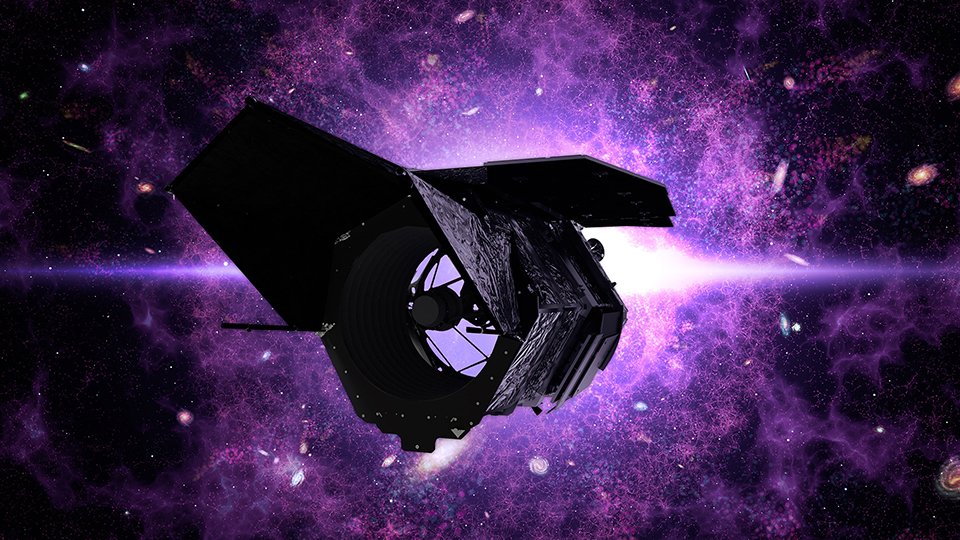
Artist’s concept of the Nancy Grace Roman Space Telescope (Credit: NASA).

Welcome to this special edition of The Intelligence Brief… This week, NASA is preparing to launch the Nancy Grace Roman Space Telescope, its next flagship space observatory and a mission poised to transform our understanding of distant worlds and some of the universe’s greatest mysteries. In our analysis, we’ll be looking at 1) how Roman’s powerful Wide Field and Coronagraph instruments will survey the cosmos on an unprecedented scale, 2) how the telescope could discover thousands of new exoplanets—including elusive rogue worlds—and directly image planets around other stars, 3) how Roman will survey more than a billion galaxies in search of new clues about dark matter and dark energy, and 4) why its combination of Hubble-like image quality and an enormously wider field of view could usher in a new era of astronomical discovery.

Quote of the Week

“We are poised at the brink of unfathomable scientific discovery.”

– Julie McEnery, Roman’s senior project scientist at NASA Goddard

If you enjoy the news and perspectives offered by The Debrief, make sure that you aren’t missing our stories by making us one of your “preferred sources” on Google News. You can simply follow this link to add The Debrief to your list of favorites, and you can read more about Google’s preferred sources in our article here.


RECENT NEWS from The Debrief


NASA’s Nancy Grace Roman Space Telescope Prepares for Lift-Off

On Sunday morning, NASA will set a new milestone with the launch of the Nancy Grace Roman Space Telescope, setting the course for discoveries that may include new insights into some of the universe’s greatest mysteries.

As NASA’s next flagship space observatory, this powerful new telescope is designed to discover thousands of distant worlds while also probing the lingering mysteries of dark matter and dark energy. Named after Nancy Grace Roman, NASA’s first chief of astronomy and an early advocate for the efforts that led to the launch of the Hubble Space Telescope, the new space observatory bearing her name is poised to offer one of the most detailed views of our universe ever captured.

Scheduled to lift off aboard a SpaceX Falcon Heavy rocket on August 30, 2026, at 7:26 a.m. EDT, the Roman telescope’s mission is comparable in ambition to those of the Hubble and James Webb Space Telescopes, but also very different in many respects. Here’s a look at what to know about this historic mission, what it may help researchers uncover, and why it could set the pace for a range of important scientific advancements in the coming years.

Roman’s Historic Mission to Observe the Cosmos

At the heart of its mission, Roman will offer astronomers a remarkably wide view of the cosmos. Surveying immense portions of the sky, the powerful instruments on board the telescope will capture high-resolution imagery comparable to Hubble at certain optical and infrared wavelengths—imagery that could dramatically reshape scientists’ understanding of both planets and the universe they inhabit.

In terms of the technologies it will carry with it into space, Nancy Grace Roman Space Telescope will rely on two primary instruments: its Wide Field Instrument (WFI) and Coronagraph Instrument. The WFI is equipped with a 300-megapixel near-infrared camera enabling wide-area imaging and spectroscopy, allowing Roman to conduct large-scale surveys with great precision and sensitivity—all of which make it ideal for use in the hunt for dark energy, exoplanets, and other hard-to-spot cosmic phenomena.

Meanwhile, Roman’s Coronagraph Instrument is designed specifically for imaging and studying exoplanets. Equipped for both imaging and spectroscopy, the coronagraph will suppress the overwhelming glare of distant stars, potentially making much fainter planets orbiting nearby visible. According to NASA, Roman’s powerful Coronagraph will be the first instrument deployed on a space observatory to leverage “numerically optimized, precision-fabricated coronagraph masks.”

By suppressing the overwhelming glare of distant stars so that much fainter planets around them become visible, Roman’s Coronagraph could achieve as much as 100 times the performance of existing facilities, offering a promising chance that some of the faintest planets in the cosmos—some as much as a billion times fainter than their host stars—could become visible.

With a little luck, Roman could also break new ground with the first direct imagery of an exoplanet possessing rings. Going beyond its immediate discoveries, the coronagraph will also demonstrate technologies that could eventually be incorporated into future observatories, including NASA’s proposed Habitable Worlds Observatory.

A New Era of Planet Hunting

Presently, astronomers have confirmed roughly 6,000 planets beyond our Solar System. However, once Roman’s mission gets underway, that number could see a dramatic increase.

One of the ways it will achieve such landmark detections will be with the help of gravitational microlensing, which relies on detecting how the gravity of a foreground object can magnify light from a source much farther away. Using microlensing alone, there is a good chance Roman may discover several hundred—but more likely thousands—of planets, which may include worlds small enough that they have eluded previous detection using existing methods.

Along with the planets it discovers, astronomers anticipate that Roman will also find several new additions to the growing catalog of “rogue planets,” mysterious planetary bodies that wander through the cosmos without orbiting a star.

Additionally, NASA says that anywhere from 60,000 to 200,000 additional candidate planets could be revealed through transit observations, though only a fraction of these are expected to be confirmed through additional observations.

Mapping the Dark Universe

Arguably, one of the most significant components of Roman’s mission involves its study of the unseen side of the cosmos: the mysterious phenomena known as dark energy and dark matter.

In search of answers to such mysteries, Roman will soon begin scanning more than a billion galaxies as it maps the structure and evolution of the universe throughout cosmic history, providing data that will at the very least help researchers narrow down the most promising interpretations among a range of competing explanations for dark energy.

Simultaneously, the telescope will probe dark matter, the unseen material whose gravitational effects are currently needed to explain phenomena in our universe that include the motions of galaxies, as well as the evolution of some of the largest structures in the cosmos.

Hubble’s Vision, But at Far Greater Scale

In many ways, what Roman is expected to achieve will be comparable to its predecessor, the Hubble Space Telescope, although at a far greater scale.

At some wavelengths, Roman will be capable of producing images that approach the clarity of Hubble’s iconic views of our universe, all while capturing as much as 100 times more of the sky with each observation. By capturing more of the sky with each image it produces, Roman’s efforts to map the universe could occur at a remarkable pace—perhaps a thousand times faster than those of its predecessor.

A Historic Mission Lifts Off This Sunday

If all goes according to plan, Roman will be launched aboard a SpaceX Falcon Heavy rocket at 7:26 a.m. EDT this Sunday, Aug. 30. NASA will begin live coverage of Roman’s launch on Sunday at 6:20 a.m. Eastern Time, and you can follow the updates online with NASA’s free streaming platforms.

Once it lifts off, Roman will be carried 930,000 miles from Earth to the Sun-Earth Lagrange Point 2 region, which is the same location where the James Webb Space Telescope is currently operating. After it reaches orbit, for the next 90 days, Roman will undergo commissioning, after which science operations are expected to begin sometime in early 2027.

The observatory’s primary mission will last five years, although Roman could potentially remain operational for more than a decade, offering astronomers an unprecedented look at our universe and possibly a few answers to some of the most baffling questions about our universe.

That concludes this week’s installment of The Intelligence Brief. You can read past editions of our newsletter at our website, or if you found this installment online, don’t forget to subscribe and get future email editions from us here. Also, if you have a tip or other information you’d like to send along directly to me, you can email me at micah [@] thedebrief [dot] org, or reach me on X: @MicahHanks.

Here are the top stories we’re covering right now…

  •  

NASA’s Nancy Grace Roman Space Telescope is Ready for Launch—Here’s How to Watch it Happen This Sunday

NASA engineering teams are preparing for the launch of the Nancy Grace Roman Space Telescope, which will soon begin the first phase of its historic mission to help scientists unlock the mysteries of dark energy.

On Wednesday, the American space agency reported that the completed telescope, presently contained within its payload fairing, has been transported from NASA’s Payload Hazardous Servicing Facility to a SpaceX hangar located at the famous Launch Complex 39A at NASA’s Kennedy Space Center.

If all goes according to plan, the telescope will be launched aboard a SpaceX Falcon Heavy rocket at 7:26 a.m. EDT this Sunday, Aug. 30.

What Roman’s Science Tool Kit Includes

The telescope’s unique science instruments make Roman a different breed of space observatory from its predecessors, like the James Webb Space Telescope and Hubble Telescope, as they are designed with the special focus of advancing the search for dark energy.

Nancy Grace Roman Space Telescope
The Nancy Grace Roman Space Telescope, seen as it was nearing assembly (Credit: NASA/JPL-Caltech).

Roman is equipped with two primary capabilities, which involve its Wide Field Instrument (WFI) and Coronagraph Instrument. With a 300-megapixel, near-infrared camera designed for large area image capture and spectroscopy, the WFI will enable astronomers to observe a 0.281 square degree field of view and includes a special imaging mode with two slitless spectroscopy modes.

“The instrument provides a sharp point spread function, precision photometry, and stable observations for implementing the Dark Energy, Exoplanet Microlensing, and NIR surveys,” according to a NASA FAQ page detailing Roman’s primary instrument.

Exoplanet Imagery and Spectroscopy

Meanwhile, the telescope’s Coronagraph Instrument also features both imaging and spectroscopy modes, with capabilities fine-tuned for imaging exoplanets.

“The Coronagraph will be the first instrument on a space telescope to make use of numerically optimized, precision-fabricated coronagraph masks,” NASA’s FAQ page reads. This will be achieved by employing a combination of deformable mirrors that will enable high-order wavefront control, a low-order wavefront sensing and control system, and finally, CCD detectors designed for electron multiplication and counting low-flux photons.

A Next-Generation Space Observatory Prepares for Launch

Along with its search for dark energy and exoplanets, Roman will also provide NASA and researchers around the world with an unprecedented opportunity to study the formation of galaxies and the way that dark matter governs their evolution over time.

NASA will begin live coverage of Roman’s launch on Sunday morning at 6:20 a.m. Eastern Time, and you can follow the updates online with NASA’s free streaming platforms.

Micah Hanks is the Editor-in-Chief and Co-Founder of The Debrief. A longtime reporter on science, defense, and technology with a focus on space and astronomy, he can be reached at micah@thedebrief.org. Follow him on X @MicahHanks, and at micahhanks.com.

  •  

2,500-Year-Old Mystery Surrounds a Larger-Than-Life Discovery Unearthed by Archaeologists in Turkey

Archaeologists have uncovered a massive discovery—and a new mystery—at the excavation site of an ancient city in western Turkey.

During excavations at the ruined ancient city of Sardis, a recently-designated UNESCO World Heritage Site and the former capital of the Lydian Empire, teams unearthed a very well-preserved—and extremely large—statue, offering a rare look at the ancient world of its creators who thrived nearly 2,500 years ago.

The towering discovery, made in May of this year by researchers with the long-running Harvard–Cornell Archaeological Exploration of Sardis, stands at more than seven feet in height, although it was found broken in two, with its pieces apparently having been reused as paving stones, where they were located face down within a portion of an ancient Roman-era colonnaded avenue.

“It is very rare to find such monumental sculptures of this period anywhere in the Mediterranean, and this exceptionally well-preserved, unique monument casts important new light on the major arts of Lydia and on the Lydians’ ties to their own past,” said Nicholas Cahill, the excavation’s field director and a professor of Greek and Roman art and archaeology at the University of Wisconsin–Madison.

A Monument from a Lost Empire

As the capital of the ancient Lydian Empire, Sardis controlled a larger portion of western Anatolia during a period that spanned the mid-seventh until the mid-sixth century B.C. Few written records survive from this period, however, and much of what is known from historical accounts has been preserved from Greek and Roman accounts, thereby shaping many of our modern ideas about the Lydians.

Because of this, the unique discoveries at Sardis help to bring new context to those historical ideas, revealing a sophisticated center of wealth and culture from the ancient world, where luxury goods, perfumes, and fine clothing were prevalent.

Sardis statue archaeology Turkey
Archaeologists at Sardis continue excavations at the location where the massive statue was found broken in two, where it was reused as a portion of a roadway (Image Credit: Archaeological Exploration of Sardis/President and Fellows of Harvard College)

At the time of the discovery of the massive statue earlier this year, archaeologists were initially uncertain about what era it represented.

“Then the guesswork started,” according to Susanne Ebbinghaus, the George M.A. Hanfmann Curator of Ancient Art at Harvard Art Museums, noting that in addition to being unclear on its age, it was not immediately apparent whether the statue represented a male or a female.

However, “they started cleaning the soil around the head, we saw he had sideburns, so that question was settled,” Ebbinghaus added.

One thing that was immediately apparent was the statue’s remarkable state of preservation, even though it had been broken in two and used as part of a roadway. Weeks after its initial discovery, the monumental find was removed from the roadway and carried to a special conservation laboratory where a more detailed study could be performed.

An Ancient Artist Looking Through Time

Based on subsequent analysis, the individual the statue represents is dressed in multiple layers of clothing, which include a thin tunic known in Greek as a chiton. Along with this, the figure is draped in a diagonally wrapped mantle, and an unusual garment which features finely rendered horizontal folds.

Intriguingly, some of the features on the statue give it the appearance of archaic Greek works dating to around the sixth century B.C., with the individual’s hairstyle, posture, and other characteristics all suggestive of earlier artistic traditions.

Yet subtle anatomical details tell a different story: upon closer inspection, veins can be seen coursing along the individual’s limbs, which complement several other features that the team believes point to the Classical period, with an estimated creation date from sometime in the mid 400s B.C. One thing this might suggest is that its creator had been referencing what would have been “classic” styles for them at the time, mirroring sculpture and styling that was more common a century earlier—an artist peering into the past, and crafting an anachronistic ancient piece of art.

Shifting Tides of the Ancient World

At this time, political changes were also occurring. Sardis would no longer have been the capital of an independent kingdom and would likely have already been under the control of the Achaemenid Persian Empire at the time the massive statue was carved. Despite this likelihood, the statue reveals no obvious Persian influence.

“This sculptor knows about contemporary styles in Mediterranean and Anatolian sculpture, the interest in hands and the structure of the face and so forth, and yet [the statue is] wearing clothes from 100 years earlier,” Cahill said.

“I think they’re very clearly looking back to their own past,” Cahill added, lending weight to the theory involving an artisan borrowing from earlier stylistic traditions in the art they created. From this, an intriguing possibility arises: perhaps they were consciously invoking Lydia’s earlier cultural identity, within the context of artistic techniques that were contemporary for Sardis by around 450 B.C.

Unknown Identity of an Ancient Stone Giant

Another mystery involves who the massive statue was crafted to resemble, as well as where it originally stood before it made its way among the cobbles in a Roman-era roadway.

Possible contenders for its original home include the sanctuary of Cybele, a site described in ancient texts, but whose location remains unknown to archaeologists. This location might support the statue’s identity as a prominent political leader or other individual, where their likeness in the sanctuary of Cybele would serve both religious and political purposes.

“You put yourself in a prominent place where your fellow citizens or subjects can see you, but also you are indeed worshiping the god, and if you’re a ruler, drawing legitimization from the relationship to that deity,” Ebbinghaus said. “So it might well have been an important person being represented.”

Searching for Clues

Presently, the team is continuing to search for additional clues while the statue undergoes careful cleaning. Surviving traces of pigment that may have once adorned the statue may help to add to the emerging picture of what this monument’s purpose was, and where it originally stood.

Following conservation efforts, the existing separate fragments will also be reassembled, after which the recombined statue will likely go on display in one of Turkey’s regional archaeological museums.

While many questions remain, the enigmatic ancient figure may preserve knowledge of the cultural heritage of ancient Sardis, and how its citizens lived during a period of transition as their once-powerful kingdom had become part of an even larger ancient empire.

Micah Hanks is the Editor-in-Chief and Co-Founder of The Debrief. A longtime reporter on science, defense, and technology with a focus on space and astronomy, he can be reached at micah@thedebrief.org. Follow him on X @MicahHanks, and at micahhanks.com.

  •  

Paleontologists Uncover a Graveyard of Ancient Sea ‘Monsters’ in the Sands of Egypt’s Deserts

Long before the age of the Pharaohs and the monumental construction that defined the ancient Egyptian world, the famed Gift of the Nile was once a sea filled with hungry monsters.

Today, evidence of these ancient aquatic beasts can still be found in Egypt’s sands, as revealed in a new study appearing in Cretaceous Research, which sheds new light on the diversity of ancient shark communities that swam modern-day Egypt’s ancient oceans in the Late Cretaceous.

Adding to the known species of sharks from this era, the new research has revealed five additional species of ancient marine predators that once thrived there, fossils of which were among those unearthed in a fossil tomb very unlike those excavated by Egyptologists over the last two centuries.

An Ancient “Shark Graveyard” Resurfaces

During the Cretaceous period, Earth saw much higher temperatures, which also meant less ice accumulation around the poles. That abundance of liquid water caused by the greenhouse effect during this period in Earth’s history, therefore, led to much higher ocean levels than those seen today.

In Egypt’s Western Desert today, a vast tropical sea once existed 150 million years ago along what is recognized as the Abu-Tartur Plateau, which is home to the fossil-rich Duwi Formation. There, organic sediments collected over vast periods, which helped to create the phosphorite deposits that were conducive to fossil formation, thereby preserving a record of the ancient species that once thrived there.

Past studies had already documented several ancient shark species from the region’s Cretaceous oceans, prompting the additional research detailed in the new study. According to the team’s findings, more than a dozen new fossil shark teeth were recovered from the area around the Abu-Tartur mine, displaying a remarkable diversity.

Based on their individual characteristics, paleontologists have identified the new specimens based on existing records kept in museum collections and other record sources.

New Discovery of Lamniform Shark Species

Of fourteen teeth the researchers uncovered from phosphorite beds during their field work, at least five extinct varieties of lamniform sharks—a variety known as mackerel sharks—were uncovered, which brings the number known to have once inhabited the region up to seven.

ancient sharks in Egypt
Examples of recent fossil shark tooth discoveries from Egypt (Image Credit: Cretaceous Research (2026). DOI: 10.1016/j.cretres.2026.106476)

Of the five newly identified varieties, two species—Squalicorax bassanii and Serratolamna serrata—were previously unknown to Egypt, while one other variety, Scapanorhynchus raphiodon, appears to have been an ancient ancestor of the odd-looking goblin shark. Modern varieties of this species are known to thrive around continental shelves and seamounts throughout the Atlantic, Pacific, and Indian oceans, although the ancient relative identified in the new research had never previously been found anywhere on the African continent.

If confirmed, the recent Egyptian discovery could also indicate the earliest known presence of this species in Earth’s ancient oceans.

A Tropical Sea Unlike Any Other

The new findings reveal new insights into the nature of Earth’s ancient seas, revealing that the prevalent nutrients in the tropical waters of the Cretaceous helped to foment a thriving ancient shark community.

“Collectively, this assemblage highlights a nutrient-enriched, high-productivity marine ecosystem along a phosphogenic shelf margin, most likely developed during a transgressive systems tract in the Late Cretaceous,” the study authors say.

The recent paper, “Egyptian shark graveyard: New Late Cretaceous Lamniform shark Assemblage from Duwi Formation of Abu-Tartur Area, Southwestern desert, Egypt,” appeared in Cretaceous Research. 

Micah Hanks is the Editor-in-Chief and Co-Founder of The Debrief. A longtime reporter on science, defense, and technology with a focus on space and astronomy, he can be reached at micah@thedebrief.org. Follow him on X @MicahHanks, and at micahhanks.com.

  •  
❌