❌

Reading view

Over 1,600 energy department webpages on utility bill savings removed as US temperatures soar

Guardian analysis found the removals coincided with the Trump administration’s push to weaken efficiency rules

As millions of Americans prepare for another brutal heatwave, it’s now harder to find information about ways to stay cool while saving energy and keeping utility costs down.

At least 1,662 Department of Energy webpages offering guidance on protecting the electrical grid during heatwaves have gone dark as of 3 July, according to a Guardian analysis of a list of deleted URLs provided by researchers at the Internet Archive, a non-profit that hosts a repository of more than a trillion archived webpages.

Continue reading...

© Illustration: Guardian Design

© Illustration: Guardian Design

© Illustration: Guardian Design


  •  

Britons urged to take ‘small steps’ to prepare for potential national crises

Government to launch campaign to help people cope with events such as weather emergencies or cyber-attacks

The British public should begin taking “small but important steps” to secure and protect water, power supplies and basic phone signal in case of further severe weather emergencies, national crises or cyber-attacks, Downing Street has said.

Darren Jones, the chief secretary to the prime minister, told MPs “the risks we face from climate change cannot be underestimated”, and warned of the “significant and prolonged disruption to essential services” extreme weather events could cause.

Continue reading...

© Photograph: Hugh Hastings/Getty Images

© Photograph: Hugh Hastings/Getty Images

© Photograph: Hugh Hastings/Getty Images

  •  

Coalition and One Nation’s plan to ditch net zero would not lower power prices, CSIRO report finds

GenCost report contradicts parties’ claims about abandoning emissions target, and finds nuclear would be most expensive way to generate power

Claims by the Coalition and One Nation that abandoning a net zero climate target would bring down power prices are contradicted in a new CSIRO report on the costs of generating electricity.

Generation costs will probably rise after 2030 regardless of Australia’s policy on net zero, according to the CSIRO’s annual GenCost report, but prices should then stabilise at levels below recent price spikes.

Continue reading...

© Photograph: Philippe Lopez/AFP/Getty Images

© Photograph: Philippe Lopez/AFP/Getty Images

© Photograph: Philippe Lopez/AFP/Getty Images

  •  

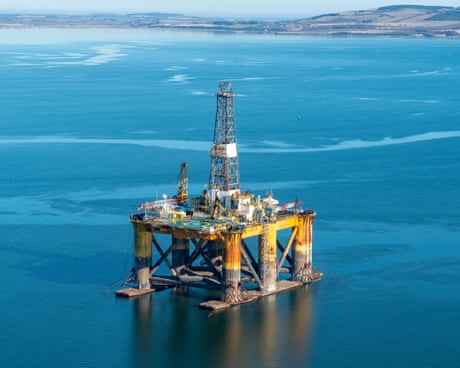
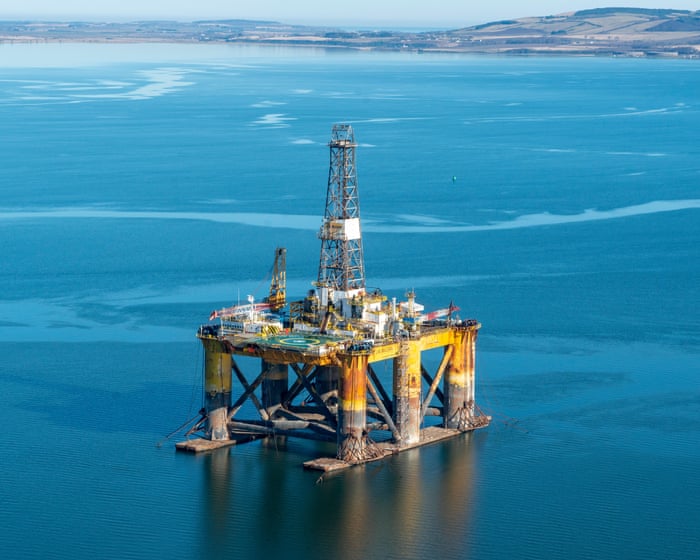
North Sea oil industry urges Burnham to approve new drilling in UK waters

Lobby appeals to prospective PM’s reindustrialisation agenda as it pushes for Rosebank and Jackdaw approval

The UK’s North Sea oil industry has made a last-ditch attempt to curry favour with the Labour government by appealing to Andy Burnham’s reindustrialisation agenda just days before he is expected to become Britain’s next prime minister.

Industry lobbyists have written to more than 400 Labour MPs to call on the government’s new leaders to allow more oil and gas drilling in UK waters to support homegrown energy and show “a commitment to UK manufacturing, industrial capability and the skilled workforce that has powered the nation for generations”.

Continue reading...

© Photograph: Rick Wood Photography/Alamy

© Photograph: Rick Wood Photography/Alamy

© Photograph: Rick Wood Photography/Alamy

  •  

Lawyers to investigate claims of GB power grid cover-up over blackout risk

Operator brings in independent legal firm to look into whistleblower allegations relating to June heatwave

Great Britain’s grid operator has brought in independent investigators to look into accusations that its staff were involved in a cover-up over the power system being at a greater risk of blackouts during the heatwave.

The government-owned energy system operator will face the scrutiny of an external legal firm after a whistleblower claimed that control room staff were warned against leaving a paper trail relating to efforts to stabilise the power system during record high temperatures in late June.

Continue reading...

© Photograph: Gareth Fuller/PA

© Photograph: Gareth Fuller/PA

© Photograph: Gareth Fuller/PA

  •  

Carbon capture is vital in tackling the climate crisis | Letters

Prof Myles Allen, Stephanie Loo and Toby Lockwood, and Olivia Powis, respond to an article by George Monbiot about ‘the great carbon capture con’

George Monbiot suggests that we can solve climate change without carbon capture and storage (The great carbon capture con: behold the wasted billions Burnham could claw back, 8 July). Physics says otherwise. The world is going to generate more carbon dioxide than we can safely dump into the atmosphere, and we can’t rely on our stressed biosphere and oceans to mop up the excess. Stopping global warming will therefore require capturing and durably disposing of carbon dioxide on a huge scale, which right now means injecting it back underground.

Where George does make a good point is in questioning whether carbon dioxide disposal should for ever be paid for using public money. Why should private companies be allowed to make large profits taking carbon out of the ground while the taxpayer foots the bill to put it back? The obvious solution: require those who extract fossil fuels to pay for the disposal of the carbon dioxide their products generate. If the fraction they store rises to 100% by mid-century, fossil fuel use would cause no further warming thereafter.

Continue reading...

© Photograph: Richard Saker/The Guardian

© Photograph: Richard Saker/The Guardian

© Photograph: Richard Saker/The Guardian

  •  

Britain’s biggest community solar farm forced to shut over grid overload fears

Timing of Devon switchoff ‘could not be worse’, says board, as members face an estimated £2m in lost revenue

Britain’s biggest community solar project has been forced to shut for the duration of its first summer by the government’s energy system operator to avoid overloading the local grid with renewable energy.

The north Devon solar farm was ordered to shut weeks before record high temperatures across Europe led to power supply warnings, due to concerns that the large amount of rooftop solar in the area could destabilise the power grid by triggering a “thermal overload”.

Continue reading...

© Photograph: Peter Cade/Getty Images

© Photograph: Peter Cade/Getty Images

© Photograph: Peter Cade/Getty Images

  •  

Readers reply: Why put solar panels on green space when we could put them over car parks?

The long-running series in which readers answer other readers’ questions on subjects ranging from trivial flights of fancy to profound scientific and philosophical concepts

This week’s question: Why is there no rugby culture in Germany?

I would like to know why we build solar farms over green space, when we could just put them over massive car parks as a popular current internet meme suggests. Chris, Middlesbrough

Send new questions to nq@theguardian.com.

Continue reading...

© Photograph: WePro/Getty Images

© Photograph: WePro/Getty Images

© Photograph: WePro/Getty Images

  •  

Datacentres drive up big tech’s carbon emissions to a third of those of France

Microsoft, Amazon and Google say they still aim to achieve net zero output despite construction boom

Microsoft, Amazon and Google’s collective carbon emissions have increased by nearly a fifth in the past year, driven largely by datacentre construction.

In the financial year ending March 2026, the three tech companies emitted 119m mTCO₂e (metric tonnes of carbon dioxide equivalent), or about a third of those of France.

Continue reading...

© Photograph: Audrey Richardson/Reuters

© Photograph: Audrey Richardson/Reuters

© Photograph: Audrey Richardson/Reuters

  •  

‘A lot of red flags’: plans for New Zealand’s first AI datacentre spark concern as locals demand greater transparency

Plans to build a NZ$3.5bn datacentre in Makarewa in the country’s south has drawn concern about electricity and water use, and potential noise pollution

People living near the site of New Zealand’s first planned AI datacentre are calling for more transparency about the project, especially about how the centre’s huge electricity and water use and potential noise pollution could affect them.

Singapore-based company Datagrid has secured approval to build a NZ$3.5bn (US$2bn) AI datacentre on a 49-hectare site in Makarewa, just north of New Zealand’s southern-most city, Invercargill. Construction is due to begin this year, with the centre becoming operational by 2028.

Continue reading...

© Composite: Datagrid NZ

© Composite: Datagrid NZ

© Composite: Datagrid NZ

  •  

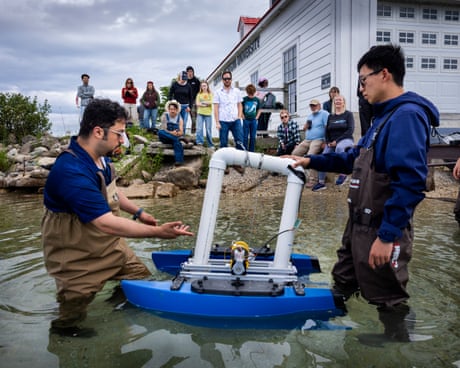
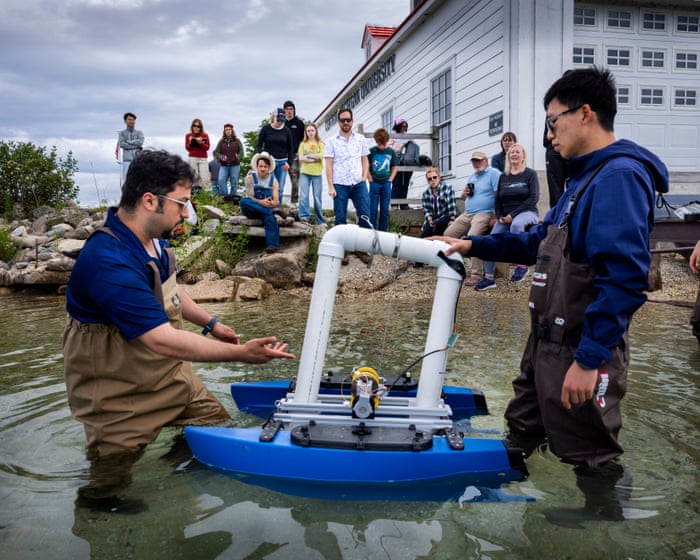
Experimental bathtub: the remote lake island trying wave power to boost energy security

Researchers on Beaver Island, in Lake Michigan, are trying to find a more reliable form of power using local resources

Beaver Island sits in the middle of the northernmost end of Lake Michigan, about 70 miles from the maritime border with Canada. The forested island, just a little bigger than San Francisco in size, is a popular summer destination for tourists and home to about 600 permanent residents. Getting there requires a boat or plane ride.

Getting electricity to the island is not as easy. Power comes from mainland Michigan through cables that cross roughly 30 miles of lake bed. Outages are common during extreme weather, or when there are problems with the sensitive wires. The devastating ice storm that walloped the state last year knocked out power to the island for weeks.

Continue reading...

© Photograph: Marcin Szczepanski/University of Michigan Engineering

© Photograph: Marcin Szczepanski/University of Michigan Engineering

© Photograph: Marcin Szczepanski/University of Michigan Engineering

  •  

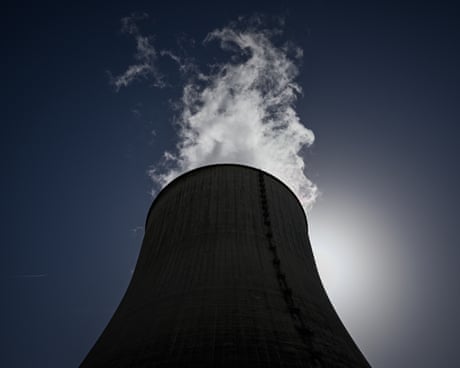
Sizewell B nuclear power plant granted a 20-year life extension

Extension comes as government encourages first nuclear power projects in a generation to meet UK’s growing need for electricity

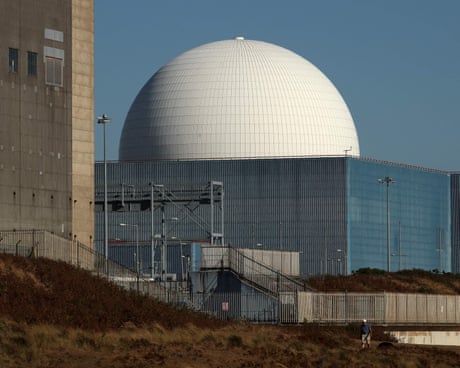
Britain’s most recently completed nuclear power plant will continue generating electricity until 2055 after the government granted the power plant a 20-year life extension.

Sizewell B in Suffolk was due to shut down within the next decade, but under a deal with the government its lifetime will be extended to 60 years to help meet the UK’s growing demand for low-carbon electricity.

Continue reading...

© Photograph: Chris Radburn/AFP/Getty Images

© Photograph: Chris Radburn/AFP/Getty Images

© Photograph: Chris Radburn/AFP/Getty Images

  •  

Datacentres are a ticking timebomb. We must make sure AI’s benefits outweigh the costs | Nicki Hutley

They suck up energy and water, and blast out heat. Just who is better off from all this investment – aside from tech bros?

The two great existential threats of our time – the climate crisis and AI – come hurtling together in the explosion of datacentres across Australia and around the world.

You can hardly avoid hearing about them these days, either with awed reverence of the promised benefits to humankind or with fear and anger given the implications for the climate, inflation, jobs and even housing affordability.

Continue reading...

© Photograph: Jono Searle/AAP

© Photograph: Jono Searle/AAP

© Photograph: Jono Searle/AAP

  •  

‘We won’t give up, we’ll keep fighting’: activists in Colombia vow to resist far-right push for fossil fuels

As the newly elected president, Abelardo de la Espriella, pledges to exploit oil reserves, environmentalists prepare to defend climate progress

It is hard for Yuvelis Morales Blanco to pinpoint when her activism started. Now 25, she recalls getting involved in land rights and environmental issues in Santander, northern Colombia, from a young age. Living near water, she says, has always shaped her connection to nature. “My parents are fishers on the Magdalena, Colombia’s most important river,” says Morales. “For us, the river isn’t just food – it embodies life, identity and culture.”

In April, she received the Goldman environmental prize for her leadership in Puerto Wilches, where she succeeded in halting oil extraction and fracking. Yet, it seems her struggle is only just beginning.

Continue reading...

© Photograph: Iván Valencia/AP

© Photograph: Iván Valencia/AP

© Photograph: Iván Valencia/AP

  •  

The great carbon capture con: behold the wasted billions Burnham could claw back | George Monbiot

There are far better ways to tackle climate breakdown, but successive governments have chosen to listen to the fossil fuel companies instead

The new prime minister will be looking for money? Well, here’s £21.7bn lying on the ground. The government could cancel its deranged, disastrous carbon capture and storage (CCS) programme at no cost to public welfare: in fact, it would greatly reduce the harm we will suffer.

Sorry, did I say £21.7bn? That’s the figure the government has been putting in its press releases for spending on this programme between now and 2050. But this covers only the first phase of the project. The climate experts Dr Andrew Boswell and Simon Oldridge worked through the data produced by the government’s Climate Change Committee, which was scattered across different spreadsheets, and discovered that the projected cost of the full CCS programme between now and 2050 is £264bn.

Continue reading...

© Illustration: Eleanor Shakespeare/The Guardian

© Illustration: Eleanor Shakespeare/The Guardian

© Illustration: Eleanor Shakespeare/The Guardian

  •  

Low-cost loans for solar panels could save households hundreds on bills – thinktanks

New Economics Foundation and Finance Innovation Lab suggest loan scheme backed by Bank of England could benefit up to 8m homes

Millions of UK households could save hundreds of pounds a year on their energy bills if the government were to approve low-cost loans for solar panel installation, research has found.

Solar panels with batteries are one of the cheapest ways to generate electricity and reduce energy bills, but with an upfront cost of about £6,000 they are still beyond the reach of most cash-strapped UK households while other countries forge ahead with installation.

Continue reading...

© Photograph: Paul Martin/Alamy

© Photograph: Paul Martin/Alamy

© Photograph: Paul Martin/Alamy

  •  

Stymied datacentre projects threaten global AI revolution

Large-scale datacentre projects around the world are being challenged or cancelled, as infrastructure’s energy demands ramp up

Datacentre planning proposals face all kinds of hurdles, from securing energy supply to high construction costs. But the 2,000 acre Prince William Digital Gateway site in the US state of Virginia had another problem: its proximity to a Civil War battlefield.

“If the development is allowed to proceed, the solemn nature of this historic site would become marred by sitting in the shadow of the monstrous datacentres, along with their associated electrical infrastructure,” said one legal brief against the plans.

Continue reading...

© Photograph: Horst Friedrichs/Alamy

© Photograph: Horst Friedrichs/Alamy

© Photograph: Horst Friedrichs/Alamy

  •  

Fuel on the fire: why oil companies are profiting as the world gets dangerously hot

The scientific consensus is that burning fossil fuels drives the climate crisis, yet the world’s biggest oil companies are planning to increase production

As the world swelters in ever more dangerous heat, why are oil companies being allowed to turn up the gas instead of paying for the consequences of their greed?

That ought to be the question on everyone’s minds amid baking heat domes over much of the northern hemisphere, temperature records being smashed day after day, children dying in locked cars, hospitals filling with heatstroke victims and emergency services tackling wildfires.

Continue reading...

© Photograph: Christian Hartmann/Reuters

© Photograph: Christian Hartmann/Reuters

© Photograph: Christian Hartmann/Reuters

  •  

Scotland could freeze datacentre projects in challenge to UK’s AI strategy

Scottish government to consider SNP national council motion for moratorium on all new datacentres

The Scottish government is about to consider a sweeping moratorium on building new datacentres, putting a key plank of the UK’s AI strategy at risk.

Last Sunday the Scottish National party (SNP)’s national council passed a motion to freeze all new datacentres in Scotland. That motion has been sent to the Scottish government to consider.

Continue reading...

© Photograph: Ken Jack/Getty Images

© Photograph: Ken Jack/Getty Images

© Photograph: Ken Jack/Getty Images

  •  

GB News co-owner ‘cashing in on climate chaos’ after leap in fossil fuel investments, critics say

Exclusive: Campaigners argue news channel’s attacks on climate action ‘work in financial interests’ of Sir Paul Marshall

The hedge fund run by the co-owner of GB News almost tripled its investments in fossil fuel companies in the first quarter of 2026 to $2.8bn (£2.1bn), the Guardian can reveal.

Critics have accused Sir Paul Marshall of “cashing in on climate chaos” and have claimed the news channel, which frequently attacks climate science and action, was “working in its owner’s financial interests”.

Continue reading...

© Photograph: Anna Gordon

© Photograph: Anna Gordon

© Photograph: Anna Gordon

  •  
❌