❌

Reading view

Researchers Unveil Complete Fruit Fly Connectome

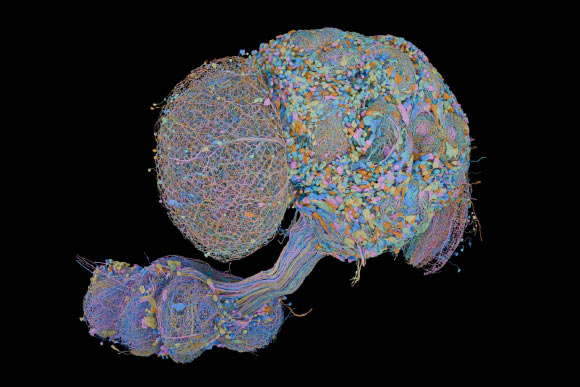
The wiring diagram of the central nervous system of an adult male fruit fly will help researchers better understand how the brain enables complex action, from sensory perception to behavior. Image credit: FlyEM Project Team, HHMI’s Janelia Research Campus / Cambridge Connectomics Group / Google Research / Philip Hubbard, HHMI Janelia Research Campus.

After nearly two decades of work, scientists have completed a wiring diagram of the central nervous system of an adult male fruit fly (Drosophila melanogaster).

The post Researchers Unveil Complete Fruit Fly Connectome appeared first on Sci.News: Breaking Science News.

  •  

Windows 11 otimizado vai a ligar mais rápido e rodar melhor com apenas 8 GB de RAM

A Microsoft reforçou a promessa de melhorar o desempenho do Windows 11 durante a feira IFA 2026, na Alemanha. A empresa destacou que a inicialização do sistema será mais rápida com atualizações futuras e muitas mudanças vão otimizar os computadores com 8 GB de RAM, de acordo com o site PC World.

O chefe de Windows e Dispositivos na Microsoft, Mark Linton, confirmou durante a IFA que a empresa já teve avanços significativos para diminuir o tempo ao ligar o PC e deixou o Windows Hello mais responsivo para autenticar as contas. 

Aos poucos, o sistema fica mais rápido para algumas de suas tarefas básicas. A Microsoft já liberou uma função para acelerar a abertura de apps e do Menu Iniciar e testa remover as janelas repetitivas de backup ao ligar o PC.

Melhorias de olho nos 8 GB de RAM

Linton também destacou que a MS segue com o objetivo de otimizar computadores com 8 GB de RAM, algo mencionado pela empresa no começo do ano diante da crise mundial que encareceu o componente.

Windows notebook home office Teams


A Big Tech ainda não trouxe mais detalhes, mas a expectativa é de que os ajustes de velocidade tragam um ganho de performance para PCs mais simples com menos travamentos e maior velocidade para tarefas simples. 

Quer deixar o computador com visual transparente similar ao da Apple? Confira como aplicar o efeito Liquid Glass no Windows.


{{WHATSAPP_CHANNEL}}

  •  

Lorenzo Roca: “Nos creemos superiores, pero somos una especie reciente”

Hubo un paréntesis de largos años en la vida de Lorenzo Roca Moreno en los que se dedicó a crear empresas, trabajar como químico y vender productos a laboratorios. Pero al margen de su trayectoria profesional, lo que más lo define es su afición por la naturaleza. Aprendió a respetar a los animales de pequeño cuando vivía en el Pirineo, donde también salía a pescar o buscar setas. Los llama “mis amigos, los bichos”.

Con cierta holgura económica, en 2019 como entretenimiento decidió aportar algo que consideraba inexistente en el mundo de la divulgación: una enciclopedia sobre la comunicación de los animales. Dice que le ha dedicado 10.000 horas y ahora presenta el séptimo libro de la serie.

La parte técnica de la obra ha sido revisada por Luis Palomo Muñoz, doctor en Ciencias Biológicas de la Universidad de Málaga, el Dr. Antonio Román Muñoz Gallego, profesor titular de Biología Animal de la Universidad de Málaga; Alfonso López-Solano (investigador de CSIC); y Mario García Paris (biólogo del Museo Nacional de Ciencias Naturales). Roca define su trabajo de “escribano” de bibliografía sobre la que otros han investigado.

En el primer tomo reconstruyó la cronología de la comunicación del homo sapiens -de las pinturas rupestres hasta el fax-; en el segundo, se detuvo en los mamíferos; luego siguieron las aves, los anfibios, los reptiles, los peces y ahora está presentando el séptimo, dedicado a los invertebrados para finalizar la colección.

“Una araña macho cuando quiere comunicarse con la hembra para reproducirse mueve la patita que pesa 0,00001 gramo y la hembra, que es la tejedora, la observa desde un rinconcillo. Imagínate lo que pesa su pata y a pesar de ser tan pequeñito sabe qué especie es. Eso es espectacular, comunicación por ondas vibratorias”, cuenta Lorenzo Roca a National Geographic, absolutamente fascinado con su campo de estudio y argumentando que este último es su libro preferido. Luego añade:

“Las luciérnagas también son maravillosas. La hembra emite luz desde el abdomen para que el macho vaya a buscarlas. Se dice que hoy en día tienen problemas para procrear porque con las luces de las farolas ahora los machos tienen dificultades para encontrarlas”.

Pregunta. ¿Es cierto que el principal objetivo de comunicación de las especies es la reproducción?

Respuesta. Los animales tienen el único sentido importante que es conseguir la continuación de la especie. Primero, se comunican para reproducirse, pero también para defenderse de otras especies y sobrevivir. Nosotros nos creemos superiores, pero somos una especie reciente en comparación a las demás.

P. Siempre se habla de la comunicación de los cetáceos. ¿Con qué te has encontrado estudiándolo?

R. Me ha impresionado que las orcas entienden su comunicación en grupos concretos, pero si llega una desde otro sitio, no. No sólo han construido un sistema de comunicación como especie, sino un lenguaje dentro un grupo y lugar concreto. Lo mismo pasa con los orangutanes: los de Borneo del sur se comunican diferente a los del norte, pero puede haber cosas comunes como señales de alarma o miedo.

P. ¿Desarrollan mejor su comunicación los animales en mayor peligro?

R. Los peces han entendido que deben poner millones de huevos porque su descendencia está desprotegida. El pez luna produce 30 millones de huevos al año, pero la mayoría los comen otros peces, un pájaro o lo pescan. El objetivo es que sobreviva la especie.

P. ¿Has comprobado la comunicación interespecie?

R. Sí, hay casos, por ejemplo, entre aves y mamíferos. El cuervo negro tiene un pico enorme y robusto, que no es puntiagudo. Solo come las partes blandas porque no puede desgarrar la carne. Entonces cuando observan un animal muerto, busca lobos y el jefe de la manada de lobos capta el mensaje de su vuelo en círculos y lo sigue. Cuando llegan, el cuervo espera que los lobos coman y cuando se marchan, bajan a buscar las partes blandas.

R. Otro caso es el mero y la morena. La morena vive en agujeros, sale para cazar y vuelve a su sitio. El mero, que tiene una cabeza grande, a veces se pone en forma vertical y le envía un mensaje a la morena para llevarlo a coger una presa que él no puede.

P. Los loros tienen una comunicación muy desarrollada, pero no suele pensarse que son los más inteligentes. ¿Por qué?

R. Imitar palabras no quiere decir que sea su lenguaje. Cuando repiten “hola” no está asociado a lo que tú conoces. El lenguaje también son los gestos, la mirada y las expresiones. Algunas aves utilizan cánticos o cambios de plumas para anunciar el período reproductivo. Los delfines hacen bailes o movimientos con la cabeza y se comunican con ultrasonidos por el agua.

© Cedida

  •  

Locking-enabled multimodal soliton microcombs achieve day-scale stability for precision metrology

Optical frequency combs have transformed the way scientists measure light and time, earning the Nobel Prize in Physics in 2005 and underpinning technologies ranging from atomic clocks to exoplanet detection. Yet the miniature on-chip versions of these combs, known as soliton microcombs, have long suffered from a frustrating paradox: the most stable and useful operating regimes have also been the most fragile and difficult to sustain. A newly published study in Light: Science & Applications reports a significant advance toward resolving this tension. Researchers led by J. Tang, J. Yang and E. Yan describe a multimodal locking-enabled soliton microcomb that combines robust, self-starting operation with an exceptionally low repetition rate on the scale of a day of stable measurement time, opening a path toward practical high-precision metrology systems that can run unattended for extended periods.

At the heart of the advance is a technique the authors call multimodal locking, a scheme that stabilizes not just a single resonance of the optical microresonator but multiple modes simultaneously, locking the comb dynamics to a regime in which dissipative Kerr solitons can form and persist without delicate manual tuning. In conventional microcomb systems, soliton formation typically requires a precise and rapid traversal of a “chaotic” modulation instability regime, a step that is notoriously sensitive to thermal transients in the resonator chip. Laser frequency must be swept with exquisite control while the soliton’s own heat dissipation shifts the resonator’s resonances, creating a feedback loop that can destroy the soliton state within microseconds. The multimodal locking approach circumvents this fragility by engaging several mode families of the resonator at once, so that the interplay among them pins the comb to a stable soliton state even as environmental and thermal conditions fluctuate.

The significance of achieving a low repetition rate in the same device cannot be overstated. A frequency comb’s repetition rate is the spacing between its individual comb teeth, and for many applications, coarser spacing is a decisive advantage. In laser ranging and distance metrology, for example, the ambiguity range of an interferometric measurement is set by the inverse of the comb’s free spectral range. Microcombs, generated in whispering-gallery-mode or ring resonators only a few millimeters across, usually exhibit repetition rates of tens to hundreds of gigahertz, which severely limits the unambiguous measurement range available to a comb-tooth-resolved distance measurement. By engineering a low-repetition-rate soliton state, the research team extends this ambiguity range dramatically, making the microcomb directly useful for absolute distance measurement, multi-wavelength interferometry and coherent communications, where each comb line must be spectrally resolvable and addressable.

Achieving both low repetition rate and robust soliton generation in a single microresonator is a formidable engineering challenge. Low repetition rates demand large resonator diameters, which in turn produce dense spectra of resonances and increased susceptibility to mode crossings with higher-order transverse and polarization mode families. Such crossings historically destabilize soliton formation, causing comb states to collapse or preventing single-soliton operation altogether. The multimodal locking strategy turns this liability into an asset: rather than engineering mode crossings away, the researchers harness the coupling among mode families to lock the comb dynamics into a favorable basin of attraction. The result is a soliton microcomb whose low repetition rate is preserved over day-scale timeframes, a duration that places the device among the most operationally stable microcomb demonstrations reported to date.

Day-scale stability matters because it transforms the microcomb from a laboratory demonstration into an instrument. Many high-precision experiments, from astronomical spectrograph calibration to the accumulation of statistical confidence in atomic spectroscopy, require comb sources that remain locked and stable across many hours or even days of continuous operation. Conventional fiber-laser-based frequency combs achieve this, but at the cost of table-top size, high power consumption and substantial maintenance overhead. Microcombs promised to shrink the technology onto a photonic chip, yet until now their operational fragility has confined most demonstrations to short observation windows. The robust low-repetition-rate soliton microcomb described in the new work demonstrates that chip-scale frequency combs can, with appropriate locking architecture, sustain the kind of long-duration, hands-off operation that real metrology campaigns demand.

The physics underlying soliton microcombs rests on the Kerr nonlinearity of the resonator material, typically silicon nitride, magnesium fluoride or fused silica. When continuous-wave pump light resonantly builds up inside the ring, the Kerr effect produces a four-wave-mixing process that seeds sidebands spaced by the resonator’s free spectral range. Under the right conditions of pump detuning and intracavity power, these sidebands evolve into a coherent train of ultrashort optical pulses, dissipative Kerr solitons, that circulate around the resonator and emit a broadband comb spectrum with tooth spacing equal to the repetition rate. The comb’s output frequencies are determined by two radio-frequency quantities, the pump laser frequency and the repetition rate, which is why the combs can serve as rulers for measuring optical frequencies against a reference. Any drift in either quantity propagates directly into measurement error, and the multimodal locking mechanism suppresses precisely this drift by anchoring the comb’s underlying mode structure to the resonator’s intrinsic stability.

Applications for such a device span an unusually broad swath of science and engineering. In high-precision laser ranging, low-repetition-rate combs with tooth spacings in the low-gigahertz or even megahertz regime allow interferometric distance measurements over ranges of meters to kilometers without the need for auxiliary synthetic-wavelength techniques. In astronomical spectroscopy, comb calibration sources with well-controlled line spacing enable the detection of Earth-like exoplanets through radial velocity shifts measured in centimeters per second. In telecommunications, low-repetition-rate combs align naturally with standard channel grids used in wavelength-division multiplexed fiber networks, making them attractive as multi-carrier sources. In spectroscopy, dual-comb techniques benefit from repetition rates that are low enough to permit resolution of closely spaced molecular absorption features. A microcomb that is simultaneously robust, low-repetition-rate and day-scale stable therefore functions as a versatile enabling component across these domains rather than a single-purpose device.

The demonstration also speaks to a broader trend in photonics: the migration from delicate, expert-operated laboratory setups to self-contained, self-stabilizing systems. The self-starting character implied by multimodal locking is particularly important for this transition. A comb that requires a skilled operator to initiate soliton formation, sweeping the laser with practiced timing past the chaotic regime, cannot be deployed in an observatory dome, on a satellite platform or inside an industrial instrument. A comb that engages its soliton state reliably on demand and then holds it through thermal cycling, laser drift and mechanical perturbation removes the last practical barrier to integration. The authors’ demonstration of day-scale continuous operation is, in effect, a stress test passed by a technology that researchers have been attempting to harden for more than a decade.

The implications extend to metrology standards and timing as well. Optical atomic clocks, which now achieve fractional frequency uncertainties below one part in 10^18, rely on frequency combs to divide down their optical oscillations to countable microwave rates. Miniaturizing the comb stage of such clocks is a prerequisite for portable optical timekeeping, which would benefit navigation in GPS-denied environments, geodesy that monitors sea level and crustal motion with millimeter precision, and fundamental physics tests that track the constancy of natural constants over months and years. A robust chip-scale soliton microcomb with day-scale stability contributes a key subsystem to this vision, and the multimodal locking principle may generalize to other resonator platforms, materials and spectral regions, including the mid-infrared where molecular fingerprinting awaits compact comb sources.

Looking forward, the study suggests several directions that the photonics community is likely to pursue. Combining multimodal locking with on-chip pump lasers and integrated electronics would complete the transformation toward fully self-contained comb modules with no free-space optics. Extending the approach to lower repetition rates still, into the megahertz regime where fiber-laser combs operate, would bring microcombs into direct competition with their bulkier predecessors for the most demanding ranging and spectroscopy tasks. Improvements in resonator fabrication, reducing mode-volume disorder and engineering dispersion with greater precision, will further expand the parameter space in which robust soliton states can be locked. The present work demonstrates that the fragility once considered intrinsic to soliton microcombs is not a fundamental limit but an engineering problem, and one that can be solved by embracing, rather than avoiding, the multimodal structure of real optical resonators.

The research, published in Light: Science & Applications, marks a milestone in the maturation of microcomb technology. By uniting three properties that had previously been achieved only separately, self-starting robustness, low repetition rate and day-scale operational stability, the work delivers a soliton microcomb genuinely suited to high-precision metrology. As the demand for compact frequency references accelerates across navigation, astronomy, communications and fundamental science, the multimodal locking strategy reported by Tang, Yang, Yan and colleagues offers a clear and technically grounded route from chip-scale optical chaos to dependable, precision measurement light.

Subject of Research: A robust, self-starting low-repetition-rate soliton microcomb enabled by multimodal locking for day-scale-stable, high-precision metrology applications.

Article Title: Multimodal locking-enabled robust and day-scale low-repetition-rate soliton microcomb for high-precision metrology

Article References: Tang, J., Yang, J., Yan, E., Huang, G., Yin, K., Tian, D., Lei, X., Huang, J., Yang, M., Ding, H., Yan, S., Wei, K., Zhu, L., Wang, G., & Jiang, T. (2026). Multimodal locking-enabled robust and day-scale low-repetition-rate soliton microcomb for high-precision metrology. Light: Science & Applications, 15(1), Article 370. https://doi.org/10.1038/s41377-026-02460-w

Image Credits: AI Generated

DOI: 10.1038/s41377-026-02460-w

Keywords: soliton microcomb, multimodal locking, low repetition rate, frequency comb, high-precision metrology, laser ranging, day-scale stability, dissipative Kerr solitons, chip-scale photonics, optical frequency reference, self-starting comb, Light Science & Applications

  •  

Wait, Did Zuckerberg Just Steal Muse the Band’s Instagram Handle For His New AI?

Muse, the popular English rock band that’s been selling out arenas for decades, is no longer @muse on Instagram, where it boasts nearly three million followers.

That’s because on Tuesday, Meta, which owns Instagram, announced a new “personal AI agent” also called Muse — which is now taking the rock band’s original handle, in an act of what appears to be corporate eminent domain for a long-established username.

Indeed, an archived version of the band’s website shows that just last month, it held the @muse handle on Instagram. Now it’s going by @museband, because Mark Zuckerberg apparently couldn’t settle for his new tool being stuck with the handle @museAI. A similar swap happened on X. Meta’s newfangled AI got the @muse handle, while Muse had to settle for even clunkier @musetheband.

The changes were immediately noticed by the band’s fans, who largely didn’t sound impressed by Meta’s naming scheme. One viral Reddit post claimed Muse were “forced” to change its social media handles, fomenting further outrage.

“That’s genuinely the worst,” fumed one bewildered fan.

“Mark Zuckerberg is such a loser,” another said.

Others, in classic music fan fashion, accused the English rockers of being “sellouts,” seemingly under the impression that Muse took a Big Tech payday in exchange for giving up its social media handles.

It’s not clear what happened to facilitate the username swap. Given that this happened on both Instagram and X, it seems possible that Meta came to some sort of agreement with Muse to take its handle, which the band has been sitting on for over a decade now.

Meta didn’t immediately respond to a request for comment about whether the handover was consensual, and whether the band was paid for the handle.

The actual band hasn’t commented on the situation either, adding to the confusion.

Of course, it wouldn’t be unprecedented for a social media site to jack someone’s username without compensation or recourse. When Elon Musk rebranded Twitter into X in 2023, he took the username @X from someone who had been holding onto it since 2007. The only thing the company offered in return was some merch and a chance to visit X’s headquarters.

The recent swap didn’t go as smoothly as Zuckerberg may have hoped. As New York Times tech journalist Mike Isaac noticed, Zuckerberg apparently copied his Muse announcement from his platform Threads, where his AI agent already had the @muse handle, pasted it onto X, and accidentally tagged the rock band. This appeared to be because of a bug on X’s end, and it also caused people trying to tag the new AI to autofill the rock band’s new handle. Gaffes ensued.

“I’ve been using @museband for the last few months and can honestly say it’s the best AI agent I’ve tried,” lauded a senior director at Meta, in a post that’s since been corrected.

More on Meta: Facebook Is Hosting Huge Numbers of Horrifying AI-Generated Videos of Violent Child Abuse, and Meta Is Barely Even Pretending to Care About Taking Them Down

The post Wait, Did Zuckerberg Just Steal Muse the Band’s Instagram Handle For His New AI? appeared first on Futurism.

  •  

Rapid Wildfire Structure Risk Assessment Helps Fire-Adapted Communities

Wildfire scientists have unveiled a new rapid risk-assessment tool that shows substantial wildfire danger to homes and buildings in three major Arctic communities, revealing that between 14% and 26% of structures in Anchorage, Fairbanks, and Whitehorse face high or very high risk from approaching flames. The study, led by Jennifer I. Schmidt of the University of Alaska Anchorage together with Robert H. Ziel, Monika P. Calef, Anna Varvak, and Julio C. Postigo, was published in the International Journal of Disaster Risk Science. Rather than relying on complex fire-behavior simulations that demand specialist analysts and expensive software, the approach combines datasets that most local governments already possess: building footprints, zoning maps, and readily available vegetation layers. The result is an updatable, affordable portrait of which buildings face the greatest threat and where mitigation dollars can do the most good.

The urgency behind the work is hard to overstate. Wildfire costs and damages in the United States alone are now estimated at between USD 394 billion and 893 billion annually, and the 2019 to 2020 Australian fire disasters cost nearly USD 100 billion. The Arctic, often imagined as too cold and wet to burn, is not immune: since 1980, wildfires have cost Alaska between USD 2 billion and 5 billion, with projections suggesting costs could rise 68% by the end of the century. Canadian suppression expenses are expected to climb by 60 to 110% relative to the 1980 to 2009 baseline. Meanwhile, structure loss from wildfire has doubled over the past two decades in the western United States, and western Canada has suffered major structure-loss events in four of the last eight fire seasons. Nearly half the global population now lives within the wildland-urban interface, the zone where people and forests meet or intermingle, making tools that translate fire science into actionable local maps increasingly vital.

The researchers’ central premise is conceptually simple but technically consequential: for a structure to be at high risk, a flammable hazard must exist nearby, within roughly 500 meters, and the surrounding landscape must exhibit high wildfire exposure. The method begins with a flammability hazard layer at 30-meter resolution, built from a modified version of NASA’s ABoVE Landcover dataset in which generic evergreen classes were refined to reflect locally flammable species such as black spruce, white spruce, lodgepole pine, and subalpine fir, each assigned hazard ratings from 0 to 100. Critically, the team treated structures themselves as fuel. Each building contributes three fuel units to the surrounding flammability score, a value chosen after systematic testing of one through ten fuel units; three proved optimal, nudging densely built environments up a hazard category without causing wholesale reclassification. Structure density was computed at 90-meter resolution, multiplied by three, and added to the vegetation-based hazard to produce an enhanced flammability hazard layer.

Wildfire exposure, the second pillar of the assessment, captures the potential for hazard to travel. It is calculated as the average flammability hazard within a 100-meter or 500-meter radius, representing the likelihood that fire can reach and burn a given location even if the local fuels themselves are sparse. Exposure values, also ranging from 0 to 100, are classified into five tiers from very low to extreme, and concentrated pockets of flammable vegetation drive scores upward. The third ingredient is structure vulnerability, produced by multiplying the enhanced flammability hazard by a structure importance factor derived from zoning data: residential buildings and critical infrastructure such as hospitals, schools, and nursing homes receive the highest weight, followed by commercial and other structures. Where zoning was unavailable, as on military installations like Joint Base Elmendorf-Richardson in Anchorage and Fort Wainwright and Eielson Air Force Base in Fairbanks, the team collaborated with base personnel or interpreted aerial imagery to classify neighborhoods. The final risk score synthesizes hazard, exposure, and vulnerability into six categories, from extremely low to very high.

The results paint a nuanced picture of Arctic fire danger. Fairbanks showed the greatest proportion of structures in the top two risk categories at 26%, followed by Whitehorse at 22% and Anchorage at 14%. Anchorage, paradoxically, had the highest share of buildings in the top vulnerability tiers, 42%, yet the lowest risk, a consequence of its large urban footprint where dense housing raises vulnerability but fragmented, less-flammable vegetation and abundant developed ground suppress exposure. Fairbanks and Whitehorse, with structures woven into spruce- and pine-dominated boreal landscapes, showed closer alignment between vulnerability and risk. Anchorage was also the only study area where more than 1% of cells jumped two or more flammability categories when buildings were counted as fuel, at 7%, reflecting its 27% share of structure area containing seven or more buildings per cell. The analysis also confirmed the primacy of exposure: when a structure’s wildfire exposure was extreme, at least 87% of such buildings landed in the highest risk category across all three communities.

A key innovation lies in how the team redrew the wildland-urban interface itself. Traditional WUI maps distinguish urban, interface, and intermix zones; the researchers added a fourth category, the transmission zone, marking areas roughly 2.4 kilometers beyond the WUI boundary where fire could move into a community and where fuel breaks might be sited. Within the 500-meter buffer around structures, urban areas were defined by exposure values of 20 or less, interface zones by 21 to 60, and intermix by values above 60, cross-referenced with Alaska and Yukon wildfire management designations that prioritize suppression from critical down to unplanned or wilderness levels. Fairbanks claimed the largest overall WUI footprint, and the transmission zone proved the largest category in every study area, spanning 23,347 square kilometers around Anchorage, 6,180 square kilometers around Fairbanks, and 665 square kilometers around Whitehorse. Across all sites, most structures fell within interface zones, 52 to 61%, followed by intermix at 20 to 35%. Thousands of buildings sit in the high-risk interface and intermix zones where mitigation should concentrate: 15,537 structures in Anchorage, 16,212 in Fairbanks, and 3,734 in Whitehorse.

The method faced its most demanding test against a real disaster. On 17 August 2019, during southcentral Alaska’s hottest and driest summer on record, the likely human-caused McKinley wildfire was driven by high winds across 13.3 square kilometers in three days, destroying 52 residential structures, 84 outbuildings, and three commercial buildings, affecting 1,028 properties and forcing roughly 350 to 400 people to evacuate. By comparing pre-fire aerial imagery from 2017 with post-fire imagery from 2020 at 0.3-meter resolution and linking vanished buildings to the Matanuska-Susitna Borough structure database, the team identified exactly which structures burned. The verdict was statistically compelling: burned structures had significantly higher wildfire exposure than those that survived, and the proportion of burned structures with exposure values above 60 was significantly larger than among unburned ones. Structure risk scores above 60 were also significantly associated with burning. Notably, the test held even under conditions so extreme that normally resistant, low-flammability fuels were igniting.

The study’s design was shaped by sustained community engagement. Through workshops in 2019, 2021, and 2023, along with 15 to 20 meetings organized by Anchorage community councils and landowner associations and public events ranging from wildfire awareness days to Arbor Day, residents and agency staff reshaped everything from color schemes to model parameters. One consequential example: Anchorage residents and fire managers insisted that the maps reflect the spruce beetle outbreak first detected in 2016 and peaking around 2020, which killed and removed many spruce trees. The team responded with rules derived from aerial detection surveys, reclassifying white spruce cells in areas of beetle intensity of 11% or greater to mixed forest, and shifting mixed forest cells to open shrub, while a succession model updated vegetation on areas burned within the last 30 years. This iterative dialogue ensured outputs that both wildfire practitioners and the general public can interpret, a prerequisite the authors see as central to building fire-adapted communities.

The practical implications for planning are direct. Because mitigation funding is often tied to officially designated WUI areas, the ability to rapidly recalculate boundaries from updated building layers expands funding opportunities and keeps pace with community growth. The framework also points to different interventions in different zones: structures in intermix areas, surrounded by vegetation, benefit most from fuel treatments, while those in interface zones, where flammable vegetation is scarcer, are better served by home hardening measures such as fire-resistant roofs, siding, decks, screens, and unburnable buffers. Given that wildfire activity tends to occur where exposure exceeds 60, the authors recommend concentrating resources on the top two risk categories. Where national products like wildfirerisk.org rely on generalized fuel layers that can overestimate unburnable area in WUI zones and are updated too slowly for annually burning landscapes, this approach trades complexity for transparency, using local data that governments already collect. The underlying wildfire exposure toolbox is publicly available on GitHub, and the team argues that empowered residents, equipped with accurate, current, neighborhood-scale information, are crucial to reducing wildfire risk, particularly where communities may prefer action without government intervention.

Subject of Research: Rapid assessment of wildfire risk to structures and wildland-urban interface delineation in Arctic communities using local vegetation, building footprint, and zoning data.

Article Title: Fueling Fire-Adapted Communities Through a Rapid Wildfire Structure Risk Assessment

Article References: Schmidt, J. I., Ziel, R. H., Calef, M. P., Varvak, A., & Postigo, J. C. (2026). Fueling Fire-Adapted Communities Through a Rapid Wildfire Structure Risk Assessment. International Journal of Disaster Risk Science, 17(2), 351-362. https://doi.org/10.1007/s13753-026-00716-y

Image Credits: AI Generated

DOI: 10.1007/s13753-026-00716-y

Keywords: Arctic, Wildfire, Risk assessment, Wildland-urban interface, WUI, Mitigation planning, Structures, Fire-adapted communities, Wildfire exposure, Flammability hazard, Alaska, Yukon

  •  

Rare bacteria, heavy metals, and toxic pollutants are leaking from data centers across the United States — breaking treatment facilities and poisoning rivers

  • 3 points

Data centers across the United States have been criticized for harming local environments sourcing power - sometimes illegally - from gas burning turbines that can release harmful pollutants into the air surrounding local communities.

But dozens of data centers have been accused of releasing harmful chemicals, heavy metals, and rare bacteria with the wastewater they release into nearby treatment facilities and waterways.

Violations have been logged for data centers in Wyoming, Virginia, New York, and Georgia, but the problem likely extends far across the rest of the US. Information on water usage and discharge for many data centers is hard to come by - or is being actively blocked.

Pollutants released into water across the US

In Wyoming, Meta was recently forced to halt water discharges from the construction site of its enormous 960-acre Cheyenne campus after a resistant bacterium - Cupriavidus gilardii - was found within a local water treatment facility.

The bacterium was identified after regulators tested a sample of the 801,000 gallons Meta had discharged into Cheyenne’s sewers. Following concerns that local residents could inhale droplets of the contaminated water if it was used for irrigation, local officials decided to stop accepting wastewater from the construction site.

Two water treatment facilities were forced offline as part of a multi-month decontamination and cleanup operation. Meta’s contractor responsible for the site, Goat Systems, is appealing the decision of officials to stop accepting wastewater from the site.

Multiple data centers across Virginia are facing enforcement actions from local authorities for violating wastewater and wetland regulations. In one such case, a data center under construction in West Virginia has funneled stormwater runoff into a local residential area, causing flooding on two occasions.

A data center near Lake Seneca, New York, is facing criticism from the Seneca Lake Guardian organization. The site was previously a cryptocurrency mining data center, but has been transitioning towards handling AI workloads instead. Seneca Lake Guardian has said that wastewater from the site flows directly into Lake Seneca at temperatures of up to 108F (42C), which can harm fish living in the lake and cause blooms of toxic algae.

The company behind the data center, Vulcan Infrastructure and Power, says it complies with all relevant environmental laws.

Multiple new data centers in Georgia have been approved to draw water from the Chattahoochee river, but local environmental guardians, such as water policy director at Chattahoochee Riverkeeper, Chris Manganiello, are being blindsided by a complete lack of information on how much water will be taken from the river, and what will be put back in.

“We need to know what is in this wastewater but there is a void of information,” Mangeniello told The Guardian. “I would like there to not be more Pfas [forever chemicals] going into the river but there is this level of anxiety because we don’t know what’s there.”

Don’t throw the Pfas out with the cooling water

Data centers pump water through miles of pipes crisscrossing their hardware in order to draw away excess heat. While there have been moves towards “closed-loop” cooling technology - where the water used is recycled within the system - there are still valid environmental concerns associated with these systems.

Before using a closed-loop system, the pipes need to be flushed through with water to wash away any debris or contaminants that were deposited within the pipes during assembly. This water is then released back into sewers to be cleaned by local treatment plants.

But many water treatment plants simply aren’t built to handle filtering water that contains industrial contaminants. These contaminants can include heavy metals or Pfas that can cause health problems in humans and animals.

Data centers are also being built in drought-hit regions, largely because the land is cheap, placing additional strain on already struggling water tables. Data centers can use hundreds of thousands of gallons of water per day to stay operational, and while closed-loop systems ensure this water is only taken out of the cycle once, it is still a significant sum of water to remove from regions experiencing droughts.

  •  

Televisões LG gravam conversas mesmo com o ecrã desligado? Investigação levanta nova polémica

Uma investigação da Gamers Nexus, feita em conjunto com a Level1Techs e investigadores independentes, revela que as smart TVs OLED da LG captam áudio do ambiente mesmo em standby, e enviam dados para a divisão de publicidade da empresa.

The post Televisões LG gravam conversas mesmo com o ecrã desligado? Investigação levanta nova polémica appeared first on Tek Notícias.

  •  

Paleontologists discover first adult ‘T. rex’ footpath

Tyrannosaurus rex fossils are relatively common finds, with dozens of variously complete examples on display in museums around the world. But T. rex tracks? That’s an entirely different story. Even when stomped into the mud by a 17,500-pound apex predator, dinosaur footprints rarely last long enough to fossilize over millions of years.

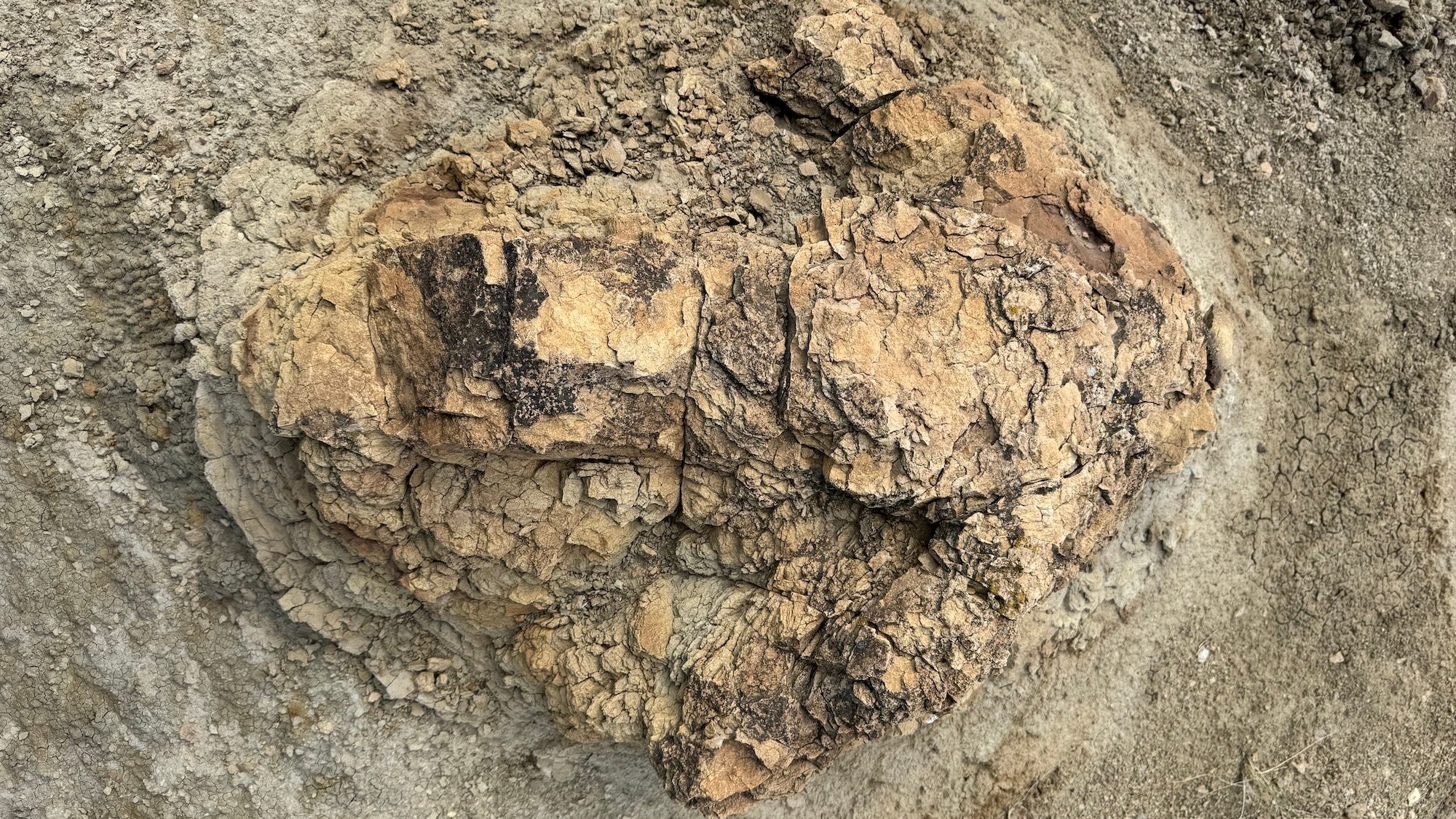
That’s what makes a recent discovery in southwestern North Dakota so remarkable. Paleontologists from the Denver Museum of Nature & Science and Liverpool John Moores University in England have documented not one, but four footprints preserved along a 23-foot-long path within the famous Hell Creek Formation. The prints are the first known trackway made by an adult T. rex, and are described in a study recently published in the Journal of Vertebrate Paleontology.

Fossilized T. rex tracks in North Dakota
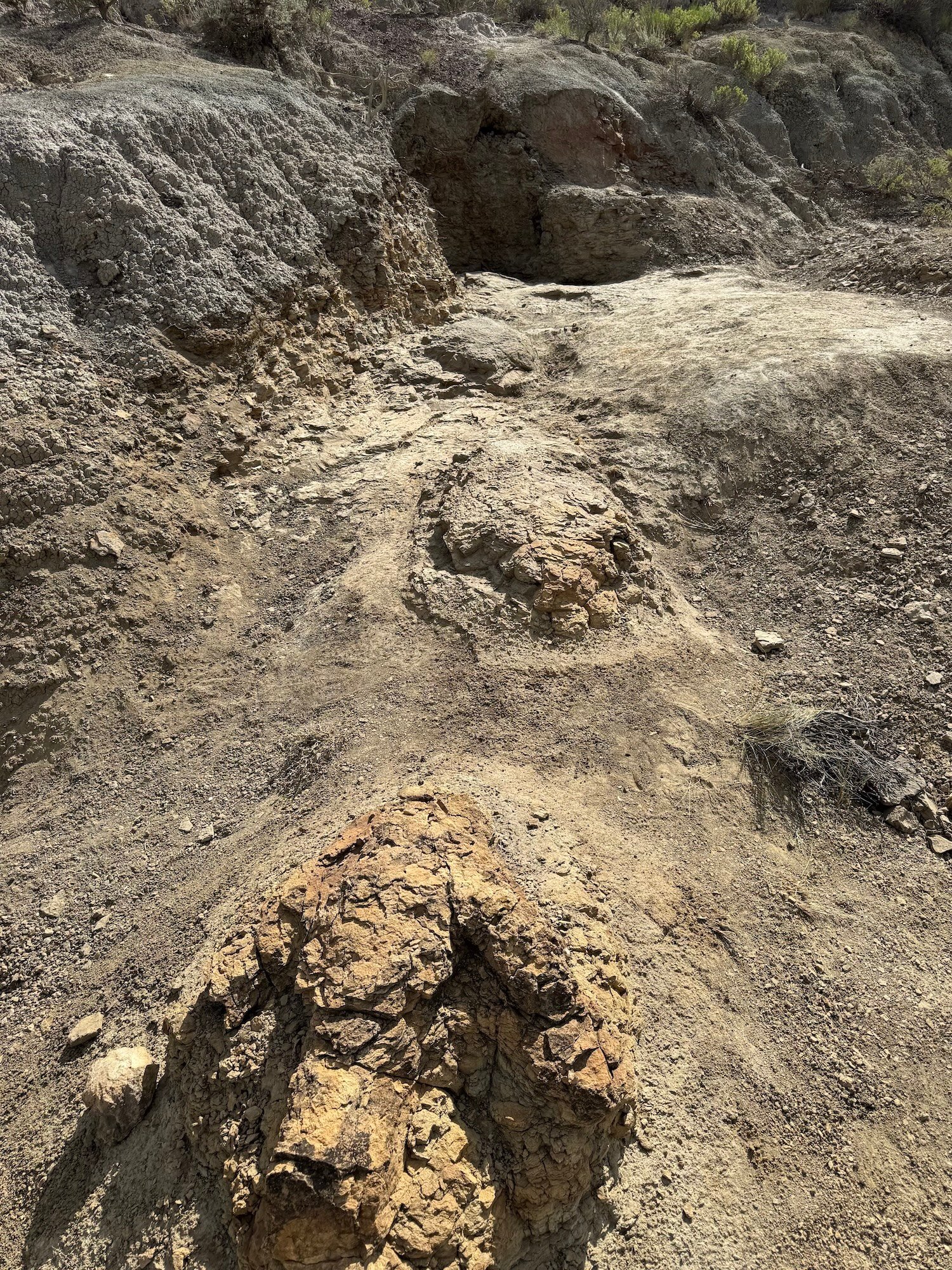
The tracks were discovered in North Dakota’s Hell Creek Formation: Tyler Lyson

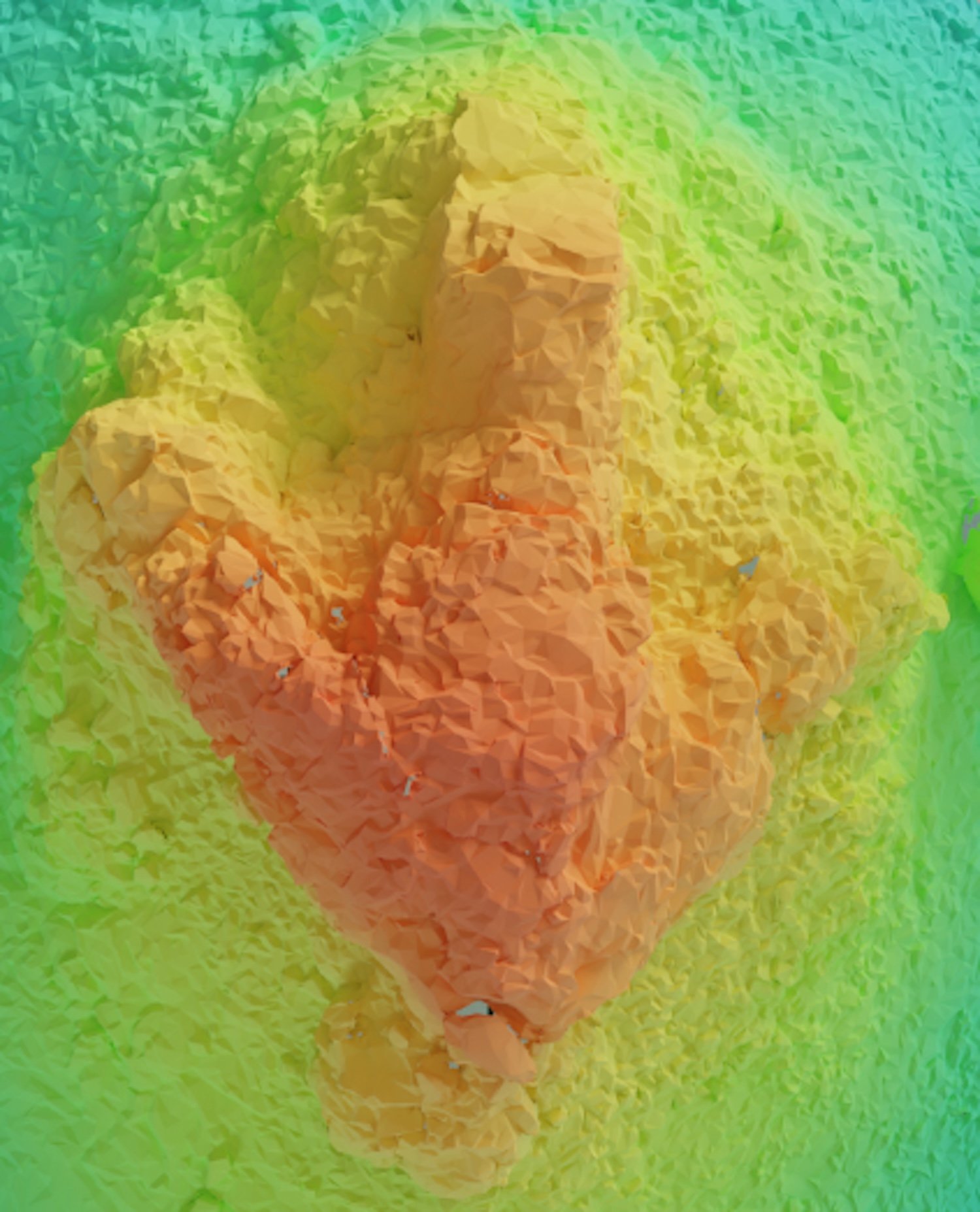
While rare, T. rex footprints are distinctive for their massive size and narrow toes. In this case, each dino-stomp measures about three feet long. Paleontologists identified the roughly 66.5-million-year-old path last year on federal land near the town of Marmath, North Dakota, near the state’s southwestern border with Montana. After carefully clearing the surroundings, researchers imaged each footprint using a high-resolution 3D surface scanner. This allowed the team to digitally analyze the scene, as well as create physical reproductions.

The two left and right imprints suggest that the dinosaur was a sizable adult with an estimated 13-foot stride—but paleontologists don’t think this particular T. rex was in much of a hurry. Based on the gait, it was likely moseying around at 3.5 to 4.5 miles per hour, or about the same speed as a human going on a power-walk. Given the tracks’ weathering and erosion, the team stresses their theorized speed is somewhat speculative.

3D scan of T. rex print with darkening colors displaying relative depth of imprint
3D scans allowed researchers to generate digital recreations as well as physical models. Credit: Antoine Bercovici

Paleontologists are now planning to excavate three of the four footprints later this year, then transfer them by helicopter to the Denver Museum of Nature & Science.

“Bones tell us an enormous amount about these animals, but footprints capture a moment of behavior. With a trackway, we can actually follow an animal as it moved across the landscape,” Tyler Lyson, a Denver Museum of Nature & Science paleontologist and study co-author, said in a statement. “That is incredibly rare for T. rex.”

The post Paleontologists discover first adult ‘T. rex’ footpath appeared first on Popular Science.

  •  

Astronauts on the space station have no washing machine, because water is far too precious to waste on laundry, so they wear the same clothes for days and then pack the dirty ones into a cargo capsule that burns up on reentry, which means a fireball crossing the sky could, in theory, be a bundle of an astronaut’s old underwear.

The International Space Station has been in continuous crewed operation since November 2000, which means somebody has been living roughly four hundred kilometres above the surface of the Earth every single day for the past twenty-five years without a break. During that time the station has been visited by more than two hundred and eighty astronauts and cosmonauts from more than twenty countries, and each of them has faced the same practical problem that any long-term resident of anywhere eventually has to solve.

Their clothes get dirty. And the space station, for reasons that come down to the physics of orbital resupply, does not have and has never had a washing machine on board. What NASA and the Russian space agency have therefore developed over the intervening decades is one of the more counterintuitive laundry solutions in any modern human institution. There is no laundry. The clothes go into a cargo capsule when the astronauts are done with them. The cargo capsule burns up on the way home.

Why nobody bothered to send a washing machine up

The reason is water. Aboard the space station every drop of water is a precious resource that either has to be lifted up from Earth at roughly $10,000 per kilogram in launch costs, or has to be extracted and recycled from the crew’s own urine, sweat and exhaled breath through a purification system that operates continuously in the background of station life. The station recycles roughly 90 per cent of the water it produces internally, which is considerably better than any comparable industrial recycling system on Earth. But even at that recycling rate, adding a washing machine to the water demand of the station would consume enough additional water per cycle to fundamentally change the economics of resupply. According to a 2017 VICE interview with Robert Trevino, a senior engineer with NASA’s Crew and Thermal Systems Division who is responsible for astronaut clothing on the station, the engineering team has been examining this question for years. NASA’s own internal trade studies compared the water and power requirements of a hypothetical station laundry system against the cost of simply replacing dirty clothes with fresh ones sent up on cargo runs. Replacing the clothes turned out to be cheaper. So that is what NASA does.

If space exploration fascinates you, you’ll enjoy this video we made on why astronauts come home feeling like they’re being watched…

What this means in practical terms is that astronauts on the station wear each piece of clothing for as long as it can reasonably be worn before it becomes unusable. Exercise clothes get roughly two weeks of use because the mandatory hour of daily exercise required to prevent bone and muscle loss in microgravity produces enough sweat to defeat the antibacterial coating on the fabric within a fortnight. Regular daily-wear clothes, meaning the cotton polos and cargo shorts that most station astronauts prefer, get anywhere between one and three months of wear per garment. Underwear rotation is up to the individual crew member. Trevino told VICE that former astronaut Don Pettit was known to have worn the same pair of shorts for months at a stretch, which was apparently a source of considerable amusement among his crewmates. The clothing is sourced by NASA’s contractor Lockheed Martin from ordinary commercial suppliers, including Lands’ End, Cabela’s, and Blackhawk. There is nothing technologically special about the fabric.

Where the clothes actually end up

Once a garment has reached the end of its useful wearing life, it goes into the station’s waste system alongside the packaging, food waste, expired equipment, and general trash that the crew generates every day. The waste is bagged, taped, and stored in whichever visiting cargo vehicle happens to be docked at the time. There are currently three different cargo vehicles that regularly deliver supplies to the station. Russia’s Progress capsule and Northrop Grumman’s Cygnus vehicle are both single-use, meaning they are launched from Earth full of supplies, unloaded at the station, refilled with trash, undocked, and then deliberately deorbited over the Pacific Ocean where they burn up in the upper atmosphere on the way down. SpaceX’s Dragon capsule is the exception. It is reusable, and it returns to Earth intact via parachute for a splashdown in the Pacific and eventual reuse on a subsequent mission. So while Dragon comes home in one piece, the trash from every Progress and Cygnus run ends up as a spectacular fireball crossing the sky somewhere in the upper atmosphere above the South Pacific.

According to Space.com’s November 2023 reporting by managing editor Brett Tingley on the reentry of the Russian Progress MS-23 cargo spacecraft, the reentry of a fully loaded trash-carrying capsule is a visually striking event. The Progress MS-23 undocked from the station on 29 November 2023 carrying, in the words of the Roscosmos cosmonaut Oleg Kononenko who saw it off, “old equipment and household waste, or everything the experts have decided to toss from the station.” Four hours later NASA astronaut Jasmin Moghbeli, who had been alerted by mission control to look out of a specific window at a specific time, was able to photograph the reentry from the ISS itself. Her photographs show what looks like a spectacular meteor. Bright trails of fire streak across the darkness of the upper atmosphere. The main capsule breaks apart into several distinct fragments as the atmospheric heating destroys its structural integrity. Then everything disperses into smaller and smaller sparks until nothing recognisable is left. Moghbeli wrote on X afterwards that the whole event lasted only two or three minutes and reminded her of fireworks.

What was inside the capsule during those two or three minutes was, among many other things, the accumulated clothing that seven astronauts and cosmonauts on the station had been wearing over the preceding several months. Somewhere in the fireball was Kononenko’s old exercise gear, along with the daily-wear cotton polos of the American, Japanese, and Danish crew members who had been aboard during the same period. Whether any of the specific garments in question had been observed by anyone on the ground as bright flashes in the night sky is impossible to say with certainty. But the fireball that briefly crossed the upper atmosphere above the South Pacific on the evening of 29 November 2023 did in fact contain, among its many other contents, the discarded underwear of at least seven people who had been living in low Earth orbit at the time.

Which is to say that the surprising claim in the title turns out to be more or less exactly what actually happens. The station has no washing machine. The clothes get worn until they can’t be worn any longer. They get packed into whichever cargo vehicle is next scheduled to depart. And the cargo vehicle, on its final trajectory back through the upper atmosphere, becomes a briefly visible streak of light in the night sky before the whole thing burns away to nothing over the Pacific Ocean. If you happen to be looking up at the right moment from the right latitude, and if you know the timing of the current Progress or Cygnus deorbit schedule, you might catch one. And what you would be watching, in the strict literal sense, is somebody’s old socks and shirts on their final journey home.

The post Astronauts on the space station have no washing machine, because water is far too precious to waste on laundry, so they wear the same clothes for days and then pack the dirty ones into a cargo capsule that burns up on reentry, which means a fireball crossing the sky could, in theory, be a bundle of an astronaut’s old underwear. appeared first on Space Daily.

  •  

Bateria dos carros da Tesla não dura tanto quanto a dos rivais, mostra estudo

Parece que os carros elétricos da Tesla deixaram a desejar quando o assunto é a capacidade das baterias. De acordo com um levantamento da empresa austríaca de diagnósticos Aviloo, um estudo global baseado em 500 mil testes mostrou que, embora as baterias dos carros modernos consigam preservar boa parte da autonomia, os carros da marca de Elon Musk foram superados por rivais.

A constatação veio após a análise de 20 modelos populares desde 2022, que somaram até 160 mil quilômetros rodados. Depois, os pesquisadores exploraram o nível de degradação da capacidade útil da bateria.

Tesla Model 3

Como mencionamos, o levantamento mostrou que muito da autonomia das baterias foi mantida. O problema, no entanto, foram os populares Tesla Model 3 e Model Y, que tiveram queda significativa em comparação com modelos como o Hyundai Ioniq 5 e Ford Mustang Mach-E, que tiveram índices mais elevados de integridade mesmo com uso prolongado.

Bateria de carros da Tesla

Ao atingir a marca de 150 mil quilômetros, o Hyundai Ioniq 5 conseguiu manter média de 93,79% da capacidade original da bateria, enquanto o Mustang Mach-E registrou 92,53%. Por outro lado, o Tesla Model Y ficou na casa dos 90,32% e o Model 3 ficou com 88,94%.

No entanto, o estudo destaca que a maior perda de capacidade nos modelos da Tesla ocorre de forma mais acentuada nos primeiros 50 mil quilômetros rodados, e depois se estabiliza em ritmos mais lentos nas etapas posteriores. Além disso, os resultados variam conforme os hábitos do proprietário.

Isso significa que fatores como recargas constantes até 100%, trajetos diários intensos e exposição contínua a temperaturas elevadas podem acelerar a perda de autonomia da bateria — nos casos mais extremos, a integridade do componente pode cair para cerca de 80%.

Se você quiser saber mais sobre o assunto, vale a pena conferir nossa matéria que explica como carro elétrico perde autonomia com o passar do tempo.

{{WHATSAPP_CHANNEL}}

  •  

We're about to exceed 1.5-degree global warming limit, according to the UN

Global warming will soon cross a critical threshold, surpassing a dangerous limit set years ago, the United Nations Environment Programme (UNEP) has found. But experts say it's still possible to cool things back down, emphasizing that the stakes are too high to stop trying.

In 2015, 196 nations and territories signed the Paris Agreement, pledging to restrict the average rise of global temperatures to below 2 degrees Celsius (3.6 degrees Fahrenheit) above pre-industrial levels. Ideally, the rise was meant to be kept to 1.5 degrees C (2.7 degrees F) above those levels. However, according to a new report detailed by the UNEP, we are on track to cross that 1.5 C line — and soon.

"This summer's scorching heat, raging wildfires and deadly floods are a warning of what lies ahead. We must make the overshoot above 1.5 degrees as small and short as possible. That demands an overshoot of ambition," U.N. Secretary-General Antőnio Guterres said in a statement.

According to the new report, experts have found that if we as a planet continue with business as usual, not only will we pass 1.5 C, but it will happen within just a few years. The report, however, maintained a positive tone. Rather than simply predicting a doomsday plot, the main purpose of this release is to outline a pathway with the necessary steps to set things on the right track.

"As global temperature rise gets set to cross 1.5°C, pushing climate risks and impacts to dangerous new heights, the world must strive to return to below 1.5°C as soon as possible and simultaneously reduce the vulnerability of societies, communities and economies to climate impacts," the report, titled "Limiting Overshoot: Navigating exceedance of 1.5°C and pathways towards return," states in its abstract.

Climate change is primarily caused and driven by human activities like transportation, industrial manufacturing, agriculture and more. According to the report, the two main aspects of this work need to be: reducing emissions and enabling adaptations to protect people impacted by the effects of climate change.

The U.N. states in the report the necessity of both an immediate and sustained reduction in the emissions of greenhouse gases like methane and carbon dioxide. Not only do we need to find a way to cut emissions fairly immediately, but we also need to find a way to sustain that effort over time. The U.N. further states it is important to not only work toward removing carbon from the atmosphere, eventually reaching net-negative emissions where more emissions are removed by humans from the atmosphere than added to the atmosphere.

This sort of carbon capture technology is still fairly early in its development, but according to the U.N., it is essential we find ways to rapidly move toward a future where we can capture and store carbon from the air and therefore reduce the quantity of greenhouse gases around our planet.

In addition to these long-term emission reduction actions, in this report the U.N. has also asserted that this process will need to include "adaptation actions," or ways to support the many people and communities already affected by climate change.

Even if all of the world's nations start working immediately to drastically reduce emissions, we are already seeing the sometimes fatal and irreversible effects of climate change. From increasing the intensity of wildfire seasons to worsening natural disasters, climate change is far from a distant future. It's our reality, especially for those living in high-risk areas like coastlines. So, while the nations of the world need to work together to reduce emissions, it is also important that adaptations are found to reduce the existing and future impacts of climate change on our communities.

"There are no good outcomes if we remain above 1.5°C. Across the globe, extreme heatwaves are already proving that climate impacts will strike faster, hit harder, and last longer — costing more lives and causing deeper disruption," Inger Andersen, the Executive Director of UNEP, said in the same statement. "Now is the time we must double down on climate action. We can — and must — get on the right path. By cutting greenhouse gas emissions, strengthening resilience and adaptation, and ensuring exceedance of 1.5°C is as small and short as possible."

  •  

Liverpool vs Atletico Madrid FREE streams: How to watch Champions League 2026/27 fixture online from anywhere

  • Liverpool vs Atletico Madrid: Wednesday, September 9 at 8pm BST / 3pm ET
  • Free Stream: RTE Player (Ireland)
  • Away from home? Use NordVPN to unblock your live stream

Watch Liverpool vs Atletico Madrid live streams as Reds head coach Andoni Iraola takes charge of his first European match in a potential Champions League 2026/27 classic at Anfield.

The Basque boss recorded his first win as Liverpool boss last Friday, a 2-0 win at Ipswich after worryingly topsy-turvy 2-2 draws with Newcastle and Nottingham Forest. Alexander Isak's early brace at Portman Road was a positive sign that the Swede is coming back into form after a tough first season on Merseyside, while Barcelona loanee Ronald Araujo added solidity to a hitherto creaking defense at right-back. Bradley Barcola, recently signed from PSG, is pushing for a start.

Atleti slipped up at the weekend, losing 3-0 to Iraola's alma mater Athletic Bilbao after opening La Liga with seven points from their opening three games. The three-time beaten finalists are desperate to go one better this year and was why Diego Simeone dug in his heels to prevent Argentine compatriot Julian Alvarez from joining Barcelona this summer. The 26-year-old forward is being reintegrated into the squad after agitating for the move, while Colchonero captain Koke, now 34, will make his 150th Champions League appearance if he features tonight.

Here's how to watch Liverpool vs Atletico Madrid in the 2026/27 Champions League from anywhere in the world.

Watch Liverpool vs Atletico Madrid for FREE

You can stream Liverpool vs Atletico Madrid for free on RTE2 in Ireland and via the RTE Player streaming service.

This doesn't require an account sign-up or any subscription.

Abroad? Unlock your free Champions League stream with NordVPN.

How to watch Liverpool vs Atletico Madrid from anywhere

A VPN is handy piece of software that can make your device appear as if it's back in your home country, so you can unlock your usual service. The best VPN right now? We recommend NordVPN – it does everything and comes with a 75% discount and and extra three months for free...

🟩 NordVPN – get the world's best VPN

Not having a VPN is like leaving your front door wide open in a busy city – anyone can walk right in and take a peek.

TechRadar regularly reviews all the biggest and best VPN providers and NordVPN is our #1 choice.

✅ Up to 75% Off Today
✅ 3 Extra Months Free
✅ Unlocks RTE Player

Get NordVPN and live stream Liverpool vs Atletico Madrid from anywhere.View Deal

How to watch Liverpool vs Atletico Madrid live streams in the USA

US flag banner

In the US, you can watch Liverpool vs Atletico Madrid in the UCL on Paramount+.

Paramount+ subscriptions start at $8.99/month, rising to $13.99 to remove ads. You can also get a Paramount Plus trial with Walmart+ for $1 as with this sneaky trick we found.

Outside of the US? Use a VPN whilst you're traveling away from home to unlock your stream.

How to watch Liverpool vs Atletico Madrid live streams in the UK

UK flag banner

(Image credit: Future)

In the UK, Liverpool vs Atletico Madrid is being broadcast on TNT Sports 1 and their streaming platform HBO Max.

You can add TNT Sports to your Sky, Virgin Media or EE TV package, or get an HBO Max plan that includes TNT Sports. Prices start at £25.99/month if you commit to a year.

Those visiting the UK from Ireland can explore the VPN route set out above, which will help you access the free stream.

How to watch Liverpool vs Atletico Madrid live streams in Canada

canada

In Canada, DAZN is broadcasting Liverpool vs Atletico Madrid in the Champions League.

You'll need DAZN's soccer package, which starts at CA$24.99/month.

Not in Canada? Use NordVPN if you're away from home, in order to tap into your preferred Liverpool vs Atletico Madrid coverage from anywhere.

How to watch Liverpool vs Atletico Madrid live streams in Australia

Australian flag

(Image credit: free)

A Liverpool vs Atletico Madrid live stream is available in Australia on Stan Sport.

You can pick up a Stan Sport subscription for as little as AU$29.99 per month for the basic plan containing adds. That price consists of the AU$9.99 Stan subscription fee plus the Sport add-on for AU$20.

Outside of Oz? You can use NordVPN to access your usual Champions League coverage.

When does Liverpool vs Atletico Madrid kick-off?

Liverpool vs Atletico Madrid kicks off at 8pm BST / 3pm ET / 12pm PT on Wednesday, 9 September.

That's 5am AEST, in Australia, in the early hours of Thursday, 10 September.

What is the Liverpool vs Atletico Madrid head-to-head?

In nine previous meetings between the sides since their first fixture in 2008, Liverpool have won four to Atletico's three. There have been two draws.

Liverpool have won the past three encounters, including the most recent – a 3-2 victory in last season's league phase.

We test and review VPN services in the context of legal recreational uses. For example:1. Accessing a service from another country (subject to the terms and conditions of that service).2. Protecting your online security and strengthening your online privacy when abroad.We do not support or condone the illegal or malicious use of VPN services. Consuming pirated content that is paid-for is neither endorsed nor approved by Future Publishing.

  •  

How to watch Napoli vs Arsenal: Free Streams & TV Channels for Champions League 2026/27

Watch Napoli vs Arsenal live streams as last season’s beaten finalists visit the Stadio Diego Armando Maradona hoping to start the Champions League 2026/27 league phase with a victory.

After the heartbreak of losing on penalties to PSG in the Champions League final, Arsenal have rebuilt strongly this summer. Bruno Guimaraes, Ezri Konsa and Christos Tzolis have added plenty of quality, with the trio all featuring in recent weeks as the reigning Premier League champions have begun the domestic campaign with three straight victories. After the weekend's 2-1 come-from-behind win against Chelsea, the Gunners will hope to carry that form into Europe and inflict a third successive defeat on Max Allegri’s side.

Napoli failed to make it out of the league phase last season and come into this year’s competition on the back of two disappointing results. Beaten 2-1 by Como, the Little Donkeys then threw away a two-goal lead on Saturday to lose 3-2 to reigning Serie A champions Inter Milan. The one positive for the Italian side is the form of Rasmus Hojlund, who bagged in both defeats, but they must do without Scott McTominay while the Scot undergoes a minor heart operation for a mild benign arrhythmia.

Here's how to watch Napoli vs Arsenal in the 2026/27 Champions League from anywhere in the world.

Can you watch Napoli vs Arsenal for free?

Yes. Napoli vs Arsenal is being shown on free-to-air Virgin Media Two in Ireland, with live streaming available via Virgin Media Play.

Traveling abroad right now? You can use a VPN to watch Napoli vs Arsenal for free as if you were right at home.

Use a VPN to watch Napoli vs Arsenal live streams

A VPN is handy piece of software that can make your device appear as if it's back in your home country, so you can unlock your usual service. The best VPN right now? We recommend NordVPN – it does everything and comes with up to 75% off.

🟩 NordVPN – get the world's best VPN

Not having a VPN is like leaving your front door wide open in a busy city – anyone can walk right in and take a peek.

TechRadar regularly reviews all the biggest and best VPN providers and NordVPN is our #1 choice.

✅ Up to 75% off today
✅ 3 extra months free
✅ Unlocks Virgin Media Play

Get NordVPN and stream Napoli vs Arsenal from anywhere.View Deal

How to watch Napoli vs Arsenal live streams in the US

US flag banner

In the US, the Napoli vs Arsenal game is being shown on Paramount+.

The streaming service, which is showing all 189 games of the 2026/27 Champions League campaign, starts at $8.99/month or $89.99/year.

However, you can access Paramount+ virtually for free with a Walmart Plus 30-day trial for $1.

Outside of the US? NordVPN can unblock your stream from anywhere in the world.

How to watch Napoli vs Arsenal live streams in the UK

uk flag

In the UK, Napoli vs Arsenal is being shown on TNT Sports 2.

You can add TNT Sports to your Sky, Virgin Media or EE TV package, or get an HBO Max plan that includes TNT Sports. Prices start at £25.99/month if you commit to a

Visiting the UK from Ireland? Get NordVPN and access your free Virgin Media Play stream during your stay.

How to watch Napoli vs Arsenal live streams in Australia

Australia flag banner

Napoli vs Arsenal, along with all 189 games of the 2026/27 Champions League season, is available to watch on Stan Sport in Australia.

Stan Sport costs AU$20/month on top of a Stan subscription, which itself starts at AU$9.99/month.

Not in Australia right now? You can simply use a VPN like NordVPN to watch the action as if you were back home.

How to watch Napoli vs Arsenal live streams in Canada

Canada

(Image credit: Other)

The Napoli vs Arsenal game is available to watch on DAZN in Canada.

DAZN, which is showing all 189 Champions League 2026/27 fixtures, starts at CA$24.99/month, for a plan that also includes EFL, Carabao Cup, Bundesliga and NFL coverage.

If you're out of Canada but still want to tune in, explore the VPN route set out above, which will help you access your accounts from anywhere.

What is the Napoli vs Arsenal start time?

The scheduled Napoli vs Arsenal kick-off time on Wednesday, September 9 is 9pm CEST local time in Naples which is 12pm PT / 3pm ET / 8pm BST.

That's 5am AEST on Thursday, September 10 in Australia.

What is the Napoli vs Arsenal head-to-head?

Napoli and Arsenal have contested just four competitive games. The Gunners have won on three occasions, with their only defeat coming back in the 2013/14 Champions League group stage.

Can I watch Napoli vs Arsenal on my mobile?

Of course, most broadcasters have streaming services that you can access through mobile apps or via your phone's browser. For example, Virgin Media Play and Tabii each have dedicated apps.

You can also stay up-to-date with the key Champions League 2026/27 moments on the official social media channels on Instagram (@ChampionsLeague), Facebook (@ChampionsLeague), TikTok (@ChampionsLeague) and UEFA's YouTube channel (@UEFA).

We test and review VPN services in the context of legal recreational uses. For example:1. Accessing a service from another country (subject to the terms and conditions of that service).2. Protecting your online security and strengthening your online privacy when abroad.We do not support or condone the illegal or malicious use of VPN services. Consuming pirated content that is paid-for is neither endorsed nor approved by Future Publishing.

  •  

Microsoft Breaks Another Patch Tuesday Record

Microsoft's September 2026 Patch Tuesday is its largest ever, fixing a record 966 vulnerabilities, including 105 rated critical and two zero-days already being exploited in attacks. BleepingComputer reports: This Patch Tuesday addresses 105 "Critical" vulnerabilities, 81 of which are remote code execution, 20 are elevation of privileges, 2 are information disclosure, and 1 security feature bypass. The approximate number of bugs in each vulnerability category is listed below: - 438 Elevation of Privilege Vulnerabilities - 19 Security Feature Bypass Vulnerabilities - 258 Remote Code Execution Vulnerabilities - 173 Information Disclosure Vulnerabilities - 56 Denial of Service Vulnerabilities - 16 Spoofing Vulnerabilities Last month, Microsoft's Patch Tuesday updates fixed 570 security flaws, following 400 vulnerabilities patched in August.

Read more of this story at Slashdot.

  •  
❌